
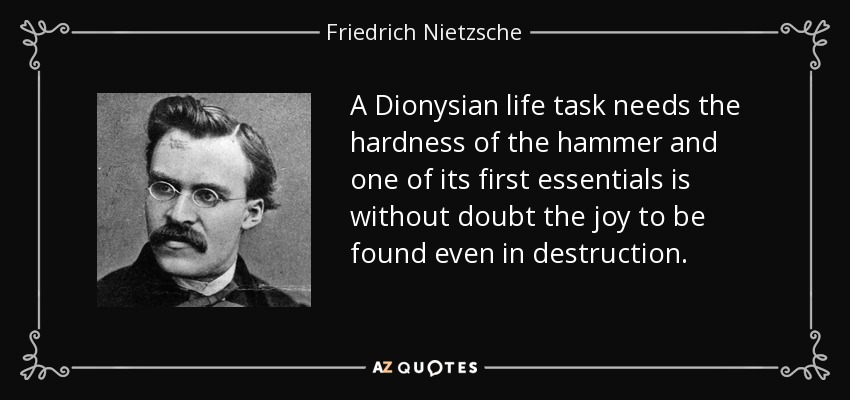
Recently, I saw a critical performance of Richard Wagner on German TV about his racism, presented by an Italian or Spanish artist whose name I have forgotten. However, this reminded me of Nietzsche’s distancing himself from Wagner due to his disgust towards specific individuals, even though Nietzsche was in love with his sister, Cosima. (The reason may also be that Nietzsche had a very close relationship with a man named Paul Rée, who was Jewish.)
For Nietzsche, the Tribschen period was far from idyllic. It was challenging as he constantly tested himself to meet Wagner’s expectations. He began writing his first book while regularly visiting the Wagners’ home in Tribschen, anxious about whether his work would satisfy Wagner. This era was marked by aspiration, vulnerability, and self-testing for Nietzsche. He was essentially an apprentice to a genius, experiencing a vital rite of passage in his creative journey.

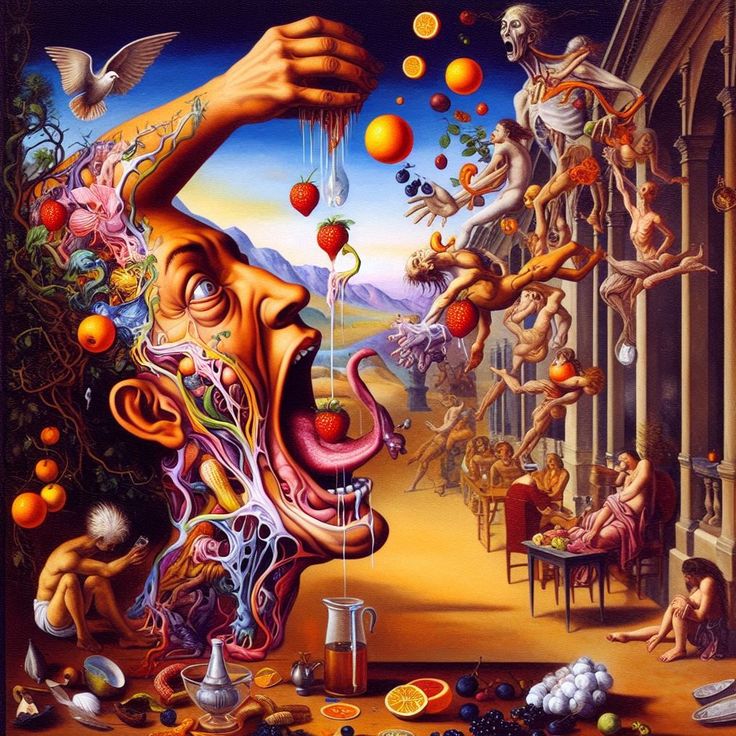
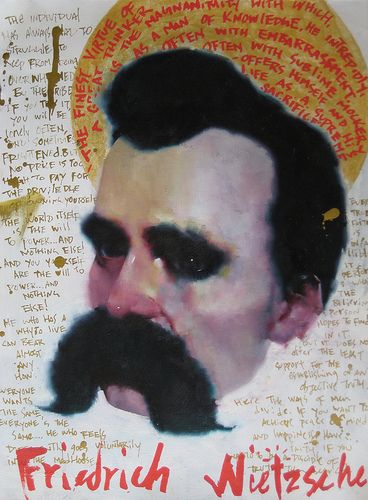
(On the top: Surreal Abstract Painting.)
Neither Nietzsche nor Wagner understood one another realistically. Nietzsche saw Wagner as a benevolent father but felt disappointed by his egotism. Conversely, Wagner viewed Nietzsche as a loyal son who became a rebellious thinker. Both pursued psychological needs that overshadowed their friendship and intimacy.
Anyway, I found two paragraphs I’ve translated from one of his books, Menschliches, Allzumenschliches (Human, All Too Human). I present them to you because I believe they are very relevant to our “political” society today.
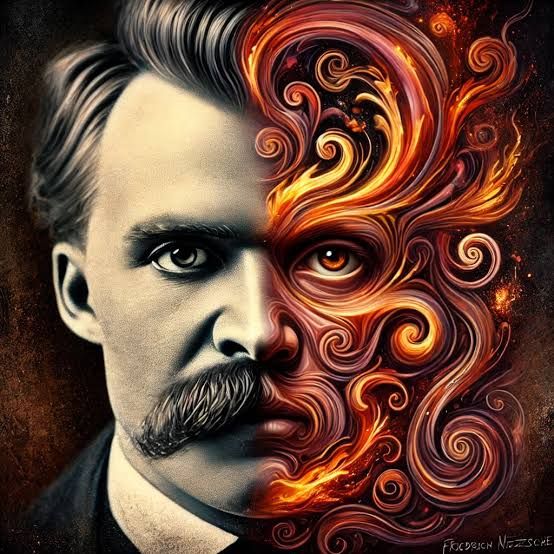
From the Book “Human, All Too Human”, Volume One
(No. 458) Guiding Spirits and their Tools.
We see great statesmen and generally all those who have to use many people to carry out their plans, sometimes proceed in this way, sometimes in that way: either they select very finely and carefully the people who suit their plans and then give them relatively great freedom because they know that the nature of these chosen people will lead them to where they themselves want them to go, or they choose poorly, even take what comes to hand, but form something suitable for their purposes out of every ton. This last type is the more violent; it also requires submissive tools, its knowledge of human nature is usually much less, and its contempt for human nature is greater than that of the first-mentioned minds. Still, the machine they construct generally works better than the machine from the workshop of the former.

(No. 460) The Great Man of the Masses.
The recipe for what the masses call a great man is easy to give. Whatever the circumstances, get them something they find very pleasant, or first put it into their heads that this and that would be very pleasant, and then give it to them. But not immediately at any price: you have to fight for it with the greatest effort or seem to be fighting for it. The masses must have the impression that there is a powerful, even indomitable willpower; at least, it must seem to be there. Everyone admires a strong will because no one has it, and everyone says to themselves that if they had it, there would be no limits to them and their egoism. If it turns out that such a firm will achieve something that the masses find very pleasant, people admire it once again and wish themselves luck instead of listening to the wishes of its greed. Moreover, he has all the qualities of the masses: the less they are ashamed of him, the more popular he is. So, He is violent, jealous, exploitative, scheming, flattering, grovelling, conceited (narcissist) or anything, depending on the circumstances.
A brief update: My challenging circumstances remain the same, but I’m relieved that my boss has exited the hospital. His blood tests are standard, yet he still cannot return to work. Therefore, I must continue managing things as the acting boss!
I am always grateful for your support and companionship, and I wish you all a lovely weekend.🙏💖




 lampmagician
You must be logged in to post a comment.