Throughout history, influential politicians have often been seen as shapers of destiny and architects of society. However, some may believe that, behind their visible authority, they function more like puppets controlled by unseen forces than as independent leaders. This view suggests that true power lies elsewhere, with politicians serving as public faces for deeper, more ingrained interests.
Certainly, some independent individuals with strong personalities have risen to the top to realise their ideas, such as Napoleon and Hitler. However, the modern political landscape is shaped by complex networks of corporations, lobbyists, and special interest groups that wield significant economic and informational influence. These groups often set policy priorities and legislative agendas. Politicians, even charismatic ones, depend on them for campaign funding, media support, and advice. In return, their decisions may be subtly or overtly influenced to benefit those maintaining the political machinery.
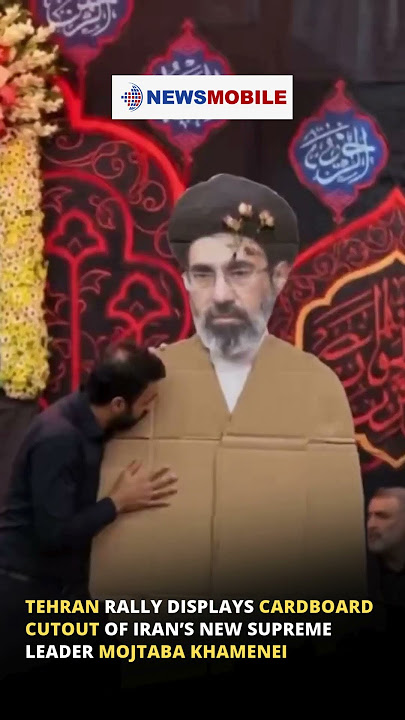
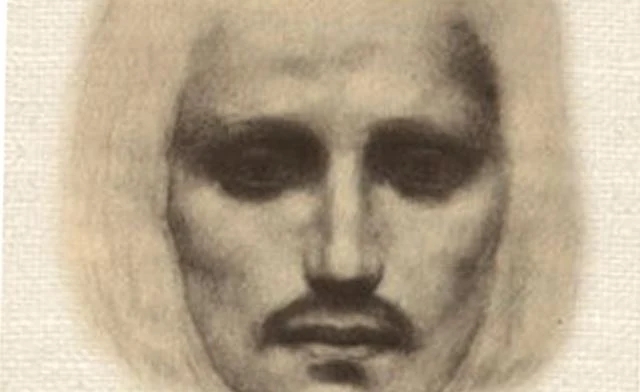
You may have come across this (real!) depiction of Iran’s new leader of the Islamic regime!
Furthermore, bureaucracies, party apparatuses, and global institutions further diminish individual agency, ensuring that politicians follow established paths rather than forge new ones. Dissenters risk marginalisation, while conformists are rewarded with stability and progress. In conclusion, although influential politicians seem to possess significant power, their actions and decisions are often dictated by external forces; they frequently serve as puppets on the public stage—animated not by their own will, but by the hands that pull their strings. If we examine their behaviour and interpret their language through their speech, we can easily read between the lines: they speak clearly and directly when they are prepared for what they need to say, but when caught unawares by a new, unexpected topic, they start babbling and repeating themselves.
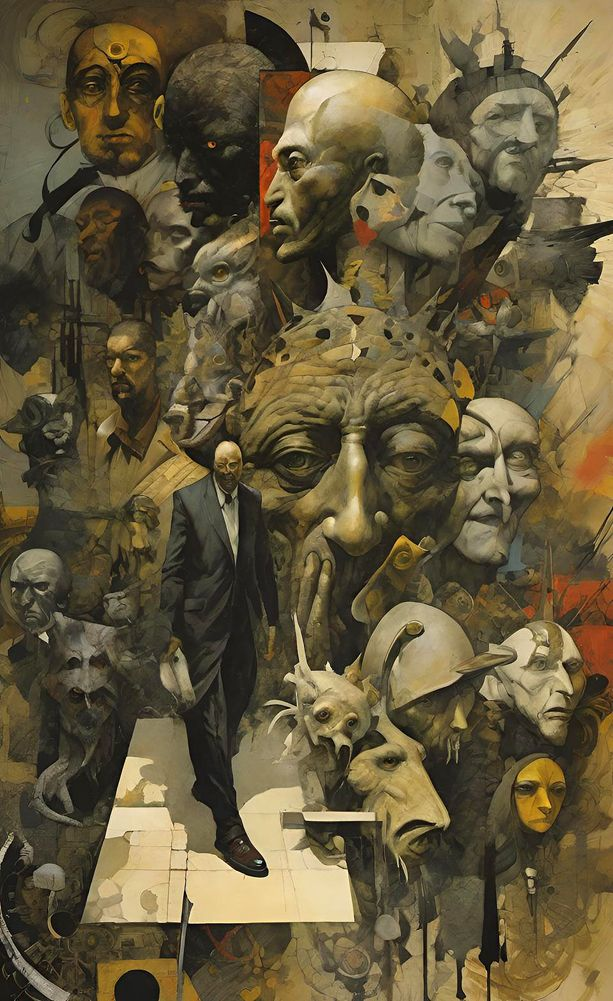
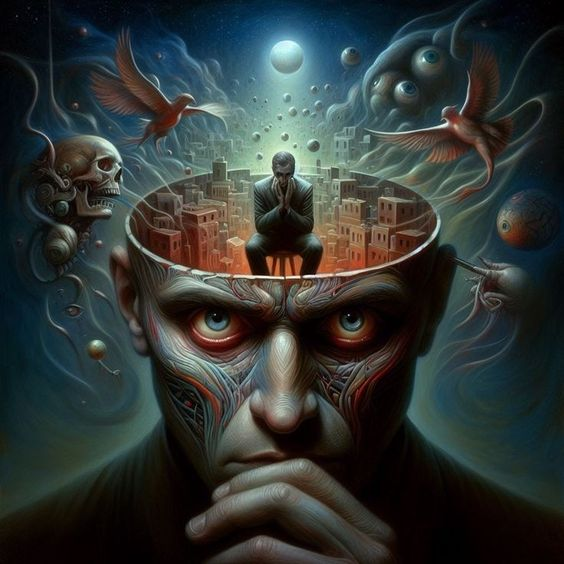
In my view, the world aims to dissolve the individual into the crowd, with personality fading away under the “New World Order” to facilitate control.
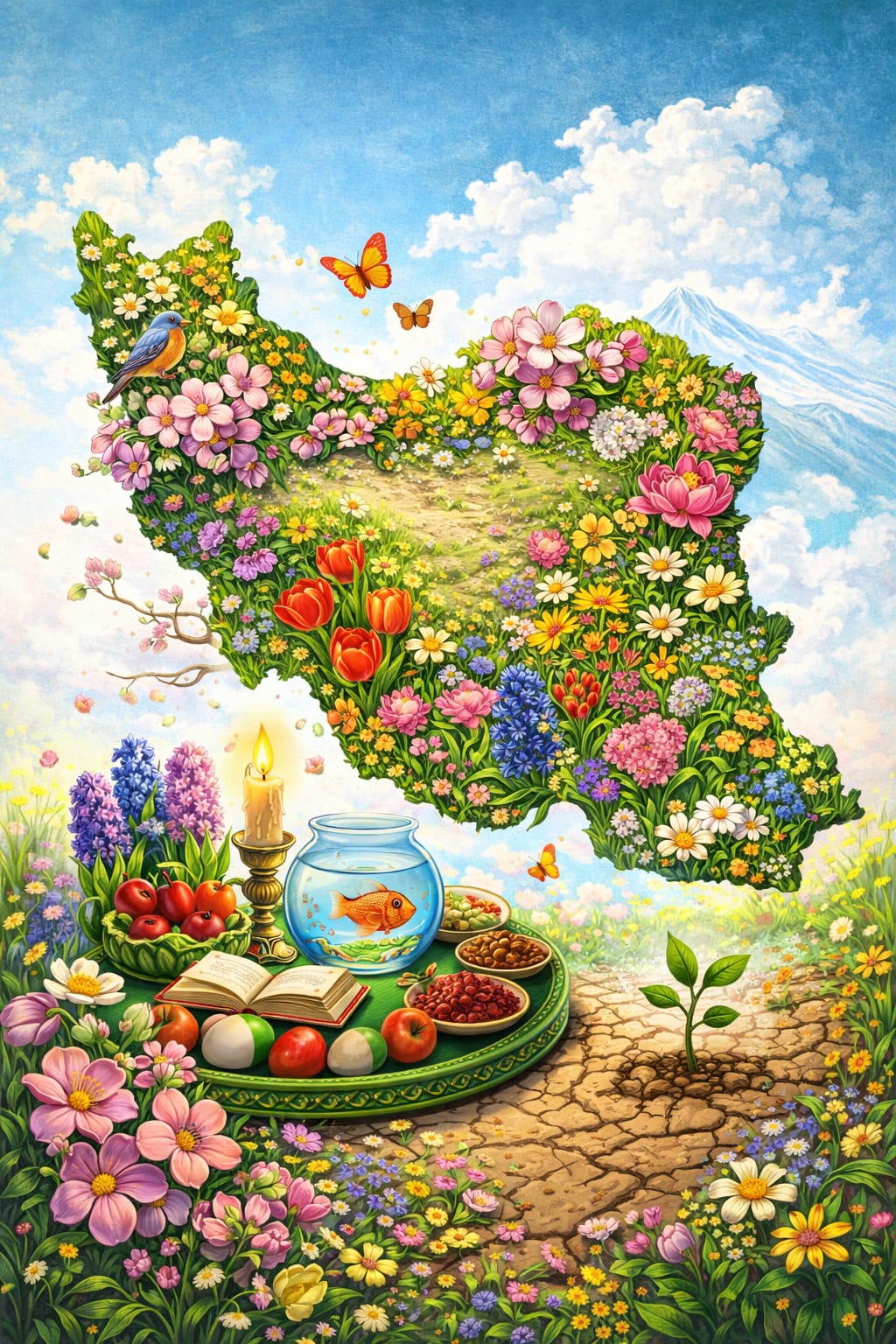
As you might know, yesterday marked the arrival of the Spring Equinox and the Persian New Year. I feel a twilight sensation between grief and bliss. However, I could just be hopeful that the coming year will be filled with peace, freedom, and justice.
I hope that next year, flowers will blossom instead of bullets, bombs, or executions. 💖🌹
Sorry! I can’t simply ignore this issue or stop worrying about the current situation. Perhaps it’s because I was born and raised in a dictatorship, which gives me a deeper understanding of the coming danger than many of my friends here, who have mostly been born and live in freedom.
The question is, when a nation feels disappointed with its situation and confused about its future, how easily can its patriotism be aroused and nationalism used to heal its social wounds? It is not related to a country’s political governing and social freedom, as we observe it occurring in both directories and Western democratic nations. I often wonder why people tend to embrace nationalism during moments of last-ditch pride, frequently seen in contexts like football national cups (a common occurrence in South America), historical racism (as observed in German history), or in leaning on their ancient heritage (as seen with figures like Mussolini in Italy and the Persians, which still resonates today).
Through scientific understanding, our world has become dehumanized. Man feels himself isolated in the cosmos. He is no longer involved in nature and has lost his emotional participation in natural events, which hitherto had a symbolic meaning for him… He no longer has a bush-soul identifying him with a wild animal. His immediate communication with nature is gone forever, and the emotional energy it generated has sunk into the unconscious. (C. G. Jung 1948/1980, para 585)
In today’s world, and likely in the years to come, politics will inevitably influence our lives, whether we want it to or not. I don’t intend to denigrate anyone, but when a single individual holds leadership in one of the most influential roles in the world with vast authority, it raises alarms about the potential for tyranny. And I’m sure all friends here must admit that no one will be immune to that seduction!
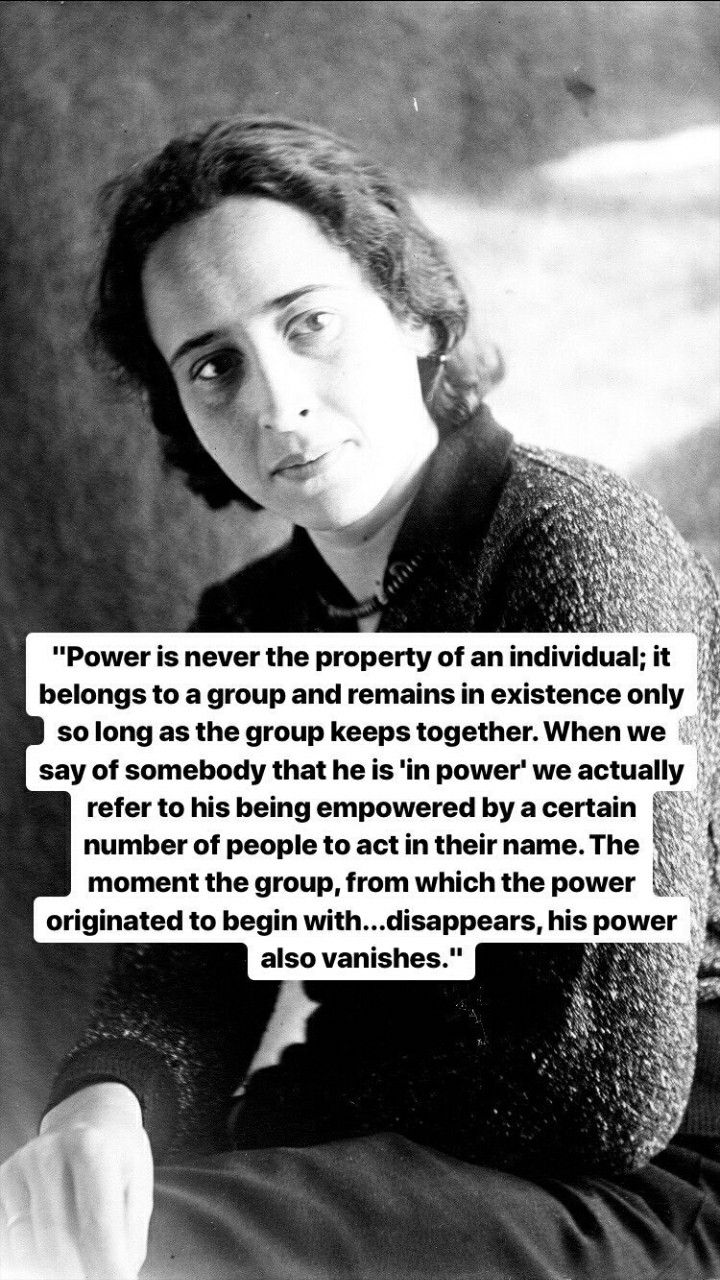
The word “democracy” originates from the Greek terms “demos,” meaning “people,” and “kratos,” meaning “power.” Therefore, democracy can be understood as the “power of the people”—a form of governance that relies on the people’s will. The idea of democracy derives its moral strength – and popular appeal – from two fundamental principles: 1- Individual Autonomy: This principle asserts that no one should be subject to rules others impose. People should be able to control their own lives within reasonable limits. 2- Equality: This principle holds that everyone should have the same opportunity to influence society’s decisions. Essentially, it emphasizes the disempowerment of concentrated power held by a single individual, transforming governance into a system where leaders serve the population rather than rule over them.
Lyndsey Stonebridge explains in her book “We Are Free To Change The World” (Hannah Arendt’s Lessons of Love and Disobedience): >In Arendt’s sense, having a free mind means turning away from dogma, political certainties, theoretical comfort zones, and satisfying ideologies. It means learning instead to cultivate the art of staying true to reality’s hazards, vulnerabilities, mysteries, and perplexities because, ultimately, that is our best chance of remaining human.< She also reflects that fundamental questions about the human condition are not beside the point in dire political times; they are the point. How can we think straight amidst cynicism and mendacity? What is there left to love, to cherish, to fight for? How can we act to secure it best? What fences and bridges do we need to build to protect freedom, and which walls do we need to destroy?
Hannah Arendt closely examined the regimes of Hitler and Stalin, their functionaries, the ideology of scientific racism, and the role of propaganda in creating what she described as “a curiously varying mixture of gullibility and cynicism.” This mixture is how individuals are expected to respond to their leaders’ ever-changing lies. In her 1951 work, “Origins of Totalitarianism,” she elaborated that this combination of gullibility and cynicism is prevalent across all levels of totalitarian movements:
In an ever-changing, incomprehensible world, the masses had reached the point where they would simultaneously believe everything and nothing, think that everything was possible and nothing was true… The totalitarian mass leaders based their propaganda on the correct psychological assumption that, under such conditions, one could make people believe the most fantastic statements one day and trust that if the next day they were given irrefutable proof of their falsehood, they would take refuge in cynicism; instead of deserting the leaders who had lied to them, they would protest that they had known all along that the statement was a lie and would admire the leaders for their superior tactical cleverness.
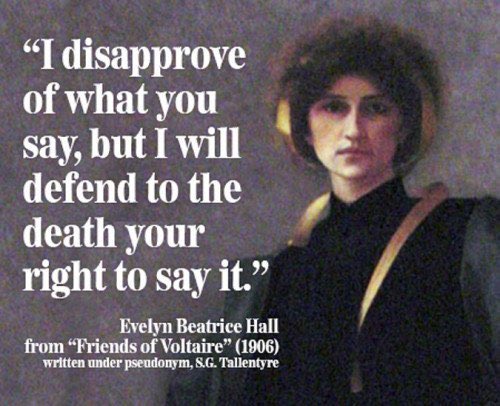
It is important to recognize the significant danger of trusting someone who makes promises. Why do such individuals often resort to constant and blatant lying? One reason is that it serves as a way to control their subordinates completely. These followers may feel compelled to abandon their own integrity to echo outrageous falsehoods, subsequently becoming tied to the leader through feelings of shame and complicity. Professor Jacob T. Levy from McGill University highlights the insights of prominent thinkers like George Orwell, Hannah Arendt, and Vaclav Havel. He notes that they can help us identify a specific type of falsehood. He states that “saying something obviously untrue and forcing your subordinates to repeat it earnestly in their own words is a shocking demonstration of power over them. This practice was widespread in totalitarian regimes.”
“You can read my lips… Repeat my words as I repeat them! Doesn’t this sound familiar? Arendt and others noted— as Levy writes— that “being forced to repeat an obvious lie makes it clear that you’re powerless.” She also identified how an avalanche of lies can render a populace unable to resist, a phenomenon we now refer to as ” “gaslighting”:
The result of a consistent and total substitution of lies for factual truth is not that the lie will now be accepted as truth and truth be defamed as a lie, but that the sense by which we take our bearings in the real world—and the category of truth versus falsehood is among the mental means to this end—is being destroyed.
However, time will reveal how a people or a nation can differentiate between right and wrong and how much their practice of democracy can help them recognize truth and falsehood. Democracy is not a gift that can be simply given; it requires thorough training to achieve its ultimate goal.
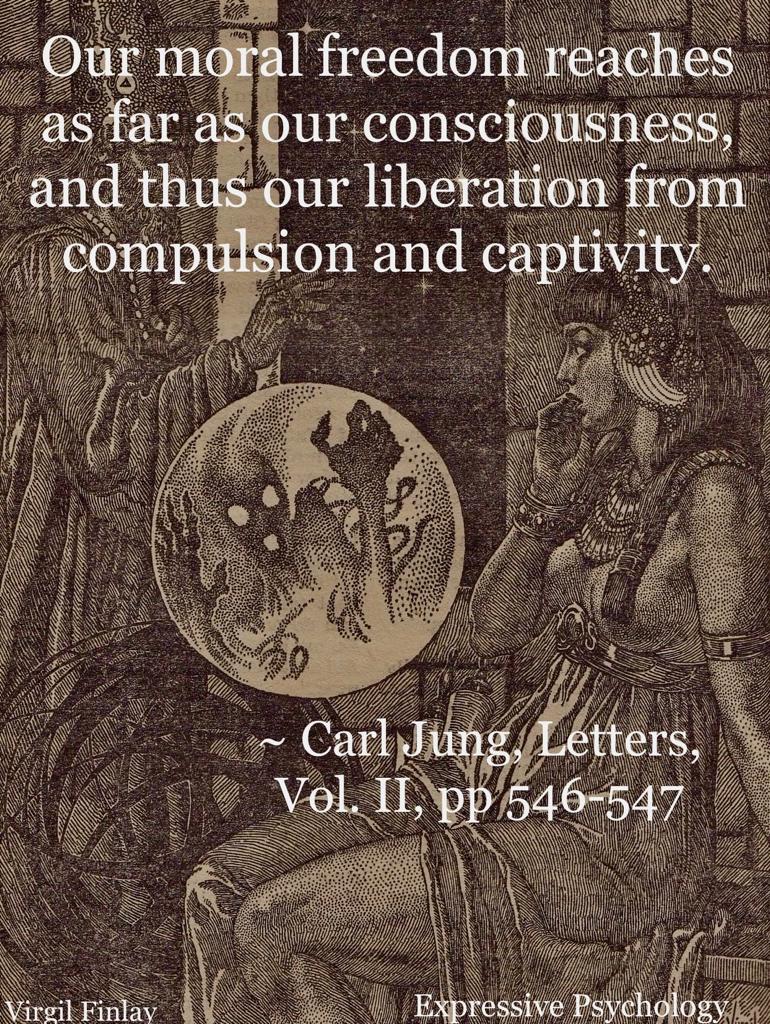
Our moral freedom reaches as far as our consciousness and, thus, our liberation from compulsion and captivity. ~Carl Jung, Letters Vol. II, pages 546-547 (from C.J. Depth Psychology)
By Petra Glimmdall 💖🙏
These days, because of my activities in helping the Iranian people, I have been deeply involved in establishing a fair and just system based on sound laws to help the Iranian people. However, finding a suitable constitution for a young nation (in the term of democracy) is not easy. It is not only the laws that make society fair; every individual must learn how to live in a democratic society.
Understanding freedom depends on the laws and anti-laws we legislate! Kahlil Gibran has an excellent explanation. I hope you enjoy it.
From The Prophet
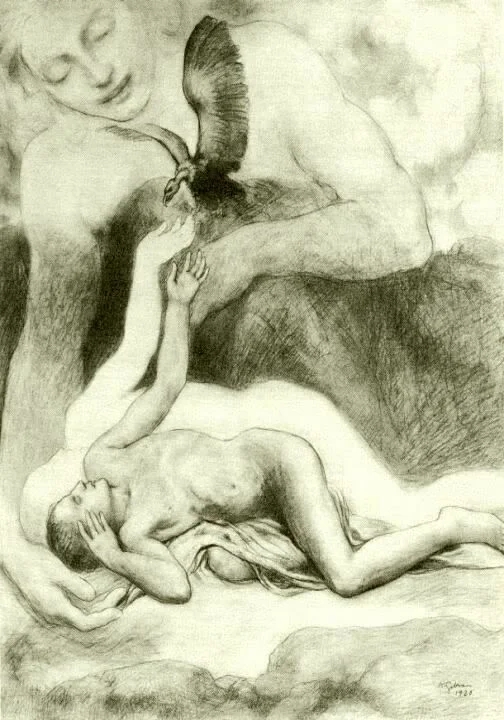
Painting by Kahlil Gibran 1883-1931 – Tutt’Art@
People of Orphalese, you can muffle the drum, and you can loosen the strings of the lyre, but who shall command the skylark not to sing?
Then the lawyer said, but what of our laws, master? And he answered: You delight in laying down laws, Yet you delight more in breaking them. Like children playing by the ocean who build sand towers with constancy and then destroy them with laughter. But while you build your sand towers, the ocean brings more sand to the shore, and when you destroy them, the ocean laughs with you. Verily, the ocean always laughs with the innocent.
But what of those to whom life is not an ocean, and man-made laws are not sand towers, But to whom life is a rock, and the law a chisel with which they would carve it in their own likeness? What of the cripple who hates dancers? What of the ox who loves his yoke and deems the elk and deer of the forest stray and vagrant thin?
What of the old serpent who cannot shed his skin and calls all others naked and shameless? And of him who comes early to the wedding feast and, when over-fed and tired, goes his way, saying that all feasts are violations and all feasters are lawbreakers?
What shall I say of these save that they, too, stand in the sunlight, but with their backs to the sun? They see only their shadows, and their shadows are their laws. And what is the sun to them but a caster of shadows? And what is it to acknowledge the laws but to stoop down and trace their shadows upon the earth? But you who walk facing the sun, what images drawn on the earth can hold you? You who travel with the wind, what weather vane shall direct your course? What man’s law shall bind you if you break your yoke but upon no man’s prison door? What shall you fear if you dance but stumble against no man’s iron chains? And who is he that shall bring you to judgment if you tear off your garment yet leave it in no man’s path?
People of Orphalese, you can muffle the drum and loosen the strings of the lyre, but who shall command the skylark not to sing?



 lampmagician
You must be logged in to post a comment.