Observing the Depths from Below!

Standard

I am a forest, and a night of dark trees: but he who is not afraid of my darkness will find banks full of roses beneath my cypresses. The higher we soar, the smaller we appear to those who cannot fly.
~Friedrich Nietzsche, Thus Spoke Zarathustra

Understanding duality and the existence of opposites is essential for comprehending both our world and ourselves. Today, I often see the phrase ‘We are good & They are bad’ being misused and exploited. Good and evil are present within everyone!

Duality promotes understanding of the balance and tension between opposing elements, showing that complexity and harmony come from these interactions. Jung extensively studied duality, viewing it not just as external contrasts like light versus dark, cold versus warm, or above versus below, but as essential components of the human psyche and the process of individuation.

Jung says: Roots of Life reach into Hell. A core idea in Jung’s view of human existence is the concept of Duality and the Principle of Opposites. He argued that the psyche operates under the “principle of opposites,” meaning that every psychological concept or experience—such as light, warmth, consciousness, or life—inevitably has its opposite, like darkness, cold, unconsciousness, or death. The ongoing tension between these opposing forces is vital for psychological development and transformation. Dualities are not always entirely opposite; instead, they often depend on each other and define one another. For instance, light derives meaning only through its contrast with darkness. Many philosophies, including Taoism, highlight that these opposites are interconnected and mutually dependent, creating a balanced whole (yin and yang).
Jung’s psychology focuses on a fundamental duality between the conscious mind—associated with light, warmth, and awareness—and the unconscious, linked to darkness, coldness, and forgotten elements. The unconscious includes repressed or unknown parts, with the ‘shadow’ representing darker aspects we often reject or ignore. Recognising and accepting the shadow is crucial for achieving psychological wholeness.
The process of individuation involves integrating these opposites, acknowledging and reconciling them, rather than suppressing one side.
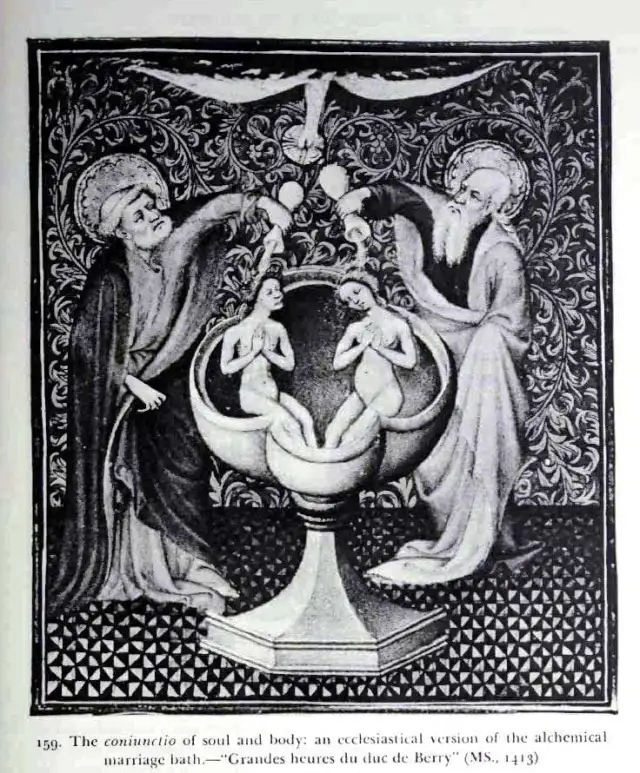
Jung explored myths, dreams, and alchemy, which frequently symbolised these dualities—such as sun/moon, king/queen, above/below—as part of psychic development. He saw alchemy as a metaphor for merging the conscious and unconscious components of the psyche.

Jung’s idea of duality illustrates how opposites are essential and creative elements of the mind. Concepts like light and dark, cold and warm, or the branches of a tree reaching upward and downward symbolise both external facts and internal truths. Personal development requires embracing these dualities to achieve a more integrated and authentic self.

An 1847 depiction of the Norse Yggdrasil as described in the Icelandic Prose Edda by Oluf Olufsen Bagge. Via Carl Jung Depth Psychology

He perceives the tree of life, whose roots extend into Hell and whose top reaches Heaven. He no longer distinguishes between right and wrong, holy and unholy, genuine and false, or good and evil. The only difference he recognises is between below and above: he sees that the tree of life grows from the ground upward, with its crown at the top, clearly separate from the roots. This view is unquestionable to him, and it guides his path to salvation.
To unlearn all distinctions except that of direction is part of your salvation. This liberates you from the old curse of knowing good and evil. Although you separated good from evil based on your best judgment, aiming only for the good and denying the evil you did- and struggled to accept it- your roots no longer drew dark nourishment from below, causing your tree to weaken and wither.
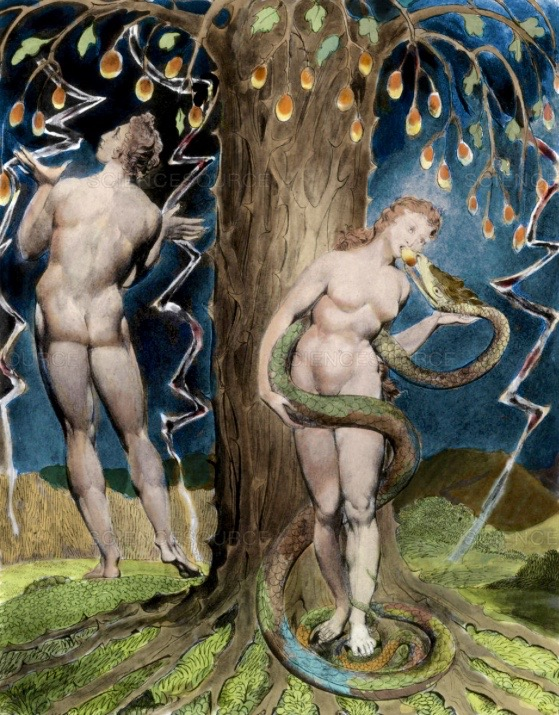
Therefore, the ancients said that after Adam ate the apple, the tree of paradise withered. Your life needs the dark. But knowing it is evil makes acceptance impossible, leading to suffering and confusion. You cannot accept it as evil, or your sense of goodness will reject you. Nor can you deny it, because you
know both good and evil. This knowledge of good and evil became an insurmountable curse.
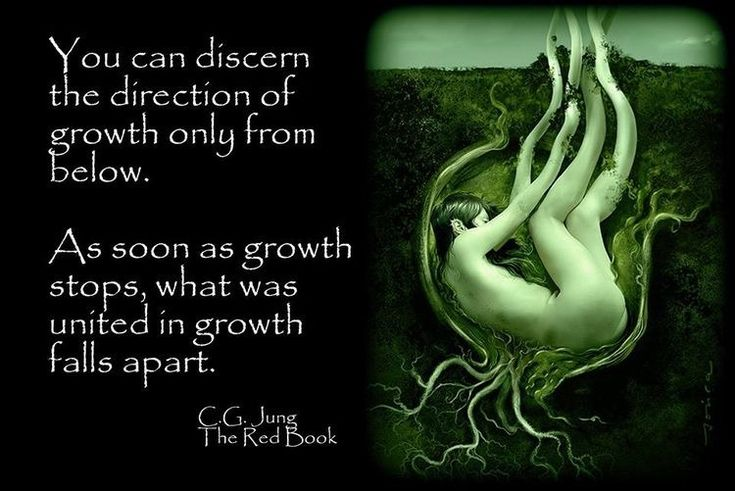
But if you return to primal chaos and recognise that which hangs stretched between the two unbearable poles of fire, you will notice that you can no longer conclusively separate good and evil, neither through feeling nor through knowledge, but that you can discern the direction of growth only from below to above. You thus forget the distinction between good and evil, and you no longer know it as long as your tree grows from below to above. But as soon as growth stops, what was united in growth falls apart, and once more you recognise good and evil.
You can never deny your knowledge of good and evil to yourself, so that you could betray your good in order to live evil. For as soon as you separate good and evil, you recognise them. They are united only in growth. But you grow if you stand still in the greatest doubt, and therefore, steadfastness in great doubt is a veritable flower of life.
He who cannot bear doubt does not bear himself. Such a one is doubtful; he does not grow, and hence he does not live. Doubt is the sign of both the strongest and the weakest. The strong have doubt, but doubt has the weak.

Therefore, the weakest is close to the strongest, and if he can say to his doubt: “I have you,” then he is the strongest. But no one can say yes to their doubt unless they endure wide-open chaos. Because there are so many among us who can talk about anything, pay heed to what they live. What someone says can be very much or very little. Thus, examine his life.

My speech is neither light nor dark, since it is the speech of someone who is growing. ~Carl Jung, Red Book, Page 301

Thank you for taking the time to read. 🙏

Everything is Relative; Even Happiness!

Standard

Put your hand on a hot stove for a minute, and it seems like an hour. Sit with a pretty girl for an hour, and it seems like a minute. That’s relativity.
~Albert Einstein

I was always sceptical about the concepts of time and space. As I explored Einstein’s theory of relativity, I realised that it encompasses not just time and space, but everything else as well, including happiness.

Indeed, it pertains to an individual’s life circumstances or, more precisely, it is linked to them. For example, someone living a stress-free and trouble-free life may experience a lack of happiness, but when faced with tough times, they may find happiness more readily.

My life has been filled with challenges, but this year has been especially tough. As you know, I had issues with my lower abdomen and underwent three surgeries to fix it, or so I thought. However, a problem arose when I went to the toilet, which caused concern, and I visited my doctor. After the examination, he stated that an apparent mistake had occurred during the last operation, a part had been injured, and I would require another procedure. I won’t go into the details, but after some anxious days, I’ve managed to secure a scheduled appointment for next Wednesday, as the procedure needs to be done soon to prevent kidney issues.

I gathered some insights and words from my teacher, Carl Jung, who held that the psyche and cosmos are fundamentally timeless. Working with Einstein and Pauli, he examined a concept of timelessness that goes beyond linear clock time. Jung proposed that accurate understanding involves transcending causality because time in the psyche and reality is relative. Although our conscious mind perceives time linearly, embracing a sense of timelessness can enhance learning. His goal was to unify physical and psychic realities and how they interact.

He believed in a psychological “relativity of time,” where perception is subjective and affected by inner states. He connected this to synchronicity, implying that the psyche and material world are not always ruled by linear cause-and-effect but can relate in other ways. Jung pointed out that, similar to the space-time continuum in modern physics, the unconscious also exhibits “indistinctness” or psychic relativity, which blurs the boundaries between time and space.

For Jung: “[Synchronicity] cannot be a question of cause and effect, but of a falling together in time, a kind of simultaneity. Because of this quality of simultaneity, I have chosen the term ‘synchronicity’ to designate a hypothetical factor equal in rank to causality as a principle of explanation.”
Jung, C. G. (1952). The Structure and Dynamics of the Psyche; Synchronicity: An Acausal Connecting Principle, in CW, Vol. 8.

Now, what about happiness? I tell you this: when I go to the toilet and manage to pee, I feel the entire joy of life again and find happiness!

Humour plays a vital role, and hope remained until the very end. In my seventy years, I have enjoyed good health and no surgeries, but this year I face my fourth operation. Here’s to a brighter year ahead. Wishing you all health and prosperity.

The Mystery Of “Mana Personality” Part Nine

Standard

Translated from volumes published by Lorenz Jung based on the edition “Gesammelte Werke” dtv.de The Symbols of Transformation (1952) and Aion (1950)

Today, I share the final part of the translation of Mana-Personality. It was full of joy for me to learn more and even better from his works because I had to read them word by word to achieve an understandable translation. I hope it was the same for you.

We often wonder why there are so many injustices, differences, and failures in human progress (decline?). Is God flawed? Dr. Jung suggests that God must be imperfect; otherwise, we cannot reach Him.

In the figure of the divine hero, God himself wrestles with his own imperfect, suffering, living creation; he even takes its suffering condition upon himself and, by this sacrificial act, accomplishes the opus magnum of salvation and victory over death.

Credit Text and Image Carl Jung Depth Psychology 🙏

He, instead, talks about the importance of the Self and Individuality.

He personally also admits that his explanation is sensitive to experiences that some may not have practised. He emphasizes:

I am deeply aware that in this work, I have not made any ordinary demands on the understanding of my reader. I have made every effort to smooth the path to understanding. Still, I have not been able to remove one great difficulty, namely the fact that the experiences underlying my explanations are probably unknown to most people and, therefore, strange...

Still, he tries to enlighten us on the matter based on his experiences.

Image credit Carl Jung Depth Psychology

Previous

Now, let’s move on to the final chords:

Individuation
The Mana Personality (P9)

The conception of God as an autonomous, psychological content makes God a moral problem – and that is, admittedly, very uncomfortable. But if this problem does not exist, then God is not real either because he does not intervene in our lives anywhere. Then, he is a historical conceptual bogeyman or a philosophical sentimentality.

If we leave the idea of ​​a “divine” out of the equation and speak only of autonomous contents, we may remain intellectually and empirically correct, but we thereby conceal a note that psychologically cannot be missed. If we use the idea of ​​a “divine”, we are thereby aptly expressing the peculiar way in which we experience the effects of autonomous content. We can also use the term “demonic” as long as we do not imply that we have reserved a concrete God somewhere who completely corresponds to our wishes and ideas. However, our intellectual sleight of hand tricks do not help us to create a being according to our wishes in reality, just as the world does not adapt to our expectations. If we, therefore, attribute the effects of autonomous contents with the attribute “divine”, we thereby acknowledge their relative superiority. And this superior is the power that has forced a man of all ages to think of the most unthinkable things and to inflict the greatest suffering on himself in order to do justice to those effects. This power is as real as hunger and fear of death.

The Self could be characterized as a kind of compensation for the conflict between inside and outside. This formulation may not be a lousy fit insofar as the Self has the character of something that is a result, an achieved goal, something that has only gradually come about and has become possible through much effort. Thus, the Self is also the goal of life, for it is the complete expression of the combination of destinies that we call the individual, and not just of the individual human being, but of a whole group in which one completes the other to form the complete picture.

With the sensation of the Self as something irrational, indefinable, to which the ego is not opposed and not subject, but rather attached and around which it rotates, as the earth rotates around the sun, the goal of individuation is achieved. I use the word “sensation” to describe the perceptual character of the relationship between “I” and Self. There is nothing recognizable in this respect because we are unable to say anything about the contents of the Self. The “I” is the only content of the Self that we know. The individualized “I” perceives itself as the object of an unknown and superior subject. It seems to me that the psychological statement reaches its extreme end here because the idea of ​​a Self is in and of itself a transcendent postulate that can be justified psychologically but cannot be proven scientifically. The step beyond science is an absolute requirement of the psychological development described here because, without this postulate, I could not adequately formulate the empirically occurring psychological processes. The Self, therefore, claims at least the value of a hypothesis corresponding to that of the atomic structure. And – should we still be enclosed in an image here – then it is something overwhelmingly alive, the interpretation of which is beyond my capabilities. I do not doubt that it is an image, but one in which we are still contained.

Youri Ivanov _ DIGITAL GRAPHIC ART _ SD World 141

I am deeply aware that in this work, I have not made any ordinary demands on the understanding of my reader. I have made every effort to smooth the path to understanding. Still, I have not been able to remove one great difficulty, namely the fact that the experiences underlying my explanations are probably unknown to most people and, therefore, strange. As a result, I cannot expect my readers to follow all of my conclusions. Although every author naturally enjoys understanding their audience, interpreting my observations is less important to me than pointing out a broad area of ​​experience that has hardly been explored, which I would like to make accessible to many through this book. In this area, which has been so obscure up to now, it seems to me that the answers are recumbent to many puzzles that the psychology of consciousness has never even come close to solving. I do not wish to claim under any circumstances to have formulated these answers definitively. I am, therefore, quite content if my paper can be regarded as a tentative attempt at an answer.

I sincerely appreciate your support and interest. Thank you!🤗🙏💖

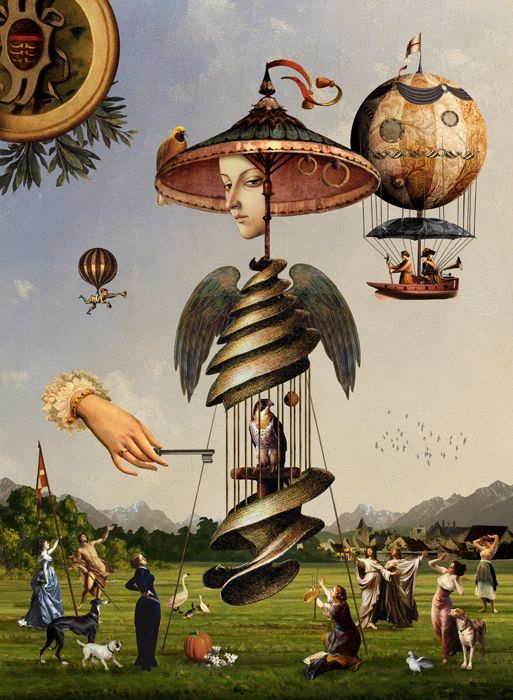
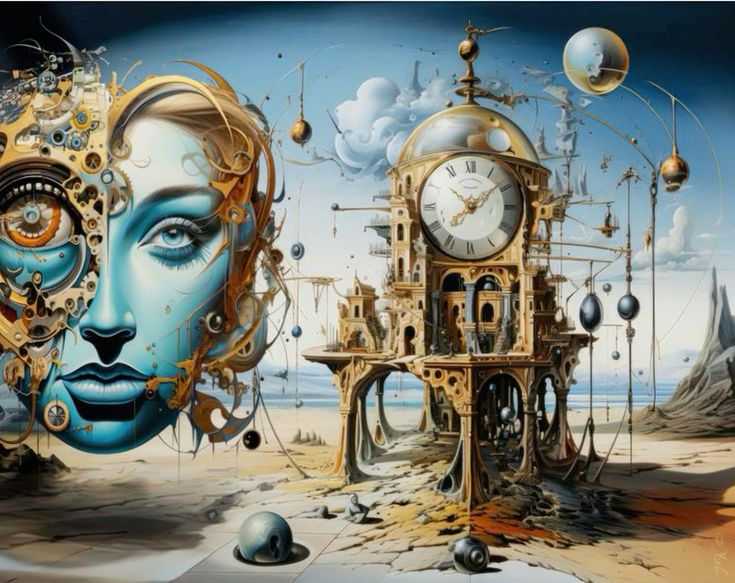
The title image: Maiden Voyage of the Airship Falcon” by Alexei Gurl

The Future is Feminine!

Standard
Museum of Fine Arts, Boston
‘Satan Watching the Caresses of Adam and Eve’; watercolour by William Blake for John Milton’s Paradise Lost, 1808

During one of my workdays, I had a guest in my car – an intelligent woman who left a lasting impression on me with her profound awareness. We delved into a conversation about various topics such as God, the world, and eventually, my birthland, Iran. I shared my views on equality between men and women. Then I dared to discuss Femininity, Anima, Animus, and Dr Jung’s idea of their existence, which are present in every human. She listened attentively, found my words intriguing, and even agreed somewhat. However, she expressed her preference for being a “pure woman” and did not desire to have any masculine traits in herself!

I believe the current wave of feminism is a form of emancipation fueled by frustration toward men. This frustration stems from the fact that men have dominated the world’s history. However, I wanted to discuss this further to convince her to understand my perspective.
Unfortunately, we arrived at her destination before we finished, and she got out of the car and left.

I have gathered here some words and quotes on femininity, body and soul, which I believe has very little to do with gender (as Marion Woodman says so well), and we might need a vested development to comprehend it.

The Body and The Soul

The Garden of Love – William Blake
I went to the Garden of Love and saw what I had never seen: A Chapel was built in the midst, Where I used to play on the green. And the gates of this Chapel were shut, and “Thou shalt not” writ over the door; So I turned to the Garden of Love that so many sweet flowers bore; and I saw it was filled with graves, and tomb-stones where flowers should be; and Priests in black gowns were walking their rounds, And binding with briars my joys & desires.
“Do what you will; this world’s a fiction and is made up of contradiction.” William Blake (UK 1757-1827) Infant Joy – Infant Sorrow – by William Blake

Ascension by William Blake

William and Marion

“William Blake says the body is ‘that portion of soul discerned by the five senses’ I live with that idea. I sit and look out my window here in Canada, and the autumn trees are golden against the blue sky. I can feel their “food” coming into my eyes and going down, down, down, interacting inside, and I fill up with gold. My soul is fed. I see, I smell, I taste, I hear, I touch. Through the orifices of my body, I give, and I receive. I am not trying to capture what is absent. It’s that interchange between the embodied soul and the outside world that is the dynamic process. That’s how growth takes place. That is life.”

~Marion Woodman, Conscious Femininity, P. 44-45

The Worship of the Serpent: The Awakening of Eve and the Generation of Nature The Symbol of the Serpent

Award-winning author Teri Degler quoted:

“….embodying the divine feminine is critically important for our times. (Teri Degler: The Divine Feminine Fire)

It shows you how to accomplish this by getting to know your body, bringing your body and your dreams together, and uniting body and soul. Marion Woodman, author of Dancing in the Flames

This issue might have a long way to go, and as I am involved in something more primitive like the situation in Iran, I can see those women who are beyond all boundaries and fighting for their rights; I discern light at the end of the tunnel! Thank you all for your interest. Have a lovely weekend, everybody.🙏💖🥰