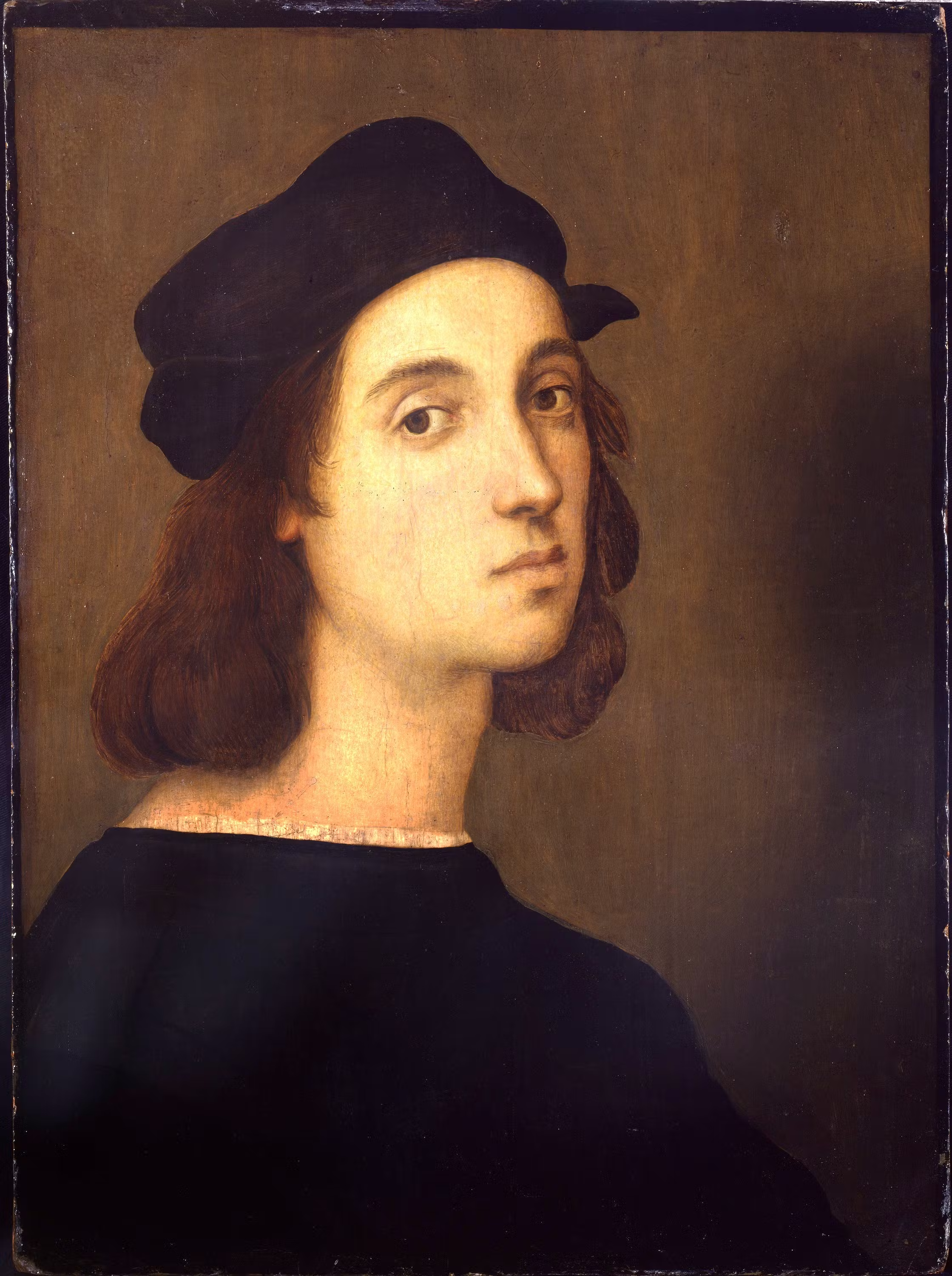
Raphael’s self-portrait | Uffizi GalleriesSelbstbildnis des Leonardo da Vinci Leonardo da Vinci, um 1512 Biblioteca Reale, TurinPortrait by Daniele da Volterra, c. 1545
Raffaello Sanzio, Leonardo da Vinci, and Michelangelo are legendary figures of the Renaissance, each contributing uniquely to the era’s art and thought. Raffaello is celebrated for his balanced compositions and perspective, especially in The School of Athens, embodying ideals of knowledge and beauty. Leonardo da Vinci, a true polymath, excelled in painting, science, and anatomy, with works such as the Mona Lisa and The Last Supper showcasing his innovative methods and deep understanding of human emotion. Michelangelo, renowned for his sculptures and paintings, created masterpieces such as the Statue of David and the Sistine Chapel ceiling, which reflect his keen insight into human anatomy and emotion. These artists collectively represented the Renaissance spirit, merging art, science, and philosophy, and their enduring legacies continue to inspire us.
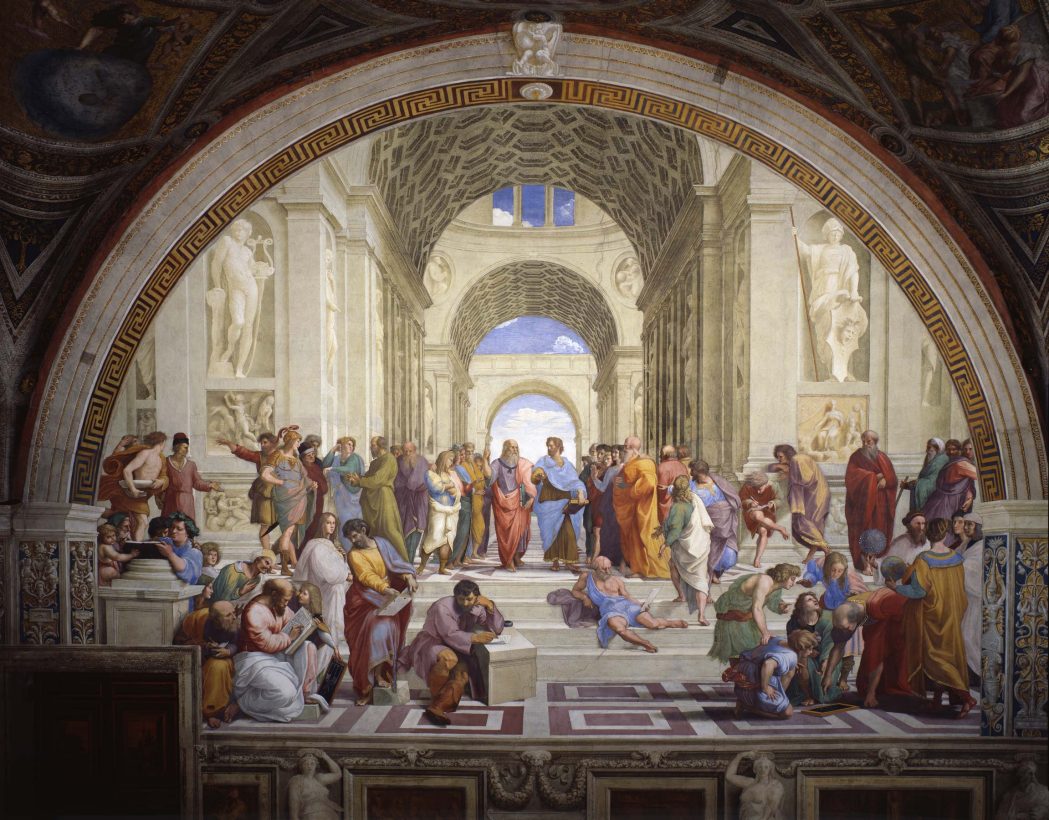
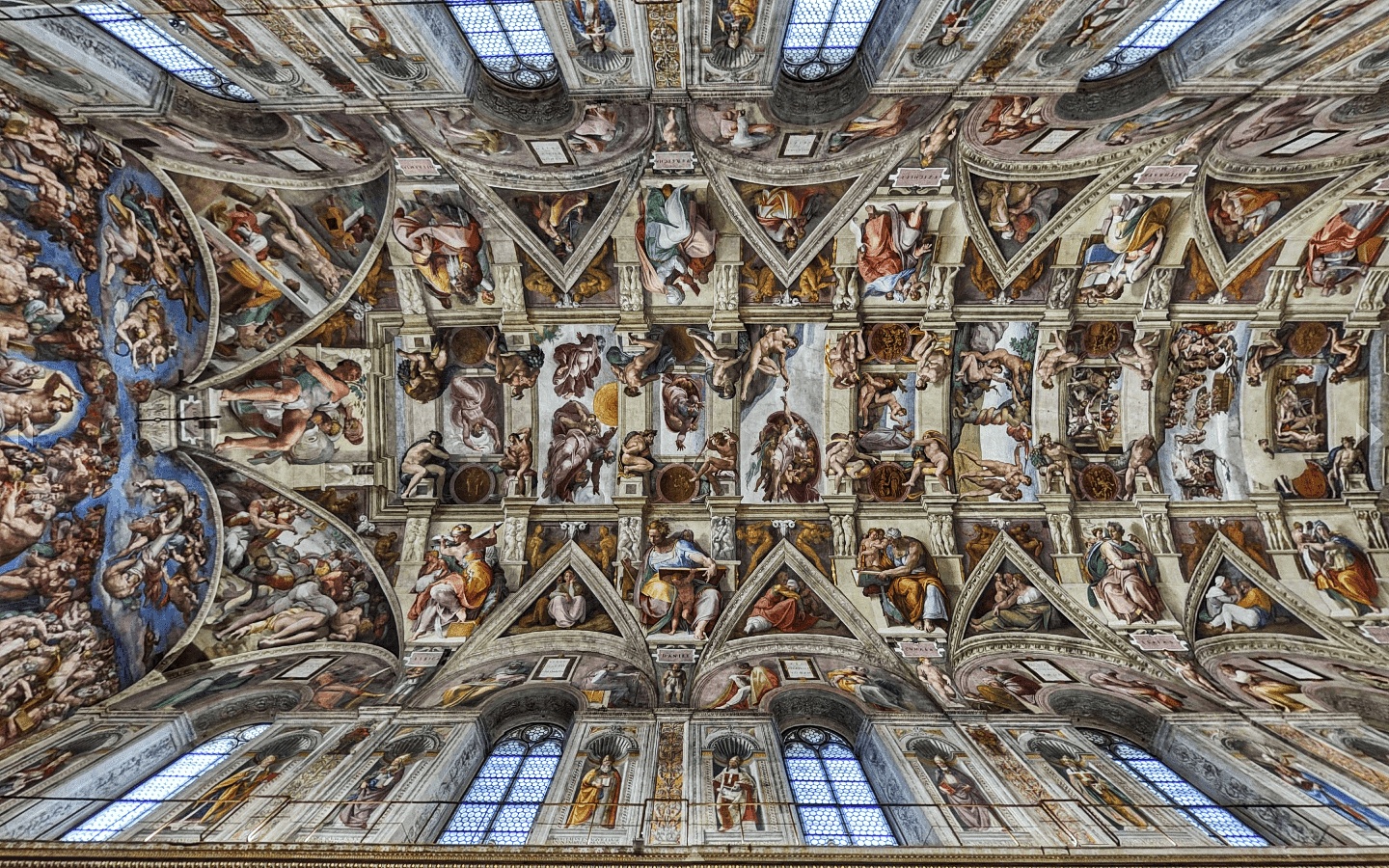
But what is the most interestingly depicted in art history during the Renaissance? Two masterworks tell their own story: Raffaello’s ‘School of Athens’ and Michelangelo’s ‘Sistine Chapel ceiling.’
Indeed, Leonardo da Vinci’s Last Supper should not be overlooked, as it is a Renaissance masterpiece that captures the moment after Jesus reveals that one of his apostles will betray him. Raffaello’s The School of Athens also employs one-point perspective, similar to da Vinci’s method: the composition is centred on a single vanishing point with all lines converging on Jesus, highlighting him as the focal point. However, it’s a different story!
I previously covered that topic, mainly from a philosophical angle rather than focusing on developing the art self. Now, let’s explore this masterpiece creatively and artistically.
Raffaello’s masterpiece, The School of Athens, exemplifies the Renaissance by highlighting its core principles of knowledge, philosophy, and beauty. This famous fresco depicts a gathering of history’s greatest thinkers, including Plato and Aristotle, each representing distinct philosophical perspectives. Plato, resembling Leonardo da Vinci, represents idealism and the importance of ideas, while Aristotle stands for empirical observation. Figures like Socrates, Ptolemy, and Euclid enrich the discussion. Raffaello’s masterful use of perspective draws viewers into a vibrant intellectual hub of the Renaissance. The influence of Michelangelo is evident, demonstrating outstanding artistic talent. The School of Athens celebrates individual genius and the collaborative spirit of the Renaissance, a time when art, science, and humanism thrived.
Raffaello’s ‘School of Athens’ and Michelangelo’s ‘Sistine Chapel ceiling’ are iconic Renaissance masterpieces. ‘School of Athens’ portrays philosophers amidst impressive architecture, symbolising art, philosophy, and science.
Michelangelo’s ceiling is renowned for dramatic scenes like ‘Creation of Adam’, showcasing his skill and religious themes.
Both works are culturally and historically significant, reflecting Renaissance intellectual and artistic progress.
Here’s a video titled “How to read ‘The School of Athens’ – a triumph of Renaissance art” from Aeon, a recommended site. In Great Art Explained, UK curator and video essayist James Payne explores Raphael’s The School of Athens (1509-11), a Renaissance icon. He highlights its location in the Pope’s private Vatican library, symbolising philosophy alongside theology, poetry, and law. Payne describes how Raphael’s composition merges Classical and Christian ideas, showing their interconnectedness in the quest for truth.
I hope you enjoy it and wish everyone a wonderful weekend. 🤗💖
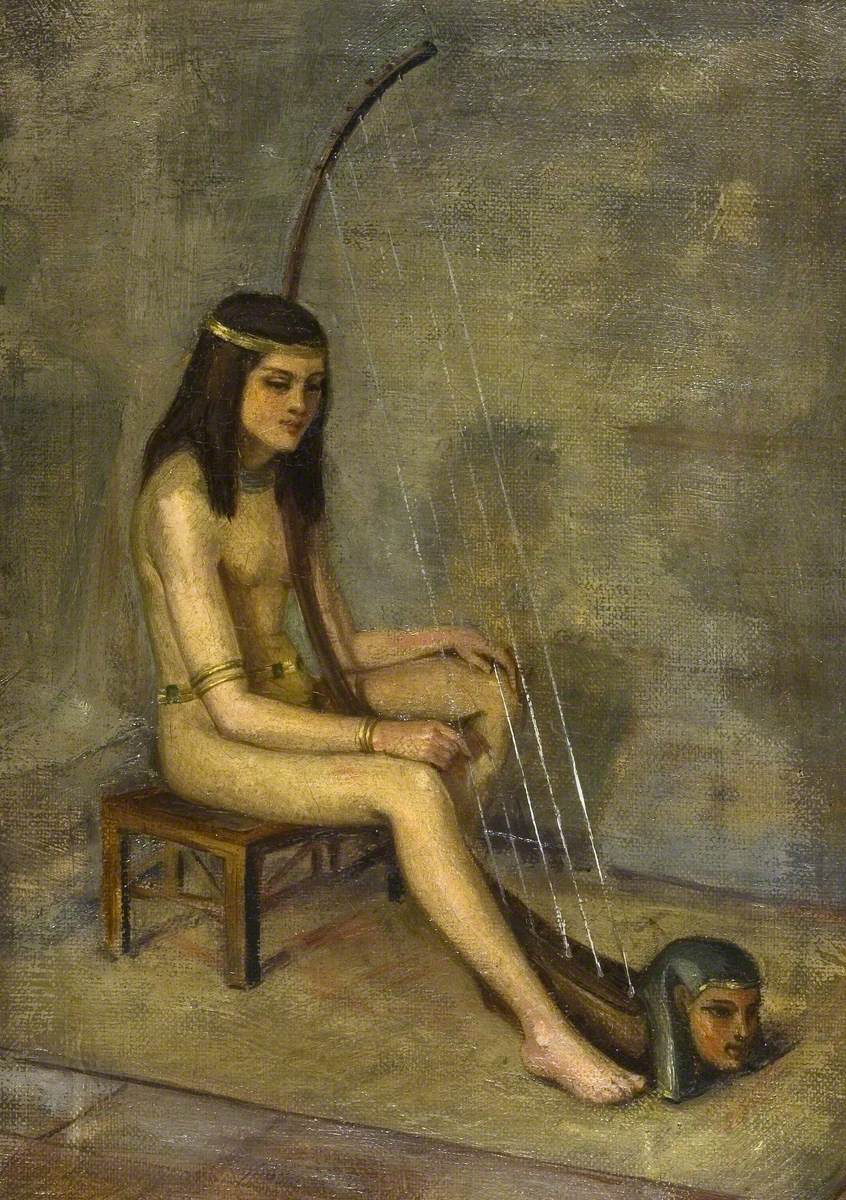
Ancient Egyptian history is undeniably captivating, and exploring it with a hint of femininity makes it even more alluring.
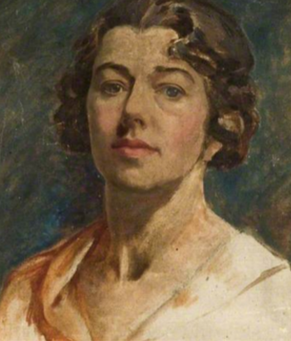
By Myrtle Florence Broome (Self Portrait). Original publication: unknown immediate source- Wiki. Fair use!
Myrtle Florence Broome (22 February 1888 – 27 January 1978) was a British Egyptologist and artist renowned for her illustrated collaboration with Amice Calverley on the Temple of Seti I at Abydos, as well as her paintings that captured the essence of Egyptian village life during the 1920s and 1930s. She was born on 22 February 1888 in Muswell Hill, London, to Eleanor Slater and Washington Herbert Broome. Broome studied art at a school in Bushey founded by Sir Hubert von Herkomer. From 1911 to 1913, she attended University College London, where she earned a Certificate in Egyptology under the guidance of Sir Flinders Petrie and Margaret Murray.
I was pleasantly surprised to come across this old post from the égyptophile site, and am excited to share this beautiful story about two women and their love for ancient Egyptian magic with you.
Therefore, I included the slogan of the Iranian women’s and men’s revolution, #WomanLifeFreedom, in this post, as it symbolises not only the struggle for freedom in Iran but also resonates worldwide.
Florence Broome, Egyptologist and Painter London, February 22, 1888 – Bushey, January 27, 1978 – Self-portrait on the right and, on the left, a copy of her extraordinary work at Abydos: “King Sethos receives life and dominion from the goddess Saosis” (detail)
Along with Nina de Garis Davies, Marcelle Baud, and Amice Calverley, Myrtle Florence Broome is undoubtedly one of the most gifted copyists to have worked in Egypt during the first half of the 20th century.
Myrtle was born in London’s Muswell Hill neighbourhood on February 22, 1888, into a family of music book publishers. However, it was in Bushey, Hertfordshire, that she spent much of her life, and it was there that she studied at the Beaux-Arts, developing her talents for drawing and painting.
In 1911, she joined University College London, where she studied Egyptology under the guidance of two eminent professors, Flinders Petrie and Margaret Murray, who would become the first female Egyptologists.
During the two years of classes taught by Margaret Murray, what she ironically called “the gang” was formed: it included Myrtle Broome, Guy and Winfried Brunton, Reginald (Rex) Engelbach, and Georginan Aitken, all of whom went on to have distinguished careers in Egyptology (Rex would become curator of the Cairo Museum of Antiquities).
Margaret Murray’s influence on Myrtle was undoubtedly significant, and it seems likely that she encouraged her to develop and exploit her artistic talents professionally.
Myrtle Florence Broome (left) and Amice Calverley posing in front of their “copies”
In 1927, Myrtle was at the Qau el-Kebir site, where she conducted epigraphic surveys of Middle Kingdom tombs and copied their scenes.
In 1929, she was recruited by the Egypt Exploration Society and joined Amice Calverley at Abydos. This marked the beginning of a fruitful, beautiful, and enriching collaboration that would culminate in a deep and lasting friendship.
They will spend eight seasons together, eight excellent seasons in the temple and the Osereion. The task is complex, and the concentration is extreme because recording the scenes requires very particular attention, with no room left for personal interpretation. All this in rather “primitive” working conditions, sometimes perched on ladders more than 10 m above the ground and in often oppressive heat! The Abydos team is very quickly enriched by a Canadian Egyptologist and an Austrian photographer who also do excellent work, while good humour reigns.
James Henry Breasted was at a loss for words to praise their talent and admitted that it seemed impossible to find more expert and brilliant women.
The result was published in four volumes edited between 1933 and 1958 by the Egypt Exploration Society of London and the Oriental Institute of the University of Chicago, with the financial support of John D. Rockefeller Jr. A remarkable work, of unparalleled quality, and—but?—so beautiful that it remained, in a way, almost confidential for fear of damaging the plates!
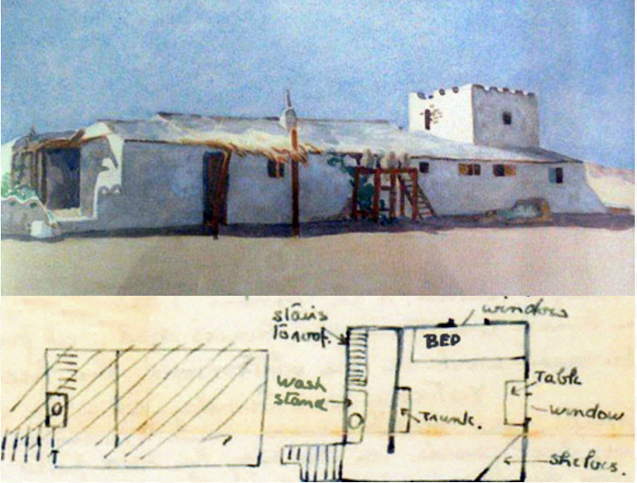
Myrtle Florence Broome’s house during her work at Abydos
The time spent in Abydos was undoubtedly one of the happiest periods of Myrtle’s life. In the small, low-rise house she lived in—and which we can see in one of her paintings—she had: “a housekeeper whom she nicknamed Nannie and a villager, called Sadiq, who served as her advisor, bodyguard, and personal assistant. Life was frugal, however, and Myrtle took great care not to exceed their allotted budget.”
Accompanied by Sadiq, Amice, and Myrtle, they took several short trips in Amice’s car to the Red Sea, Kharga, and Dakhla. Myrtle’s paintings vividly depict the desert’s colours, with shades of pink, brown, and subtle hints of golden beige.
Amice Calverley on a painting by Myrtle Florence Broome, created during one of their many “expeditions” to Egypt (c) Bushey Museum and Art Gallery; Supplied by The Public Catalogue Foundation
We feel that she loved these landscapes infinitely, that she was imbued with their colours and their light. One of her paintings is particularly touching and gives a beautiful idea of what their escapades must have been like: we see Amice sitting on a mat, near her car, taking notes in the middle of the desert! We must put ourselves in context: these two women were adventurers and pioneers!
Myrtle Florence Broome, “The Pharaoh Seti I worshipping the god Osiris from the Temple of Seti I at Abydos”
Their joint mission to Abydos ended due to World War II, but they remained close until Amice’s death in April 1959.
During these seasons away from home, Myrtle wrote many letters to her family; they constitute a beautiful testimony to her life, her perspective on things, and her way of sharing them. Some of her correspondence has been deposited at the Griffith Institute in Oxford.
Myrtle Florence Broome and her dogs at Abydos
From Egypt, she brought back not only paintings, but also photographs from which one can only realise that, in addition to her immense talents and her incredible intelligence, she was also a charming woman. Her very successful self-portrait confirms this, showing us a regular face with a certain nobility in its bearing and an expressive, frank gaze. Of her love life, we know little except for a barely sketched romance with a policeman, which she immediately renounced, convinced that “in any case, it could not have worked.”
Upon her return to England in 1937, she apparently devoted herself entirely to her parents, and especially to her ailing father…
Myrtle “passed away” on January 27, 1978… And suppose you still want to know more about this artist. In that case, you can consult her archives on the Griffith Institute website or refer to the book, published in November 2020 by AUC Press: “An Artist in Abydos: The Life and Letters of Myrtle Broome” by Lee Young, with a preface by Peter Lacovara.
Sources : M.L. Bierbrier, editor, “Who Was Who in Egyptology”, third revised edition, London, 1995. Calverley, Amice Mary (1896-1959)” “Obituary notice: Myrtle Florence Broome (1887-1978)”, by John Ruffle “The Temple of King Sethos I at Abydos copied by Amice M. Calverley, with the Assistance of Myrtle F. Broome and edited by Alan H. Gardiner”, London: The Egypt Exploration Society; Chicago: University of Chicago Press, 1933-58, Vols. 1-4 “The Life of Margaret Alice Murray: A Woman’s Work in Archaeology”, Kathleen L. Sheppard “Amice Calverley”, Journal of Egyptian Archaeology 45 (1959),85-87, Janet Leveson-Gower
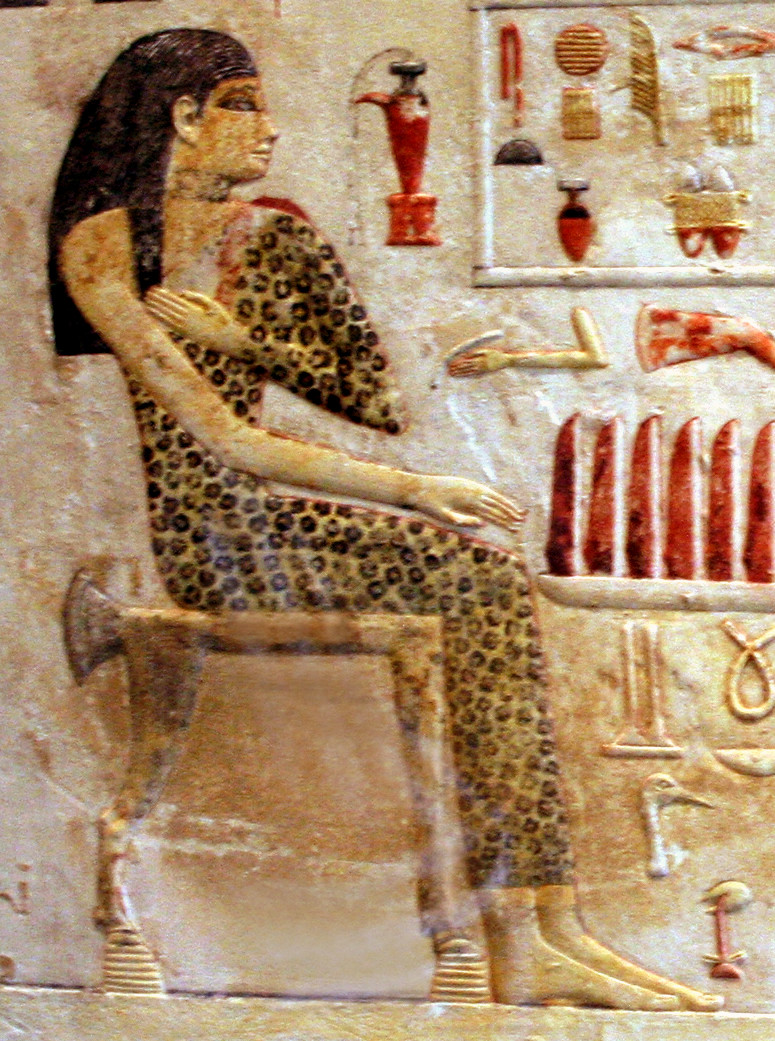
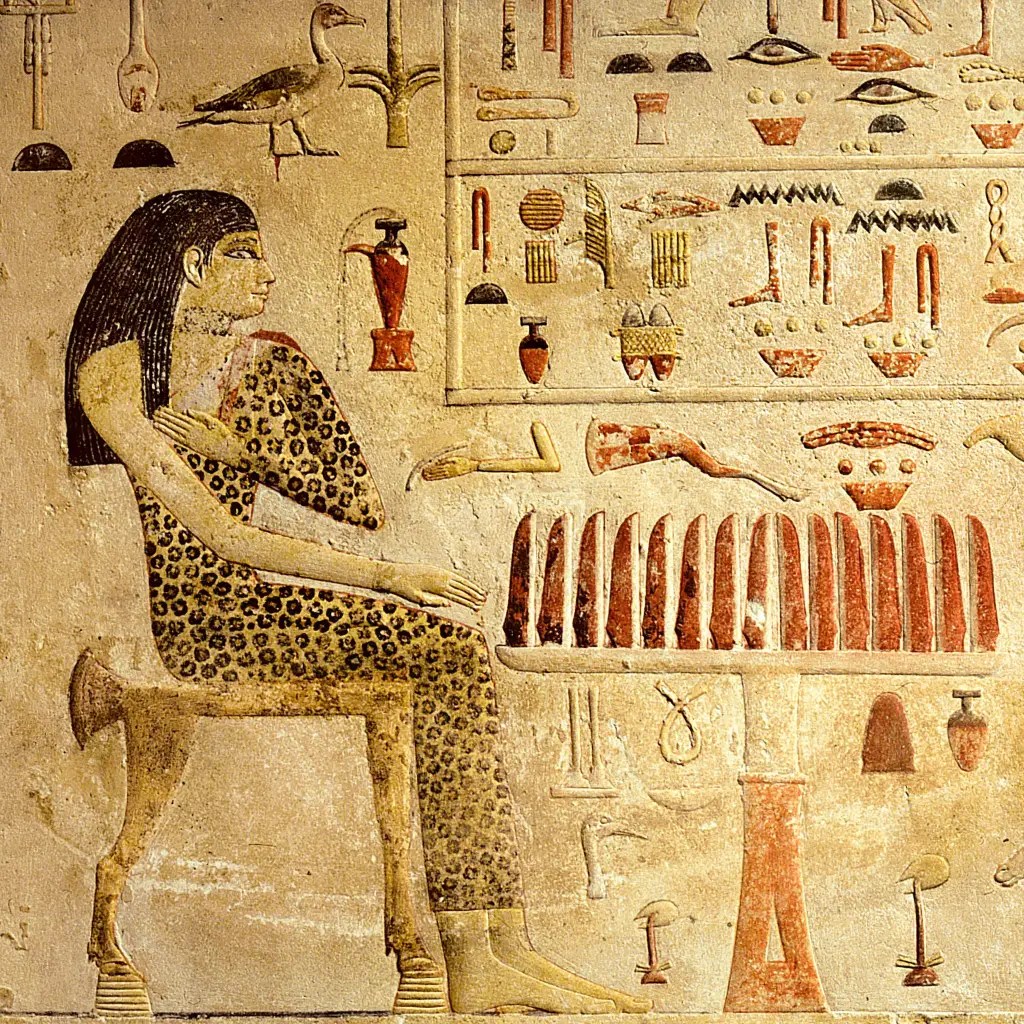
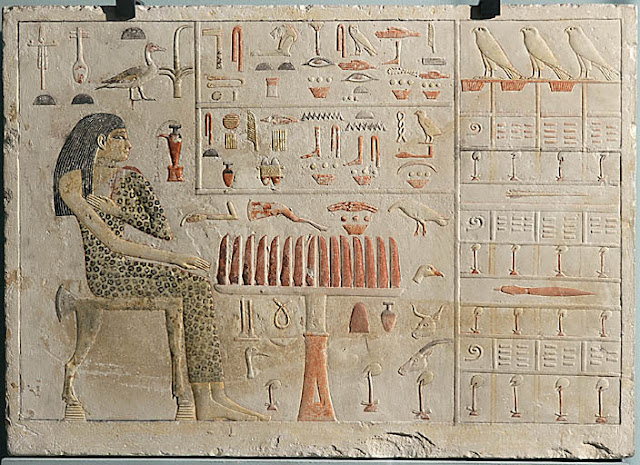
This relief stele from Princess Nefertiabet’s tomb (G 1225) in Giza depicts her and other relatives of the king, including Nefertiabet, daughter of Khufu. She is shown seated, facing to the right, depicted with a long wig and a panther-skin garment.
An offering table before her holds customary reeds and various food items. Below are linen and ointment on the left, and bread, beer, oryx, and bull on the right. A linen list is displayed beside the slab.
Stele of Princess Nefertiabet and her food offerings Egypt Museum
Now, I would like to share an excellent description of the discovery of this beautiful ancient artwork by the brilliant Marie Grillot.
The stele of Nefertiabet: from its mastaba in Giza to the Louvre Museum
Stele depicting Princess Nefertiabet before her funeral meal – painted limestone – reign of Khufu (4th Dynasty) Discovered by Montague Ballard in 1902 in mastaba G 1225 at Giza Entered into the Louvre Museum in 1938 by the gift of L., I. and A. Curtis – E 15591
In 1901-1902, Montague Ballard, a British brewer, obtained an excavation permit at the Giza site. He stayed there for only a very short time, but it was long enough to make some interesting discoveries. In 1902, in the western cemetery, he discovered a mastaba, which would be referenced as G 1225, that notably contained the “Stele of Nefertiabet,” named after its “owner.”
Most of the artefacts discovered during his mission were subsequently dispersed. Three pieces from the mastaba ended up in Arthur Sambon’s collection. They were then put up for sale on May 25, 1914, in Paris by the expert Jacob Hirsch. The stele seems to correspond to the object presented under No. 2 of the “Stone Sculptures of Egyptian Art.” Did it then pass into other hands? In any case, it was later found in the possession of an aesthete and art lover: Atherton Curtis.
Born in New York in 1863, he settled in Paris in 1904, where he “brought and continually increased his collection.” In “La Grande Nubiade,” Christiane Desroches Noblecourt recalls: “Among the most prestigious donors (to the Louvre), not only for the Egyptian department but for all the others, was Atherton Curtis. He wanted to add to his name that of Louise, his first wife, who died prematurely, and that of the second, who was also passionate about all antiquities, Ingeborg.” The stele entered the Louvre in 1938 through the “Curtis Bequest.” It was during the November 8, 1938 meeting of the Council of National Museums that Charles Boreux, Curator of the Department of Egyptian Antiquities, informed “the Council of the immediate gift, by Mr. and Mrs. Atherton Curtis, of three magnificent pieces of sculpture included in the donation subject to usufruct that they made to the Louvre a few months earlier. These are a painted limestone group representing King Amenhotep and Queen Nofertiti, a group from the Old Kingdom, and finally a polychrome bas-relief in the name of Princess Nofritabtj.” He died in 1943, and the stele was then permanently housed at the Louvre, registered under the reference E 15591.
Measuring 37.70 cm high, 52.50 cm wide, and 8.30 cm thick, it is made of painted limestone. It belongs to the category known as “slab stelae,” which are in fact “slabs embedded in the walls of funerary chapels” and which represent the oldest reliefs in Giza.
While the scene depicted is relatively common in Old Kingdom funerary iconography, its quality and the finesse of its execution remain exceptional. This suggests that it was likely executed in the workshops of Pharaoh Khufu. This could also be explained by the fact that Nefertiabet was either “the daughter or sister of the great pharaoh” or, according to another interpretation, “probably a sister of King Khufu and a daughter of Snefru.”
The rectangular surface is surrounded by a plain band standing out in slight relief. Nefertiabet is depicted alone facing her eternal meal. She is on the left side, seated on a delightful bull-legged stool, the back of which is decorated with a papyrus umbel.
Slim, fine, slender, her “yellow skin colour is well preserved,” and she is particularly elegant. Her panther-skin dress is held together, on the left, by “seven red shoulder knots, all applied with paint,” while on the right, the shoulder is bare. The garment stops above the ankles, revealing the bracelets that adorn them, while her bare feet rest flat on the ground.
Stele depicting Princess Nefertiabet before her funeral meal – painted limestone – reign of Khufu (4th Dynasty) Discovered by Montague Ballard in 1902 in mastaba G 1225 at Giza Entered into the Louvre Museum in 1938 by the gift of L., I. and A. Curtis – E 15591 This stele, walled up in the chapel of her tomb in Giza, magically ensured the eternal nourishment of the deceased, a relative of King Khufu.
Her perfectly profiled face is highlighted by a long, black, tripartite wig, which covers a large part of her forehead but leaves her ears visible. Her large eyes are rimmed with kohl, and her nose and mouth are of ideal proportions; only her neck, adorned with a necklace, appears a little short. “The face expresses the ideal of feminine beauty at the time of the pyramids: slightly rounded forehead, fine, straight nose, delicately contoured lips and nostrils, and a rounded throat” (Christiane Ziegler, “Egypt at the Louvre”).
Her left arm rests, hand flat, on her right breast, while her right arm is held alongside her body, hand outstretched towards “a white stone footed tray, placed on a cylindrical terracotta support, and covered with slices of cake with a golden crust and white crumb”.
The quality of the carved and painted hieroglyphs that “document” the stele is of total perfection, as proven by the precision of execution of the libation ewer, the animal heads, and even the birds,…
Above Nefertiabet’s head, “an inscription in large hieroglyphs enhanced with colour specifies her name and title; one will particularly admire the reed and the duck, meaning respectively ‘king’ and ‘daughter’… All around (the pedestal table) hieroglyphic signs and images immortalise the offerings necessary for her survival that the inscription wishes her thousands of: duck with its head cut off; head, foreleg and rib of beef; jug of wine. Above the table, two lines of hieroglyphs, arranged in a frame, list the products of the funerary ritual (incense, ointment, green and black makeup) as well as fruits and drinks: figs, jujubes, carobs, beer, and wine. The entire right-hand side is occupied by lists listing thousands of pieces of fabric, undoubtedly necessary for mummification, with their quality and length, as specified by Christiane Ziegler in the work cited above.
One might rightly wonder how this stele, which dates from 2590-2565 BC and is therefore more than 4,500 years old, has reached us in such a well-preserved state. Here is part of the explanation: “This stele was sealed on the outer wall of its tomb in Giza, at the foot of the Great Pyramid. Later walled up, it was protected from the wear and tear of time and men.
In his study “Slab Stelae of the Giza Necropolis” published in 2003, Peter Der Manuelian specifies however that: “The remains of the original mud-brick chapel have not been preserved and the exact location of the slab stela could not be determined due to the destruction of this part of the mastaba wall by Ballard”…
But at the Louvre, in the heart of the prestigious Parisian museum – precisely on the first floor of the Sully wing, in room 635 dedicated to the Old Kingdom – Nefertiabet remains very much alive, adorned with everything fundamental to ensure her a long, very long eternity…
Stele of Nefertiabet https://collections.louvre.fr/ark:/53355/cl010005261 Jacob Hirsch, Expert, Catalogue of Works of Art and High Curiosities…, Faience…, Saxon Porcelain,… Egyptian and Greek Sculptures…, Persian Manuscripts…, Old Paintings… Forming the Collection of Mr. Arthur Sambon… Sale: May 25-28, 1914, Imprimerie Georges Petit, Paris, 1914 https://gallica.bnf.fr/ark:/12148/bpt6k12478139/f12.item.r=tombeau Charles Boreux, The Atherton Curtis Donation, Bulletin des musées de France, November 1938 http://gallica.bnf.fr/ark:/12148/bpt6k58649569/f8.image.r=curtis?rk=21459;2 Christiane Desroches Noblecourt, The Great Nubian or the Journey of an Egyptologist, Stock, 1992 Guillemette Andreu, Marie-Hélène Rutschowscaya, Christiane Ziegler, Ancient Egypt at the Louvre, Hachette, 1997 Christiane Ziegler, Egyptian Art in the Age of the Pyramids, Réunion des musées nationaux, 1999, p. 20, 207-208, notice no. 54. Peter Der Manuelian, Slab Stelae of the Giza Necropolis, The Peabody Museum of Natural History of Yale University, The University of Pennsylvania Museum of Archaeology and Anthropology, New Haven and Philadelphia, 2003 http://giza.fas.harvard.edu/search-results/?q=1225 Morris L. Bierbrier, Who Was Who in Egyptology, London, Egypt Exploration Society, 2012 Campbell Price, Ancient Egypt, Pocket Museum, Thames & Hudson, 2018
Horemheb, which means “Horus is in Jubilation” in Ancient Egyptian, was the final pharaoh of Egypt’s 18th Dynasty, ruling for at least 14 years between 1319 BC and 1292 BC. Despite marrying Ay’s daughter Mutnedjmet, Horemheb had no blood relation to the preceding royal family and is believed to have come from a common background.
The Memphite Tomb of Horemheb is situated in the Saqqara necropolis near Memphis, Egypt. The tomb was built before Horemheb became the king, and he did not use it for his burial. Instead, he constructed the Theban tomb KV57 for this purpose. The tomb served as the resting place for Horemheb’s two wives, Mutnedjmet and Amenia.
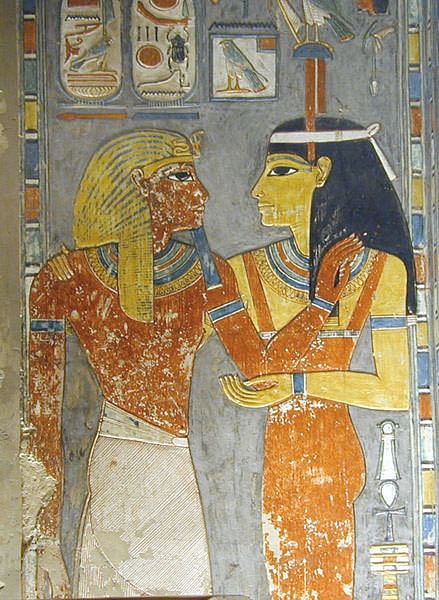
Horemheb with a falcon-headed god, detail of a mural in the tomb of Horemheb, Ṣaqqārah, Egypt. Photos.com/Jupiterimagesvia Friend of Saqqara
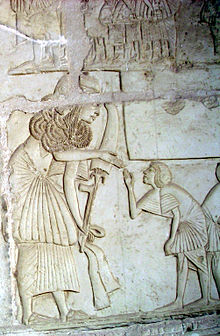
Relief from Horemheb’s tomb. Receiving ‘gold of honour’ collars. Wikipedia
Here is the adventurous story of the discovery of this divine Jewel, presented by adorable Marie Grillot.🙏
Horemheb’s earring – gold and glass paste – 18th or 18th Dynasty from his tomb discovered in Saqqara in 1975 by an Anglo-Dutch mission led by Geoffrey Martin Journal of Cairo Museum Entries – JE 97864
This round earring, with a diameter of 3.9 cm, is made of gold with mostly lacunar glass paste inlays.
This round earring, with a diameter of 3.9 cm, is made of gold with mostly lacunar glass paste inlays. In its centre, in a golden circle and erected on a golden barrette, is a sphinx. He is represented in a walking attitude, which is unusual, to say the least…
The Sphinx is a “hybrid being” described as an androcephalus when it combines an animal body, a lion, and a human head. “The Egyptian sphinx was a protective and positive entity,” generally representing the “portrait” of the pharaoh to whom it was dedicated or allied.
Horemheb’s earring – gold and glass paste – 18th or 18th Dynasty from his tomb discovered in Saqqara in 1975 by an Anglo-Dutch mission led by Geoffrey Martin Journal of Cairo Museum Entries – JE 97864
The body of the Sphinx, which works in openwork, is delicately chiselled to restore the details of the fur, muscles, and legs…
The royal head is wearing the “blue” crown, which is sometimes compared to a “helmet”. This “khepresh” seems to appear in royal representations in the New Kingdom and, according to Karol Mysliewiec: “the first known royal statue wearing the khepresh is one of Amenhotep III”. If no crown of this type has actually been discovered, we can assume that it was: “probably made of leather or ostrich skin on a rigid, bulb-shaped structure often embellished with yellow gold or white polka dots “. This notion was also very well rendered by the goldsmith who created it…
Horemheb’s earring – gold and glass paste – 18th or 18th Dynasty from his tomb discovered in Saqqara in 1975 by an Anglo-Dutch mission led by Geoffrey Martin Journal of Cairo Museum Entries – JE 97864
The face is both emaciated and prognathous, an impression accentuated by the artificial beard, which lengthens the profile. The long and carried forward neck is decorated with a large ousekh necklace with several rows very cleverly rendered by incisions. This central element is surrounded by two larger and nicely crafted concentric circles. They are composed of large gold chevrons, regularly spaced, in the intervals of which blue glass paste was encrusted, perhaps in several shades. Unfortunately, this colourful decoration has, for the most part, disappeared.
The outer circle is bordered by a lovely twist of gold, which is welded into small rings made up of a series of small shots welded two by two. “The edges of the pendant are decorated with small rings obtained by granulation, some of which had originally been inlaid with tiny cylinders of glass paste. Pendants were undoubtedly suspended from the five rings of the lower register. A sheet of gold shaped like an ousekh necklace was welded to the top of the Jewel,” specifies Daniella Comand (The Illustrated Guide to the Egyptian Museum).
Horemheb’s earring – gold and glass paste – 18th or 18th Dynasty from his tomb discovered in Saqqara in 1975 by an Anglo-Dutch mission led by Geoffrey Martin Journal of Cairo Museum Entries – JE 97864 (photo Orientalia: Vol. 47)
The suspension system is incomplete: in fact, only one of the two rings remains, which were placed on either side of the lobe and in which the tube slid, which, passing through it, ensured fixation.
This unique earring was discovered in the tomb General Horemheb built in Saqqara long before he became pharaoh and ordered the digging of a new hypogeum in the Valley of the Kings.
His tomb in the Memphite necropolis, unearthed in the 19th century and then lost, was “rediscovered” in 1975 by an Anglo-Dutch mission. Led by Geoffrey Martin, he and his team devoted four seasons of excavations… During the 1977 mission, this Jewel was found “in a room in the well in the outer courtyard”.
Relief depicting Horemheb receiving the gold reward – limestone – New Kingdom – 1333-1319 BC AD from his tomb in Saqqara – Rijksmuseum van oudheden – RMO – Leiden – museum photo
The Sphinx’s countenance typically reveals Amarna features if its provenance “de facto” associates it with Horemheb. Thus, in “The Wonders of the Egyptian Museum in Cairo”, Francesco Tiradritti presents it as “a pendant representing Akhenaten as a sphinx”. An idea echoed by Nigel Fletcher-Jones who, in “Ancient Egyptian Jewelry”, believes that: “It was probably made during the reign of Akhenaten (around 1352-1336 BC) or his son Tutankhamun ( circa 1336-1327). Furthermore, in “The Great Discoveries of Ancient Egypt”, Nicholas Reeves considers that it “probably comes from a later burial, from the Ramesside period, that of Princess Bentânat”.
This earring was registered in the Journal of Entries of the Cairo Museum under the reference JE 97864.
I’m not sure if any of you have experienced a feeling like I did a few days ago. It’s hard to put into words, but I will try: I had a few things I wanted to remember and sort out in my head, but I wasn’t sure if they were just dreams or had actually happened!
Have you ever had moments when you couldn’t tell if something that happened the previous day was real or just a dream? It reminded me of schizophrenia, which was quite frightening. It’s like having a blurred line between reality and imagination, making it challenging to distinguish what’s real and what’s not. The reason for all this may be a dream I had the night before.
That night, I had a dream I can still recall. In the dream, I saw Robbie Williams, who had released an album that wasn’t a hit! The album was dull, and he was pretty upset about it, though he always had great help from his mate Guy Chambers. I haven’t ever been a big fan of his and haven’t purchased any of his singles. I have only heard his songs on the radio and listened to them once, and not more. That’s why I find it strange that he appeared in my dream.
Next, a young girl appeared during my dream and offered me her new album. I liked that, though she said she would mix it up with Robbie Williams’ album. Truthfully, they matched perfectly together and became a great hit!
When I told my wife about that, she said it was time for me to begin writing music again! Her advice refers to my earlier time in Germany.
It was around the early ’90s when I used to play guitar on the streets, and as I had only music in my head, I attempted composing, and I managed to write a few songs, which I recorded using an MC (my friends who are my age would know what I am referring to!). The recordings included drums, rhythm guitar, solos, and vocals. I played all these by myself in my tiny room those days with the help of two cassette recorders; poor me! You should see how talented I was!! I suppose this MC is in our basement, in a plastic bag, spending the last minutes of her life.
The main subject I aim to cover is our everyday lives and how boring they can be. Therefore, I took my recent post from Facebook with a quote by Marie-Louise von Franz on this topic. I will compare it with the life of an artist who can live without any single sign of being bored.
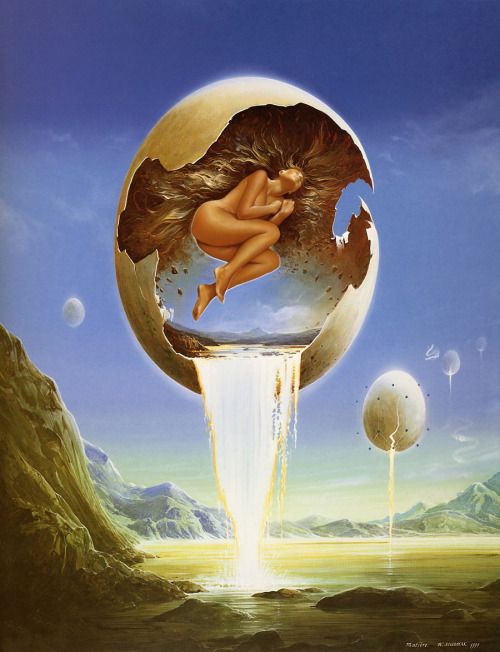
Illustration by Wojtek Siudmak – Matter.
Boredom is a symptom of life being dammed up, that one does not know how to get what one has within oneself into reality. — Marie-Louise von Franz, The Problem of the Puer Aeternus
While considering my own, my wife’s, or my friend’s everyday lives, I often ponder why everything seems so mundane. Even the weekends, which should be a time for rest and enjoyment, can sometimes feel dull and uneventful, especially for those who work tirelessly throughout the week. One does plan to enjoy a meeting, going to Cinema to watch a good movie, or driving for a side trip, the time runs out fast like the wind, and it is again the damnd Monday! Of course, it might be because I am retired now and have a view from a distance. I believe that the problem is the lack of creativity. Most people end up in jobs they have never chosen or desired; they do that only to make money. Don’t you think these repeated days doing almost the same thing make it no fun anymore? However, for an artist, every new day is a challenge in creating new art.
The pointé is here in Dr. Jung’s words; even then, I comprehended it much better now.
Via Quozio
How can an artist’s life notbe boring?
As a child, I had different career aspirations, such as becoming a pilot, free of borders or terrain. Still, in my youth, my only wish was to be a music composer, and every morning, I would go to my studio to make a new song. That’s why I think the lucky people who make art or do something similar will never feel bored!
I am convinced that we all were created to create, and art is our way of creating. Therefore, when we are forced to do something else without lust and passion, which, unfortunately, has become common in society, the outcomes are wasted fruits.
After pouring out my heart with the hope that I will achieve my goal of conveying my message to you, I want to mention that next week is the Easter holiday, and I will probably be absent and miss your kind reactions and feedback. However, I might try to post using the WP timer! Let’s see what happens; until then, I appreciate your visits and hope you have a lovely time, everybody. 🤗💖💥🖖
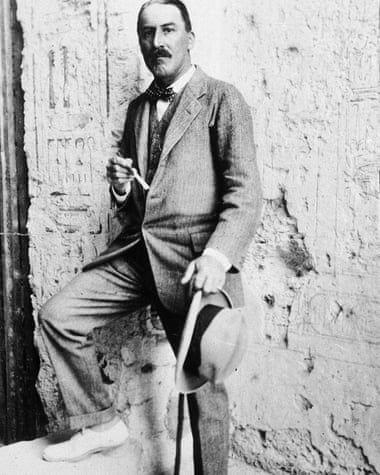
Howard Carter, a British archaeologist born on May 9, 1874, in Swaffham, Norfolk, England, is known for his significant contribution to Egyptology. In 1922, he discovered the most complete tomb of King Tutankhamun, which remains one of the most celebrated and richly endowed discoveries in the history of Egyptology. Carter passed away on March 2, 1939, in London.
Here is the story of his accidental discovery of one of the ancient heritages, as we might know it from the acts of the adventurers, with heartfelt thanks to the brilliant Marie Grillot.
The tomb called “Bab el-Hossan” discovered in 1900 by Howard Carter, is, in fact, a cenotaph of Montouhotep II: its location (pit), in front of his funerary temple, is visible in the middle-left of this photo (photo Daniel Lefèvre)
It was in October 1891 that Howard Carter arrived in Egypt to work as a draftsman and copyist for Percy Edward Newberry at the Egypt Exploration Foundation. Then, from 1893, still for the EEF, but this time under the direction of Edouard Naville, he copied the bas-reliefs of Deir el-Bahari intended to illustrate the Egyptologist’s work “The Temple of Deir el-Bahari”. In this context, the one who, in November 1922, will emerge from oblivion, Tutankhamun will make, in an entirely fortuitous manner, his first discovery… This “adventure” will stretch over two years and is worthy of Indiana Jones! It began in November 1898, on an exceptionally grey and rainy day in the Theban necropolis and the rocky cirque of Deir el-Bahari.
Carter is concerned about the impact of these rains on the temple murals. So, he decides to go to the site “with his colleague Charles Sillem” to observe and estimate potential damage.
The tomb called “Bab el-Hossan” discovered in 1900 by Howard Carter, is, in fact, a cenotaph of Montouhotep II: its location (pit) is visible here
While he is in front of the temple of Montouhotep, his horse’s foot sinks into a hole… and they both fall! Carter gets up and hastens to examine what caused the fall. “Looking in the small hole formed there, I saw the traces of stonework”, he relates.
He was very intrigued and then opened up to Edouard Naville. As this sector is not in the area of his concession, he attaches little importance to it and does not encourage him to carry out other investigations.
For his part, Howard Carter will not forget this place; he promises to return there to further the research.
To do this, he knows that he must wait for his professional situation to evolve, which will happen quickly. Indeed, in 1899, Gaston Maspero, back at the head of the Antiquities Service, appointed him general inspector of monuments in Upper Egypt.
The following year, finally feeling free to carry out his first “independent” excavation, Howard Carter returned to the site and saw his intuition confirmed: it was indeed a burial! The work to clear what will be known as “Bab el-Hossan” (the horse’s grave) will prove gigantic!
Portrait of a young Howard Carter (author and date unknown)
The opening, which will have to be enlarged, leads to a corridor dug into the rock, 17 meters deep, leading to a sealed door. The clearing carried out with a large team that nevertheless takes turns tirelessly takes an incredible amount of time.
Behind the door, Carter encounters a new 150-meter corridor leading to a large room. Inside, draped, wrapped, and wrapped in linen, is a giant statue!
A well leads to a second chamber located around thirty meters lower. In it, Carter finds vases, pots, and boat models. In another well, a wooden chest bears the name of a pharaoh. This inscription will allow the statue to be identified.
Statue of Montouhotep II – painted sandstone – from his cenotaph located under his temple of Deir el-Bahari discovered in 1900 by Howard Carter in what is generally referred to as: “Bab el-Hossan.” Egyptian Museum in Cairo – JE 36195
It is made of painted sandstone and is 1.38 m high and 0.47 m wide. It represents Montouhotep II, ruler of the 11th dynasty. He sits on his throne, wearing the red crown of Lower Egypt and the white habit of jubilee (sed). His broad face, full lips, and a false beard are black.
Its eyes are painted white with black pupils. His hands are black, and his arms are crossed on his chest in the Osiriac position. His legs, also black, are very thick, even disproportionate. In their “Official Catalog of the Egyptian Museum in Cairo,” Mohamed Saleh and Hourig Sourouzian put forward this interesting hypothesis about the colour of its complexion: “It seems that the statue was painted black before burying it.”
As for Rosanna Pirelli (“The Wonders of the Egyptian Museum in Cairo”), she analyzes this particular representation of the sovereign as follows: “This is a strong and hieratic image of the second unifier of the pharaonic state after Menes. The statue symbolizes the double nature of the pharaoh who, during his lifetime, embodies the falcon god Horus, the mighty conqueror, while in death, he is identified with Osiris, the sovereign of the deceased.
Statue of Montouhotep II – painted sandstone – from his cenotaph located under his temple of Deir el-Bahari discovered in 1900 by Howard Carter in what is generally referred to as: “Bab el-Hossan.” Egyptian Museum in Cairo – JE 36195 – photo of the museum
Did Howard Carter discover the tomb of the great pharaoh? Mohamed Saleh and Hourig Sourouzian say, “The statue of Montouhotep had been ritually buried in a vault under the terrace (of his temple) and which seems to have been the initial tomb of the king, before having been transformed into a cenotaph. The entrance from this vault opened into the forecourt of the funerary monument of Montouhotep.”
Montouhotep II (“may Montu be satisfied”) reigned between 2061 and 2010 BC. AD. He led an important policy of cultural and commercial restoration.
Location of the temple of Montouhotep (partly ruined today) in the rocky cirque of Deir el-Bahari
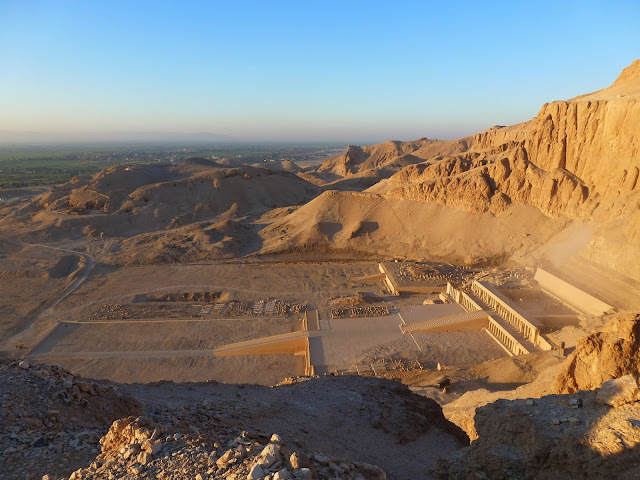
His funerary complex located at Deir el-Bahari was, perhaps, according to the hypothesis put forward by Edouard Naville, a temple with a double terrace topped by a small pyramid. Today, it is primarily degraded and cannot be visited. However, it can be seen from the temple of Hatshepsut, or better yet, an overview of it from the path linking Deir el-Bahari to Deir el-Medineh, which overlooks it.
This statue, “found under the hoof of a horse,” is exhibited at the Cairo Museum (JE 36195). It represents a magnificent example of the renaissance of Egyptian art from the beginning of the Middle Kingdom…
It is important to point out that, in “Howard Carter, The Path to Tutankhamun”, T.G.H. James tells us that this discovery had not been up to what Howard Carter had expected… “His disappointment was deep enough in itself, but worse still, it was increased by the fact that he had committed the stupidity to inform Lord Cromer, the British Consul General, who actually held power in Egypt, suggesting that it was possible that a tomb, possibly royal, had been found. As Maspero wrote to Naville: ‘ ‘He announced his discovery too early to Lord Cromer. Lord Cromer came to witness his success and is now in despair, having been unable to show him anything of what he had predicted. I console him as best I can because “He’s a really good boy, and he does his duty very well.”
Unfortunately, this experience led Nicholas Reeves to say in “Ancient Egypt: The Great Discoveries” that Carter then decided that, for any possible future discovery, he would wait until he was absolutely sure of what he had found before making the announcement. For Tutankhamun, he adopted this strategy:”…
Nicholas Reeves, Richard H. Wilkinson, The Complete Valley of the Kings, The American University in Cairo Press, 1996 Mohamed Saleh, Hourig Sourouzian, Official Catalogue of the Egyptian Museum in Cairo, Verlag Philippe von Zabern, 1997 Francesco Tiradritti, Treasures of Egypt – The wonders of the Egyptian Museum in Cairo, Gründ, 1999 Nicholas Reeves, Ancient Egypt. The Great Discoveries, Thames & Hudson, 2002, The Great Discoveries of Ancient Egypt Editions du Rocher, 2001 National Geographic Guide, The Treasures of Ancient Egypt at the Egyptian Museum in Cairo, 2004 The Egyptian Museum in Cairo, Abeer El-Shahawy, Matḥaf al-Miṣrī, American Univ in Cairo Press, 2005 Statue of King Mentuhotep the Second http://www.globalegyptianmuseum.org/record.aspx?id=14914 The Egyptian Museum in Cairo, Abeer El-Shahawy, Matḥaf al-Miṣrī
Rocky cirque of Deir el Bahari: on the right, the temple of Hatshepsut; set back, barely visible, the temple of Thoumosis III, and to the left, the temple of Menthouhotep in the courtyard of which Bab El-Hossan was found – photo taken from the Luxor City Facebook page.
Today, I want to write about one of my favourite topics: women or femininity. And, of course, about how much losses the men have caused because of this selfish arrogance! Maybe some male readers are annoyed by my pronunciation, but it’s the truth, and it’s never too late to wake up. De facto, men are often subconsciously inspired by women, even if they don’t realize it consciously.
The other day, I watched a film, Little Women. It is a 2019 American coming-of-age period drama film written and directed by Greta Gerwig. The story is based on the 1868 novel by Louisa May Alcott and revolves around the lives of four sisters – Meg, Jo, Beth, and Amy – who lived in Concord, Massachusetts, during the late nineteenth century. It was somehow long-breathing, I mean not dull, but too much time wasted in between! In the matter of movies, I have an even better suggestion: Elisa & Marcela— a 2019 Spanish biographical romantic drama film directed by Isabel Coixet. It is about the first same-sex marriage in Spain, although it shows the subsequent suffering.
What hit me in the eye by the latter one was the man’s rules, which preside over the world: Women were not to have any ideas, any self-decision, even they had no right to earn money; they only might accept “some limited” presents! I turned around on the couch twice when I heard it! How fool can the man be? I think it is the one-million-dollar question that nobody can really answer!?
After making a brief statement, I have a story to share with all the men here, including myself. The story aims to inspire and enlighten us all. The pictures and versions we see around us are not created by men but by women who possess incredible creativity. They are the ones who give birth to our offspring, and it’s only fitting that we acknowledge and appreciate their outstanding contributions. They teach us to keep our eyes open!
André Breton, a prominent figure of the Surrealist movement and the author of its first manifesto, once wrote that “the problem of woman is the most marvellous and disturbing problem in all the world.” However, his statement was not referring to the injustice and lack of recognition experienced by his female colleagues.
Marquee Surrealists like Breton, Dalí, Man Ray, Magritte, and Ernst relegated the women in their circle to the role of muses and symbols of erotic femininity rather than acknowledging them as artists in their own right.
During a recent retrospective at the Museum of Modern Art, Méret Oppenheim stated in Behind the Masterpiece’s introduction to “The Fantastic Women of Surrealism” that it was the female Surrealists’ responsibility to break free from the limited roles that society and their male counterparts had imposed on them.
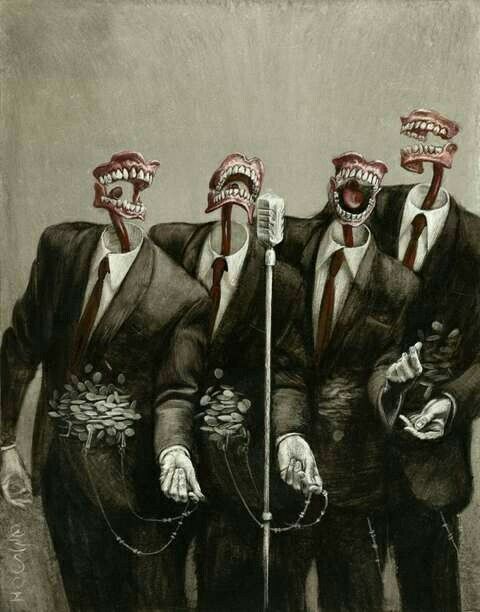
A woman isn’t entitled to think to express aggressive ideas.
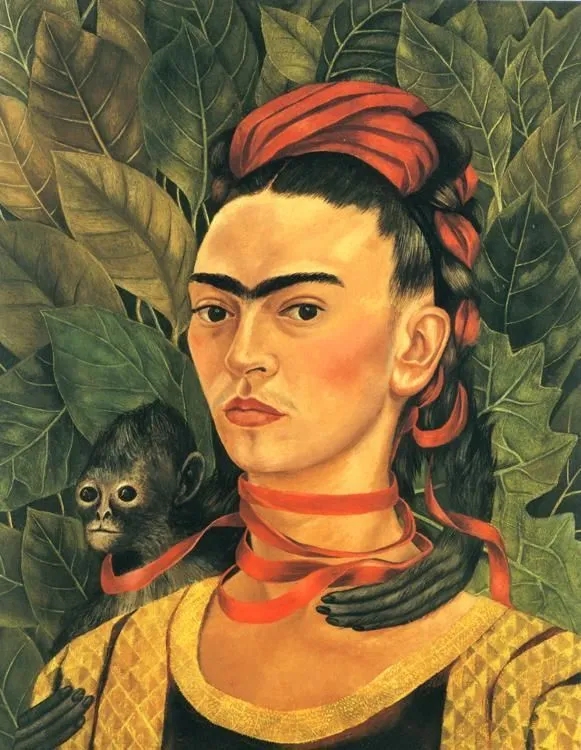
The first artist featured on Behind the Masterpiece needs no introduction. Frida Kahlo is undoubtedly one of the most recognized female artists in the world. She was a woman who lived by her own rules, creating poetic and often raw imagery as she explored her own physical and mental pain:
I paint self-portraits because I paint my own reality. I paint what I need to. Painting completed my life. I lost three children, and painting substituted for all of this… I am not sick; I am broken. But I am happy to be alive as long as I can paint.
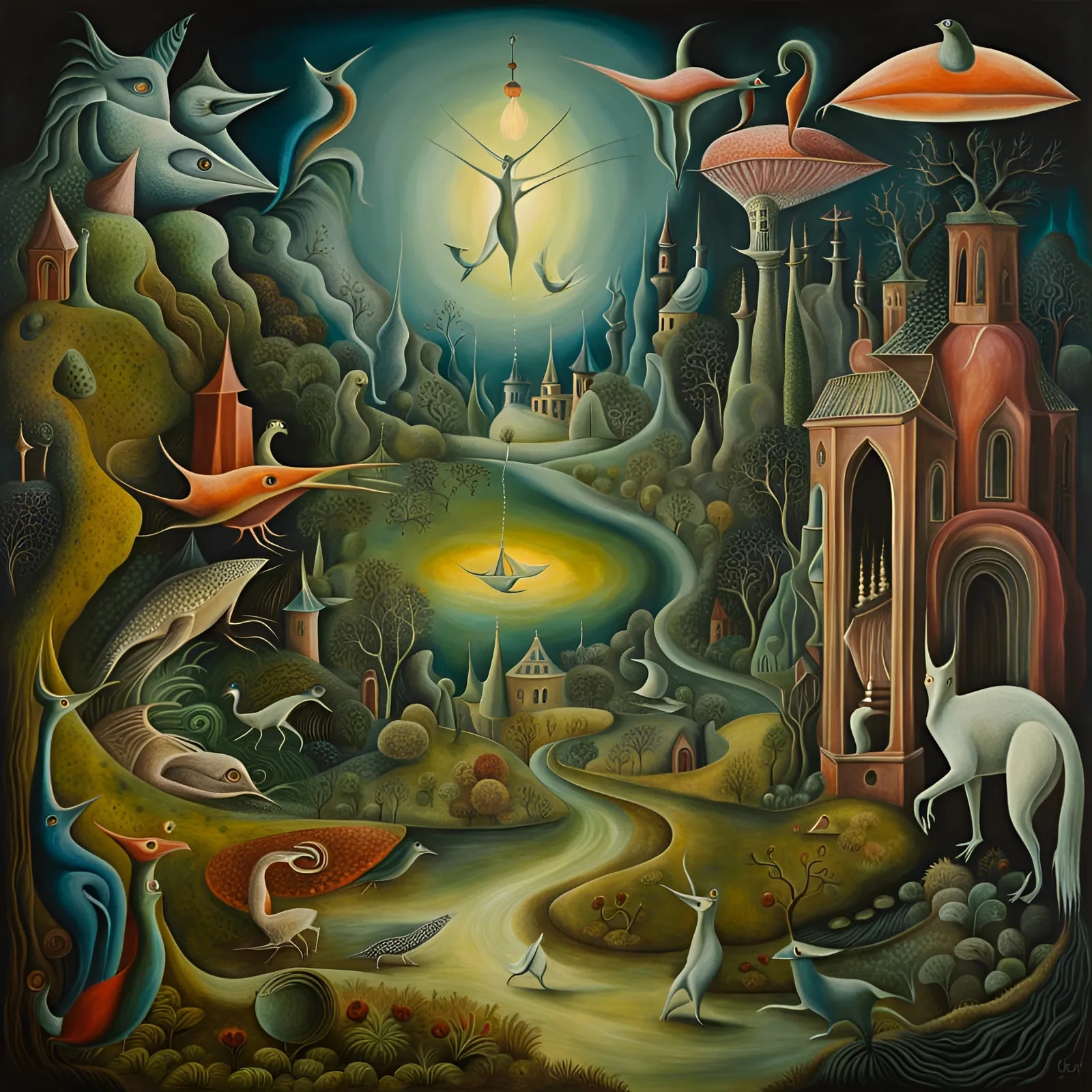
Right: Papilla Estelar (Star Maker) (1958) Left: Remedios Varo, La Ilamada (The Call), 1961. Courtesy of the National Museum of Women in the Arts.
The Art Institute of Chicago is currently exhibiting a collection featuring Remedios Varo, who, along with Leonora Carrington, according to the National Museum of Women in the Arts, were considered the “femmes-enfants” or “child-women” to the much older and renowned male artists in their lives.
Their friendship outlasted their romantic attachments to Surrealist luminaries Ernst and the poet Benjamin Péret, and Carrington honoured it in her novel, The Hearing Trumpet.
Leonora Carrington Self-portraitHallucination (Homage to surrealist artist Leonora Carrington)
Carrington’s work is about tone and colour, and Varo’s is about line and form.
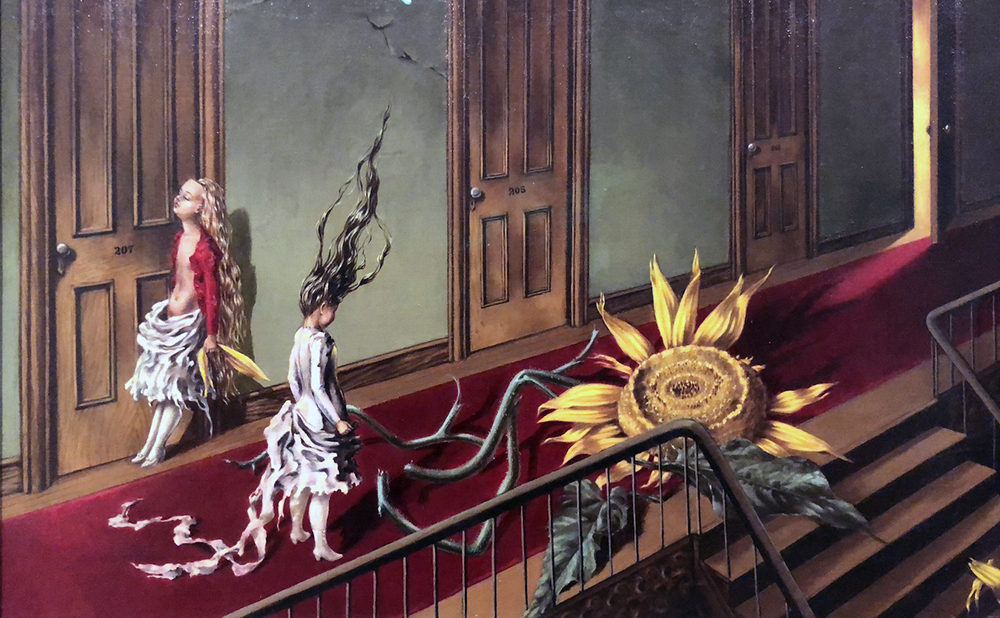
The artistic identity of Dorothea Tanning was separate from that of her husband, Max Ernst, despite their association in the art world.
Alyce Mahon, an art history professor at the University of Cambridge and co-curator of the Tate Modern exhibit, discusses the work of an artist whose body underwent several transformations throughout her career. Unfortunately, the artist’s first major museum showcase was held after her death. Mahon highlights the deceptive femininity of Tanning’s soft sculptures:
“Eine Kleine Nachtmusik” (1943)
Tanning’s pin cushion art challenges conventional associations of sewing and craft with women by transforming the humble object into a fetish. Her first creation, made in 1965 from velvet and placed with a voodoo doll, encourages us to think differently by taking something familiar and making it strange.ng something familiar and making it uncanny and weird.
Tanning refused to accept the label of “woman artist,” seeing it as no more sensible than “man artist” or “elephant artist.”
Put that in your pipe and smoke it, Sigmund Freud!
The concept of the subconscious mind was central to Surrealism, but its creator’s statement about women was controversial.
Remedios Varo Bordando el manto terrestre (Embroidering the Earth’s Mantle), 1961 Gallery Wendi Norris
Oppenheim’s best-known work is object, the fur-lined teacup, saucer, and spoon. One might wonder what he would have thought of it.
Josh Rose’s essay for Khan Academy’s AP/College Art History course explains how visitors of the Museum of Modern Art declared it the “quintessential” Surrealist object during the “Fantastic Art, Dada, and Surrealism” exhibition of 1936-37.of 1936-37.
Oppenheim disappeared from the artistic scene for over a decade and destroyed much of her work. When she returned, she started to reclaim her intent. In her acceptance speech for an award, she expressed her belief that women must take their freedom and reject imposed taboos.
The question is: Will men ever become more aware and conscious? Thanks for your support.🙏💖
“I must admit that I am still contemplating the mysteries of life. At this time, I wanted to share Socrates’ thoughts about the soul with you. But before that, some time ago, when the Iranian groups on Twitter (now X) were still more united (unfortunately, many differences have separated them!), one of our topics to discuss was whether AI could create art. The main question is: how much do we know about art? How much do we believe that art has a soul possessing such an intangible quality and AI can produce it as we do?
Honestly, I am worried about using AI because humans are naturally very lazy and comfortable; that’s why they like to be pampered! If you look at the story of this development, like the Alexas in the sitting room to the self-driving cars, it shows what will happen next.
Like our other muscles, our brains must be trained continuously to maintain our creativity and cognitive abilities. Otherwise, we risk losing our mental faculties. Nonetheless, we must observe what these “machines”, which we might have invented, will do!
The birth of the star child in 2001_ A Space Odyssey 1968
Actually, we are talking about what we don’t know exactly how it works: Soul, Creation, Art!? It made me wonder if we can differentiate between these in a world created by Mother Nature and how we attempt to do so with equal ability, though I believe art is a part of the creator’s essence, gifted us to use in our own creations.
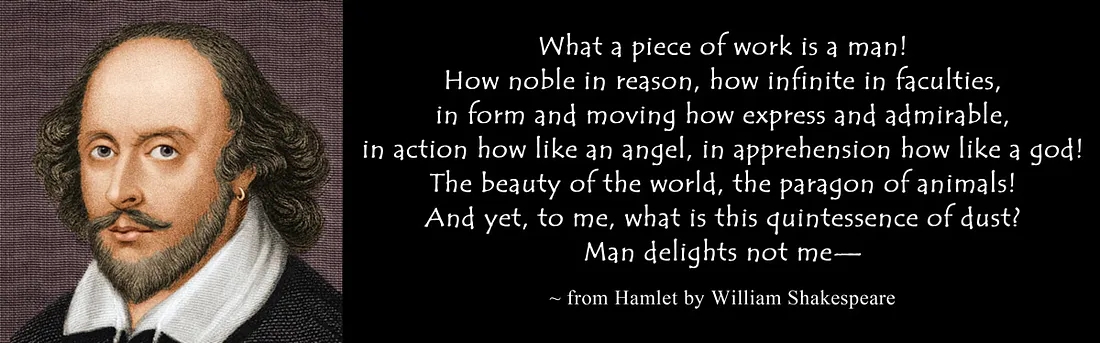
Act 2, scene 2 of Hamlet
The question is whether we have forgotten something we should remember. Is it possible that our souls have lived before they entered our bodies? Socrates believed in some form of reincarnation, in which our souls know of their previous existence before they come into our bodies. These were his final words before facing the court, as conveyed by Plato.”
[… oh souls and before, before they were a man they were, without bodies, and they had consciousness. Plato Phaedo 76 c ]
[…. or are they remembered, or learn to remember if they are. Plato Phaedo 76 a ]
“So, Simmia, our souls existed before, without the human form, separate from the body and possessing knowledge”. Plato of Phaedus
How well Dr Jung found this lost connection to our buried memories under our consciousness!
The idea is that the soul is immortal, as Plato claims in “Plato Phaedo, or Phaedrus 74-76. In the dialogue, Socrates discusses the nature of the afterlife on his last day before being executed by drinking hemlock.
Phaedo presents four distinct arguments supporting the immortality of the soul, namely, the Argument from Opposites, the Theory of Recollection, the Argument from Affinity, and the final Argument. However, we focus on whether humans can create perfection or whether artificial intelligence (AI) is perfect. In my opinion, perfection does not exist in our lives, or at least not how we imagine it. Even gods seem to make mistakes! Despite humans’ constant pursuit of perfection, imperfection has a certain allure.
by Paolo Uberti
In any case, I believe that AI cannot create art like “wo-man-kind” can. For example, we can understand this fact when we observe the Mona Lisa, read Dostoevsky, read or watch Shakespeare, or read Rilke…! We have got a worthy gift, which we might awake to life and use it.
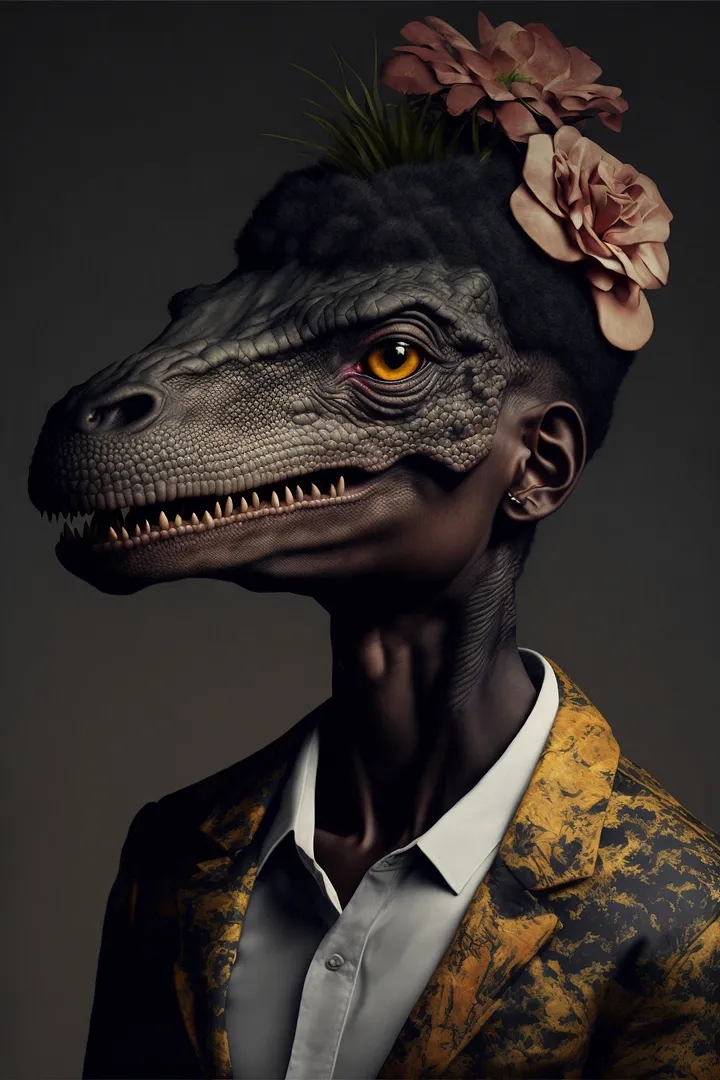
anthropomorphic human dinosaur as a black person by ZelrikAnnual Collective Mind by Shari3Dfashion monkey, city, 4k by BacababAI may see humans in more different forms: so, so, or so!!
I must confess I am a perfectionist. It’s not easy, I know. Perhaps this trait stems from my childhood traumas. However, I believe imperfection is natural and necessary. In the following, I have added a paragraph for those interested who might like to read.
Let’s see how Plato argues this:
The “Imperfection Argument” (Phaedo 74-76)
This is an argument for the existence of Forms and our possession of a priori concepts. Plato bases the debate on the imperfection of sensible objects and our ability to make judgments about those sensible objects. (The Forms are supposed to be the perfect objects that the sensible only imperfectly approximate).
The argument in Phaedo 74-76 concerns the concept of Equality, but it could equally well be given concerning several different concepts (any concept that might have some claim to being an a priori concept).
The argument tries to show that we cannot abstract the concept of Equality from our sense experience of equal objects. For;
We never experience (in sense-perception) objects that are really, precisely equal, and We must already have the concept of Equality to judge the things we encounter in sense-perception to be approximately, imperfectly, equal. The argument can be schematized as follows:
We perceive sensible objects to be F. But every sensible object is, at best, imperfectly F. That is, it is both F and not F (in some respect – shades of Heraclitus??). It falls short of being perfectly F. We are aware of this imperfection in the objects of perception. So, we perceive objects to be imperfectly F. To perceive something as imperfectly F, one must consider something perfectly F, something that the imperfectly F things fall short of. (For example, we have an idea of Equality that all sticks, stones, etc., only imperfectly exemplify.) So we have in mind something that is perfectly F. Thus, there is something that is perfectly F (e.g., Equality) that we have in mind in such cases. Therefore, there is such a thing as the F itself (e.g., the Equal itself), distinct from any sensible object.
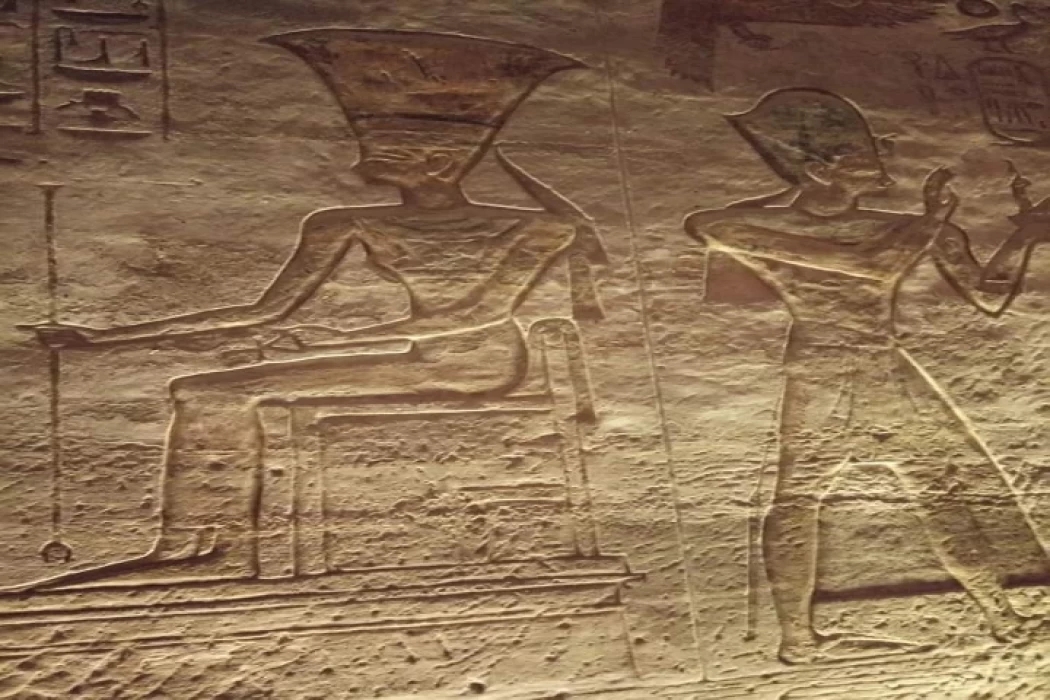
As we continue researching the precious heritages of ancient Egypt, we find more and more feminine Myths of the Goddesses! Here is another one: Anuket, Anouket, Anukis, the Goddess of Nil.
Anuket (or Anukis, her Greek name) is a Nubian goddess, represented as a lady with a crown of feathers or reeds, with a sceptre, and the well-known ankh of Ancient Egyptian culture. Her name means “she who embraces”, and she was venerated in Sehel and Elephantine. Cairo
Anuket, in Egyptian religion, is the patron deity of the Nile River. Anuket is usually depicted as a beautiful woman wearing a crown of reeds and ostrich feathers and accompanied by a gazelle. She was initially a Nubian deity.
Here, we read an article about a beautiful emblem of this fascinating Goddess by the brilliant Marie Grillot. I wish everybody a leisurely and peaceful Merry Christmas.💖🌹🥰
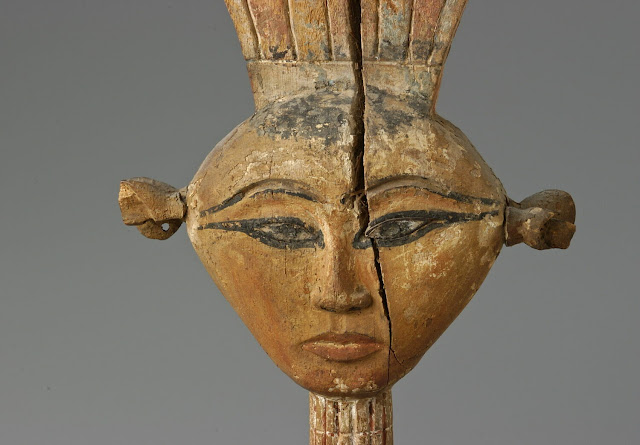
This emblem of Anouket in the Louvre attests to her cult in Deir-Medineh
Associated with the god Khnum and the goddess Satis, Anouket (Anoukis) is the third divinity of the triad of the First Cataract, or Elephantine triad. She is generally presented as “the daughter of the divine couple” or even “the wife of the god”.
In “Ancient Egypt and its Gods”, Jean-Pierre Corteggiani specifies that one of her titles is: “Mistress of To-Seti, that is to say of Nubia; she is sometimes called the Nubian, although there is no evidence that it actually originated in this region, one of its functions is to guard the southern border of Egypt… And he adds, “As a text from the temple of Edfu clearly explains, if it is up to Satis, assimilated to Sothis, to raise the beneficial flow, it falls to Anoukis (Anouqis) the equally essential task of reduce and thus allow, after the flood has receded, seeds to germinate and vegetation to grow on the land released by the waters.” Therefore, it depends on the food and subsistence of an entire people, a whole country… This can explain the reason for the spread of its cult towards the north, notably to Deir el-Medineh, where it was probably introduced “by the workers who worked in the granite quarries of Aswan.
Between the high walls of “Set Maât her imenty Ouaset” (“the Place of Truth to the west of Thebes”, today’s Deir el-Medineh), they lived between 60 and 120 families dedicated to digging and decorating tombs of royal necropolises. They had stone houses covered with palm leaf roofs, their own necropolis, and places of worship. Amon, Ptah, Meretseger, and Hathor were celebrated there, but other divinities also had their place. Indeed, as Guillemette Andreu points out in “The Artists of Pharaon”, “Khnoum and his two consorts, Satis and Anoukis, enjoyed great favour in the community, without us knowing if a particular sanctuary was built for them. Likely, one of the numerous devotional chapels located north of the site was occasionally used as a place of worship, but these cults appear essentially private and domestic.
“Two-faced” emblem of Anouket (Anoukis) – painted wood (tamarisk and shea) – 19th dynasty (around 1295 – 1186 BC) from Deir el-Medineh – Department of Egyptian Antiquities of the Louvre Museum – N 3534 by the acquisition of the Salt Collection in 1826 (Salt n°559) published here by Dominique Valbelle in BIFAO 75, 1975
This “two-faced” emblem of Anouket made “For the ka of the servant in the Place of truth, Pached, acquitted”, testifies to this cult. On the other hand, in their “Guide to Deir el-Medina”, Guillemette Andreu and Dominique Valbelle recall that “the procession of the emblem of Anouqet is represented in the chapel of the tomb of the team leader Neferhotep”.
Two things are striking in the representations of Anouket: her very particular headdress, we will come back to it, and, more strikingly, her resemblance to Hathor. “As D. Valbelle has shown, this object, whose appearance evokes that of a hathoric sistrum, illustrates a syncretism between Ânouket of Elephantine and Hathor of Diospolis Parva in the context of a local cult in Deir el- Medineh” recalls Christophe Barbotin in “Egyptian statues of the New Kingdom”.
It is made from tamarisk wood, is 27.5 cm high and 13.5 cm wide, and rests on a shea tree base. The support, comparable to a fluted column, is surrounded by horizontal lines. The head surmounts it – in fact, two heads, reproduced identically, “back to back” – of the Goddess. Her face takes the shape of a diamond with rounded contours. The widest part is at the level of the cow’s ears and the thinnest at the chin level. Her large eyes, stretched with a line of makeup, are painted black with a large dark iris, which leaves little space for the white of the eye. They are topped over their entire length by very arched eyebrows, hollow and encrusted with a black material. The nose is flat, and the mouth with drooping corners displays a slight difference on the two sides, one of the upper lip being thinner. The left side of one of the two faces is marked with a long and painful scar.
Anouket’s main attribute, which makes her immediately identifiable, is her high and generous headdress made of ostrich feathers. Christophe Barbotin precisely describes this: “The mortar, painted red with vertical white lines, is topped with feathers with traces of blue and red paint (seven feathers on each side, three on each edge). It is placed on a black-painted cap visible at the top of each face but not on the sides. The top of the feathers constitutes a perfectly flat surface.
This Anouket emblem dates from the 19th dynasty (c. 1295 – 1186 BC). It arrived at the Louvre Museum in 1826 through the acquisition by Charles X – for the sum of 250,000 francs – of the collection of the British consul Henry Salt. Jean-François Champollion will also go to Livorno to draw up a descriptive inventory of the 4014 objects, this one bearing the number 559. In his “Descriptive note of the Egyptian monuments of the Charles X Museum” (1827), he will present it under A.136, “Painted wood. Symbolic head of the goddess Anouké”. Today, it is exhibited in the Sully wing, in room 336, dedicated to the Nile, under inventory number N 3534.
Anouket Emblem https://collections.louvre.fr/ark:/53355/cl010024883 Jean-Pierre Corteggiani, Ancient Egypt and its gods – Illustrated dictionary, Fayard 2007 Sylvie Guichard, Jean-François Champollion, Descriptive notice of the Egyptian monuments of the Charles 87-88, illus. p. 88, A. 136 Guillemette Andreu, The artists of Pharaon. Deir el-Medina and the Valley of the Kings, RMN; Brepols, 2002, p. 273, ill. p. 272, no. 221a -Andreu, Guillemette; Valbelle, Dominica, Guide to Deir el-Medina. A village of artists, Cairo, French Institute of Oriental Archeology (IFAO), 2022, p. 150, fig. 131 – Barbotin, Christophe, Egyptian statues of the New Kingdom, 1, Royal and divine statues, [Louvre Museum, Paris], Paris, Louvre éditions / éditions Khéops, 2007, p. 146-147, figs. 1-15 p. 238-241, no. 85 Dominique Valbelle, Testimonies of the New Kingdom on the cults of Satis and Anoukis at Elephantine and at Deir el-Médineh, Bulletin of the French Institute of Oriental Archeology (BIFAO), 75, 1975, p. 123-145, https://www.ifao.egnet.net/bifao/75/7/, p. 141-145, figs. 7, pl. XXI-XXIIII, Doc. 10 Jean-François Champollion, Descriptive notice of the Egyptian monuments of the Charles X Museum, Paris, Imprimerie de Crapelet, 1827, p. 7, A.136 https://gallica.bnf.fr/ark:/12148/bpt6k1040365n


































 lampmagician
You must be logged in to post a comment.