The Mystery Of β€œMana Personality” Part Seven

Standard

Translated from volumes published by Lorenz Jung based on the edition “Gesammelte Werke” dtv.de The Symbols of Transformation (1952) and Aion (1950)

Here, I present another aspect of “Manaβ€”Personality,” and honestly, I’m getting more and more excited to delve deeper and deeper into the subject! (The past episodes: 1, 2, 3, 4, 5, 6,)
In this part, Jung continues explaining the concept of Mana and its impact on our lives from childhood to adulthood. He describes our inner try of separation from our parents, the process of growing up within a religious context, and the acknowledgement of God. He also provides an excellent explanation of our attitudes and behaviours towards authority figures and those in power.

Individuation
The Mana Personality (P7)

By distinguishing the “I” from the archetype of the Mana Personality, one is now compelled – just as in the case of the anima – to make conscious those unconscious contents which are specific to the Mana Personality. Historically, the Mana Personality is always in possession of the secret name or of the special knowledge or the prerogative of a special action (quod licet Jovi, non licet bovi), in a word: of Individual Distinction. Becoming aware of the content that builds up the archetype of the Mana Personality means for the man the second and true liberation from the father, for the woman from the mother and thus the first feeling of her own individuality. This part of the process corresponds precisely to the intention of the concrete primitive initiations up to baptism, namely the separation from the >carnal< (or >animal<) parents and the rebirth >in novam infantiam<, into the state of immortality and spiritual childhood, as formulated by certain ancient mystery religions, including Christianity.

One may not identify with the Mana Personality, opting to view it as an extramundane ‘Father in Heaven’ embodying Absoluteness, which many find significant; if faith is achieved, this leads to an absolute dominance of the unconscious, causing the entire world to flow toward it.

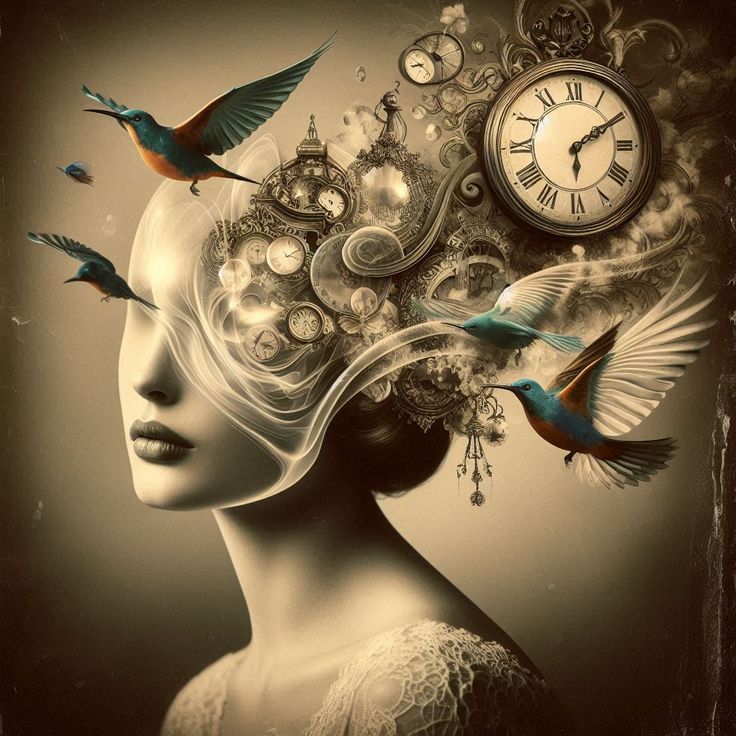
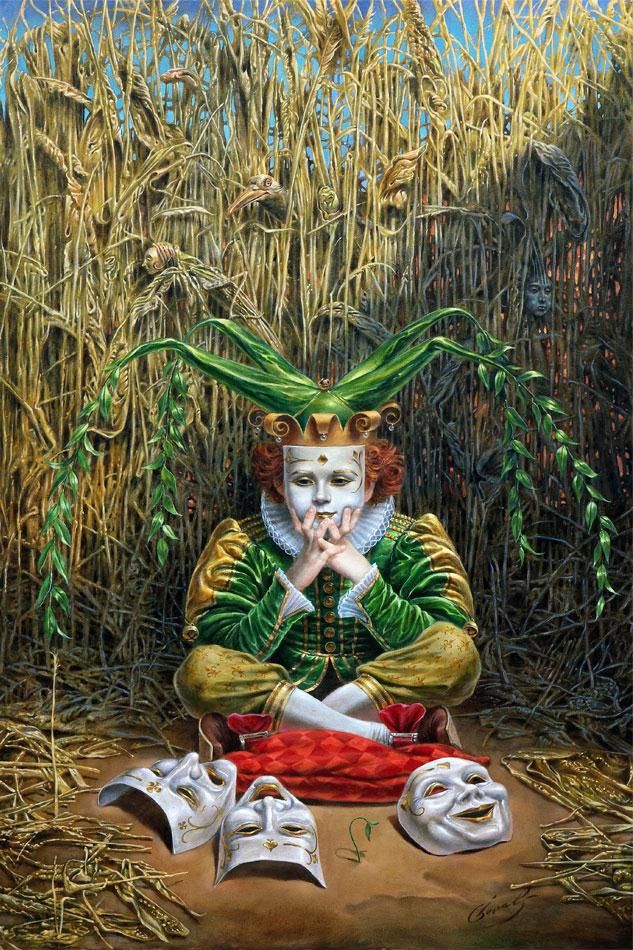
The title image and this one by G R Z A ࿐

(Absolute means “detached”. To declare God to be absolute is to place him outside of all connection with man. Man cannot act on him, and he cannot act on man. Such a God would be a completely irrelevant thing. One can, therefore, only reasonably speak of a God who is relative to humans as is to God. The Christian conception of God as a “Father in heaven” expresses the relativity of God in exquisite form. Quite apart from the fact that man can make out less about God than an ant can about the contents of the British Museum, this urge to declare God absolute arises only from the fear that God might become ‘psychological’. That would, of course, be dangerous. An absolute God, on the other hand, is of no concern to us at all, whereas a “psychological” God would be real. This God could reach man. The Church seems to be a magical instrument to protect man from this eventuality, for it is said that “it is a fearful thing to fall into the hands of the living God”.)

The logical consequence of this is that only a miserable, inferior, useless and sin-laden bunch of people remains. As is well known, this solution has become a historical worldview. Since I am only moving on psychological ground here and have no inclination to dictate my eternal truths to the universe, I must critically note that if I push all the highest value onto the side of the unconscious and construct a summum bonum from it, I have found myself in the unpleasant position of also inventing a devil of equal weight and size who maintains the psychological balance of my summum bonum. But under no circumstances will my modesty allow me to identify myself with the devil. That would be too presumptuous and would also put me in unbearable opposition to my highest values. But I cannot afford that, given my moral deficit.
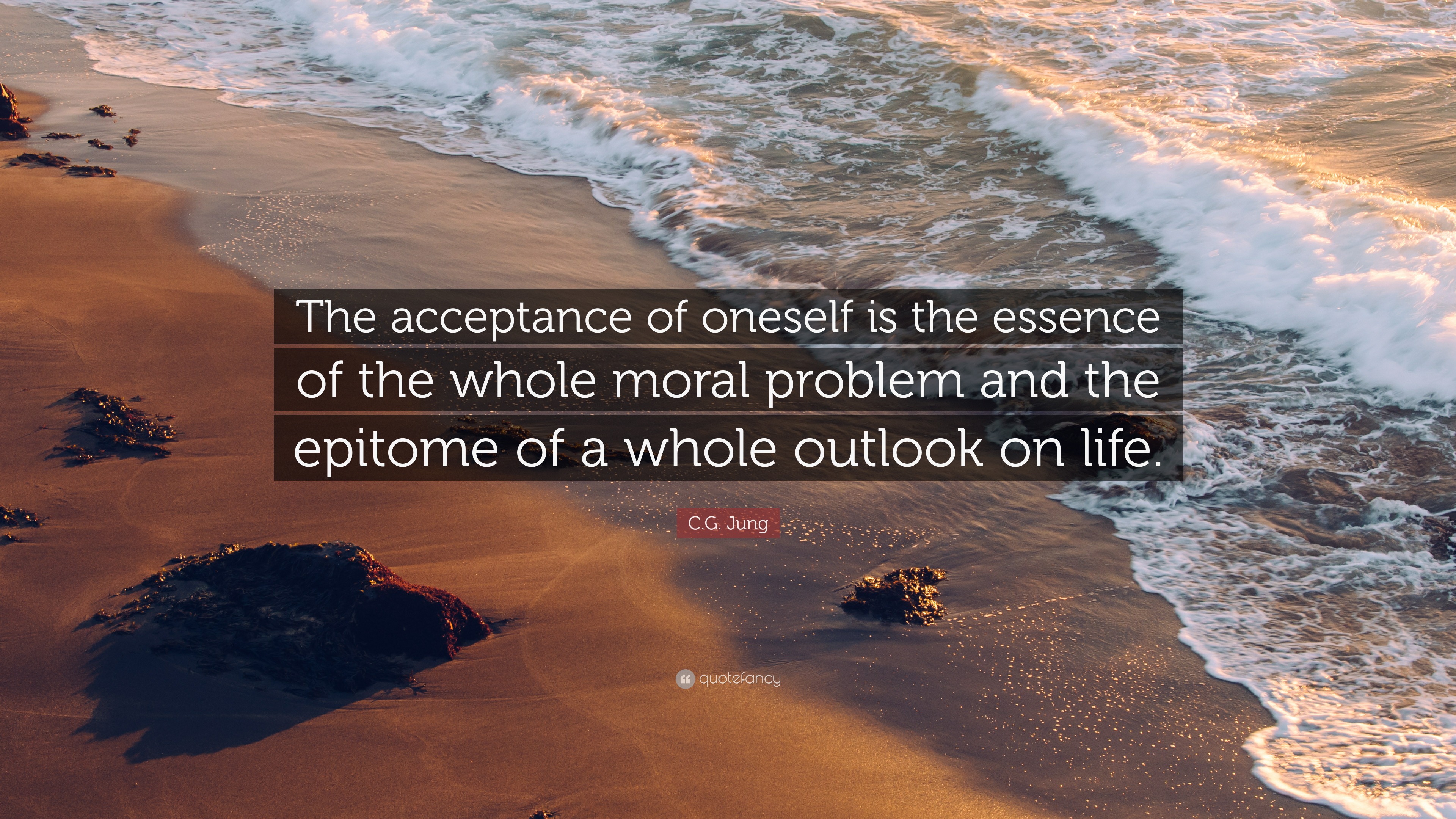
That I feed the hungry, that I forgive an insult, that I love my enemy in the name of Christ β€” all these are undoubtedly great virtues.
~C.G. Jung, Memories, Dreams, Reflections
Carl Jung Depth Psychology

For psychological reasons, I would, therefore, recommend not constructing a God from the archetype of the Mana Personality, that is, not making it concrete, because, in this way, I avoid projecting my values ​​and non-values ​​onto God and the devil, and, in this way I preserve my human dignity, my own specific weight, which I need so much in order not to become the unresisting plaything of unconscious powers. When you deal with the visible world, you have to be crazy to assume that you are the master of this world. Here, the principle of non-resistance to all superior factors is naturally followed up to a certain individual limit. At this point, even the most peaceful citizen becomes a bloody revolutionary. Our bowing to law and state is a recommendable model for our general attitude toward the collective unconscious. (>Give to Caesar what is Caesar’s, and to God what is God’s. <) Our bowing would not be difficult up to this point. But there are also factors in the world to which our conscience does not necessarily say yes, and we bow before them. Why? It is practically more beneficial than the opposite. Likewise, there are factors in the unconscious where we have to be nothing but clever. (>Do not resist evil. < >Make friends for yourselves in the huts of unjust mammon. < >The children of the world are cleverer than the children of light<, ergo: >Be wise as serpents and gentle as doves. <)

To be continued! πŸ’–πŸ™πŸ€—

The Mystery Of β€œMana Personality” Part Six

Standard

Translated from volumes published by Lorenz Jung based on the edition β€œGesammelte Werke” dtv.de The Symbols of Transformation (1952) and Aion (1950)

Continuing the concept of Mana-Personality, Dr. Jung advises us not to underestimate the unconscious mind and even offers a prescription for better managing this issue. (I dearly share here the last parts, 12345, if someone wants to check out!)πŸ™

As I read more from Dr. Jung, I find that the issues he discusses do not pertain to a specific time period; they are fundamental and timeless, as we can clearly observe them in the present.

So, I believe following his concepts can heal our ailing society. He did an excellent job of helping us understand our inner unknown.
Let’s read another chapter of this Mana riddle.

Individuation
The Mana PersonalityΒ (P6)

The Mana personality develops historically into a heroic figure and a god-man (according to popular belief, the highest Christian king could cure epilepsy with his Mana by laying on hands), whose earthly figure is the priest. The analysts can tell us something about how much the doctor is still a man-personality. Insofar as the “I” apparently draws the power belonging to the anima to itself, the ego becomes a mana personality. This development is an almost regular occurrence. I have never seen a more or less advanced development process of this kind where identification with the archetype of the Mana personality did not take place, at least temporarily. And it is the most natural thing in the world that should happen this way because not only you do expect it yourself, but everyone else expects it too. One can hardly help but admire oneself a little because one has seen deeper than others, and the others have such a need to find somewhere a tangible hero or a superior wise man, a leader and father, an unquestionable authority, that they are very willing to build temples and burn incense to even petty gods. It is not just the lamentable foolishness of the uncritical followers but a psychological law of nature that what was before will always be again. And this will always be the case as long as consciousness does not interrupt the naive concretization of the archetypes. I do not know whether it is desirable for consciousness to alter the eternal laws; I only know that it sometimes alters them and that this measure is a vital necessity for certain people, which, however, does not prevent them from placing themselves on the throne of the father in order to make the old rule come true once again. Indeed, it is difficult to see how one could escape the overwhelming power of the archetypes.

Johfra Bosschart Occult Surrealist

I don’t believe that one can escape this overwhelming power. One can only change one’s attitude towards it and thereby prevent oneself from naively falling into an archetype and then being forced to play a role at the expense of one’s humanity. Being obsessed with an archetype turns a person into a mere collective figure, a kind of Mask behind which humanity can no longer develop but instead increasingly atrophies. One must, therefore, be aware of the danger of falling prey to the dominant Mana personality. The danger is not only that one becomes the FatherMask oneself but also that one falls prey to this Mask if someone else wears it. In this sense, master and student are the same.

The dissolution of the anima means that one has gained insight into the driving forces of the unconscious, but not that we have rendered these forces ineffective ourselves. They can attack us again in a new form at any time. And they will inevitably do so again if there is a gap in the conscious attitude. Power stays against power. When the “I” assumes power over the unconscious, the unconscious reacts with a subtle attack, in this case, with the dominance of the Mana personality, whose enormous prestige captivates the “I”. The only way to protect oneself against this is to fully admit one’s own weakness in the face of the forces of the unconscious. In this way, we do not oppose the unconscious with power, and as a result, we do not provoke the unconscious either.

Illustration: Nikolai Zaitsev

It may sound strange to the reader when I speak of the unconscious, so to speak, in a personal way. I do not want to provoke condemnation by thinking of the unconscious as personal. The unconscious consists of natural processes that lie beyond the human-personal. Only our consciousness is >personal<. So when I talk about >provoking<, I don’t mean that the unconscious is somehow offended and – like the old gods – does something to someone out of jealousy or vengeance. I often mean something like a psychological diet error that upsets my digestion. The unconscious reacts automatically, like my stomach, which figuratively takes revenge on me. If I assume power over the unconscious, that is a psychological dietary error, an unsatisfactory attitude that is best avoided in the interest of one’s own well-being. My unpoetic comparison is, however, a little too mild considering the far-reaching and devastating moral effects of a disturbed unconscious. In this respect, I would prefer to speak of the vengeance of offended gods.

To be continued! πŸ’•πŸ––πŸ’–

The Psychology of The Child Archetype (P4)

Standard

The Function of The Archetype

I laid awake for at least three hours last night! In fact, I fell asleep initially but woke up after about two hours, and my thoughts started working. It’s not the first time I’ve been lying awake more often lately. The reason is not any concern about private life; however, there are enough issues to consider, and not limited to my birthplace, Iran and its young freedom fighters; what worries me is the future of humanity as a whole. A theory develops in my head!

These days, I’m very busy with the world’s condition. I see how humanity is on a downward spiral and think about what could be the reason, and it forced me to theorize!

I see greed and hate. I see children suffering due to the thoughtlessness and mistakes of their parents, and politics makes it worse. While I might bite my tongue, I ask myself, is it not better to die as a child than to grow up and continue fighting? How can someone believe that peace can be achieved by bombarding a folk? How is it possible to forget one’s pain of losing the mother, father, or entire family? Those who sow hatred will reap vengeance!

I observe how people chase after happiness as it slips away, and I believe that our obsession with money, possessions, and accumulating more and more has caused us to lose sight of what truly matters – enjoying life.
I believe that enjoyment lies in the limitation of having!
As Lao Tzu said: Have little, and you will gain. Have much, and you will be confused.

The entire statement is instructive:
Bend, and you will be whole. Curl, and you will be straight. Keep empty, and you will be filled. Grow old, and you will be renewed.
Have little, and you will gain. Have much, and you will be confused.
“Tao Te Ching: Chapter 22” by Lao Tzu

What we often forget is that the child in us never dies! I have previously shared some information on this topic (as it is part 4). In Part 1, I provided a translated summary of “The Archetype as a Past State.” Now, I would like to share Dr. Jung’s thesis on Child Archetypes: “The Function of the Archetype”, which may help us understand and awaken in adulthood.
To begin with, I will provide a brief introduction to Archetypes.

(Archetypes are not myths themselves but rather components of myths due to their typical nature. They are present in myths, fairy tales, dreams, and even psychotic fantasy products. In an individual, archetypes appear as unreal manifestations of unconscious processes. In myths, they are traditional forms of mostly inestimable age. These myths are usually tribal, transmitted from generation to generation through retelling. The primitive mind state differs from the civilized one primarily in that consciousness is much less developed in extent and intensity. The spontaneity of the act of thinking lies in the unconscious.)

Carl Jung: The Integration of The Personality, P. 285

The Function of the Archetype (On the psychology of the child archetype (1940): In the Pantheon Akademische Verlagsanstallt, Amsterdam and Leipzig 1940, under the title β€œThe Divine Child.)

The child motif not only represents something that has been and is long past but also something present. That means it is not just a remnant but a currently functioning system intended to meaningfully compensate for or correct the inevitable one-sidedness and extravagances of consciousness. The essence of consciousness is concentration on relatively few contents, which are, if possible, increased to a level of complete clarity. Consciousness has a necessary consequence and prerequisite, the exclusion of other contents that are currently equally capable of consciousness. This exclusion inevitably causes a certain one-sidedness in the content of consciousness. Since the differentiated consciousness of civilized people is now given an effective instrument for the practical implementation of its contents in the form of the dynamics of the will, the greater the development of the will, the greater the danger of straying into one-sidedness and of digressing into lawlessness and rootlessness.

On the one hand, this is the possibility of human freedom, but on the other hand, it is also the source of endless instinctual contradictions. Primitive humans are, therefore, characterized – from the point of view of instinct, like animals – by neophobia and attachment to tradition. To our liking, it is embarrassingly backward while we praise progress. On the one hand, our progressiveness makes many of the most beautiful wish fulfillments possible. Still, on the other hand, an equally gigantic Promethean debt accumulates, which from time to time requires repayment in the form of fateful catastrophes. How long has humanity dreamed of flying, and now we have already arrived at aerial bombardments! Today, people laugh at the Christian hope for the afterlife and often fall into chiliasms, which are a hundred times more unreasonable than the idea of a joyful afterlife! Differentiated consciousness is always threatened by uprooting, which is why compensation is required through the still-existing childhood state.

Carl Jung Foreword: The Inner World Of The Child – Carl Jung Depth Psychology

However, from the standpoint of progress, compensation symptoms are formulated in unflattering terms, such as inertia, backwardness, scepticism, nagging, conservatism, timidity, pettiness, etc. But insofar as humanity has a high degree of ability to get rid of its own foundations, it can also allow itself to be carried away uncritically by dangerous one-sidedness and even catastrophe. The retarding ideal is always more primitive, more natural (in a good or bad sense) and more β€œmoral” insofar as it adheres faithfully to the traditional law. The progressive ideal is always more abstract, unnatural, and “immoral,” which requires disloyalty to tradition. Progress forced by will is always hard and cramped. Although backwardness is close to naturalness, it is constantly threatened by an embarrassing awakening. The older view was aware that progress is only possible ‘Deo Concedente’, with which it identifies itself through the possession of opposite consciousness and repeats the ancient >rites d’entrΓ©e et de sortie< to a higher level. But the more consciousness differentiates, the greater the danger of its separation from the root state. The complete separation occurs when the ‘Deo Concedente’ is forgotten. It is now a psychological principle that a part of the soul that has been split off from consciousness is only apparently inactivated, but in reality, leads to an obsession of the personality, whereby its objective is distorted in the sense of the part of the soul that has been split off. Suppose the childlike state of the collective soul is repressed to the point of complete exclusion. In that case, the unconscious content takes control of the conscious goal, whereby its realization is inhibited, falsified or even destroyed. However, viable progress only comes about through the cooperation of both. (Archetypen, dtv.)

Children are our fellowship for the future, and our responsibility is to leave a legacy that fosters their growth and development. Thank you for reading.πŸ™πŸ’–πŸ™