Discover Frida Kahlo’s Wildly-Illustrated Diary: It Chronicled the Last 10 Years of Her Life, and Then Got Locked Away for Decades

Standard

I must confess that if I have ever like any “ism” I’d rather be Feminist! They are unpredictable!

You know, Men. I mean we all men, we have ruled the world since the religions began to rule and we were so satisfied with our result that we have hidden our heads (and in the same way our brains) in the sand with our regulated, controlled, fixed way of life to settle everything, according to our wish, and thought laughingly; all is the best!

But now, if we really look around us with the opened eyes (opened-minded) we can clearly see what we have failed; to ignore the fear and make something new.
Yes my dear same gender, we have made so many rules for our benefits and missed the point of; “just let it run free”. now there they are; Women and they rock definitely. There here, is one of my most recommended favourites. ❤

There is nothing more to say but enjoy this essential be presented. 🙂 🙂

http://www.openculture.com/2019/05/frida-kahlos-wildly-illustrated-diary.html via: http://www.openculture.com/
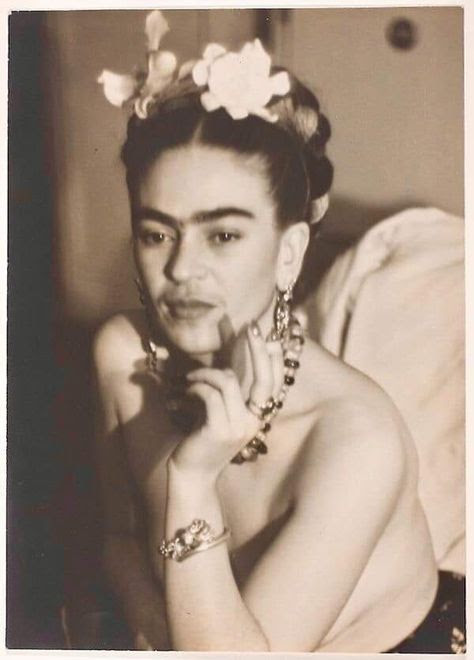
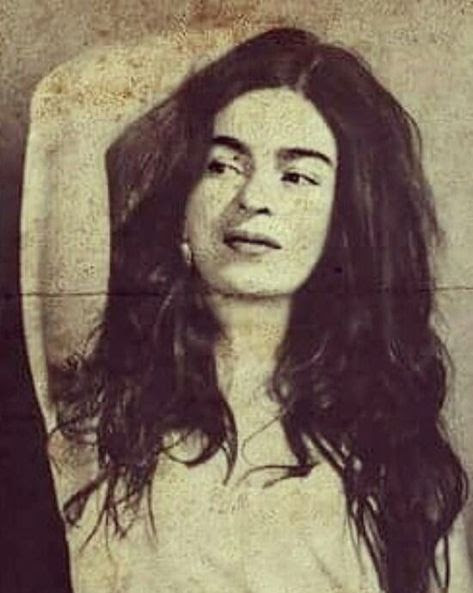
When we admire a famous artist from the past, we may wish to know everything about their lives—their private loves and hates, and the inner worlds to which they gave expression in canvases and sculptures. A biography may not be strictly necessary for the appreciation of an artist’s work. Maybe in some cases, knowing too much about an artist can make us see the autobiographical in everything they do. Frida Kahlo, on the other hand, fully invited such interpretation, and made knowing the facts of her life a necessity.
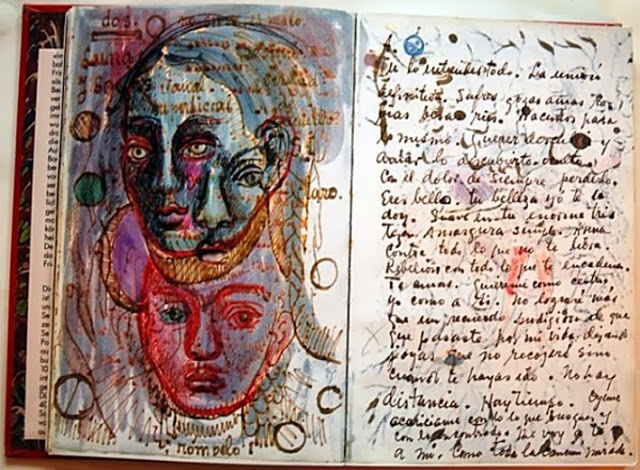
She can hardly “be accused of having invented her problems,” writes Deborah Solomon at The New York Times, yet she invented a new visual vocabulary for them, achieving her mostly posthumous fame “by making her unhappy face the main subject of her work.”

Her “specialty was suffering”—her own—“and she adopted it as an artistic theme as confidently as Mondrian claimed the rectangle or Rubens the corpulent nude.” Kahlo treated her life as worthy a subject as the respectable middle-class still lifes and aristocratic portraits of the old masters. She transfigured herself into a personal language of symbols and surreal motifs.
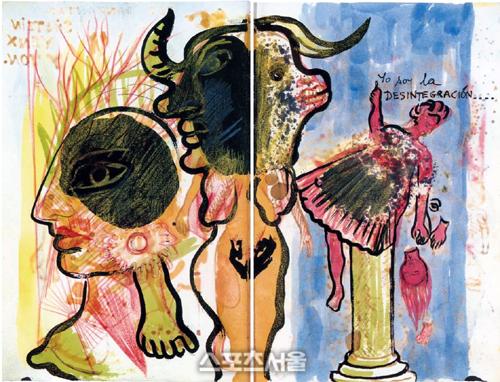
This means we must peer as closely into Kahlo’s life as we are able if we want to fully enter into what Museum of Modern Art curator Kirk Varnedoe called“her construction of a theater of the self.” But we may not feel much closer to her after reading her wildly-illustrated diary, which she kept for the last ten years of her life, and which was locked away after her death in 1954 and only published forty years later, with an introduction by Mexican novelist Carlos Fuentes. The diary was then republished by Abrams in a beautiful hardcover edition that retains Fuentes’ introduction.
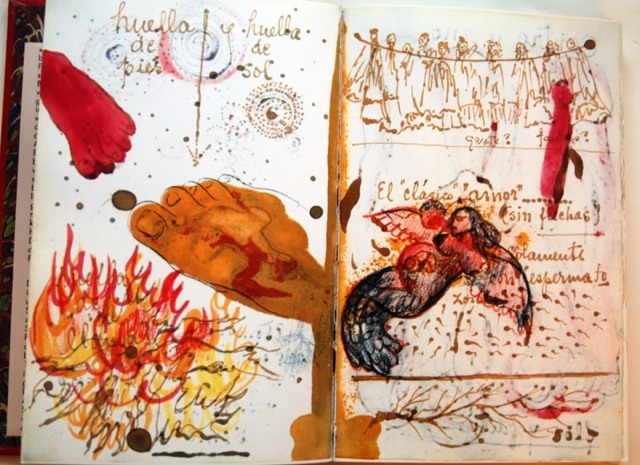
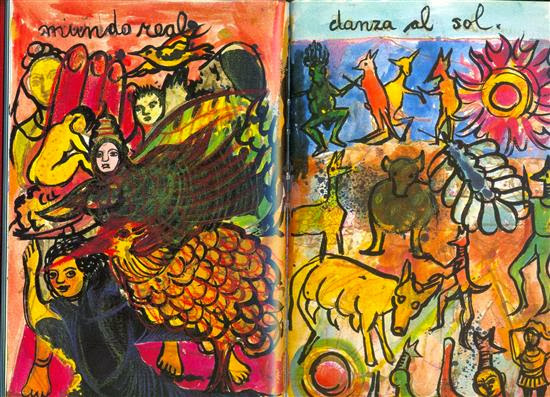
If you’re looking for a historical chronology or straightforward narrative, prepare for disappointment. It is, writes Kathryn Hughes at The Telegraph, a diary “of a very particular kind. There are few dates in it, and it has nothing to say about events in the external world—Communist Party meetings, appointments at the doctor’s or even trysts with Diego Rivera, the artist whom Kahlo loved so much that she married him twice. Instead it is full of paintings and drawings that appear to be dredged from her fertile unconscious.”
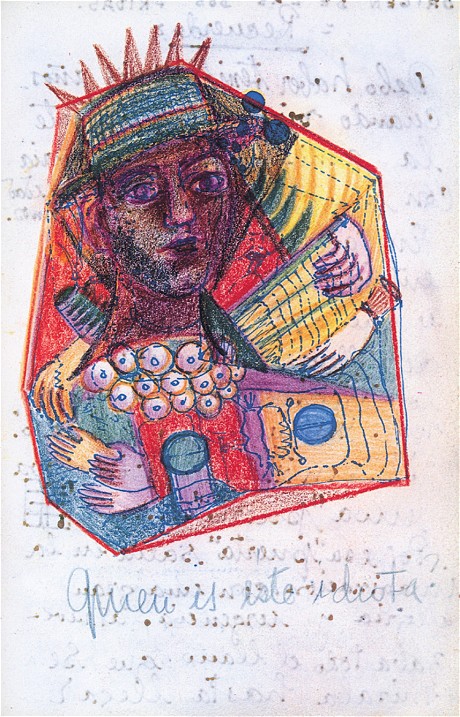
This descriptions suggests that the diary substitutes the image for the word, but this is not so—it is filled with Kahlo’s experiments with language: playful prose-poems, witty and cryptic captions, free-associative happy accidents. Like the visual autobiography of kindred spirit Jean-Michel Basquiat, her private feelings must be inferred from documents in which image and word are inseparable. There are “neither startling disclosures,” writes Solomon, “nor the sort of mundane, kitchen-sink detail that captivates by virtue of its ordinariness.” Rather than exposition, the diary is filled, as Abrams describes it, with “thoughts, poems, and dreams… along with 70 mesmerizing watercolor illustrations.”
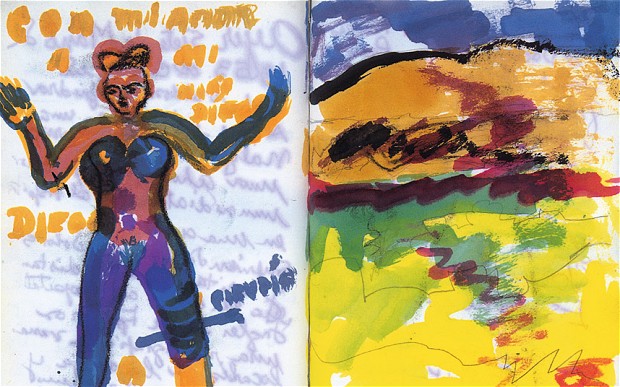
Kahlo’s diary allows for no “dreamy identification with its subject” notes Solomon, through Instagram-worthy summaries of her dinners or wardrobe woes. Unlike her many, gushing letters to Rivera and other lovers, the “irony is that these personal sketches are surprisingly impersonal.” Or rather, they express the personal in her preferred private language, one we must learn to read if we want to understand her work. More than any other artist of the time, she turned biography into mythology.
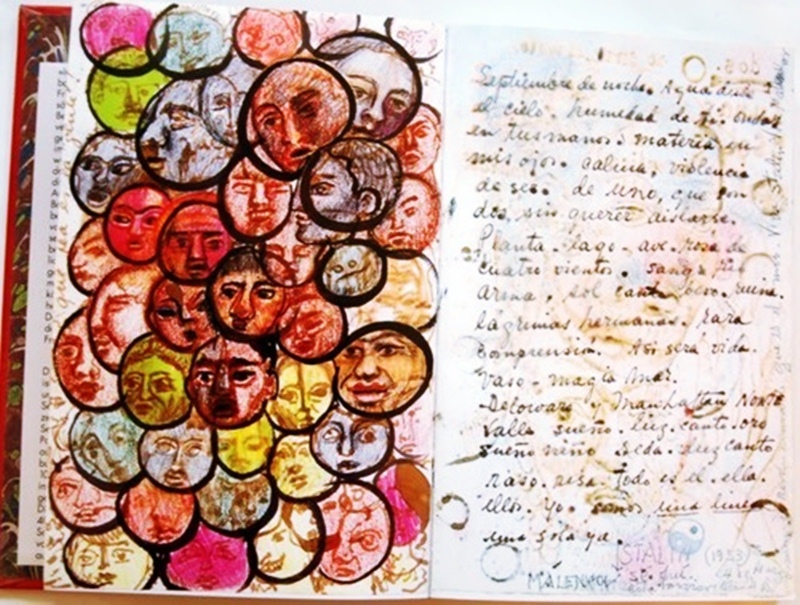
Knowing the bare facts of her life gives us much-needed context for her images, but ultimately we must deal with them on their own terms as well. Rather than explaining her painting to us, Kahlo’s diary opens up an entirely new world of imagery—one very different from the controlled self-portraiture of her publicbody of work—to puzzle over.

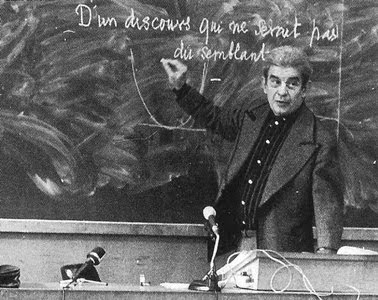
Psicoanálisis: Jacques Lacan: “Lo Real, lo Imaginario y lo Simbólico”. “Lo Imaginario y el Concepto del Otro”.-

Standard

«Karl Popper:” Falsacionismo y Cisnes Negros “.- Antoni Gaudí:” Parc Güell “.-»
Psychoanalysis: Jacques Lacan: “The Real, the Imaginary and the Symbolic”. “The Imaginary and the Concept of the Other” .-
“The Real, the Imaginary and the Symbolic”:
Lacan explains the subjective constitution as a dynamic structure organized in three registers. The French Psychoanalyst formulated the concepts of the Real, the Imaginary and the Symbolic to describe these three knots of the constitution of the subject. These three registers are imbricated according to the shape of a Borromean knot: The desanudamiento of any of the three causes the untying of the other two. It is another conceptual tool typical of combinatorial topologies, such as the Möbius Band.

Record of the Real

The reality is that which can not be expressed as language, what can not be said, can not be represented, because by representing it, the essence of it is lost, that is, the object itself. Therefore, the Real is always present but continuously mediated by the imaginary and the symbolic.

Record of the Imaginary:

The imaginary is constituted in a process that requires a certain structural alienation, it is the realm of spatial identification that starts in the mirror stage and is instrumental in the development of the psychic agency. It is in this process of formation that the subject can identify his image as the ‘I’, differentiated from the other. What is designated as ‘I’ is formed through what is the other – in other words, from the image in the mirror. It is the primitive form of symbolic thought.

Registration of the Symbolic

The imaginary, or non-linguistic aspect of the psyche, formulates the primitive knowledge of the self, while the symbolic, the term used for linguistic collaboration (coherent verbal language), generates a community-level reflection of the primitive knowledge of the self and creates the first set of rules that govern behaviour and integrate each subject into the culture. It constitutes the most evolved record and is the one that typifies the adult human being. Lacan considers that the language constructs the subject and the human being suffers from this language because it is necessary and gives each subject a heuristic quality (with the symbolic language one thinks, with this language one reasons, with such a language there is communication -symbolic- between the humans).

_________________________________________________________________________________________________

“The Imaginary and the Concept of the Other”:
What becomes the Subject properly develops through its inception in the Symbolic order, at which time the infant acquires the ability to use language that is, to materialize his desire through speech. In Lacan, the Other is at At the same time the neighbour (each other separately) and the whole set of subjects that constitute the culture and society from the origin of humanity. The Other as a set of subjects that constitute the culture and society is qualified by Lacan of Treasure of the signifiers, that is to say, is of such an entity that each subject separately receives the language; that is why the Lacanian phrase is understood The subject is spoken by the Other and its variation the subject is thought by the Other. From the Other it is that the subject has a language and it is from the Other that the subject thinks (in this Lacan does a modification to the Cartesian cogito, to the cogito ergo sum – I think ergo exists – no one thinks initially from his ego or from his self same, but he does it from what he receives by tradition from the Other). Moreover, as the ego of each subject is constituted from the Other, it also turns out to be the desire installed in each subject, a desire coming from the Other and directed towards the Other, this is summarized in the apothegm(depot): the desire is the desire of the Other. The first vicarious subject or representative of the Other for every subject is his mother. However, the mother is another who will only be effective if the paternal function mediates between her and the child.

Aquileana's avatar⚡️La Audacia de Aquiles⚡️

Psicoanálisis: Jacques Lacan:

“Lo Real, lo Imaginario y lo Simbólico”.

“Lo Imaginario y el Concepto del Otro”:

clip_image005
Jacques-Marie Émile Lacan ( 1901 / 1981 ).

_______________________________________________________________________________________________________

“Lo Real, lo Imaginario y lo Simbólico”:

Lacan explica la constitución subjetiva como una estructura dinámica organizada en tres registros. El Psicoanalista francés formuló los conceptos de lo Real, lo Imaginario y lo Simbólico para describir estos tres nudos de la constitución del sujeto. Estos tres registros se hallan imbricados según la forma de un nudo borromeo: El desanudamiento de cualquiera de los tres provoca el desanudamiento de los otros dos. Se trata de otra herramienta conceptual típica de la topología combinatoria, como lo es la Banda de Möebius.

Registro de lo Real

Lo real es aquello que no se puede expresar como lenguaje, lo que no se puede decir, no se puede representar, porque al re-presentarlo se pierde la esencia de éste, es…

View original post 527 more words

Psicoanálisis: “Sueño, Obra de Arte e Inconsciente Profundo”.-

Standard

Psychoanalysis: “Dream, Work of Art and Deep Unconscious” .-
The Work of Art, through the symbolic structures that nest in it, is an expression of the man analogous to the dream, but, unlike this one that appears to us with its essential evanescence, the Work of Art is a Fixed Dream, and it is also, because it contains a potential of reverie, a centre of psychic vibration that can generate new imaginative openings in the human being.

Analytical Psychology has been able to discover in Art, the game of the same dynamic processes that act in the Oneiric Phenomenon. The aesthetic object remains at an intermediate level between the Imaginary Object of Dream and the Concrete Object of the Real World. It is a projection of the Imaginary in the Real: it is not incommunicable like the dream, but, on the contrary, it is characterized by being discernible by man.

The Symbols of art, insofar as they are “living”, behave like the symbols of the dream, but with specific differences. In the dream state, the rational, volitional and reflection functions are almost suspended, and the impulsive and trend elements are in their original habitat.

In art, the same thing does not happen: the whole personality is at stake, as the old alchemists expressed it: Ars requirit totum hominem (Technique requires a whole person…) The ideas are presented next to the images and are placed with them in the condensations. Art gathers all the regions of the spirit, even the highest ones, in a process that the dream usually puts only in the regions of the Pulsional Experiences, through Primordial Symbolic Images. Art also manifests itself in the form of images and primordial symbols, whose line is the Deep Unconscious, but the Apollonian side of art allows Consciousness to grasp the contents that come from the dark regions, and capture them in the work, thus remaining fixed by the artist’s hand.

Both the dreams and the work of art are generated by a Suprapersonal Sphere that Jung called collective Unconscious, and from this Suprapersonal Fund arise original, primitive structures, which are manifested through symbolic images of a universal nature, for which Jung expressed: “This part of the Unconscious obviously likes to express itself through mythological images, because this mode of expression is in tune with its nature” (*).

The mediator of the work, the artist, can reach the roots of his Primitive Unconscious only if he enters the dark and deep abysses of the living myth that he carries within himself in order to express his subjective visions and express them artistically and expressively.

The work of art, like the dream and the myth, is the mouth of several rivers that converge, it is the manifest purpose of the creative potentialities of the Unconscious, which are revealed in the poem, music or painting: “The human Psyche is the matrix of all the arts and sciences “(**).

Aquileana's avatar⚡️La Audacia de Aquiles⚡️


La Obra de Arte, a través de las estructuras simbólicas que en ella anidan, es una expresión del hombre análoga al sueño, pero, a  diferencia de éste que se nos aparece con su esencial evanescencia, la Obra de Arte es un Sueño Fijado, y es también, por contener un potencial de ensoñación, un centro de Vibración Psíquica  que puede generar nuevas aperturas imaginativas en el ser humano.

La Psicología Analítica ha podido descubrir en el Arte, el juego de los mismos procesos dinámicos que actúan en el Fenómeno Onírico. El objeto estético permanece en un nivel intermedio entre el Objeto Imaginario del Sueño y el Objeto Concreto del Mundo Real. Es una proyección de lo Imaginario en lo Real: no es incomunicable como el sueño, sino que, por el contrario, se caracteriza por ser discernible por el hombre.

Los Símbolos del arte, en la medida en que son

View original post 380 more words

Antonio Berni: “La Saga de Juanito Laguna”.-

Standard

Antonio Berni: “The Saga of Juanito Laguna” .-
Antonio Berni was born in Rosario in 1905 and died in Buenos Aires in 1981. For sixty years he devoted himself to painting becoming one of the most important artists in Argentina and Latin America. He was a painter, engraver, draftsman, muralist, illustrator, made objects and installations. In 1925, the Jockey Club of Rosario awarded Berni a scholarship to study in Europe. He settled in Paris and some trips through Spain, Italy, Holland and Belgium allowed him to see museums, artists and works of art history that are influencing his work. For example, in Italy, he studied the Renaissance masters of the fifteenth century and travelled through cities such as Florence visiting his churches, palaces and museums. Berni restless is constantly finding encouragement for their own works. The main discovery for Berni in those years was the relationship between art and politics, the role of the artist as a man of his time and as a social actor. Berni approaches communism and from his interest in politics, he assumes the commitment to reflect in his paintings the reality of the world that he has to live. Since then, for him, the painting will be his way of reflecting on reality and trying to transform the marginal world of workers. At the same time, he knows one of the most important artistic vanguards of that time: surrealism, and adheres for a few years to his postulates. This responsibility of the artist as the protagonist of his time is a position that Berni shares with other artists in Latin America, especially with the famous Mexican muralists. Precisely, in 1933, one of them, David Alfaro Siqueiros, visited Argentina, with whom Berni works and discusses the role of art in the revolution of the popular classes. The last ruptures of modernity will be the clean squeeze to break into the sixties, at 55 years of age.

The Saga of Juanito Laguna and Ramona Montiel will serve as a narrative excuse for retaking social criticism with an image that calls for the influx of various plastic currents of the time: informalism, pop, new figuration and expressionist realism. Since the early sixties, Antonio Bemi has been working on a new series.
«JUANITO LAGUNA»:
The works dedicated to Juanito Laguna and Ramona Montiel, two characters invented by him to use them as symbols of childhood exploited in Latin America, especially in large cities such as Buenos Aires, Lima, Rio de Janeiro and Mexico. It is about two inhabitants of the misery villages.

Juanito Laguna is a boy who lives in one of those shantytowns and Berni paints his daily life, his games, his family: Juanito watching television, Juanito climbing his kite, Juanito in the lagoon, Juanito at Christmas, Juanito going to the city, Juanito taking the food to his metallurgical worker father.

For these works, Berni uses a technique invented at the beginning of the century: the collage, the addition to the painting of real materials that are glued on the painting.

The artist uses an abundant collage transforming his images into surfaces loaded with elements such as cans, plastics, irons, woods, fabrics, shoes, toys, papers, traffic signs, etc.

The idea is to incorporate the waste that the artist collects in the marginal neighbourhoods of Buenos Aires where the protagonists could live. With this cycle, Antonio Bemi developed until the eighties, one of the most original chapters in the history of art.-

Aquileana's avatar⚡️La Audacia de Aquiles⚡️

♠Antonio Berni: “La Saga de Juanito Laguna”:

berni

Antonio Berni  (1905/1981).-
______________________________________________________________________________________________________________

Antonio Berni nació en Rosario en 1905 y murió en Buenos Aires en 1981. Durante sesenta años se dedicó a la pintura convirtiéndose en uno de los artistas más importantes de la Argentina y de América latina. Fue pintor, grabador, dibujante, muralista, ilustrador, realizó objetos e instalaciones. En 1925, el Jockey Club de Rosario le otorgó al joven Berni una beca para estudiar en Europa. Se instaló en París y algunos viajes por España, Italia, Holanda y Bélgica le permitieron conocer museos, artistas y obras de la historia del arte que van influenciando sus trabajos. Por ejemplo, en Italia estudia a los maestros del Renacimiento del siglo XV y viaja por ciudades como Florencia visitando sus iglesias, palacios y museos. Berni inquieto va encontrando constantemente estímulos para sus propias obras. El principal descubrimiento para Berni en esos años fue…

View original post 470 more words

How Leonardo da Vinci Drew an Accurate Satellite Map of an Italian City (1502)

Standard

One can really explore this genius for a long time and never get tired of!

He was and is the genius of all time as we look not only to his fascinating paintings but into his experiments and researches in all about.

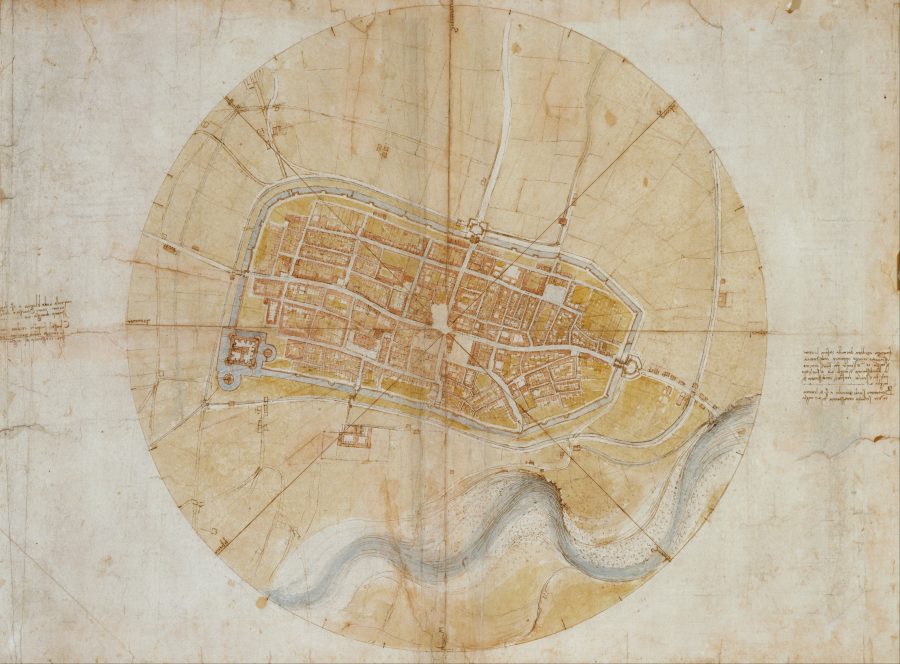
And now I have found another genius work as he drew a map exactly as we’d see in our time only with the help of satellites!

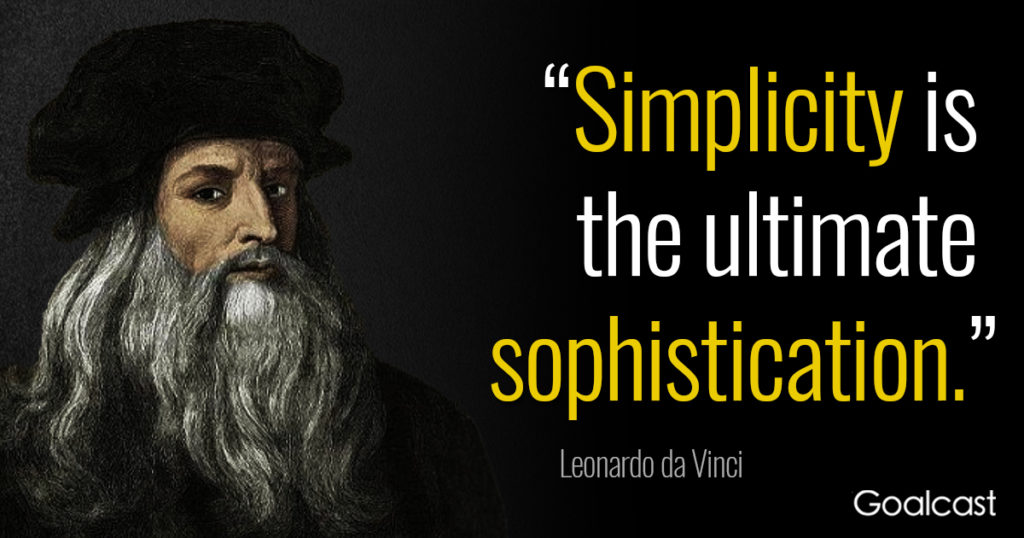
How could he see these, with a clandestine satellite?! Stunningly he was always speaking of the power of simplicity.

No, surely not. He could do it with his imaginations. I can remember as a young boy, watching old wonderful science fiction TV series, in one of them; it was about a man who has been found on a planet lonesome, the finders asked him to come with them on their spaceship to explore the universe but he didn’t want to leave his planet; I can fly all over where I want, in my dreams, with my imagination, he said.

Yes, Leonardo was also able to use his. Actually, we must try using our imagination to find out how Leonardo da Vinci could draw so precisely the Imola city of Italy without a spaceship! 😉 It blows one’s mind to try doing it!

So, here I share again an article about this great genius, hoping you enjoy it. With thanks ❤

http://www.openculture.com/2019/04/how-leonardo-da-vinci-drew-an-accurate-satellite-map-of-an-italian-city-1502.html via: http://www.openculture.com/

When I look at maps from centuries ago, I wonder how they could have been of any use. Not only were they filled with mythological monsters and mythological places, but the perspectives mostly served an aesthetic design rather than a practical one. Of course, accuracy was hard to come by without the many mapping tools we take for granted—some of them just in their infancy during the Renaissance, and many more that would have seemed like outlandish magic to nearly everyone in 15th century Europe.

Everyone, it sometimes seems, but Leonardo da Vinci, who anticipated and sometimes steered the direction of futuristic public works technology. None of his flying machines worked, and he could hardly have seen images taken from outer space. But he clearly saw the problem with contemporary maps. The necessity of fixing them led to a 1502 aerial image of Imola, Italy, drawn almost as accurately as if he had been peering at the city through a Google satellite camera.

“Leonardo,” says the narrator of the Vox video above, “needed to show Imola as an ichnographic map,” a term coined by ancient Roman engineer Vitruvius to describe ground plan-style cartography. No streets or buildings are obscured, as they are in the maps drawn from the oblique perspective of a hilltop or mountain. Leonardo undertook the project while employed as Cesare Borgia’s military engineer. “He was charged with helping Borgia become more aware of the town’s layout.” For this visual aid turned cartographic marvel, he drew from the same source that inspired the elegant Vitruvian Man.

While the visionary Roman builder could imagine a god’s eye view, it took someone with Leonardo’s extraordinary perspicacity and skill to actually draw one, in a startlingly accurate way. Did he do it with grit and moxie? Did he astral project thousands of miles above the city? Was he in contact with ancient aliens? No, he used geometry, and a compass, the same means and instruments that allowed ancient scientists like Eratosthenes to calculate the circumference of the earth, to within 200 miles, over 2000 years ago.

Leonardo probably also used an instrument called a bussola, a device that measures degrees inside a circle—like the one that surrounds his city map. Painstakingly recording the angles of each turn and intersection in the town and measuring their distance from each other would have given him the data he needed to recreate the city as seen from above, using the bussola to maintain proper scale. Other methods would have been involved, all of them commonly available to surveyors, builders, city planners, and cartographers at the time. Leonardo trusted the math, even though he could never verify it, but like the best mapmakers, he also wanted to make something beautiful.

It may be difficult for historians to determine which inaccuracies are due to miscalculation and which to deliberate distortion for some artistic purpose. But license or mistakes aside, Leonardo’s map remains an astonishing feat, marking a seismic shift from the geography of “myth and perception” to one of “information, drawn plainly.” There’s no telling if the archetypal Renaissance man would have liked where this path led, but if he lived in the 21st century, he’d already have his mind trained on ideas that anticipate technology hundreds of years in our future.

#writerproblems: #characterdeath in #storytelling (Part 2: melting shoes and raising stakes)

Standard

Excellent read 🙏❤❤👍

jeanleesworld's avatarJean Lee's World

In my January post about character death, we discussed the traumatic moment of a beloved character’s death. I loved reading your comments on how character deaths can be utilized to help strengthen stories. The ever-lovely author Shehanne Moore nailed it when she said:

A threat is a threat. End of. People can’t go up against the big guns and come out unscathed, or be labelled ruthless warriors and then be pussy cats. On another level life doesn’t always end happily with rose tinted sunsets.

These past few months, I’ve been struggling with the Act 1s of stories littered with murder and mayhem–mainly mayhem. It hit me, then, or at least while describing a corpse, that the Unknown’s Death can do wonders in making a story compelling to readers.

Now I’m not just talking typical Red Shirt Deaths. The lovely Cath Humphris referred to this kind of death back in…

View original post 1,186 more words

The danger of all dangers…

Standard

“The greatest danger for most of us is not that our aim is too high and we miss it, but that it is too low and we reach it.”

Ibonoco's avatarNews from Ibonoco

The greatest danger for most of us is not that our aim is too high and we miss it, but that it is too low and we reach it.

« Le plus grand danger qui nous guette n’est pas de viser un but trop élevé et de le manquer, mais plutôt de choisir une cible trop modeste et de l’atteindre. »

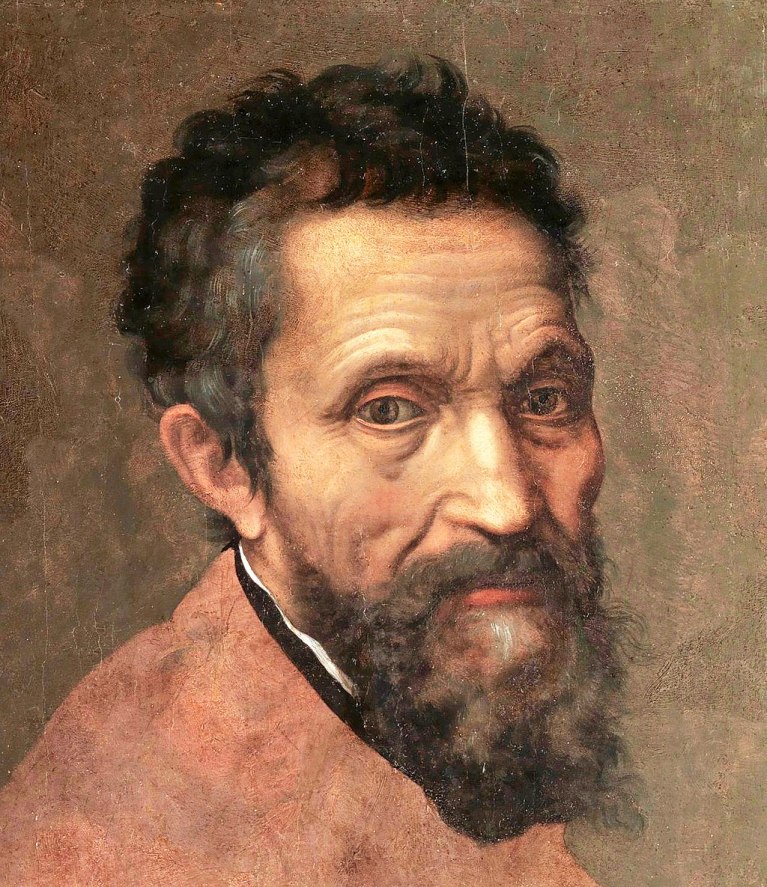
Michelangelo di Lodovico Buonarroti Simoni, dit Michel-Ange (1475 – 1564) est l’un des plus célèbres « génies » florentin de la Renaissance. Il sera un sculpteur, peintre, architecte, poète et urbaniste.

View original post

A SUMMER BREAK

Standard

A Kiss is not just a Kiss 😊👍👍

mikesteeden's avatar- MIKE STEEDEN -

amazon-shop-that-sells-kisses

The sun is shining. The time has come to take a summer break from blogging. Not too long a break, just sufficient enough for dear Shirl and I to partake of a little time travel and do what disgraceful aging juveniles do best. I’ll leave you to guess what the latter might be. In the meantime I think I’ll pop into ‘The Shop That Sells Kisses’ and buy the sweet gal a gift.

I went into the shop that sells kisses

Asked the girl behind the counter if she

Could recommend from her vast range of stocked caresses

A kiss that was suited to me

“Well I’ve got the Kiss of Death here on Special Offer

Yet I don’t think you want that do you?

And it’s ‘Buy One, Get One Free’ on the Judas Kiss

Yet they do not befit a ‘hello’ more so an ‘adieu’


Goodbye kisses…

View original post 169 more words