On the whole she would speak in riddles whether posing a question or in idle conversation. Her preference to give noxious gifts in abundance, a thing of pure joy to the outed masochists, unwelcome to all others. Not that those ‘others’ dare say a word aside from making the polite noises expected of them and putting on a show of drowning in truthless gratitude. Such are the ways of invincible tyrants whose doctrine is not accountable to down trodden natives. The divine are known to favour the iron fist, although in her case the trepidation she could invoke with just a knowing smile meant she rarely felt compelled to throw that first symbolic punch. A propensity to savour complete and total power for her warped amusement was sufficient to serve her purpose of being. God help those who defied her wishes or she grew sick and tired…
The Scottish celebration of Hogmanay is close at hand. Hogmanay is the Gaelic word for the last day of the year, celebrated on New Year’s eve.
This is the time of year when Celtic folks in Scotland gather together to welcome in the New Year and say Farewell or in Scot’s Gaelic, Soraidh, to the old year.
Several sources cite that Gaelic origins grew from French or Norse language or an older version of gaelic. New year ceremonies and mid-winter observance were natural in both Gaelic and Norse traditions. Hogmanay is a larger celebration in Scotland and predates the Christian Christmas. According to Scotland’s own website Scotland.org The Word Hogmany originated from the Norman French from hoguinan (a New Year’s gift). They also mention it’s a modification of the Gaelic og maidne (new morning), the Flemish hoog min dag
Francis Picabia constantly perplexes and undermines artistic expectations. A wealthy, hedonistic playboy with great personal charm, Picabia also possessed a notoriously acerbic wit and personified the savage negation at the heart of Dada.
Picabia’s career spanned many movements across continents, but is best remembered for his involvement with Marcel Duchamp, Man Ray and Arthur Craven in the creation of New York Dada and his mechanomorphic drawings from 1915 onwards. Always on the move and with entry to every fashionable social circle, Picabia moved to Barcelona then to Zurich for the remainder of WWI. Asked to describe his impressions of the War, Picabia remarked that he was bored to hell. After WWI he moved back to Paris and participated in further Dada shenanigans with Tristan Tzara and Andre Breton, contributing ferocious manifestos for Dada events which he watched from private boxes with the mistress…
Buddha has always fascinated me how he looked, felt and observed the powers on the Earth, which for us, they might be considered mostly as normal elements. as I remember; when I watched the movie Little Buddha (1993) I was very impressed by the scene: Tree of Life – “Little Buddha” movie scenes.
I wish You dear Friends a Happy & Peaceful New Year with full of Love and Freedom for all of us ❤ ❤
All things, O priests, are on fire. And what … are these things which are on fire? The eye, O priests, is on fire; forms are on fire; eye-consciousness is on fire; impressions received by the eye are on fire; and whatever sensation, pleasant, unpleasant or indifferent, originates in dependence on impressions received by eye, that also is on fire… With the fire of passion, say I, with the fire of hatred, with the fire of infatuation; with birth, old age, death, sorrow, lamentation, misery, grief and despair are they on fire. The ear is on fire; sounds are on fire; … the nose is on fire; odours are on fire; … the tongue is on fire; tastes are on fire; … the body is on fire; things tangible are on fire; … the mind is on fire; … ideas are on fire; … mind-consciousness is on fire; impressions received by the mind are on fire; and whatever sensation, pleasant, unpleasant or indifferent, originates in dependence on impressions received by the mind, that also is on fire. And with what are these on fire? With the fire of passion, … with the fire of hatred, with the fire of infatuation; with birth, old age, death, sorrow, lamentation, misery, grief and despair are they on fire. [his prescription of how to escape being on fire]: The learned and noble disciple conceives an aversion for the eye, conceives an aversion for forms, conceives an aversion for eye-consciousness, conceives an aversion for the impressions received by the eye; and whatever sensation, pleasant, unpleasant, or indifferent, originates in dependence on impressions received by the eye, for that also he conceives an aversion. Conceives an aversion for the ear, an aversion for sounds, … conceives an aversion for the nose, conceives an aversion for odours; . . . conceives an aversion for the tongue, conceives an aversion for tastes, . . . conceives an aversion for the body, conceives an aversion for things tangible …. etc
“Anyhow Lennie boy, you got any new songs you can belt out for me in your own indomitable style by way of a serenade as a prelude to my seduction?”
“Can’t say as how I have presently, luv. Me mind refuses to wander creatively anymore.”
“You’re having a laugh surely?”
“No Svet, it’s the honest truth. I’m bolloxed in that regard at the moment. Even now whilst your otherwise engaged abandoning your kit in a manner most tantalising, my creative juices fail me. I must admit I’m getting a tad worried about it if the truth be told.”
“Well Lenny, if you care to cast your gazers over here I’ll lay odds you’ll feel inspired, you old…
Another arresting erotic image by the master Surrealist photographer, Man Ray. I cannot accurately determine the date it was taken, however as it features his lover Juliet Browner (and later wife, they were married in a dual ceremony with Max Ernst and Dorothea Tanning in Beverly Hills in 1946) and Margaret Nieman who was his neighbour in Los Angeles during the early 1940’s, 1942 would seem to be the likeliest year.
Man Ray frequently photographed his lovers in embraces with other women, notably Lee Miller and her room-mate Tanja Ramm (though not the photograph of Lee and Tanja having breakfast in bed, that was taken by Lee’s father) and later, Ady Fidelin with the ultimate Surrealist muse Nusch Eluard.
The totem-like masks were designed by Man Ray himself and certainly add an aura of strangeness and animalistic carnality to the scene. In…
Marie Von Bruenchenhein-Eugene Von Bruenchenhein circa 1945
The self taught artist Eugene Von Bruenchenhein worked in a variety of mediums including painting, drawing, sculpture (using chicken bones) and photography, all of which adorned the modest house in Milwaukee, Wisconsin that he lived in for forty years with his wife and muse, Marie.
Eugene’s marriage to Evelyn Kalka in 1943 (he re-named her Marie) seemed to have ignited a creative spark. Over the next two decades he would photograph Marie thousand of times, as a pin-up girl, tropical tourist, vixen, Madonna. Bedecked with pearls, clunky fetish heels, lurid leopard prints against florid wall coverings, Marie looks wistfully upwards, awkward and gauche. The photographs are simultaneously curiously innocent and charged with an subterranean current of obsessional eroticism. Marie at times seems like a harbinger of Cindy Sherman, assuming and thereby questioning a number of manufactured female roles.
“He was a sky god, associated with wind, rain, thunder, and lightning, and was the master of spiritual phenomena, since it was the spirit realm that was signified by the sky and the manifestations of the weather. He was a carrier of justice and judgment, an embodiment of law and the punisher of transgression of the law, accomplished by the hurling of the thunderbolt. He was the personification of creative energy, which constantly spilled out and had an unceasing urge to impregnate, hence his perpetual love affairs.” Edward Edinger, The Eternal Drama: The Inner Meaning of Greek Mythology
In Edinger’s description of Zeus, we see the image of a powerful masculine ruler of the heavens. Although Zeus is still one of many gods, he is both leader and creator of the pantheon. And just as importantly, we see Zeus’ engagements with his wife, Hera, not as his compliment, but…
Intersting analyse about the masters of psychology. of course I admire Freud for his Ideas about the human’s sexual problems!
Sex, religion and envy – how Freud and Jung’s frenetic friendship tore itself apart
In 1906, the young Swiss psychiatrist Carl Jung received a collection of essays from none other than the founder of psychoanalysis himself, Sigmund Freud. When the two met in person a year later in Vienna, their first conversation lasted more than 13 hours, according to Jung’s account. And so began a collaboration that would blossom into an intense, albeit brief friendship between two titans of psychology. The duo toured the US together, giving lectures on psychoanalysis. They analysed each other’s dreams in depth. Twenty years his senior, Freud called Jung ‘the Joshua to my Moses, fated to enter the Promised Land which I myself will not live to see’. Their bond was so deep that at one point Jung wrote to Freud: ‘Let me enjoy your friendship not as one between equals but as that of father and son.’ Despite their shared interests and mutual admiration, in 1913 their relationship abruptly ended. But what caused their dramatic estrangement? And which one can lay claim to greater influence?
Freud versus Jung is the second instalment of ‘Philosophy Feuds’, Aeon’s original series of short animations, each of which tells the story of a famous – or not so famous – spat, break-up, falling-out or fracas. More than just revealing the hilarious and all-too-human pettiness of the world’s greatest thinkers, ‘Philosophy Feuds’ is about the fascinating ideas behind each of these rifts – and how these ideas continue to matter today.


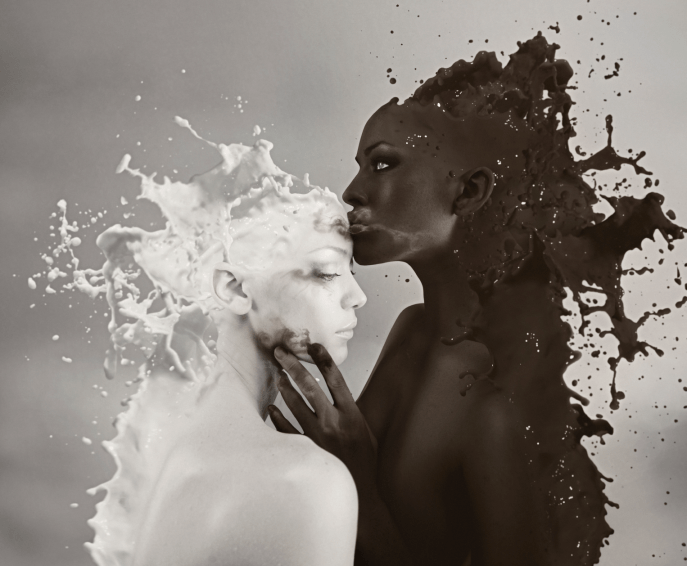 Image by kaSSandrA



 Francis Picabia-Women with Bulldog 1941-1942
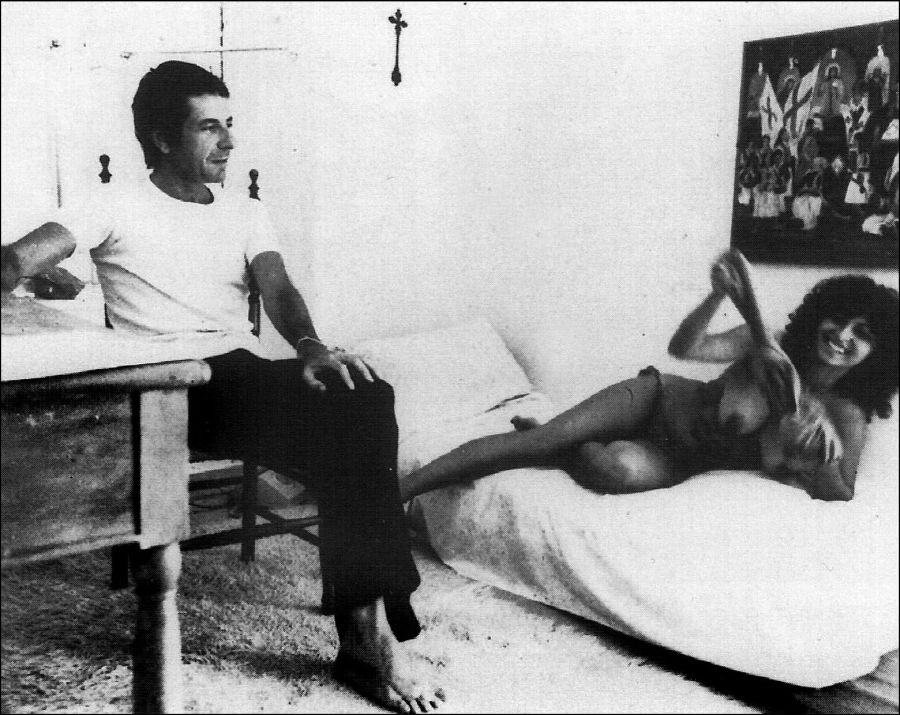
 Juliet et Margaret -Man Ray 1942?
 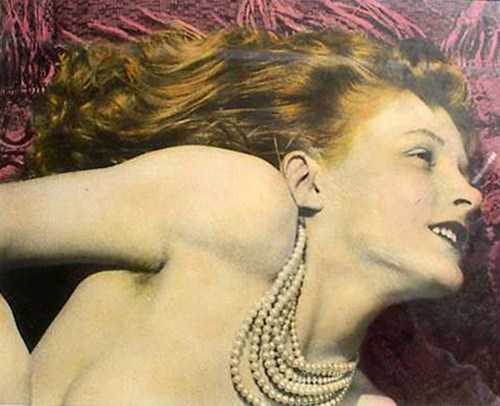 Marie Von Bruenchenhein-Eugene Von Bruenchenhein circa 1945


 lampmagician
You must be logged in to post a comment.