The Initial Dreams, from Dream Symbols of The Individuation Process

Standard

I think that for all of us dreams are always fascinating, and their interpretations are so more. My wife dreams a lot and can stunningly remember them most. I wish I could interpret them for her, but I must always pass! Although this ability is not unknown in my family, my mother and my brother Al could pull out some meanings, and one of my aunts (Rakhshi, the closest to us) was the master of interpretation.

I often have problems remembering my dreams, though a few strangely stayed remain in my memories. I write one of them down here; may one of the friends here can make a sense out of it.

I come into the kitchen the same as I live now, just with a difference, as the stove is not on the left of the wall but under the window in front of me. I look to the right, where the wall clock is hanging, to know how time it is, but I can’t because the watch is covered by aluminium foil. Suddenly I notice someone behind me outside the kitchen on the entrance hall. I turn and see an elderly dame with white hair and a walker-weal. (note: during my job, I have many such customers) I go to the floor and see that her eyes are covered with tiny white caps that people usually wear after eye surgery. I greet her, and she smilingly thanks me and gives me a key. That’s all; I woke up!

However, I try to learn from Dr Jung’s practice of Symbols and their meanings to fix my inability. Here, I present another capital from his book: Dream and Dream Interpretation; >dream symbols of the individuation process<: The Initial Dreams. Dream 21. I hope you will enjoy it.

Dream 21. Visual impression:

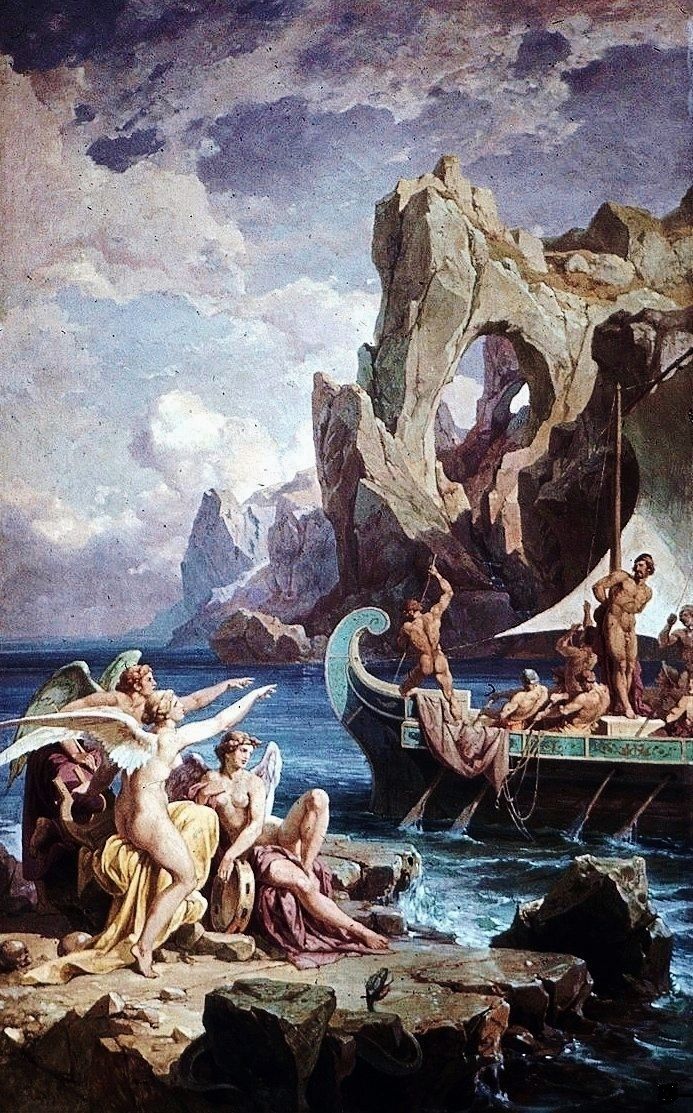
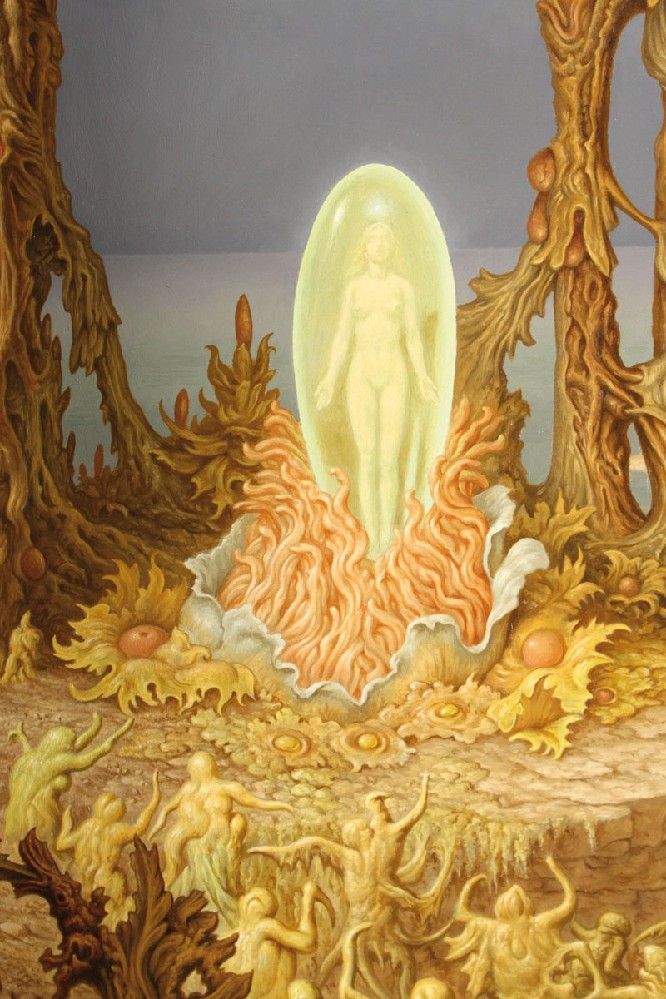
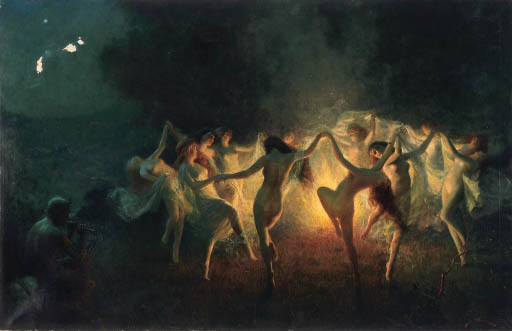
Nymphs surround him. A voice says: We were always there. But you didn’t notice us. (Fig. 1)
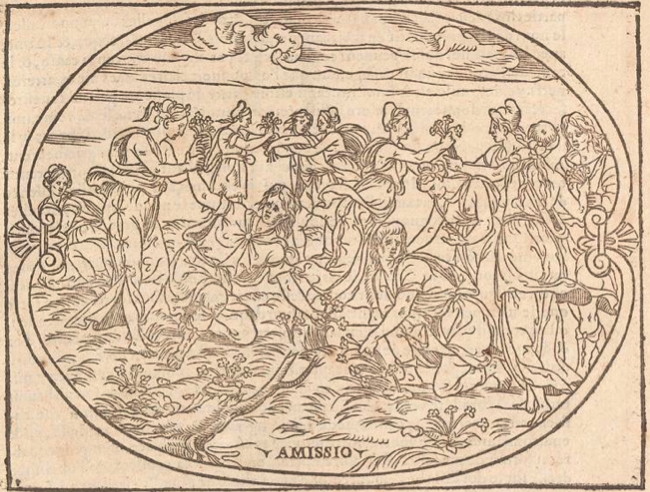
Fig. 1

Here the regression goes further back to unequivocal ancient notions. At the same time, the situation of Dream 4 { in which many indefinite women surround him and a voice says: “I have to get away from my father first!] resumed, and with it, the rejection situation of dream 18 [ in this dream, a man offers him gold coins on his bottle hand. The dreamer, however, throws them to the ground indignantly and immediately afterwards deeply regrets his action. Then a variety show takes place in a separate area.], which had led to preventive enantiodromia in Dream 19 [A skull. He wants to kick him away but can’t. Gradually, the skull turns into a red sphere, then into a woman’s head emitting light.]. However, the image is amplified by the hallucinatory realization that it is a matter of a fact that is always present but has not been noticed until now. With this statement, the unconscious psyche is connected to consciousness as coexistent.

The phenomenon of the “voice” in the dreamer always has the definitive and indisputable character of the “antos epha; (suffer)” (he said so himself: This referred to the authority of Pythagoras.) That means the voice speaks the truth or is a condition that can no longer be seriously questioned. The fact that contact has been made with distant signs means that deep layers of the psyche are accepted by the dreamer’s unconscious personality and are communicated to consciousness as a relative feeling of security.

The vision in dream 20 [A globe, on which the unknown woman is standing and worshipping the sun.] represents the anima as a sun worshiper. She has stepped out of the sphere (or spherical shape) there, as it were (Fig. 25). But the first spherical shape is the skull.
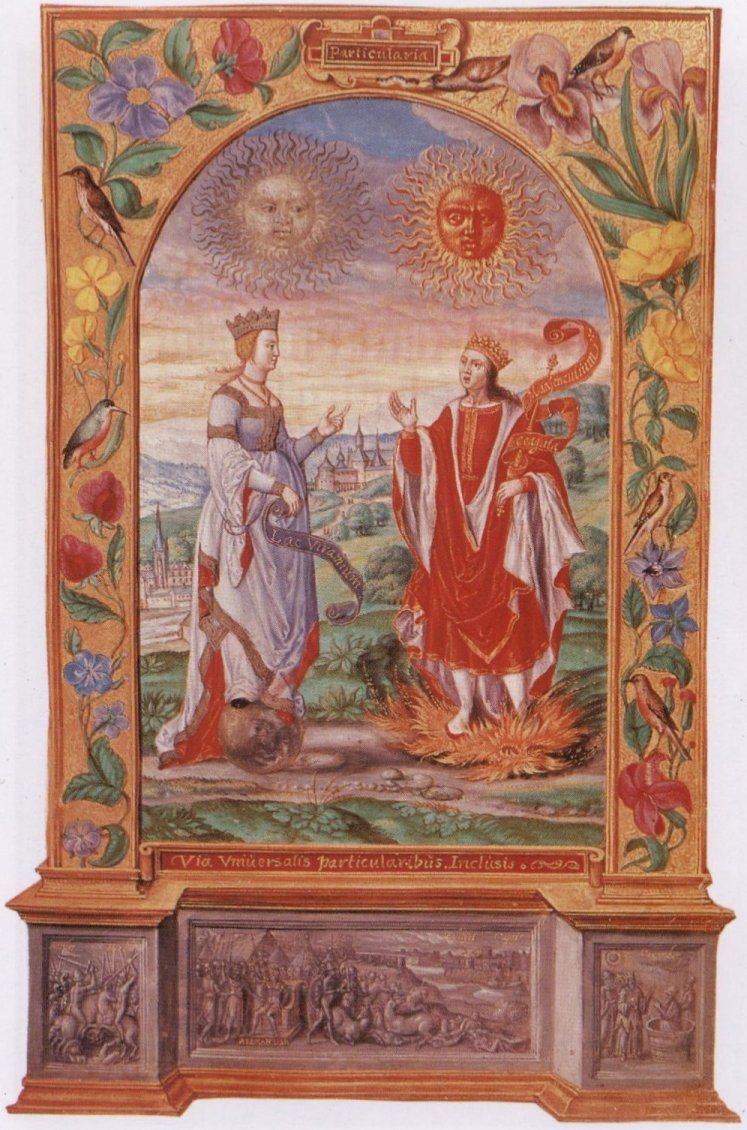
According to an old belief, the head, or rather the brain, is the seat of “anima intellectualis”. Therefore, the alchemical jar should be round like the head so that what comes out of the jar should also be “round”, namely simple and perfect, like the “Anima Mundi”. (1)

The culmination of the work is the production of the “round”, which is at the beginning (as “materia globosa”; Fig. 26) and at the end (as gold). The hint of what has always been there should refer to this. The regressive character of the vision is also evident in the fact that, like in Dream 4, many female figures appear.
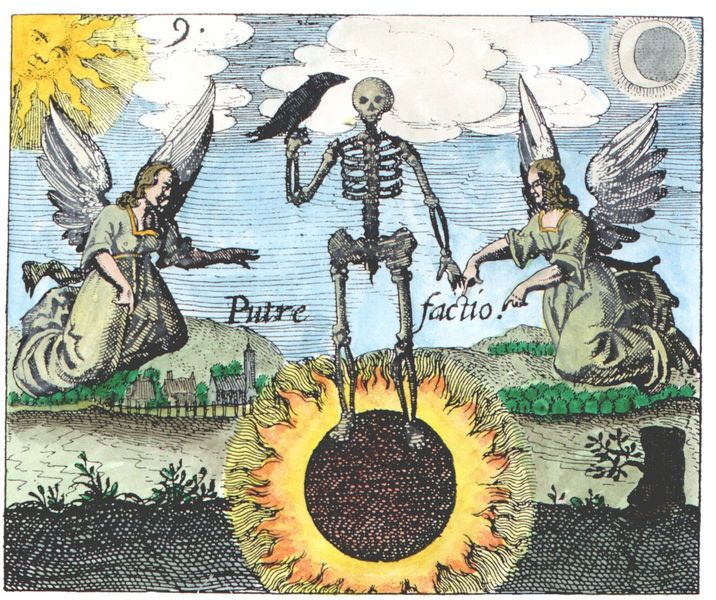
This time, however, they are characterized as ancient, indicating historical regression (like the sun worship in Dream 20). The disintegration of the anima into many means something like a dissolution into the indefinite, i.e. into the unconscious, so it can be assumed that the historical regression is accompanied by a relative dissolution of consciousness (a process that can be observed in the highest degree of schizophrenia). The dissolution of consciousness, the “abaissement du niveau mental”(lowering of the mental level) – to paraphrase Pierre Janet – fed on a primitive state of mind. A parallel to this nymph scene is the Paracelsian “regio nymphidica”, mentioned in the treatise “De vita longa” as the origin and beginning of the individuation process. (I refer to my remarks in Paracelsus as a spiritual phenomenon. CW 13, § 214)

(1) Paraphrase; (Cf. on this, Liber Platonis quartorum, in Theatrum chemicum, 1622, vol. 5, pp. 149ff. and 174. This treatise is an important Harranitic text for the history of alchemy, which is available in Arabic and Latin. The latter is, unfortunately, very corrupt. The constitution time of the original is probably the 10th century. Cf. Steinschneider: The European translations from Arabic, 1904/5, p. 44.)

Images credit: Joseph Tomanek (1889-1974) / Hypnerotomachia Poliphili

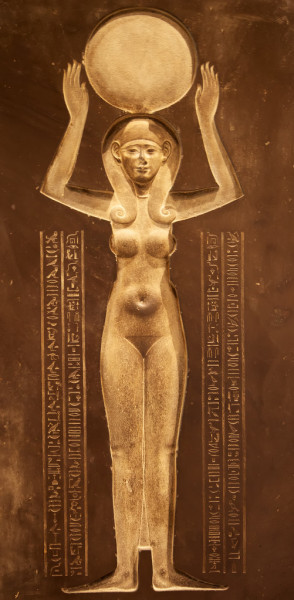
Goddess Nut Raising The Sun

Standard

As I keep stumbling upon the gods and goddesses everywhere, I see a lot of similarities between them. I know I belong to the “different thinkers” and have odd ideas about our genesis. However, it is always fascinating to find all these connections and resemblances.

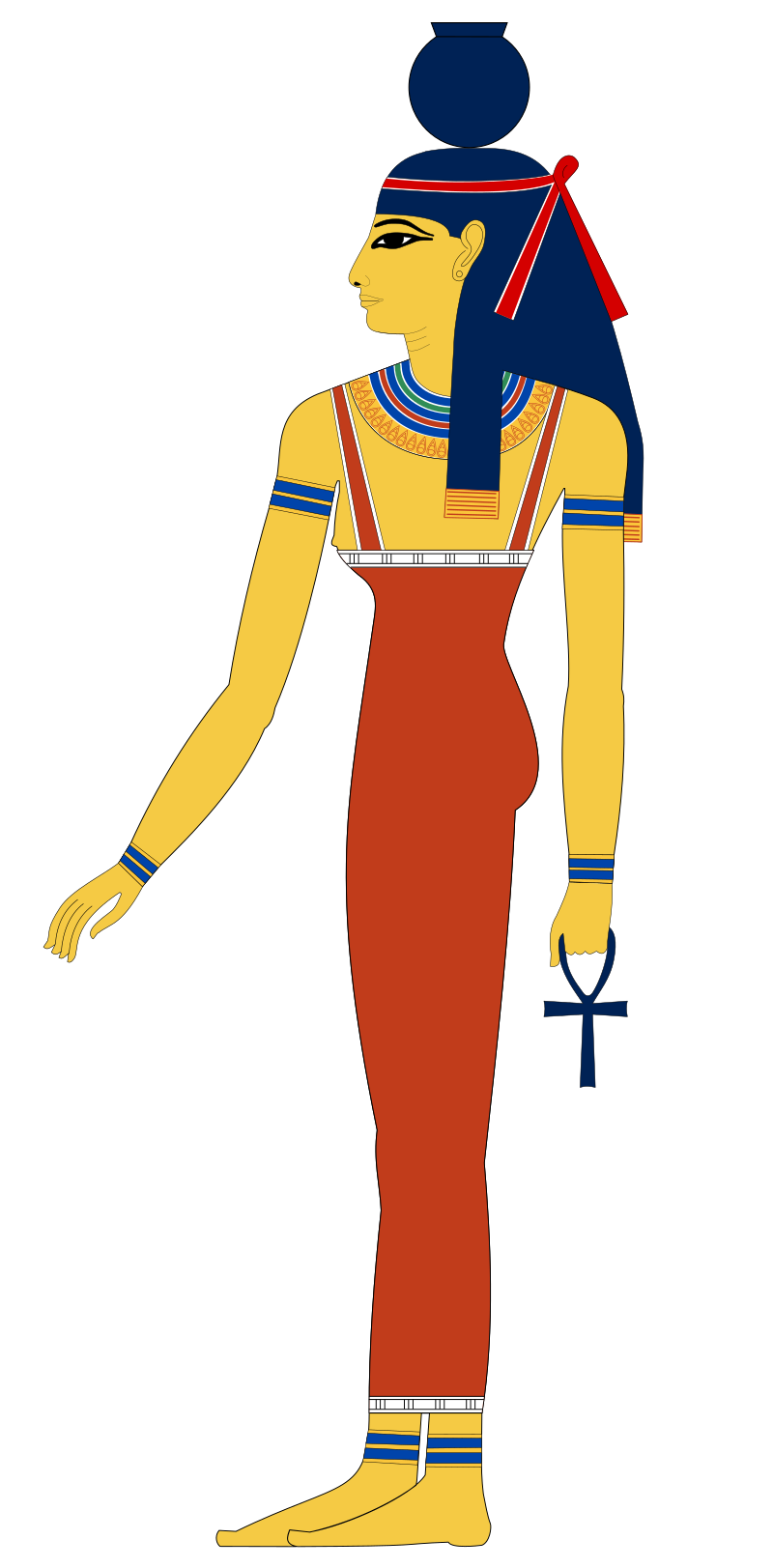
Here is the mighty goddess Nut (Nuit), the Egyptian sky goddess, born of Shu, god of air, and Tefnut, goddess of water and fertility. With her brother and husband Geb, the earth, she bore Osiris, Isis, Set, and Nephthys. No wonder, as Dr C.G.Jung says: The Animus is meant to be cosmic, and “The Anima is the archetype of life itself.”. Here we see another mighty Goddess from Magical Egypt.

Sarcophagus of Djedhor 200–150 B.C.
Djedhor was a royal scribe as well as a priest of Min and Hathor. Besides his name and titles, the inscription on his stone sarcophagus also mentions his mother, Tikas.

(The image on the top: Great goddess Nut with her wings stretched across a coffin By Jonat Thunder (Wikipedia) The quotes by Dr Jung: ~ Visions Seminar, Page 1228. & [CW 9i, par. 66])

Now let’s again read the story of stunning finds by a great genius, Jean-François Champollion & Co. A brilliant report by Marie Grillot.

Champollion and… The “King of Sarcophagi”!

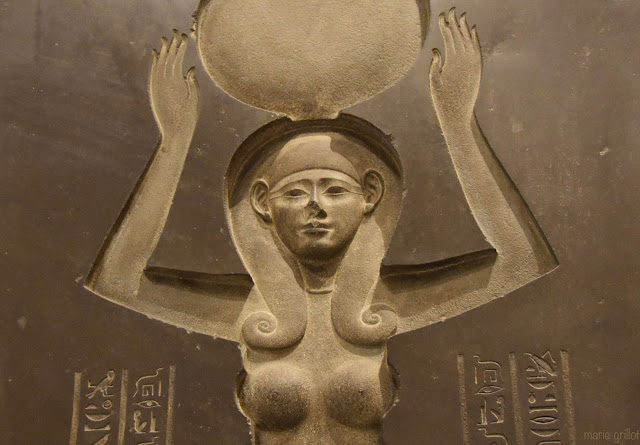
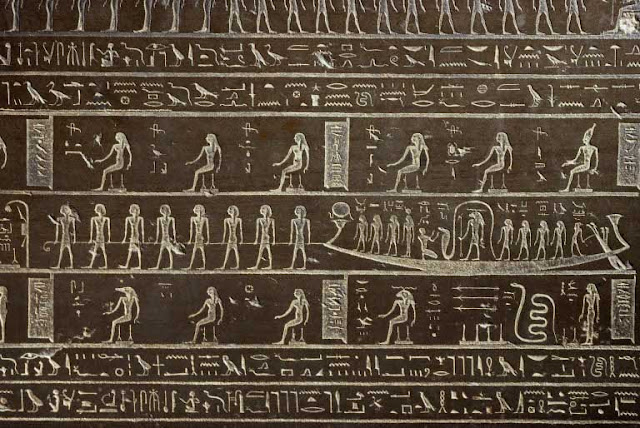
Detail of the lid of the sarcophagus of Djedhor – greywacke – 4th century BC
Acquired in 1829, in Egypt by Jean-François Champollion
Department of Egyptian Antiquities of the Louvre Museum – D 9 – photo Marie Grillot

On August 18, 1828, Jean-François Champollion and Ippolito Rosellini, at the head of the Franco-Tuscan mission, landed in Alexandria. Their mission is to visit the monuments of ancient Egypt and to buy objects for the royal collections. Champollion will devote himself, with an infinite passion, to monuments. Still, he will have just as much at heart to enrich the collection of the Egyptian antiquities division of the Charles X museum (future Louvre), inaugurated on December 15, 1827, and of which he was appointed conservative.

The Egyptian Antiquities Division of the Charles X Museum
(future Louvre) was inaugurated on December 15, 1827

To carry the beautiful message of the greatness of Egypt within the Parisian museum, he will choose the most beautiful pieces… The sarcophagus of Djedhor is one of the most emblematic illustrations…

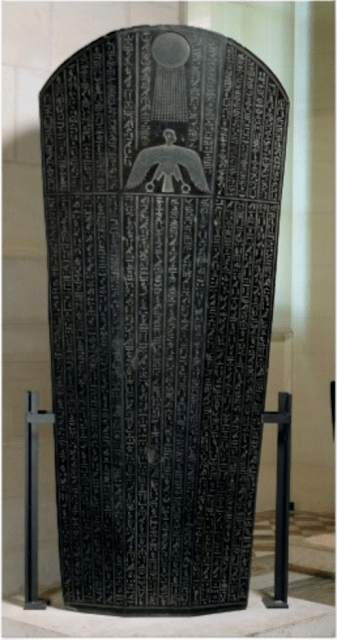
Sarcophagus of Djedhor – 4th century BC – greywacke
Acquired in 1829, in Egypt by Jean-François Champollion
Department of Egyptian Antiquities of the Louvre Museum – D 9

“I acquired in Cairo, from Mahmoud-Bey, the Kihaia, the most beautiful of the present, past and future sarcophagi; it is in green basalt and covered internally and externally with bas-reliefs, or rather cameos worked with perfection and an unimaginable delicacy. It is all that one can imagine being more perfect in this genre; it is a jewel worthy of adorning a boudoir or a living room, so much the sculpture is fine and precious. The cutlery bears, in half-relief, a woman’s figure of admirable sculpture. This single document would acquit me towards the king’s household, not in respect of gratitude, but in financial respect, for this sarcophagus, compared to those for which twenty and thirty thousand francs were paid, is certainly worth a hundred thousand. The bas-relief and the sarcophagus are the two finest Egyptian objects sent to Europe to date. It was right to come to Paris and follow me as the trophy of my expedition; I hope they will remain in the Louvre in memory of me forever.” These are the words, filled with admiration, with which Jean-François Champollion describes the sarcophagus of Djedhor in his letter dated September 15, 1829.

Bowl of the sarcophagus of Djedhor – 4th century BC – greywacke
Acquired in 1829, in Egypt by Jean-François Champollion
Department of Egyptian Antiquities of the Louvre Museum – D 9
© Photo RMN / Patrick Leroy

In “Champollion, a life of light”, Jean Lacouture indicates that the green basalt sarcophagus was bought – on the instructions of Champollion – by Alexandre Duchesne (one of the painters of the expedition) from the Minister of War Mahmoud Bey.

Champollion himself will see to the transport of the sarcophagus of “Zeher” and its “installation” on board “L’Astrolabe”, which, under the command of Verninac de Saint Maur, will sail to France, where it will arrive on December 23, 1829.

On December 26 from Toulon, where he is in quarantine, Champollion is still as enthusiastic about his acquisition as he describes to Viscount Sosthène de Larochefoucault. He also asks “that the corvette ‘L’Astrolabe’ on which these precious objects are embarked, be responsible for transporting them from Toulon to Le Havre as soon as the sea is tenable. By obtaining this decision from the Minister of the Navy, you would ensure both Mr Viscount’s conservation of these monuments and their arrival in Paris”.

Detail of the interior of the sarcophagus of Djedhor:
a mixture of the Book of Secret Abodes, the Book of Doors and the Litanies to Ra
4th century BC
Acquired in 1829 in Egypt by Jean-François Champollion – grauwacke
Department of Egyptian Antiquities of the Louvre Museum – D 9
© Louvre Museum / Georges Poncet

Thus the graywacke sarcophagus of Djedhor arrived “safe and sound” at the Louvre, where it “thrones” since 1830!

Djedhor was a 30th Dynasty priest of Amun who lived near Memphis. He is shown in profile on the lid with the body of a bird. “At the bottom of the sarcophagus, the goddess of the West protects the dead; all around him, deities including Isis (at the feet) and Nephthys (at the head). Outside, the nocturnal journey of the sun, in which the deceased aspires to participate: a mixture of the Book of Secret Abodes, the Book of Doors and the Litanies to Rê” indicates the site of the Louvre to us. And, on the lid, there is a marvellous representation of Nut, the goddess of the sky, who holds the solar disk in her hands…

Sarcophagus of Djedhor: Nut, the sky goddess, holding the solar disk – greywacke – 4th century BC
Acquired in 1829, in Egypt by Jean-François Champollion
Department of Egyptian Antiquities of the Louvre Museum – D 9 – photo Marie Grillot

How not to agree with this subtle play on words by Jean-François Champollion: “This is not a king’s sarcophagus, but the king of sarcophagi!”

Marie Grillot

sources :

Sarcophage à cuve en cartouche Djedhor

https://collections.louvre.fr/ark:/53355/cl010037229

Lettres écrites d’Égypte et de Nubie en 1828 et 1829, by Champollion the Younger, Publisher Didier (Paris), 1868
Champollion, a life of lights, Jean Lacouture, Grasset, 1988

The Harvest of the Gods, Jean-Jacques Fiechter, Julliard, 1994

“Sarcophage du prêtre Djedhor” (Louvre)

Pablo Neruda: “Death”

Standard

Prologue!

I confess that I am still involved up to the neck in the uprising in Iran and try to help by translating their demands (mainly on Twitter because they are very active there) into English and German to show the world what injustice is happening there. I am suffering to see how these brave children and youths are fighting for a right which obviously is the fundamental right of every human, and so many have lost their life.

I didn’t choose this poem to express something negative. I think that Pablo Neruda has always been a freedom seeker and a protector of human rights all in his life. Here, with his wise and beautiful poem on death, he wants to explain the proper righteousness for humanity and that this fight will be reborn and never end after death. And with this, I will send my prayers to all dear young women and men and children in Iran, alive or sacrificed; justice shall overcome in the end.

Death

The Death
of Pablo Neruda

I have been reborn many times from the depths
of vanished stars, rebuilding the thread of eternity that I spun with my hands,
and now I go to die, with nothing more,
with dirt on my body, destined to it is soil.

I did not buy a plot of heaven sold by priests
nor accept the darkness that the metaphysician made for the careless strong

I want to be in death with the poor who had no time to study it,
while they were beaten by those, who had divided and arranged the sky.

I have my death ready like a costume waiting for me,
of the colour I love
To the extent that I sought,
and from the depth that I need.

When love is spent on the obvious matter
and the struggle weakens the hammers
On the other hand, armed force
, death comes to erase the signs
that built your borders.

Freedom soon will come, and we come from the shadow. 💖✌✊

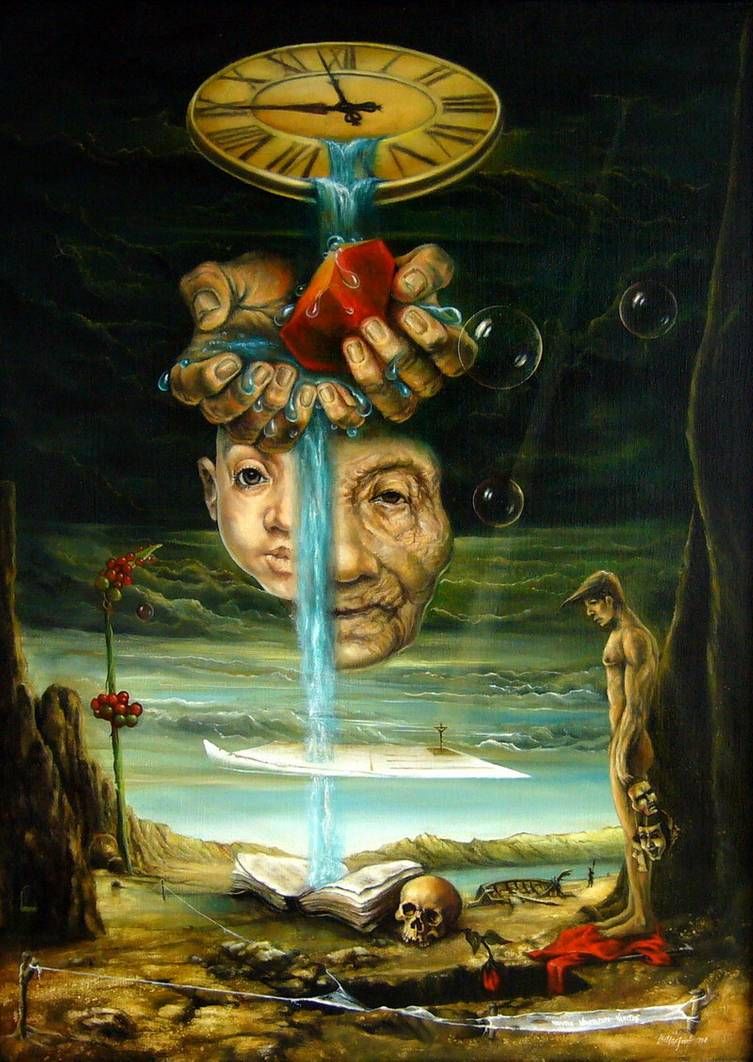
Image credit: joseph-art “Time Goes by Like Water”.

source: https://www.thmmy.gr / https://searchingthemeaningoflife.wordpress.com/2021/07/03/pablo-neruda-death/ http://SearchingTheMeaningOfLife

Hundred Years Odyssey; Happy Centenary Birthday, Ulysses!

Standard

Yes! I am pointing to Ulysses by James Joyce, which has become 100 years old since February, and as I knew it, I thought that this book was enough waiting on the shelf and began to read. I’ve been hesitant to read it until now because I’ve heard it would be challenging, and yet I dared, and it wasn’t that difficult. Even I could read it much easier than some of the recent modern literature that comes to the market! The main point which encouraged me to purchase this Masterwork was the topic of; the Odyssey, the journey we all must go through.

Of course, I must admit that it was a great challenge, without a doubt, and I don’t want to embellish myself here at all. This book is tough, not because of the bad literature (quite the opposite) but because Joice wants the reader to work with it. It is not only a novel; it’s full of symbols, and poems, with various hints and allusions. Once, he uses just a single word to tell a story, and once, a page full of St. names to say another.

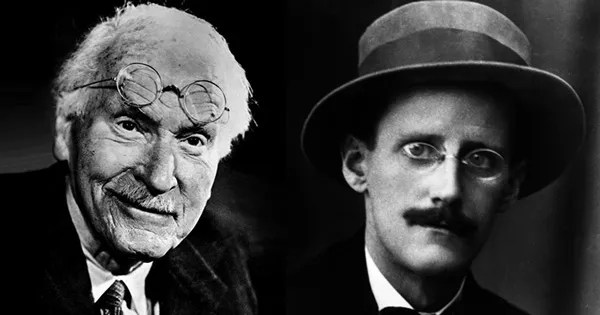
Although Dr Jung might say it somehow another way, as he wrote in his essay; Jung and Ulysses
…I read to page 135 with despair in my heart, falling asleep twice on the way. The incredible versatility of Joyce’s style has a monotonous and hypnotic effect. Nothing comes to meet the reader, everything turns away from him, leaving him gaping after it. The book is always up and away, dissatisfied with itself, ironic, sardonic, virulent, contemptuous, sad, despairing, and bitter…”
The whole work has the character of a worm cut in half, that can grow a new head or a new tail as required…This singular and uncanny characteristic of the Joycean mind shows that his work pertains to the class of cold-blooded animals and specifically to the worm family. If worms were gifted with literary powers they would write with the sympathetic nervous system for lack of a brain. I suspect that something of this kind has happened to Joyce, that here we have a case of visceral thinking with severe restrictions of cerebral activity and its confinement to the perceptual processes….

Yes, I admit I feel have been made a fool of. The book would not meet me halfway, nothing in it made the least attempt to be agreeable, and that always gives the reader an irritating sense of inferiority. Obviously, I have so much of the Philistine in my blood that I am naive enough to suppose that a book wants to tell me something, to be understood–a sad case of mythological anthropomorphism projected onto the book!… One should never rub the reader’s nose into his own stupidity, but that is just what “Ulysses” does…All those ungovernable forces that welled up in Nietzsche’s Dionysian exuberance and flooded his intellect have burst forth in undiluted form in modern man. Even the darkest passages in the second part of “Faust”, even “Zarathustra” and, indeed, “Ecce Homo”, try in one way or another to recommend themselves to the public. But it is only modern man who has succeeded in creating reverse, a backside of art that makes no attempt to be ingratiating, that tells us just where we get off, speaking with the same rebellious contrariness that had made itself disturbingly felt in those precursors of the moderns (not forgetting Holderlin) who had already started to topple the old ideals… (from Jungcurrent.com)

Maybe the difference between Dr Jung and me is that I have some LSD experiences, and he hasn’t! I am not joking! As I continued reading and not gaping on page 135, I noticed that Joyce was trying to take me on a trip, an Odyssey, and it will not be an easy trip.

This book has many characters, though Joyce focuses on two of them; Stephen Dedalus and Leopold Bloom. And I think the central figure is Mr Bloom and his Odyssey; The whole story takes place in one day!

Coincidentally, in between, I watched the movie “Easy Rider“, which I had recorded some days before. (You surely know or at least have heard of it). I once saw it a long ago, in the early seventies on screen, when I was a young man, but I wanted to see it again to find out how I would take it at my present age. It wasn’t so cool like those days, of course. However, I could connect this story to James Joyce’s Ulysses. I just thought that we all may have an Odyssey in our life, and in this movie, these two young men have also been going through their Odyssey, though short, with a sad end.

In any case, Joyce surprised us with a last pointless chapter of about forty pages, which reminded me of an old Persian style of poetry; we call it; Bahre-Tavil. (the long sea!) although, they never got so long!
I couldn’t stop this non-stop reading till to the end.

A fascinating forty pages of fashion, society, relationships, men & women, and love; and stunningly from a woman’s mouth and mind: brilliant!
…I thought again yes and then he asked me if I would say yes to my mountain flower and first I put my arms around him yes and drew him down so he could feel my breast all perfume yes and his heart was going like mad and yes I will yes!

By the way, Jung admitted that with all the different feelings and those up and down, he admires Joyce justly. He wrote:

Dear Sir,

Your Ulysses has presented the world with such an upsetting psychological problem that repeatedly I have been called in as a supposed authority on psychological matters.

Ulysses proved to be an exceedingly hard nut and it has forced my mind not only to most unusual efforts but also to rather extravagant peregrinations (speaking from the standpoint of a scientist). Your book as a whole has given me no end of trouble and I was brooding over it for about three years until I succeeded to put myself into it. But I must tell you that I’m profoundly grateful to yourself as well as to your gigantic opus because I learned a great deal from it. I shall probably never be quite sure whether I did enjoy it because it meant too much grinding of nerves and of grey matter. I also don’t know whether you will enjoy what I have written about Ulysses because I couldn’t help telling the world how much I was bored, how I grumbled, how I cursed and how I admired. The 40 pages of non-stop run at the end is a string of veritable psychological peaches. I suppose the devil’s grandmother knows so much about the real psychology of a woman, I didn’t.

Well, I just try to recommend my little essay to you as an amusing attempt of a perfect stranger that went astray in the labyrinth of your Ulysses and happened to get out of it again by sheer good luck. At all events, you may gather from my article what Ulysses has done to a supposedly balanced psychologist.

With the expression of my deepest appreciation, I remain, dear Sir,

Yours faithfully,

C. G. Jung

My utmost gratitude goes well to Lewis Lafontaine: Mr Purrington.

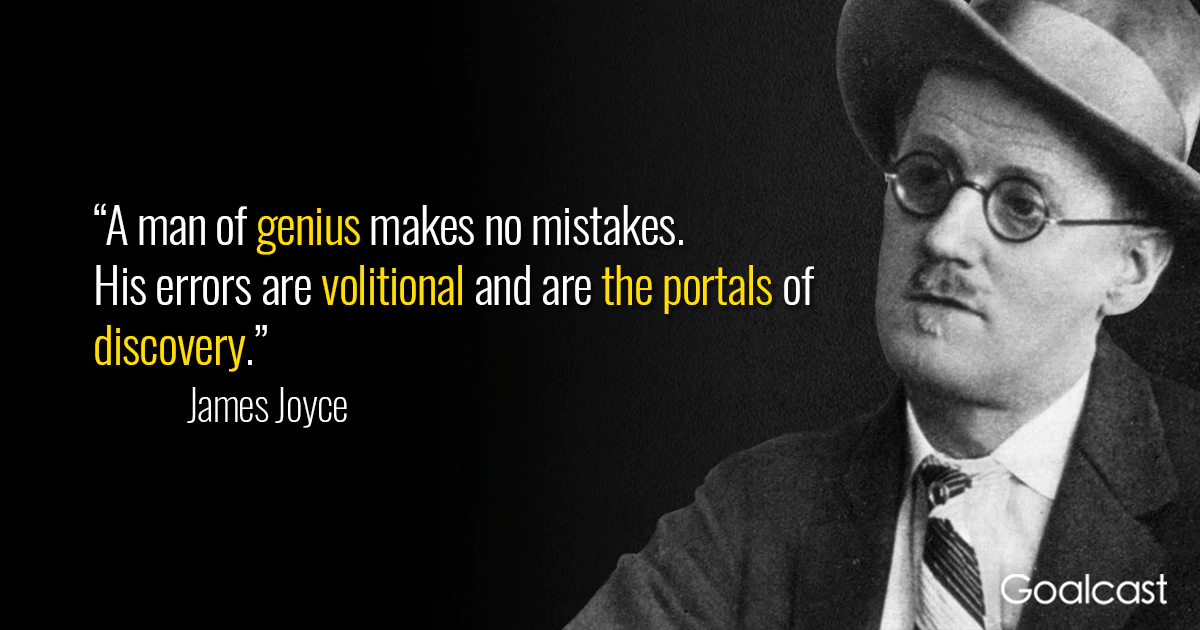
Painting by Jean Auguste Dominique Ingres Images credits: goalcast.com

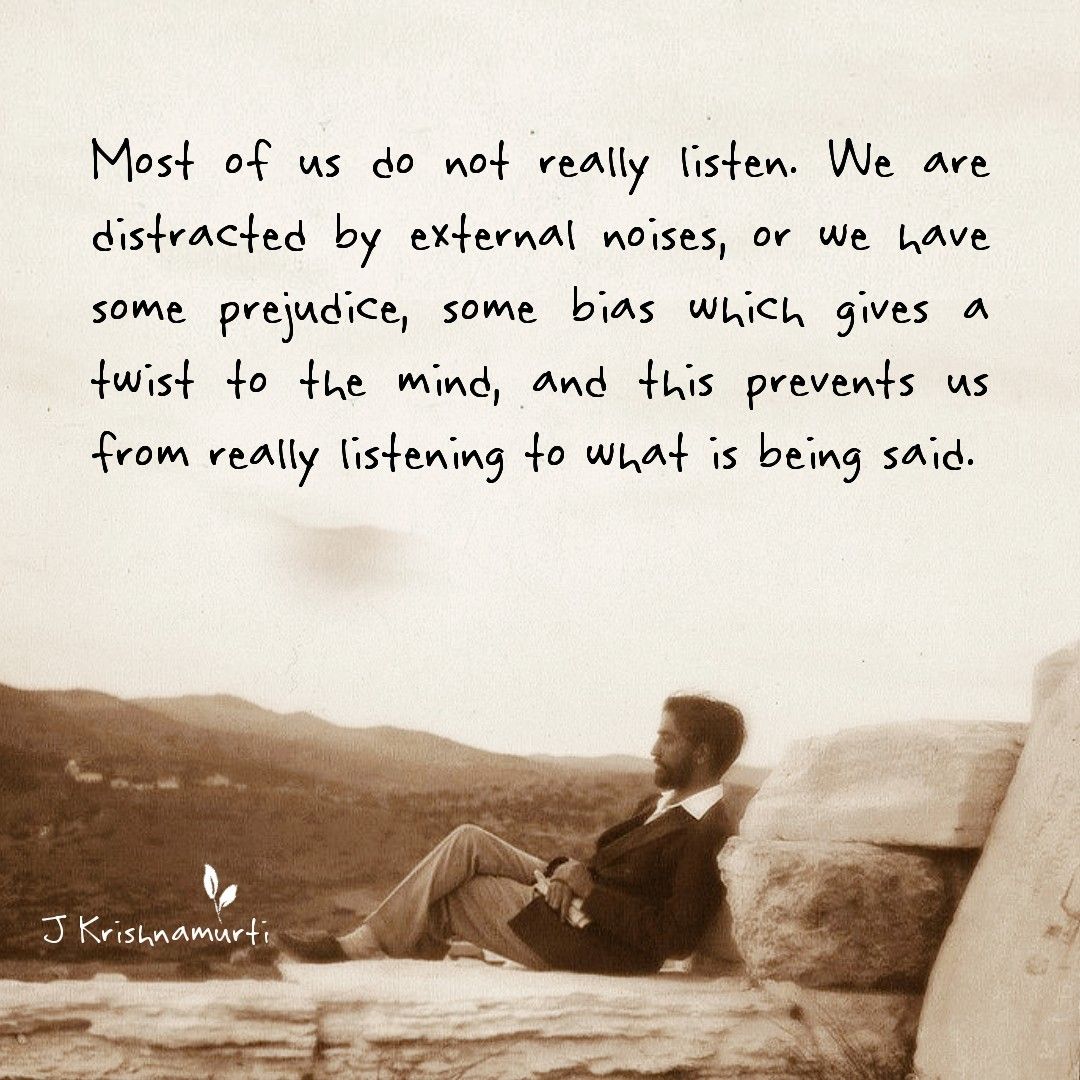
The End of Sorrow is the Beginning of Wisdom. (JIDDU KRISHNAMURTI)

Standard

Jiddu Krishnamurti, the philosopher, speaker and writer from Madanapalle, India, is undoubtedly famous enough for all of us. He was a philosopher indeed and not a psychologist. Still, in my opinion, he has a touch of understanding of the dimness in the soul of humans, which made him a psychist or Spiritualist, at least with his oriental blood. Although, as we can see here, Dr Jung expresses himself more compactly about this principle, I like his view of the world and the human.

Krishnamurti is all irrational, leaving solutions to quietude, i.e., to themselves as a part of Mother Nature.
Toynbee on the other hand believes in making and moulding opinions. Neither believes in the blossoming and unfolding of the individual as the experimental, doubtful and bewildering work of the living God, to whom we have to lend our eyes and ears and our discriminating mind, to which end they were incubated for millions of years and brought to light about 6000 years ago, viz. at the moment when the historical continuity of consciousness became visible through the invention of script.
~Carl Jung, Letters Vol. II, Page 596 (From Carl Jung Depth Psychology Mr. Purrington by Lewis Lafontaine

Jiddu Krishnamurti has changed his view in his life a few, or better to say, he has evolved himself, as we all are doing or must do. And I think that he understood individuality and solitude well.

Here are some quotes from him on sorrow, suffering, life and love. “The World Is You!”

There is a lot of sadness in our lives, and we don’t know how to end it. The end of sorrow is the beginning of wisdom. If we do not know what grief is, if we do not understand its nature and structure, we will not know what love is.

When a man tells his wife he loves her while at the same time being ambitious, does that love have any meaning? Can an ambitious man love?
Can a competitive person love? And yet, we talk about love, tenderness, the end of the war, the moment we are competitive and ambitious, the moment we seek our own personal success, progress, etc.

All this brings sorrow. Can sadness ever end? It can come to an end when you understand yourself for who you really are. Then you understand why you have sadness, whether that sadness is self-pity or fear of not being alone or the emptiness of your life or the sadness that comes when you depend on someone else.

And all this is part of our life.

The world is you
KRISHNAMURTI
PUBLICATIONS KASTANIOTIS

 Lectures Bureau

Egypt; The Tomb of Tutankhamun, A Young Pharaoh, and Behind The Scenes!

Standard

As you might notice, I have never written or mentioned any political issues in my Egypt posts. But this time, I can’t avoid it!

This is known that in Sharm al-Shaikh, the climate conference is already taking place. It might sound boring like the other climate conferences as well, though this time, something is getting loud, which doesn’t please the government of Egypt; the demand for freedom. Everybody knows about the Arab Spring that began in 2008, from Tunis to Egypt and so forth through many Arabs countries. I eagerly followed these and was almost sure it wouldn’t get its favourite goal because I am convinced democracy is a complex process and isn’t so easy to reach. However, in Egypt, it was something special!

The Egyptians have probably achieved their goal and disempowered the Mubarak regime. After that, there was a free election, and the Islamic Brotherhood party came to power. A big mistake; Ignorance? Illiteracy?!

I’m sure you already know that because it got worse thereafter. But there came a saviour “Abdel Fattah el-Sisi” and saved the folk by bringing them back to before the revolution: exactly a return to the old dictatorial regime!

Long story short, all corrupt regimes always have corrupted members; one I know well; is “Zahi Hawass”, who is “again” very active. Finally, I must say that I am thrilled that this “hopeless” conference is taking place in Egypt to show the world what sn injustice happens there and let it hear the voice of the oppressed.

Images credit:

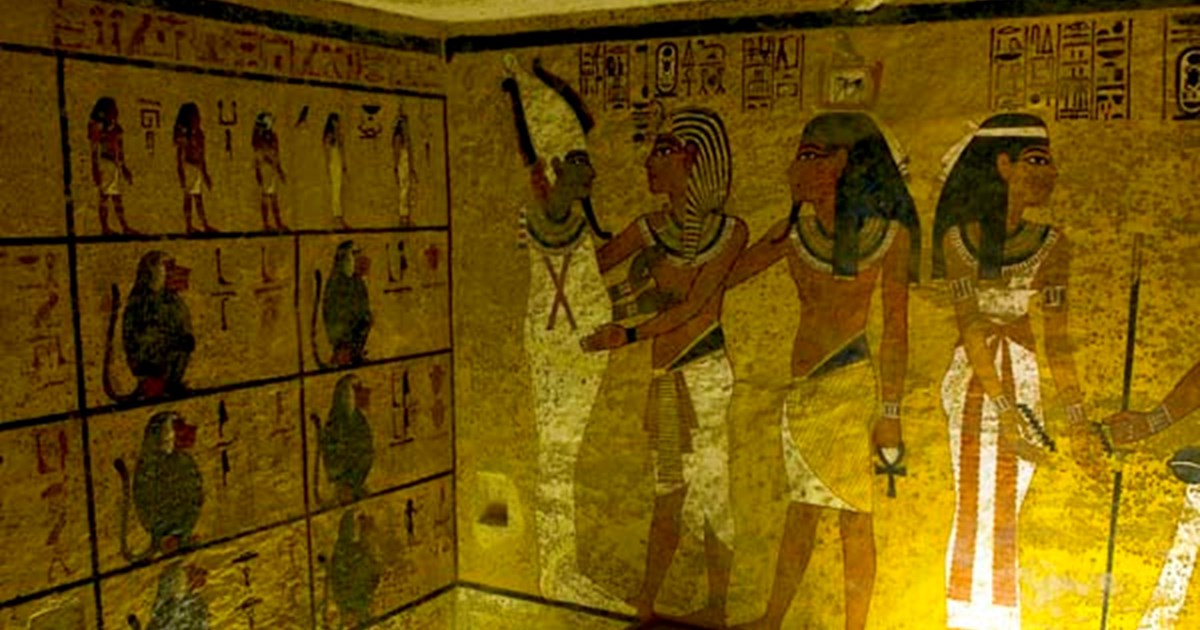
Live Science; King Tutankhamun’s royal burial chamber, near Luxor, Egypt. (Image credit: Universal History Archive/Universal Images Group via Getty Images) /

/ Ministry of Tourism and Antiquities /

/ iNews Mona Seif, sister of the jailed British-Egyptian human rights activist Alaa Abd el-Fattah, joined supporters outside Downing Street on Monday. (Photo: Wiktor Szymanowicz/Anadolu Agency via Getty)

Now let’s read this excellent interview by Marie Grillot with a brilliant writer and researcher, Amandine Marshall, about behind the scene of all these sneaky activities. via egyptophile

Amandine Marshall: “The Tomb of Tutankhamun, Behind the Scenes”!

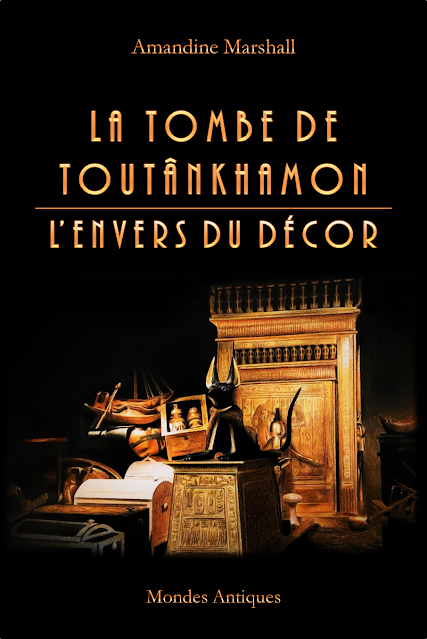
“Tutankhamun’s Tomb – Behind the Scenes” by Amandine Marshall – published by “Mondes Antiques”
cover illustration: Fabien Dessaux

Throughout the 148 pages of her book “The tomb of Tutankhamun, behind the scenes”, published by “Mondes Antiques”, Amandine Marshall leads us far from the golden mask, far from adornments and treasures, far from testimonies of affection. left near the young king… It is a darker reality which is revealed and which begins, shortly after his burial, with the looting, twice, of his tomb… Based on elements left behind, on the study of the context, and the examination of the photos of Harry Burton, the investigation carried out by the author (e) makes it possible to “identify” the “profile” of the looters… A beam of clues indeed converges towards the track of the craftsmen of Deir el-Medina, “covered” by medjaÿs – policemen supposed to guard the necropolis -, attracted by all these riches – and probably also sponsored by people greedy for gold, ointments, and oils.

The tomb will then be forgotten, lost under the rubble, until November 4, 1922, when Howard Carter clears the steps… If his courage, his perseverance is recognized, his complex character will be the source of many conflicts… The author (e ) also believes that if he applied himself to safeguarding the precious artefacts surrounding the pharaoh, it was not the same for his remains. The sad state of his mummy testifies to the disrespectful treatment inflicted on him, in 1925, during the autopsy performed, in the presence of Howard Carter and Alfred Lucas, by Drs. Douglas Derry and Saleh Bey Hamdi…

Amandine Marshall signs well “behind the scenes”… so much the youthful and “golden” appearance of Tutankhamun withers in the face of these desecrations, in the face of this mummy, tarred to excess and, in her own words; “decapitated ” and “cut up”…

The book is illustrated with many pictures of Harry Burton, and the magnificent cover, where the gold of the treasure room explodes on a black background, is by Fabien Sennedjem Dessaux.

Amandine Marshall, Egyptologist, author of “The tomb of Tutankhamun, behind the scenes.”

MG-EA: The first chapter is devoted to the history of the Valley of the Kings: it is a difficult challenge, as I imagine, to write a synthesis of more than 4000 years of this necropolis in seven pages?

Amandine Marshall: Yes, it was indeed necessary to make choices; the idea was to introduce the reader to the place of discovery of Tutankhamun’s tomb, both through its ancient history and through the history of its rediscovery in overtime to make him better understand the conditions of the discovery of the most famous burial in Egypt.

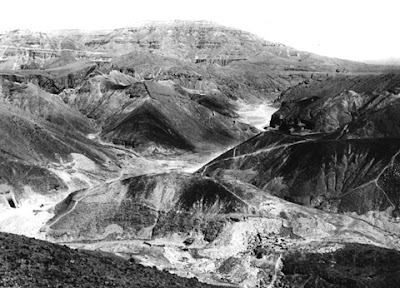
Excavations in the Valley of the Kings at the beginning of the 20th century
The Griffith Institute – Tutankhamun: Anatomy of an Excavation – The Howard Carter Archives
Photographs by Harry Burton – Photo. No. PKV11 – © Copyright Griffith Institute, 2005

MG-EA: In the pages, you devoted to Howard Carter, you describe him as talented and determined and point to his complex nature… Born into a modest background, his undeniable gifts as a draftsman and painter – inherited from his father – make it happen in Egypt, and even in Egyptology… But it is indeed his stubbornness and his courage which – despite many setbacks – will lead him to the incredible discovery made with the financing of Lord Carnarvon?

Amandine Marshall: The term “obstinate” has a negative connotation; I prefer, in the case of Carter, his determination and his conviction which are meritorious and must be rightly underlined. On the other hand, I will not use the qualifier “courageous” against him; I will give it more willingly to Auguste Mariette, who had to face much more dangerous situations and twice failed to be murdered. He clearly showed courage on several occasions, not Carter.

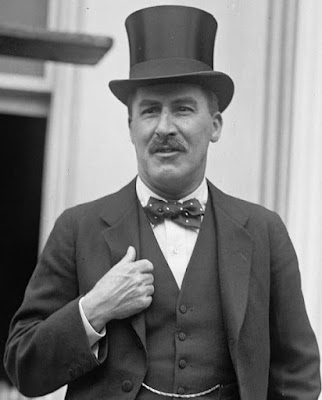
Portrait of Howard Carter (author and date unknown) – draftsman, Egyptologist and discoverer, in November 1922
with Lord Carnarvon from the tomb of Tutankhamun
London 9-5-1874 – 2-3-1939

MG-EA: The tomb’s discovery takes place in a complicated political climate while Egypt is trying to free itself from the tutelage of the English, and also in a context where the service of antiquities, directed by the Frenchman Pierre Lacau, wishes to regain control over the excavations… What anger Carter?

Amandine Marshall: It is evident that the much less lax position of Pierre Lacau compared to that of Gaston Maspero towards the diggers aroused the concern and the anger of Howard Carter and his patron, who quickly understood that they could not negotiate as they might have hoped to do with his predecessor. Pierre Lacau was a very upright personality, reluctant to negotiate his loyalty to Egypt, and his rigorous positions on the future of archaeological discoveries were inevitably severely perceived by the two Englishmen and by others. For years he had been excavating the Valley of the Kings; Howard Carter never ceased to dangle Lord Carnarvon with the prospect of beautiful finds, and the succession of Lacau at the head of the Service of Antiquities has called everything into question. The final blow came in April 1922, when he initiated a new law, according to which the Egyptian state decided alone whether or not it wished to hand over to the excavators some of the objects found. It was officially adopted on December 6, 1922, a month after the discovery of Tutankhamun’s tomb.

MG-EA: 5398 objects of incredible diversity will be extracted from the hypogeum… They would represent only part of the treasure which accompanied Tutankhamun… You indeed relate the passage of two bands of looters who would ” largely” be used?

Amandine Marshall: Presumably, the first squad of looters stopped at the first room of the tomb, the antechamber, which indicates that they did not have time to go further in their prospecting. On the other hand, the second group of thieves had the possibility of returning several times to the scene, they entered all the rooms, and several clues allowed Howard Carter to estimate that they had embarked 60% of the royal finery.

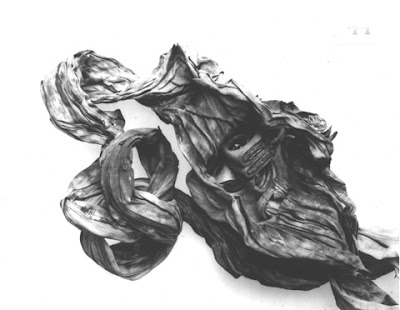
Linen (used by looters) in which eight solid gold rings were wrapped.
The Griffith Institute – Tutankhamun: Anatomy of an Excavation – The Howard Carter Archives
Photographs by Harry Burton – Photo. No. P0220 – © Copyright Griffith Institute, 2005

MG-EA: Can you tell us what happened to these grave robbers?

Amandine Marshall: To be found guilty of violating the royal tomb was considered a great criminal. Unsurprisingly, the death penalty was applied to them after torture sessions intended to make them suffer and to ensure that all the culprits had indeed been arrested.

Vase à parfum retrouvé sans couvercle
The Griffith Institute – Tutankhamun: Anatomy of an Excavation – The Howard Carter Archives Photographs by Harry Burton – Photo. No. P0469 – © Copyright Griffith Institute, 2005

MG-EA: You denounce the terrible treatment inflicted on the mummy, considering that Carter and his team took more care to preserve the artefacts than the pharaoh’s body… In your opinion, the “anatomical disconnection” of the mummy, practised in particular by Dr Derry, was more than sacrilege?

Amandine Marshall: When we consider the facts, it is no longer just an estimate; it is the description of proven facts with supporting photos: Tutankhamun had his head torn off and was dismembered at the level of the abdomen, wrists, elbows, shoulders and feet to more easily extract him from his coffin to which he was glued and to remove the ornaments that adorned his limbs more easily. It would be difficult to consider the treatment of his body – of which the butchering is only a part – as anything other than sacrilege. When we see the state of the royal mummies damaged by ancient looters, we see that many of them came out better than Tutankhamun. This is my observation.

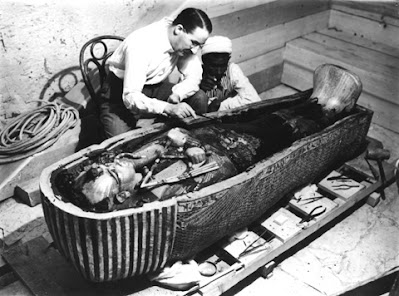
The Egyptologist Howard Carter, leaning over the second gilded wooden bowl,
break the black resin into small pieces to release the golden coffin
The Griffith Institute – Tutankhamun: Anatomy of an Excavation – The Howard Carter Archives
Photographs by Harry Burton – Photo. No. P0770 – © Copyright Griffith Institute, 2005

Interview by Marie Grillot for Egypt-news & egyptophile

Amandine Marshall: “The tomb of Tutankhamun, behind the scenes”.

Published by “Mondes Antiques” – 148 pages – 22 €

Contents and excerpt from the online book on Calameo: https://fr.calameo.com/read/005956780bf100363780d




Formentera; A Journey of the Finest!

Standard

Switching from heavy topics to some pleasure sights is not bad sometimes. Therefore, I do go back to my ritually posting about my last journey with some views which might calm our souls these days.

Formentera is the smallest and most southerly Island of the Pityusic Islands group, which belongs to the Balearic Islands autonomous community (Spain). Regina, my wife, was a few times there, but for me, it was the first time. We’ve flown to Ibiza and from there on the ferry to the Island.


The first day was almost done (dusk!) as we arrived late. Therefore, we just looked around, but the next day the full action awaited us! The most active part of us had already planned to rent bicycles to do something in the following days, and honestly, I was happy that we didn’t rent a car because I drive cars enough in my home city! In front of the camping place, there was a bike rental company, a very nice young gentleman welcomed us, and as we asked for the E-Bike to rent (suited our age), he regretted that because of the bike marathon which took place that very day, he only has regular bikes. It meant using your muscles! Of course, the Island is almost flat, and it had to be easy to drive bikes without the help of electronics, as we did take a tour to another beach at the forenoon and returned easily to our stay.



But the next tour Regina intended to take was not as flat as it needed to be. The Island has been an old traditional hippy place, a cult to which I once belonged as a young man. And behind a height is a hippy market we wanted to visit. Early in the afternoon, we started to drive over there. The first kilometres were easily done, but as we knew there would come some heights, I opened my Google navigator to see if it could be an easier way to get there, and indeed a shortcut was shown to us. We turned on this one and were happy about our luck, but after some hundred metres, we noticed that the way was actually for the climber and not for the bikes!

There was our biathlon competition with the bikes on our shoulders to climb up the hill, though we also could enjoy the beautiful sights.



Anyway, we’ve reached our goal, exhausted but happy. However, I must say that the market was not what I expected a hippy market must be. Maybe I am out of mode because this market was too modern for me as an old hippy. Of course, it was friendly with reggae music.

We took a walk around and drank something, and because my adorable wife had it not enough, we drove to one of the three lighthouses a few Km further. It was a lovely place, though we wore summerly thin, and with a cold wind, Regina got a cold!

Nevertheless, we did our daily tours as heavy as the latter. It is indeed a fantastic Island, mainly because of free will acting at the beaches, as I took it immediately: the nudity!

You might see how naked I am with my friend, Mike! (the book down there is Ulysses, by James Joice. I will write my thoughts on it!)

And we visited other places;

And other friends:

and more places;

And afterwards, cheers to the night; the show must go on…

I indeed must apologize that all the photos are by me. I haven’t Regina’s yet, I know they are undoubtedly fascinating, and I will try to get them soon. The woman rocks forever and back then. Cheers.

And… I don’t know where I’m going, but I am on my way!

Have a lovely weekend, everybody. I am sorry that some of Regina’s pics are missing. She didn’t give me hers yet. Maybe later. Love you all.

General description of the types

Standard

As I am struggling these days in the middle of different issues and reading many books simultaneously (time is short!), I found this topic which is one of my favourites. That’s because, when I look back on my life, I was an extrovert in my childhood and youth. But later, I have been changed to an introvert.

It might be because of my childhood trauma which I had to deal with. It pushed me always to try to please everyone. I loved going to school (only at the beginning years!), even when the schools were closed for two or three days because of heavy snow; I went there to see if I could meet some mates. Later in my twenties, I was the outer agent to have a connection to the external world as Al kept himself mainly hidden in the house. But it’s all changed. As I began to understand Al’s world better, we became closer. I merged into Al’s world, and we separated from the outer world. And there, I have become an introvert.

Of course, it wasn’t easy for me, as we escaped from Iran and came to Germany; I had to play the role of the outer agent again; I decided to find a job, and the only possibility was to get a Taxi licence and begin to earn some money. (You know, unfortunately, in Germany, you must have papers to be accepted for what jobs you are qualified to do. We had nothing to show!)

It was hard for me to connect all day long with the people. You might imagine I meditated every day early in the morning, preparing myself to go deep into my role as a taxi driver to do my job for almost thirty years, even though I had to prove myself repeatedly. Germans have certain opinions about foreigners (sometimes derogatory, maybe because of some bad experiences?!)), so I’ve always had to prove that I’m educated and look into their eyes at the same level. I wonder how I could do that for almost thirty years, although honestly, I succeeded with the help of my talent in playing roles and the power of; “making the people happy” after some years. Therefore, when I got retired, many were sad to miss me!

In any case, Dr Jung believed that one could change their behaviour in one’s lifetime;

“There is no such thing as a pure introvert or extrovert. Such a person would be in the lunatic asylum.””” Carl Jung

Let’s watch this video and see what he says.

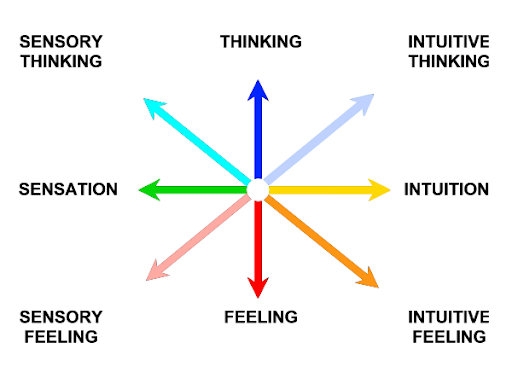
The Attitudes of Consciousness; The Eight Function Types.

Here is the first (short) part about the feeling of an extroverted person: (Translated from his book Typology.)

The extraverted type

The feeling

Feeling in the extraverted attitude is oriented closely to what is objectively given; that is, the object is the crucial determinant of the way of feeling. It is by objective values. Anyone who knows feeling only as a subjective fact will not readily understand the nature of extraverted feeling, for extraverted feeling has liberated itself as much as possible from the subjective factor and subjected itself entirely to the influence of the object. Even where it appears to be independent of the quality of the specific lens, it is still under the spell of traditional or otherwise universal values. I may feel compelled to predicate “beautiful” or “good,” not because I subjectively feel the object is “beautiful” or “good,” but because it is appropriate to call it “beautiful” or “good”; and appropriately so in that a contrary judgment would somehow upset the general emotional situation. Such an appropriate emotional judgment is by no means a simulation or even a lie but an adjustment act. For example, a painting may be called “beautiful” because: a painting hung in a drawing room, signed with a well-known name, is generally assumed to be “beautiful” or because the predicate “ugly” might offend the family of the lucky owner, or because there is an intention on the part of the visitor to create a pleasant emotional atmosphere, for which everything must be felt to be pleasant. They are genuine as such and represent the entire visible feeling function. Just as extraverted thinking rids itself of subjective influences as much as possible, so too extraverted feeling has to go through a certain process of differentiation until it is stripped of every subjective ingredient. The evaluations made by the act of feeling correspond either directly to objective values or at least to specific traditional and commonly accepted standards of value.

I feel so close to this thought; I love it!

And let’s look now at the feeling of an introverted person: (From the same book.)

The introverted type

The feeling

The subjective factor mainly determines the introverted feeling. For emotional judgment, this means just as essential a difference between extraverted feeling and introversion of thinking from extraversion. It is undoubtedly one of the more difficult things to intellectually represent or even approximate to describe the introverted feeling process. However, the peculiar nature of this feeling is sure to strike if one is aware of it at all. Since this feeling is mainly subject to subjective preconditions and is only secondarily concerned with the object, it appears much less often and is usually misleading. It is a feeling that apparently devalues the objects, and that’s why it mostly has a negative impact. The existence of a positive feeling can only be, to say, indirectly deduced. It does not try to fit in with the objective but subordinates itself to it by unconsciously trying to realize the images on which it is based. It is, therefore, always looking for an image that cannot be found in reality and that it has, so to speak, seen before. It seems to glide over objects that never suit its target carelessly. It strives for an inner intensity to which the objects contribute, at most, a stimulus. The depth of this feeling can only be guessed at but not clearly grasped. It makes people silent and inaccessible as it is oversensitive and withdraws from the objective’s brutality to fill the subject’s deep background. To protect themselves, they pretend negative emotional judgments or a conspicuous indifference.

I will try to come more over to it later. Thank you all. 💖🙏🤗🌹

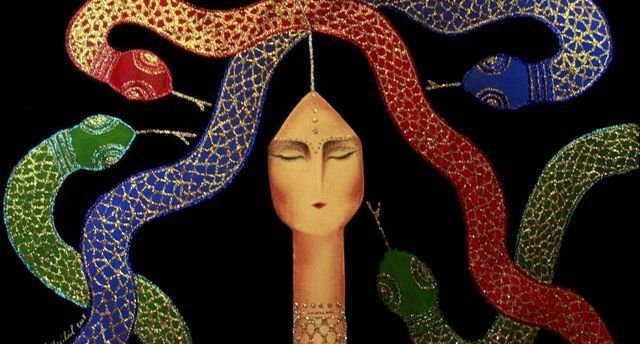
Images credit: Kara Walker / UX Collective / Johfra Bosschart (1919 – 1998)

Friedrich Nietzsche, Thus Spoke Zarathustra: The Dance Song

Standard

As you might guess, I still keep thinking and am fully busy with what is happening in the country of my birth and how many young people and children get injured or die there. I try to help translate news and research and share as far as I can. What could I do more? Indeed that will be a true tragedy in our century. In the hope of the last win!

Anyway, I remain in Iran after this prologue, the ancient Persian and Zarathustra. I’m still wondering again and again why human needs religion(s), and I look at my past and the old God Ahura Mazda; I would say this one was surely more acceptable than the Hebrew Gods: (I say gods because there are more than one: Yahweh, God; Jesus’s father, and Allah.) I do admit that t is also a religion, but Ahura Mazda had only three commandments and not ten! “Good Thoughts, Good Words, and Good Deeds”. It sounds so simple and clean, but man-made religion has never been God-made religion!

Here I present a part of Friedrich Nietzsche’s book, Thus Spoke Zarathustra. It was not so easy for me to translate it from German to English, but I hope I have got the main topic!

The name of it is “Das Tanzlied”: “The Dance Song.” I hope you will enjoy it.

One evening Zarathustra went through the forest with his disciples, and when he was looking for a well, behold, he came to a green meadow surrounded by trees and bushes, where the girls were dancing together. As soon as the girls recognized Zarathustra, they stopped dancing; But Zarathustra approached them with a friendly gesture and spoke these words:

Don’t stop dancing, you lovely girls! No spoilsport came to you with an evil eye—no girl enemy. I am God’s advocate before the devil: but he is the spirit of heaviness. How should I, your light, divine dances, be fine? Or girls’ feet with nice ankles?

I am indeed a forest and a night of dark trees: But whoever is not afraid of my darkness will also find rose slopes under my cypresses. And he also likes the little God who is dear to the girls: He lies next to the fountain, quiet, with closed eyes.

Probably in broad daylight, he sniffed at me, the idler! Was he chasing butterflies too much? Do not be angry with me, you beautiful dancers, if I punish the little God a little! He will probably scream and cry – but he is still crying to laugh!

And with tears in his eyes, he shall ask you for a dance; and I myself want to sing a song to his dance: a dance song and a mockery of the spirit of gravity, my highest, the most powerful devil, of whom they say that he is the lord of the world.

And this is the song that Zarathustra sang when Cupid and the girls were dancing together. In your eyes, I looked lately, oh life! And I seemed to be sinking into the unfathomable. But you men always gift us with your own virtues – ah, you virtuous ones!

So she laughed, the incredible, but I never believed her and her laughter when she speaks evil of herself. And when I spoke in private with my wild wisdom, she growled: “You want, you desire, you love, that’s why you praise life!”

I almost answered angrily and told the angry one the truth; one cannot answer more wickedly than when one “tells the truth” to one’s wisdom. That’s how it is between the three of us. Basically, I just love life- and, truly, most of all, when I hate it!

But the fact that I am good at wisdom and often too good: That makes it! She reminds me very much of life! She has her eyes, her laughter, even her golden fishing rod: What is my fault that the two look so alike? And that life once asked me: who is that… wisdom? – I said eagerly: Oh yes, the wisdom! One thirsts for them and never gets enough; one sees through veils, one catches through nets. Is she beautiful? What do I know? But the oldest carp are still baited with it.

Changeable is she and defiant; I often saw her bite her lip and comb her hair again. Perhaps she is bad and false, and in everything a room woman, but when she speaks badly of herself, that is when she most often seduces.

When I said this to life, it laughed maliciously and closed its eyes. Who are you talking about? Said that, well, from me? And if you were right – they say that to my face like that! But now also speak of your wisdom! Ah, and now you opened your eyes again, O beloved life! And to us unfathomable ones, I seemed to sink again.

So sang Zarathustra. But he became sad when the dance was over and the girls had gone. The sun has long gone down, he said at last; the meadow is damp, and the cold comes from the forest.

An unknown is around me and looks thoughtful. What! Are you still alive, Zarathustra? Why? What for? Whereby? To where? Where? How? Isn’t it folly to be still alive?

Oh, my friends, it is the evening that asks me like this. Forgive my sadness! It was evening; Forgive me that it became evening!

saatchiart.com / Academy of Ideas / democraticunderground.com / via apkpure.com/ Aaron Lewis – Medium

Thus spoke Zarathustra!

Hathor: The Goddess of Love, Beauty, Music, Dancing, Fertility, and Pleasure… and The Votive Tunic!

Standard

Hathor might be the only supernatural being I wish to have as God”dess”. She indeed had everything good in herself to give to the subservient like us!

I once posted about this fantastic goddess, but now it’s about a dedicated mysterious votive tunic to her!

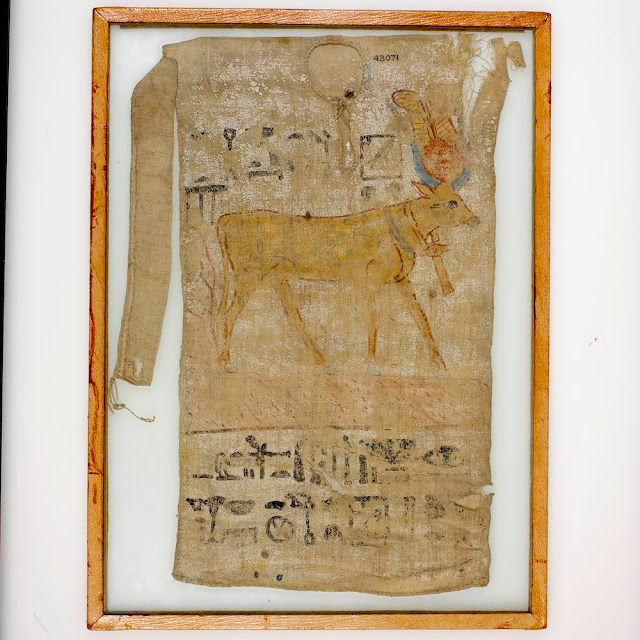
Egyptian Hand Painted Papyrus with Winged Maat & Hathor. (with Author Signed)

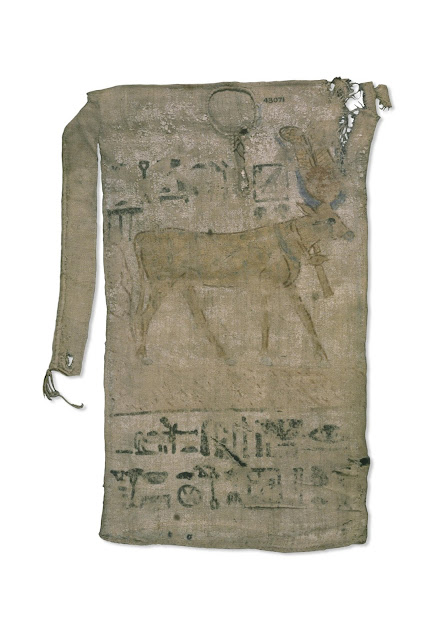
Often described as a child’s tunic because of its small size, this garment probably had a more sacred function. It is dedicated to Hathor, who is depicted in the shape of a cow and described as ‘Hathor foremost of Thebes, Lady of Heaven, Mistress of the gods’ in hieroglyphs above the animal. Such tunics would have been offered to the goddess, possibly to invoke protection for a child or a woman during labour. Liana Miate

Images credits: atlasobscura.com / Amino Apps

And her breathtaking temple shows with no wonder in recognition of her greatness, though the assumption that she and Isis are the same goddess and attribute both to each other isn’t the case! Hathor is the personification of the principles of love, joy and motherhood, and was the goddess of music, dance, fertility, and aided women in childbirth. Isis is revered as the underworld’s queen and the transformation goddess. She possesses the powers of a water goddess, an earth goddess, and a star goddess, the patron of nature, magic and divination. She’s known as a friend of slaves, sinners, artisans, and the downtrodden. She hears the prayers of all; none are forgotten or overlooked.

Egyptian votive tunic. Probably from the 19th Dynasty, about 1275 BCE. Possibly from Deir-el-Bahari, Thebes. The British Museum (photo taken at The Powerhouse Museum, Sydney, Australia)

Marie Grillot gives a brilliant description of this marvellous papyrus work and its beauty here. 🙏💖

A Votive Tunic Dedicated to Hathor

via https://egyptophile.blogspot.com/

Votive tunic with the painted representation of the goddess Hathor – linen – 19th Dynasty (c. 1275 BC)
origin: Deir el-Bahari – British Museum – EA4307
by acquisition, in 1906 from the Reverend Chauncey Murch – photo © The Trustees of the British Museum

This linen tunic, with a straight cut and an open round neckline, is dated to the 19th Dynasty (around 1275 BC). Besides its lack of a sleeve, it seems relatively well preserved, considering it’s more than 3000 years!

It owes its originality to the scene painted on the front, which stands out discreetly against a white background that has now partially disappeared…

It represents the goddess Hathor, in her cow form, emerging from the western mountain of Thebes, whose sides, behind her, are symbolized by red dots, just like the ground she treads with her paws.

With a thin line of red paint, the artist has traced the outline of the bovine silhouette and has, in the same way, enhanced the main characteristics that animate its light ocher coat…

Advancing towards the rising sun, she is wearing two large feathers with the solar disk at their base. The whole is surrounded by its high horns painted blue.

Votive tunic with the painted representation of the goddess Hathor – linen – 19th Dynasty (c. 1275 BC)
origin: Deir el-Bahari – British Museum – EA43071
by acquisition, in 1906 from the Reverend Chauncey Murch – photo © The Trustees of the British Museum

Her ears are so beautifully rendered, her black eye stretched with a line of makeup, her muzzle that we imagine vibrant, her long tail, her white hooves, everything contributes to giving her life…

Around her neck hangs a sistrum, one of the main attributes of the goddess… This rattling instrument is adorned with magical virtues: it can appease the gods, ward off evil spirits and attract protection. It is related to this representation of Hathor because it was supposed to reproduce the noise she makes when, in her cow form, she walks through the thickets of papyrus.

Hathor, the goddess of love, joy, beauty, and music, is here assimilated to the West’s summit. It is on the slopes of the beautiful mountain of Thebes that the necropolises are, and thus, symbolically, she receives the dead there… “In the Theban religion, Hathor, who is in the western mountain, becomes a funerary goddess; she then receives the deceased, who has become her child, into the mystical lap of the mountain tomb. She helps him to be reborn as, as Isis-Hathor, she watched over Horus in the papyrus swamp of Khemmis …” (Fernand Schwarz).

Also, the tunic is painted in black, with hieroglyphic inscriptions. “The first line of the inscription in the lower part gives the title’ mistress of the house and the name (unfortunately unclear but ending in ‘-Imentet’) of the woman who dedicated this tunic; the second line repeats the name and epithets of Hathor”.

To better “interpret” this garment, it is important to mention its dimensions: its height of 34.30 cm and width of 25.50 cm. These measurements could mean that it was intended for a child… but the interpretation can also be decidedly “religious”. Thus Nigel Strudwick (Masterpieces of Ancient Egypt) believes that: “it is more likely that it was specially made as a votive offering to the goddess. Many types of votive objects were placed in temples throughout Egypt as gifts expressing devotion to deities, which it was hoped would, in turn, favour the giver. This textile and other similar textiles may have been donated by women to worship, perhaps accompanying specific prayers for children or successful childbirth. However, none of the inscriptions refers to it. Another suggestion is that tunics may have been used to clothe divine images; there is evidence from the titles of the people named therein that only those connected with the cult of Hathor exhibited such garments. They presumably had to be carefully stored in temples to maintain and protect the decoration and effectiveness of the object”.

Votive tunic with the painted representation of the goddess Hathor – linen – 19th Dynasty (c. 1275 BC)
provenance: Deir el-Bahari – British Museum – EA43071 – by acquisition in 1906 from the Reverend Chauncey Murch – photo © The Trustees of the British Museum

On the other hand, in “Clothing (non-royal), Pharaonic Egypt”, Aleksandra Hallmann indicates that: “Generally, the tunics encountered in the archaeological record are sleeveless, since sleeves have been found as separate garments…The Known exceptions of tunics with sleeves already attached are certain votive tunics for Hathor”.

The origin indicated for this tunic is Deir el-Bahari – Thebes. Indeed, if Ta Set Neferou (the Valley of the Queens with its sacred cave) and “Set Maât her imenty Ouaset” (the craftsmen’s village with its temple) were places of worship in Hathor, they were not the only ones … Thus, in “The Bel Occident of Thebes, Imentet Neferet”, Christian Leblanc recalls that: “It was under the reign of Mentuhotep II that, for the first time, the Belle Fête de la Vallée was celebrated on the left bank. , whose itinerary was modified over time. We know that on this occasion, the god Amon of Karnak went, in procession, to the West of the city, for a certain number of days to honour the dead there and to meet Hathor there. It also mentions the existence of a “Temple of the Cow”, which was: “Perhaps a late appellation of the temple of Queen Hatshepsut at Deir al-Bahari, where there is a Hathoric sanctuary, or the sanctuary of Hathor him -same”…

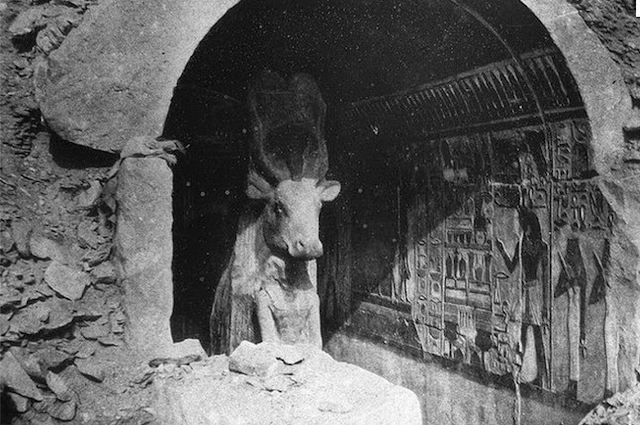
It should also be remembered that, during excavations carried out in the temple of Thutmose III for the Egypt Exploration Fund, Edouard Naville discovered, on February 7, 1906, the magnificent chapel of the sacred cow of Hathor. Dug into the rock to a depth of four meters, made of painted sandstone, it represents Hathor protecting the pharaoh Amenhotep II standing under her head. At the same time, from her udder, she “suckles a young boy, who is obviously Amenhotep II, the son of Thothmes III”, specifies Gaston Maspero. On the orders of the latter, it was patiently dismantled by Emile Baraize to be transported to the Egyptian Museum in Cairo (JE 38574 – JE 3857), where it will be reassembled, identically, by Alexandre Barsanti.

Chapel of the Sacred Cow of Hathor – painted sandstone – New Kingdom – 18th Dynasty
Provenance: Temple of Thutmose III at Deir el-Bahari, discovered on February 7, 1906
by Edouard Naville during excavations of the EEF – Egyptian Museum in Cairo – JE 38574 – JE 38575

The excavations will also deliver “a certain number of fabrics and other votive textiles (as well as many other votive objects) linked to the later cult of Hathor, practised there at least from the New Kingdom”, specifies the British Museum, which has acquired several objects from these excavations.

However, this is not the case for this tunic he acquired from the Reverend Chauncey Murch, a member of the American Presbyterian Mission in Luxor. The purchase occurred in 1906 (EA43071); the Museum does not exclude the possibility that “this tunic could have been discovered during a contemporary clandestine excavation carried out on the same site”…

Marie Grillot

Sources:

Miniature linen tunic; painted representation of the Hathor cow and Hieroglyphic text

https://www.britishmuseum.org/collection/object/Y_EA43071

Nigel Strudwick, Masterpieces of Ancient Egypt, London 2006, pp. 208-9

G. Pinch, Votive offerings to Hathor (Oxford 1993)

https://www.academia.edu/3645492/_Votive_Practices_with_Geraldine_Pinch_

Fernand Schwarz, La grotte sacrée, Pharaon n°4, magazine

http://fernand.schwarz.free.fr/IMG/pdf/Ph4_grotte_sacree_FS.pdf

Christian Leblanc, Angelo Sesana, Le Bel Occident de Thèbes, Imentet Neferet, L’Harmattan, 2022

Gaston Maspero, Essais sur l’art égyptien, (1912?)

https://archive.org/details/essaissurlartg00maspuoft

Foucart Georges. Note de M. Naville sur ses découvertes à Deir el Bahari (Égypte). In: Comptes rendus des séances de l’Académie des Inscriptions et Belles-Lettres, 50e année, N. 2, 1906. p. 110;

https://www.persee.fr/doc/crai_0065-0536_1906_num_50_2_71782

Statue de la déesse Hathor sous l’apparence d’une vache et chapelle

http://www.globalegyptianmuseum.org/record.aspx?id=15118

http://www.globalegyptianmuseum.org/record.aspx?id=15654

.texteImage#


  • There is always a Beginning to Grasp the Whole! P 12

  • Vacation on Helter Skelter Can’t Be Boring!

  • There is always a Beginning to Grasp the Whole! P 11

  • There is always a Beginning to Grasp the Whole! P 10

  • Ego, Egoistic, or Egoism, and How It Can Be Useful!