Or the story of a summerkid in the wrong space & time!!
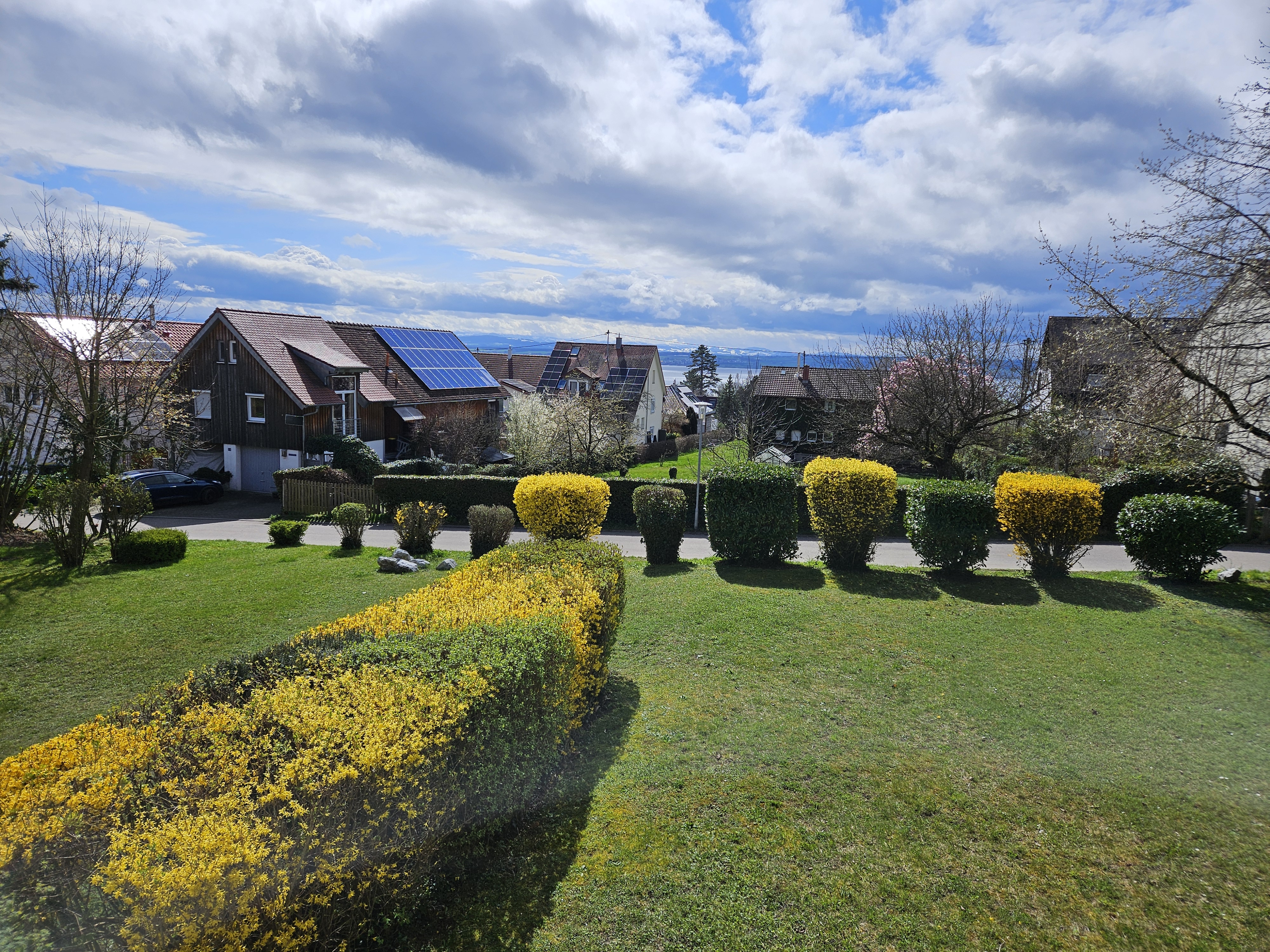
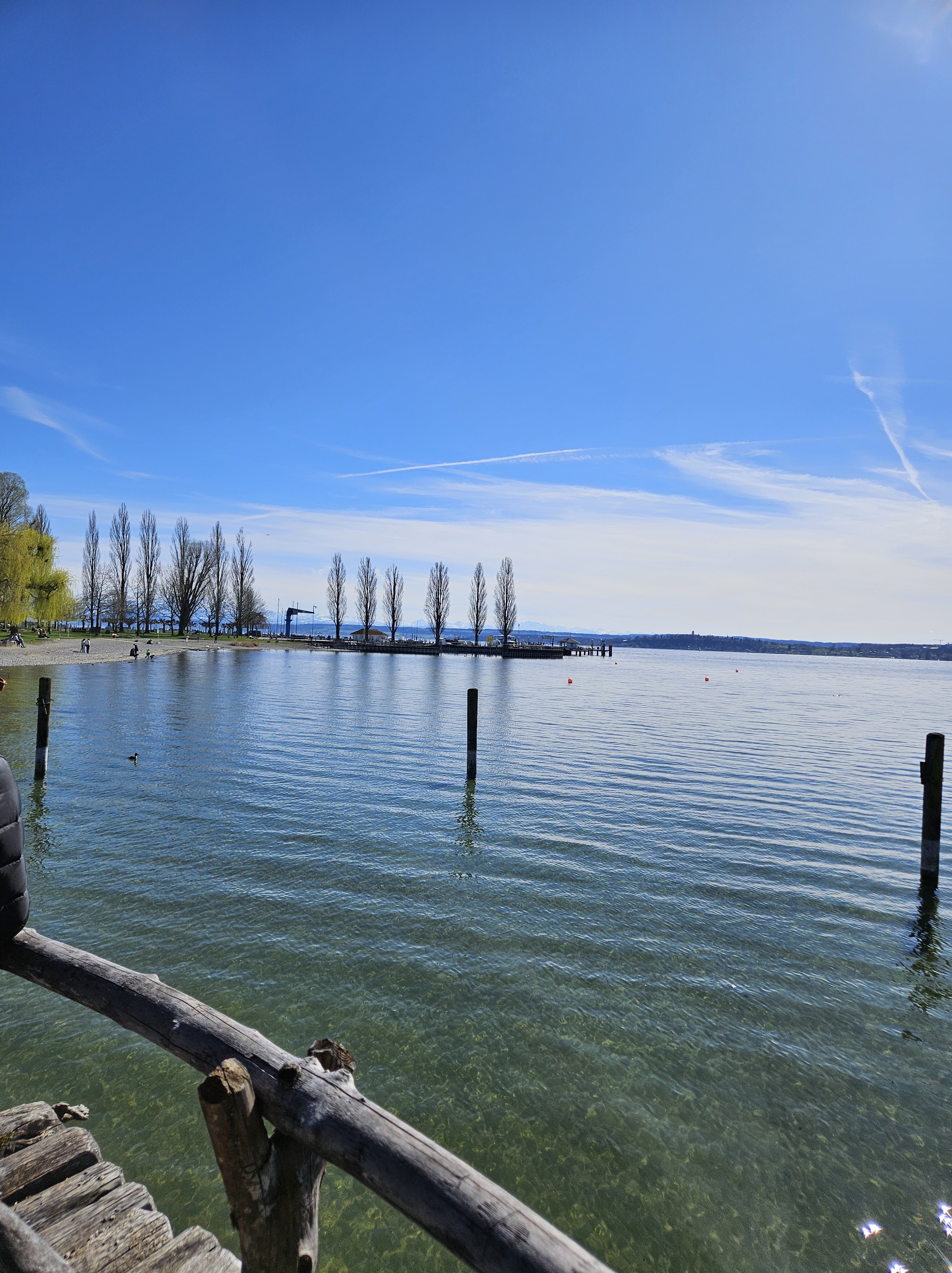
Bodensee by day!
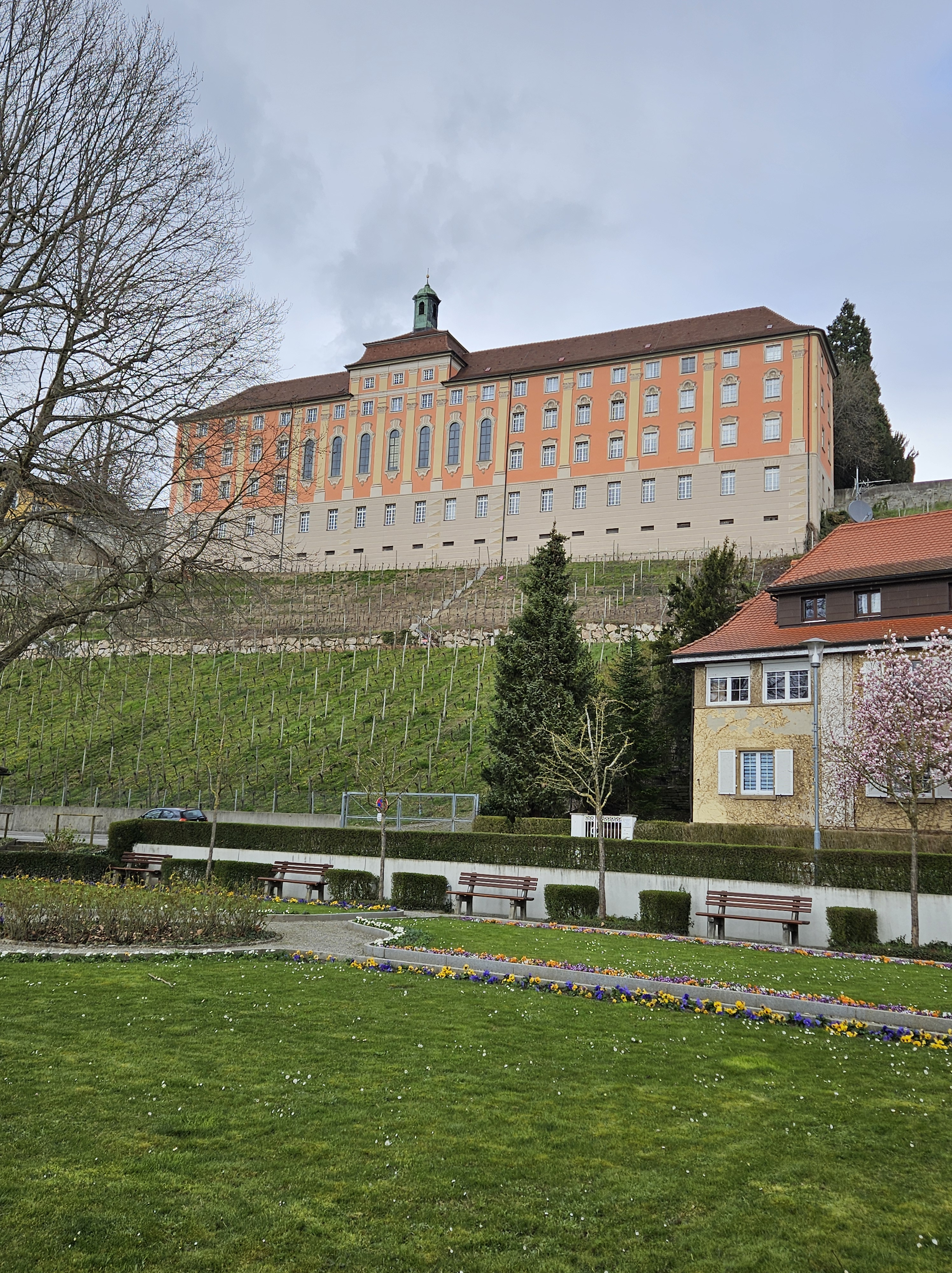
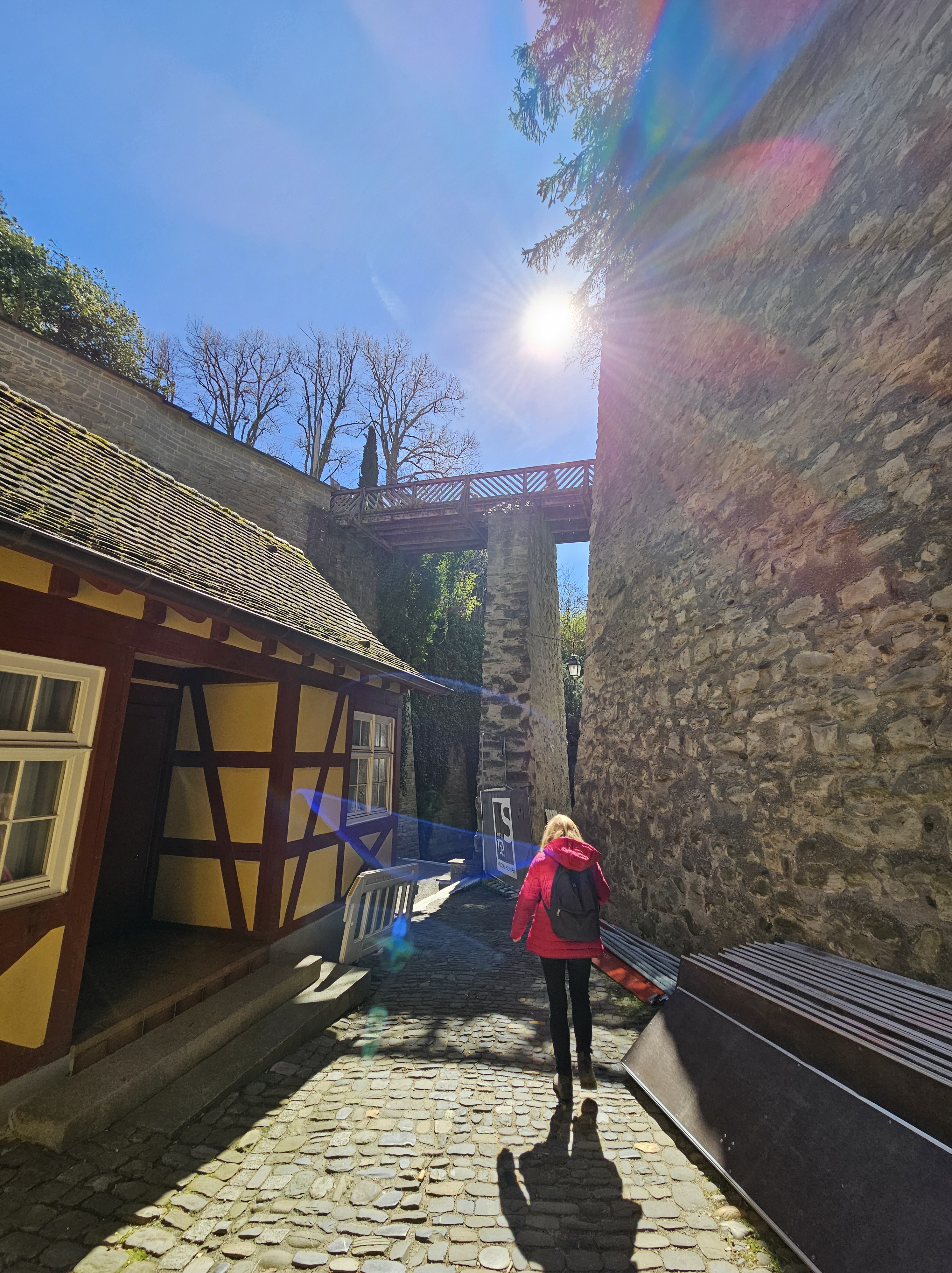
This year, the school holiday began here in our town the last week of March, and as usual, my adorable wife wanted to get out of the dull and constant life. Therefore, a trip was required! We drove to Meersburg am Bodensee in South Germany for a few days. Although it is a beautiful village, it could be much more enjoyable later in Summer. One must be fortunate to have good weather at the end of March, and we weren’t!
The journey was supposed to last around seven hours, but it ended up taking nine due to three intense multiple car collisions that occurred on the way. Fortunately, we were not involved in any of them. We finally arrived at our destination feeling relieved. On the second day, we felt the gust of wind blowing around our ears, but as always, an order is an order: out to the village for a walk!
Read in my face!! I wore everything I had with me, but it was still cold!
However, Mother Nature had mercy the following days, and the weather became a bit endurable.
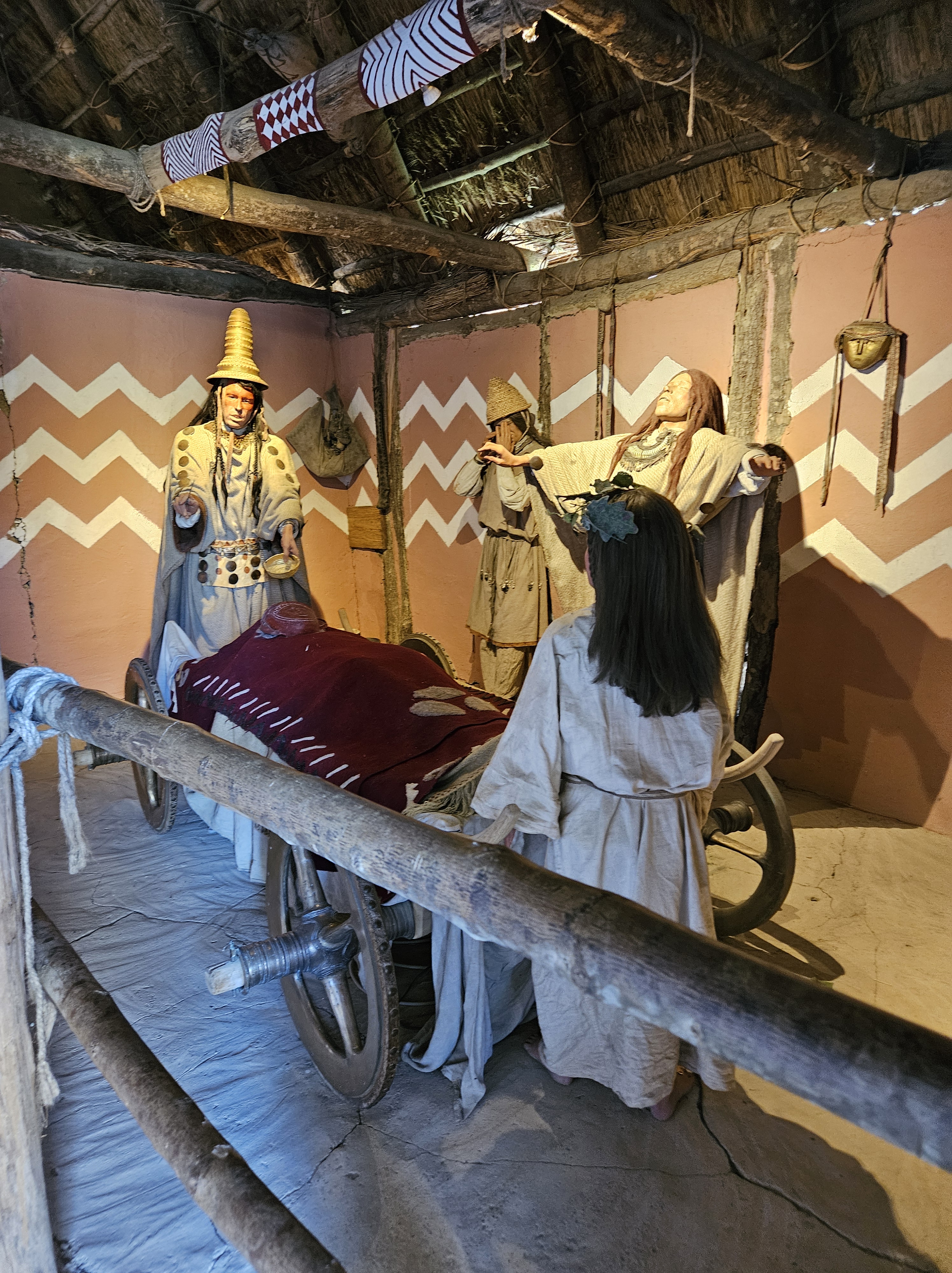
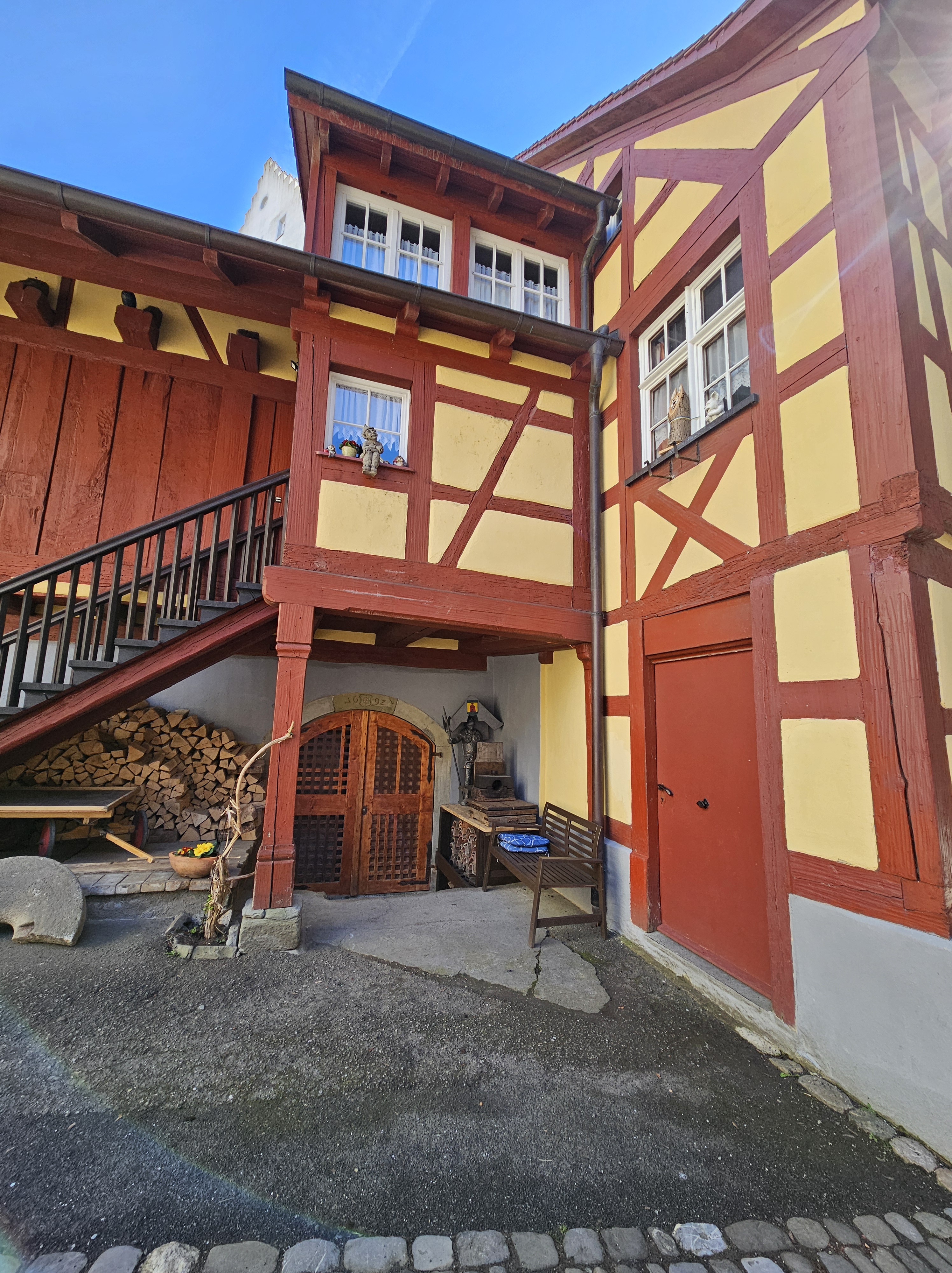
We met at a museum of old house structures, which showed an interesting method of building houses: pile dwellings (Pfahlbauten) on the water.
It is a world heritage site with a range of exciting Stone Age and Bronze Age artefacts. Of course, much has happened in its history, and these houses have experienced many changes. Here, I found an exciting placard of the different happening there.
It’s written down there: 1922, a time of upheaval or revolt, The Golden Age! It shows that it has not remained immune from these changes, although I don’t know what Howard Carter and his discovery of Tutankhamun’s tomb are doing here!!🤔
And the guardian of the museum!
We also took a walk around and visited the pleasant environment.
Just as I suspected, the second part is needed! Many interesting things and actions remain, such as visiting the butterfly garden. So, until next time, thanks for dropping by.
Charlie Chaplin; “A tramp, a gentleman, a poet, a dreamer, a lonely fellow, always hopeful of romance and adventure.”
Why not? I stumbled upon an announcement congratulating Charlie Chaplin on his 135th birthday, and it suddenly caused me to reminisce about my admiration for him and consider writing an essay about my feelings and memories towards him.
I have been in love with this man since childhood. Not only because of his mastery in making incredible and fascinating movies but also because of his great personality, he became my great idol, especially when I began to act in the theatre. As I matured, I overcame my childish pleasures and began to understand his profound thoughts and deep-meaning messages. He imprinted in my head so much that I unconsciously imitated his posture; even his crooked walking can still be seen in my footprints! It is undoubtedly enough known that he initially refused to move to sound films in the 1930s and continued making silent movies. Of course, it was unavoidable, and he had to make his films hearable. But I am convinced he is a pantomime master and believe in his silent wisdom.
Unfortunately, I did not have the chance to meet this great man, though my love and appreciation for him have made me feel an inner connection with him and his life. I can understand his ambitions to get famous, be rich (or out of poverty), and be loved by beautiful women!
He once joked about its necessity and his favour to women, which I could relate to: “All I need to make a comedy is a park, a policeman, and a pretty girl!”
However, he never treated others unfairly and always tried to rectify his mistakes. After learning about his life story and reviewing his CV, I couldn’t help but wonder how he could create such masterful works while facing numerous legal battles and navigating through turbulent times. He was constantly moving back and forth between the court and the film studio. We have many similarities, and I could imitate him so perfectly that I got nicknamed Charlie the Second!
Of course, nobody is perfect, as he himself might have said it often. Everybody makes mistakes. How well Dr Jung uttered it: Mistakes are, after all, the foundations of truth, and if a man does not know what a thing is, it is at least an increase in knowledge if he knows what it is not. ~Carl Jung, CW 9ii, Para, 429
I could only admit this quote, as I happened to be born in Iran, though I would rather be a citizen of the world.
”Why haven’t you become a citizen (American)?’ said another voice. ‘I see no reason to change my nationality. I consider myself a citizen of the world,’ I answered.” – Charlie Chaplin, My Autobiography
The dialogue above comes from the press conference for Monsieur Verdoux, which occurred right after its premiere in New York. Rather than directing their questions at the film, the hostile journalists interrogated Chaplin about his political sympathies, patriotism, tax affairs and refusal to adopt American citizenship.
Chaplin also said: “I consider myself a citizen of the world, an internationalist… I just happen to have been born in London, England. It could have been Burma, China, or Timbuktu, but I’d still be the way I am. I’d keep my first citizenship because, being an accident of birth, it wouldn’t have any real significance. But wherever I live, I’ll conform to the rules, laws and regulations of that country.” – From My Father, Charlie Chaplin by Charles Chaplin Jr.
Today, April 20th is Adolf Hitler’s birthday occasionally! Therefore, I thought it was not false to put this clip.
Every single scene in his movies is extraordinary; for example, in City Lights, a peaceful Tramp tries to earn money in any way he can. I can’t still stop laughing!
He was never drawn to a luxurious lifestyle or wealth. He believed that becoming used to luxury was the saddest thing that could happen to a person. One day, his daughter Geraldine asked him for money to purchase a golden necklace. He agreed to send her the money but also included a letter with a message: “My lovely daughter, I have sent you the money as requested, but please remember that the biggest and most beautiful jewel in the world is the sun that hangs on everyone’s neck!”
Chaplin’s views on the future of mankind at his 70th birthday, April 16, 1959:
I feel I am privileged to express a hope. The hope is this: that we shall have peace throughout the world, that we shall abolish wars and settle all international differences at the conference table, and that we shall abolish all atom and hydrogen bombs before they abolish us. The future of the modern world demands modern thinking. Therefore, let us use the full force of our intelligence instead of obsolete homicidal methods to settle our international differences. (source RTS archives: “Interview et message de Charlie Chaplin à l’occasion de son 70ème anniversaire”)
And Chaplin’s Modern Times ‘nonsense song’
Charlie Chaplin’s lyrics to “Swing Little Girl” (the song at the beginning of The Circus, which Chaplin himself sang for the film’s 1969 rerelease).
He is an unforgettable personality from whom we can learn a lot. I appreciate your presence.🙏💖💥
Francisco de Holanda – De aetatibus mundi imagines – 1545
I won’t bore you with a lengthy account of my personal life. Still, I will mention that my wife and I had to take care of our cute grandchildren all week due to the lack of support from the German government for kindergarten care and education (the two issues are assumed to be unimportant!). We are also facing a death (redemption!) in the family, which I will write about later.
Amidst all the chaos, I found solace in reading my “holy book”, The Red Book, by Dr. Jung, attempting to nourish my soul. I hope you can find some comfort in reading it, too.🙏
[H I ii(r) 2] Cap. ii (P. 130, 131, 132; Liber Primus, A Reader’s Edition)
On the second night, I called out to my soul (Nov. 14, 1913):
I am weary, my soul, my wondering has lasted too long, my search for myself outside myself. Now, I have gone through events and found you behind them, for I made discoveries on my erring through events, humanity, and the world. I found men. And you, my soul, I found again, first in images within men and then you yourself. I found you where I least expected you. You climbed out of a dark shaft. You announced yourself to me in advance in dreams (which were dark to me and which I sought to grasp in my own inadequate way). They burned in my heart, drove me to all the boldest acts of daring, and forced me to rise above myself. You let me see truths of which I had no previous inkling. You let me undertake journeys whose endless length would have scared me if the knowledge of them had not been secure in you.
I wandered for many years, so long that I forgot that I possessed a soul (I belonged to men and things. I did not belong to myself {Black Book 2}). Where were you all this time? Which Beyond sheltered you and gave you sanctuary? Oh, you must speak through me, that my speech and I are your symbol and expression! How should I decipher you?
Who are you, child? My dreams have represented you as a child and as a maiden (and I found you again only through the soul of the woman {Black Book 2}). I am ignorant of your mystery (Look! I bear a wound that is as yet not healed: my ambition to make an impression {Black Book 2}). Forgive me if I speak as in a dream, like a drunkard – are you God? Is God a child, a maiden? (I must tell myself most clearly: does He use the image of a child that lives in everyman’s soul? Were Horus, Tags, and Christ not children? Dionysus and Heracles were also divine children. Did Christ, the God of man, not called himself the son of man? What was his innermost thought when doing so? Should the daughter of man be God’s name {Black Book 2})? Forgive me if I bobble. No one else hears me. I speak to you quietly, and you know that I am neither a drunkard nor someone deranged, and my heart twists in pain from the wound, whose darkness delivers speeches full of mockery: “You are lying to yourself! You spoke so as to deceive others and make them believe in you. You want to be a prophet and chase after your ambition.” The wound still bleeds, and I am far from being able to pretend that I do not hear the mockery.
How strange it sounds to me to call you a child, you who still hold the all-without-end in your hand (how thick the earlier darkness was! How impetuous and egoistic my passion was, subjugated by all the diamonds of ambition, the desire for glory, greed, uncharitableness, and zeal! How ignorant I was at the time! Life tore me away, and I deliberately moved away from you, and I have done so far all these years. I recognise how good all of this was, but I thought you were lost, even though I sometimes thought I was lost. But you were not lost. I went on the way of the day. You went invisibly with me and guided me step by step, putting the pieces together meaningfully {Black Book 2}) and letting me see the whole in each part.
You took away where I thought to take hold and gave me where I did not expect anything. Time and again, you brought about fate from new and unexpected quarters. Where I sowed, you robbed me of the harvest, and where I did not sow, you gave it to me again where I would never have foreseen it. You upheld my belief when I was alone and near despair. At every decisive moment, you let me believe in myself.
I appreciate your being here. Have a lovely weekend.🙏💖🤗🌹🦋
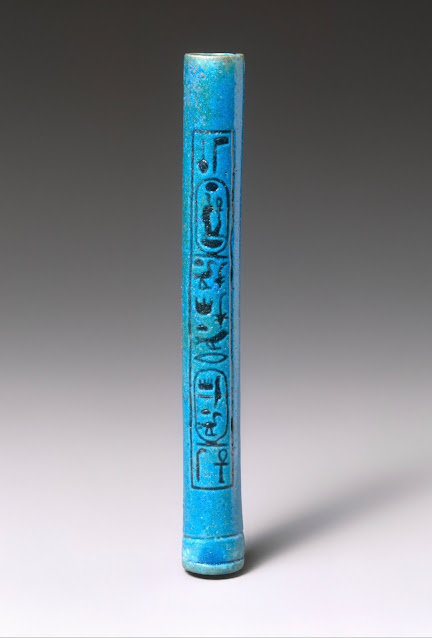
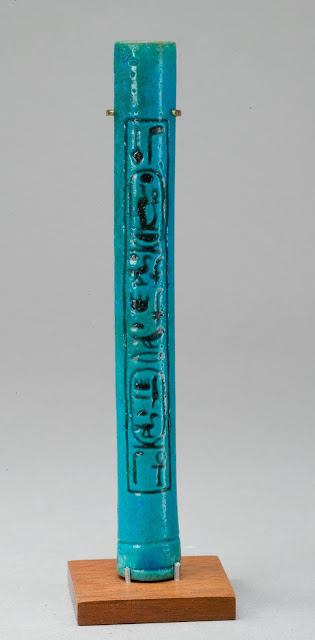
This is a deep blue glazed faience kohl tube. A column is inlaid with light blue on one side of the cylinder. This inscription is placed within a light blue frame. It reads, “The Good God, Lord of the Two Lands, Neb ma’at-re (Amenhotep III). The Kingdom, Wife Tiy, granted life.” A shallow indentation forms a border at the bottom of the tube. Condition: Small cracks at the bottom; blue glaze missing on half of the “neb” sign.
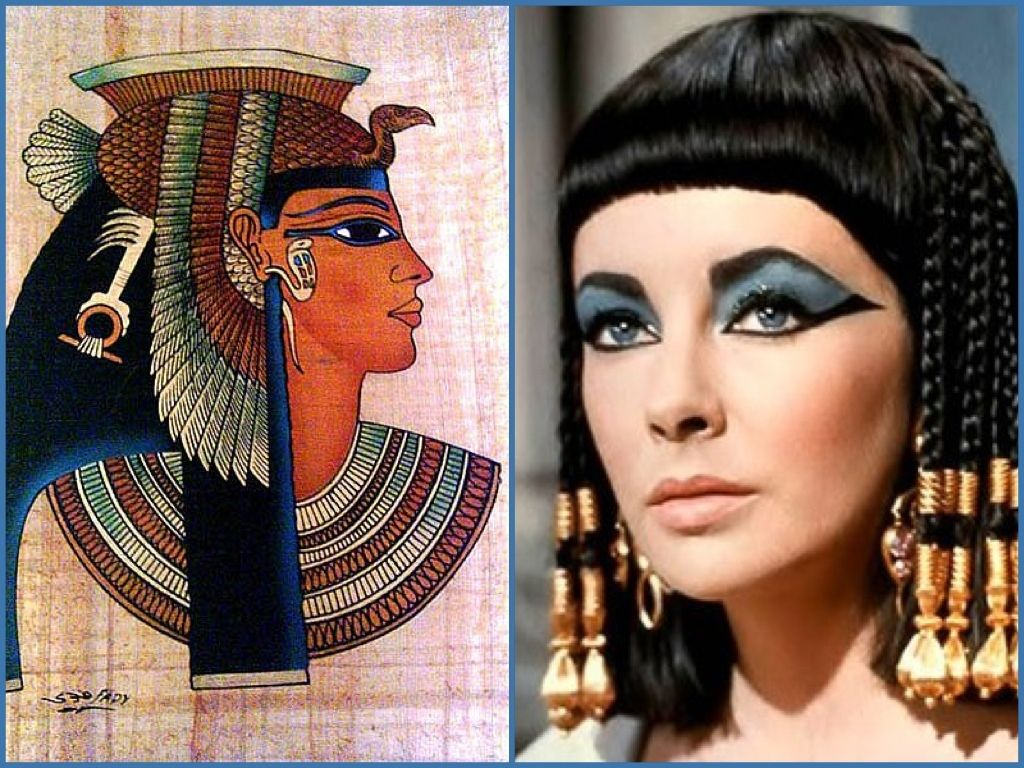
Here is another fascinating story by the brilliant lady Marie Grillot of a deity tube to help compare to divine beauty.
A kohol tube in the names of Amenhotep III and his daughter and wife Satamon…
Kohl tube of Satamon, daughter and the great royal wife of Amenhotep III – earthenware – 18th dynasty formerly in the collection of Reverend William MacGregor – acquired by Lord Carnarvon at Sotheby’s London in 1922 arrived at the Metropolitan Museum of Art in New York in 1926 by acquisition from the Carnarvon Collection – entry number 26.7.910
This delicate and elegant Egyptian earthenware kohol tube is 14.4 cm high and has a diameter of 1.8 cm. For Jeanne Vandier d’Abbadie (“Egyptian toilet objects at the Louvre Museum”), it was during the New Kingdom that kohol vases or pots which had varied shapes “were very often replaced by kohol tubes. This new form would have been introduced into Egypt under the reign of Tuthmosis III by the Asians. Indeed, it sometimes happens, from this time on, that the servants who assist the lady in her toilet have the Syrian type… These young foreigners hand their mistress the kohol tube into which the stylus is immersed…”
Originally, this tube was a simple Nile reed – hence sometimes its name “flute” -in the hollow of which the makeup was placed. For the wealthier classes of society, artisans were inspired by this natural element. They reproduced it more “luxurious” with more precious materials, ivory, for example, or, in this case, earthenware.
Kohl tube of Satamon, daughter and the great royal wife of Amenhotep III – earthenware – 18th dynasty formerly in the collection of Reverend William MacGregor – acquired by Lord Carnarvon at Sotheby’s London in 1922 arrived at the Metropolitan Museum of Art in New York in 1926 by acquisition from the Carnarvon Collection – entry number 26.7.910
In ancient times, kohol was the makeup product par excellence; it was inseparable from the concept of beauty, intimately linked to the enhancement of the gaze. Its use has thus transcended these stretched eyes surrounded by black, which, even today, disturbs and fascinates. Made from powdered galena, it not only highlighted the intensity of the “Egyptian” gaze but also had, in this country where the light is so bright, the reverberation so intense, and the sun so burning, a protective function of the eye.
It was applied using a fine stylus – or stick. With a rounded head and a blunt tip, it could be made of hematite, wood (like ebony), ivory, and sometimes bronze or copper. No stylus is presented with this tube; one can imagine it has disappeared. Likewise, nothing indicates the presence or absence of a small “accommodation” fitted inside to store it. The sealing is also absent: in the more “rustic” models, it was done by a plug of fabric or wood.
Kohl tube of Satamon, daughter and the great royal wife of Amenhotep III – earthenware – 18th dynasty formerly in the collection of Reverend William MacGregor – acquired by Lord Carnarvon at Sotheby’s London in 1922 arrived at the Metropolitan Museum of Art in New York in 1926 by acquisition from the Carnarvon Collection – entry number 26.7.910
In “Amenhotep III, the Sun Pharaoh”, Arielle P. Kozloff provides technical information on its creation: “The colour of the tube is medium blue, which suggests a copper base. This colour was used more frequently towards the end of the reign of Amenhotep III and during the Amarna period, unlike the cobalt-based blues that the king preferred. The dark-coloured inscription is undoubtedly cobalt-based.”
If the object is well made, the vertical inscription presented in a rectangle delimited by a black line in a column of delicate hieroglyphs is precious. Christiane Ziegler (“Queens of Egypt”) translates it thus: “The good god Nebmaâtre [Amenhotep III]; the king’s daughter, the Great Royal Wife Satamon, may she live.” She adds, “We noticed that the king’s name always accompanies that of the woman in his family mentioned on the kohol tubes.”
When we mention the wife of Amenhotep III, we immediately think of Queen Tiyi… Satamon (“The Daughter of Amon”) was the eldest daughter of Tiyi and Amenhotep III. However, explains Christian Leblanc in “Queens of the Nile”: “She distinguished herself especially towards the end of the reign of Amenhotep III by herself becoming the wife of her own father”.
Due to our current morality and contemporary conception of the family, understanding and admitting such a union is often tricky. However, well attested since at least the Middle Kingdom, this incest could only exist in the royal and divine world for reasons of an eminently sacred nature. Ordinary mortals did not practise it.
Relief depicting Satamon from the funerary temple of Amenhotep III Petrie Museum, London – UC 14373 – museum photo
“The role of princesses was so important that two of them, Satamon and Isis, became ‘Great Royal Wives’ during the last decade of the reign, which in no way diminishes the status of Queen Tiya. Indeed, the “Theological model of divine families on which that of the king’s family was modelled favoured the adoption of different generations of women. Was Hathor not simultaneously mother, wife and daughter of the god Ra?” (Arielle P. Kozloff). Thus, different museums hold kohol tubes, identical or close to that of Satamon, with the names of Tiyi, of course, and Isis.
Its current history is found in the 20th century in the collection of Reverend William MacGregor (1848-1937). This vicar is a “prominent member of the Egypt Exploration Society and the Institute of Archeology of the University of Liverpool. He patronised numerous excavations, notably those undertaken by Naville, Garstang, and Petrie, for which he frequently and actively participated in the field. His remarkable collection of antiquities is unprecedented compared to any other private collection in England, Europe or America” was then specified in the introduction to the sales catalogue when he decided to separate it. One thousand eight hundred objects will be auctioned at Sotheby’s London from June 26 to July 6, 1922.
Reverend William MacGregor, vicar, prominent member of the Egypt Exploration Society, Institute of Archeology, University of Liverpool and patron of many excavations (Liverpool, 16-5-1848 – Tamworth, 26-2-1937)
Satamon’s kohol tube, presented under lot 255, will be acquired by another great collector, Lord Carnarvon. The same year, it was among the artefacts lent by the British aristocrat for the “Exhibition of Ancient Egyptian Art” at the Burlington Fine Arts Club in London. Percy Newberry, responsible for writing the catalogue, describes it as follows under number 17: “Kohol tube – blue glazed earthenware -, with a vertical line of hieroglyphs in black, giving the names of Amenhotep III and the great royal wife, Sat-amon'”.
Lord Carnarvon died in Cairo on April 5, 1923, shortly after the discovery of Tutankhamun’s tomb. According to a codicil to his will, intended for his wife, Lady Almina, he had expressed his suggestions on the future of his collection in case she had to part with it, which she did, putting Howard Carter in charge of the negotiations.
Lord Carnarvon – George Edward Stanhope Molyneux Herbert, 5th Earl of Carnarvon (Highclere – RU – 26-6-1866 – Continental-Savoy Hotel, Cairo, Egypt – 5-4-1923) and his wife, Lady Almina
Thanks to the generosity of Edward S. Harkness, the Metropolitan Museum of Art in New York acquired it in 1926 for $145,000.
This is how this kohol tube bearing the names of Amenhotep III and Satamon arrived in the great New York Museum collections: it was registered under entry number 26.7.910.
Kohl Tube Inscribed for Amenhotep III and Princess Sitamun https://www.metmuseum.org/art/collection/search/544512 Catalogue of the MacGregor collection of Egyptian antiquities, Sotheby, Wilkinson & Hodge, auction catalogue, sale dates: 26-30 June and 3-6 July 1922, London, 1922 https://www.abebooks.fr/edition-originale/Catalogue-MacGregor-collection-Egyptian-antiquities-Sotheby/31411328486/bd Percy Edward Newberry, Harry Reginald Hall, Catalogue of an Exhibition of Ancient Egyptian Art, London: Burlington Fine Arts Club, p. 34 no. 17, 1922 https://archive.org/details/catalogueofexhib00burlrich Rev William MacGregor https://www.tamworthheritagetrust.co.uk/articles/rev-william-macgregor Jeanne Vandier d’Abbadie, Egyptian toilet objects at the Louvre Museum, editions of the national museums, Paris, 1972 William C. Hayes, Scepter of Egypt II: A Background for the Study of the Egyptian Antiquities in the Metropolitan Museum of Art: The Hyksos Period and the New Kingdom (1675-1080 B.C.), Cambridge, Mass., The Metropolitan Museum of Art, p. 257, fig. 155, 1959 Christian Leblanc, Nefertari, “L’aimee-de-Mout”, Editions du Rocher, 1999 (pp. 185-186 on incest practised in the royal sphere) Amenhotep III, the sun pharaoh, Meeting of National Museums, 1993 Christiane Ziegler, Queens of Egypt, Somogy éditions d’art, Grimaldi Forum, 2008 Christian Leblanc, Queens of the Nile, The Library of the Introuvables, 2009 Morris L. Bierbrier, Who Was Who in Egyptology, London, Egypt Exploration Society, 2012 Pierre Tallet, 12 queens of Egypt who changed history, Pygmalion, 2013
As I’m sitting on the chair, looking dumb at the desktop, I can’t think of anything else in my elderly head to leave to myself and you: a look into the younger years and again into old age, a song about loneliness from youth…
And a rock feels no pain And an island never cries
…into abandonment in the aged.
September, I’ll remember A love once new has now grown old.
This year is the 100th anniversary of Kafka’s death, and I thought it would be a good opportunity to write about my impressions of him and his works. Of course, I must mention that it does not have to be his specific birthday or the day he died; I never search the web to find out about an event and write about it, as some are doing on WordPress! The main reason is that I have known him and his works since I was young and always appreciated his solitude before society. Second, I see and hear many documentaries and TV series here in Germany for his anniversary, as the Germans always welcome a genius who writes in their language into their art world. Therefore, to put it bluntly, I had to write this article first in German and translate it into English. Because these days, I hear and read his works all in that language.
Franz Kafka (1883 – 1924), a German-language Bohemian writer, was born in Prague as the son of a middle-class Jewish merchant family.
As per literary scholar Reiner Stach, who studied Franz Kafka for over two decades and published a three-volume Kafka biography with S. Fischer Verlag, Kafka himself was uncertain about his historical classification. Stach quotes Kafka’s famous saying, “I am the end or the beginning.” Kafka intended to express that he may represent the end of a long tradition of classical literature, coming from Goethe, Kleist, and perhaps Flaubert, who was already modern and is an endpoint here. Alternatively, he may start something completely new from the fragments he inherited from tradition instead of falling apart.
Max Brod once said that Kafka was more ambitious than his talent. Maybe he’s right! He helped him, believed in him, and encouraged him to write his thoughts as books.
Franz Kafka and Max Brod
As one of his numerous lovers, Milena Jesenská, a Czech journalist and writer who was non-Jewish and married, once said to him: I have never met a person like you, and I assume it that’s because there has never existed anyone like you.
He explained it himself:
The enormous world that I have in my head. But how to free me and free them without tearing? And I would rather tear it up a thousand times than hold it back or bury it in me. That’s why I’m here; that’s very clear to me. (Sokel, Walter H. 2001). Man cannot live without a permanent trust in something indestructible within himself, though both that indestructible something and his own trust in it may remain permanently concealed. (Gray, Ronald 1973)
The drama (on stage) is more exhausting than the novel because we see everything that we otherwise only read about. (Source: Kafka, diaries. October 28, 1911)
The fortune that flatters you most is most likely to deceive you.
Franz Kafka was convinced that his writing was inadequate, although he had much more to say. In his short story collection, A Hunger Artist, he wrote: “Forgive me everything,” whispered the hunger artist. Only the supervisor, pressing his ear against the cage, understood him. “Certainly,” said the supervisor, tapping his forehead with his finger to indicate to the staff the state the hunger artist was in, “we forgive you.” “I always wanted you to admire my fasting,” said the hunger artist. “But we do admire it,” said the supervisor obligingly. “But you shouldn’t admire it,” said the hunger artist. “Well then, we don’t admire it,” said the supervisor, “but why shouldn’t we admire it?” “Because I had to fast. I can’t do anything else,” said the hunger artist.
He died of Tuberculosis, or better to say, the cause of death seemed to be starvation: the condition of Kafka’s throat made eating too painful for him. By the way, Kafka’s mental health was a topic of debate. Marino Pérez-Álvarez suggests schizophrenia based on his diaries and “The Metamorphosis”. Alessia Coralli and Antonio Perciaccante diagnosed borderline personality disorder, worsened by Kafka’s insomnia complaints. Joan Lachkar developed a model describing Kafka’s fears of abandonment, anxiety, depression, and parasitic dependency needs in “The Metamorphosis“. Meanwhile, Manfred M. Fichter believes Kafka was anorexic.
But in my opinion, it’s all doctors prattling! Kafka had (like a few other known artists and geniuses like Dostoevsky, Mozart, Carl Jung, Van Gogh and…) a sensitive mind and soul who looked immense, broader and more profound in human society and the man itself, so deep that the artist himself cannot discern it. He was a Mozart in the matter of literature! Kafka’s writing, whether a letter or a book, had a wealth of words and topics to recount. In his book Der Process (The Trial), he doesn’t criticize only the political system; K, the main character, is a victim of not being understood by his population. He writes about the trial of his own solitude, his isolation in society and his strangeness towards others.
He even asked Dora Diamant, his faithful companion in his last days in his dying bed, and wanted her to burn all his works after his death!
He died shortly before his 41st birthday in a private sanatorium outside Vienna. A week later, on June 11, 1924, he was buried in a simple ceremony at Prague’s New Jewish Cemetery.
In his final days, he asked his doctor for a lethal dose of morphine. When the doctor refused, he told his doctor: if you don’t do it, you will be my murderer!
Honestly, I wasn’t sure if I could write a second post this week, as I arrived Thursday late back home from the trip to Southern Germany, and I was almost flat after a long drive with many car crashes and some pile-ups (thank goodness we were just spectators in the traffic jam). Yet, I know a specific resistance within me calls for expressing my feelings for freedom and justice. Therefore, I decided to share some artwork from Victor Jara, one of my favourites in the matter of resistance, in company with another warrior, Pablo Nerud.
I discovered Victor Jara and his music in the early 1970s when Chile began its transition towards democracy. Following the fall of the Shah’s regime, I learned more about his work. Victor Jara was undoubtedly a legend, and I loved his music. He composed music for Pablo Neruda’s poems. He performed at a ceremony honouring him when Neruda was awarded the Nobel Prize in Literature in 1972, so we have two masters of art here to speak about human rights!
I am sharing this with you because there is a lot of talk about separatism in Iran at the moment, which is causing fear that Iran will be split up. However, this justification is baseless because all the people and ethnicities of Iran are united in seeking human rights and fair politics. Here, Pablo Neruda, through Victor Jara’s music and voice, says what it’s all about!
Aquí Me Quedo (I’ll stay here)
I do not want the country divided Not even bled by seven knives I want the light of Chile raised About the new house built
I do not want the country divided We all fit in my land And those who believe they are prisoners They go away with their melody
The rich have always been foreigners Let them go to Miami with their aunts I do not want the country divided They go away with their melody
I do not want the country divided We all fit in my land I stay to sing with the workers In this new history and geography
And in this song, one of his masterpieces, he humbly highlights the importance of rights and justice!
I do not sing for singing Yo no canto por cantar
not even for having a good voice, ni por tener buena voz,
I sing because the guitar canto porque la guitarra
It makes sense and reason. tiene sentido y razón.
It has a heart of earth Tiene corazón de tierra
and dove wings, y alas de palomita,
It’s like holy water es como el agua bendita
holy glories and sorrows. santigua glorias y penas.
This is where my song fits Aquí se encajó mi canto
as Violeta said como dijera Violeta
working guitar guitarra trabajadora
with the smell of spring. con olor a primavera.
It’s not a rich man’s guitar Que no es guitarra de ricos
not anything that looks like ni cosa que se parezca
my song is from the scaffolding mi canto es de los andamios
to reach the stars, para alcanzar las estrellas,
that the song has meaning que el canto tiene sentido
when it beats in the veins cuando palpita en las venas
of the one who will die singing del que morirá cantando
the true truths, las verdades verdaderas,
not fleeting flattery no las lisonjas fugaces
nor foreign fame ni las famas extranjeras
but the song of a market sino el canto de una lonja
to the bottom of the earth. hasta el fondo de la tierra.
That’s where everything comes Ahí donde llega todo
and where it all begins y donde todo comienza
I sing that it has been brave canto que ha sido valiente
It will always be a new song. siempre será canción nueva.
I wish you a happy Easter filled with leisure and joy. Stay safe and stay tuned. 💖🙏🌹💕💥🍷
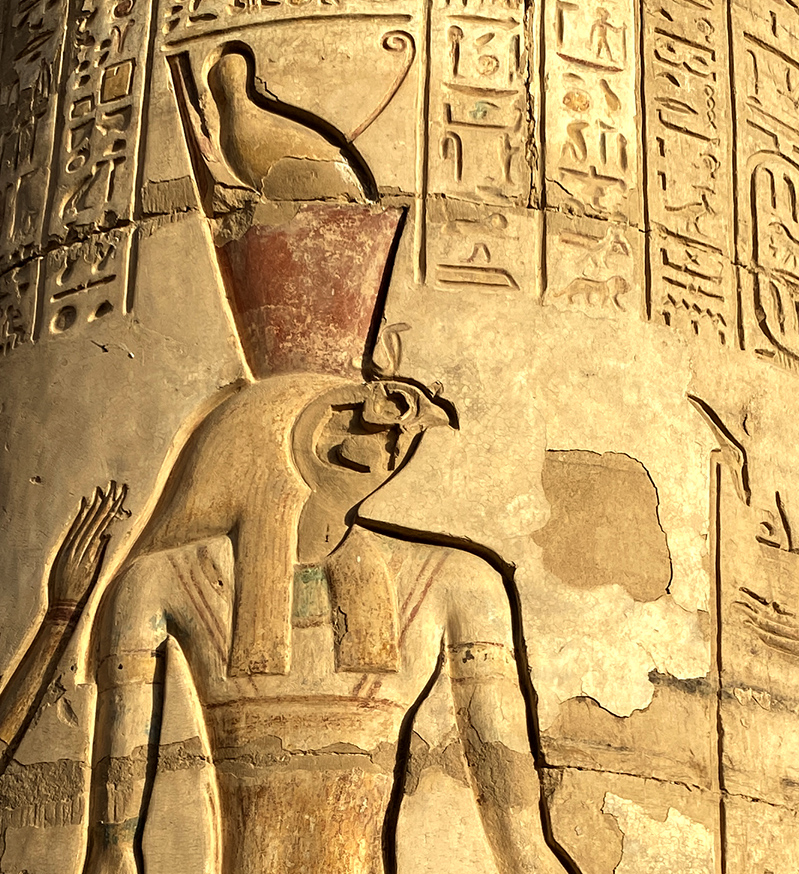
Since Horus was considered the sky, he was also considered to contain the Sun and Moon. Egyptians believed that the Sun was his right eye and the Moon his left and that they traversed the sky when he, a falcon, flew across it.
As the title image shows, Horus is usually depicted as a falcon. But now, the brilliant Marie Grillot shows us a unique image of this deity.
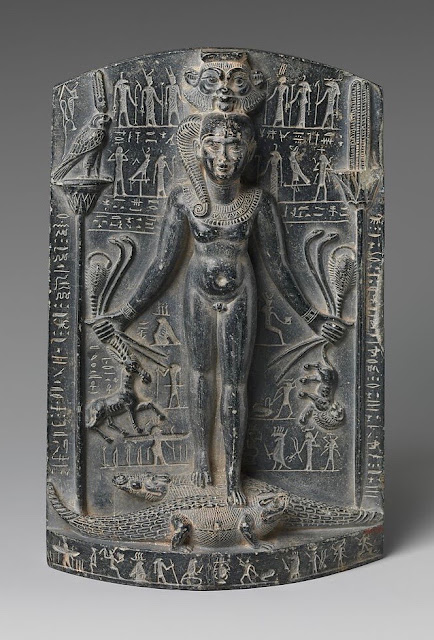
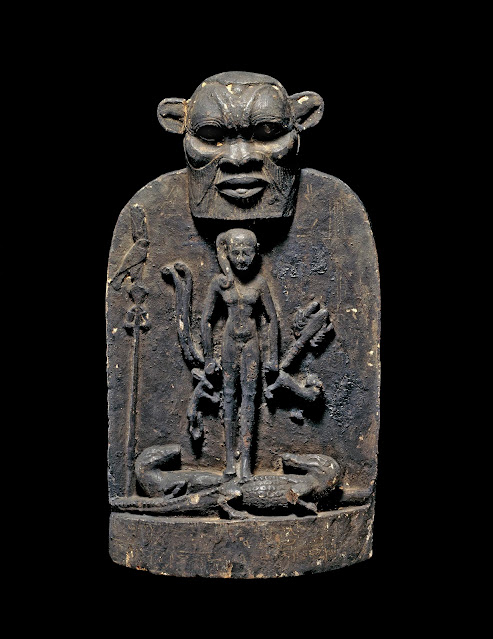
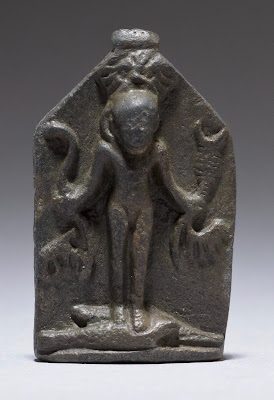
The infant Horus is often pictured on stelae in the act of trampling two crocodiles and holding dangerous animals in his hands. The water poured on these objects, by flowing across their surface covered with magic spells, gained the power of healing whoever drank it from the stings of scorpions and the bites of snakes.
Stele of Horus: the magic that heals
Magic stele or “Cippus of Horus” – chlorite schist – Ptolemaic period – around 332-280 BC AD Metropolitan Museum of Art in New York – entry number 20.2.23 – museum photo
These “magical” steles, representing Horus on crocodiles, found in many museums, are generally dated from the Late Period to the end of the Roman era. “Called ‘Cippus of Horus’, they are usually carved from a hard, black stone, their upper edge is rounded, and they can be briefly described as follows: on the front of the stele, Horus as a child (Harpocrates) is presented in relief. It is standing on two crocodiles, and he holds snakes, scorpions, a lion and a horned animal (ibex?), all these representations being associated with Seth, the god of evil. On the head of Horus is a god,’ The ancient,’ who resembles the god Bes and, with Horus, thus represent the ancient god who perpetually regains his youth and strength,” specifies Wallis Budge in “Amulets & Magic”.
Their size seems to have yet to meet any specific criteria, whether made of soapstone, schist, greywacke, basalt, or sometimes limestone, copper alloy, wood, or even anhydrite.
Horus controlling harmful animals – magic stele – stone – Ptolemaic period, 332 – 30 BC Department of Egyptian Antiquities of the Louvre Museum – E 20008 – museum photo
Their iconography, as described by Wallis Budge, may vary somewhat, but their highly balanced composition remains. As a child, Horus is represented in the centre, frontally, in high relief; his chubby body is naked. He still wears the side braid from childhood, and often, a uraeus adorns his forehead. In the middle of the arch, just above his head, is the face of a leonine god, grimacing and bearded, comparable to Bes. However, the threatening species that Horus masters with his hands and feet may differ. They are generally “strong and dangerous desert animals (scorpions, snakes, lion, oryx) held by the tail or by their horns. This motif shows the domination of Horus over these powerful animals and the dangers they can represent,” indicates the Metropolitan Museum of Art in New York (presentation notice of the MMA stele 20.2.23).
Their lateral edges are occupied by sacred emblems, such as the lotus of the god Nefertum on the right and a papyrus stem surmounted by a falcon on the left. These elements are sometimes based on the Oak sign, symbolizing eternity.
Cippus of Horus on the Crocodiles – Ptolemaic period – 3rd century BC AD Brooklyn Museum – entry number 60.73 – museum photo
These steles are inscribed with magical formulas which, to release their healing power, had to be “either immersed in water that the patient drank, thus imbuing themselves with the virtues of the magical texts and the image, or rubbed on the site of the injury.”
Thus, in “Amulets of Ancient Egypt”, Carol Andrews recalls: “We know that they were installed in the precincts of the temples so that water could be poured over them to absorb the magic of their scenes and formulas; “once drunk, the water offered prophylactic protection against the creatures in question or perhaps healed those already bitten or stung.” Thus, “Drinking the water that had been left to flow on the stele was to the benefit of the protection that Isis exercised over her son and brought healing”.
In “Animals and Pharaohs”, Florence Maruejol contextualizes their use thus: “Often worn out, the so-called steles of Horus on the crocodiles were manipulated by magicians who tried to cure their patients”…
Stele of Horus on crocodiles – cippi of Horus – schist – Ptolemaic period Egyptian Museum in Cairo – CG 9401 – on display at NMEC in Fustat In “The Egyptian Museum in Cairo”, Abeer El-Shahawy recalls that: “magic, prayer and medicine complemented each other in ancient Egypt and people in need, in danger, suffering from illness or disease and illness prayed in front of such stelae. Stele of Horus on the crocodiles – cippi of Horus – schist – Ptolemaic period Egyptian Museum in Cairo – CG 9401
For protection—and perhaps of a “preventive” nature—they were also present in chapels at the start of desert tracks (filled with dangers) and had a special place in homes. We have even found them in collective baths, where the humid environment was certainly conducive to the frequentation of snakes.
They all refer to an episode in the legend of Horus: “Son of Isis and Osiris, the child was raised by his mother in a remote place, the marshes of the Delta, to escape the vengeance of the god Seth who had put his father to death. But, one fine day, young Horus was bitten by a venomous animal: he owed his survival only to the magical practices of his mother, Isis and the god Thoth, who knew the most secret formulas. This miraculous healing was, in a way, a model for all Egyptians and left them a little hope for desperate cases,” explains Christiane Ziegler in “Ancient Egypt at the Louvre” (E 10777).
Ancient Egyptian medicine combined scientific knowledge with healing magic. In “The Egyptian Museum in Cairo”, Abeer El-Shahawy recalls that: “magic, prayer and medicine complemented each other in ancient Egypt and people in need, in danger, suffering from illness or disease and illness prayed in front of such stelae.
There are also “miniature steles” that one could carry with oneself. The Metropolitan Museum of Art in New York, which has several examples, indicates that these small models were considered “an amulet for magical protection rather than transmitting magic to the water poured over them for drinking”.
Miniature cippus of Horus – magic stele – copper metal Ptolemaic period – around 332 – 30 BC-AD – MMA New York – entry number: 23.6.19
In his reference study on “The ‘healing’ statues in ancient Egypt”, Pierre Lacau indicates that: “The typical stele of Horus on the crocodiles must therefore be considered as a true repertoire of ‘amulets’ and ‘formulas’ which the Egyptians could have at their disposal against bites; it is an arsenal or a codex containing the most varied weapons or remedies. We can, therefore, understand the extraordinary popularity that it was able to enjoy. All the provinces of Egypt have it used… They could be dedicated in temples, kept at home, or carried on one’s person like an amulet…
These steles testify to the force that magic exerted on the ancient Egyptians. They also reflect the fervour of the power granted to the “Medou-Neter,” the hieroglyphs, which in this specific case turn out to be, according to their etymology, sacred or divine writings.
I am sharing an article with you at an unusual time for two reasons. First, today marks the beginning of Spring (around 6.26 am, CET), also celebrated as the ancient Persian New Year. Second, I’ll be travelling to Southern Germany for a few days over the weekend into the next, so I thought it would be an opportunity to write a few words.
This is a joyful celebration to leave behind dark and cold times and welcome brightness and warmth; the only difference to Easter is that this fiesta marks the start of a new year. It all sounds friendly and happy, though, as you might know, there is no happiness left to celebrate in Iran. Of course, the brave Iranians do celebrate it nonetheless, even though it coincides with the mourning Islamic month of Ramadan!
It looks like a never-ending battle between ancient traditional Persian ceremonies and the imposed Arabic religion. I don’t want to shout out like some lofty patriotic people who still try to prove a trampled and destroyed glory that might have been perfectly installed by Cirus the Great during his reign, who had built an enormous empire based on human rights but slowly was destroyed not only by the Arabs but even before that by the latest dynasties and their avaricious religious monks.
One of the most significant mistakes humans can make is relying on who or what they were in the past rather than who or what they are now. This happened in Iran many years ago and continues to happen now, as people keep talking about their glorious history. It seems that Iranian monarchists are attempting to use the pride of ancient Persia to promote their cause, much like how Mussolini tried to do the same with Rome for Italy. However, I struggle to understand these sentiments from my Persian friends here in Germany, who constantly talk about the greatness of Persia and its past strength. But where is that glory now? I believe that traditions can be beneficial if used consciously. A sense of pride can serve as a foundation for creating a better world for all humans.
Anyway, I wish all the people of Iran, every ethnicity or folk, a happy Nowruz with great hope for casting freedom, equality and prosperity all over the country. This will happen because the leaders are women! #Woman_Life_Freedom
Illustration by Marina Terauds
I’m finishing this post with a short piece by an Iranian artist, Parisa Alipour. Be safe and well, everybody.🙏💖🌟✌🤗
At the top: Photo by Cory Grace / Freer and Sackler Galleries, Smithsonian Institution
Hope dies last! Which of the most lasting gifts you can give yourself is that Live your life this way* To enjoy the moment Don’t be someone’s lame… ✍ #Parisa_Zabli_Pour 📚 @audiobo0ok
I’m not sure if any of you have experienced a feeling like I did a few days ago. It’s hard to put into words, but I will try: I had a few things I wanted to remember and sort out in my head, but I wasn’t sure if they were just dreams or had actually happened!
Have you ever had moments when you couldn’t tell if something that happened the previous day was real or just a dream? It reminded me of schizophrenia, which was quite frightening. It’s like having a blurred line between reality and imagination, making it challenging to distinguish what’s real and what’s not. The reason for all this may be a dream I had the night before.
That night, I had a dream I can still recall. In the dream, I saw Robbie Williams, who had released an album that wasn’t a hit! The album was dull, and he was pretty upset about it, though he always had great help from his mate Guy Chambers. I haven’t ever been a big fan of his and haven’t purchased any of his singles. I have only heard his songs on the radio and listened to them once, and not more. That’s why I find it strange that he appeared in my dream.
Next, a young girl appeared during my dream and offered me her new album. I liked that, though she said she would mix it up with Robbie Williams’ album. Truthfully, they matched perfectly together and became a great hit!
When I told my wife about that, she said it was time for me to begin writing music again! Her advice refers to my earlier time in Germany.
It was around the early ’90s when I used to play guitar on the streets, and as I had only music in my head, I attempted composing, and I managed to write a few songs, which I recorded using an MC (my friends who are my age would know what I am referring to!). The recordings included drums, rhythm guitar, solos, and vocals. I played all these by myself in my tiny room those days with the help of two cassette recorders; poor me! You should see how talented I was!! I suppose this MC is in our basement, in a plastic bag, spending the last minutes of her life.
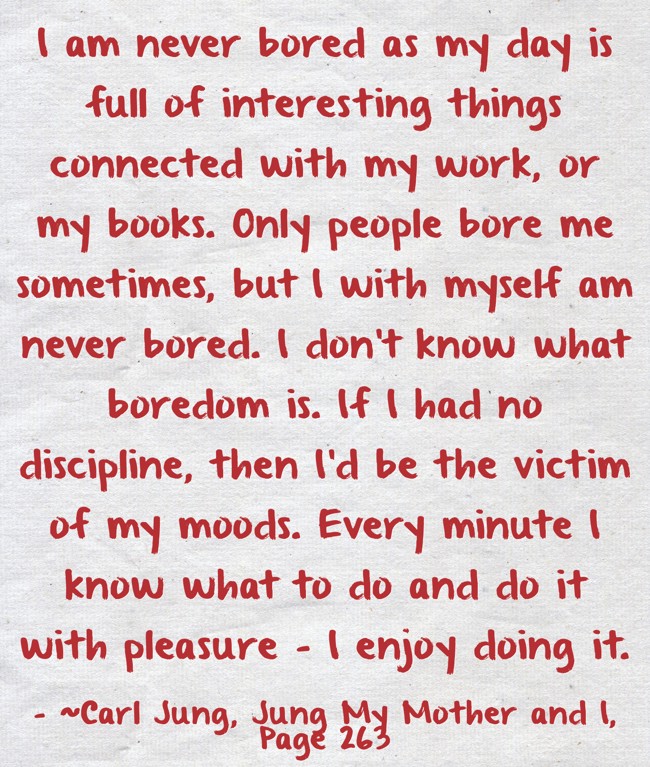
The main subject I aim to cover is our everyday lives and how boring they can be. Therefore, I took my recent post from Facebook with a quote by Marie-Louise von Franz on this topic. I will compare it with the life of an artist who can live without any single sign of being bored.
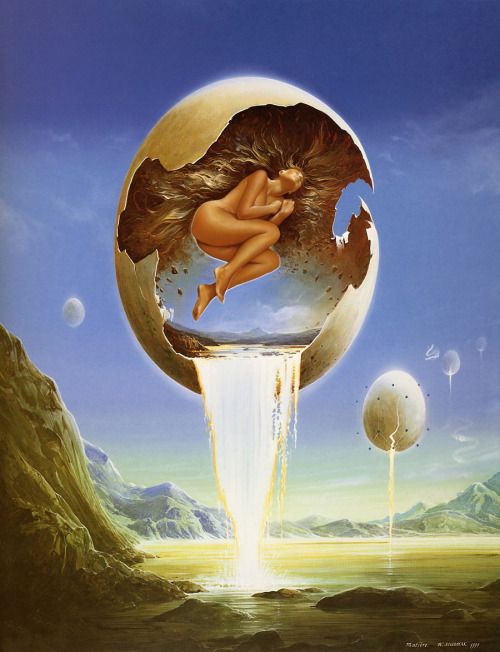
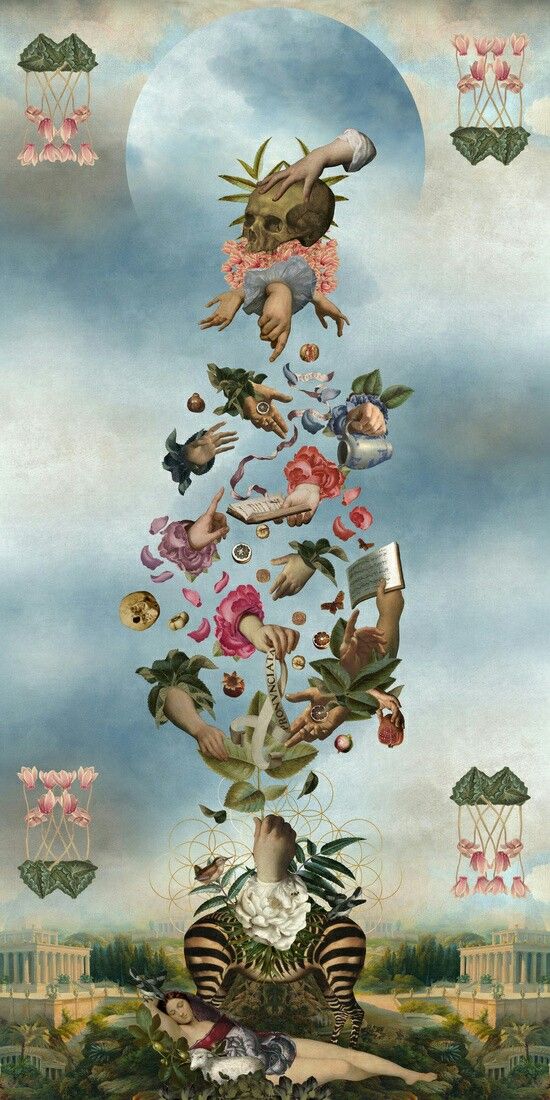
Illustration by Wojtek Siudmak – Matter.
Boredom is a symptom of life being dammed up, that one does not know how to get what one has within oneself into reality. — Marie-Louise von Franz, The Problem of the Puer Aeternus
While considering my own, my wife’s, or my friend’s everyday lives, I often ponder why everything seems so mundane. Even the weekends, which should be a time for rest and enjoyment, can sometimes feel dull and uneventful, especially for those who work tirelessly throughout the week. One does plan to enjoy a meeting, going to Cinema to watch a good movie, or driving for a side trip, the time runs out fast like the wind, and it is again the damnd Monday! Of course, it might be because I am retired now and have a view from a distance. I believe that the problem is the lack of creativity. Most people end up in jobs they have never chosen or desired; they do that only to make money. Don’t you think these repeated days doing almost the same thing make it no fun anymore? However, for an artist, every new day is a challenge in creating new art.
The pointé is here in Dr. Jung’s words; even then, I comprehended it much better now.
Via Quozio
How can an artist’s life notbe boring?
As a child, I had different career aspirations, such as becoming a pilot, free of borders or terrain. Still, in my youth, my only wish was to be a music composer, and every morning, I would go to my studio to make a new song. That’s why I think the lucky people who make art or do something similar will never feel bored!
I am convinced that we all were created to create, and art is our way of creating. Therefore, when we are forced to do something else without lust and passion, which, unfortunately, has become common in society, the outcomes are wasted fruits.
After pouring out my heart with the hope that I will achieve my goal of conveying my message to you, I want to mention that next week is the Easter holiday, and I will probably be absent and miss your kind reactions and feedback. However, I might try to post using the WP timer! Let’s see what happens; until then, I appreciate your visits and hope you have a lovely time, everybody. 🤗💖💥🖖


























You must be logged in to post a comment.