
Translated from volumes published by Lorenz Jung based on the edition “Gesammelte Werke” dtv.de The Symbols of Transformation (1952) and Aion (1950)
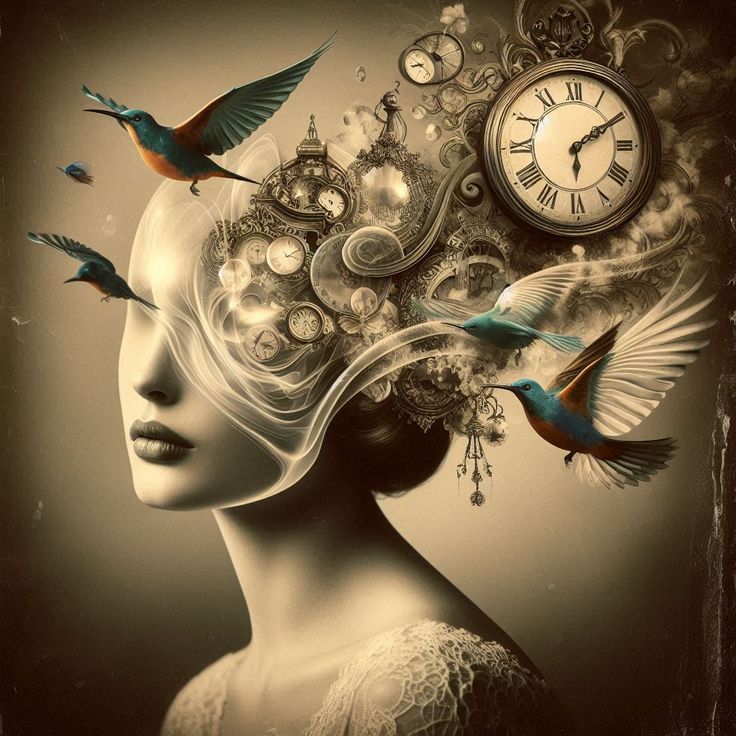
Continuing the concept of Mana-Personality, Dr. Jung advises us not to underestimate the unconscious mind and even offers a prescription for better managing this issue. (I dearly share here the last parts, 1–2–3–4–5, if someone wants to check out!)🙏
As I read more from Dr. Jung, I find that the issues he discusses do not pertain to a specific time period; they are fundamental and timeless, as we can clearly observe them in the present.
So, I believe following his concepts can heal our ailing society. He did an excellent job of helping us understand our inner unknown.
Let’s read another chapter of this Mana riddle.

Individuation
The Mana Personality (P6)
The Mana personality develops historically into a heroic figure and a god-man (according to popular belief, the highest Christian king could cure epilepsy with his Mana by laying on hands), whose earthly figure is the priest. The analysts can tell us something about how much the doctor is still a man-personality. Insofar as the “I” apparently draws the power belonging to the anima to itself, the ego becomes a mana personality. This development is an almost regular occurrence. I have never seen a more or less advanced development process of this kind where identification with the archetype of the Mana personality did not take place, at least temporarily. And it is the most natural thing in the world that should happen this way because not only you do expect it yourself, but everyone else expects it too. One can hardly help but admire oneself a little because one has seen deeper than others, and the others have such a need to find somewhere a tangible hero or a superior wise man, a leader and father, an unquestionable authority, that they are very willing to build temples and burn incense to even petty gods. It is not just the lamentable foolishness of the uncritical followers but a psychological law of nature that what was before will always be again. And this will always be the case as long as consciousness does not interrupt the naive concretization of the archetypes. I do not know whether it is desirable for consciousness to alter the eternal laws; I only know that it sometimes alters them and that this measure is a vital necessity for certain people, which, however, does not prevent them from placing themselves on the throne of the father in order to make the old rule come true once again. Indeed, it is difficult to see how one could escape the overwhelming power of the archetypes.

I don’t believe that one can escape this overwhelming power. One can only change one’s attitude towards it and thereby prevent oneself from naively falling into an archetype and then being forced to play a role at the expense of one’s humanity. Being obsessed with an archetype turns a person into a mere collective figure, a kind of Mask behind which humanity can no longer develop but instead increasingly atrophies. One must, therefore, be aware of the danger of falling prey to the dominant Mana personality. The danger is not only that one becomes the FatherMask oneself but also that one falls prey to this Mask if someone else wears it. In this sense, master and student are the same.
The dissolution of the anima means that one has gained insight into the driving forces of the unconscious, but not that we have rendered these forces ineffective ourselves. They can attack us again in a new form at any time. And they will inevitably do so again if there is a gap in the conscious attitude. Power stays against power. When the “I” assumes power over the unconscious, the unconscious reacts with a subtle attack, in this case, with the dominance of the Mana personality, whose enormous prestige captivates the “I”. The only way to protect oneself against this is to fully admit one’s own weakness in the face of the forces of the unconscious. In this way, we do not oppose the unconscious with power, and as a result, we do not provoke the unconscious either.

It may sound strange to the reader when I speak of the unconscious, so to speak, in a personal way. I do not want to provoke condemnation by thinking of the unconscious as personal. The unconscious consists of natural processes that lie beyond the human-personal. Only our consciousness is >personal<. So when I talk about >provoking<, I don’t mean that the unconscious is somehow offended and – like the old gods – does something to someone out of jealousy or vengeance. I often mean something like a psychological diet error that upsets my digestion. The unconscious reacts automatically, like my stomach, which figuratively takes revenge on me. If I assume power over the unconscious, that is a psychological dietary error, an unsatisfactory attitude that is best avoided in the interest of one’s own well-being. My unpoetic comparison is, however, a little too mild considering the far-reaching and devastating moral effects of a disturbed unconscious. In this respect, I would prefer to speak of the vengeance of offended gods.
To be continued! 💕🖖💖
 lampmagician
You are on a roll with this series of posts! They’re fascinating!
LikeLiked by 1 person
Your words are really encouraging, my friend. I appreciate it; thank you.
LikeLike
You deserve it!
LikeLiked by 1 person
In all honesty, so much of this Jungian topic continues to go over my head Aladin, however, thank you so much for pursuing it. Be assured though, I learn a little each time you share a new post.
Your quote by Edinger has caught my interest. Much like Sleeping Beauty, Jung’s prophetic body of wisdom may go underground (sleep) for several hundred years, only to be reawakened many centuries later.
And into what world will it arise, I wonder? Because I cannot conceive of a world even one hundred years into the future, all I get when I try to imagine one is a blank page and the fear that our planet may not be here.
How will our hugely inflated, world leaders with their negative Mana personalities deal with this future dilemma? Or would we have resolved these problems by then. I hope so! Love and light, Deborah.
LikeLiked by 2 people
You are too humble again, my dear, wise Deborah. However, it is good for me, as well, to read and translate this every time and learn more. About Edinger’s words, I wished this sleeping beauty could awake right now to help humans find the right path, as in the several hundred years, as you said, it might be too late!
The negative Mana personalities sit firmly in the political man. As Aristotle once said, man is the only political animal. A fool contributes nothing worth hearing and takes offence at everything! We can just hope and pray, my loveliest Angel. Thank you, as always, for your wise and awakening comments. Blessings.💖
LikeLiked by 1 person
I have a lot to learn from your posts, Thank you !
LikeLiked by 1 person
We all learn from each other, my friend. Thank you for your encouragement.👍🙏🥰
LikeLiked by 1 person
Hmmm,
Aladin, I see the Mana personality as possibly being a danger to society as a whole.
Somehow “I” has become a legend in his own conscious mind, and drives the unconscious mind. This unconsciously drives the conscious and creates what you kindly refer to as a stomach ache.
I understand that you will use vengeful gods, as your example.
Nonetheless, many “legends of vengeful I in their own minds” are here now, and causing havoc.
My take… anyway.
❦🌟💓💓💜
LikeLiked by 1 person
Right, my dear friend! These all exist inside every one of us, and Jung tries to compel us to master them for better understanding. I sincerely hope that his efforts succeed in the current time in which danger lurks everywhere.
He uses the word “I” (Ich, in German) instead of ego to show us how close it is—it is within!
Your takes are always heartily welcome.😉🙏🤗💖🌻🌹
LikeLiked by 1 person
Interesting.😊
LikeLiked by 1 person
Thank you, my friend.🙏
LikeLike
I much enjoy this series and your insight, Aladin. I am beginning to understand this Mana force inside my own psyche. …Yesterday I was a lover. Today I am a priest!!😅
LikeLiked by 1 person
Also, the “occult surrealist image” – I wish I could share photos in the comments… This exact image (i.e., the beam of cosmic blue light possessing the holy recipient) appears in the new EF montage… I am receiving your message, Lamp Magician🧞♂️🦋🖖
LikeLiked by 1 person
I miss sharing photos, too. It would be nice if it worked, but I am glad we are synchronised. I will follow you, EF.🖖🙏
LikeLiked by 1 person
Jung likes synchronicity.
LikeLiked by 1 person
Very well explained! And tomorrow? A prophet, I bet!! 😉😂
LikeLiked by 1 person
Or a beggar. Ha!😅🙄
LikeLiked by 1 person