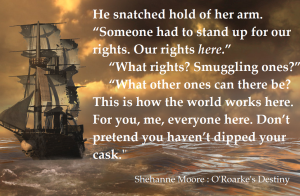
The Historical Cornish Environment—a land of Smugglers and Secrets …
‘A separate people. Throughout the early modern period, many Cornish people continued to regard Cornwall, not as an English county, but as a British country, called Kernow. … ‘
‘Physical isolation provides the key to Cornish history. A rocky peninsula, jutting out some 90 miles into the Atlantic Ocean, Cornwall stands at the extreme south-western corner of the British Isles. Surrounded by waves on all sides but one, it is practically severed from the adjoining lands to the east by the River Tamar, which runs almost from sea to sea. Although mediaeval Cornwall was – technically speaking – an English county just like any other, the culture of the ordinary Cornish people remained entirely different from that of their English neighbours. They still spoke in the Cornish tongue: a language, closely allied with Welsh. They still prided themselves on…
He chanced upon her dressing
She had got so far as
tights and knicker elastic allowed
Naught else
As is her way
A private conference
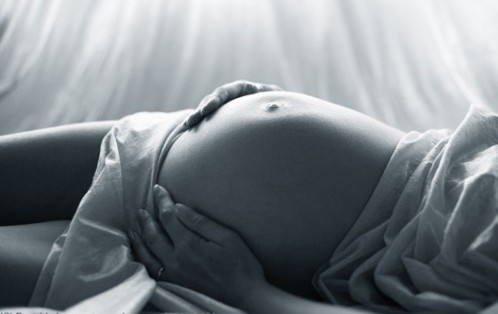
With the unborn babe in her belly
Telling him to
Get his act together
And show up or fuck off
She turns about face ‘Oh it’s you’ He beams
Tells her just how wonderful she looks ‘No I don’t, I look ridiculous’ She disagrees
For once she was wrong
At the birth
She spat profanities
As if possessed
It seemed like an age yet
She got there in the end
Helpless and hopeless
He takes of his leave
For just a minute or two
Glorious nicotine and salty tears
In the concrete jungle outside
Under a stoned moon
Composure partially restored
He returns
The child at her breast now
He kisses them both
Her first
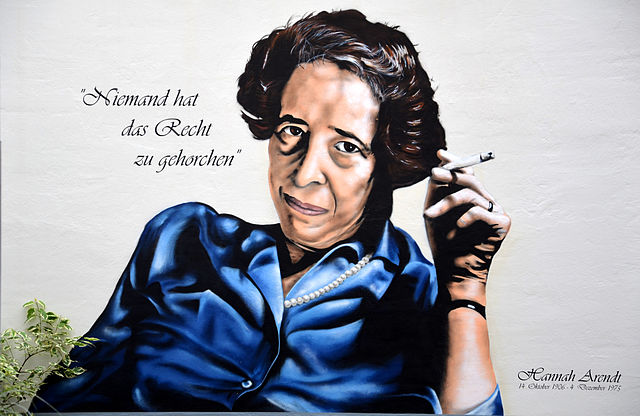
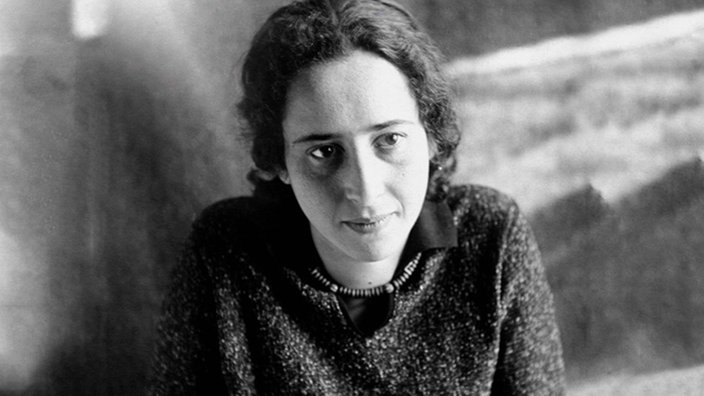
Just look at her, into her eyes if you dare as a man; I’d consider myself! Theses eyes are very dangerous for the muscular, if you have heard about infinity well that’s it. I will never stop you to be drown in, but just to know you’d never want to come back again. 😊👽💖
She is really one of the highest human (actually Hu-Woman) as I can remember ever seen in my memories; her eyes are hypnotizing; aren’t they?
I have actually once noticed her as a genius philosopher but newly I’ve heard about her again in the radio how she made all the Nazi men confused, I’d just thought; there she is; the Goddess. Why not, what have we, humans got less than Gods? In the all holly books it’s written; God made hu-wo-man as reflection her/himself. or as Shakespeare says as Hamlet;
What a piece of work is man, How noble in reason, how infinite in faculty, In form and moving how express and admirable, In action how like an Angel, In apprehension how like a god, The beauty of the world, The paragon of animals. And yet to me, what is this quintessence of dust? Man delights not me; no, nor Woman neither; Hamlet (1599-1602), Act II, Scene 2,)
Anyway, the Women rock, no doubt! here I present a nice article about this magic woman 😊 I hope you’d enjoy 💕🙏💖🙏
Two of the most trenchant and enduring critics of authoritarianism, Hannah Arendt and Theodor Adorno, were also both German Jews who emigrated to the U.S. to escape the Nazis. The Marxist Adorno saw fascist tendencies everywhere in his new country. Decades before Noam Chomsky coined the concept, he argued that all mass media under advanced capitalism served one particular purpose: manufacturing consent.
Arendt landed on a different part of the political spectrum, drawing her philosophy from Aristotle and St. Augustine. Classical democratic ideals and an ethics of moral responsibility informed her belief in the central importance of shared reality in a functioning civil society—of a press that is free not only to publish what it wishes, but to take responsibility for telling the truth, without which democracy becomes impossible.
A press that disseminates half-truths and propaganda, Arendt argued, is not a feature of liberalism but a sign of authoritarian rule. “Totalitarian rulers organize… mass sentiment,” she told French writer Roger Errera in 1974, “and by organizing it articulate it, and by articulating it make the people somehow love it. They were told before, thou should not kill; and they didn’t kill. Now they are told, thou shalt kill; and although they think it’s very difficult to kill, they do it because it’s now part of the code of behavior.”
This breakdown of moral norms, Arendt argued, can occur “the moment we no longer have a free press.” The problem, however, is more complicated than mass media that spreads lies. Echoing ideas developed in her 1951 study The Origins of Totalitarianism, Arendt explained that “lies, by their very nature, have to be changed, and a lying government has constantly to rewrite its own history. On the receiving end you get not only one lie—a lie which you could go on for the rest of your days—but you get a great number of lies, depending on how the political wind blows.”
Bombarded with contradictory and often incredible claims, people become cynical and give up trying to understand anything. “And a people that no longer can believe anything cannot make up its mind. It is deprived not only of its capacity to act but also of its capacity to think and to judge. And with such a people you can then do what you please.” The statement was anything but theoretical. It’s an empirical observation from much recent 20th century history.
Arendt’s thought developed in relation to totalitarian regimes that actively censored, controlled, and micromanaged the press to achieve specific ends. She does not address the current situation in which we find ourselves—though Adorno certainly did: a press controlled not directly by the government but by an increasingly few, and increasingly monolithic and powerful, number of corporations, all with vested interests in policy direction that preserves and expands their influence.
The examples of undue influence multiply. One might consider the recently approved Gannett-Gatehouse merger, which brought together two of the biggest news publishers in the country and may “speed the demise of local news,” as Michael Posner writes at Forbes, thereby further opening the doors for rumor, speculation, and targeted disinformation. But in such a condition, we are not powerless as individuals, Arendt argued, even if the preconditions for a democratic society are undermined.
Though the facts may be confused or obscured, we retain the capacity for moral judgment, for assessing deeper truths about the character of those in power. “In acting and speaking,” she wrote in 1975’s The Human Condition, “men show who they are, reveal actively their unique personal identities…. This disclosure of ‘who’ in contradistinction to ‘what’ somebody is—his qualities, gifts, talents, and shortcomings, which he may display or hide—is implicit in everything somebody says and does.”
Even if democratic institutions let the free press fail, Arendt argued, we each bear a personal responsibility under authoritarian rule to judge and to act—or to refuse—in an ethics predicated on what she called, after Socrates, the “silent dialogue between me and myself.”
Read Arendt’s full passage on the free press and truth below:
The moment we no longer have a free press, anything can happen. What makes it possible for a totalitarian or any other dictatorship to rule is that people are not informed; how can you have an opinion if you are not informed? If everybody always lies to you, the consequence is not that you believe the lies, but rather that nobody believes anything any longer. This is because lies, by their very nature, have to be changed, and a lying government has constantly to rewrite its own history. On the receiving end you get not only one lie—a lie which you could go on for the rest of your days—but you get a great number of lies, depending on how the political wind blows. And a people that no longer can believe anything cannot make up its mind. It is deprived not only of its capacity to act but also of its capacity to think and to judge. And with such a people you can then do what you please.
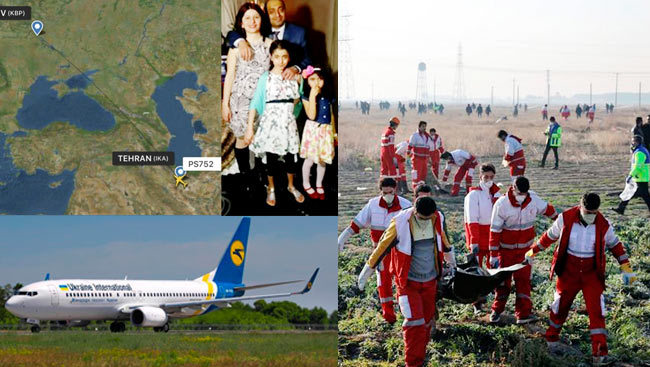
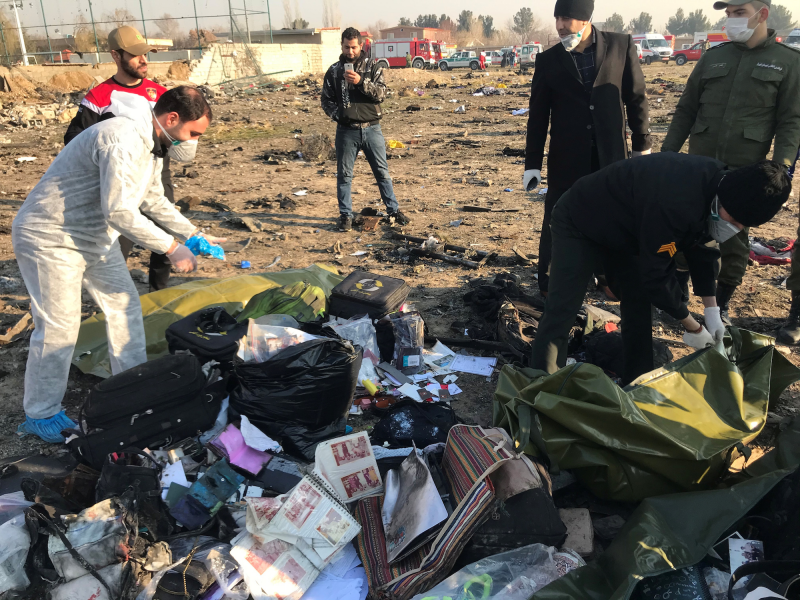
Greetings to all dear friends. I am sorry to begin my lovely day with a tragedy which you’d already know about it. It hit my heart when I heard it and couldn’t get out of my mind since then.
You know, I must share my feeling here with my friends because it is not a plane-crash as any others. Of course, it is true that every such an accident is a heartbreaking tragedy for everyone.
But this one is not the same for me like the others, not because they were mostly fellow citizens. It’s because of my absolute image of their very last thoughts.
Let me tell you a little about how my brother and I left (escaped) from Iran;
After I was arrested, one day when I came home from work, for my protest against an unfounded and groundless inspection on the Tehran streets, my family had succeeded to get me out after a couple of days, by paying a lot of many and I (with my brother Al) got ready to leave but when we reached to the transit, they have arrested us and the plane flew without us (as I remember, even the captain personally came into the transit to take us with, but no chance!) we had a suffering time thereafter but it is another story.
Anyhow, we had got a second try to leave, and I tell you how we spent the last minutes before the plane took off to get into the air; every second took like a lifetime for me till we were free!
A short trip to a free life
You maybe understand now what I mean; their feelings when the plane took off the ground, they have lived in freedom just a very short time, then…













 lampmagician


You must be logged in to post a comment.