Be watchful when you are hiking in the dark tall woods of Northern Europe, you just may come across a lovely woman that is really a creature termed ‘Huldra’ who are a legendary race of Norwegian forest spirits that dwell in the dark woods of Norway. Huldra is also known as Holder to Germanic folks. They are also spoken about in oral Sámi tradition and Lapplanders. According to Swedish folklore Huldra are called Tallemaja “pine tree Mary,” or skogsrå“spirits of the forest.” In Sámi folklore they are known as Ulda. The origin of the name Hulda connects her to the shaman Völva and the German figure Holder or Frau Holle.
She emerges out of the dark woods as a bewitching stunning, fair skin woman with long wavy, blonde hair wearing a crown of flowers upon her head with a large gap in its back sometimes filled with tree…
Horses and Rhinoceros- Chauvet-Pont-d’Arc Cave circa 30,000-32,000BP
We do not know exactly when the first work of art was created by human hands and we will probably never for certain, as the very question is vexatiously hedged with other questions (such as, what constitutes art?), and that is before we factor in our uncertain knowledge of unconscionably remote periods, new discoveries that shatter accepted wisdom and most pertinently, all that will remain undiscovered as it has vanished from the face of the earth forever.
Georges Bataille who wrote extensively on the subject of prehistoric art for over three decades published Prehistoric Painting: Lascaux or the Birth of Art in 1955, a monograph on the famous Lascaux Caves, known as the Sistine Chapel of Prehistoric Art, with paintings dating from around 17,000 BP. Bataille’s theory that Lascaux represented the birth of art would have been uncontroversial at the time, but new…
The mariner up on the mast in a storm. One of the wood-engraved illustrations by Gustave Doré of the poem.
I actually wanted to write a love story, The Love Story, about my parents but; sometimes you are obsessed with something or some thema. that is what was happening to me today, I was suddenly attacked by one of the Iron Maiden’s songs; Rime Of The Ancient Mariner. it might be because we’re dissatisfied by the real-time in which we live (as I surely feel to be) and searching in the old time when we were young and the problems are easier to be solved or even be ignored.
I love something creepy just helps me to keep awakened, 😀 I does not mean it to be a sadistic or masochistic thing to search an excitement to be wake up! it is only the old history or story or fairy tales, which I love to hear, to know, and to keep them in my heart and mind for having the feeling as I was also among him/her or them.
Engraving by Gustave Doré for an 1876 edition of the poem. “The Albatross” depicts 17 sailors on the deck of a wooden ship facing an albatross. Icicles hang from the rigging.
Therefore, I love the old stories; fictions or not, no matter I love them, and I love when one lets the imagination flies freely, like Shakespeare, or Dickens, or Dostoevsky or Jules Verne or Arthur Conan Doyle.
To put it bluntly, I’m not here on this Earth to search for the matters which I’d get in my hands, I want just to gather all spirituals keeping in my mind (soul) and when I have to go, I’ll take all with me 😉
Anyway, I share now the musical version of the old tells, by a band which really is one one the best musical performance in the music history, the song has been written by Steven harris, the bassman and I tell you; I had also tried to write a song alone and wrote every little thing on every instrument, it isn’t easy. also; hats off!
So, if you like, let’s get back to the ’80s in which the music was music and the musicians were in the real form.
The third nombre of the continual post by dear friend symbolreader which inspires me again with my littleness to add my sincerity to this great book of the history of the psychology.
“If you are boys, your God is a woman.
If you are women, your God is a boy.
If you are men, your God is a maiden.
The God is where you are not.”
When I read such as these words, I feel the wholeness in me ❤ ❤
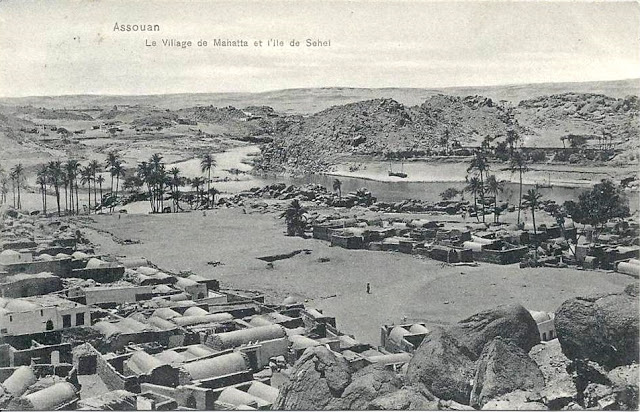
Sehel Island, on the Nile, is located about 2 miles southwest of Aswan. One kilometre long and 500 meters wide, it is one of the largest islands of the first cataract. Auguste Mariette saw it, “strictly speaking only a mass of granite blocks crammed one on top of the other, the remains and witnesses of some geological convulsion whose date necessarily escapes history.” And the great French Egyptologist to continue, in his “Voyage in Upper Egypt” (1878): “In the time of the Pharaohs, the island of Sehel was the southernmost border of Egypt. It was on the island of Sehel that Egypt left when the one who came from the north, just as it was to the island of Beghe that one left Nubia when one came from the South. The intermediate territory had to be neutral. The island of Sehel was under the protection of the gods of Cataract who are Chnouphis, the goddess Sati and the goddess Anoukis. The proscynemes engraved on the rocks of the island of Sehel, either by the travellers who left Egypt to head south or by the travellers who arrived from Nubia and Sudan to head north, are very numerous. They consist of prayers to the gods of Cataract, with mentions often very valuable, from the point of view of the history of the characters who made them engrave. The most frequent is the twelfth, thirteenth, eighteenth and even nineteenth centuries. (…) While climbing on the rocks of the island of Séhel, it is not difficult to perceive, by turning towards the South, the whitish eddy of the rapids of Cataract, and even to hear the noise. We are indeed leaving Egypt; this famous Cataract, which has so much occupied the imagination of the ancients, is before us; one more step and we are entering Nubia. “
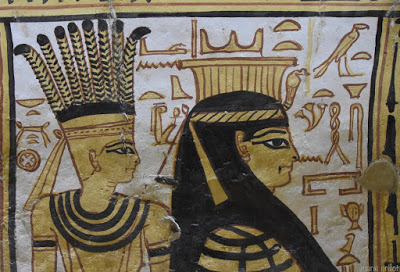
On the left, the Anuket goddess shown in grave Nakhtamon – TT335
Village Artisans – Deir el-Medina
Anoukis, one of the deities of the local triad, to whom a temple was dedicated on the island during the 12th dynasty, holds the role of “Mistress of (the island) of Séhel”, the gate of Nubia. If there is no indication that it originated in the confines of Egypt, one of its functions is nevertheless to keep the southern border of the country. However, adds Jean-Pierre Corteggiani, in “Ancient Egypt and its gods” (Fayard, 2007), its most important role is the one it shares with Satis in the flooding process, the complementary actions of each. of the two goddesses being defined according to the taste of the Egyptians for puns, by verbs related to their names. As a text from the temple of Edfu makes clear, if it is up to Satis, assimilated to Sothis, to bring up the beneficial flow, it is incumbent on Anoukis (Anouqis) the equally essential task of reducing it and allowing thus, after the removal of the flood, the sprouting seeds and vegetation grow on land released by the waters. “
The Isle of Sehel (3 km southwest of Aswan) is one of the largest islands of the First Cataract
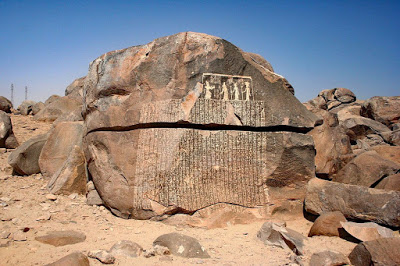
Another celebrity of the island: the stele known as “Famine”, discovered in 1889 by the American Egyptologist Charles Edwin Wilbour (1833 – 1896). It is a rock, with a large transverse horizontal fault and another less marked crack at the lower level, on which has been engraved, on 32 columns, a text dated from the Ptolemaic period. This text is surmounted by a “box” where four characters are represented: on the left, King Djoser (Third Dynasty); on the right, the three deities of Sehel’s triad. He mentions, reads on the website of the “Project Rosette”, “a famine of 7 years due to a disturbance of the flood of the Nile under the reign of King Djoser. Some clues have led Egyptologists to think that the document could date from the beginning of the Old Kingdom; others, like Pascal Vernus, have put forward the hypothesis of a forgery elaborated by the priests of Khnum during the Ptolemaic period for reasons of propaganda. “
On the Isle of Sehel the stele “Famine”, discovered in 1889 by the American Egyptologist Charles Edwin Wilbour
For the French Egyptologist Paul Barguet (1915 – 2012), one of the translators of the stele, it dates from 187 BC. AD and would be a decree of Ptolemy V, “mentioning, in a pictorial form, the return to the crown of the southern provinces of Egypt and ensuring the country of calm and prosperity of yore”. “We will say a few words,” adds Paul Barguet, “about the famine that seems to be the very subject of our stele. Brugsch, in his book “Die Biblischen sieben Jahre der Hungersnot”, had brought together the seven years of scarcity mentioned in the Bible, the mention of seven years of famine given by the stele of Sehel. This rapprochement was quickly criticized, as purely factitious. However, if it is hazardous to say that one of the texts is only a reminder of the other, their approximation must not, however, be entirely rejected. A seven-year famine tradition is attested throughout the ancient Near East, not only in Egypt but also in Ugarit and Boghaz-Koi. This is a seven-year cycle of famine (and plenty), the figure seven probably not be taken literally, but simply signifying a significant number of years of famine whose succession may have appeared a divine manifestation, the famine being considered one of the worst catastrophes in the ancient East. In Sehel’s text, famine seems to be due more than to insufficient flooding of the Nile, to the fact that the Nile has come against the weather, either too early or too late. By taking possession of the cataract region, Ptolemy V could again control the “sources” of the Nile to Elephantine, and thus ensure, as it were, the waters of the river and their seasonal regularity. “(” The Stela from Famine to Sehel “, IFAO, 1953)
As famous as this stele is, it does not mean to conceal many other rocks engraved on the granite piles of the island. More than 500 inscriptions (including more than 300 to relate mainly to the Old Kingdom) have been noted, translated and commented by Annie Gasse and Vincent Rondot, in their book “The inscriptions of Séhel”, published by the IFAO in 2008. The editor of the book provides these details: “In Séhel, the Old Kingdom is particularly present, thanks to texts that are essentially alluding to the notables of the province. In the Middle Kingdom, it is mainly the Nubian expeditions of sovereigns, including Sesostris III, which are commemorated in the granite of the island. The most abundantly represented period is the New Kingdom. Then, under the aegis of the viceroys of Kouch, exchanges with Nubia intensify; the great cities of the Empire send important expeditions to Aswan to obtain the granite essential to the architectural work. The cult of the Neqet goddess, mistress of Sehel, develops so that a shrine attracts many famous pilgrims. The last epochs of Egyptian history, if they are quantitatively minority, are illustrated by some remarkable inscriptions in the first rank of which we must mention the stele of the Famine.
The Isle of Sehel (3 km southwest of Aswan) is one of the largest islands of the First Cataract
Alors that the inscriptions, the source of which today is the glory of the island of Sehel, while others have been taken over in the granite for tourists for the brand or the end of the legends in Nubie, where it is clear that modern tourists, who came up with an excellent idea of visiting the archaeological site, perhaps imitate their “illustres prédécesseurs”! Will it not be an indecisive step of sacrifice from petroglyphic messages of an insigne value for the sake of other graffiti autently disastrous? Marc Chartier
Tempest on the moon
Storms ripple tides;
My eyes share water
With the ocean and sea.

Stars dot the connect
Once upon a keyboard
Asterisk, ellipses
Breaking the silence.

I carpe diem
So much confusion
Searching for the perfect word--
In poetry we shall never part.

Bard broken
Eating my heart out
That is so self consuming:
The clock's moving hands.

Short on oxygen
Deforestation;
Human extinction
Dust to dust.

Playing hooky
Green behind the ears;
Wilful liberation
Ignoramus on roll-call.

Telepathy
My soul takes a breath
From your soul-
Rainbow's end.

Killer looks
Intrigued by
Your silence---
For your eyes only.

Sting
Song of the desert rose
Cactus dreams
Of rain.....
I am a real Parisian,
I am a resident of Vienna, St. Petersburg, Berlin, Constantinople,
I’m from Adelaide, Sydney, Melbourne,
I am from London, Manchester, Bristol, Edinburgh, Limerick,
I am from Madrid, Cadiz, Barcelona, Oporto, Lyon, Brussels, Bernes, Frankfurt, Stuttgart, Turin, Florence.
I am at home in Moscow, Krakow, Warsaw, or north at Christiania or Stockholm, or in the Siberian Irkutsk, or some street of Iceland.
Je suis un vrai Parisien, Je suis un habitant de Vienne, Saint-Pétersbourg, Berlin, Constantinople, Je suis d’Adélaïde, Sydney, Melbourne, Je suis de Londres, Manchester, Bristol, Edimbourg, Limerick, Je suis de Madrid, Cadix, Barcelone, Oporto, Lyon, Bruxelles, Bernes, Francfort, Stuttgart, Turin, Florence. Je suis chez moi à Moscou, Cracovie, Varsovie, ou au nord à Christiania ou Stockholm, ou dans la sibérienne Irkoutsk, ou quelque rue de l’Islande.
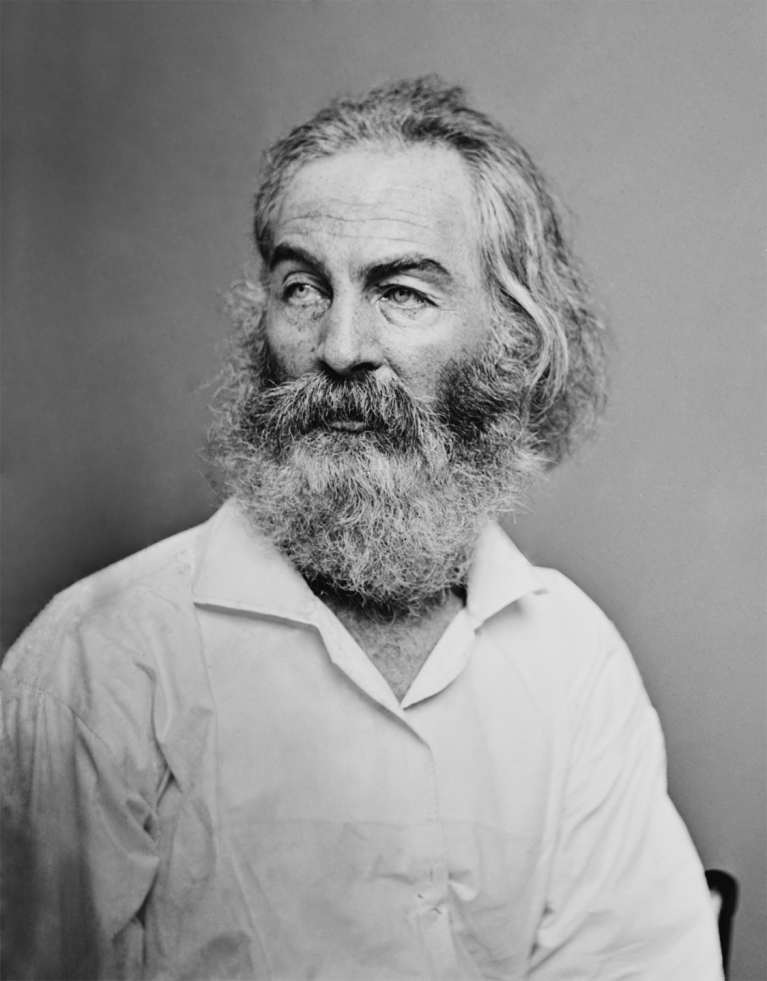
Walt Whitman (1819-1892) in Poésie involontaire et poésie intentionnelle, Paul Eluard (1895-1952), est un écrivain et poète américain.
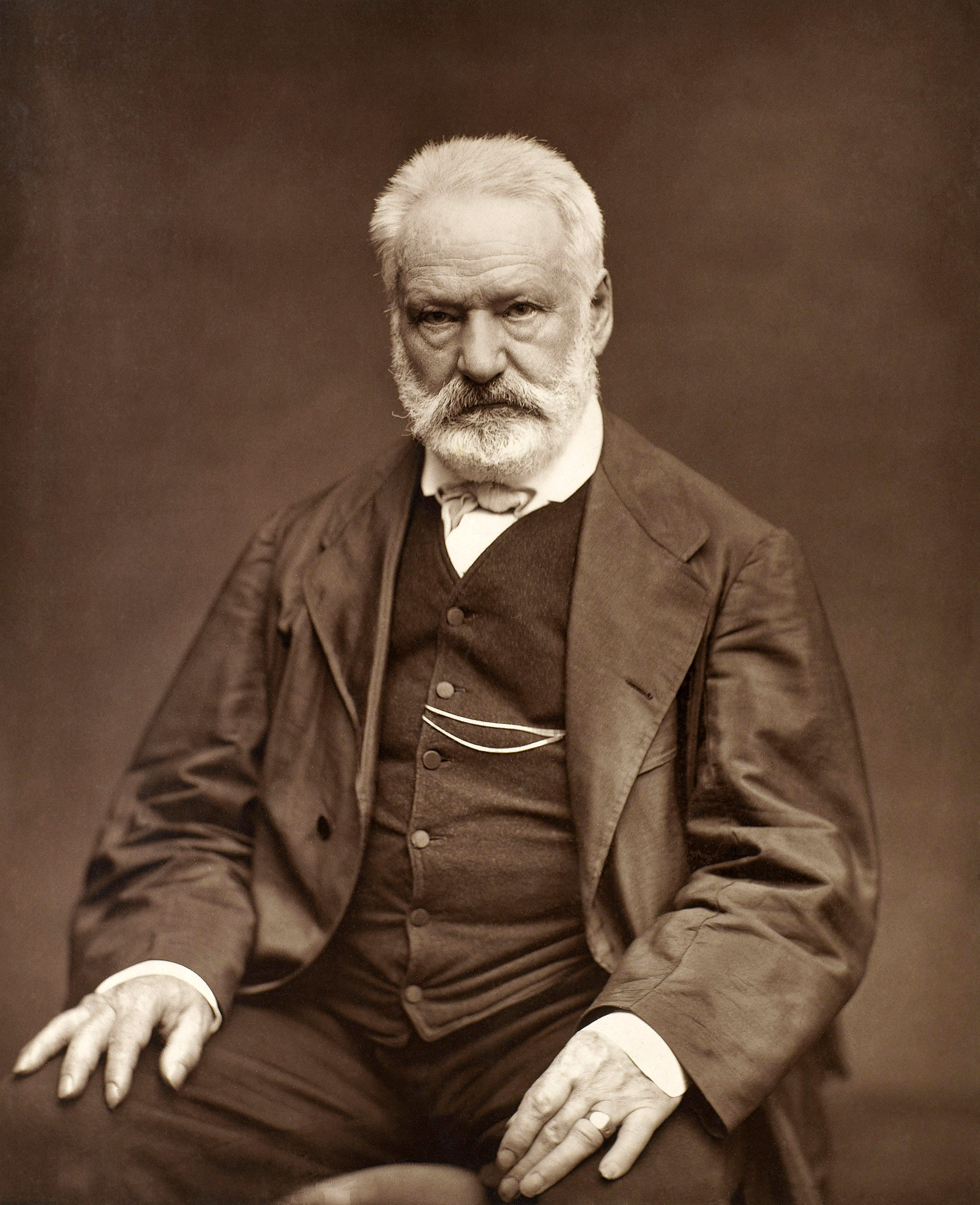
« N’imitez rien ni personne. Un lion qui copie un lion devient un singe. »
“Do not imitate anything or anyone. A lion that copies a lion becomes a monkey. »
Victor Hugo (1802 – 1885), est un poète, dramaturge, peintre, dessinateur, pamphlétaire et romancier français. Chef de file du romantisme, grand poète, il est aussi l’homme des grandes luttes de son temps : abolition de l’esclavage, celle de la peine de mort… Pair de France, député, sénateur, élu à l’Académie française en 1841, il meurt à l’âge de 83 ans ; la IIIème République lui fera des funérailles nationales. Victor Hugo sera inhumé au Panthéon.

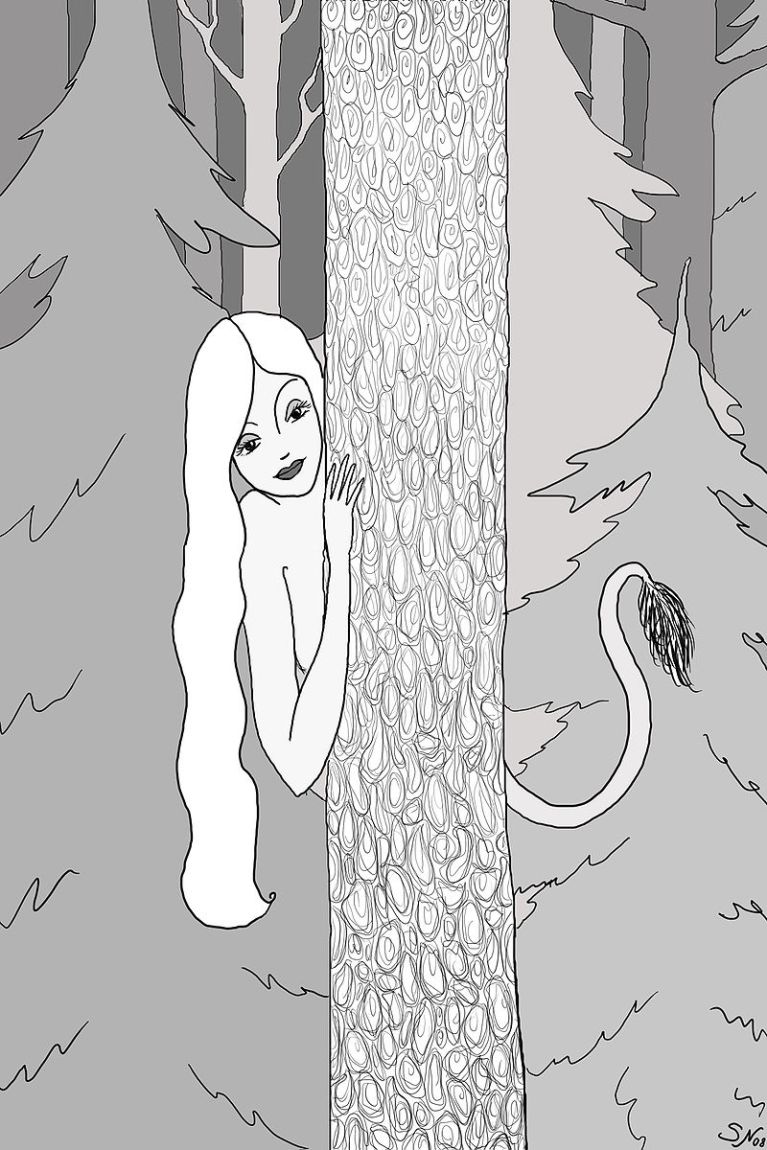

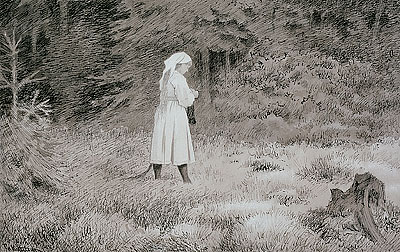 She emerges out of the dark woods as a bewitching stunning, fair skin woman with long wavy, blonde hair wearing a crown of flowers upon her head with a large gap in its back sometimes filled with tree…
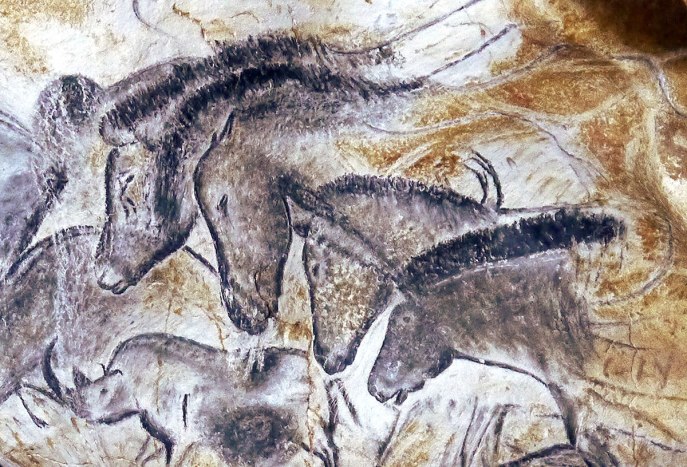 Horses and Rhinoceros- Chauvet-Pont-d’Arc Cave circa 30,000-32,000BP





 lampmagician
You must be logged in to post a comment.