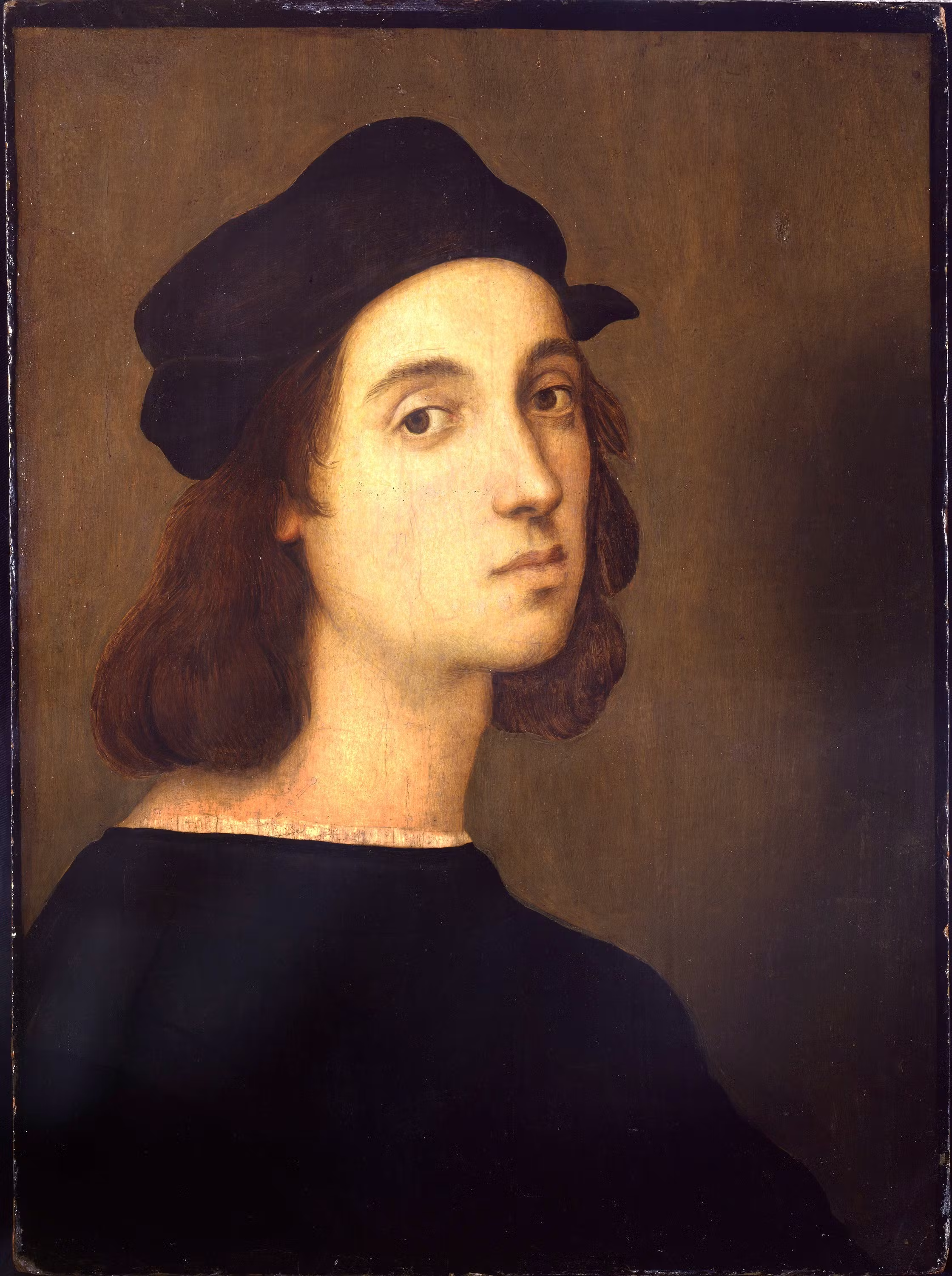
Raphael’s self-portrait | Uffizi GalleriesSelbstbildnis des Leonardo da Vinci Leonardo da Vinci, um 1512 Biblioteca Reale, TurinPortrait by Daniele da Volterra, c. 1545
Raffaello Sanzio, Leonardo da Vinci, and Michelangelo are legendary figures of the Renaissance, each contributing uniquely to the era’s art and thought. Raffaello is celebrated for his balanced compositions and perspective, especially in The School of Athens, embodying ideals of knowledge and beauty. Leonardo da Vinci, a true polymath, excelled in painting, science, and anatomy, with works such as the Mona Lisa and The Last Supper showcasing his innovative methods and deep understanding of human emotion. Michelangelo, renowned for his sculptures and paintings, created masterpieces such as the Statue of David and the Sistine Chapel ceiling, which reflect his keen insight into human anatomy and emotion. These artists collectively represented the Renaissance spirit, merging art, science, and philosophy, and their enduring legacies continue to inspire us.
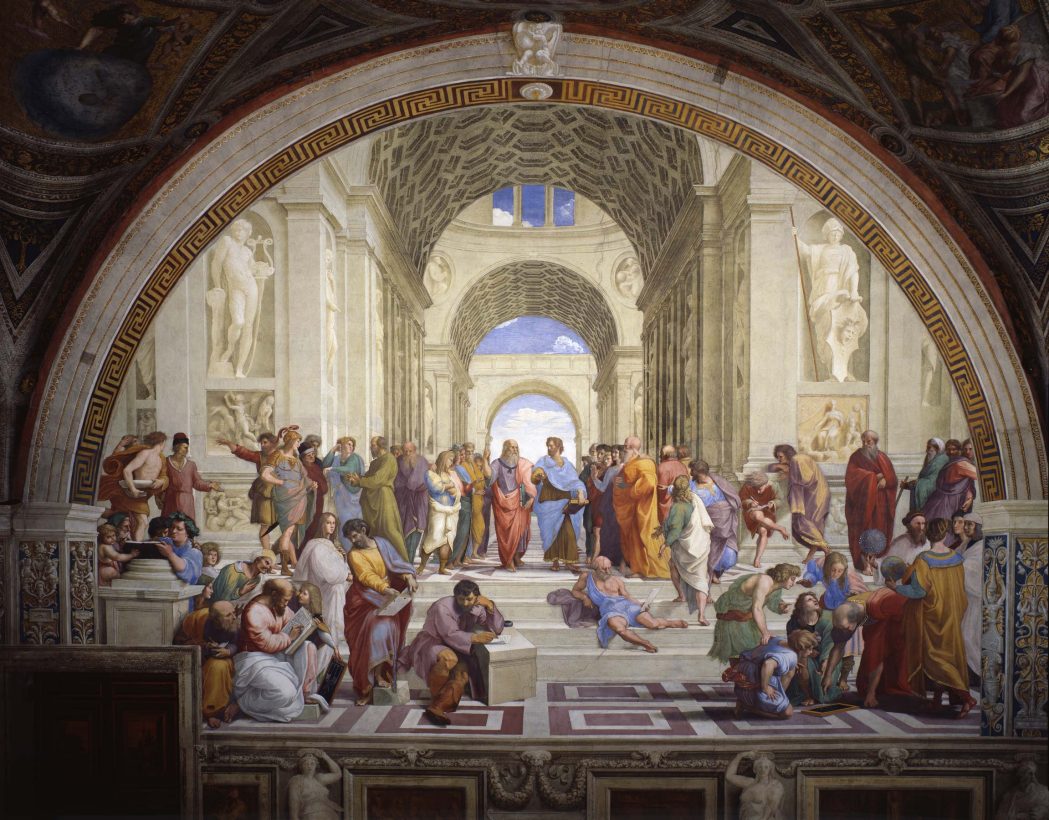
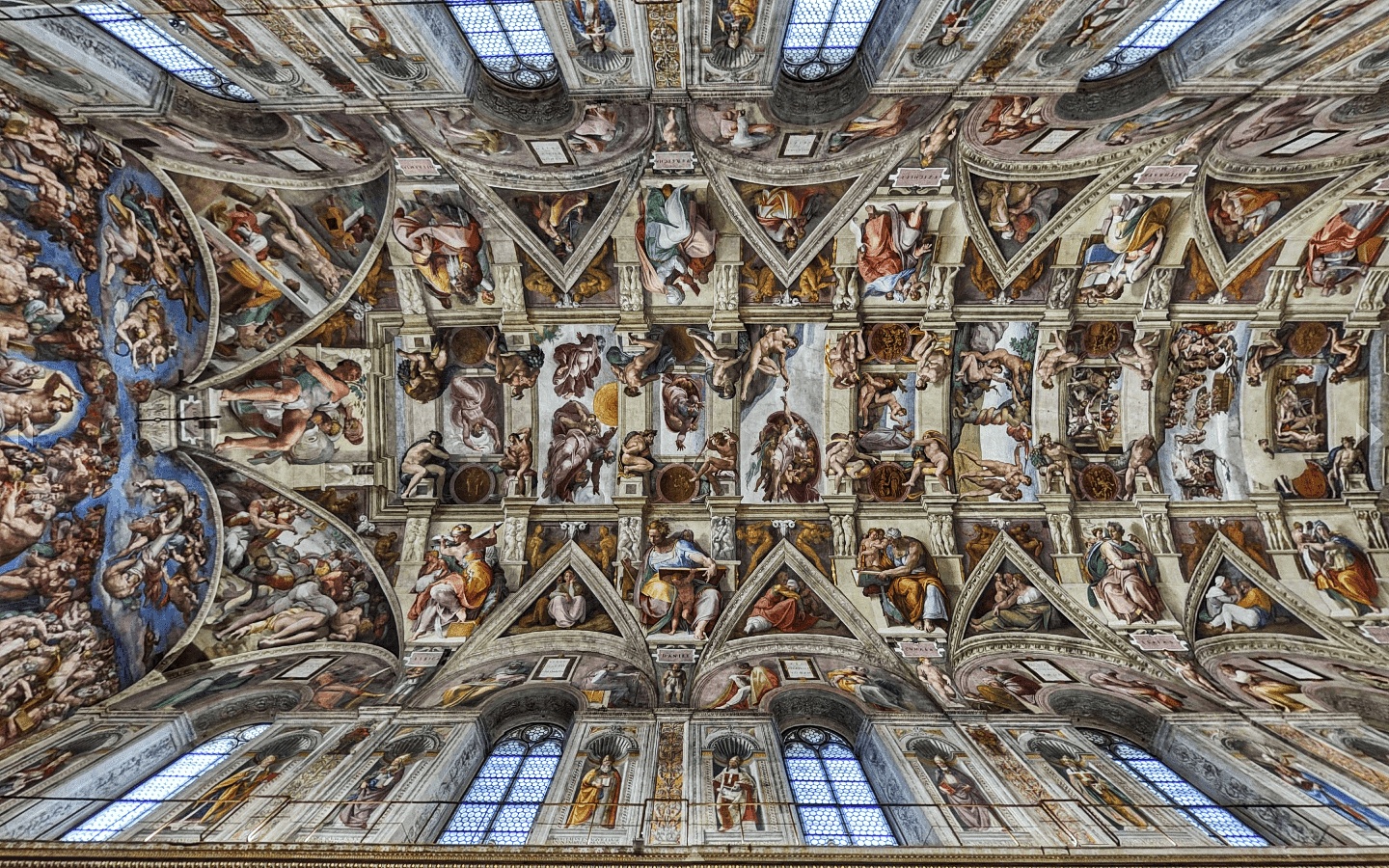
But what is the most interestingly depicted in art history during the Renaissance? Two masterworks tell their own story: Raffaello’s ‘School of Athens’ and Michelangelo’s ‘Sistine Chapel ceiling.’
Indeed, Leonardo da Vinci’s Last Supper should not be overlooked, as it is a Renaissance masterpiece that captures the moment after Jesus reveals that one of his apostles will betray him. Raffaello’s The School of Athens also employs one-point perspective, similar to da Vinci’s method: the composition is centred on a single vanishing point with all lines converging on Jesus, highlighting him as the focal point. However, it’s a different story!
I previously covered that topic, mainly from a philosophical angle rather than focusing on developing the art self. Now, let’s explore this masterpiece creatively and artistically.
Raffaello’s masterpiece, The School of Athens, exemplifies the Renaissance by highlighting its core principles of knowledge, philosophy, and beauty. This famous fresco depicts a gathering of history’s greatest thinkers, including Plato and Aristotle, each representing distinct philosophical perspectives. Plato, resembling Leonardo da Vinci, represents idealism and the importance of ideas, while Aristotle stands for empirical observation. Figures like Socrates, Ptolemy, and Euclid enrich the discussion. Raffaello’s masterful use of perspective draws viewers into a vibrant intellectual hub of the Renaissance. The influence of Michelangelo is evident, demonstrating outstanding artistic talent. The School of Athens celebrates individual genius and the collaborative spirit of the Renaissance, a time when art, science, and humanism thrived.
Raffaello’s ‘School of Athens’ and Michelangelo’s ‘Sistine Chapel ceiling’ are iconic Renaissance masterpieces. ‘School of Athens’ portrays philosophers amidst impressive architecture, symbolising art, philosophy, and science.
Michelangelo’s ceiling is renowned for dramatic scenes like ‘Creation of Adam’, showcasing his skill and religious themes.
Both works are culturally and historically significant, reflecting Renaissance intellectual and artistic progress.
Here’s a video titled “How to read ‘The School of Athens’ – a triumph of Renaissance art” from Aeon, a recommended site. In Great Art Explained, UK curator and video essayist James Payne explores Raphael’s The School of Athens (1509-11), a Renaissance icon. He highlights its location in the Pope’s private Vatican library, symbolising philosophy alongside theology, poetry, and law. Payne describes how Raphael’s composition merges Classical and Christian ideas, showing their interconnectedness in the quest for truth.
I hope you enjoy it and wish everyone a wonderful weekend. 🤗💖
Foreword: I spent most of the day, from early morning to the afternoon, at a birthday party hosted by my wife’s colleague. Since I will be visiting a friend next week and won’t be at home, I thought I’d share my “two” posts today. Here is the second one!
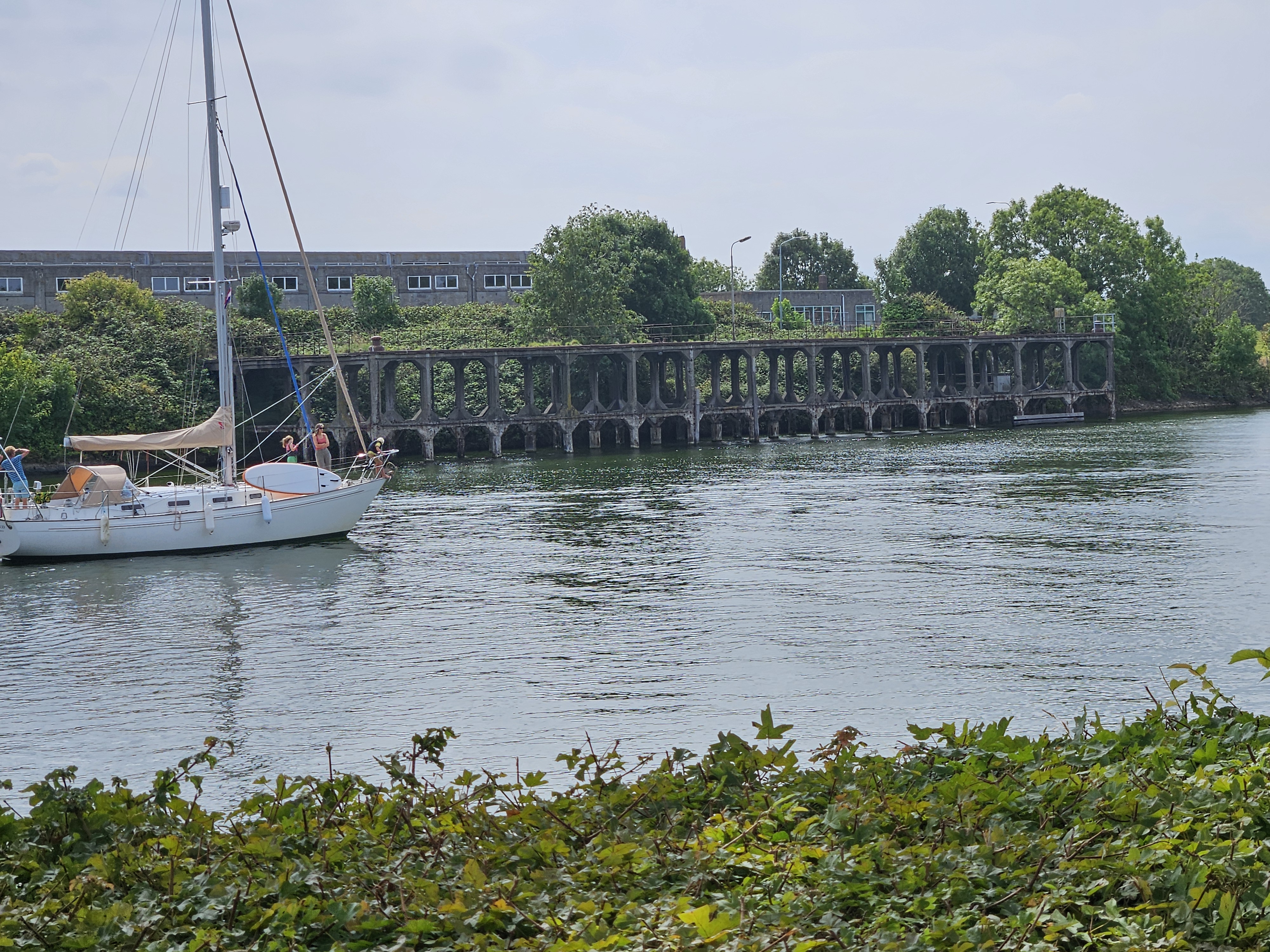
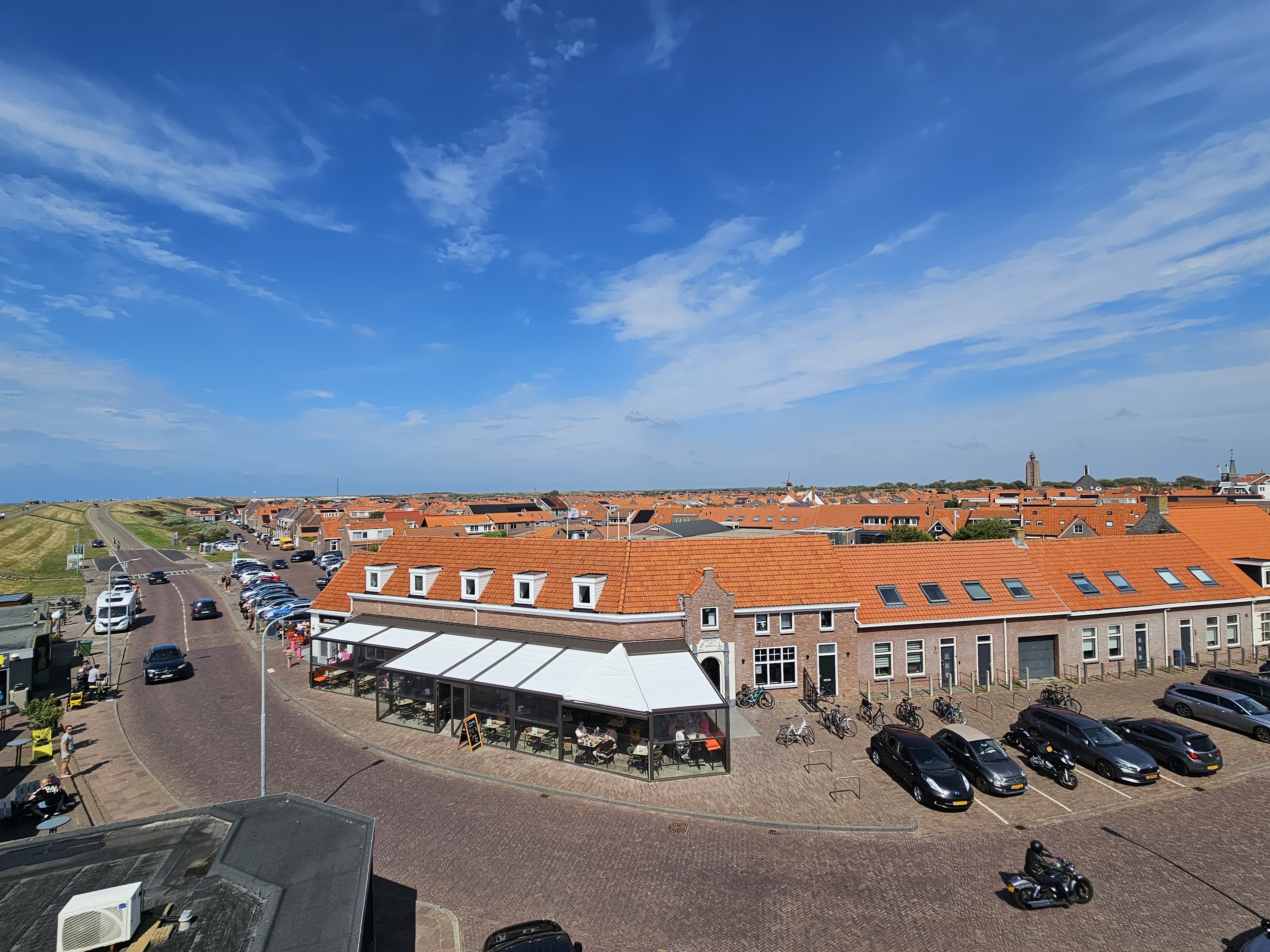
I believe I posted my last travel report quite some time ago; therefore, I have decided to pause sharing deep, tragic, and pensive ones and instead share something amusing! Although this trip could have been more enjoyable if summer had truly arrived, unfortunately, the temperature refused to rise above twenty degrees, and the wind stubbornly refused to change its direction from north to south.
Actually, we, or rather my lovely wife (!), aim to plan vacations in sunny, warm destinations—what we miss most during the year in Germany. This year, because of my health issues, she organised a trip to Holland so we could return home quickly if needed. As you likely know, good weather in northern Europe can be quite unpredictable. It often depends on luck, but unfortunately, we didn’t have any this time!
I even developed a thirty-degree fever after we ran back to our apartment in the rain and storm following dinner at a restaurant, and I was lying flat for two days!
Of course, it wasn’t all bad; we also enjoyed some sunshine, especially on my birthday. The great gods, Zeus, Poseidon, or Boreas (the god of the cold north wind and winter), protected us and allowed the sun to shine while the wind rested.
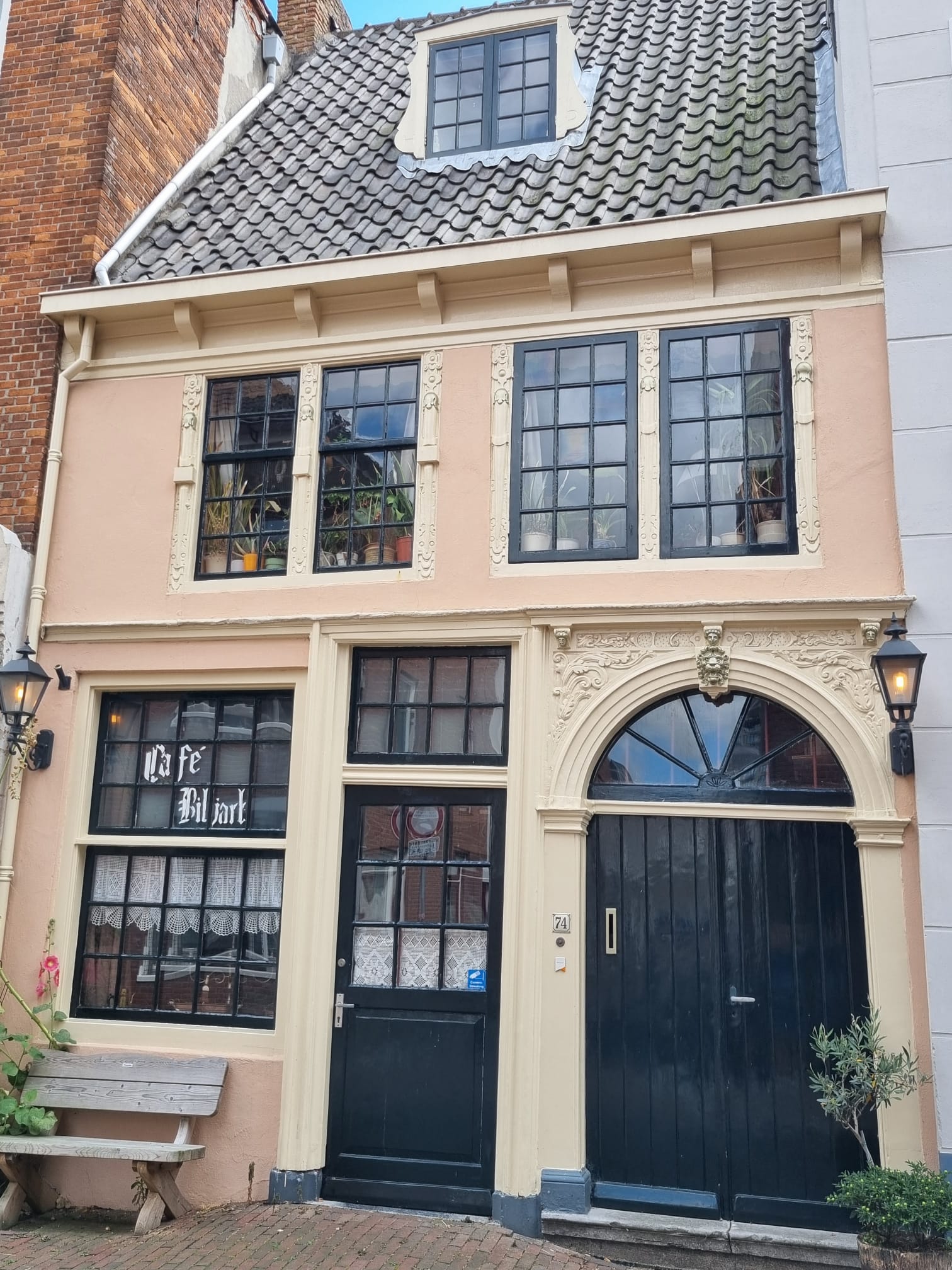
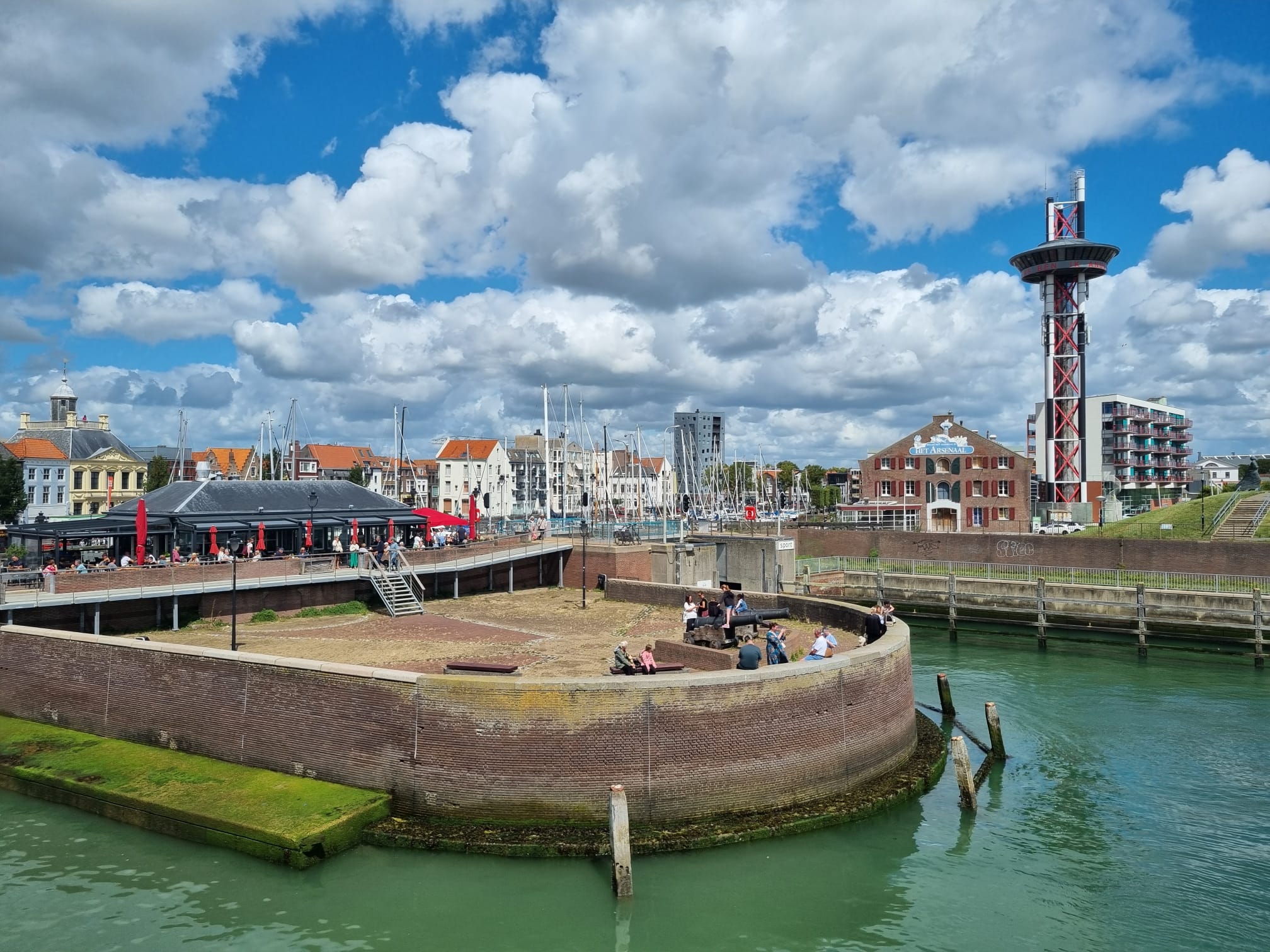
As usual, we wandered around, exploring different sites, including cathedrals, even though there were only a few in the small village of Westkapelle.
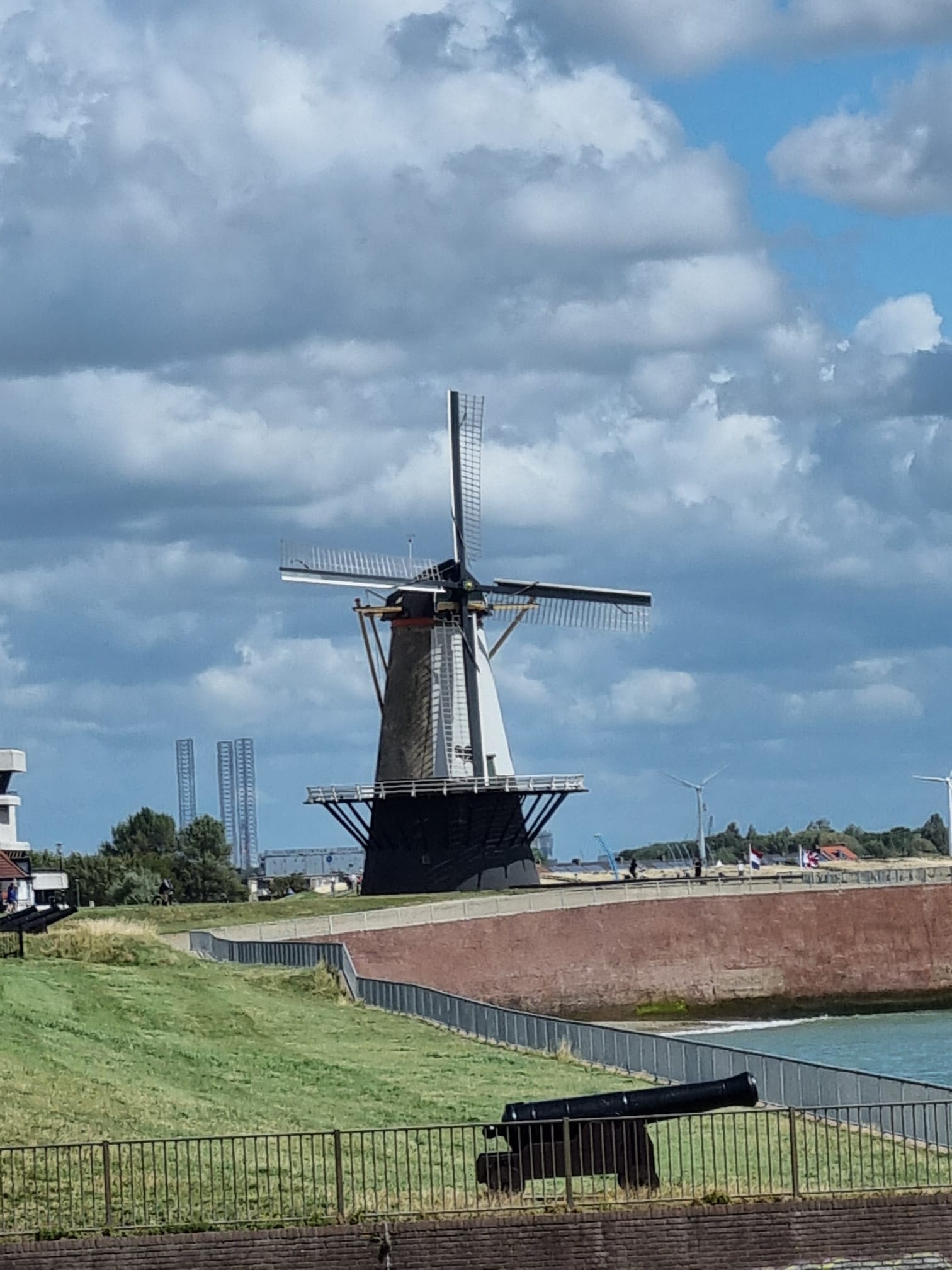
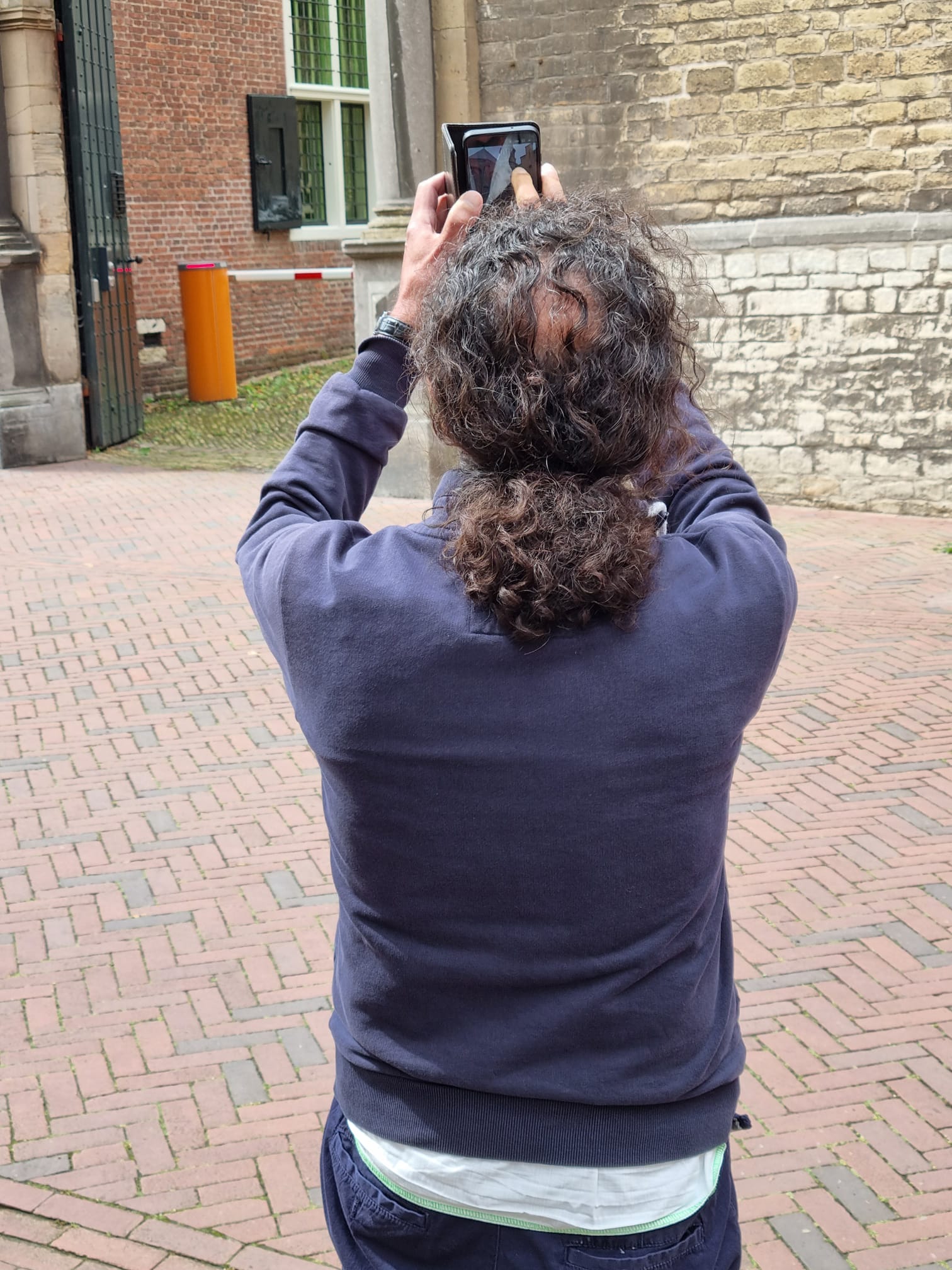
Finally, I must admit that it wouldn’t have been possible without a bike tour! And, as you might notice, I’ve lost some hair from the wind!
Wishing everyone a fantastic time! Take care of yourselves, and remember there’s a whole world beyond the internet waiting to be explored. Enjoy your treats, but be mindful not to overdo it!
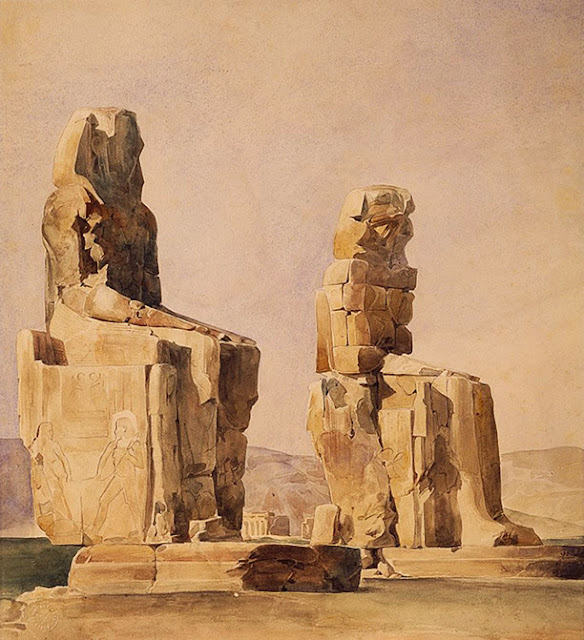
As the Greek geographer, Strabo might mean these giant volumes were singing or speaking, or, as Tacitus says, like the “sound of a human voice,” or as Pausanias evokes, the sound of “a string of a cithara or lyre that breaks.” In any case, Memnon greets each morning, at sunrise, the appearance of Eos (Dawn), his mother.
Colossi-of-Memnon-Egypt-Tours-Portal-1
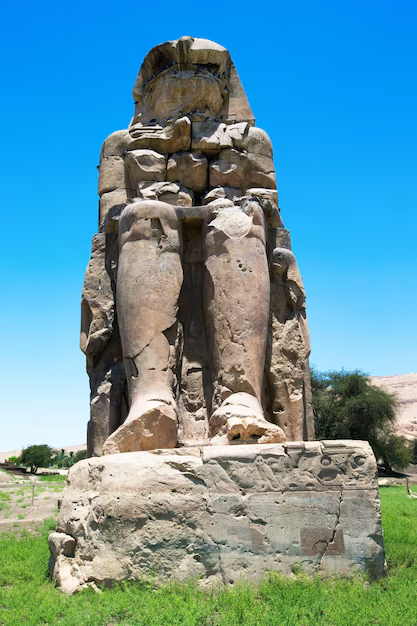
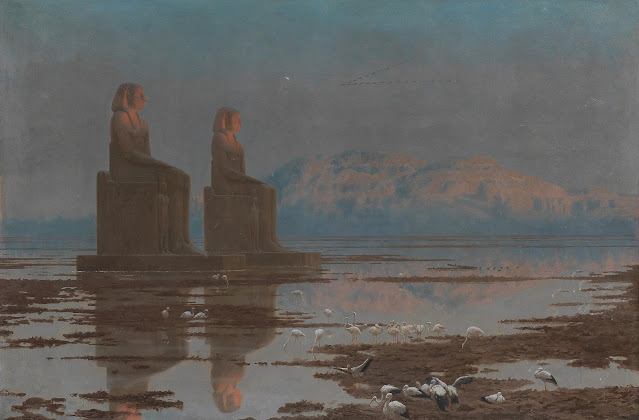
The Colossi of Memnon are two massive stone statues of the Pharaoh Amenhotep III, standing in front of the ruined Mortuary Temple of Amenhotep III, the largest temple in the Theban Necropolis. Via Wik.
Now, let’s delve into the captivating tale of these two enormous statues with sincere gratitude to Marie Grillot and the late beloved Marc Chartier.🙏💖🙏💖
It was at the time when Memnon sang…
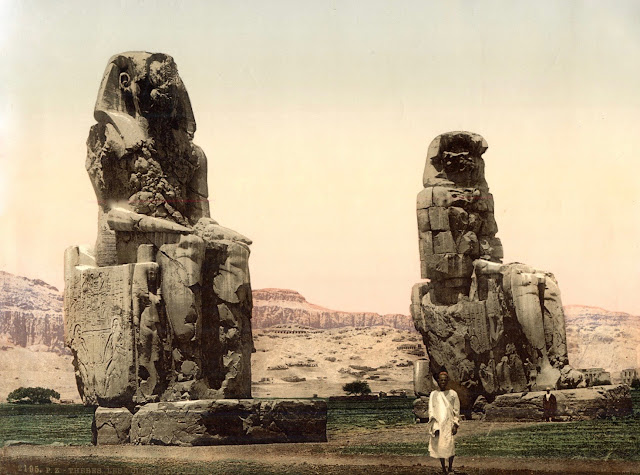
These two colossi of Amenhotep III stood in front of the 1st pylon of his temple of millions of years, the Amenophium, on the west bank of Thebes. “The Colossus of Memnon” is the one in the north (on the right); it was the only one to sing in antiquity Photochrome “The Colossi of Memnon”, Photoglob Zurich, circa 1897
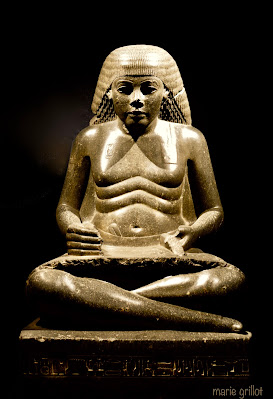
What is called “The Colossi of Memnon” are more “rightly” two monumental stone statues (between 17 and 20 m high) representing Amenhotep III, seated on his throne, facing the rising sun. They stood on the forecourt of his temple of millions of years, the “Amenophium”, on either side of the door of the first pylon. Masterfully designed by the great architect Amenhotep, son of Hapu, it was, in the middle of the 18th dynasty, the richest and largest cult complex on the West Bank.
“Nebmaâtrê” personally describes: “He made it as a monument for his father Amon, Master of the Thrones of the Two Lands. A splendid temple was made for him on the west bank of Thebes, a fortress of eternity forever, of beautiful white sandstone. Entirely covered with gold, its pavement is adorned with silver, all its doors are of electrum, built very wide, and great and perfect forever” …
Statue of Amenhotep, son of Hapu, architect of the temple of millions of years of Amenhotep III, the Amenophium, on the west bank of Thebes Luxor Museum – JE 44862
But… “sic transit gloria mundi”… Having fallen into decline and then abandonment around the 20th dynasty, its splendour has gone… Its walls and pylons of raw bricks have crumbled while its stones were reused for other buildings. The processional avenue and the surrounding fence have disappeared, the columns have collapsed, the statues have been mutilated, hammered, thrown to the ground or recovered by successors… In 27 BC, a terrible earthquake painfully weakened it, and the impact of the Nile floods was devastating. The pillaging of the 19th century, the rise of the water table and the fire of 1996 dealt it the final blows of grace…
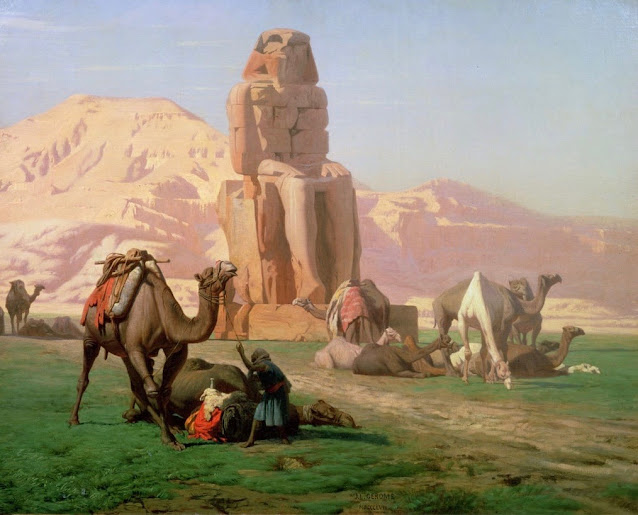
Its glorious past survived only through the presence of these two badly damaged statues for centuries. Only the northern one (on the right) will be—and must be—identified as THE “Colossus of Memnon.”
In antiquity, it was the most degraded of the two, the most cracked, and it is, in a certain way, this “sad state” that will earn it a celebrity will transcend borders… Eclipsing Amenhotep III, the sun pharaoh, the “Memnon” singing in the early morning will become a myth, a divinity!
The Colossus of Memnon, 1857, Jean-Léon Gérôme, Private collection
Indeed, the Greek geographer Strabo (64 BC—between 21 and 25 AD) notes that, according to a local legend, the statue begins to “sing” at sunrise. He also certifies having heard the phenomenon himself without being able to specify the cause. The sound is like “a noise similar to that produced by a small sharp blow.”
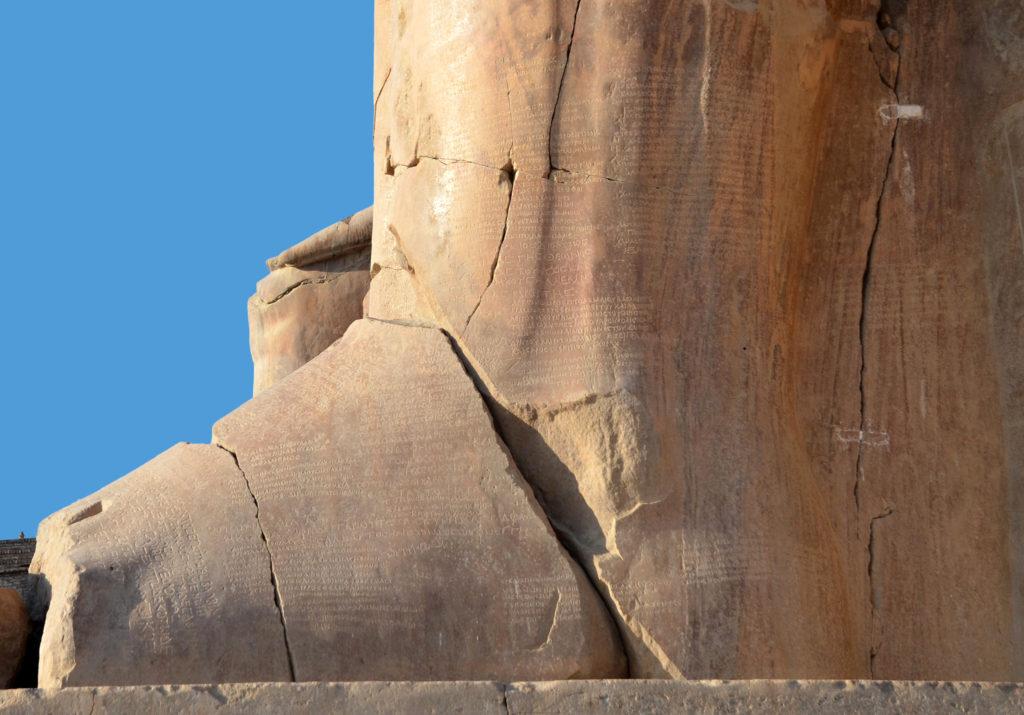
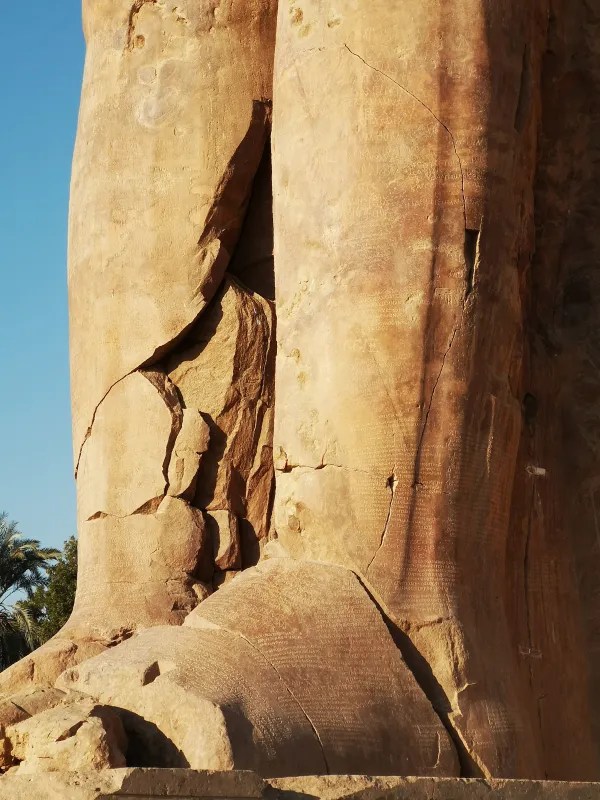
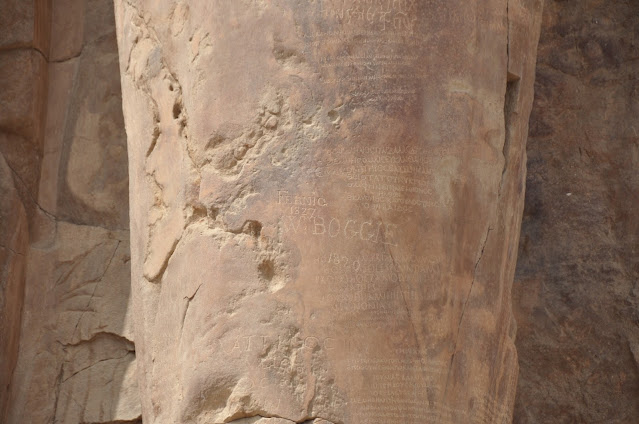
Other testimonies of this phenomenon, very often “immortalized” by graffiti on the monument, will multiply, as diverse as the human imagination can be inventive but concordant on the same observation: the colossus “speaks” or “sings.” Tacitus speaks of the “sound of a human voice,” and Pausanias evokes the sound of “a string of a cithara or lyre that breaks.” Memnon greets each morning, at sunrise, the appearance of Eos (Dawn), his mother.
Graffiti on one of the legs of the “colossus of Memnon” (the northern one, on the right). He was the only one to sing in antiquity. These two colossi of Amenhotep III stood in front of the 1st pylon of his temple of millions of years, the Amenophium, on the west bank of Thebes.
Some scholars of the Egyptian Campaign will take note of these various testimonies, privileging reason over fabrication to thwart certain stratagems and the “charlatanism of the priests” intended to feed popular credulity. “It must be noted, in general, that the statue of Memnon has been spoken, with more emphasis, the further away one has moved from the primitive institution of the cult rendered to it. Whatever the nature of the sound coming from the shattered colossus, one cannot doubt that it is the result of a pious fraud. One could indulge here in a host of conjectures, all equally probable, on the mechanism that the priests of Egypt used to produce it…” (Jean-Baptiste Prosper Jollois, Édouard de Villiers du Terrage).
Thebes. The Colossi called “of Memnon”, a drawing by Dominique Vivant Denon published in “Journey in Lower and Upper Egypt”, Paris, 1802
In the name of an “objective” science, insensitive to the impulses of popular beliefs, Jean-Antoine Letronne, member of the Committee of Historical and Scientific Works, devoted an entire study to the “vocal statue of Memnon”…
As for Baron Taylor, he wrote in 1839 with a certain clarity that “all that is mysterious in the sounds of the statue of Memnon could well have been only a simple effect of the action of the sun on the stone”…
The Colossi of Memnon, at Thebes, during the Inundation, 19th century (The Colossi of Memnon, at Thebes, during the Inundation, 19th century), lithograph by David Roberts
In 1840, in the chapter of his “General Overview of Egypt” devoted to minerals, Antoine Barthélémy Clot-Bey provided the following geological explanation: “The agatiferous siliceous breccia of Syene is a stone which is also of great interest. The statue of Memnon, so famous in antiquity, was carved from this type of breccia to the composition of which it doubtless owed the marvellous property which it enjoyed, of making harmonious sounds at sunrise”… This interpretation seems plausible, even if the provenance of the stone remains uncertain… According to Jean-François Champollion, they were “each formed from a single block of breccia sandstone, transported from the quarries of the Upper Thebaid (editor’s note: southern part of the Thebaid), and placed on immense bases of the same material”… But, according to Kent Weeks, the two statues “were sculpted in a beautiful orthoquartzite, a tough stone and very difficult to engrave, brought by boat from the nearby quarries of Heliopolis 700 km to the north (editor’s note: namely Gebel el-Ahmar), or from a quarry in the south – there is no certainty on this matter. Egyptologists believe this stone was chosen because of its red colour, associated with solar worship”.
Colossi of Memnon, 1840, Charles Gleyre Cantonal Museum of Fine Arts, Lausanne.
At the very beginning of the 3rd century, the colossus fell silent. We owe its silence to Septimius Severus, who “before the end of his journey in Egypt in the autumn of 200, wished to see the memorable Memnon and, to restore its dignity, decreed its restoration”. Several courses of blocks gave shape to the torso on which the head was placed… but “From then on, it must be believed that the ‘song’ of the son of the Dawn was never heard again. Nevertheless, his mythical fame crossed the centuries” specifies Christian Leblanc in “Le Bel Occident”…
From this long and incredible story and the various interpretations it has given rise to, there is one note on which we can only agree: the colossus who sang… has made a lot of people talk about him while associating his “twin” with his fame…
These two colossi of Amenhotep III stood in front of the 1st pylon of his temple of millions of years, the Amenophium, on the west bank of Thebes. “The Colossus of Memnon” is the one in the north (on the right); it was the only one to sing in antiquity.
Since 1998, a multidisciplinary European-Egyptian team has been working in Kom el-Hettan on “The Colossi of Memnon and Amenhotep III temple conservation project”. Led by the extraordinary Egyptologist Hourig Sourouzian, it deploys its expertise, know-how and energy to restore this temple’s dignity and grandeur. The different sectors of the Amenophium are identified, the pavements reappear, the bases of the columns are cleared, dozens of Sekhmet emerge from the ground, and the royal statues are reassembled…
Thus, It is pleasant to think that if Memnon were to feel the desire to sing again, it could only be a hymn of recognition for his rebirth!
Jean Baptiste Prosper Jollois, Édouard de Villiers du Terrage, René Edouard Devilliers du Terrage, Description générale de Thèbes : contenant une exposition détaillée de l’état actuel de ses ruines, et suivie de recherches critiques sur l’histoire et sur l’étendue de cette première capitale de l’Égypte, 1813 Jean-François Champollion, Lettres écrites d’Égypte et de Nubie en 1828 et 1829, (16e lettre), Paris, 1833 Jean Antoine Letronne, La statue vocale de Memnon considérée dans ses rapports avec l’Égypte et la Grèce – étude historique faisant suite aux recherches pour servir à l’histoire de l’Égypte pendant la domination des Grecs et des Romains, Imprimerie Royale, Paris, 1833 https://books.google.fr/books?id=k26BIIn7C5UC&printsec=frontcover&hl=fr&source=gbs_ge_summary_r&cad=0#v=onepage&q&f=false Baron Taylor, Louis Reybaud, Syria, Egypt, Palestine and Judea considered under their historical and archaeological aspect…, Paris, 1838 https://gallica.bnf.fr/ark:/12148/bpt6k1040108x.image Antoine Barthélémy Clot-Bey, General overview of Egypt, Fortin Masson et Cie Libraires Editeurs, Paris, 1840 http://www.lacabalesta.it/biblioteca/ClotBey/AperGenEgypte/clotbey1_02.html#nat_01 Jean-Antoine Lettrone, Collection of Greek and Latin inscriptions of Egypt, Royal Printing Office, 1842 André and Étienne Bernand, Greek and Latin inscriptions of the Colossus of Memnon, IFAO, Cairo, 1960 André Bernand, The singing statues of Amenhotep III, Clio, 2001 https://www.clio.fr/BIBLIOTHEQUE/pdf/pdf_les_statues_chantantes_damenophis_iii.pdf Amenophis III, the sun pharaoh, Réunion des musées nationaux, 1993 Kent Weeks, Illustrated Guide Luxor, tombs, temples and museums, White Star Publishers, 2005 Galand David, The song of the statue: the myth of Memnon in the 19th century, Loxias 22, 2008 http://revel.unice.fr/loxias/index.html?id=2439. Christian Leblanc, Angelo Sesana, The Beautiful West of Thebes Imentet Neferet, From the Pharaonic era to modern times – A history revealed by toponymy, L’Harmattan, 2022 The colossi of Memnon and Amenhotep III temple conservation project – Hourig Sourouzian, articles available on Academia https://independent.academia.edu/HourigSourouzian
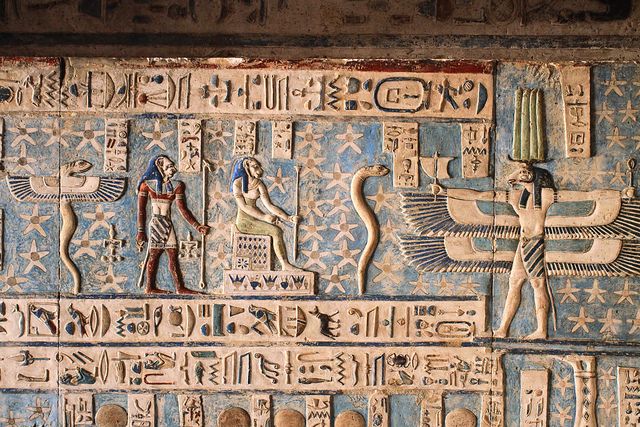
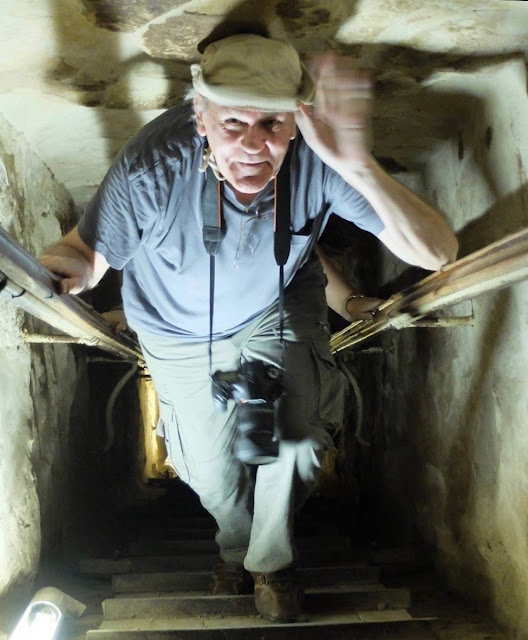
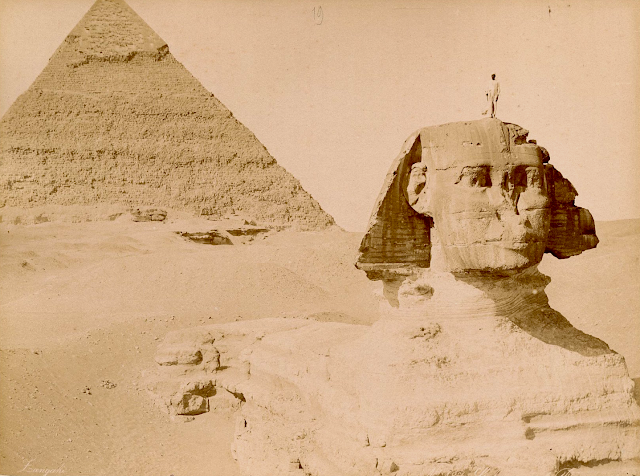
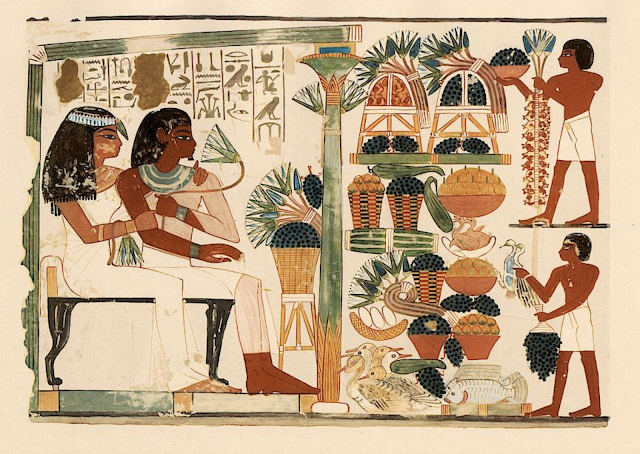
1-The Great Sphinx in Egypt is believed to have the face of Pharaoh Khafre — 2-Dendera: Egypt’s Best-Preserved Temple Complex — 3-View of the west wall, depicting Nakht and his wife, Tawy, seated before offerings (top left), Nakht hunting in the marshes (top right), Nakht and Tawy receiving the produce of the grape harvest (bottom left), and grape harvesting, winemaking, bird capturing, and plucking (bottom right) (Source: OsirisNet).
I decided to share this journal post about three short reports by great Egyptologists today in memory of Marc Chartier, an excellent journalist, human and friend whom I enjoyed and learned a lot from his works for a long time, particularly from his fascinating journey reports.
Marc Chartier (Guinevert-Durtal, 23-2-1940 – Argenteuil, 27-7-2024) Journalist, passionate about Egypt in general and the pyramids in particular, creator of the blogs: “Pyramidale”, “L”Egypte entre Guillemets”, “Egyptophile” and founder of the press review “Egypte-actualités.”
With forever thanks and immense gratitude to Marie Grillot, as she wrote in her post: During these periods of questioning that assail us all, Marc refocused on this sentence, full of wisdom, which is, in fact, an African proverb taken up by Aimé Césaire: “When you don’t know where you’re going, look where you come from”… These words brought him back to Guinevert, in Sarthe, to his father, to this little brother who both disappeared too soon and especially to “Mamani” who held her sons so tightly against her during the bombings…
marc sa vie Marc Chartier (Guinevert-Durtal, 23-2-1940 – Argenteuil, 27-7-2024) Journalist, passionate about Egypt in general and the pyramids in particular, creator of the blogs: “Pyramidale”, “L”Egypte entre Guillemets”, “Egyptophile”, and founder of the press review “Egypte-actualités”
Let’s join these amazing trips! RIP Marc.💖🙏💖
A day in Egypt with… Mohammed Ali Kamy, Jean Capart, Léon Labat
“At the foot of the pyramids stands the Sphinx, guardian of the sacred enclosure. It is rightly considered the most famous monument, after the pyramids, of this vast field of the dead, the Giza plateau. The Sphinx is a colossal statue carved in the rock that borders the desert plateau. It must originally have been a rough rock, to which nature had given the vague contours of a crouching animal. The artists of the Old Kingdom gave it the form of a lying lion, a symbol of physical strength, and sculpted a human head, an emblem of mental strength, that of the king, as indicated by the headdress decorated with the uraeus. This fourth wonder of Giza is located north of the Valley of King Chephren temple. (…)
An imposing expression of strength and grandeur remains in the whole, even after the deterioration that the monument has undergone over time: the beard and nose have been broken (part of it is preserved in the British Museum), the neck has shrunk; the mouth smiles, the eyes look into the distance, piercing infinity and the whole face bears the imprint of Egyptian beauty. The red tint that enlivened his features has been erased almost everywhere. No work coming from the hand of men offers more strength or sovereign grandeur. (…) What is he doing there, this impassive being under the sky, lost in solitude? What is he doing there, this being who defies time and seems to say to passers-by: “You are all mortal, I am eternal”?
The ancient historians who visited Egypt gave no information or description about it. All their attention was devoted to the pyramids. Was the Sphinx already buried in the sand since it did not attract the attention of historians? To our knowledge, the first time it was dug out of the sand was under the New Kingdom. At that time, the ancient Egyptians who lived in the vicinity of the necropolis of Giza worshipped it as an image of the God Ra under the name of Hor-em-aches, that is to say, “Horus in the horizon”, or the rising sun. The stelae discovered near the great pyramids prove that the kings sought this region of the suburbs of Memphis for hunting wild beasts and gazelles. For this reason, the ancient Egyptians called it The Valley of the Gazelles. (…) Despite the mutilations of time and men, the Sphinx retains a mighty and terrible serenity that strikes and seizes to the depths of the heart. This calm and impassive figure, whose smile sometimes seems filled with disdain and pity, bears the imprint of great wisdom. His eyes fix the infinite on the side where the sun, creator of all things, rises as if he wanted to be the first to discover, in the morning, over the valley the apparition of Re. The whole evokes a sort of mystery, and the Sphinx retains a sovereign expression of strength and grandeur even in his distress. Faithful guardian of the sacred enclosure, he always watches over the foot of the Pyramids of Giza.
The artist who conceived this prodigious statue was already a complete artist and master of its effects in the beauty of the type, the grace of the expression and the perfection of the work. One never forgets, when one has seen them, the intensity and the depth of thought of these eyes that look so far beyond the reality of things. It imposes an indefinable fear, so much that its face remains impenetrable, and its empty eyes seem to keep the vision of a crowd of distant, unknown and terrible things. How many people have not passed before it, then vanished into time? How many, among humans, are in the presence of this symbol of mystery, and are they not tempted to say to it: “Ah, if you could speak and tell what these eyes have seen that look so far beyond the reality of things!” The Sphinx, Hor-em-aches, God of the Rising Sun, seems to be the ever-living soul of old Egypt.”
(extract from “La Revue du Caire”, n° 102, September 1947)
**********
A day in Egypt with… Léon Labat (1803-1847), a great traveller and former surgeon to the Viceroy of Egypt
Bonfils, low relief of the Temple of Denderah, circa 1880
“One of the most beautiful privileges of architecture is to reveal to posterity the particular character of each person. That of the Egyptians was austere like their customs: the style was simple but imposing and sublime. Their constructions were neither frivolous nor ephemeral like most of ours. Eternity was, for them, a cult whose dogmas they inscribed on the living pages of their gigantic monuments. Everything about them bore the imprint of a noble and thoughtful character. These people, who constantly meditated on the eternal works of God, tried to imitate them as if to come closer to their ancient origin. These monuments, which they would have liked to make imperishable, were to be the object of religious contemplation for present generations and posterity. Greece, Rome, and later our modern Athens erected temples to the gods, palaces to the kings, and circuses for the people’s amusement. To this triple purpose of utility, the Egyptians knew how to add another which constitutes the specific character of their architecture: their monuments, with broad bases and large surfaces, whatever their destination, were arranged in such a way as to receive their hieroglyphic inscriptions.
A religious and conservative principle thus attaching itself to the buildings which were erected from generation to generation, the long valley of the Nile was soon dotted with an infinite number of temples, mausoleums, obelisks, palaces and aqueducts which led water into all the cities. A noble sentiment of religious piety and respect for the dead made them undertake the most prodigious constructions which human power has ever attempted: their masses, which rose up to the heavens, gave birth in the spirit of these populations a feeling of meditation and recollection which we ourselves have deeply felt at the sight of the colossal pyramids of Memphis. Not content with honouring the gods and the memory of great men by erecting monuments to them, they also wanted to give the mortal remains of their parents an asylum of rest and eternal preservation: immense hypogea were dug into the sides of the mountains and into the bosom of the earth to house innumerable mummies which were for them a sort of protest against nothingness. All the actions of these virtuous people constantly recalled the worship of the divinity and the respect for the dead. This respect was such that the Egyptians buried in the tombs of their ancestors the different objects they had loved and the instruments that had contributed to their illustriousness. Finally, they pushed their gratitude for the works of God to the point of embalming and housing in the hypogea of various species of animals. One would be tempted to believe that they wanted to extend the dogma of immortality to all the beings that heaven had brought forth on the fortunate soil of Egypt.”
(extract from Ancient and Modern Egypt, 1840)
**********
A day in Egypt with… Jean Capart (1877-1947), Belgian Egyptologist
Tomb of Nakht at Thebes by Norman de Garis Davies
“Without wishing to settle the most severe problems of aesthetics, let us now ask ourselves if it is impossible to point out in a few simple facts what one could call the awakening of the feeling of beauty among the Egyptians. The first noticeable characteristic to underline is their extraordinarily developed taste for floral decoration. The Egyptians passionately loved flowers, yet the Egyptian flora was not wealthy. They used the lotus for the most diverse uses on feast days, hung garlands at the top of walls, hung the cornice of kiosks and canopies, surrounded vases, and made necklaces and crowns with it. Decorative art, here, only had to copy the usual forms to produce fixed decorations of great richness. Jewellery will remain faithful for a long time to nature’s forms, as rich as they are uncomplicated. Isn’t this love of flowers that can also be linked to the taste for brilliant and coloured materials that will be manifested in the pieces of jewellery with inlays, in the furniture combining materials of various colours, in the carpets and mats, whose repertoire is hugely varied? A thousand clues reveal to us the taste of the Egyptians for grace, elegance, and slenderness in feminine forms. Industrial art, in particular, has drawn from its remarkable types that transform an object of vulgar utility into an object that is truly beautiful or simply pleasant to look at. When the ancient workman gave a container for make-up the form of a young girl carrying a vase on her shoulder or of a swimmer who has seized a duck, he obviously wanted to do more than provide his customer with a container for make-up. The original aim has almost disappeared, and the manufacturer’s intention has focused primarily on creating a pretty object of nature to tempt the elegant woman whose artistic delicacy is thus awakened. In this case, we find ourselves in the presence of an artist who creates beauty and, of equal importance, of a clientele demanding artistic productions. When the Egyptians reproduced grotesque figures, such as that of the god Bes or foreign captives, they intended to provoke laughter or to bring out by contrast the superiority of beautiful and graceful forms.”
(extract from Egyptian Beauty, Advertising Office, 1942)
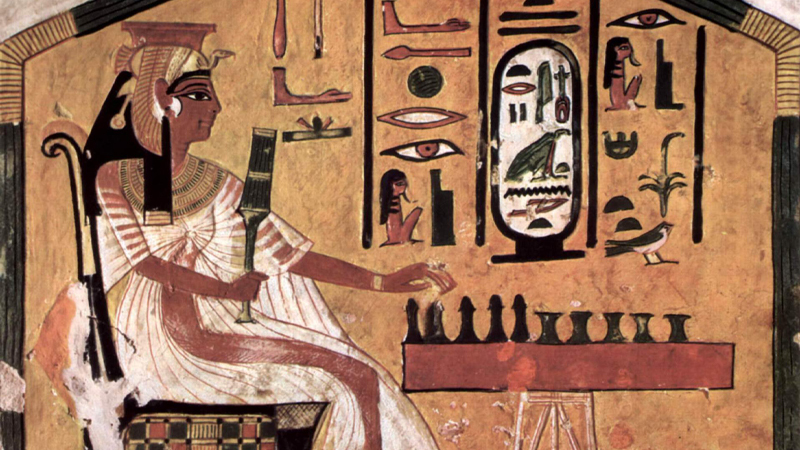
The ancient Egyptians had many beautiful women, including Queen Nefertari. She was known as “the most beautiful of them all” and was one of the most beloved queens of ancient Egypt, reigning during the 19th Dynasty. At the heart of the exhibition is Queen Nefertari, who was renowned for her beauty and prominence. She was called “the one for whom the sun shines” and was the favourite wife of Pharaoh Ramesses II.
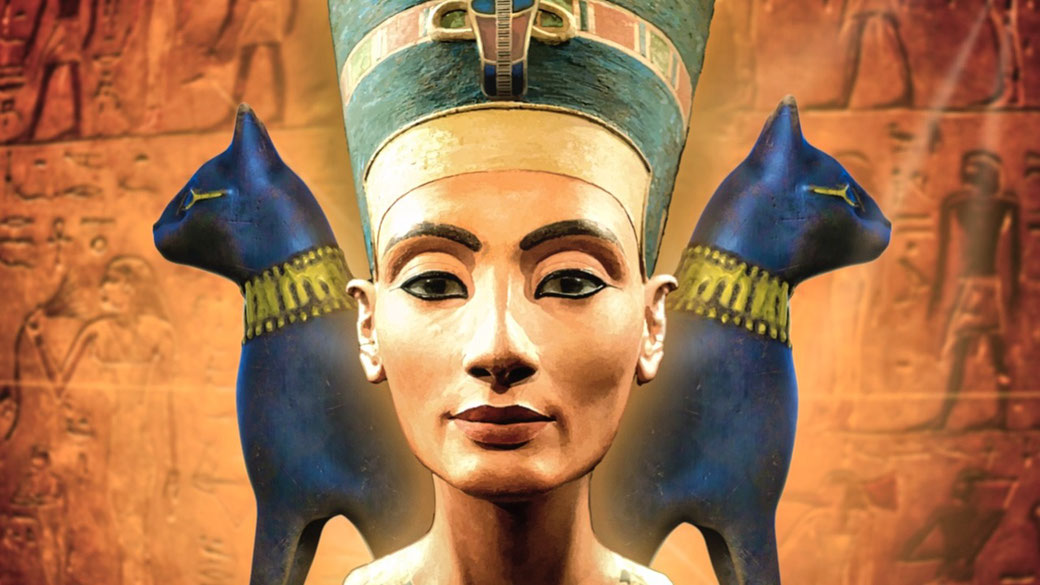
One of the most famous figures from ancient Egypt is Queen Nefertiti. Her name, “the beautiful one has come,” has solidified her status as an iconic figure from the 14th century BC. She lived alongside her husband, Pharaoh Akhenaten, during the New Kingdom. Nefertiti’s legacy is steeped in mystery and fascination, as her renowned beauty and significant cultural impact have left a lasting impression.
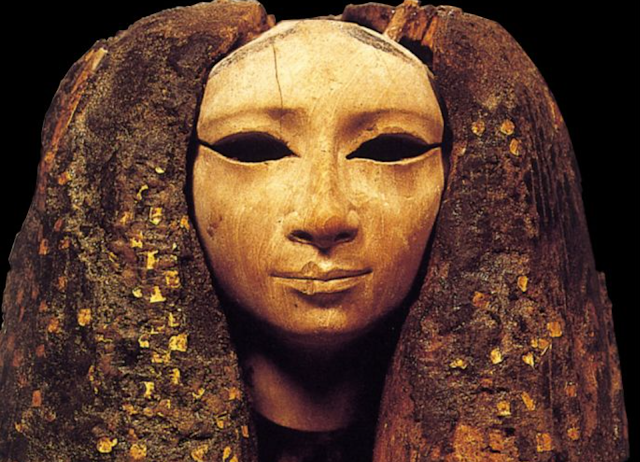
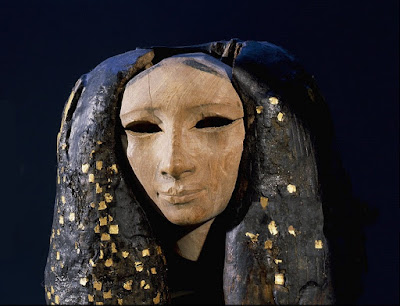
Head of the female statue – painted wood, gold leaf – Middle Kingdom – 12th dynasty discovered in 1907 during excavations in the area of the pyramid of Amenemhat I in Lisht by the Metropolitan Museum of Art Expedition, New York – Egyptian Museum, Cairo – JE 39390
The face is noble and perfectly symmetrical. The veins of the light wood give it a feeling of life. The general expression is gentle, calm, and peaceful.
The large almond-shaped eyes, of which only the orbits remain, are absent… and, despite this, they seem to question us… What presence did they give to the face? What did they reveal? Did the glass paste and rock crystal subtly and luminously animate their pupils? These questions remain forever unanswered.
The eyebrows are treated in relief, while the shadow line is treated in hollow. The nose is well-proportioned, and the lips are thin. The slight injury they suffered reminds us of the ravages of time.
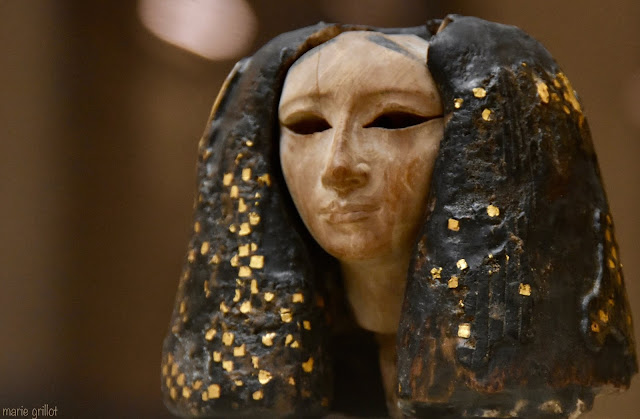
Head of the female statue – painted wood, gold leaf – Middle Kingdom – 12th dynasty discovered in 1907 during excavations in the area of the pyramid of Amenemhat I in Lisht by the Metropolitan Museum of Art Expedition, New York – Egyptian Museum, Cairo – JE 39390
What, obviously, impresses in this head of barely more than 10 cm is the imposing wig that generously frames it and must have reached the level of the shoulders, which have now disappeared. “The enveloping mass of the added hair is worked in a darker wood and blackened with paint; it is fixed to the head in lighter wood, using tenons”, specify Mohamed Saleh and Hourig Sourouzian in their “Official Catalogue of Egyptian Museum in Cairo. The deep black of the wig is enhanced with small squares of gold leaf, which have so many luminous touches. On the other hand, Rosanna Pirelli analyzes in “The Wonders of the Egyptian Museum in Cairo”: “The fact that the wig is particularly fine at the top, compared to the width of the lateral parts, suggests the presence of a crown or a diadem.”
Head of the female statue – painted wood, gold leaf – Middle Kingdom – 12th dynasty discovered in 1907 during excavations carried out in the area of the pyramid of Amenemhat in Lisht by the Expedition of the Metropolitan Museum of Art in New York – Egyptian Museum in Cairo – JE 39390
Who was this beautiful lady? A queen, a princess, a prominent person at the sovereign’s court? The work’s quality and the artist’s mastery, indeed, suggest that it may have come from the pharaoh’s workshops. Unfortunately, this face, which was that of a full-length statue, does not allow us to identify it.
This head—often used as a model to illustrate the beauty of ancient Egyptian women—was discovered in 1907 in Lower Egypt, precisely in Lisht, between Daschour and Meidoum.
This female statue head – painted wood, gold leaf – Middle Kingdom – 12th dynasty discovered in 1907 during excavations in the area of the pyramid of Amenemhat I in Lisht by the Expedition of the Metropolitan Museum of Art in New York – Egyptian Museum in Cairo – JE 39390 – illustrates numerous works
At the beginning of his reign, Amenemhat I “left Thebes to found a new city at the entrance to the Fayoum, named ‘Amenemhat-se-seizit-des-Deux-Terres’ not far from the current site of Lisht (“Pharaonic Egypt, history, society, culture”). In “L’Egypt Restorée”, Sydney Aufrere and Jean-Claude Golvin thus analyze the reasons which led to this “relocation”: “not only to break away from Thebes and the supporters of the last Montouhotep but also to keep an eye on the north and the Asian border, the city became the main royal residence during the 12th and 13th dynasties… They add, “Today we cannot give it any other reality and archaeological dimension than those which associate it with the two funerary monuments today reduced to two mounds: the pyramids of Amenemhat I and Sesostris I.”
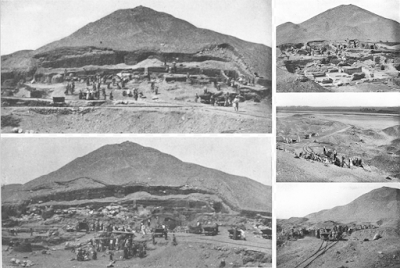
Excavation site of the Metropolitan Museum of Art Expedition in New York at the Lisht site in 1907 during the discovery of the head of a female statue in painted wood with gilding (JE 39390) from the 12th dynasty
In 1882, Gaston Maspero, successor to Auguste Mariette at the head of the antiquities service, undertook excavations on the site, work that allowed the identification of the pyramids. For practical reasons (there was sometimes up to 11 m of water, he relates), however, he was unable to go as far as the burial chamber. The study of the site was then taken up in 1894-1895 by the French School of Cairo (which, in 1898, became the French Institute of Oriental Archeology).
Then, in 1906, when Gaston Maspero returned to the directorship of antiquities, the Metropolitan Museum of Art in New York requested the concession. He obtains it and then settles in for several seasons of excavation.
Head of the female statue – painted wood, gold leaf – Middle Kingdom – 12th dynasty discovered in 1907 during excavations in the area of the pyramid of Amenemhat I in Lisht by the Metropolitan Museum of Art Expedition, New York – Egyptian Museum, Cairo – JE 39390
Indeed, the Egyptian department of the MMA was created on October 15, 1906, and its administrators, as well as its brand new director, Albert Morton Lythgoe, saw the point of enriching their knowledge, experience, and collections.
Thus began their first campaign, financed by private funds, under the joint leadership of the director, Herbert Eustis Winlock (Harvard) and Arthur C. Mace (Oxford).
One hundred fifty workers were recruited: some, already ‘trained’ for excavations, came from Upper Egypt, others from neighbouring villages; their number will continue to increase over the years.
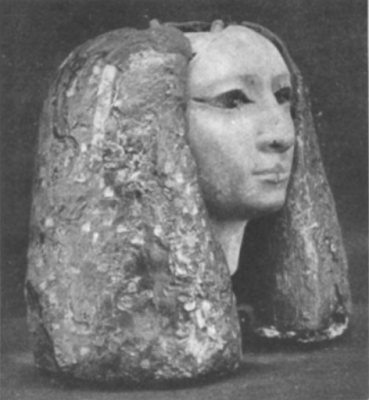
Head of the female statue – painted wood, gold leaf – Middle Kingdom – 12th dynasty discovered in 1907 during excavations in the area of the Amenemhat pyramid in Lisht by the Metropolitan Museum of Art Expedition, New York – Egyptian Museum, Cairo – JE 39390 reproduced for the first time in “The Metropolitan Museum of Art Bulletin” n° 10 – Oct. 1907
Albert M. Lythgoe does not explain the exact circumstances of the head’s discovery. In the October 1907 bulletin of the MMA, although it appears in a photo with the caption “figure 2. Head of wooden statuette from Lisht, 12th dynasty”, no details are given on the place where it was found. The author relates that the excavations concerned two sectors: the cemetery located west of the pyramid of Amenemhat, which revealed tombs of important figures of the 12th dynasty, as well as a sector situated on a promontory. Over a hundred tombs have been unearthed for most of the 12th dynasty.
As the head is illustrated opposite this paragraph, we can think that its discovery is linked to these areas where dignitaries, relatives, and ruling family members had the honour of resting not far from the pharaoh.
It should be noted that her arms were found two years later, in Situ, by Herbert Eustis Winlock…
This head is displayed at the Egyptian Museum in Tahrir Square in Cairo under number JE 39380.
The head of a woman surrounded with a placed hairdressing consists of two pieces of blackened wood, inlaid with gold, Musée égyptien du Caire https://egyptianmuseumcairo.eg/artefacts/head-of-a-woman/ The Metropolitan Museum of Art Bulletin, Vol. 1, No. 12, Nov. 1906 http://www.jstor.org/stable/i3634, http://www.jstor.org/stable/i363438 A. M. Lythgoe, The Egyptian Expedition, The Metropolitan Museum of Art Bulletin, Vol. 2, No. 4, Apr. 1907 https://www.jstor.org/stable/i363442 The Egyptian Expedition, Albert M. Lythgoe, The Metropolitan Museum of Art Bulletin, Vol. 2, No. 7, Jul. 1907, http://www.jstor.org/stable/3253292 The Egyptian Expedition, Albert M. Lythgoe, The Metropolitan Museum of Art Bulletin, Vol. 2, No. 10, Oct.1907 https://www.jstor.org/stable/3253176?seq=1#page_scan_tab_contents Mohamed Saleh, Hourig Sourouzian, Catalogue officiel du Musée égyptien du Caire, Verlag Philipp von Zabern, 1987 Sydney Aufrère, Jean-Claude Golvin, L’Egypte restituée – Tome 3 – Sites, temples et pyramides de Moyenne et Basse Égypte, Editions Errance, 1997 Christiane Ziegler, L’Art égyptien au temps des pyramides, Réunion des Musées Nationaux, 1999 Francesco Tiradritti, Trésors d’Egypte – Les merveilles du musée égyptien du Caire, Gründ, 1999 Guide National Geographic, Les Trésors de l’Egypte ancienne au musée égyptien du Caire, 2004 Pierre Tallet, Frédéric Payraudeau, Chloé Ragazzolli, Claire Somaglino, L’Egypte pharaonique, histoire, société, culture, Armand Colin, 2019
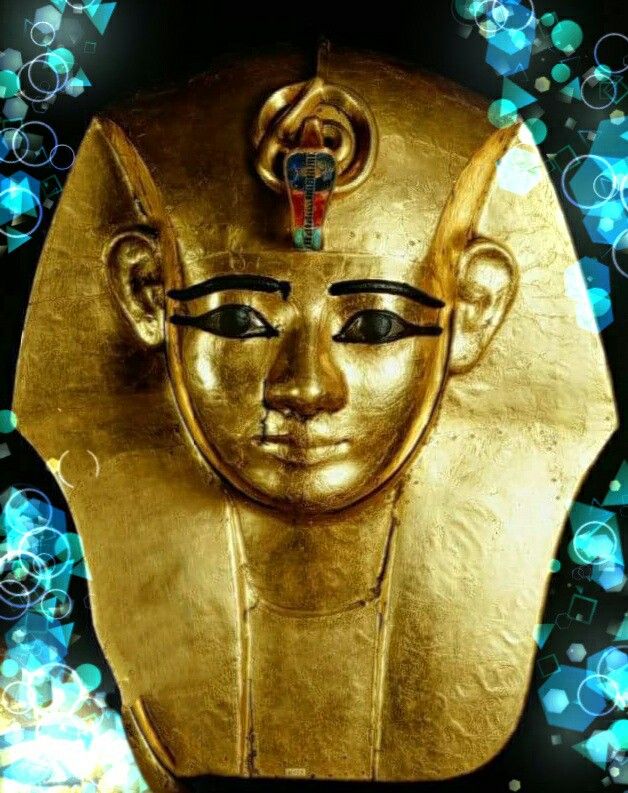
Usermaatre Amenemope was an ancient Egyptian pharaoh of the 21st Dynasty who ruled between 1001 and 992 BC or 993 and 984 BC. His tomb is one of only two entirely intact royal burials known from ancient Egypt, the other being that of Psusennes I. “His Instruction” (That is about thirty chapters (more than ten commands!)) is a literary work from ancient Egypt, most likely composed during the Ramesside Period. It contains thirty chapters of advice for successful living, attributed to the scribe Amenemope, son of Kanakht, as a legacy for his son.
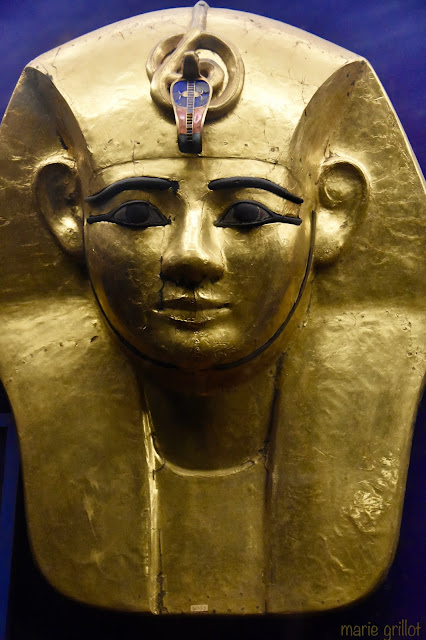
Treasure of Tanis, the golden mortuary mask of Pharaoh Amenemope. Egypt Musem
The pharaohs of Egypt were associated with Horus since the pharaoh was considered the earthly embodiment of the god. From around 3100 BCE, he was given a memorable royal “Horus name.” The falcon, representing divine kingship, symbolized the king as the earthly manifestation of Horus.
Here is the captivating story, by the brilliant Marie Grillot, of this incredible discovery.💖🙏
A falcon carrying Amenemopé’s cartridges in its talons
Falcon pendant – gold and cloisonné glass paste 21st Dynasty – reign of Amenemopé (c. 1000 BC) from Tanis, the tomb of Amenemopé – NRT III – discovered by Pierre Montet on April April 16 on display at the Egyptian Museum in Cairo – JE 86036 (museum photo)
In May 1929, the Egyptian government awarded Pierre Montet the concession for Tanis, now known as “Sân el-Hagar”, which lies in the “Tanitic branch” of the Nile Delta, over 100 km northeast of Cairo.
In 1722, Père Sicard identified this city as the ancient Tsa’ani” (“Tso’an” in Hebrew, “Tjaani” for the Copts, Greekized as “Djanet”). The scholars of the Commission d’Egypte partially excavated it, first by Jean-Jacques Rifaud (on behalf of consul Drovetti) and then by Auguste Mariette.
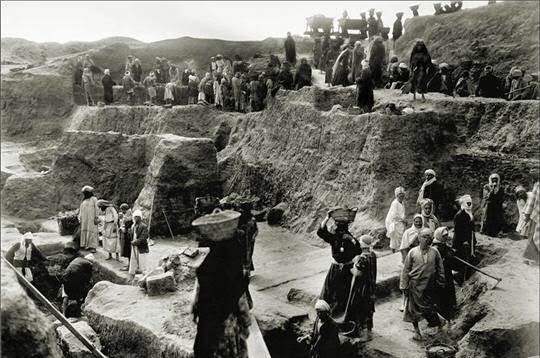
Pierre Montet’s excavations at Tanis
Its ruins, covering more than 400 hectares, witness its “activity” from the Old Kingdom to Roman times. However, the rulers of Dynasties XXI to XXIII marked its golden age by choosing it as their religious and funerary capital. By mirror effect, it became the “Thebes of the North”…
Pierre Montet’s team, summarily installed on this isolated and desolate site, worked with patience and perseverance for around ten years before the time came for the “rewards”. It was inaugurated in March 1939 with the discovery of the tomb of Chechonq II… From then on, the necropolis would yield many other treasures…
Elevation view of tomb NRT III containing the tombs of Psusennes I, his wife Moutnedjemet, then their son Amenemopé, another son of king Ânkhefenmout, the king’s chief general Oudjebaoundjed, and in the antechamber, the sarcophagus of Sheshonq II – Royal Necropolis of Tanis
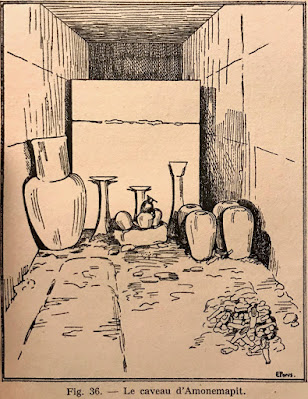
Thus, in “Tanis – Twelve years of excavations in a forgotten capital of the Egyptian Delta”, the Egyptologist Pierre Montet recounts the extraordinary day of the discovery of the tomb of Pharaoh Amenemopé: “The entrance was opened on April April 16). His Majesty King Farouk, who had arrived the day before in Saan, where he had erected a city of tents, was present, as was Canon Drioton, Director of the Egyptian Antiquities Service, and a young Egyptian Egyptologist, Professor Abou Bekr. The vault was furnished in much the same way as that of Psousennès: a granite sarcophagus at the bottom, canopic vases, metal vases, a large sealed jar, funerary statuettes and a vast gilded wooden chest that had collapsed due to the effects of time and humidity in the front half. Once these objects had been safely removed, the sarcophagus lid was placed in their place. Much less opulent than Psousannes, the new ruler had made do with a single stone sarcophagus and a wooden anthropoid coffin lined with gold. Wood was reduced to almost nothing. The gold plates were removed. Needless to say, the mummy had suffered enormously. His ornaments, less numerous than those of Psousennès, nevertheless constitute a wonderful collection: a gold mask, two necklaces, two pectorals, two scarabs, lapis and chalcedony hearts, bracelets and rings, a large cloisonné gold falcon with outstretched wings…”.
Falcon pendant – gold and cloisonné glass paste 21st Dynasty – reign of Amenemopé (c. 1000 BC) from Tanis, the tomb of Amenemopé – NRT III – discovered by Pierre Montet on April April 16 on display at the Egyptian Museum in Cairo – JE 86036 (museum photo)
The hawk, which seems to soar powerfully into the sky, is 10.5 cm high and 37.5 cm wide. The head and legs are in gold, while the rest of the body is in gold cloisonné with pâte de verre in shades of green, perfectly simulating the shimmer of the feathers.
In “Les trésors du musée égyptien”(The Treasures of the Egyptian Museum), Silvia Einaudi describes it as follows: “The falcon is depicted in flight with its wings spread. The head, turned to the left, is made of solid gold. The beak, eye, neck and decorative motif on the cheek are in dark pâte de verre. The raptor’s wings, body and tail are executed using the cloisonné technique: glass paste in delicate shades of pink and green is inlaid with gold, giving life to a simple polychromy. The wing feathers radiate outwards, forming two rows. On the other hand, the body is decorated with a teardrop motif that continues right down to the tail. The legs, also in solid gold, hold the ‘shen’ signs, a symbol of eternity, to which two gold plates bearing the sovereign’s name are attached. The hieroglyphs inside the cartouches are executed in coloured glass paste inlaid with gold. The plate on the right bears the pharaoh’s coronation name: ‘Usermaatra Setepenamon, beloved of Osiris and Ro-Setau (Memphis necropolis)’; on the left, his birth name: ‘Ménémopé Meramon, beloved of Osiris, lord of Abydos'”.
Amenemopé’s vault at its opening – Drawing by E. Pons Source: Pierre Montet, “Tanis”, Payot, 1942
Amenemopé, pharaoh of the 21st Dynasty, reigned from Tanis around 1001-992 BC. The successor of Psusennes I, he was, as the book mentioned above states: “buried in the latter’s tomb, in a granite-covered room originally created to house the remains of Moutnedjemet, wife and sister of Psusennes I”. We can only wonder why this small vault was chosen as his burial place when he “had” his own tomb referenced NRT IV (NRT = Nécropole Royale de Tanis).
Face of the pharaoh Amenemopé – gold leaf (upper surviving part of his gilded wooden sarcophagus) 21st Dynasty – reign of Amenemopé (c. 1000 BC) from Tanis, the tomb of Amenemopé – NRT III – discovered by Pierre Montet on April April 16 on display at the Egyptian Museum in Cairo – JE 86059
On May 3, May 3, in a truck protected by the army, Amenemopé’s treasure made its way to the Egyptian Museum in Tahrir Square. The falcon-shaped pendant was registered in the Journal des Entrées under reference: JE 86036.
As for Pierre Montet’s team, the dramatic events of the Second World War forced them to end their quest for the past of Tanis and turn their attention to the tragic present. Excavations will not resume until the end of the conflict…
The Hawk of King Amenemope http://www.globalegyptianmuseum.org/record.aspx?id=15530 Pierre Montet, Tanis – Twelve years of excavations in a forgotten capital of the Egyptian Delta, Payot, Historical Library, 1942 Pierre Montet, The royal necropolis of Tanis according to recent discoveries, Reports of the Academy of Inscriptions and Belles-Lettres sessions, 89th year, N. 4, 1945. pp. 504-517, Perseus https://www.persee.fr/doc/crai_0065-0536_1945_num_89_4_77901 Georges Goyon, The discovery of the treasures of Tanis, Pygmalion, 1987 Jean Yoyotte, Tanis l’or des pharaons, exhibition catalog Paris, National Galleries of the Grand Palais, March 26 – July 20, 1987, Association Française d’Action Artistique, 1987 Henri Stierlin, Christiane Ziegler, Tanis Trésors des pharaons, Seuil, 1987 Francesco Tiradritti, Treasures of Egypt – The wonders of the Egyptian Museum in Cairo, Gründ, 1999 Pharaons – Catalog of the exhibition presented at the Institute of the Arab World in Paris, from OctobeOctober 15 to April April 10, IMA, Flammarion, 2005
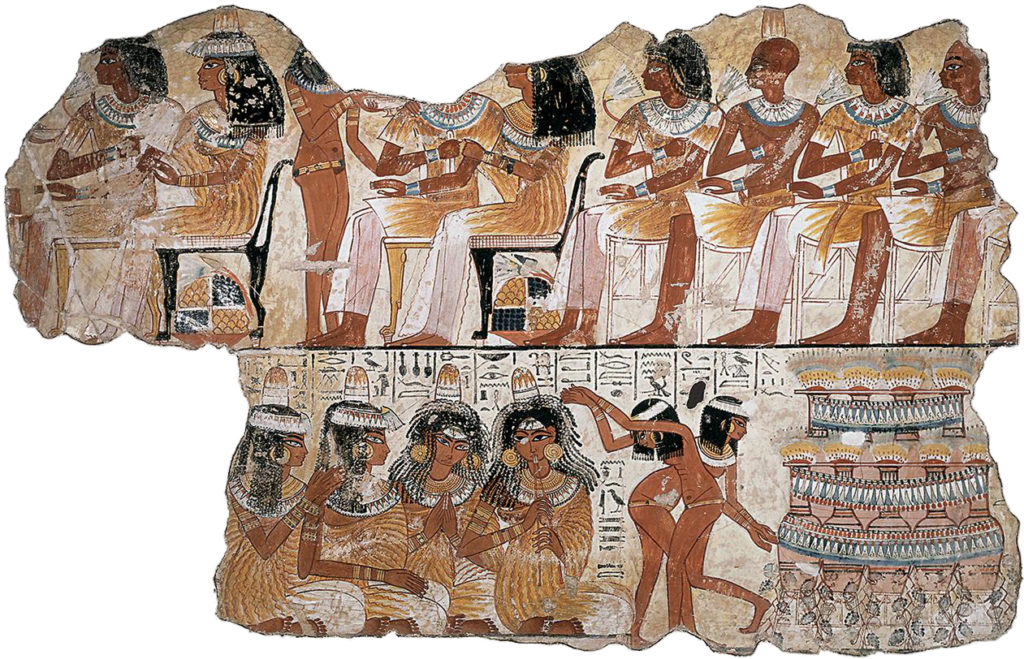
Banquet scene from the tomb chapel of Nebamun, 14th century BC. Its imagery of music and dancing alludes to Hathor. Source: Wikimedia Commons.
Honestly, when I first saw the statue of the woman below in the main article, I thought it depicted a woman washing clothes in a jar. But as I read the article, I had to admit my failure: she actually makes beer! It is funny that many men, such as in Germany, think beer is a man’s business. Then look! Here we go; in ancient Egypt, the women, and even the Goddesses, brewed beers.
Yes! It is fascinating to know that there was more than one beer Goddess in ancient Egypt: Nephthys (She was associated with mourning, the night/darkness, service (specifically temples), childbirth, the dead, protection, magic, health, embalming, and beer.) The others were Menqet (The Egyptians worshipped the Goddess of beer, Menqet, and celebrated sun God Ra’s daughter, Sekhmet, whose bloodthirsty ways were calmed by beer. According to Egyptian mythology, Menqet was the Goddess of beer and ruled over the Place of Reeds.) and Tenenet (Tjenenyet), as both latter mentioned in this article.
Statuette of a woman preparing beer – painted limestone – 5th dynasty discovered in 1931 in the mastaba of Mersou-ankh in Giza by Professor Sélim Bey Hassan on behalf of the Antiquities Service Egyptian Museum in Cairo – JE 66624
In 1931, while continuing the excavations undertaken in 1929 on behalf of the Antiquities Service in the sector concerning: “the ascending routes of the Pyramid of Chephren to the north and the Pyramid of Mycerinus to the south”, Professor Sélim Bey Hassan discovers the mastaba of Mersou-ankh.
Plan of the Cairo University excavations at the Giza site
The mastaba of this chief of the Rà-wèr domains will turn out to contain numerous statues.
Among them is that of this brewer, discovered in serdab no. 1, facing a triple statue representing the tomb’s owner.
It is made of painted limestone and stands 28 cm high. It represents a woman leaning over a large jar. She wears a black, mid-length wig, while her natural hair forms a fringe on her forehead. The face is generous, the cheeks are full, the eyes and eyebrows are marked with black, the nose is wide, and the mouth seems to be smiling. A necklace in blue and white tones adorns her neck.
Her breasts are exposed, and the light-coloured, almost transparent garment she wears begins at the waist and goes down to below the knee.
Statuette of a woman preparing beer – painted limestone – 5th dynasty discovered in 1931, in the mastaba of Mersou-ankh in Giza, by Professor Sélim Bey Hassan on behalf of the Antiquities Department – Egyptian Museum in Cairo – JE 66624 – museum photo
The arms are relatively robust, and the hands are not visible. They are busy kneading the dough in the sieve placed on the pottery jar. “She kneads the ingredients used to make beer in the Old Kingdom, namely barley loaves, water and date liqueur,” explains Rosanna Pirelli in “Treasures of Egypt – The Wonders of the Egyptian Museum in Cairo.
To understand the method of production, we refer to the information provided in Thierry Benderitter’s description of certain scenes of the mastaba of Ty in Saqqara on his indispensable site, Osirisnet.net, and to Sylvia Couchoud’s sDynastyeer in Pharaonic Egypt.
Statuette of a woman preparing beer – painted limestone – 5th dynasty discovered in 1931, in the mastaba of Mersou-ankh in Giza, by Professor Sélim Bey Hassan on behalf of the Antiquities Department – Egyptian Museum in Cairo – JE 66624
The base ingredient is sprouted barley. “It is crushed in flat-bottomed containers with a mortar and filtered using increasingly fine sieves. Wheat flour is added. With this mixture, once moistened, oblong pieces of dough are made and poured into hot moulds until the crust is golden while ensuring that the inside remains raw and that the malt enzymes are not destroyed. The half-cooked bread is then crumbled in a bowl and mixed with a sweet liquid obtained with dates. The mixture is kneaded, stirred, filtered with a large strainer and collected in jugs where it will ferment. When the fermentation is finished, the beer obtained is transferred into amphorae closed with a. plug of straw and damp clay, or with a small plate and a little plaster.”
Four types of beers have been referenced: zythum (literally “barley wine,” a widely used light beer), Dizythum (a double beer), Carmi (a sweet beer), and Korma (a ginger beer).
Jean-Pierre Corteggiani (“Ancient Egypt and its gods”) specifies the importance of beer in ancient Egypt: “Personified by the goddesses Tenemet and Menqet, who are responsible for brewing it, beer plays a significant role in the divine world. It is obviously part of the offerings made to the gods and goddesses, particularly Hathor, since, like wine, it can induce intoxication.
The goddesses Menqet and Tenenet are responsible for brewing beer.
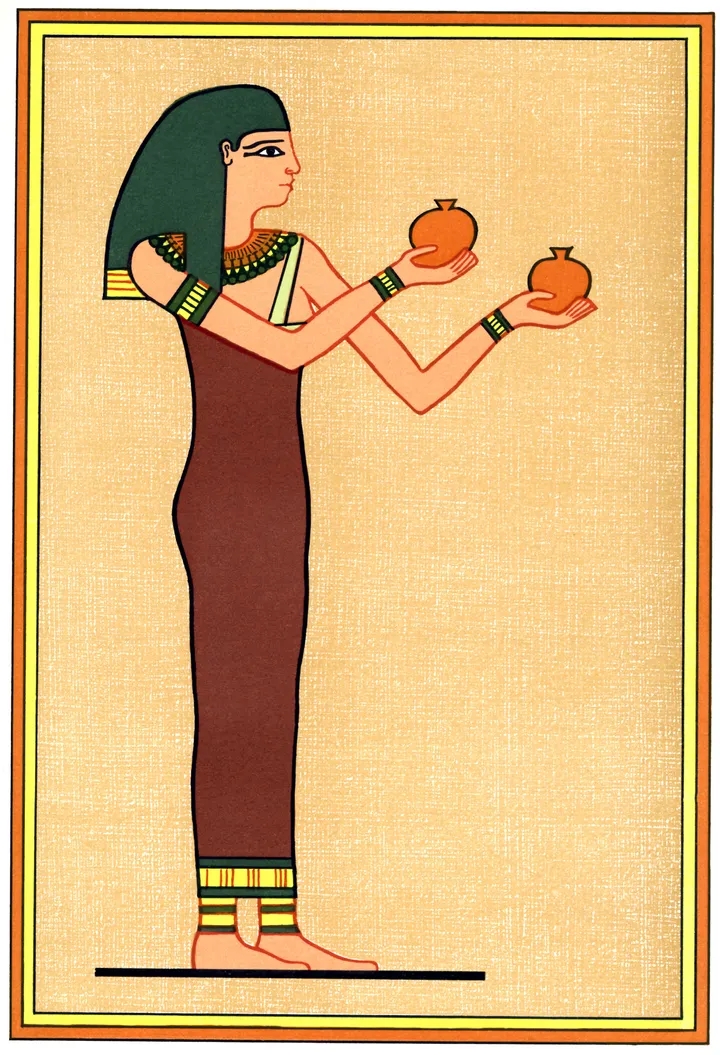
Menqet is often represented with two jugs in her hands, associated with Âqyt, who personifies bread. With bread, it’s beer – not wine! – which the Egyptians wished to have for eternity.
The deceased wished not to lack anything in his afterlife… Thus, as we can read in the “Official Catalog of the Egyptian Museum in Cairo”: “the figurines of servants at work reproduce in the round themes previously developed in bas relief. The statuary of the tombs is enriched by a small world of brewers, millers, pastry chefs, potters or butchers, who continue their daily service in the tomb. Generally of a mediocre style, these figurines are nevertheless quite expressive and represent their professional practice well. The first known limestone models date back to the 4th Dynasty, but the vast majority occurred in the 5th.
Statuette of a woman preparing beer – painted limestone – 5th dynasty discovered in 1931, in the mastaba of Mersou-ankh in Giza, by Professor Sélim Bey Hassan on behalf of the Antiquities Department – Egyptian Museum in Cairo – JE 66624
This brewer is displayed at the Egyptian Museum in Cairo under the reference JE 66624.
Of course, every holy book and religious ritual teaches that giving birth and having offspring is a highly important human act on this earth. No wonder, then, that it would go in the same way in ancient Egypt.
Most ancient Egyptian women laboured and delivered their babies on the cool roof of the house or in an arbour or confinement pavilion, a structure of papyrus-stalk columns decorated with vines.
In the Yogi method, the best way to bear a child is in the water! I believe if we let the newborn child into the water immediately, they would feel happy and free and could more easily grasp their changing world perception.
Childbirth scene, Kom Ombo Temple, partial relief Photo by G. Blanchard (2006) via Visualizing Birth
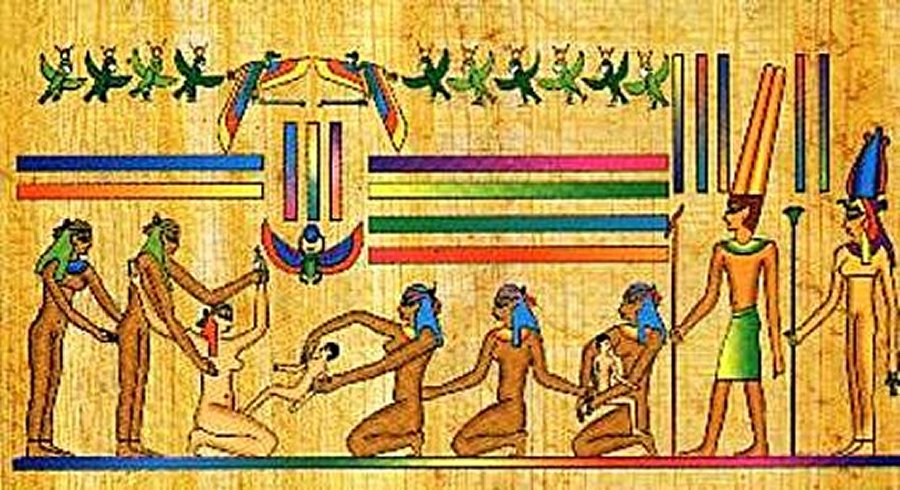
The standard childbirth practice in ancient Egypt has long been known from papyrus texts. It looked more natural as the woman delivered her baby while squatting on two large bricks, each colourfully decorated with scenes to invoke the magic of gods for the health and happiness of mother and child.
Let’s read this interesting report by the brilliant Marie Grillot about an enchanting find and the story of constant upspring in Old Egypt!
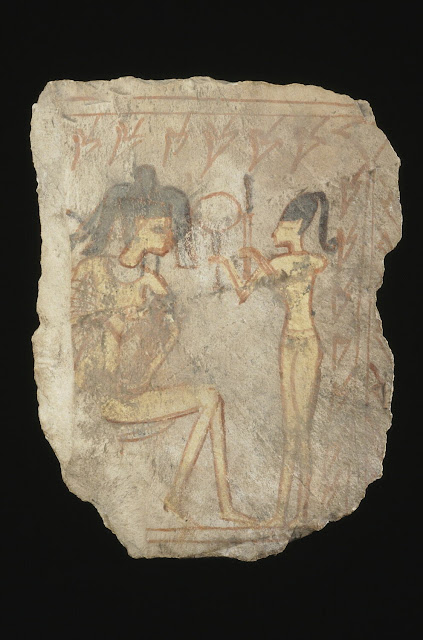
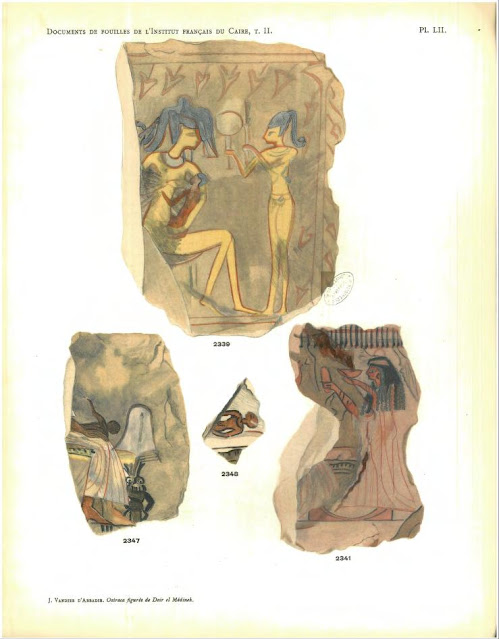
On this ostracon, a maternity scene more than 3000 years old…
Several figured ostraca* from Deir el-Medineh illustrate this extraordinary, touching moment of motherhood, more precisely of the mother breastfeeding her newborn. The gesture, the tenderness, and the concentrated attention paid to the nurturing function remain immutable across the centuries.
This scene, dating from the 19th – 20th dynasty, is reproduced on a piece of limestone 15 cm high and 11.7 cm wide. The three characters are drawn in red ocher while their complexion is painted in yellow ocher and their hair in black.
It takes place in a beautiful plant setting, under a canopy, supported by columns (only one is visible on the right, the left part being lacunar), covered with lanceolate leaves of bindweed or convolvulus. “The leaves of bindweed have a symbolic meaning with a sexual connotation: they are often present in scenes relating to love and the renewal of life”, explains Anne-Mimault-Gout (“Les artistes de Pharaon”).
Emma Brunner-Traut calls this kiosk “the birthing arbour” and thinks “that it was a temporary building, raised in the open air for the moment of childbirth and that the mother remained there for 14 days until her purification”…
This birth pavilion sheltered the difficult hours of suffering inherent in childbirth, just as it witnessed the intense emotion linked to the miracle of giving life… Its aim was also, most certainly, to benefit the young, give birth calmly, rest and protect her, as well as the child, from potential external risks or dangers. In “Carnets de Pierre”, Anne-Mimault Gout evokes the interesting idea that: “These pavilions were perhaps the ancestors of the mammisis of the Greco-Roman temples, the birth chapels”.
Sitting on a curved stool equipped with a comfortable cushion, the mother is shown, turned to the right and naked, adorned only with a large necklace. Her body, leaning forward, seems to envelop and protect the infant she is breastfeeding. Unfortunately, the time has partly tarnished and erased its representation…
Her undone, untamed hairstyle —typical of that of women giving birth in ancient Egypt—attracts the eye. The hair raised in a totally anarchic manner on the head probably reflects the fact that during these extraordinary days, all the attention was focused on the child, to the detriment of the care given to his physical appearance…
As if to remind her that her new role as the mother should not make her forget her femininity, the young servant in front of her hands her a mirror and a kohol case. These toiletry accessories are, according to Anne Mimault-Gout, “charged with an erotic connotation linked, through beauty, to rebirth”. Young, his thin, slender body is naked. Her hair is tied in a ponytail on the top of her head, falling in a pretty curl over her shoulder. For J. Vandier d’Abbadie, “this hairstyle and the pronounced elongation of the profile evoke the iconography of Syro-Palestinian divinities – in particular, Anat and Astarte -, that is to say, that these young girls with high heads would be young asian maids”…
Figured ostracon representing a mother breastfeeding her child and her servant – limestone – 19th – 20th dynasty – from Deir el-Medineh Department of Egyptian Antiquities of the Louvre Museum – E 25333 (previously at the Fouad I Agricultural Museum in Cairo, then in the collection of Moïse Lévy de Benzion, then in that of Robert Streitz, who donated it to the Parisian Museum in 1952) published here in Jeanne Vandier d’Abbadie “Deux ostraca figurés”, BIFAO, 1957 (p. 21-34, p. 22-23, fig. 2)
In her fascinating study “Postpartum purification and relief rites in ancient Egypt” (all of whose rich analyses, unfortunately, cannot be cited here), Marie-Lys Arnette returns to the rites represented on these figurative ostraca of the Ramesside period representing “gynoecium scenes”, as J. Vandier d’Abbadie calls them… “The actions that these scenes depict are indeed rites since they are very close formally to the representations of offerings made to the dead or the gods and follow the same codes: The beneficiary is seated while the officiant approaches them, standing and holding the objects they are about to offer in their hands. These scenes concern the period following birth, and the rites which appear there must allow the purification and aggregation of the mother. It is a question of representing the reliefs, the sequence we can attempt to restore – in a necessarily incomplete manner because the analysis depends on scant documentation”…
These representations are very precious because they are among the only ones that allow us to understand the intimacy of women… But what was their goal? E. Brunner-Traut, in particular, “suggests seeing ex-votos there. We can indeed consider these objects as having been used, in one way or another, in cults linked to fertility, but it is impossible to specify this use further”…
Figured ostracon representing a mother breastfeeding her child and her servant – limestone – 19th – 20th dynasty – from Deir el-Medineh Department of Egyptian Antiquities of the Louvre Museum – E 25333 (previously at the Fouad I Agricultural Museum in Cairo, then in the collection of Moïse Lévy de Benzion, then in that of Robert Streitz, who donated it to the Parisian Museum in 1952) published here in Jacques Vandier d’Abbadie “Catalogue of figured ostraca of Deir el Médineh” II.2, n°2256-2722, IFAO, Cairo, 1937
This ostracon, which comes from Deir el-Medineh, is described by Jacques Vandier d’Abbadie in his “Catalogue of figured ostraca, 1937” under the number 2339. It is indicated as having previously been at the Fouad I Agricultural Museum in Cairo. It was then found in the collection of Moïse Lévy de Benzion, owner of a famous store in Cairo, who then offered it at auction under number 36 of his sale on March 14, 1947, in Zamalek. Robert Streitz, a Belgian architect based in Cairo, then purchased it. He kept it for several years before donating it in 1952 to the Department of Egyptian Antiquities of the Louvre Museum. It was registered there under the inventory number E 25333.
Marie Grillot
*Ostraca (singular: ostracon): Shards, silver or fragments of limestone, or even terracotta, which were, in antiquity, used by artisans to practice. This type of “support”, which they found in abundance on the sides of the mountain, allowed them to make and redo their drawings or writings until they reached excellence and were finally admitted to work “in situ” in the residences of ‘eternity.
They are generally classified into two categories: inscribed (hieroglyph, hieratic, demotic, etc.) or figured (drawing, sculpture).
The donors of the Louvre, Paris, Musée du Louvre, 1989
Perfumes and cosmetics in ancient Egypt, exhibition catalogue, Cairo, Marseille, Paris, 2002, p. 99, 139, ESIG, 2002
Anne Minault-Gout, Stone notebooks: the art of ostraca in ancient Egypt, p. 36-37, Hazan, 2002
Guillemette Andreu, The artists of Pharaon. Deir el-Medina and the Valley of the Kings, exhibition catalog, Paris, Turnhout, RMN, Brepols, p. 113, no. 53, 2002
Guillemette Andreu, The Art of Contour. Drawing in ancient Egypt, exhibition catalog, Somogy éditions d’Art, p. 320, ill. p. 320, no. 168, 2013
Marie-Lys Arnette, Postpartum purification and relief rites in ancient Egypt, Bulletin of the French Institute of Oriental Archeology (BIFAO), 114, 2015, p. 19-72, p. 30-31, fig. 2, IFAO, Cairo 2015
Hanane Gaber, Laure Bazin Rizzo, Frédéric Servajean, At work, we know the craftsman… of Pharaon! A century of French research in Deir el-Medina (1917-2017), exhibition catalogue, Silvana Editoriale, p. 36, 2017
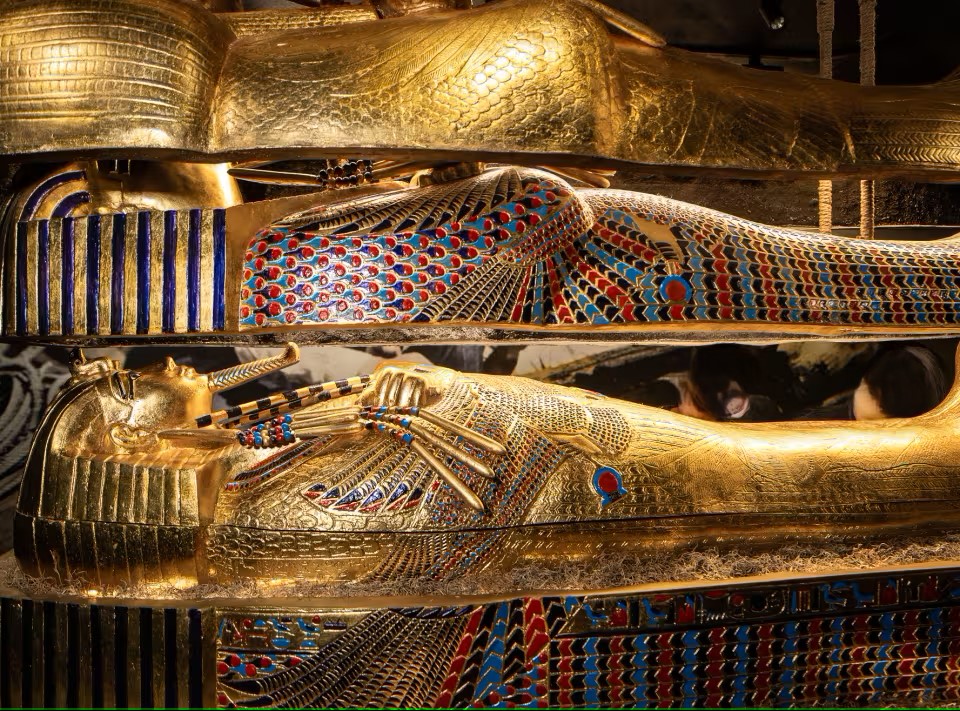
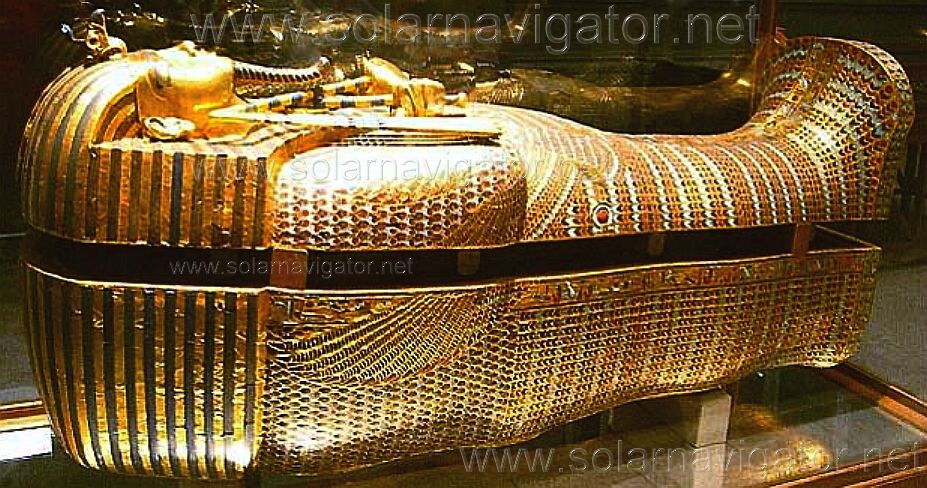
King Tutankhamun is one of the most famous rulers ever, thanks to Howard Carter‘s 1922 discovery of the pharaoh’s tomb in Egypt’s Valley of the Kings, sponsored by British aristocrat George Herbert. The find stirred the imaginations of millions fascinated by the boy king’s golden-masked mummy.
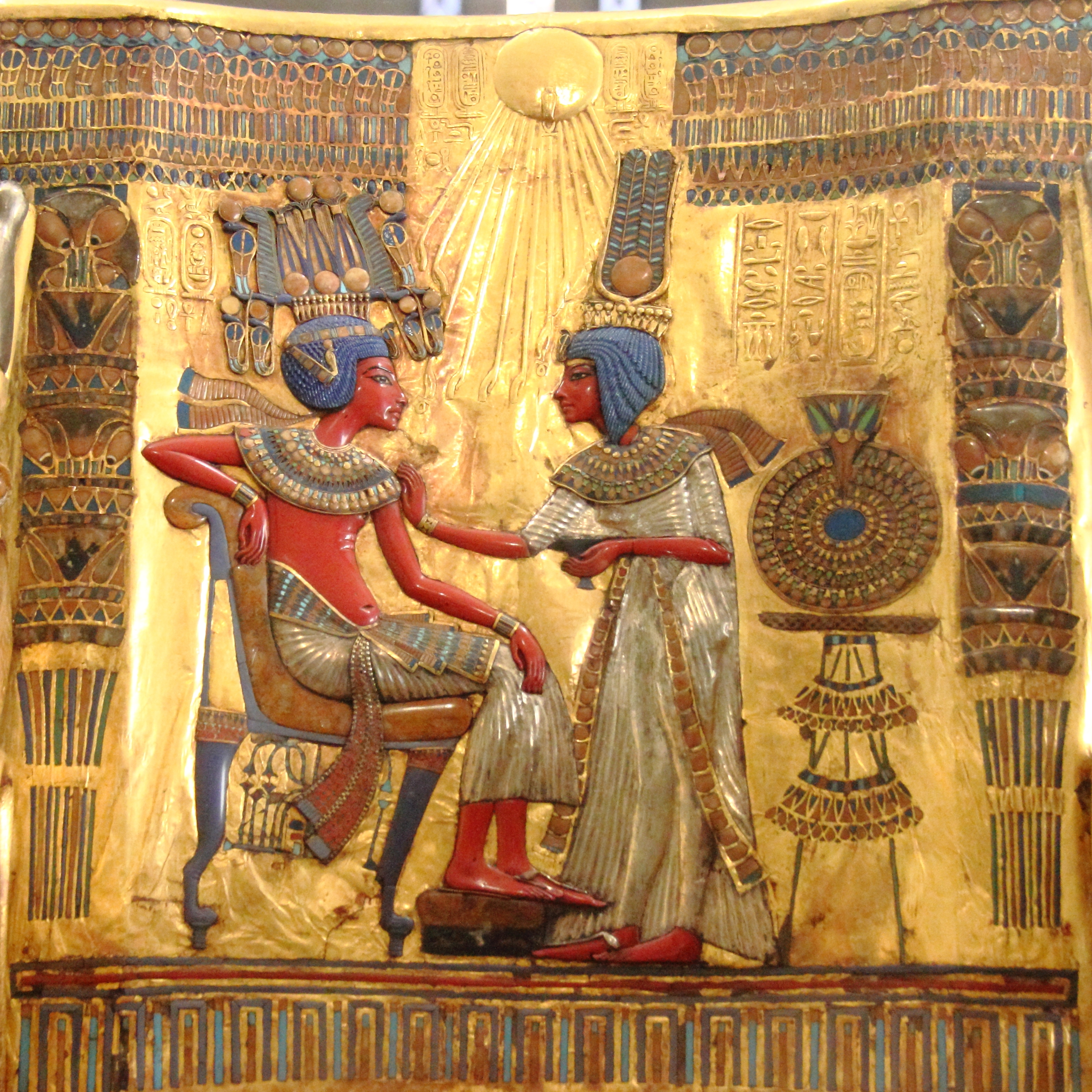
The throne of Tutankhamun, the Aten depicted above By Djehouty – Own work, CC BY-SA 4.0,
He and his tomb are (one of) the most beautiful and, tragically, the most robbed and plundered in ancient Egyptian explorations. No wonder the shining gold and humans’ greed! Nonetheless, the efforts of the good side of humans still try to restore and discover more details of the life of this fascinating man, and they will continue for sure!
Here, we read an exciting story by Marie Grillot and Marc Chartier about a deep investigation and discovery using modern technology.
In November 1922, after ten years of excavations and research in the Valley of the Kings, Howard Carter and Lord Carnarvon finally discovered the first step of Tutankhamun’s tomb, which they had been desperately searching for.
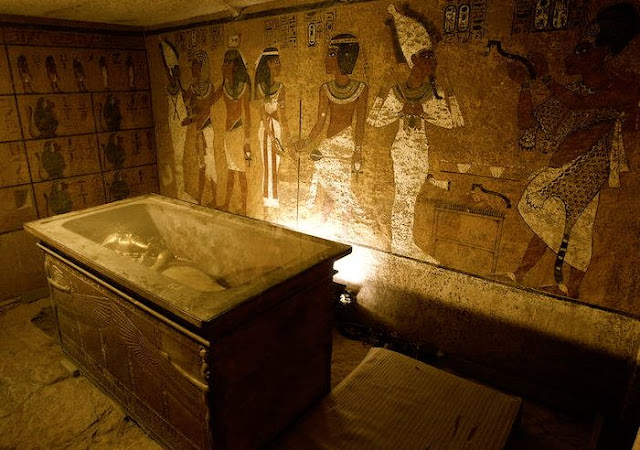
Within this KV62, with an area of just over 100 m², a team of the best experts will work on clearing and saving the objects. Some will devote nearly ten years to it, and the whole world, fascinated by this young pharaoh emerging from oblivion, will marvel at the priceless treasures surrounding him for his afterlife.
For more than 90 years, the number of visitors who have entered the pharaoh’s tomb to absorb a small part of his eternity has continued to increase, endangering his survival. The humidity generated by these visits significantly deteriorated the paintings and generated mould, causing significant damage. This led the Antiquities Department to limit the number of daily visits and close access to the site to the public in 2011.
This context, which seemed inevitable, was understood in 2002, and the basis for constructing a replica of the KV62 was studied.
Illustration Factum Arte
The company Factum Arte, founded by the British painter Adam Lowe and based in Madrid, was chosen to build this replica. The Egyptian Ministry of Tourism and Antiquities and funds from the European Union partially financed it.
Experts in these new technologies have implemented, used, and piloted innovative techniques, the most advanced of which is 3D. In 2009, for many months, the Factum Arte team invested in the tomb to memorize every centimetre with the highest precision. “The first work consisted of carefully recording the relief of the walls and the sarcophagus with a scanner specially designed for the occasion. Its resolution reached one hundred million points per m². Then, the second stage consisted of photographing the paintings with a very high resolution and faithfully respecting the colours.”
Armed with this data, Factum Arte technicians returned to their premises in Madrid, where they began manufacturing the facsimile in the form of hundreds of high-density polyurethane panels. These were assembled on-site to form the four walls of the mortuary chamber. The inauguration of the “double” tomb took place in April 2014.
And this is where another part of this beautiful story begins…
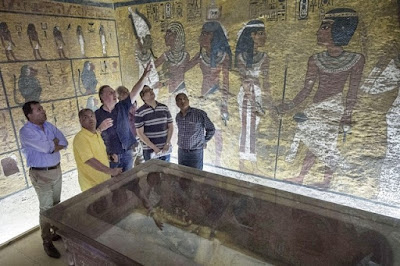
Egyptian Minister of Antiquities, Mamdouh Al Damati, listening to British Egyptologist Nicholas Reeves, near the sarcophagus of Tutankhamun – Photo: AFP/ Khaled Desouki
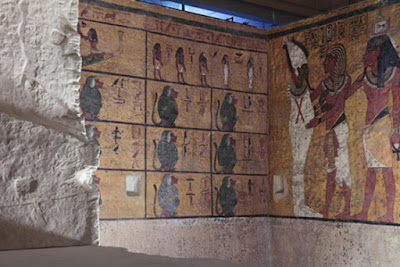
Nicholas Reeves, an English Egyptologist and foremost specialist in Tutankhamun, carefully studies the photos taken by Factum Arte in the burial chamber. This room is the only one in the tomb, and it is decorated with paintings: “rudimentary, classic, of austere simplicity” executed on a plaster coating painted yellow. These paintings reflect the ritual name given to it in antiquity: “the Hall of Gold.” He then noticed reliefs which could be blocked openings overtures onto two rooms unexplored until now. By pushing further his reasoning, he believes that one wall (the north wall) would be Queen Nefertiti’s burial place, while the other (the west wall) would be a storage space.
Nicholas Reeves supports his hypothesis – contested, it is necessary to recall, by other Egyptologists – first of all on his interpretation of the frescoes of the northern wall of the tomb (which represent the young king Tutankhamun performing a funerary ritual for his mother, Queen Nefertiti), then on the fact that Tutankhamun died prematurely, at the age of 19, and that, due to lack of an available tomb, the priests would have taken the decision to reopen Nefertiti’s tomb, ten years after his death, to bury the young king in a hypogeum not provided for him.
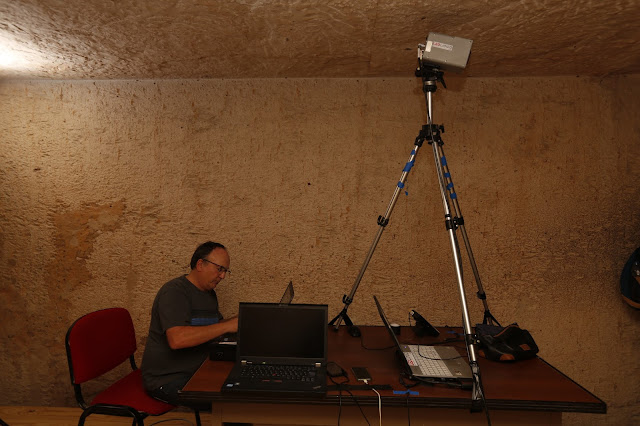
To verify this hypothesis, the Ministry of Antiquities has given the green light to enter noninvasive and nondestructive techniques onto the scene. First of all, infrared thermography is an operation led by Jean-Claude Barré, who came to Egypt as part of the “Scan Pyramids” mission. Based on images captured regularly over 24 hours, this technique can reveal temperature differences, possibly leading to cavities under a given surface. This was indeed the case in the tomb of Tutankhamun, where such temperature differences were detected through the painted coating of the north wall, without it being possible to determine the exact configuration of a hollow space or, even more so, its content.
After some tests in a tomb whose configuration is already known (the KV5) to verify the effectiveness and reliability of the equipment used, the second series of surveys in Tutankhamun’s tomb was carried out using the radar technique. This device was placed 5 cm from the wall to prevent damage.
During the press conference, held in Luxor on November 28, 2015 late in the morning, at the house of Howard Carter, the Minister of Antiquities, Dr. Mamdouh El-Damaty, announced that the radar scans revealed the existence of a large void, with a long corridor, behind what we now know to be a false wall (a “ruse”, a ploy, intended to thwart possible tomb robbers) in Tutankhamun’s burial chamber. It is helpful to remember that the tomb was robbed several times in antiquity.
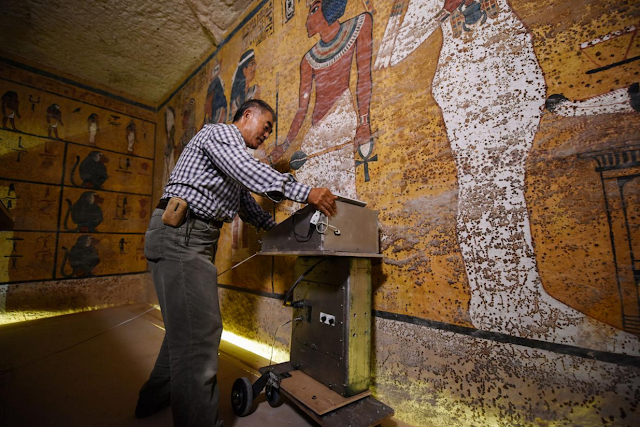
Hirokatsu Watanabe Photo Brando Quilici – National Geographic
Analyzes by Hirokatsu Watanabe, a Japanese radar specialist, also provide evidence of a second door hidden in the adjoining west wall.
The Minister declared, “We previously spoke of a 60 per cent chance that something was behind the walls. But now, reading the first analyses, we can assert a 90 per cent probability.”
He specifies that the data collected will quickly be examined more deeply in Japan.
He then mentioned a possible next step: digging a small hole in the wall (on an unpainted space) of the neighbouring room, called the “Treasure Room,” adjoining the “empty” behind the wall in the burial chamber to introduce a browser camera.
Missing fragments of the wall broken by Carter, photographed by Burton and reconstituted in the replica of the tomb – photo Marie Grillot
It is unthinkable to risk damaging or deteriorating these painted walls. It is helpful to remember that during the second season of excavation, Howard Carter destroyed part of the scene on the south wall and then recovered the fragments. Still, these practices are no longer used today.
The questions remain and even multiply… But one answer is inevitable: Tutankhamun has not finished being in the spotlight!
Horemheb, which means “Horus is in Jubilation” in Ancient Egyptian, was the final pharaoh of Egypt’s 18th Dynasty, ruling for at least 14 years between 1319 BC and 1292 BC. Despite marrying Ay’s daughter Mutnedjmet, Horemheb had no blood relation to the preceding royal family and is believed to have come from a common background.
The Memphite Tomb of Horemheb is situated in the Saqqara necropolis near Memphis, Egypt. The tomb was built before Horemheb became the king, and he did not use it for his burial. Instead, he constructed the Theban tomb KV57 for this purpose. The tomb served as the resting place for Horemheb’s two wives, Mutnedjmet and Amenia.
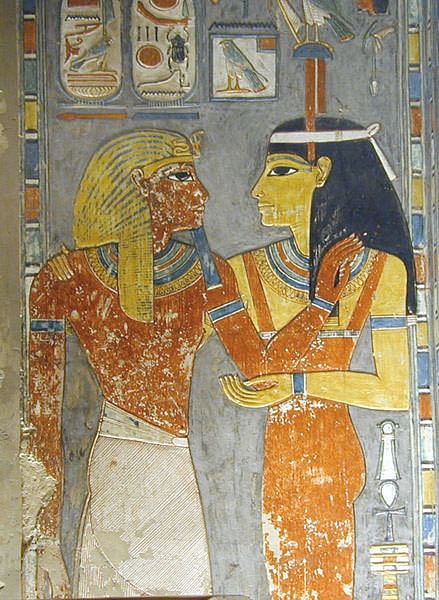
Horemheb with a falcon-headed god, detail of a mural in the tomb of Horemheb, Ṣaqqārah, Egypt. Photos.com/Jupiterimagesvia Friend of Saqqara
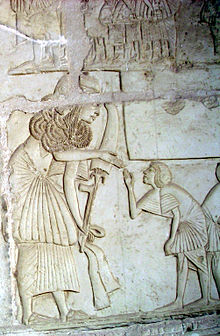
Relief from Horemheb’s tomb. Receiving ‘gold of honour’ collars. Wikipedia
Here is the adventurous story of the discovery of this divine Jewel, presented by adorable Marie Grillot.🙏
Horemheb’s earring – gold and glass paste – 18th or 18th Dynasty from his tomb discovered in Saqqara in 1975 by an Anglo-Dutch mission led by Geoffrey Martin Journal of Cairo Museum Entries – JE 97864
This round earring, with a diameter of 3.9 cm, is made of gold with mostly lacunar glass paste inlays.
This round earring, with a diameter of 3.9 cm, is made of gold with mostly lacunar glass paste inlays. In its centre, in a golden circle and erected on a golden barrette, is a sphinx. He is represented in a walking attitude, which is unusual, to say the least…
The Sphinx is a “hybrid being” described as an androcephalus when it combines an animal body, a lion, and a human head. “The Egyptian sphinx was a protective and positive entity,” generally representing the “portrait” of the pharaoh to whom it was dedicated or allied.
Horemheb’s earring – gold and glass paste – 18th or 18th Dynasty from his tomb discovered in Saqqara in 1975 by an Anglo-Dutch mission led by Geoffrey Martin Journal of Cairo Museum Entries – JE 97864
The body of the Sphinx, which works in openwork, is delicately chiselled to restore the details of the fur, muscles, and legs…
The royal head is wearing the “blue” crown, which is sometimes compared to a “helmet”. This “khepresh” seems to appear in royal representations in the New Kingdom and, according to Karol Mysliewiec: “the first known royal statue wearing the khepresh is one of Amenhotep III”. If no crown of this type has actually been discovered, we can assume that it was: “probably made of leather or ostrich skin on a rigid, bulb-shaped structure often embellished with yellow gold or white polka dots “. This notion was also very well rendered by the goldsmith who created it…
Horemheb’s earring – gold and glass paste – 18th or 18th Dynasty from his tomb discovered in Saqqara in 1975 by an Anglo-Dutch mission led by Geoffrey Martin Journal of Cairo Museum Entries – JE 97864
The face is both emaciated and prognathous, an impression accentuated by the artificial beard, which lengthens the profile. The long and carried forward neck is decorated with a large ousekh necklace with several rows very cleverly rendered by incisions. This central element is surrounded by two larger and nicely crafted concentric circles. They are composed of large gold chevrons, regularly spaced, in the intervals of which blue glass paste was encrusted, perhaps in several shades. Unfortunately, this colourful decoration has, for the most part, disappeared.
The outer circle is bordered by a lovely twist of gold, which is welded into small rings made up of a series of small shots welded two by two. “The edges of the pendant are decorated with small rings obtained by granulation, some of which had originally been inlaid with tiny cylinders of glass paste. Pendants were undoubtedly suspended from the five rings of the lower register. A sheet of gold shaped like an ousekh necklace was welded to the top of the Jewel,” specifies Daniella Comand (The Illustrated Guide to the Egyptian Museum).
Horemheb’s earring – gold and glass paste – 18th or 18th Dynasty from his tomb discovered in Saqqara in 1975 by an Anglo-Dutch mission led by Geoffrey Martin Journal of Cairo Museum Entries – JE 97864 (photo Orientalia: Vol. 47)
The suspension system is incomplete: in fact, only one of the two rings remains, which were placed on either side of the lobe and in which the tube slid, which, passing through it, ensured fixation.
This unique earring was discovered in the tomb General Horemheb built in Saqqara long before he became pharaoh and ordered the digging of a new hypogeum in the Valley of the Kings.
His tomb in the Memphite necropolis, unearthed in the 19th century and then lost, was “rediscovered” in 1975 by an Anglo-Dutch mission. Led by Geoffrey Martin, he and his team devoted four seasons of excavations… During the 1977 mission, this Jewel was found “in a room in the well in the outer courtyard”.
Relief depicting Horemheb receiving the gold reward – limestone – New Kingdom – 1333-1319 BC AD from his tomb in Saqqara – Rijksmuseum van oudheden – RMO – Leiden – museum photo
The Sphinx’s countenance typically reveals Amarna features if its provenance “de facto” associates it with Horemheb. Thus, in “The Wonders of the Egyptian Museum in Cairo”, Francesco Tiradritti presents it as “a pendant representing Akhenaten as a sphinx”. An idea echoed by Nigel Fletcher-Jones who, in “Ancient Egyptian Jewelry”, believes that: “It was probably made during the reign of Akhenaten (around 1352-1336 BC) or his son Tutankhamun ( circa 1336-1327). Furthermore, in “The Great Discoveries of Ancient Egypt”, Nicholas Reeves considers that it “probably comes from a later burial, from the Ramesside period, that of Princess Bentânat”.
This earring was registered in the Journal of Entries of the Cairo Museum under the reference JE 97864.





















































 lampmagician


You must be logged in to post a comment.