The Color of Forgiveness

Standard

By Elaine Mansfield

It has touched deeply my heart when I read this wonderful essay by my dear friend and teacher Elaine Mansfield.

I am not a religious person but a pagan who believes in divine and despite born as a Muslim was in love with Jesus. Not because of the belief in his being offspring of God, sorry, I believe that we are all the children of God, I just love his power of forgiveness and love.
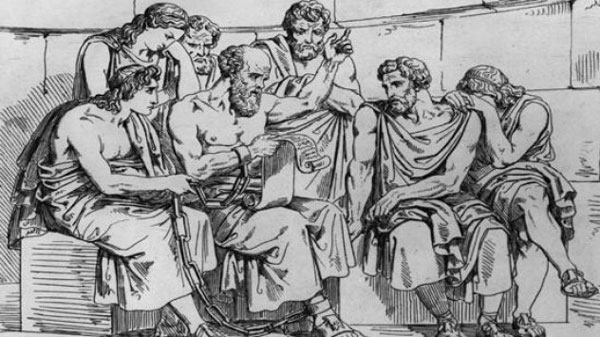
My not so easy youth-life had leaner me not to hate, I have found the jewel of forgiveness than being jealous or thinking of revenge. As I was arrested once in Iran because of my different way of thoughts, I’ve been tortured every day and when I could get out I have just forgiven them because I did believe that they didn’t know what they were doing, as I have learned by Jesus, Buddha, Socrates, Gandhi, and many others who are my real prophets.

I learned to be humble and respect everyone not because of their range or class but because of their being and living as humans. (Though, I must add I’m trying not to be stupid! 😉 )
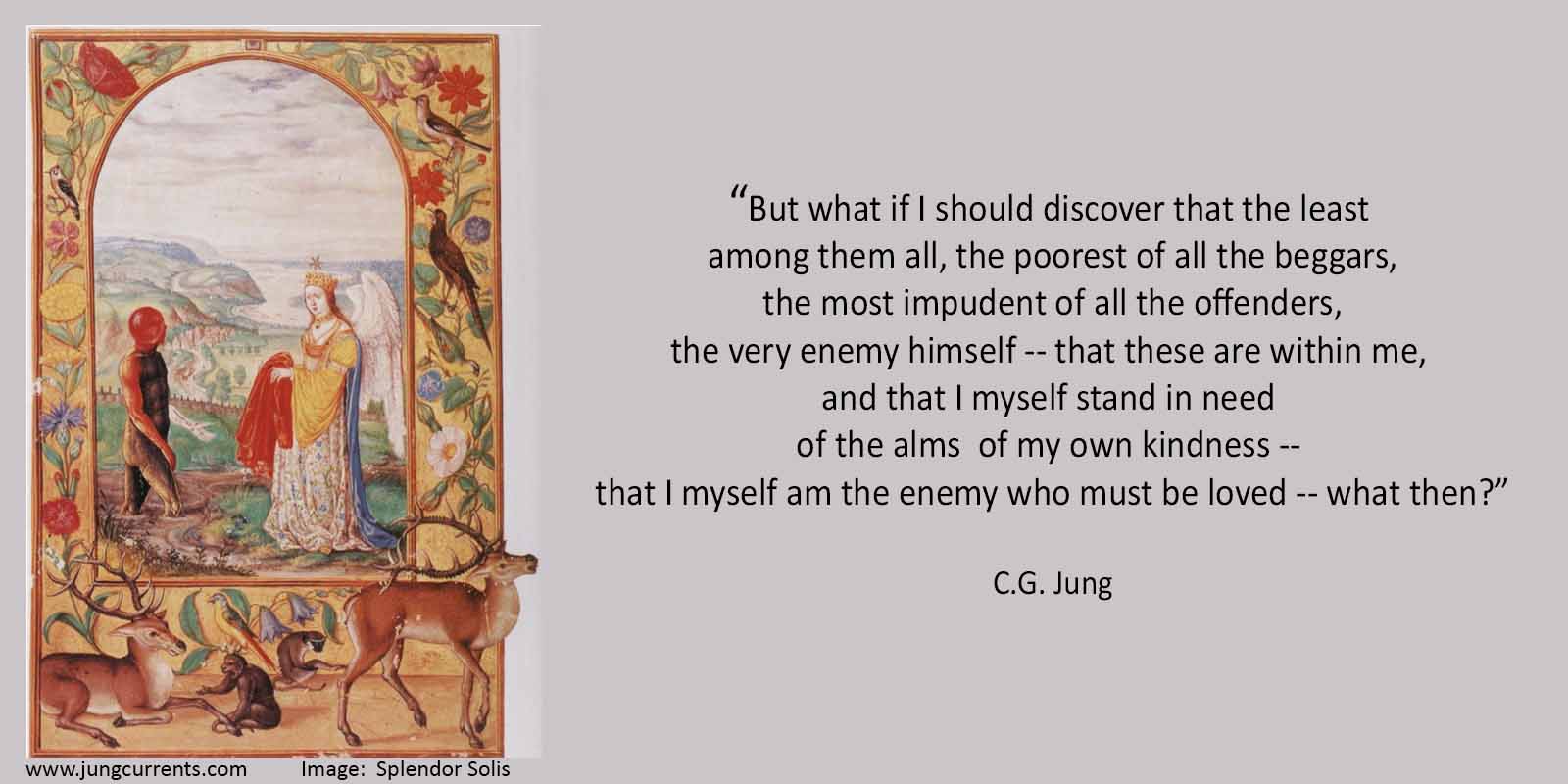
Anyway, it’s enough of me first 😀 . Let’s enjoy reading the lovely article of Elaine Mansfield about the color of Forgiveness; Blue is my favourite colour ❤ ❤

https://elainemansfield.com/

Blue Morpho Tom Hilton Flickr

“Will you meditate with me?” he asks.
I’d said yes for many years.
Chemotherapy was ordered hours ago.
Salvage chemo.
A cursed name
That hasn’t yet arrived.
I have nothing left to give.

At 3 AM that morning, my cell phone rang.
He’d called from downstairs.
“I can’t breathe,” he said.
“Will you help me?”
“I’ll be right there,” I said.

It’s been like this for days,
For months.
I feel his pounding pulse and call the hospital.
“Take him to the nearest ER,” the doctor says.
I’ve done that many times.
They don’t know what to do with the mess of him.
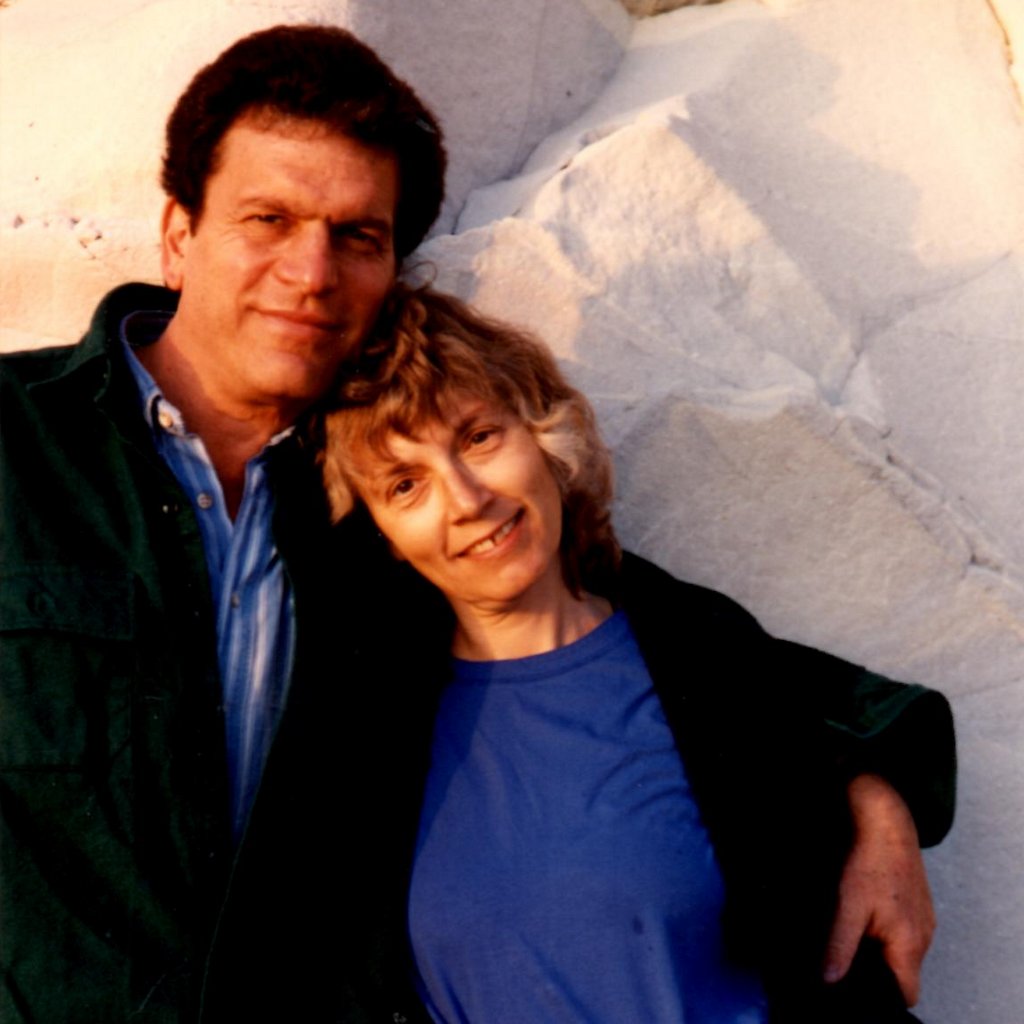
with Vic in healthy times

“Can you make it to Rochester?” I ask.
“There are hospitals along the way.”
He nods.
I pack his bag while he uses a borrowed cane,
Staggers to the car.
My warrior husband reduced to this.

I hold his hand while I drive through darkness
Toward his doctors at the cancer center.
Listen to him gasp.
We arrive in a pink coral dawn.
Birds sing as I run inside for help.
Two men in blue scrubs bring a wheelchair.
No rooms ready in oncology.
I beg and change their minds.

No one stops me when I raid the linen room for sheets.
No one helps me make his bed.
I roll his head up so he can breathe,
So he can rest,
But I cannot.

Our favorite bluebird friends

Two kinds of cancer now his doctor says.
He offers one last chance.
Salvage chemotherapy.
It will kill him fast or give him months.
My husband’s name is Victor.
He considers the choice.
His hero energy flickers.
Mine is snuffed.

“Will you stay with me until the chemo comes?” he asks at midnight.
“I must lie down,” I say.
That means no.
For the first time I say no.
“I’ll be back early.”
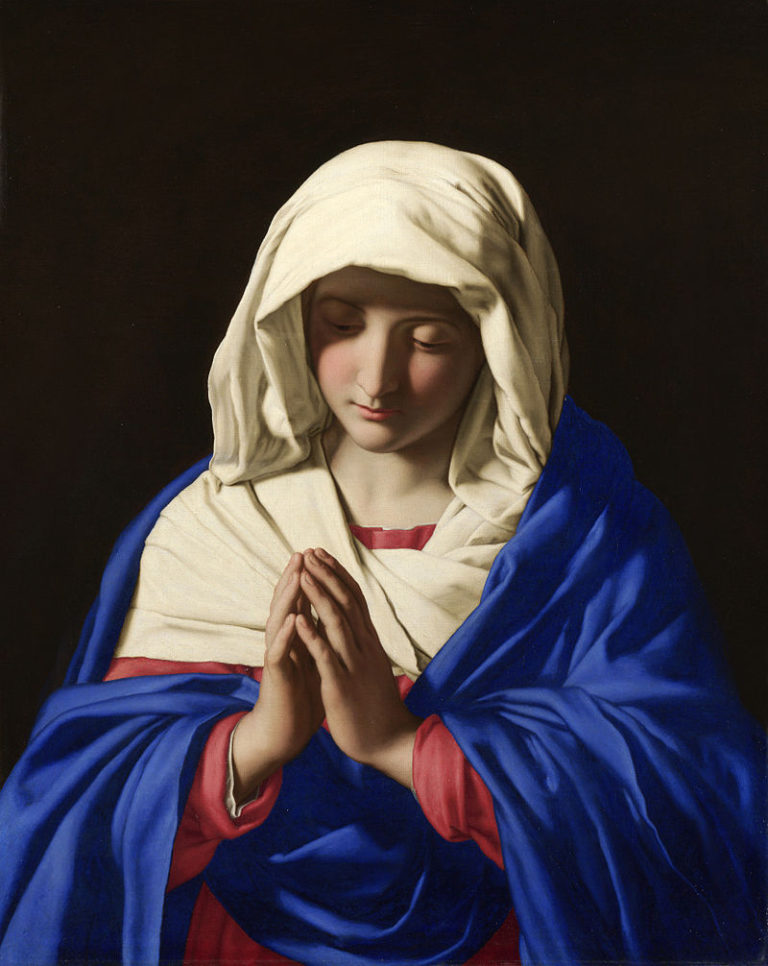
Sassoferrato, The Virgin in Prayer, 1640 (wikipedia)

Burning with shame and hopelessness,
I drive to the Cancer Society Lodge,
Crawl in bed and sob before I fall asleep.
My phone rings at 6 AM.
“I’m OK and I love you,” he says.
The infusion has begun.
He’s not OK, but I’m forgiven.

Alone in bed, eleven years later,
Regret drops me like a wave.
A memory so raw and deep.
I sob until I fall asleep.

At dawn, I dream a Blue Morpho Butterfly,
Sapphire wings as wide as my outstretched hand.
As blue as the Virgin Mother’s robe.
The color of forgiveness.

***

Tom Hilton, Flickr

I rarely write poetry, but the memory came in this form along with the dream. Thanks to Ellen Schmidt of Writing Room Workshops who encourages my experiments. Do you have regrets, even though you know you did the best you could? How do you forgive yourself for being human? For other posts about marriage and caregiving, see Bookends of a Marriage or Give Thanks For This Imperfect Life. I also suggest Dealing with Regret and Grief by Claire Bidwell Smith.

I’ll be in Columbus Ohio May 17-18 giving a workshop called Finding Wisdom in Aging and Loss. Please leave comments. I’ll respond soon.

Journals

Standard

House of Heart's avatar

From the past  I capture   a light,

bring  forward  a globe of fire reflected

in the irides of my eyes

or an ocean pooling  in my palm.

My  nights  are the darkest psalms,

your   memoir  etched into my heart.

One tender sway and suddenly I

remember.

Photography by Billy Knight

View original post

The Great Picasso and his mysterious belief!

Standard

pavanonwin's avatarThe Curious Hunter..

It was the beginning of 20th century,his name was Henri Matisse, 35 year old artist , the one who made a 22 year old Pablo Picasso realize that “An art is a lie that tells the truth”, with his enormous ability to present painting in a unique way,,

Don’t know who Picasso is click here..

Unlike other artists Picasso painted those things where he could grasp the intense human emotions , but unfortunately his paintings were unaccepted by public , because everyone imagined their wall to be decorated with their own portrait. But his paintings were highly praised by Poets around him ,who looks at the world in a different perspective. They took use of his paintings to unleash their ability hidden in the heart expressing gratitude to this wonderful world.

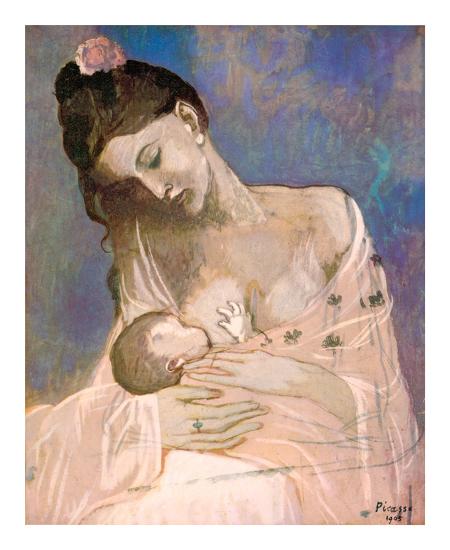
Maternity art by Picasso..

Picasso unleashed whole new art form when he once visited a museum …

View original post 440 more words

Bernard, apprends-moi !

Standard

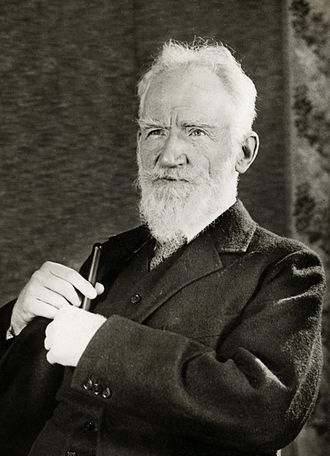
« Since I learned to laugh at myself, I never get bored again. »

Ibonoco's avatarNews from Ibonoco

“Depuis que j’ai appris à rire de moi-même, je ne m’ennuie plus jamais.”

Traduction approximative :

“Since I learned to laugh at myself, I never get bored again.”

Georges Bernard Shaw (1856 – 1950), est un essayiste, dramaturge, scénariste et critique musical irlandais. Prix Nobel de littérature en 1925. Il est aussi un pacifiste, militant pour le droit de vote des femmes. Volontiers provocateur et anticonformiste dans ses écrits, il dénonce le puritanisme ainsi que d’autres aspects liés à la religion. Il devient également végétarien à l’âge de 25 ans et le restera jusqu’à la fin de sa vie.

View original post

How Led Zeppelin’s “Stairway to Heaven” Recreates the Epic Hero’s Journey Described by Joseph Campbell

Standard

To put it bluntly, I have not a tiny problem if any hit song sounds like any other song!! If you might heard about; Beatles Yesterday sounds like a piece of whom or,,, I know an example: the famous song; Hotel California seems being a sincerely copy of Jethro Tull’s “We used to know” but Ian Anderson the head of Jethro Tull after hearing this annonce, shrugged the shoulders and answered: what a… it is a wonderful song isn’t?

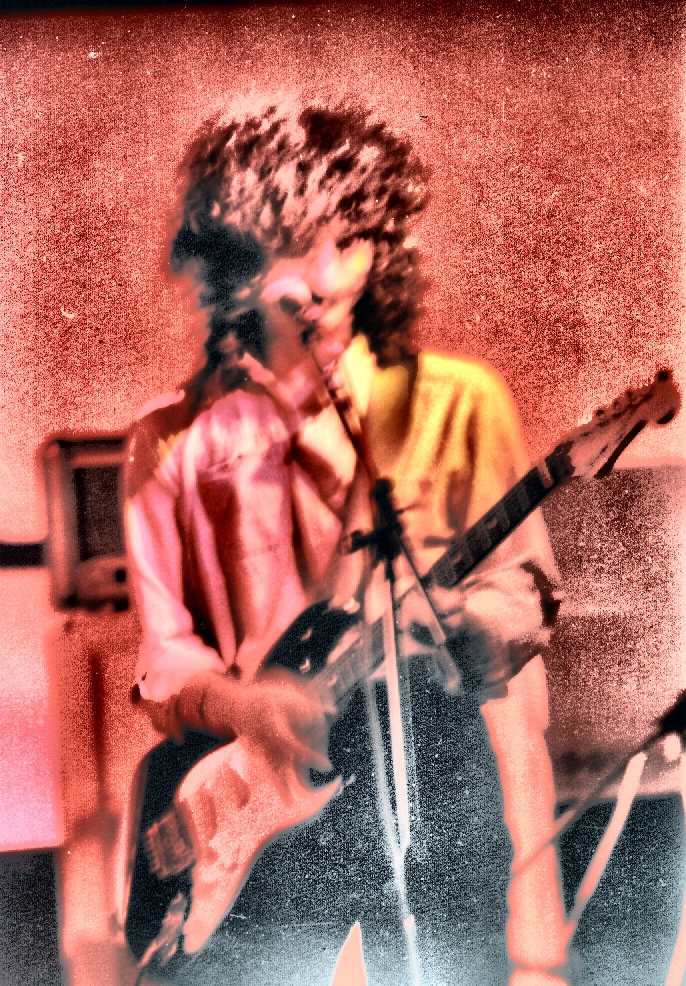
Anyway, I am since a long time a musician and I have some experiences about composing musics (I was not a lucky one 😀 ) and I know how it is a wonderful feeling when you get an idea from your most favourite song from your beloved musician.

only for proof; me on the stage in the 90’s

anyhow, the music world is unlimited, and also the sonority is floating all in the air, we only must keep silence a listen to them; it is just wonderful.

via: http://www.openculture.com/

You might wonder what would I mean, yes, sure it looks a little weird but I can explain it; I have many experiences about finding out how many masterpieces in the music world, might be stolen or pilfered by any other song in the past. That is actually bullshits!” because, as I once was a musician and I had got also many themes from the older music hits and combine a new one, it was a great enjoyment for me as I’d believe that it would be surely a great enjoyment for the compositor for seeing how could be music unlimited.

Wayne’s World kind of ruined “Stairway to Heaven” for me. Yes, it’s been 27 years, but I still can’t help but think of Wayne turning to the camera with his stoner grin, saying “Denied!” when the guitar store clerk points out a “No Stairway to Heaven” sign. It was not a song I took particularly seriously, but I respected the fact that it took itself so seriously… and threaded my way out of the room if someone picked up a guitar, earnestly cocked an ear, and played those gentle opening notes.

Now I giggle even when I hear the magisterial original intro. This is not the fault of Zeppelin but of the many who approach the Zeppelin temple of rock grandiosity unprepared, attempting riffs that only Jimmy Page could pull off with authority. At least the joke gave us a way to talk about the phenomenon: in lesser hands than Led Zeppelin’s “Stairway” can sound… well, a bit ridiculous (with apologies to Dolly Parton.) Although accused (and acquitted) of ripping off the opening notes to Spirit’s instrumental “Taurus,” the song is all Zeppelin in every possible way.

“Stairway” is a representative sampler pack of the band’s signature moves: mixing folk rock and heavy metal with a Delta blues heart; exploding in thunderheads of John Bonham drum fills and a world-famous Page solo; Plant screaming cryptic lyrics that vaguely reference Tarot, Tolkien, English folk traditions and “a bustle in your hedgerow”; John Paul Jones’ wildly underrated multi-instrumental genius; bizarre charges of Satanic messages encoded backwards in the record…. (bringing to mind another Wayne’s World actor’s character.)

“Stairway… crystallized the essence of the band,” said Page later. “It had everything there and showed us at our best. It was a milestone.” It set a very high bar for big, emotional rock songs. “All epic anthems must measure themselves against ‘Stairway to Heaven,’” writes Rolling Stone. It is “epic in every sense of the word,” says the Polyphonic video at the top, including the literary sense. It can “make you feel like you’re part of a different time, part of a different world. It can make you feel like you’re part of a story.”

That story? “One of the greatest narrative structures in human history,” the Hero’s Journey, as so famously elaborated by Joseph Campbell in The Hero With a Thousand Faces—an archetypal mythological arc that has “permeated stories for as long as humans have told them.” Not only do Robert Plant’s mystical lyrics reflect this ancient narrative, but the song’s composition also enacts it, building stage by stage, from questioning to questing to battling to returning with the wisdom of how “to be a rock and not to roll.”

The song’s almost classical structure is, of course, no accident, but it is also no individual achievement. Hear the story of its composition, and why it has been so influential, despite the jokes at the expense of those it influenced, in the Polyphonic video at the top and straight from Jimmy Page himself in the interview above.

Out of all of Zeppelin’s many epic journeys, “Stairway” best represents “the reason,” as cultural critic Steven Hyden writes, “why that band endures… the mythology, that Joseph Campbell idea of an epic journey into the wild that Zeppelin’s music represents, the sense that when you listen to this band, you feel like you’re plugging into something bigger and more profound than a band.” Or that the band is opening a doorway to something bigger and more profound than themselves.

It’s a Living: Working for the Gods

Standard

Just fascinating…

MythCrafts Team's avatarMyth Crafts

As we’ll see shortly, many of the older Gods, despite Their many powers, really didn’t know how to fashion material things – from weapons to vehicles to celestial palaces. While there are numerous cross-cultural examples (the Vedic Vishvakarma/Tvastar comes to my mind), let’s look at how the Greek and Norse deities maneuvered around their own inabilities, and were able to entice divine and/or enchanted beings to forge their desires…

*

Hephaestus:

Hephaestus was a an Olympic God who was cast down from the sacred mountain. Now, as with almost all Greek myths, there are several variants – I’m choosing the one that was most often depicted by Attic vase painters, and which was a beloved image among the Etruscans.

In this versions of the story, Hera produces Hephaestus parthenogenically, i.e. without a consort; this was an attempt to snub Zeus, who had likewise given “birth” to Athena without Hera’s involvement…

View original post 832 more words

10 μαθήματα ευτυχίας που μάθαμε από τους Αρχαίους Έλληνες…

Standard

As Epicurus believed, man is big and valuable. Happiness, blessedness, it has within it, it reaches to put aside what disturbs him and hells his life. Here we give you 10 small but valuable lessons of happiness given by our ancient ancestors!

1. Do everything with love!
We live with emotions, not with hours on the sundial. We should count the time with the heartbeats.
Aristotle

Love is the cause of unity of all things
Aristotle

2. Embrace the challenges and learn from them
As the ancient saying goes, “Live today and forget the past”. Challenges are always an opportunity for something new. Even NO can become a new one to move in a new direction. The biggest obstacle in our lives is ourselves.

“Small opportunities are often the beginning of major projects”.
Demosthenes

3. Believe in yourself, hear it, and do not take very seriously what others tell you.
No one knows you better than yourself. And your kids. You will meet many people who will not share the same ideas, the same views and the same vision as you with regard to bringing up children. There will be many who will give you free advice on how your life should be as a mother or father. Listen to them without judging them and follow what your heart tells you

“He who knows to hear is even benefiting from those who speak badly.”
Plutarch

“Learn to be silent, leave the mind quiet to hear and absorb”
Pythagoras

4. Dream what you want, not what you do not want
It is important to dream, to make great dreams and never to stop dreaming. But always hope for the best

“Do not spend what you want for what you do not have. Remember that what you have now is something of all that you once dreamed of getting ”
Assistant

5. Never give up and never lose your faith
Replace fear in hope. Humility, or love and faith, can do miracles. And everything will happen at the right time and the right time.

“There is nothing” big “that is created suddenly … A bunch of grapes need time to blossom, to bear fruit and to … ripen”!
Acquired

6. Always think and feel “positive”
Positive thinking is the creation of ancient Greeks. Always focus on the present and the reasons why you are happy! Remove the negative people from your life and always be surrounded by people with positive energy. And as our Ancestors say:

“Medicine is intertwined with the essence of the mind”
Hippocrates

“Happiness depends on ourselves”
Aristotle

7. Look inside your answers
Always thinking and introspection helps us find the right solution when we feel confused

“What we can achieve internally will change the external reality.” Plutarch

8. The difficult situations make us more courageous
“Our courage does not seem in our every day happy relationships, but in the challenges of life and adversity”
Epicurean

9. Do not resist your destiny
“No one can escape his destiny”
Plato

“Everyone has three virtues: Prudence, strength and good luck”
Ion Chios

10. See your mistakes positively and as experiences that will move in the direction of your dreams.
“The one who does most makes the most mistakes”
Euripides

SearchingTheMeaningOfLife's avatarSearching The Meaning Of Life! (S.T.M.O.L)

Όπως πίστευε ο Επίκουρος, ο  άνθρωπος είναι κάτι μεγάλο και πολύτιμο. Την ευτυχία, τη μακαριότητα, την έχει μέσα του, φτάνει να παραμερίσει όσα τον ενοχλούν και του κάνουν κόλαση τη ζωή. Εδώ σας δίνουμε 10 μικρά αλλά πολύτιμα μαθήματα ευτυχίας που μας δίνουν οι αρχαίοι πρόγονοι μας!

View original post 543 more words