
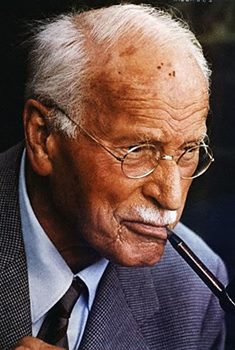
“Individuation means becoming a single, homogeneous being, and, in so far as ‘individuality’ embraces our innermost, last, and incomparable uniqueness, it also implies becoming one’s own self. We could, therefore, translate individuation as… ‘self-realization.’” (Collected Works of C.G. Jung: Volume 7, Carl Jung )
A wonderful easy understanding of #Jung. (at least humbly for me 😉
via https://academyofideas.com/
The following is a transcript of this video.
“Individuation means becoming a single, homogeneous being, and, in so far as ‘individuality’ embraces our innermost, last, and incomparable uniqueness, it also implies becoming one’s own self. We could therefore translate individuation as… ‘self-realization.’” (Collected Works of C.G. Jung: Volume 7, Carl Jung )
In this second video in our mini-series on the ideas of Carl Jung we are going to examine the individuation process, a process Jung believed to be essential for a healthy functioning personality. Such an examination will lead us to explore some of the parts of the personality that Jung viewed as particularly important, namely the persona, the shadow, the anima and animus, and the self. Before we go into more detail on the individuation process we will begin with a brief overview of the relevant content from our first video on Jung.
Jung conceived of the psyche, or one’s total personality, as composed of a conscious and unconscious realm. The unconscious realm he split into the personal unconscious and the collective unconscious. The personal unconscious is largely composed of repressed elements from one’s personal history, while the collective unconscious is composed of instincts and archetypes which are common to all human beings. Archetypes can be viewed as evolved cognitive structures which influence emotions, thoughts, and behaviours.
Archetypes provide structure to different parts of the psyche and the psyche functions optimally when there exists a harmonious balance between these parts. Unfortunately, according to Jung, few people function in an optimal manner. Rather most suffer from imbalances where some parts of their personality suffer from inflation, or over-expression in consciousness, while other parts suffer from deflation or underdevelopment whereby they lack proper expression in consciousness. Imbalances, Jung believed, often lead to the development of neuroses and a lack of vitality in life.
Working to bring about proper expression of the various archetypally structured elements of one’s personality by confronting contents of the unconscious and thus obtaining self-knowledge, is the purpose of the individuation process. It is important to note that this process occurs spontaneously if unimpeded as contents of the unconscious naturally strive for outward expression in the world, or as Jung put it “Everything in the unconscious seeks outward manifestation”.
However, the problem is that while natural, most people get stuck at various stages of the individuation process as they are unable to properly integrate into consciousness certain elements of the unconscious. How to promote such integration when it does not occur naturally was a question of deep concern for Jung. Through his patient analysis, research, and personal experience he arrived at the idea that dreams provide the greatest opportunity to access the unconscious.
As he put it:
“Dreams are impartial, spontaneous products of the unconscious psyche, outside the control of the will. They are pure nature; they show us the unvarnished, natural truth, and are therefore fitted, as nothing else is, to give us back an attitude that accords with our basic human nature when our consciousness has strayed too far from its foundations and run into an impasse.” (The Collected Works of C.G. Jung: Volume 10, Carl Jung)
Jung put enormous emphasis on the therapeutic effects of dream analysis. By recording and analyzing one’s dreams, determining their meaning and relevancy, Jung thought one could integrate unconscious contents into consciousness.
It must be noted, however, that dream analysis is not a simple matter, due to the often confusing nature of dreams and the fact that quite frequently dreams express material which can be difficult to incorporate into consciousness. The interpretation of dreams, therefore, must be seen as a skill acquired through practice and improved with an understanding of some of the most important archetypes, archetypes which we will spend the remainder of the video looking at.
Before looking at some of the archetypes which suffer from underdevelopment and therefore may manifest themselves in dreams, it is important to first look at the persona. The word persona was used in Roman times to signify a mask worn by an actor. In an analogous manner, in Jungian psychology, the persona represents the social mask that each of us “wear” in our interaction with others in society. Or to put it differently, it represents the personality that we try to portray to others.
While the persona plays an important role in promoting social interaction and communal life, problems arise when people over-identify with their persona. As Jung writes:
“Fundamentally the persona is nothing real: it is a compromise between the individual and society as to what a man should appear to be. He takes a name, earns a title, represents an office, he is this or that. In a certain sense all this is real, yet in relation to the essential individuality of the person concerned it is only a secondary reality, a product of compromise, in making which others often have a greater share than he. The persona is a semblance, a two-dimensional reality.” (Carl Jung)
Most people suffer from inflation of the persona, meaning that they over-identify with their “social mask” to the detriment of other important areas of the psyche. In the course of the individuation process, one must come to the realization that the persona is not the totality of their being, but rather only a small component of a much larger personality. Such a realization is achieved by diving into the unconscious and mining from it the rich and meaningful contents manifested by the archetypes.
The first stage in the exploration of the unconscious, according to Jung, is an encounter with one’s shadow archetype. Over the course of one’s life, certain personality traits elicit negative feedback and even punishment from others. This negative feedback creates anxiety resulting in these traits being pushed away from awareness into the unconscious where they form the shadow – the “dark” side of one’s personality.
To become aware of and integrate the shadow into consciousness is often a difficult and sometimes heroic endeavour. But failure to do so can create chaos in one’s life. In the darkness of the unconscious the shadow is far from impotent, but instead influences emotions, thoughts, and behaviours, in a manner which is beyond conscious control. Often the shadow finds expression through projections, whereby instead of seeing the disagreeable elements of the shadow as residing within ourselves we project these traits onto to others.
Bringing elements of the shadow into the light of consciousness is crucial if one is to correct some of these less desirable aspects of themselves. As Jung explains:
“Unfortunately there can be no doubt that man is, on the whole, less good than he imagines himself or wants to be. Everyone carries a shadow, and the less it is embodied in the individual’s conscious life, the blacker and denser it is. If an inferiority is conscious, one always has a chance to correct it. . .But if it is repressed and isolated from consciousness, it never gets corrected.” (The Essential Jung, Carl Jung and Anthony Storr)
The shadow, according to Jung, is not only composed of negative traits. Rather, in the process of over-identifying with the persona often people reject personality traits not because they are harmful, but because they don’t fit with the dominant social attitudes of the day. Therefore, when integrating the shadow into consciousness, one is also exposed to positive traits and creative energies that can bring about a renewed sense of vitality to life.
“The shadow, when it is realized, is the source of renewal; the new and productive impulse cannot come from established values of the ego. When there is an impasse, and sterile time in our lives. . .we must look to the dark, hitherto unacceptable side which has been at our conscious disposal.” (Meeting the Shadow: The Hidden Power of the Dark Side of Human Nature)
In addition to the shadow, another archetype which normally suffers from underdevelopment is a contra-sexual archetype termed the anima in males and the animus in females. While the persona is oriented outward, acting as a barrier protecting the ego from the external social world, in an analogous manner the anima/animus is oriented inward, protecting the ego from the sometimes threatening and overwhelming contents which emerge from the dark inner depths of the unconscious:
“The natural function of the animus (as well as of in the anima) is to remain in place between individual consciousness and the collective unconscious; exactly as the persona is a sort of stratum between the ego-consciousness and the objects of the external world. The animus and the anima should function as a bridge, or a door, leading to the images of the collective unconscious, as the persona should be a sort of bridge into the world.” (Carl Jung)
An encounter with the anima/animus is manifested in one’s consciousness as a meeting, in dreams or visions, with a member of the opposite gender. Such a figure often arises during times of severe psychic disorientation, offering guidance as to how to remove any psychological barricades hindering the natural progression of the individuation process. Encountering such an archetype can, therefore, signify the coming of a deeply meaningful period in one’s life, defined by significant psychological transformations:
“The meeting with the anima/us represents a connection to the unconscious even deeper than that of the shadow. In the case of the shadow, it is a meeting with the disdained and rejected pieces of the total psyche, the inferior and unwanted qualities. In the meeting with the anima/us, it is a contact with levels of the psyche which has the potential to lead into the deepest and highest…reaches that the ego can attain.” (Jung’s Map of the Soul, Murray Stein)
After one encounters and integrates aspects of the anima/animus archetype into one’s ego, one gains access to enter into the deepest layer of the psyche, the archetype of wholeness – which Jung called the self and viewed as the most important of all the archetypes. Proper expression of the Self is the goal of the individuation process. As Jung put it:
“. . . the self is our life’s goal, for it is the completest expression of that fateful combination we call individuality. . .” (Carl Jung)
As the sun occupies the centre of the solar system, in an analogous manner the Self is the central archetype of the entire psyche. The Self-archetype acts as the unifying or organizing principle of the psyche and is oriented toward a union of the conscious and unconscious realms. Remembering from our first video on Jung that the centre of the field of consciousness is the ego,
Jung noted that:
“the more numerous and more significant the unconscious contents which are assimilated to the ego, the closer the approximation of the ego to the Self, even though this approximation must be a never-ending process.”(Carl Jung)
As one increasingly identifies with the self they will notice a greater sense of harmony both within themselves and with the world as a whole. In fact, Jung saw the connection with the self as so important that at various times he described it as “a treasure that would make [one] independent” and a “link to the infinite”.
Jung came upon the existence of the self by exploring the universality of symbols such as the quaternity and mandala, which in his words, “occur not only in the dreams of modern people who have never heard of them, but are widely disseminated in the historical records of many peoples and many epochs.”
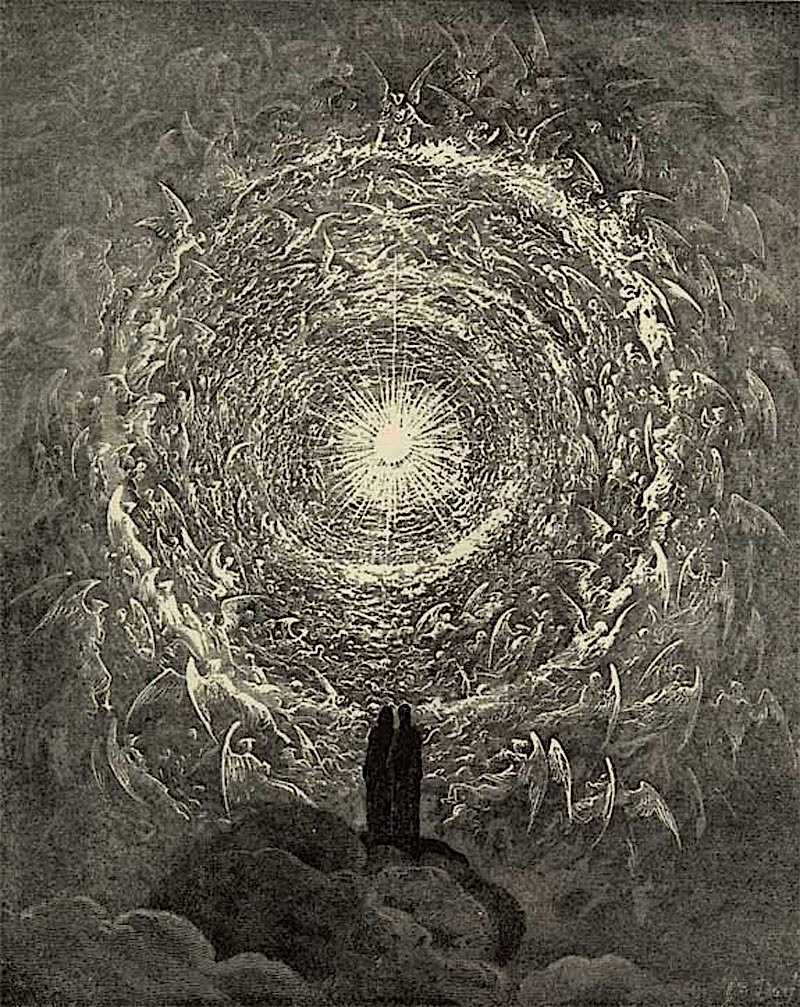
“A mandala”, said Jung “is the psychological expression of the totality of the self.” Not only do mandalas have an extremely long history and repeatedly show up in the imagery of many religions including Hinduism, Buddhism and Christianity, but Jung observed that with some of his patient’s mandalas spontaneously arose “during times of psychic disorientation or re-orientation.” Mandalas, and other “symbols of order”, Jung believed to be compensatory symbols of wholeness which are manifested by the Self in times of crisis.
The individuation process which culminates in an identification with the self is, according to Jung, crucial for the development of a healthy functioning personality as well as the expression of the unique potential that exists within each of us. But along with these personal benefits, Jung thought the process of individuation was essential for the well-being of society. Jung believed that conformist societies, composed mainly of people who over-identify with their persona, are easy prey for the rise of oppressive governments. Therefore it is essential for any lasting positive social change that increasing numbers of people, assisted by the individuation process come to the realization that there is more to their being then the social role dictated by the persona. A society increasingly composed of individuated individuals would not, according to Jung, succumb as easily to the rise of oppressive governments:
“…in so far as society is itself composed of de-individualized human beings, it is completely at the mercy of ruthless individualists. Let it band together into groups and organizations as much as it likes – it is just this banding together and the resultant extinction of the individual personality that makes it succumb so readily to a dictator. A million zeros joined together do not, unfortunately, add up to one.” (Man and His Symbols, Carl Jung)











 lampmagician
You must be logged in to post a comment.