Menkhauser Bach am Teutoburger Wald Menkhauser Bach in the Teutoburg Forest
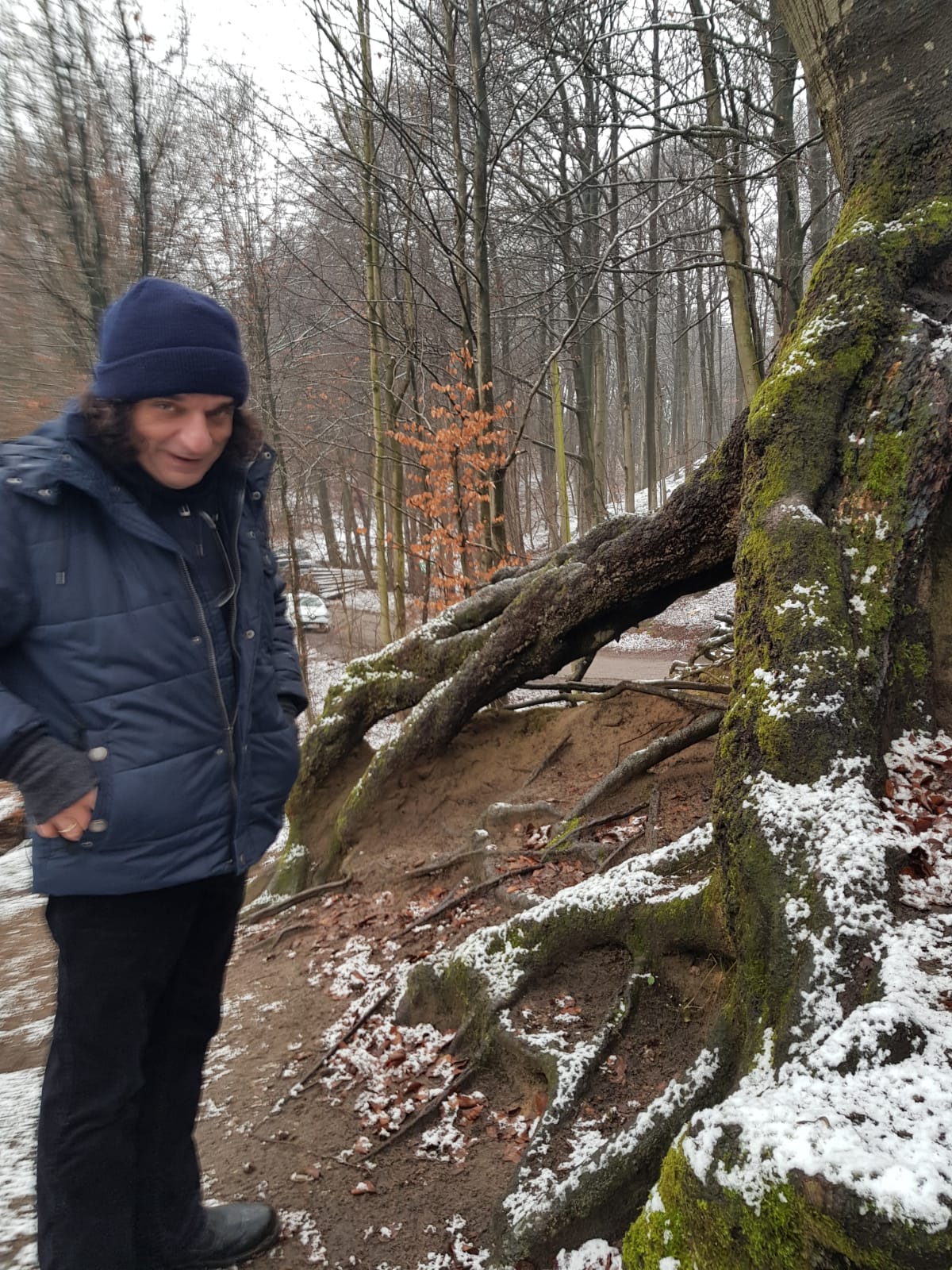
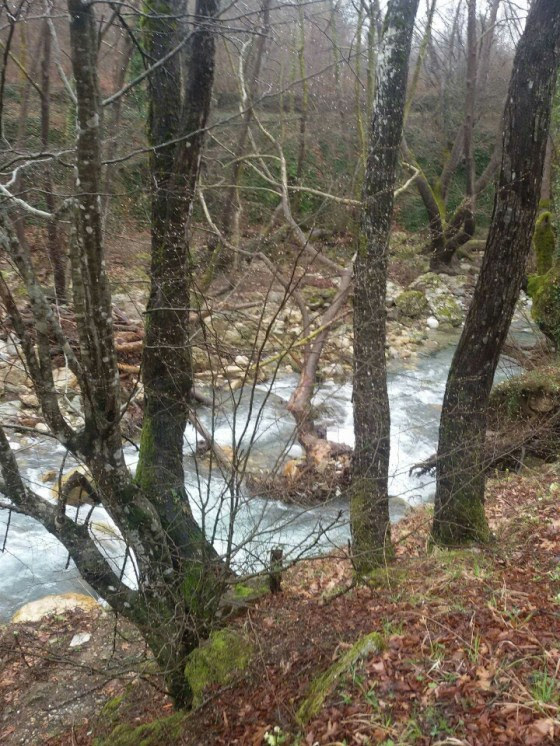
Oh yes! Unbelievable but true: I gave my wife my consent to take a long walk with her! Of course, it was a pleasant walk, although it was cold and wet. I have done it often (a couple of times) despite I admit I’m a little lazy 😉 but, when it comes, I am ready.
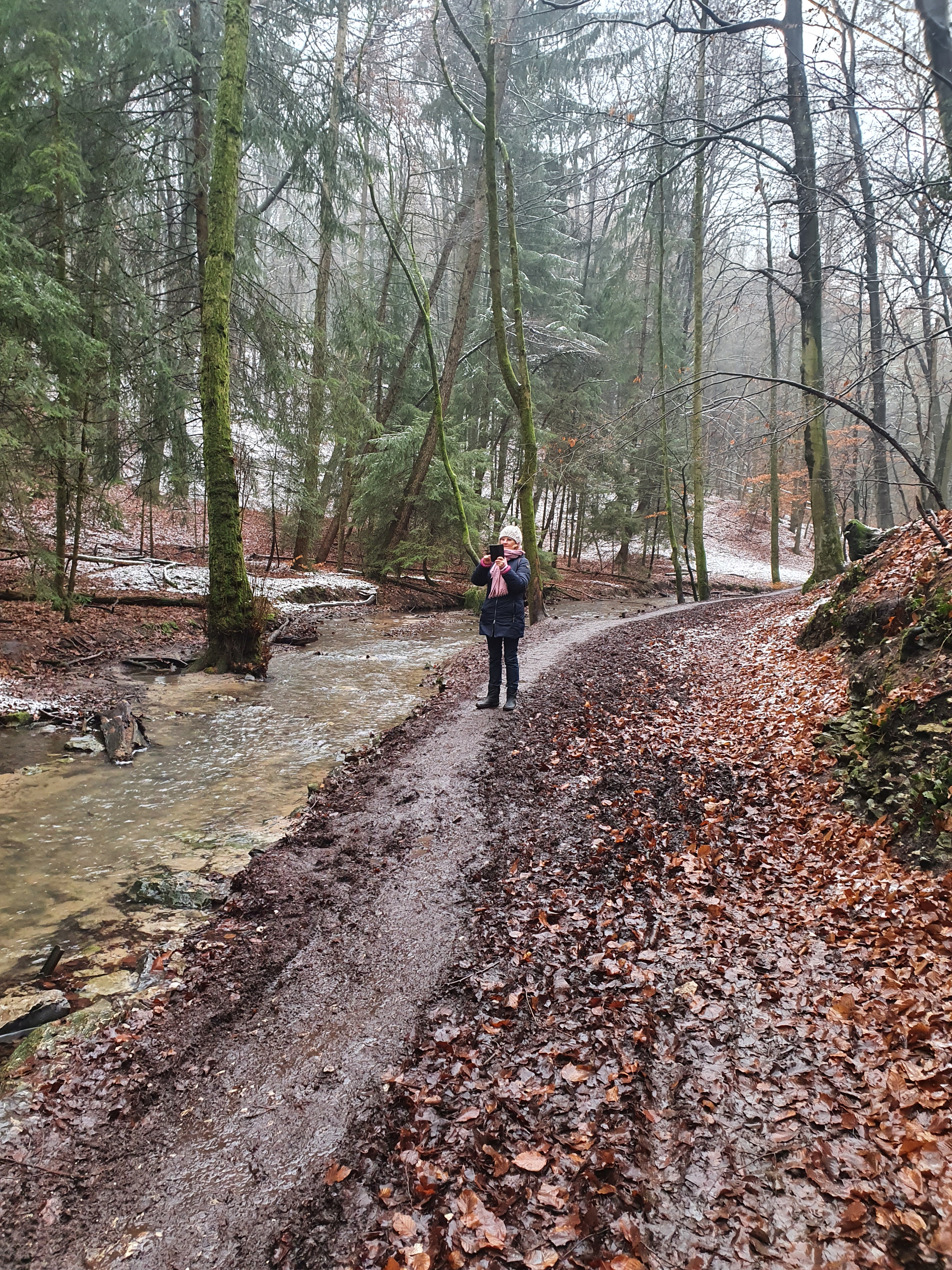
That was about three hours walk (ca. 7 Km), of course with many view-pausing included.
Actually, I am not so amused about the town, where I’m living. It is a village which should stay that way, though it always likes to be accepted as a town but, It is a village, and it will remain in the future. That is the worse side, but the better side; is the forest called Teutoburger Wald, which has spread itself on a wide hill, in an area of ca. 4000 square meters (c. 4,000 km² almost all of it included officially in one of two natural parks: 1,220 km²), from the middle towards Northern Germany. That is a good chance for us to catch up this natural park in a few minutes to feel healthier more than ever.
And Regina, my adorable lady, who can’t do anything without having been outside for a walk every day, knew this path very well, which goes along a slim clean flow, a brook, named Menkhauser Bach. It was a very enjoyable, especially, when in a moment of silence, we’d only hear birds and running water.
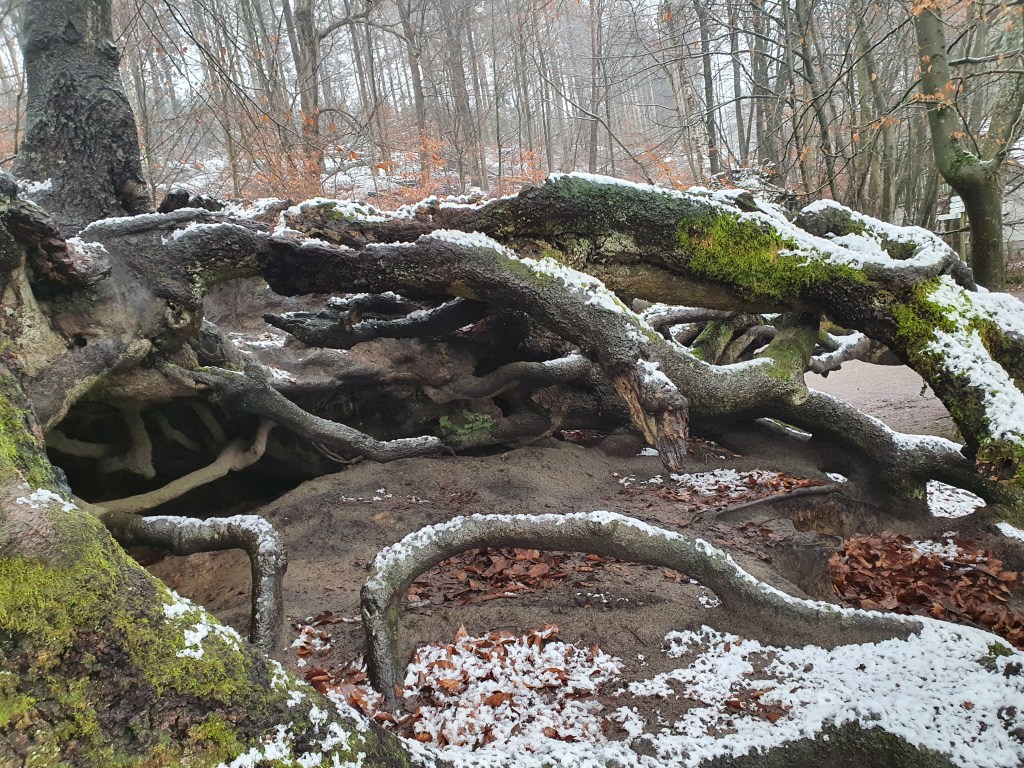
And the trees…
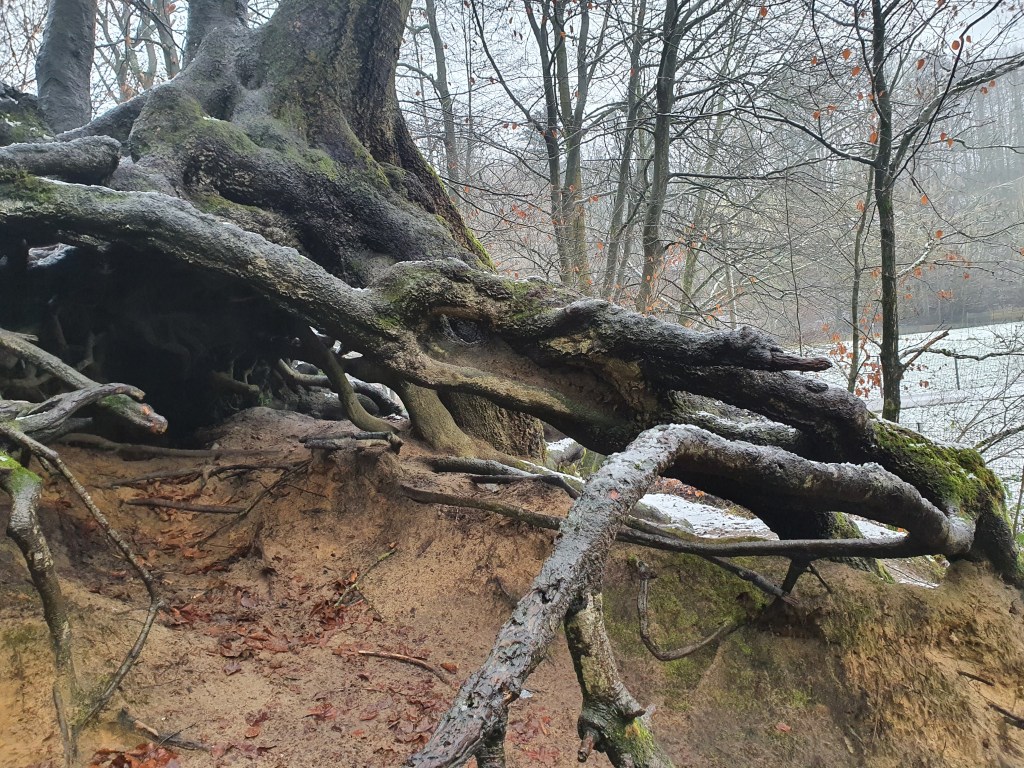
We observed the roots of old trees that peeked out of the ground like snakes.
Nature is fascinating, and if we only understand that we are a part of it, we will appreciate it and can enjoy our life.
As I wanted to write about our excursion, coincidentally I saw this post by my Greek friend. I thought that how fit is this with my story, and with so many good tips. Stay safe, healthy and tuned, and try to go out for a walk now and then. 🤗💖
The country that prescribes walks instead of drugs
In Scotland, instead of drugs, they prescribe activities in nature ATHENS LEVENTI
There is a kind of “medicine” without side effects and costs: the walk in nature. And now doctors in Scotland have the right to prescribe it to their patients with the aim not only of improving physical health and reducing mental illness, stress and anxiety.
In the modern world we usually do not pay much attention, but the time we spend in nature is crucial for our well-being, as research like this points out .
If we spend 90 minutes of our day in nature, the activity in the area of the brain associated with depression is limited. At the same time, aggression is reduced, pain control is improved and the immune system is strengthened.
There is a whole booklet of “natural” prescriptions that accompanies the program, full of suggestions. Among other things, the program proposes to make works of art on the beaches from natural materials, to plant bulbs or to do bird watching. They even suggest different activities per month: For example, in October, we can appreciate a cloud or talk to a horse. In November, feed the birds in the garden. And as for May, then we can throw our face in the grass. And all this, with a doctor’s prescription. We can find all the suggestions here .
While “nature recipes” are currently only available in Scotland, no one is stopping us from prescribing a little nature to ourselves.
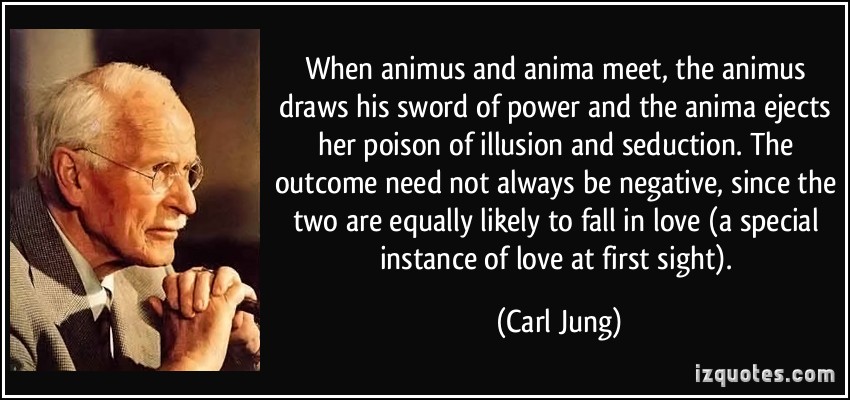
I have to thank my mother for giving me her full power of her Anima that I grew independent from the antipode. She had lost a girl-child and wished to have a daughter, but first were Al and then me, therefore, she had brought me up to everything as a daughter might learn. And on the other hand, I can understand well all genders whom I meet or associate. I don’t want to advise anyone (men), better I want to give them as a suggestion, to look about themselves and find their both sides.
Anyhow, better to read some lectures from the great Mythology of Greece: for example the story of Tiresias. Honestly, I wish I could experience what he/she had got to know. For me, it is a great chance to have such an adventure. Be frankly, don’t you want to?
As we read below, Hera, or possibly Athena, had punished Tiresias’ gender to be changed into feminine for seven years. And after that, his/her evaluation on the pleasure of men and women during sex, which was warranted about 10 to 1 for women! It has been hard for Hera to endure! She made him blind but, with the power of prediction, as goodwill! Let’s read the whole story;
“Like other oracles, how Tiresias obtained his information varied: sometimes, he would receive visions; other times he would listen for the songs of birds, or ask for a description of visions and pictures appearing within the smoke of burnt offerings or entrails, and so interpret them. Pliny the Elder credits Tiresias with the invention of augury.
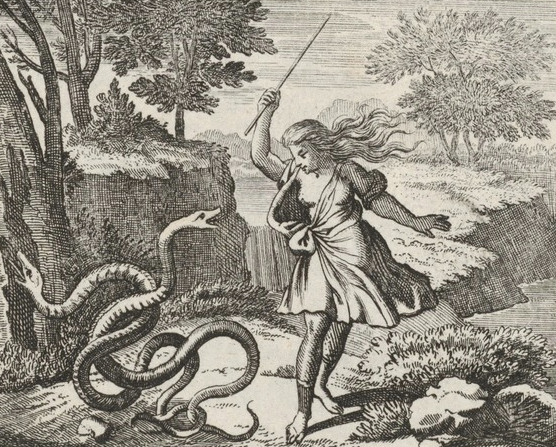
On Mount Cyllene in the Peloponnese, as Tiresias came upon a pair of copulating snakes, he hit the pair with his stick. Hera was displeased, and she punished Tiresias by transforming him into a woman. As a woman, Tiresias became a priestess of Hera, married and had children, including Manto, who also possessed the gift of prophecy. After seven years as a woman, Tiresias again found mating snakes; depending on the myth, either she made sure to leave the snakes alone this time, or, according to Hyginus, trampled on them. As a result, Tiresias was released from his sentence and permitted to regain his masculinity. This ancient story was recorded in lost lines of Hesiod.
In Hellenistic and Roman times Tiresias’ sex-change was embellished and expanded into seven episodes, with appropriate amours in each, probably written by the Alexandrian Ptolemaeus Chennus, but attributed by Eustathius to Sostratus of Phanagoria’s lost elegiac Tiresias. Tiresias is presented as a complexly liminal figure, mediating between humankind and the gods, male and female, blind and seeing, present and future, this world and the Underworld.”
Tiresias appears as the name of a recurring character in several stories and Greek tragedies concerning the legendary history of Thebes. In Sophocles’ Oedipus Rex, Oedipus, the king of Thebes, calls upon Tiresias to aid in the investigation of the killing of the previous king Laius. At first, Tiresias refuses to give a direct answer and instead hints that the killer is someone Oedipus really does not wish to find. However, after being provoked to anger by Oedipus’ accusation first that he has no foresight and then that Tiresias had a hand in the murder, he reveals that in fact, it was Oedipus himself who had (unwittingly) committed the crime. Outraged, Oedipus throws him out of the palace, but then afterwards realizes the truth.
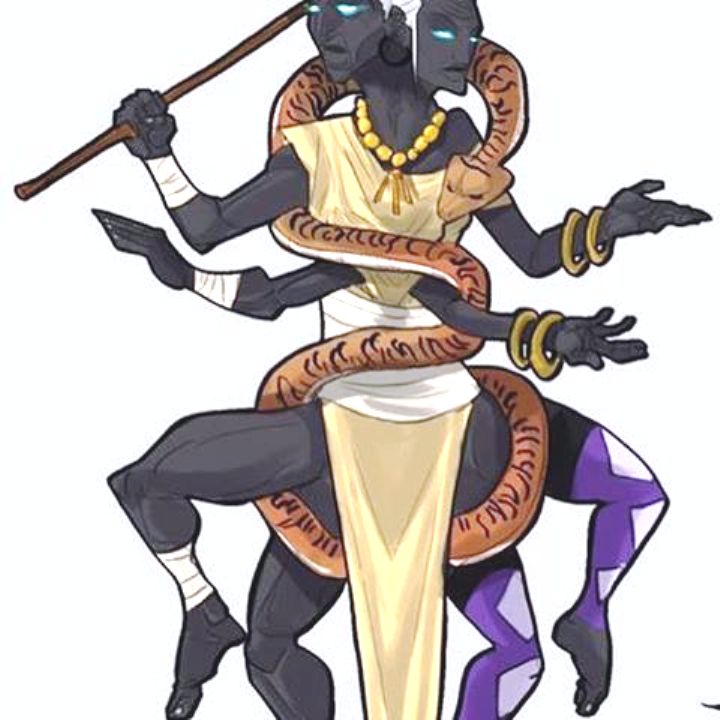
Here we can see also, that in ancient Africa, the importance of both genders is an issue: the story of Mawu-Lisa.
MAWU-LISA is a complex deity worshiped in coastal West Africa by the Fon and most of the Ewe. Occasionally Mawu and Lisa are considered as separate deities; sometimes they are seen together as a complementary sexual pair. The issue is complicated because the Ewe peoples use the term mawu both to refer to God in a general way or to a specific deity.
As a specific deity, Mawu is seen as a creator, but she rarely has shrines, priests, or rituals dedicated to her. Among peoples such as the Fon, Mawu is conceived of as a female deity associated with the moon, and it is in this manifestation that she is most often paired with Lisa. Among the Fon, the cult of Mawu-Lisa was centered in Abomey, the capital of the old kingdom of Dahomey. Mawu is depicted as an elder female figure in conjunction with Lisa, a younger male consort. Other complementary qualities are seen in them. For example, whereas Mawu is associated with the moon (night) and is cool (gentle and forgiving), Lisa is associated with the sun (day) and is hot (fierce and punitive). Sometimes even their actions are complementary. In one mythic tradition, Mawu created the earth and then retired to the heavens. When she saw that things were not going well with men, she sent Lisa to make tools and clear the forests so that men could farm and live a civilized life.
So dear men, let’s forget about being Machos, and take it softly, take it easy. Have a nice weekend everyone 🙏💖🙏🤗
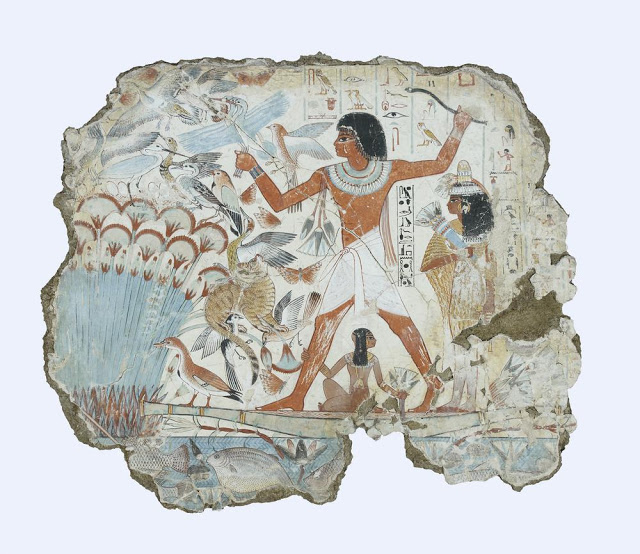
Nebamun was a middle-ranking official “scribe and grain accountant” during the period of the New Kingdom in ancient Egypt. He is thought to have lived c. 1350 BCE and worked at the vast temple complex near Thebes where the state-god Amun was worshipped. Wikipedia
Now let’s have another look at this endless fascination of the magic land Egypt; Our history. With forever thanks to dear Lady; Marie Grillot http://Marie Grillot for her brilliant description. 🙏💖
Fragment of a polychrome painting of Nebamon, standing in a boat,f hunting and fishing in the swamps Provenance: Tomb of Nebamon – Theban Necropolis (location lost today) Discovered in 1820 by Giovanni d´Anastasi on behalf of Consul Henry Salt Salt collection acquired by the British Museum in 1821 – Reference EA37977
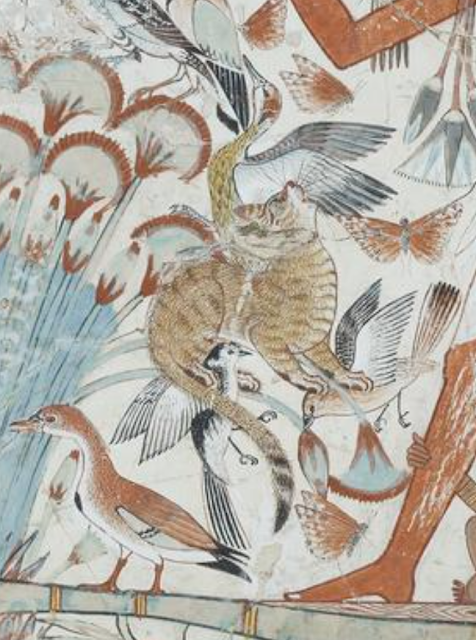
On the frail skiff made of bundles of tied reeds, with the bow and the stern slightly raised, are three characters evolving in the luxuriant universe of a marsh, rich in vegetation, birds, birds, butterflies, and fish … Their presence – and that of the cat that accompanies them – seems to have stirred up this colourful and variegated fauna which cheers up with a rustle of wings.
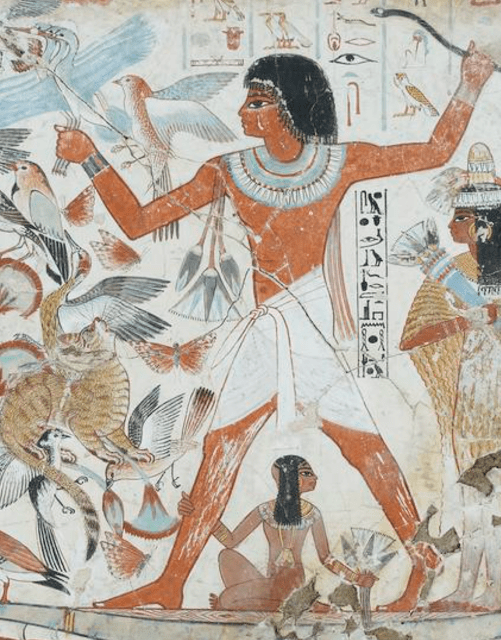
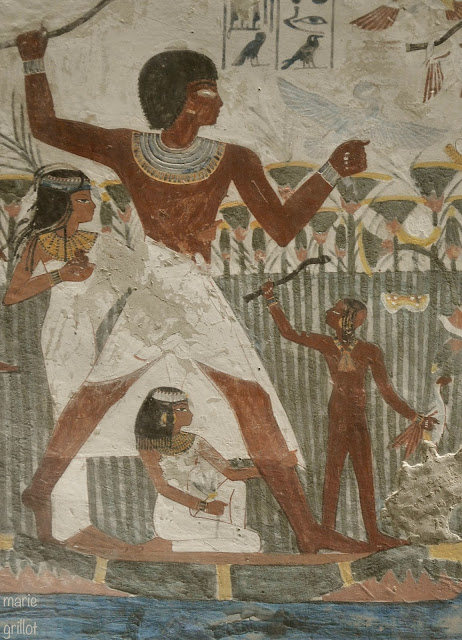
Center is Nebamon, scribe and accountant of the grain in the attic of divine offerings at the temple of Amun at Karnak in the 18th Dynasty. He is shown standing in a position ensuring the balance necessary to launch the boomerang which he holds in his left hand. With his right fist, he grips the legs of several birds he has just captured and which are struggling to regain their freedom.
Fragment of a polychrome painting of Nebamon, standing in a boat, hunting and fishing in the marshes Provenance: Tomb of Nebamon – Theban Necropolis (location lost today) Discovered in 1820 by Giovanni d´Anastasi on behalf of Consul Henry Salt Salt collection acquired by the British Museum in 1821 – Reference EA37977
His face is lit by a stretched eye, surrounded by kohol. He wears a beautiful curly wig. Dressed in a white linen loincloth, nicely tied at the front, he wears an ousekh necklace in shades of green, white and red, as well as large bracelets. Three long lotus stems – a central one, the flower of which is open, the other two in the bud – fall from his shoulder.
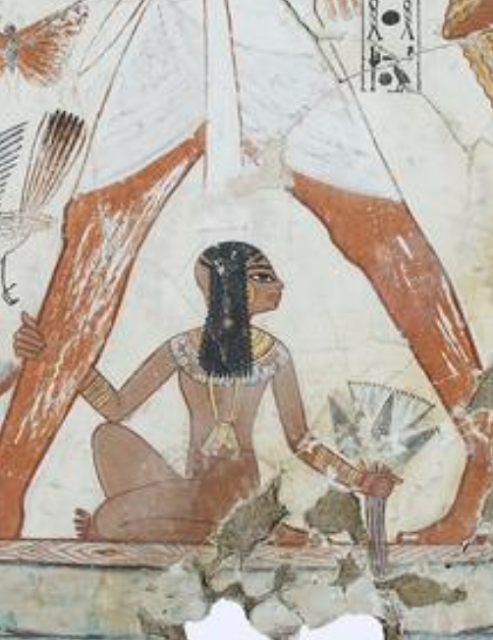
Between her spread legs, occupying the centre of the skiff, a young girl – probably a child of the couple – is kneeling. She is depicted naked and wears the lock of childhood, composed of tight braids that reveal a tiny part of a large earring. This is not the only jewel that adorns her: she has multiple gold rings around her arms, an ousekh necklace that partially covers her shoulders, and another set with the golden pendant reaching her height. bellybutton …
Fragment of a polychrome painting of Nebamon, standing in a boat, hunting and fishing in the marshes Provenance: Tomb of Nebamon – Theban Necropolis (location lost today) Discovered in 1820 by Giovanni d´Anastasi on behalf of Consul Henry Salt Salt collection acquired by the British Museum in 1821 – Reference EA37977
Her attitude is curious: her face, lit by a stretched almond-shaped eye, is turned backwards, while the action unfolds in front of her … Charming details are to be noted, such as her right hand which encloses his father’s calf as if to cling to him; her little fan-shaped toes, and this bouquet of lotuses, one open and three in buttons, which she is holding in her left hand …
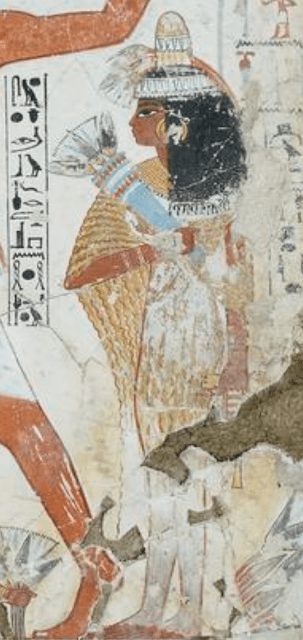
Fragment of a polychrome painting of Nebamon, standing in a boat, hunting and fishing in the marshes Provenance: Tomb of Nebamon – Theban Necropolis (location lost today) Discovered in 1820 by Giovanni d´Anastasi on behalf of Consul Henry Salt Salt collection acquired by the British Museum in 1821 – Reference EA37977
Standing at the stern is Hatshepsut, the wife of Nebamon and presumably the mother of the child. She is wearing an elegant long pleated dress and a shawl, also pleated, in yellow. Her pretty wig with fine braids, adorned with a headband and lotus stems, is topped with a cone of ointment. His left arm is stretched along the body while his hand encircles one or two partly damaged “accessories”: a Menat, a Sistrum? Her right arm is bent and, in her hand, brought to her chest, she holds a magnificent bouquet of lotus. These flowers – symbols of rebirth – are extremely present throughout the “painting”.
Fragment of a polychrome painting of Nebamon, standing in a boat, hunting and fishing in the marshes Provenance: Tomb of Nebamon – Theban Necropolis (location lost today) Discovered in 1820 by Giovanni d´Anastasi on behalf of Consul Henry Salt Salt collection acquired by the British Museum in 1821 – Reference EA37977
The environment is magnificent. On a white background, multiple species of birds, with colourful plumages, fly away. One, no doubt more reckless, landed at the bow of the boat, while three others, less fortunate, fell prey to the tawny tabby cat… The cats were family pets, but he is shown here because a cat could also represent the Sun God driving out enemies of light and order. His unusual golden eye alludes to the religious meanings of this scene, says the British Museum.
Fragment of a polychrome painting of Nebamon, standing in a boat, hunting and fishing in the marshes Provenance: Tomb of Nebamon – Theban Necropolis (location lost today) Discovered in 1820 by Giovanni d´Anastasi on behalf of Consul Henry Salt
Salt collection acquired by the British Museum in 1821 – Reference EA37977
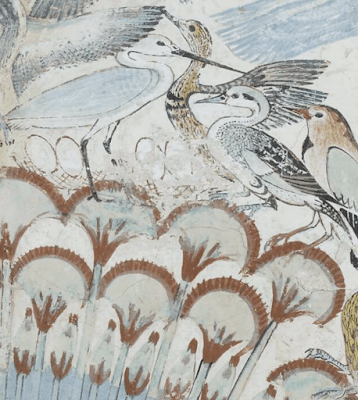
Eggs, oval and white, are in a nest which seems to be placed on the magnificent bouquet of papyrus which blooms in infinite grace… To this is added the presence of a few butterflies with outstretched wings that we seem to see fluttering… The aquatic life appears just as dense … In the blue river, whose waves are nicely rendered, large fish swim between the lotuses …
We have to understand that the size differences in the treatment of subjects are voluntary: thus, Nebamon appears very imposing compared to his wife; the same goes for birds or fish that seem “larger than life” …
This scene is of a freshness that is part of accomplished art. There is no doubt that it is the work of an artist (or several?) Of great talent: a naturalist as gifted as a portrait painter, and marvellously tracing the hieroglyphics as the eight vertical registers of great quality also prove …
Detail of the hunting and fishing scene in the marshes in the tomb of Nakht and his wife Taouy (TT 52) Theban Necropolis – Sheikh Abd el-Qurna TT52 la tombe de Nakht et de son épouse Taouy nécropole thébaine, vers le bas de la partie nord de la colline de Sheikh Abd el-Gournah,
This hunting and fishing in the marshes can be found in the iconography of many tombs. We cannot help but compare this scene to those that can be admired in particular in the tombs of Nakht (TT 52) and Menna (TT 69). The style, just like the spirit and the composition, are really similar, Even if everything here seems more “finished”.
The British Museum takes a deeper look at this “painting”: “It is more than just an image of recreation. The fertile marshes were seen as a place of rebirth and eroticism. The hunt for animals could represent the triumph of Nebamun on the forces of nature as he was reborn. The huge ‘striding’ figure of Nebamun dominates, ever happy and ever young, surrounded by the rich and varied life of the swamp. “
As for Thierry Benderitter, in his excellent site: Osirisnet.net, he analyzes the identical scene of the TT 52: “The swamp and its high papyri (which can only be found in the Delta) represent the same thing for the deceased as the marshes of Chemmis for the child Horus, a place away, where he can grow up, and which must be protected from the Isfet. We find all this: the forces of evil (the Isfet), represented by the birds (which do not belong to an organized world) must be fought, as they threaten the reborn deceased as Seth threatened Horus “.
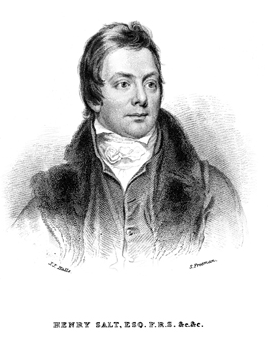
Henry Salt (Lichfield, UK – 14-6-1780 – Alexandria, Egypt – 30-10-1827) diplomat, the British consul in Egypt from 1816 to 1835, collector of antiques
Nebamon’s tomb was discovered at the beginning of the 19th century by Giovanni d’Athanasi. His real name: Demetrio Papandriopulos, a son of a Greek merchant living in Alexandria than in Cairo, entered the service of the distinguished and elegant British Consul General, Henry Salt when he was barely 20 years old. For nearly a decade, this keen collector of antiques, and his main “agent” Giovanni Battista Belzoni, took “Yanni” on their travels. The travellers, communicated to him about their passion for excavations and antiques. Then with general permission, granted by Muhammad Ali Pasha of Egypt, Belzoni led campaigns mainly in the Theban region, and in the years 1817-19, he built up a remarkable collection of large and important sculptures from the eastern and western shores of Thebes “(N. Strudwick, Masterpieces of Ancient Egypt, London 2006).
When the collaboration of Salt and Belzoni ended in 1819 Athanasi quite naturally replaced him in the field. Salt trusted him completely, he appreciated his ability to estimate the quality and value of antiques, as well as his sense of commerce. Thus, he supplied the Salt collections while building his own personal collection.
The house was built by Consul Henry Salt in Gournah in the years 1815-1820 and in which, settled in particular Yanni – Giovanni d’Athanasi
The consul had built a house in Qurna, a small fortress in which, Athanasi settled among the villagers. He integrated very well, benefits from their good knowledge of the Theban mountains, offers them work in excavation sites, and got informed of all traffic. He was also the neighbour of John Gardner Wilkinson with whom he seemed to have a good relationship.
Is it thanks to this positive “relational environment” that he discovered, in 1820, the tomb of Nebamon?
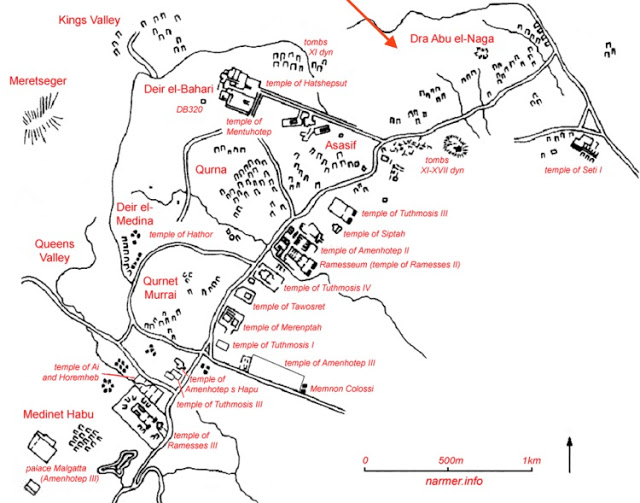
Map of the west bank of Luxor (source narmer.info): the necropolis of Dra Abu el-Naga is located at the top right)
Its location is unfortunately lost today, but it might be located in the necropolis of Dra Abu el-Naga and it dates from a period of flourishing arts: “Stylistically, the magnificent murals can be dated either to the last years of the reign of Amenhotep III (1390-1352 before our era), i.e. the first years of his successor “.
Eleven panels painted on plaster were taken from the chapel and sold by Consul Salt to the British Museum in 1821. This hunting scene in the marshes, 83 x 98 cm, was recorded under the reference EA37977. The Museum also specifies that “other fragments were found in Berlin and perhaps even in Cairo” …
Paintings from the Tomb-chapel of NebamunP. Kozloff, B. Bryan, and M. Berman, Egypt’s Dazzling Sun, Cleveland 1992, p. 299 [Pl.31] = Le Pharaon-Soleil, Paris 1993, p.238 [Fig.IX.23].At the dawn of Hellenic Egyptology and the constitution of Egyptian collections: New discoveries on Giovanni d’Anastasi and Tassos Neroutsos, Tenth International Congress of Egyptologists, Vassilis Chrysikopouloshttps://www.academia.edu/2000910/A_l_aube_de_l_hellenic_égyptologie_and_de_la_constitution_des_collections_égyptiennes_Des_nouvelles_découvertes_sur_Giovanni_d_Anastasi_et_Tassos_Neroutsos_Egyptologists_Tongenthress_
http://Lewis Lafontaine Carl Jung Depth Psychology
I am a little confused at the time (I hear you shout!!) I will come to my point later. Now, let’s take refuge to my (or might yours too?) Master to take a breath.
With great thanks to Lewis Lafontaine, who does work hard for letting us know more about this genius. I am getting old, I know it, even the peoples around me don’t believe it. 🙏💖💖
After a hard struggle I have come a piece of the way nearer to you. How hard this struggle was! I had fallen into an undergrowth of doubt, confusion, and scorn. Only the love of those, to whom I gave love, saved me from the darkness. ~Carl Jung, The Black Books, Vol. II, Page 165
In memory of Hermann Sigg,/ my very dear friend,/ died on 9 January 1927.
At his tower in Bollingen, Jung painted a mural bearing a stone-carved inscription in Latin and describing the culmination of the process of the rebirth of the divine that forms a central theme of Liber Novus and the Black Books.
The Sphinx “This is where the God is buried,/ this is where he arose. / like the fire inside the mountains,/ like the worm from the earth,/ the God begins. / like that serpent from ashes, / like the Phoenix from the flames, / the God arises / in a wondrous way. / like the rising sun, / like flame from the wood, / the God rises above. / like ailment in the body,/ like the child in its mother’s womb,/ the God is born. / He creates divine madness,/ fateful errors,/ sorrow and heartache./ like a tree / man stretches out his arms / and sees himself/ as a heavenly man / that he did not know,/ facing the world’s orb / and the four rivers of paradise. / And he will see the face / of the higher man and spirit, / of the greatest father / and the mother of God. / And in an inconceivable birth / the God frees himself/ from man / from image, / from every form, / while he enters / the unimaginable and absolute / secret./ In memory of Hermann Sigg,/ my very dear friend,/ died on 9 January 1927.” ~The Black Books, Vol. VII, Page 239, fn 252
Hermann Sigg (1875- 1927) was a businessman and a close friend and neighbor of Jung’s and the founder, in 1904, of Haus Sigg & Co., which specialized in olive oil and had plantations and factories in Tunisia, Spain, and France.
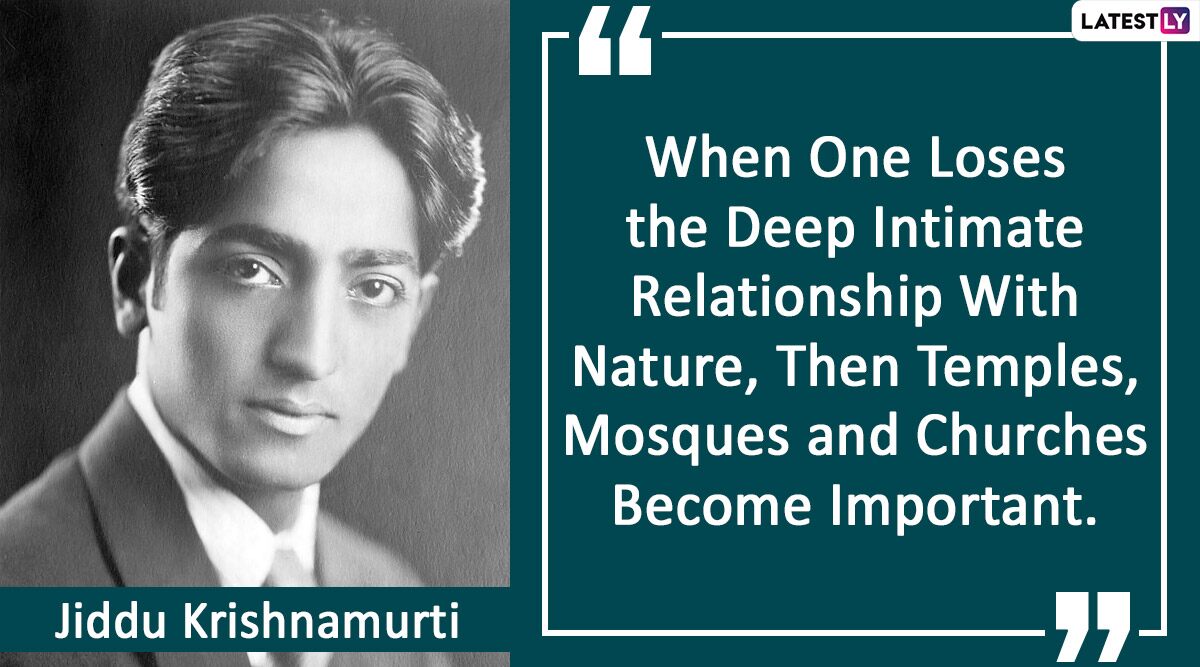
Jiddu Krishnamurti was a philosopher, speaker and writer. In his early life, he was groomed to be the new World Teacher, but later rejected this mantle and withdrew from the Theosophy organization behind it.
A spiritual man who has believed in no difference between religions, caste or philosophy but the self.
… woke up early with that strong feeling of otherness, of another world that is beyond all thought … there is a heightening of sensitivity. Sensitivity, not only to beauty but also to all other things. The blade of grass was astonishingly green; that one blade of grass contained the whole spectrum of colour; it was intense, dazzling and such a small thing, so easy to destroy …
This experience of the otherness would be present with him in daily events:
It is strange how during one or two interviews that strength, that power filled the room. It seemed to be in one’s eyes and breath. It comes into being, suddenly and most unexpectedly, with a force and intensity that is quite overpowering and at other times it’s there, quietly and serenely. But it’s there, whether one wants it or not. There is no possibility of getting used to it for it has never been nor will it ever be ..Krishnamurti’s Notebook
Here are three poems with or among Krishnamurti’s descriptions about love. I translated it from Greek, and I don’t know if these poems are from him. I couldn’t find them on the web.
Anyhow, all a wonderful lesson and enjoyable mind. 🤗💖
1. IN MY HEART In my heart they fight for you: love with love; desire with affection; jealousy with goodness; tenderness with violence; lust with purity; care with indifference; the serious with the ridiculous; joy with sorrow;
compassion with anger; anxiety with peace; fear with himself; yesterday with today; tomorrow with now. My only weapon – despite all this – is my Innocence. In my heart, I fight for you with centuries of human sorrow, with centuries of infinite human pain, with centuries of dependence, with centuries of loneliness, with centuries of despair, with centuries of need for love, with centuries of pursuit of pleasure , with centuries of fear of death.
Inside my heart you sink slowly like poison and pass into my veins, flooding everything inside me, last test before passing through the door behind it waiting patiently the Freedom that has no name, the Love that is there for everyone.
marias-couple-sitting
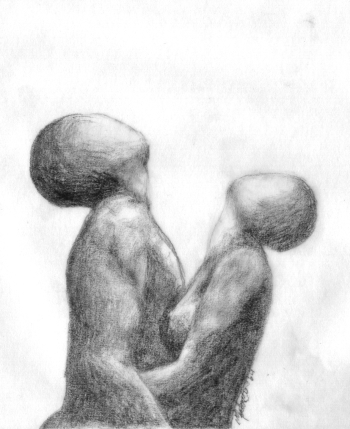
The kind of love we feel now is something full of sadness; the love we know has sadness, bitterness, frustration; the pain of this love is martyrdom; in it, we know fear and bitterness. And we can not escape this love, even though it is martyrdom. The fool blames love, without understanding the cause of pain; if you do not know its conflict there is no pain beyond reason. If you do not become aware of the source of the conflict, of the feeling of dissatisfaction, then love brings pain. It is the feeling of dissatisfaction that brings pain and not love. It is the feeling of dissatisfaction and not the love that creates the addiction and all the sad issues that are born.
2. THE END That morning, he visited his love story.
It was there, with the incredible quality of beauty that has something old, worked overtime. It was there, like an old huge house, with many rooms, closed windows and empty. People had left Taking the furniture with them, to take it to another house, to another story. But the house still had the atmosphere of those people’s story and you could feel it, relive their whole story deeply – without emotions – with a strange sense of peace. In the morning he had entered the house and was walking around the empty rooms, sucking all the feeling that was in them. He wanted to see and learn. And then it would come out forever.
marias-couple-standing
If you want to understand the issue of sexual intercourse, do not try to solve it separately away from other human problems. It’s all one. The act of love becomes a problem when there are frustrations. When our work, which should be the true expression of our existence, becomes merely mechanical and becomes stupid and useless, then there is frustration; when our emotional life, which should be rich and complete, is torpedoed by the phobias, then there is frustration; when the mind that should be awake, flexible, unrestricted, bends under the weight of tradition, self-defence memory, ideals, beliefs, then there is frustration. Thus, the act of love becomes an overemphasized and unnatural problem. When there is fullness, there are no problems. When you are fragile in love, the act of love is not a problem. For, the man for whom the act of love is a simple sensual pleasure, it becomes a pressing problem that devours his mind and heart….
You opened the shutters and the sun swept everything. It took you a while until your eyes got used to it. The mourning was over. As they stood at the window, you took a deep breath and were flooded with life and gratitude. You may have learned to accept death. Maybe you ‘learn to stay with what happens to you, what if it’ is, to learn deeply about it with him. What tremendous freedom not to run away! Maybe you learned to look inside, quietly, without blaming anyone for what is happening to you. Maybe you have learned to look inside you with compassion and care and so, without trying, leave the window open to divine Denial, without putting it running on your feet. The blessed “crisis” that for the first time you were not afraid to come whenever She wants to end. Now the mourning is over. What a strange discovery: even after the death of love there is mourning! Just like when someone you love dearly dies and every now and then you take a few flowers to his grave and “tell” him a word. Yes, there is mourning after the death of love. And then nothing. Vacuum. Only something shines at one end of your heart. The holy pain that you sat and felt, and looked inside her like in a mirror. The sadness that you felt all over, knowing now that it is not only yours. Love, his path to death, his death, mourning for him and then emptiness.
What an incredible beauty! The sun comes in through the window and refills the living room. If only one could stay still with the vacuum, forever. Who knows…
marias-woman-leaving
*
You are attached to someone and you see the whole history of attachment: what it includes, its whole structure, its nature, its consequences. And at some point, you finish it. What happens then? Go slowly, what happens; The person, of course, is still there. If you were attached to this person before and you are no longer, you are not complete, what happened? A change was made, right ?. What does that mean? Did the memory that you cling to you, fade away? Just the moment you completely gave up clinging? This is very important to see if you have done it. Why; What happens; When I was attached, the whole recording mechanism worked. So; Now that I am not at all attached, the recording mechanism has stopped. If it has not stopped, then it means that the attachment continues, perhaps in a different way. Now: When the mind was freed from attachment, what recorded, has been erased, right? This is the issue: There is no psychological memory. I tell you – if you do – there will be no memory. It is one thing to forget something and another to not have its psychological memory. Let’s take another example: suppose I have been hurt. The memory of this wound, the feeling of the wound is always there. If, now, I erase this wound, then with this erasure, with the cleansing, there is never again the feeling that I have been wounded. Yeah Al that sounds pretty crap to me, Looks like it ain’t for me either. You can’t even recall it – psychologically. You practically remember the fact, but if you want to put the emotion back there, you can not remember it, you can not recall the state of your mind or emotions are hurting…
Democracy is one of the oldest concepts of a word which still can’t be understood. Honestly, it is indeed a very complicated issue.
If you’ve guessed, you’re right! My motivation to write this post is what happened on Wednesday in the US Capitol in Washington DC. I couldn’t really believe what I was watching on this very evening on the TV screen, first, I thought that it was a report from one of those so-called “the third world counties” in which it happens after an election, and the oppositions don’t want to accept the results and want to storm the Parlement. The story was the same but, it was happening in a country that I’d never expect: The United States of America, one of the oldest countries in the matter of democracy and freedom.
“Democracy is a charming form of government, full of variety and disorder, and dispensing a sort of equality to equals and unequal alike.” Plato
It broke my heart when I saw these all scenes. It shows how fragile we are, I mean we, who try to do the right things; begins with love and not hate, with respect and without prejudge.
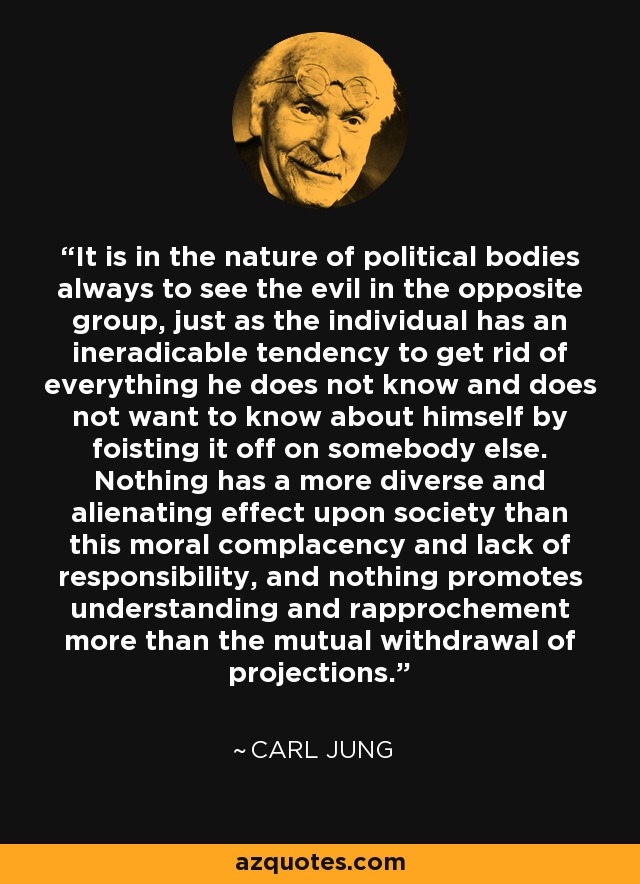
Here Dr C. G. Jung described the heart of the matter;
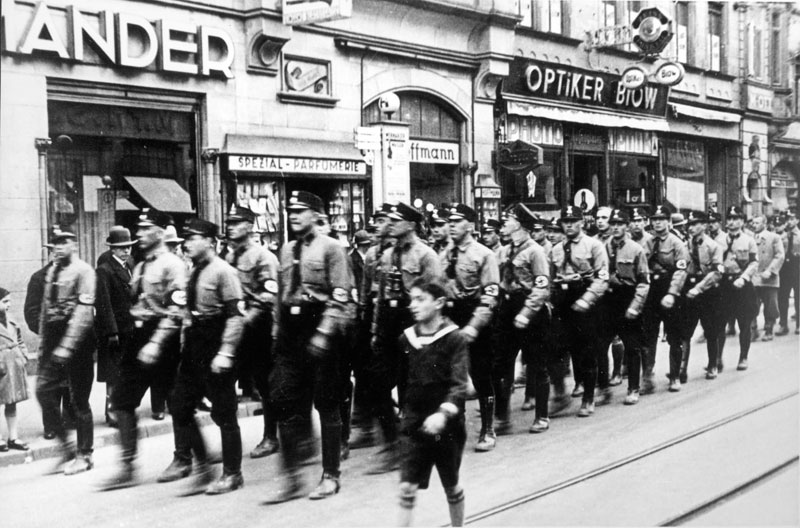
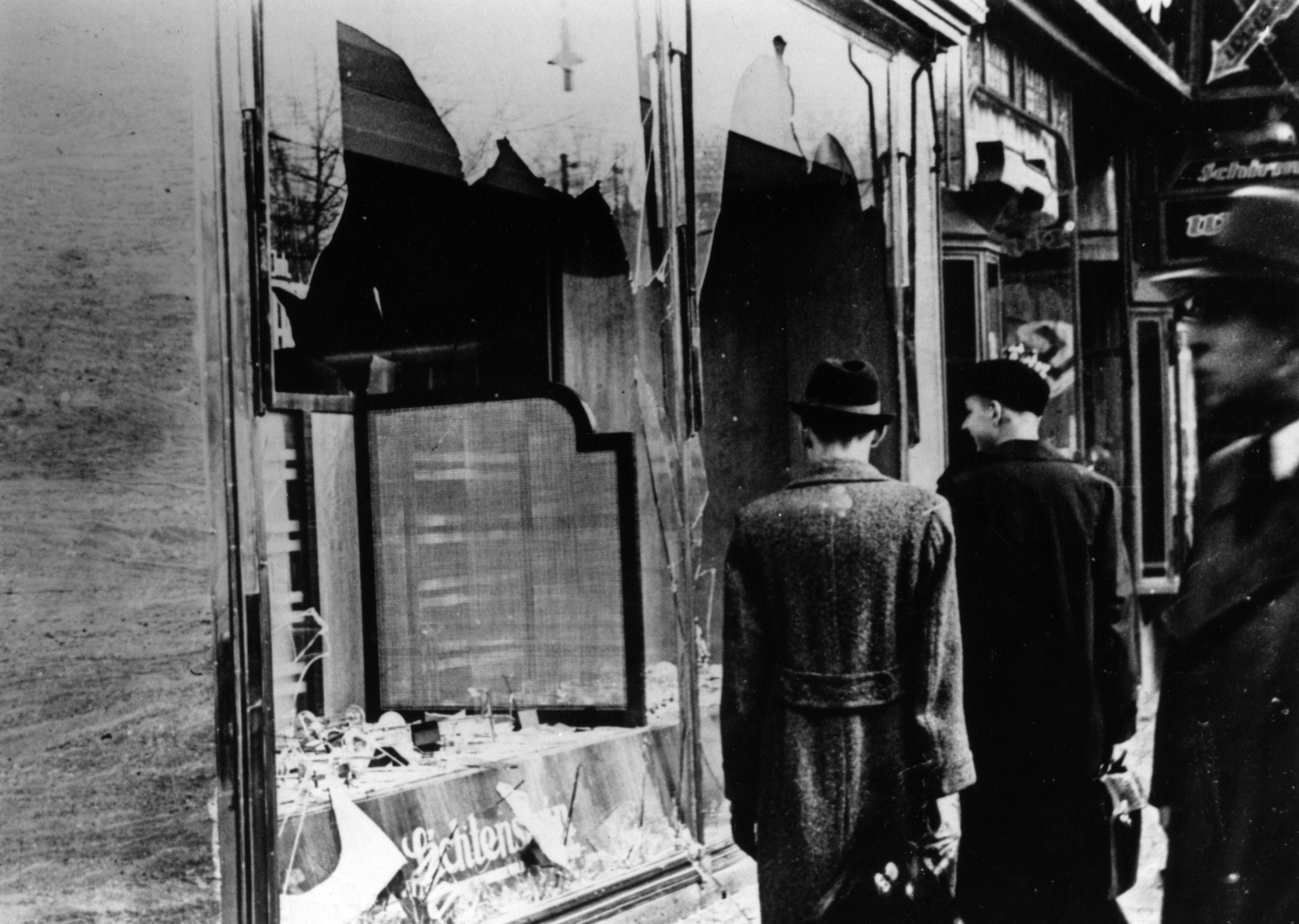
Although, it is not something new, as we can remember through history. In the years 1933-38, The NSDAP had begun with terror to set its violent on power.
And also, I can tell you a lot of such terrors, which in Iran, whenever the call for freedom became louder, there were cudgels to make all silent. We don’t have to forget the terrors by the Islamists, especially in the 21st century. It began with the catastrophic World Trade Centre it was the abuse of western democracy. But, as I am always convinced, it is not all based on one person (Hitler, Stalin, Khamenei, Erdogan, Putin, Viktor Orban, Jarosław Kaczyński, a lot of potentates from African countries, or even Donald Trump, as he wished to be). They are all an idol figure for helpless and ignorant folks, but, as Hannah Arendt has announced after the Eichmann Process. (I have written an article thereabout https://lampmagician.com/2020/10/10/hanna-arendt-a-solitary-genius/ it is because of many other reasons which we might call it all together “The ignorant Mass”. They are all made by us! I think that it is all about education. It helps us to know our environment and subsequently our inner soul, that is a matter of individual.
In fact, Democracy is difficult to progress, and it needs a lot of knowledge to comprehend. Here are three brilliant quotes by Plato:
“Mankind will never see an end of trouble until lovers of wisdom come to hold political power, or the holders of power become lovers of wisdom”
“Dictatorship naturally arises out of democracy, and the most aggravated form of tyranny and slavery out of the most extreme liberty.”
“Beauty of style and harmony and grace and good rhythm depend on simplicity.”
Anyway, we are, without doubt, fragile until, we begin to know and accept our inner soul: the dark side and the bright side. We can afford it for sure. Love wins at the end. 🙏💖💖🙏
On and on the rain will fall Like tears from a star like tears from a star On and on the rain will say How fragile we are how fragile we are
Fascinating Egypt. There is again, an article from this magical and still mysterious country. With heartily thanks to Marie Grillot http://Marie Grillot
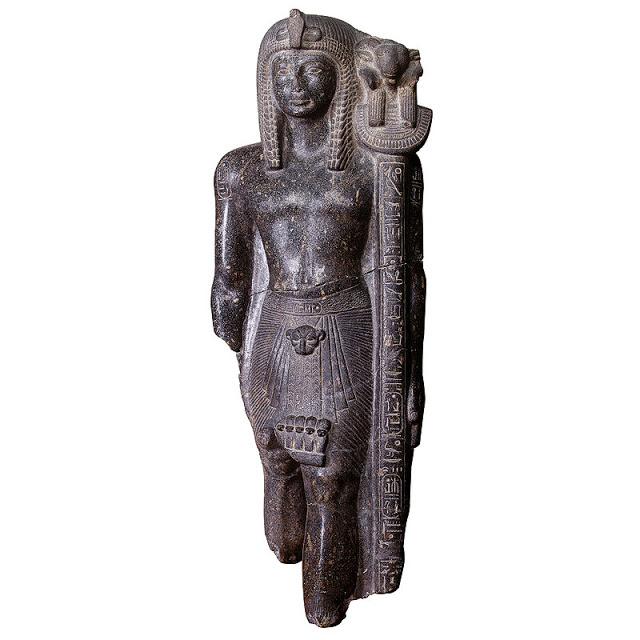
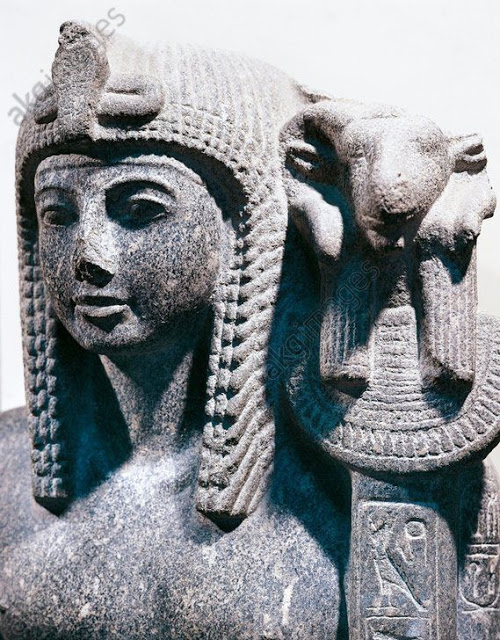
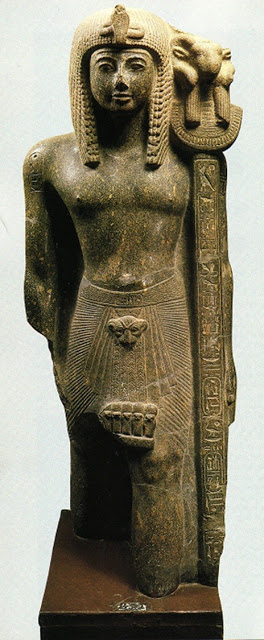
Statue of Ramses III in Amun sign holder – grey granite New Kingdom – XXth Dynasty – Reign of Ramses III Discovered by Georges Legrain, February 10, 1905, in the Hiding place of Karnak K 525 – Cairo Museum: JE 38682 – CG 42150
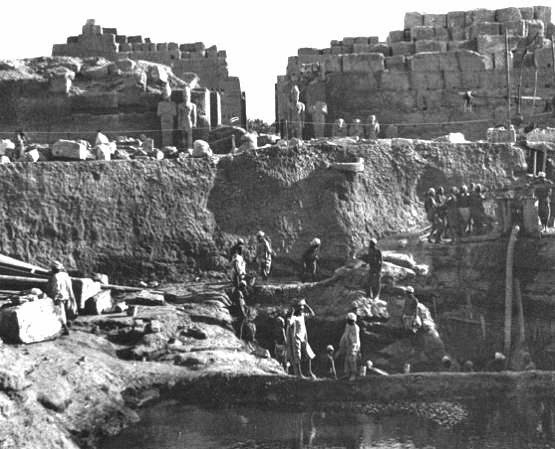
In 1903, Gaston Maspero, director of the Antiquities Service, gave Georges Legrain, at the “Direction des travaux de Karnak”, the instruction to: “excavate a little-known part of the temple, preferably around the sacred lake”. After reflection, he chooses the courtyard of the seventh pylon… Luck or chance? Still, after the discovery of many blocks dating from the Middle and the New Kingdom, by lifting a stele of Seti I, he made, on December 26, an incredible discovery …
This is a pit, 10 to 15 meters deep, full of water, in a way a “deposit” in which were “stored” statues: “voluntarily buried and covered in ancient times”. Their extraction will prove to be very difficult, and very long too since it will continue for no less than five seasons (1903-1907). Gaston Maspero specifies that: “nearly 800 statues and 17,000 bronzes” will be extracted!
On December 26, 1903, Georges Legrain, Director of Works at Karnak discovered, in the courtyard of the seventh pylon, “Karnak’s hiding place” From this pit will be extracted “nearly 800 statues and 17000 bronzes” specifies Gaston Maspero
The Egyptological contribution of this “Hiding place of Karnak” will be considered and truly well documented, thanks to the notes, sketches, surveys and photos of Georges Legrain.
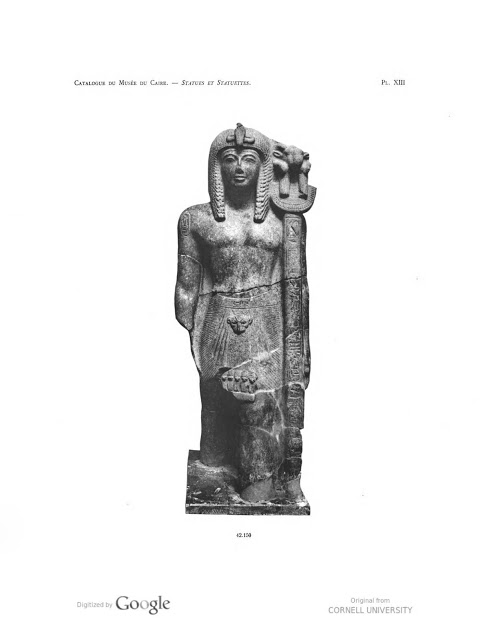
It was on February 10, 1905, that he noted the updating of this statue-bearer of Ramses III “found in numerous adjusted pieces”. The breaks are particularly visible at the waist and under the knees. And, what is even more regrettable is that the lower legs and feet were not found …
1.39 m high, it is carved in the round, with mastery craftsmanship, in a “speckled” grey granite. The sovereign is represented in the attitude of walking, left leg slightly forward. Despite the mutilations, and the shortages, the nobility is there and the port is “royal”!
Statue of Ramses III in Amun sign holder – grey granite New Kingdom – XXth Dynasty – Reign of Ramses III Discovered by Georges Legrain, February 10, 1905, in the Hiding place of Karnak K 525 – Cairo Museum: JE 38682 – CG 42150
The hairstyle is a marvel in its realization, with its locks braided finely on the top of the head, then more loosely around the edges. “The head is covered with a neck cover (of a Taquyah) over which is placed a large wig, with many locks, adorned with a uraeus. The anterior and lower ends of this hairstyle fall to the pecs “specifies the discoverer in” Statues and statuettes of kings and individuals “.
The face is perfectly symmetrical and hardly suffers from the slight mutilation of the nose. The almond-shaped eyes are topped by arched eyebrows. The palate, rather small, does not lack charm. In their “Official Catalog Egyptian Museum of Cairo”, Mohamed Saleh and Hourig Sourouzian deliver this beautiful analysis: “The physiognomy is that of a sovereign in the beauty of youth, the face conforms to the final stage of a Ramesside iconography which will henceforth go on degenerating until the fall of the New Kingdom “.
Statue of Ramses III in Amun sign holder – grey graniteNew Kingdom – XXth Dynasty – Reign of Ramses IIIDiscovered by Georges Legrain, February 10, 1905, in the Hiding place of KarnakGeorges Legrain: K 525 – Cairo Museum: JE 38682 – CG 42150
Even if her waist is slim, the body appears powerful with its broad shoulders and marked pecs. Francesco Tiradritti describes the refined Shendyt thus: “The king wears a sophisticated loincloth, quite common in Ramesside statuary. The tight folds of the fabric converge on the front, where they are covered with a kind of tiny, richly decorated apron. in the centre, a little below the belt is a leopard’s head from which descend four bands which evoke the design of a feather. At the bottom, five uraei have been carved with a solar disk on the head.
Statue of Ramses III in Amun sign holder – grey granite
New Kingdom – XXth Dynasty – Reign of Ramses III
Discovered by Georges Legrain, February 10, 1905, in the Hiding place of Karnak
K 525 – Cairo Museum: JE 38682 – CG 42150
Published here in “Statues and statuettes of kings and individuals”, G. Legrain, Henri Hauthier, 1906
He thus continues his description, focusing on the particular side of the statue: “the sign” or “the standard”. “The left arm supports a standard at the top of which has been placed a ram’s head. It is the emblem of the god Amon-Re, as confirmed by the column of hieroglyphics executed on the pole, on which are also indicated four of the five names of the sovereign. Cartouches with the names of Ramses III are also chiselled on the shoulders and the buckle of the belt. On the left side of the statue, in the space between the left leg and the right, there is represented the image of the crown prince, wearing a ceremonial robe and holding a fan in his hand “
Mohamed Saleh and Hourig Sourouzian specify the role of these statues of such a particular type: “The royal statues holding the sign of a deity are related to the festivals that took place in the temples, during which we walked in procession, the boat and the sacred stake of the god. The king, who is supposed to lead the festival in person, perpetuates this moment by statues carrying signs placed at the entrance of the temples “. So Ramses III donated it to the temple of Karnak …
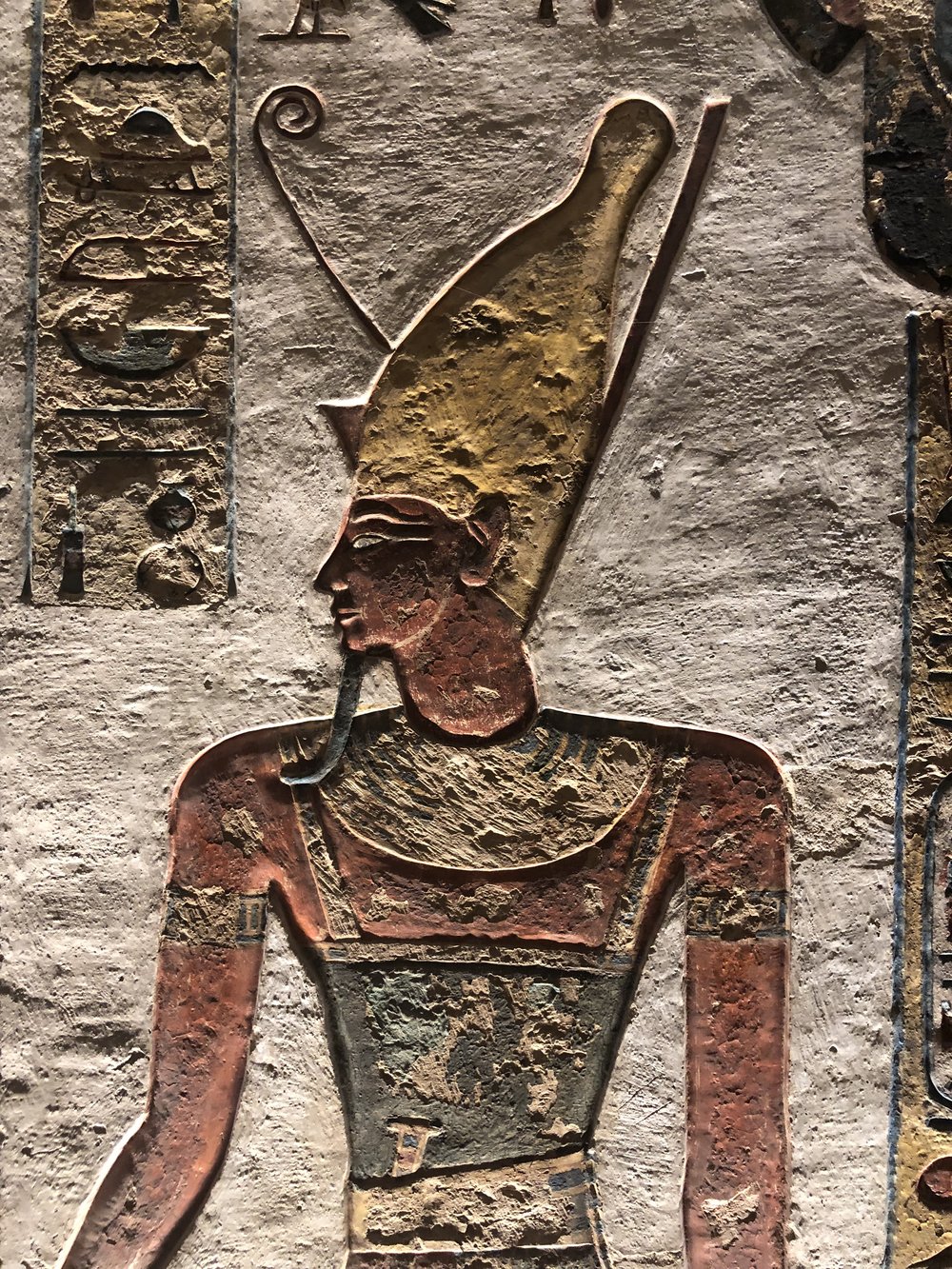
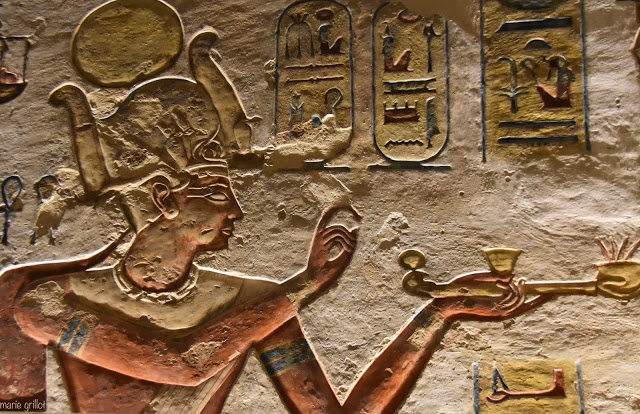
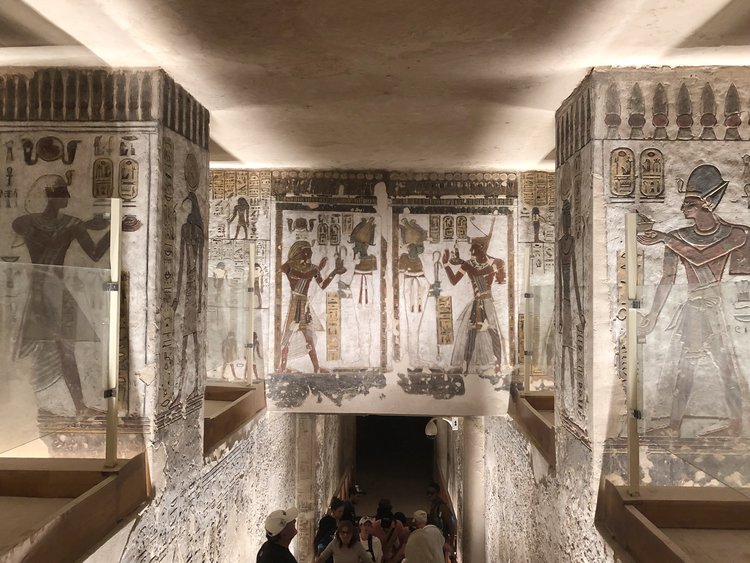
Ramses III represented on the walls of his tomb in the Valley of the Kings – KV 11 – XXth dynasty Tombe de Ramsès III – KV 11XXème dynastie
Succeeding his father Setnakht, founder of the 20th Dynasty, he reigned over the Two Lands from 1186 to 1154 BC, that is to say for more than 31 years. He died, it seems, in his 65th year following a palace conspiracy… His memory remains very present on the west bank of Thebes, by its great temple of millions of years in Medinet Habu, and by its magnificent tomb of the Valley of the Kings (KV 11)…
When it was discovered, this statue was recorded by Georges Legrain K 525 (Cachette de Karnak). Restored and basked, it was recorded in the Journal des Entrées of the Cairo Museum, JE 38682 and in the General Catalog CG 42150.
KV11, one of the largest tombs in Luxor Most tombs have a long, straight corridor — but this one takes a slight turn because it ran into a neighboring burial site!
That is truly a special event when the literature meets (or clashes in? sometimes!) with the movie. Oh yes! I have another movie to present here. 🤓😅🙏💖
This is a novel, written by John Irving. It’s an almost fairytale, full of dreams, sorrow and adventures, and a Bear. It is unconventional, like almost all the good novels!
You know! I think that an artist doesn’t need to be conventional, even must be unconventional.
Here is a short describtion by Wikipedia:
“Based on the novel by John Irving, this unusual comedic drama follows the exploits of the eccentric hotel-operating Berry family. While there are many strange dynamics between the various members of the Berry clan, arguably the most unconventional is the almost incestuous relationship that young, handsome John (Rob Lowe) has with his pretty sister, Franny (Jodie Foster). As the patriarch, Win (Beau Bridges), tries to keep his family together, unexpected events occur, changing them all forever.”
In my opinion, this movie is a masterwork because, as the director Tony Richardson http://Tony Richardson wanted to be faithful to the book, John Irving was complaining, that it might be too faithful! Perhaps he knew his book is very freely and bohemian, therefore, was afraid of a flop. And it became almost a flop but only in the US and not in Europe.
Actually, making movies, based on novels has never been easy, and it comes very rarely that it goes well. I myself was often disappointed when I watched a movie, which made on a novel that I have read before. As we all (the older of course) might remember, Ernest Hemingway couldn’t endure more than a few minutes in the cinema to watch films made from his books and left there angrily. Therefore, I’d prize such filmmakers like Richardson with their faithfulness to books.
This movie was not so successful in the US, as it’s been waiting. It was too unconventional for such a conservative society like of the Americans. Hemingway once wrote: an American, as an individual, is very enjoyable, but in the masses, they are boring or sometimes, even horrible.
Rob Lowe later said “When some studios do get a good movie, a movie that’s different, they kill it. Orion – I hate that studio; I won’t work for them again for all the money in the world – releases Hotel New Hampshire with a cartoon of a bear: people thought they were going to see Garfield the Cat. Then they change it to a bicycle for five: people thought they were going to see the Von Trapp family!!!!
That’s it! I have not a chance to be conversational because of growing up with so many artists all around! This movie is a good one, believe me even with so many stars. You might know that a good-made-of literature movie with stars could be mostly miserable, but this one, despite such wonderful actors, has sealed the goal.
I have found the full movie here if one like to watch it on YouTube. Have a lovely weekend everybody. 🙏💖
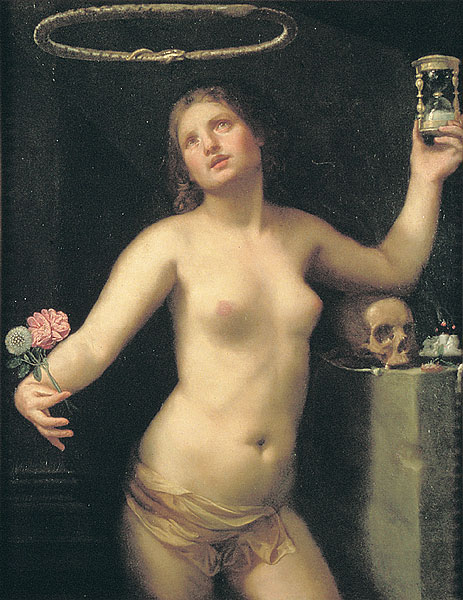
http://17th Century Guido CAGNACCI Allegory of human life [L’Allegoria della vita umana] Unknown Oil on canvas 110 x 86.5 cm [HxW] Private Collection
This Allegory of Human Life is one of the principal paintings in the career of Guido Cagnacci; it was already recognised as such during the 17th century when it was prominently displayed in the Palazzo Magnani in Bologna. When Senator Magnani commissioned Gian Gioseffo Del Sole (1654–1719) to paint a Divine Love as a companion piece, Del Sole’s effort, despite his great talent, faded to insignificance next to Cagnacci’s Allegory (Zanotti 1739, I, p. 306; Pasini 1986, pp. 255–59). Indeed, this buoyant young woman is one of the most realistic and unshamedly erotic nudes ever painted by an Italian old master.What Caravaggio http://Caravaggio had done for the male nude, Cagnacci now accomplished for the female: both painters declined to stylise their naked models. As a twenty-year-old graduate of Guido Reni’s workshop, Cagnacci had gone to Rome at the height of Caravaggio’s revolutionary influence. He was deeply impressed. Not until Courbet in the 19th century do we sense as we do in Cagnacci’s Allegory that the artist’s intention is to transform a portrait of his studio model, posed completely nude, into a work of art.The nude young woman is surrounded by symbols of time’s passage and the decay of all things. The painting would be a straightforward discourse on vanitas — replete with guttering candles, hourglass, flowers, skull, and ruined block of architecture — were it not for the serpent suspended in the air. The snake that devours its own tail to sustain its life is the ouroboros, an ancient symbol of the cyclical regeneration of life out of death. This Allegory of Human Life thus appears to be a unique proposal of an “anti-vanitas”. Instead of the standard lament that “all is for naught”, Cagnacci maintains that feminine pulchritude and fecundity are fundamental to the eternal cycle of creation. John T. Spike.
The painting from the 17th and 18th century in Italy has always fascinated me. There are lots of beautiful Masterworks, which we find them fabulous and admirable every time.
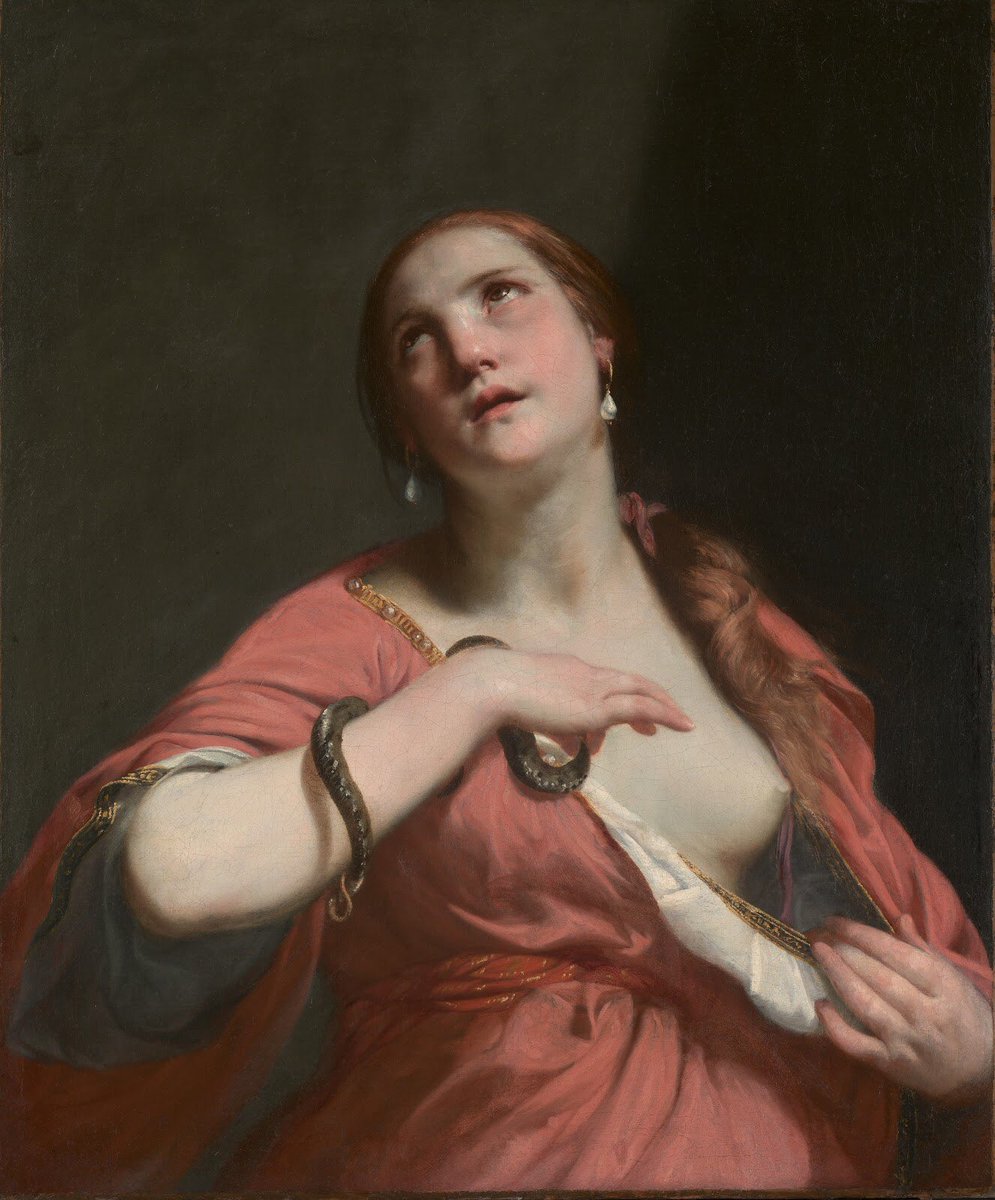
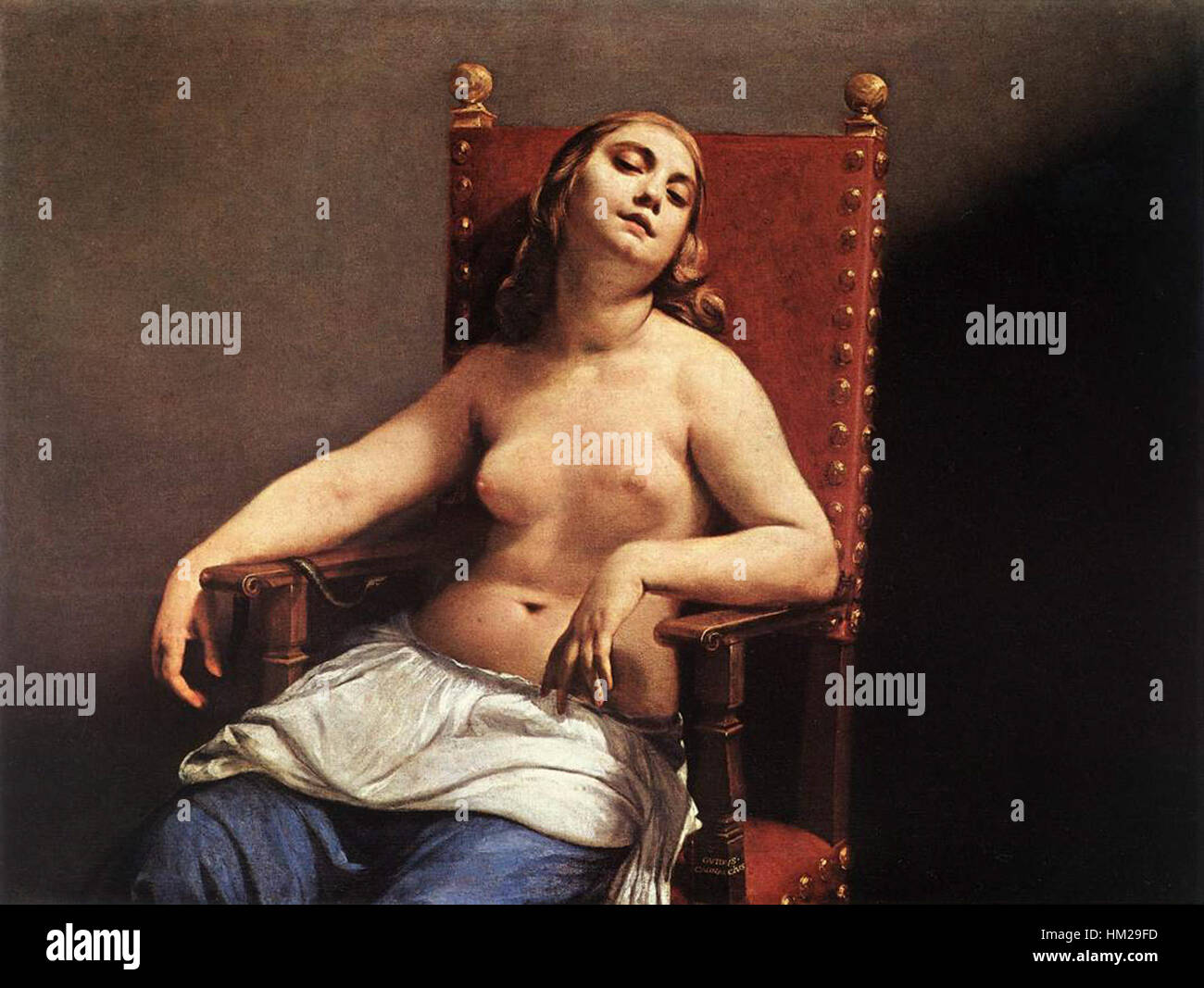
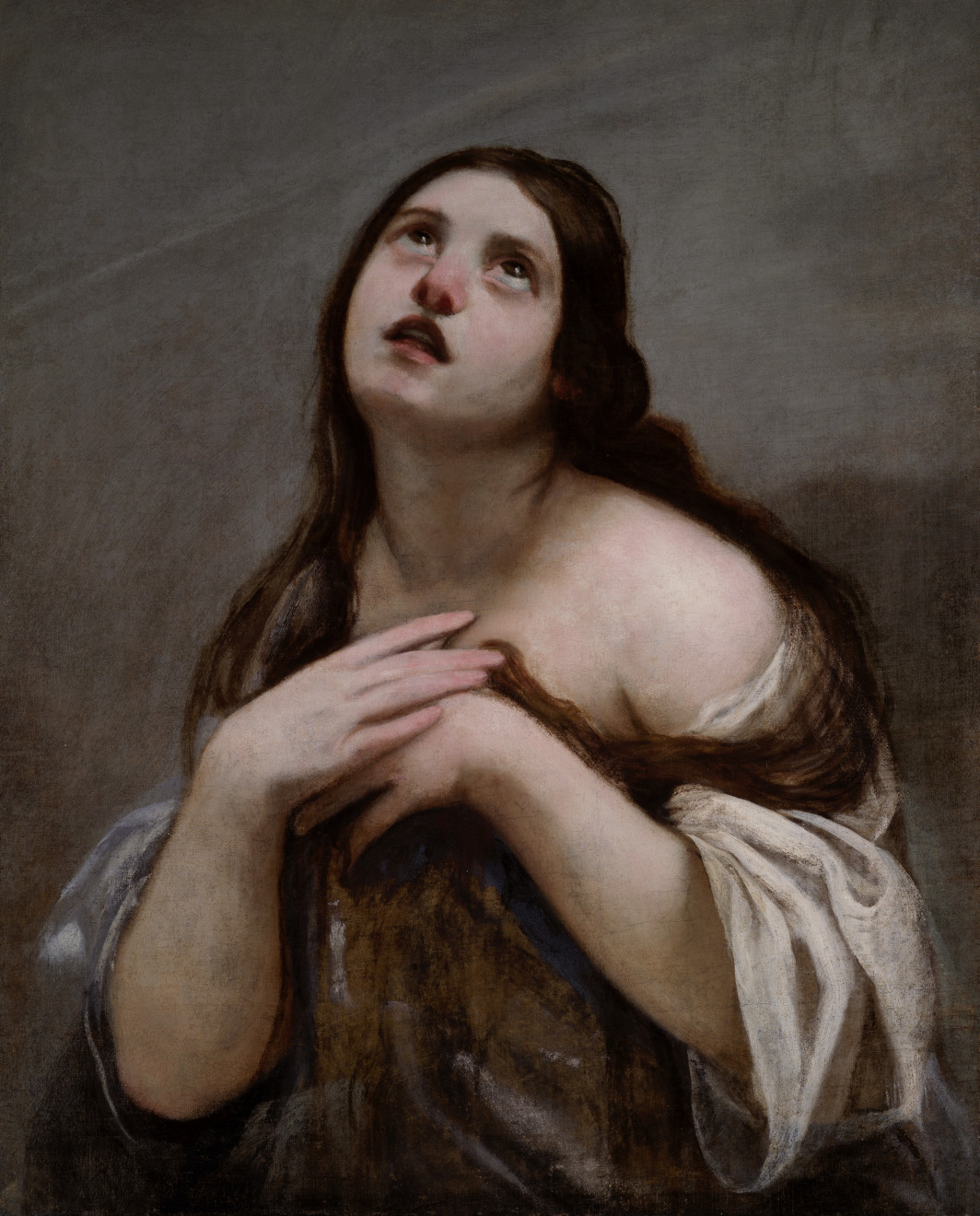
Here is another fascination, Guido Cagnacci. He is one of the Masters in showing inside of the soul (especially women). This inside is sinister; it comes from the dark side of the soul. No wonder that these have often used with the quotation of Dr Carl Gustav Jung. Let’s enjoy it despite its darkness.
Guido Cagnacci was an Italian painter originally from Santarcangelo di Romagna. Associated most readily with the Baroque period, his mature works are characterized by their use of chiaroscuro and their sensual subjects. He was influenced by the masters of the Bolognese School. Wikipedia
It was a year for us all, to carry so much pain, fear and grief. And worst of all, ignorance about ambiguities; the unknown and so many questions remain. But life is spinning continuous, and we are just a part of this huge wheel, in which we’re spinning within.
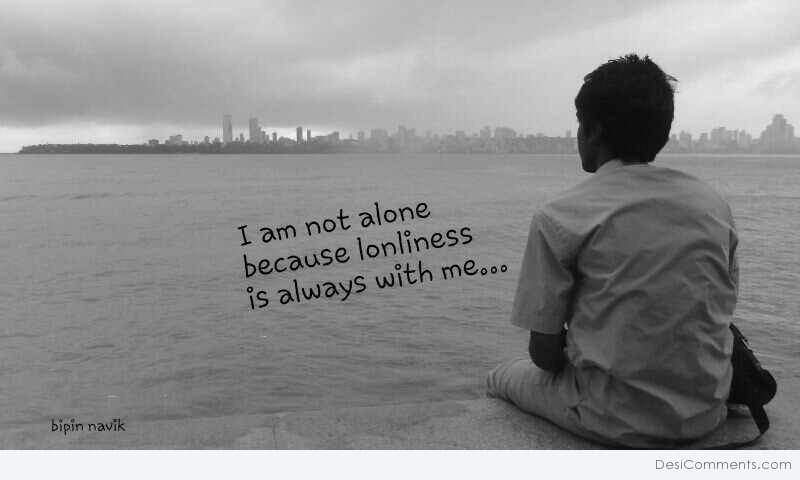
Tonight, some of us might be in small circles with friends and family, and some of us might be alone. I remember in Silvester 2015, because of some discord, I was left alone. I began to enjoy my solitude, and even I found this quote which helped me a lot.
Anyway, we might don’t know where we are going, but we are on our way.
I wish you all dear friends, happy and healthy new year. Take care and be safe. The show must go on.
My soul is painted like the wings of butterflies. Fairytales of yesterday will grow but never die. I can fly, my friends.















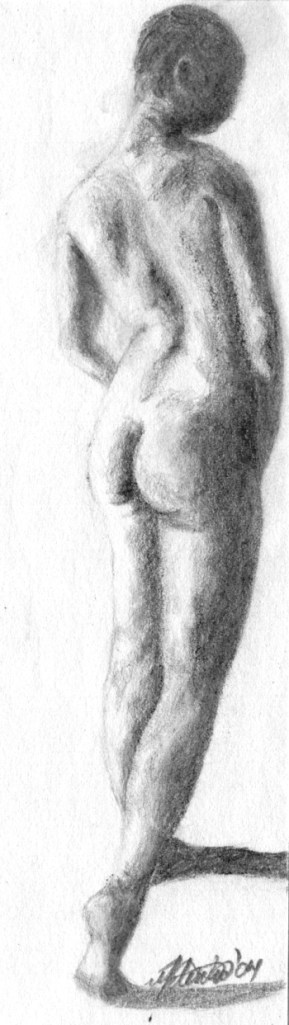
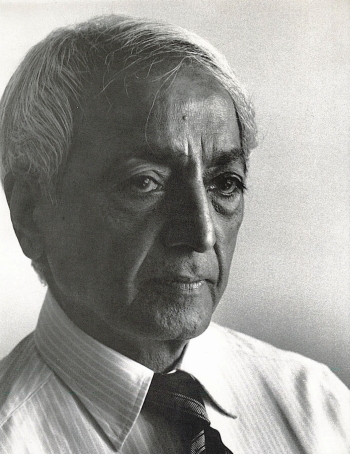 You are attached to someone and you see the whole history of attachment: what it includes, its whole structure, its nature, its consequences. And at some point, you finish it. What happens then? Go slowly, what happens; The person, of course, is still there. If you were attached to this person before and you are no longer, you are not complete, what happened? A change was made, right ?. What does that mean? Did the memory that you cling to you, fade away? Just the moment you completely gave up clinging? This is very important to see if you have done it. Why; What happens; When I was attached, the whole recording mechanism worked. So; Now that I am not at all attached, the recording mechanism has stopped. If it has not stopped, then it means that the attachment continues, perhaps in a different way. Now: When the mind was freed from attachment, what recorded, has been erased, right? This is the issue: There is no psychological memory. I tell you – if you do – there will be no memory. It is one thing to forget something and another to not have its psychological memory. Let’s take another example: suppose I have been hurt. The memory of this wound, the feeling of the wound is always there. If, now, I erase this wound, then with this erasure, with the cleansing, there is never again the feeling that I have been wounded. Yeah Al that sounds pretty crap to me, Looks like it ain’t for me either. You can’t even recall it – psychologically. You practically remember the fact, but if you want to put the emotion back there, you can not remember it, you can not recall the state of your mind or emotions are hurting…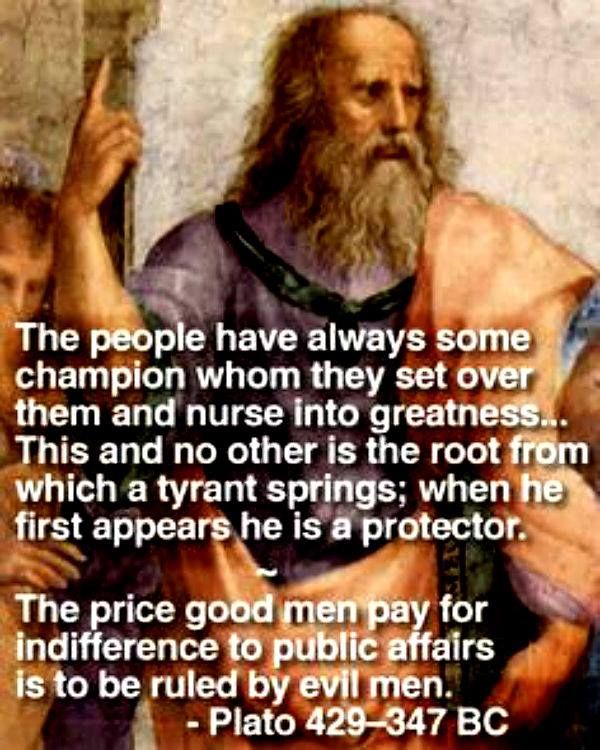







 lampmagician

You must be logged in to post a comment.