
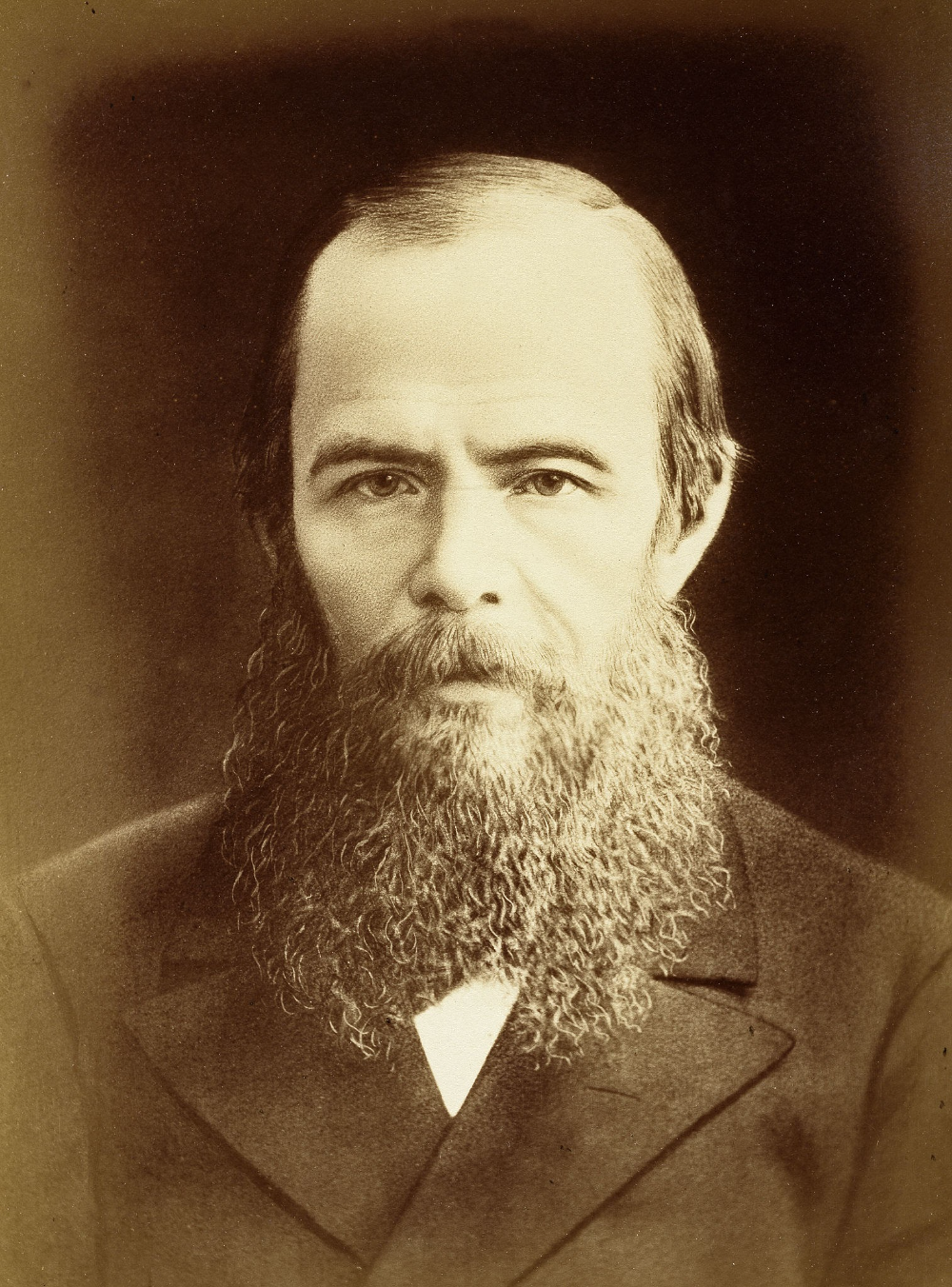
I have got to know him in the early seventies. I have read almost all his works, and he had changed my life forever. Let’s have some words from him.
One year ago, it was Autumn, I was travelling by train in Germany, and once, of confusion, I missed a station which would have to get off and change the train. I got off at the next station. It was about three pm, with the clear sky. It was a small town. They showed me a hotel because I had to wait for the next train, which would come at eleven pm. I was not in hurry at all, and even happy somehow! It was a small stinking hotel but surrounded with greens and plants and also flowers. I got a small room and dinner, which I ate with an appetite, and because of the long travel, went into a deep sleep.
I’ve dreamed an unexpected dream. Whereas I haven’t before. All of my dreams were always stupid or scary. There was in Dresden an exhibition, with a painting by Claude Laurent, under the name: Acis et Galatée. I don’t know why I always called it The Golden Age. I have seen it before, and when I came by there, I have seen it. I’ve always gone there on purpose to see this. I think all my purpose was to go to Dresden just to see this work. This was in my dream, though not as a painting but in real. (Shortened) It was about three thousand before time: in the Greek archipelago. Sun was shining on everything, and everyone was happy and free. The tears were dripping down my face, and even when I woke up, I was still dreaming! (From “Demons” ) Translated in English, from my old translated from Russian in Persian book! 😜
Stefan Zweig, who himself is one of the greatest contemporary writers, in the introduction to Dostoevsky’s biography, wrote:
“It is very difficult, if not impossible, to explain Dostoevsky’s importance to the world because the power and influence of his character are beyond our rules and precision. There is a magical genius in the world which he has, by the power of his imagination, created, is impossible for us to comprehend.”
Fyodor Mikhailovich Dostoevsky, (11 November 1821 – 9 February 1881) or Dostoyevsky is, of course, one of the greatest authors in the history of lecture, and everyone who likes books should know him well. Therefore, I don’t need to introduce him to you.
Among Dostoevsky’s last words was his quotation of Matthew 3:14–15: “But John forbad him, saying, I have a need to be baptised of thee, and comest thou to me? And Jesus answering said unto him, Suffer it to be so now: for thus it becometh us to fulfil all righteousness”, and he finished with “Hear now—permit it. Do not restrain me!
Here are some very useful quotes, which are fitting our today situation. Our today’s constrictions of information and freedoms. From our wise friends; Searching The Meaning Of Life! 🙏
Because the secret of human existence is this: He does not only want to live but also to know why he lives. If a man does not have a fixed fantasy of the purpose for which he lives, he will refuse to live. He will prefer to annihilate himself. Dostoevsky, Fedor Michajlovic.
Notes from the book “The Great Examiner ” by Dostojevskij Fedor Michajlovic

✔ Now, right now, people are more than ever convinced that they are free, completely free, and yet they themselves brought us their freedom and enslaved it at our feet.
✔They finally managed to conquer freedom and make people happy in this way. Man was born a revolutionary. But can revolutionaries be happy?
✔Because for the people and their society, nothing has ever been given more intolerable than freedom.
✔Do you see the stones in this bare and fiery desert? Make the bread, and humanity will follow you like a flock, full of gratitude and submission, although it will always live with the anguish that you could pull your hand away and stop giving it your bread …
✔ What kind of freedom is this when it is redeemed with bread? In the name of this earthly bread, the spirit of the earth will rebel against You…
✔Mankind through the mouths of its sages and intellectuals will declare that there were no crimes, therefore no sins, there were only hungry people “Satisfy them and only then demand from them so much virtue”
✔And the end will be for them to lay their freedom on our feet and tell us “Make us slaves but satisfy us”… They can never be free because they are weak, full of flaws, insignificant, troublemakers.
✔What about the millions and billions who do not have the power to despise earthly bread for the sake of heaven?
✔Man, when liberated, has no more lasting and torturous care than how to find as soon as possible someone he can worship, who can deliver to him as quickly as possible the gift of freedom with that, which this unhappy creature comes to people.
✔Because these miserable creatures care to find something that everyone believes in and absolutely loves. For this common worship, they kill each other: this will happen until the end of the world even when the gods disappear from the world, and then they will still kneel before idols.
✔Only the one who can reassure their conscience becomes the master of people’s freedom.
✔Because the secret of human existence is this: He does not only want to live but also to know why he lives. If a man does not have a fixed fantasy of the purpose for which he lives, he will refuse to live. He will prefer to annihilate himself.
✔Man prefers silence and even death to the free choice of knowledge of good and evil. There is nothing more attractive to man than the freedom of conscience but nothing more torturous.
✔There are only three forces on earth with which one can conquer and forever capture the consciousness of these weak troublemakers: miracle, mystery and power.
✔And because man cannot live without a miracle, he will create for himself a multitude of miracles, his own miracles, and he will worship them even though he is a thousand times a rebel, a heretical denier of God.
✔ You thirsted for love and freedom and not for the slavish charm of a slave in the face of a power that enslaved him forever.
✔What does it mean that he is rebelling everywhere against our power and even boasts that he is a revolutionary? This is the pride of a small child… they are weak insurgents who can not stand even their own rebellion…
✔Because the tendency towards a unity that includes the whole world is the last torment of humanity. As a whole, it always tends to be organized globally.
✔ We will convince them that they will only be free when they give up their freedom for our sake and when they are devoted to us.
✔ Freedom, unrestrained spirit and science will drag them into such labyrinths, will bring them before such miracles in unsolved mysteries, that some of them, stubborn and savage will self-deny, and others, the weak ones, yet stubborn will eat each other. However, the weak and unhappy ones will come crawling to our feet and shouting: save us from ourselves.
✔The herd will gather again, will submit again, but this time everything in the century. Then we will give them quiet humble happiness, the happiness of the weak creatures, happiness in their measure. We will take away their pride… We will show them that they are weak and that they are only poor children, but also that their childish happiness is sweeter than any other happiness. They will be frightened, ashamed and will look at us with respect while they will gather around us like spinners on a spinning top. They will admire us and tremble…In their weakness, they will tremble before our wrath, their spirit will become small-minded, and their eyes will weep like the eyes of children and women.
✔ We will force them to work, but in their free time, we will shape their life into a children’s game… We will even allow them to make mistakes because they are weak and powerless, and they will love us for it like children because we forgive their mistakes. We will tell them that all mistakes are erased when they are made with our consent, that we allow them to sin only because we love them… They will bring the most secret, the most torturous doubts of their conscience to us, and we will solve them .. we will free them from the great worry and the heavy torture of personal and free decision.
✔. I told you before: I just want to live like thirty years (old), and then I say goodbye to you.
by Johnny Di
























 lampmagician
You must be logged in to post a comment.