I had to think about the Food for thought right now, by our wise friend Jack Eason and his complaints about missing certain (or any) feedback! Though I share his posts on Facebook, and he doesn’t care!!
We have almost got used to seeing that, on WP, there’s too much feedback or too little! Anyway, I hope Jack does not take it into his heart. On the Web, it is like a lottery if you were lucky, and share a post at the right time in the right place. I would suggest my dear friend Jack: just letting go and keep cool! 🙏😉😊
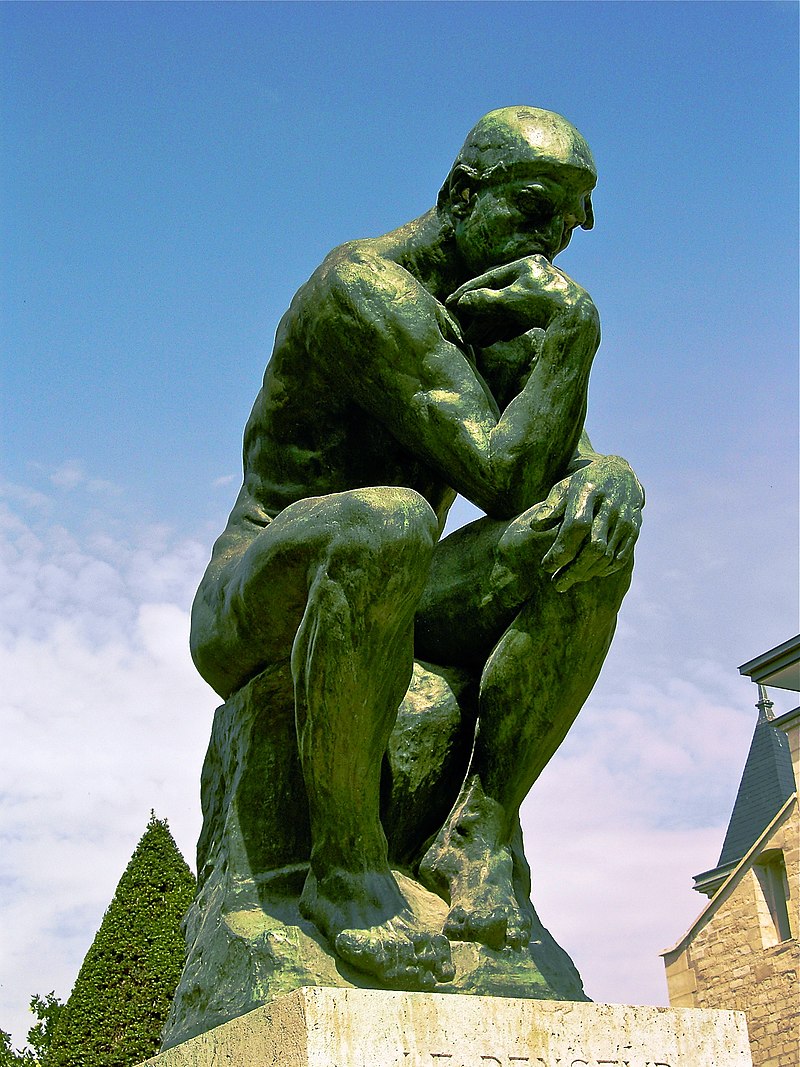
But as the question remains; what is thought, what is intelligence and who is the one? I am a humble man and try to be nice to everybody, and everyone’s happiness is my happiness. My education is mediocre, and I haven’t any high university degrees. But all through my life, I read a lot and studied myself, and I have gathered a huge experience, maybe more than a normal one can do. Maybe that’s why I don’t care about any feedback! I have noticed well how sensitive some of the authors are here on WP. Many talks about the presence, and they mean the presence of the others on their pages and forget about the other way around. 😳😁😎
In any case, thoughts and thinking have been always my everyday activities. As I well remember in my youth, when I first got to know Socrates, by Al, through “The period of Plato’s works”, I was sitting on a park bench and couldn’t stop thinking. Suddenly a girl asked me what’s wrong?! I came back on me and looked at her, said; sorry, what do you mean? She answered that she saw my face warped so badly. Therefore, she was worried about me. I was so thankful for such humanity, and I also noticed how thoughts give me power and energy to better understanding life.
But am I an intellectual person? Na, let’s read this thoughtful post, and we might found out.
What is thought? How did it evolve in man, and how is it created in each person separately in his very early childhood? Does it have a material base, and where is it based? If thought is a matter solely of the mind, what is its relation to the brain? How can a person lose the ability to think rationally? Does the possibility of thinking have a biological reference, or is it only a matter of man as a cultural being? Are thoughts derived only from our own conscience and will, or are foreign thoughts “visiting” us?
There are endless questions about the most unique and worthy issue that concerns man and can hardly be answered with some certainty. In every other field under consideration, our thought and the object under study are always two distinct parts, while in the case of the study of our thought “observer” and “observed” are identified, subverting the design of the general production of knowledge. When we try to think about our thinking, then we enter a chaotic world, without archimedean points, without any certainty, and above all, without any solid methodology for investigating the issue.
Thought is perhaps the most basic victim of the famous dualism of man in body and spirit since every structure of our materiality, and every concept of our spirituality are considered in absolute encirclement between them. In fact, a strict rating scale has entered in which the body “flows” towards the image of darkness (due to its given decay), and the spirit “flows” towards the corresponding image of light (due to our strong belief in immortality), and the absolute dimension of body and mind, in my humble opinion, has trapped our own way of thinking. And I explain why.
Our language code is clearly the tool by which we understand the world and ourselves. But at the same time, this is happening. Our linguistic code forms the framework of our mental horizon, but also the technique of interpretation of each element. Therefore, it necessarily acts with restrictive and given terms. The world is what is not only because we have the given possibilities of the senses, but also because we have the given linguistic code! Every time a scientific or philosophical “example” changes, the semantics of basic concepts necessarily change. For example, ” Einstein, who takes the basic concepts of the Newtonian system, such as weight and space, and thought of in a totally new way » (D. Chopra, R. Tanzi, Super Brain ). Nor, on the other hand, can we discuss our thinking and our spirit outside of our biology. There is no immaterial man!
Thought is composed of concepts and words, questions and quests. We have found the seat of the higher spiritual functions in the neocortex of the human brain, in this part that evolved only in man. But the most important thing in the whole case of the emergence of thought was the creation of groups and societies and at the same time the formation of our imaginary field into a second more complex reality. We study the correlation between a specific spiritual expression of man and the biological activity of the brain with the technique of electroencephalography. This in no way refers to a linear function of these two fields. Why? Because only consciousness can understand the brain and no mechanical explanation, based on facts about the brain, it is enough “(D. Chopra, R. Tanzi, Super Brain ). Nor, on the other hand, can we discuss our thinking and our spirit outside of our biology. There is no immaterial man!
Thought is a cultural possibility and a gift, but it is created in a given biological/material possibility. To understand our thinking, it may be necessary to find the evolutionary paths of tens of thousands of years of evolution, to feel its sources and to go step by step to the present strong development of our noosphere, which has the freedom of reflection and research to learns everything that exists in the Universe. But the most difficult field of study and knowledge will be our brain itself, ‘ t the universe of half a kilo “and our minds.
Every thought attempt for our thought contains a very basic question that Harari raises in his book: Sapiens. A short history of man. ” Or maybe the real question we face is not ‘What do we want to become?’ But “What do we desire to want?” . He adds: “Those who are not intimidated by this question have probably not thought enough about it.”
I am the keeper of the herds. The herd is my thoughts. And my thoughts are all their senses. I think with my eyes and ears , hands and feet, nose and mouth.
First, I have to make it clear that I don’t want to teach history here. I only want to go to the doctrine of dualism with the help of the past.
When we look back at our religious history, we find out that the term dualism is confined. This exists only from ancient Egyptians to old Persians. (I don’t talk about philosophical religions like Buddhism).
Aside from the Greek and Roman Mythology, in the Egyptians, there are more than one mighty God (and it is not common to define any as “good/bad” Gods, but we try it!): e.a. Amun, Hathor, Horus, Isis & Osiris etc. as good Goddesses/Gods, and Kek, the Goddess of darkness, and Seth as an ambivalent god, characterized by violence, chaos, and strength, connected with the desert, and maybe Anubis/Anput, the God/Goddess of embalming and protector of the dead.
In the ancient Persians, the mighty powers clearly divided into two sides: the light side and the dark side: Ahura-Mazda as the good God, and Ahriman (Angra Mainyu) as the bad God. As you see, there are always two sides: good or bad, dark or light, etc. But with equal powers.
As we look through the history of old Persia, we can see that the main religious belief was based on Dualism (a good God and a bad God) and not on the only “One God”. Until the appearance of the Semitic folk, from Noah to Muhammad, with their single God and all associated angels, and they have got massive believers.
How is the belief in a single god, and how good or bad was the issue of Dualism? That’s what the history shows: The single God rules the majority on this Earth with three different religions, and and unfortunately and strangely too, with an endless war between all three kinds of beliefs from the same root and family!!
What I want to ask is: isn’t the best condition in every situation the balance? I think also that Dualism is that balance which we need. In the ancient Persians, as I want to talk about, was dualism a huge matter.
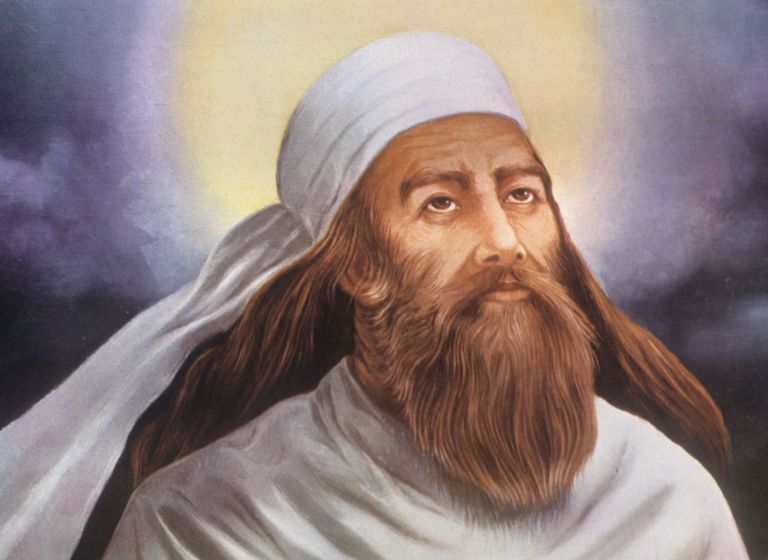
Ahura-Mazda (meaning ‘Wise Lord’) the God of light, wisdom, and virtue. With his main rules, which were not ten, but only three: Good Thoughts, Good Deeds and Good Words. And his prophet, Zarathustra. (It seems that Ahura-Mazda’s sibling, Ahriman, did not need any prophet. As we know, no devil needs a prophet. Everyone has one inside!)
His teachings challenged the existing traditions of the Indo-Iranian religion and inaugurated a movement that eventually became the dominant religion in Ancient Persia. He was a native speaker of Old Avestan and lived in the eastern part of the Iranian Plateau, but his exact birthplace is uncertain.
There are some different narrations of Zarathustra’s wandering in the wilderness (as the most prophet had done), but it had to be almost like this:
At the age of thirty, Zarathustra goes into the wilderness and so enjoys his spirit and his solitude there that he stays for ten years. Finally, he decides to return among people, and share with them his over-brimming wisdom. Like the setting sun, he must descend from the mountain and “go under.”
On his way, he encounters a saint living alone in the forest. This saint once loved mankind, but grew sick of their imperfections and now loves only God. He tells Zarathustra that mankind doesn’t need the gift he brings, but rather help: they need someone to lighten their load and give them alms. Taking his leave of the saint, Zarathustra registers with surprise that the old man has not heard that “God is dead!”
Upon arriving in the town, Zarathustra begins to preach, proclaiming the overman. Man is a rope between beast and overman and must be overcome. The way across is dangerous, but it must not be abandoned for otherworldly hopes. Zarathustra urges the people to remain faithful to this world and this life, and to feel contempt for their all-too-human happiness, reason, virtue, justice, and pity. All this will prepare the way for the overman, who will be the meaning of the earth. Continued here
But there came a breakup in the Zoroastrian religion by a man named Mani, who went further from Dualism into the belief in the Divine.
I have to make another part (3), as I see it’s going to be longer than I thought! Thank you for your interest. 🙏💖🙏
“The unconscious psyche believes in life after death”
Or “Religion is a defence against the experience of God.“
And Voltaire claims:
Those who can make you believe absurdities can make you commit atrocities.
And: If God did not exist, it would be necessary to invent him.
Since I could define the difference between good and evil for the first time in my life, I have asked myself: “why does human need or must have a religion?” I think it is hard to answer. If we accept the individuality of every human, then the answer will be; the human does not need any religions, because, everyone can define the good from the bad. But as we know, there’s always been a mass, a herd that needs a shepherd.
As we look back to our history, we can see that in the time when the ape climbed down the tree and lost his/her sharp teeth and claws, felt left alone and needed protection. She/he wanted to have a predominance or super-priority, which can help when in need and can believe in this.
Now let’s go to the title of my article, which I want to write thereabout: The Cathars.
Al, my brother, who had always kicked my mind to wake up and think, told me about some sect. He said that in early Christianity, there were people who were able to lift themselves through meditation. They never needed any warm clothes or much to eat. It has surely to do with reinforcement of the mind, which I understood through the seasons of my LSD experiences.
Although, whatever happened in early Christianity with the help of Catholicism had vanished or lost without a trace. And the most famous first breakup was the Renaissance and later the French revolution. But as we can see, even in the 12th century AC, some different (Oppositum) peoples existed who were related to the divine and the duality; the Cathars.
Catharism (/ˈkæθərɪzəm/; from the Greek [what else!]: καθαροί, katharoi, “the pure [ones]”) was a Christian dualist or Gnostic movement between the 12th and 14th centuries which thrived in Southern Europe, particularly in northern Italy and southern France.
Catharism Sudden flowering took place at a time when Europe, stimulated by the contact with the East that the Crusades had brought, was shaking off the slumber of the Dark Ages and rediscovering ancient wisdom in the classical text.
Little as we know about the Cathars, it seems clear that they were in some way that hairs of Platonic thought, of the esoteric teachings and mysteries of that pre-Roman civilisation that embraced the Mediterranean and the Near East.Simone Weil, a French philosopher, mystic, and political activist. Died in 1943 (age only 34) as a result of voluntary starvation in sympathy with her compatriots then under German occupation. A passive resistance! Was she a Catharist, as they believe in passivity?
Cathars and Troubadours, there’s some similarity in it. They go: one of a class of lyric poets and poet-musicians often of knightly rank who flourished from the 11th to the end of the 13th century chiefly in the south of France and the north of Italy and whose major theme was courtly love — compare trouvère. The precise semantic field attached to the word troubadour—are allied in Arabic under a single root w–j–d (و ج د = Happiness) that plays a major role in Sufic discussions of music, and that the word troubadour may in part reflect this. Isn’t it a dreaming society?
Women hold up half of the sky!
Catharism has been seen as giving women the greatest opportunities for independent action since women were found as believers and Perfecti, who were able to administer the sacrament of the consolamentum.
Cathars believed that one would be repeatedly reincarnated until one commits to the self-denial of the material world. A man could be reincarnated as a woman and vice versa. The spirit was of utmost importance to the Cathars and was described as being immaterial and sexless. Because of this belief, the Cathars saw women as equally capable of being spiritual leaders.
I am really wondering what went wrong with Genesis, what the hell could it be, and should it might be!
These (meant surely us, the poor believers) are they who… fell from Paradise when Lucifer lured them thence, with the lying assurance that whereas God allowed them the good only, the Devil (being false to the core) would let them enjoy both good and evil, and he promised to give them wives whom they would love dearly, and that they should have authority over one another, and some amongst them should be kings, or emperors, or counts; and that they would learn to hunt birds with birds, and beasts with beasts. Cathar Prayer
Annihilation; I’d not rather like to write about it. You can surely read it on Wikipedia, or as I might highly recommend it: The Master Game, by Graham Hancock and Robert Bauval, a great read.
(…the Troubadours… mention God and Jesus Christ, it is very probable that they are speaking as Cathars, and that their deity is the “good God” of theMani’s philosophy’s faith.)
Mani and who was he? that is another story which I will write in the second part. Have a safe and good WE, my lovely friends. 🙏💖
This time, my post is not about kings and pharaohs or Gods and Goddess. It is just about some normal Egyptian people.
Today we open the ‘window’ to show and meet some inhabitants of ‘Deir Medina’, who if they managed to achieve that ‘eternity’ so longed for.
On this occasion, It will refer to two main characters, components called ‘servants’ of the ‘Place of Truth’, presumably: a marriage. And separated ‘in fact’ by distance for 84 years.
Today, after navigating and meeting them for the first time, it could be nice to ‘rescue’ them from anonymity and alleviate the loneliness and absence they suffer from each other.
A bit of contemporary history: Bernard Bruyere, French archaeologist, after the I ‘G.M. He obtained the title of official, authorized and resident archaeologist of the Deir Medina site, taking that privilege from the previous Italian delegation, at that time fascist and losing. During the work corresponding to the 1934/5 campaign, Bruyere discovered in the ‘necropolis of the East’, the corresponding well up to the access to the tomb of our protagonists (Tt 1379).
And soon, the excavation brought the tombstones/stelae of their names back to light (I don’t know where they are exposed). After the removal of the dumped rubble, access to the hollow of its only burial chamber soon appeared.
I have not read – the ‘source’ does not allude to this specific fact, but yes, little or much of the interior remained intact. The tomb would most certainly be looted some time in ancient times. But at least the statuettes of their deceased owners remained together, in the same place of rest and eternity.
Bernard Bruyere describes his reflections as follows:
“As in most of the other deceased in the ‘East’ necropolis, the statuettes do not bear any title that indicates their status / social position; without a doubt, their office must have been quite modest if we look at the simple and scarce funerary furnishings and to the rough and rustic aspect of the tomb.
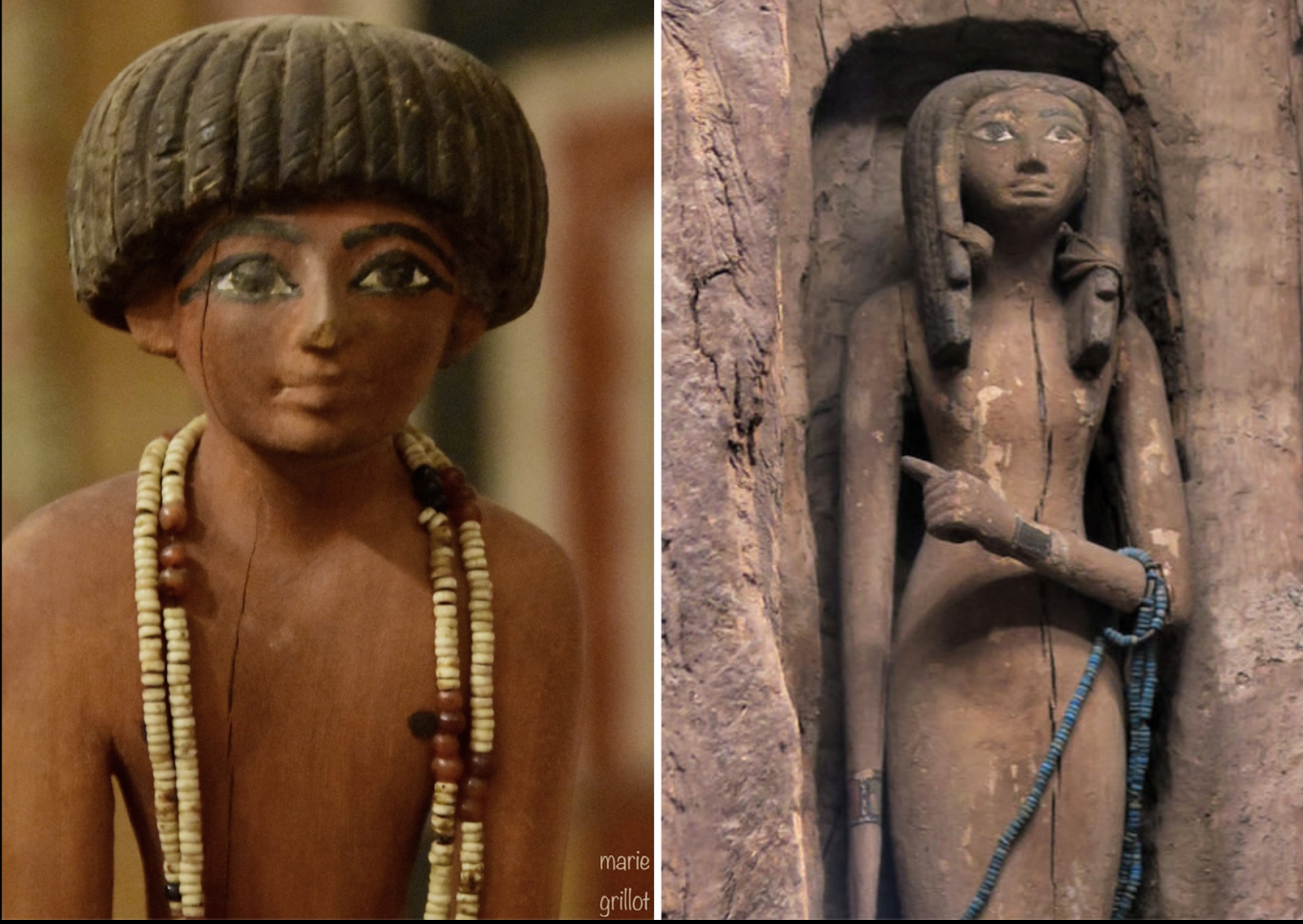
On the right, Satnem (Louvre – E 14319), craftsman of the “Place de Vérité”, on the left Dame Ibentina (Cairo Museum – JE 63646A / B), his wife. Wooden statues dating from the 18th dynasty discovered in the 1379 tomb of the eastern cemetery of Deir el-Medineh by Bernard Bruyère (IFAO) during the excavations of 1934 – 1935 In the background, restitution of Deir el-Medineh by Jean-Claude Golvin
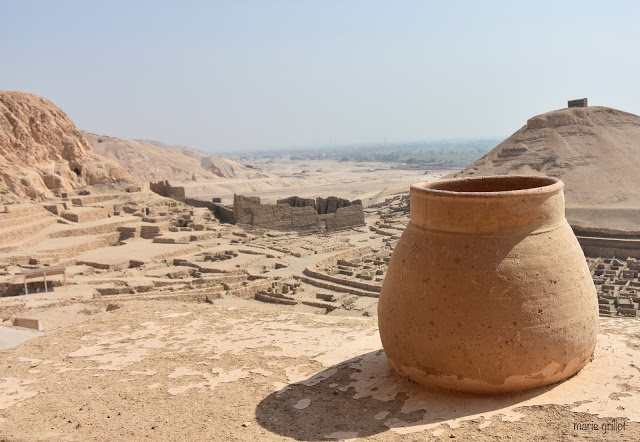
Satnem and his wife “Lady Ibentina” lived, in the New Kingdom, in the village, which was then called Set Maât (the “Place of Truth” – the current Deir el-Medineh). Founded at the beginning of the XVIIIth dynasty under the reign of Thutmose Iᵉʳ, then extended and enlarged several times, especially during the reigns of Thutmose III and the first Ramessids, it housed the craftsmen who worked in the digging and decoration of the mansions of eternity. The Valley of the Kings, the Valley of the Queens, and even more distant necropolises.
Surrounded by high walls, it extends in a desert valley at the foot of the Theban mountain. We know that it “sheltered between 40 to 120 households” which lived in stone houses covered with a roof of palm leaves.
“Set Maât her imenty Ouaset” – the “Place of Truth in the West of Thebes” of antiquity is today the village of Deir el-Medineh
The community, which also had places of worship as well as its own necropolis. Occupied the site for nearly 500 years.
The village was “rediscovered” in the 19th century: it saw a “parade” of many ‘researchers’ then Egyptologists: Bernardino Drovetti, Henry Salt, Karl Richard Lepsius, Auguste Mariette, Gaston Maspero… Ernesto Schiaparelli undertook excavations there in 1905, then German Georg Christian Julius Möller. The site concession will then be definitively awarded to Ifao in 1917; for thirty years, from 1922 to 1951, Bernard Bruyère will methodically explore the site and make wonderful discoveries.
It was during the 1934-1935 excavation mission that he unearthed the tomb of Satnem and Ibentina in the eastern cemetery. Modest, composed simply: “of a square well and a small vault summarily arranged in the rock”. It will be referenced under the No ° 1379.
It is the only one that contained the statuettes of the two deceased, specifies the Egyptologist who recounts the discovery: “The statuette of a man was placed standing on one of the chairs of the furniture and faced the entrance to the vault. It was enveloped in bands under which a necklace of a thread of small round pale blue and white pearls was twisted around the neck. The statuette of a woman, similarly wrapped in strips of fine linen and the collar adorned with a similar necklace, whose thread, broken, had slipped at her feet, was locked in a wooden chest placed upright on the floor of the vault to the right of the chair, and supporting the other statue. She was also looking towards the entrance, through the slit in the lid of her box as through the slit of an Old Kingdom Mastaba Serdab.
The image of SATNEM, which shows us the statuette recovered by Bruyere, reflects the common characteristics of pharaonic art from the 18th ‘dynasty, before the next’ Amarnic ‘art
The anatomical dimensions, the rigid posture of the arms, the disposition of the big hands, the cut of the waist, the forward left foot, his marked manly torso. And, above all, the long, elegant skirt and that cropped, round and elaborate wig (closer to a ‘mortarboard’) does not hide the earlobe and, therefore, subtracts unnecessary length from the braids, alleviating the heat they produced. SATNEM’s jovial-looking face, half-smile, and stylish eye makeup keep his gaze open and expectant on an indefinite high point.
43 cm high, the statue of Satnem is carved from jujube wood – or sycamore, according to the sources – and rests on a rectangular acacia base. “It is completely painted in red, and the details are enhanced with black and white.”
Satnem is represented as standing: “in the conventional attitude reserved for men: the left foot in front, the arms by the side of the body”. He is simply dressed in a long loincloth with a flat front, tied under the navel.
Slim, flowing, almost slender, his youthful appearance is further accentuated by his very special hairstyle: “rounded and overflowing on the sides”. It is a “short square,” braided into regular locks covering part of the forehead and leaving the earlobe clear.
Statue of Satnem (Louvre – E 14319), craftsman of the “Place de Vérité” – wood – XVIIIth dynasty Discovery, with that of his wife Dame Ibentina (Cairo Museum – JE 63646A / B) in tomb 1379 of the East cemetery of Deir el-Medineh by Bernard Bruyère (IFAO) during the excavations of 1934 – 1935 tombe de khâemouaset QV44 – vallée des reineslouqsor west bank
His face is very slightly lifted as if he was looking upwards … This attitude gives him an interrogative, almost curious air, underlined by his large painted eyes, expressive and surrounded by a very dark and very stretched line of makeup. Her nose and mouth are nicely rendered, and her neck is adorned with a lovely necklace of earthenware beads.
This statue gives off a real presence and almost exudes an expectation, a hope …
What was Satnem’s function within the community? We do not know, unfortunately … “Like all the other deceased of the cemetery of the East, Satnem does not bear any title which could inform us about his social condition, undoubtedly quite modest if one relates to the invoice sufficiently rustic furniture from the tomb “…
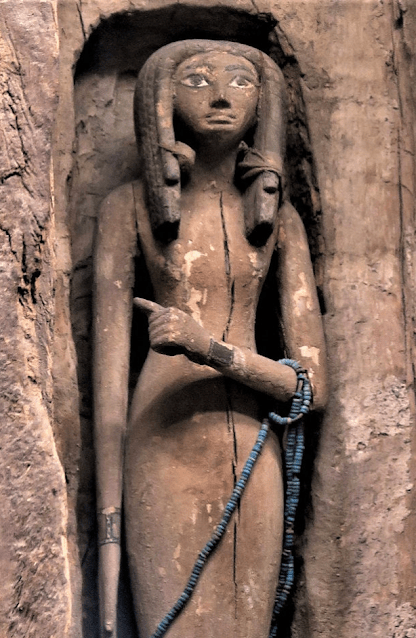
The statue of Lady Ibentina, his wife, is carved in sycamore wood. “It was once entirely stuccoed and painted”.
Statue of Lady Ibentina (Cairo Museum – JE 63646A / B) – wood – 18th dynastyDiscovery, along with that of her husband Satnem (Louvre – E 14319), in tomb 1379 of the eastern cemetery of Deir el-Medinehby Bernard Bruyère (IFAO) during the excavations of 1934 – 1935
Ibentina is shown standing, wearing a close-fitting dress that stops at mid-calf. She is slim, petite, charming, exquisite, just like her husband. We cannot help thinking that if the statuettes reflect their “earthly” image, they must have formed a very pretty couple …
Her face, fine and delicate, is framed by a: “tripartite wig, formed of braids held by two ribbons”. Her eyes are made up, are large and stretched, her nose is fine and her mouth well defined.
Her right arm hangs at the side of the body while the left is bent at waist height. The pearl necklace, which was hanging from her neck, has slipped and is partly rolled up on the left forearm; she wears: “on the wrist of each arm a large bracelet imitating gold bracelets and enamel plaques”.
“Ibentin, standing, wears a tight dress almost to the ankles.
With a slim figure, charming physiognomy, flirtatious of perfect silhouette, like her husband. “It is inevitable to imagine that, if these statuettes reflect the” earthly “image of her, Ibentin and Satnem formed a very nice couple.”
“Ibentin’s face, very defined and delicate, is framed by a” tripartite wig, with braids tied by two ribbons. “ Her eyes are so wide, big and made up, her nose and mouth very subtly outlined. “
Statue of Lady Ibentina (Cairo Museum – JE 63646A / B) – wood – 18th dynastyDiscovery, along with that of her husband Satnem (Louvre – E 14319), in tomb 1379 of the eastern cemetery of Deir el-Medinehby Bernard Bruyère (IFAO) during the excavations of 1934 – 1935
“The hair, the pupils and the ring of the bracelets are painted black. The enamel of the bracelets is red, and the cornea of the eyes is white. All the rest of the face, body and coat are pale yellow”, specifies Bernard Bruyère.
On the wooden base of the statuette, it is inscribed: “a formula of offerings to Osiris, lord of Abydos and Busiris”.
Lady Ibentina is like “sheltered” in “a naos with a removable cover”: “The sycamore crate which contains the statuette of a woman, was specially made for this purpose. It is hollowed out in a single block”.
Satnem (Louvre – E 14319), craftsman of the “Place de Vérité” and Dame Ibentina (Cairo Museum – JE 63646A / B) – wood – XVIIIth dynasty Statues discovered, in the 1379 tomb of the East cemetery of Deir el-Medineh, by Bernard Bruyère (IFAO) during the excavations of 1934 – 1935
During the sharing of the excavations – which took place in 1934 – the spouses united during their lifetime and bound by their statuettes for what was to be their eternity were unfortunately separated …
Dame Ibentina remained in Egypt: she was recorded in the Journal des Entrées of the Cairo Museum under the reference JE 63646A / B. But Satnem left for Paris. He is now at the Louvre (E 14319), where he represents, through his charming presence, the artisans of the Place de Vérité.
FIFAO 15 Bruyère, Bernard – The East Necropolis (1937) Pharaoh’s artists, Deir el Medineh and the Valley of the Kings, Louvre, 2002 A Century of French Excavations in Egypt 1880-1980 – Cairo School (IFAO) – Louvre Museum, 1981 Official catalog Egyptian Museum in Cairo, Mohamed Saleh, Hourig Sourouzian, Verlag Philippe von Zabern, 1997 Treasures of Egypt – The Wonders of the Egyptian Museum in Cairo, Francesco Tiradritti The treasures of ancient Egypt at the Cairo museum, National Geographic ” The tombs of Deir el-Medineh ” (Osirisnet) Statue of Satnem (Louvre museum) Dame Ibentina (Egyptian Museum in Cairo)
“The knowledge of death came to me that night… I went into the inner death and saw that outer dying is better than inner death. And, I decided to die outside and live within… I turned away and sought the place of the inner life.” Red Book
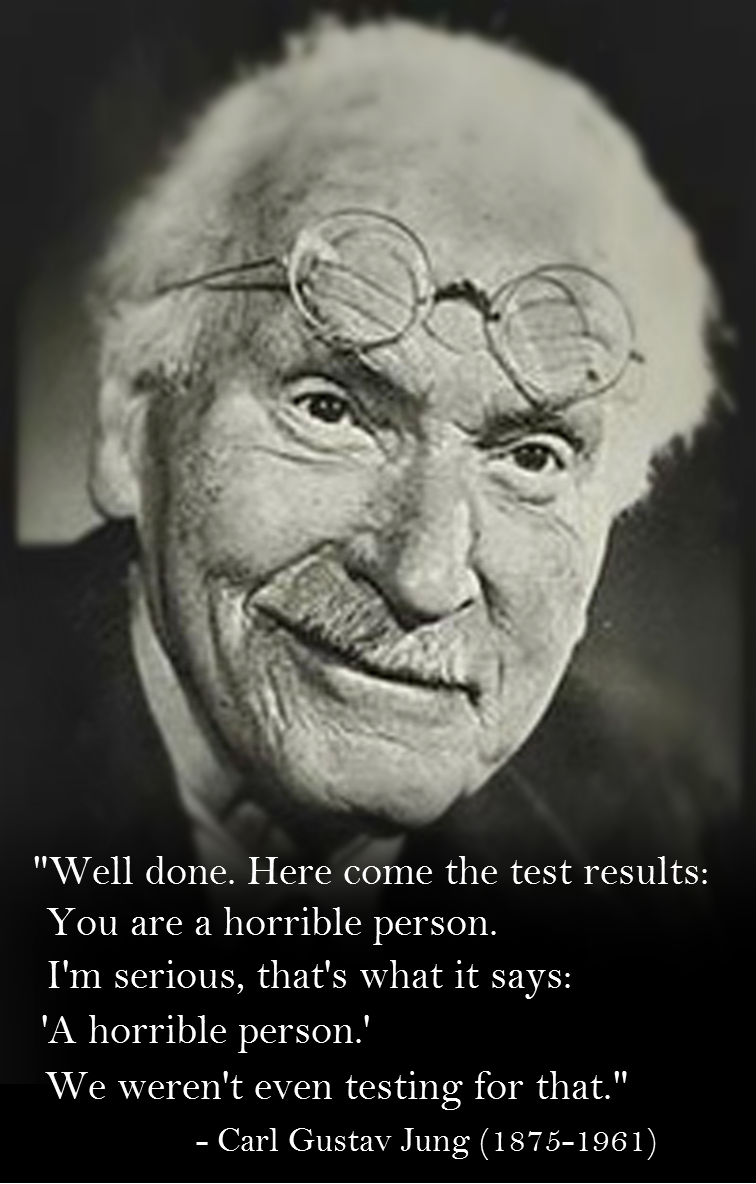
Tomorrow is the sixtieth anniversary of Dr Carl Gustav Jung’ death, and I wonder as I see the genius and power of his knowledge is getting huger and more and more extensive. I want humbly to drop some notes on this Master.
I have once mentioned that as Al and I got to know DR Sigmund Freud and were fascinated about the psyche, Dr Jung came to us not just as the student of Dr Freud but as a newcomer Master in beyond the psyche.
Actually, the term was the UFO, as we were entangled in the early 70s, and we’d noticed how a psychologist deals with this topic. It was not only an analysis of the psyche of humans but a universal analyse through galaxies. I don’t want to say that he’s a superman. I but believe that he’s superior for sure.
He has shown us many doors in the human’s soul, which we couldn’t even know how closed are they. We can open them one after another if understanding him, and his teaching is so extensive that after so many years, we have still a lot to learn.
And there is a message, his message, for all of us.We can and might have to look at “Death” in this way:
Here is a beautiful tribute to Dr Jung by Susanne Heine. It’s written in German. Hence I translate it into English. Though if someone knows German, the original ishere.
GEDANKEN FÜR DEN TAG. The sixtieth anniversary of the death of Dr Carl Gustav Jung
Susanne Heine über Carl Gustav Jung
(“Gott in mir”. Anlässlich dessen 60. Todestages blickt die evangelische Theologin und Professorin für Religionspsychologie der Universität Wien, Susanne Heine, auf die herausfordernde Gedankenwelt C. G. Jungs.)
“God in me”. On the occasion of the 60th anniversary of his death, the Protestant theologian and professor for the psychology of religion at the University of Vienna, Susanne Heine, takes a look at C. G. Jung’s challenging world of ideas.
“It is really not easy to get into conversation with theologians”, complains the old gentleman in a letter from 1953, because “they only hear themselves and call this the word of God”. The old man was Carl Gustav Jung. Eight years later, in June 1961, he died in Küsnacht on Lake Zurich at the age of 86, i.e. 60 years ago.
Jung knows what he’s talking about. His father is a pastor of the Swiss Reformed Church. The rectory and the church are in Laufen, on a rocky outcrop, with the Rhine Falls roaring below. Jung spends his early childhood there: in nature between the bright sun and the dark and dangerous river that washes many a corpse onto the bank. The fact that light and dark are closely interwoven will accompany Jung throughout his life.
The family moves to a country parish near Basel and Jung lives in the routine of church life. He asks about the meaning of the rites and teachings, but his father answers with lifeless theological phrases or admits that he simply does not understand many things himself. The son feels left alone and notes about the theologians: “Here we go, they don’t know anything about it and don’t think anything either.” Then how can you talk about it? I suspect that Jung speaks from the heart to many, even if they do not have a pastor for a father.
With Jung, this is reflected in dark dreams. When he was about twelve years old, he saw himself standing in front of the Basel Minster, above the throne of God in heaven. Suddenly a large pile of dung falls down from there and destroys the church. He realizes: “The church was a place to which I was no longer allowed to go. There was no life there for me, but death.” With this, C. G. Jung says goodbye to theology and the church, but not to religion and God, whom he encounters in other ways.
I am honoured to know this genius, and I much appreciate his teaching.
Service
Das C.G. Jung Lesebuch, 5. Auflage, Walter Verlag, 1998. Aniela Jaffé: Erinnerungen, Träume und Gedanken von C.G. Jung, 11. Auflage, Walter Verlag, 1999. Susanne Heine: Grundlagen der Religionspsychologie, Kapitel 8: C.G. Jung – die göttliche Natur, UTB 2528, Verlag Vandenhoeck&Ruprecht, 2005.
These paintings are surely familiar to most of you, or especially for Jungians who seen and used them often. It’s also good to know who they were (for me at least!), and we can see how interesting their story is.
A Sybil is a woman who prophesied, while in a state of frenzy, under the supposed inspiration of a deity. In the Jewish sense of persons who felt themselves spiritually impelled to speak to the people in the name of God, prophets were unknown to the ancient Greeks and Romans, among whom prophecy was limited to the deliverances of the sibyls (σίβυλλαι). The ancient sources differ as to the number and nativity of these sibyls. Plato speaks of only one sibyl, while Aristotle and Aristophanes mention several, and Varro (in Lactantius, “Divinarum Institutionum,” i. 6) enumerates ten, including a number from the East.
Also, Cassandra might be a Sibyl. Both Cassandra and Laocoön warned against keeping the horse, in the legend of Trojan War . While Cassandra had been given the gift of prophecy by Apollo, and also cursed not being believed. I can still see her crying out: “Don’t bring the horse in”!
The sibyls were female prophets or oracles in Ancient Greece. The earliest sibyls, according to legend, prophesied at holy sites. Their prophecies were influenced by divine inspiration from a deity, originally at Delphi and Pessinos. https://en.wikipedia.org/wiki/Sibyl
Let’s have a look at the Biblical sources:
Connection with Biblical Personages
The connection of the sibyl with Biblical personages appears also in a statement found in the extant collection of the Sibylline Books to the effect thatshe asserted herself to belong to the sixth generation of man and to be descended from Noah (i. 298), while in another passage she termed herself a virgin cf the blood of Noah (iii. 827). On account of these statements the Erythræan pagan sibyl was likewise said to be descended from the sixth generation after the Flood (Eusebius, “Constantini Oratio ad S. Coetum,” xviii.). The Hebrew sibyl was alleged also to have been the wife of one of Noah’s sons, and consequently to have been saved in the ark (Plato’s “Phædrus,” p. 244b, note).
Sibylla was the collective name of a class of divinatory women with great prophetic power who had no real blood relationship with each other but shared many characteristics. They were exclusively women who had the ability to predict the future with lyrics…. Unlike the Pythians, they were not part of a temple or priesthood. They were usually wanderers, descended and acted in and from many peoples and cultures, and their prophecies were in the form of sermons.It is noteworthy that these prophetesses gave their prophecies without being asked by anyone and nothing have to do with any oracle. Then, the word Sibyl was to describe any woman with divination, who prophesied spontaneously, without being asked, when she fell into ecstasy, future events, usually unpleasant or terrible. As the ancient Greeks and Romans believed, this happened because they accepted the visit of a divine spirit.
When they gave their prophecies, they were in an ecstatic state, and the people believed that their words were the voice of God. Each Sibyl was believed to have had the prophetic gift from birth.
They considered it an existence between God and man. She was not immortal, of course, but her lifespan far exceeded human standards. And as the usurper God Apollo held the lyre, so Sibylla held another stringed musical instrument; the samviki (a kind of triangular lyre). Sibylla’s contact with her uncle presupposed her virginity.
A Sibyl, as we said, was not in the service of any oracle and did not make her prophetic power a profession. So she could go from one place to another where she was worshipped as a divine figure, and this was a serious reason for many Sibyls to bear witness.
Each place she had passed, acted in and worshipped a Sibyl created her own Sibylline Tradition, which could not be identified with the similar tradition of another place. So every place that had a Sibylline tradition believed in its own Sibyl.
The main difference between the Sibyls and the prophets of the various oracles is that the latter, such as e.g. Pythia in the Oracle of Delphi, prophesied only by answering well-defined questions, while the Sibyls prophesied, without accepting questions first.
The traditions of the Sibyls are very ancient.
It seems that relevant traditions from the countries of the Middle East passed to the Greek area through Asia Minor at a time when mystical tendencies prevailed and philosophical reflection, had not yet been born on the shores of Ionia. The belief of the ancient peoples in the sensitive and intuitive nature of women contributed to many quotations in the form of oracles or prophecies attributed to a Sibyl, and thus, the tradition was gradually enriched.
Many times they were given prophecies invented after great events, and because this was very impressive, it made many people pay attention to the prophecies of Sibylla.
This created a rich collection of sibylline oracles, the influence of which was felt by the people until the Middle Ages. In the Middle Ages, they kept many books written by the Sibyls, and the leaders seem to have consulted them frequently.
The first mention of these books is made during the narration of the reign of the semi-mythical Roman king Tarquin. From Kymaia Sibylla (the name refers to Kimi of Campania in Italy), the Roman king Tarquinius had bought the books of the “sibyl oracles“, which were kept in Rome, specifically in the temple of Zeus at the Capitol.
These books, of which only a few excerpts have survived, should not be confused with the “Sibylline Spells”, 12 books of prophecy allegedly written in a Judeo-Christian setting.
The oldest Greek texts speak of a Sibyl. Thus Heraclitus speaks first of Sibyl as a specific figure, followed by Euripides, Aristotle and Plato. The first to speak of Sibyls in the plural is Aristotle. The sources after him know three, four or even ten Sibyls.
The Pausanias writes that the oldest of all the sibyls was Herophilus, who lived before the Trojan War, daughter of Zeus and granddaughter of Neptune. Younger than her was another Herophilus, who lived near a water source in the Reds of Asia Minor (Heraclitus, fr. 92). Sources after Aristotle mention three, 4 or even 10 Sibyls. According to ancient legends, there were a total of 12 Sibyls throughout antiquity.
The Greek report about the action of Sibylla covers the whole area of Hellenism, from Central Asia to Italy. In the Greek East, the most famous was Sibylla, who was worshipped in the city of Erythres, and the Greek West, the one who was worshipped in Kymi of Campania.
One of the oldest was the Sibyl of Marpissos in Troy. They also called her Hellespontia and considered her the daughter of Dardanus and the Island, the daughter of Teucer. Maybe it should be identified with the Red Sibyl. Her action is connected with Aeneas, who left after the fall of Troy, to arrive in Italy after many wanderings and become the ancestor of the Romans. Sibylla had given auspicious oracles to Aeneas.
The Red Sybil was also known as Herophilus. The Jerome places the edge of around 744 BC … An inscription from our Red city informs that the Sibyl lived about 900 years. According to Pausanias, he lived for a time in Delphi, Delos, and Samos. Perhaps the stay of this Sibyl in Samos created the tradition of Samia Sibyl, whose peak Jerome places in 712 BC.
There is also Sibylla from Kolofona, known as Lampousa. She was considered the daughter of the soothsayer Calchas. Other traditions speak of the Phrygian, for Sardiniki (from Sardis) and the rhodium Sibyl. The tradition of the Sibyl of Delphi brings it in relation to the sponsor god Apollo. She was his wife, his sister or his daughter. The Thettali Sibyl was known by the name Mando and thought for a descendant of Tiresias . There was also Thesprotida Sibylla. The Sibyl of Kimi had the name Dimo, perhaps a diminutive of Demophilis. In Kymi, there was an underground chamber, the seat of Sibylla and a “ stone jug” with its remains.
Finally, a variety of other traditions tell us about Sibylla, the Cimmerians, the Italians, the Sicilians, the Libyans, the Persians, the Chaldeans, the Jews and the Egyptians. Even the queen of Sava has been identified with the face of Sibyl. The etymology of the name “Sibylla” is not known with certainty. In ancient times, as the Latin writer Lactantius (4th century AD) informs us, the word was composed of the Doric form of the noun “god” (sios) and the aeolian form of the noun “vouli” = will (bullet). Sibyl, according to this version, therefore meant one that reveals the will of God. Various speculations have been made about the origin of the name, but the investigation has not been concluded.
Last weekend was a long one, because of the celebrating the fiesta of Pentecost (Pfingsten, in Germany), and my wife and me, take a trip to the Baltic Sea (Ostsee). And, because Regina, my wife, always disliked social media, I have reduced all my activities and gave me wholly in her hands to take me where she wanted. Honestly, I liked it!
I am a man who always feels dutiful. Whatever I have begun to do in my life, I had tried to make the best of it. Like in earlier times in Iran, when I coincidentally got the chance to play for a short time on stages, until I had to work as a taxi driver in Germany (despite my introversion), I did all I could. I remember once, one of my customers had meant to me that I am actually not a taxi driver but pastoral care!
Now, as a retired man, I began again to fulfil my duties, whatsoever they might be (e.a. writing regular articles in WP) at best. But it seems that I do get tired, wanted or not, and this “free weekend” did me good. You know, I am the kind of who wants to make people happy, satisfied and fortunate. These all give me the same feeling and gratitude, but sometimes it gets too much, and I feel exhausted (my own fault!).
It is enough now to cry, and thank you so much for your shoulders to catch my tears! Let’s tell you about this wonderful trip.
First, I must say that to travel to Easter Germany, for a foreigner like me isn’t so desirable! There we hear sometimes a couple of nasty cases happens for the unwanted foreigner now and then.
I was once there, with Al and a Persian friend, in this area. It was at the end of the 90s. Those days, we had felt this antipathy. But this time I had no problem, though I was the only foreigner there as I noticed! May the people have been going to have more apathy than antipathy.
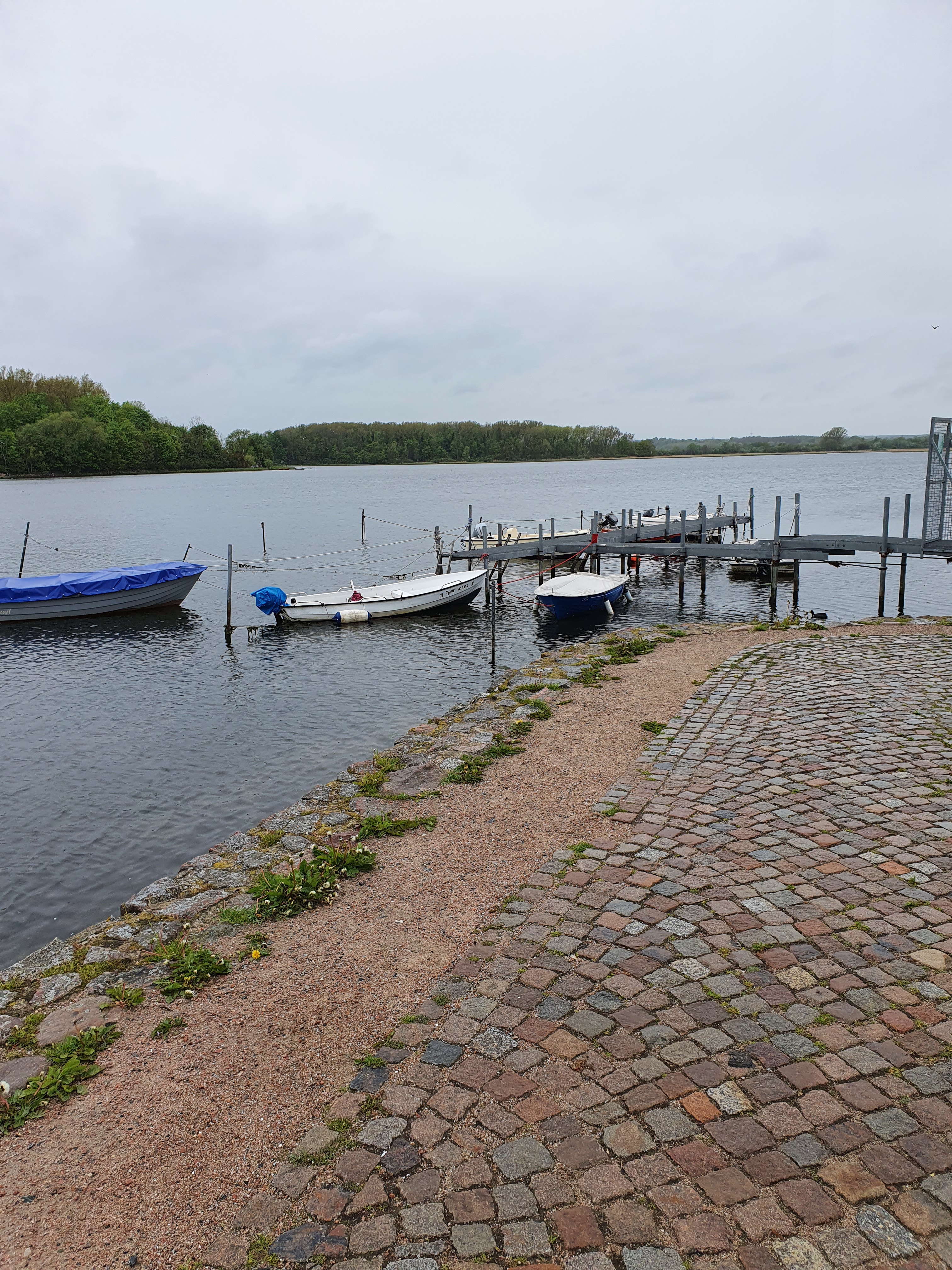
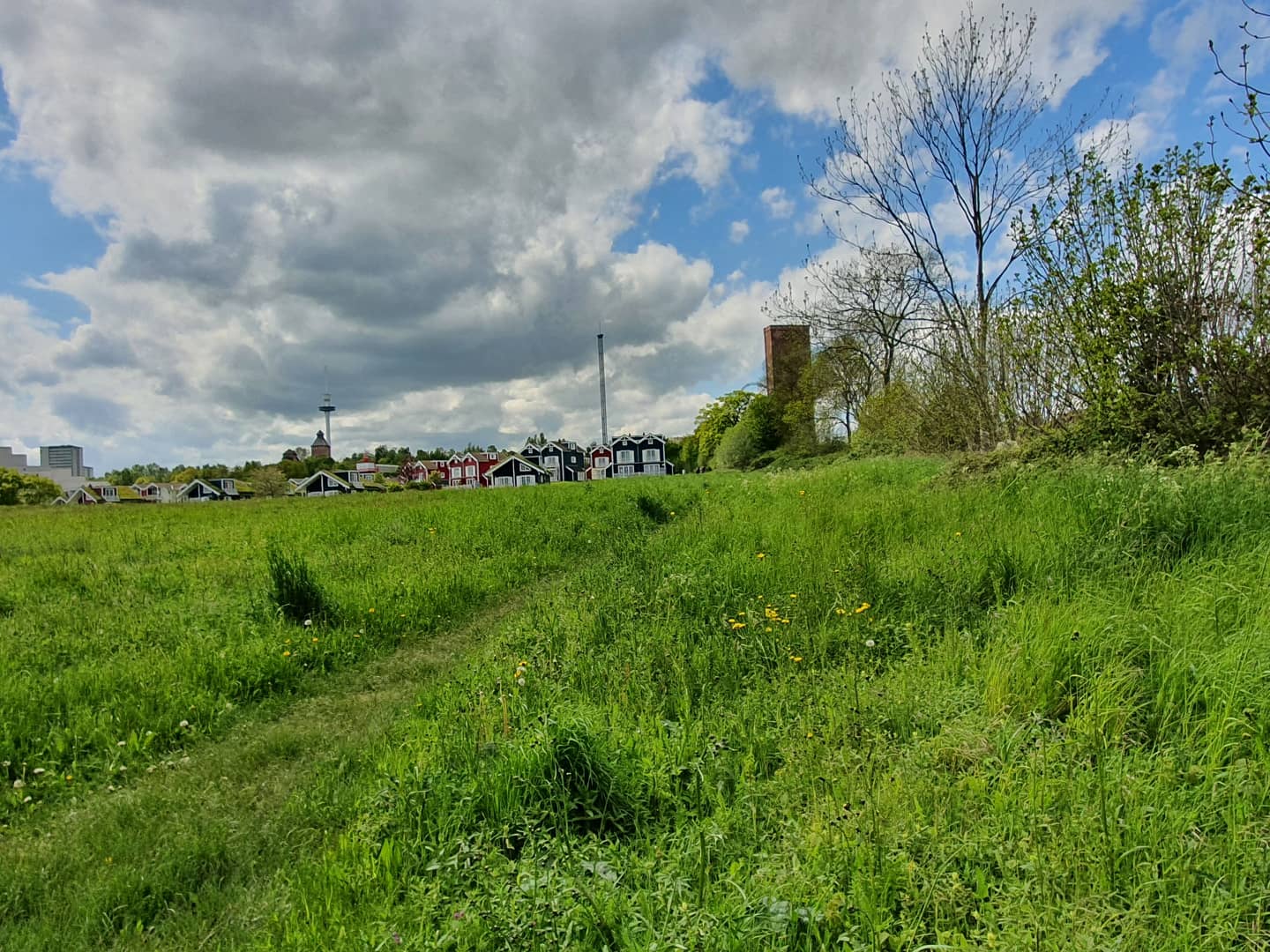
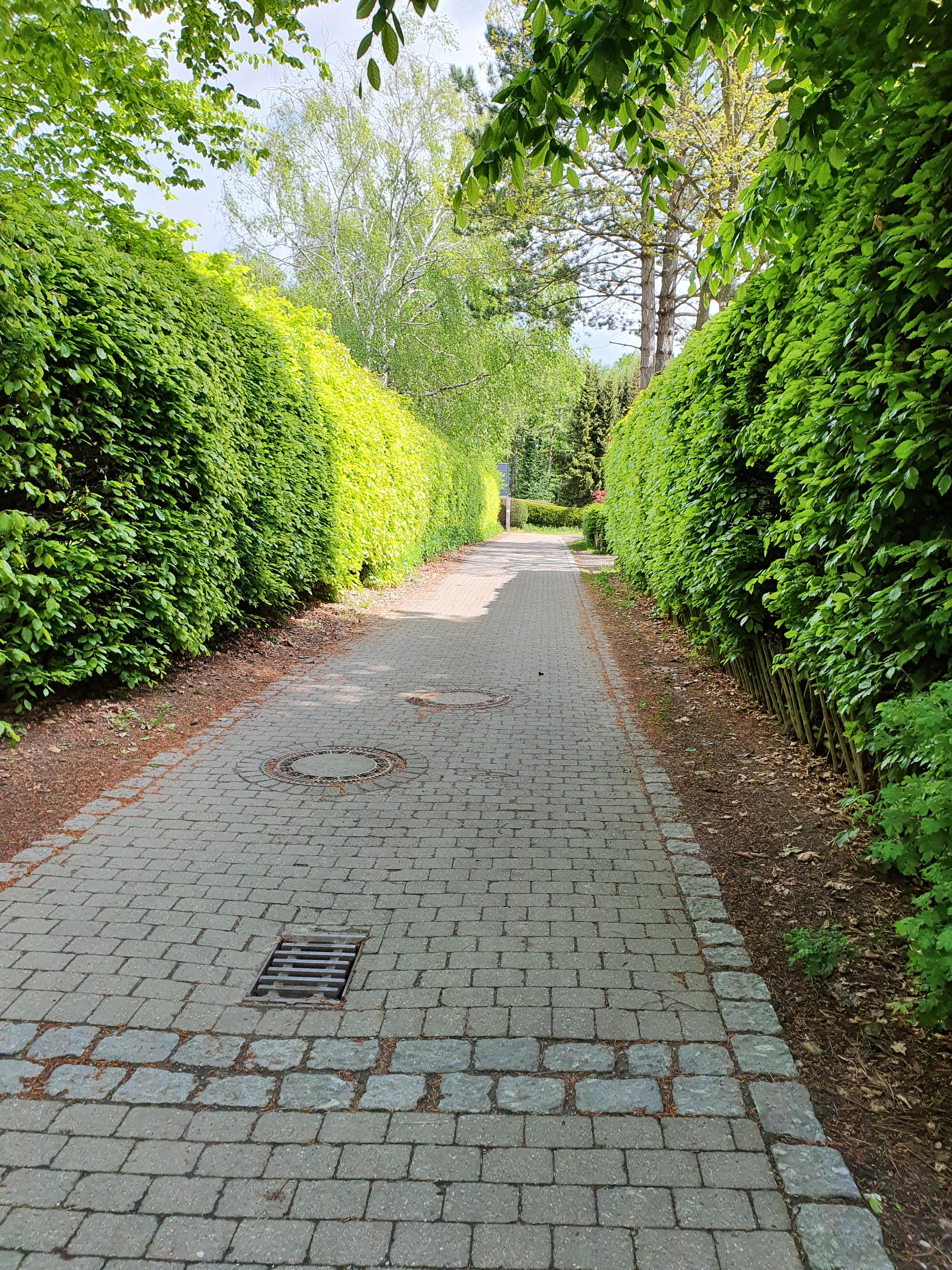
Anyway, as I may mention before, my adorable wife is very active and a die-hard nature lover. Therefore, we had a walk every day:
One of these days, we had walked about four hours, two there and two back. As I remember, at the end of our walk, I had a feeling that I am standing beside me! But to put it bluntly, I enjoyed it all the time.
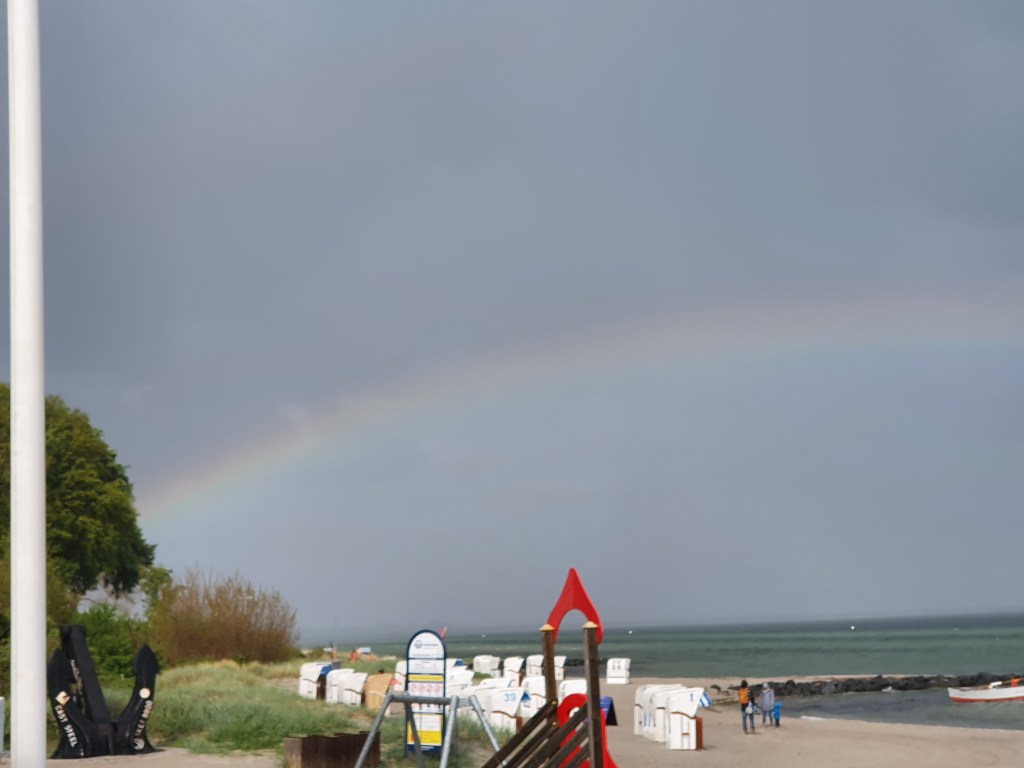
And of course, we had the rainbow:
And more pics.
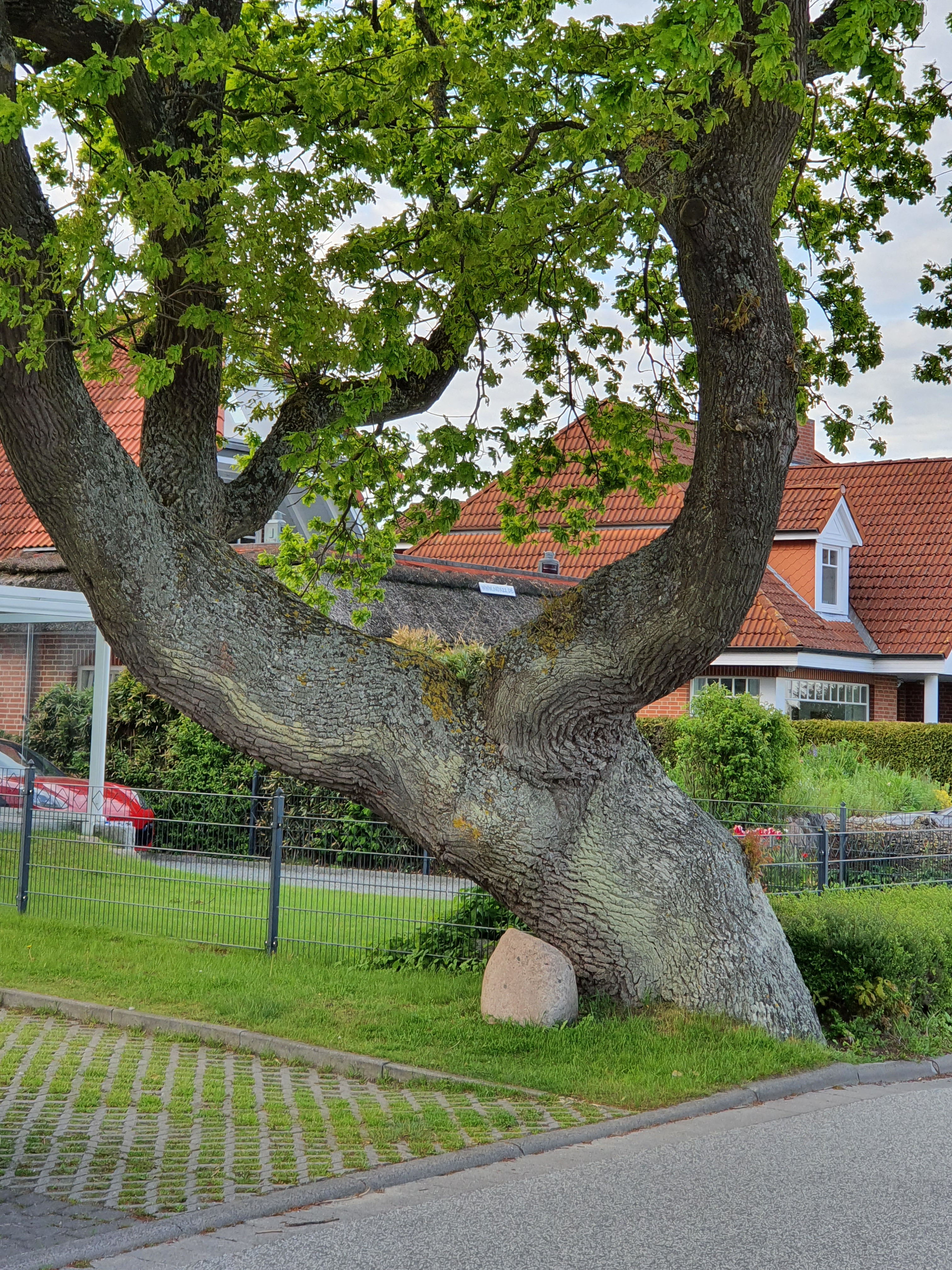
Looking after the trees…
That’s one of my favourites!
It was definitely a great adventure pleasure for me. Thank you, whoever you might be, you are a friend surely. Have a great WE. 🙏🙏🤗💖💖
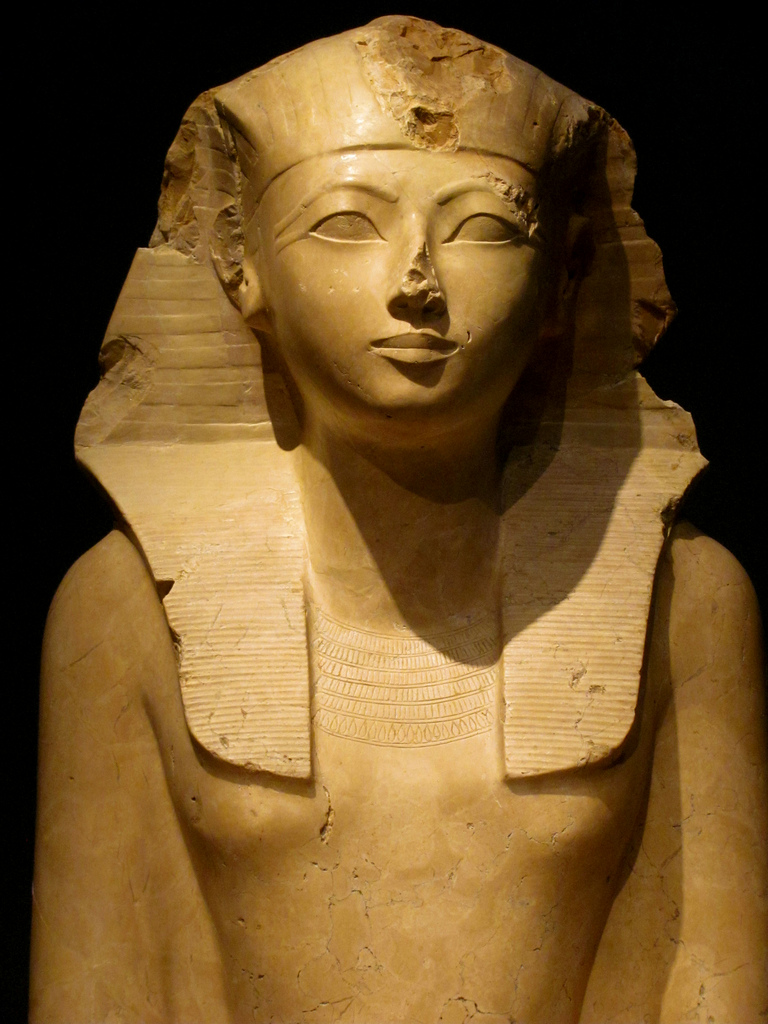
Today, I want to present a strong Pharaoh, not a common one, though. It is a she, a woman! Which, of course, is very rare. However, it is not always so easy to dig into ancient history for finding the truth. There’s a big problem when we look back and read our history: they all have been written by men! Therefore, fairness failed here and there, and finding the truth, is a big challenge, but it is surely worth trying.
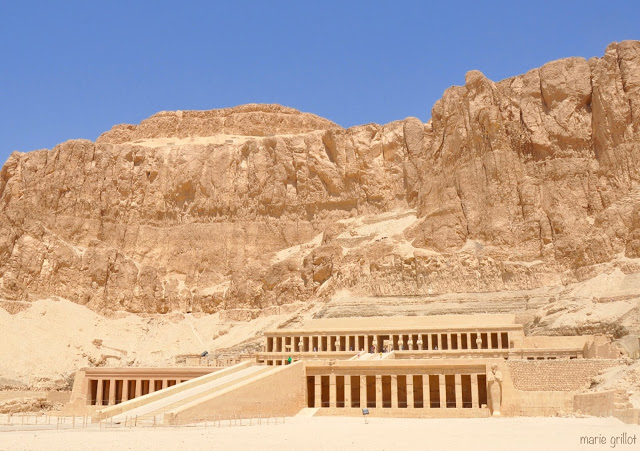
Hatshepsut, also spelt Hatchepsut, was the longest-reigning female pharaoh in Egypt (spouse: Thutmose III), ruling for 20 years in the 15th century B.C, who attained unprecedented power for a woman, adopting the full titles and regalia of a pharaoh. She is considered one of Egypt’s most successful pharaohs. Place of Burial: Mortuary Temple of Hatshepsut.
Her reign was one of the most prosperous and peaceful in Egypt’s history. There is evidence that she commissioned military expeditions early on, and she certainly kept the army at peak efficiency but, for the most part, her time as pharaoh is characterized by successful trade, a booming economy, and her many public works projects which employed labourers from across the nation.
Let’s have a read on this brilliant research by my adorable friend and Egyptologist Marie Grillot with great thanks.
Addendum: Here in this article, “Aty” will be used as the queen’s name. I don’t know if I have correctly transferred it! You can look at here for more information.
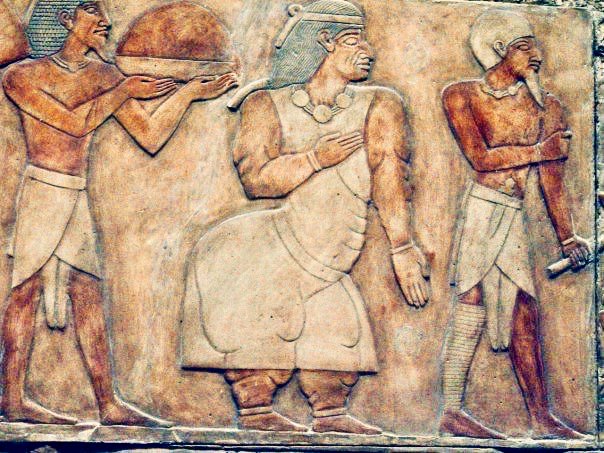
The expedition to the Land of Punt: bas-relief representing the royal couple followed by a servant-painted limestone The New Kingdom, 18th Dynasty – Reign of Hatshepsut, 1490-1470 BC. JC From his temple at Deir el-Bahari (West Thebes) – Egyptian Museum in Cairo JE 14276
In the year 9 of her reign, Queen Hatshepsut decides to lead an expedition to the distant Land of Punt. This territory, which Gaston Maspero called “Pouanît”, sometimes assimilated to the “country of the Somalis”, is thus “located” by the Egyptian Museum in Cairo: “This country is a place located near the Red Sea and the south of the ‘Egypt (Southern Sudan or present-day Eritrea) “. As for Jean-Pierre Corteggiani, he could not be more “consensual” on the location of this famous region: “whose exact location is still a problem for Egyptologists, some continuing to want it African, others. preferring Arabic, when she may just be both at the same time.
The maritime expedition – made up of at least five boats and longboats – is placed under the high command of Panehsy: it will last no less than three years! It can be described as “peaceful” and mainly takes the form of a “commercial exchange”. Egypt brings its own “commodities” and “manufactured” objects and receives, in return, gold, electrum, panther skins, ebony, ivory, animals such as monkeys, giraffes, felines, …
To all this is added what is certainly the most coveted: the fact of getting the famous frankincense trees, and especially the precious frankincense. The “Antyou” was used in the fumigations offered to the god Amon-Ré, and therefore essential for the holding of religious rituals.
Temple of Hatshepsut – Djeser Djeserou – Deir el-Bahari – West Thebes
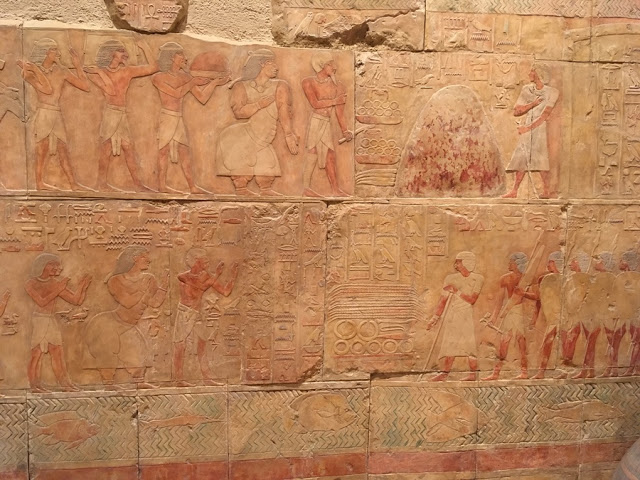
This expedition was undoubtedly a highlight of Hatshepsut’s reign. Thus, various episodes of this “journey” have been reproduced on the south portico of the second terrace of her temple of Deir el-Bahari, the “Djeser Djeserou”.
If we are allowed to admire today, “in situ”, this “stone comic” composed mostly of “original” scenes. It should be remembered that, at the end of the 19th century, certain bas-reliefs were “cut out” and stolen. They later took the road to the Cairo Museum and were replaced “on the spot” by copies.
Scenes from the expedition to the Land of Punt – Temple of Deir el-Bahari (West Thebes) New Kingdom – Dynasty XVIII – Reign of Hatshepsut, 1490-1470 BC. JC
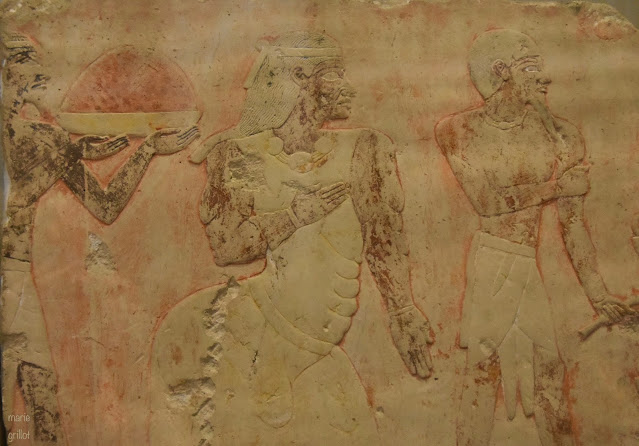
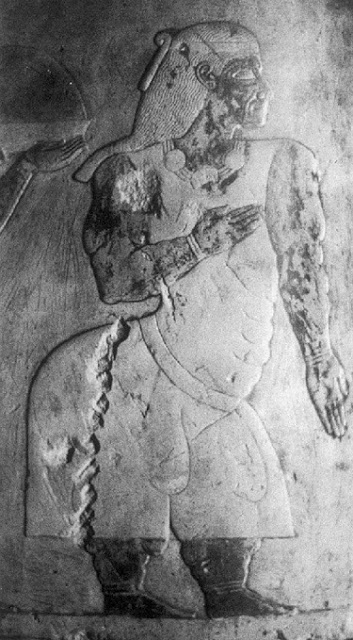
This is the case with this famous “scene”, which allows us to “know” the sovereigns of this land of Punt… Thus specifies Rosanna Pirelli (The wonders of the Egyptian Museum in Cairo): “The prince wears short hair, a long beard and a necklace with three pendants; a dagger is slipped under the belt of his loincloth, and he holds a staff in his left hand “. But we must admit that the representation says “particular” of Queen Aty eclipses that of her husband Parehou and that of the servant who follows them …
In the “Guide to the Cairo Museum”, Gaston Maspero described it bluntly as follows: “The wife of the Prince of Pouanît is represented as a monstrous mass of flesh. It was assumed for a long time that there was a case of kind of steatopygia there, which made the reputation of the Hottentot Venus. Then when this hypothesis had been rejected, we believed to recognize in the queen of Pouanît a variety of achondroplastic dwarf, a sort of lordosis, the particular type of which currently has no representative in pathology “.
The expedition to the Land of Punt: bas-relief representing the royal couple followed by a servant – painted limestone New Kingdom, Dynasty XVIII-Reign of Hatshepsut, 1490-1470 BC. JC From his temple at Deir el-Bahari (West Thebes) – Egyptian Museum in Cairo JE 14276 (photo from the museum)
For the Cairo Museum: “Aty is represented with an obese and misshapen body. It is possible that the Egyptian artist decided to present her to us in this way because she suffered from elephantiasis, a disease characterized by the hypertrophy of a part of the body. It is also possible that the artist has exaggerated a little to achieve a kind of caricature or comic imitation. “
For Rosanna Pirelli: “The figure of the queen constitutes a very special case in Egyptian iconography. The torso, strongly arched forward and rests on short, swollen legs. The rest of the body is covered with bulges. The queen, whose long hair held on the forehead by a headband and ends in a ponytail, is dressed in a tunic, whose belt is worn very low on the hips. She wears bracelets at the wrists and, around the neck, a necklace “.
Bas-relief of the expedition to the Land of Punt: representation of the Queen of Punt – painted limestone New Kingdom, Dynasty XVIII – Reign of Hatshepsut, 1490-1470 BC. JCFrom his temple at Deir el-Bahari (West Thebes) – Egyptian Museum in Cairo JE 14276
In their “Official Catalog Egyptian Museum of Cairo”, Mohamed Saleh and Hourig Sourouzian are very nuanced: “It is with realism and humour that treated his wife with a misshapen body. She was visibly suffering from obesity (we recognize her Decrum’s disease manifested by steatopygia, excessive curvature of the spine, and overflowing flesh on wrists and ankles that have remained relatively thin “).
The royal couple will honour the envoys of Hatshepsut. Thus specifies Abeer El-Shahawy (The Egyptian Museum in Cairo): “When they saw the statue of Hatshepsut, they paid her the greatest homage, calling her ‘the great king of Egypt, the woman with the shining sun ‘. A pile of gifts was deposited in front of the chief of Punt for the Egyptians “…
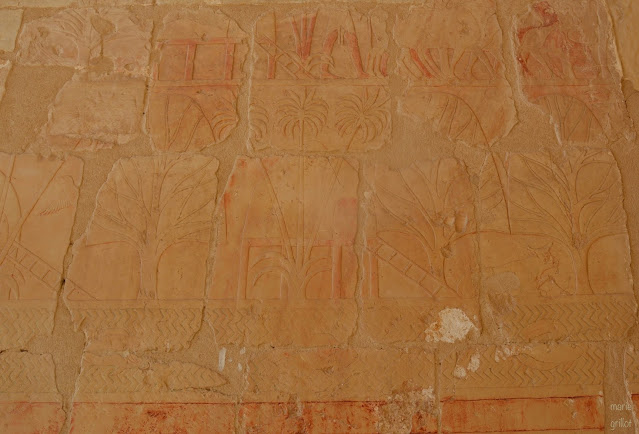
Pays de Punt: Trees along a river depicted on the walls of the temple of Hatshepsut. Djeser – Djeserou in Deir el-Bahari (West Thebes)
On the ships loaded with all the presents, the incense trees will sail towards Thebes …
The walls of the temple relate to the return of the expedition, and in particular, as Marcelle Baud explains: “The triumphal procession of the return to the temple of Amun which occupies part of the upper register. There, the products are recorded by the god Thoth himself and the incense measured by Hatshepsut in person “.
This painted limestone bas-relief representing a royal couple of Punt, followed by one of their servants, 49.3 cm high and 45 cm wide, was recorded in the Journal des Entées: JE 14276.
It’s been almost a week since Mother’s Day, and honestly, I didn’t want to write anything this year. I don’t know why? Maybe because this year it was on Sunday and I was not in a good mood! (Although it’s never minded which day it is, the mother always remains in the heart.) But it has changed my mind when I saw on Monday, exactly one day after Mother’s day, one of my dearest friend Deborah Gregory announced that her mother had passed away. It hit my heart! First, it’d happened on Mother’s Day. Second, she had just got the news and wasn’t there with her. Of course, I know nothing about her mother and their relationship, but only this point that she couldn’t be by her side to say goodbye, it must take the heart apart. I hope that she’ll stay well and strong. 💕
My mother was not far away from me when she died, I had even seen her on her last day in the hospital, although that wasn’t a nice encounter. But our minds were far away from each other. In the last year of her life, when she got sick, I was in puberty and the highest hippie state, and our relationship has not been the best since our father-in-law was in her companion. Even though I’m missing her closeness in this period of time. I was at an age in which every cell in my body had been desiring to know more, and to quench my thirst for knowledge. It is an essential time in everybody’s life, but we had missed this chance. I wished we have had much more time with each other.
Anyhow, by her post, the memories of my mother took floating in my mind. She kept all through her life only one word for her goal: Love, love for her husband and love for her children. A young beautiful girl with many wishes and dreams gave her best, might not be perfect, but most of her efforts for all of us.
She was an active woman, and when she got blood cancer (Leukemia), she couldn’t even walk. My father in law had brought her to England, and with the help of Cortisone, she got fit again. I will never forget when I saw her at the airport, puffed up through Cortisone, but heavenly happy.
Here, I share a poem from one of the best Persian poet Forugh Farrokhzad, whom my mother had loved so much. Forough died in a car crash on February 13, 1967, at the young age of 32.
REBORN
My entire soul is a murky verse Reiterating you within itself Carrying you to the dawn of eternal burstings and blossomings In this verse, I sighed you, AH! In this verse, I grafted you to trees, water and fire
Perhaps life is A long street along which a woman With a basket passes every day
Perhaps life Is a rope with which a man hangs himself from a branch Perhaps life is a child returning home from school
Perhaps life is the lighting of a cigarette Between the narcotic repose of two lovemakings Or the puzzled passage of a passerby Tipping his hat Saying good morning to another passerby with a vacant smile
Perhaps life is that blocked moment When my look destroys itself in the pupils of your eyes And in this there is a sense Which I will mingle with the perception of the moon And the reception of darkness In a room the size of one solitude My heart The size of one love Looks at the simple pretexts of its own happiness, At the pretty withering of flowers in the flower pots At the sapling you planted in our flowerbed At the songs of the canaries Who sing the size of one window. Ah This is my lot This is my lot My lot Is a sky, which the dropping of a curtain seizes from me My lot is going down an abandoned stairway And joining with something in decay and nostalgia My lot is a cheerless walk in the garden of memories And dying in the sorrow of a voice that tells me: “I love Your hands” I will plant my hands in the flowerbed I will sprout, I know, I know, I know And the sparrows will lay eggs In the hollows of my inky fingers I will hang a pair of earrings of red twin cherries Round my ears I will put dahlia petals on my nails There is an alley Where the boys who were once in love with me, With those disheveled hairs, thin necks and gaunt legs Still think of the innocent smiles of a little girl Who was one night blown away by the wind There is an alley which my heart Has stolen from places of my childhood The journey of a volume along the line of time And impregnating the barren line of time with a volume A volume conscious of an image Returning from the feast of a mirror This is the way Someone dies And someone remains No fisherman will catch pearls From a little stream flowing into a ditch I Know a sad little mermaid Dwelling in the ocean Softly, gently blowing Her heart into a wooden flute A sad little mermaid Who dies with a kiss at night http://www.heliotricity.com/forughfarrokhzad.html
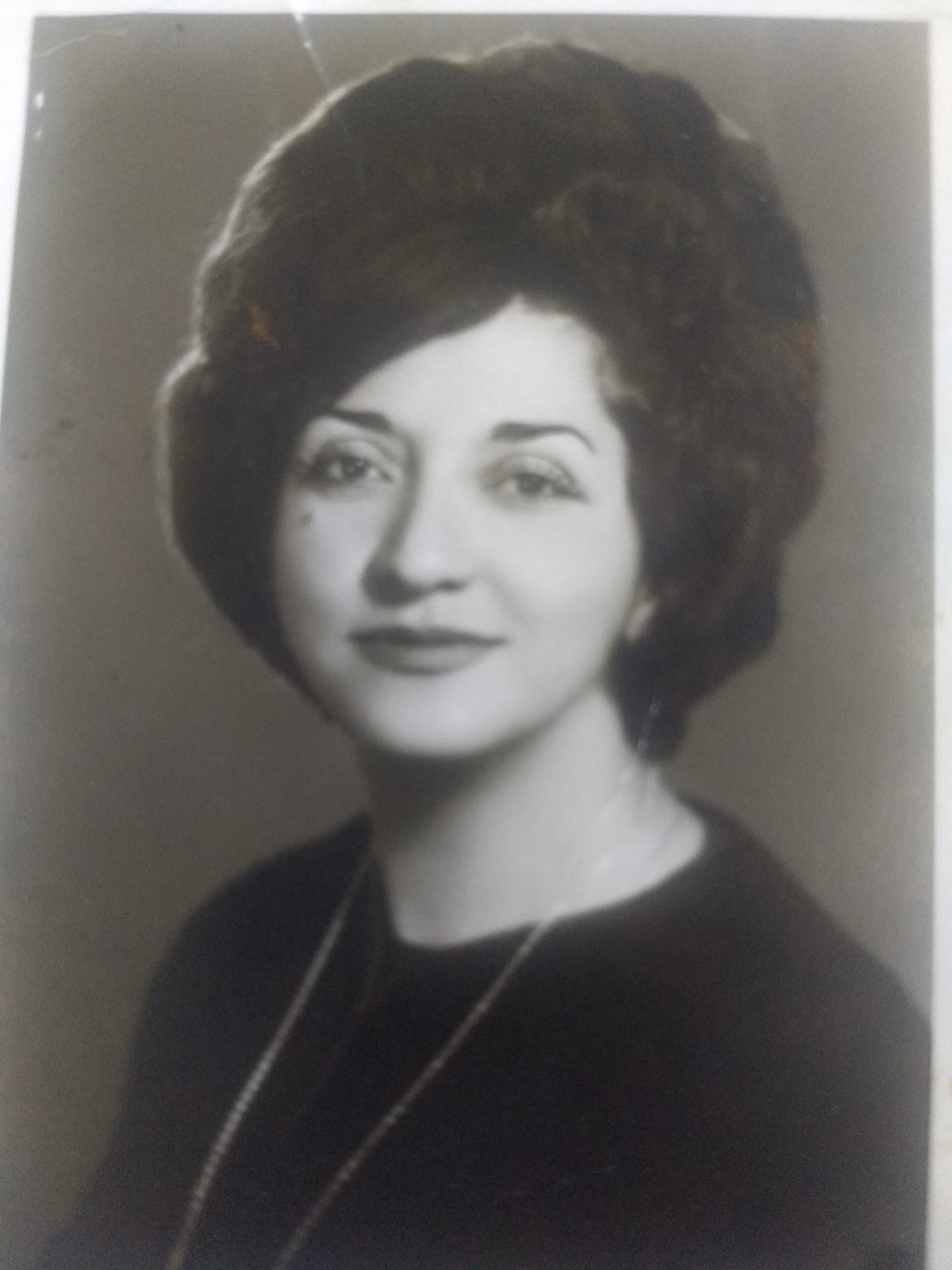
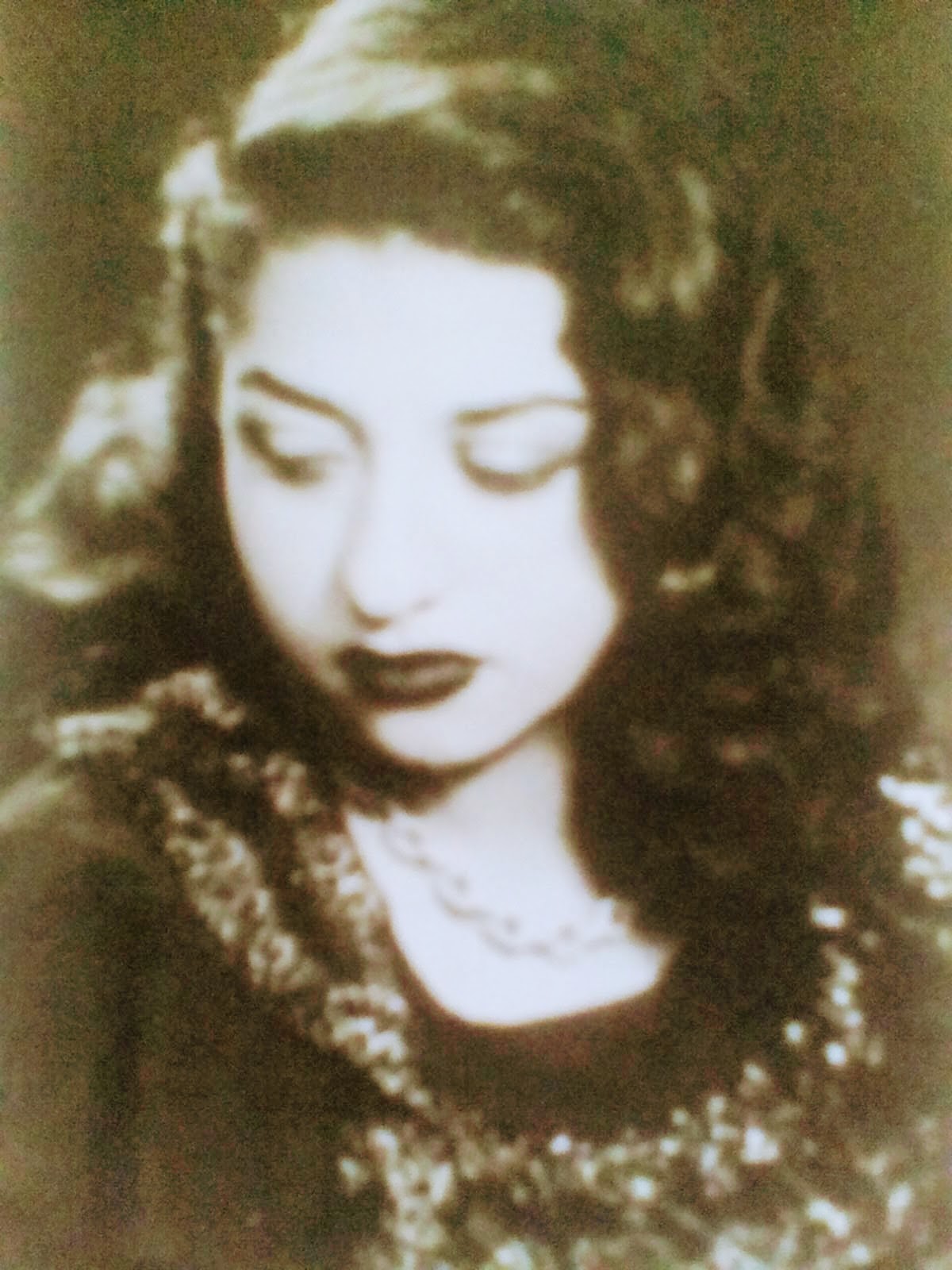
As I look at the photographs and see her lovely beautiful face, I wanna thank her for her heartfelt fondness, and I give her back my adorations. Thank you, mother. I will never forget you.
PS: next weekend, I will be on the way if everything works out! We want to spend some days at the Baltic Sea. I wish you all a great weekend and peaceful times. Blessings
The gods Set (left) and Horus (right) blessing Ramesses in the small temple at Abu Simbel. The bas-reliefs on the side walls of the small sanctuary represent scenes of offerings to various gods made either by the pharaoh or the queen.[6] On the back wall, which lies to the west along the axis of the temple, there is a niche in which Hathor, as a divine cow, seems to be coming out of the mountain. http://en.wikipedia.org/wiki/File:SethAndHorusAdoringRamsses_crop.jpg
The Pharaohs of Egypt have compared themselves with the Egyptian Gods and Goddesses, as the story tells. But in the history of human’s archaeology, there are many attempts to make a big show of it. For example, before the so-called Arab Spring, Zahi Hawass, Egypt’s former antiquities minister, had tried many times to make such shows which went wrong sometimes. He is a famous man, not just because of his shows, here, but also because of his crimes! Here , here and here. There are a lot of worthy heritages for us to appreciate respectfully and to learn from.
Among the 22 mummies of kings and queens that will be transferred from the Tahrir Museum to the NMEC during “The Pharaohs’ Golden Parade” on April 3, 2021, is that of Ramses II (CG 61078)
They reigned over the kingdom of the Two Lands. They lived in grandiose palaces, surrounded by their courts and their servants, in luxury, gold and riches… They were powerful, military strategists, builders, diplomats, kings and priests at the same time … they assimilated to their gods …
And then their body got tired, their Ba flew away, for it to become immortal, their remains were placed in the hands of the taricheutes (Embalmers) for a 70-day mummification process …
Then, in the lamentations of the mourners, the long funeral procession crossed the Nile and took the winding and sun-crushed path leading to the “great, noble, necropolis of Pharaoh’s Millions of Years”.
Sarcophagus room – Tomb of Ramses V – VI – KV 9 – Valley of the Kings KV 9 ramsès V-VI
In their sumptuous hypogeums dug by the craftsmen of the Place de Vérité in the bowels of the pyramidal mountain, their heavy sarcophagus was placed as well as their fabulous funeral trousseau then, the door of the tomb was closed …
They were there for a long eternity, doubly, protected by the Theban summit and by the Medja, the police attached to the necropolis …
But that was without taking into account the pangs of history… Towards the end of the Ramesside period (XXth Dynasty), a very troubled period engendered numerous exactions in the Valley of the Kings: looted tombs, mistreated mummies,…
“Rediscovery”, in July 1881, by the Department of Antiquities, of the Cachette des Mummies Royales (DB 320) discovered in 1871 by the Brothers Abd el-Rassoul near Deir el-Bahari
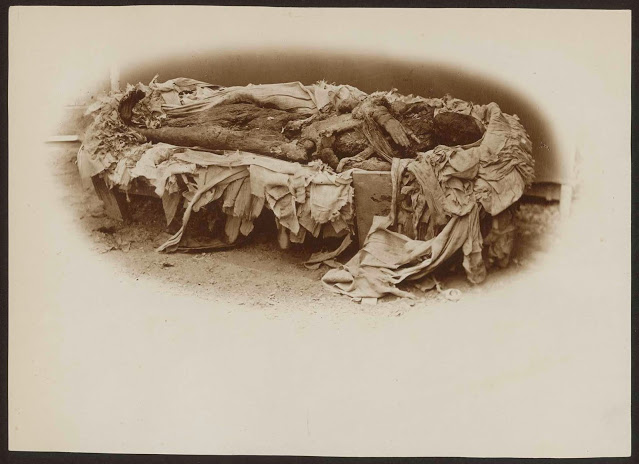
Respecting and venerating the former rulers, the high priest of Amun Herihor who ruled the Theban region at the start of the XXIst dynasty (around 1080 BC) he took the initiative, after the desecration of their homes of eternity, rebury the mummies in a tomb, originally known to have been that of a princess Inhâpi. This collective tomb will be discovered in 1871, in Deir el-Bahari, by Gournawis, the Abd el-Rassoul brothers. The existence of this “Hiding place of the royal mummies” will not be known to the Antiquities Service until ten years later, in 1881. Forty-two mummies rested in the “DB 320” … Among them, Ahmosis, Seqenenrê, Thoutmosis I, II, III, Amenhotep I, Séthi I, Ramses II, III, IX… Queens or princesses were also there: Ahmès-Méritamon, Ahmès-Inhâpy, Ahmès-Néfertari, …
The sarcophagi, mummies and the remains of funerary furniture will be transferred to the Boulaq Museum by the steamboat “Le Menshieh” … “All this funeral pantheon was stowed in the museum’s steamboat (that of the late Mariette) that they had just sent to Luxor. The bridge, the divans, the tables were loaded with royal spoils; Mariette’s bed and each of the rooms we had engaged and which we have occupied since then became the asylum of a king or a queen of Egypt; for the last time, they were descending this river which they so often travelled for a war or celebration apparatus “(Arthur Rhoné).
February – March 1898: Victor Loret discovers, in KV 35, the second hiding place of the Royal Mummies Original page from Victor Loret’s excavation book – Tomb of Amenophis II part 4 March 28, 1898 – Archives of Egyptology of the University of Milan – Loret Fund
Seventeen years later, in February – March 1898, Victor Loret discovered the tomb of Amenhotep II in the Valley of the Kings. The KV 35 did contain the pharaoh’s mummy, but not only … In what will be called the “Second hiding place”, 17 royal mummies had been sheltered in an annexe of the tomb, among which: Thutmose IV, Amenhotep III, Merenptah, Seti II, Siptah, Ramses IV, V, VI, and probably Setnakht. It also housed female mummies, including that of the “Young Lady (KV35YL) who is undoubtedly that of Nefertiti” (Marc Gabolde) and that of an “elder woman” who “could be the remains of Queen Tiyi”…
Again, according to the same scenario, everything will be transported to Cairo …
But… the rest of the “wandering mummies” is not yet for now… For them begin other journeys …
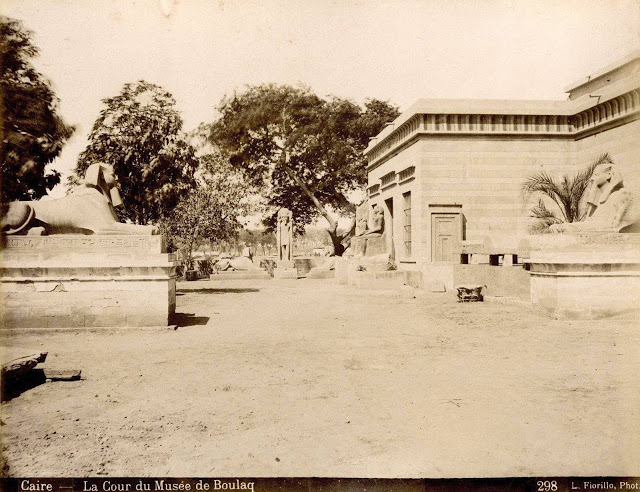
The royal mummies are first exhibited at the Boulaq museum created by Auguste Mariette and inaugurated by Ismail Pasha on October 16, 1863 – photo L. Fiorillo
Boulaq, created by Auguste Mariette and inaugurated by Ismail Pasha on October 16, 1863, very quickly became too small. The Egyptian collections, including mummies, will then be transferred to a splendid palace in Giza. Inaugurated on January 12, 1890, by S. A. Abbas Pasha Hilmi, this new museum has 91 rooms. However, he quickly suffered from two evils: his remoteness from the city centre and his lack of security …
In 1890, the royal mummies were transferred to the Giza Palace-Museum inaugurated on January 12, 1890 by S. A. Abbas pasha Hilmi – photo by Zangaki
The collections will remain there until 1902 when they will be installed in Kasr-el-Nil (Ismailieh square which, after 1952, became Tahrir square). The magnificent neoclassical building created by Marcel Dourgnon, will be inaugurated on November 15, 1902, by the Khedive Abbas Hilmi II.
However, the public display of the royal mummies will come to an end under Sadat’s presidency. It was doubly motivated by a “safeguard” both “physical” and “moral”. Indeed, as Christian Leblanc explains: “Under a warm glass roof on the first floor, exposed, not to say exhibited without conditioning and to the indiscreet, even disrespectful gaze of thousands of visitors a day, the mummies were suffering”. And, on the other hand, the Raise evoked the immoral aspect: “I cannot agree to display the remains of the Egyptian pharaohs in exhibitions for people to see. This goes against the commandments of the three religions. : Islam, Christianity and Judaism “.
The Getty Conservation Institute will then be mandated to carry out in-depth studies which will lead to a new exhibition of mummies, respectful and “secure” in an adequate space being totally dedicated to them … Voices are still being raised against this exhibition. disrespectful and irreverent towards the former rulers …
And now, in this very month of April 2021, they move again for another home: the last?
It is indeed towards the National Museum of Egyptian Civilization that will head, this April 3, 2021, “The pharaohs’ golden parade”, which wants to be worthy of the last convoy having led them to the Valley of the Kings …
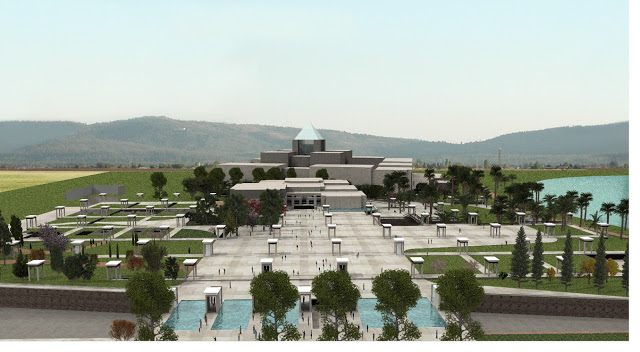
The National Museum of Egyptian Civilization (NMEC), located at El Fustat in the old part of Cairo, overlooking Lake Ain El-Seera, will host the royal mummies from April 3, 2021 – photo Travel Notes
The NMEC is the first real museum of Egyptian civilization. “It is located on the archaeological site of El-Fustat in the oldest part of Cairo, overlooking Lake Ain El-Seera. The museum was designed by Egyptian architect El Ghazzali Kosseiba and interior architecture by the Japanese architect Arata Isozaki. The NMEC will present Egyptian civilization, from prehistoric times to the present day, through a multidisciplinary approach highlighting the tangible and intangible heritage of the country “specifies Unesco”.
Among the exhibition rooms, in a suitable temperature, and in a museography attached to respect and meditation, a specially dedicated hall will host twenty-two royal mummies: nineteen of pharaohs: Seqenenrê, Amenhotep I, Thutmose I, Thutmose II, Hatshepsut, Thutmose III, Amenhotep II, Thutmose IV, Amenhotep III, Sethi I, Ramses II, Merenptah, Sethi II, Siptah, Ramses III, Ramses IV, Ramses V, Ramses VI, Ramses IX, and three queens: Ahmes- Nefertari, Méritamon, Tiyi.
In one of the first articles announcing this transfer – which was initially scheduled for early December 2020 – Nevine El-Aref (Al-Ahram, 11-8-2020) provided this valuable information: “The mummy room is designed to resemble the Royal Tombs in the Valley of the Kings from Luxor. There is a slope leading up to it, where visitors will come face to face with the royal mummies in a dimly lit room painted black. ‘The NMEC exhibition committee chose black as the colour of the mummies room so as not to disturb visitors during their visit and to make the mummies the protagonists of the exhibition ‘said Mahmoud Mabrouk, advisor to the Ministry of Antiquities for the exhibition scenarios “.
She had also specified that 17 royal coffins had already joined the NMEC and unveiled part of the organization of the transfer of mummies: “The royal procession which will take place on this occasion will bring spectators back to the ancient Egyptian period, when the kings and the queens were transported to their graves, to eternity. The new procession will see the royal mummies transported on the Nile then accompanied by chariots and horses “…
Military vehicle dedicated to transporting the mummy of Siptah from the Tahrir Museum to the NMEC during “The paraohs’ golden parade” on April 3, 2021, in Cairo
The mummies will be “placed” on vehicles, military, twenty-two “tanks”, revamped in a pharaonic tuning, with a lot of LEDs illuminating protective wings … Each tank will bear the name of the sovereign it carries, written in hieroglyphics, in Arabic and English.
Recent press articles: The latest press releases from the Ministry of Tourism and Antiquities, as well as various photos and videos of the preparations, give a more precise idea of the event …
It is around 6 pm, at nightfall, that the convoy will leave Tahrir Square. “It was the Egyptian sound and light company that carried out the technical and artistic lighting of all the buildings in this Khedival square,” says archaeologist and researcher Ahmed Amer. In addition: “an obelisk of Ramses II from the temple of Amun in Tanis, as well as four rams from the temple of Karnak in Luxor, which now decorate the centre of the square, will be inaugurated during the procession” (Nasma Réda, Al- Ahram Hebdo – 24-3-2021).
The procession, scheduled to complete the 7 km in 45 minutes, will evolve between large feathers of Maât and will be “animated” by performances by artists in period costumes and accompanied by symphonic and military music.
This major event will be filmed and announced by more than 400 televisions and broadcast, live on the YouTube channel and the Facebook page of the Ministry of Tourism and Antiquities – will take place in particular in the presence of President Al-Sisi, the Minister of Tourism and Antiques, and many other personalities …
It will testify to Egypt’s immense respect for its former rulers: what other people can afford, today, such a “collective” homage?
General catalog of Egyptian antiquities in the Cairo Museum N ° 24001-24990 – Excavations of the Valley of the Kings (1898-1899), Georges Daressy, 1902
General catalog of Egyptian antiquities in the Cairo Museum N ° 61001-61044, Coffins of the royal hiding places (1909), Daressy, Georges
Mummies to the NMEC, Nevine El-Aref, ahramonline, Tuesday 11 Aug 2020 – A version of this article appears in print in the 13 August, 2020 edition of Al-Ahram Weekly






































 lampmagician



You must be logged in to post a comment.