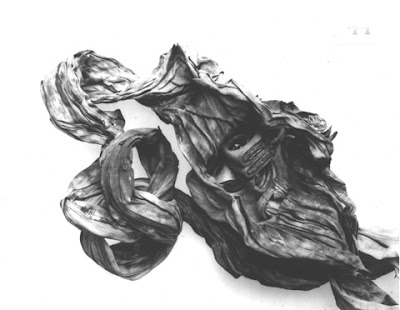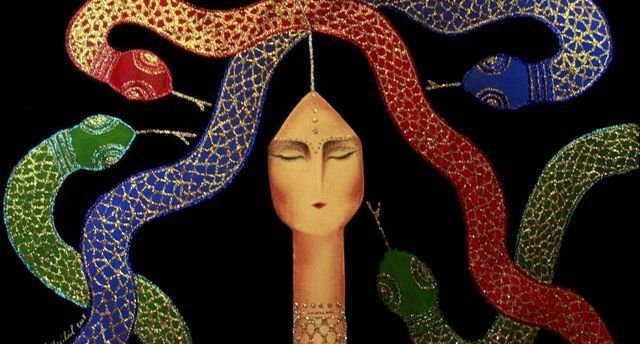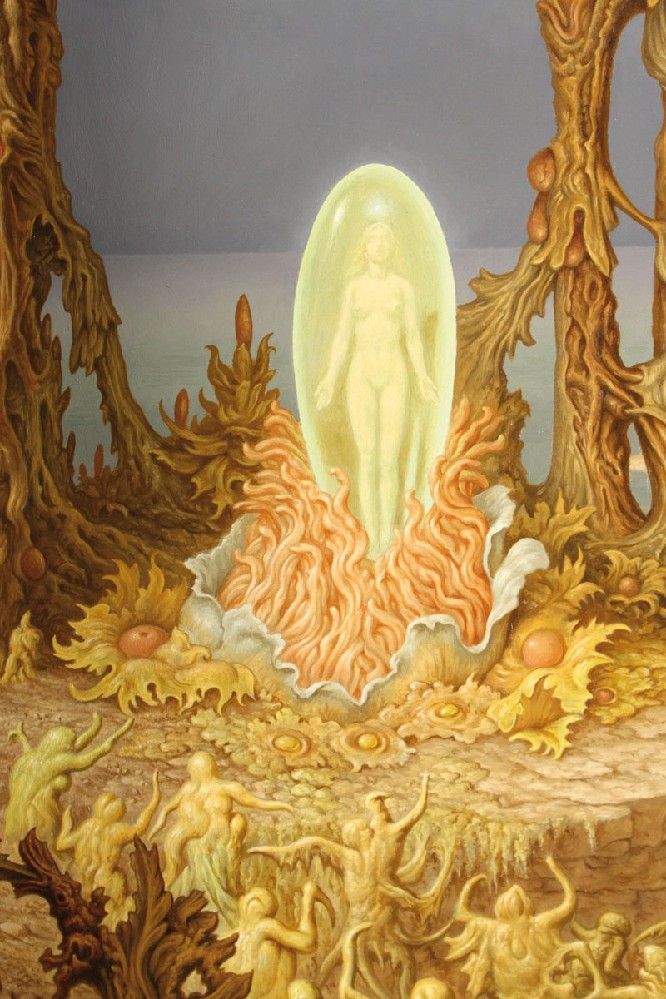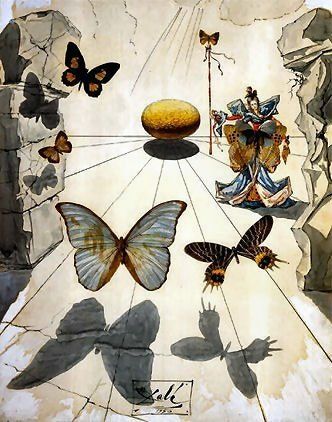
Silk Allegory (Allegorie de soie 1950) by Salvador Dali
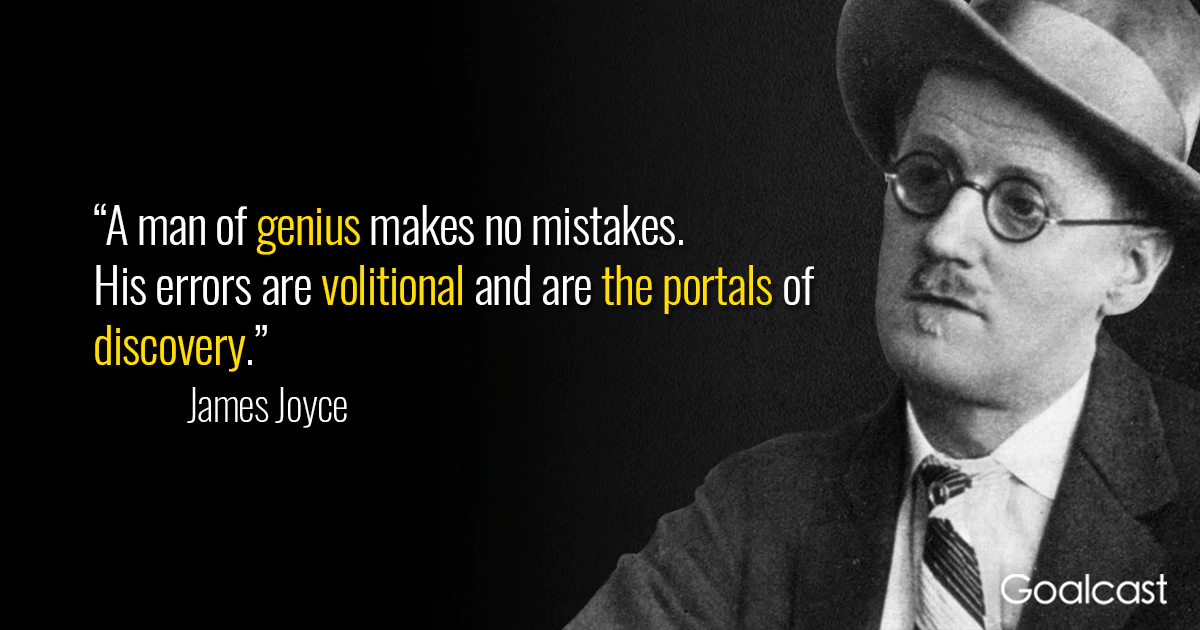
This topic is not new to me, as I have been thinking about it since I was a young man. As you might know, I was born and grew up in a country in which Gender is an essential issue with the men ruling. Of course, Iranian women had many rights in the time of the Shah, but after the Islamic revolution, the Islamic rules have reduced almost all of them. Since I left Iran, I have given up any nationalism or ism at all, but maybe like James Joyce and his Irish feeling, I still have my Persian root. And now, it tears my heart apart when I see how the young girls are fighting and shedding blood to get their rights back.
Anyway, in my youth, I observed my body so often. My anatomy was more feminine than masculine. I wasn’t as hairy as a young man should be, and my skin was (or still is) soft and supple. It may be because of my mother’s wish to have a daughter. Of course, I had no desire for a man, but as I watched my body in the mirror, I missed a woman’s body near mine. Also, I am a man with all male and female feelings towards women. That caused me to think of it and have questions about these differences. And later, the theme of homosexuality and why it happens.
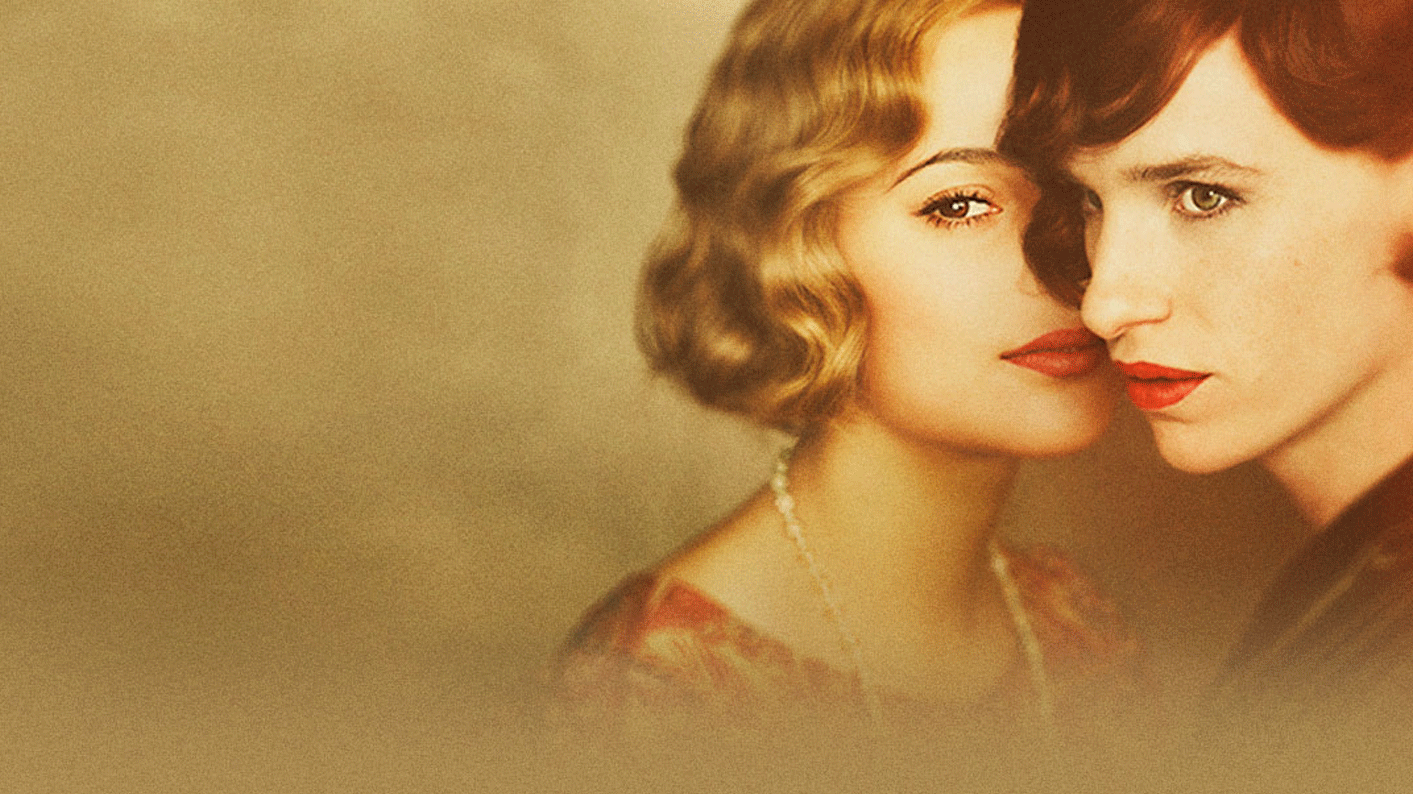
Some days ago, I watched a movie on TV (The Danish Girl from 2015), and I wondered why I had never heard about this one. It’s a well-made movie and touched me very much, not only because of its dramatic themes but also because it awakened my thoughts on the mysterious twilight of our Gender along the topic of Anima and Animus. I don’t know if any of you have seen this movie, but it is about transgender, based on the novel by David Ebershoff; it was a fictionalized account of the true story of Lili Elbe, one of the first trans women to undergo gender reassignment story.
You may watch this movie, though; I tell a summary; A married couple, both artists (painters), live happily together until the man discovers his inclination to be female. That shocked him initially, but the desire was much stronger than any appropriateness. (S)he decides to go towards his (or her) destiny, and the wife, though with a broken heart, decides to help.
I don’t want to discuss right and wrong or equality on this topic here, though it can always be essential. It only brought me back to my childhood and my own experiences with my own body.
The main question is: what is it about this nature failure? Why does a born masculine want to be feminine and vice versa? What has gone wrong? Especially the interesting thing is that this movie shows that a happy married man suddenly finds his (or her) true self to be a woman. If it is because of the hormones, they came very late, or is it because of the sudden awakened Anima? Are the hormones the same as Anima and Animus? Oh yes! There are a lot of questions which I can’t answer. Let’s look at what the master, Dr Jung, says.
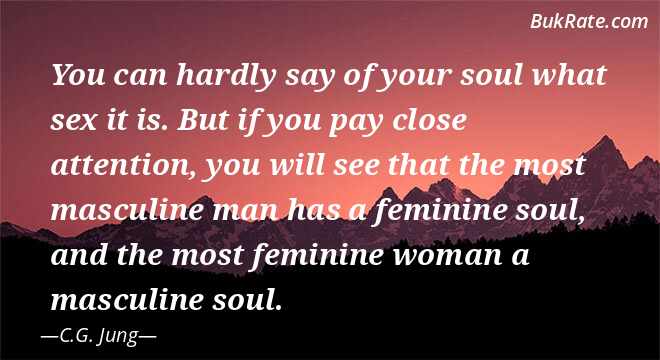
We must also consider that we have two big problems to solve: first, to find the harmony between our body and soul, and second: to find the balance between our Anima and Animus. That is what Dr Jung calls wholeness, as the soul has and can’t have any gender! The main question might be this: have we forgotten something?
In “On the psychology of the child archetype”, Dr Jung talks about Child hermaphroditism, which I have translated from my book; Archetype.
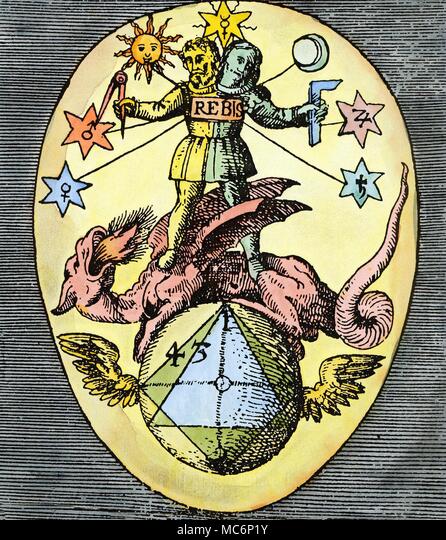
He writes: It is a remarkable fact that perhaps the majority of the cosmogonic gods are bisexual in nature. The hermaphroditus means nothing other than a union of the strongest and most striking opposites. This union rejects the first and primitive spiritual constitution, in whose twilight differences and opposites are either only a little separated or blurred altogether. However, with the increasing sanctity of consciousness, the opposites become more distinct and irreconcilable. Therefore, if the hermaphrodite were only a product of a primitive and lack of differentiation, one would expect that it would soon have been eradicated with increasing culture. This is just not the case; on the contrary, the imagination of higher and highest levels of culture has always occupied itself with this idea, as we can see from Gnosticism’s Late Greek and syncretic philosophy. In the natural philosophy of the Middle Ages, the hermaphroditic Rebis plays an important role. And in very recent times, we still hear of the androgyny of Christ in Catholic mysticism. (Koepgen, Die Gnosis des Christentums, 1939, S. 315 ff.)
Here it can no longer be a matter of the still-existence of a primitive Phantasma, of the original contamination of opposites. Rather, the primal idea is as we can see from medieval works. (v. Lapis as mediator and medium; cf. Tractatus aureus cum scholiis, in Bibliotheca chemica, 1702, vol. 1 p. 408 b; and Artis auriferae, 1593, vol. 2, p. 641.)
It has become a symbol of the constructive union of opposites, a real “unifying symbol”. In its functional meaning, the symbol no longer points back but forwards to a goal that has not yet been reached. Regardless of its monstrosity, the hermaphroditus has gradually become a conflict-solving saviour, an importance which, incidentally, it already achieved at relatively earlier stages of culture. This vital importance explains why the image of the hermaphrodite did not die out in antiquity. Still, on the contrary, with the increasing deepening of the symbolic content, it could assert itself through the millennia.
That is, however, remained a mystery for us all. May we be able to find the answer and can solve the enigma of our existence. Amen!
Here s also a video about this somehow fascinating and, at the same time, tragic occurrence.
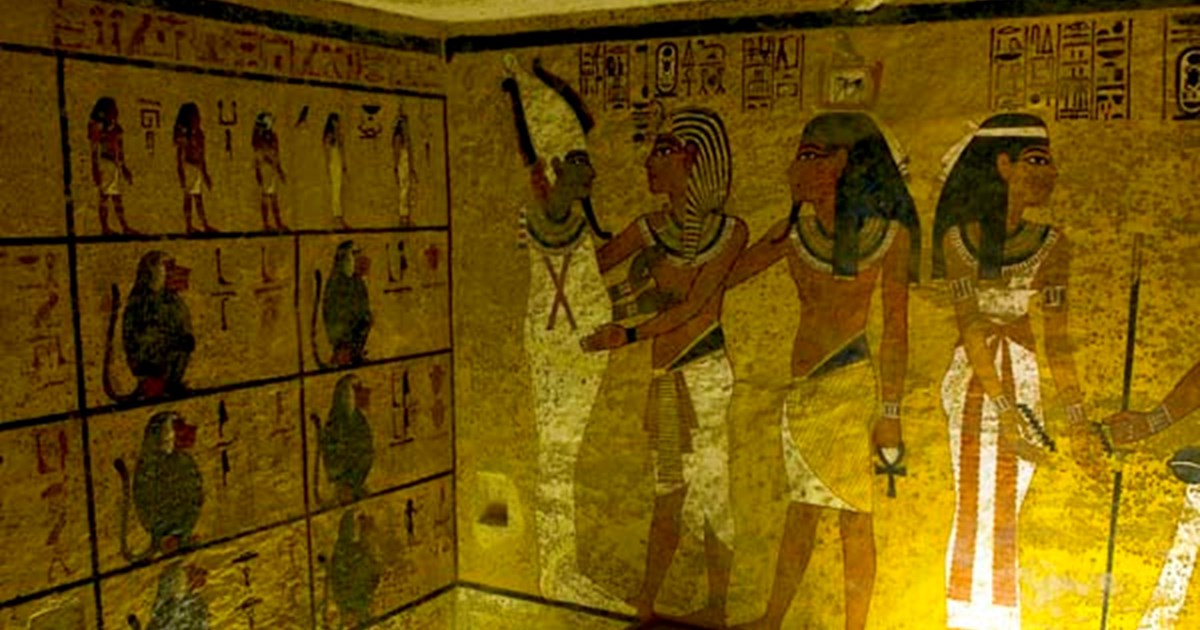
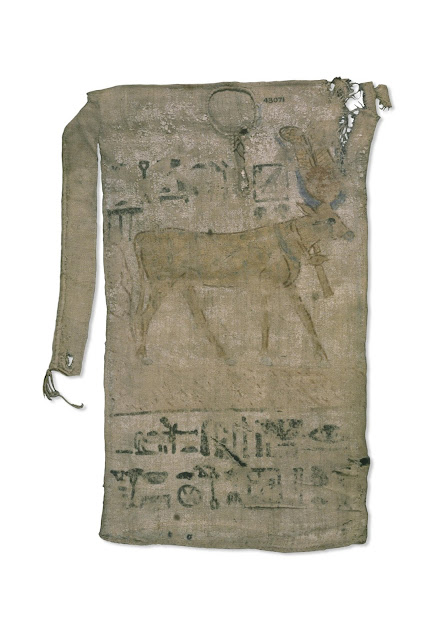
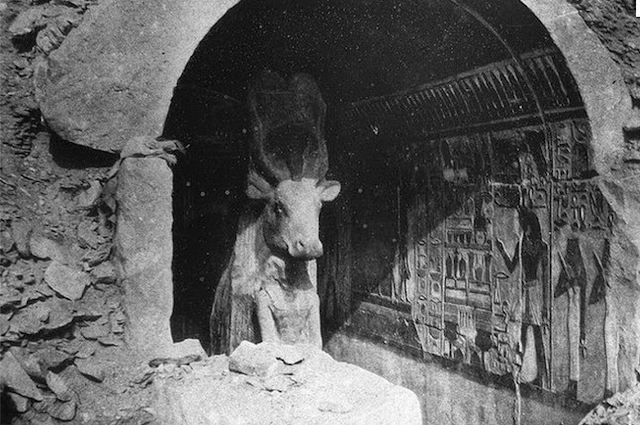
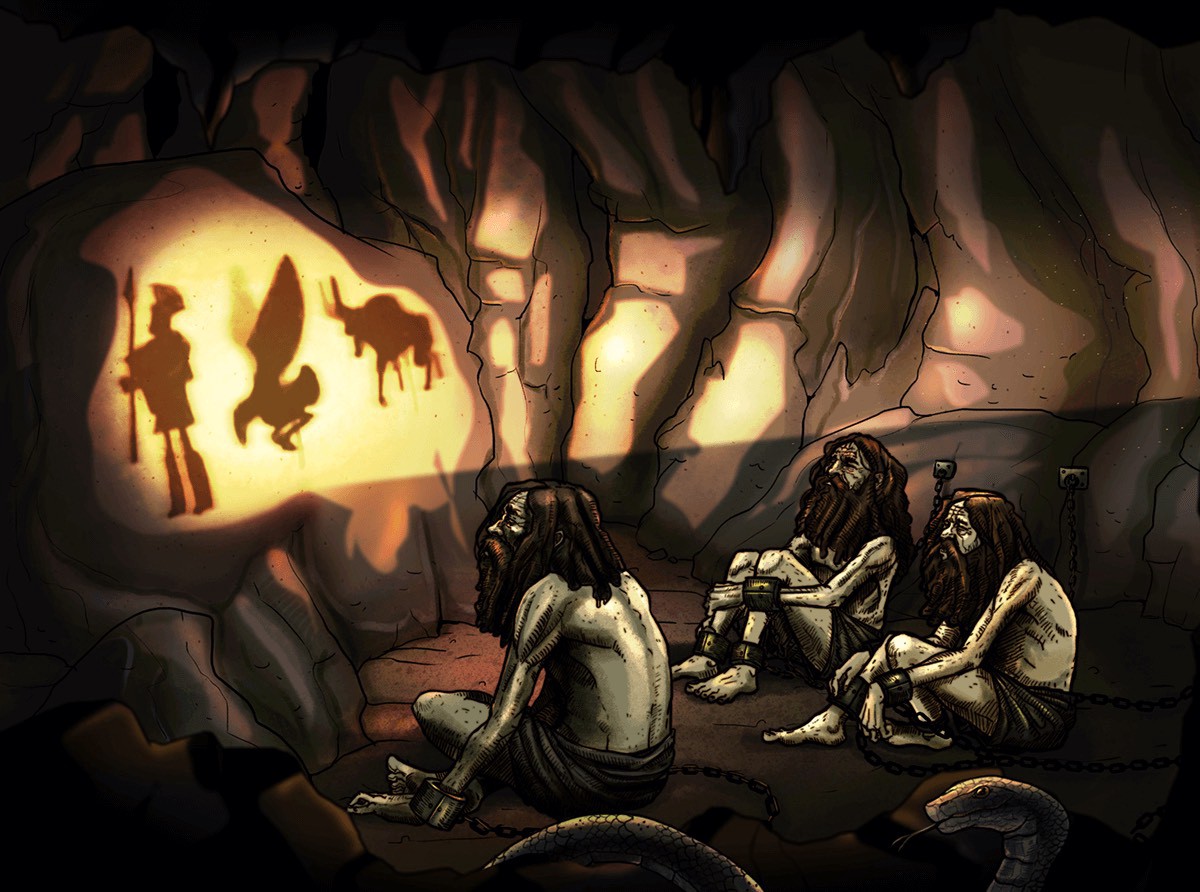
Queen Nefertari and Horus. Wall painting in the tomb of Queen Nefertari. It portrays the ancient Egyptian god Horus (left) leading Queen Nefertari by the hand. Nefertari lived around 1300-1255 BC and was the first wife of the Egyptian pharaoh Ramses II. The tomb of Queen Nefertari, located in the Valley of the Queens, Thebes, Egypt, is one of the best preserved and most ornately decorated of all known tombs. It was rediscovered in 1904 by the Italian archaeologist Ernesto Schiaparelli but has been closed to the public since 2003. Science Photo Library
It is inevitable to ignore the Myths of the feminine in ancient Egypt, especially this divine queen Ahmose Nefertari. I have already noticed that I shared several posts about this queen; however, she deserves another one, especially about this fantastic find of her statuette in such a beautiful form.
Ahmose-Nefertari was the first Great Royal Wife of the 18th Dynasty of Ancient Egypt. She was a daughter of Seqenenre Tao and Ahhotep I and a royal sister and wife to Ahmose I. Her son Amenhotep I became pharaoh, and she may have served as his regent when he was young. Ahmose-Nefertari was deified after her death. Wikipedia
Reddit The 3,200-year-old tomb of Queen Nefertari. The paintings are considered the best-preserved and eloquent decorations of any Egyptian burial site.
Let’s read this brilliant explanation by Marie Grillot about this excellent artwork. via: égyptophile
The former deified queen Ahmes-Nefertari, protector of the workers of the royal tombs painted shea wood – Reign of Ramses II Department of Egyptian Antiquities of the Louvre Museum (by acquisition in 1827 from the Drovetti collection – n°54) – N 470 – photos of the museum
According to some sources, this votive statuette of the great Queen Ahmes Nefertari entered the Louvre in 1827, along with the Drovetti collection, made up of 1970 pieces, which Champollion had urged the sovereign Charles X to acquire. Other writings indicate it as having arrived in the collections “before 1852” without further details.
Referenced N470, 35.5 cm high, it is made of shea wood and was carved in one piece” except for the left foot “. The queen is shown standing with her left leg forward. Her left arm is bent under the chest, and she holds a sceptre (fly swatter?) in her hand. Its flexible stem passes between her breasts, and flowers and straps bloom from the armpits to the beginning of the front -arms. Her right arm rests along the body, and her hand clutches an object that has now disappeared.
She is dressed in a long tight dress which covers her body down to her ankles, revealing her elegant forms, in particular a well-defined chest – the tip of the breasts of which is “haloed” with a circle of black paint -the navel with the bulge that surrounds it, as well as the bones of the knees.
The former deified queen Ahmes-Nefertari, protector of the workers of the royal tombs painted shea wood – Reign of Ramses II – Department of Egyptian Antiquities of the Louvre Museum (by acquisition in 1827 from the Drovetti collection – n°54) – N 470 – photo from the museum
The face is beautiful, of an asserted nobility, with large almond-shaped eyes, an elegant nose and a sensual mouth.
If the statuette is offered to our eyes today in its soft blond wood, it was indeed polychrome, as evidenced by the touches of paint, red and black, which remain.
Ahmes Nefertari is the daughter of Ahhotep II and Seqénenré Taâ II. Great royal wife of Ahmose, mother Amenhotep I, she reigned for many years. She lived in Thebes and was buried in the necropolis of Dra Abu el-Neggah. The exact location of his tomb has been “several times questioned since Carter’s earlier excavations “.
Other statuettes, similar but of different sizes, are in various museums, such as Turin or Berlin.
Other statuettes, similar but of different sizes, are found in several museums, such as Turin or Berlin. Ahmes-Nefertari is the daughter of Ahhotep II and Séqénenré Taâ II. Great royal wife of Ahmose, mother Amenhotep I, she reigned for many years. She lived in Thebes and was buried in the necropolis of Dra Abu el-Neggah.
In his magnificent work “Les statues egyptiennes du Nouvel Empire au Louvre”, Christophe Barbotin describes precisely how the garment is made: “a tight-fitting fabric draped around the body tied under the right breast which leaves bare the right shoulder and covers the instep and the heel. The double fall of the fabric is marked by a braid starting behind the left shoulder and continuing behind the right shoulder (with a defective alignment from one shoulder to the other), constituting a diagonal on the bust on either side of the right breast. This braid is adorned with tight fringes on the left forearm and along the left leg to the heel. The covering of the drape is marked by an incised line connecting the knot under the right breast to the right ankle”.
Like the Valley of the Kings, this necropolis did not escape the looting that took place at the end of the Ramesside period. Around 1100 BC. AD (21st dynasty), the high priest Pinnedjem II, who then ruled the Theban region, did everything possible to preserve the royal remains. This is how he had them reinterred in his own tomb, dug in the rocky cirque of Deir el-Bahari, more precisely, in the rocks of Chaak el-Tablyah.
Coffin in sycamore wood of the great queen Ahmes-Nefertari, protectress of the workers of the royal tombs discovered in 1871 – 1881 in the Cachette of the Royal Mummies (DB 320) at Deir el-Bahari
It was there, in the heart of the Theban mountains, that they rested until the summer of 1871, when the Abd el-Rassoul brothers, villagers from Gournah, discovered the tomb, its treasures piled up pell-mell, papyri, alabaster vases, shabtis and… forty-two mummies and sarcophagi. They decided to seal this secret, to say nothing about it. “They went down three times in ten years to the bottom of their hiding place.” But years later, having noted the appearance of objects from clandestine excavations on the antiquities market, Gaston Maspero launched an investigation. After multiple and extraordinary developments, on July 5, 1881, in the presence of Mohamed Abd el-Rassoul in the crushing heat of Deir el-Bahari, Emile Brugsch, Ahmed Effendi Kamal, assistant to the Cairo museum, and Thadéos Matafian, supervised the “re-discovery” of this hiding place of royal mummies, now known as DB 320.
Among the mummies of the greatest sovereigns was that of the great queen Ahmes Nefertari. During the re-burial, she had been placed back in her 3.78 m sycamore wood coffin on which “she is majestically represented standing, arms crossed, covered with a mummy sheath and holding two ‘ankh’ signs in her hand. “.
The former deified queen Ahmes-Nefertari, protector of the workers of the royal tombs painted shea wood – Reign of Ramses II Department of Egyptian Antiquities of the Louvre Museum (by acquisition in 1827 from the Drovetti collection – n°54) – N 470 – photos of the museum
She wears an imposing three-part hairstyle, painted black, composed of plaits braided in a very particular way which fall to the upper part of the breasts. This wig is surmounted by the remains of a vulture (painted in yellow), the emblem of the goddess of Upper Egypt, Nekhbet, whose wings are worked on three levels and whose head adorns the middle of the forehead. The whole is surmounted by a mortar, part of which is missing.
The former deified queen Ahmes-Nefertari, protector of the workers of the royal tombs – painted shea wood – Reign of Ramses II – Department of Egyptian Antiquities of the Louvre Museum (by acquisition in 1827 from the Drovetti collection – n°54) – N 470
The face is beautiful, of an affirmed nobility, with large almond-shaped eyes, a long fine nose, and a sensual mouth. If the statuette is offered to our eyes today in its soft blond wood, it was indeed polychrome, as evidenced by the touches of paint, red and black, which remain. Thus: “according to the traces visible on the cheek of the lady, the flesh was painted in a dark colour, which is again a speciality of this deified queen”, specifies Christophe Barbotin.
The deified queen Ahmes-Nefertari – wood – New Kingdom Turin Museum – cat 1369
She is “pegged” to an acacia wood base on which her name and titles appear: “The divine wife of Amon, the great royal wife, mistress of the double country, the beloved of her father Amon, the mother of the king, Ahmes Nefertari. May she live, be young and durable like Re, eternally”. It was dedicated by: “Djéhoutyhermaketef, who lived in Deir el-Medina and exercised the functions of quarryman during the reign of Ramses II (1279-1213 BC)”. The posthumous cult of Ahmes-Nefertari and Amenhotep I – very pronounced, especially within the community of workers of the royal tombs of Set Ma’at who made them their protectors – will continue for nearly five centuries after their “disappearance.”
The exact location of her grave was: “several times questioned since Carter’s old excavations”.
The former deified queen Ahmes-Nefertari, protector of the workers of the royal tombs – painted shea wood – Reign of Ramses II – Department of Egyptian Antiquities of the Louvre Museum (by acquisition in 1827 from the Drovetti collection – n°54) – N 470 – museum picture.
During the 21st Dynasty, the high priest Herihor who ruled the Theban region took care to restore the coffins and mummies of former rulers who had suffered from desecration or had been damaged by the robbers of graves. Their re-burial took place in the rocky cirque of Deir el-Bahari – more precisely in the rocks of Chaak el-Tablyah – in a tomb initially known to have been that of Princess Inhâpi.
This incredible “hiding place of royal mummies” was discovered in 1871 by Gournawis, the Abd el-Rassoul brothers. However, its “existence” will not be “officially” known to the Service des Antiquités until ten years later, in 1881.
Indeed, after an investigation with many twists and turns – prompted by the fact that artefacts arrived illegitimately and from unknown sources on the antique market – Gaston Maspero’s collaborators went back to the source of the traffic. This is how on July 5, 1881, in the crushing heat of the rocks of Deir el-Bahari, guided by Mohamed Abd el Rassoul, Emile Brugsch, Ahmed Kamal Effendi and Thadéos Matafian, supervised the “re-discovery” of this tomb – which will be referenced DB 320 -, which contained about fifty mummies – including about forty pharaohs.
The mummy of the great queen Ahmes-Nefertari had been replaced in her 3.78 m sycamore wood coffin (CG 61003) on which: “She is majestically represented standing, arms crossed, covered with a mummy sheath and holding hand two ‘ankh’ signs.
Mahsa, dear. You made us “us” again… your beautiful name set an unrepeatable record in the history of Twitter… You became the code of freedom that they made a promise with your hair. via; شیرین @Shirinbood ….. #MahsaAmini
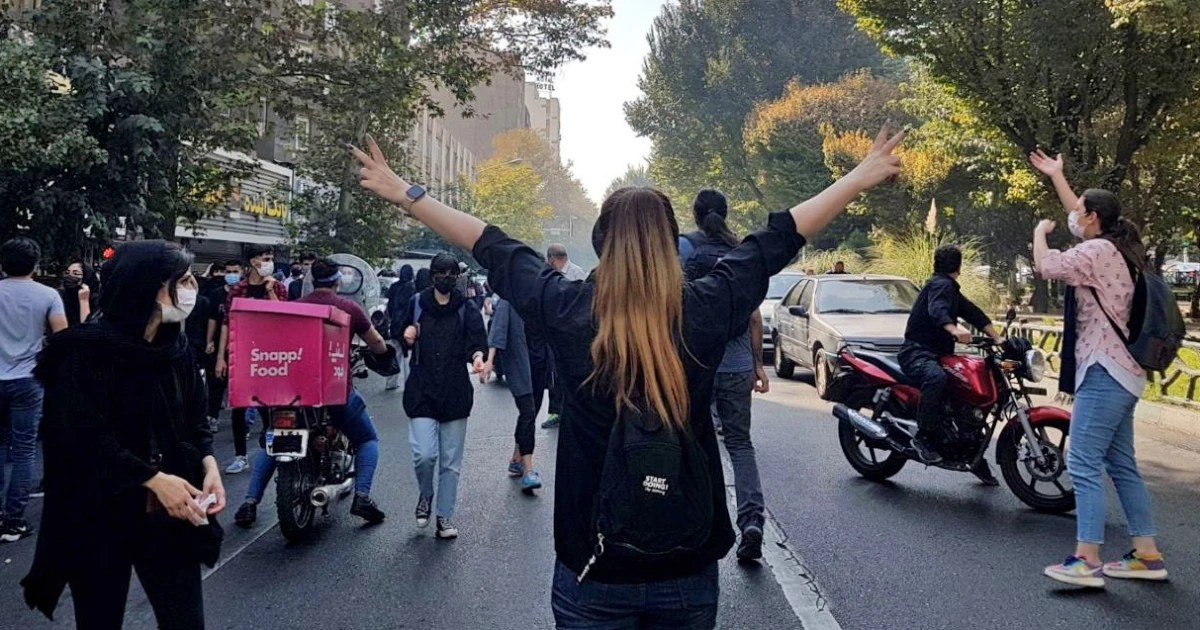
It has been a long time since I posted on political issues. I think now is the time! I don’t know how much you have heard about what is happening in Iran nowadays. Although I do hope you did because it is now broadcast on many worldwide networks. Of course, it is a long story: since the Islamic Republic of Iran came into power (at the end of the seventies), the protests for freedom had begun (In my opinion, the revolution had failed before its victory!), as I took part in them, but the highest point was the so-called green wave in 2009; however, it didn’t come on the air in the West as we hoped, only there was a brief statement by President Bush as he said: don’t harm the young Iranian protesters! After that, there was unrest now and then, but still, the West remained silent. (I might mention it before several times (f.e. here & here); it is almost clear for an intellectual these days to know that the free press is under pressure; We all have the orders from above and at least have a “free choice”: to say and write what we think and live isolated, or be decent and care of our future carrier!) And now?!
The death of a young girl named Mahsa Amini exploded an old festering wound. She wasn’t the first one who was brutally grabbed by Islamic police on the streets and tattered in the police cars because of her incorrect hijab; it happened before with the other young girls, but her arrest and death after they hit her head violently, there was no waiting any longer.
Honestly, at the beginning of this year, I had a feeling (a prognosis?) that this Mullah regime would spend its last time because of the western media’s reaction toward the situation in Iran. There were unusually more reports in the press.
On the other hand, the pressure on people got much more violent. It reminded me of how the secret service of the late Shah, SAVAK, did the same increasingly brutality in their last year of reign. Those days Al and I and some other friends were under their observation. I have heard it from one of the members of this organisation. I got to know him from another friend who was interested in spy movies and wanted to be an agent! He told me he knew an agent and would like to talk to us. This Agent was very friendly and told us how he knew and appreciated our father. He was a great thinker, he added, and his children had to be the same. Therefore we watched all your actions and took pictures of when you left the house and where you went! We know you are harmless, but these days we have some new members; ill-minded and brutal! I don’t know why he said; I just warn you to be careful. That convinced me later when I heard many violently dragging and arresting young people from their homes at night. That usually is the way to make displeasure and dissatisfaction in society. Those days I thought it was the end of Shah’s regime, and I was right! Now I’d make the same prophecy! Amen!
Women take part in a sit-in following the death of Mahsa Amini at Martyrs’ Square in Beirut, Lebanon September 21, 2022. REUTERS/Mohamed Azakir Cyprus Mail
Mahsa Amini just wanted to be free, like many other women in Iran. She was a Kurdish girl, and as I know through my life experience, the Kurdish people are a unique nation. They are challenged for freedom all through their life, especially during the time of Khomeini. Once I remember well that Al wrote an article about their courage and excellent knowledge of living equally between man and woman. (We must bow before the Kurds, he noted.)
My name is Mahsa Amini. My 23rd birthday was two days ago. Instead of celebrating, I was kidnapped, tortured, put in a coma and killed by the government. My crime was that my hair was showing. Now I am dead. Be my voice. #MahsaAmini#مهسا_امینی#IranProtests
Now it is time for hope again. May this dark time end for the Iranian people, and this pure blood spilt by brave youth gets the goal they deserve. Freedom is like a fresh breeze which every human needs to breathe.



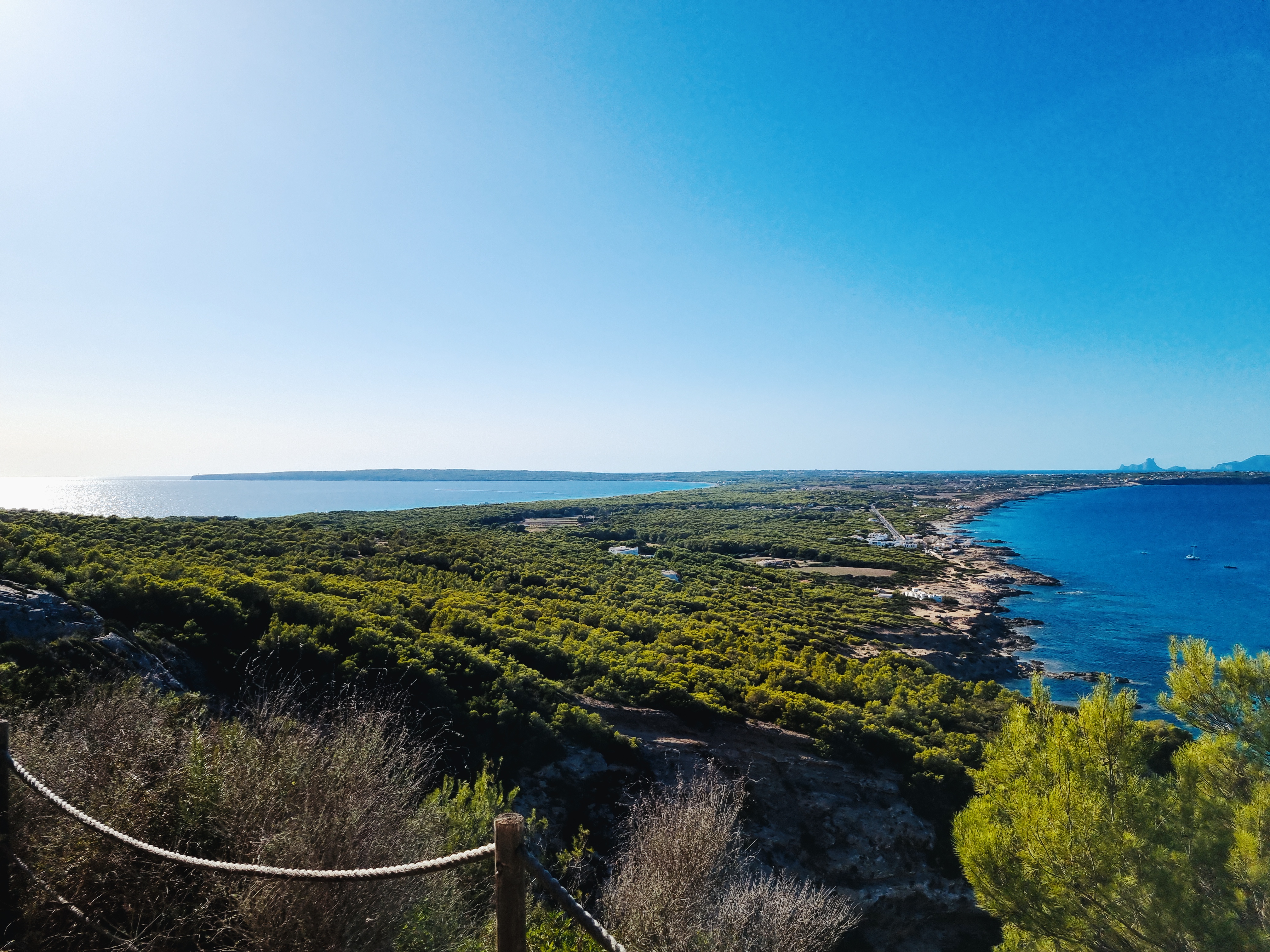






PS: Next week here begins a two-week school holiday, and it clearly means I will be kidnapped again! One week in Formentera, Spain. During that time, I will take a break as I might deserve. Love and Peace and Freedom for you all.
Dream symbols of the individuation process; A contribution to the knowledge of the processes of the unconscious manifested in dreams. (1944) GW 7 – GW 13
facilis descensus Averni; noctes atque dies patet atri ianua Ditis-: sed revocare gradum superasque evadere ad auras, hoc opus, hic labor est. (It’s easy and effortless to climb down in hell’s depths, Because the dark gate of the grave stands open day and night; But the return upwards, to heaven’s bright air Leads on a path of suffering.) Virgil: Aeneid, Book VI, 126-129
I begin with the last words from the previous chapter.
Only below is the fiery source of life to be found. (Fig. 10) This “below” is man’s natural history; its causal connection cannot become a lapis or a self.
Fig.10 The “Mercurius Tricephalus” as Anthropos; below: the blindfolded man led by the animal. (Kelley: Tractatus duo de Lapide philosophorum, 1676.) Lóže u Zeleného Slunce
I had to note that Dr Jung does not intend to narrate all the dreams (His material consists of over a thousand dreams) but takes examples and the corresponding symbols to explain his thesis on mandalas symbols. As he wrote: The symbols I am dealing with here do not concern the manifold stages and changes of the individuation process but rather those images which refer exclusively and directly to the realization of the new centre. These images belong in a specific category that I call mandala symbolism.
Now let’s read about this dream and its symbol. “Seventh”.
The father calls out, worried: That’s the seventh!
In the migration of many ladders, an event referred to as “the seventh” appears to have occurred (Fig. 13). The seven corresponds to the highest level and would therefore be what is longed for and desired in terms of initiation (Fig. 14). In the sense of the traditional spirit test, however, the “solificatio” is an adventurous, mystical idea that borders on madness, because such nonsense was only thought of earlier, in the dark ages of hazy superstition, whilst the clear, purified world of spirits of our enlightened times is such nebulous things has long since overcome, to the extent that only the mental hospital houses Illuminati of this kind. No wonder the father is anxious, like the hen that hatched duck eggs and is now more distressed by the aquatic tendencies of his offspring. If this interpretation that “the seventh” means the highest level of enlightenment is correct, then the process of integrating the personal unconscious should actually be connected with it in principle. After that, the opening of the collective unconscious would begin, which would sufficiently explain the father’s concern as the representative of the traditional spirit.
After all, the return to the dawn of the unconscious does not mean that one has to completely abandon the precious achievement of the fathers, namely the intellectual differentiation of consciousness. The point is that the human being takes the place of the intellect, not the one that the dreamer imagines, but a more rounded or complete one. This means, however, that all sorts of things have to be included in the scope of the personality, which he still finds embarrassing or even impossible. The father shouting so anxiously, “This is the seventh!” is a psychic component of the dreamer, and its concern is his own. As a result, the interpretation must consider that the “seventh” can mean not only a summit but also something unfavourable. We encounter this motif, for example, in the fairy tale of Tom Thumb and the Cannibal. The “seven” have been the seven planetary gods since ancient times (Fig. 13); they form what the pyramid texts refer to as “paut neteru”, a company of gods (Figs. 15, 16), [Budge “der Gott von Egypt, 1904, Vol. 1 p. 87] referred to as {company of the gods]. Although a company is called the “newcomers”, it often turns out that there are not nine but ten and occasionally more. Therefore, Maspero {Etudes de Mythologie, 1893-1913, vol. 2, p. 245} says that the first and the last of the series, in particular, can be developed or doubled without doing the nine number entry.
(“Neteru means Gods/Goddesses, but to the ancient scientist of Kemet, the teachings of the Netru represented more than the modern concept of Divinities or Spirits. They also represented Cosmic Principles or Laws of the Universe.“)
Fig. 15 The seven planetary gods in Hades. (Mylius: Philosophia Reformata. 1622.) Seven Metals
Something similar also happened to the classic “paut” of the Greco-Roman or Babylonian gods in the post-classical period, when the gods had withdrawn partly to the distant stars and partly to the metals of the earth’s interior, degraded to demons. It turned out that Hermes Mercurius, as a chthonic god of revelation and as a spirit of Mercury, possessed a dual nature, for which he was regarded as hermaphrodite (Fig. 17). As Mercury is closest to the sun and therefore most closely related to gold. Mercury, however, dissolves the gold and thus extinguishes its sun-like brilliance.
Fig. 17 Mercury in the “egg of the philosophers” (alchemical vessel) stands as “Filius” on the sun and moon, which points to his dual nature. The birds indicate spiritualization; the sun’s scorching rays cause the “homunculus” to mature in the vessel. (Mutus liber, 1702) Mutus Liber Series coloured
Throughout the Middle Ages, he was, therefore, the enigmatic object of natural-philosophical speculation: soon, he was a servile, generous spirit, a “paredros” (literally: assessor, comrade) or “familiaris”; soon, he was the “Servus” or “Cervus Fugitivus” (the fugitive slave or stag) a sprite driving the alchemist to despair, evasive, deceptive and teasing (cf. the amusing dialogue between the alchemist and Mercury in the Dialogus [Theatrum chemicum, 1613, vol. 4, p. 509 ff.]) whose manifold attributes the devil has in common with him: for example dragon, lion, eagle, raven – to name only the most important ones. In the alchemical series of gods, he is the lowest as “prima materia” and the highest as “lapis philosophorum”. The “Spiritus Mercurialis” (Fig. 16) is the guide (Hermes Psycho pompous) and the seducer of the alchemist; he is his fortune and his undoing. His dual nature enables him to be not only the seventh but also the eighth, namely that eighth in Olympus, “of which no one thought” (Faust; 2nd part).
fig. 16 The mystical vessel in which the two natures unite (Sol and Luna, Caduceus), from which the “Filius Hermaphroditus” of Hermes Psychopompos emerges; on the side, the six planetary gods. (Figurarum aegyptiorum secretarum…, 18. Century.) Snakes and nine figures
It may seem odd to the reader that we are bringing in such a remote area as medieval alchemy. However, “black art” is not as far away as we think; as an educated man, the dreamer must have read Faust. But this one is an alchemical drama from start to finish, even if today’s educated person only dimly suspects it. Even though our conscious mind is far from understanding everything, the unconscious remembers the “ancient” oddities to recall when the opportunity arises. Our dreamer felt the same about Faust as this did to young Goethe in Leipzig when he studied Theophrastus Paracelsus with Fraulein von Klettenberg. (Goethe: Poetry and Truth)
There the mysterious quid pro quo of seven and eight was impressed on him without his conscious being able to decipher it – as we may reasonably assume. The following dream will show that the memory of Faust is not far-fetched.
I appreciate your interest. I will try to post more dreams with Dr Jung’s analysis. 🙏💖
“Musica e Amore nell’Hortus Deliciarium di Venere”, Miniature taken from the codex ‘De Sphaera’ (around 1460), Estense Universitaria Library, Modena. Folia Magazine
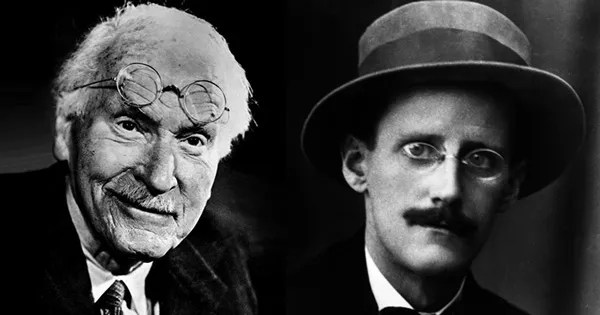
As I go deeper into Carl Jung’s works, I notice that his writings need high concentration. You know, I read them in German, and he writes very voluntarily, maybe because he is swiss! Sometimes I have to compare his style with James Joyce’s; a long paragraph without any points! Nevertheless, I think it is worth it to read them because I can learn a lot about the human soul and here, through its dreams. I have picked up one of the dreams he wrote in his book: dream and dream interpretation (Traum und Traumdeutung) and his analysis related to the concept of Mandalas.
I tried translating it as clearly as possible and put the footnotes in the main text where needed. I hope you enjoy reading. (there is also an excellent opportunity to refresh our Latine! 😉)
Dream 13 (Part 1)
There is a treasure in the sea. You have to dive through a narrow opening. It is dangerous, but one will find a companion below. The dreamer dares to plunge into the darkness and discovers a beautiful, regular garden with a fountain in the middle.
Hidden in the sea of the unconscious is the “hard-to-reach treasure,” which only the brave attain. I conjecture that the jewel is also the “companion”, someone who walks through life alongside and with us – probably the closest analogy to the lonely “I”, for which a “you” is placed in the self; because “self” is initially alien non-ego. This is the motif of the magical companion. I give three famous examples: the disciples on the road to Emmaus, the Bhagavadgita (Bhagavad-gītā) {Krishna and Arjuna} and Sura 18 of the Qur’an (Moses and Chidher.) [Cf. my writing: About rebirth, GW 9/I, §§135 ff.]
I further conjecture that the treasure in the sea, the companion, and the garden with the fountain are one and the same thing: the self. The garden is, in turn, the temenos (sanctuary), and the fountain is the source of “living water” that we know from John 7,38, and which Moses of the Koran also sought and found, and with and by this Chidher, an “Our servant whom We had endowed with Our grace and wisdom” (Sura 18). And as the legend goes, the desert floor around Chidher was also blooming with spring flowers. Based on early Christian architecture, the image of the temenos with the spring developed into a mosque courtyard and a ritual wash house in the middle of Islam (e.g. Achmed Ibn Tulun in Cairo). We see something similar in the occidental cloister with the fountain in the garden. This is also the “rose garden of the philosophers”, which we know from the potions of alchemy and was later often depicted in beautiful engravings. “The Dweller in the House” is the “companion”. The centre and the circle, shown here as a fountain and a garden, are analogies of Lapis, which is also, among other things, an animated being (Figs. 20,21).
Hermes lets him speak (in the “Rosarium” ): “Protege me, protegam te. Largire mihi ius meum, ut te adiuvem” (Artis auriferae, 1593, vol. 2, p. 239: “Protect me, and I will protect you. Give me what is due me so that I can help you.” This quote from the “Tractatus” aureus reads according to the edition of 1566 (Ars chemica); Largiri vis mihi meum ut adiuvem te. [You want to give me what is mine so that I can help you.]
Fig. 20 ALCHEMY – ROSARIUM PHILOSOPHORUM – THE FOUNTAIN A much-printed alchemical series, the Rosarium Philosophorum,1550, consists of a complex text of around 20 highly distinctive woodcut prints. The imagery is alchemica but well disguised behind the hieros gamos, sacred marriage, sexuality and various Christian symbols. They each relate to the alchemical stages, viewed from a Christian standpoint – perhaps written in the late 15th century by one of the early Rosicrucian schools. Although the text and related images appeared in mediaeval manuscripts, it was not printed until 1550, in a German edition, as part of the De alchimia opuscula. By that time, it consisted of 20 woodcuts. The authorship has always remained uncertain, though it has been suggested that it was compiled by Arnold of Villanova in the 13th century. Jung has argued, from icon PUBLICATIONxINxGERxSUIxAUTxONLY! ACHTUNG AUFNAHMEDATUM GESCHÄTZT! UnitedArchives0620691 IMAGO – Images
The lapis is here so much like a good friend and helper who helps you when you help it, which indicates a compensatory relationship. (I recall what was said in the commentary on Dream 10, especially the parallel Monogenes-Lapis-Self.)
The fall to earth leads to the depths of the sea, to the depths of the unconscious, and in this way, the dreamer achieves the protection of the temenos against the split personality in the regression to the infantile. Therefore, the situation is somewhat similar to dreams 4 and 5, where the barrier had to protect against the attraction of the multiplicity of the unconscious. (In much the same way, the dangers of temptation approach Poliphile at the beginning of his Nekyia {Necromancy}.)
Like Chidher, the spring of life is a good companion, but not without doubts, of which, according to the Koran, the old Moses had to taste some embarrassing samples – after all, this spring is the symbol of the constantly renewing life force (Fig. 42; also 20-22, 71), the clock that never runs out. A non-canonical saying of the Lord says: “He who is near me is near the fire.” {A quote from Aristotle in the “Rosarium” (ibid., p. 317) says: “Elige Tibi pro lapide, per quem reges venerantur in Diadematibus suis… quia ille est propinquus igni “[Choose for your stone that by which kings are worshipped in their crowns… for this (stone) is near to the fire.]}
Just as this esoteric Christ is a source of fire (Fig. 43), probably not without reference to the “eternally living fire” (pyr aei zoon) of Heraclitus, so is the “aqua nostra” “ignis” (fire ).86 {See the Komarios text, in which Cleopatra explains the importance of water.} The source is not only the flow of life but also its warmth, yes, its heat, the secret of passion, which always has fire synonyms. < Rosarium (Artis auriferae, 1593, Vol. 2, S. 378): “Lapis nostre hic est ignis ex igne creates et in ignem vertitur, et anima eius in igne morayur.“> {This stone of ours is the fire created from fire and becomes fire, and its soul dwells in the fire.} The template should be; Item lapis Noster, hoc est ignis ampulla, ex inge creatus est, et in eum vertitur {Likewise, our stone, the fire bottle, is made of and returns to fire.} (Allegoria Sapientum, in Bibliotheca chemica, 1702, vol. 1, p. 468a.)
< The “aqua nostra”, which dissolves everything, is an indispensable ingredient in the production of lapis. But the source comes from below, so the path leads down through. Only below is the fiery source of life to be found. This “below” is man’s natural history; its causal connection cannot become a lapis or a self.
The tomb of Ramsses III is one of the longest in the valley, measuring 180 meters, or 262 feet. The relatively straight axis represented the sun god. It remains one of the most mysterious, fascinating heritage ever in our ancient history.
And the enigmatic find of the artefacts of Ramsses III in the other tomb: of Amenhotep II makes it vaguer.
His father’s successor, Setnakht, founder of the XX Dynasty, Ramses III, reigned over the Kingdom of the Two Lands for 31 years, from 1186 to 1154 BC. He died, it seems, in his 65th year, following a palace conspiracy.
His mummified body then joins the “Great Necropolis of the Million Years of Pharaoh” in a long funeral procession, where he will be placed in an imposing granite sarcophagus. His eternal home dug in the main wadi will unfortunately not know peace. Profaned in antiquity, it will also be a regular victim of torrential rains…
Plan de la tombe de Ramsès III – Vallée des Roi – KV 11 – source Theban Mapping Project
If its entrance has remained accessible since antiquity, the other rooms will remain buried under the rubble until the 18th century, when the first “modern” explorers entered it… Before deciphering the hieroglyphs made it possible to reassign it to its proper owner, it will also be called “Bruce’s tomb” from the name of one of them, or even “tomb of the harpist” because of a scene which is represented there.
Tombe de Ramsès III – KV 11XXème dynastie
The masterful pink granite sarcophagus of the pharaoh was probably extracted from the “gold hall” around 1815-1816. Who took up the challenge of this manoeuvre?
With its tank 1.80 m high, 3.05 m long and 1.50 m wide, for an estimated weight of 10 tons and its lid weighing 7 tons, Seventeen tons had to be hauled in this stony and rugged environment, then transported to the Nile, still a few kilometres away…
By what historical coincidences was the “unity” of this sarcophagus broken, tank and lid separated forever?
Was he one of the collateral victims of the war that Bernardino Drovetti, consul general of France in Egypt and Henry Salt, British consul, were then waging in a frantic race in the search for antiquities?
left: Henry Salt (Lichfield, UK – 14-6-1780 – Alexandria, Egypt – 30-10-1827) diplomat, consul of England in Egypt from 1816 to 1835, collector of antiquities right: Bernardino Drovetti (Barbania January 4, 1776-Turin 1852) consul of France in Egypt from 1804-1811, then from 1821 to 1829, collector of antiquities
Giovanni Battista Belzoni is also a character who holds a “key” role… As soon as he arrived in Egypt in June 1815, the one who will be called the “Titan of Padua” had approached Bernardino Drovetti, but had entered, the summer next, in the service of Henry Salt, notably clearing the tomb of Ramses III… He also relates that “Mr Salt had a road made from the tombs of the kings to the Nile for the transport of a large sarcophagus, but it was completely destroyed by one of these desert torrents”…
The tank will be integrated into the Salt Collection, which, thanks to Jean-François Champollion, will be acquired by France. Charles X will ratify the purchase “in February 1826, at the asking price of 250,000 francs”.
Jean-François Champollion “Le Jeune”, decipherer of hieroglyphs Figeac, December 23, 1790 – Paris, March 4, 1832 Portrait painted in 1831 by Léon Cogniet – Louvre Museum – INV 3294
Champollion will then go to Livorno in mid-March to draw up a descriptive inventory of it and then organize its transport to Paris. In a letter dated July 10, he said: “The collection is entirely on board the “Durance”. It has a “full belly”. He will instruct his brother Jacques-Joseph to go to Le Havre to: “supervise the landing, on October 8” (Jean Lacouture). The precious antiquities then continue their journey, by the Seine, to Paris, where Champollion will receive them at the end of November 1826.
The tank of “the imposing pink granite sarcophagus of Ramses III (Salt n° 3835 – N 337) that Belzoni had snatched from Rifaud (*?)” (Jean-Jacques Fiechter) today occupies a masterful place in the Louvre, in the centre of the “crypt of Osiris”. It has “the shape of a royal cartouche which usually contains the king’s name. Here it was the king’s body that lay inside, watched over by the winged goddesses Isis and Nephthys depicted at both ends. The outer and inner walls are decorated with scenes borrowed from the compositions that adorned the walls of the royal tombs: Book of Amduat (or Book of what is in the other world) and Book of Doors” (Egyptian Antiquities: Louvre Museum visitor’s guide)…
Giovanni Battista Belzoni – The “Titan of Padua” (Padua, 5-11-1778 – Timbuktu, 3-12-1823) portrait by Jan Adam Kruseman
As for the magnificent lid, it was loaded on the “Dispatch” leaving for London in the autumn of 1821 and then joined the Fitzwilliam Museum in Cambridge, where it arrived on March 31, 1823. The museum specifies, “In July 1816, Bernardino Drovetti met Giovanni Belzoni and gave him the granite sarcophagus lid”. He further indicates that “the connection between Giovanni Belzoni and Cambridge is most likely the Reverend George Adam Browne who was associated with Trinity College. The latter was, like Belzoni, a Freemason”.
Sarcophagus Lid of Ramesses III. Find Spot: Thebes, West Bank. Production Place: Egypt. Granite, depth 0.83 m, height 3.05 m, width 1.52 m, weight 7 tons, 1200 B.C. New Kingdom, Nineteenth Dynasty.
Exhibited under the reference E.1.1823, it is presented as follows: “In the centre of the lid is a recumbent figure of the king represented as the god Osiris in the form of a mummy. He wears on his head the crown-atef composed of a mitre flanked by ostrich feathers, a sun disk and a pair of ram’s horns. From his forehead emerges a uraeus, a royal symbol of protection. The king also wears a long braided beard, another divine symbol associated with the god Osiris, and a long wig. The king’s arms are crossed on his chest, and he holds the crozier and the flail in his hands. On either side are the standing figures of the goddesses Isis and Nephthys. Much of the figure of Isis is missing due to a significant break in the lid which extends from the back part of her head to the base. Nephthys stands on the hieroglyphic sign of gold-nbw. Between the depiction of Ramesses III and Isis and Nephthys are probably four serpents, two of which have the bodies and heads of women. These snake-women, who probably represent the goddesses Nekhbet and Wadjet, raise their hands in adoration of the dead king. A hieroglyphic text is inscribed around the outer edge of the lid”.
It is interesting to note that in “The Valley of the Kings” (Kent Weeks ed.), Edwin C. Brock indicates that “fragments of the pharaoh’s sarcophagus were discovered in the K.V. 35 hiding place”… Could this be the missing right part of this lid that the looters had to break to access the mummy, no doubt provided with precious ornaments? The tank is intact; the question deserves to be asked.
Concerning precisely the mummy of Ramses III, we know that it did not rest in the tomb of Amenhotep II (K.V. 35) – called the “second royal hiding place” – discovered by Victor Loret in March 1898…
Christian Leblanc gives us some explanations on this subject: “It was in a coffin bearing the name of Ramses III that the mummy of Amenhotep III had been placed in tomb K.V. 35, whereas the mummy of Ramses III was, it, discovered in DB 320. Suppose we can consider the hypothesis that the priests who had probably thought to put Ramses III in K.V. 35 had also placed (placé) the remains of the lid of his granite sarcophagus there. In that case, we can more precisely wonder if our colleague E. C. Brock is not simply alluding not to the remains of a sarcophagus (in stone) but to the wooden coffin which bore the identity of the king. Honesty, it is difficult to see why the priests would have had this fragment of lid transported more particularly to tomb KV35, when the priority was above all for them, in such troubling circumstances, to shelter the remains of the pharaohs. “.
On July 5, 1881, guided by one of the Abd el-Rassoul brothers, Émile Brugsch, Ahmed Effendi Kamal and Tadros Matafian, delegated by Gaston Maspero, enter the “hiding place of the royal mummies” – DB 320
The DB 320, or “first hiding place of the royal mummies”, found in 1871 in Gournah by the Abd el-Rassoul brothers, will be identified “officially” ten years later by the Antiquities Service. It was then possible to retrace the “peregrinations” of the fifty or so mummies which had been sheltered there from the looters who were rampant at the end of the Ramesside period in the Valley of the Kings. During the 21st dynasty, the high priest Herihor who ruled the Theban region, took the initiative, after the desecration of their eternal residences, to rebury them in the tomb of the princess-queen Inhâpi…
After joining the Museum of Boulaq, that of Giza, and then that of Tahrir, the mummy of Ramses III has been, since April 2021, exhibited at the National Museum of Egyptian Civilization (NMEC) in Fustat…
Rougé, Emmanuel de (viscount), Notice of the monuments exhibited in the Gallery of Egyptian Antiquities, Ground floor room and landing of the south-east staircase at the Louvre Museum, [Egyptian Museum of the Louvre], Paris, Ch. de Mourgues brothers, 1872, p. 173-176, No. 1 https://gallica.bnf.fr/ark:/12148/bpt6k56112081/f178.item.texteImage
Ziegler, Christiane; Letellier, Bernadette; Delange, Elisabeth; Pierrat-Bonnefois, Genevieve; Barbotin, Christophe; Étienne, Marc, Egyptian Antiquities: visitor’s guide, 1, [Louvre Museum, Paris], Paris, Editions of the Réunion des musées nationaux, 1997, p. 77-78, ill. p. 78
Giovanni Belzoni, Travels in Egypt and Nubia, Pygmalion, 1979
Jean Lacouture, Champollion, a life of lights, Grasset, 1988
Jean-Jacques Fiechter, The Harvest of the Gods, Julliard, 1994
Kent Weeks, “The Valley of the Kings”, Gründ, 2001
Kent Weeks, Luxor, Tombs, Temples and Museums, White Star Publishers, 2005
Robert Solé, Champollion, self-portraits collection, Perrin, 2012
Spanish Renaissance poet Cervantes’ 400-year-old novel is about truth, fantasy and living it out. This roman is undoubtedly known to almost everyone. I have known it since my youth, have seen it in cinemas and read the novel. Even a few years ago, I heard that Terry Gilliam; had made a movie of this book, though I had no chance to see it yet. (“Don Quixote and Sancho Panza are two sides of our existence.” Gilliam meant once.) Anyway, what made me interested in this roman is that last Friday, we were in the city theatre (Kleine Theater) to watch a modern interpretation of the story. That was my birthday present from my adorable wife.
“We are dreamers and pragmatists”! Someone might sell dreams but Don Quixote lives dreams. Therein lies a fundamental difference. Terry Gilliam. DLK
Don Quixote has devoured too many chivalric romances. That’s why he ends up considering himself a “knight errant”. Fearless, he wants to throw himself into danger, ensure law and order and cover himself with eternal glory.
With his rickety horse Rocinante and his stable master Sancho Panza, Don Quixote sets out to make his idealistic dreams come true. He fights against windmills and attacks a herd of sheep, which he mistakes for an enemy army.
The experienced Sancho Panza patiently explains the difference between reality and imagination, but Don Quixote prefers to be deceived and blinded by magic… (translated from a Piece.)
I’ve often noticed that some people don’t like Nietzsche because they find him sexist, arrogant and very blunt! I don’t think they know him very well. And stunningly, they are mostly men! It’s probably typical; they don’t know anything about him because they haven’t read anything from him. His style may not be easy to understand, but the correct way, from my point of view, is if we want to judge something or someone, we must know enough about them.
He was a genius, for sure, and to understand a genius, man needs some extra crazy view into life; ingenuity needs madness! I have grown up with geniuses, and I know that.
Anyhow, as I read from him more and more, I get to know the thin strings of his heart which now and then have been shaken by the cruelty of the world. Therefore, we might taste his bitterness when reading his works and between the lines.
Here is an excellent example of his philosophical and fanciful point of view about the philosophical world and humanity’s story: The Story of a Mistake!
Translated from his book; Götzen – Dämmerung (Idols – Twilight)
1. The true world, within reach of the wise, the pious, the virtuous – he lives in it, he is it. (Oldest form of the idea, relatively clever, simple, convincing. Paraphrasing of the sentence “I, Plato, am the truth.)
2. The true world, unattainable for now but promised to the wise, the pious, the virtuous (to the sinner who repents). (Progress of the idea: It becomes more delicate, more insidious, more incomprehensible – it becomes woman, it becomes Christian…)
3. The true world, unattainable, unprovable, not to promise, but even as thought a consolation, an obligation, an imperative. (Basically, the old sun, but through fog and scepticism, the idea has become sublime, pale, Nordic, Königsbergian.)
4. The true world, unreachable? At least unequalled. And as unequalled also unknown. Consequently, neither consoling, redeeming, obliging: what could something unknown oblige us to do?… (Gray morning. First yawn of reason. Cockcrow of positivism.)
5. The “true world” – an idea that is no longer useful, an idea that has become superfluous, consequently a refuted idea: let’s abolish it! (Bright day; breakfast; return of bon sens and cheerfulness; blushing ashamed of Plato; devilish noise of all free spirits.)
6. We abolished the true world: what world was left? The apparent, maybe? … But no! With the true world, we have also abolished the apparent one! (Noon; a moment of the shortest shadow, end of the longest error; the climax of humanity; INCIPIT ZARATHUSTRA.)
This sculpture and a related quote by John Maddox are a window into my life. “We may look as if we carry on with our lives as before. We may even have times of joy and happiness. Everything may seem ‘normal’. But THIS, ‘Emptiness’ is how we all feel…all the time.” thefriendshipbench.org
I have sprinkled your altar with my own blood. I have banished my father and mother so that you can live with me. I have turned my night into day and went about at midday like a sleepwalker. I have overthrown all the Gods, broken the laws, eaten the impure. I have thrown down my sword and dressed in woman’s clothing. I shattered my firm castle and played like a child in the sand. I saw warriors form in line of battle, and I destroyed my suit of armour with a hammer. I planted my field and let the fruit decay. I made small everything that was great and made everything great that was small. I exchange my furthest goal for the nearest, and so I am ready. Jung’s Red Book – 61 (Liber Secundus)
Although it’s not that easy for me, I would like to end this difficult time of my and Al’s life by telling it; maybe it will help some people who have experienced or are still involved in the same moments.
As I told it in the last part (the first part here), we were immersed in a vacuum and couldn’t get out. The desperation had conquered our hearts, and the only way to save our poor souls was to commit suicide and end this suffering forever! Before I continue, I have to say that we had two so-called rescue routes; One was a whole packet of our leftover heroin with all the trimmings we stashed in the air tubes for someday(?). (that was too much and too good to do without!) and or to choose the other way to take our bag that we had already packed sometime ago and drive to our brother-in-law in Mashhad (ca thousands of Km towards the east.); he was already waiting for our visit. But suicide looked that much easier way.
In such an addicted fellowship as we were, committing suicide is an all-day talk with good tips! One from a good friend of ours, which we’d chosen, was to mix twenty valium tablets in a glass of vodka and cheers; it would be an endless sleep. We had some buttle of vodkas at home, and I have a friend working in a pharmacy at the corner; I could easily get the valiums. I was just worried about it because of my strength! I had a strong foundation, stronger than Al and I didn’t want to stay alive and find myself besideAl’ss dead body. That was like a nightmare for me; therefore, I suggested to Al that we could have another try with our Doc. May he would have another solution for us. Al also wasn’t too keen on our suicide plan either, agreed.
I had met our doctor several times for asking help; he said he did his job and couldn’t do anything more. And you know, he was not so cheap! As I might write once about our situation in Iran, we were not recognized anywhere as Iranian citizens because we had not participated in their ridiculous election to change the regime in Iran. Therefore, we couldn’t take any advance for the insurance. We had to pay for everything, including medicaments and visiting doctors. However, we had to try our best. In our last meeting, he said; the only thing he could do was to write us an unlimited receipt for a medicament named; Captagon. I don’t know if you have ever heard about this, but it worked so magically that after we took just half of one tablet, we felt luckier than we had ever felt! The topic of suicide was as good as gone, and we saw the world with other eyes; much more hopeful! Although I must mention that it’s addictive!
Anyway, we were so fit now to make some new decisions; We thought of travel to our brother’s. Not only because of a change but also because this Captagon was hard to find in Tehran, the capital city. My friend in the pharmacy told me it’s much easier to get it in the province. So we travelled there and stayed for a month or so. It was very nice and helped us to freshen our minds. But we had to get back home, even if we were afraid of it, to be into these walls again. We did get back, and the first days were not so pleasant; this emptiness was very heavy to handle. However, we tried to find a way, and Al was again who found out what: One morning, I saw him with a thick book in his hands, sitting on the couch. It was The Bleak House by Charles Dickens. He was so deep in reading that even didn’t notice my arrival. I thought what a good idea! And went to our bookshelves and looked for a book. The first one which caught my eye was The Idiot by Dostoyevsky. It was somehow strange for me to read a book as I didn’t for a long time. I just took it, sat opposite Al, and began to read. I don’t know how long passed; I just looked up once, and it was dusk.
You might not believe it, but it was a great step. In the following days, we also discovered that we had the music! Honestly, we had very high-quality music player devices, like a gramophone, a reel tape recorder and an excellent amplifier, but they all stood in silence for so long. Therefore, we thought to add them to our reading hours. We had about five hundred vinyl, including two hundred classics; Symphonies, Operas and Violinconcerts. We had let play the latter as we’ve been reading books. I think here I must point out what I ever wanted to say with this story; The main problem for the addicted people is to find a replacement for the stuff. That is a critical issue; unfortunately, most caregivers and doctors suggest that patients find a job to get busy, but it is not what they want; they lack the spirits they tried to find by using drugs. Just being busy does not achieve anything. We were lucky to go in this sensitive way to be free of this dependency; this was the solvation to fulfil our empty souls through arts instead of drugs. The only point is to awaken that sense; the power of creativity.
Here I refer to Dr Jung’s quote on the prognosis of lacking or searching for the spirit, the wholeness:
His craving for alcohol was the equivalent of a low level of the spiritual thirst of our being for wholeness, expressed in medieval language: the union with God.
And he continues:
I am strongly convinced that the evil principle prevailing in this world leads the unrecognized spiritual need into perdition if it is not counteracted either by a real religious insight or by the protective wall of the human community. An ordinary man, not protected by an action from above and isolated in society, cannot resist the power of evil, which is called the Devil very aptly. But the use of such words arouses so many mistakes that one can only keep aloof from them as much as possible.
In the end, we got through all our troubles; we made a daily plan: early in the morning, went out to walk around for about several Km, then ate a little, and after that got home to fulfilling the spirit with arts. After only six months, we had proudly torn the package of the rest heroin we had stored in the windpipe and thrown it in the toilet! To put it bluntly, it was not our ending with drug consumption; after we escaped from Iran, we used many kinds of drugs (except heroin), though we never got addicted to any. I think that it has all to do with finding the sensitive threads. Love you all, and thanks. 🙏💖🦋🌹🙏💖
You must be logged in to post a comment.