Submission Guidelines for Authors and Regular Contributors


 In pale gold leaf-fall losing shape and edge
Once again our headlines and our conversation have turned to the scourge of discarded plastic packaging and bottles, littering our landscape and choking our oceans. The question is whether we have the collective will to do something about it.
I am reposting this cri-de-coeur from three years ago, the poem ‘In Praise of Decay’ has now been published in my book Parable and Paradox:
I walk each morning in some woodland near my home and especially savour in this late autumn, early winter season, the damp carpet of fallen leaves, now decaying and forming rich mulch that will feed the soil for future growth. Even in their decay, losing edge and shape, melding and blending together there is in this carpet of leaves, a kind of grace and beauty. The other morning though, these meditations were interrupted by a sudden intrusion. There…
View original post 500 more words
 Gecko
Gecko
 Mya – Night Butterfly
 title unknown
 The Huntress
 Panther Girl
 Orchid
 Falling Water (Girl From Bali)
 The Early Morning Sun
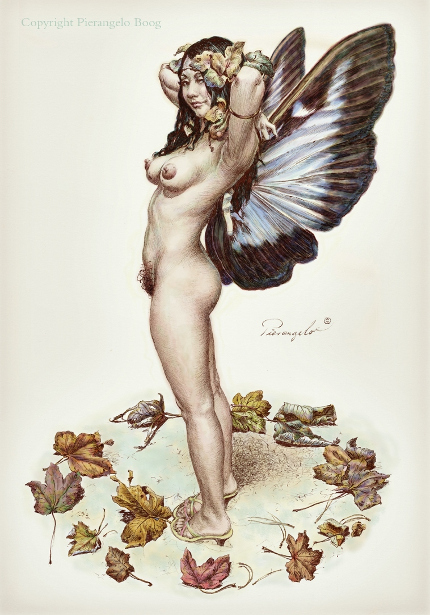 Autumn Girl



 Ara Girl
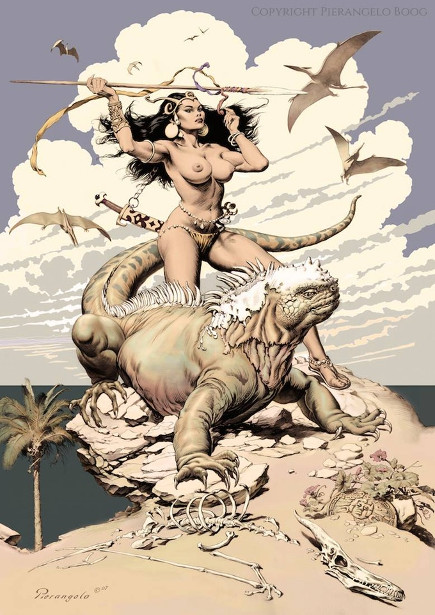 Lizard Woman
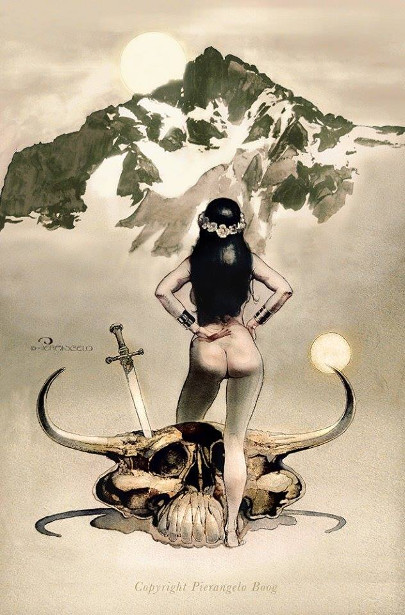 Fata Morgana
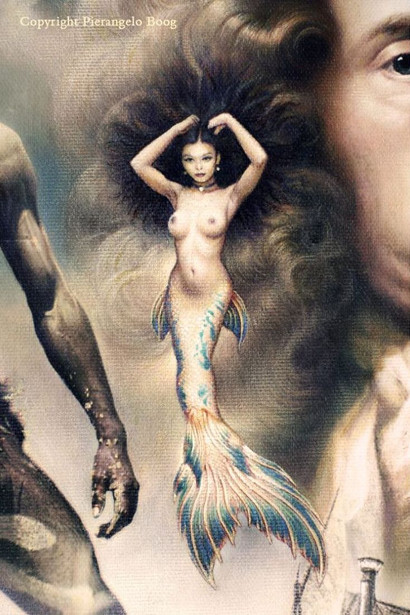 Daniel Defoe – Robinson Crusoe (cover’s detail)
 Sunflower
 Flower Girl
 Nuku Hiva (Typee – Herman Melville)
 The Dreaming Sailor
 Moleskine Sketchbook
 Native Indian Girl
 Vahine
 Lion Girl
 May
May
 Girl In White
 Blonde
 The Black Horse
 Asian Woman
 Pellucidar
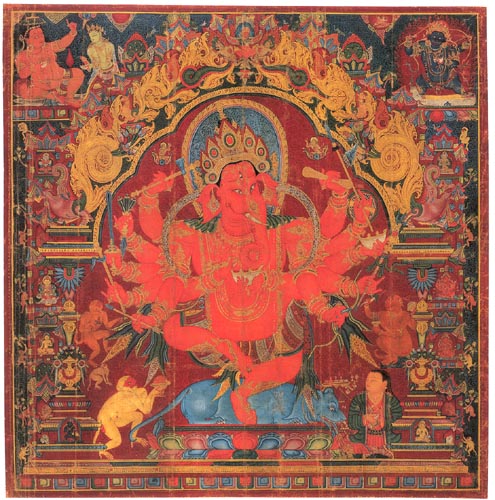
The Hindu elephant headed God Ganesha shares some interesting features with the Egyptian God Thoth, and Thoth’s Greek counterpart, Hermes.
Like Thoth, he is the inventor of writing; as the story goes, the Hindu Epic Poem the Mahabharata was dictated to Ganesha, who broke off one of his tusks to serve as a quill. Also like Thoth, he is zoomorphic – while he has the head of an elephant, Thoth has the head of an ibis, a bird native to Africa and Australia; his other form is that of a baboon.
Like Thoth’s Greek version Hermes (in turn the Roman Mercury), he is a trickster. From the fact that his sacred animal steed is a mouse, to his fabulously round belly, his appearance belies his powers – he is both the placer and the remover of obstacles.
Few practicing Hindus would start a venture, or an adventure, without seeking the…
View original post 394 more words

Jessica Davidson has an inspired and ever-timely post about Active Hope and the Spiral Transformation that I’m really happy to share with you.
When I hear the word hope, I always think of the great writer, statesman, dissident, and transformative leader Václav Havel s insight about hope:
Václav Havel (1936-2011). Václav Havel Library Collection.
“Hope is definitely not the same thing as optimism. It is not the conviction that something will turn out well, but the certainty that something makes sense, regardless of how it turns out.”
In her post on Active Hope and the Spiral of Transformation, Jessica writes:
“Last time we introduced the idea of Active hope and the stories that shape our society. The old myths are failing and the new ones are still being shaped, so we find ourselves poised between worlds – lost, confused, and a little freaked out. It’s hard to keep up…
View original post 178 more words
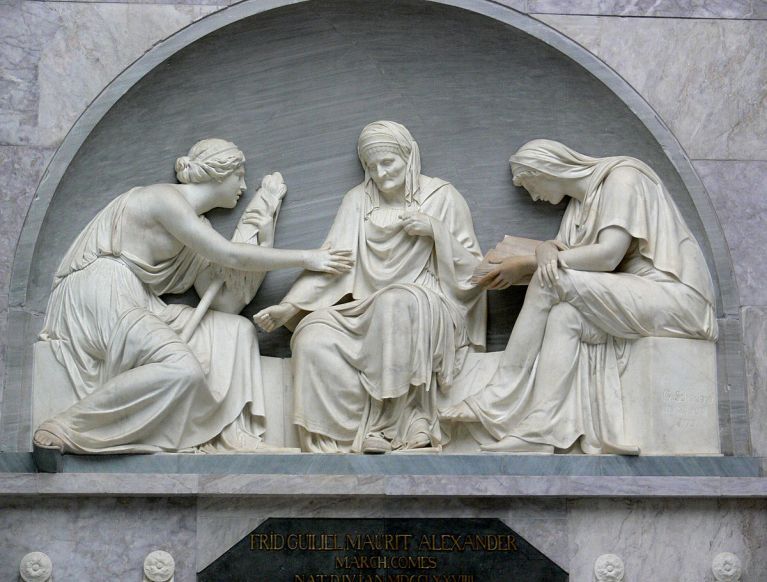
A little more Greek mythology for you.
The other day, I wrote about the Furies, and as usual I initially confused them a little with the Fates.
View original post 237 more words
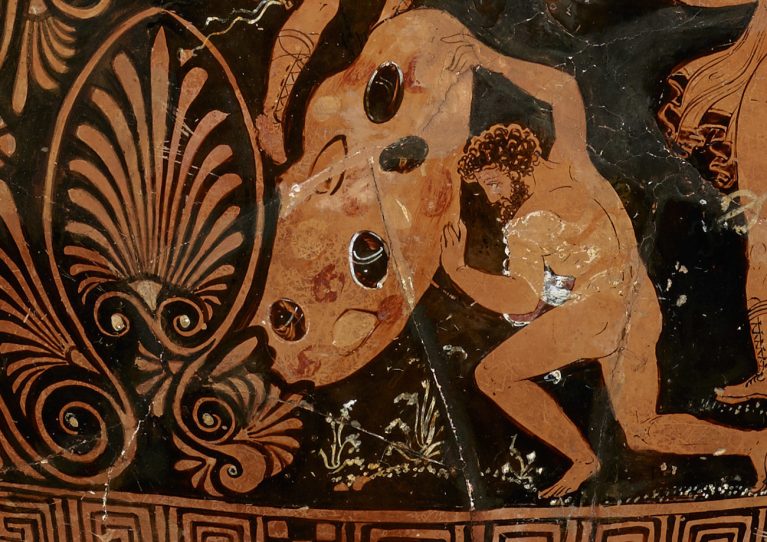
Sisyphus, one of the few souls whose transgressions in life were judged to be heinous enough to condemn him to eternity in the deepest darkest recess of the Greco-Roman underworld: Tartarus. Sisyphus spends his days laboring, pushing a giant heavy boulder up a singular incline, only to reach the top and have it roll back down again. Many of us know the despair that comes hand in hand with a futile task, and it made me think of the popular internet adage that defines insanity as doing the same thing over and over again and expecting a different result (this quote is most often attributed to Albert Einstein, although no-one seems to be able to provide a citation that provides any evidence to support this, so I’m going to attribute it anonymously). At what point did Sisyphus realize the futility of his task? The first time the boulder rolled back?…
View original post 744 more words


 lampmagician
You must be logged in to post a comment.