Walpurgis & Beltane Festivals

Standard

Nifty Buckles Folklore's avatarVal is a writer of enchanted tales, folklore and magic. Once chased by Vampire Pumpkins!

The German festival of Walpurgisnacht, is April 30th similar to the UK Walpurgis or Beltane which runs from April 30th to May 3rd. It is also known as  Lady Day or May Day in  Germany.

Walpurgis night 2018 photo credited to Karina Hessland

Walpurgisnacht_1_imago__Karina_Hessland_20150430
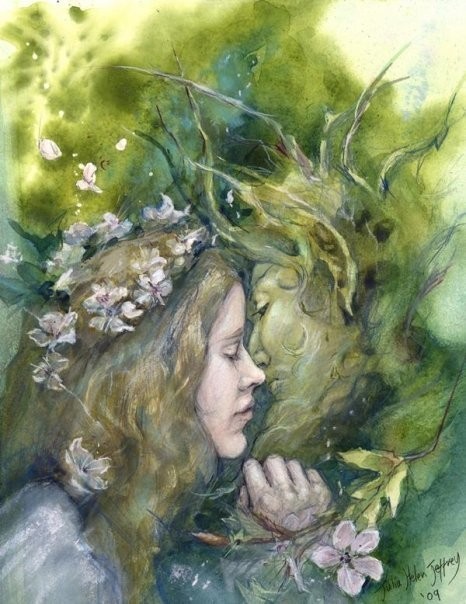
In the UK pagans celebrate the Green Man festival which is mainly a foliage fertility celebration honoring our ancestors, the close of winter embracing the blossom of Spring.

image

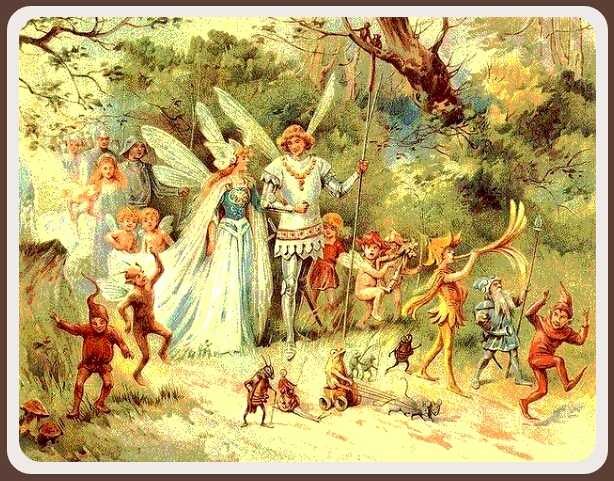
The powers of elves and the  Fae grow and reach their peak at the Summer Solstice.

image

Folklore tells us It is a time of enchantment and magical renewal. Beltane is a great time for planting gardens especially herbs and casting spells.

In Scandinavia, heathens play out mock battles between Winter and Summer.

Beltane is a time for Community Bonfires.
Tradition teaches us that sacred woods are kindled by spark from flint.  The Irish Gaelic, Beltane Fire is called ‘teine…

View original post 80 more words

The Wisewoman: Counselor at the Crossroads, Weaver at the Gate

Standard

via The Wisewoman: Counselor at the Crossroads, Weaver at the Gate

Οι μοναδικές αρχαίες Σπαρτιάτισσες

Standard

The unique ancient Spartans
Christos Barbayianidis writes

When asked by a woman in Attica, “because only you Laxians have power over men,” he replied: “Because we are the only ones who give birth to men,

Gorgo (daughter of King Cleomenes I and wife of King Leonidas I)

Women account for half of the population, but historical sources do not devote half of the attention they deserve and their role requires. But the women of Sparta were an exception. They were the only women in antiquity who, instead of being silent, had their own opinion and took care to formulate it. Since then, in the eyes of the rest of the Greeks, the Spartans seemed strange to their customs and customs, and their women were more and more strange.

The mission of the semi-legitimate lawmaker Lykourgos was to give birth to boys who would be the next-generation soldiers, with measures to ensure that they were physically fit. Girls were not required to be inspected by the authorities at birth and the decision to revoke was left entirely to the parents. All they needed was to exercise their bodies in jogging, wrestling, throwing a disc and acoustic, while participating naked in religious processions, torture and songs.

The Aristotle criticized the Spartan law that allowed women, unlike men, living dissolutely and luxury. From the testimony we conclude that women did not need to be exercised after the birth of children or after they had passed the age that they could become pregnant.

Thus, our contexts lead us to the fact that women had to get married when they reached a suitable age for childbirth. The Plutarch writes that they used to marry ” not little girls or immature for marriage, but in the prime of their youth and mature .” That is, while in the rest of Greece married around fourteen, the law of Sparta stipulated that the woman had to be physically fully developed, therefore at the age of eighteen to twenty.

In Sparta , unlike Athens , the official engagement from the bride’s father was not necessary for a legitimate marriage, so there was no formal promise from the father to give a dowry to his daughter. This has been legislated by Lykourgos with no reason to remain unmarried because of poverty, nor to be sought after because of wealth, but to concentrate his attention on the character and the qualifications of the girl. So marriages were arranged individually, without meaning that there was no agreement between the groom and the bride’s father. In addition, there was the so-called grabbing, which the husband just stolen because of a custom, although there is evidence that this was done knowingly to the father.

But while the men to marry another woman had to divorce the previous one, a woman was allowed to have sex with two men ! If a man, due to old age or disability, wanted to have children, he brought home any man admiring form and character to do with his wife. Also, if one saw a woman having nice children, she asked, with the consent of her husband, to give birth to his children. Of course, the purpose of the law was to increase the population and bring as many children as possible. Children legally could be considered to have belonged to either their natural father or the wife of the woman by agreement of the men. So, it is not easy to fix a sense of adultery in Sparta. TheSpartans from the time they married had their hair nearby, unlike long-haired men, and possibly wearing a veil when they appeared publicly.

However, the moralist and conservative Aristotle refers to sexual immorality when he talked about the Spartan women who demanded their will and that it was the political and moral bankruptcy of Sparta. Like the educated Aristotle, so did the rest of the Greeks embracing the typical phallicist view that women were inferior to men, and this Spartanism’s loyalty was unmanageable to them! They were of the view that the Spartan lived a self-indulgent and lecherous life, with the encouragement of their compliant spouses. The truth is, however, that these women were nursing in the context of a public education system, which resulted in a dramatic difference from the typical behavior of the other Greek women.

Beyond love relationships with other men, it is a very important element for Aristotle to consider Sparta as a women-owned society their right to own and manage the same property, including property land, without being subject to any legal regime of guardianship. When the rest of the Greeks transferred their property to their spouse or closest relative, the Spartan fathers were the owners of the property they had inherited!

Also, they were free of tedious domestic work, unlike the other Greek women who were all their home. They did not cook, they did not, they did not clean up: all these were made by women. It is possible that they did not even breast feed their children. Whether or not it happened, the reputation of the Spartanese food, which was obviously enolated , was so great that, for example, Alcibiades had been brought up by a poisonous trophy. In general, the rest of the Greeks, having a distorted view, felt that there was a climate of moral exhaustion, and that the Spartans not only imposed their will on men but also exercised influence on state affairs!

In Sparta there were no celebrations exclusively for women. The girls on the wedding threshold competed in dancing and singing, while married sang songs and mocked the bells.

Another special feature was that they did not mourn and did not snore after the death of a family member. They did not mourn or retreat to their homes when their men fell into the war, but they were proud of a bright and cheerful face for the glorious death of their men.

The Archilian, her mother, Vrasida, who died by her son, when some of Amphipolis arrived in Sparta and went to see her, asked if her son died in a way that was nice and worthy of Sparta. As they were praying and saying that he was the best of the Lacedaemonians, she said: “My son, my son, but the Lacedaemon, who is very well and right, is very superior to him.” Plutarch.
Spartan society was the first to try to apply eugenics. The good physical condition of women helped to be healthy mothers. They were not considered inferior to their society. Young girls were given similar portions of feeding with the boys. They were embarrassed through a process of education and socialization with the ideals of the Spartan society, the realization of which their behavior as adult women was crucial.

Finally, when they were old, they had the right to inherit and manage their own property. They could express their opinion about the prospective bridegroom that their father would choose and their opinion was of the utmost importance. It was these women who, if their sons returned to losers and alive, showed publicly their own womb and asked offensively if they wanted to come into it! They were just unique in a phallic world!

Indicative bibliography

Aristotle, Politics, Ed. Cactus.
Xenophon, Lacedaemonian State, Ed. Cactus
Plutarch, Lykourgos, Lakenae’s Laws, Ed. Cactus.
Paul Cartledge , The Spartans, Ed. Livan.
D . M . MacDowell , Spartan law, Ed. Papadima.
https://commons.wikimedia.org/wiki/File:Jean-Jacques-Fran%C3%A7ois_Le_Barbier_-_Courage_des_femmes_de_Sparte.jpg
https://en.wikipedia.org/wiki/Sparta
Source: http://eranistis.net/wordpress/


SearchingTheMeaningOfLife's avatarSearching The Meaning Of Life! (S.T.M.O.L)

Γυναίκες στην αρχαία Σπάρτη. Jean-Jacques-François Le Barbier - Courage des femmes de Sparte. Γυναίκες στην αρχαία Σπάρτη. Jean-Jacques-François Le Barbier – Courage des femmes de Sparte.

Γράφει ο Χρήστος Μπαρμπαγιαννίδης

Όταν ρωτήθηκε από κάποια γυναίκα της Αττικής «γιατί μόνο εσείς οι Λάκαινες έχετε εξουσία πάνω στους άνδρες», απάντησε: «Επειδή είμαστε και οι μόνες που γεννάμε άνδρες»,

Γοργώ (κόρη του βασιλιά Κλεομένη Α’ και σύζυγος του βασιλιά Λεωνίδα Α’)

Οι γυναίκες αποτελούν το μισό του πληθυσμού, όμως οι ιστορικές πηγές δεν αφιερώνουν ούτε το μισό της προσοχής που τις αξίζει και που απαιτεί ο ρόλος τους. Όμως, οι γυναίκες της Σπάρτης αποτελούσαν εξαίρεση. Ήταν οι μόνες γυναίκες στην αρχαιότητα που, αντί να μένουν σιωπηλές, είχαν τη δική τους γνώμη και φρόντιζαν να τη διατυπώνουν. Αφού λοιπόν στα μάτια των υπολοίπων Ελλήνων οι Σπαρτιάτες φαίνονταν παράξενοι με τα ήθη και τις συνήθειές τους, άλλο τόσο και περισσότερο παράξενες έμοιαζαν και οι γυναίκες τους.

View original post 1,117 more words

DREAMS – PART I

Standard

briullov_karl_-_a_dream_of_a_girl_before_a_sunrise

Who looks outside dreams; who looks inside awakes. C. G. Jung (1916)

Have you ever awoken from a dream and not known whether you were awake or asleep?  Sometimes it takes a moment to work out whether the dream was the ‘reality’ and whether you really are now awake. Dreams exert a fascinating power over us that create a kind of wonder.

Structure

Dreams often follow a dramatic structure:

  • Setting (place, protagonists, time, scene)
  • Development of plot
  • Culmination – turning point/change
  • Solution/cleansing/relief/result.

Broadly this follows Aristotle’s template for action in the Poetics (c. 330 BCE, the earliest surviving work of dramatic theory), applied by Jung to dreams:

  • Exposition (the setting forth of the detail)
  • Peripeteia (a Greek word meaning the turn of fortunes dramatized in the dream – or life)
  • Crisis (in the sense of a sense of suspense indicating a turning point, perhaps a decision)
  • Lysis (final unravelling or denouement) (CW8: paras. 561-564)

This is a classical or archetypal structure of stories or dreams.

Jung sees dreams as guiding the dreamer, revealing situations symbolically as follows:

The whole dream-work is essentially subjective, and a dream is a theatre
in which the dreamer is himself the scene, the player, the prompter, the producer,
the author, the public and the critic.
 (CW8: para. 509).

For Jung the dream can be seen in the following ways:

  • The dream is the unconscious response to a conscious situation. (So this may be a compensatory attitude which can help to counter a conscious one.)
  • The dream arises from the conflict between conscious and unconscious.
  • The unconscious is hinting at a possible change of conscious attitude.
  • The unconscious is depicted in a pure form in a way which can feel quite overwhelming and oracular (2008:5).
  • The dream is a way of communicating with the unconscious; not an attempt to conceal true feelings.
  • Symbols are seen as a guide to help the dreamer.

The oldest recorded dream is in The Epic of Gilgamesh, written in ancient Mesopotamia 1,000 years before the Bible. Mesopotamia is the area of the rivers Tigris and Euphrates corresponding to modern-day Iraq, Kuwait, the north-eastern section of Syria, south-eastern Turkey and smaller parts of south-western Iran.

In the epic, Gilgamesh and Enkidu, the two main characters, both have dreams that act as messages which seem prophetic. They come to value them and see dreams as messages from the gods. The first dream depicts Enkidu’s arrival on earth as a meteorite. It is so weighty that Gilgamesh is unable to move it but he manages to do so with assistance. He takes the meteorite to his mother’s house and she accurately predicts that Enkidu will save Gilgamesh’s life (Tablet 1 line 268).

The dream reads:

The stars of the heavens appeared above me,
like a rock from the sky one fell down before me.
I lifted it up, but it weighed too much for me,
I tried to roll it, but I could not dislodge it.

The land of Uruk [of which Gilgamesh is King] was standing around it,
the land was gathered about it.
A crowd was milling about before it,
the menfolk were thronging around it.

Like a babe-in-arms they were kissing its feet,
like a wife I loved it, caressed and embraced it.
I lifted it up, set it down at your feet,
and you, O mother, you made it my equal.

(Tablet 1 lines 247-258)

We are told Gilgamesh invokes the dream by making an offering to the gods and creating the conditions to have a dream. We can follow his example.

We will look at how we can encourage dreams ourselves by recording them. Even at times when a dream seems powerful and unforgettable, they tend to slip away if an effort is not made to capture them. A useful method is to keep a pen and paper by the side of the bed, or alternatively a voice-recording device which can be found on smartphones nowadays.

Everybody dreams – even if you are not aware of this. Perhaps you might experiment with finding out by keeping a watchful ear/eye out and noting them down. It can be helpful not only to note down the narrative but to draw the dream too. You don’t have to be an artist to try this. It is not about creating an aesthetic object for display, but more about capturing a feeling and an image; finding ways to increase your awareness of what is contained in the dream to facilitate your understanding of the meaning or indeed meanings as dreams can have significance on many different levels simultaneously. Note also, the feeling(s) in the dream as you awaken. These form a vital aspect of the dream itself and will help you make sense of them. How did you feel in the dream? How did you feel on waking? “Stick to the image” was the injunction of James Hillman (1926-2011) who studied with Jung in the 1950s and went on to establish Archetypal Psychology, an offshoot of Jungian Analytical Psychology. The context and timing of the dream are also highly significant, so note them too.

to be continued . . .

You can read more from this chapter on Dreams in future blogs on the AJA website.

This piece is an excerpt from a draft of a chapter to be included in an introductory volume aimed at readers new to Jung and his ideas. Please do not quote from this draftFor further information, contact Ruth Williams at ruthwilliams@msn.com 

References:

Jung, C.G. (1916). Letter to Fanny Bowditch dated 22nd October 1916 in C.G. Jung Letters Vol. 1, 1906-1950 (eds. G. Adler and A. Jaffé; trans. R.F.C. Hull).  London: Routledge and Kegan Paul, 1973.

Jung, C.G. (1960). CW8, The Structure and Dynamics of the Psyche.

George, A. (trans.) (2000). The Epic of Gilgamesh. London: Penguin Classics.

Hillman, J. (1997). Dream Animals. San Francisco: Chronicle Books.

Muslim Men and Toxic Masculinity by Vanessa Rivera de la Fuente

Standard

Vanessa Rivera de la Fuente's avatarFeminism and Religion

Diseño sin título

Excuse me, but I thought you should know your misogyny is showing.

I have read with deep interest the article written by Ayesha Fakie and Khadija Bawa entitled: Dear Indian Muslim Men: We Need To Talk published by Huffington Post South Africa on March 7th of this year. I would like to add my two cents to this conversation, one that I believe is relevant and very necessary that we address as a community with genuine sincerity and accountability.

View original post 912 more words

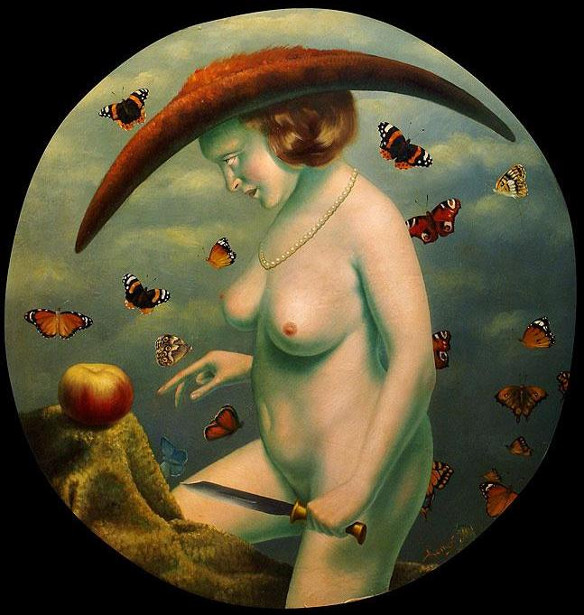
Romualdas Petrauskas (1941, Lithuanian)

Standard

CantervilleGhost's avatarLA CONCHIGLIA DI VENERE

Eve

Hm

title unknown

Full Moon

Monkey

Butterfly

View original post

Guidebook to the Underworld: Xibalba

Standard

MythCrafts Team's avatarMyth Crafts

Thank you, Friar Ximénez.

*

When the Spanish Conquistadors washed up on what we now call South America, they initiated one of the more thorough and widespread acts of cultural obliteration in recorded history.

Mind you, this is hardly unique. The Romans did the same to the Etruscans, and the English who settled/invaded Australia set up a similar program of cultural assimilation for the native inhabitants well into the 20th century, to mention but a few examples – there are countless others, sometimes in the name of religion, sometimes in the name of “progress” or civilization.

No matter what, indigenous cultures are typically victims to the erosion/wholesale eradication of their former ways of life and belief.

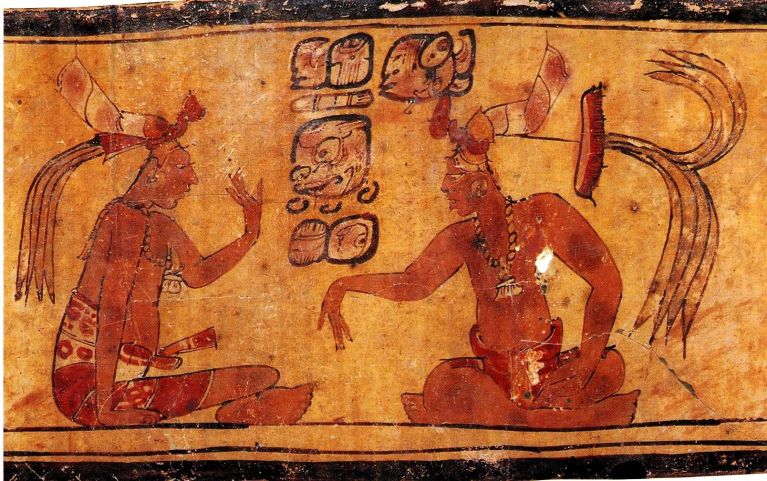
For the K’iche’ people of Guatemala, the story was no different. Heirs to the culture of the Maya, they were systematically Westernized. However, in the 1500’s, before the Spandiards arrived, they started to preserve their…

View original post 858 more words

Native Americans: Stories in Stone

Standard

via Native Americans: Stories in Stone

Spiritual Atheism

Standard

MythCrafts Team's avatarMyth Crafts

Now how’s that for an apparent oxymoron? How can the words Atheism and Spiritual work together?

Well, for one, you can listen to or read Sam Harris. neuro-scientist,  materialist/reductionist, and a man who still insists on his spiritual position – despite being one of the so called four horsemen of the New Atheism, which included the late, great Christopher Hitchens, Richard Dawkns and Daniel Dennet. All of these have openly described their “numinous” experience, moments of sublime, oceanic connectedness. Keep track of that word: it’s going to make several appearances.

You could look the writings of Noah Levine, whose focus is on Atheist Buddhism with a with an emphasis on recovery. You could take it up directly with the Buddha of the Hinyana tradition, which is the oldest branch of Buddhism, enshrined in the so called Pali Cannon. Despite popular conceptions (and the fact that the Mahayana tradition which followed…

View original post 471 more words