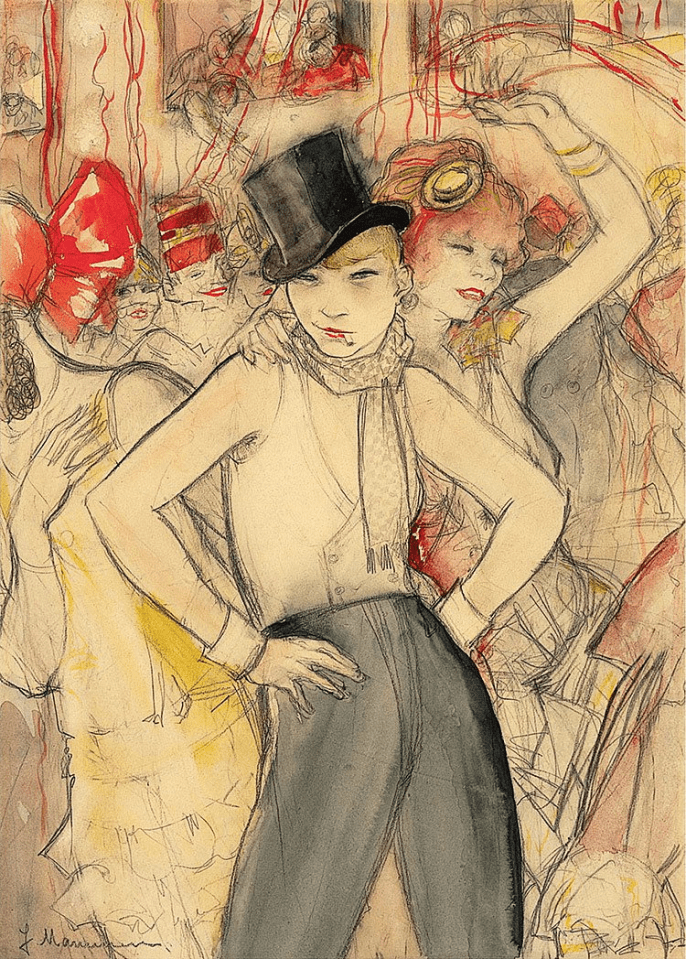
Since the day she first showed up, Eve had always had a soft spot for the idiosyncratic yet intimate Dietrich ‘occasional restaurant come bar’ within the vast ‘Casino Eden’. Later, after I had won her body, if not yet her soul on the spin of the roulette wheel, we would regularly dine together there, although less so of late due to the circumstances born of the rise of hard right factional politics that, by way of ruthless disapproval, coupled with bona fide threats, had blunted Bohemian merrymaking.
Unlike the larger, brassier, showy dining rooms throughout my casino complex, the Dietrich had that certain undefinable magic feel about it only the free-spirited would understand. Discreet with a pinch of clandestine decadence summed it up. I, to the annoyance of others, habitually referred to it as my contradictory provocative overt hideaway. Overly wordy yet true. Defused illumination, under a still-life haze of…
“I’m a misunderstood genius.” “What’s misunderstood?” “Nobody thinks I’m a genius.” ~ Bill Watterson
Social media can make people feel inadequate, but true genius is believing in yourself, not worrying about what others think, what others do, or what others have.
Genius, defined many ways by many people. To me, something or someone is genius if they give of themselves. Everyone is talking about the #TrumpShutdown of the U.S. government to build a wall between Mexico and the U.S., instead, why not talk about why so many people are living paycheck to paycheck?Talk about people not having enough for food, chemo drugs, etc. when the rich are buying multi-million dollar houses and apartments. Jewels, homes, cars, clothes – how can these mean more than lives? That’s the opposite of genius, even cruel. Celebrities, don’t peddle expensive drugs on TV and the internet, instead, pay for drugs…
Welcome to another part «Women in History». Today we deal with Sabina Spielrein, a woman who likes to forget the great psychoanalysts Sigmund Freud and C.G. Jung. (I’d just hope that it isn’t a (made of feminist portrait!)
As I, Aladin Fazel, once decided to translate this, I did! but surely not agree with all. Though, very laborious research which I appreciated.
«Miss Sabina Spielrein, b. Rostov-on-Don, Russia, 1885, shows signs of extreme hysteria. She laughs and cries alternately, cries out […] A shot in a lunatic asylum is absolutely necessary because it could possibly lead to self-harm. Paranoia not excluded. Anyway, there is a psychosis. »
With this medical certificate, the 18-year-old Sabina Spielrein is taken to the Burghölzli.
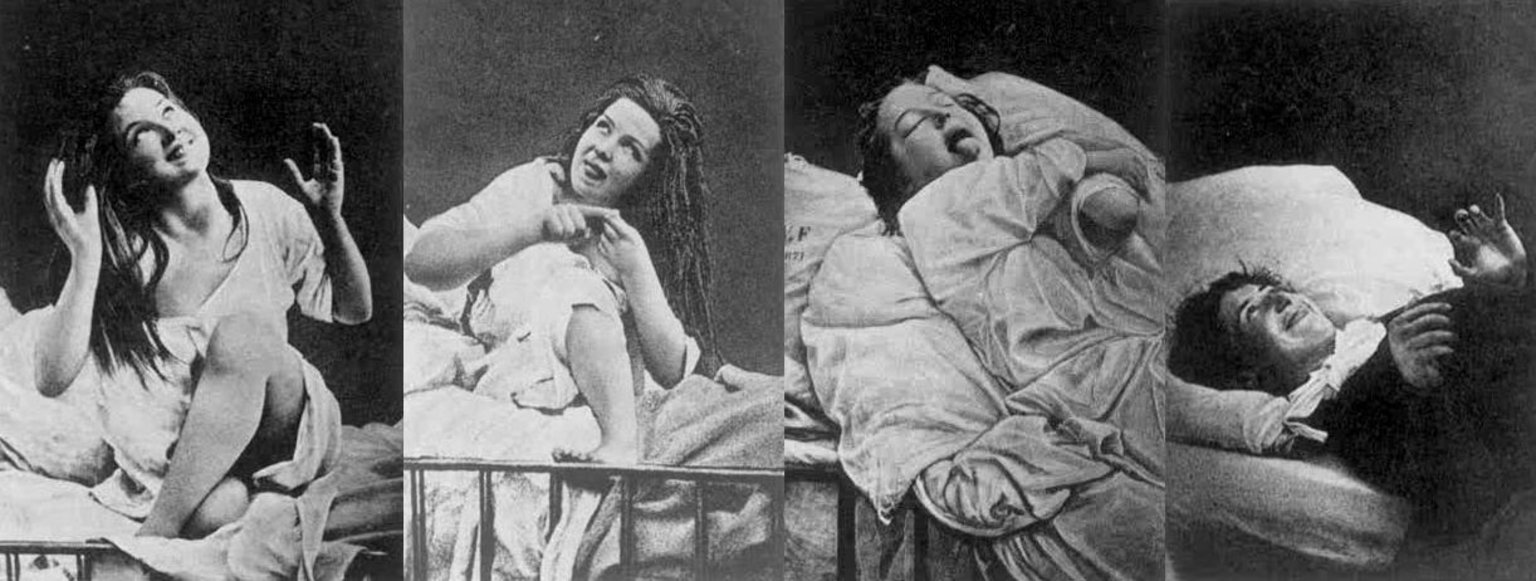
Progress has not made people happier, capitalist modernity challenges them much, and their unwavering belief in the technical mastery of the world makes them dream their wildest dreams. The railroad, which had brought an unprecedented speed into the bound, leisurely lives of people, supplanted the fashion sickness of previous centuries – the melancholy. The modern, sensitive age has given birth to hysteria, a world of nervous souls and nerve-wracked women.
The madness of a hysterical patient, circa 1880. Photo: wikimedia
The hysteria was from the beginning as a female disease. She emerged from the unfathomable depths of the woman and she was closely linked to insanity. It even went so far that some doctors demanded impunity for crimes committed during menstruation.
The doctors fell into a veritable zeal for collecting, all sorts of symptoms they brought together, from a sudden paralysis of the arm, about a headache, blurred vision to hypersensitivity of the soles of the feet. What was real, what was a simulation in order to avoid the hardships of life? And what could one dismiss as insidious, validated acting? The tenor of the researching men was:
“None of us sees through the female heart to its depth. For the woman is strong in appearance. »
Director of the Psychiatric University Hospital Berlin, Karl Wilhelm Ideler, 1840
But the disease raised a very different question: is it possible that mental factors affect the body? That not all suffering is of physical origin?
When Sabina is taken to the Bürghölzli, Professor Eugen Bleuler is the director of the asylum. The cause of his sister’s disease: “schizophrenia” made him become doctor and psychiatrist. He studied with the French neurologist Charcot, who hypnotized the hysterical symptoms of his patients. In Bleuler lives the Enlightenment spirit from which the Burghölzli was born in 1870: He wants to bring light into the twisted heads of mentally ill people. He listens to them and finds out that many of his patients’ delusions are veiled dreams. Bleuler is the first university professor to engage with Sigmund Freud’s psychoanalytic approach. He experiments with the dream analysis of the Vienna Dependoctor, encouraging his students to read Freud’s writings. The so-called Viennese psychoanalysis, which is so passionately hostile for the first time, becomes clinically and scientifically capable for the first time – in Zurich.
Sabina Spielrein graduated high school in her hometown Rostov with the highest distinction. She is a well-educated girl, but she is not feeling well. She dreams of being flogged in front of a large crowd. She suffers from obsessions and threatens suicide. Her mother, Eva, hoped the girl would recover in the land of good air. The lakes, forests and glaciers would have an invigorating and invigorating effect, a stay in the spa town of Interlaken would bring the most beautiful healing results for ill nervous systems – the brochure promises.
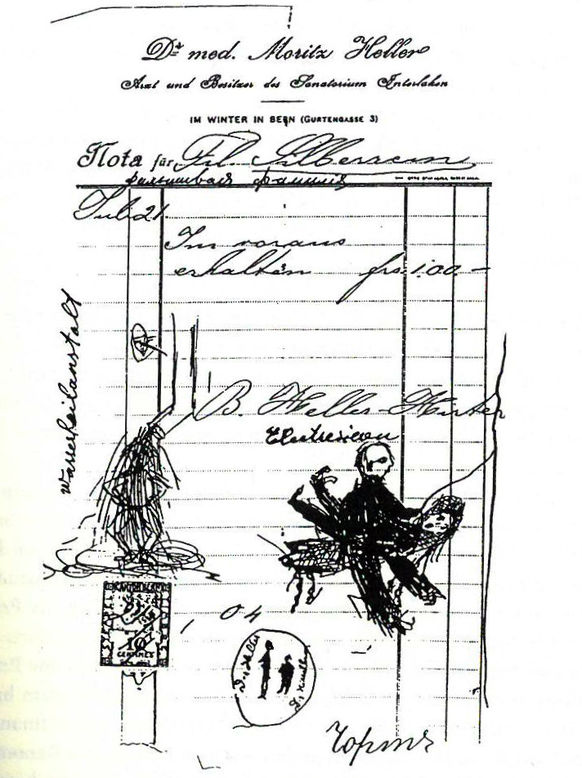
But the therapy does not help Sabina. Her diary is silent about her presence in the sanatorium of the Bernese doctor Moritz Heller, this is supported by the receipt of her stay, which she has scribbled with gloomy drawings:
«Wasseranstalt» (left): The patient is doused with cold water. “Electrify” (right): Patient lies on a cot while the doctor stands on or beside her and gives her electric shocks. “Dr. Heller »,« Dr. Hisselbaum »(middle): To her doctors Sabina writes« chort », russ. For devil. picture: sabine Richebächer: sabina Spielrein
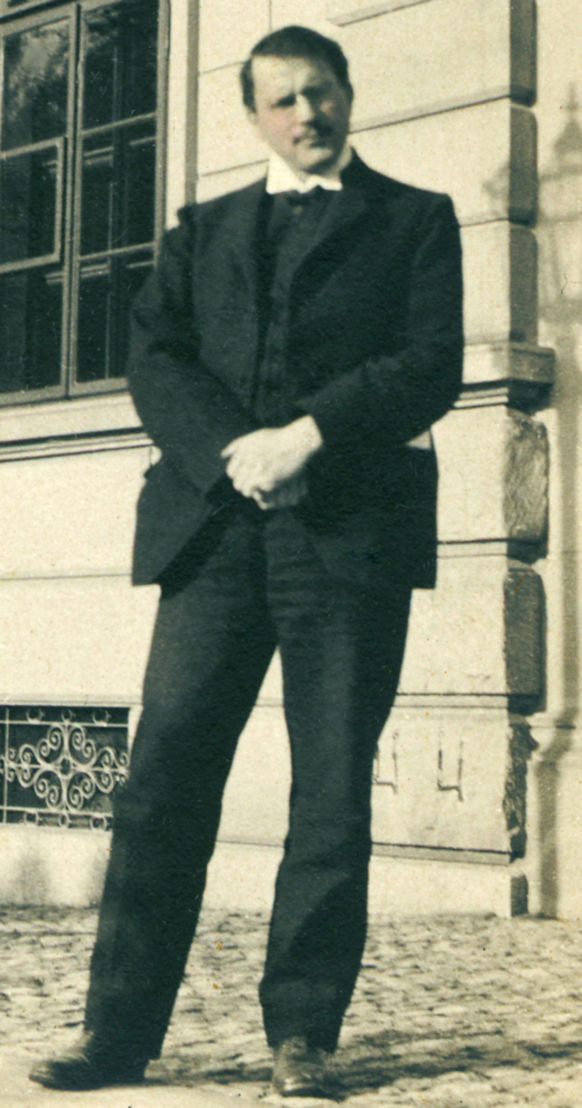
For nine and a half months, Sabina will stay in Burghölzli. And she will prove to be a stroke of luck for a man who wants to try the Freudian method on her: Carl Gustav Jung. He is strong and tall, born in Thurgau and the son of a poor Protestant pastor who came to Basel with his parents when he was four. After completing his medical studies, he devoted himself to psychiatry, to the amazement of his environment, for Jung was ambitious and suddenly switched to this dull, ridiculed branch. He works as Bleuler’s assistant in Burgholzli and now wants to take care of the hysterical Russian.
C.G. Jung next to the Burghölzli main portal, 1901. Photo: wikimedia
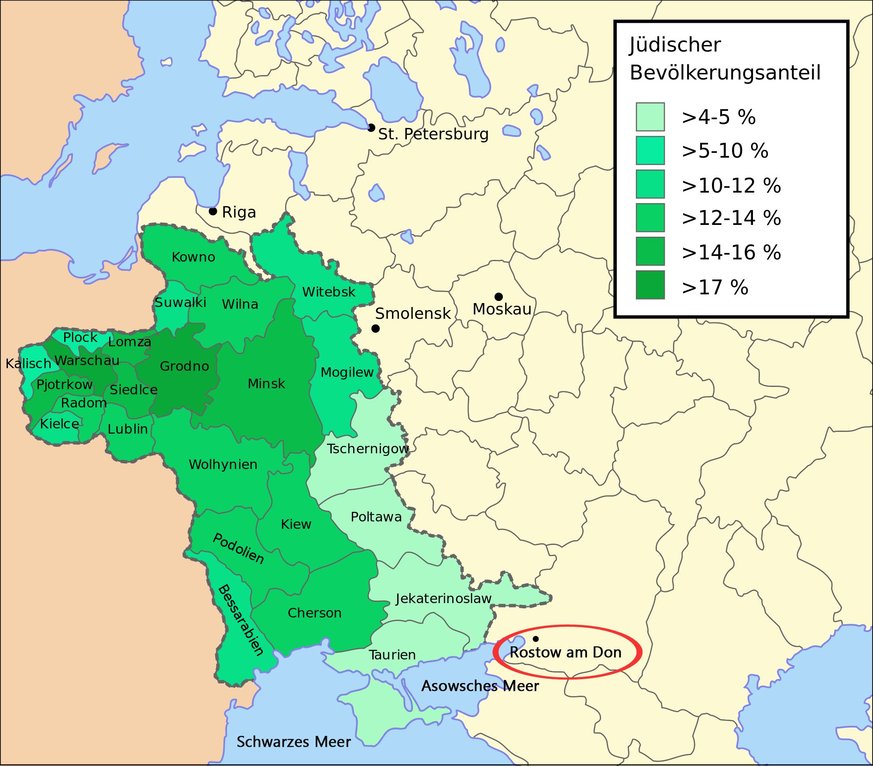
Strict bed rest is prescribed to the patient, nobody is allowed to visit her and every five minutes a nurse comes to look for Sabina. The young woman defies and threatens, hides, plays pranks on the nursing staff, runs through the corridors, and then falls back into hysterical twilight states. Jung asks about her father, Sabina keeps silent. She only makes faces, fights with her hands, her legs start to twitch – or she sticks out her tongue. She does not want to be healed at all. Sabina grows up with her siblings in Rostov. The Spielreins are among the few of the approximately five million Jews who do not live in the Russian tsarist empire within the settlement area. Most of them live in confined areas in Jewish neighbourhoods or the Jewish streets of the cities, many are poor, they are called “airmen”.
Between the end of the 18th and the beginning of the 20th century, the residential and employment rights of the Jewish population in the Russian Empire were limited to the settlement area. The area had previously been largely a part of Poland-Lithuania and came under Russian rule at the end of the 18th century with the partition of Poland. The settlement area extended from the Baltic Sea to the Black Sea. picture: wikimedia / editing watson
In Rostov, the conditions are a bit cheaper. The Jews live scattered throughout the city, Sabina’s father Nikolai Spielrein is a wealthy merchant, he earns his money by trading in grain, feed and fertilizer.
Sabina’s mother Eva is the daughter of a Hasidic rabbi. She is one of the first women in the Russian Empire to visit the university and study dentistry during the short liberal period. The games are among the most educated families in the city.
Sabina’s childlike spirit is full of imagination and scientific curiosity. In her diary she remembers the things that occupied her four-year-old self:
“Especially Americans caught my curiosity because the earth is like as a ball, they had to move with their heads downwards and their feet upwards”
Sabina Spielrein in her diary
The little girl digs holes in the ground again and again and asks the mother how long it takes until she can pull an American by the legs. She knows that children come from her mother’s stomach and wants to know if she can get one too. Eva Spielrein explains to her daughter that she is still too young for that. But maybe a kitten could have her. And while Sabina happily awaits the creature, she wonders if with good upbringing she can develop into a being as intelligent as a human.
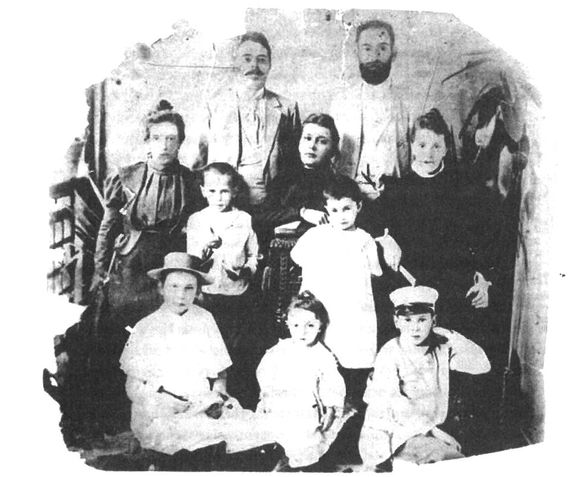
Family Spielrein around 1896: Sitting on the ground in front v. l. No. the siblings Sabina, Emilia and Jascha, behind her is Isaac, the man with a mustache on the back left is the father Nikolai Spielmann, in front of him on the left is the mother Eva Spielrein. picture: sabine richebächer: sabina spielrein
The gentle girl is fragile and often sick. She feels lonely and creates a protective spirit with which she speaks German. Sabina argues a lot with her brothers, she plays the boys pranks – and is punished for it by the father. Until she is eleven years old, he beats her hand on her bare bottom, even in the presence of the brothers.
“It always seems to me that Daddy is coming and I drive with him .” Sabina Spielrein in her diary
She loves her father in pain, finally betrays her Jung, who drilled deeper and deeper into her injured soul. He should not force her, she asks her doctor. But he does not listen.
Undeterred, he continues to poke, digging out the repressed memories of the young Russian woman, whom she now has to relive once again.
“The special psychic existences are shattered by the fact that they are pulled out with a volitional effort to the daylight.” C. G. Jung
In the end, she gives up her resistance and tells the doctor that she has been sexually aroused since the age of four after her father’s beatings. She masturbated when she heard that one of her brothers was beaten. And even if a patient is brought back into the room by force, she feels like touching herself. Sabina feels guilty. She was a bad person.
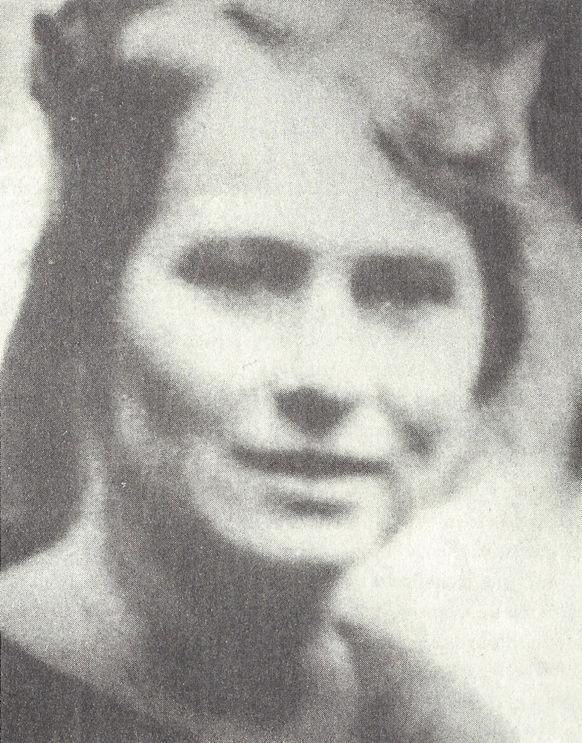
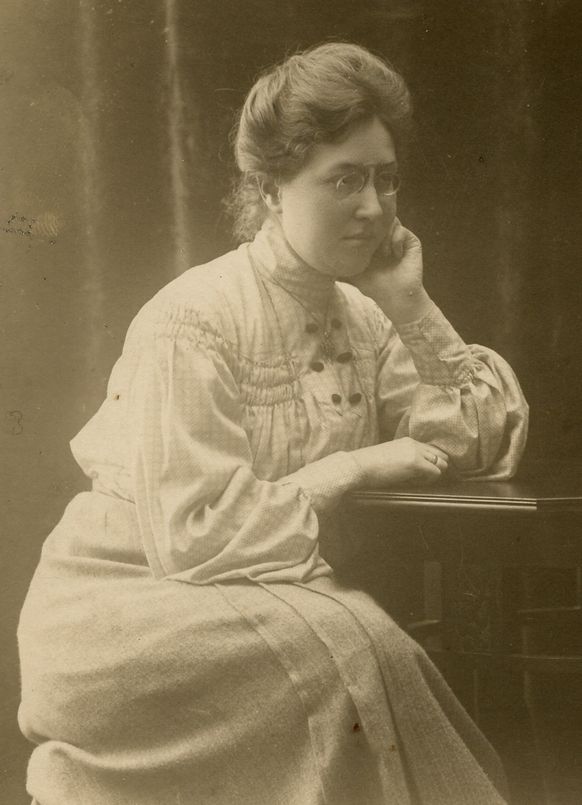
Sabina Spielrein, ca. 1920. Photo: sabine richebächer: sabina spielrein
Again and again she asks Jung to treat her badly, to ask her nothing, only to give her orders. She wants to be humiliated by him.
«Ich will eben Schmerzen haben. Ich möchte, dass Sie mir etwas recht Böses tun, dass Sie mich zu etwas zwingen, das ich aus ganzer Kraft nicht will.» Sabina Spielrein
Jung does not fulfil her wish, and so the pain moves in Sabina’s soles, which he is now forced to investigate. The relationship between doctor and patient is sadomasochistic, what else should emerge from Jung’s treatment method. Sabina begins to fall in love with her doctor, the better father who takes care of her. Jung also feels attracted by the young Russian woman, who is so different from his wife Emma; dangerous, irritating, educated and exotic.
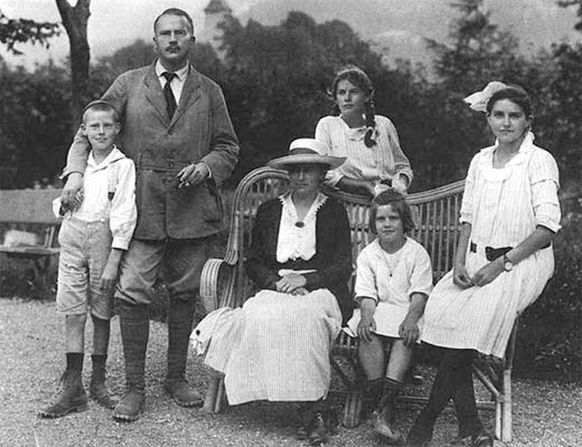
C.G. Jung with Mrs. Emma and four of his five children, 1917. picture: pinterest
Much later, he will write to her that he loves her “great, proud character,” but never marries her because he is a “great philistine” who needs “the narrow, specifically Swiss.”
Jung’s wife does not miss her husband’s interest in his patient. And when she gives birth to the first child, Sabina falls back into the old frenzy. She hides, threatens suicide, scratches the floor, and thinks a black cat is crouching in her room, maybe the animal she was a child to give birth to.
Director Bleuler distracts the patient, affirms her in her scientific interest and allows her to participate in his case presentations. Sabina soon has enough self-confidence to believe in her old wish and enrols at the University of Zurich. She wants to become a doctor.
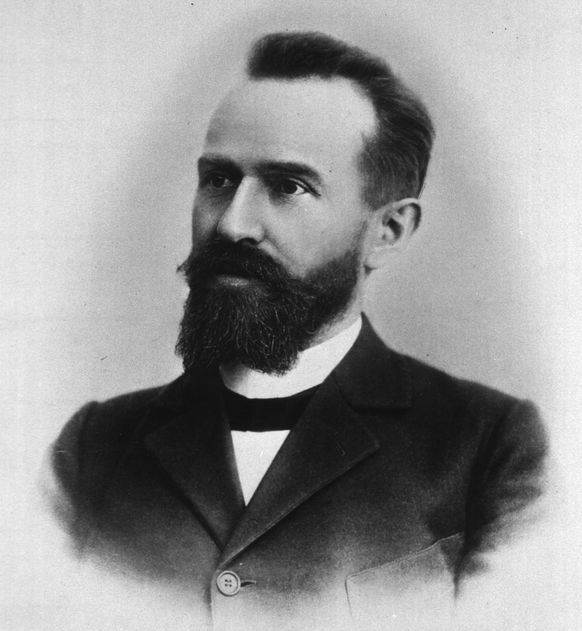
Burghölzli’s director, Eugen Bleuler, who introduced psychoanalysis to psychiatry. picture: wikimedia
On January 22, 1905, tens of thousands of workers marched in their home country to the Winter Palace, the residence of the Czar. They demonstrate peacefully for decent conditions in the enterprises, for agrarian reforms and the creation of a representative body. But they do not invade Nicholas II. The soldiers shoot into the crowd first. The prelude to the revolution, which will soon overtake the whole country.
Sabina is released from Burgholzli five months later.
Jung considers the socialists, nothing more than thieves, in a letter Sabina accuses him of covetousness, which would lead him to such a limited view:
“Socialism, in the sense that all people are the same […], would, of course, be a utopia. But socialism has a high value as an anti-capitalist movement. They say the acquisition of wealth requires some intelligence and energy, so the rich are the most efficient. This could only apply in exceptional cases. It seems so funny to me that I have to show you how unfairly the goods are distributed as if you did not know it much better than me. “ Sabina Spielrein in a letter to Jung.
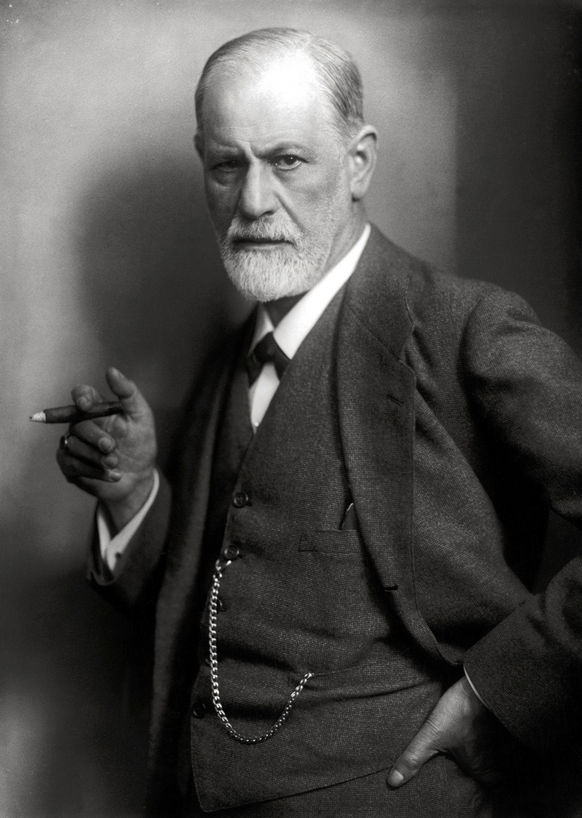
Jung met in 1907 in Vienna for the first time the Grand Master of Psychoanalysis, Sigmund Freud. The two men spend 13 hours in Freud’s office on Berggasse 19, talking about Sabina, about the future of psychoanalysis, as the room fills up with the smoke of Freud’s cigar: “I can not think of myself to wish a better continuer and finisher of my work as you, »he finally says.
At a time when sexuality had to hide under buttoned blouses, locked away, tabooed and declared sinful, Sigmund Freud stepped onto the stage. He realized that the suppression of sexuality can lead to serious mental health problems and he climbed into the dreams of his patients because he described them as the royal way to the soul. picture: ap sigmund freud museum
But the two have different views, Freud’s one-sided restriction to the sex drive as the cause of any neurosis does not want to divide Jung, Freud, in turn, holds Jung’s parapsychological interests for humbug and fears the scientific death of his young subject, mix it with elements of superstition.
For quite a while, Freud Jung defended himself as the crown prince and heir of his legacy to his Viennese colleagues, because all of them do not want the Swiss to be presidents of the International Psychoanalytical Association.
“You are for the most part Jews, and therefore not suited to acquire friends of the new doctrine. Jews must be satisfied with being a culture fertilizer. » Sigmund Freud to his Viennese colleagues
He was old, Freud placated the gentlemen, he no longer wanted to be attacked. “The Swiss will save us. Me and you all. »
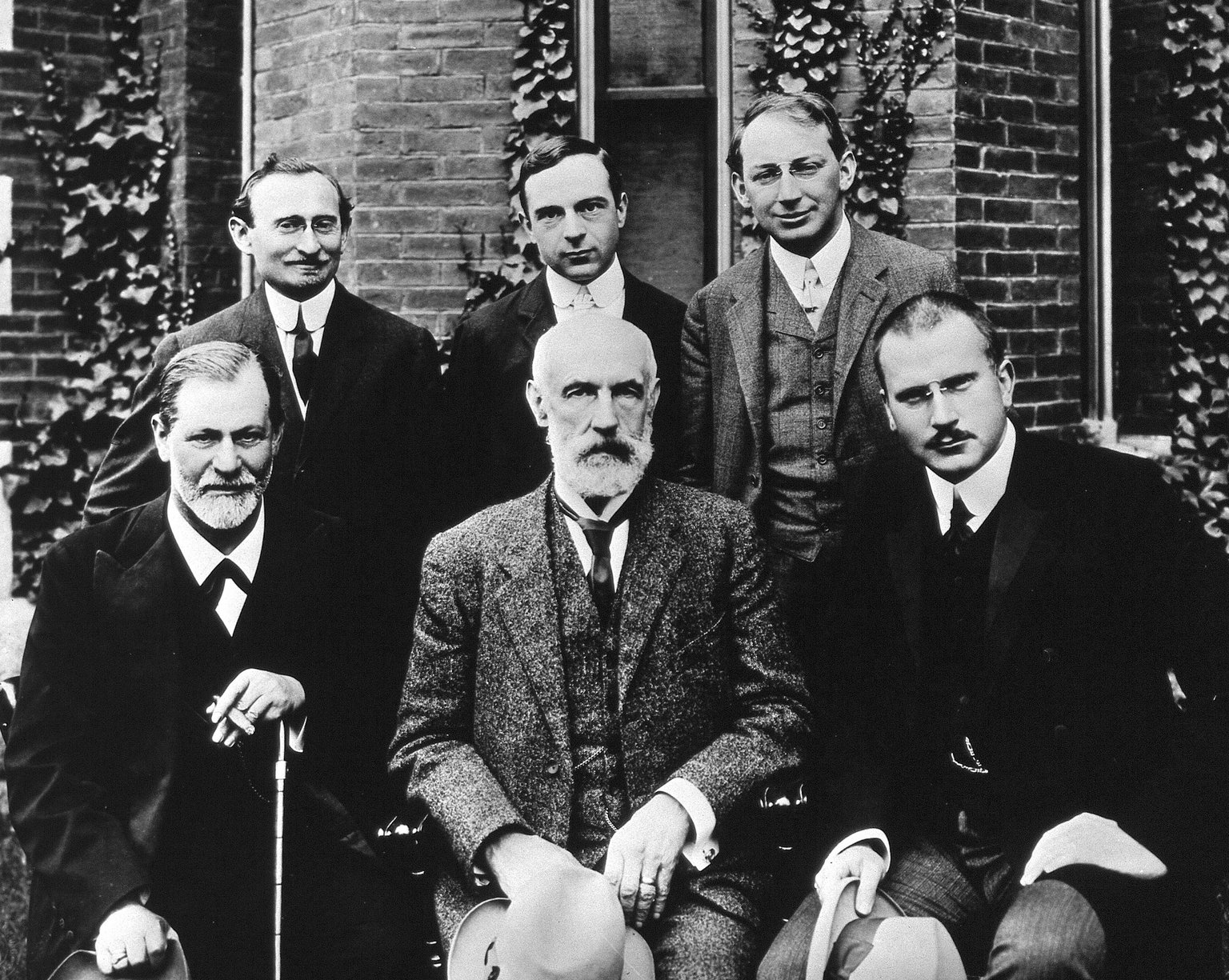
In 1909, Freud (bottom left) was awarded an honorary doctorate from Clark University, Massachusetts. Jung (bottom right) travelled with him. Between them is G. Stanley Hall, with Abraham Brill, Ernest Jones and Sándor Ferenczi in the back row. picture: Wikimedia
Freud should be wrong. Jung endangered the reputation of psychoanalysis. The illegitimate sexual desire, which he believed he recognized in one of his dreams, has come true. Sabina is no longer just his patient.
In Vienna, people start to talk. They tell themselves that Jung wants to leave his wife to marry his patient. “Sabina has betrayed me!” Thinks the aspiring physician, who now fears for his reputation, his social position. He writes Freud. He pathologizes Sabina, sacrifices her, the aspiring physician. He always remained “within the bounds of a gentleman” in the letter to his spiritual father:
“In the most damaging manner, she [Sabina] disappointed my trust and my friendship and made a despicable scandal solely because I renounced the pleasure of giving birth to her. C.G. Jung in a letter to Freud
He moves with his family to Küsnacht and opens a private practice there. Sabina is hurt, but she still hopes for a loving farewell to the man she must love as much as he loved her. For, as Jung writes in his essay “On the Role of the Father in the Destiny of the Individual”, the choice of the future life partner of a human being always depends on his first childlike relationship. From those to the parents.
Jung loved his nervous mother, Sabina her father, whom she had never considered normal: “Now he has fallen in love with me, a hysteric, and I have fallen in love with a psychopath.”
When the two finally pronounce, Jung apologizes for the false suspicions. She makes him tell the truth to Freud too.
“In general, my love brought me almost pain, it was only a few moments, as I rested against his chest, in which I could forget everything.” Sabina Spielrein about her love for Jung
Sabina graduated in 1911. “About the psychological content of a case of schizophrenia” is the title of her dissertation, she is the first woman ever, who receives the doctor of medicine with a psychoanalytic topic.
The father of Swiss psychiatry, representative of the abstinence movement and predecessor Bleulers am Burghölzli: Auguste Forel (1848-1931). picture: wikimedia
In her work, she writes of the case person as an “inferior psychopath”. She uses the usual jargon of her studies, which is based on racist, demographic theories. In Switzerland, especially in Zurich, eugenics and racial doctrine are taught by Auguste Forel and his successor Eugen Bleuler.
Practically, these ideas are implemented with institutionalization, child support, marriage bans, forced sterilization and castration. Everything is already there, the National Socialists will use this instrument in a consequence, which can not be surpassed in cruelty.
Sabina still thinks a lot of Jung, this man who is everything to her at the same time, mentor, role model, parental substitute – and in her mind still lover and father of her imaginary son, who baptizes Siegfried after Wagner’s opera Ring des Nibelungen.
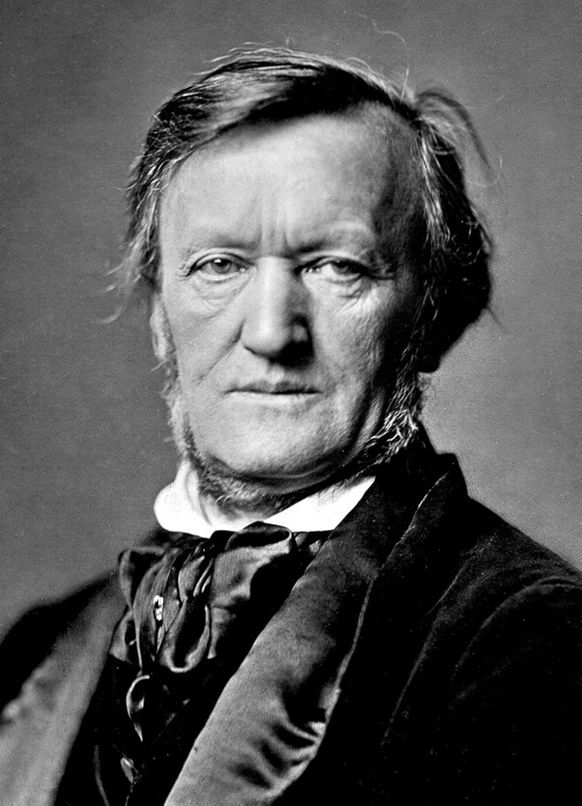
Richard Wagner (1813-1883) created music dramas that fundamentally changed the expressiveness of operas. His “Tristan und Isolde” is considered by many to be the starting point of modern music. He was early convinced that he was a genius: “In 50 years, I will be the master of the musical world,” he predicted. picture: wikimedia
The idea that love only becomes fully fulfilled in death inspires her to write “The destruction as the cause of becoming” (1912). In it, she describes the desire for death as part of the libido, the reproductive instinct as something that always triggers fear and disgust, which must first be overcome. From Sabina’s idea, Freud will develop his most controversial and speculative theory – that of the death instinct.
She is now a member of the Vienna Psychoanalytical Association. Another woman sits in this select circle: the paediatrician Margarete Hilferding, who was the first to realize that there is no innate maternal love, as many mothers had hostile feelings towards their children.
The Viennese Margarete Hilferding (1871-1942) graduated in 1903 as the first woman from medical school at the University of Vienna. She dealt above all with questions about birth control, education and education. picture: wikimedia
Sabina’s diary reveals no more than this cryptic sentence about her marriage to the Rostov doctor Pawel Scheftel:
“Dr Paul Scheftel married. The sequel follows.” Sabina in her diary
And even when her daughter Irma-Renata is born, her thoughts sneak to the former lover and the fantasy fruit Siegfried. In the meantime, Freud and Jung have completely disagreed, “my personal relationship with your Germanic hero has definitely broken down,” writes Freud Sabina.
Pawel receives his mobilization order and returns to Russia. His 29-year-old wife wants to stay with the child in the west.
In the First World War, four million Russian soldiers fall, the general strike in the Tsarist empire becomes a revolution, the civil war devastates the country, the economy collapses, typhus, cholera and the Ruhr tear countless people to their deaths. In 1921, five million people starve to death. The Red Army wins the following year – the Soviet Union is founded.
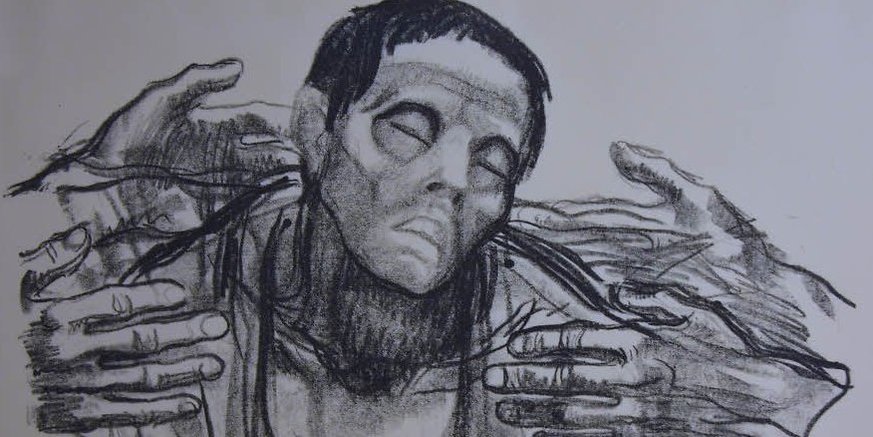
Käthe Kollwitz’s poster “Help Russia”, 1921. The famine in Soviet Russia was so bad that there were cases of cannibalism.
Meanwhile, Sabina lives in Lausanne, then in Geneva, where she works as a psychoanalyst and gives courses at the Jean Jacques Rousseau Institute. There she also meets the young Jean Piaget, whose works incorporate some of Sabina’s thoughts, and with which he will revolutionize child psychology.
She earns her own money for the first time, but it is not enough, she has to keep herself and her dying child afloat with sewing. Her father Nikolai tries to send his daughter money to Switzerland. Lenin, with his New Economic Policy (NEP), has decided on a partial return to the capitalist system so that the country can recover. So the game ranks were able to save some of their fortunes. But Sabina, who lives in war-torn Switzerland, gnawing at the hunger-wipe.
In 1923 she returns to her homeland, to her family and to her husband; to where she really did not want to be. Three years later, Sabina is now 41 years old, she gives birth to her second child, which she named after her deceased mother Eva.
Sabina’s father is full of pride in helping to build the new Russia, her brothers are making a career. Sabina is the psychoanalyst with the best education in the country, providing courses for doctors, educators, psychologists and students.
Under the patronage of Leon Trotsky, psychoanalysis flourishes in the Soviet Union – he has come to know “Freudism” during his exile in Vienna. The subject has power policy goals; it should contribute to the creation of the new human being, promote the collective education and re-educate all the stray, robbing orphans by means of new pedagogy to valuable state members.
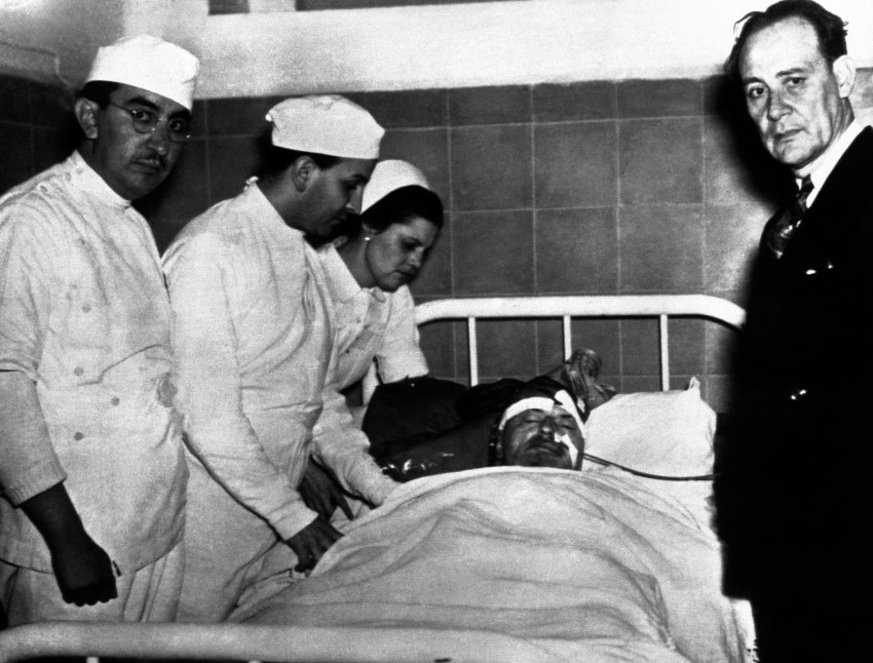
But when Lenin dies in 1924, “Judas Trotsky” falls out of favour, and the ice axe that splits his skull in Mexican exile immediately kills Soviet psychoanalysis.
On August 20, 1940, a secret service agent Trotsky hit an ice axe in the head. The photo shows Trotsky in the hospital of Mexico City, where he died a day later. picture: ap
She shares a destiny with many other sciences. Stalin buried them all. He wants «workers sciences», «working technologies», born of «proletarian intelligence».
And while Freudism in the Soviet Union is denounced as a reactionary theory, in Berlin Goebbels’s fire spell accompanies Freud’s writings into the flames.
«What progress we make! In the Middle Ages, they burned me, and nowadays they are content to burn my books. “ Sigmund Freud
Now Jung enters the orphaned stage of psychoanalysis. Finally, as the Swiss hateful in Vienna must have thought, my theories are officially recognized. Jung can be celebrated as the man who opposes Freud’s “decomposing” psychoanalysis with his uplifting psychology. He takes over the editorship of the Zentralblatt für Psychotherapie, in which he announces in 1934:
“The Jew as a relative nomad never has and will probably never create his own cultural form, since all his instincts and gifts require a more or less civilized host nation to develop. The Aryan unconscious has a higher potential than the Jewish […]» ???????????????? C.G. Jung in the “Zentralblatt für Psychotherapie”, 1934 (I, Aladin Fazel, am not sure about this one!)
In 1937, the heart of Sabina’s husband Pawel stops beating. It is the year in which Stalin’s purges reach their peak. The officers of the NKVD drive their black limousines through the streets and take “suspicious” people out of their beds during the night. Sabina’s brother Isaak, formerly head of psycho-technology, is executed and buried in the mass grave on Moscow’s territory. Her brother Jascha, professor of energetics, is murdered a year later. The youngest brother Emil, who taught experimental biology at the University of Rostov, will be executed in June. Her father Nikolai dies a month later – out of grief.
When German planes began attacking Russian airfields and cities in June 1941, Sabina still lives with her daughters in Rostov. The city is called “the gate to the east”, with its four major railway lines it is an important strategic goal of Hitler, whose “enterprise Barbarossa” from the beginning was planned as a war of extermination. Habitat in the east is to be created.
On November 22, the capture of Rostov is reported to Berlin. But still is shot, soon the NKVD keeps the administration of the city in hands again. 800 people are suspected of collaborating with the Germans and executed. The inhabitants are used for forced labour, many freezes to death or die from exhaustion while trying to build fortifications.
Sabina stays in town. Maybe she did not believe what is being said about the fascists. She, who spent half her life in Germany and Switzerland.
In the summer offensive 1942, the Germans gain the upper hand in Rostow. Sabina’s house is bombed, she waits eleven days with Renata and Eva in a cellar. The SS Sonderkommando 10a roughly estimates 200,000 to 300,000 remaining inhabitants.
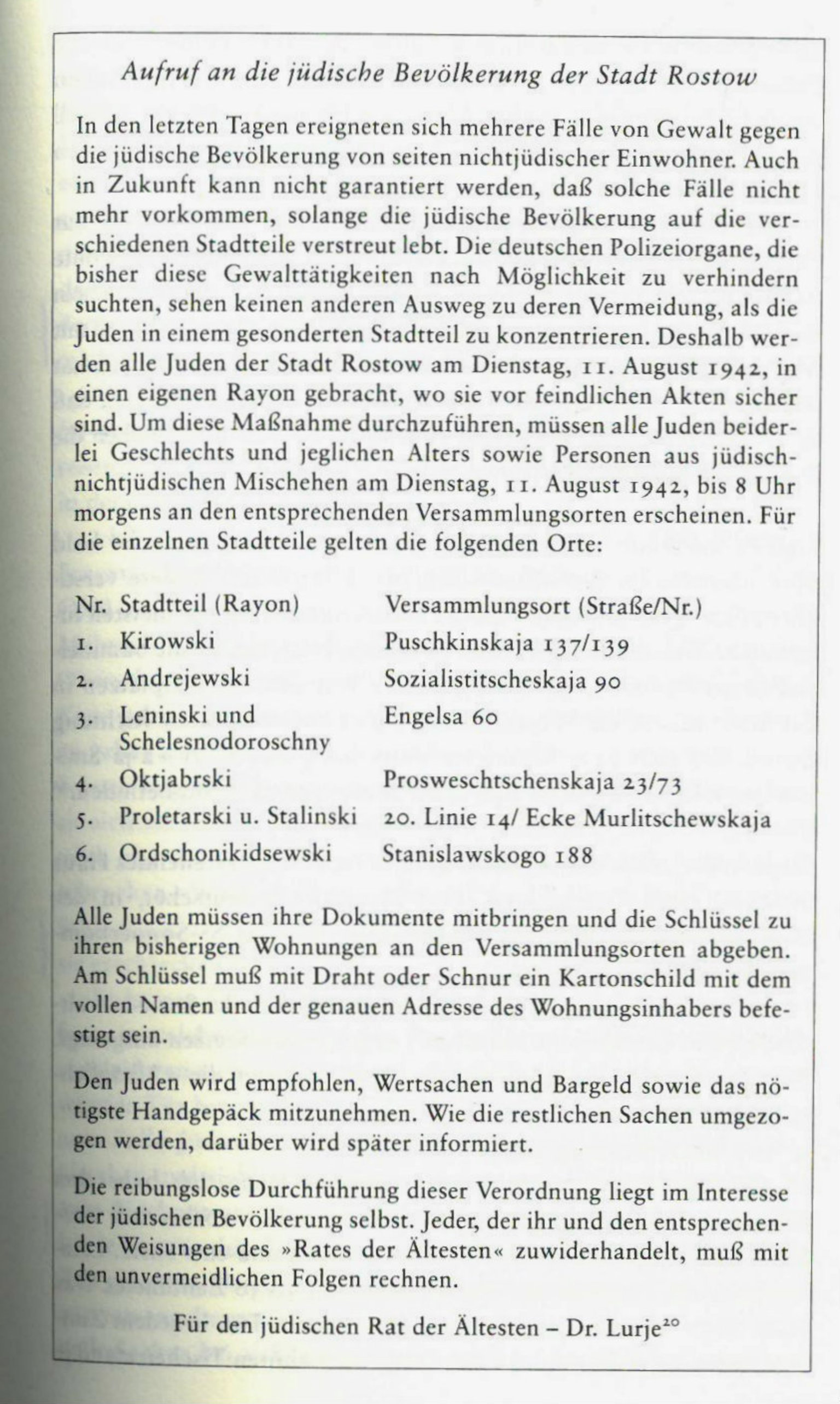
Soon posters are posted, signed to deception by the Jewish Elders. All Jews should register for their protection. Then they should arrive at the respective collection points.
bild: sabine richebächer: sabina spielrein
The 56-year-old Sabina is ready at the appointed time, supported by her daughters. You will be picked up by car. If you get in too slowly you will be beaten. They drive to Schlangenschlucht, where they have to hand over all valuables in a vacant house. Naked, they have removed behind the house again.
Five kilometres northwest of Rostov, the Red Army prisoners have already cleared thirteen pits in a grove. The residents of “2-yy Smijovka” were ordered to leave the village for shooting practice. An eyewitness reports:
“On the 14th of August, I went to that grove where I had heard the shooting, and saw that the pits were crammed with corpses that were only lightly covered with earth, over which you could see rivulets of blood.” Beloded Ignat Stepanovich, eyewitness
The Holocaust Archive of the Yad Vashem memorial sites in Jerusalem bears the name Sabina Spielrein: «1942, died with all Jews, Rostov-on-Don.»
The book used for the article Sabine Richebächer: Sabina Spielrein – an almost cruel love of science, 2005. Richebächer supervised for many years the category “Psychological New Publications” in the NZZ, she lives as an author and psychoanalyst in Zurich. The latest film version of the Spielrein material is also worth seeing: “A Dark Desire” (original: “A Dangerous Method”, 2011) by Canadian director David Cronenberg.
Socrates: “For him, therefore, I said, the worthy people do not seek authority for either the money or the glory; for neither they nor the willed want to be characterized, receiving an obvious salary for their office or thieves, profit from it. Nor again for glory; for they are not ambitious. So we need to have a compulsion for them and some punishment to want to exercise power – thus almost be considered a shame to take one voluntarily government office before they forced to do so – and the greatest punishment here is the dominates one of his worst since he will not be willing to rule.
Fearing for her just punishment receive in my opinion to exert power worthy people when sometimes happen to take power in their hands, and take it to rule not with the idea that awaits them there anything good or that would wellbeing but as if they are going to something they need to do, and they do not have some of their better ones, or even theirs, to give it to them. “
Yes! I might get old and my style too but if we look in the history of humans, the way of making arts (I mention art because I think it’s the power of God given to us to be a creator, a part of God.) has been lost and so our power of imaginations. What a pity that we laze our abilities through using the technics and making ourselves as an idle!
If anyone tries to claim that modern day movies have too many special effects remind them of this. Films have always used special effects to trick the audience, and we’re just using new variations of tools from a century ago. In fact, right from the beginning, creators like Georges Méliès were pushing the boundaries of celluloid and 24 frames per second like the showmen and magicians they were.
By the time we get to the silent comedians as seen in our above video, technology had advanced along with the pure physical comedy of the stars. Yes, they were amazing and nimble athletes, but they weren’t stupid. Camera trickery helped them look superhuman.
The first example shows Harold Lloyd’s iconic stunt from 1923’s Safety Last!, where he hung over the streets of Los Angeles from a clock face. Only he wasn’t really. Using forced perspective, a constructed building edifice, and a safe mattress a few feet below shows how Lloyd faced no danger at all. Editing, too, creates so much of the effect, as we have seen how high the clock is compared to the ground in previous shots. The angle on the streets below and in the distance really sell the scene compared to just shooting the sky.
In fact, this forced perspective is still used in modern films: Peter Jackson used it a lot in The Lord of the Rings to give the impression that Gandalf was twice as tall as Hobbit Frodo simply by constructing the sets smaller.
And when backgrounds are basic like sand dunes, even the low budget filmmaker can achieve some amazing effects with no money, just a bunch of cool miniatures:
Then again, Jackie Chan one-upped Lloyd for real in his 1983 film Project A, when he dangles from a three-story clock hand only to crash through two canopies onto the ground below. It’s a stunt so nice, they show you it twice!
The other favourite trick of the silent films was a matte painting. As long as the camera doesn’t move, a piece of glass with a photo-realistic painting on it can seamlessly fit into the action.
In Charlie Chaplin’s 1936 Modern Times, that allows the comedian to skate very close to a three-floor drop without even being in danger. (Technically, the camera *does* move in this shot, but it’s a short pan which wouldn’t affect the illusion.)
This old-school method has gone away, though up through the ‘80s great matte painting artists were working on films like the Star Wars trilogy and Raiders of the Lost Ark. Now a digital matte artist works in three dimensions, not two, with endless finesse and tweaking at their disposal, like in Game of Thrones:
The matte is the basis, really, of all modern digital effects. Wherever there is a green screen, you’re seeing the evolution of the matte. You probably have an app on your phone that does something similar, and can magically transport you to where you really want to be…just like film.
Ted Mills is a freelance writer on the arts who currently hosts the artist interview-based FunkZone Podcast and is the producer of KCRW’s Curious Coast. You can also follow him on Twitter at @tedmills, read his other arts writing at tedmills.com and/or watch his films here.
Happy New Year! Exciting times ahead especially on January 20th when a Super Blood Wolf Moon with an eclipse will be viewed by folks in Europe, West Africa, Northern Russia and the Americas North, Central and South.
This extraordinary moon with its’ dark reddish hue will look larger than life contrasting in the dark sky. What is a lunar eclipse you ask? A lunar eclipse happens when our planet Earth travels between our Moon and Sun and aligns with them to block the Sun’s light that normally would reflect off our Moon.
According to the Farmer’s Almanac,“There are three types of lunar eclipses: total, partial, and penumbral, with the most dramatic being a total lunar eclipse—when the Earth’s shadow totally covers the Moon. A lunar eclipse can occur only when there is a full Moon: January’s Wolf Moon turns 100% full on the 21st at 12:16 a.m. EST.”
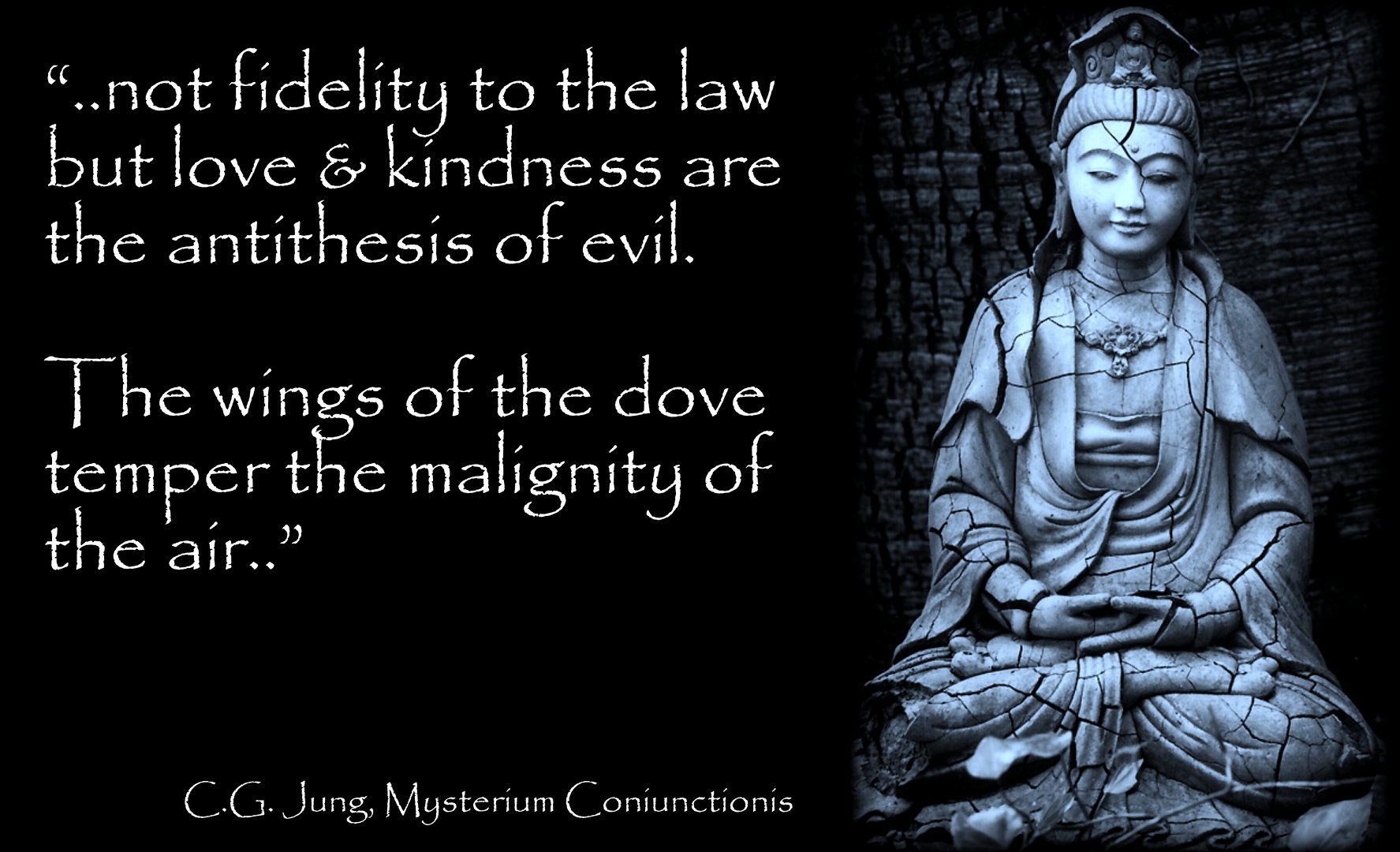
“..not fidelity to the law but love and kindness are the antithesis of evil. The wings of the dove temper the malignity of the air..” C.G. Jung, Mysterium Coniunctionis
Let’s talk about Magician! I’m a Persian and born in Persia named Iran now, and I have been named Aladin, by my father. It’s surely enough to be a reason for my dreaming to have a “Magiclamp”. Oh yes, there’s the orient and with full of fairy tales; amongst Thousand and one night. Therefore, and also because of my complicated childhood, my soul has been very traumatized I have got used to escape in my dreams and illusions, with the help of the fairy tales. the wonderful books which I’ve got, thanks to my father’s profession; Writing, I had the opportunity to find a good book to read.
But when I’d grown up, I had got to be very seriously logical! every time, more and more to leave the magical and fairy world and being alone with facts.was it a rescue for me as I might be disappointed to find the magic? in any case, I’ve got; one might say; cold as ice! my dear late brother had been calling me Data, as the same one in the TV serial: “Enterprise, the next generation”. this was an amazing issue for me to find out that my brother, as he was an ingrained Artist and writer, living in his own world full of dreams and illusions, envied me because of my cold logical soul! to put it bluntly, it is a real might to have a cold soul, untouchable and tabu.
Anyway, here is a fascinating description of this issue as the master told us about the magic and to be magical. It gives me my stabilities to stay on solid ground. Thank you, Dr Jung, thank You My dear Brother of soul Al Fazel
It is an error to believe that there are magical practices that one can learn. One cannot understand magic. One can only understand what accords with reason. Magic accords with unreason, which one cannot understand. The world accords not only with reason but also with unreason. But just as one employs reason to make sense of the world, in that what is reasonable about it approaches reason, a lack of understanding also accords with unreason. This meeting is magical and eludes comprehension. Magical understanding is what one calls noncomprehension.
Everything that works magically is incomprehensible, and the incomprehensible often works magically. One calls incomprehensible workings magical. The magical always surrounds me, always involves me. it opens spaces that have no doors and leads out into the open where there is no exit. The magical is good and evil and neither good nor evil. Magic is dangerous since what accords with unreason confuses, allures and provokes; and I am always its first victim. Where reason abides, one needs no magic. Hence our time no longer needs magic. Only those without reason needed it to replace their lack of reason. But it is thoroughly unreasonable to bring together what suits reason with magic since they have nothing to do with one another. Both become spoiled through being brought together. Therefore all those lacking reasons quite rightly fall into superfluity and disregard. A rational man of this time will therefore never use magic.
But it is another thing for whoever has opened the chaos in himself We need magic to be able to receive or invoke the messenger and the communication of the incomprehensible. We recognized that the world comprises reason and unreason, and we also understood that our way needs not the only reason but also unreason. This distinction is arbitrary and depends upon the level of comprehension. But one can be certain that the greater part of the world eludes our understanding. We must value the incomprehensible and unreasonable equally, although they are not necessarily equal in themselves; a part of the incomprehensible, however, is only presently incomprehensible and might already concur with reason tomorrow. But as long as one does not understand it, it remains unreasonable. Insofar as the incomprehensible accords with reason, one may try to think it with success; but insofar as it is unreasonable, one needs magical practices to open it up.
The practice of magic consists in malting what is not understood understandable in an incomprehensible manner. The magical way is not arbitrary since that would be understandable, but it arises from incomprehensible grounds. Besides, to speak of grounds is incorrect, since grounds concur with reason. Nor can one speak of the groundless, since hardly anything further can be said about this. The magical way arises by itself If one opens up chaos, magic also arises. One can teach the way that leads to chaos, but one cannot teach magic. One can only remain silent about this, which seems to be the best apprenticeship. This view is confusing, but this is what magic is like. Where reason establishes order and clarity, magic causes disarray and a lack of clarity. One indeed needs a reason for the magical translation of the not-understood into the understandable, since only by means of reason can the understandable be created. No one can say how to use reason, but it does arise if one tries to express only what an opening of chaos means.
Magic is a way of living. If one has done one’s best to steer the chariot, and one then notices that a greater other is actually steering it, then magical operation takes place. One cannot say what the effect of magic will be, since no one can know it in advance because the magic is lawless, which occurs without rules and by chance, so to speak But the condition is that one totally accepts it and does not reject it, in order to transfer everything to the growth of the tree. Stupidity too is part of this, which everyone has a great deal of, and also tastelessness, which is possibly the greatest nuisance. Thus a certain solitude and isolation are inescapable conditions of life for the well-being of oneself and of the other, otherwise one cannot sufficiently be oneself A certain slowness of life, which is like a standstill, will be unavoidable. The uncertainty of such a life will most probably be its greatest burden, but still, I must unite the two conflicting powers of my soul and keep them together in a true marriage until the end of my life since the magician is called Diahmon and his wife Bacchus.
I hold together what Christ has kept apart in himself and through his example in others, since the more the one half of my being strives toward the good, the more the other half journeys to Hell. When the month of the Twins had ended, the men said to their shadows: “You are I,” since they had previously had their spirit around them as a second person. Thus the two became one, and through this collision, the formidable broke out, precisely that spring of consciousness that one calls culture and which lasted until the time of Christ. But the fish indicated the moment when what was united split, according to the eternal law of contrasts, into an underworld and upper world. If the power of growth begins to cease, then the United falls into its opposites. Christ sent what is beneath to Hell since it strives toward the good. That had to be. But the separated cannot remain separated forever. It will be united again and the month of the fish will soon be over. We suspect and understand that growth needs both, and hence we keep good and evil close together. Because we know that too far into the good means the same as too far into evil, we keep them both together.
But we thus lose direction and things no longer flow from the mountain to the valley but grow quietly from the valley to the mountain. That which we can no longer prevent or hide is our fruit. The flowing stream becomes a lake and an ocean that has no outlet unless its water rises to the sky as steam and falls from the clouds as rain. While the sea is a death, it is also the place of rising. Such is Diahmon, who tends his garden. Our hands have been tied, and each must sit quietly in his place. He rises invisibly and falls as rain on distant lands. The water on the ground is no cloud, which should rain. Only pregnant women can give birth, not those who have yet to conceive. ~Carl Jung; Red Book
The publication of the Red Book (RB) has rekindled much interest in Jung and his world. People are fascinated with its imagery and often inexplicably moved by it. What is it about this book? Many people feel its soulfulness, literally, when they first hold it in their hands. The Red Book is in the truest sense of the word awesome. But what to do other than admire it? Who has access to Jung’s at times elusive knowledge? Is it only the world of Jungian analysts who inherit Jung’s world? That would be terrible. Jung would abhor that thought.
Are those who have experienced an in-depth Jungian analysis his rightful heirs? Maybe. There is a lot to be said about working closely, intimately with someone who has walked the walk before. There are plenty of wonderful Jungian analysts out there. But unfortunately psychoanalysis has been assimilated by the medical model and…



 “I’m a misunderstood genius.”

 Jewels, homes, cars, clothes – how can these mean more than lives? That’s the opposite of genius, even cruel. Celebrities, don’t peddle expensive drugs on TV and the internet, instead, pay for drugs…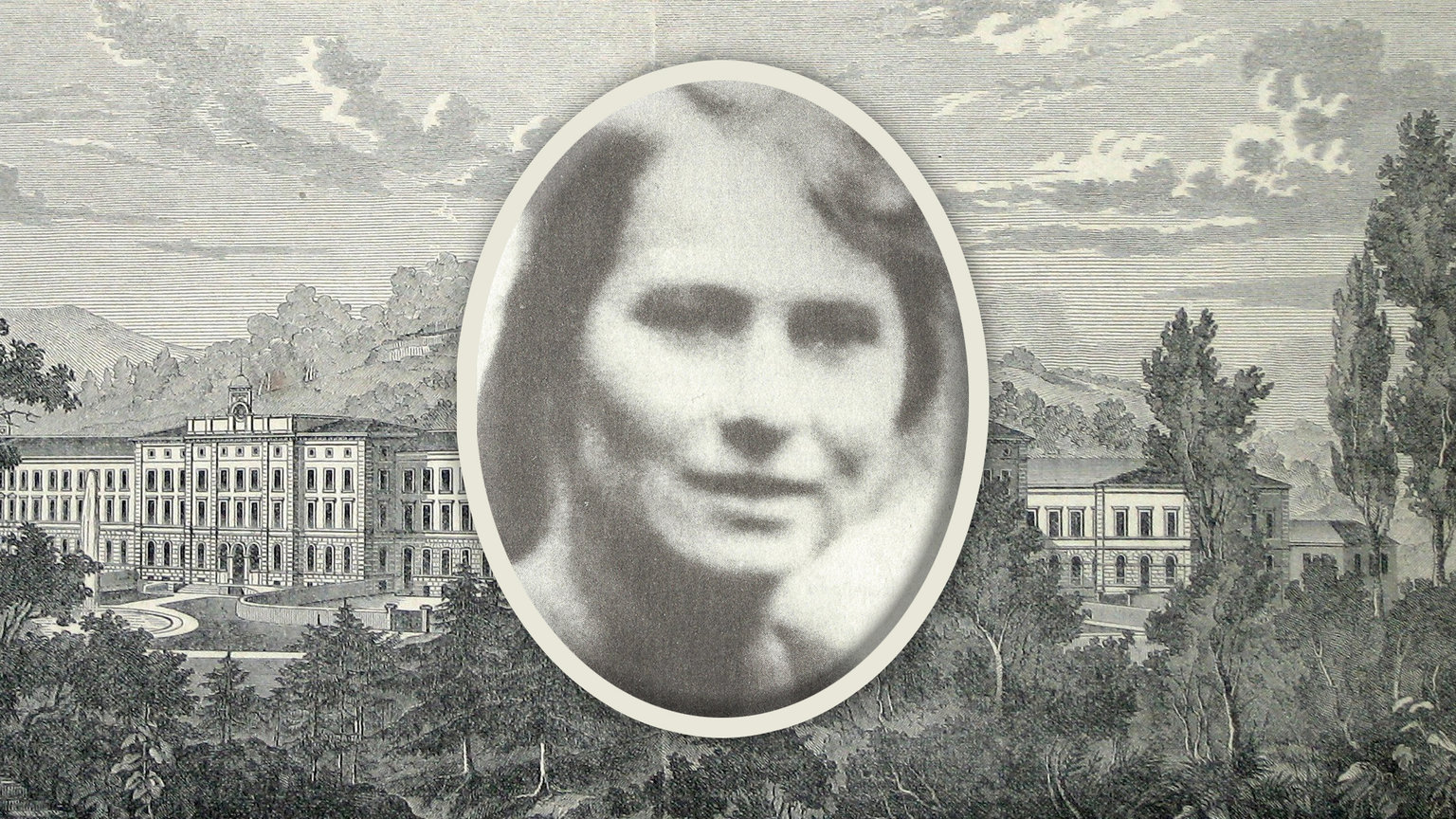






 The publication of the Red Book (RB) has rekindled much interest in Jung and his world. People are fascinated with its imagery and often inexplicably moved by it. What is it about this book? Many people feel its soulfulness, literally, when they first hold it in their hands. The Red Book is in the truest sense of the word awesome. But what to do other than admire it? Who has access to Jung’s at times elusive knowledge? Is it only the world of Jungian analysts who inherit Jung’s world? That would be terrible. Jung would abhor that thought.
 lampmagician
You must be logged in to post a comment.