
I am writing another post on politics because I believe it is a relevant issue in our current lives and a crucial concept for shaping society in the best way for everyone. This time, I selected a section from Plato’s book, The Republic, to learn from and reflect on what it should or wishes to be, as I consider it timeless. It explores how Plato analyses the motivations for seeking power, the risks of selfish ambition, and his concept of philosopher-kings who govern out of duty and virtue instead of personal gain. The essay emphasises Plato’s view that genuine political authority should prioritise justice and the common good over individual interests.
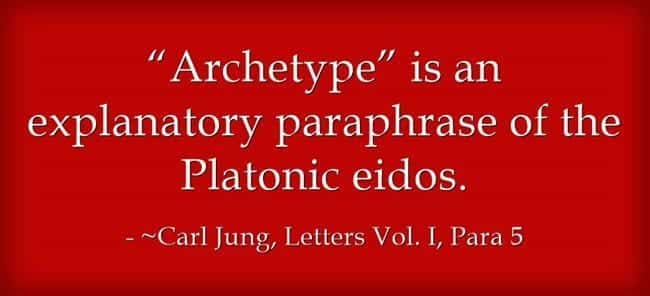
Carl Jung interpreted Plato’s politics, especially in The Republic, not as literal plans but as symbols of the collective unconscious. He regarded Plato’s “Forms” as psychic archetypes, with the “ideal state” shaping human qualities such as vision, wisdom, and power in the external world. Jung believed these political ideas originated from the “collective unconscious,” where perfect Forms such as justice exist. He also saw the ideal state as a psychological model, with the philosopher-king symbolising the self and social classes representing parts of the soul. By viewing Platonism as psychology, Jung considered himself a successor to Plato, identifying the “Forms” as archetypal patterns within the psyche. Additionally, he saw the “Cave” allegory as a way to convey deep psychological truths that are otherwise hard to express.
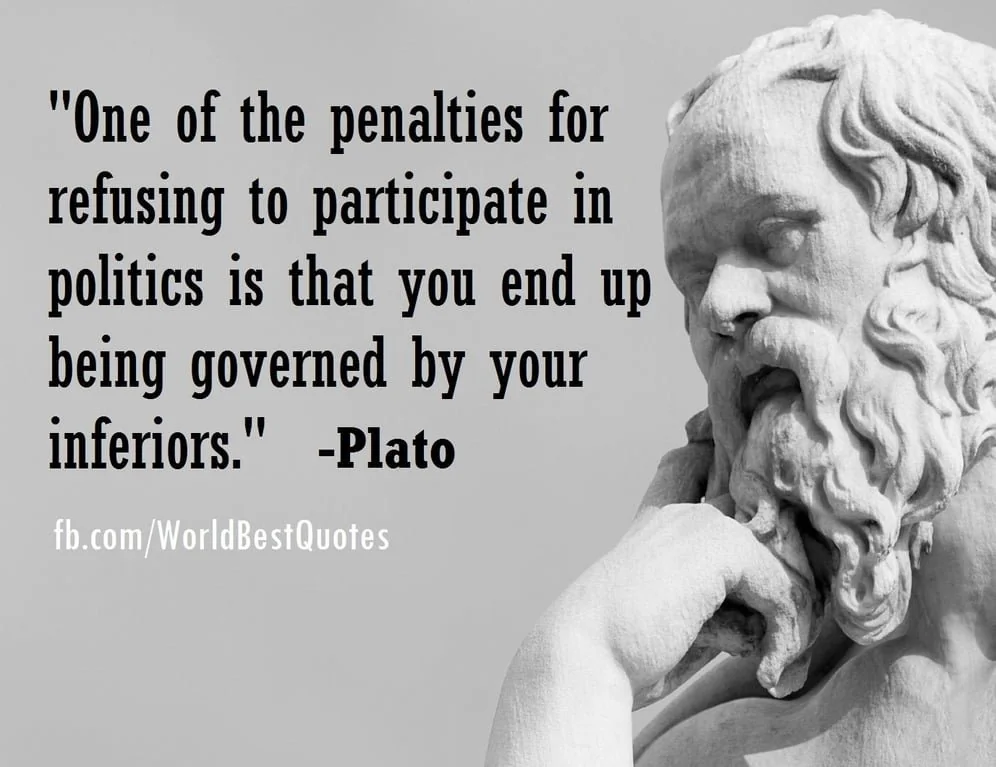
Plato’s Republic is a foundational text of Western philosophy, exploring justice, the ideal state, and political power. The dialogue examines what motivates individuals to seek power and how societal structures can corrupt or uplift those in authority. Plato, through Socrates, argues that the desire for power is often driven by basic urges—such as ambition, greed, and personal gain. However, he maintains that true power should serve the common good rather than personal interests. The philosopher-kings in Plato’s city are chosen for wisdom, virtue, and reluctance to rule, not for a craving for power. Plato believes the best rulers govern out of duty and justice, and warns against unchecked power, which can lead to tyranny. He emphasises education and virtue, claiming that only those who transcend personal desires are fit to hold power responsibly. Ultimately, the Republic views power as a moral duty, not an end in itself, aimed at justice and societal harmony. It urges reconsideration of who should rule, emphasising leadership for the greater good rather than personal gain.
Yet recently, it seems we have strayed from this goal!
The Pursuit of Political Authority in Plato’s Republic.
These passages from Plato’s Republic, spoken by Socrates, contend that the main goal of a craft—such as medicine or architecture—is to serve its subject, not the craftsman. Income (pay) comes from a separate, related “fee-earning art,” rather than the craft itself. [Thrasymachus was a Chalcedonian (from Chalcedon on the Bosphorus, near Byzantium), active around 430-400 B.C. He was a sophist and rhetorician, best known for arguing that “Justice is the interest of the stronger.”] (Oxford Classical Dictionary 2e)
It might seem like a complex philosophical argument, but Socrates has always aimed to clarify his reasoning through detailed questioning to make it easier to understand. I hope you find this reading enjoyable!
Event Date: -425 GR
(§ 346d) The receiving of wages does not accrue to each from his own art. But if we are to consider it ‘precisely’, medicine produces health but the fee-earning art the pay, and architecture a house but the fee-earning art accompanying it the fee, and so with all the others, each performs its own task and benefits that over which it is set, but unless pay is added to it is there any benefit which the craftsman receives from the craft?”
(§ 346e) “Apparently not,” he said. “Does he then bestow no benefit either when he works for nothing?”I’ll say he does.”
“Then, Thrasymachus, is not this immediately apparent, that no art or office provides what is beneficial for itself, but as we said long ago, it provides and enjoins what is beneficial to its subject, considering the advantage of that, the weaker, and not the advantage of the stronger? That was why, friend Thrasymachus, I was just now saying that no one of his own will chooses to hold rule and office and take other people’s troubles in hand to straighten them out, but everybody expects pay for that,
(§ 347a) because he who is to exercise the art rightly never does what is best for himself or enjoins it when he gives commands according to the art, but what is best for the subject. That is the reason, it seems, why pay must be provided for those who are to consent to rule, either in the form of money or honour or a penalty if they refuse.”
“What do you mean by that, Socrates?” said Glaucon. “The two wages I recognise, but the penalty you speak of and described as a form of wage I don’t understand.”
“Then,” said I, “you don’t understand the wages of the best men…
(§ 347b) for the sake of which the finest spirits hold office and rule when they consent to do so. Don’t you know that to be covetous of honour and covetous of money is said to be and is a reproach?”
“I do,” he said. “Well, then,” said I, “that is why the good are not willing to rule either for the sake of money or of honour. They do not wish to collect pay openly for their service of rule and be styled hirelings, nor to take it by stealth from their office and be called thieves, nor yet for the sake of honour,
(§ 347c) for they are not covetous of honour. So, some compulsion and penalty must be imposed to constrain them to rule if they are to consent to hold office. That is perhaps why to seek office oneself and not await compulsion is thought disgraceful. But the chief penalty is to be governed by someone worse if a man will not himself hold office and rule. It is from fear of this, as it appears to me, that the better sort hold office when they do, and then they go to it not in the expectation of enjoyment nor as to a good thing, but as to a necessary evil and because they are unable to turn it over to better men than themselves…
(§ 347d) or to their like. For we may venture to say that, if there should be a city of good men only, immunity from office-holding would be as eagerly contended for as office is now, and there it would be made plain that in very truth the true ruler does not naturally seek his own advantage but that of the ruled; so that every man of undjusticeing would rather choose to be benefited by another than to be bothered with benefiting him. This point, then, I…
(§ 347e) by no means concede to Thrasymachus that justice is the advantage of the superior. But we will reserve that for another occasion. A far weightier matter, to me, seems to be Thrasymachus’s present statement, his assertion that the life of the unjust man is better than that of the just. Which now do you choose, Glaucon?” said I, “and which seems to you to be the truer statement?”
“That the life of the just man is more profitable, I say,” he replied.
 lampmagician
Big man and little loock good together. All the best, Mike
LikeLiked by 1 person
The little one and the big one measure themselves by the lessons they share with one another! Sending my immense gratitude to you, my valued friend, as always. Best regards, Aladin
LikeLike