
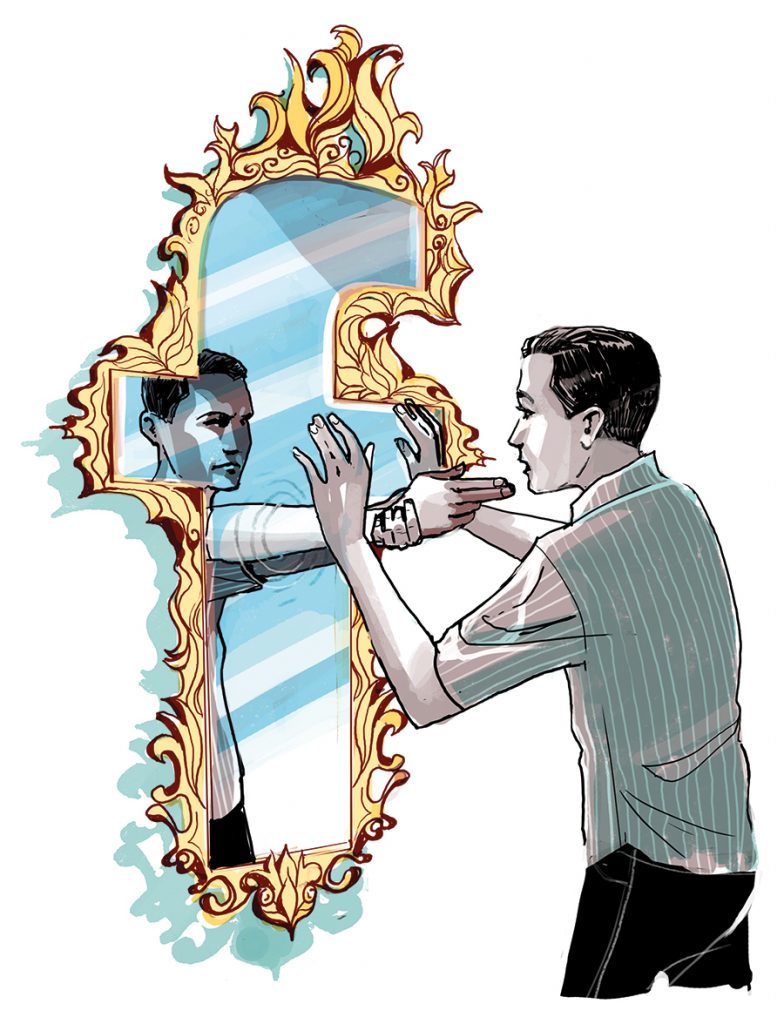
It might have become obvious, for some of you, who have read my posts often, that I come, again and again, to the subject: Freedom. Although this issue is a known subject in western countries, but believe me, it has been used and discussed more often in the countries under dictators: like an unreachable aim. I ask for forgiveness. 🙏
Of course, it is not a new term for all of us, but since I have left my country and live in freedom, I have noticed that this is not the freedom, which existed in the late sixties and early seventies. That generation had fought to get its freedom and the new one, they have it already by hand.
As the American writer Elbert Hubbard said: Freedom cannot be bestowed – it must be achieved. I believe in this as I have noticed in Germany, most people don’t know what freedom really is. Because they got it by the Allies as a presence.
I have lived under one or more dictatorial regimes, and I know what freedom really means.
To be honest, I just want to say, with all of my prattles, that I’m living now in the free western, but nowadays, confronted with some failed ideas about freedom. Even among my friends, some valued people I know and honour, but notice that they are not really aware of freedom or being free. They mixed it up with somehow antisocial behaviour. Yes, I might swim against the stream, but I have surely my good reasons. You know what? If you’ve got your own safe home, you will never want to give it away at any price, whatever it costs, even if you’d become conservative!
————————
Journalism is dead! Said my guest, a Frenchman, whom I picked up to bring to the train station one day in my working time. You know, when I was working every day as a taxi driver, I tried, if possible, to open dialogue with my guests, and actually got used to it being asked again and again where I come from and what I used to do (and sometimes: what the hell I’m doing here at all! It happened though so seldom, thank goodness!). Even though we started talking, and when I said that I’ve come from Iran and was a journalist, he said that sentence: Journalism is dead!

He saw my surprised face in the mirror. Therefore, he added that he’s also a journalist working in Paris, and he followed: I know once upon a time, in the 60s and 70s, journalism was alive! A reporter was working to find out the truth, no matter about what or whom. The point was the power of curiosity for discovering what was hidden behind. The cheekiness, the tension, the peculiarity, and the excitement. And when he looked me through the mirror said to me: I know that you also belong to this group. Otherwise, you were still in Iran and did your job, not here, working as a taxi driver.
As I once saw someone had commented: “I remember the days when Rolling Stone had writers. I remember the days when the Washington Post had writers. Nowadays, journalists are nothing but uneducated bloggers pushing an agenda.”
So! Here I have found a person, Hunter S. Thompson, a dreamer maybe just like me, who had had an idea (he is from the time which I mentioned: old time!) with the name: Gonzo Journalism. Let hear what he meant.
PS: I am so grateful to have some friends like you and a place just like here to open my heart thoroughly. Thank you all.🙏💖🙏💖
via https://www.openculture.com/
Via https://www.openculture.com/
Gonzo journalism is a style of journalism that features the author as its protagonist, simultaneously experiencing and reporting on a story from a first-person point of view. The writer becomes part of the story, portraying events through their own experience, which offers readers their version of the truth.
There’ve been any number of aspiring “gonzo journalists” over the past half-century, but there was only one Hunter S. Thompson. Having originated with his work in the early 1970s, this sense of gonzo made it into the Random House Dictionary within his lifetime. “Filled with bizarre or subjective ideas, commentary, or the like,” says its first definitions. And its second: “Crazy; eccentric.” Thompson seems to have approved, seeing as he kept a copy of this very edition, put on display at the Owl Farm Private Museum (run by the Gonzo Foundation) after his death in 2005. Thirty years earlier, he had the question put to him in the interview above: “What is gonzo journalism?”
“That word has really plagued me,” Thompson says. But he also credits it with putting distance between himself and the recently ascendant “New Journalists” like Tom Wolfe, Gay Talese, and Joan Didion: “I wasn’t sure I was doing that, but I was sure I wasn’t doing what we call straight journalism.” Indeed, few pieces could have seemed less “straight” than “The Kentucky Derby Is Decadent and Depraved,” first published in Scanlan’s Monthly in 1970. Assembled in desperation out of pages pulled straight from Thompson’s notebook and illustrated by Ralph Steadman (the beginning of a long and fruitful collaboration), the piece struck some readers as a revelation. A friend of Thompson’s declared it “pure gonzo” — an unconventional name for an unconventional form.
“Christ,” Thompson remembers thinking, “if I made a breakthrough, we’ve got to call it something.” Why not use a label with at least one instance of precedent? (It also appealed, he admits, to his inner “word freak.”) As for the substance of gonzo, he attributes to it “a mixture of humor and a high, stomping style, a bit more active than your normal journalism” — as well as whatever gets him past his innate hatred of writing. “All I can really get off on,” he says, is “when I can let my mind run. I start to laugh. I understand that Dickens used to laugh at his typewriter. I don’t laugh at my typewriter until I hit one of those what I consider pure gonzo breakthroughs. Then it’s worth it.”
Published three years earlier, Thompson’s best-known book Fear and Loathing in Las Vegas marked the culmination of a particular writing project: “to eliminate the steps, or the blocks, between the writer and the page. That’s why I always get the fastest and newest typewriter. If they make one that costs twelve million dollars, I’ll write a bad check and get it for a while.” Regulating this signature gonzo directness is a rigorous stylistic discipline. “That’s the one book of mine that I’ve even read,” Thompson says, thanks to the “four or five rewrites” he performed on the manuscript. “There’s not a word in there — I mean, there might be fifteen or twenty, but that’s about all — that don’t have to be there.”
Interviewing Thompson is veteran journalist Harrison Salisbury, the New York Times‘ Moscow bureau chief in the 1940s and 50s. He also wrote many books including The Shook-Up Generation, a 1958 study of juvenile delinquency (and a volume found in Marilyn Monroe’s personal library) that could have primed his interest in Thompson’s debut Hell’s Angels when it came out a decade later. Appear though he may to be the kind of establishment figure who’d have little enthusiasm for gonzo journalism, Salisbury’s questions suggest a thorough knowledge and understanding of Thompson’s work, right down to the “tension” that drives it. “It could be drug-induced, or adrenaline-induced, or time-induced,” Thompson says of that tension. “I’ve been told by at least one or two confident specialists that the kind of tension I maintain cannot be done for any length of time without… I’ll either melt or explode, one of the two.”
https://www.openculture.com/2017/05/how-hunter-s-thompson-gave-birth-to-gonzo-journalism.html
Related Content:
Read 9 Free Articles by Hunter S. Thompson That Span His Gonzo Journalist Career (1965-2005)
“Gonzo” Defined by Hunter S. Thompson’s Personal Copy of the Random House Dictionary
Hunter S. Thompson Talks with Keith Richards in a Very Memorable and Mumble-Filled Interview (1993)
A Young Hunter S. Thompson Appears on the Classic TV Game Show, To Tell the Truth (1967)
Based in Seoul, Colin Marshall writes and broadcasts on cities, language, and culture. His projects include the Substack newsletter Books on Cities, the book The Stateless City: a Walk through 21st-Century Los Angeles and the video series The City in Cinema. Follow him on Twitter at @colinmarshall or on Facebook.
 lampmagician
Fascinating. I’m watching the video as I type and found myself nodding when Hunter turned round and said “I can only get into a story if I’m right there …”
So I’m thinking, hmm perhaps I’m a Gonzo poet?! As I struggle to write about anything I haven’t personally experienced.
Also, I’m struck by the remarkable conversations you must’ve had with passengers over the years. Love and light, Deborah.
LikeLiked by 1 person
Another very interesting post that introduced me to Hunter Stockton Thompson.and this kind of subjective journalism
Do you know that the Italian word Gonzo means dupe?
LikeLiked by 1 person
Oh I see, thank you dear Luisa 🙏 🤗👍❤
LikeLiked by 1 person
Have a nice Sunday afternoon 🌼
LikeLiked by 1 person
You too mia cara Amica 😘 ❤
LikeLiked by 1 person
He was a crazy and amazing individual. I remember being floored when I read “Fear and Loathing in Las Vegas.” There was so much truth in the crazy. Thanks, Aladin. xo
LikeLiked by 1 person
Wow! That’s great to find an awesome companion. Thank you, dearest Pam. And yes, the book is a wonderful one. 🥰🙏🤗😘
LikeLiked by 1 person
😂♥️
LikeLiked by 1 person
Reblogged this on Have We Had Help? and commented:
More from Aladin…
LikeLiked by 1 person
That’s always inspiring to see my master friend send me to the top 🤗 much honoured again. 🙏👍🙏
LikeLiked by 1 person
Great post!
I am a fan of HT! I read Fear and Loathing in the 80’s. It definitely felt like an lsd trip was over when the book was finished.
Getting back to freedom, I earned mine. I took it when I ran away from a repressive home.
Freedom seems distorted now. Your statement “they are not really aware of freedom or being free. They mixed it up with somehow antisocial behaviour.”, rings true to me.
I’m 1/2 way through the interview, but will have to finish it later. Time to work.
Thank you!
LikeLiked by 1 person
Wow! Somehow I felt that. I don’t know you enough, but I think it’s a premonition. I was sure that you would like it. 😂👍 thank you, dear Resa, for your wonderful and kind comment. It means to me a lot ❤❤ wishing you a great time for your great works 🙏❤🙏
LikeLiked by 1 person
Thank you for your honest writings and visiting my art sites! xoxo
LikeLiked by 1 person
Thank you for the introduction to this journalist and education about what he offered. I wish I could watch the video, but my ears say no today. I’m sure there were amazing exchanges in your taxi. Best to you.
LikeLiked by 1 person
Thank you, my lovely friend. A few words tell a lot. You are much appreciated, take care.
LikeLike
I’ve never heard of Gonzo journalism. What a great concept. May have to get my students to try it out. Thank you, Aladin 🙂
LikeLiked by 1 person
It’s indeed! And I agree with you. It can be useful.😉 Thank you, dear Luciana, for dropping by.🙏💖
LikeLiked by 1 person
Hello my friend
Your post is really interesting and made me think:
Living in a western county for people like us ( From middle east or Africa even from Asia ) is always hard , because we can not fully integrated , and of course we are not the problem, it how others see us (this question of where are you from) this kind of comments that you’ve mentioned.we are always stigmatized , this main idea that even how hard we work or try to do thing right as it should , in a foreign country it will always be considered less than the average. I think we have been taught a wrong idea about freedom, one that we don’t originally have in our countries, but actually also isn’t the one we find in western countries as the Medias shows.
Enjoyed reading every word , thanks 🙏
LikeLiked by 1 person
Thank you so much for your interest in my article and kind thoughts. I understand what you mean, even though for me, it isn’t hard in any way to live in western countries. I have been brought up in a free cultural family, and when I came out towards the West, I had no problem like culture shock or some kind. And I have no problem with the people asking me: “where I was come from”. It is different, of course, in the European countries: in Holland or England they mostly ask: “who are you” and in Germany, they ask: “where are you from!”
But I know who I am, and therefore it doesn’t bother me. But, when I say freedom, I don’t want to manifest it in this way (Ours or Theirs). Freedom is general and has only one meaning; that is the same for all people on Earth. That is all I wanted to explain: the freedom which has been forgotten! Thank you again, my friend. Cheers.
LikeLiked by 1 person
You’re absolutely right , freedom has only one meaning that is the same for all of us , beautifully said , have a great day
LikeLiked by 1 person
You too, dear friend. You are highly appreciated. 🙏🤗
LikeLiked by 1 person
Great post! And a fascinating writing style. I would like to try more of this on my own blog.
LikeLiked by 1 person
Oh, thank you so much dear friend. Your words are very inspiring for me. 🙏👍have a beautiful Sunday 🤗
LikeLiked by 1 person