The 10 books that will build you a philosophy of life

Standard

By SearchingTheMeaningOfLife

I was truly lucky to be born in a book-lover family with a father who was a professional writer and nothing else, therefore, I was grown up almost in the bookshelves 😉

Here I like to share a wonderful suggestion about 10 great books in the history of the world literature though, I could add a many and many others: ( Dicken’s, Hemingway’s, Joyce’s, Flaubert’s, Chekhov’s, etc. (and also more books from Dostoyevsky’s , Tolstoy’s and Shakespeare’s 😉 ) But surely the list will be much longer.

Anyway, let have these though, I’m sure you all know them, as they really are useful 🙂

Searching The Meaning Of Life! (STMOL)

The benefits of reading are invaluable, as you do not simply travel to a new world through a book, but you also offer yourself a knowledge that causes a “storm” of emotions.

Much has been written and so much has been said about the enormous impact the books have on the mind of man and consequently on his life. Reading books offers mental alertness, knowledge, improves memory and concentration. The Bookworm has mental alertness, continuously extends his vocabulary, acquires analytical mental abilities and better writing skills, which helps him to express himself clearly and in content both in writing and orally. It also reduces stress, offers peace of mind and is free entertainment.

The LifeSpan website featured ten classical books that offer all of the above benefits and make people see the world from a different perspective.

“The Trial” Franz Kafka

One of Kafka’s most famous works, The Trial, tells the story of a man being persecuted for a crime he does not even know but is not even revealed to the reader. The book is an example of the nightmare that man can experience because of bureaucracy and injustice. In general, Kafka’s novels are imperfect and “Trial” is not the exception, but nevertheless there is a chapter that ends the story. Franz Kafka is one of the most important writers of the 20th century and has influenced intense currents like existentialism.

“The Karamazov Brothers” Fionor Dostoevsky

Dostoevsky’s latest project took two years to complete. A philosophical novel characterized by passion, the Brothers Karamazov must be present in every library. The author talks about 19th-century Russia, morality, free will, and deeply enters discussions about God. The spiritual drama carries the moral struggles concerning faith, doubt and reason into the modernization of Russia.

“One Hundred Years of Loneliness” Gabriel Garcia Marques

The book of the recently deceased writer is an incredibly allegorical imprint of the world we live in. He tells the story of the Buendia family, whom the leader defines the city of Macon. The novel of magical realism proves that loneliness is ultimately the road to happiness while talking about triumph and destruction, birth and death, joy and despair. The work is a masterpiece of the art of fiction and a very important representative of the Latin-American literature of the 20th century.

“1984” George Orwell

It began as a science-fiction novel, but the nightmare is becoming more and more real nowadays. The story takes place at Airstrip One (formerly known as Great Britain), the province of the state of Oceania. Orwell’s imaginary world is constantly in war, with government monitoring and mind control dictated by the political system. The work describes the life of a man controlled by the government and whoever does not follow orders is punished for his independent thoughts and decisions.

Tyranny is summed up by the “Big Brother”, a party leader who enjoys intense worship of personality and justifies its oppressive power with the intent to bring greater good. William Smith, the protagonist of the novel, works at the Truth Ministry and is responsible for propaganda. Smith writes old newspaper articles so that the historical record serves those who rule. Many of the terms and concepts used in the 1984 book have entered into everyday use since the publication of the work in 1949. In addition, the book has spread the adjective “Orwellian”, characterized by secret surveillance, official deception and manipulation of the past with totalitarian or authoritarian situations.

“Catcher in the Rye”. J.D. Salinger

The novel was written in 1951 and aimed at the adult reading audience. However, it soon became popular with adolescents as it addresses issues such as alienation and teenage anxiety. The novel has been included in the best English list since 1923 as it deals with complex issues such as identity, relationships, and alienation.

“When they kill the bulls” Harper Lee

It was published in 1960 and immediately became very popular and successful. Indeed, it has also received the Pulitzer Prize and is one of the most classic works of American literature. Lee recounts a story based on observations by the writer of a family and her neighbours. The events occurred in the writer’s home country when he was ten years old. With his warmth and humour, Harper Lee gained readers while at the same time succeeding in tackling very serious issues such as rape and racial inequality.

“The Little Prince” Antoine de Saint Exupery

The French aristocrat, aviator, writer and poet Antoine de Saint Exupéry speaks of love and loss, curiosity, beauty, and above all the mental purity and innocence with which Little Prince who is in love with a rose approaches things. Exupery’s book is the most widely read and translated book as it has been written in more than 250 languages ​​and dialects as well as the Braille system.

“Anna Karenina” Leo Tolstoy

A novel about passion and love and the impact of infidelity and jealousy, Anna Karenina is a heartbreaking story. Tolstoy tells the relationship of revolutionary Anna with the attractive officer Vronsky. The tragedy begins when Anna rejects her obsessive marriage and stands against the criticism of 19th-century Russian society. Tolstoy plays with the contradictions of the city and the countries as well as with all the variations of life, love and family happiness.

“Awesome New World” Aldo Haxley

One of the most remarkable and enchanting works of literature, the Wonder New World has become the symbol of the false status of universal happiness. Our writer travels to a future where we are all theoretically pleased in the archetypal dystopia, and if that is technically feasible, we can not use biotechnology to get rid of mental pain altogether. The world of Haxley is free from love and passion, while the author poses disturbing feelings to the reader since the society that describes him is delivered, but he (the reader) has the feeling of joyful expectation. His world is characterized as the “ideal nightmare,” and happiness is linked to the consumption of mass-produced goods and superfluous sex. In 1999,

“Hamlet” William Shakespeare

Shakespeare’s tragedy takes place in Denmark where Prince Hamlet tries to avenge his unexplored uncle and his mother Gertrude for his father’s murder. The work exudes a deeply real and pervasive madness, overwhelming sadness and anger, and investigates issues of revenge, incest, betrayal and moral corruption. The work has inspired writers such as Goethe and Dickens, as well as Joyce and Mertnoch.

source: https://www.reader.gr /


Of Earth Twirls and Swirls…

Standard

Let’s do travel somewhere else 😉 Great read 👍🤟

Philip Edwards's avatarPmespeak's Blog

“Nothing behind me, everything ahead of me, as is ever so on the road.”Jack Kerouac

Earth twirlsswirls and fluctuationsensue; either heatingor chilling, either simple or killing, and humanities’ whimsy can assist or resist or incline or decline to touch-the-hand-to-hand-to handle-to hearts in memory shifts. Shifts horrific or to includethe wonders of new, of differences, of simplesimilarity of Peace, of Teach, of Reach, and to embrace the race of sweet life, of sweet love and Humanities’ Purest—Practices!

Difference same—same difference and always “Arms open are most excellent.”

In a couple of thousand years, the ‘Travelers’ again will spread wings-to-fly and cross space from a slenderbeginning to a Mother ship called Earth. With each arrival; many sorts, willtermthem Gods and Goddesses and Wizards and Angels and Men. The Travelers

View original post 892 more words

🎨 Frida Kahlo 🎨

Standard

Fascinating ❤ ❤

Resa's avatarGraffiti Lux Art & More

This is the second Frida Kahlo piece I’ve found.

I met the artist, Anya, while traversing alleys and parking lots. OMG! She was so neat. She spent time chit-chatting with me.

She said the art would be done by Thursday end. She had another art engagement on Friday. I didn’t think Anya & MSKA, who was assisting with B.G., would make the date. Wednesday rained all day.

She showed me the self portrait she was basing this mural on.

LOVE the hand/glove earrings!!!

I went back Sunday. It’s not quite finished, but I shot it anyway. I don’t know when I’ll get back there.

I adore the way she has Frida emerging out of the wings of a Monarch. When I returned, dumpsters had been moved in.

I shoot them as I get them.

Pics taken by Resa – June 9, 2015

Toronto, Canada

The Artists: 

On Instagram: https://www.instagram.com/anyamielniczek/
View original post

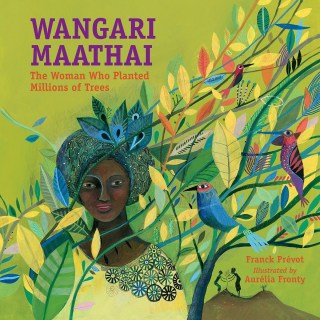
Planting Trees as Resistance and Empowerment: The Remarkable Illustrated Story of Wangari Maathai, the First African Woman to Win the Nobel Peace Prize

Standard

A fascinating view on Nature as resistance.

Via: https://www.brainpickings.org/2019/06/04/wangari-maathai-the-woman-who-planted-millions-of-trees/

Walt Whitman saw in trees the wisest of teachers and Hermann Hesse found in them a joyous antidote to the sorrow of our own ephemerality. “The tree which moves some to tears of joy is in the eyes of others only a green thing which stands in the way,” William Blake wrote in his most beautiful letter. “As a man is, so he sees.”

Many tree-rings after Blake and Whitman and Hesse, another visionary turned to trees as an instrument of civil disobedience, empowerment, and emancipation, advancing democracy, human rights, and environmental justice.

Born near a holy fig tree in the central highlands of Kenya twenty years after the country became a British colony, Wangari Maathai (April 1, 1940–September 25, 2011) went on to become the first African woman to win the Nobel Peace Prize, awarded for her triumph of promoting “ecologically viable social, economic and cultural development” by founding the Green Belt Movement responsible for planting 30 million trees and empowering women to partake in social change — an act of courage and resistance for which she was beaten and imprisoned multiple times, but which ultimately helped defeat Kenya’s corrupt, authoritarian president and blazed a new path to ecological resilience.

French children’s book author Franck Prévot and illustrator Aurélia Fronty tell her remarkable story in Wangari Maathai: The Woman Who Planted Millions of Trees(public library) — a lovely addition to the most inspiring picture-book biographies of cultural heroes.

Growing up in a small hut with walls made of mud and dung, Wangari watched the British colonialists grow richer and richer by cutting down trees to plant more tea. She ached to see the trees fall, but didn’t yet know that she had the agency to stand up for them and for her people.

One day, with the simplicity and sincerity of a child’s enormous question, her older brother asked the family why he was allowed to go to school and learn, but Wangari was not. And, just like that, the unquestioned cultural more that girls must remain at home until they marry and have a family of their own unraveled. Their mother made the radical decision to answer her son’s question with action and enrolled her daughter in the village primary school.

At eleven, Wangari left home to study at a boarding middle school run by Italian nuns. She graduated from high school at a time when very few African women learned to read at all. In September 1960, then-senator John F. Kennedy initiated a program that welcomed promising African students to study in the United States. Of the entire continent, only a few hundred young people earned such an invitation. Wangari Maathai was among them.

She arrived in America to discover with shock that even in a country as wealthy and emblematic of freedom, human rights were not equally apportioned. She witnessed the height of the civil rights movement just as her own country was finally winning its independence from British rule.

And yet upon returning to Kenya, she found that trees were no better off — colonialism had crumbed, but it had left in the rubble a nation so impoverished and dependent that Kenyan were forced to continue cutting down trees just as the British had, selling the lumber and using the felled land to plant tea, coffee, and tobacco for export. As marine biologist and author Rachel Carson was making ecology a household word across the Atlantic and issuing the radical insistence that the real wealth of a nation “lies in the resources of the earth — soil, water, forests, minerals, and wildlife,” Wangari Maathai was realizing that her nation’s welfare depended on healing the broken relationship between a broken economy and a broken ecology. She came to see that a tree is much more than an economic resource. She came to see, in Prévot’s lovely words, that “a tree is a little bit of the future.”

Progress, however, is slow. “The longer the lever the less perceptible its motion,” Thoreau — the patron saint of trees and civil disobedience — wrote in contemplating the long cycles of social change. In 1977, three decades into her outrage, Maathai founded the Green Belt Movement and set out to plant trees all over Kenya, traveling to villages and encouraging people to think about the future, whatever the privations of the present may be.

Her insistence on women’s leadership was nothing short of countercultural in a society where women were expected to demur and lower their gaze in the mere presence of a man. And yet she persisted, entrusting tree nurseries to local women and seeding in them a newfound sense of civic agency. She herself stood up to the president himself, who had initiated a massive real-estate development the city’s precious urban forest, habitat to endangered species like the blue monkey and the river hog, and had endeavored to build a skyscraper and a statue of himself in the heart of Nairobi’s largest park.

In response to the lengthy protests she organized, for which she was imprisoned several times, the government forced Maathai out of her office, calling her “a crazy woman” in press statements and describing the Green Belt Movement as “a bunch of divorcees.” (Meanwhile in America, Rachel Carson was enduring the same sexist assaults from government and industry, who painted her as a hysterical spinster for her composed, courageous, scientifically rigorous exposé of the pesticide industrythat would catalyze the environmental movement.)

But Maathai persisted, alerting leaders around the world to the ecological and human rights abuses in her country. In letters and speeches, her voice reached beyond the government-controlled echo chamber of the Kenyan press, igniting an international investigation that eventually made the president relinquish his exploitive development plans. Upon her triumph, a man from rural Kenya greeted her during one of her village visits with these words: “You are the only man left standing.”

Over and over, the president tried to fell Maathai and her movement. In a desperate bid for control, emblematic of Hannah Arendt’s insight into how tyrants use isolation and separation as a weapon of oppression, he attempted to set neighboring tribes against one another. But Maathai and the Green Belt Movement built a simple, brilliant bridge across this artificial divide — they offered saplings from tree nurseries as tokens of peace to be exchanged between tribes.

Eventually, Amnesty International and UNESCO published a report exposing the president’s corruption and human rights abuses, ending his quarter-century reign. Maathai — by that point affectionately known as Mama Miti, “the mother of trees” — was elected to the new Parliament and appointed Assistant Minister of the Environment, Natural Resources, and Wildlife.

On October 8, 2004, midway through her sixty-fifth year, she was awarded the Nobel Peace Prize. By the end of her life, the movement she started had planted thirty million trees, reimagining the ecological and economic landscape of possibility for generations of Kenyans to come, and modeling for the rest of the world a new form of civic agency standing up for nature and humanity as an indivisible whole.

Complement the immensely inspiring, gorgeously illustrated Wangari Maathai: The Woman Who Planted Millions of Trees with this Krista Tippett’s wonderful On Beingconversation with Maathai, then revisit philosopher Martin Buber on what trees teach us about being human and ecologist Lauren Oakes on what one endangered tree species can teach us about grace and resilience.

Charles Fort’s Damned Journey Through the Super-Sargasso Sea

Standard

I want to believe 😀 😉

MythCrafts Team's avatarMyth Crafts

Charles Fort and the Book of the Damned:

A procession of the damned.
By the damned, I mean the excluded.
We shall have a procession of data that Science has excluded

With those words, Charles Fort opened his first successful book, which he titled The Book Of The Damned. This volume contained accounts of UFOs, bizarre things falling from the skies (including frogs), strange weather patterns, cryptozoology, and the sightings of mythical beasties. Sounds like something you might see on the History Channel – if Fort were alive today, they might interview him on Ancient Aliens.

The thing is, he was doing it way before there was a History Channel.

Hell, this was before there were any channels.

It wasn’t his first attempt at writing; he had tried his hand before, to no avail.

However, this time, he turned to his one, true passion:

Reports of the unexplained that…

View original post 661 more words

How Computers Ruined Rock Music

Standard

I’m just gonna say; What really want the human do with the computers? Have you ever seen the movie; Odyssey 2001? It is surely a movie from 68’s and we know right now that in 2001 it wasn’t a nice year is it?

Anyway, what provokes me is the matter of our being, our feeling and our doing or practising our life. we are all a part of God and this let us be creative. The creations are not coming through any computers program but through our soul. The point what I wanted to say is; what the new generation is doing with the art which is a lovely present of God to us to do the same as she/he/it/ did; created us and our power for creation.

To put it bluntly, I don’t like the new music which is producing every day. It’s because of the lack of soul in it.

let’s look at the creation of one of the best drummers and creators of the world to show that we are not dead yet!!

And there is another analysis to know or feel how is it to be a human.

via; http://www.openculture.com/

There are purists out there who think computers ruined electronic music, made it cold and alien, removed the human element: the warm, warbling sounds of analog oscillators, the unpredictability of analog drum machines, synthesizers that go out of tune and have minds of their own. Musicians played those instruments, plugged and patched them together, tried their best to control them. They did not program them.

Then came digital samplers, MIDI, DAWs (digital audio workstations), pitch correction, time correction… every note, every arpeggio, every drum fill could be mapped in advance, executed perfectly, endlessly editable forever, and entirely played by machines.

All of this may have been true for a short period of time, when producers became so enamored of digital technology that it became a substitute for the old ways. But analog has come back in force, with both technologies now existing harmoniously in most electronic music, often within the same piece of gear.

Digital electronic music has virtues all its own, and the dizzying range of effects achievable with virtual components, when used judiciously, can lead to sublime results. But when it comes to another argument about the impact of computers on music made by humans, this conclusion isn’t so easy to draw. Rock and roll has always been powered by human error—indeed would never have existed without it. How can it be improved by digital tools designed to correct errors?

The ubiquitous sound of distortion, for example, first came from amplifiers and mixing boards pushed beyond their fragile limits. The best songs seem to all have mistakes built into their appeal. The opening bass notes of The Breeder’s “Cannonball,” mistakenly played in the wrong key, for example… a zealous contemporary producer would not be able to resist running them through pitch correction software.

John Bonham’s thundering drums, a force of nature caught on tape, feel “impatient, sterile and uninspired” when sliced up and snapped to a grid in Pro Tools, as producer and YouTuber Rick Beato has done (above) to prove his theory that computers ruined rock music. You could just write this off as an old man ranting about new sounds, but hear him out. Few people on the internet know more about recorded music or have more passion for sharing that knowledge.

In the video at the top, Beato makes his case for organic rock and roll: “human beings playing music that is not metronomic, or ‘quantized’”—the term for when computers splice and stretch acoustic sounds so that they align mathematically. Quantizing, Beato says, “is when you determine which rhythmic fluctuations in a particular instrument’s performance are imprecise or expressive, you cut them, and you snap them to the nearest grid point.” Overuse of the technology, which has become the norm, removes the “groove” or “feel” of the playing, the very imperfections that make it interesting and moving.

Beato’s thorough demonstration of how digital tools turn recorded music into modular furniture show us how the production process has become a mental exercise, a design challenge, rather than the palpable, spontaneous output of living, breathing human bodies. The “present state of affairs,” as Nick Messitte puts it, is “keyboards triggering samples quantized to within an inch of their humanity by producers in the pre-production stages.” Anyone resisting this status quo becomes an acoustic musician by default, argues Messitte, standing on one side of the “acoustic versus synthetic” divide.

Whether the two modes of music can be harmoniously reconciled is up for debate, but at present, I’m inclined to agree with Beato: digital recording, processing, and editing technologies, for all their incredible convenience and unlimited capability, too easily turn rhythms made with the elastic timing of human hearts and hands into machinery. The effect is fatiguing and dull, and on the whole, rock records that lean on these techniques can’t stand up to those made in previous decades or by the few holdouts who refuse to join the arms race for synthetic pop perfection.

Related Content:

When Mistakes/Studio Glitches Give Famous Songs Their Personality: Pink Floyd, Metallica, The Breeders, Steely Dan & More

The Distortion of Sound: A Short Film on How We’ve Created “a McDonald’s Generation of Music Consumers”

Brian Eno Explains the Loss of Humanity in Modern Music

Josh Jones is a writer and musician based in Durham, NC. Follow him at @jdmagness

Symbolism of the Labyrinth

Standard

By symbolreader

At first, I must say that to know and study of Greek Mythology, thanks to my brother, was one of the highest learning points in my life. It is really a learning process to get more knowledge about our life on this planet.

I’d like to share here with you another wonderful issue about the Labyrinth and the importance of this symbol in the human’s life.

Just before that, I’d like to add something; once many years ago when I was living in Iran, the bookstore and the bookshelf were my mosques and one day when I was walking in the sale street, one of the sellers who knew my disease to buy books call me in and said; the newest book: What the Man knows about the Women. I was surprised and graped the book. It was a thick book, I opened the first side; whit! And when I let the pages run through my fingers there were all empty white!! Yes, the author wanted clearly to show how much the men knew about the women. Now here I just want to say the woman’s soul is like a Labyrinth, not a Maze, for the maze the Germans have a nice word; Irrgarten! The woman’s soul is like a labyrinth, amazing from looking at it from above or outside but when you get in….

https://symbolreader.net/

Symbolism of the Labyrinth

Posted on June 2, 2019by Symbol Reader

The myth of Minotaur tells the story of greed and tyranny, which led Minos to deny a sacrificial bull to Poseidon. The angry god punished the king by making his wife fall in love with the bull. The fruit of this union was the monster Minotaur, half-bull, half-man. Full of shame, Minos imprisoned the monster in a labyrinth – a word which comes from the Greek “labrys” and refers to the double axe – the symbol of the supremacy of the Cretan Mother Goddess. The deeper meaning of the labyrinth is associated with the feminine life giving force, the earth-bound instinctual nature of our bodies. The centre of the labyrinth is the goddess’s womb.

The Minoan double axe

The power of nature and instincts, the Greek zoe, the sheer life force – this is how the ancients perceived the bull. Only a woman – Ariadne – knew the way around the labyrinth into its centre. It seems that this first labyrinth was designed to guard the darkest heart of nature and to keep its secrets from the solar, upper-world consciousness. Alternatively, it symbolized the fear of Minos, that is the ego consciousness, of the bestial instincts, which he tried to repress.

“The Minotaur” by George Frederic Watts

Interestingly, also in Christianity the labyrinths were constructed to worship Mother Goddess. The most famous example is the stone Labyrinth from the cathedral in Chartres. It is believed that originally it had the image of Minotaur in its centre, but it was later removed. Now the centre of the Labyrinth features the Mystic Rose, emblem of Mary on the one hand and the ultimate symbol of the Self and the union of the opposites on the other.

Cathedral in Chartres – the Labyrinth

Some researchers make a point of differentiating between the maze and the labyrinth. Karen Ralls explains:

“A labyrinth eventually takes one to a Center. A maze does not, but has many twists and turns in its path, even the occasional “dead end.”

Those who walk the labyrinth do so to find inner peace, to meditate and find a way through silence to inner truth. Cirlot adds that at the centre of the labyrinth conjunction occurs between the conscious and the unconscious. Perhaps the seeming duality of the confusing maze and the orderly labyrinth can be reconciled by invoking human and divine perspective:

“From within, the view is extremely restricted and confusing, while from above one discovers a supreme artistry and order.

In Mercurial fashion, the movement through the labyrinth veers back and forth, round and round, creating a dance whose steps eventually weave a vessel strong enough to hold what was at first intolerable experience.”

The Book of Symbols

The maze, thus, seems to symbolize our human limited perspective, our entanglement in the world of the senses and desires, our getting lost, taking the “wrong” path, occasionally feeling lost and desperate. The labyrinth would stand for the spiritual path of circling the Centre. Neither, it seems, can exist without the other. Spiritual heights will not be reached without the entanglements of the flesh. This is what Jung seemed to be saying in The Red Book:

“Only he who finds the entrance hidden in the mountain and rises up through the labyrinths of the innards can reach the tower, and the happiness of he who surveys things from there and he who lives from himself.”

Sources:

Juan Carlos Cirlot, The Dictionary of Symbols

Liz Greene, The Astrology of Fate

Karen Ralls, Gothic Cathedrals: A Guide to the History, Places, Art, and Symbolism

The Book of Symbols: Reflections on Archetypal Images, ed. by Ami Ronnberg

The Gold

Standard

Strong, Lovely ❤

The Color of Forgiveness

Standard

By Elaine Mansfield

It has touched deeply my heart when I read this wonderful essay by my dear friend and teacher Elaine Mansfield.

I am not a religious person but a pagan who believes in divine and despite born as a Muslim was in love with Jesus. Not because of the belief in his being offspring of God, sorry, I believe that we are all the children of God, I just love his power of forgiveness and love.

My not so easy youth-life had leaner me not to hate, I have found the jewel of forgiveness than being jealous or thinking of revenge. As I was arrested once in Iran because of my different way of thoughts, I’ve been tortured every day and when I could get out I have just forgiven them because I did believe that they didn’t know what they were doing, as I have learned by Jesus, Buddha, Socrates, Gandhi, and many others who are my real prophets.

I learned to be humble and respect everyone not because of their range or class but because of their being and living as humans. (Though, I must add I’m trying not to be stupid! 😉 )

Anyway, it’s enough of me first 😀 . Let’s enjoy reading the lovely article of Elaine Mansfield about the color of Forgiveness; Blue is my favourite colour ❤ ❤

https://elainemansfield.com/

Blue Morpho Tom Hilton Flickr

“Will you meditate with me?” he asks.
I’d said yes for many years.
Chemotherapy was ordered hours ago.
Salvage chemo.
A cursed name
That hasn’t yet arrived.
I have nothing left to give.

At 3 AM that morning, my cell phone rang.
He’d called from downstairs.
“I can’t breathe,” he said.
“Will you help me?”
“I’ll be right there,” I said.

It’s been like this for days,
For months.
I feel his pounding pulse and call the hospital.
“Take him to the nearest ER,” the doctor says.
I’ve done that many times.
They don’t know what to do with the mess of him.

with Vic in healthy times

“Can you make it to Rochester?” I ask.
“There are hospitals along the way.”
He nods.
I pack his bag while he uses a borrowed cane,
Staggers to the car.
My warrior husband reduced to this.

I hold his hand while I drive through darkness
Toward his doctors at the cancer center.
Listen to him gasp.
We arrive in a pink coral dawn.
Birds sing as I run inside for help.
Two men in blue scrubs bring a wheelchair.
No rooms ready in oncology.
I beg and change their minds.

No one stops me when I raid the linen room for sheets.
No one helps me make his bed.
I roll his head up so he can breathe,
So he can rest,
But I cannot.

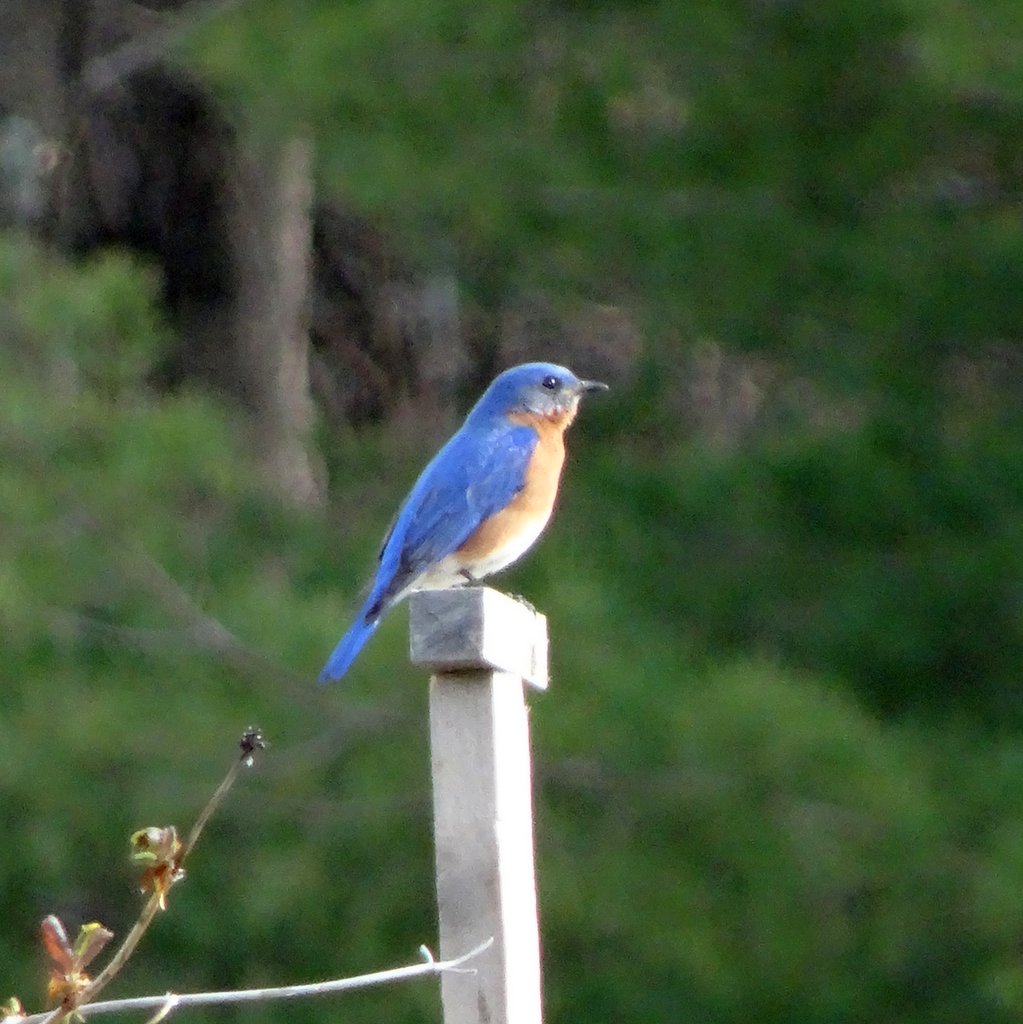
Our favorite bluebird friends

Two kinds of cancer now his doctor says.
He offers one last chance.
Salvage chemotherapy.
It will kill him fast or give him months.
My husband’s name is Victor.
He considers the choice.
His hero energy flickers.
Mine is snuffed.

“Will you stay with me until the chemo comes?” he asks at midnight.
“I must lie down,” I say.
That means no.
For the first time I say no.
“I’ll be back early.”

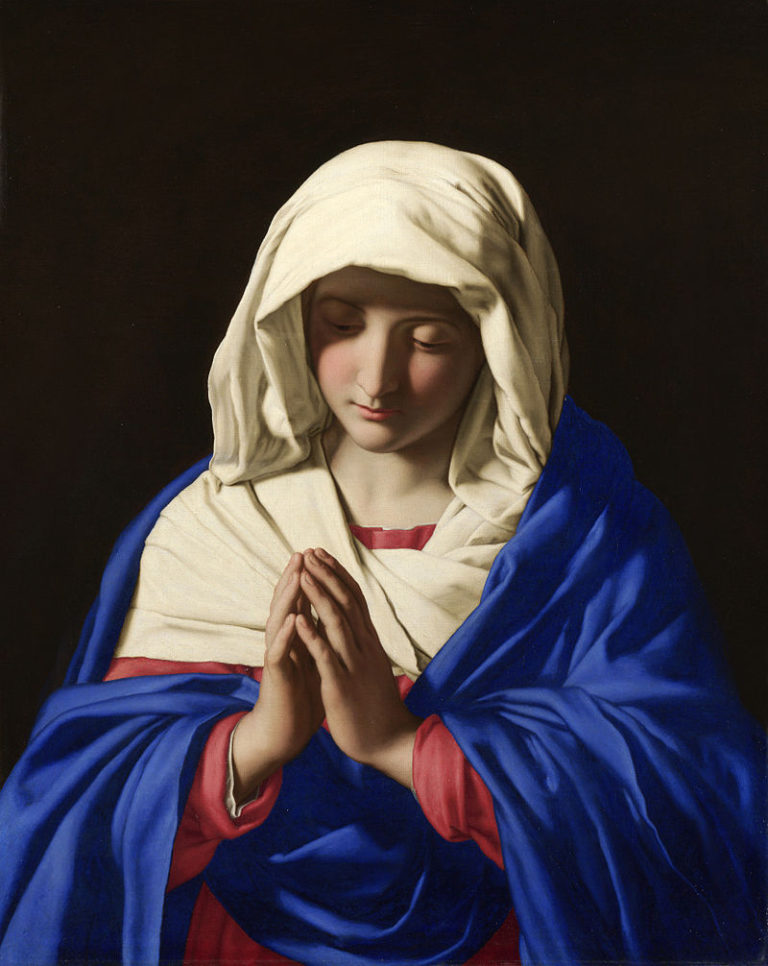
Sassoferrato, The Virgin in Prayer, 1640 (wikipedia)

Burning with shame and hopelessness,
I drive to the Cancer Society Lodge,
Crawl in bed and sob before I fall asleep.
My phone rings at 6 AM.
“I’m OK and I love you,” he says.
The infusion has begun.
He’s not OK, but I’m forgiven.

Alone in bed, eleven years later,
Regret drops me like a wave.
A memory so raw and deep.
I sob until I fall asleep.

At dawn, I dream a Blue Morpho Butterfly,
Sapphire wings as wide as my outstretched hand.
As blue as the Virgin Mother’s robe.
The color of forgiveness.

***

Tom Hilton, Flickr

I rarely write poetry, but the memory came in this form along with the dream. Thanks to Ellen Schmidt of Writing Room Workshops who encourages my experiments. Do you have regrets, even though you know you did the best you could? How do you forgive yourself for being human? For other posts about marriage and caregiving, see Bookends of a Marriage or Give Thanks For This Imperfect Life. I also suggest Dealing with Regret and Grief by Claire Bidwell Smith.

I’ll be in Columbus Ohio May 17-18 giving a workshop called Finding Wisdom in Aging and Loss. Please leave comments. I’ll respond soon.