These tumultuous times it takes a leap of imagination and ingenuity to trust in hope, which has frequently been my resort during past difficulties. Hope is assumed to have remained in the jar after Pandora released its darkness. The conflicting interpretations of hope around this myth are fascinating. Try relating darkness and hope to the psycho-dynamic phenomenon of projection. In what we call life, both darkness and hope circle around nothingness. We suffer the periods of dense darkness in hope of the ever-recurring creative energy of spring – the spirit I dance to in my lucid dreaming.
While natural, our expectations are necessarily blind and hampered by frustrating circumstances. In the wake of two stressful years, the hope that my nearly 100 year old dad would leave me the small fund he legally owed me was buried with him. Still, my yearning for a…
I had once got a book in the hands about the psychology of Zorn (Wrath, Rage, Anger) it was a very interesting description of how this feeling can cause good outcome as a man normally expects. here is again a wonderful read by SearchingTheMeaningOfLife with thanks.
Those who are angered are a powerful source of wisdom, as they bring to light our weak points and become a mirror to which we look.
Aristophanes said that “wise people learn many of their enemies.”
A teacher can teach us the importance of patience, control and tolerance. But all these abilities are not able to practice them, except in real life, when we meet the “enemy”.
In martial arts, we learn that the opponent’s attack can be used to our advantage when we know how to channel its momentum, at the right time, in the right direction.
The enemy forces us to act here and now and to get out of our comfort that will eventually make us soft. It forces us to bring to the surface the best as well as our worst self and to transform knowledge into wisdom through experience.
When we manage to see our reactions distant and humorous, then we will discover that in every conflict there is a great lesson about our qualities and our weaknesses.
Exclusive harmonious relationships create an apathy that can paralyze us as we do not feel the need to look for new things, nor do we have to reconsider our beliefs.
We are always on the same path. For our mental and emotional development, we need to confront, react, test ourselves, change our perspective, feel pain. In other words, to learn.
As in the martial arts, so in life, in order to achieve it, one needs to motivate us.
It is the place and the contrast that they create in conflict with tomorrow’s composition.
«Πόλεμος πάντων πατήρ εστί» έγραψε ο Εφέσιος σκοτεινός φιλόσοφος Ηράκλειτος. “The War of All Fathers” is written by Ephesios the dark philosopher Heraclitus.”‘
Let us take part with all our might, without clinging to our little “ego”, to what will take us “out of ourselves”, it will make us angry, lose our concentration and risk losing the battle. It is not what the “teacher” taught us anyway.
When things around us are not ideal, when we accept attacks, when we are not satisfied with our lives, this adversity, this negative force that affects our stability and acts as an enemy, must be used as a driving force and a push for change.
Every conflict eventually reveals what does not go well within us and allows us to keep the spark of our creativity on. Without anyone or something to challenge us, this spark would be turned off.
That is why, by looking at the situation more deeply, we should probably blame our enemies, for thanks to them we can change and climb another step in the path of our personal fulfillment.
It’s really not easy to imagine such as circumstances if you have never lived or got informed about these harmful rituals. That here is a good book to know how is it.
It is hard to not judge an autobiography, from a different culture and time. Yet the hard and horrible experiences had here are not unusual or exclusive to the authors’ experience. Child marriage, abuse of girls and women, people unwilling to have compassion for girls caught in a system that no one is willing to change. How can she remain positive in the midst of such a life?
–
Describing her parents, she loved them in spite of all the actions hurtful to her and her siblings they thought nothing about. She looked to aunts and uncles quite different households than her’s without envy, but gave her hope. After being married off at age eleven, to a twenty-seven year old man who raped and abused her, she found joy in the man;s mother, “Bibi”, who considered “her Najima” ike the daughter bibi never had…and the child found Bibi to be…
As I might mention; what I have learned in my life it’s been by my brother Al Fazel who was a genius and I’m gratefully thankful to him, he was an ingrained writer as our father was. they both could not do anything but to write. I say that because, as I read this as an always wonderful article by Elaine Mansfield a lovely friend of mine, I’d just remember of an issue which had been put in our regular discussion meeting in Iran in the ’80s by my brother and it was the mather of using Mask in our everyday life. He argued that we all need a mask to protect our inner secrets; even to hide our fears and weakness. It was a wonderful remembering in my life which I’d keep them in my heart and mind forever.
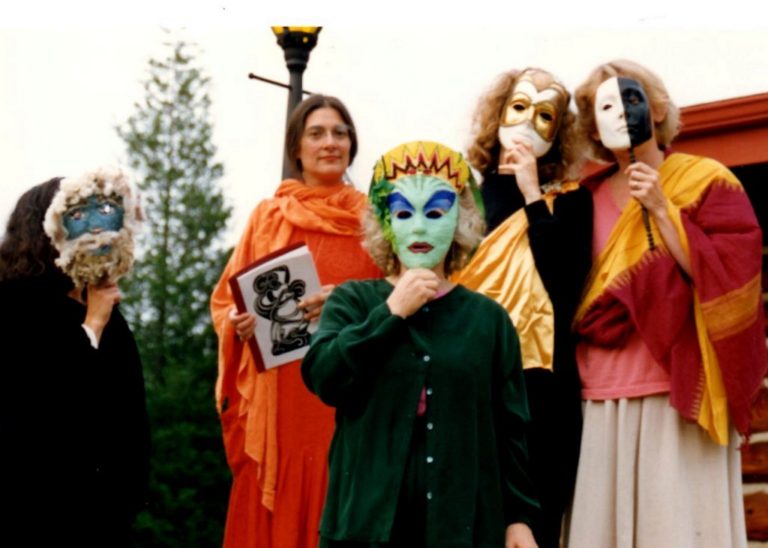
In 1994, our women’s mythology group created and presented a play using masks. We had explored the story of “Eros and Psyche” for a few years, so knew every detail.
I played the Goddess Aphrodite who, in this myth, is fierce, jealous, demanding, and anything but lovely.
The masks were bought or made by a member of the group who was an art teacher and character in the play. In Greek theatre, a mask used in this way is called a persona. C.G. Jung used the term persona to mean our outer personality which is like a mask compared to our inmost authentic Self.
Along with raging and beating Psyche who dared to fall in love with her son Eros, Aphrodite gave Psyche Four Labors, each more impossible than the last. Psyche faced each task with despair, but helpers arrived and each task was finished. In the process, Psyche (Soul) was initiated into the depths of Feminine Wisdom.
Working with the story brought us closer to each other and taught us new ways to approach life’s impossible challenges. That first depth immersion in mythology was an adventure and an initiation for me.
Sandro Botticelli, The Birth of Venus (c. 1484–86). Tempera on canvas. 172.5 cm × 278.9 cm (67.9 in × 109.6 in). Uffizi, Florence (Wikipedia)
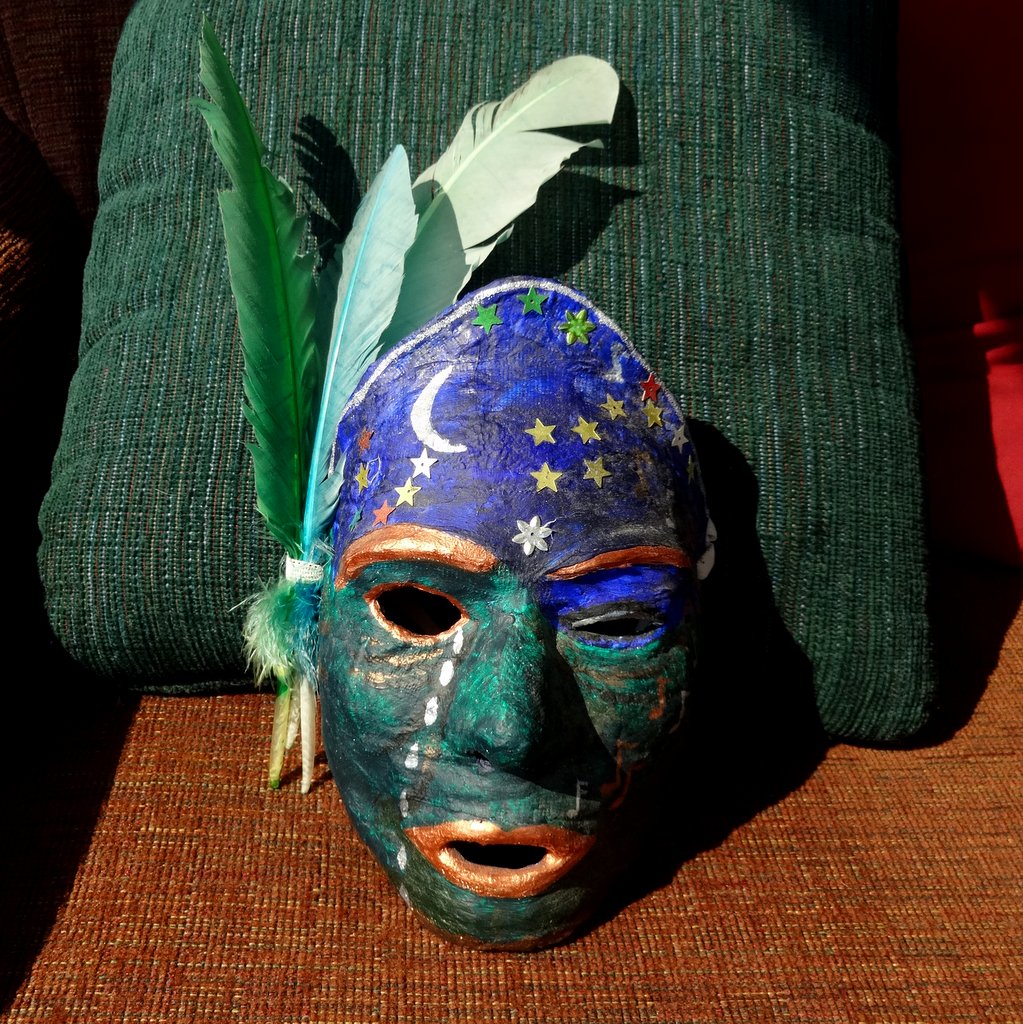
Years later, I created my own masks in Marion Woodman’s BodySoul Rhythms Workshops. I’ll call these masks unintentional because I didn’t have a specific character in mind or know what they would look like or symbolize before the process began.
In 2003, about 40 women made face moulds the first night of the week-long workshop in a downstairs room filled with art supplies. First, a thick layer of Vaseline to protect the skin and then bandage-like pieces of gauze cut in strips dipped in warm water and applied to the face in a few layers. Then lying still for 20 minutes to let the plaster dry into a hard mould before another woman eased the mask off my face. After it dried, we painted our masks with acrylic paints. (Directions for mask-making at this link.)
We had five days to create our masks while working with a mythological story, doing bodywork, dancing, and exploring dreams and Jungian ideas. The art room stayed open 24 hours a day for midnight inspirations. Some nights I worked late.
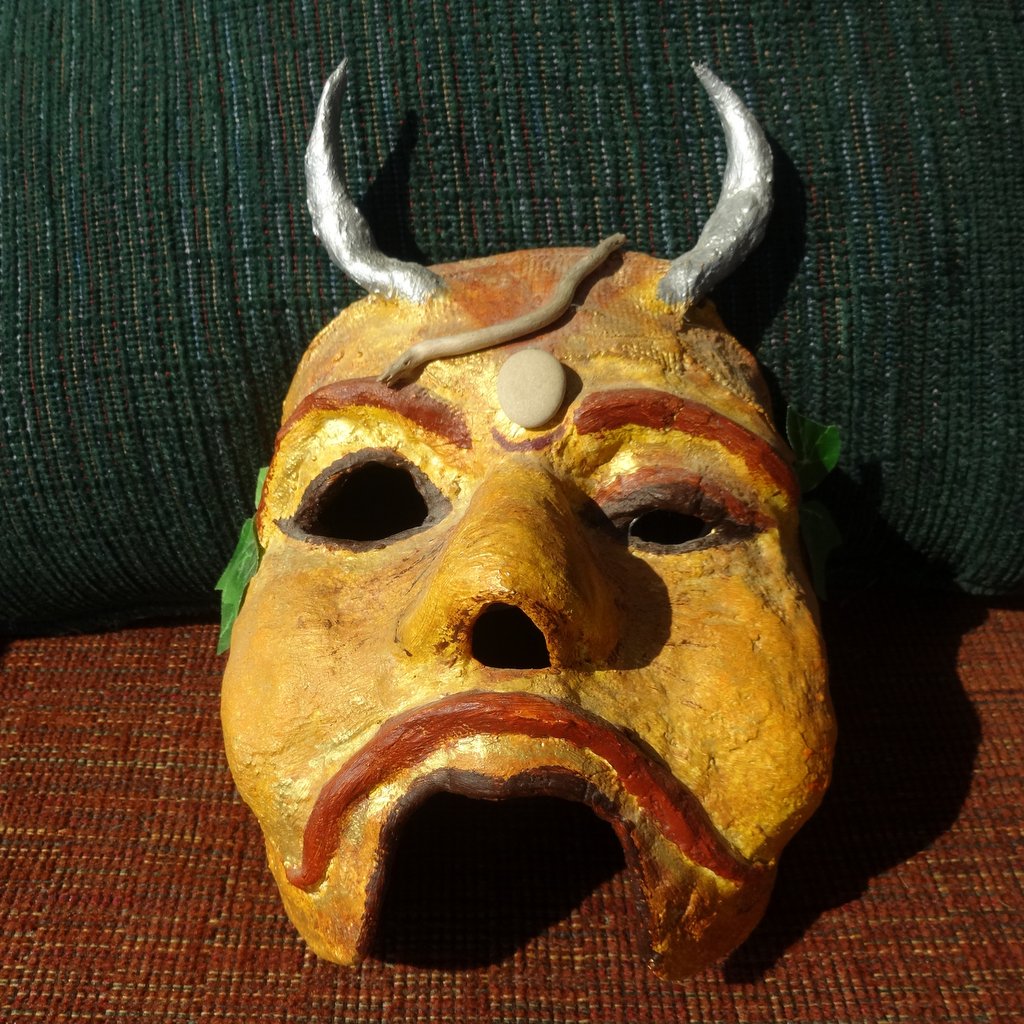
Golden Bull
A Golden Bull with juvenile horns emerged–an image of a young and vital masculine energy in me. I cut off the bottom part of the mask under the chin to open its voice and throat. I was surprised by my Bull, but not everyone was.
“I know him,” my husband Vic said when I showed him the mask after arriving home. “I know him so well.”
Vic knew the bullish and sometimes belligerent parts of me better than anyone–including me since I’d rather deny or conceal those parts of myself. He knew my stubborn persistent intellect and desire to create and learn, a more positive aspect of this bull. Looking back, that bull was a step toward withdrawing a projection from Vic and finding my own inner masculine.
I made the third mask in a workshop in 2007. Vic had a brief respite from treatment that summer, so I signed up for a Marion Woodman workshop in Canada. Vic and I looked forward to a week apart after a year of unrelenting cancer therapy and constant togetherness.
Our Lady of Sorrow and Praise
As the women gathered to discuss a mythological story on the second morning, someone tapped me on the shoulder. “Your husband called. You need to call him back,” she said. My heart pounded. He wouldn’t call unless it was an emergency, but his message was about my mom who had lingered with Alzheimer’s for ten years. She was dying and there wasn’t time for me to get home. I’ve written about dancing my relief and grief that weekend.
Vic sat with my mom until she died. I’d pre-arranged her cremation. Everything else could wait until I returned home. My mask and need for inner nourishment felt pressing. I stayed.
I named my mask “Our Lady of Praise and Sorrow.” She weeps on one side and sings praise on the other. I said a tender goodbye to my mother in ritual and dance, but the mask took me deeper, to what I truly feared losing. I was grateful for the 41 years I’d been with Vic, supporting, growing, and trusting each other. I grieved over our future and that word “incurable.”
When I showed my mask to Vic, he inspected every detail. “Thank you,” he said. He knew. The mask reflected grief and praise for our partnership. It spoke to a new life I’d live without him after his death. It helped me trust that I could hold on to gratitude even while I grieved.
Riding the Bull on Wall Street, 1992
With gratitude to the women who have gathered for over 25 years to study mythology together.
Because my academic credentials (and my wife’s) include a wee bit of Jungian depth psychology, I occasionally get asked the question, “What book do you start with if you’re new to C.G. Jung?”
It’s a fair enough question, one that I was asking at the beginning of my graduate studies.
Now, there’s an easy answer to this question, but it’s not the one I’m going with…
Erinnerungen, Träume, Gedanken…
Or, as the English speaking world calls it:
Memories, Dreams, Reflections, known affectionately by Jungians as MDR.
Now, MDR has a lot to say, especially about Jung, as it is semi-autobiographical. If you really want to explore Jung on Jung, it’s a great starting place, bar perhaps his artistic-psychological grimoire/magnum opus, The Red Book.
Still, I think there’s a work that captures Jung better than either MDR or The Red Book, for the following reason:
Once upon a time, there was a bright young girl named Marie-Louise who loved fairy tales. One day, she made a journey to visit the famous psychologist, Dr. Carl Gustav Jung.
Dr. Jung explained to Marie-Louise that he had a female patient who lived on the Moon.
She corrected him – surely he meant to say that the women thought she lived on the Moon.
Jung replied that he had meant exactly what he said: the woman lived on the Moon.
As future Jungian analyst and collaborator Marie-Louise von Franz later recalled, ”[I] went away thinking that either he was crazy or I was.”
Regardless as to who was (in)sane, von Franz returned to work with Jung.
Jung called this phenomenon Psychic Reality; essentially, it is a form of ontological phenomenology.
*
Who-da what-a what? you might be asking at this point. Let’s examine those words together.
Welcome, my chuckaboos! With promoting the release of Atonement in Bloom, I haven’t done a Straightlaced Saturday in awhile. Let’s take a little #SteamPunk jaunt today.
As most of you know, I’ve been rerunning the serial, Copper, the Alchemist, and the Woman in Trousers. We haven’t reached the halfway point of the story yet. Damfino why it takes me so long to tell these stories. Anyhow, I want to keep your enthuzimuzzy going, so I thought we could do a character recap post!
Character Recap
Felicity Deringer
First we met the narrator of this serial, Felicity Deringer aka The Woman in Trousers. Some readers said they imagine her as a young Katharine Hepburn, but when I started writing this serial I heard the voice and saw the face of Jamie Murray, as she was in her part as H.G. Wells on the Warehouse 13 television…


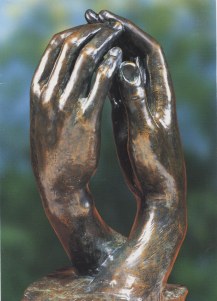 August Rodin – Le Secret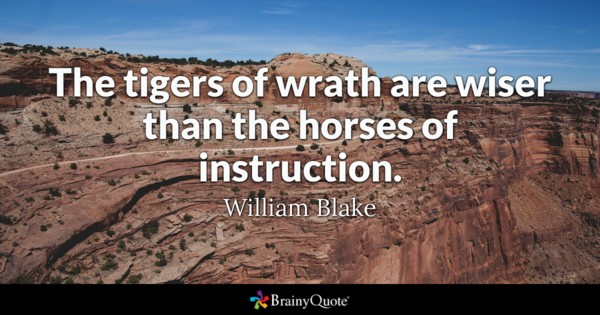








 lampmagician
You must be logged in to post a comment.