
Month: July 2018
Natasha’s Russian Dance at Uncle’s House

The Vertigo of Eros
Standard
 Roberto Matta-The Vertigo of Eros 1944
In the late thirties the Chilean Surrealist artist Roberto Matta painted a series of large canvases that he called inscapes: imaginary landscapes that were a projection of the internal psyche. Using the techniques of surrealist automatism and displaying his interest in non-Euclidean geometry Matta’s inscapes are vast, visionary cosmic dramas.
Along with many other Surrealists he emigrated to the United States in 1939 to escape WWII and would live there until 1948. While in New York he would, along with his fellow Surrealist Arshile Gorky (see Nighttime, Enigma and Nostalgia) influence an emerging generation of young American artists, the Abstract Expressionists, including the pioneers Robert Motherwell and Jackson Pollack. Matta would be expelled from the Surrealists due to his affair with Gorky’s wife, which the Surrealist believed contributed to Gorky’s tragic suicide.
The cosmic dimension of Matta’s painting evokes certain elements of science…
View original post 44 more words
Inuit Legend of The Undead Qivitoqs
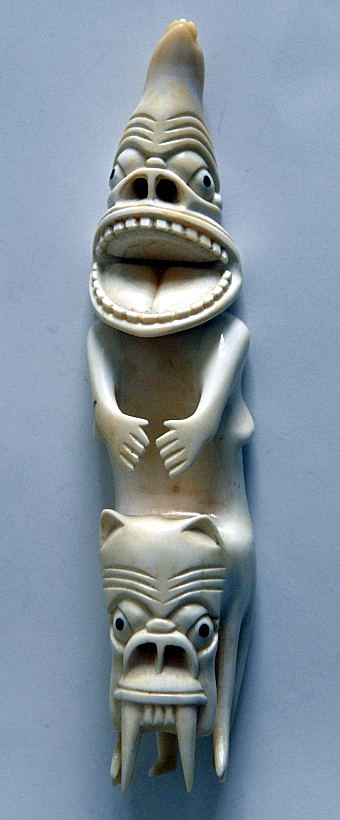

Greenland is a mysterious land mainly covered in ice and not much is green. During prehistoric times the early Paleo-Eskimo 2500 BC – 800 BC lived there. Southern and Western Greenland was inhabited by the Saqqaq culture. The early Saqqaq artifacts were found at Disko Bay located on the western side of Greenland. Surprisingly Greenland is the largest island in the world!
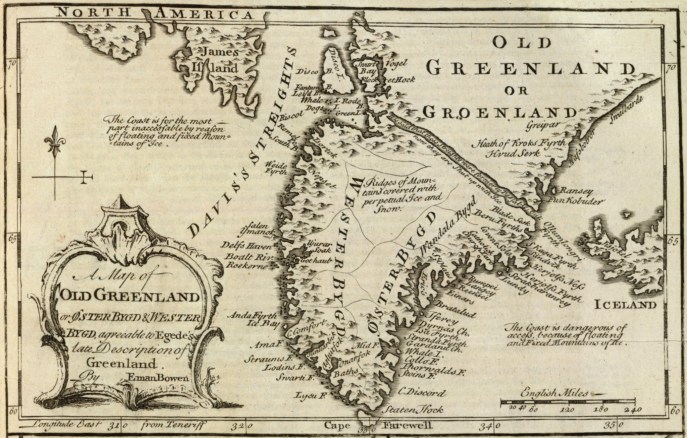
Around 800 BC, the Saqqaq culture disappeared and the Early Dorset culture emerged in western Greenland and the Independence II culture in northern Greenland. The Dorset culture was the first culture to extend throughout Greenland’s coastal areas, both on the west and east coasts. It lasted until the total onset of the Thule culture in 1500 AD. The Dorset culture population lived primarily from hunting of whales and caribou. They were a peaceful people. In 986 Icelanders and Norwegians settled the west coast convinced by Erik the Red that Greenland…
View original post 311 more words
The Legend of Ellén Trechend

One of my favorite Gaelic legend is about the infamous, Ellén Trechend in 8th to 9th century Irish mythology and is also known in Gaelic as Aillén Trechenn .
Art below of a depiction of Ellén Trechend by Nifty Buckles ©2018
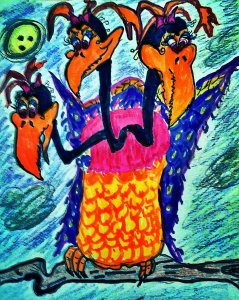
Strong minded women have in the past been considered some sort of threat to insecure men in our society. Even in the past a character such as Ellén Trechend was given a bad rap. She was known in legend as a triple-headed monster (most likely a woman with her own opinion) that is mentioned in the text “Cath Maige Mucrama”, (The Battle of Mag Mucrima) as having appeared from the cave of Cruachan (Rathcroghan, County Roscommon) accompanied by goblins and a flock of copper red birds, helped to destroy Ireland and create chaos among the Irish folk. This monstrous creature according to an array of authors claim that the…
View original post 464 more words
Nothing is True, Everything is Permitted
Standard William S. Burroughs
Attributed by legend to the Old Man of the Mountain, the leader of the Nizari Isma’ilites and the founder of the Order of Assassins (Hashshashin), Hassan-i-Sabbah, the line ‘Nothing is true, everything is permitted‘, is first found in print in Nietzsche’s On the Genealogy of Morals, and was later taken up in a book entitled Le Grand Maître des Assassins by Betty Bouthoul, where it was discovered by the hit-man for the Apocalypse, William S. Burroughs, who was very fond of quoting it. From there it has infiltrated into popular culture, via movies and video games, and now appears to be the guiding maxim of 21st Century political irreality.
With its perplexing and gnomic quality, the phrase could be read as merely a particularly nihilistic variant of the Liars Paradox. While I am willing to concede that this approach has claims to…
View original post 714 more words
Did You Have to Make Her a Prostitute? by Elizabeth Cunningham


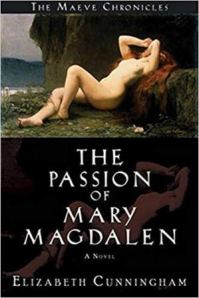
When I toured with The Passion of Mary Magdalen, opening by belting out the first paragraphs of the novel’s prologue in song, (ending with the line “when only a whore is awake!”) that question almost always came up. In celebration of Mary Magdalen’s feast day, I’d like to offer answers that continue to evolve.
There is no scriptural evidence that Mary Magdalen was a prostitute. In a sermon, 6th century Pope Gregory I gave as his opinion: “This woman, whom Luke calls a sinner and John calls Mary, I think is the Mary from whom Mark reports that seven demons were cast out.” (This confusion and proliferation of Marys inspired me to make a joke. Q: How many holy Marys does it take to change a lightbulb? A: I don’t know. I keep losing count.)
In fact, very little is known about Mary Magdalen. There are fourteen…
View original post 954 more words
Catch-Up Saturdays — Hullaba Real World Tech & Review

Jazz for ever 🖖👍❤❤
“Crashing Out with Sylvian : David Bowie, Carl Jung and the Unconscious” by Tanja Stark
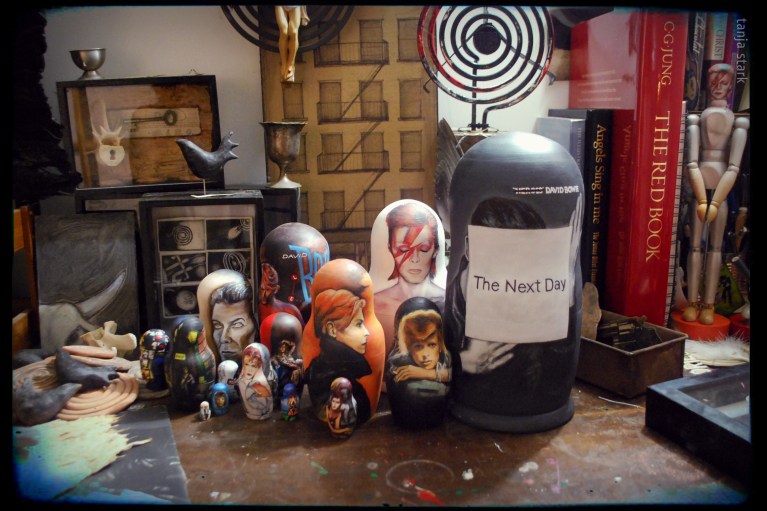

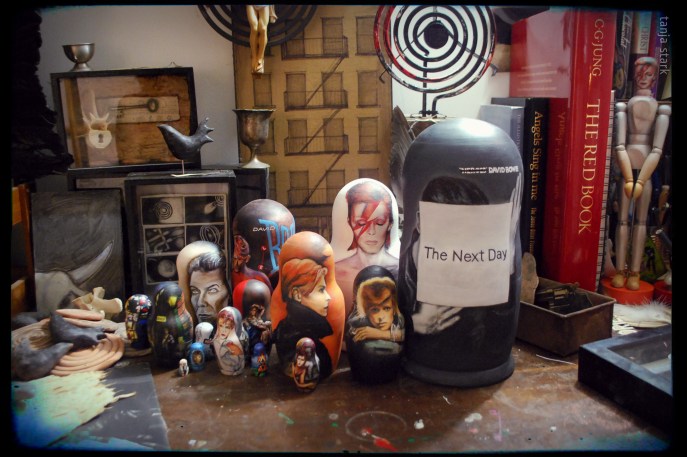
Tanja Stark 2015
“David Bowie inhabits Carl Jung’s world of archetypes, reading and speaking of the psychoanalyst with a passion.” Tony Oursler 2013
The haunting figure of an intubated, dystopian and alienated creature inhabiting ‘Ashes to Ashes’ (1980) world of religious, sci-fi and industrial imagery, singing of Major Tom’s trajectory like some perpetually unconsummated rapture is a poignant image in David Bowie’s oeuvre. No longer worldly, not quite heavenly, but suspended in some purgatorial cursed space in between, it is hypnotic, erotic and somewhat psychotic.
Yet contained within the cryptic layers of ‘Ashes to Ashes’, with its alluring convergence of iconography, symbols, sound and vision, lie essential thematic concerns that repeatedly permeate Bowie’s prodigious output and have intrinsic parallels with ideas in Jungian psychology; a profound engagement with the Unconscious, a complex relationship with the Numinous [i], tension between opposing polarities (the celestial and the chthonic, visceral and cerebral, sarx and…
View original post 11,553 more words
 lampmagician
You must be logged in to post a comment.