Month: January 2018
Wisdom from Ganesha: Work Smarter not Harder
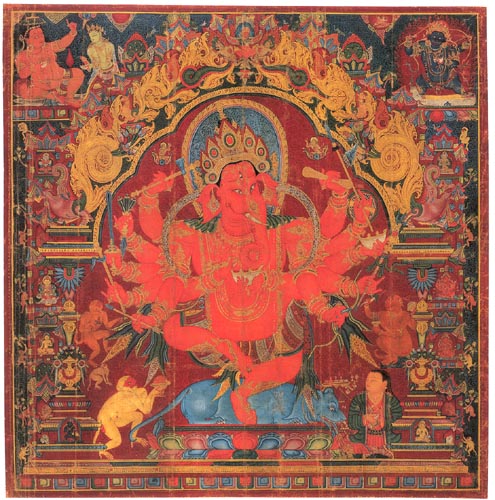
StandardThe Hindu elephant headed God Ganesha shares some interesting features with the Egyptian God Thoth, and Thoth’s Greek counterpart, Hermes.
Like Thoth, he is the inventor of writing; as the story goes, the Hindu Epic Poem the Mahabharata was dictated to Ganesha, who broke off one of his tusks to serve as a quill. Also like Thoth, he is zoomorphic – while he has the head of an elephant, Thoth has the head of an ibis, a bird native to Africa and Australia; his other form is that of a baboon.
Like Thoth’s Greek version Hermes (in turn the Roman Mercury), he is a trickster. From the fact that his sacred animal steed is a mouse, to his fabulously round belly, his appearance belies his powers – he is both the placer and the remover of obstacles.
Few practicing Hindus would start a venture, or an adventure, without seeking the…
View original post 394 more words
My Religion, My Art
GalleryBlogShare: Active Hope and the Spiral of Transformation
StandardJessica Davidson has an inspired and ever-timely post about Active Hope and the Spiral Transformation that I’m really happy to share with you.
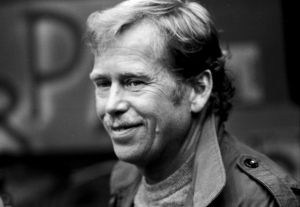
When I hear the word hope, I always think of the great writer, statesman, dissident, and transformative leader Václav Havel s insight about hope:
Václav Havel (1936-2011). Václav Havel Library Collection.
“Hope is definitely not the same thing as optimism. It is not the conviction that something will turn out well, but the certainty that something makes sense, regardless of how it turns out.”
In her post on Active Hope and the Spiral of Transformation, Jessica writes:
“Last time we introduced the idea of Active hope and the stories that shape our society. The old myths are failing and the new ones are still being shaped, so we find ourselves poised between worlds – lost, confused, and a little freaked out. It’s hard to keep up…
View original post 178 more words
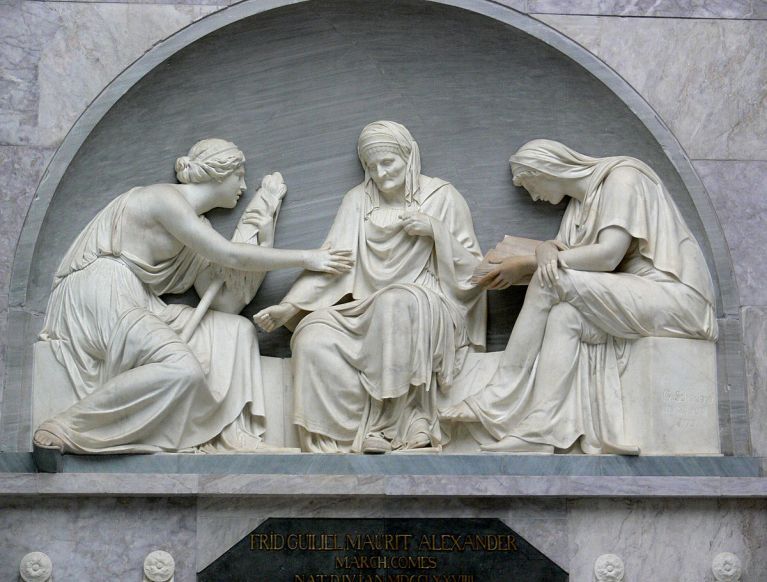
The Fates and The Weird Sisters
StandardA little more Greek mythology for you.
The other day, I wrote about the Furies, and as usual I initially confused them a little with the Fates.
View original post 237 more words
The Black Madonna
StandardSisyphus: The Art of Knowing When to Give Up.
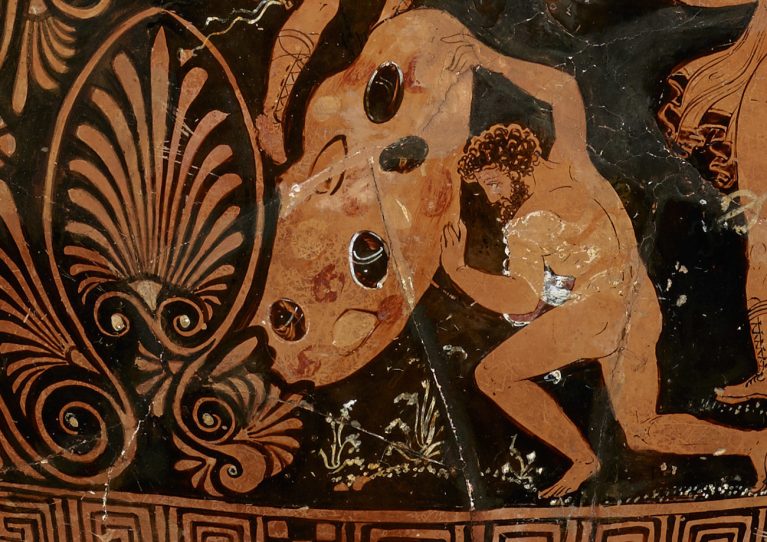
StandardSisyphus, one of the few souls whose transgressions in life were judged to be heinous enough to condemn him to eternity in the deepest darkest recess of the Greco-Roman underworld: Tartarus. Sisyphus spends his days laboring, pushing a giant heavy boulder up a singular incline, only to reach the top and have it roll back down again. Many of us know the despair that comes hand in hand with a futile task, and it made me think of the popular internet adage that defines insanity as doing the same thing over and over again and expecting a different result (this quote is most often attributed to Albert Einstein, although no-one seems to be able to provide a citation that provides any evidence to support this, so I’m going to attribute it anonymously). At what point did Sisyphus realize the futility of his task? The first time the boulder rolled back?…
View original post 744 more words
What Made Freddie Mercury the Greatest Vocalist in Rock History? The Secrets Revealed in a Short Video Essay
StandardI wasn’t always a Queen fan. Having cut my music fan teeth on especially downbeat, miserable bands like Joy Division, The Cure, and The Smiths, I couldn’t quite dig the unabashed sentimentality and operatic bombast. Like one of the “Kids React to Queen” kids, I found myself asking, “What is this?” What turned me around? Maybe it was the first time I heard Queen’s theme song for Flash Gordon. The 1980 space opera is most remarkable for Max von Sydow’s turn as Ming the Merciless, and for those bursts of Freddie Mercury and his mates’ multi-tracked voices, explosions of syncopated angel song, announcing the coming of the eighties with all the high camp of Rocky Horror and the rock confidence of Robert Plant.
As a frontman, Mercury had so much more than the perfect style and stance—though he did own every stage he set foot on. He had a voice that commanded attention, even from mopey new wave teenagers vibrating on Ian Curtis’s frequency. What makes Mercury’s voice so compelling—as most would say, the greatest vocalist in all of rock history? One recent scientific study concluded that Mercury’s physical method of singing resembled that of Tuvan throat singers.
He was able to create a faster vibrato and several more layers of harmonics than anyone else. The video above from Polyphonic adds more to the explanation, quoting opera soprano Montserrat Caballé, with whom Mercury recorded an album in 1988. In addition to his incredible range, Mercury “was able to slide effortlessly from a register to another,” she remarked. Though Mercury was naturally a baritone, he primarily sang as a tenor, and had no difficulty, as we know, with soprano parts.
Mercury was a great performer—and he was a great performative vocalist, meaning, Caballé says, that “he was selling the voice…. His phrasing was subtle, delicate and sweet or energetic and slamming. He was able to find the right colour or expressive nuance for each word.” He had incredible discipline and control over his instrument, and an underrated rhythmic sensibility, essential for a rock singer to convincingly take on rockabilly, gospel, disco, funk, and opera as well as the blues-based hard rock Queen so easily mastered. No style of music eluded him, except perhaps for those that call for a certain kind of vocalist who can’t actually sing.
That’s the rub with Queen—they were so good at everything they did that they can be more than a little overwhelming. Watch the rest of the video to learn more about how Mercury’s superhuman vibrato produced sounds almost no other human can make; see more of Polyphonic’s music analysis of one-of-a-kind musicians at our previous posts on Leonard Cohen and David Bowie’s final albums and John Bonham’s drumming; and just below, hear all of those Mercury qualities—the vibrato, the perfect timing, and the expressive performativity—in the isolated vocal track from “I Want to Break Free” just below.
Related Content:
Watch Behind-the-Scenes Footage From Freddie Mercury’s Final Video Performance
Queen Documentary Pays Tribute to the Rock Band That Conquered the World
Josh Jones is a writer and musician based in Durham, NC. Follow him at @jdmagness
More Illustrated Alice
Standard
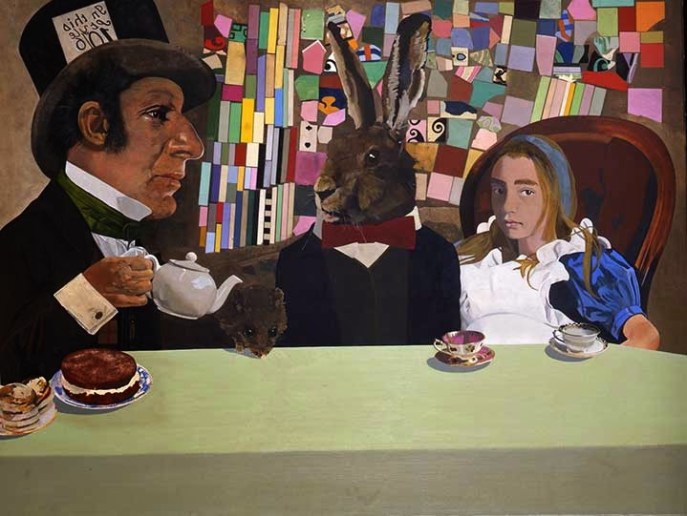
Peter Blake-Alice in Wonderland 1970
I previously wrote about the illustrations that have graced the Alice books over the years, with a special emphasis on the Surrealists (see my post Illustrating Alice). However this generated such a large response from readers that I soon realised that I had barely scratched the surface, as Alice has been published in thousands of editions in over a hundred languages, with a myriad of differing artistic interpretations worldwide and therefore a follow up post was very much in order.
Several Australian readers mentioned the paintings of Charles Blackman featuring Alice which certainly possess intensity and verve. Also noted was another artist from the Antipodes, (or the Antipathies as Alice called the Land Down Under during her descent down the rabbit hole), Donna Leslie and her brilliant illustrations for the bilingual adaption Alitji In The Dreamtime in Pitjantjatjara and Australian English, that drew heavily on…
View original post 182 more words


Václav Havel (1936-2011). Václav Havel Library Collection.
You must be logged in to post a comment.