
Source: Jung had conversations with his soul …
Month: March 2017
Jung had conversations with his soul …
Standard

In September 1916, Jung had conversations with his soul that provided further elaboration and clarification of the cosmology of the Sermones. September 25:
[Soul]: “How many lights do you want, three or seven? Three is the heartfelt and modest, seven the general and encompassing.”
[I:] “What a question! And what a decision! I must be true: I think I would like seven lights.”
[Soul:] “Seven, you say? I thought so. That has broad scope-cold lights.”
[I:] “I need cooling, fresh air. Enough of this stifling mugginess. Too much fear and not enough free breathing. Give me seven lights.”
[Soul:] “The first light means the Pleroma. / The second means Abraxas. / The third the sun. / The fourth the moon. / The fifth the earth. / The sixth the phallus. / The seventh the stars.”
[I:] “Why were there no birds, and why were the celestial mother and the sky…
View original post 565 more words
Carl Jung and Philo the Jew
StandardSource: Carl Jung and Philo the Jew
Carl Jung and Philo the Jew
Standard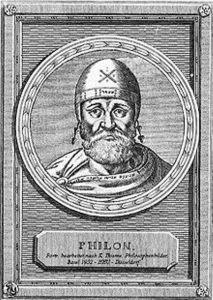
Dr. Jung was greatly influenced by the writings of Philo the Jew [Born 20 B.C.E] and mentions him in both his Collected Works and the Red Book. Philo is believed to have taught of the “Logos” and is said to have known John of the New Testament who also wrote about the Logos.
One of Philo’s most famous work is around 20 pages long entitled “On the Creation” wherein he mentions The image of God in Man, The Archetypal World, The importance of the number 4, The relationship of God, Soul, Man, Mind as being the essence of God and Man.
Below is an excerpt from “On the Creation” followed by a link to the entire text:
So then after all the other things, as has been said before, Moses says that man was made in the image and likeness of God. And he says well; for nothing that is…
View original post 478 more words
Christiana Morgan and Carl Jung
Standard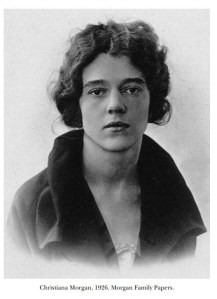
Christiana Drummond Morgan (born Christiana Drummond Councilman) (1897–1967) was a lay psychoanalyst at Harvard University best known for her work co-authoring the Thematic Apperception Test, one of the most widely used projective psychological test.
She administered one of the earliest versions of the test to one of the first diagnosed anorexic patients in Boston. She is mostly remembered as the lover of American psychologist Henry Murray.
The nude portrait statue of Christiana commissioned by Murray from Gaston Lachaise is now owned by the Governor’s Academy, Byfield, Massachusetts. Christiana committed suicide at 69 years of age. There is some controversy over her death related to Henry Murray’s conflicting accounts, but it is mostly considered a suicide.
Christiana was born in Boston, Massachusetts on October 6, 1897. She attended Miss Winsor’s school for girls in Boston from 1908 to 1914 and later a boarding school in Farmington, Massachusetts. She came of age…
View original post 343 more words
The Sympathetic Nervous System [Anima Mundi] Mother of the Brain
StandardThe Sympathetic Nervous System [Anima Mundi] Mother of the Brain
Standard
[The Sympathetic Nervous System [Anima Mundi] is the Mother of the Cerebrospinal System [Brain.]
The “vestigial” sympathetic nervous system, an apparently fortuitous tangle of ganglionic nodes that regulate the vegetative functions of the body in an astoundingly purposive way, becomes the matrix of the cerebrospinal system, whose crowning miracle, the brain, seems to our fascinated gaze the controller of all bodily processes.
Nay more: the sympathetic system is, for Schleich, the mysterious “cosmic nerve,” the true “ideoplast,” the original and most immediate realization of-giving World Soul, and, ultimately, the architect of the brain, this newest achievement of the pre-existent a body-building and body-sustaining World Soul, which was there before mind and body came into existence.
The Hyliaster of Paracelsus is thus stripped of its unfathomable creative secret. Once again the solidity and tangibility of matter, so fervently believed in and so convincing to the senses, dissolve into Maya, into a…
View original post 169 more words
To many death seems to be a brutal and meaningless
StandardTo many death seems to be a brutal and meaningless
Standard
To many death seems to be a brutal and meaningless end to a short and meaningless existence. So it looks, if seen from the surface and from the darkness. But when we penetrate the depths of the soul and when we try to understand its mysterious life, we shall discern that death is not a meaningless end, the mere vanishing into nothingless–it is an accomplishment, a ripe fruit on the tree of life. Nor is death an abrupt extinction, but a goal that has been unconsciously lived and worked for during half a lifetime.
In the youthful expansion of our life we think of it as an ever-increasing river, and this conviction accompanies us often far beyond the noonday of our existence. But if we listen to the quieter voices of our deeper nature we become aware of the fact that soon after the middle of our life the soul…
View original post 65 more words
 lampmagician
You must be logged in to post a comment.