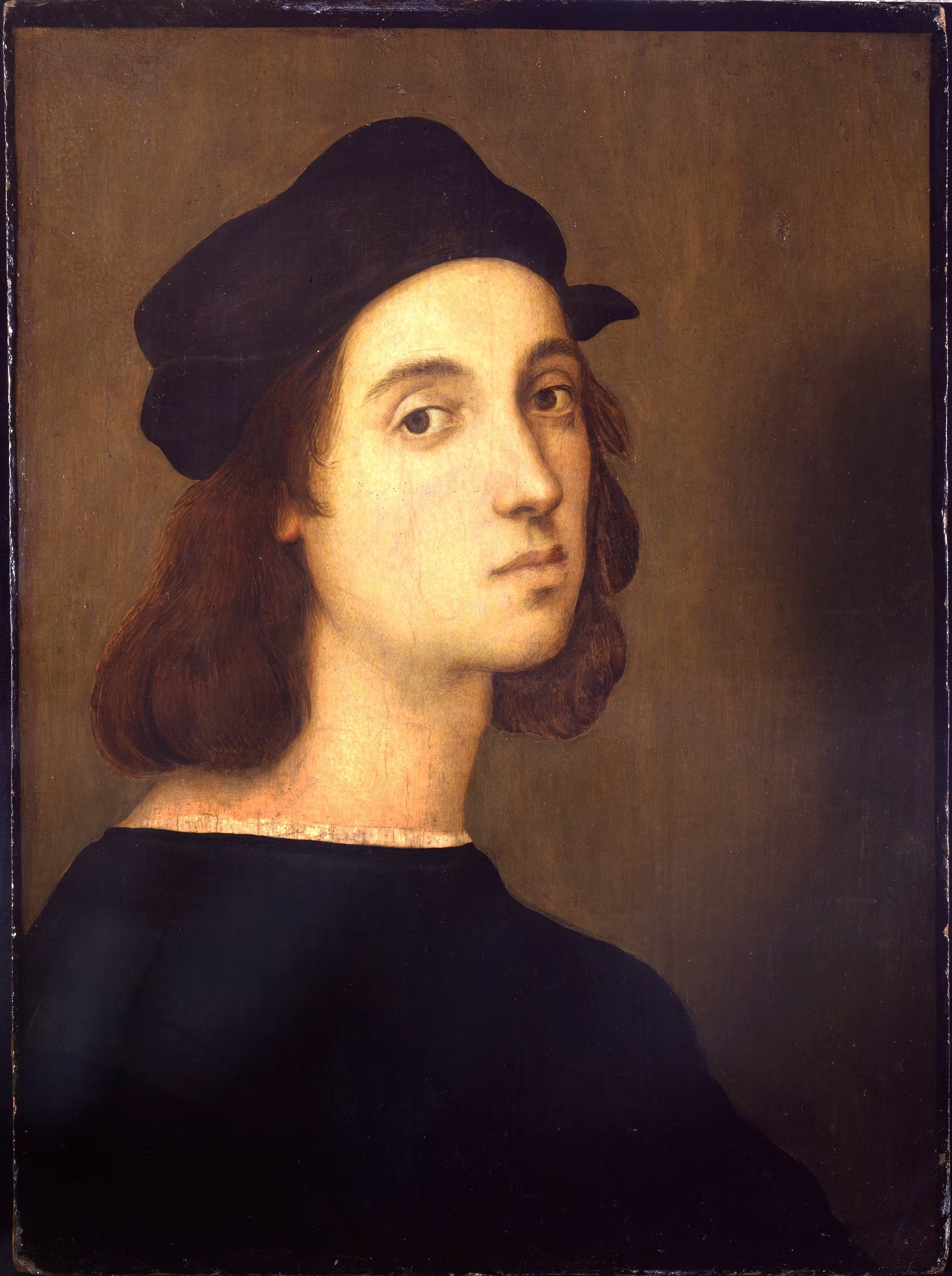
Raphael’s self-portrait | Uffizi GalleriesSelbstbildnis des Leonardo da Vinci Leonardo da Vinci, um 1512 Biblioteca Reale, TurinPortrait by Daniele da Volterra, c. 1545
Raffaello Sanzio, Leonardo da Vinci, and Michelangelo are legendary figures of the Renaissance, each contributing uniquely to the era’s art and thought. Raffaello is celebrated for his balanced compositions and perspective, especially in The School of Athens, embodying ideals of knowledge and beauty. Leonardo da Vinci, a true polymath, excelled in painting, science, and anatomy, with works such as the Mona Lisa and The Last Supper showcasing his innovative methods and deep understanding of human emotion. Michelangelo, renowned for his sculptures and paintings, created masterpieces such as the Statue of David and the Sistine Chapel ceiling, which reflect his keen insight into human anatomy and emotion. These artists collectively represented the Renaissance spirit, merging art, science, and philosophy, and their enduring legacies continue to inspire us.
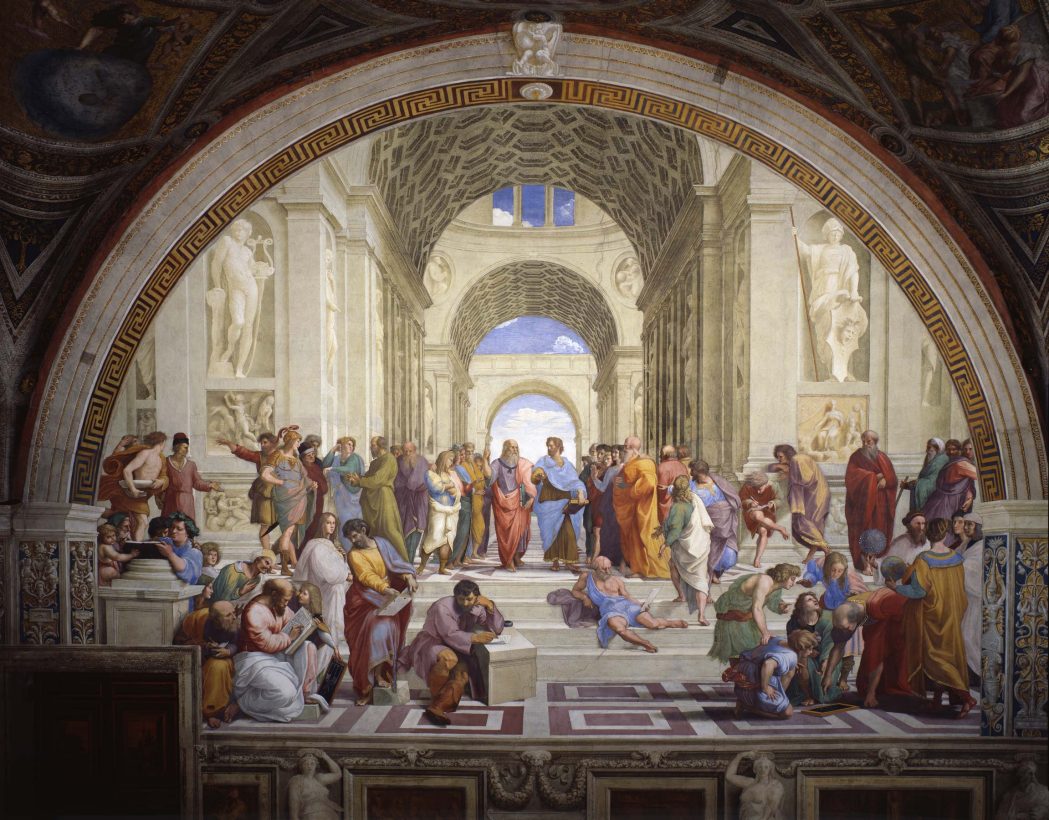
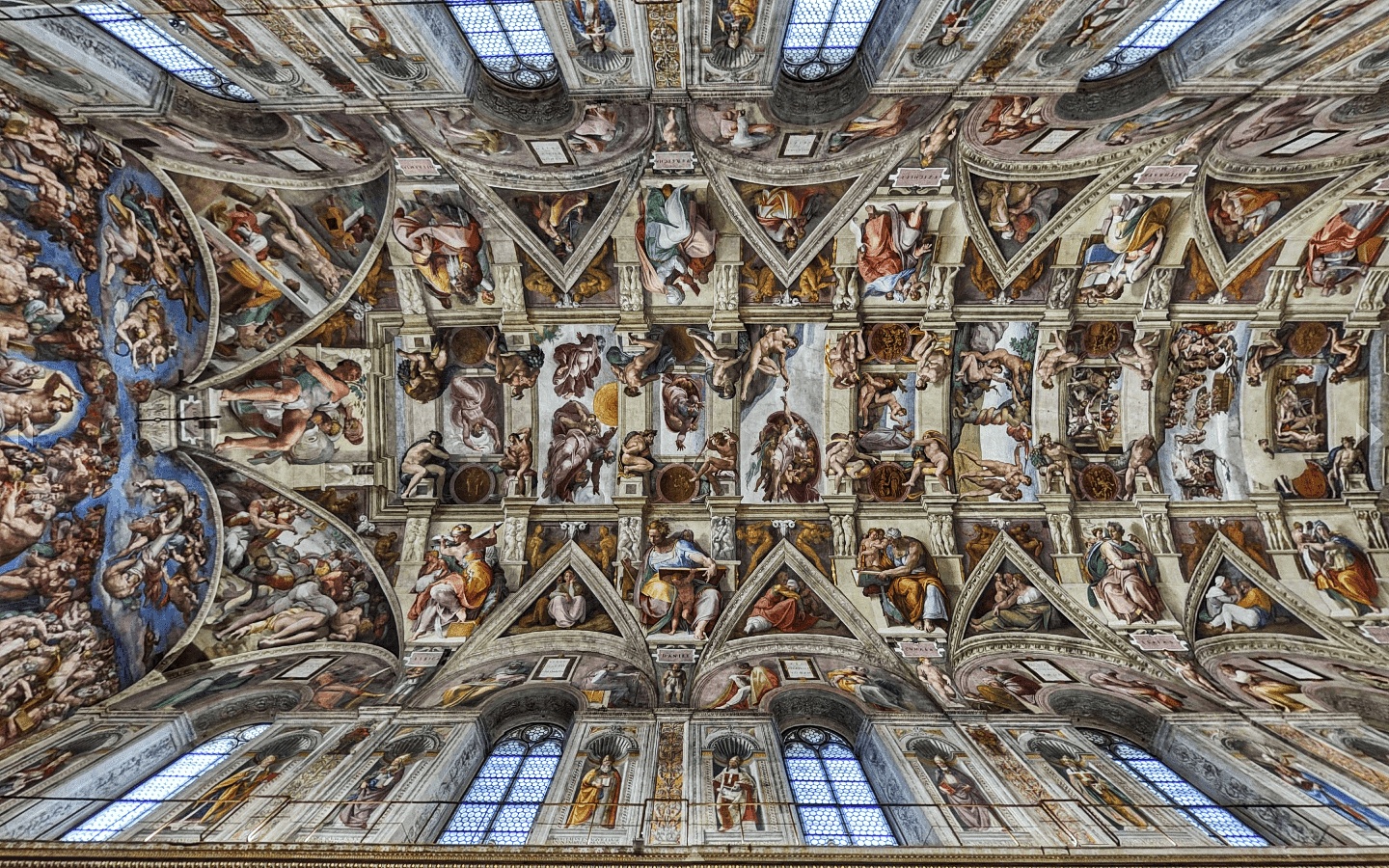
But what is the most interestingly depicted in art history during the Renaissance? Two masterworks tell their own story: Raffaello’s ‘School of Athens’ and Michelangelo’s ‘Sistine Chapel ceiling.’
Indeed, Leonardo da Vinci’s Last Supper should not be overlooked, as it is a Renaissance masterpiece that captures the moment after Jesus reveals that one of his apostles will betray him. Raffaello’s The School of Athens also employs one-point perspective, similar to da Vinci’s method: the composition is centred on a single vanishing point with all lines converging on Jesus, highlighting him as the focal point. However, it’s a different story!
I previously covered that topic, mainly from a philosophical angle rather than focusing on developing the art self. Now, let’s explore this masterpiece creatively and artistically.
Raffaello’s masterpiece, The School of Athens, exemplifies the Renaissance by highlighting its core principles of knowledge, philosophy, and beauty. This famous fresco depicts a gathering of history’s greatest thinkers, including Plato and Aristotle, each representing distinct philosophical perspectives. Plato, resembling Leonardo da Vinci, represents idealism and the importance of ideas, while Aristotle stands for empirical observation. Figures like Socrates, Ptolemy, and Euclid enrich the discussion. Raffaello’s masterful use of perspective draws viewers into a vibrant intellectual hub of the Renaissance. The influence of Michelangelo is evident, demonstrating outstanding artistic talent. The School of Athens celebrates individual genius and the collaborative spirit of the Renaissance, a time when art, science, and humanism thrived.
Raffaello’s ‘School of Athens’ and Michelangelo’s ‘Sistine Chapel ceiling’ are iconic Renaissance masterpieces. ‘School of Athens’ portrays philosophers amidst impressive architecture, symbolising art, philosophy, and science.
Michelangelo’s ceiling is renowned for dramatic scenes like ‘Creation of Adam’, showcasing his skill and religious themes.
Both works are culturally and historically significant, reflecting Renaissance intellectual and artistic progress.
Here’s a video titled “How to read ‘The School of Athens’ – a triumph of Renaissance art” from Aeon, a recommended site. In Great Art Explained, UK curator and video essayist James Payne explores Raphael’s The School of Athens (1509-11), a Renaissance icon. He highlights its location in the Pope’s private Vatican library, symbolising philosophy alongside theology, poetry, and law. Payne describes how Raphael’s composition merges Classical and Christian ideas, showing their interconnectedness in the quest for truth.
I hope you enjoy it and wish everyone a wonderful weekend. 🤗💖
Ancient Egyptian history is undeniably captivating, and exploring it with a hint of femininity makes it even more alluring.
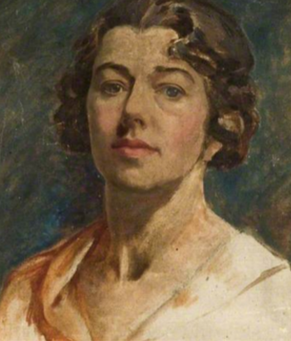
By Myrtle Florence Broome (Self Portrait). Original publication: unknown immediate source- Wiki. Fair use!
Myrtle Florence Broome (22 February 1888 – 27 January 1978) was a British Egyptologist and artist renowned for her illustrated collaboration with Amice Calverley on the Temple of Seti I at Abydos, as well as her paintings that captured the essence of Egyptian village life during the 1920s and 1930s. She was born on 22 February 1888 in Muswell Hill, London, to Eleanor Slater and Washington Herbert Broome. Broome studied art at a school in Bushey founded by Sir Hubert von Herkomer. From 1911 to 1913, she attended University College London, where she earned a Certificate in Egyptology under the guidance of Sir Flinders Petrie and Margaret Murray.
I was pleasantly surprised to come across this old post from the égyptophile site, and am excited to share this beautiful story about two women and their love for ancient Egyptian magic with you.
Therefore, I included the slogan of the Iranian women’s and men’s revolution, #WomanLifeFreedom, in this post, as it symbolises not only the struggle for freedom in Iran but also resonates worldwide.
Florence Broome, Egyptologist and Painter London, February 22, 1888 – Bushey, January 27, 1978 – Self-portrait on the right and, on the left, a copy of her extraordinary work at Abydos: “King Sethos receives life and dominion from the goddess Saosis” (detail)
Along with Nina de Garis Davies, Marcelle Baud, and Amice Calverley, Myrtle Florence Broome is undoubtedly one of the most gifted copyists to have worked in Egypt during the first half of the 20th century.
Myrtle was born in London’s Muswell Hill neighbourhood on February 22, 1888, into a family of music book publishers. However, it was in Bushey, Hertfordshire, that she spent much of her life, and it was there that she studied at the Beaux-Arts, developing her talents for drawing and painting.
In 1911, she joined University College London, where she studied Egyptology under the guidance of two eminent professors, Flinders Petrie and Margaret Murray, who would become the first female Egyptologists.
During the two years of classes taught by Margaret Murray, what she ironically called “the gang” was formed: it included Myrtle Broome, Guy and Winfried Brunton, Reginald (Rex) Engelbach, and Georginan Aitken, all of whom went on to have distinguished careers in Egyptology (Rex would become curator of the Cairo Museum of Antiquities).
Margaret Murray’s influence on Myrtle was undoubtedly significant, and it seems likely that she encouraged her to develop and exploit her artistic talents professionally.
Myrtle Florence Broome (left) and Amice Calverley posing in front of their “copies”
In 1927, Myrtle was at the Qau el-Kebir site, where she conducted epigraphic surveys of Middle Kingdom tombs and copied their scenes.
In 1929, she was recruited by the Egypt Exploration Society and joined Amice Calverley at Abydos. This marked the beginning of a fruitful, beautiful, and enriching collaboration that would culminate in a deep and lasting friendship.
They will spend eight seasons together, eight excellent seasons in the temple and the Osereion. The task is complex, and the concentration is extreme because recording the scenes requires very particular attention, with no room left for personal interpretation. All this in rather “primitive” working conditions, sometimes perched on ladders more than 10 m above the ground and in often oppressive heat! The Abydos team is very quickly enriched by a Canadian Egyptologist and an Austrian photographer who also do excellent work, while good humour reigns.
James Henry Breasted was at a loss for words to praise their talent and admitted that it seemed impossible to find more expert and brilliant women.
The result was published in four volumes edited between 1933 and 1958 by the Egypt Exploration Society of London and the Oriental Institute of the University of Chicago, with the financial support of John D. Rockefeller Jr. A remarkable work, of unparalleled quality, and—but?—so beautiful that it remained, in a way, almost confidential for fear of damaging the plates!
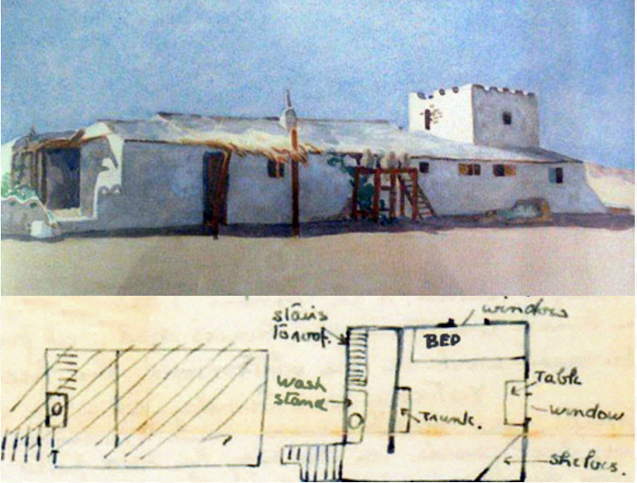
Myrtle Florence Broome’s house during her work at Abydos
The time spent in Abydos was undoubtedly one of the happiest periods of Myrtle’s life. In the small, low-rise house she lived in—and which we can see in one of her paintings—she had: “a housekeeper whom she nicknamed Nannie and a villager, called Sadiq, who served as her advisor, bodyguard, and personal assistant. Life was frugal, however, and Myrtle took great care not to exceed their allotted budget.”
Accompanied by Sadiq, Amice, and Myrtle, they took several short trips in Amice’s car to the Red Sea, Kharga, and Dakhla. Myrtle’s paintings vividly depict the desert’s colours, with shades of pink, brown, and subtle hints of golden beige.
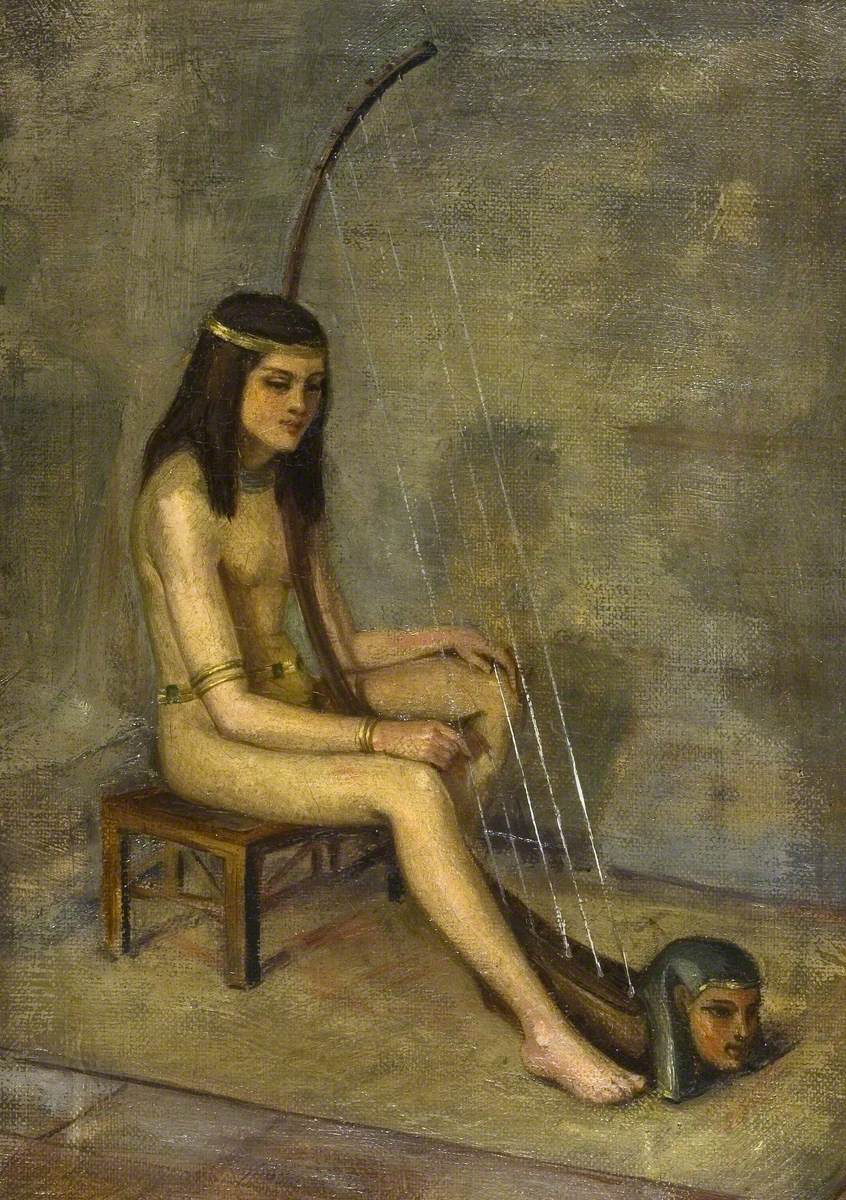
Amice Calverley on a painting by Myrtle Florence Broome, created during one of their many “expeditions” to Egypt (c) Bushey Museum and Art Gallery; Supplied by The Public Catalogue Foundation
We feel that she loved these landscapes infinitely, that she was imbued with their colours and their light. One of her paintings is particularly touching and gives a beautiful idea of what their escapades must have been like: we see Amice sitting on a mat, near her car, taking notes in the middle of the desert! We must put ourselves in context: these two women were adventurers and pioneers!
Myrtle Florence Broome, “The Pharaoh Seti I worshipping the god Osiris from the Temple of Seti I at Abydos”
Their joint mission to Abydos ended due to World War II, but they remained close until Amice’s death in April 1959.
During these seasons away from home, Myrtle wrote many letters to her family; they constitute a beautiful testimony to her life, her perspective on things, and her way of sharing them. Some of her correspondence has been deposited at the Griffith Institute in Oxford.
Myrtle Florence Broome and her dogs at Abydos
From Egypt, she brought back not only paintings, but also photographs from which one can only realise that, in addition to her immense talents and her incredible intelligence, she was also a charming woman. Her very successful self-portrait confirms this, showing us a regular face with a certain nobility in its bearing and an expressive, frank gaze. Of her love life, we know little except for a barely sketched romance with a policeman, which she immediately renounced, convinced that “in any case, it could not have worked.”
Upon her return to England in 1937, she apparently devoted herself entirely to her parents, and especially to her ailing father…
Myrtle “passed away” on January 27, 1978… And suppose you still want to know more about this artist. In that case, you can consult her archives on the Griffith Institute website or refer to the book, published in November 2020 by AUC Press: “An Artist in Abydos: The Life and Letters of Myrtle Broome” by Lee Young, with a preface by Peter Lacovara.
Sources : M.L. Bierbrier, editor, “Who Was Who in Egyptology”, third revised edition, London, 1995. Calverley, Amice Mary (1896-1959)” “Obituary notice: Myrtle Florence Broome (1887-1978)”, by John Ruffle “The Temple of King Sethos I at Abydos copied by Amice M. Calverley, with the Assistance of Myrtle F. Broome and edited by Alan H. Gardiner”, London: The Egypt Exploration Society; Chicago: University of Chicago Press, 1933-58, Vols. 1-4 “The Life of Margaret Alice Murray: A Woman’s Work in Archaeology”, Kathleen L. Sheppard “Amice Calverley”, Journal of Egyptian Archaeology 45 (1959),85-87, Janet Leveson-Gower
I must confess I dream of such an encounter with a divine goddess, and I should not be a king!
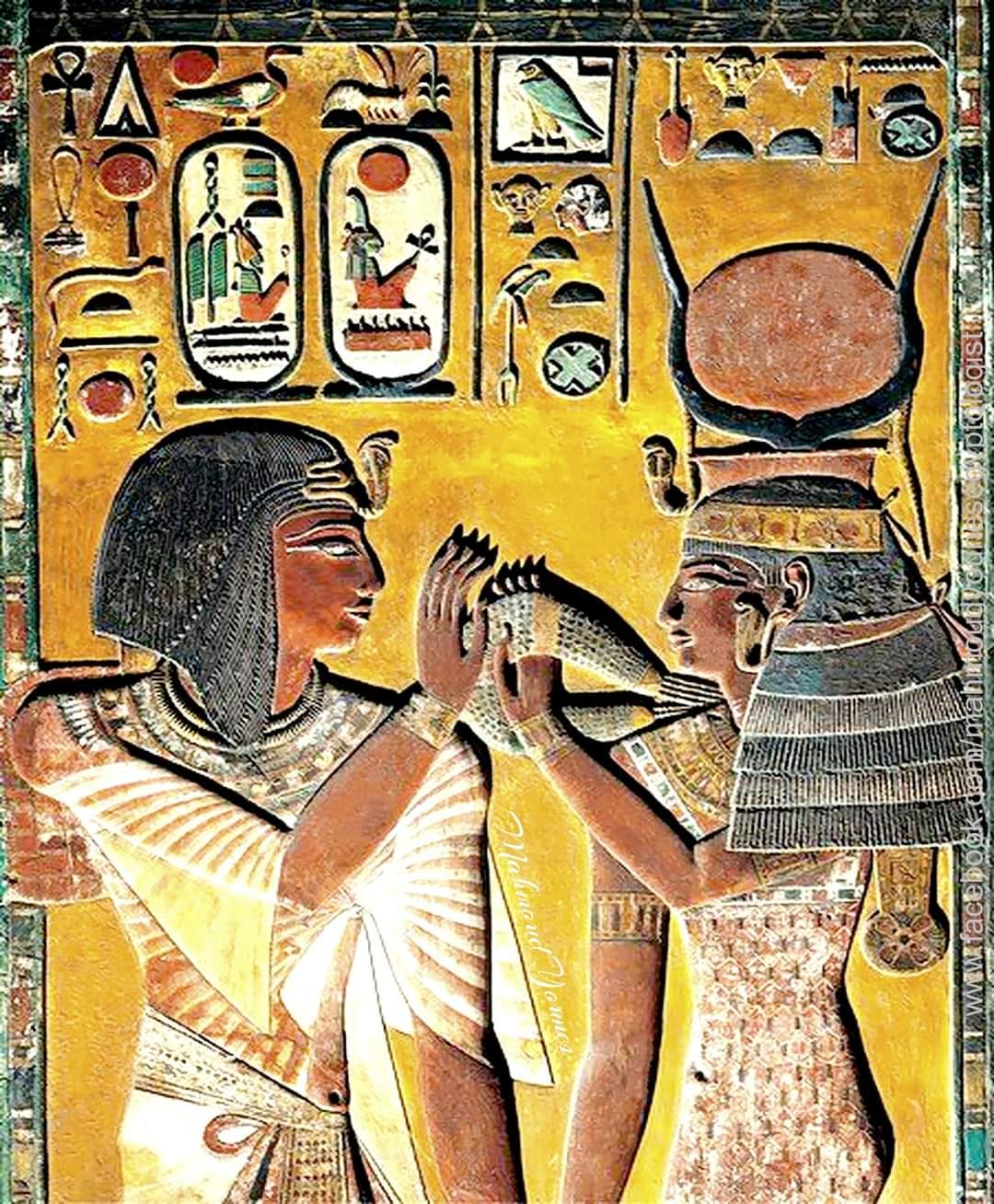
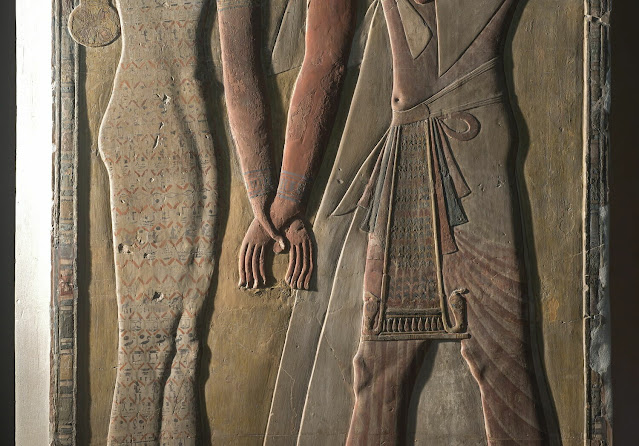
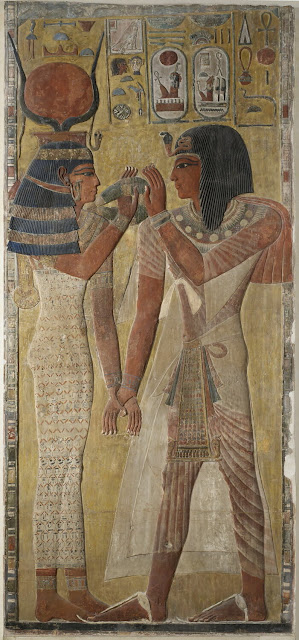
This relief adorns the well-preserved tomb of King Seti I (KV17) in the Valley of the Kings. Hathor, Lady of the West, welcomes Seti and presents her menat necklace as a symbol of protection. Her wig is adorned with cow horns, her sacred animal, and a solar disk indicating her status as Ra’s daughter. The hieroglyphic text above identifies her using a falcon symbol in a temple, reading Hwt-Hr, meaning ‘House of Horus’.
The Goddess Hathor and Seti I painted reliefs on a pillar in Seti I’s tomb, Thebes, New Kingdom, Dynasty XIX, Egypt.
We read a splendid description of this enchanting and divine encounter by the exceptional Marie Grillot. Enjoy!
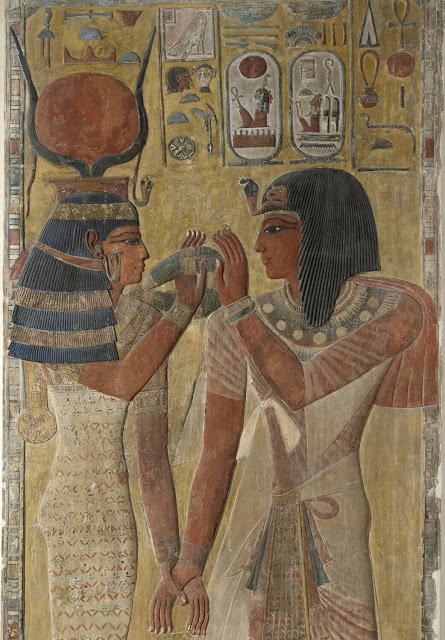
Hathor and Seti I: a divine and royal face-to-face!
What intensity, what symbiosis in this divine and royal face-to-face! This “painting” of fine painted limestone, 226.5 cm high and 105 cm wide, brings together the goddess Hathor and Seti I under the sign of the sky – and elegance. As Christiane Ziegler so aptly points out in “Ancient Egypt at the Louvre”: “The scene is treated with the refinement characteristic of the time of Seti I: careful bas-relief, the richness of warm colours, transparency of pleats, the perfection of details for the stone-encrusted front or the pearl net adorning the divine tunic whose motifs take up the names of Seti I.”
This dress, punctuated with geometric patterns and bordered with alternating-coloured rectangular braid, magnificently highlights the slender body of Hathor, “patron saint of the Theban necropolis.” Ravishing finery adorns her neck and limbs: a gorget, bracelets, armillae, periscelides, all in perfect taste. Her earring caresses her cheek in the shape of an upright serpent (not without announcing the one Nefertari wore in several representations of her tomb). Her face, of absolute purity, is illuminated by a stretched eye, surrounded by kohol and surmounted by an eyebrow which corresponds precisely to the stretching of the line of eyeshadow… Her “ruffled” vertically striated wig is available in two tones. It is enhanced with a gold-coloured headband above the forehead and, a little lower down, with this red ribbon tied on the nape of the neck so particular to goddesses. Her head is surmounted by a simple mortar in the centre, which is stuck in two cow horns enclosing the solar disk. On the other side stretches a cobra, whose head can be seen on the front and the tail on the back.
Seti I, son of Ramses I, the second king of the 19th Dynasty, who reigned over the Dual Land for eleven years, is depicted in full ceremonial dress. His magnificent black wig is encircled by the rearing cobra with its coiled body. His feet are shod with gold sandals. His clothing is made of the finest linen, and his loincloth features a superb front. Bordered with ribbons are composed of vertical bands with a herringbone pattern and ends with a frieze surrounded by two cobras.
His right arm is stretched along his body, and his hand clasps the goddess’s left hand. “One will notice the very Egyptian symmetry of the composition and the unusual gesture of the joining hands” (Christiane Ziegler, “Ancient Egypt at the Louvre”). His left arm is bent, and his hand thus reaches the height of Hathor’s, who, making the same gesture, extends her menat necklace towards him as a sign of protection.
“The menat is a necklace with a counterweight, both an ornament and a musical instrument. Specific to the goddess Hathor, it served to transmit her fluid. The counterweight is clearly associated with the idea of rebirth and transition rites, while the gesture is clearly jubilee,” analyze Christiane Ziegler and Jean-Luc Bovot in “Art and Archaeology, Ancient Egypt.” This magnificent relief comes from the entrance to the fourth corridor (the transition point to the underworld) of the pharaoh’s tomb. Giovanni Battista Belzoni unearthed it in the Valley of the Kings on October 18, 1817. It extends 137 m into the Theban mountain via seven long corridors serving 10 rooms! It is certainly one of the most beautiful and “completely” decorated in the royal necropolis. C’est aussi l’une de celles où la qualité des peintures atteint la plus haute perfection… Le découvreur est subjugué par la beauté de ce qui s’offre à ses yeux : “Je jugeai, par les peintures du plafond et par les hiéroglyphes en bas-relief que l’on distinguait à travers les décombres que nous étions maîtres de l’entrée d’une tombe magnifique”. La clé de lecture des hiéroglyphes n’étant pas encore résolue, il est alors impossible de savoir à qui appartient cette demeure d’éternité. Ainsi, dans un premier temps sera-t-elle appelée “tombe Belzoni” ou encore “tombe de l’Apis”, en référence à la “carcasse de taureau embaumé avec de l’asphalte” qui y fut trouvée. C’est bien plus tard qu’elle sera attribuée au père de Ramsès II puis référencée KV 17.
With the invaluable help of Alessandro Ricci, Giovanni Battista Belzoni documented the most beautiful scenes from the hypogeum. He exhibited them, starting in May 1821, at the Egyptian Hall Piccadilly in London and then 1822 at the Chinese Baths in Paris.
Jean-François Champollion, who was among the visitors, was apparently left “speechless with admiration” when he visited the “larger-than-life main room”… It was at about the same time, on September 14, 1822, that the brilliant code-breaker exclaimed, “I HAVE MY CASE”! After years of work, he had just understood the extremely complex principle of Egyptian writing, which was at once ideographic, alphabetic and phonetic… On September 27, in his famous “Letter to Mr. Ironside”, he presented the results of his research to the Academy of Inscriptions and Belles-Lettres.
Seven years later, in 1829, while he was in the Valley of the Kings with the Franco-Tuscan Expedition, he could finally enter the tomb… “In the tomb of Sety I, J.-Fr. Champollion and I. Rosellini could not resist, faced with the beauty but also the risk of seeing them amputated or destroyed, to have two painted bas-reliefs detached from the embrasures of a corridor door, which would be shared, upon their return, by the Louvre (B7/N124) and Florence (inv. no. 2468) museums. These panels, of extraordinary finesse, represent the king standing in the company of the goddess Hathor,” specifies Christian Leblanc in his “Regards croisés sur la civilisation égyptienne”. In her “Champollion”, Karine Madrigal recalls that: “To justify this act, Champollion explains to his friend Dubois that he ‘dared, in the interest of art, to carry a profane saw into the coolest of all the royal tombs of Thebes'”…
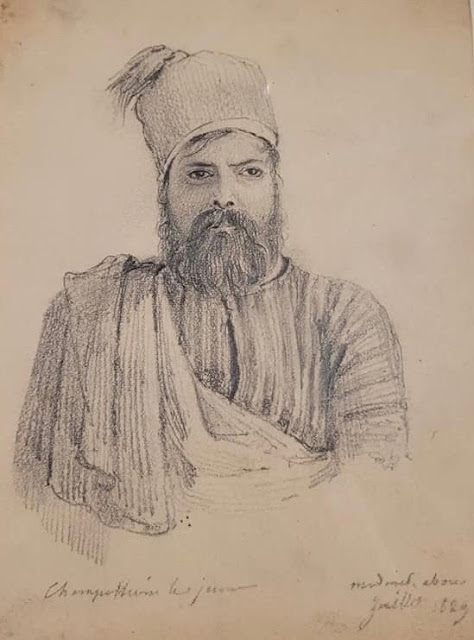
Jean-François Champollion, “The Younger,” decipherer of hieroglyphs, founder of Egyptology (Figeac, December 23, 1790 – Paris, March 4, 1832) Portrait depicting him in Egyptian dress, painted by Salvatore Cherubini in Medinet Habu, July 1829 Acquired by the Champollion Museum in Vif in June 2022
This is how this bas-relief will take the “path” to France. Jean-François Champollion will personally oversee its transport and loading in Alexandria. “On November 8, the twenty or so crates of antiquities and the sarcophagus intended for the Charles X Museum were placed in a safe place in the holds of the Astrolabe” (Alain Faure, “Le savant déchiffré”). Under the command of Verninac de Saint Maur, the corvette left the port on December 6, 1829, to sail towards the French coast. It docked in Toulon on December 23. The corvette transported the precious objects to Le Havre, where a barge finally took them to the great Parisian museum via the Seine.
Relief of Seti I and Hathor https://collections.louvre.fr/ark:/53355/cl010009693 Jean-François Champollion, Monuments of Egypt and Nubia: plates / based on drawings executed on site under the direction of Champollion the Younger, and the handwritten descriptions he wrote, published under the auspices of Mr Guizot and Mr Thiers, Ministers of Public Instruction and the Interior, by a special commission composed of Messrs. Silvestre de Sacy, Letronne, Biot, Champollion-Figeac, Paris, Didot, 1845, plate 251 Champollion the Younger, Letters Written from Egypt and Nubia in 1828 and 1829, Publisher Didier, Paris, 1868 http://gallica.bnf.fr/ark:/12148/bpt6k103771z/f345.item.r=septembre%201829.texteImage Jacques Vandier, Summary Guide to the Louvre Museum, The Department of Egyptian Antiquities, Éditions des Musées Nationaux, Paris, 1961, p. 20 Bertha Porter, Rosalind L.B. Moss, Topographical Bibliography of Ancient Egyptian Hieroglyphic Texts, Reliefs, and Paintings, 1.2, The Theban Necropolis. Royal Tombs and Smaller Cemeteries, Oxford, At the Clarendon Press, 1964, p. 539 http://www.griffith.ox.ac.uk/topbib/pdf/pm1-2.pdf Giovanni Battista Belzoni, Journey to Egypt and Nubia, Pygmalion, 1979 Jean Lacouture, Champollion, A Life of Enlightenment, Grasset, 1988 Jean-Jacques Fiechter, Harvest of the Gods, Julliard, 1994 Guillemette Andreu, Marie-Hélène Rutschowscaya, Christiane Ziegler, Ancient Egypt at the Louvre, Louvre Museum, Hachette, Paris, 1997, p. 137-140 Guillemette Andreu, Patricia Rigault, Claude Traunecker, The ABCs of Ancient Egypt, Paris, Flammarion, 1999, p. 51 Christiane Ziegler, Sophie Labbé-Toutée, Pharaoh, Exhibition Catalogue, Paris, Arab World Institute, 15-10-2004 – 10-4-2005, Paris, Flammarion, 2004, p. 261 Alain Faure, Champollion, the Scholar Deciphered, Fayard, 2004 Christiane Ziegler, Jean-Luc Bovot, Small Manuals from the École du Louvre, Art and Archaeology, Ancient Egypt, École du Louvre, Réunion des Musées Nationaux – Grand Palais, 2011, p. 227 Sylvie Guichard, Jean-François Champollion, Descriptive Notice of the Egyptian Monuments of the Charles X Museum, Paris, Louvre Editions – Editions Khéops, Paris, 2013, p. 51 Christian Leblanc, Crossed Perspectives on Egyptian Civilization, Selected Pages of Archaeology and History, L’Harmattan, Paris, 2024 https://www.editions-harmattan.fr/catalogue/livre/regards-croises-sur-la-civilisation-egyptienne/76432 Karine Madrigal, Champollion, Ellipses, 2024 Theban Mapping Project – KV 17 – Sety I https://thebanmappingproject.com/tombs/kv-17-sety-i
Today, I want to write about one of my favourite topics: women or femininity. And, of course, about how much losses the men have caused because of this selfish arrogance! Maybe some male readers are annoyed by my pronunciation, but it’s the truth, and it’s never too late to wake up. De facto, men are often subconsciously inspired by women, even if they don’t realize it consciously.
The other day, I watched a film, Little Women. It is a 2019 American coming-of-age period drama film written and directed by Greta Gerwig. The story is based on the 1868 novel by Louisa May Alcott and revolves around the lives of four sisters – Meg, Jo, Beth, and Amy – who lived in Concord, Massachusetts, during the late nineteenth century. It was somehow long-breathing, I mean not dull, but too much time wasted in between! In the matter of movies, I have an even better suggestion: Elisa & Marcela— a 2019 Spanish biographical romantic drama film directed by Isabel Coixet. It is about the first same-sex marriage in Spain, although it shows the subsequent suffering.
What hit me in the eye by the latter one was the man’s rules, which preside over the world: Women were not to have any ideas, any self-decision, even they had no right to earn money; they only might accept “some limited” presents! I turned around on the couch twice when I heard it! How fool can the man be? I think it is the one-million-dollar question that nobody can really answer!?
After making a brief statement, I have a story to share with all the men here, including myself. The story aims to inspire and enlighten us all. The pictures and versions we see around us are not created by men but by women who possess incredible creativity. They are the ones who give birth to our offspring, and it’s only fitting that we acknowledge and appreciate their outstanding contributions. They teach us to keep our eyes open!
André Breton, a prominent figure of the Surrealist movement and the author of its first manifesto, once wrote that “the problem of woman is the most marvellous and disturbing problem in all the world.” However, his statement was not referring to the injustice and lack of recognition experienced by his female colleagues.
Marquee Surrealists like Breton, Dalí, Man Ray, Magritte, and Ernst relegated the women in their circle to the role of muses and symbols of erotic femininity rather than acknowledging them as artists in their own right.
During a recent retrospective at the Museum of Modern Art, Méret Oppenheim stated in Behind the Masterpiece’s introduction to “The Fantastic Women of Surrealism” that it was the female Surrealists’ responsibility to break free from the limited roles that society and their male counterparts had imposed on them.
A woman isn’t entitled to think to express aggressive ideas.
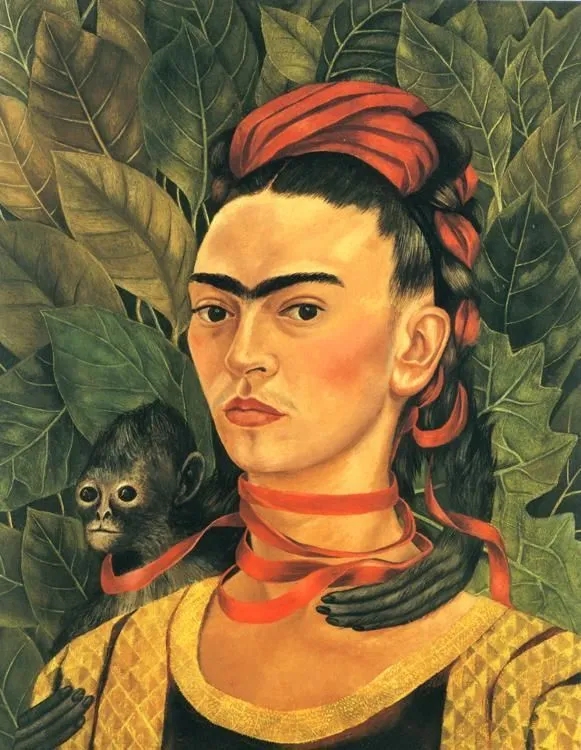
The first artist featured on Behind the Masterpiece needs no introduction. Frida Kahlo is undoubtedly one of the most recognized female artists in the world. She was a woman who lived by her own rules, creating poetic and often raw imagery as she explored her own physical and mental pain:
I paint self-portraits because I paint my own reality. I paint what I need to. Painting completed my life. I lost three children, and painting substituted for all of this… I am not sick; I am broken. But I am happy to be alive as long as I can paint.
Right: Papilla Estelar (Star Maker) (1958) Left: Remedios Varo, La Ilamada (The Call), 1961. Courtesy of the National Museum of Women in the Arts.
The Art Institute of Chicago is currently exhibiting a collection featuring Remedios Varo, who, along with Leonora Carrington, according to the National Museum of Women in the Arts, were considered the “femmes-enfants” or “child-women” to the much older and renowned male artists in their lives.
Their friendship outlasted their romantic attachments to Surrealist luminaries Ernst and the poet Benjamin Péret, and Carrington honoured it in her novel, The Hearing Trumpet.
Leonora Carrington Self-portraitHallucination (Homage to surrealist artist Leonora Carrington)
Carrington’s work is about tone and colour, and Varo’s is about line and form.
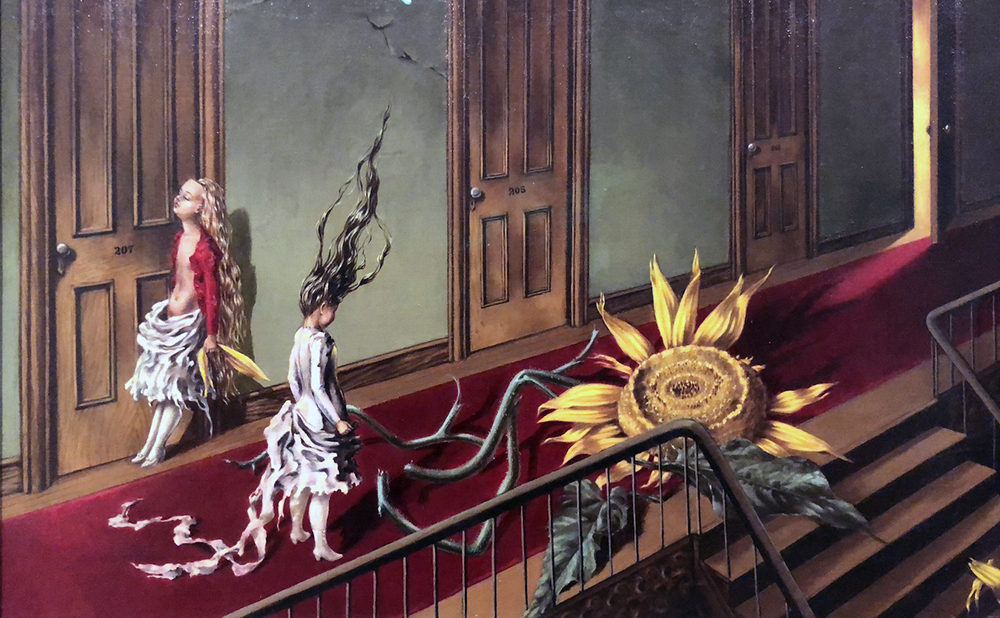
The artistic identity of Dorothea Tanning was separate from that of her husband, Max Ernst, despite their association in the art world.
Alyce Mahon, an art history professor at the University of Cambridge and co-curator of the Tate Modern exhibit, discusses the work of an artist whose body underwent several transformations throughout her career. Unfortunately, the artist’s first major museum showcase was held after her death. Mahon highlights the deceptive femininity of Tanning’s soft sculptures:
“Eine Kleine Nachtmusik” (1943)
Tanning’s pin cushion art challenges conventional associations of sewing and craft with women by transforming the humble object into a fetish. Her first creation, made in 1965 from velvet and placed with a voodoo doll, encourages us to think differently by taking something familiar and making it strange.ng something familiar and making it uncanny and weird.
Tanning refused to accept the label of “woman artist,” seeing it as no more sensible than “man artist” or “elephant artist.”
Put that in your pipe and smoke it, Sigmund Freud!
The concept of the subconscious mind was central to Surrealism, but its creator’s statement about women was controversial.
Remedios Varo Bordando el manto terrestre (Embroidering the Earth’s Mantle), 1961 Gallery Wendi Norris
Oppenheim’s best-known work is object, the fur-lined teacup, saucer, and spoon. One might wonder what he would have thought of it.
Josh Rose’s essay for Khan Academy’s AP/College Art History course explains how visitors of the Museum of Modern Art declared it the “quintessential” Surrealist object during the “Fantastic Art, Dada, and Surrealism” exhibition of 1936-37.of 1936-37.
Oppenheim disappeared from the artistic scene for over a decade and destroyed much of her work. When she returned, she started to reclaim her intent. In her acceptance speech for an award, she expressed her belief that women must take their freedom and reject imposed taboos.
The question is: Will men ever become more aware and conscious? Thanks for your support.🙏💖














 lampmagician
You must be logged in to post a comment.