

Does fantasy lead to escape, or to the embracing of a new perspective? In other words, does it support psychic growth or impede it? That distinction is often complicated by paradox, but it helps to ask ourselves, “Is concentrating on this fantasy or daydream opening my creative possibilities, or is this sapping my ego strength in the real world?” ~Marion Woodman
This excerpt begins Marion Woodman‘s foreword from Ann Yeoman’s book, Now or Neverland, which I read some time ago, thanks to Deborah Gregory‘s recommendation, and I am very grateful for it.
Frankly, when I began reading this book, I felt at home; I saw myself as a puer aeternus, struggling to stay balanced on life’s rollercoaster.
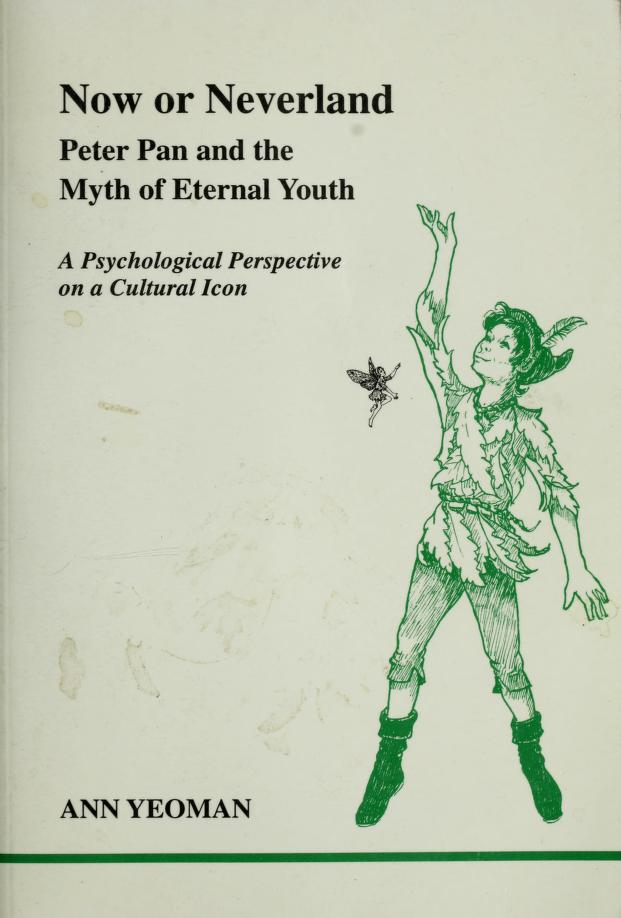
Traditionally, the term ‘puer aeternus’ (Latin for ‘eternal boy’) is used to describe a child-god who remains eternally young. In Carl Jung’s psychology, it refers to an older person whose emotional life remains stuck in adolescence, often referred to as the “Peter Pan syndrome”. Jung suggests that the puer lives a “provisional life” due to a fear of being trapped. They seek independence, resist boundaries, and find restrictions intolerable. In Greek mythology, the term ‘puer aeternus’ originates from the Metamorphoses, an epic poem by Roman poet Ovid (43 BC – c. 17 AD) that explores Greek and Roman myths. Ovid refers to the child-god Iacchus as “puer aeternus” and praises his role in the Eleusinian mysteries. Iacchus is linked to Dionysus and Eros. The puer represents a deity of vegetation, resurrection, and divine youth, similar to Tammuz, Attis, and Adonis.
Senex is a Latin term that literally means “old man.” It can also be used to describe: a wise, elderly person, an archetype. The wise older person (also known as senex, sage, or sophos) is an archetype outlined by Carl Jung, as well as a familiar literary figure, often portrayed as a stock character. Such a figure can be a profound philosopher renowned for wisdom and sound judgment.

Marie-Louise Von Franz summarised her view of the puer as follows:
None of his reactions are particularly personal or special. He becomes a type—the type of the puer aeternus. He becomes an archetype, and if you become that, you are not at all original… He is merely the archetype of the eternal-youth god, and, therefore, he has all the features of the god: he has a nostalgic longing for death, he thinks of himself as being something special, and he is the one sensitive being among all the other tough sheep. He will have a problem with an aggressive, destructive shadow that he will not want to live with and generally projects. There is nothing special whatsoever. The worse the identification with the youthful god, the less individual the person, although he himself feels so special. (Puer Aeternus, pp. 121f)
Another type of puer that does not display the charm of eternal youth, nor does the archetype of the divine youth shine through him. On the contrary, he lives in a continual sleepy daze, and that, too, is a typical adolescent characteristic… The sleepy daze is only an outer aspect, however, and if you can penetrate it, you will find that a lively fantasy life is being cherished within. (Puer Aeternus, p.2)
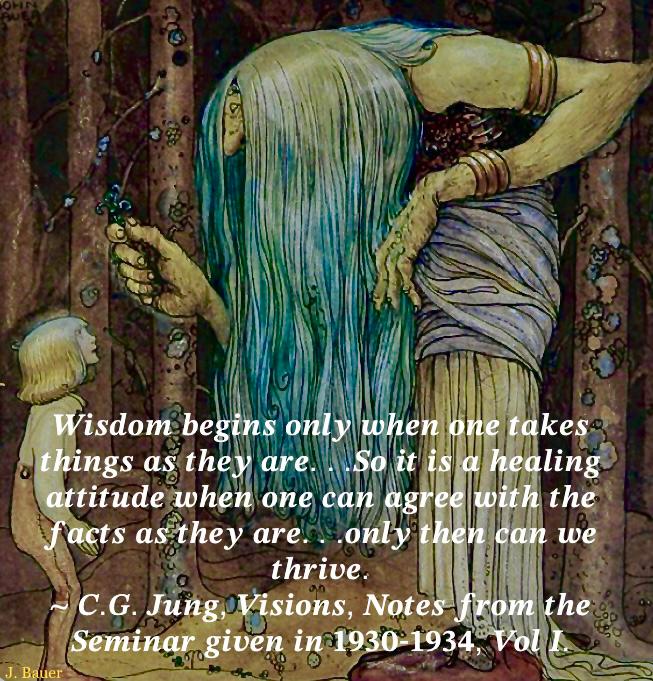
Reflecting on my childhood, after my father passed away and my mother kept it a secret from my brother Al and me, I became very introverted. Once I learned the truth, I simply didn’t want to grow up. Al and I drew closer because of our mother’s lie, and over time, during our youth, we swapped roles as eternal children. Initially, I wanted to remain a child forever, while Al, aware of our father’s death almost from the moment it happened, tried to act as a mature older brother to look after me.
As we entered puberty, our roles underwent significant changes. I developed a strong sexual desire much earlier and believed I had to act like a man to attract girls, while Al began creating his own solitary world. For many years, this condition persisted. Although I was accepted into Al’s world and was part of it, I was the one who had to maintain contact with the outside world. As a result, I assumed the role of the senex, but I longed for my puer aeternus and tried to keep it concealed yet protected.
Let’s conclude this now, and I look forward to discussing this topic further in the next part. 🖖🙏
 lampmagician
You must be logged in to post a comment.