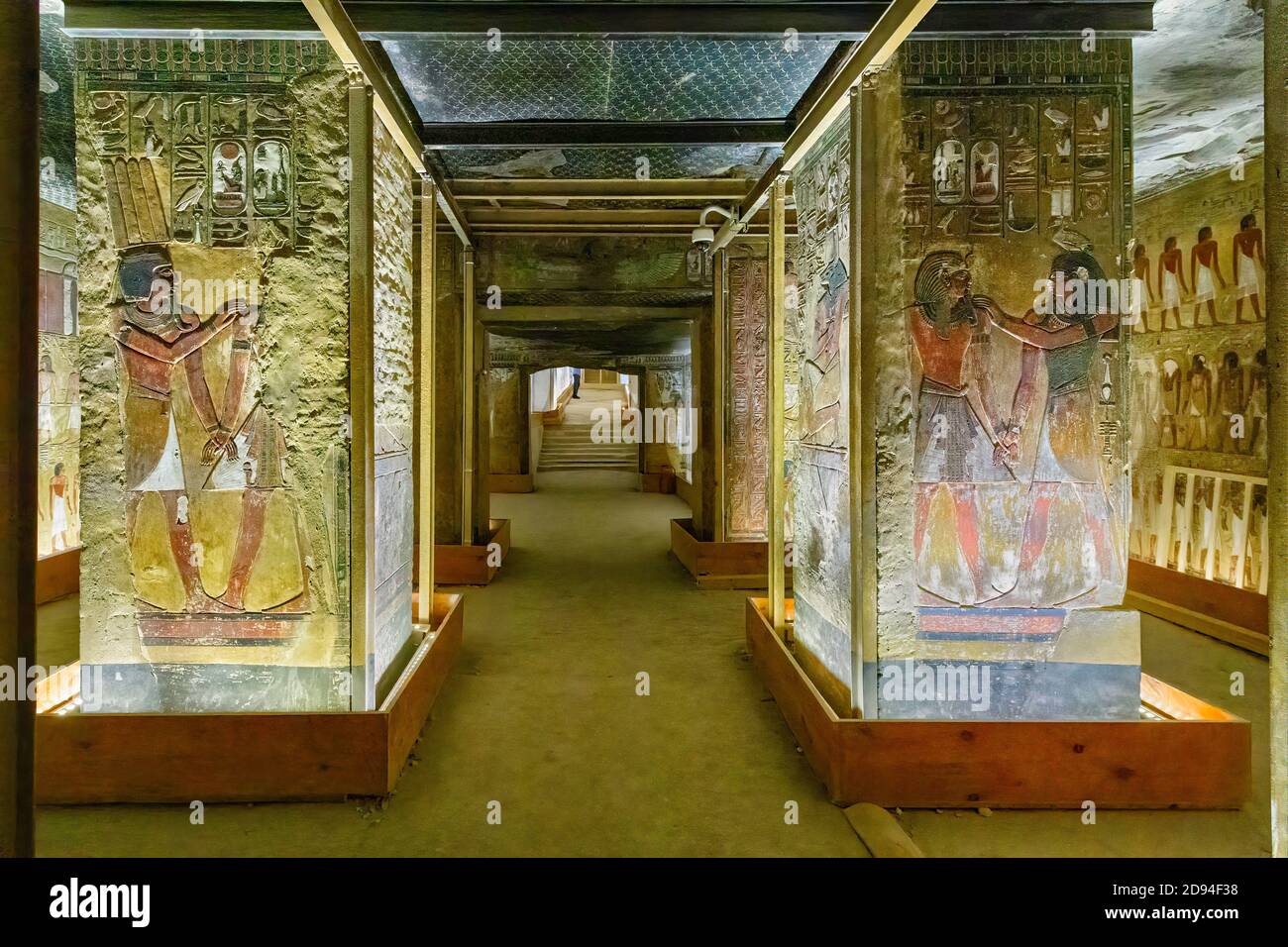
The Final, Yet Not Least, Burial Chamber of Seti I

Standard

It has been a while since I last published a post about Egypt, and now, perhaps in the spirit of the Egyptian sense of rebirth, I have decided to give it a try.

Tomb KV17 in Egypt’s Valley of the Kings is the resting place of Pharaoh Seti I from the 19th Dynasty. It is also known as “Belzoni’s tomb,” “the Tomb of Apis,” and “the Tomb of Psammis, son of Necho.” As one of the most elaborately decorated tombs in the valley, it is now almost always closed to the public due to damage. The longest tomb in the valley, measuring 137.19 metres (450.10 feet), features well-preserved reliefs in all but two of its eleven chambers and side rooms.
Here is an excellent recount of this discovery by the esteemed Marie Grillot. I believe you will find it quite engaging.

Sources: Madain Project & Ancient Egypt Magazine

The Discovery of Seti I’s Alabaster Sarcophagus by Belzoni

via égyptophile
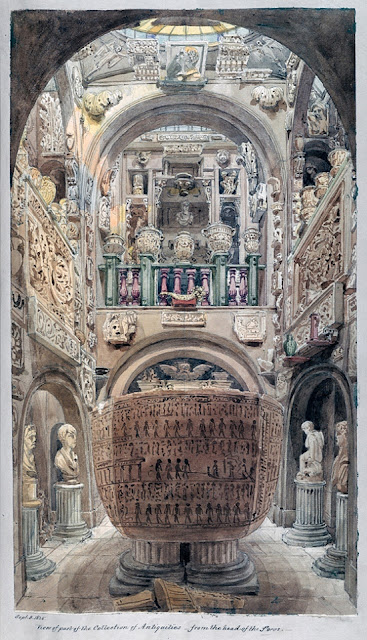
View of part of the collection of antiquities in Sir John Soane’s Museum from the head of the sarcophagus of Seti I
carved and incised calcite (Egyptian alabaster), with traces of ‘Egyptian blue’ filling – New Kingdom – 19th Dynasty – circa 1279 BC
discovered in October 1817 in the tomb of Seti I (KV 17) by Giovanni Battista Belzoni on behalf of Consul Henry Salt
Sir John Soane’s Museum, London – inventory no.: M470 (acquired in May 1824)
watercolour by Joseph Michael Gandy, dated September 9, 1825

On October 18, 1817, Giovanni Battista Belzoni discovered, in the Valley of the Kings, an immense tomb with walls covered in magnificent scenes. He was captivated by what lay before him… “I can call the day of this discovery one of the most fortunate of my life,” he recalled in “Travels in Egypt and Nubia.” “I judged, by the paintings on the ceiling and by the hieroglyphs in bas-relief that could be distinguished through the rubble, that we had gained access to a magnificent tomb.”

He could not have known then that this was the “first tomb to be decorated with a complete program of religious texts” (“Theban Mapping Project”), nor could he have presumed to whom it belonged…
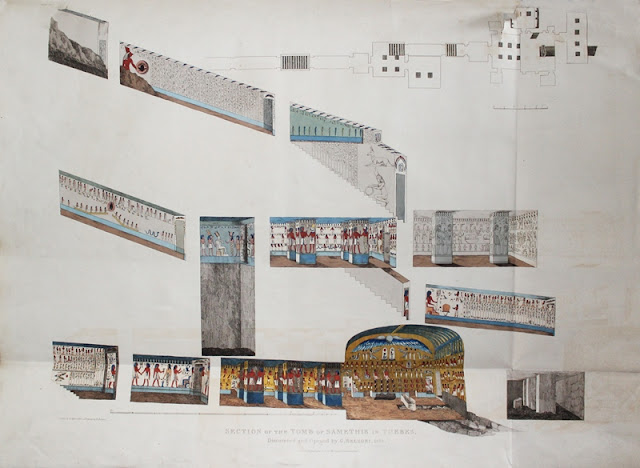
Plan and section of the tomb of Seti I, based on plates illustrating the research and operations of G. Belzoni in Egypt and Nubia
© The Trustees of Sir John Soane’s Museum

In reference to the “carcass of a bull embalmed with asphalt” found there, it was called the “Tomb of the Apis” or, at times, the “Belzoni Tomb.” Then, due to a misinterpretation by Thomas Young, it was attributed to “Nichao and his son Psammis”; for Joseph Bonomi, it was the “Tomb of Oimeneptah I.” It was thanks to the deciphering of the hieroglyphs by Jean-François Champollion in 1822 that it could finally be identified as the tomb of Seti I. Originally from the Delta, the true founder of the 19th Dynasty, this military man, astute politician, and great builder reigned over the Two Lands for eleven years (1294 to 1279 BC). Very early on, he associated his son with the throne, who succeeded him as Ramses II.

Statue of Seti I – calcite (Egyptian alabaster) – 19th Dynasty
Discovered in March 1904 in the Karnak Cachette by Georges Legrain for the Antiquities Service directed by Gaston Maspero
Previously in the Cairo Museum – JE 36692 – CG 42139 – On display since 2007 at the Luxor Museum (Gallery J)

The hypogeum (which much later would be referenced as KV 17) descends 137 m into the Theban mountain through 7 corridors and has 10 rooms! Belzoni goes from wonder to wonder, and his admiration reaches its peak when he arrives in the sarcophagus room. “The paintings were all executed with such perfection that I felt compelled to call this room the Hall of Beauties… But what this room offered, to our eyes, was most important: a sarcophagus placed in the centre, which has no equal in the world. This magnificent tomb, measuring nine feet five inches long by three feet seven inches wide, is made of the finest oriental alabaster: being only two inches thick, it becomes transparent when a light is placed behind one of the walls; inside and out, it is covered with sculptures: these are hundreds of small figures, no more than two inches high, which represent—it seemed to me—the entire funeral procession of the deceased placed in the sarcophagus, as well as emblems, etc. Unfortunately, the lid was missing: it had been removed and broken, and we found some fragments of it during the excavations in front of the first entrance.”

View of the left side of the sarcophagus of Seti I, with the hypothetical location of the lid fragments
illustration by Joseph Michael Gandy dated 18 November 1825 – © The Trustees of Sir John Soane’s Museum

Belzoni was accustomed to perilous “manoeuvres”: it is worth recalling that, two years earlier, he had orchestrated the removal of the “Young Memnon,” which was taken from the Ramesseum and sent to the British Museum… But extricating the fragile sarcophagus from the tomb seemed an even more difficult task. He undertook it—after carefully assessing the risks—and apparently without neglecting to have his name engraved on the rim of the fragile coffin beforehand. “It was a very delicate operation because the walls of this tomb (sic) were so thin that the slightest shock could break them. However, it was removed from the underground chamber without incident and, as soon as it was outside, placed in a strong crate. The valley through which it had to be transported to reach the Nile offered more than two miles of uneven terrain, and one mile of flat ground, covered with sand and pebbles. We transported it by means of rollers, and we fortunately managed to load it,” recounts Jean-Jacques Fiechter in “The Harvest of the Gods” (quoting “epistolario”, letter no. 122).
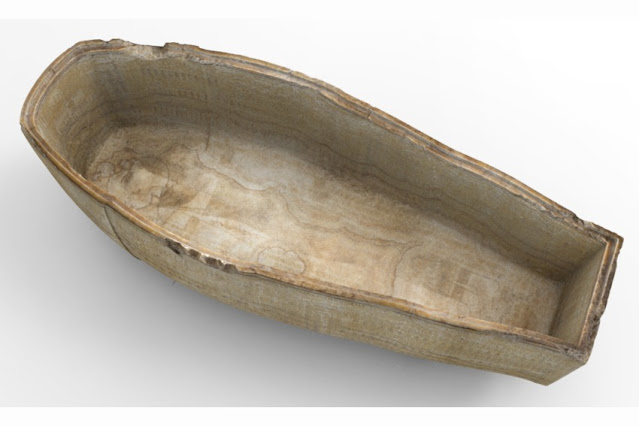
Sarcophagus basin of Seti I – carved and incised calcite (Egyptian alabaster), with traces of ‘Egyptian blue’ filling.
New Kingdom – 19th Dynasty – circa 1279 BC – discovered in October 1817 in the tomb of Seti I (KV 17)
by Giovanni Battista Belzoni on behalf of Consul Henry Salt
Sir John Soane’s Museum, London – inventory number: M470 (acquired in May 1824) © The Trustees of Sir John Soane’s Museum

Upon his arrival in Egypt in June 1815, Belzoni, the “Titan of Padua,” had cultivated a close relationship with the French consul, Bernardino Drovetti, but ultimately entered the service of the British consul, Henry Salt, the following summer. In their quest for antiquities—the firmans they possessed granting them complete freedom in their excavations—the two “consul-collectors” were fierce rivals, and the term “War of the Consuls” is sometimes used. Henry Salt benefited from a substantial inheritance left to him by his father. This financial security allowed him to indulge his passion for ancient Egypt by building his own collection. Furthermore, he had an “official mission” to enrich the Egyptian department of the British Museum. Belzoni would become one of his most effective agents, not only in the field but also when it came to negotiating the sale of artefacts, even as far as London!
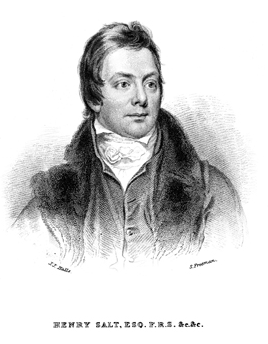
Henry Salt (Lichfield, UK – 14-6-1780 – Alexandria, Egypt – 30-10-1827)
Diplomat, British Consul in Egypt from 1816 to 1835, collector of antiquities

In 1821, after travelling down the Nile and reaching Alexandria, the alabaster sarcophagus was loaded onto the frigate HMS Diana, which sailed for Great Britain. Stored at the British Museum, it was offered to them along with the “first Salt collection.” Negotiations with the London museum, which had just acquired Lord Elgin’s Parthenon Marbles for £35,000, proved difficult. While Salt had hoped to get £8,000 from his collection, after lengthy and bitter discussions, he had to sell it to them for… £2,000! As for the sarcophagus, which he offered them for 2,000 pounds, Brian M. Fagan recalls in “The Rape of the Nile: Tomb Robbers, Tourists, and Archaeologists in Egypt”: “The administrators categorically rejected the offer of the sarcophagus, due to both legal difficulties and the excessively high price, despite protests from Salt and Belzoni that they had received higher offers from Drovetti and other buyers. Ultimately, the sarcophagus was sold for 2,000 pounds to John Soane, a wealthy London architect and art collector.”
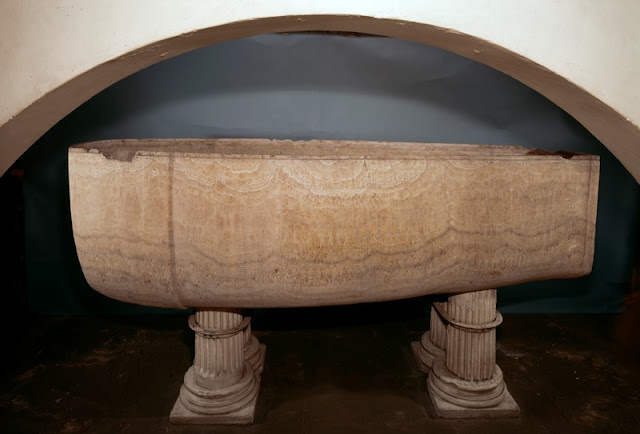
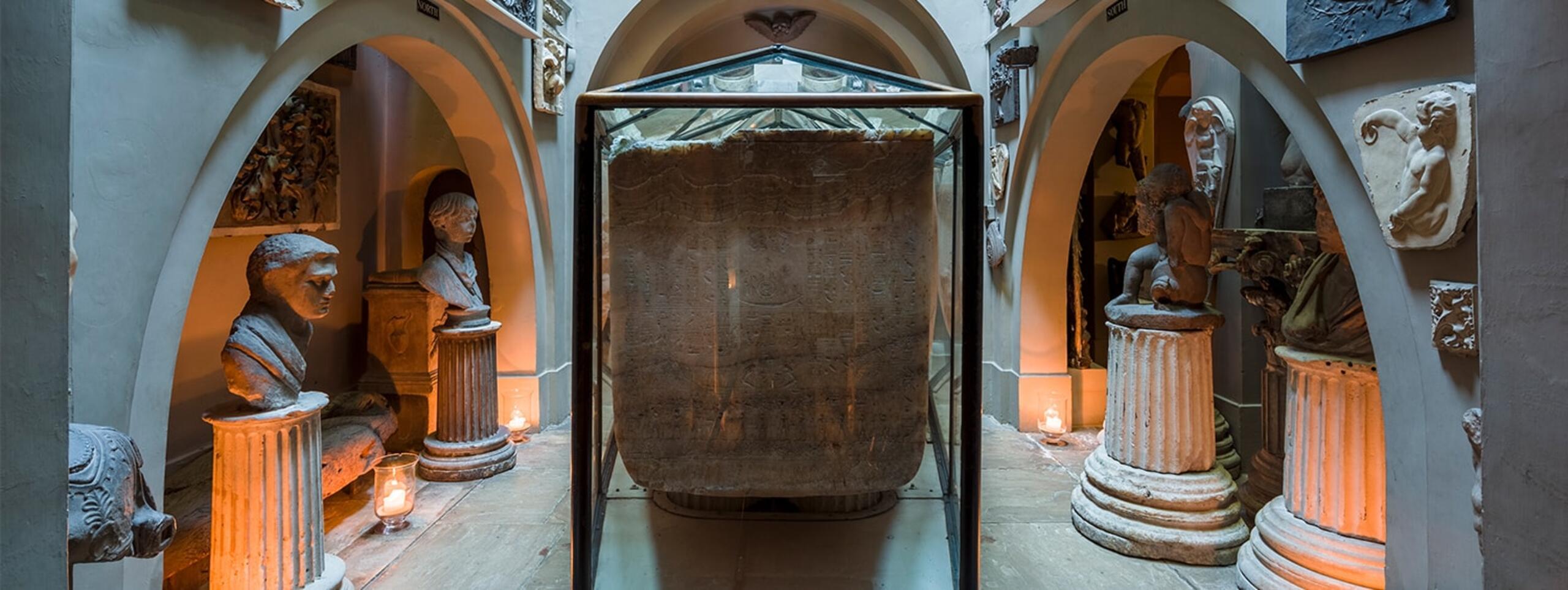
Le sarcophage de Séthy Ier au Sir John Soane’s Museum, London © The Trustees of Sir John Soane’s Museum

This “eclectic” collector had been completely fascinated by Belzoni’s adventures, as well as by the exhibition “The Egyptian Tomb” (on the tomb of Seti I) that the latter organised, with his wife Sarah, at the Egyptian Hall in Piccadilly, London, and which he had visited on June 8, 1821… He would have to wait until May 12, 1824, to be able to acquire the sarcophagus, the purchase of which had been stubbornly refused by the British Museum…

In “Sir John Soane’s Greatest Treasure, The Sarcophagus of Seti I”, John H. Taylor recounts the installation of the sarcophagus in Soane’s house at Lincoln’s Inn Field on May 12, 1824: “The door being too narrow to allow it to pass through, a wide opening had to be made at the rear of the house, and ropes were used to lower it to the basement, beneath the Soane Dome, into a space named ‘the sepulchral chamber’ in his honor. It made a perfect centrepiece for the ‘crypt’ of Soane’s museum, perfectly reflecting his self-proclaimed ‘melancholy and sullen’ personality.”
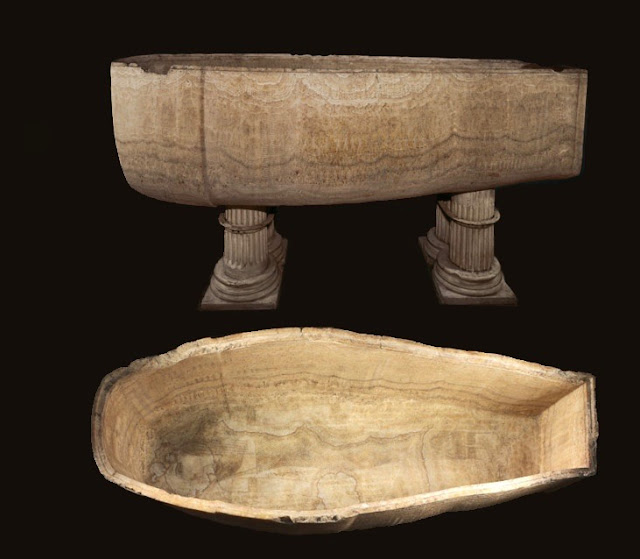
Sarcophagus basin of Seti I – carved and incised calcite (Egyptian alabaster), with traces of ‘Egyptian blue’ filling.
New Kingdom – 19th Dynasty – circa 1279 BC – discovered in October 1817 in the tomb of Seti I (KV 17)
by Giovanni Battista Belzoni on behalf of Consul Henry Salt
Sir John Soane’s Museum, London – inventory number: M470 (acquired in May 1824) – internet photo

A curatorial note from the Sir John Soane Museum, where it is displayed under inventory number M470, states: “This sarcophagus was acquired with, according to early records, 18 pieces of the lid (see X58 and X73; one of the pieces is actually part of a canopic jar and is now catalogued as museum number X74). The museum also has a cast of another piece of the lid displayed in 1961 (X164)… The sarcophagus consists of two monolithic alabaster blocks. It is inscribed over its entire surface with religious scenes and figures, which were then filled with a substance called ‘Egyptian blue’.” Although most of the blue filling has disappeared, traces remain here and there. The effect, when complete, must have been stunning… The Museum further explains that: “The Victorian display case that now protects the sarcophagus was installed in 1866. Previously, the coffin was displayed without a case, as Soane wished, simply mounted on four fluted columns. The display case, fitted with casters, can be disassembled into two parts. It was refurbished in 2007, and the thick Victorian glass, with its strong greenish tint, was removed for safety reasons and replaced with clear safety glass. This improved the sarcophagus’s visibility. The display case is now a museum piece in its own right. It has brilliantly protected this delicate sarcophagus—whose stone scratches easily and which could also be stained by water if the skylight above leaked—for over 150 years.” A brass frame now protects it…

Sarcophagus basin of Seti I – carved and incised calcite (Egyptian alabaster), with traces of ‘Egyptian blue’ filling.
New Kingdom – 19th Dynasty – circa 1279 BC – discovered in October 1817 in the tomb of Seti I (KV 17)
by Giovanni Battista Belzoni on behalf of Consul Henry Salt
Sir John Soane’s Museum, London – inventory number: M470 (acquired in May 1824) – internet photo

This magnificent and imposing mummy-like coffin, whose lid, broken in antiquity, must have borne the image of the pharaoh, is 284.5 cm long, 111.8 cm wide at the shoulders, 68.6 cm high, and its thickness varies from 2.5 to 10.2 cm. It is illustrated with funerary texts and vignettes taken from the “Book of Gates,” which is divided into twelve sections, corresponding to the twelve hours of the night…

To understand the admiration aroused by such an artifact, John H. Taylor quotes an excerpt from a newspaper article in the “Morning Post” of April 22, 1824: “We believe that there is no country in Europe which would not be proud to possess such a rarity and that the Emperor of Russia, in particular, would rejoice to obtain it, if it were possible to buy it from the liberal and patriotic individual who is its present owner”…
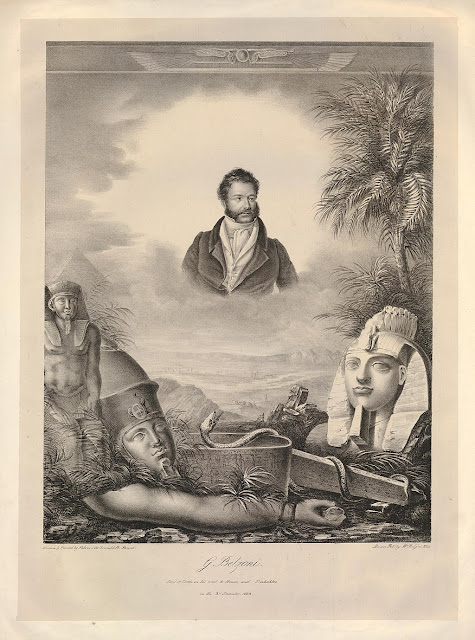
Giovanni Battista Belzoni (Padua, 5-11-1778 – Timbuktu, 3-12-1823)
portrait published by his wife, Sarah, in 1824

As for Belzoni, who expressed his feelings about this exceptional piece thus: “Europe has never received from Egypt an ancient artefact of such magnificence,” he would be the big financial loser in the transactions… Indeed, as Brian M. Fagan reminds us, Henry Salt had promised him “half the price the sarcophagus would fetch above the paltry sum of two thousand pounds”… Not a single pound was ever paid to him…

Marie Grillot

Sources:
Sir John Soane’s Museum, London, Sarcophagus of Pharaoh Seti (or Sety) I, resting on four fluted stone columns – c.1279 BC – XIXth Dynasty – Museum number: M470
http://collections.soane.org/object-m470
Sir John Soane’s Museum, London, Case covering the sarcophagus of Seti I – 1866 – Museum number: M470.A
https://collections.soane.org/object-m470-a
Sir John Soane’s Museum, London, Cast of a fragment of the lid of the sarcophagus of Seti I – Museum number: X164
https://collections.soane.org/object-x164
Sir John Soane’s Museum London, Fragment of the lid of the sarcophagus of Seti I – Museum number: X73.A.i (et suivants…)
https://collections.soane.org/object-x73-a-i
Brian M. Fagan, The Rape of the Nile: Tomb Robbers, Tourists, and Archaeologists in Egypt, Book Club Associates, 1975
https://books.google.fr/books?id=CI84DgAAQBAJ&pg=PT113&lpg=PT113&dq=exhibition%20Belzoni%20Seti%20Saint%20Petersburg&source=bl&ots=cpZJr4hXvf&sig=COEiL_SQlWBptDjwcsh4Hy9VOAc&hl=fr&sa=X&ved=0ahUKEwiBuPvggZfZAhWFzaQKHdkuDgEQ6AEIUzAH#v=onepage&q=exhibition%20Belzoni%20Seti%20Saint%20Petersburg&f=false
Giovanni Battista Belzoni, Voyage en Égypte et en Nubie, Pygmalion, 1979
Jean-Jacques Fiechter, La moisson des Dieux, Julliard, 1994
Brian M. Fagan, L’aventure archéologique en Égypte : Grandes découvertes, pionniers célèbres, chasseurs de trésors et premiers voyageurs, Pygmalion, 1997
Nicholas Reeves, Les grandes découvertes de l’Égypte ancienne, Éditions du Rocher, 2001
Nicholas Reeves, Richard H. Wilkinson, The Complete Valley of the Kings, American University in Cairo Press, 2002
Jean Vercoutter, À la recherche de l’Égypte oubliée, Découvertes Gallimard, 2007
https://books.google.fr/books?id=2IJnkBDoBBwC&pg=PA80&lpg=PA80&dq=exposition+egypte+boulevard+des+italiens+1822+paris&source=bl&ots=Sv3a4SiBkH&sig=kSl3FSh1RFMI2DB2URr9y9raz1Y&hl=fr&sa=X&ved=0ahUKEwj9juyw15TZAhULL8AKHVFcC7wQ6AEIaTAD#v=onepage&q=exposition%20egypte%20boulevard%20des%20italiens%201822%20paris&f=false
John H. Taylor, Sir John Soane’s Greatest Treasure, The Sarcophagus of Seti I, Pimpernel Press Ltd, 2017
Pierre Tallet, Frédéric Payraudeau, Chloé Ragazzolli, Claire Somaglino, L’Égypte pharaonique, histoire, société, culture, Armand Colin, 2019
Theban Mapping Project, KV 17, Sety I
https://thebanmappingproject.com/tombs/kv-17-sety-i
Divine Earrings for a Truly Extraordinary Pharaoh

Standard

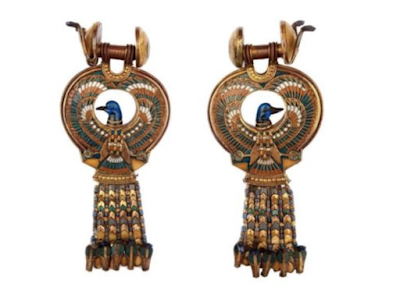
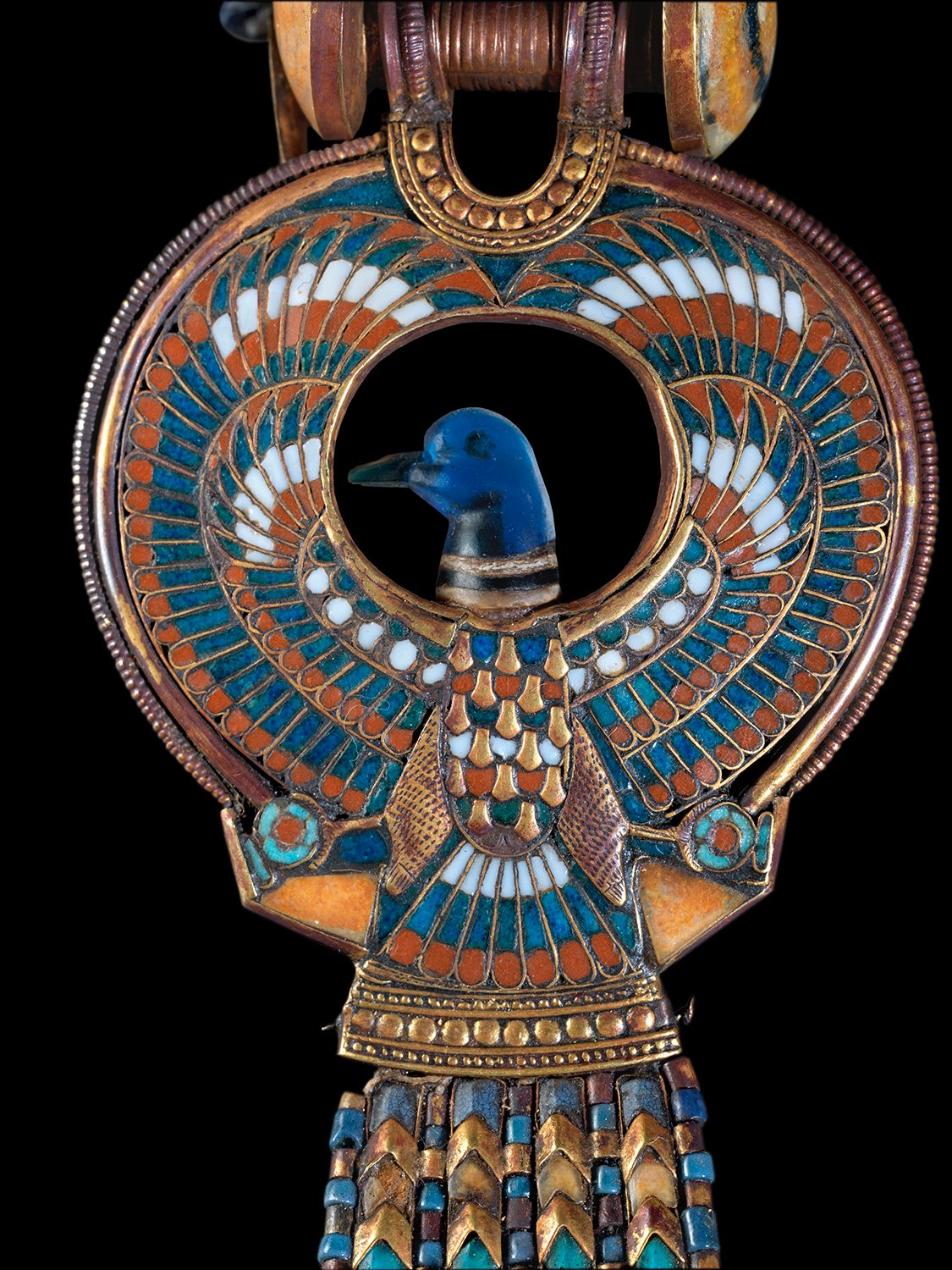
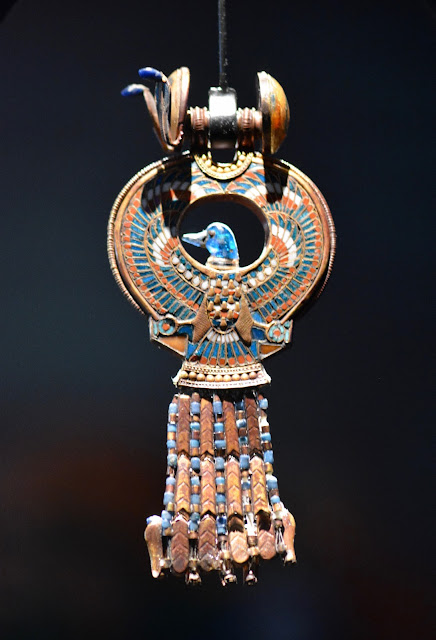
These earrings are the most striking of the four pairs found in Tutankhamun’s tomb. The ducks with outstretched wings create a circular shape, and their feet hold the shen symbol. The head is made of translucent blue glass, while the wing is crafted in cloisonné.

Earrings-of-Tutankhamun-with-Duck-Heads via https://egypt-museum.com/

Hanging below the duck are gold and blue glass beads, each featuring five uraei (rearing cobras). The earrings show a high level of aesthetic sophistication, and the duck held a particular erotic significance.

Let’s appreciate and enjoy Marie Grillot‘s vivid portrayal of this captivating divine gem.

(It’s clear I am not happy about naming a character in this article, but I am committed to getting the translation right; just to mention!)

Tutankhamun’s Blue Bird Earrings

via égyptophile

Bluebird Earrings – Gold, glass, quartz, travertine, faience – 18th Dynasty
From the treasure chamber of Tutankhamun’s tomb, discovered in November 1922
by Lord Carnarvon and Howard Carter in the Valley of the Kings (KV 62)
Ref.: Carter 269a(1) – JE 61969-a – GEM 485

These “bluebird earrings,” as Christiane Desroches Noblecourt aptly called them, and these “gold-encrusted earrings in the shape of an ousekh necklace with a blue glass falcon,” as Zahi Hawass describes them, are one of five pairs found in Tutankhamun’s treasure.

The “Blue Bird” Earrings – gold, glass, quartz, travertine, faience – 18th Dynasty
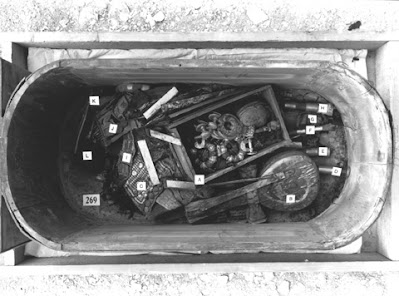
In the rectangular box 269a, placed in chest 269
From the treasure chamber of Tutankhamun’s tomb, discovered in November 1922
by Lord Carnarvon and Howard Carter in the Valley of the Kings (KV 62)
Ref.: Carter 269a(1) – JE 61969-a – GEM 485-a
The Griffith Institute – Tutankhamun: Anatomy of an Excavation
The Howard Carter Archives – Photographs by Harry Burton

They had all been deposited in a rectangular box (number 269a) placed in a charming wooden chest (number 269). Shaped like a cartouche, it is topped with a flat lid, decorated with the king’s birth name written in delicate colored hieroglyphs. It can be identified, “in situ”, in the photos taken by Harry Burton in the “Treasury Room” whose “official opening” took place on February 17, 1923.

With a height of 12.1 cm and a width of 4.4 cm, these earrings are made of “gold, glass paste, translucent blue glass and pale orange-white-blue melted glass” for Christiane Desroches Noblecourt. At the same time, Zahi Hawass sees, instead, in the gold inlays, besides the glass, quartz, travertine and earthenware…

Bluebird Earrings – Gold, glass, quartz, travertine, faience – 18th Dynasty
From the treasure chamber of Tutankhamun’s tomb, discovered in November 1922
by Lord Carnarvon and Howard Carter in the Valley of the Kings (KV 62)
Ref.: Carter 269a(1) – JE 61969-a – GEM 485-a
Published here in the exhibition catalogue “Tutankhamun and His Time” (1963)

Their heavy and imposing suspension system consists of two tubes, one sliding inside the other, which are passed through the lobe involving an extensive “perforation”. These two elements “are decorated on both sides: at the rear, a hemispherical boss (0.85 cm, diam.) of translucent quartz lined with pigment; at the front, a hemispherical boss (0.95 cm, diam.) of translucent quartz supported by a pigment, forming a solar disk, with two uraei” specify Howard Carter and Alfred Lucas.

The central element consists of a bird with outstretched wings curved inwards, which makes them meet almost forming a circle. They are, like the body, worked according to the cloisonné method… For Zahi Hawass: “The wings of the falcon, and the details at the place where they meet, form a large collar called usekh”.

Bluebird Earrings – Gold, glass, quartz, travertine, faience – 18th Dynasty
From the treasure chamber of Tutankhamun’s tomb, discovered in November 1922
by Lord Carnarvon and Howard Carter in the Valley of the Kings (KV 62)
Ref.: Carter 269a(1) – JE 61969-a – GEM 485-a

The bird’s head, which does not resemble that of a falcon, cannot but raise questions, just as it raised questions for Howard Carter: “It is interesting to note that the sun falcon, Herakhtes, has, for some inexplicable reason, the head of a mallard (Anas boscas) in semi-translucent blue glass”…

The bird’s legs are almost horizontal and the talons enclose a shen sign, a symbol of eternity…

The “Blue Bird” Earrings – gold, glass, quartz, travertine, faience – 18th Dynasty – at the time of their discovery
from the treasure chamber of Tutankhamun’s tomb, discovered in November 1922
by Lord Carnarvon and Howard Carter in the Valley of the Kings (KV 62)
ref.: carter 269a(1) – JE 61969-a – GEM 485-a
The Griffith Institute – Tutankhamun: Anatomy of an Excavation
The Howard Carter Archives – Photographs by Harry Burton

Under its tail, a slightly curved gold plate, decorated with pellets, serves as a hook for the lower part of the loops. It is composed of curious “flexible hanging appendages, composed of openwork plates with a geometric pattern interlaced by five rows of blue and gold cylindrical beads, ending in five uraei heads” (“Tutankhamun and his era”)… When discovered, as Harry Burton’s photos show, these “tassels” were fragmentary and in poor condition… A successful restoration has restored them to their original appearance.

Howard Carter noted that these ear ornaments had signs of wear, indicating that they had been worn, most likely until adolescence, by the young king… He did note, during the examination of Tutankhamun’s mummy, that his earlobes were pierced. In “The Tomb of Tutankhamun – The Annexe and Treasury”, he adds this interesting detail: “The gold mask that covered his head also had pierced earlobes, but the holes had been carefully filled with small discs of thin gold leaf, suggesting a desire to conceal this fact”…

Bluebird Earrings – Gold, glass, quartz, travertine, faience – 18th Dynasty
From the treasure chamber of Tutankhamun’s tomb, discovered in November 1922
by Lord Carnarvon and Howard Carter in the Valley of the Kings (KV 62)
Ref.: Carter 269a(1) – JE 61969-a – GEM 485-a
The Griffith Institute – Tutankhamun: Anatomy of an Excavation
The Howard Carter Archives – Photographs by Harry Burton

This pair of earrings, Carter 269a(1), has been transferred to the Egyptian Museum in Cairo, where it was recorded in the Journal of Entries under the reference JE 61969. Its new reference at the Grand Egyptian Museum in Giza is GEM 485-a.

It should be noted that one of the earrings was featured in the exhibition “Tutankhamun, the Pharaoh’s Treasure”, whose initial worldwide tour, which began in 2018, was reduced to Los Angeles, Paris, and London due to the pandemic.

Marie Grillot

Sources:

The Griffith Institute – Tutankhamun: Anatomy of an Excavation – The Howard Carter Archives – Description in Murray-Nuttall Handlist – Pair of ear-rings – JE 61969; Card/Transcription No.: 269a1-1
http://www.griffith.ox.ac.uk/gri/carter/269a(1)-c269a1-1.html
http://www.griffith.ox.ac.uk/gri/carter/269a(1)-p1471.html
Christiane Desroches Noblecourt, Life and Death of a Pharaoh, Hachette, 1963
Christiane Desroches Noblecourt, Tutankhamun and His Time, Petit Palais, Paris, 17 February-July 1967, Ministry of State for Cultural Affairs, 1967
Cyril Aldred, Jewels of the Pharaohs, ed. Thames & Hudson Ltd., London, 1978
Nicholas Reeves, Tutankhamun: Life, Death, and Discovery of a Pharaoh, Editions Errance, 2003
Howard Carter, The Tomb of Tutankhamun, Volume 3: The Annexe and Treasury, Bloomsbury, London, 2014
Marc Gabolde, Tutankhamun: Pygmalion, 2015
Zahi Hawass, Exhibition Catalogue “Tutankhamun: Treasures of the Golden Pharaoh,” IMG Melcher Media, 2018

A Delicate, Feminine Perception of Ancient Egypt

Standard

Ancient Egyptian history is undeniably captivating, and exploring it with a hint of femininity makes it even more alluring.

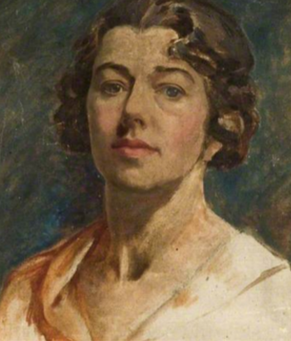
By Myrtle Florence Broome (Self Portrait). Original publication: unknown immediate source- Wiki. Fair use!

Myrtle Florence Broome (22 February 1888 – 27 January 1978) was a British Egyptologist and artist renowned for her illustrated collaboration with Amice Calverley on the Temple of Seti I at Abydos, as well as her paintings that captured the essence of Egyptian village life during the 1920s and 1930s. She was born on 22 February 1888 in Muswell Hill, London, to Eleanor Slater and Washington Herbert Broome. Broome studied art at a school in Bushey founded by Sir Hubert von Herkomer. From 1911 to 1913, she attended University College London, where she earned a Certificate in Egyptology under the guidance of Sir Flinders Petrie and Margaret Murray.

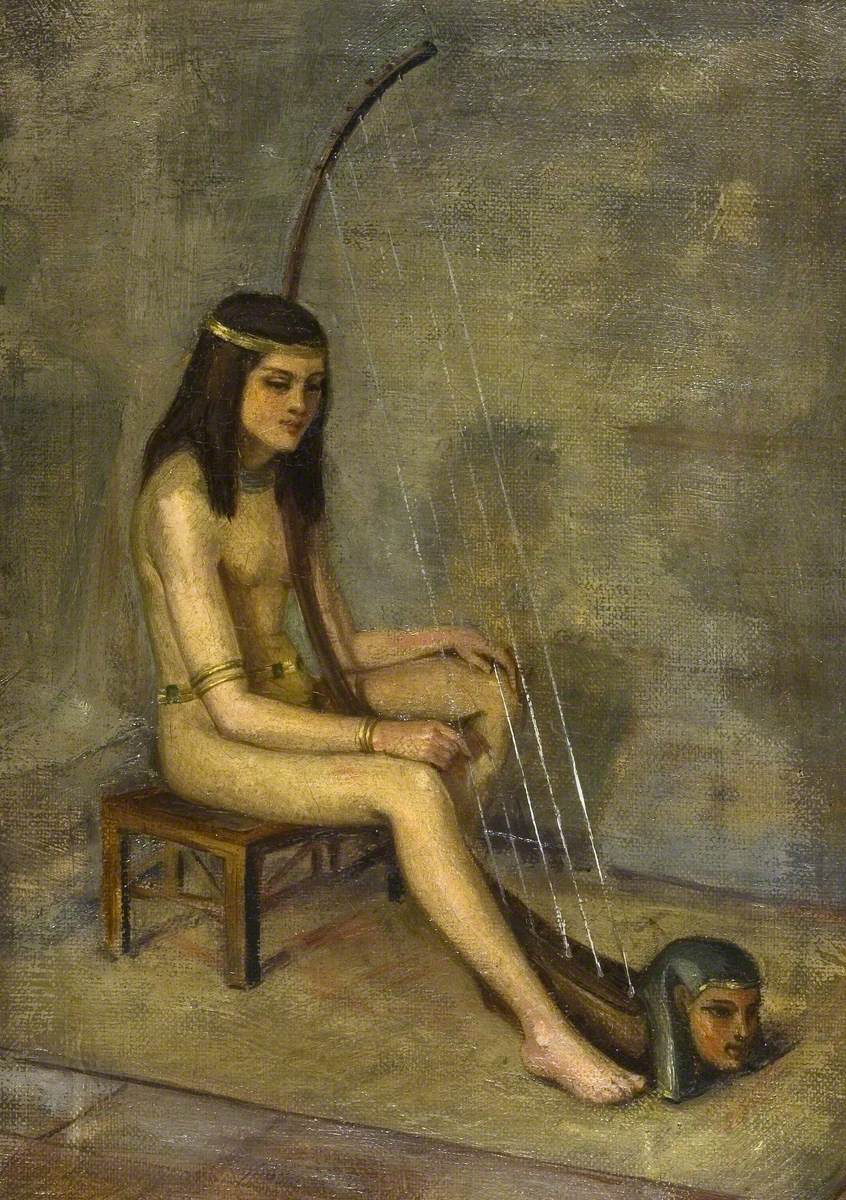
Broome, Myrtle Florence; Egyptian Girl with a Harp; Bushey Museum and Art Gallery;

I was pleasantly surprised to come across this old post from the égyptophile site, and am excited to share this beautiful story about two women and their love for ancient Egyptian magic with you.

Broome, Myrtle Florence; A Young Egyptian Woman in Finery with Jewellery; Bushey Museum and Art Gallery;

Therefore, I included the slogan of the Iranian women’s and men’s revolution, #WomanLifeFreedom, in this post, as it symbolises not only the struggle for freedom in Iran but also resonates worldwide.

By Marie Grillot, with my sincere thanks.

Myrtle Florence Broome, Egyptologist and… artist

via égyptophile

Florence Broome, Egyptologist and Painter
London, February 22, 1888 – Bushey, January 27, 1978 – Self-portrait on the right
and, on the left, a copy of her extraordinary work at Abydos:
“King Sethos receives life and dominion from the goddess Saosis” (detail)

Along with Nina de Garis Davies, Marcelle Baud, and Amice Calverley, Myrtle Florence Broome is undoubtedly one of the most gifted copyists to have worked in Egypt during the first half of the 20th century.

Myrtle was born in London’s Muswell Hill neighbourhood on February 22, 1888, into a family of music book publishers. However, it was in Bushey, Hertfordshire, that she spent much of her life, and it was there that she studied at the Beaux-Arts, developing her talents for drawing and painting.

In 1911, she joined University College London, where she studied Egyptology under the guidance of two eminent professors, Flinders Petrie and Margaret Murray, who would become the first female Egyptologists.

During the two years of classes taught by Margaret Murray, what she ironically called “the gang” was formed: it included Myrtle Broome, Guy and Winfried Brunton, Reginald (Rex) Engelbach, and Georginan Aitken, all of whom went on to have distinguished careers in Egyptology (Rex would become curator of the Cairo Museum of Antiquities).

Margaret Murray’s influence on Myrtle was undoubtedly significant, and it seems likely that she encouraged her to develop and exploit her artistic talents professionally.

Myrtle Florence Broome (left) and Amice Calverley posing in front of their “copies”

In 1927, Myrtle was at the Qau el-Kebir site, where she conducted epigraphic surveys of Middle Kingdom tombs and copied their scenes.

In 1929, she was recruited by the Egypt Exploration Society and joined Amice Calverley at Abydos. This marked the beginning of a fruitful, beautiful, and enriching collaboration that would culminate in a deep and lasting friendship.

They will spend eight seasons together, eight excellent seasons in the temple and the Osereion. The task is complex, and the concentration is extreme because recording the scenes requires very particular attention, with no room left for personal interpretation. All this in rather “primitive” working conditions, sometimes perched on ladders more than 10 m above the ground and in often oppressive heat! The Abydos team is very quickly enriched by a Canadian Egyptologist and an Austrian photographer who also do excellent work, while good humour reigns.

James Henry Breasted was at a loss for words to praise their talent and admitted that it seemed impossible to find more expert and brilliant women.

The result was published in four volumes edited between 1933 and 1958 by the Egypt Exploration Society of London and the Oriental Institute of the University of Chicago, with the financial support of John D. Rockefeller Jr. A remarkable work, of unparalleled quality, and—but?—so beautiful that it remained, in a way, almost confidential for fear of damaging the plates!

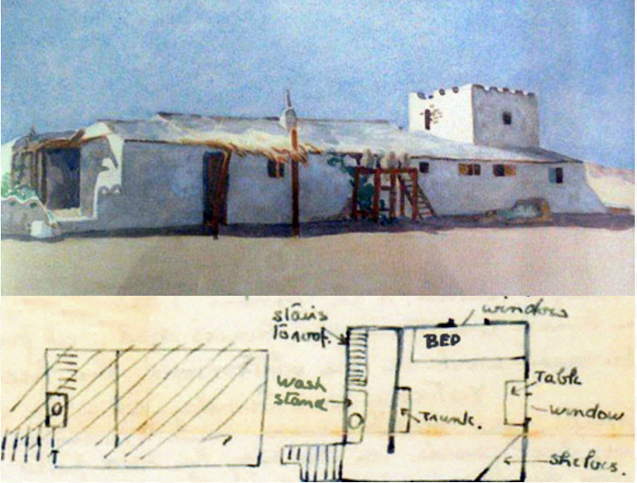
Myrtle Florence Broome’s house during her work at Abydos

The time spent in Abydos was undoubtedly one of the happiest periods of Myrtle’s life. In the small, low-rise house she lived in—and which we can see in one of her paintings—she had: “a housekeeper whom she nicknamed Nannie and a villager, called Sadiq, who served as her advisor, bodyguard, and personal assistant. Life was frugal, however, and Myrtle took great care not to exceed their allotted budget.”

Accompanied by Sadiq, Amice, and Myrtle, they took several short trips in Amice’s car to the Red Sea, Kharga, and Dakhla. Myrtle’s paintings vividly depict the desert’s colours, with shades of pink, brown, and subtle hints of golden beige.

Amice Calverley on a painting by Myrtle Florence Broome, created during one of their many “expeditions” to Egypt
(c) Bushey Museum and Art Gallery; Supplied by The Public Catalogue Foundation

We feel that she loved these landscapes infinitely, that she was imbued with their colours and their light. One of her paintings is particularly touching and gives a beautiful idea of what their escapades must have been like: we see Amice sitting on a mat, near her car, taking notes in the middle of the desert! We must put ourselves in context: these two women were adventurers and pioneers!

Myrtle Florence Broome, “The Pharaoh Seti I worshipping the god Osiris
from the Temple of Seti I at Abydos”

Their joint mission to Abydos ended due to World War II, but they remained close until Amice’s death in April 1959.

During these seasons away from home, Myrtle wrote many letters to her family; they constitute a beautiful testimony to her life, her perspective on things, and her way of sharing them. Some of her correspondence has been deposited at the Griffith Institute in Oxford.

Myrtle Florence Broome and her dogs at Abydos

From Egypt, she brought back not only paintings, but also photographs from which one can only realise that, in addition to her immense talents and her incredible intelligence, she was also a charming woman. Her very successful self-portrait confirms this, showing us a regular face with a certain nobility in its bearing and an expressive, frank gaze. Of her love life, we know little except for a barely sketched romance with a policeman, which she immediately renounced, convinced that “in any case, it could not have worked.”

Upon her return to England in 1937, she apparently devoted herself entirely to her parents, and especially to her ailing father…

Myrtle “passed away” on January 27, 1978… And suppose you still want to know more about this artist. In that case, you can consult her archives on the Griffith Institute website or refer to the book, published in November 2020 by AUC Press: “An Artist in Abydos: The Life and Letters of Myrtle Broome” by Lee Young, with a preface by Peter Lacovara.

Marie Grillot

Myrtle Florence Broome, Egyptian Village Scenes

Sources :
M.L. Bierbrier, editor, “Who Was Who in Egyptology”, third revised edition, London, 1995. Calverley, Amice Mary (1896-1959)”
“Obituary notice: Myrtle Florence Broome (1887-1978)”, by John Ruffle
“The Temple of King Sethos I at Abydos copied by Amice M. Calverley, with the Assistance of Myrtle F. Broome and edited by Alan H. Gardiner”, London: The Egypt Exploration Society; Chicago: University of Chicago Press, 1933-58, Vols. 1-4
“The Life of Margaret Alice Murray: A Woman’s Work in Archaeology”, Kathleen L. Sheppard
“Amice Calverley”, Journal of Egyptian Archaeology 45 (1959),85-87, Janet Leveson-Gower

Collection Broome MSS – Myrtle Florence Broome Collection https://archive.griffith.ox.ac.uk/index.php/broome-correspondence

“An Artist in Abydos, The Life And Letters Of Myrtle Broome”, by Lee Young, Foreword By Peter Lacovara, AUC Press, November 2020, 248 p.

A Compact Divine Container for Deities.

Standard

The naos of Kasa in the Turin Egyptian Museum is renowned for its elegance and uniqueness. It acts as a portable chapel for Anukis and the Elephantine triad gods—Khnum and Satis—who govern the Nile flood. The inscription: “Adoring Anukis, lady of Sehel, kissing the ground for Satis, lady of Elephantine. May she grant you life, strength, ability, favour, love, and a beautiful tomb after old age, along with a burial in the district of the chosen in the great West of Thebes—the district of the just—for the servant on the Seat of Truth, Kasa, justified.

A votive naos is a small, portable shrine made of wood or stone in ancient Egyptian religion, housing statues of gods. These miniature temples were placed at sacred sites, such as temples and tombs, for votive offerings—objects dedicated to gods as prayers or expressions of gratitude.

The image at the top: Votive naos of Kasa, via Wikimedia Commons

Let’s enjoy the incredible story about this magic box, thanks to the brilliant Marie Grillot.

The votive naos (shrine) of the House.

via égyptophile

Votive naos of Kasa – painted wood – 19th dynasty – 1292 – 1190 BC BC – from Deir el-Medineh
Egyptian Museum of Turin – Cat. 2446 (by acquisition from the Drovetti Collection in 1822) – museum photo

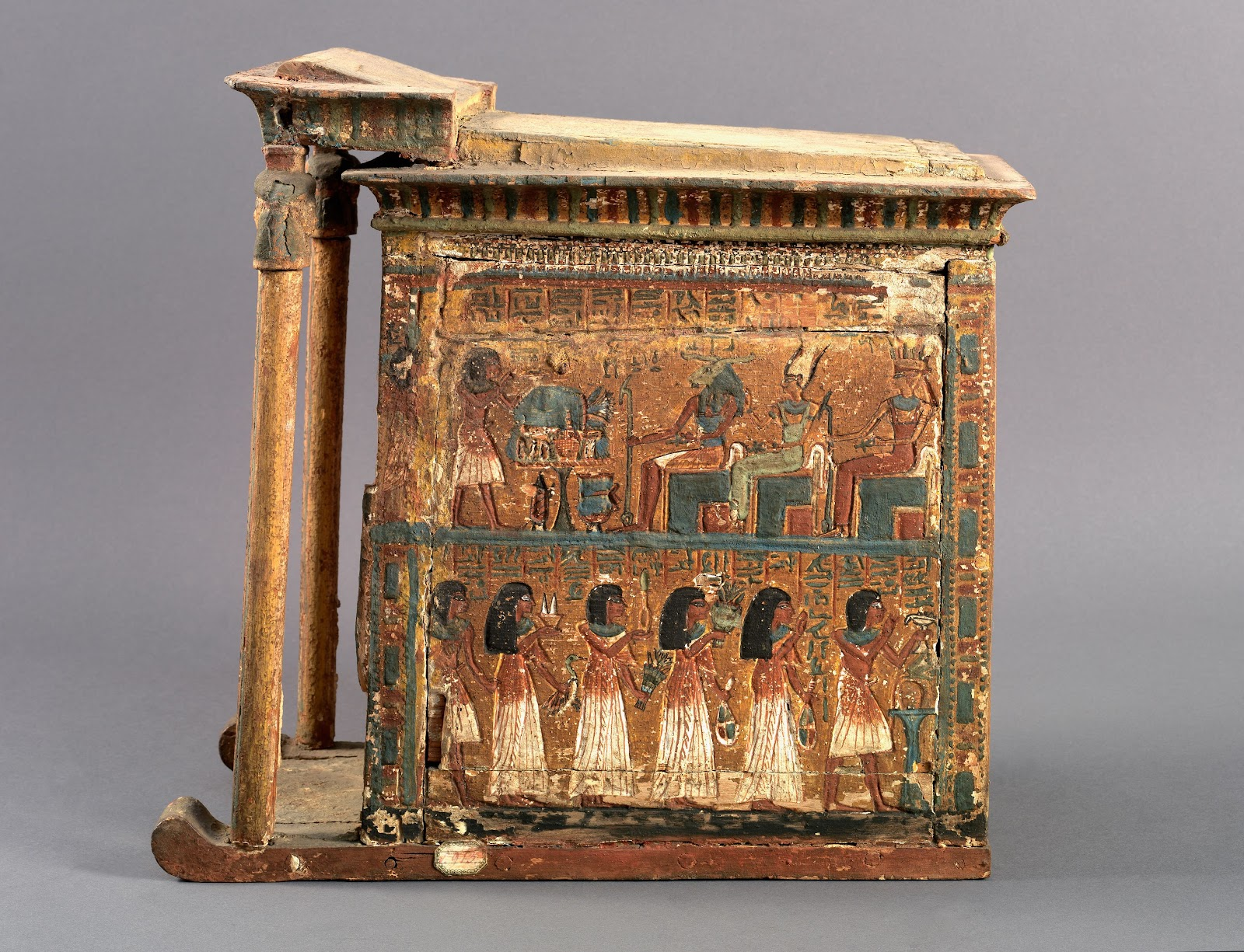
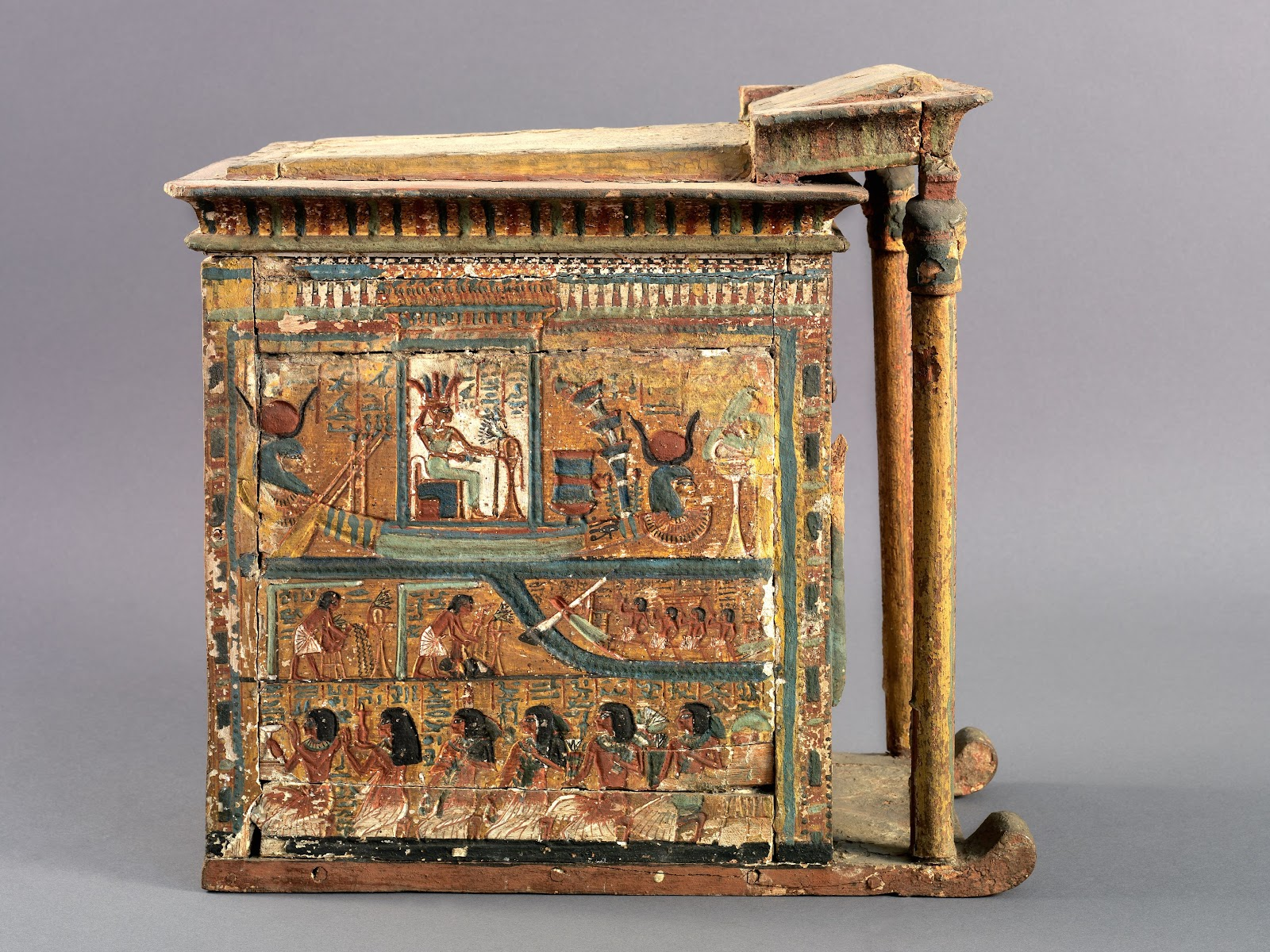
Dating from the 19th Dynasty (1292 – 1190 BC) and coming from Deir el-Medineh, the charming “naos of Kasa” is 33.5 cm high, 18 cm wide and 33 cm deep. Made of stuccoed and painted wood, its façade takes the form of a temple with a portico with two columns. Inscribed with hieroglyphs, their “hathoric” capital offers a charming face of the goddess with large eyes surrounded by kohol and an imposing black wig. On her head is an abacus serving partly as a support for a coved cornice decorated with a series of vertical blue-green, blue-red bands. The “body” of the chapel is rectangular in shape: its lower part rests on a sledge while the upper part also takes the form of a coved cornice with painted bands.

The front reveals a charming double door painted in red ochre with black frames. The door is closed by two round black knobs located in the upper third. Above each knob is a “frame” containing four columns of hieroglyphs. The interior consists of two compartments of unequal height.

Votive naos of Kasa – painted wood – 19th dynasty – 1292 – 1190 BC BC – from Deir el-Medineh
Egyptian Museum of Turin – Cat. 2446 (by acquisition from the Drovetti Collection in 1822) – museum photo

Both sides and the back of the chapel are covered with scenes painted in several registers. The majority of them are dedicated to the “Triad of the First Cataract,” or “Elephantine Triad,” associating the god Khnum with the goddesses Satis and Anuket (Anoukis). The latter is generally presented as “the daughter of the divine couple” or “the wife of the god.” In “Ancient Egypt and its Gods”, Jean-Pierre Corteggiani specifies that one of her titles is: “Mistress of To-Seti, that is to say of Nubia; she is sometimes called the Nubian, although there is no proof that she is really from this region, one of her functions is to guard the southern border of Egypt”… And he adds “If it is up to Satis, assimilated to Sothis, to make the beneficial flow rise, it falls to Anoukis the equally essential task of making it decrease and thus to allow, after the flood recedes, seeds to germinate and vegetation to grow on the land freed by the waters”.

Anouket’s primary attribute, which makes her immediately identifiable, is her tall and generous headdress made of ostrich feathers… As for Satis, she wears the white crown adorned with two antelope or gazelle horns…

Votive naos of Kasa – painted wood – 19th dynasty – 1292 – 1190 BC BC – from Deir el-Medineh
Egyptian Museum of Turin – Cat. 2446 (by acquisition from the Drovetti Collection in 1822) – museum photo

On this chapel is inscribed this powerful prayer: “Worship Anouket, mistress of Sehel, kiss the earth of Satis, mistress of Elephantine. May she grant life, strength, skill, favour, love, and a beautiful burial after old age and burial in the district of the praised in the great West of Thebes, the district of the righteous, to the servant of the Place of Truth, Kasa, justified.”

The back of the naos reveals Kasa, kneeling, arms raised in worship, a prevalent iconography in Deir el-Medineh… “The texts inscribed on this small chapel also cite the name of the god Amun, ‘the beloved god who listens to prayers, who helps the orphan, who saves from shipwreck'” specifies Marcella Trapani, in the “Catalogue of the Museo Egizio”. And she adds: “In all likelihood, this naos was originally placed in Kasa’s house”…

Votive naos of Kasa – painted wood – 19th dynasty – 1292 – 1190 BC BC – from Deir el-Medineh
Egyptian Museum of Turin – Cat. 2446 (by acquisition from the Drovetti Collection in 1822) – museum photo

The question, of course, arises as to what it contained. In the study she devotes to it in BIFAO 72, Dominique Valbelle offers this analysis: “The original contents of this naos are also mysterious. The interior, as we have seen, is divided into two unequal compartments by a small shelf. There is therefore very little space left above to house a statuette or some other ‘ex voto’…”

Was Kasa originally from the First Cataract region? In any case, he was a member of the royal institution of “Set Maât her imenty Ouaset” (“the Place of Truth to the west of Thebes”, present-day Deir el-Medineh). Founded at the beginning of the 18th Dynasty under the reign of Thutmose I, this “corporation” brought together architects, scribes, painters, sculptors, quarrymen, etc., responsible for digging and decorating the eternal dwellings of the Valley of the Kings, the Valley of the Queens, and even more distant necropolises. They lived as a family in this “fortified” village, composed of stone houses with palm-leaf roofs, places of worship, and a hillside necropolis. “The fact that we often refer to them as ‘workers’ sometimes tends to give credence to the misconception that the community of the village of Deir el-Medineh was at the lowest level of Egyptian society. In fact, these men were artisans, most of them highly skilled and distinguished for their expertise,” explains Pierre Grandet in “The Artists of Pharaoh, Deir el-Medineh and the Valley of the Kings”…

Votive naos of Kasa – painted wood – 19th dynasty – 1292 – 1190 BC BC – from Deir el-Medineh
Egyptian Museum of Turin – Cat. 2446 (by acquisition from the Drovetti Collection in 1822) – museum photo

From its creation to its decline at the end of the Ramesside period, this “microcosm” left a wealth of evidence of considerable importance… It is expressed at various levels: daily life, society, architecture, art, writing, or even in the “intimacy” of the “repertoire” of their eternal homes and in the funerary trousseaux rich in lessons that they contained…

This naos, which is an exceptional piece, arrived at the Egyptian Museum in Turin in 1822, through the acquisition of the Drovetti Collection: it was registered under the inventory number Cat. 2446. In the work cited above, Marcella Trapani indicates that it came from tomb no. 10 of Deir el-Medineh, which “Porter & Moss” actually attributes to “Penbuy and Kasa” and dates from the reign of Ramses II…

Marie Grillot

Sources:

Votive naos of Kasa
https://collezioni.museoegizio.it/it-IT/material/Cat_2446/?description=Naos+votivo+di+Kasa&inventoryNumber=&title=&cgt=&yearFrom=&yearTo=&materials=&provenance=&acquisition=&epoch=&dynasty=&pharaoh=
Bertha Porter, Rosalind L. B. Moss, Topographical Bibliography of Ancient Egyptian Hieroglyphic Texts, Reliefs, And Paintings – I. The Theban Necropolis Part 1. Private Tombs, Second edition revised and augmented – Griffith Institute Ashmolean Museum Oxford, 1960, pp.19-21
http://www.griffith.ox.ac.uk/topbib/pdf/pm1-1.pdf
Ernest Scamuzzi, Egyptian art at the Turin Museum, Hachette, 1966
Dominique Valbelle, The Naos of Kasa at the Turin Museum, Bulletin of the French Institute of Oriental Archaeology 72, 1972, pp. 179-194
The Egyptian Museum, Turin, Federico Garolla Editore, 1988
Isabelle Franco, Dictionary of Egyptian Mythology, Pygmalion, 1999
Guillemette Andreu, The Pharaoh’s Artists, Deir el-Medina and the Valley of the Kings, exhibition catalogue, Turnhout, RMN, Brepols, 2002
Guillemette Andreu, Florence Gombert, Deir el-Medina: The Pharaoh’s Craftsmen, RMN, Hazan, 2002
Eleni Vassilika, Art Treasures from the Egyptian Museum, Allemandi & Co, 2006
Jean-Pierre Corteggiani, Ancient Egypt and its Gods, Fayard, 2007
Egyptian Museum Guide, Franco Cosimo Panini Editions, 2015
Hanane Gaber, Laure Bazin Rizzo, Frédéric Servajean, At work we know the artisan… of Pharaoh! – A century of French research in Deir el-Medina (1917-2017), 2018, Silvana Editoriale
Guillemette Andreu, Dominique Valbelle, Guide to Deir el-Medina. A village of artists, Cairo, French Institute of Oriental Archaeology, IFAO Cairo, 2022

An Incredible Discovery! The Journey of a Clear and Radiant Stele, Unveiling the Beauty of Princess Nefertiabet.

Standard
Neferetiabet_c (wikimedia.org)

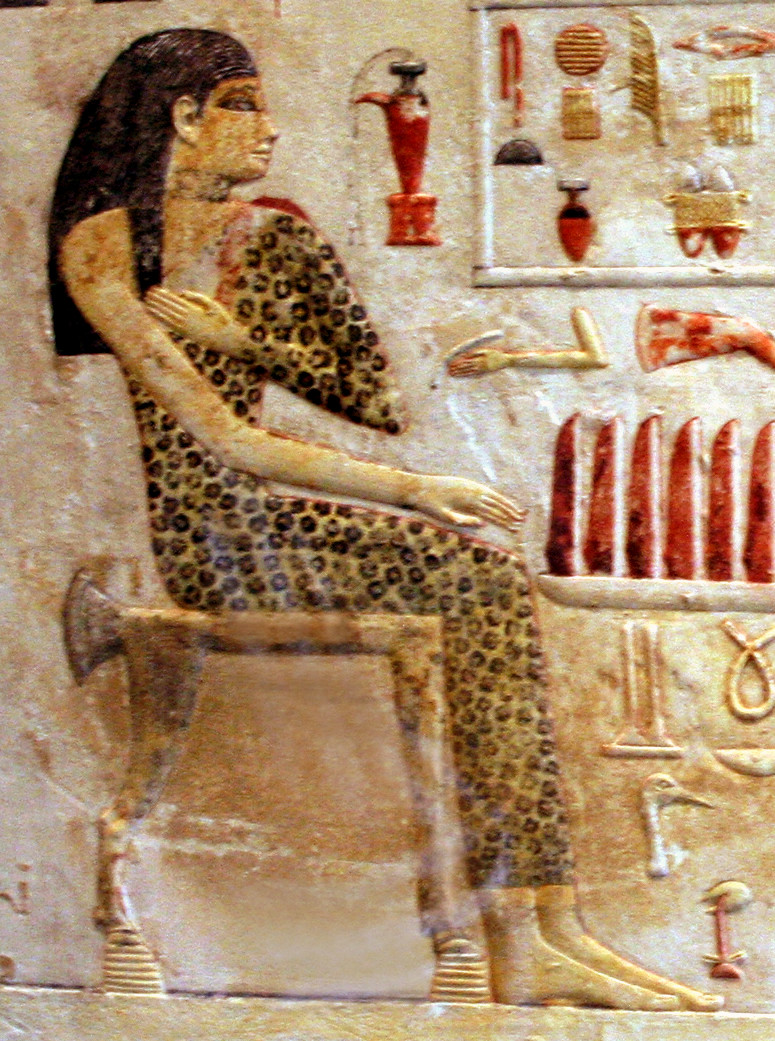
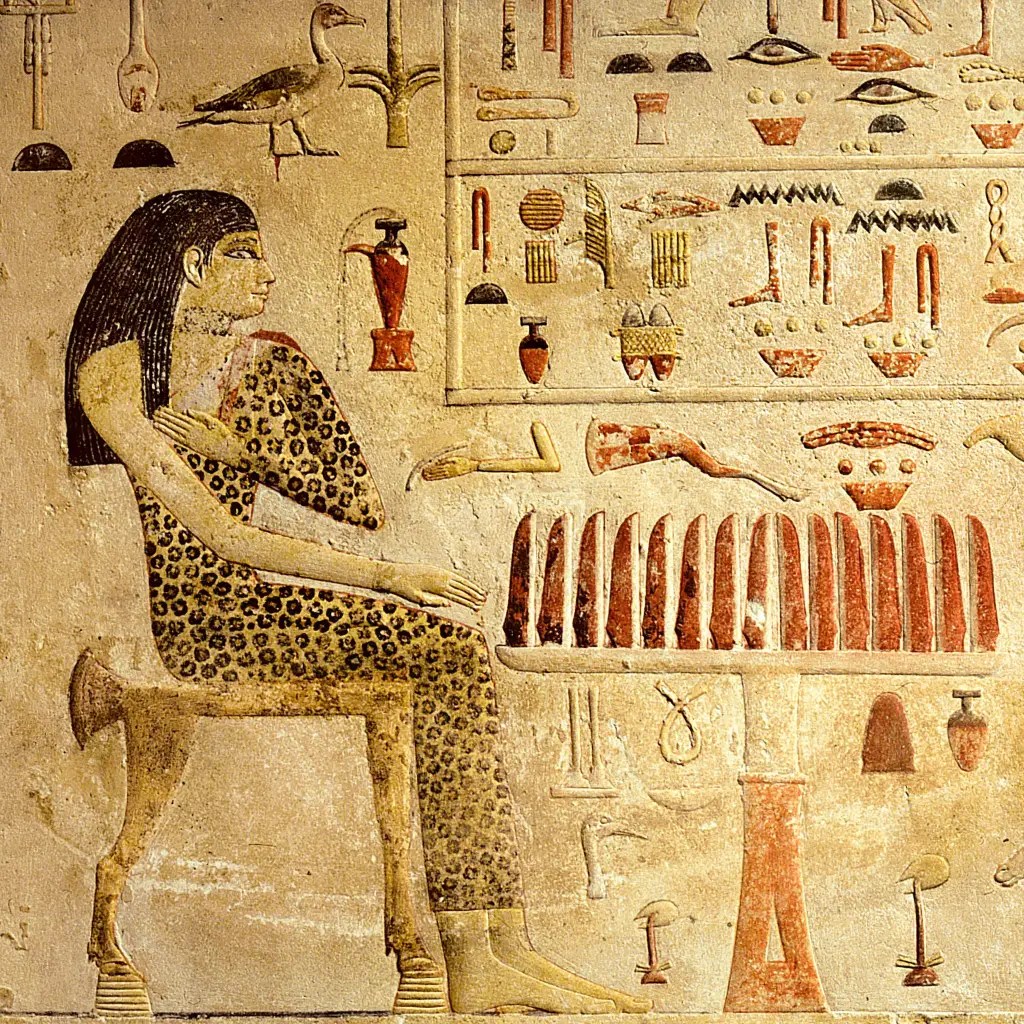
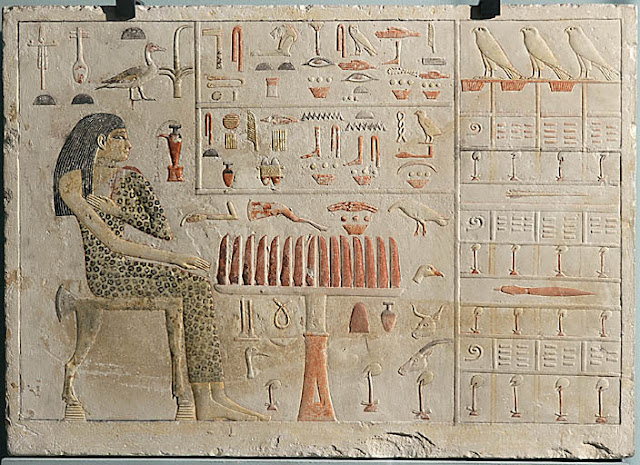
This relief stele from Princess Nefertiabet’s tomb (G 1225) in Giza depicts her and other relatives of the king, including Nefertiabet, daughter of Khufu. She is shown seated, facing to the right, depicted with a long wig and a panther-skin garment.

An offering table before her holds customary reeds and various food items. Below are linen and ointment on the left, and bread, beer, oryx, and bull on the right. A linen list is displayed beside the slab.

Stele of Princess Nefertiabet and her food offerings
Egypt Museum

Now, I would like to share an excellent description of the discovery of this beautiful ancient artwork by the brilliant Marie Grillot.

The stele of Nefertiabet: from its mastaba in Giza to the Louvre Museum

via égyptophile

Stele depicting Princess Nefertiabet before her funeral meal – painted limestone – reign of Khufu (4th Dynasty)
Discovered by Montague Ballard in 1902 in mastaba G 1225 at Giza
Entered into the Louvre Museum in 1938 by the gift of L., I. and A. Curtis – E 15591

In 1901-1902, Montague Ballard, a British brewer, obtained an excavation permit at the Giza site. He stayed there for only a very short time, but it was long enough to make some interesting discoveries. In 1902, in the western cemetery, he discovered a mastaba, which would be referenced as G 1225, that notably contained the “Stele of Nefertiabet,” named after its “owner.”

Most of the artefacts discovered during his mission were subsequently dispersed. Three pieces from the mastaba ended up in Arthur Sambon’s collection. They were then put up for sale on May 25, 1914, in Paris by the expert Jacob Hirsch. The stele seems to correspond to the object presented under No. 2 of the “Stone Sculptures of Egyptian Art.” Did it then pass into other hands? In any case, it was later found in the possession of an aesthete and art lover: Atherton Curtis.

Born in New York in 1863, he settled in Paris in 1904, where he “brought and continually increased his collection.” In “La Grande Nubiade,” Christiane Desroches Noblecourt recalls: “Among the most prestigious donors (to the Louvre), not only for the Egyptian department but for all the others, was Atherton Curtis. He wanted to add to his name that of Louise, his first wife, who died prematurely, and that of the second, who was also passionate about all antiquities, Ingeborg.” The stele entered the Louvre in 1938 through the “Curtis Bequest.” It was during the November 8, 1938 meeting of the Council of National Museums that Charles Boreux, Curator of the Department of Egyptian Antiquities, informed “the Council of the immediate gift, by Mr. and Mrs. Atherton Curtis, of three magnificent pieces of sculpture included in the donation subject to usufruct that they made to the Louvre a few months earlier. These are a painted limestone group representing King Amenhotep and Queen Nofertiti, a group from the Old Kingdom, and finally a polychrome bas-relief in the name of Princess Nofritabtj.” He died in 1943, and the stele was then permanently housed at the Louvre, registered under the reference E 15591.

Measuring 37.70 cm high, 52.50 cm wide, and 8.30 cm thick, it is made of painted limestone. It belongs to the category known as “slab stelae,” which are in fact “slabs embedded in the walls of funerary chapels” and which represent the oldest reliefs in Giza.

Stele depicting Princess Nefertiabet before her funeral meal – reign of Khufu (4th Dynasty), painted limestone
discovered by Montague Ballard in 1902 in mastaba G 1225 at Giza
entered the Louvre Museum in 1938 by the Donation of L., I. and A. Curtis – E 15591 – photo © 2013 Musée du Louvre / Christian Décamps

While the scene depicted is relatively common in Old Kingdom funerary iconography, its quality and the finesse of its execution remain exceptional. This suggests that it was likely executed in the workshops of Pharaoh Khufu. This could also be explained by the fact that Nefertiabet was either “the daughter or sister of the great pharaoh” or, according to another interpretation, “probably a sister of King Khufu and a daughter of Snefru.”

The rectangular surface is surrounded by a plain band standing out in slight relief. Nefertiabet is depicted alone facing her eternal meal. She is on the left side, seated on a delightful bull-legged stool, the back of which is decorated with a papyrus umbel.

Slim, fine, slender, her “yellow skin colour is well preserved,” and she is particularly elegant. Her panther-skin dress is held together, on the left, by “seven red shoulder knots, all applied with paint,” while on the right, the shoulder is bare. The garment stops above the ankles, revealing the bracelets that adorn them, while her bare feet rest flat on the ground.

Stele depicting Princess Nefertiabet before her funeral meal – painted limestone – reign of Khufu (4th Dynasty)
Discovered by Montague Ballard in 1902 in mastaba G 1225 at Giza
Entered into the Louvre Museum in 1938 by the gift of L., I. and A. Curtis – E 15591
This stele, walled up in the chapel of her tomb in Giza, magically ensured the eternal nourishment of the deceased, a relative of King Khufu.

Her perfectly profiled face is highlighted by a long, black, tripartite wig, which covers a large part of her forehead but leaves her ears visible. Her large eyes are rimmed with kohl, and her nose and mouth are of ideal proportions; only her neck, adorned with a necklace, appears a little short. “The face expresses the ideal of feminine beauty at the time of the pyramids: slightly rounded forehead, fine, straight nose, delicately contoured lips and nostrils, and a rounded throat” (Christiane Ziegler, “Egypt at the Louvre”).

Her left arm rests, hand flat, on her right breast, while her right arm is held alongside her body, hand outstretched towards “a white stone footed tray, placed on a cylindrical terracotta support, and covered with slices of cake with a golden crust and white crumb”.

The quality of the carved and painted hieroglyphs that “document” the stele is of total perfection, as proven by the precision of execution of the libation ewer, the animal heads, and even the birds,…

Above Nefertiabet’s head, “an inscription in large hieroglyphs enhanced with colour specifies her name and title; one will particularly admire the reed and the duck, meaning respectively ‘king’ and ‘daughter’… All around (the pedestal table) hieroglyphic signs and images immortalise the offerings necessary for her survival that the inscription wishes her thousands of: duck with its head cut off; head, foreleg and rib of beef; jug of wine. Above the table, two lines of hieroglyphs, arranged in a frame, list the products of the funerary ritual (incense, ointment, green and black makeup) as well as fruits and drinks: figs, jujubes, carobs, beer, and wine. The entire right-hand side is occupied by lists listing thousands of pieces of fabric, undoubtedly necessary for mummification, with their quality and length, as specified by Christiane Ziegler in the work cited above.

One might rightly wonder how this stele, which dates from 2590-2565 BC and is therefore more than 4,500 years old, has reached us in such a well-preserved state. Here is part of the explanation: “This stele was sealed on the outer wall of its tomb in Giza, at the foot of the Great Pyramid. Later walled up, it was protected from the wear and tear of time and men.

In his study “Slab Stelae of the Giza Necropolis” published in 2003, Peter Der Manuelian specifies however that: “The remains of the original mud-brick chapel have not been preserved and the exact location of the slab stela could not be determined due to the destruction of this part of the mastaba wall by Ballard”…

But at the Louvre, in the heart of the prestigious Parisian museum – precisely on the first floor of the Sully wing, in room 635 dedicated to the Old Kingdom – Nefertiabet remains very much alive, adorned with everything fundamental to ensure her a long, very long eternity…

Marie Grillot

Sources:

Stele of Nefertiabet
https://collections.louvre.fr/ark:/53355/cl010005261
Jacob Hirsch, Expert, Catalogue of Works of Art and High Curiosities…, Faience…, Saxon Porcelain,… Egyptian and Greek Sculptures…, Persian Manuscripts…, Old Paintings… Forming the Collection of Mr. Arthur Sambon… Sale: May 25-28, 1914, Imprimerie Georges Petit, Paris, 1914
https://gallica.bnf.fr/ark:/12148/bpt6k12478139/f12.item.r=tombeau
Charles Boreux, The Atherton Curtis Donation, Bulletin des musées de France, November 1938
http://gallica.bnf.fr/ark:/12148/bpt6k58649569/f8.image.r=curtis?rk=21459;2
Christiane Desroches Noblecourt, The Great Nubian or the Journey of an Egyptologist, Stock, 1992
Guillemette Andreu, Marie-Hélène Rutschowscaya, Christiane Ziegler, Ancient Egypt at the Louvre, Hachette, 1997
Christiane Ziegler, Egyptian Art in the Age of the Pyramids, Réunion des musées nationaux, 1999, p. 20, 207-208, notice no. 54.
Peter Der Manuelian, Slab Stelae of the Giza Necropolis, The Peabody Museum of Natural History of Yale University, The University of Pennsylvania Museum of Archaeology and Anthropology, New Haven and Philadelphia, 2003
http://giza.fas.harvard.edu/search-results/?q=1225
Morris L. Bierbrier, Who Was Who in Egyptology, London, Egypt Exploration Society, 2012
Campbell Price, Ancient Egypt, Pocket Museum, Thames & Hudson, 2018

The Golden Face of an Egyptian General

Standard

The burial chamber was below ground and housed and protected the body and spirit. The mortuary chapel was above ground and was accessible to visitors who would perform rites and make offerings of food and drink for the dead person.

Egyptian burial chambers resembled secret galleries meant to remain unseen, filled with stunning artwork for an elite audience—the gods. Art could transport individuals, connecting the mortal and the immortal, freeing them from the silence of death.

Tomb art was sacred and magical, controlling chaotic forces threatening universal order. Whether mass-produced or commissioned, painting, sculpture, carving, and writing upheld order by invoking the gods to ensure safe passage and eternal sustenance for the deceased in the afterlife. Tombs in ancient Egypt

However, despite all this, here is a brilliant article by Marie Grillot about an undamaged treasure of ancient Egypt.

The Golden Mask of General Oundebaounded

via: égyptophile

Mask of General Oundebaounded – gold – 21st Dynasty
Discovered in his tomb (NRT III) in Tanis in 1946 by Pierre Montet and his team
Egyptian Museum, Cairo – JE 87753

The untouched tomb of General Oundebaounded was discovered in Tanis in 1946 by the team of Pierre Montet, known as “The Man from Tanis. “

It was Pierre Lézine, an architect newly arrived on the mission, who noticed a particular spot in the tomb of Psusennes I where the thickness of a wall appeared abnormal.

Under the initially sceptical eye of his colleagues, he undertook additional surveys that confirmed his intuitions.

In “The Discovery of the Treasures of Tanis”, Georges Goyon recounts: “It was then that a tiny room appeared, with no exit, containing, intact, as if embedded in its socket, a beautiful pink granite sarcophagus. The limestone walls were covered with brightly coloured paintings depicting ritual scenes and inscriptions.” This sarcophagus would turn out to be a ‘re-use’: having initially been dedicated to a priest of Amun of Thebes, it had been modified for its new ‘occupant’…

Detail of the east wall of the Oundebaounded burial chamber (NRT III) – Montet Archives, 1946

Pierre Montet explains: “The Oundebaounded vault contained only the sarcophagus and the four canopic jars. Everything was in the sarcophagus. The mummy, dressed in its finery, was first enclosed in a silver coffin, and this in a gilded wooden coffin. When the gilded wooden coffin had been introduced into the granite basin, three paterae and a cup were placed on the lid, as well as a sword, a sceptre, and several walking sticks. The extreme humidity that reigns throughout the necropolis caused the complete destruction of everything made of wood. The gilded wooden coffin was nothing more than a pile of dead leaves. The silver coffin itself was partly eaten away.”

The pink granite sarcophagus of Oundebaounded (left), on display outside the French Mission house in Tanis

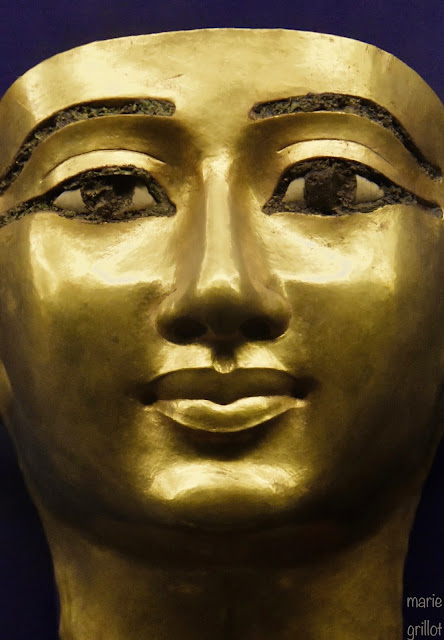
On his face was this magnificent mask, reminiscent of Sheshonq II’s. 22 cm high, it is carved from a thick sheet of gold and decorated with glass paste inlays. In ancient Egypt, gold was imbued with power: this metal was not only assimilated to the flesh of the gods, but it was also supposed to ensure the protection of the deceased.

Mask of General Oundebaounded – gold – 21st Dynasty
Discovered in his tomb (NRT III) in Tanis in 1946 by Pierre Montet and his team
Egyptian Museum, Cairo – JE 87753

In “The Wonders of the Egyptian Museum in Cairo,” Silvia Einaudi gives this beautiful description: “The mask covered the face, neck, and ears of the sovereign, and stopped at the forehead where six perforated tabs allowed it to be attached to the mummy’s head. The eyes, miraculously intact, are made of glass paste of different colours inserted into the metal cavities: white for the eyeball and black for the pupil. The eyebrows and the outline of the eyes were made using the same technique. The nose is almost perfectly shaped. The lips are narrow and full. The ears are not symmetrical, and the left is more prominent than the right. The mask is an idealised portrait of Oundebaounded, depicted as a young man with a serene and tranquil expression, underlined by a barely marked smile.

Examination of the General’s mummy revealed that he had joined the Ialou Fields when he was about fifty years old. Georges Goyon specifies that he was: “of slender build, perhaps of Nubian race, as evidenced by the long bones and relatively small head.”

General Oundebaounded’s swimming hook – silver and gold – 21st Dynasty
Discovered in his tomb (NRT III) in Tanis in 1946 by Pierre Montet and his team
Exhibited at the Egyptian Museum in Cairo – JE 87742

For eternity, he was surrounded by gold jewellery, amulets, precious dishes (among them the magnificent patera with swimmers), statuettes, … all of an extreme quality and a wealth worthy of a pharaoh… Who was he to enjoy such recognition?

The name of this close government associate was not unknown to the mission members, as several of his funerary statuettes, made of bronze and earthenware, had been found, as early as 1939, near the sarcophagus of the Pharaoh Sheshonq. Furthermore, a sword bearing his name had also been deposited near Psusennes.

Georges Goyon presents him to us thus: “He was not a person of royal blood, but a high priest of Khonsu and Chief of the Archers of Pharaoh. He was also invested with the important title of Superior of the Prophets-of-all-the-gods, which seemed to correspond to that of minister of worship. It was King Psusennes I who had elevated him to these high functions…. One of his most curious titles was that of “Sole-appointed-to-the-praise-of-the-great”, whose duty was to present the holders to the king during the reward ceremonies.”

Mask of General Oundebaounded – gold – 21st Dynasty
Discovered in his tomb (NRT III) in Tanis in 1946 by Pierre Montet and his team
Egyptian Museum, Cairo – JE 87753

One can imagine the aura Oundebaounded must have held at court, and thus understand why he was buried so close to the sovereigns…

The entire treasure contained in his tomb was sent shortly after, under police escort, to the Cairo Museum. The funerary mask was recorded in the Journal of Entries under reference JE 87753.

It is interesting to note that Pierre Montet reports that statuettes – ushabtis – bearing the General’s name were found on the antiques market. “Sixteen servants were nevertheless soon recovered in the trade… In total, we currently know of around forty listed in other Institutes and private collections.”

Marie Grillot

Sources:

Georges Goyon, The Discovery of the Treasures of Tanis, 1987
Tanis: Gold of the Pharaohs, exhibition catalogue, Paris, Galeries nationales du Grand Palais, March 26 – July 20, 1987
Francesco Tiradritti, Treasures of Egypt – The Wonders of the Egyptian Museum in Cairo
National Geographic, Treasures of Ancient Egypt at the Cairo Museum

Posted on 23rd May 2017 by Unknown

It Could Not Merely Be A Divine Touch!

Standard

I must confess I dream of such an encounter with a divine goddess, and I should not be a king!

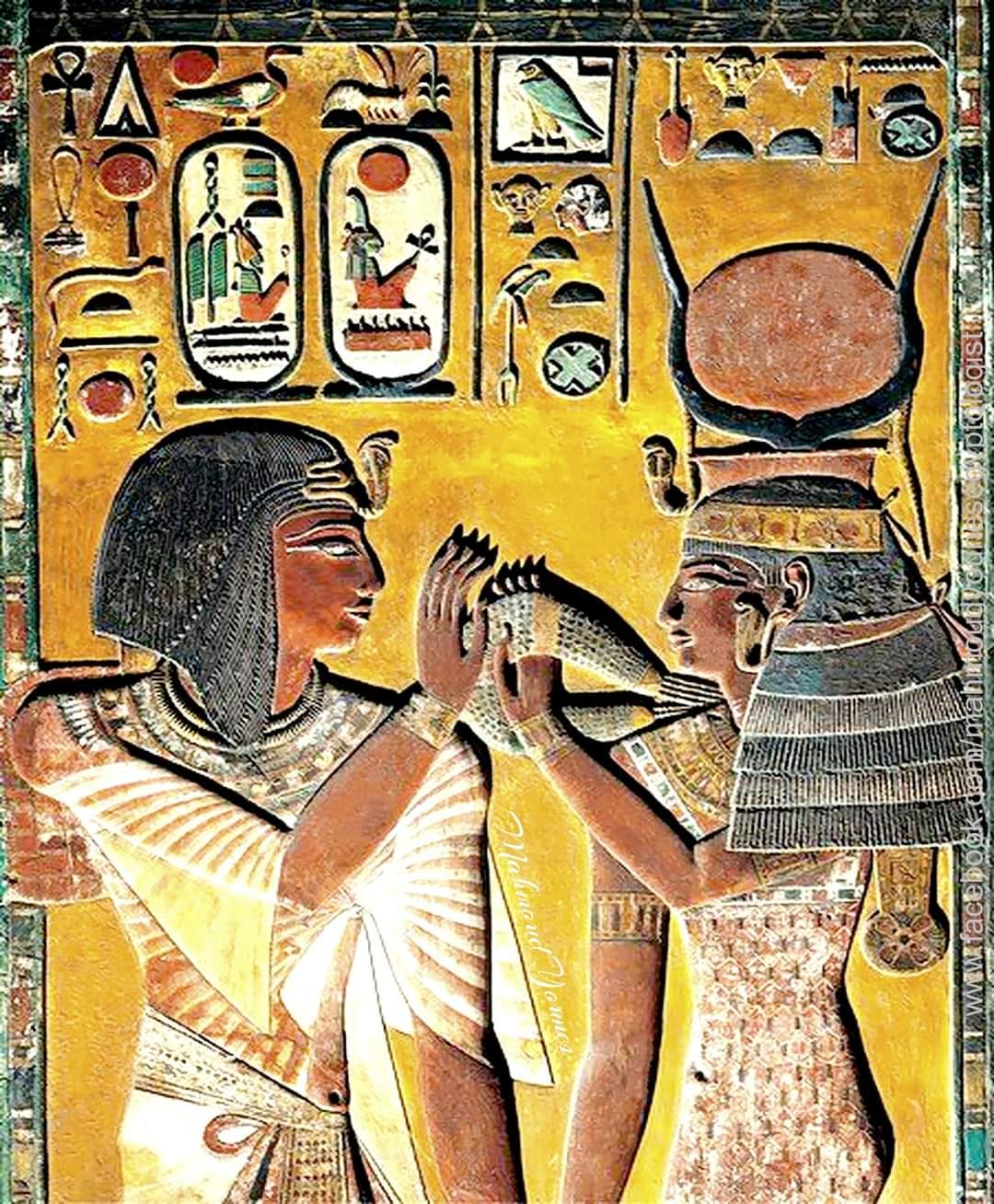
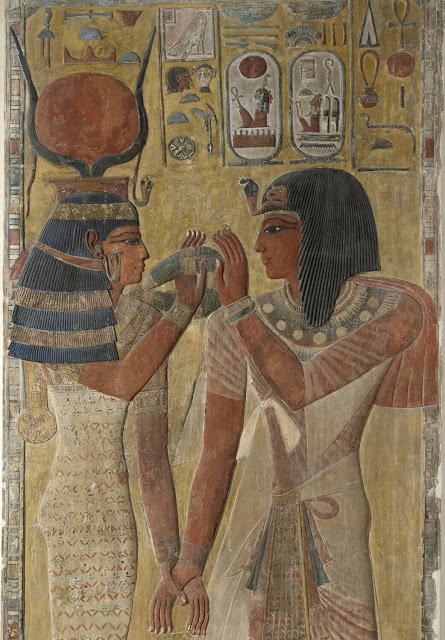
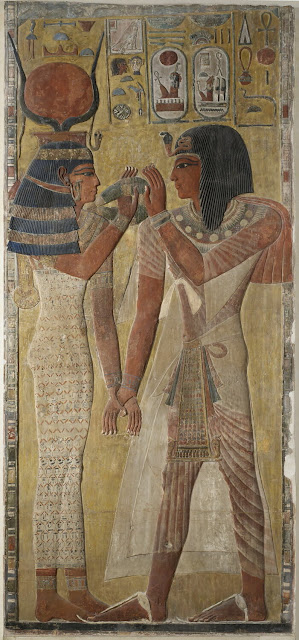
This relief adorns the well-preserved tomb of King Seti I (KV17) in the Valley of the Kings. Hathor, Lady of the West, welcomes Seti and presents her menat necklace as a symbol of protection. Her wig is adorned with cow horns, her sacred animal, and a solar disk indicating her status as Ra’s daughter. The hieroglyphic text above identifies her using a falcon symbol in a temple, reading Hwt-Hr, meaning ‘House of Horus’.

The Goddess Hathor and Seti I painted reliefs on a pillar in Seti I’s tomb, Thebes, New Kingdom, Dynasty XIX, Egypt.

We read a splendid description of this enchanting and divine encounter by the exceptional Marie Grillot. Enjoy!

Hathor and Seti I: a divine and royal face-to-face!

via Egyptophile

Bas-relief de Séthi Ier et Hathor – calcaire peint – Nouvel Empire – XIXe dynastie (1294 -1279 av. J.-C.) – provenant de sa tombe – KV 17
découverte le 18 octobre 1817 dans la Vallée des Rois par Giovanni Battista Belzoni
 Département des Antiquités égyptiennes du Musée du Louvre – Champollion n°1 – B 7 – N 124 – CC 243 – rapporté par Jean-François Champollion 
lors de l’Expédition franco-toscane (1828-1829) – © 2017 Musée du Louvre, Dist. GrandPalaisRmn / Christian Décamps

What intensity, what symbiosis in this divine and royal face-to-face! This “painting” of fine painted limestone, 226.5 cm high and 105 cm wide, brings together the goddess Hathor and Seti I under the sign of the sky – and elegance. As Christiane Ziegler so aptly points out in “Ancient Egypt at the Louvre”: “The scene is treated with the refinement characteristic of the time of Seti I: careful bas-relief, the richness of warm colours, transparency of pleats, the perfection of details for the stone-encrusted front or the pearl net adorning the divine tunic whose motifs take up the names of Seti I.”

This dress, punctuated with geometric patterns and bordered with alternating-coloured rectangular braid, magnificently highlights the slender body of Hathor, “patron saint of the Theban necropolis.” Ravishing finery adorns her neck and limbs: a gorget, bracelets, armillae, periscelides, all in perfect taste. Her earring caresses her cheek in the shape of an upright serpent (not without announcing the one Nefertari wore in several representations of her tomb). Her face, of absolute purity, is illuminated by a stretched eye, surrounded by kohol and surmounted by an eyebrow which corresponds precisely to the stretching of the line of eyeshadow… Her “ruffled” vertically striated wig is available in two tones. It is enhanced with a gold-coloured headband above the forehead and, a little lower down, with this red ribbon tied on the nape of the neck so particular to goddesses. Her head is surmounted by a simple mortar in the centre, which is stuck in two cow horns enclosing the solar disk. On the other side stretches a cobra, whose head can be seen on the front and the tail on the back.

Bas-relief of Seti I and Hathor – painted limestone – New Kingdom – 19th Dynasty (1294-1279 BC) – from his tomb – KV 17
discovered on October 18, 1817, in the Valley of the Kings by Giovanni Battista Belzoni
Department of Egyptian Antiquities of the Louvre Museum – Champollion No. 1 – B 7 – N 124 – CC 243 – brought back by Jean-François Champollion
during the Franco-Tuscan Expedition (1828-1829) – © 2017 Musée du Louvre, Dist. GrandPalaisRmn / Christian Décamps

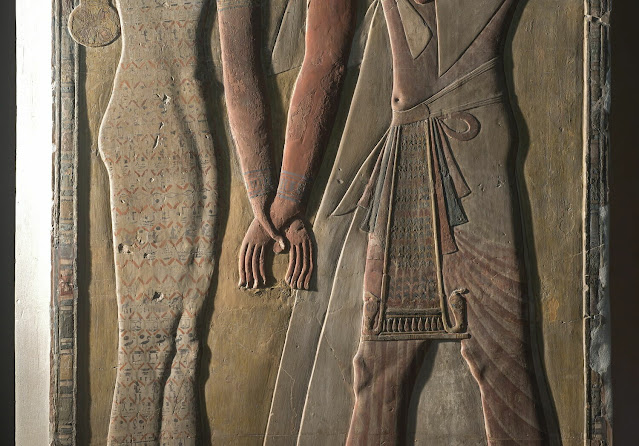
Seti I, son of Ramses I, the second king of the 19th Dynasty, who reigned over the Dual Land for eleven years, is depicted in full ceremonial dress. His magnificent black wig is encircled by the rearing cobra with its coiled body. His feet are shod with gold sandals. His clothing is made of the finest linen, and his loincloth features a superb front. Bordered with ribbons are composed of vertical bands with a herringbone pattern and ends with a frieze surrounded by two cobras.

His right arm is stretched along his body, and his hand clasps the goddess’s left hand. “One will notice the very Egyptian symmetry of the composition and the unusual gesture of the joining hands” (Christiane Ziegler, “Ancient Egypt at the Louvre”). His left arm is bent, and his hand thus reaches the height of Hathor’s, who, making the same gesture, extends her menat necklace towards him as a sign of protection.

Bas-relief of Seti I and Hathor – painted limestone – New Kingdom – 19th Dynasty (1294-1279 BC) – from his tomb – KV 17
discovered on October 18, 1817, in the Valley of the Kings by Giovanni Battista Belzoni
Department of Egyptian Antiquities of the Louvre Museum – Champollion No. 1 – B 7 – N 124 – CC 243 – brought back by Jean-François Champollion
during the Franco-Tuscan Expedition (1828-1829) – © 2017 Musée du Louvre, Dist. GrandPalaisRmn / Christian Décamps

“The menat is a necklace with a counterweight, both an ornament and a musical instrument. Specific to the goddess Hathor, it served to transmit her fluid. The counterweight is clearly associated with the idea of ​​rebirth and transition rites, while the gesture is clearly jubilee,” analyze Christiane Ziegler and Jean-Luc Bovot in “Art and Archaeology, Ancient Egypt.” This magnificent relief comes from the entrance to the fourth corridor (the transition point to the underworld) of the pharaoh’s tomb. Giovanni Battista Belzoni unearthed it in the Valley of the Kings on October 18, 1817. It extends 137 m into the Theban mountain via seven long corridors serving 10 rooms! It is certainly one of the most beautiful and “completely” decorated in the royal necropolis. C’est aussi l’une de celles où la qualité des peintures atteint la plus haute perfection… Le découvreur est subjugué par la beauté de ce qui s’offre à ses yeux : “Je jugeai, par les peintures du plafond et par les hiéroglyphes en bas-relief que l’on distinguait à travers les décombres que nous étions maîtres de l’entrée d’une tombe magnifique”. La clé de lecture des hiéroglyphes n’étant pas encore résolue, il est alors impossible de savoir à qui appartient cette demeure d’éternité. Ainsi, dans un premier temps sera-t-elle appelée “tombe Belzoni” ou encore “tombe de l’Apis”, en référence à la “carcasse de taureau embaumé avec de l’asphalte” qui y fut trouvée. C’est bien plus tard qu’elle sera attribuée au père de Ramsès II puis référencée KV 17. 

Bas-relief of Seti I and Hathor – painted limestone – New Kingdom – 19th Dynasty (1294-1279 BC) – from his tomb – KV 17
discovered on October 18, 1817, in the Valley of the Kings by Giovanni Battista Belzoni
Department of Egyptian Antiquities of the Louvre Museum – Champollion No. 1 – B 7 – N 124 – CC 243 – brought back by Jean-François Champollion
during the Franco-Tuscan Expedition (1828-1829) – © 2017 Musée du Louvre, Dist. GrandPalaisRmn / Christian Décamps

With the invaluable help of Alessandro Ricci, Giovanni Battista Belzoni documented the most beautiful scenes from the hypogeum. He exhibited them, starting in May 1821, at the Egyptian Hall Piccadilly in London and then 1822 at the Chinese Baths in Paris.

Jean-François Champollion, who was among the visitors, was apparently left “speechless with admiration” when he visited the “larger-than-life main room”… It was at about the same time, on September 14, 1822, that the brilliant code-breaker exclaimed, “I HAVE MY CASE”! After years of work, he had just understood the extremely complex principle of Egyptian writing, which was at once ideographic, alphabetic and phonetic… On September 27, in his famous “Letter to Mr. Ironside”, he presented the results of his research to the Academy of Inscriptions and Belles-Lettres.

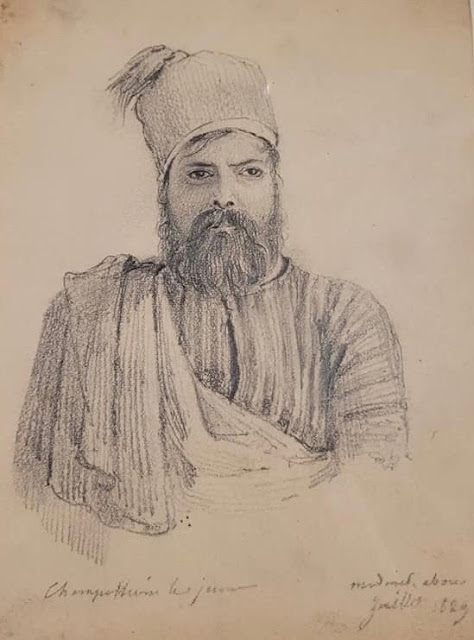
Seven years later, in 1829, while he was in the Valley of the Kings with the Franco-Tuscan Expedition, he could finally enter the tomb… “In the tomb of Sety I, J.-Fr. Champollion and I. Rosellini could not resist, faced with the beauty but also the risk of seeing them amputated or destroyed, to have two painted bas-reliefs detached from the embrasures of a corridor door, which would be shared, upon their return, by the Louvre (B7/N124) and Florence (inv. no. 2468) museums. These panels, of extraordinary finesse, represent the king standing in the company of the goddess Hathor,” specifies Christian Leblanc in his “Regards croisés sur la civilisation égyptienne”. In her “Champollion”, Karine Madrigal recalls that: “To justify this act, Champollion explains to his friend Dubois that he ‘dared, in the interest of art, to carry a profane saw into the coolest of all the royal tombs of Thebes'”…

Jean-François Champollion, “The Younger,” decipherer of hieroglyphs, founder of Egyptology
(Figeac, December 23, 1790 – Paris, March 4, 1832)
Portrait depicting him in Egyptian dress, painted by Salvatore Cherubini in Medinet Habu, July 1829
Acquired by the Champollion Museum in Vif in June 2022

This is how this bas-relief will take the “path” to France. Jean-François Champollion will personally oversee its transport and loading in Alexandria. “On November 8, the twenty or so crates of antiquities and the sarcophagus intended for the Charles X Museum were placed in a safe place in the holds of the Astrolabe” (Alain Faure, “Le savant déchiffré”). Under the command of Verninac de Saint Maur, the corvette left the port on December 6, 1829, to sail towards the French coast. It docked in Toulon on December 23. The corvette transported the precious objects to Le Havre, where a barge finally took them to the great Parisian museum via the Seine.

Marie Grillot

Sources:

Relief of Seti I and Hathor https://collections.louvre.fr/ark:/53355/cl010009693 Jean-François Champollion, Monuments of Egypt and Nubia: plates / based on drawings executed on site under the direction of Champollion the Younger, and the handwritten descriptions he wrote, published under the auspices of Mr Guizot and Mr Thiers, Ministers of Public Instruction and the Interior, by a special commission composed of Messrs. Silvestre de Sacy, Letronne, Biot, Champollion-Figeac, Paris, Didot, 1845, plate 251 Champollion the Younger, Letters Written from Egypt and Nubia in 1828 and 1829, Publisher Didier, Paris, 1868 http://gallica.bnf.fr/ark:/12148/bpt6k103771z/f345.item.r=septembre%201829.texteImage Jacques Vandier, Summary Guide to the Louvre Museum, The Department of Egyptian Antiquities, Éditions des Musées Nationaux, Paris, 1961, p. 20
Bertha Porter, Rosalind L.B. Moss, Topographical Bibliography of Ancient Egyptian Hieroglyphic Texts, Reliefs, and Paintings, 1.2, The Theban Necropolis. Royal Tombs and Smaller Cemeteries, Oxford, At the Clarendon Press, 1964, p. 539 http://www.griffith.ox.ac.uk/topbib/pdf/pm1-2.pdf Giovanni Battista Belzoni, Journey to Egypt and Nubia, Pygmalion, 1979
Jean Lacouture, Champollion, A Life of Enlightenment, Grasset, 1988
Jean-Jacques Fiechter, Harvest of the Gods, Julliard, 1994
Guillemette Andreu, Marie-Hélène Rutschowscaya, Christiane Ziegler, Ancient Egypt at the Louvre, Louvre Museum, Hachette, Paris, 1997, p. 137-140
Guillemette Andreu, Patricia Rigault, Claude Traunecker, The ABCs of Ancient Egypt, Paris, Flammarion, 1999, p. 51
Christiane Ziegler, Sophie Labbé-Toutée, Pharaoh, Exhibition Catalogue, Paris, Arab World Institute, 15-10-2004 – 10-4-2005, Paris, Flammarion, 2004, p. 261
Alain Faure, Champollion, the Scholar Deciphered, Fayard, 2004
Christiane Ziegler, Jean-Luc Bovot, Small Manuals from the École du Louvre, Art and Archaeology, Ancient Egypt, École du Louvre, Réunion des Musées Nationaux – Grand Palais, 2011, p. 227
Sylvie Guichard, Jean-François Champollion, Descriptive Notice of the Egyptian Monuments of the Charles X Museum, Paris, Louvre Editions – Editions Khéops, Paris, 2013, p. 51
Christian Leblanc, Crossed Perspectives on Egyptian Civilization, Selected Pages of Archaeology and History, L’Harmattan, Paris, 2024 https://www.editions-harmattan.fr/catalogue/livre/regards-croises-sur-la-civilisation-egyptienne/76432 Karine Madrigal, Champollion, Ellipses, 2024
Theban Mapping Project – KV 17 – Sety I https://thebanmappingproject.com/tombs/kv-17-sety-i
A Little Princess on a Scented Bottle.

Standard

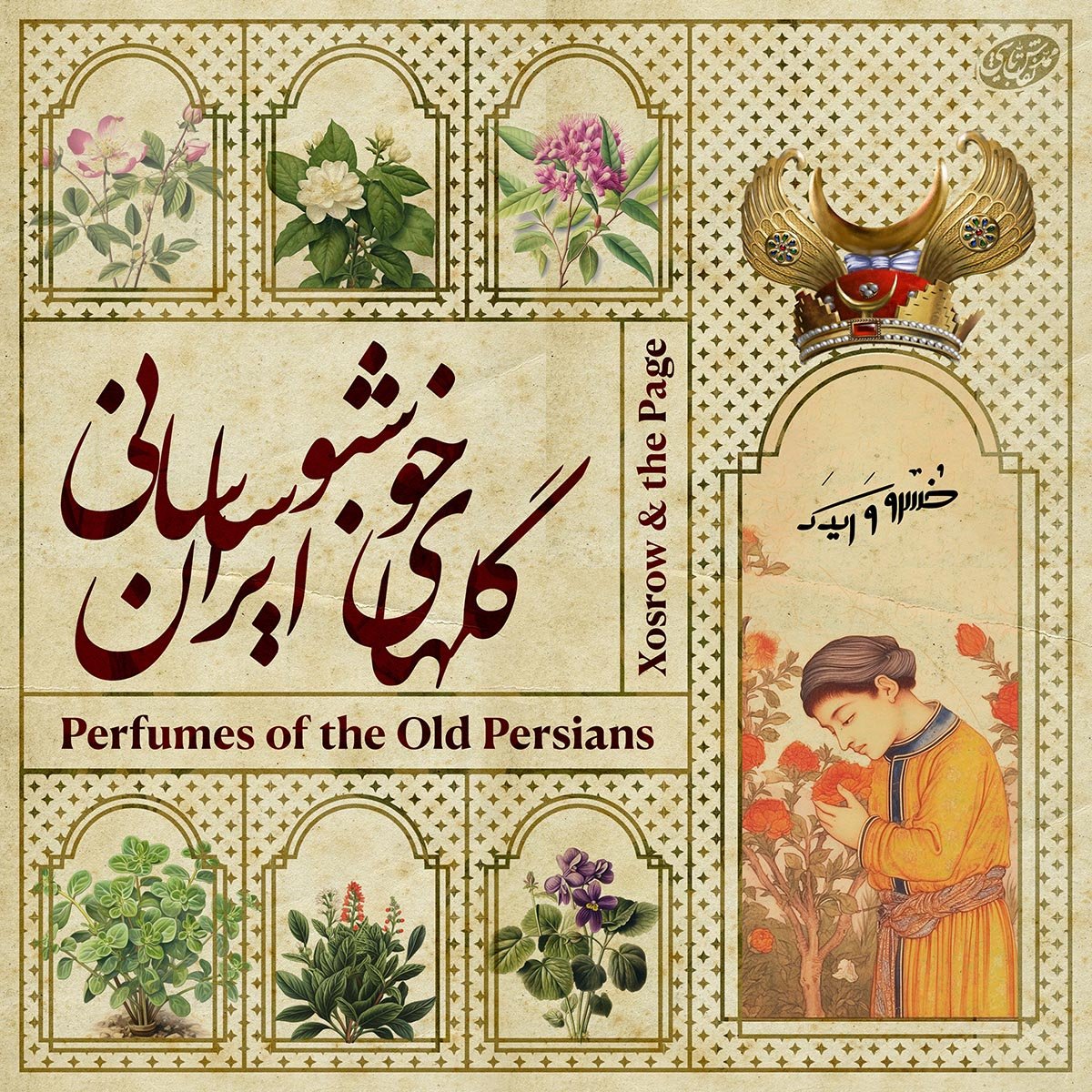
Perfume has a rich history in human culture, such as ancient Persia, which dominated the perfume trade for decades. This civilization is known for inventing non-oil-based perfumes, and the Persian nobility valued fragrances highly, with kings having unique “signature scents” reserved exclusively for them. Ancient Persia had many perfume-making workshops where people experimented with various distillation processes and scents.

“Khosrow & the Page” (Perhaps from the 7th century)

In Ancient Egypt, the elite highly valued perfume oils and fragrances. The god Nefertem, associated with perfume, is often depicted with water lilies, a key ingredient in ancient scents.

“Rise like Nefertum from the lotus to the nostrils of Ra, and come forth upon the horizon each day”.

Perfumes were created by distilling natural ingredients in non-scented oils, resulting in fruity, woodsy, or floral aromas. Notable figures like Queen Hatshepsut and Queen Cleopatra enjoyed these fragrances, using them for baths and personal grooming. It is rumoured they took perfumes to their graves.

Here is the story of finding a tiny but precious perfume bottle from ancient Egypt, written by Marie Grillot, with heartfelt gratitude.🙏💖

An Amarna princess on a vase-shaped perfume bottle: Hes.

via égyptophile

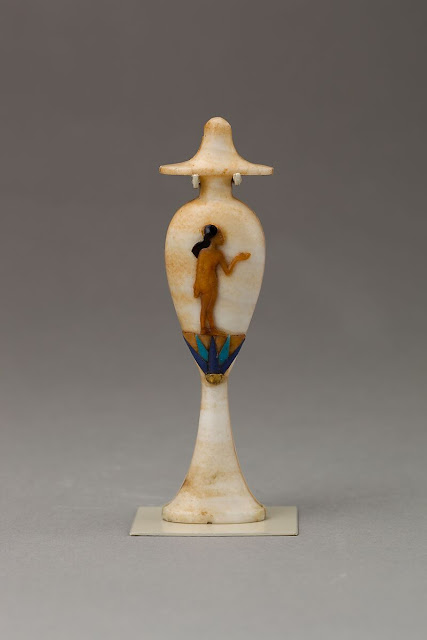
Perfume bottle in the form of a hes vase with the representation of princess
travertine (Egyptian alabaster), carnelian, obsidian, gold, coloured glass inlays
New Kingdom – 18th Dynasty – reign of Akhenaten (1353 – 1336 BCE)
Metropolitan Museum of Art, New York – accession number 40.2.4. (by acquisition from the Carter Estate in London in 1940) – museum photo

This delightful perfume bottle, in the form of a “Hes”( meaning “praise” or “favour) vase, is 10.8 cm high, 3 cm wide and has a diameter of 1.9 cm. According to some sources, it is made of calcite (Egyptian alabaster or travertine), with a decoration made of carnelian, obsidian, gold and coloured glass. In “Scepter of Egypt II”, William C. Hayes details its manufacturing technique thus: “The conical stopper was here cut in one piece with the pot itself. Since its tiny neck would have been too small to allow the insertion of a drilling tool, the bottle was made in two vertical halves, hollowed out and carefully joined with an orange resin glue”.

Perfume bottle in the form of a hes vase with the representation of princess
travertine (Egyptian alabaster), carnelian, obsidian, gold, coloured glass inlays
New Kingdom – 18th Dynasty – reign of Akhenaten (1353 – 1336 BCE)
Metropolitan Museum of Art, New York – accession number 40.2.4. (by acquisition from the Carter Estate in London in 1940) – museum photo

Its charming appearance is enhanced by the presence, on one side, of a princess’s representation in inlays. Seen in profile, it reveals a naked, slim and youthful body. Her partially shaved skull displays on one side the “braid of childhood”; thick and black, it is thrown back. One leg is advanced, and she is in the apparent walking position. One arm hangs along the body, while the other displays a bent elbow and an outstretched hand, palm open. “The elegant gesture of the princess seems to signify a sign of greeting: standing on a lotus flower according to traditional symbolism, she embodies rebirth and rejuvenation”, analyzes Dorothea Arnold in “The Royal Women of Amarna”. Indeed, the ancient Egyptians considered the lotus as “the initial flower” and “the symbol of the birth of the divine star”.

For Egyptologist Valérie Angenot: “The gesture of the little princess, the hand outstretched in a cup, is stereotypical of the gestures of princesses since the time of Hatshepsut. It denotes the attitude of a child who wants to attract someone’s attention and address them by gently pulling their chin towards her. At Tell el-Amarna, the gesture is attested about fifteen times on the walls of private tombs, administrative monuments such as the king’s audience hall, steles, perhaps seal impressions, as well as on this vase. It exclusively features princesses, mostly to show that they interact or chat among themselves during long official ceremonies, which one imagines is tedious for young children. But we can also see them making this gesture in their interaction with their parents or even with the uraeus hanging from their foreheads. At Deir el-Bahari, Hatshepsut addresses the god Amon, her father, on whose knees she stands as a child. We must, therefore, imagine an elliptical interlocutor for this vase. Various reliefs show Akhenaten and Nefertiti performing a libation to the Aten with similar vases (but often adorned with a spout, 𝘯𝘦𝘮𝘴𝘦𝘵). Therefore, the ‘person’ to whom this little princess emerging from a solar lotus is addressing herself would be none other than the god Aton, whose honour the ritual would be simulated using this artificial vase. It is remarkable that we still find the same stereotypical gesture of the cupped hand sketched by one of the two Amarna ‘kings’ on the famous Berlin stele of Captain Pasi (ÄM 17813).”
Perfume bottle in the form of a hes vase with the representation of princess
travertine (Egyptian alabaster), carnelian, obsidian, gold, coloured glass inlays
New Kingdom – 18th Dynasty – reign of Akhenaten (1353 – 1336 BCE)
Metropolitan Museum of Art, New York – accession number 40.2.4. (by acquisition from the Carter Estate in London in 1940) – museum photo

The details of its morphology, such as the elongation of the skull, the shape of the face, and the marked belly, attribute it to the Amarna period… William C. Hayes gives this sensitive description: “The naked figure of the young girl – which seems to come straight out of one of the scenes preserved in relief at Tell el-Amarna – is delicately carved in a thin sliver of carnelian, the back of which has been hollowed out to fit exactly the curved surface of the vase. The hair of the figure, topped with the characteristic heavy side lock, is a piece of polished obsidian or black glass beautifully worked and skillfully fitted. Spears and triangles of purple glass (imitation lapis lazuli) and polished carnelian have been joined together to form the lotus flower on which the figure stands, and at the base of the flower, a spot of sparkling yellow has been provided by a piece of thin gold plate.”

This precious artefact dates to the New Kingdom, the 18th Dynasty, the reign of Akhenaten (1353 – 1336 BC). It is in the Metropolitan Museum of Art in New York, where it has been registered under the accession number 40.2.4, with the “ancient provenance”: “possibly Thebes.” As for its “recent provenance,” it is “speaking”: “Howard Carter Collection, acquired from the Carter estate in London in 1940.”

Portrait of Howard Carter, author and date unknown
(London 9-5-1874 – 2-3-1939)
Draughtsman and Egyptologist, discoverer, in November 1922 with Lord Carnarvon, of the tomb of Tutankhamun

Howard Carter, painter and designer, Egyptologist, collector, and discoverer with Lord Carnarvon of the tomb of Tutankhamun in 1922, died in London on March 2, 1939. In his will (drawn up on July 14, 1931), he had designated his niece Phyllis Walker as heir to the majority of his assets, stipulating that, for all matters concerning the sale of Egyptian antiquities, she should refer to the executors he had appointed: Harry Burton and Bruce Ingram. The latter, noting in his apartment the presence of artefacts from the tomb of Tutankhamun, opted for restitution to Egypt. On March 22, 1940, Phyllis Walker wrote to Etienne Drioton, director of Egyptian antiquities, to organize this “return”. This is how around twenty artefacts will be returned, via diplomatic bag, to King Farouk… before joining the Tahrir Museum…

Howard Carter
Draughtsman and Egyptologist, discoverer, in November 1922 with Lord Carnarvon, of the tomb of Tutankhamun
With his niece Phyllis Walker, who will be his primary heir

Returning to this point in “Howard Carter, The Path to Tutankhamun”, Thomas Garnet Henry James confides: “A further comment on this sensitive subject is that the antiquities in his possession at his death, after the extraction of the Tutankhamun objects, were valued by Messrs Spink at £1093. This was certainly a low estimate, as was often the case in estate matters, but it indicates the relatively modest nature of his private collection…”

Thus, in this inventory carried out on June 1, three months after the discoverer’s death, by the London art dealers Spink & Son of St James’s Street (“Spink list”), this bottle bears the number 55.

Of course, the question arises as to whether it is linked to the young pharaoh’s funerary treasure…

Thomas Garnet Henry James’s opinion is as follows: “It can be said that any fine small object dating from the 18th Dynasty which appeared in a private collection or on the market in the 1920s and 1930s was almost systematically attributed to the tomb of Tutankhamun”…

Lord Carnarvon and Howard Carter, discoverers of Tutankhamun’s tomb in 1922 (KV 62)

As for Marc Gabolde, he draws up, in his excellent “Tutankhamun”, published by Pygmalion in 2015, a list of “Objects possibly coming from the tomb of Tutankhamun and not found (somewhere else) in Egypt”. This calcite bottle in the shape of a libation vase (hs) appears there with the following information: “The quality of the work and the materials, as well as the date that can be assigned to the object thanks to the iconography of the inlaid figure, leave little doubt that it could come from the tomb of Tutankhamun. The figure of the princess is incompatible with the time of Amenhotep III, and the royal tomb of Amarna has not provided similar objects, especially in such a state of preservation”…

Marie Grillot

Sources:

Perfume bottle in the shape of a hes-vase inlaid with the figure of a princess https://www.metmuseum.org/art/collection/search/543992 William C. Hayes, Scepter of Egypt II: A Background for the Study of the Egyptian Antiquities in the Metropolitan Museum of Art: The Hyksos Period and the New Kingdom (1675-1080 B.C.), Cambridge, Mass.: The Metropolitan Museum of Art, 1959. p. 314; p. 317, fig. 199 https://archive.org/details/in.gov.ignca.28841 https://www.metmuseum.org/en/met-publications/the-scepter-of-egypt-vol-2-the-hyksos-period-and-the-new-kingdom-1675-1080-bc #115 Thomas Garnet Henry James, Howard Carter, The path to Tutankhamun, TPP, 1992 https://archive.org/stream/HowardCarterThePathToTutankhamunBySam/Howard+Carter+The+Path+to+Tutankhamun+By+Sam_djvu.txt Dorothea Arnold, The Royal Women of Amarna: Images of Beauty from Ancient Egypt, Metropolitan Museum of Art New York, 1996, fig. 115, p. 116. https://books.google.fr/books?id=sGLFwVkljQMC&pg=PR12&lpg=PR12&dq=Harkness+edward+queen+Tiye&source=bl&ots=MulVu6vNW S&sig=zL2tg-zHcQ2Ia-ra5NSPtbXaYtE&hl=fr&sa=X&ved=0ahUKEwjl5ua_oY7KAhWCQxoKHX_qBXYQ6AEIMjAC#v=onepage&q=yellow&f=false Nicholas Reeves, Howard Carter’Collection of Egyptian and Classical antiquities, The Spink List, (Chief Of Seers: Egyptian Studies in Memory of Cyril Aldred), Editor: Kegan Paul, 1997 https://books.google.fr/books?id=K_Ill17K2wsC&pg=PA243&lpg=PA243&dq=ivory+figure+of+a+dog+(ear+chipped)&source=bl&ots=dsAnFliI3O&sig=PWT4Cg8cicNIiajywtVJsYZQkX0&hl=fr&sa=X&ved=2ahUKEwiIgPiwsYngAhUpzoUKHRJxDn0Q6AEwB3oECAcQAQ#v =onepage&q=ivory%20figure%20of%20a%20dog%20(ear%20chipped)&f=false Isabelle Franco, Dictionary of Egyptian Mythology, Pygmalion, 1999
Nicholas Reeves, Tutankhamun, life, death and discovery of a pharaoh, Editions Errance, 2003
Marc Gabolde, Tutankhamun, Pygmalion, 2015

The Seed is the Word of God, and the Ground is Our Hearts. (Bible; Verse 14 & Verse 15)

Standard
Charles K. Wilkinson Harvest Scenes, Tomb of Menna Twentieth Century; original New Kingdom The Metropolitan Museum of Art

And God said, “Behold, I have given you every plant yielding seed that is on the face of all the earth, and every tree with seed in its fruit. You shall have them for food. Genesis 1:29

Agathos Daimon, Osiris, Demeter, Neper, Abellio… All the gods have blessed human farming, but how old is our knowledge of agriculture?

The Zagros Mountain range, located along the border between Iran and Iraq, was home to some of the world’s earliest farmers. Around 12,000 years ago, hunter-gatherer ancestors began experimenting with farming. Somewhere else, it says that Egyptians were among the first to practice agriculture on a large scale, starting in the pre-dynastic period from the end of the Paleolithic period into the Neolithic period, between around 10,000 BC and 4000 BC. This was made possible with the development of basin irrigation.

Neandertaler beim kochen!

However, this transition may have deeper historical roots. In “Neanderthals, Bandits, and Farmers,” author Tudge explains that agriculture was not abruptly invented 10,000 years ago; instead, it had already existed in a form he refers to as proto-farming or hobby farming for at least 30,000 years prior. This sheds light on the origins of the population explosion associated with the advent of agriculture.

The sequential art found on the walls of the tomb of Menna The Theban Tomb TT69

Let’s return to Egypt, where agriculture and harvesting have been essential practices since ancient times. Thanks to the unforgettable friend Marc Chartier and the dear and adorable Marie Grillot for presenting this excellent article.

Egypt: Harvesting information on harvests

via égyptophile

Tomb of Menna – photo Marie Grillot

In ancient Egypt, the harvest season (“chemo”) was a period of intense activity that kept agricultural workers busy for several weeks. When they were not enough for the task, mobile teams of reapers were added to them. Harvesting cereals began in Upper Egypt and progressed north to the Delta.

Administrative preambles marked the beginning of each harvest to check the equivalence between the result obtained and the forecasts: “When the ears of corn began to turn yellow,” writes Pierre Montet, “the peasant saw with apprehension the fields invaded by his natural enemies, his masters or the representatives of his masters, with a swarm of scribes, surveyors, employees and gendarmes who would first measure the fields. After that, the grains would be measured by the bushel, and one could get a very exact idea of ​​what the peasant would have to deliver, either to the agents of the treasury or to the administrators of a god such as Amon, who owned the best lands in the country.”

Tomb of Ounsou – photo The Louvre

The peasants used sickles with short handles and straight wooden blades in which flint teeth were embedded for their harvesting work. Later, this tool was replaced by a sickle with a curved metal blade. The harvester, leaning slightly forward, did not cut the stalks at ground level but as close as possible to the ears of corn, which he let fall to the ground. Women collected the ears of corn in baskets which, once complete, were carried to the end of the field, then from there, on the backs of donkeys or men, in large wicker baskets suspended from long sticks, were transported to the threshing floor.

The work had to be carried out quickly, often punctuated by the sound of a flute player. A supervisor was particularly attentive to the smooth running of operations, “watching over the grain.”

Tomb of Menna – photo Osirisnet.net

On the threshing floor, the harvested ears of corn were trampled to be threshed by oxen while the men used the flail to remove the grain and the pitchfork to separate the grain from the chaff. The final sequence was winnowing, often carried out by women, using hollowed-out ox hooves, curved pallets or wooden cups. The grain was finally stored in silos or warehouses, where scribes and controllers came to count the final product of the harvest. “The grains are cleaned,” Pierre Montet explains. “It is time for the scribes who come forward with everything they need to write and for the measurers who have taken their bushel. Woe to the peasant who has hidden part of his harvest or who, even in good faith, cannot give the lawyers everything that the field survey allows to be demanded. He is stretched out on the ground and beaten in rhythm, and worse misfortunes perhaps await him.”

The harvesters then had free rein to harvest for themselves, with the permission of the owners or managers, as much wheat or barley as they could gather in a day.

Looking back over the centuries, we note, from what Benoît de Maillet wrote in 1735 in his “Description of Egypt”, certain differences, but above all, a real continuity in peasant practices in the Nile Valley: “You would hardly forgive me if I forgot to tell you about harvest time and how it is done here. We regularly begin to work on the harvest at the end of April or in the first days of May. Then, we do not amuse ourselves by cutting the wheat, putting it in sheaves, and transporting it to places intended to preserve it for a long time in this way. The inhabitants of Egypt are more expeditious than all this. They begin by pulling up the grain and gathering it in the very middle of the fields in a space prepared to receive it. There, they gather it into a heap twenty to thirty feet in diameter, on which they first drive a few oxen to lower it. Then two oxen are yoked to a machine made in the form of a chair, furnished underneath with sharp stones, or eight or ten iron wheels threaded into a wooden axle. From this machine, a man seated there touches the oxen and makes several turns over this heap of barley or wheat until the wheels have cut the straw and separated the grain, which nevertheless remains with this chopped straw, which is kept for the cattle and serves as their oats. After this first method, the straw is separated from the grain and thrown lightly into the air with forks prepared for this purpose. Finally, there come sifters, who, with particular skill, separate the grain from the earth on the spot; after that, it is transported to granaries. This is how the harvest is carried out here, and this is all the trouble one has to collect the finest and best grain in the world.”

Photo Asma Waguth – Reuters

Two centuries later, the same observation: “[In Egypt], the wheat is cut with a primitive sickle; the ears are immediately tied into small sheaves, transported on camelback to the area where the grain will be threshed. This bare surface is usually set up near the fields. The sheaves are piled up there in large stacks.

The threshing machine, the ‘nôrag’, looks like a sledge. It is powered by oxen. Its wooden frame, on top of which sits the driver, supports solid iron wheels passed repeatedly over the wheat; they open the ears and separate the grain from the chaff. The detached stalks are collected, packed in net bags, and loaded onto donkeys’ backs. As for the grain, naturally mixed with straw, is piled up in heaps, ready to be winnowed. (…) Custom dictates that all harvesters are paid in kind. Lines of women and children can be seen returning from the fields carrying their wages on their heads. This custom goes back a long way and is observed to pay other people still.” (W.S. Blackman, Les fellahs de la Haute-Egypte, Payot, 1948)

It must be believed that in Egypt, perhaps more than elsewhere, agricultural practices and traditions span the centuries to the point of being almost timeless, even in their ritual side effects. In ancient Egypt, the beginning of the “chemo” season included the ceremony of the offering of the sheaf by the pharaoh: “presenting himself successively as protector and nourisher of Egypt” to the God Min, God of fertility, or other divinities such as Harsomtous.

Many centuries later, we read this account of another rite, certainly not directly linked to the pharaonic tradition, but no less important in popular “mythology”: “Before starting to cut the harvest, some villagers will pull out the most beautiful ears of corn by hand. They braid them according to a particular pattern, and the object thus formed, called the ‘bride of the grain’, ‘arûset el-qamh’, is used as a charm. One can hang one above the door of a house as a remedy against the evil eye; another will often take its place in the room containing the food provisions to ensure abundance.” (W.S. Blackman)

Sennedjem’s Tomb

Let us finally be guided to the Beyond of time, thanks to the symbolic richness of the tomb of Sennedjem (TT1) at Deir el-Medina in the fields of Ialou: “using a wooden sickle, the edge of which is encrusted with flint stones, Sennedjem, bent, cut the ears of corn very high. Thus, the straw will not be damaged by the trampling of the animals during threshing. Iyneferti (follows him) and collects the ears of corn, which she puts in a basket. We will notice in passing the size of the wheat stalks and the suggested immensity of the field that nothing limits. In the idyllic world of the Beyond, the harvests are always extraordinary.” (Osirisnet)

In these modern times, when Egypt is forced to buy wheat from foreign countries to meet the needs of its 90 million inhabitants, it is good to remember, as Benoît de Maillet wrote, that it produced “the most beautiful and best grain in the world.”

Marc Chartier

Sources :
Pierre Montet, Daily life in Egypt at the time of Ramses, Hachette, 1946 http://www.museum.agropolis.fr/pages/expos/egypte/fr/travaux/moisson.htm http://jfbradu.free.fr/egypte/SIXIEMES/agriculture/agriculture.html http://www.osirisnet.net/tombes/nobles/menna69/menna_02.htm

Published 11th May 2016 by Unknown

The Giant Colossi of Pharaoh Amenhotep III Facing the Rising Sun!

Standard

As the Greek geographer, Strabo might mean these giant volumes were singing or speaking, or, as Tacitus says, like the “sound of a human voice,” or as Pausanias evokes, the sound of “a string of a cithara or lyre that breaks.” In any case, Memnon greets each morning, at sunrise, the appearance of Eos (Dawn), his mother.

Colossi-of-Memnon-Egypt-Tours-Portal-1

The Colossi of Memnon are two massive stone statues of the Pharaoh Amenhotep III, standing in front of the ruined Mortuary Temple of Amenhotep III, the largest temple in the Theban Necropolis. Via Wik.

Now, let’s delve into the captivating tale of these two enormous statues with sincere gratitude to Marie Grillot and the late beloved Marc Chartier.🙏💖🙏💖

It was at the time when Memnon sang…

These two colossi of Amenhotep III stood in front of the 1st pylon
of his temple of millions of years, the Amenophium, on the west bank of Thebes.
“The Colossus of Memnon” is the one in the north (on the right); it was the only one to sing in antiquity
Photochrome “The Colossi of Memnon”, Photoglob Zurich, circa 1897

via égyptophile

What is called “The Colossi of Memnon” are more “rightly” two monumental stone statues (between 17 and 20 m high) representing Amenhotep III, seated on his throne, facing the rising sun. They stood on the forecourt of his temple of millions of years, the “Amenophium”, on either side of the door of the first pylon. Masterfully designed by the great architect Amenhotep, son of Hapu, it was, in the middle of the 18th dynasty, the richest and largest cult complex on the West Bank.

“Nebmaâtrê” personally describes: “He made it as a monument for his father Amon, Master of the Thrones of the Two Lands. A splendid temple was made for him on the west bank of Thebes, a fortress of eternity forever, of beautiful white sandstone. Entirely covered with gold, its pavement is adorned with silver, all its doors are of electrum, built very wide, and great and perfect forever” …

Statue of Amenhotep, son of Hapu, architect of the temple of millions of years of Amenhotep III, the Amenophium, on the west bank of Thebes Luxor Museum – JE 44862

But… “sic transit gloria mundi”… Having fallen into decline and then abandonment around the 20th dynasty, its splendour has gone… Its walls and pylons of raw bricks have crumbled while its stones were reused for other buildings. The processional avenue and the surrounding fence have disappeared, the columns have collapsed, the statues have been mutilated, hammered, thrown to the ground or recovered by successors… In 27 BC, a terrible earthquake painfully weakened it, and the impact of the Nile floods was devastating. The pillaging of the 19th century, the rise of the water table and the fire of 1996 dealt it the final blows of grace…

The plain of Thebes during the flooding of the Nile, 1900, Jean-Léon Gérôme, Inv. 2015-029
© Musée cantonal des Beaux-Arts de Lausanne

Its glorious past survived only through the presence of these two badly damaged statues for centuries. Only the northern one (on the right) will be—and must be—identified as THE “Colossus of Memnon.”

In antiquity, it was the most degraded of the two, the most cracked, and it is, in a certain way, this “sad state” that will earn it a celebrity will transcend borders… Eclipsing Amenhotep III, the sun pharaoh, the “Memnon” singing in the early morning will become a myth, a divinity!

The Colossus of Memnon, 1857, Jean-Léon Gérôme, Private collection

Indeed, the Greek geographer Strabo (64 BC—between 21 and 25 AD) notes that, according to a local legend, the statue begins to “sing” at sunrise. He also certifies having heard the phenomenon himself without being able to specify the cause. The sound is like “a noise similar to that produced by a small sharp blow.”

Other testimonies of this phenomenon, very often “immortalized” by graffiti on the monument, will multiply, as diverse as the human imagination can be inventive but concordant on the same observation: the colossus “speaks” or “sings.” Tacitus speaks of the “sound of a human voice,” and Pausanias evokes the sound of “a string of a cithara or lyre that breaks.” Memnon greets each morning, at sunrise, the appearance of Eos (Dawn), his mother.

Graffiti on one of the legs of the “colossus of Memnon” (the northern one, on the right). He was the only one to sing in antiquity.
These two colossi of Amenhotep III stood in front of the 1st pylon
of his temple of millions of years, the Amenophium, on the west bank of Thebes.

Some scholars of the Egyptian Campaign will take note of these various testimonies, privileging reason over fabrication to thwart certain stratagems and the “charlatanism of the priests” intended to feed popular credulity. “It must be noted, in general, that the statue of Memnon has been spoken, with more emphasis, the further away one has moved from the primitive institution of the cult rendered to it. Whatever the nature of the sound coming from the shattered colossus, one cannot doubt that it is the result of a pious fraud. One could indulge here in a host of conjectures, all equally probable, on the mechanism that the priests of Egypt used to produce it…” (Jean-Baptiste Prosper Jollois, Édouard de Villiers du Terrage).

Thebes. The Colossi called “of Memnon”, a drawing by Dominique Vivant Denon
published in “Journey in Lower and Upper Egypt”, Paris, 1802

In the name of an “objective” science, insensitive to the impulses of popular beliefs, Jean-Antoine Letronne, member of the Committee of Historical and Scientific Works, devoted an entire study to the “vocal statue of Memnon”…

As for Baron Taylor, he wrote in 1839 with a certain clarity that “all that is mysterious in the sounds of the statue of Memnon could well have been only a simple effect of the action of the sun on the stone”…

The Colossi of Memnon, at Thebes, during the Inundation, 19th century
(The Colossi of Memnon, at Thebes, during the Inundation, 19th century), lithograph by David Roberts

In 1840, in the chapter of his “General Overview of Egypt” devoted to minerals, Antoine Barthélémy Clot-Bey provided the following geological explanation: “The agatiferous siliceous breccia of Syene is a stone which is also of great interest. The statue of Memnon, so famous in antiquity, was carved from this type of breccia to the composition of which it doubtless owed the marvellous property which it enjoyed, of making harmonious sounds at sunrise”… This interpretation seems plausible, even if the provenance of the stone remains uncertain… According to Jean-François Champollion, they were “each formed from a single block of breccia sandstone, transported from the quarries of the Upper Thebaid (editor’s note: southern part of the Thebaid), and placed on immense bases of the same material”… But, according to Kent Weeks, the two statues “were sculpted in a beautiful orthoquartzite, a tough stone and very difficult to engrave, brought by boat from the nearby quarries of Heliopolis 700 km to the north (editor’s note: namely Gebel el-Ahmar), or from a quarry in the south – there is no certainty on this matter. Egyptologists believe this stone was chosen because of its red colour, associated with solar worship”.

Colossi of Memnon, 1840, Charles Gleyre
Cantonal Museum of Fine Arts, Lausanne.

At the very beginning of the 3rd century, the colossus fell silent. We owe its silence to Septimius Severus, who “before the end of his journey in Egypt in the autumn of 200, wished to see the memorable Memnon and, to restore its dignity, decreed its restoration”. Several courses of blocks gave shape to the torso on which the head was placed… but “From then on, it must be believed that the ‘song’ of the son of the Dawn was never heard again. Nevertheless, his mythical fame crossed the centuries” specifies Christian Leblanc in “Le Bel Occident”…

From this long and incredible story and the various interpretations it has given rise to, there is one note on which we can only agree: the colossus who sang… has made a lot of people talk about him while associating his “twin” with his fame…

These two colossi of Amenhotep III stood in front of the 1st pylon
of his temple of millions of years, the Amenophium, on the west bank of Thebes.
“The Colossus of Memnon” is the one in the north (on the right); it was the only one to sing in antiquity.

Since 1998, a multidisciplinary European-Egyptian team has been working in Kom el-Hettan on “The Colossi of Memnon and Amenhotep III temple conservation project”. Led by the extraordinary Egyptologist Hourig Sourouzian, it deploys its expertise, know-how and energy to restore this temple’s dignity and grandeur. The different sectors of the Amenophium are identified, the pavements reappear, the bases of the columns are cleared, dozens of Sekhmet emerge from the ground, and the royal statues are reassembled…

Thus, It is pleasant to think that if Memnon were to feel the desire to sing again, it could only be a hymn of recognition for his rebirth!

Marie Grillot & Marc Chartier

Sources:

Jean Baptiste Prosper Jollois, Édouard de Villiers du Terrage, René Edouard Devilliers du Terrage, Description générale de Thèbes : contenant une exposition détaillée de l’état actuel de ses ruines, et suivie de recherches critiques sur l’histoire et sur l’étendue de cette première capitale de l’Égypte, 1813 Jean-François Champollion, Lettres écrites d’Égypte et de Nubie en 1828 et 1829, (16e lettre), Paris, 1833 Jean Antoine Letronne, La statue vocale de Memnon considérée dans ses rapports avec l’Égypte et la Grèce – étude historique faisant suite aux recherches pour servir à l’histoire de l’Égypte pendant la domination des Grecs et des Romains, Imprimerie Royale, Paris, 1833 https://books.google.fr/books?id=k26BIIn7C5UC&printsec=frontcover&hl=fr&source=gbs_ge_summary_r&cad=0#v=onepage&q&f=false Baron Taylor, Louis Reybaud, Syria, Egypt, Palestine and Judea considered under their historical and archaeological aspect…, Paris, 1838 https://gallica.bnf.fr/ark:/12148/bpt6k1040108x.image Antoine Barthélémy Clot-Bey, General overview of Egypt, Fortin Masson et Cie Libraires Editeurs, Paris, 1840 http://www.lacabalesta.it/biblioteca/ClotBey/AperGenEgypte/clotbey1_02.html#nat_01 Jean-Antoine Lettrone, Collection of Greek and Latin inscriptions of Egypt, Royal Printing Office, 1842
André and Étienne Bernand, Greek and Latin inscriptions of the Colossus of Memnon, IFAO, Cairo, 1960
André Bernand, The singing statues of Amenhotep III, Clio, 2001 https://www.clio.fr/BIBLIOTHEQUE/pdf/pdf_les_statues_chantantes_damenophis_iii.pdf Amenophis III, the sun pharaoh, Réunion des musées nationaux, 1993
Kent Weeks, Illustrated Guide Luxor, tombs, temples and museums, White Star Publishers, 2005
Galand David, The song of the statue: the myth of Memnon in the 19th century, Loxias 22, 2008 http://revel.unice.fr/loxias/index.html?id=2439. Christian Leblanc, Angelo Sesana, The Beautiful West of Thebes Imentet Neferet, From the Pharaonic era to modern times – A history revealed by toponymy, L’Harmattan, 2022
The colossi of Memnon and Amenhotep III temple conservation project – Hourig Sourouzian, articles available on Academia https://independent.academia.edu/HourigSourouzian