It is Marvelous ❤
If you forget me
StandardIt is Marvelous ❤

It is Marvelous ❤

I lost my mother when I was eighteen years old, and I must confess that from this time, I have found out how worthy she was for my brother and me, though our lifetime together was not so easy.
I miss you, but your love and all you have done for us remain in my heart and mind.
Love to all you friends with your thoughts on your loving mother. ❤ ❤

And it is always the same question; if we’d meet Buddha, or Socrates, or Jesus, I think that, we only have to think not once, but twice!
in Philosophy, Religion |
via; http://www.openculture.com/
If you know anything at all about Zen, you know the famous question about the sound of one hand clapping. While the brain teaser did indeed originate with a Zen master, it does not fully represent the nature of the koan. Between the 9th and 13th centuries, when Chan Buddhism, as Zen was known in China, flourished, koans became widely-used, explains the TED-Ed animated video above, as objects of meditation. “A collection of roughly one thousand, seven hundred bewildering philosophical thought experiments,” koans were ostensibly tools to practice living with the unexplainable mysteries of existence.
The name, notes the lesson, “originally gong-an in Chinese, translates to ‘public record or case.’ But unlike real-world court cases, koans were intentionally incomprehensible.” Koans are “Surprising, surreal, and frequently contradicted themselves.” The lessons in ambiguity and paradox have their analogue, perhaps, in certain trains of thought in Medieval Catholic philosophy or the idealism of thinkers like George Berkeley, who might have first come up with the one about the tree falling in the forest.
But is the purpose of the koan simply to break the brain’s reliance on reason? It was certainly used this way. Zen Master Eihei Dogen, founder of Japanese Soto Zen traveled to China to study under the Chan Masters, and later criticizedthis kind of koan practice and other aspects of Chan, though he also collected 300 koans himself and they became integral to Soto tradition. Koans are not just absurdist zingers, they are, as the name says, cases—little stories, often about two monks in some kind of teacher and student relationship. Many of the students and teachers in these stories were patriarchs of Chan.
Like the sayings and doings of other religious patriarchs in other world religions, these “cases” have been collected with copious commentary in books like The Blue Cliff Record and The Book of Serenity. They show in snapshots the transmission of the teaching directly from teacher to student, rather than through sacred texts or rituals (hundreds of koans, rules, and rituals notwithstanding). That they are puzzling and ambiguous does not mean they are incomprehensible. Many seem more or less like fables, such as the oft-told story of the monk who carries a beautiful woman across a mud patch, then chastises his younger companion for bringing it up miles down the road.
Other koans are like Greek philosophical dialogues in miniature, such as the story in which two monks argue about the nature of a flag waving in the wind. A third steps in, Socrates-like, with a seemingly “right” answer that transcends both of their positions. The longevity of these vignettes lies in their subtlety—surface meanings only hint at what the stories are up to. Koans force those who take up their study to struggle with uncertainty and irresolution. They also frequently undermine the most common expectation that the teacher knows best.
Often posed as a kind of oblique verbal combat between teacher and student, koans include extremely harsh, even violent teachers, or teachers who seem to admit defeat, tacitly or otherwise, when a student gets the upper hand, or when both confront the speechless awe of not knowing. Attitudes of respect, reverence, humility, candor, and good humor prevail. Perhaps under all koan practice lies the idea of skillful means—the appropriate action to take in the moment, which can only be known in the moment.
In his short, humorous discussion of Zen koans above, Alan Watts tells the story of a Zen student who tricks his master and hits him with his own stick. The master responds with approval of the student’s tactics, but the koan does not suggest that everyone should do the same. That, as Dogen would argue, would be to have an idea about reality, rather than a wholly-engaged response to it. Whatever else koans show their students, they point again and again to this central human dilemma of thinking about living—in the past, present, or future—versus actually experiencing our lives.
Related Content:
Alan Watts Presents a 15-Minute Guided Meditation: A Time-Tested Way to Stop Thinking About Thinking
The World’s Largest Collection of Tibetan Buddhist Literature Now Online
Josh Jones is a writer and musician based in Durham, NC. Follow him
As a matter of fact, we do know nothing about death, and as I have got to know in the whole of my life, cancer ends mostly deadly.
right now I’ve watched a clip, maybe not a new one, how Bruce Dickinson talk about his throat cancer. (we might have to know that he is a singer)
This courageous interview needs somehow the might of confrontation with your own first (Own: fears, wishes, complexes, etc.) and I was really fascinated by Bruce’s braveness. Hats off…. 🙂
We escaped by the hair, the flutter of that belly in a fever that stimulated the desire of the branch to find your panties in a crescent moon. They were nights of wine and the outpouring of excessive desires covered by the lack of protection in autumn parks.
And we sew up the leads melting the spurs of turtles that run through the stampede where the diseased wounds resurface that fade the trees with empty boxes, withered petals in the cement.
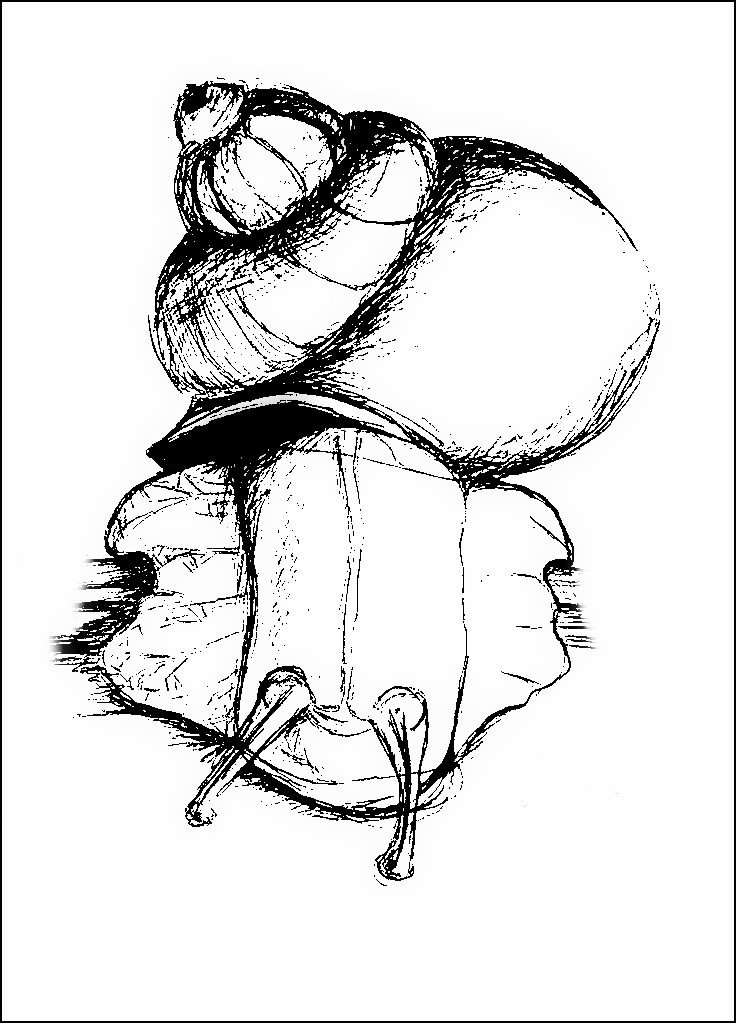
Cobs of snails drained from the sticks wrong on the saliva of the brothels of easy blouses, a bed of sips that we drank to lime and song. Cravings of the rib of very death, the breeze that removes the ledge where our one-eyed blackbird barks.
scapamos por los pelos, del aleteo de aquel vientre en fiebre que azuzaba las ganas del ramal donde encontrar tus bragas en luna creciente. Eran noches de vino y del reguero de las ansias desmedidas que nos cubren el desabrigo de las trampas en parques otoñales.
Y nos cosimos los plomos fundiendo las espuelas de tortugas que corren por la estampida donde resucitan las heridas enfermas que destiñen la arbolada de cajones vacíos, pétalos marchitos en el cemento.
Mazorcas de caracoles escurridos de los palos errados sobre la saliva de los burdeles de blusas fáciles, lecho de los sorbos que nos bebimos a cal y canto. Antojos de la costilla de mismísima muerte, brisa que remueve la repisa donde ladra nuestro mirlo tuerto.
great story ❤ 🙏

“A wiser and sadder man, he rose the morrow morn”….”wiser and sadder”, these two words mark the passage of the young Wedding Guest of Coleridge’s “Rime to the Ancient Mariner” into the world of adulthood, the bitter age of experience, as Blake would call it, and this is because of a weird story told by a mysterious man, an Ancient Mariner. The narration seems to have affected the mind of the young man so much, that in the end he falters just like one who “hath been stunned” and “is of sense forlon”. He forgets about the allure of the wedding party he had so much longed to go and proceeds back home, where after a sound sleep, he wakes up the following day a completely new type of person: “a wiser and sadder man”, in fact. It must have been a very powerful story indeed to produce such a reaction, even if at first glance it seems only the narration of…
View original post 1,113 more words
There’s no doubt that we all want to be happy but it is almost impossible for many in the world and the others few, who might think that they are happy, can just have illusion,therefore, The main question is; “what is really HAPPINESS?”
You surely know too that the money never really brings happiness in our life, it is as I think, just an object to spend. I have seen many rich people who are not happy, even depressive in their life; a very simple example is the sad story of the latest Persian royal family in which two of four children of Mohammad Reza Shah Pahlavi & Farah Diba the Queen, commit suicide though, they took a huge money with, when they left Iran after the Islamic revolution.
So, then what it should be; the happiness for us human? There are surely many moments in our life in which we feel happy; laughing, having fun etc. but what I mean is the real happiness which we can have it with us all the time!
Let me just say my attitude of happiness first, before these great philosophers speak, if I could allow myself! 😉
Of course, I don’t want to say I have found the key to happiness, therefore, I am happy, no! It is a very difficult deed. We must leave the negative feelings like; greed and jealousy and envy. Then we’ll find the might of the Less! I mean if we try to enjoy with less of everything in life, we’d find the joy. I hope I can explain what I mean;
To have enough is something impossible, there is no doubt, then we must find out how to enjoy what we already have. And in my opinion, it is real happiness.
Now let’s talk the great thinkers with many thanks to Searching The Meaning Of Life! https://searchingthemeaningoflife.wordpress.com/
Share knowledge freely … It belongs to us.
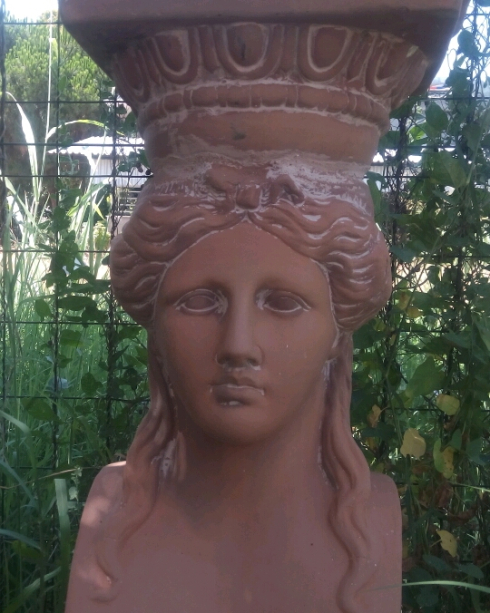
“The secret of happiness, you see, is not to seek more, but to shape the skill of enjoying the least.” For our Socrates, happiness was not a matter of external factors but a product of internal processes …
We rely on the manuals and the guides of happiness, we are looking for a motto that makes up our day and amulets that keep us away from moods and moments of misery and ignore the obvious, what others – with spirits far wider than ours – had discovered and shared with humanity. Who said that philosophy is just a boring science and not a compass to make anyone happy in everyday life? What would Socrates think, for example, if he saw us drowning in a spoonful of water? What did Confucius consider as the quintessence of happiness? A glance at what she believed – and her nakedness – 9 of the greatest philosophers of all time, might change the way we deal with her life and its (her) difficulties.
Bertrand Russell “Of all the preventive measures we take, the most deadly and the one that kills our likelihood of true happiness is to protect ourselves from love.” And that was what Russell said, a lover of mathematics, science and rationality if he says something.
Friedrich Nietzsche “Happiness is the feeling that power is growing – that resistance is neutralized.” Expecting, but interesting, the approach of Nietzsche, who believed that happiness lies in the control that one can exercise in his environment and in himself. This feeling that someone has the control of his experiences, guarantees a happy life, always according to the philosopher.
John Stuart Mill “I have learned to seek happiness by defining my desires rather than trying to satisfy them.” The expected approach by the father of liberalism, which when the conversation was about personal life and happy life, was more of an ancient Greek ideal: his happiness had a limit, in order for others to be happy.
Socrates “The secret of happiness, you see, is not to seek more, but to shape the skill of enjoying the least.” For our own Socrates, happiness was not a matter of external factors, but a product of internal processes. By harnessing the desire for more and more goods – or what everyone wants – we learn to appreciate the simple and real joys of life.
PS; Oops! It seems that Socrates is also in the same opinion as me 😀
Confucius “The more man meditates on the good, the better he will become his world and the world all.” These by the philosopher who inspired the movement of positive thinking and behavioural psychology, which prompted mankind to seek the deepest connection of feelings, thoughts and behaviours. According to the Confucian theorem, happiness is but a prophecy that each fulfils for himself, discovering the deepest ideals that nourish his existence.
Seneca “The greatest blessings of mankind lie within us. The wise man is content with what he has, no matter what these are, without praying for what he does not have. ” The Stoic philosopher, with similar thoughts, has established what we know as a centre of our desires in modern psychology. For the followers of his theory, this centre lives forever and guides safely and wisely their movements as an inspired, exogenous force.
Lao Tse “If you feel sad you live in the past. If you are anxious, you live in the future. If you are peaceful, you live in the present. ” One of the most prominent figures of Chinese philosophy, already in the 6th century BC, knew what we are constantly saying to ourselves-and we believe it: live the moment. Modern psychology, adopting his view, argues that the happiest people are devoted to what they do when they do it.
Soren Kierkegaard “Life is not a problem to be solved, but a reality that we must experience”. The Danish philosopher, theologian and poet who went a little further to Lao Tse’s thought had suggested: everything is best treated when we cease to think of them as problems, but experiences that we must somehow handle. From our handling depends on our happiness. Simple.
Henry David Thoreau “Happiness is like a butterfly. The more you chase it, the more she escapes. But if you turn your attention to something else, she will come to sit gently on your shoulder. ” In other words, one of the greatest proponents of world literature explains why the hunt of happiness – and the routine that draws it – dissolves the magic of surprise. The less committed to the habit, the more a wider, almost secular view of all those that-whenever it wants-brings life. Which come when we cease to wait with the watch in hand.
With data from Independent
source: http://www.lifo.gr/
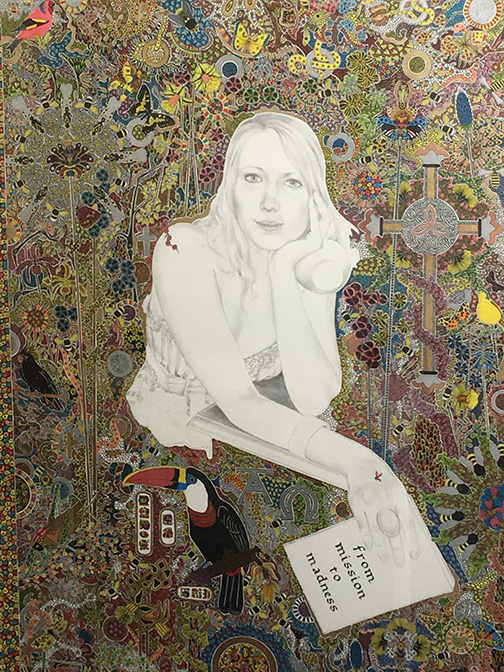 Matthew Nightingale-Untitled 2018
Art brut also known as outsider or visionary or self taught art is an ever expanding field as it has attracted considerable attention in the 21st Century, now with its own dedicated galleries, museums, exhibitions, art fairs and publications. In this the fourth group post on this fascinating subject I have chosen three artists currently at work and one who, although working on creating his own imaginary utopia for sixty years was only discovered in the first decade of the new century, towards the end of his life.
An ex-prisoner Nightingale takes between six months to a year to create his meretricious crafted paintings, often combining mixed media. He has only recently agreed to representation, by the excellent Henry Boxer Gallery in the UK, as he is loathed to be parted with his work, so information concerning the artist is scarce. Highly decorative borders featuring…
View original post 268 more words


 lampmagician
You must be logged in to post a comment.