The Underworld in Finnish and Greek Myth

Standard

When a woman adores a man, he must be adorable! Because of the Woman rules 🙏💕💖🙏

Psychoanalysis: “Free Association and Interpretation of Dreams” .-

Standard

This is a post by Aquileana from 07/24/2008 and as I adore her all through my heart, I did save her posts to try to share them now and then as my time allows.

The title is Psychoanalysis: “Free Association and Interpretation of Dreams”: Although, I think that Freud with the power of his basic arguments had been going towards a kind of domestic of his own arts. As we see in his one of the students; Carl Gustav Jung, in which he’d shown in his acting in psycho, the (arbitrium liberali) Free choice, especially in the case of Sabina Spielrein how to act.

But as I believe, Sigmund Freud was and still is a beginner of all our first ever cognition in our dark hidden side, therefore, let him speaks through my lovely teacher’s lips; Aquileana @aquileana 𝕒𝕢𝕦𝕚𝕝𝕖𝕒𝕟𝕒 ★༄@aquileana as I adore her and adore her 🙏💕💖💕😘🙏😘💕💖
⚡️La Audacia de Aquiles⚡️

“El Mundo Visible es Sólo un Pretexto” / “The Visible World is Just a Pretext”.-

« Antropología: “Las Tres Dimensiones de la Cultura”.-“En el Punto de Mira”/ “Vantage Point”.- »

Psicoanálisis: “Asociación Libre e Interpretación de los Sueños”.-

07/24/2008 by Aquileana

Sigismund Schlomo Freud, más conocido como Sigmund Freud (1856/1939).-
Sigismund Schlomo Freud, better known as Sigmund Freud (1856/1939) .-

The basic therapeutic method of classical psychoanalysis is based on three fundamental processes: Free Association, Analysis of Transfer and Counter transference phenomena and Resistance Analysis. The analysis of these processes is accompanied by framing elements or work rules for the patient (Basic Rule of the Free Association) and the therapist (Abstinence Rule Floating Care Rule). The free association is that the patient must express all his thoughts, feelings, fantasies and mental productions in general, as they arise in his head and feelings without any exclusions or restrictions. Sometimes the analyst urges the patient to associate with the elements that the patient himself has generated in his own speech. The analyst refrains from responding to specific demands of the patient such as comfort, sympathy or advice, and acts as a blank screen or mirror that projects the discourse displayed by the patient himself (abstinence rule). In addition, the analyst should not initially prioritize any component of the patient’s discourse, while maintaining neutrality and homogeneous importance to all the patient’s discourse elements (floating care rule). According to Freud, the dream recounted or subjectively remembered lacks authenticity, since it is a substitute for something ignored for the subject who has the dream. This occurs because that part has an unconscious character for the subject’s consciousness. The dream as a whole is a deformed substitution of an unconscious event whose discovery corresponds to the interpretation of dreams. By means of free association, the subject is instructed not to avoid communicating any idea or memory, however insignificant or absurd or disgusting it may seem, that this element of his own dream provokes. The diurnal remains of the experiences had by the subject on the day before bedtime will serve as material for the unconscious construction of the dream, taking this form of manifest material through his memory. However, the manifest content reaches our consciousness in a distorted and disguised way; It is censored, so it is presented as a manifestation disguised as an unconscious desire. Sleep censorship is responsible for such a result. Censorship rises against unconscious desire. The desires expressed in dreams, as well as those related to neurotic symptoms, have a central aspect of a sexual nature and are usually related to erotic desires lived in childhood or associated associatively with them. Censorship represents the moral instance of the subject, which to his conscience seems reprehensible. Through certain mechanisms, such as displacement, the unconscious desire happens to be represented successively in different images of the dream, in addition to being able to condense by joining or joining several images, thus being hidden from consciousness. These mechanisms of defence against desire, and the disguised form in which that desire is expressed, are those that produce the particular form of each personal dream. Therefore, the method of dream interpretation shuns the universal interpretation of symbols, since each dream refers to the unconscious personal meanings of a desire; I wish that only the subject himself can decipher with the help of the deployment of his associative chain from his manifest content to his latent and unconscious content. However, Freud came to admit that in certain cases the universal decipherment of the symbols (*) could be used. In fact, Freud concluded that in certain cases there are prototypical dreams that can be interpreted by their symbolic correspondence; but only when the subject of the dream is unable to associate freely about its content. In other words, symbolism appears as an auxiliary method to free association, when it is hindered. In this sense, Freud exposes a series of correspondence of sexual symbols and organs; such as elongated, piercing or rising objects of manifest content and male sexual organs or male sexual activity; or the relationship between objects with cavity and protrusions with the female sexual organs.

Flectere si nequeo superos, Acheronta movebo”.

“Si no puedo inclinar a los Poderes Superiores, moveré las Regiones Infernales”.

/Virgilio. (La Eneida, VII, 312). Freud utilizó este verso como epígrafe de La Interpretación de los Sueños/.-

__________________________________________________________________________________________

Links Post:
http://www.psicologia-online.com/ESMUbeda/Libros/Suenos/suenos1.htm
(*) http://www.interpretasuenos.com/
(*) http://www.mind-surf.net/diccionario/
(*) = (Diccionarios temáticos de Sueños).

_______________________________________________________________________________________

By The Way: Blogósfera: “La Ciencia Olvidada”:

“Los Rosacruces”:

http://cienciarcana.foroactivo.com/los-rosacruces-f1/los-rosacruces-t9.htm

_________________________________________________________________________________________________________

Dos Blogs que visité hoy, muy recomendables:

http://letransfusion.wordpress.com/

http://miriadas.wordpress.com/

The “legendary” Winlock: excellent investigator and … prolific discoverer

Standard
Herbert Eustis Winlock, American Egyptologist (1-2-1884, Washington DC – 26-1-1950, Venice, Florida)
and one of the carriers of offerings from the tomb of Meketre (TT280) he discovered in February 1920

We can always be thankful by, I’d say, some few researchers in the Egyptology’s world for their open and honestly investigations in the mystery of the magic Egypt.

via https://egyptophile.blogspot.com/ by Marie Grillot translated from French.

An excellent report about a Legendary Man. by Marie Grillot 🙏💖🙏https://egyptophile.blogspot.com/

The great American Egyptologist Herbert Eustis Winlock was born on February 1, 1884, in Washington DC. He followed brilliant studies in prestigious universities, like Yale or Harvard, from which he graduated. At the age of 22, he undertook his first excavations in Egypt. It is the start of a career, of exceptional quality and richness, punctuated by discoveries that will make ‘date’ in Egyptology.

From 1906 and 1931, he led numerous campaigns there on behalf of the Metropolitan Museum.

Head of female statue – painted wood with gilding – Cairo Egyptian Museum – I 39380
Middle Kingdom – XIIth dynasty – Provenance: Licht
Excavations of the Metropolitan Museum of Art in New York under the direction of HE Winlock – 1907

In 1907, in Lisht, between Daschour and Meidoum, he made excavations on the site of the pyramid of Amenemhat. He found there, in particular, a magnificent female head in painted wood, with a heavy black wig decorated with touches of gold (it will often be reproduced to symbolize Egyptian beauty).

Temple of Hibis in the Kharga oasis

He then worked on the temple of Hibis in Kharga, then on the palace of Amenophis III in Malgatta, on the west bank of Luxor.

Around 1910, he obtained from Gaston Maspero the concession for the Theban mountain, Gurnet Murai, Assassif (with German Egyptologists) and a sector of Deir el-Bahari (with the French) where he notably cleared part of the temple of Mentouhotep.

Then began twenty years of discoveries and restorations carried out by the “legendary Winlock”.

The house of the Metropolitan Museum excavations (now known as the “Polish House”)
was built between 1912 and 1914 on the plans of Herbert Eustis Winlock

On October 26, 1912, in Boston’s “Trinity Church”, he married Hélène Chandler from an old family in that city. They will have three children: Frances, William and Barbara. They will share their life between New York, North Haven, an island off the coast of Maine and Egypt.

It is on his own plans that were built in Assassif, between 1912-1914, the magnificent excavation house of the Metropolitan, known today as the “Polish House”.

During the First World War, he returned to the United States; he did not return to Thebes until 1920.

Tomb Meketre – TT 280 – Deir el-Bahari
discovered in February 1920 by the mission of the Metropolitan Museum of Art in New York led by Herbert Eustis Winlock
(photo Harry Burton)

It was at the end of February of that year that, under his direction, the Egyptologists Ambrose Lansing and Harry Burton discovered the tomb of Meketré (TT280). For more than three weeks, 200 fellahs recruited from the village cleaned and cleared the site when, on March 17, one of the workers noticed that small pieces of stone were sliding into a crack in the rock. “We had already looked in so many empty holes, told Mr Winlock, that the news hardly moved me. No matter! I lay on my stomach, slipped the torch into the hole, pressed the button and stuck my eye against the opening. Instantly the electric beam lit up a whole world of four thousand years old! Hundreds of Lilliputians came and went on their business. Several brandishing sticks pushed oxen with spotted coats before them. Others, bracing themselves on their oars, manoeuvring a flotilla of boats. A large ship, the bow in the air was about to sink. ” Objects – as incredible as they are exceptional! – will then be shared between the Met and the Cairo museum.

http://www.metmuseum.org/art/collection/search/545445
In 1921, in the tomb of the tomb and Ipy Meseh at Deir el Bahri,
Herbert Eustis Winlock discovered the “Letters Heqanakht”
here, “Letter I” – Metropolitan Museum of Art in New York – Accession Number: 22.3.516 (Museum photo)

In 1921, in the tomb of Meseh at Deir el Bahari, he found the “Letters of Heqanakht”, a scribe of the XIIth dynasty: they constitute an exceptional testimony on the life of this period … Agatha Christie will be inspired by elsewhere, in 1944, to write “Death is not an end – Death comes as the end”, signing there his only novel not to take place in the twentieth century.

In 1922 Winlock was among the first to enter the tomb of Tutankhamun. In February, for the opening of the third sealed door, he was in the “happy few”, as Howard Carter himself reports in “The fabulous discovery of the tomb of Tutankhamun”: “Friday the 17th, at two o’clock, those who were to have the privilege of attending the ceremony met at the entrance to the tomb. Lord Carnarvon, Lady Evelyn Herbert, Her Excellency Abd el-Halim Pasha Souleman, Minister of Public Works, Mr Lacau, were present Director-General of the Antiquities Service, Sir William Garstin, Sir Charles Cust, Mr Lythgoe, the Curator of the Department of Egyptian Antiquities at the Metropolitan Museum, Professor Breasted, Dr Alan Gardiner, Mr Winlock, – about twenty people in all “… The relations between Winlock and Carter will prove to be warm and cordial and the American will not fail to support the British, especially in the face of the problems he will encounter in 1924.

In 1941, Herbert Eustis Winlock devotes a book to
“Materials used at the embalming of King Tut-Ankh-Amun”.
Here, some of the pots found in KV 54 (Tutankhamun’s Embalming Cache)
discovered in 1907 by Edward Russell Ayrton on behalf of Theodore M. Davis
Presentations at the Metropolitan Museum of Art in New York

In 1941, he devoted a book to “Materials used at the embalming of King Tut-Ankh-Amun”. His work will be based on what he was able to “recover” from the excavations of Davis carried out in 1907 in KV54 (Tut-Ankh-Amun cache).

The tomb of Merytamun (DB 3258) when discovered by Herbert Eustis Winlock

Herbert Winlock will also update the tomb of Neferhotep (DB316 or TT316), that of Merytamon (DB358), daughter of Queen Ahmès Nefertari, whose cedar sarcophagus is 3.13 m high, and that of Senenmut ( TT71).

After being the director of the Metropolitan Museum’s Egyptian expedition from 1928 to 1932, he was appointed curator of the Egyptian department of the museum, then director, a post he held from 1932 to 1939. He was then director emeritus until his death, January 26, 1950, in Venice, Florida, at the age of 66.

In 1937, the press announced prematurely, the death of Herbert Eustis Winlock,
saying the victim of the curse of Tutankhamun

For the anecdote, it should be noted that his death had been announced in the press … as early as 1937, the so-called victim of the curse of Tutankhamun! Thus “Le Figaro” of August 6, 1937, under the title “Victim of All-Ankh-Amon” thus introduced a snippet “Death will occur with fast wings for those who touch the tomb of the pharaoh …” thus concluding “Mr Herbert Winlock died of a sudden illness that doctors were unable to diagnose. ” In fact, it was a stroke, which left him with after-effects but did not cost him his life…

The work carried out by Winlock has always been of high quality, praised and appreciated by the Egyptologists who rubbed shoulders with him, such as William Matthew Flinders Petrie or even Arthur Weigall. His excavation books are very documented. They constitute an extraordinarily rich testimony of the way in which the excavations were carried out at that time.

To understand, to approach the truth, he knew how to use all possible means of investigation: exchange of photos casts between different museums, chemical analyzes, medical studies, radiographic … “This taste for integral investigation led Mr Winlock has multiple discoveries, but, without taking into account the details and additions made to the interpretation of the monuments of Deir el-Bahari, that of art or funeral rites, the author’s investigations throw a bright light on the daily existence of a people whose history he tried to reconstruct. “

Marie Grillot

sources

The Path to Tutankhamun, Howard Carter,   TGH James TPP 1992
Who Was Who inEgyptology, Bierbier, M., London, Egypt Exploration Society
The complete Valley of the Kings, Nicholas Reeves, Richard h. Wilkinson, The American University in Cairo Press, 2002

History of the Valley of the Kings, John Romer, Vernal – Philippe Lebaud 1991

The fabulous discovery of Tutankhamun’s tomb, Howard Carter

” The Journal of Egyptian Archeology “, volume 36, 1950

” Excavations Met Throughout History “, 1870

Michel Laurence, Fabulous discovery in Egypt

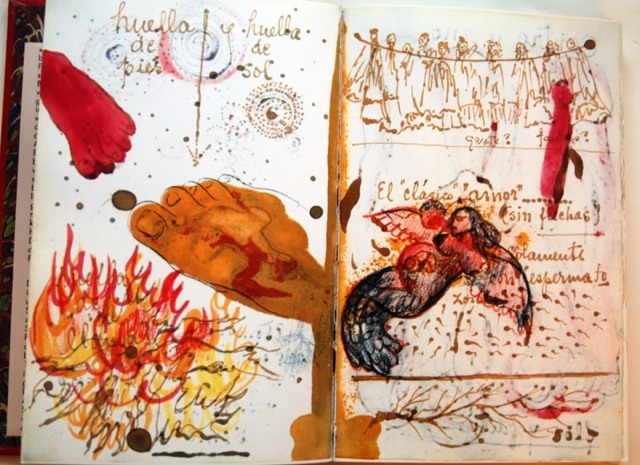
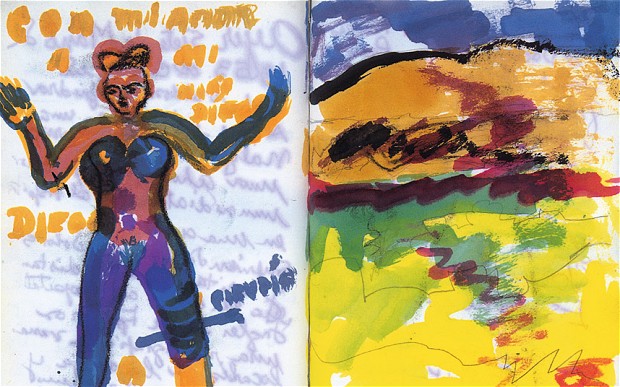
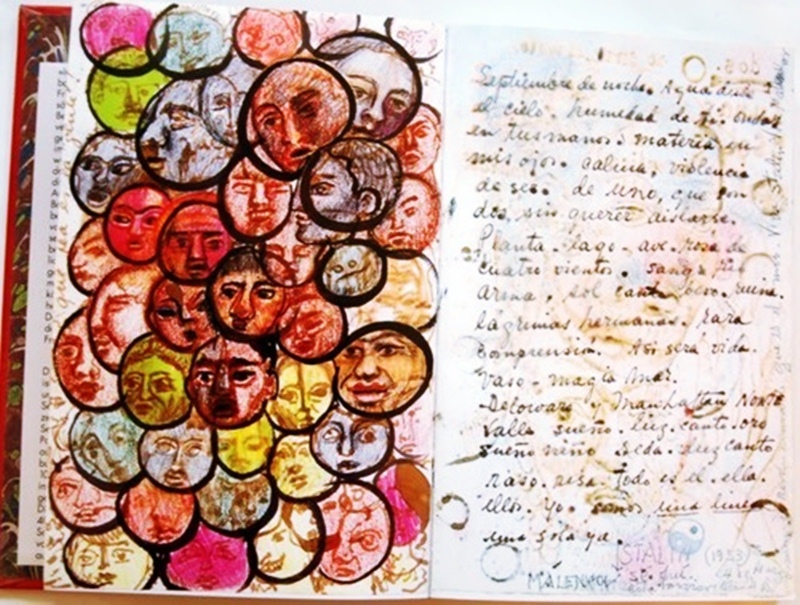
Reading The Red Book (16)

Standard

Death is a drawing together of two Worlds, not an end. We are the bridge.
Carl Gustav Jung on Gnostic
🙏💖🙏💕

Terry Jones the Genius ❤

Standard

Let’s have another break in my work to give a short tribute to a great genius in, I would say, all kind of Arts.

Actually, I didn’t know him from Monty Python’s movies first, I knew him by his fascinating TV series; Medieval Lives.

And of course, his proof of concept has been clearly seen in the Python’s films.

I’ve heard that he has cancer and also Alzheimer and now his death can be a salvation for him but it is surely a great loss for the world of Arts. Our world. 😔

I want just to imagine how he and Graham Chapman make an chaotic in heaven there above 🤗❤

Rest in Peace and thanks for the wonderful and joyful moments in our lives 🙏❤🙏❤🙏❤

Happy Birthday Federico Fellini

Standard

It is a must for me as it comes from my heart to share exceptionally this short announcement on Monday, the day my brain mostly strikes to work!

Today is Federico Fellini’s hundredth anniversary, let’s have a celebration on this genius 🤗🙏❤

Here is a scene of one of his best works! Amarcord (I remember)

Cornwall. A separate place. Location in writing.

Standard

An extensive description and surely a worthy book to read 👍💖🙏😊

shehannemoore's avatarshehanne moore

The Historical Cornish Environment—a land of Smugglers and Secrets …

A separate people. Throughout the early modern period, many Cornish people continued to regard Cornwall, not as an English county, but as a British country, called Kernow. … ‘

‘Physical isolation provides the key to Cornish history. A rocky peninsula, jutting out some 90 miles into the Atlantic Ocean, Cornwall stands at the extreme south-western corner of the British Isles. Surrounded by waves on all sides but one, it is practically severed from the adjoining lands to the east by the River Tamar, which runs almost from sea to sea. Although mediaeval Cornwall was – technically speaking – an English county just like any other, the culture of the ordinary Cornish people remained entirely different from that of their English neighbours. They still spoke in the Cornish tongue: a language, closely allied with Welsh. They still prided themselves on…

View original post 551 more words

HOW STRONG THE WOMAN

Standard

mikesteeden's avatar- MIKE STEEDEN -

pregnant

How strong the woman, how frail the man

He chanced upon her dressing
She had got so far as
tights and knicker elastic allowed
Naught else

As is her way
A private conference
With the unborn babe in her belly
Telling him to
Get his act together
And show up or fuck off

She turns about face
‘Oh it’s you’
He beams
Tells her just how wonderful she looks
‘No I don’t, I look ridiculous’
She disagrees
For once she was wrong

At the birth
She spat profanities
As if possessed

It seemed like an age yet
She got there in the end

Helpless and hopeless
He takes of his leave
For just a minute or two
Glorious nicotine and salty tears
In the concrete jungle outside
Under a stoned moon

Composure partially restored
He returns

The child at her breast now
He kisses them both
Her first

All her…

View original post 90 more words