His name is surely famous enough. He was a writer, poet, and definitely one of the best thinkers of our time. And every thinker has a philosophy of his own. It is really strange but very interesting that people who immigrate or run away from their birthplace have a wider ability to view the world and its curves and circles in another way.
“Your children are not your children./ They are the sons and daughters of Life’s longing for itself./ They come through you but not from you./ And though they are with you yet they belong not to you./ You may give them your love, but not your thoughts./ For they have their own thoughts/ You may house their bodies but not their souls./ For their souls dwell in the house of tomorrow which you cannot visit, not even in your dreams./ You may strive to be like them but seek not to make them like you./ For life goes not backwards nor tarries with yesterday./ You are the bows from which your children as living arrows are sent forth.” The passage on Children, The Prophet by Kahlil Gibran.
He is a fascinating man, and as I know, I am not of his abilities, but I understand him well. Here is a “Poem”? which we might read it several times to see our seven (seals?!) selves of our own.
In the stillest hour of the night, as I lay half asleep, my seven selves sat together and thus converted in a whisper:
The First Self: Here, in this madman, I have dwelt all these years, with nought to do but renew his pain by day and recreate his sorrow by night, I can bear my fate no longer, and now I rebel. The Second Self: Yours is a better lot than mine, brother, for it is given to me to be this madman’s joyous self. I laugh his laughter and sing his happy hours, and with thrice winged feet, I dance his brighter thoughts. It is I that would rebel against my weary existence. The Third Self: And what of me, the love-ridden self, the flaming brand of wild passion and fantastic desires? It is I, the love-sick self, who would rebel against this madman. The Fourth Self: I, amongst you all, am the most miserable, for nought was given me but odious hatred and destructive loathing. It is I, the tempest-like self, the one born in the black caves of Hell, who would protest against serving this madman. The Fifth Self: Nay, it is I, the thinking self, the fanciful self, the self of hunger and thirst, the one doomed to wander without rest in search of unknown things and things not yet created; it is I, not you, who would revolt. The Sixth Self: And I, the working self, the pitiful labourer, who, with patient hands and longing eyes, fashion the days into images and give the formless elements new and eternal forms, is I, the solitary one, who would rebel against this restless madman. The Seventh Self: How strange that you all would rebel against this man because each and every one of you has a preordained fate to fulfil. Ah! Could I but be like one of you, a self with a determined lot! But I have none, I am the do-nothing self, the one who sits in the dumb, empty nowhere and nowhen, while you are busy re-creating life. Is it you or I, neighbours, who should revolt?
When the seventh self spoke like that, the other six looked at him with pity and said nothing else; and as the night grew thicker one after another, they fell asleep, wrapped in a new and happy submission. But the seventh self remained to look and observe nothing, which is behind all things.
«The Madman»
ΥG. I know it’s not a poem, but K. Gibran is a Poet…
She was (one of) the queen pharaohs who approximately ruled the longest as her mates. though the name had been often used for many queens in the old Egypt, this one’s coffin seems had the minor damages.
(stunning how equality was more current than today!)
Let’s read this fascinating and almost tragic description by adorable madam Marie Grillot with thanks 🙏💖 http://Marie Grillot
Sarcophagus of Maâtkaré, Divine Adorer of Amun Cedar and acacia wood, painted or covered with gold leaf – XXIst dynasty Provenance DB 320 – Hiding place of the Royal Mummies of Deir el-Bahari discovered in 1871 by the Abd el-Rassoul Brothers, then in July 1881 by the Antiquities Service Exhibited at the Cairo Museum – CG 61028
It is in this imposing and magnificent sarcophagus made of cedar and acacia wood that the mummy of Maâtkarê rested and, according to Gaston Maspero, that of her stillborn child, Princess Moutemhâït. He specifies that Maâtkarê belonged to: “the family of the High Priests of Amon Theban, contemporaries of the XXth and XXIst dynasties”.
For Mohamed Saleh and Hourig Sourouzian (“Official Catalog of the Egyptian Museum in Cairo”): “She was, in all likelihood, the daughter of the first priest of Amon-Rê Pinedjem I and Queen Henuttauy”.
Benefiting from all the privileges linked to her rank, she was notably, according to Silvia Einaudi in “The Wonders of the Egyptian Museum in Cairo”: “the first princess to bear the title of Divine Adoratrice of the god Amon, title with which we designated the wife of the god “. Devoting her life to honouring the Theban god; she was then “considered a divinity”.
Sarcophagus of Maâtkaré, Divine Adorer of Amun Cedar and acacia wood, painted or covered with gold leaf – XXIst dynasty Provenance DB 320 – Hiding place of the Royal Mummies of Deir el-Bahari Discovered in 1871 by the Brothers Abd el-Rassoul, then in July 1881 by the Department of Antiquities Exhibited at the Cairo Museum – CG 61028
In his “Guide to the museum of Boulaq,” while presenting this sarcophagus under the reference 5210-5236, Gaston Maspero indicates that: “Queen Mâkeri died in childbirth and her child with her. This child, who probably did have not had to live a day, bears all the titles of his mother, among others, that of Royal principal wife. Moutemhâït was, therefore, neither Royal Wife nor even anything on this earth: but the custom was that the women of the Ramessides family had this birth title and she had it “.
Was the great Egyptologist wrong? Analyzes carried out since, seem to prove that it would be: “the mummy of a favourite monkey carried beyond the grave, thus removing the doubts about the celibacy of the Divine Bride” (Mohamed Saleh and Hourig Sourouzian).
Sarcophagus of Maâtkaré, Divine Adorer of Amun Cedar and acacia wood, painted or covered with gold leaf – XXIst dynasty Provenance DB 320 – Hiding place of the Royal Mummies of Deir el-Bahari Discovered in 1871 by the Brothers Abd el-Rassoul, then in July 1881 by the Department of Antiquities Exhibited at the Cairo Museum – CG 61028
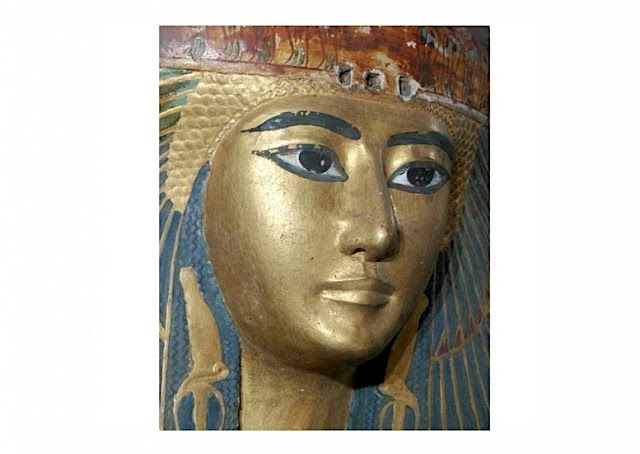
Anthropoid in shape, very massive, the sarcophagus has a height of 2.23 m and a maximum width of 0.77 m. And yet … beyond this imposing mass, what holds the attention and captivates, it is, indeed, the gaze of the deceased. It radiates gentleness, benevolence, kindness, goodness, all combined with a serenity idealized by the beyond.
The perfectly symmetrical face, with full cheeks, as well as the neck are covered with gold leaf. Its large almond-shaped eyes are drawn out and the iris, very black, stands out delicately against the white of the eye. They are outlined, made up in dark blue, tone resumed for the eyebrows which are relatively thick and ideally follow the shape of the eye. The nose is straight and fine; the mouth with closed lips is small but expressive.
This endearing face is framed by a rich and imposing dark blue wig. It is streaked with: “vertical sinuosities to imitate the hair, the bottom of the legs is golden; on the head is spread a vulture traced in gold, at the end of its wings, which hang on the legs of the klaft is fixed a uraeus The head of the vulture must have been in gold or gilded wood, and stand on the forehead between two uraei “specifies Georges Daressy in the” General Catalog of Egyptian Antiquities of the Cairo Museum “.
Her neck is adorned with two necklaces which he describes as follows: “The first, represented between the braids of the wig, alternate red bands with blue ones and ends in a pattern in the shape of a drop below which appears a beetle. winged; the second is larger and composed of stylized flower garlands “.
Sarcophagus of Maâtkaré, Divine Adorer of Amun Cedar and acacia wood, painted or covered with gold leaf – XXIst dynasty Provenance DB 320 – Hiding place of the Royal Mummies of Deir el-Bahari Discovered in 1871 by the Brothers Abd el-Rassoul, then in July 1881 by the Department of Antiquities Exhibited at the Cairo Museum – CG 61028
Maâtkarê is represented in the Osiriac position. “The hands, of which only the left survived, were gilded and perhaps held ankh signs of which the lower part remains in the left fist. The wrists are adorned with bracelets and the elbows with a lotus flower. forearm, we have drawn a winged scarab holding a sun disk between the forelegs. On the arms, the image of a falcon, above the gold symbol, with the wings outstretched. Under the arms, as if it grew under the necklaces, is painted a pectoral in the form of a sanctuary adorned with a winged scarab holding a solar disk placed in the middle of two seated deities with falcon heads “(Silvia Einaudi).
The body of the sarcophagus is entirely painted, gilded, or varnished and completely covered with scenes, symbols, divinities; the goddess-vulture with outstretched wings occupies the centre and no space is left blank. “The rest of the surface of the sarcophagus bears numerous polychrome scenes, inside panels delimited by inscriptions in which the deceased make offerings to deities. The horror vacui, which results in an overabundance of decoration leaving no space available, is characteristic of this period “(” Treasures of Ancient Egypt at the Cairo Museum “, National Geographic).
Mohamed Saleh and Hourig Sourouzian underline that: “the lower part is divided into scenes by the bands of inscriptions giving the title of Maâtkarê (middle band) and the epithets of the queen (sidebands) who claims to be venerated by the Gods Re, Ptah-Sokar-Osiris, Horus and Anubis “.
The sarcophagi of Maâtkaré, Divine Adoratrice of Amun – XXIst dynasty published here in the “General Catalog of Egyptian Antiquities of the Cairo Museum N ° 61001-61044, Coffins of the Royal Hiding Places (1909)”, Georges Daressy, IFAO, Cairo Provenance DB 320 – Hiding place of the Royal Mummies of Deir el-Bahari Discovered in 1871 by the Brothers Abd el-Rassoul, then in July 1881 by the Department of Antiquities
In this first “exterior” sarcophagus was: “a second sarcophagus inside which was placed the mummy of the deceased, covered with a mummiform wooden plank, according to the custom adopted from the Ramesside period” (Silvia Einaudi).
The whole was discovered, by the Service of Antiquities, in July 1881, in the “Hiding place of the royal mummies” or “Hiding place of Deir el-Bahari”. This collective tomb, located on the west bank of Louqsor, precisely at the foot of the rock of Chaak al-Tablyah, in Deir el-Bahari, had been found ten years earlier by the Gournawis, the Abd el-Rassoul brothers. They thus supplied the antique market with high-quality artefacts whose provenance unknown will eventually raise questions and suspicions …
After an investigation with many twists and turns, the collaborators of Gaston Maspero will go back to the source of the trafficking, not without having created very strong tensions in the clan of discoverers. Thus on July 5, 1881, in the crushing heat of the rocks of Deir el Bahari, guided by Mohamed Abd el-Rassoul, Emile Brugsch, Ahmed Kamal Effendi and Thadéos Matafian, will supervise the “re-discovery” of the DB 320 …
On July 5, 1881, in the overwhelming heat of Deir el-Bahari, guided by one of the brothers Abd el-Rassoul, Émile Brugsch, Ahmed Effendi Kamal and Tadros Matafian – delegates by Gaston Maspero – entered the tomb. After being referenced, mummies and artifacts from the DB 320 are transported to the Boulaq museum
About fifty mummies – including about forty pharaohs – had been sheltered there, around 1100 BC (XXIst dynasty). The time was then troubled and many cases of abuse had been committed in the Valley of the Kings. Respecting and venerating the ancient rulers, the high priest Herihor who then ruled the Theban region took the initiative, after the looting and desecration of their eternal residences, to re-bury their mummies in a tomb originally known to have been the one of a princess Inhâpi.
So Maâtkare’s outer coffin had also been looted – perhaps twice – in antiquity; the head of the frontal vulture, which must have been made of gold or gilded wood, had been torn off, as well as the right hand. Likewise, the second coffin had not been spared.
From July 14, the sarcophagi, mummies and remains of funerary furniture will be transferred to Boulaq by the steamboat from the “Le Menshieh” museum.
Visitor’s guide to the Boulaq museum, Gaston Maspero, 1883 https://gallica.bnf.fr/ark:/12148/bpt6k6305105w/f338.item.r=5236.texteImageGeneral Catalog of Egyptian Antiquities in the Cairo Museum N ° 61001-61044, Coffins of the Royal Hiding Places (1909), Georges Daressy, published in Cairo, IFAO https://archive.org/details/DaressyCercueils1909 The Finding of Deir-el-Bahari, Emile BrugschOfficial catalog Egyptian Museum of Cairo, Mohamed Saleh, Hourig Sourouzian, Verlag Philippe von Zabern, 1997Treasures of Egypt – The Wonders of the Egyptian Museum in Cairo, Francesco TiradrittiThe treasures of ancient Egypt at the Cairo museum, National Geographic
Today is the fourth anniversary of Leonard Cohen’s “changing the level” I use this term on the thoughts of my brother Al, he had used this word for the death, and he loved Cohen; I can just remember the first time when we have heard him; by his LP’ Songs of Love and Hate.
I must thank first my adorable friend luisa zambrotta because of her reminder to this special day, though, it might be a day of leaving but it is also a day of staying, not physically but spiritually, in mind and heart!
We have known him by a friend, a nice bassist in my band those days; he came and said: don’t you know! here is a new door for us, and it was; a new feeling to be in the beyond. We were at the beginning of our neu stay of being addicted (that is another story) but it might be a door to understand him; to be burned: Now the flames they followed Joan of Arc. She said, “I’m tired of the war, I want the kind of work I had before, a wedding dress or something white to wear upon my swollen appetite.” Well, I’m glad to hear you talk this way, you know I’ve watched you riding every day and something in me yearns to win such a cold and lonesome heroine.
I have sometimes a feeling of reincarnation, it means to me sometimes when I get knowing someone whom I never knew before, that is bizarre but it seems to be true. Then Live well and live forever dear Leonard, you are always there.
We all send our regards 💖🙏🙏🙏💖 Sincerely.
It’s four in the morning, the end of December I’m writing you now just to see if you’re better New York is cold, but I like where I’m living There’s music on Clinton Street all through the evening. I hear that you’re building your little house deep in the desert You’re living for nothing now, I hope you’re keeping some kind of record.
Yes, and Jane came by with a lock of your hair She said that you gave it to her That night that you planned to go clear Did you ever go clear?
Ah, the last time we saw you you looked so much older Your famous blue raincoat was torn at the shoulder You’d been to the station to meet every train And you came home without Lili Marlene
And you treated my woman to a flake of your life And when she came back she was nobody’s wife.
Well I see you there with the rose in your teeth One more thin gypsy thief Well I see Jane’s awake —
She sends her regards.
And what can I tell you my brother, my killer What can I possibly say? I guess that I miss you, I guess I forgive you I’m glad you stood in my way.
If you ever come by here, for Jane or for me Your enemy is sleeping, and his woman is free.
Yes, and thanks, for the trouble you took from her eyes I thought it was there for good so I never tried.
And Jane came by with a lock of your hair She said that you gave it to her That night that you planned to go clear —
Hello dear friends. The last days were of the most exciting days for us all through the election in the USA, and it might be a motive for me to write about this issue concerning Donald Trump.
I myself have had a problem with this; Narcissism, all through my life. As a child, I was very much prized by everyone, especially about my eyes, the family and friends uttered it permanently (not only my mother meant that!) But before I could build my ego on this, my nose in the time of puberty began to grow terribly bigger and it prevented me to look into the mirror. although it is known that famous genius have mostly big noses, but I could relinquish. I just missed the vows for my eyes and didn’t want the laugh about my nose.
Of course, I was not the only one, our father had it and also Al, but both of them have had also a big head and big face, that fits with the big nose, mine is not enough big to fit the nose. Now it is enough to talk about the noses, I just wanted to say that I have grown up in this way that I got used to having an egoless life without Narcissism. Even when I played in the theatre, I used my big nose with talent on mimics, to make the people laugh and it made me happy enough to fix my complex. Though, as I believe now that a little from both (Narcissism & Epoism) is needed to be successful in life. Nevertheless, the keyword is love.
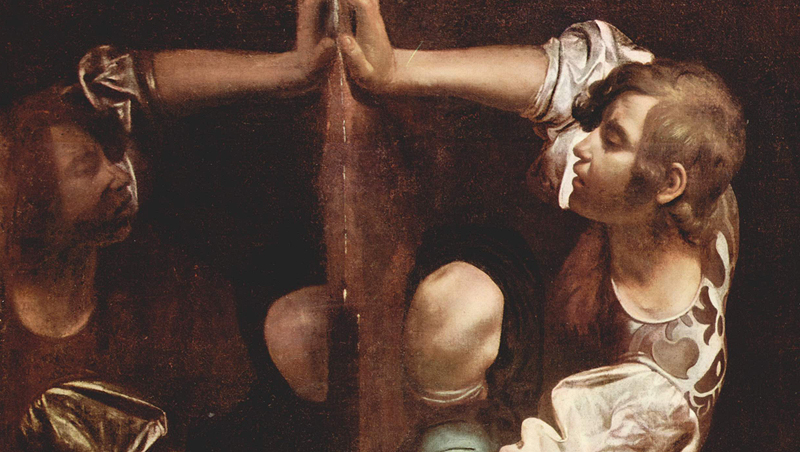
Narcissus, in Greek mythology, the son of the river god Cephissus and the nymph Liriope. … He was distinguished for his beauty. According to Ovid’s Metamorphoses, Book III, Narcissus’s mother was told by the blind seer Tiresias that he would have a long life, provided he never recognized himself.
It’s actually clear that his beauty and all the admiration by the youth around him, made him proud, too proud and I believe that there had already begun the “Egoism”. He had hurt many who felt in love with him. One of the youth’s most ardent admirers was Ameinius, but Narcissus merely sent him a sword to do away with himself, which he did. On dying, Ameinius cursed the object of his unbound affections and asked the gods to punish him. He had prayed to the gods to give Narcissus a lesson for all the pain he provoked. Narcissus walked by a pool of water and decided to drink some. He saw his reflection, became entranced by it, and killed himself because he could not have his object of desire.
(Mythology) here is a Mythological tell which I like so much. Several versions of the myth have survived from ancient sources. The classic version is by Ovid, found in book 3 of his Metamorphoses (completed 8 AD); this is the story of Echo and Narcissus. One day Narcissus was walking in the woods when Echo, an Oread (mountain nymph) saw him, fell deeply in love, and followed him. Narcissus sensed he was being followed and shouted: “Who’s there?”. Echo repeated “Who’s there?” She eventually revealed her identity and attempted to embrace him. He stepped away and told her to leave him alone. She was heartbroken and spent the rest of her life in lonely glens until nothing but an echo sound remained of her. Nemesis (as an aspect of Aphrodite, the goddess of revenge, noticed this behaviour after learning the story and decided to punish Narcissus. Once, during the summer, he was getting thirsty after hunting, and the goddess lured him to a pool where he leaned upon the water and saw himself in the bloom of youth. Narcissus did not realize it was merely his own reflection and fell deeply in love with it as if it were somebody else. Unable to leave the allure of his image, he eventually realized that his love could not be reciprocated and he melted away from the fire of passion burning inside him, eventually turning into a gold and white flower.
As we read these all, we can recognize that Narcissus was made an egoist by his desirers. He had no idea about his beauty till he found it out by looking into the “clear” water. The people were enchanted by his beauty and yet, gave him the pride of being loved. You see; the “Narcissism” means today rather egoism; or idiotic self-lover, the narcissist had not seen itself in the mirror yet, and when it happened, he/she falls in love with ownself (foolishly) and might kill oneself!
But in reality, in our modern life, there are enough fools to help them to survive. They don’t look into the mirror, they stay being loved and enjoy the fools all around. One of them was the Shah of Persian; Muhammad Reza Pahlavi who came on power with the help of foreign force and has thought he’s the only one who could do the right things and nobody else, and there were enough beggars around to cheer him as a god. We know what happened at the end.
Another one is the (still) President of the US; Donald Trump. He was actually, as we might remember, not so brazen at the beginning, he even never expected to win in the 2016 Election, and now just look at him; he can’t even believe he maybe should get out of his post!
He surely knew his “Splendor” before he became President but now, with the help of millions of fans, feels like a god, or being sent as an angel! and It is the main problem; the Narcissism will be made by the mass; the fools. He doesn’t need to look into the water.
Honestly, I thought that I’d not post anything today because I could not concentrate my mind; this election makes me confused; I am not in the opinion that we need a Massias, Joe Biden is not the one who makes all better, but Trump had shown that he can just make everything worse. We must still wait.
Anyway, this disease as I may call it, is very common all in the world these days; in Germany is a loved issue as this famous adage; Schadenfreude (malicious joy), says all. But it is not only in Germany it is everywhere. We must be aware of it with the open-minded heart. 🙏💖
As you might already know, Sean Connery has been passed away today and therefore, I have to drop some line for him or better for me, because I loved him, not because he was the only true James Bond, but for he had shown me the true way how one could be an actor, as I wanted once be, to be a wise one.
But, I don’t want to talk about the Bond or even one of his best role in this Movie; the name of the rose in which he had actually played his own life, as a wise Monk, and he did, in his hard-working up life had proved.
Though, I can just fall in in love again with him, when the young aspirant asked him if he ever felt in love in his life; he answered; sure; I love Sokrates, Aristoteles, Platon… oh my…
Anyway, I wanted to tell you about a Science-fiction movie in which he has played in; Zardoz. I don’t know how much you’d know about this movie, it is not so famous and surely not so elegant clothed as once like a Bond.
This movie is something special, I have seen it in Iran, of course with some censorship about some scenes. But I hat to watch this about nine times! I tell you, it is such a movie which you can saw and say it’s Hollywood, but you can saw it and want to see it again; it is almost a prophecy of the future as we’re running towards. In any case, every time when I was in the cinema to see this, there were peoples got up and out of the cinema. They just didn’t understand!
I believe that Sean Connery would never play any cheap films. He knew it and he did his best in all of them.
Zardoz is a 1974 Irish-American science fantasy film, and later a book, written, produced, and directed by John Boorman http://John Boorman and starring Sean Connery and Charlotte Rampling, and featuring Sara Kestelman. The film was shot by cinematographer Geoffrey Unsworth on a budget of US$1.57 million. It depicts a post-apocalyptic world where barbarians worship a stone god called “Zardoz” that grants them death and eternal life. How familiar it is!
The fascinating had no limit; the music is the seventh symphony by Ludwig von Beethoven;
This masterwork by John Boorman is a real vision by an artist who looks in the future, it is not so easy, to aspect and expect the future as dark as it appears but the truth is unavoidable;
Watch this brilliant movie and say goodbye to Sean Connery and Hello to Zardoz!
the last Wednesday was the day of Cyrus the Great in Iran and as it was celebrated those days in the time of the Shah (Reza Pahlavi) it will be still celebrated, in spite of the Islamic prohibition of any acknowledgement on old Persians culture, even more since then.
I write about this anniversary not only because I’m a proud Persian (if there is something left now to be proud of!) but there is no doubt that Cyrus II the King was not a normal king like the most of kings in the history of mankind. He was Great for his deeds; on all the folks in his kingdom, with their different ancestry, religions, cultures or faith. He was a king with a heart for all people and a defender for human right. It might sound uncommon but it is true.
He’s been born about 600 BC and reigned from 559 – 530 BC, it doesn’t look very long but he had pointed a lot about human right in his time and from the Jewish point of view, he is famous for the liberation of the Jewish people under Babylonian force. Let’s have a look at in the Wikipedia:
Cyrus II of Persia commonly known as Cyrus the Great, and also called Cyrus the Elder by the Greeks, was the founder of the Achaemenid Empire, the first Persian Empire.
The Persian domination and kingdom in the Iranian plateau started by an extension of the Achaemenid dynasty, who expanded their earlier domination possibly from the 9th century BC onward. The eponymous founder of this dynasty was Achaemenes (from Old Persian Haxāmaniš). (هخامنشی) Achaemenids are “descendants of Achaemenes” as Darius the Great, the ninth king of the dynasty, traces his genealogy to him and declares “for this reason we are called Achaemenids.” Achaemenes built the state Parsumash in the southwest of Iran and was succeeded by Teispes, who took the title “King of Anshan” after seizing Anshan city and enlarging his kingdom further to include Pars proper.[38] Ancient documents[39] mention that Teispes had a son called Cyrus I, who also succeeded his father as “king of Anshan.” Cyrus I had a full brother whose name is recorded as Ariaramnes.[9]
In 600 BC, Cyrus I was succeeded by his son, Cambyses I, who reigned until 559 BC. Cyrus II “the Great” was a son of Cambyses I, who had named his son after his father, Cyrus I. There are several inscriptions of Cyrus the Great and later kings that refer to Cambyses I as the “great king” and “king of Anshan.” Among these are some passages in the Cyrus cylinder where Cyrus calls himself “son of Cambyses, great king, king of Anshan.” Another inscription (from CM’s) mentions Cambyses I as “mighty king” and “an Achaemenian,” which according to the bulk of scholarly opinion was engraved under Darius and considered as a later forgery by Darius. However Cambyses II’s maternal grandfather Pharnaspes is named by historian Herodotus as “an Achaemenian” too. Xenophon‘s account in Cyropædia further names Cambyses’s wife as Mandane and mentions Cambyses as king of Iran (ancient Persia). These agree with Cyrus’s own inscriptions, as Anshan and Parsa were different names of the same land. These also agree with other non-Iranian accounts, except at one point from Herodotus stating that Cambyses was not a king but a “Persian of good family.” However, in some other passages, Herodotus’s account is wrong also on the name of the son of Chishpish, which he mentions as Cambyses but, according to modern scholars, should be Cyrus I. (Wikipedia )
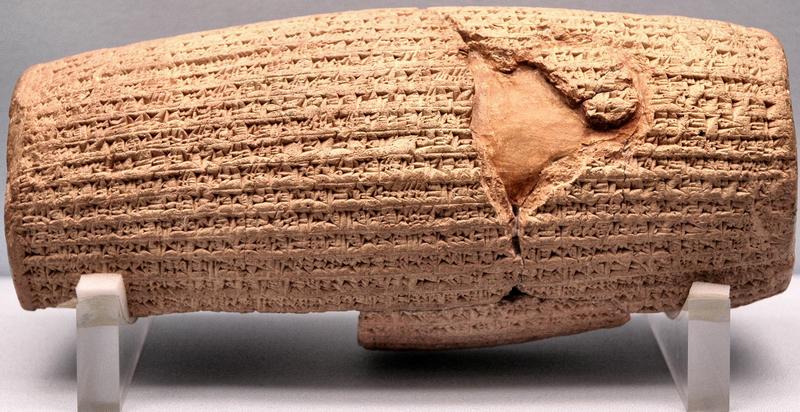
It is surely known by many that there’s been found a Cycle which shows the history of law at the beginning of the Persian Kingdom but as we see everywhere and every time in our history, there is a typical rewrite and revision on the old text, as a fake, to sell them better! Therefore, I introduce this famous Cycle as it truly is and it is in any case, the first constitution of the human right.
The Cyrus Cylinder revered by people all around the world as a symbol of tolerance and respect for different peoples, different cultures and different faiths, is one of the most famous surviving icons from the ancient world.
That’s just unfortunate that the truth mostly will be reformed and after that, it causes a lot of misfortune; as I believe if the Kings after Cyrus kept his promises to their kingdom, the Arabs or other invaders could never get their success.
It dates from the 6th century BC and was discovered in the ruins of Babylon in Mesopotamia (modern Iraq) in 1879
Cyrus Cylinder
This text is a long and unfortunately, somehow damaged but there is, thanks to the experts, a translation; Of course, we don’t want to deal with it here, I just share these some words and their worth. the rest, if you are interested, there is the link below. here I’d try to offer a summary of these whole:
I am Cyrus, king of the universe, the great king, the powerful king, king of Babylon, king of Sumer and Akkad, king of the four quarters of the world, son of Cambyses, the great king, king of the city of Anshan, grandson of Cyrus, the great king, king of the city of Anshan, descendant of Teispes, the great king, king of the city of Anshan. I announce that I will respect the traditions, customs and religions of the nations of my empire and never let any of my governours and subordinates look down on or insult them as long as I shall live. From now on, while Marduk lets me rule, I will impose my monarchy on no nation. Each is free to accept it, and if anyone of them rejects it, I shall never resolve on war to reign.
Thanks for your interest and have a peaceful time 🙏💖🙏
One of the amazing and extraordinary maintaining artefacts from the old Egypt is the Steles. They are great artworks and also telling stories about the events from those days.
They were and will remain magnificent. Here I want to present just two of them with a beautiful description by my adorable friend Marie Grillot, I am obliged as always.
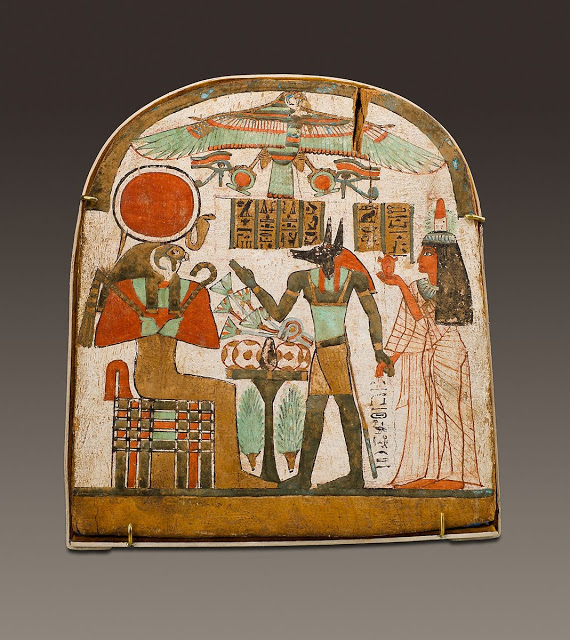
Tatiaset stele – wooden panel covered with gesso and painted Third Intermediate Period – 825-712 BC From his tomb MMA 801 discovered in the Deir el-Bahari sector by the 1921-1922 mission of the Metropolitan Museum of Art in New York directed by Herbert Eustis Winlock Exhibited at the Metropolitan Museum of Art in New York – admission number: 22.3.33 – photo by MET
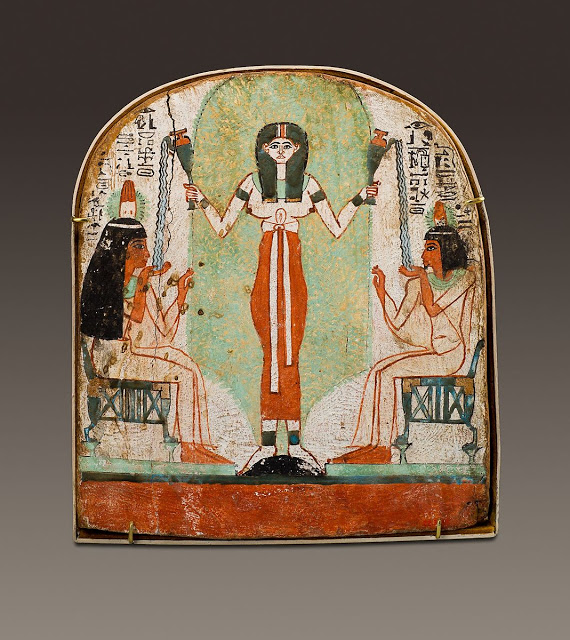
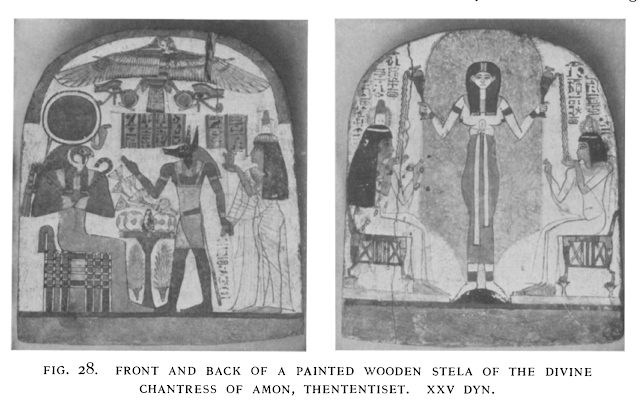
This lovely stele from the second half of the XXIIth Dynasty is dedicated to the “mistress of the house Tatiaset”. Coming from a family of the Theban clergy – her father Saiah was “priest of the purification of Amun” – she was herself a singer of Amun… She married a scribe by the name of “Djed-Bastet”. The stele, 23.4 cm high, is, in fact, a panel of curved wood, covered with gesso and painted. The two sides, which have retained the vividness of their colours, are different and just as interesting.
In the centre of the front is Nut, the goddess of Sycamore. She is represented, standing, face on, in the middle of her tree. She wears a tripartite wig, a large green necklace as well as bracelets, armilas, and periscelids. Her red garment, which hugs her forms, is tied under her opulent bosom with a white belt, the two drops of which are of unequal length. In each hand, she holds a fine ewer whose trickles of water will purify the hands of the two deceased who are seated on either side. Their beautifully crafted armchairs rest on green mats.
On the left is Tatiaset. Her slender face, animated by large eyes surrounded by kohol, is framed by a long brown wig. An odoriferous cone is placed on his head. She is dressed in a long white linen dress and wears a large green collar. His right-hand collects the purifying water poured out by the goddess while the left is lifted, palm facing out, as a sign of worship.
On the right, her husband is represented in a similar position and gestures. He is dressed quite similarly but wears a short wig. His face is slender, his eye expressive, and his chin is adorned with a short goatee. The balance of the composition, whose dominant colours are white, red ocher and green, is perfect.
Tatiaset stele – wooden panel covered with gesso and painted Third Intermediate Period – 825-712 BC From his tomb MMA 801 discovered in the Deir el-Bahari sector by the 1921-1922 mission of the Metropolitan Museum of Art in New York directed by Herbert Eustis Winlock Exhibited at the Metropolitan Museum of Art in New York – entry number: 22.3.33 – photo by MET
Marie-Astrid Calmettes analyzes this scene as: “an image taken from chapters 54-63 of the ‘Book to leave the day’ relating to the provision of breeze and water for the deceased in the afterlife”. Christian Leblanc, who was kind enough to read the hieroglyphic inscriptions, specifies: “On the right, it is the scribe of the house of the divine adorer of Amun, Djed-Bastet, son of Mery-en-Khonsou, justified”.
On the left, it is the “mistress of the house and singer of Amon named Tatiaset, justified”. This lady was the wife of Djed-Bastet. The father of Tatiaset, a certain Sa-Iâh (Saiâh = ie “the son of the moon”), “priest-ouab of Amun” (pure priest), is not represented but his name and his title are written behind the deceased”.
Thus, these inscriptions offer us an important part of Tatiaset’s “biography”.
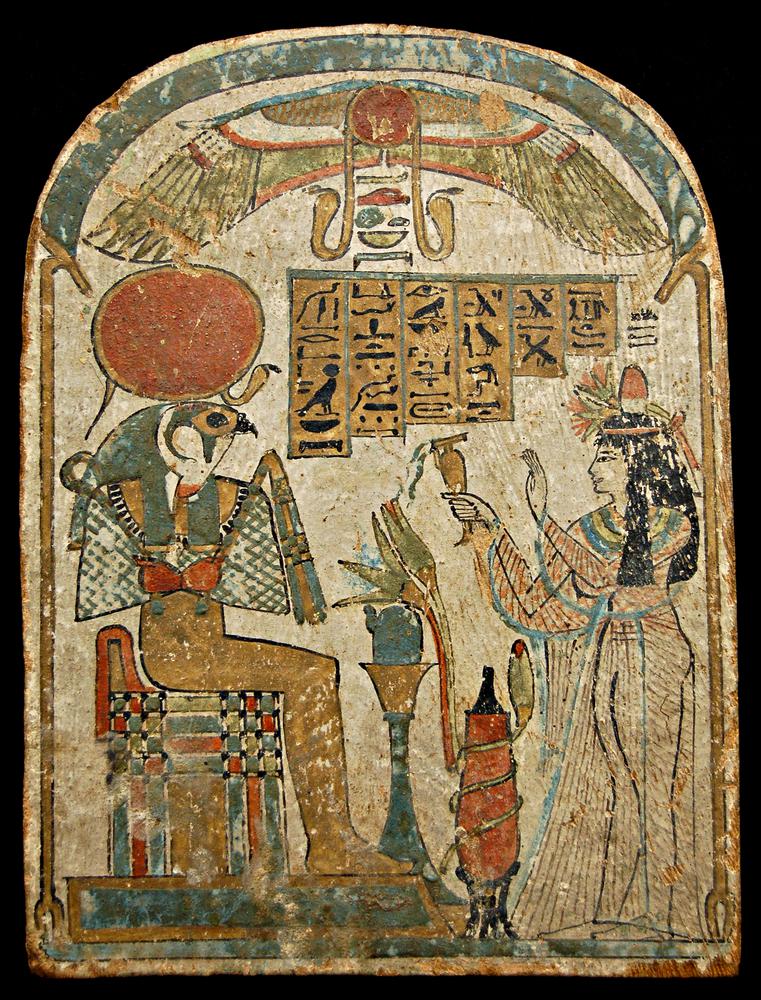
The other side is dominated by “the sign of the sky pet (pt) curved and originally painted in blue” while at the bottom there is a “horizontal band evoking the earth” specifies Marie-Astrid Calmettes who adds: ” As for the falcon with outstretched wings which appears in the upper part, it is not identified verbatim. The only thing which is certain is that it is about a god, a celestial and solar god “.
Tatiaset stele – wooden panel covered with gesso and painted Third Intermediate Period – 825-712 BC From his tomb MMA 801 discovered in the Deir el-Bahari sector by the 1921-1922 mission of the Metropolitan Museum of Art in New York directed by Herbert Eustis Winlock Exhibited at the Metropolitan Museum of Art in New York – entry number: 22.3.33 – photo by MET
In a “divine” balance, the god holds between his talons the sign shen, symbol of eternity with which is associated an eye-oudjat. The colours of the plumage and those of the protective signs are in perfect harmony. Under the falcon’s tail are four hieroglyphic lines written in black on an ocher background; they are separated by green vertical bands.
The main scene brings together three “characters”.
On the right is Tatiaset, standing, wearing a light linen dress, the folds of which are materialized by orange lines. She has the same hairstyle as on the other side but adorned with a headband whose blue-green tones match her large necklace.
In her left hand, she holds a heart: this presence is as significant as it is symbolic. The heart-ib in ancient Egypt – was: “the most important organ for the individual. The seat of her thoughts, conscience and will, it was also the receptacle of her memory, the witness of all It is in this capacity that she appears in the judgment scenes of the deceased (psychostasis) where she is confronted with the Maat. If he were to be destroyed, the dead man would be unable to appear before the divine court, “Isabelle Franco tells us in her” Dictionary of Egyptian Mythology. “
Her right hand is in that of the black-headed, green-fleshed god Anubis. This one is also represented standing in the walking attitude. He is wearing a green strapless corset as well as a loincloth in brown tones, held in place by a darker belt. It is adorned with many jewels, a wide necklace, bracelets, vests, and Periscelid He guides the deceased to Rê-Horakhty.
Between the two gods is set a table of offerings where the victuals are topped with delicate lotus flowers. On either side of the table’s leg are lettuces.
The two hieroglyphic inscriptions on the left state: “An offering that the king gives to Anubis, master of the sacred land (ie necropolis)” – “An offering that the king gives to Re-Horakhty, who is the head of the gods” (or ” who presides over the gods “). While the text on the right, in two columns, indicates: “The Osiris, the mistress of the house, Tatiaset”. The inscription between Anubis and Tatiaset is a mention of the father of the deceased: “the priest-ouab of Amun, Saiâh”.
The scene aims for Tatiaset’s heart to be “justified” by the gods so that she can access eternity …
Tatiaset stele – wooden panel covered with gesso and painted Third Intermediate Period – 825-712 BC From his tomb MMA 801 discovered in the Deir el-Bahari sector by the 1921-1922 mission of the Metropolitan Museum of Art in New York directed by Herbert Eustis Winlock Exhibited at the Metropolitan Museum of Art in New York – entry number: 22.3.33 – photo by MET Posted here by Winlock in MMA Bull. Pt. Ii, December 1922
This stele is one of four discoveries made by the 1921-1922 mission of the Metropolitan Museum of Art in New York led by Herbert Eustis Winlock in the Deir el-Bahari area. In the tomb which will be referenced MMA 801: “Four painted wooden stelae of a family of priests and priestesses of Amun, who were also officials of the Vice-queen of Thebes, were lying near the door of the chapel” specifies the discoverer …
When the excavations were shared by the Egyptian Government, it was assigned to the MET, where it was registered under the entry number: 22.3.33.
All my thanks to Christian Leblanc for the hieroglyphic translations and to Marie-Astrid Calmettes, Khéops Institute of Egyptology, Paris, Université Libre de Bruxelles (CIERL), for the valuable information she kindly provided me with
I thought that it is time to have a look back at my memory and dare to write another capital; in the name of the first love.
It is surely not something new but it is always a brand new feeling for a young one which would never forget. I am not a romantic archetype as I have uttered now and then. But I had a dramatic childhood, therefore, became very sensitive and I had worked on it all through my life. Though, this trauma still remains.
At the beginning to recognize my feelings towards the opposite gender I fell in love with many girls; for example, I remember one of my cousins (I had a lot of them) whom I had played a lot of times with, once when I had been visiting at my uncle’s, wanted to play with her and run to her room, there I saw her sleeping; in a white gown with her long hair falling on her shoulders; I fell in love with her at once, though it didn’t last a long time and in the next day I had forgotten her! 😁😳
And there were many young actresses in the movies whom I fell in love with; I even fell in love with Brigitte Bardot though she was some older than me.
I had also kissing plays with my other cousins as we saw in the movies but, I should tell them another time.
In the time after my father’s death, mother tried in every way to get money, one of them was to rent the ground floor, and it’s occupied by a young family (a young man with his young wife and a newborn child) and there began my first sex affair!
She was crazy; the young beautiful girl liked and wanted me very much! Every little moment I could get to their apartment, she embraced and hugged me heartily, I was just a child those days and didn’t know anything about sex or maybe I did? There was something to attract me to see her, being near to her. Once I was again alone and run downstairs on the yard to look through their window, in which was looking through their sleeping room, and recognized them lying on their bed, and playing with their newborn baby; when she saw me called me in immediately, I get inside at once! She got me to the bed, let her husband enjoyed playing with the baby and hugged me to her almost naked body, kissed me tight and what else I can’t remember or was not aware of it.
You might think of child abuse but I don’t think so; she had never tried to make it secret with me. I think she was one of very seldom woman or a human who didn’t believe in any social morality or any forbidden zone for free feeling and free-living, I suppose her husband even knew it and accepted it because in this evening he was playing with his baby happily and even when he was very amused calling us to see what the baby already was doing, and we’re too busy to observe any of their action, wasn’t very important for him and he continued playing. Maybe it was because of me, being a child and not a serious rival! I’d never know, but once she got farther and on a hot summer day when we were all swimming in the pool in our yord, she, swimming towards me, and saying clearly laud “making love in the water”, hugged me and began to kiss me! There, mother cried out that it’s enough for us children and must get out of the water!! I think she wasn’t aware of what she was doing, she might be too honest of course, otherwise, she could do it hidden to me anything she wanted, if she minded something badly!? Mother was a free thinker, but unfortunately not so far, and threw them out of the house, and our affair has been ended so soon.
After that, mother thought it’s better to rent the upstairs because we could use the garden more easily, and she had rented it to a very normal family; but, they were often being visited by a young girl, a very beautiful one, and of course, I fell in love with her too! And Al didn’t want to ignore her as well; we weren’t therefore always a good playmate! For the first time, we became competitors!! She was a nutty girl I must add here and be enjoying a game to turn us both crazy at the beginning, but in the end, she was suddenly crazy after me. Shirin was her name and One evening, we were in the yard and I heard them discussing loudly on the balcony, and I looked up, saw her beautiful face, keep staring at her, she looked down at me, and she kept staring too, I can clearly see her on the balcony upstairs how she almost eats me with her beautiful eyes. She came down and told me that we should play; a hidden game. You know, one closes the eyes and the others try to hide somewhere. it was obvious there would happen something and it happened; I found her in a small room in the backyard and when I got her she was so agitated that she hurt herself on her arm. I was so sorry but she laughed and said: kiss it! I was shocked at a moment and in the next moment when I did want to kiss her arm, she withdrew it. What a dumb was I!
Anyway, after that, some weeks later they moved out and I had never heard of her anymore. I don’t know why but it was my first deeply falling love and I’ll never forget it, as I might say; No no, here’s looking at you kid, we have always Paris.
Oh yes, you must just remember this, a kiss is just a kiss, a sigh is just a sigh, The fundamental things apply As time goes by Never forget your first love. because it is one of the most important events in your whole life. Have a nice weekend dear friends. 🙏💖🙏
Hello dear friends, I don’t know if I have enough time till my leave to find all these wonderful and great genius women who are not actually hidden but that the society is so blind or rather dumb to disclose them to the poblic.
At least, I must be lucky to find out them. Here is another Brilliant one:
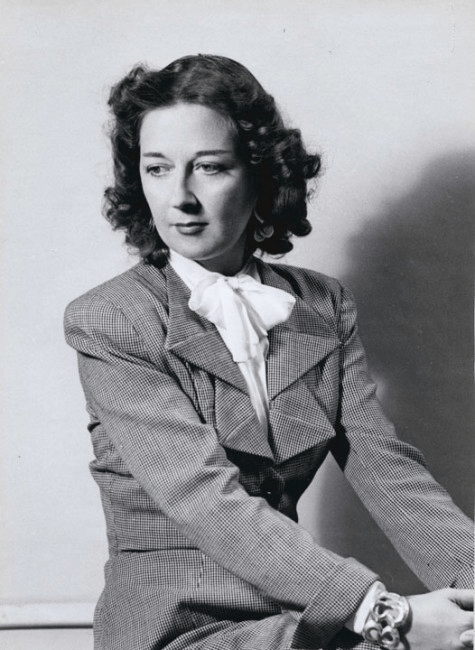
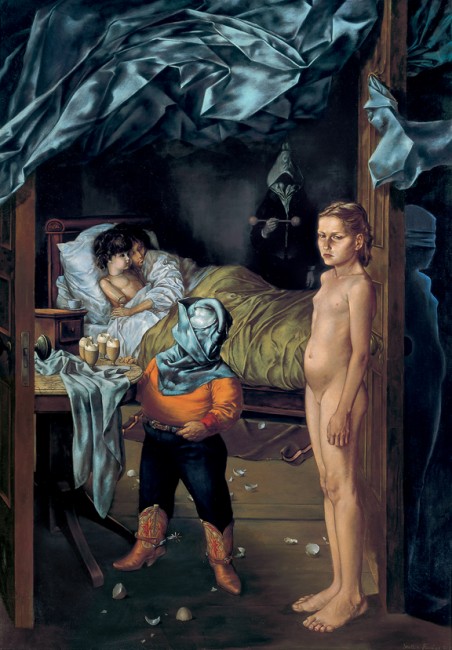
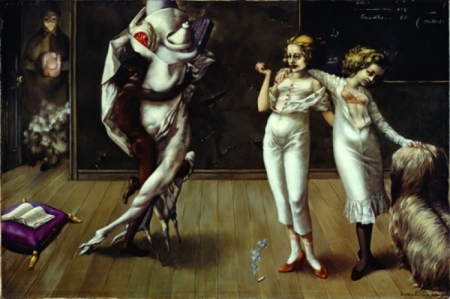
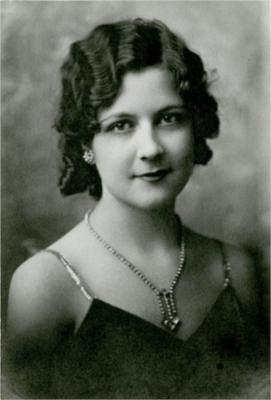
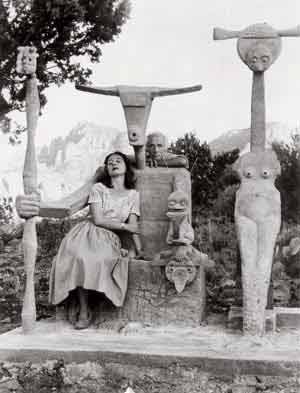
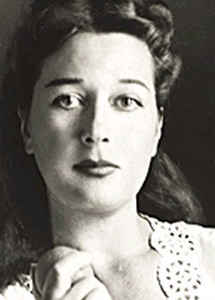
I don’t know if you know or have heard of this amazing woman. I didn’t; till Mike Ben, a FB friend of mine caught my attention on this fascinating Dame whom every man (including me) could fall in love with her. She’s not only a great painter but also a writer and poet.
Here, some dropping words about her life;
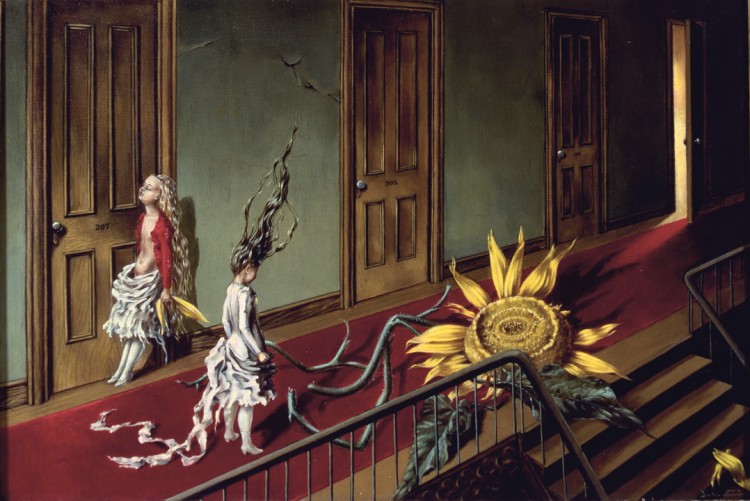
In her own words… Dorothea Tanning was born in 1910 in Galesburg, Illinois and attended Knox College in her hometown before studying painting in Chicago (haunting the Art Institute where she learned what painting was.) In 1941, now in New York, she met the art dealer, Julien Levy, and his surrealist friends, refugees from Nazi occupied France. Late in 1942 Max Ernst visited her studio, saw a painting, (Birthday), and stayed to play chess. They would have 34 years together, at first in Sedona, Arizona (a mere outpost at the time). Here she would continue to paint her enigmatic versions of life on the inside, looking out:The Guest Room, The Truth About Comets, Eine Kleine Nachtmusik, Interior with Sudden Joy, Insomnias, Palaestra, Tamerlane, Far From. By 1956 Max and Dorothea had chosen to live and work thenceforth in France. Though Paris was headquarters, they preferred the country quiet lure in Touraine and Provence. These years included, for Dorothea Tanning, an intense five- year adventure in soft sculpture: Cousins, Don Juan’s Breakfast, Fetish, Rainy Day Canapé, TragicTable, Verb, Xmas, Emma, Revelation or the End of the Month, Hôtel du Pavot Room 202.
Max Ernst died on April 1, 1976 and Dorothea faced a solitary future. “Go home,” said the paint tubes, the canvases, the brushes. Returning to the United States in the late 1970s, and still painting, Tango Lives, Woman Artist, On Avalon, Door 84, Still in the Studio, Blue Mom, Dionysos S.O.S., she gave full rein to her long felt compulsion to write. Words, poetry. Written, read, heard. Would she join these voices even then? Her poems have since appeared in a number of literary reviews and magazines, such as The Yale Review, Poetry, The Paris Review, The New Yorker, The Boston Review, The Southwest Review, Parnassus, and in Best Poems of 2002 and 2005. Her published works include two memoirs, Birthday and Between Lives, a collection of poems, A Table of Content, and a novel, Chasm.
At present Dorothea Tanning lives in New York City, breathes words, as well as air, and looks at her paintings with amazement. It is 2009.
About the artist: Dorothea Tanning died at her home in New York City on January 31, 2012. She was 101 years old, and had just published her second collection of poems, Coming to That (Graywolf Press, 2011).
Still later, when I was more in touch with the world, they told me, “You have a future.” I thought that over. Even if I believed them, what did my little future, whatever that was, have to do with the real thing, whatever that is? —from “Waiting”
Let’s enjoy her paintings with the beginning of her self-portrait; Birthday.
(Self Portrait) Birthday 1942 Oil on canvas 40 1/4 x 25 1/2 in.
Philadelphia Museum of Art. Purchased with funds contributed by C.K. Williams, II 1999-50-1 http://Artsy
That was in a room for rent.
It had a window and a bed,

it was enough for dreaming,
for stunning facts like being

at last, and undeniably
in NYC, enough to hold

enfolded as in a pregnancy,
those not-yet-painted works

to be. They, hanging fire,
slow to come—to come

out—being deep inside her,
oozing metamorphosis

in her warm dark, took
their time and promised.

Fast forward. Trapped in now,
she's not all that sure.

Compared to what entwined
her mind before the test,

before the raw achievement
pat, secure—oh, such bounty

to be lived, yet untasted,
undefined—all the rest...
Hi dear fellows. Let me first drop some lines as a prologue before begin to report our trip; As a novice in the matter of writing, I look always for gathering some idea for my weekend post. I am getting used to doing it (it seems to become a ritual for me). Therefore, I try to begin on Mondays because I need time! though it sometimes stuns me to see some friends who simply post a video-clip or share from the WEB a quote with a title; The Quote of the Day, and that was it! I can’t, I don’t know why but I can not do it so simply. Surely I use also the WEB but when I want to tell something, must be composed a part of my own thoughts too. Anyway, this time I was in Bonn and I couldn’t get ready to prepare something or even not a free mind to catch up with an idea. And when we came back home I was so rigid that I couldn’t fix the days till today I worked up and I had a feeling like a pupil who had not finished his homework and must appear in the school!! Now at least there was a trip and I can tell thereabout and share some pictures with you, I hope you’ll enjoy it.
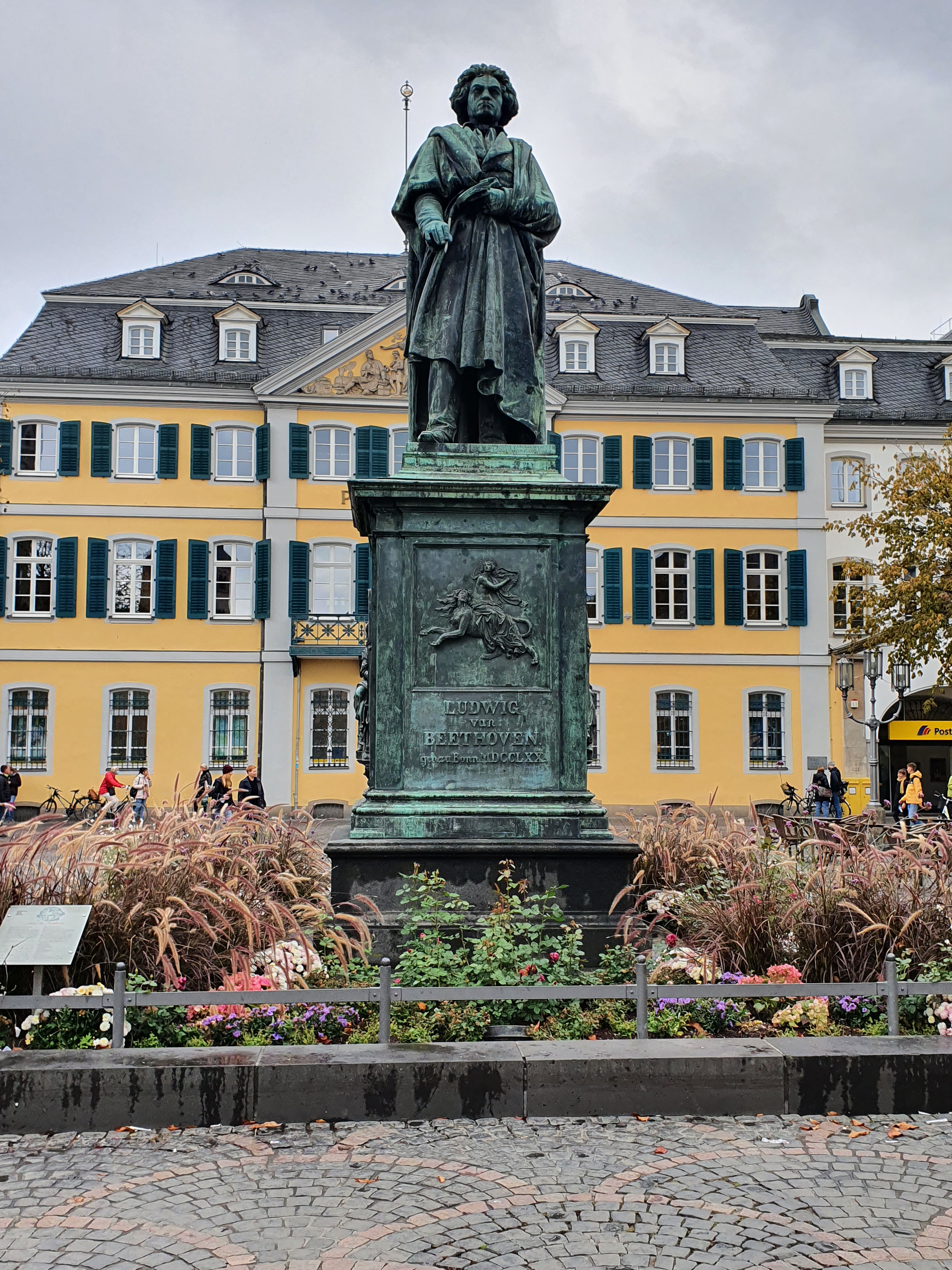
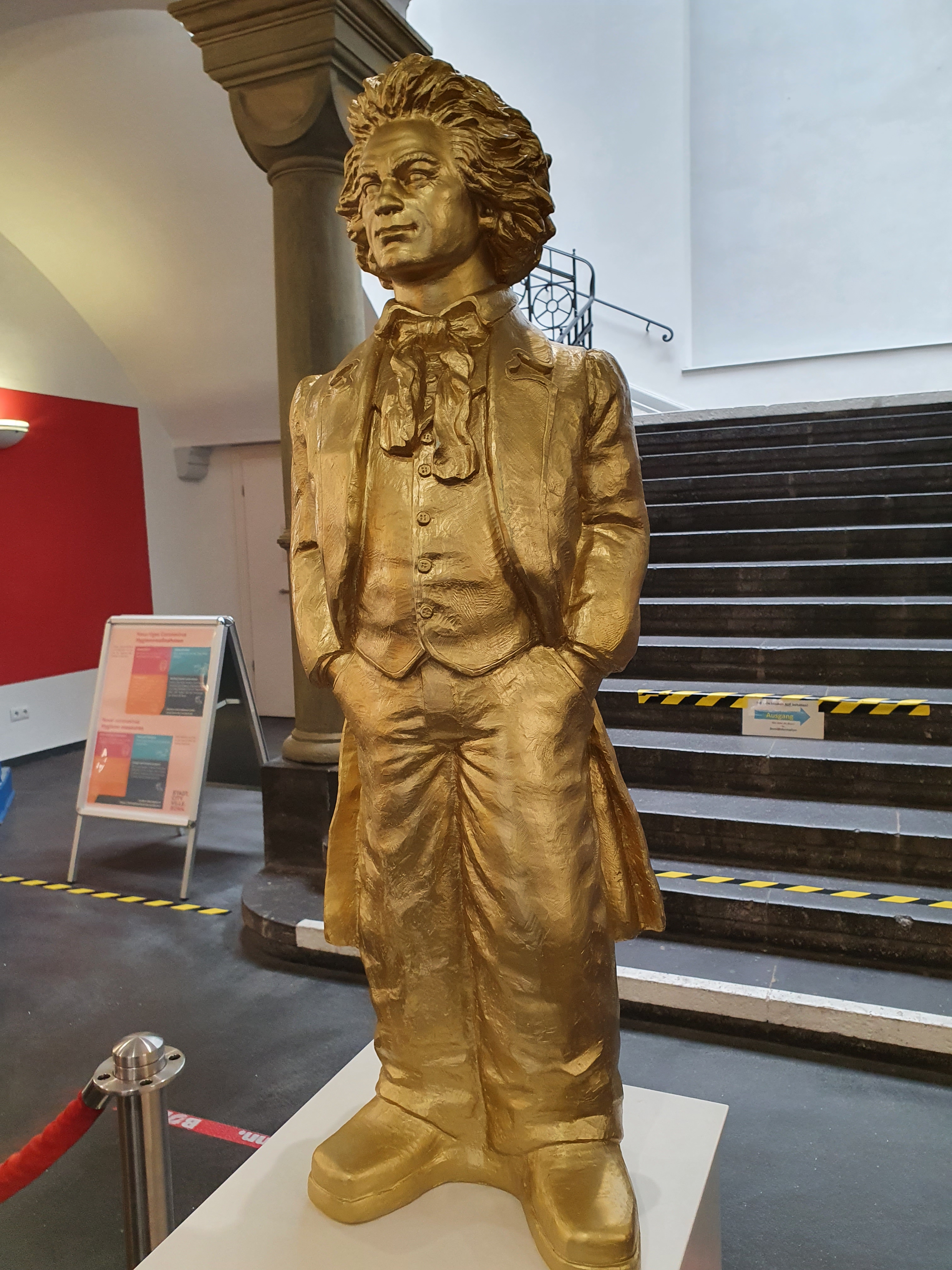
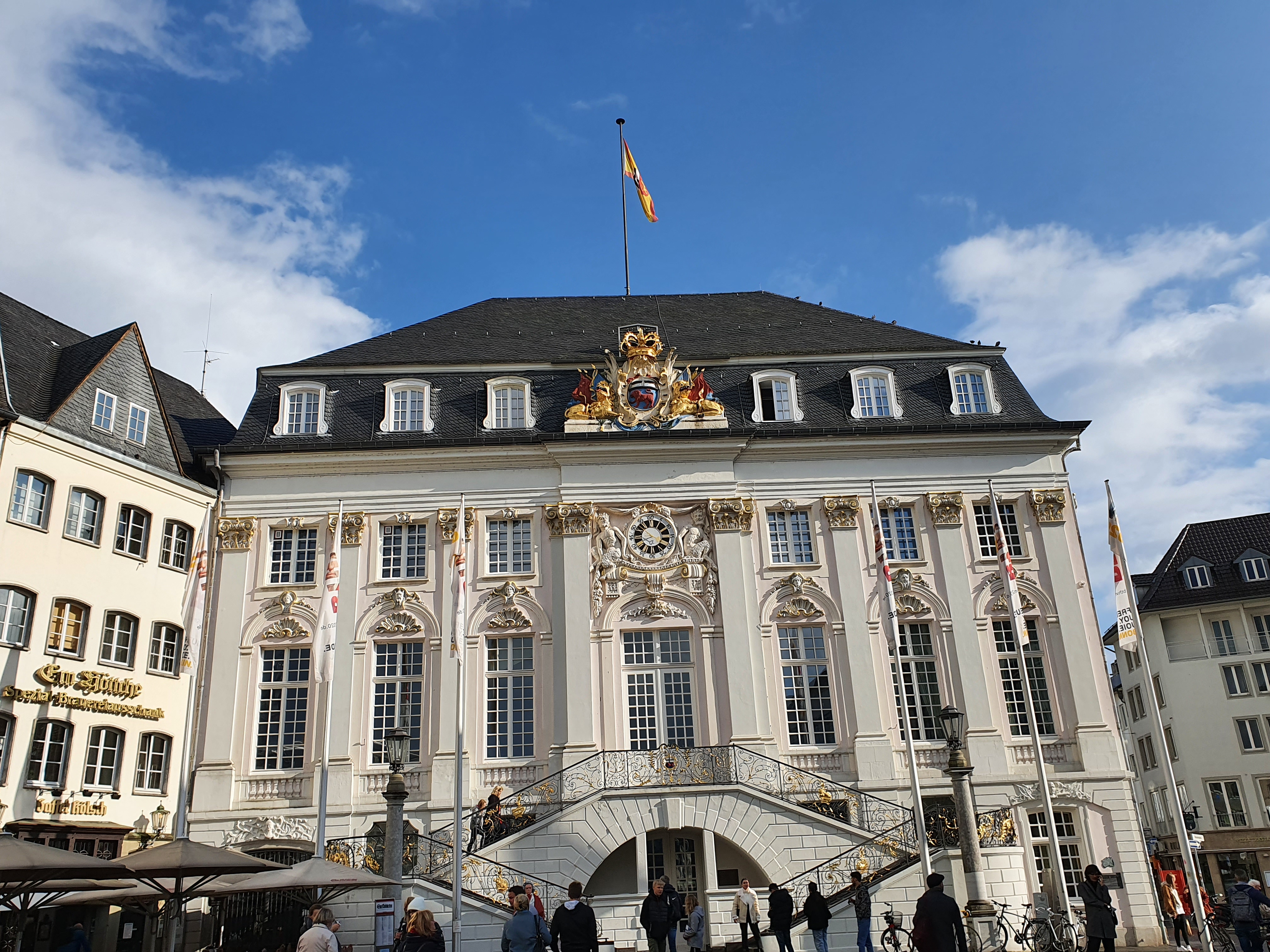
A few days ago, my wife and I were in Bonn not only to visit the former capital city of Germany (BRD the west part) But surely to celebrate the 250th anniversary of Ludwig von Beethoven; one of the greatest ever in the classic music.
Taken by me; Aladin Fazel
The truth is that we wanted to travel to Berlin as we’d planed last year to get my interview with the US Embassy for getting a visa for me if you might remember it. It has been cancelled because of the Corona emerge and we have just thought to change this meeting to few-days travel in Berlin to meet also the ex from my wife! But Berlin became a Hot-spot, therefore, we made an immediate change to Bonn, also towards Beethoven, an unbelievable chance.
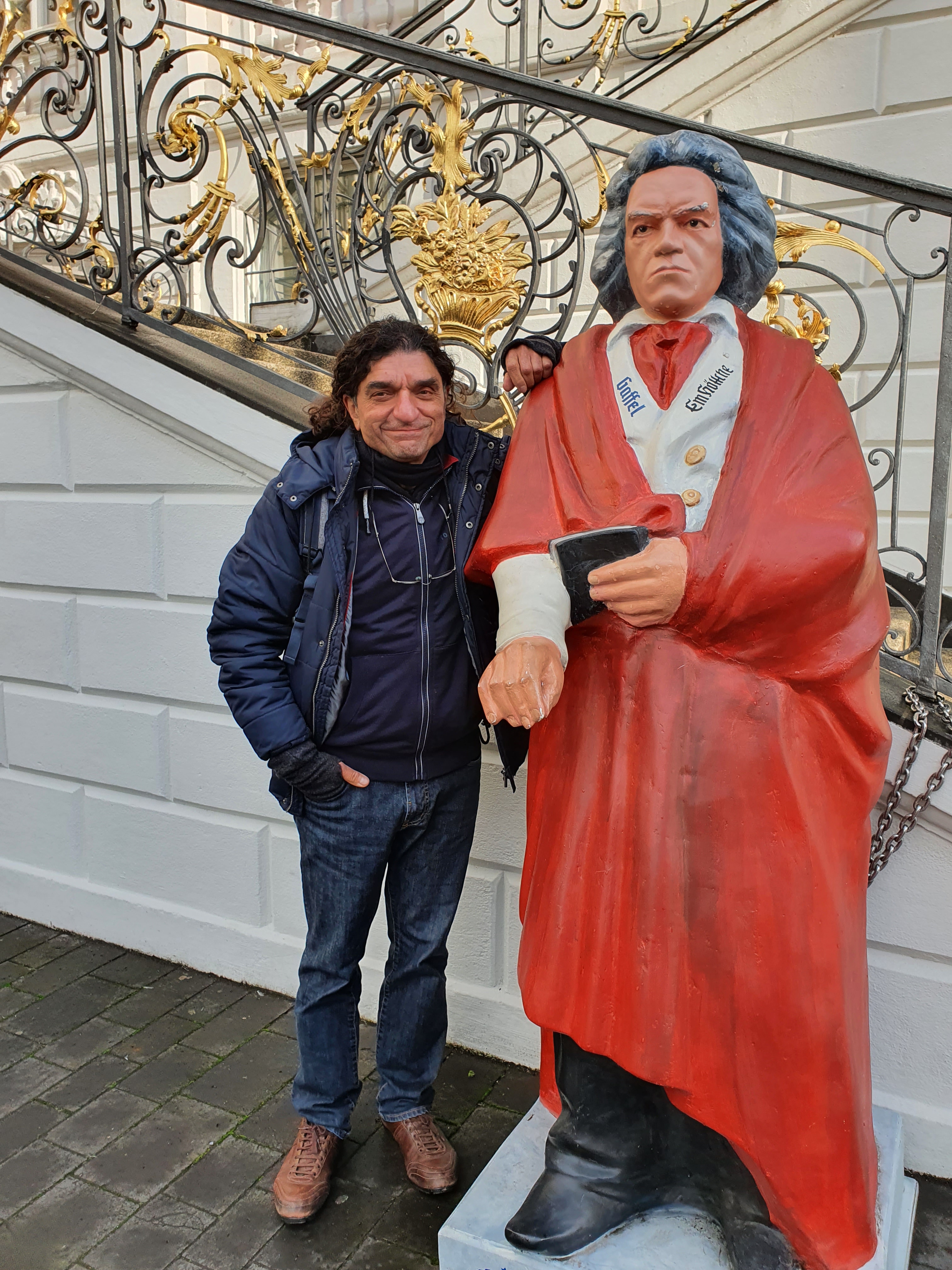
Me and the Master (soppy)!
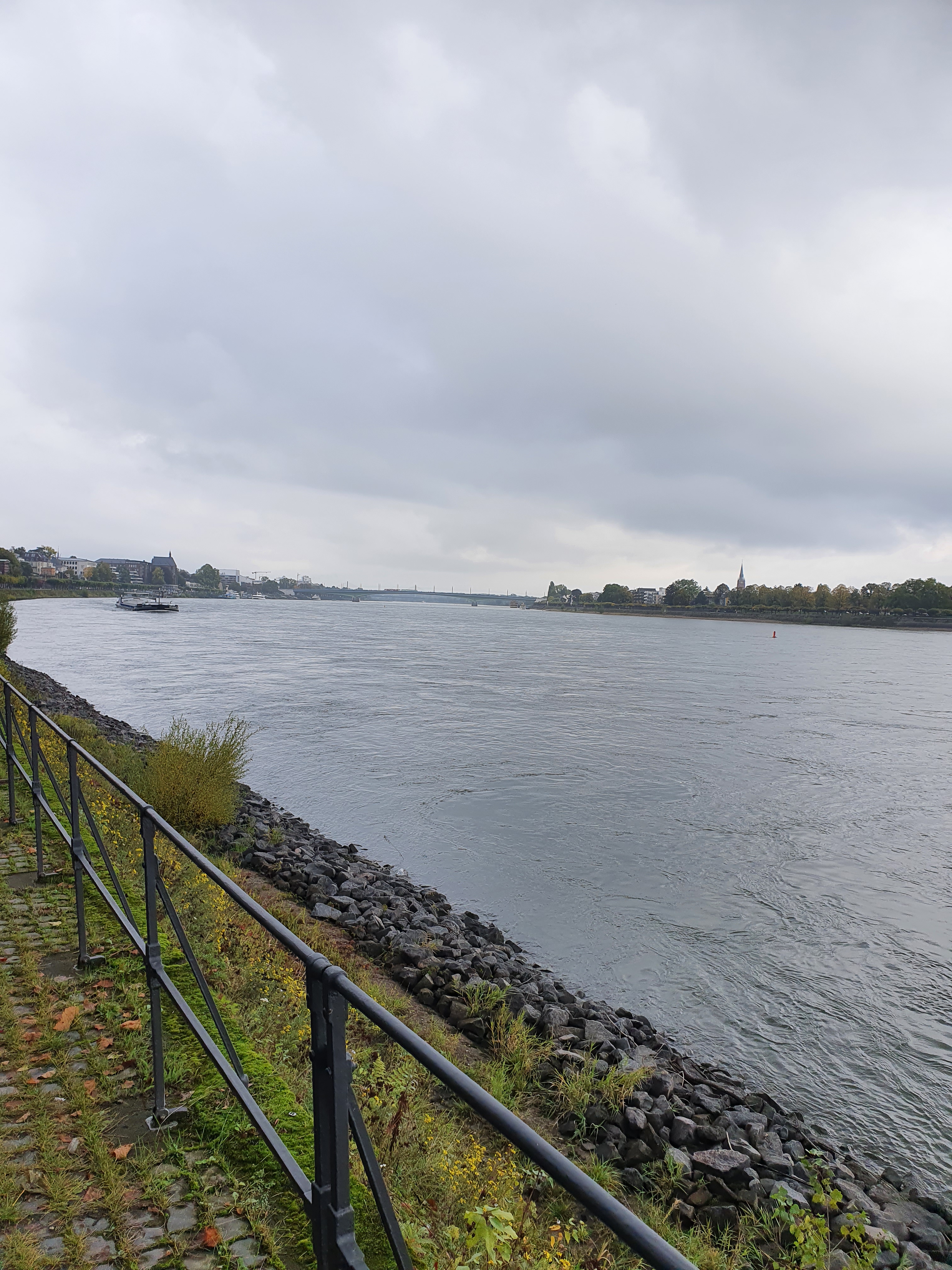
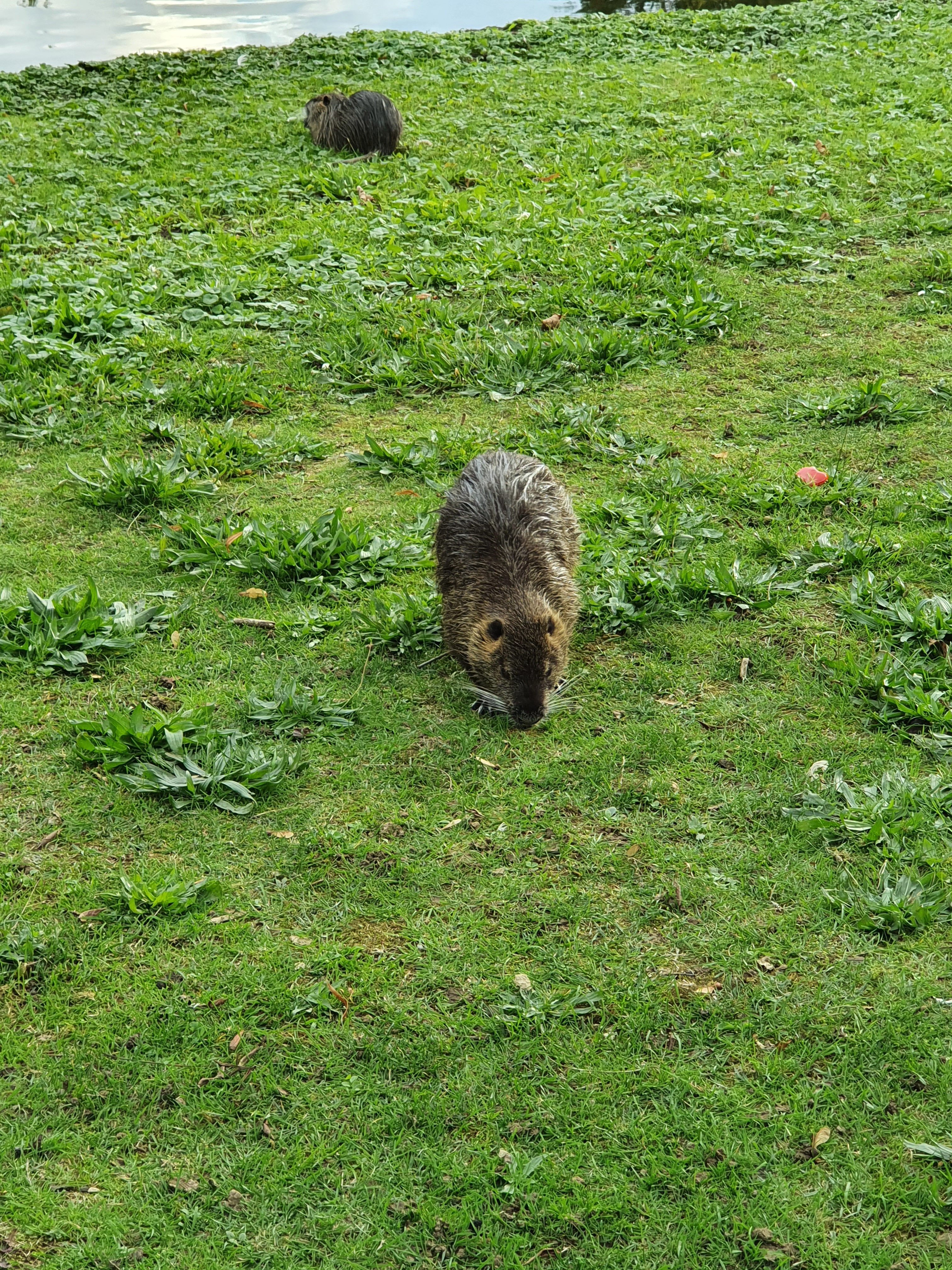
I love him and his works; especially his once and for all Concerto Violon which He had composed only one (many other compositors have more than one Concerto Violon) but this is a remarkable one. And we had met the Rhein and her beauty, we had also an unexpected encounter with Beavers who walking cooly around.
The RheinThe Beaver among the others
And we took a look at his house or museum, we were not allowed to take any pictures, therefore, I had to steal one from the WEB! It’s his piano, so small but what the masterworks he’d created with it; even later when he was deaf.
There some more, have a peaceful weekend 🙏💖
And yet, let’s have the great piece; with a woman as the soloist, what else.









 Cyrus the Great with a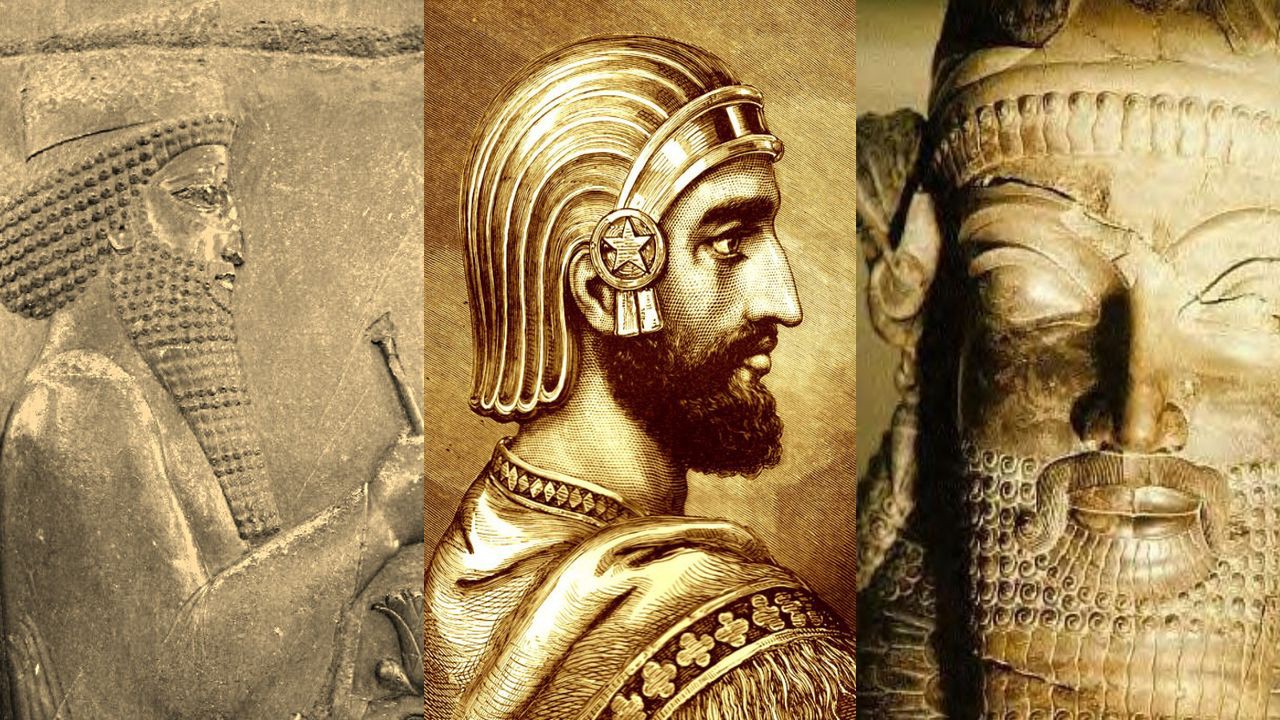



















 lampmagician

You must be logged in to post a comment.