I heard only his name, those days in Iran when I have been studying arts and inner architecture. We had to learn colours and how to work with them. I have known him and his masterworks truly here in Germany.
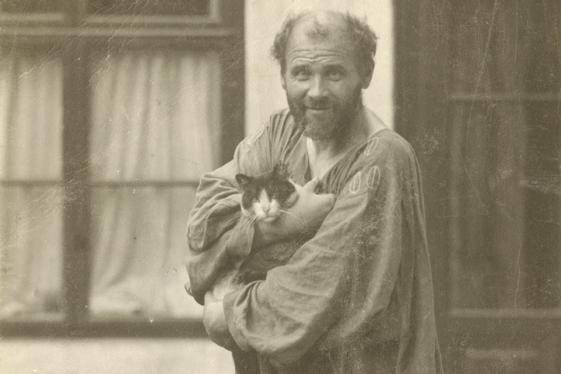
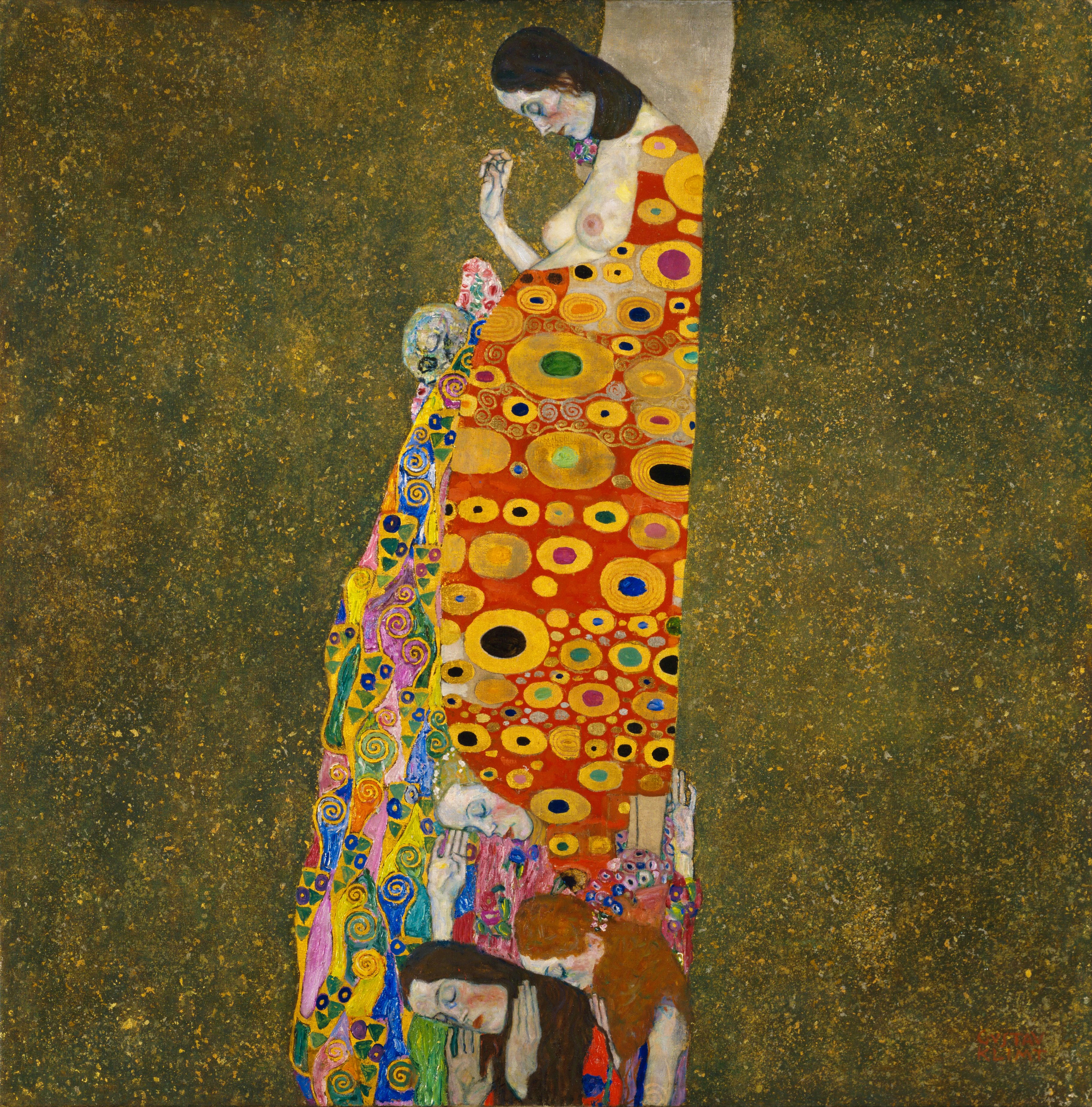
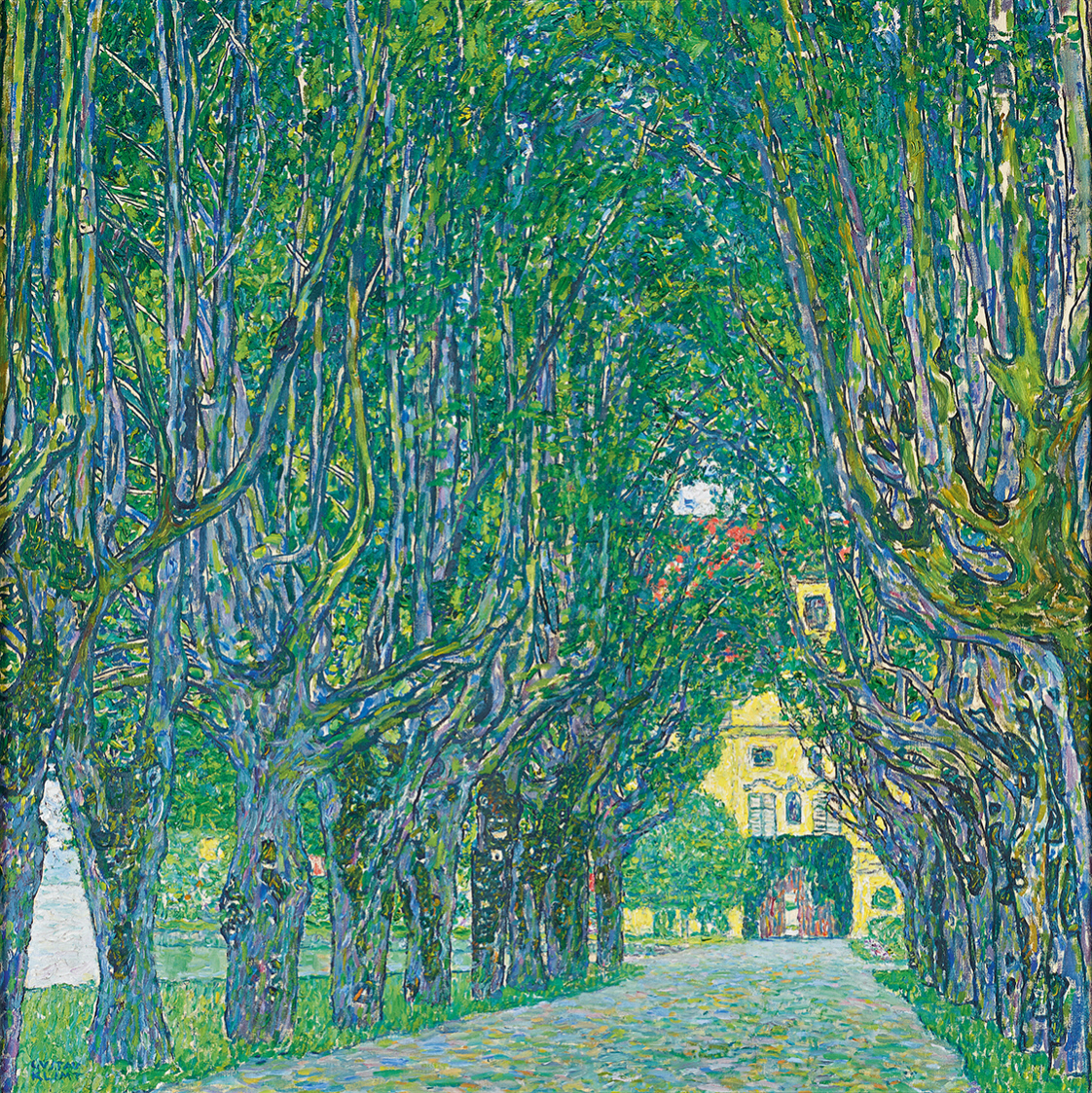
To understand the role of Gustav Klimt artwork in Vienna, take a brief look at the artist’s life: Gustav Klimt (1862 to 1918) is one of Europe’s most famous Jugendstil (Art Nouveau) painters and incorporates the Austrian style of Art Nouveau (Jugendstil). As such, he has become one of the most popular representatives of Vienna art. At the end of the 19th century, Klimt co-founded the artists’ group Wiener Secession, a rebel group of young artists who parted from the conservative Austrian Artists’ Association (Künstlerhaus). Throughout his time in Vienna, Klimt worked in six different studios. His last studio, located at Klimt Villa in Hietzing, is open to the public.
He is one of the most advanced painters who have mastered geometry and the appropriate colour of the painting.
Here is a well-done video by Great art explained, in which James Payne discusses ‘The Kiss’. (der Kuss)
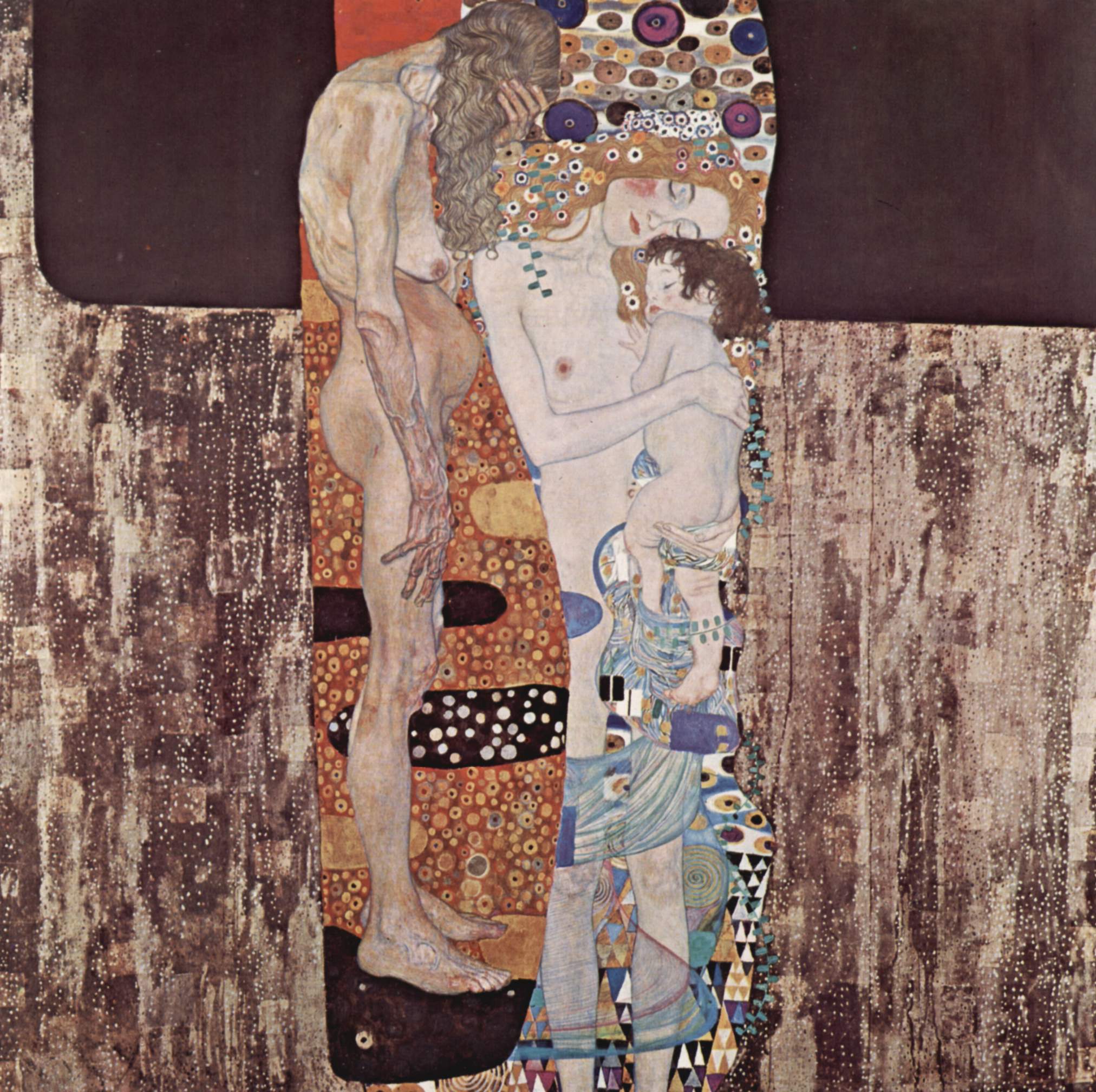
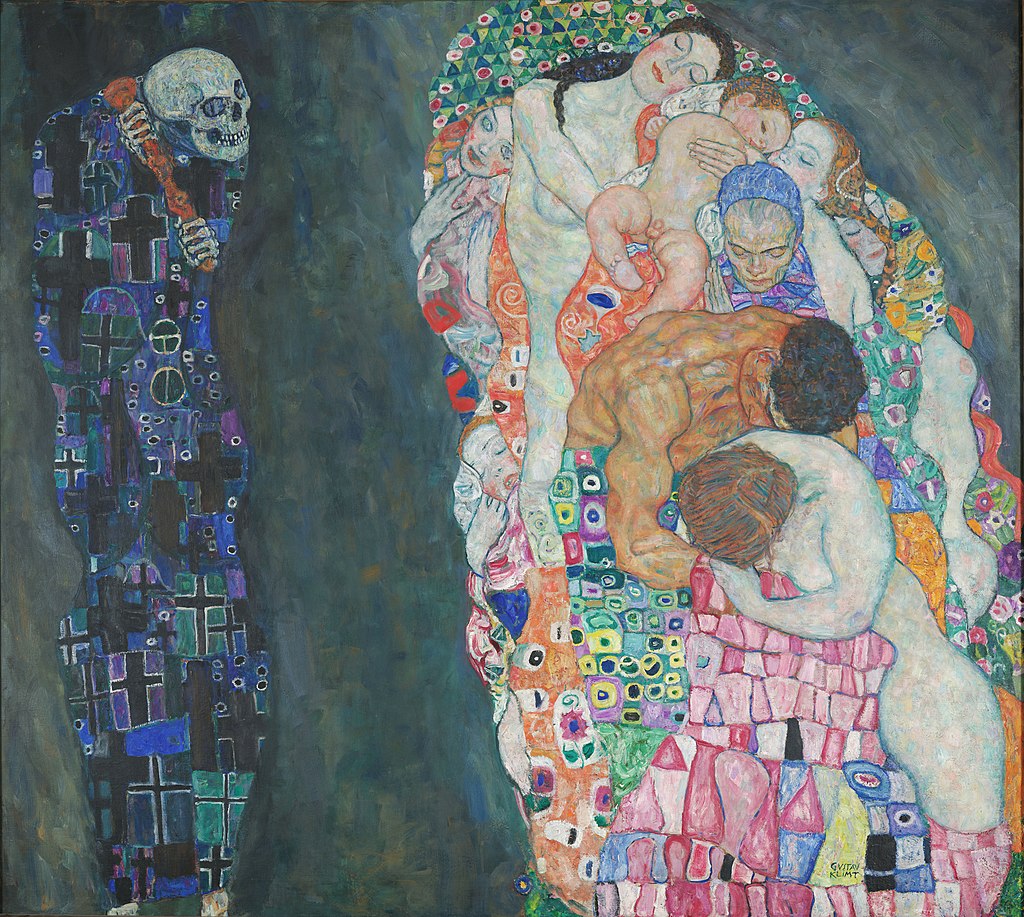
Allegorical painting by Gustav Klimt
This central late work by Gustav Klimt is one of his great allegories, in which he uses a bold composition to thematize the cycle of human life. The first sketches on paper were made in 1908, the execution in oil from 1910. On the occasion of the first presentation at the International Art Exhibition in Rome, in 1911, Klimt received the gold medal. For reasons that were not known in detail, he decided to fundamentally revise the picture in 1915. Klimt achieves the dissonant entanglement of life and death through the formal and motivic contrasting of a stream of naked human bodies: enveloped in colourful ornaments and flowers, mother and child, an old woman and a pair of lovers – on the right, and the solitary figure of death in dark clothes on the left side. The original probably has had a gold-coloured background but turns grey in the final version, death – wrapped in a blue ornamented cloak, and with a raised small red club, which appears dynamic and alive, designed in bright colours. It is also condensed with further figures and ornaments.(Here in original)
I would just like briefly to report on my break and hope you won’t be so bored! That was actually my plan to set myself back a bit and to reduce the pressure on my mind. But as if! That was a stressful, exhausting time.Not only because I had to work to earn the needed money, but also because of other issues (difficulties) that came upon me without grace.One of them was that I had to take care of my grandchildren more often. As a dear grandpa, of course, that’s always a wish for me and of every grandpa to do it, but at my age sometimes it’s very exhausting, especially when I had to do it alone! Phew, they have such claims! And then my young neighbour from the top floor came along, who wanted at any case, to cut the branches of the trees in the garden and as I am not the one who sits quietly and watch, I had to join in! Besides, my dear wife, Regina, has planned to go south for an “alkaline fasting”. Of course, I couldn’t let her drive that far without really wanting to prepare our ten-year-old car. That meant that I had to drag the winter tires from the cellar into the car and drive to the car service station. I tell you: I had such a feeling when I went to bed, I fell like a log on the mattress. Well, I know and appreciate some adorable friends who have wished me a good rest and maybe even missed me. But unfortunately, I cannot speak of any recovery, maybe next time!!
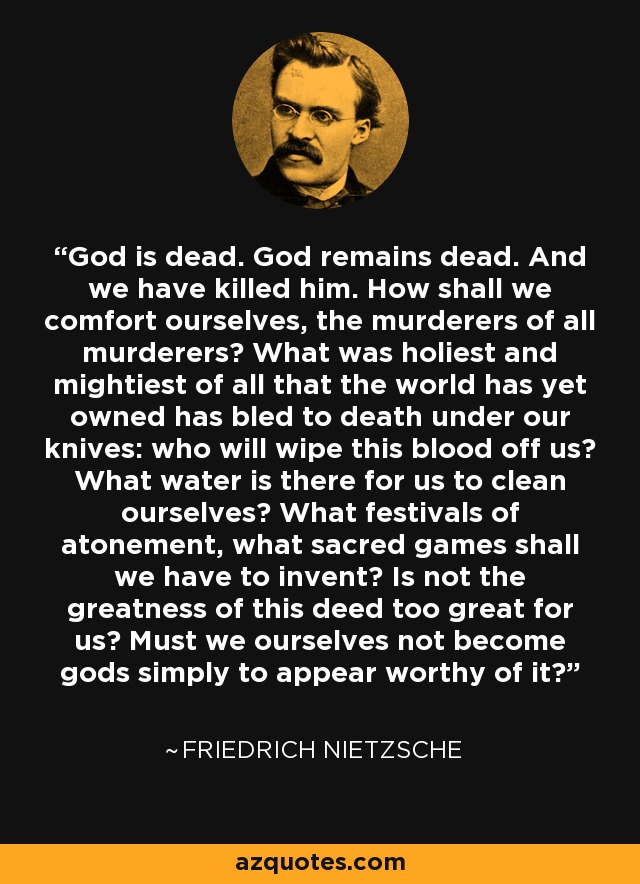
Now I want to celebrate Nietzsche, Friedrich Wilhelm, who was born on October 15, 1844. He was a philosopher, cultural critic, composer, poet, writer, and philologist, and for sure, with a controversial soul who was hated and loved by many.
“The higher we soar, the smaller we appear to those who cannot fly.”
And
“But the worst enemy you can meet will always be yourself; you lie in wait for yourself in caverns and forests. Lonely one, you are going the way to yourself! And your way goes past yourself, and your seven devils! You will be a heretic to yourself and witch and soothsayer and fool and doubter and unholy one and villain. You must be ready to burn yourself in your own flame: how could you become new if you had not first become ashes?”
Here, I have a piece to share with you from our Greek friends, Searching The Meaning Of Life, to have another look at this Genius. <And it is always useful such a lesson, when the freedom of man become tight!> Happy birthday and thanks for your insane genius.
Our treasure is in the hive of our knowledge. And we always go there since we are winged insects of nature and collectors of the honey of the mind.
Like Schopenhauer, (and C.G.Jung), Nietzsche was interested in his youth, in the range of Eastern philosophies converging in India. The heir to a long spiritual tradition-oriented towards his knowledge, Ramana Maharsi was perhaps the last “great guru” to work with the instrument that makes us human: the mind.
Ramana encouraged his students to form the question: “Who am I?”. As soon as he learned that he had advanced cancer, he reassured his students, telling them, “I am not going anywhere. “Where could I go?”
Nietzsche compares the conquest of intellect to a bee, flying to the hive to create the purest honey, while Maharshi described the journey to the interior of each: “Like a pearl fisherman tying a stone in the middle of the belt, and sinks to the bottom of the sea to collect them, so each of us must be armed with “the renunciation of all”, to dive inside ourselves and acquire the pearl of ourselves “.
And to find this pearl, one does not need to go on a pilgrimage to India or engage in complicated spiritual exercises. It is enough to look inside of own calmly.
The most obscene word and the most vulgar letter is better and nobler than silence!
Most psychological warfare begins with what is not said rather than what is said. Let us recall the following scene: A got angry with B and cut him off since the latter forgot to wish him a happy birthday. At first, A may have wanted to say to him, “Listen, do you not know what the day it was yesterday?” the silence. B finally got angry with A, because he suddenly stopped answering his phone calls, while the only time he managed to talk to him, he seemed to be unhappy. A has a childish situation but much more common than one can imagine.
How many couples are angry at misunderstandings that take days or months to come to light? Is not the lack of communication the root of many conflicts at work?
Not saying things on time is an important stressor for those around us, as it creates a multitude of interpretations that end up against us.
Nietzsche, who was certainly not one of those whose tongues were hairy, teaches us that it is better to express what we feel – even if we do not find the right words – than to offend the other with our silence.
“The Regarding of the certainties that shape our reality, there is a modern narrative, ‘The Fairytale Company’, which talks about the danger of being imprisoned by our beliefs, as Nietzsche warns.
Once upon a time, there was a man who lived next to a public street and sold some delicious buns. The work was going so well that this man neither listened to the radio, nor read newspapers, nor paid much attention to television. His work was going so well that he was able to invest in advertising. People were buying their buns. And each time he got better and better and each time he invested more in his work.
In the summer he was visited by his son, who had returned from university where he was doing his master’s degree in business administration. The son, seeing the whole opening in means, lands and buns, said to him: -Father, do you not listen to the radio and do not read newspapers? We are in a huge crisis. All this is sinking.
The father thought: “My son has studied. He is informed. He knows what he’s talking about. “
So buy fewer ingredients to reduce bun production. He reduced a lot of expenses and curbed his advertising investment. Sales were declining day by day and after a while the business began to be in deficit. The man called his son at the university and told him:
You were right my son. “We are in a very big crisis.”
The man who would think of himself as absolutely good would be spiritually stupid.
If our conscience makes us human, then imperfection is a distinctive feature of our species.We humans spend most of our time correcting mistakes – it is enough to read any newspaper – rather than making things of value.
Accepting this element of human character helps us to be humble and even more importantly, makes us realize the vast field before us for improvement. Every failure or mistake teaches us at the same time how to achieve the best. Rigid people, who try to do everything well, already suffer the consequences of their imperfect actions. They tend to blame others for what they do badly and lose their temper when someone points out a mistake they may have made.
Nietzsche’s spiritual contribution is this: We can not always aspire to be good and do everything well, as long as we are willing to do things a little better today than we did yesterday.
The Japanese have a word, wabi-sabi, which defines the art of imperfection , in that which is incomplete, irregular and temporary there is beauty and life, because it contains the longing of nature to perfect itself.
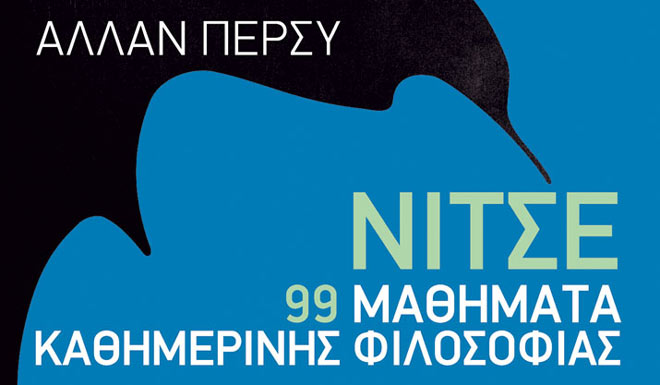
Allan Percy: “Nietzsche: 99 Lessons in Everyday Philosophy” (2nd)
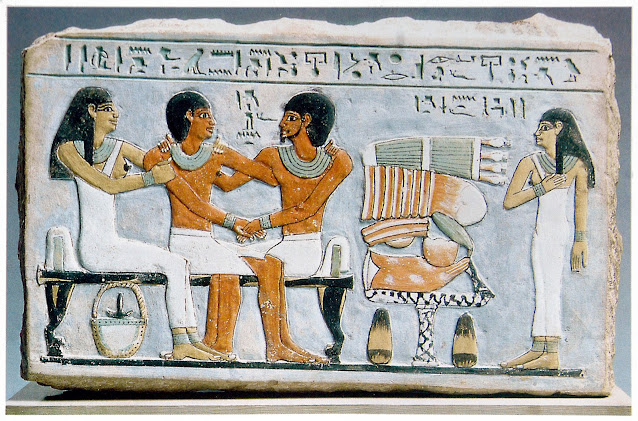
Detail of funerary stela of Amenemhat. The name of God Amun was erased by Akhenaten’s agents. Limestone, painted. From Egypt, early 18th Dynasty. The Burrell Collection, Glasgow. Wikimdia Commons
It’s a lovely heritage from the old magical Egypt, which shows us such a loving relationship between a family.
In this 12th dynasty tomb painting, the deceased Amenemhat (also spelt Amenemhet) is embraced by his living father Intef and his deceased mother Iy, as his living sister Hapy looks on from the right. We know this from a close reading of the offering formula to the deceased above the figures, and the name-and-relationship hieroglyphs beside the living figures. Upon the offering table, succulent cuts of beef are piled up with garlic, vegetables, and bread for the sustenance of the deceased in the afterlife. (Ancient Egypt)
Amenemhat funerary stele – painted limestone – Middle Kingdom Discovered in the necropolis of El-Assassif by the Metropolitan Museum of Art in New York during the 1915-1916 season – Egyptian Museum in Cairo – JE 45626
This “Amenemhat funerary stele” is painted on limestone, 30 cm high, 50 cm wide. It is dated to the Middle Kingdom, around 2000 BC.
The colours are soft (which is unusual for the time). It’s with a dominant white and gentle green.
The scene can be split into two “sequences”: On the left side, three figures are seated on an elegant black wooden bench with a lion’s feet and small white and green backsplashes.
The first character is a woman, charming, thin and slender. She wears a black, three-part wig, which goes down to below the shoulders while leaving the ear open.
Amenemhat funerary stele – painted limestone – Middle Kingdom Discovered in the necropolis of El-Assassif by the Metropolitan Museum of Art in New York during the 1915-1916 season – Egyptian Museum in Cairo – JE 45626
His eyes, stretched out, are bordered with a black line, the pupil and the eyebrow, are also black. Around her neck, a large, soft green necklace, in the same colour as the wrist and ankle bracelets. She is wearing a long, tight dress, immaculate white. The garment, held by a strap, leaves the breast uncovered; its point, strongly marked, is materialized in black. Under her, a lovely little basket with a handle, very feminine, is placed, from which protrudes the recognizable handle of a mirror.
In front of her is a man: he turns his back to her; she rests her right hand on his right arm, while her left hand rests on his left shoulder.
The man looks young. He has black hair that falls in layers to the back of his neck. He wears a simple white loincloth; on his neck hangs a necklace, and, on his wrist, a large bracelet of the same gentle green.
Amenemhat funerary stele – painted limestone – Middle Kingdom Discovered in the necropolis of El-Assassif by the Metropolitan Museum of Art in New York during the 1915-1916 season – Egyptian Museum in Cairo – JE 45626 – photo of the museum
In front of him seats a man who looks like him but appears older. He is coiffed and dressed in the same way. The difference is that he wears a black beard, and his collar is wider.
These three characters hold each other’s arms and their hands. The bonds of affection between them are palpable and displayed.
In “Treasures of Egypt – The Wonders of the Egyptian Museum in Cairo”, Rosanna Pirelli gives us the following details: “At the far right, appears the owner of the stele, Amenemhat, on the left, his wife and, in the centre, Antef, the couple’s son. The scene is striking in its naturalness since the three characters are associated in a scene, testifying to their intimacy: the woman holds her son’s shoulders with both hands, her left arm crossing her right arm. Amenemhat, with his left hand, holds his son’s right hand. “
Behind the three figures is an offering table that opens the second part of the scene. The harness is treated in white with black patterns. On each side of the central foot is placed a loaf of almost conical shape. As for the tray, it is crumbling under the food piled up there, meat and vegetables: “The funeral offering consists of bread, beer, pieces of beef and poultry for the venerable (s).
Amenemhat funerary stele – painted limestone – Middle Kingdom Discovered in the necropolis of El-Assassif by the Metropolitan Museum of Art in New York during the 1915-1916 season – Egyptian Museum in Cairo – JE 45626
“A woman, dressed as Iy, is standing, her right arm brought to her chest and her left arm hanging alongside her body, palm open. She has been represented smaller: “Hieroglyphics designate her as” her venerable sister “, and some interpretations indicate her as the” daughter-in-law “of Amenemhat.”
The skin of the two women is treated in light yellow while that of the men is in ocher-brown. Their harmony is perfect: black hair, white clothes, almost identical green jewellery…
Above the figures, over the entire width of the stele, runs a beautiful hieroglyphic inscription: “The line of inscription in hollow hieroglyphs is an invocation of food offerings in favour of Amenemhat and his wife Iyi; the names of Antef and Hapy respectively accompany the image of their son and daughter-in-law. “
Amenemhat funerary stele – painted limestone – Middle Kingdom Discovered in the necropolis of El-Assassif by the Metropolitan Museum of Art in New York during the 1915-1916 season – Egyptian Museum in Cairo – JE 45626
This stele has a freshness and a tenderness which can only seduce us: it gives us the impression of entering into the intimacy… and into the eternity of a particularly loving, warm and harmonious family.
It was discovered during the First World War, which, during excavations carried out in 1915-1916 by the Metropolitan Museum of Art in New York in the Assassif, concession held since the 1912-1913 season.
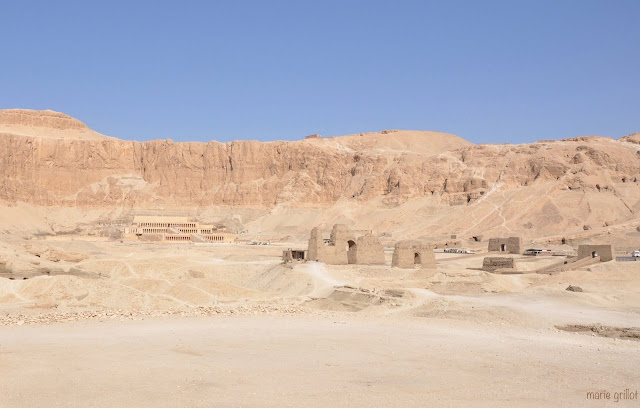
In the foreground, the necropolis of Assassif; in the background, the rocky cirque of Deir El Bahari including the temple of Hatshepsut
The team is then led by the Egyptologist Ambrose Lansing, to whom Harry Burton, Egyptologist and a great photographer, is associated. (To whom we owe in particular, the reporting of wonderful discoveries: including that of the tomb of Meketré and that of Tutankhamun).
It is at the foot of the temple of Hatshepsut: “to the left of the courtyard of the tomb MMA 37, where several small tombs have been found. They have got the numbers R1 to R12”. Dated from the Middle Kingdom, they respect funerary architecture.
The stele was in tomb R4 and was recorded in the Journal of Entries of the Egyptian Museum in Cairo under number JE 45626.
Treasures of Egypt – The Wonders of the Egyptian Museum in Cairo, Francesco Tiradritti The treasures of ancient Egypt at the Cairo museum, National Geographic
Obviously, it’s time for this old man, taking a break! I wish you all, my lovely friends, a good time. I will try to get back soon. And I have tried to find the last drops of gasoline in the last scenes in the Graduate movie, but I couldn’t find my wishing clip, only these both. Anyhow, I hope they show that I have no stuff anymore! 😜🤓🤡🙏💖
I want to talk with you again about one of my greatest masters in mind and thought, Socrates. It is not only because of his being great in philosophy but also because I love him!
There’s also one other reason to write this article: It’s because of the reactions around a post which I shared on Facebook some days ago, and they were so different and some of them so unexpectedly, that I was surprised and almost shocked! You might know that on FB, there are different emojis to react to any post, including laughing. And laughing at this article was something improper for me. (Even some of my adorable friends did the same, though I believe that they hadn’t read the post!)
I know that philosophy is not everybody’s matter, and Socrates is not easy to understand. But when I share something special on FB, I look for the relevant group and expect the appropriate reactions.
I know that with humanity in general, it is difficult to say: I don’t know! Is it because of the Arrogance? Or the fear not to be mocked? Despite the fact that we can never know everything. And when a great philosopher, like Socrates says: I know that I know nothing, some people laugh, merely to hide their ignorance!
Honestly, I have rarely met one who says that magic word or has no problem with “not knowing”. Though, I think if first we accept that, we open the door towards knowledge. There will be a big chance for all of us, if we’d just imagine that the wisdom is limitless.
“I know that I know nothing” is a saying derived from Plato‘s account of the GreekphilosopherSocrates. It is also called the Socratic paradox. The phrase is not one that Socrates himself is ever recorded as saying.
This saying is also connected or conflated with the answer to a question Socrates (according to Xenophon) or Chaerephon (according to Plato) is said to have posed to the Pythia, the Oracle of Delphi, in which the oracle stated something to the effect of “Socrates is the wisest.”
One of my reason to love Socrates, is his method of analysis in finding the truth. Plato shows in his books how fascinating and amusing were Socrates meeting and discussions. Here I add only a part of the analysis of one of his discussions, because Socrates used to spend a long time digging into the bottom to clear all indistinctness.
Concluding his conversation with Meno, Socrates says, “If we were right in the way in which we spoke and investigated in this whole discussion, virtue would be neither an inborn quality nor taught, but comes to those who possess it as a gift from the gods which is not accompanied by understanding.” After Meno agrees with this, Socrates says, “It follows from this reasoning, Meno, that virtue appears to be present in those of us who may possess it as a gift from the gods.” Going on, he says that it would be easier to understand this if he and Meno first determined “what virtue in itself is.” However, Socrates now takes his leave, telling Meno to convince Anytus of what they’ve determined, “in order that he may be more amenable.” “If you succeed,” he adds, “you will also confer a benefit upon the Athenians.”
It’s often easy to forget that, despite his intense devotion to philosophy and logic, Socrates is quite pious. Of course, some readers interpret his words at this moment as facetious, but there is reason to believe that Socrates truly believes virtue is granted by the gods without “understanding.” After all, this acceptance of ignorance perfectly aligns with his belief that true wisdom means recognizing one’s own intellectual shortcomings. What’s more, he doesn’t let this lack of “understanding” deter him from going through the process of intellectual inquiry. In turn, he demonstrates his belief that engaging in the life of the mind is worthwhile even when it’s impossible to draw definitive conclusions. Meno by Plato via LitCharts
And here is the mentioned post on FB. (I think the pic here perplexed some in mistake to laugh!)
The Socratic Paradox, “I know that I know nothing”, is a saying derived from Plato’s account of the Greek philosopher Socrates. This dictum is not an apology for ignorance, but rather a way to model epistemic humility: Socrates’ dialectic method of teaching was based on that he as a teacher knew nothing, so he would derive knowledge from his students by dialogue. In many ways, this methodology is diametrically opposed to that favoured by the Guru archetype: the omniscient, omnipotent and benevolent parental figure who knows all the secrets to the universe and can enlighten us with a mere gaze, as long as we pledge our supreme devotion to their egoless persona. Our thirst for benevolent guidance and a general state of anomie and lack of meaning gets exploited and projected all over social media by unhinged wellness/yoga/pop-psychology influencers who aren’t usually interested in advancing a discourse that promotes dialectical critical thinking and nuanced sense-making; for the most part, they’re self-absorbed grifters who mistake their limited and subjective reality tunnels for Objective Reality and their misinformed and biased opinions for Wisdom and Truth. How many times do we need to hear a thirty-something glorified manchild rave about adolescent ideas of “body sovereignty” and medical libertarianism, elementary-school-level metaphysics they derived from a DMT trip or generic, regurgitated and misinformed conspiracy fantasy tinged with recycled pseudo-spiritual and anti-Semitic tropes before we realise that they are not really interested in knowledge, kindness or Truth: they are simply grifters weaponising their arrogance and charisma, preying on our loneliness and our thirst for meaning and connection to sell us one single product: themselves.Epistemic humility is a virtue much needed in times when Certainty runs rampant amongst the least qualified. Certainty is hardly an appropriate response to the intricacies of how the world works, let alone the deeper Mysteries. “All I know is that I know nothing” seems like the better mantra. From the FB page: Healing from Healing
There were some comments, but this one I’d liked most.
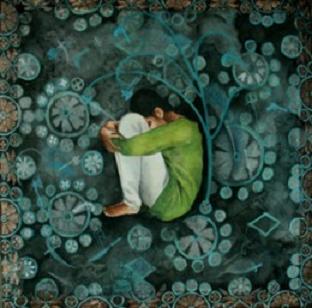
BEGINNER’S MIND: There is a beautiful “state” which is aimed for in Zen called “beginner’s mind.” It’s like having the eyes of a child and perceiving fresh and anew – a state of emptiness so one can get renewed and refreshed/ refilled. We place such a value of “knowledge” that we often can’t see beyond our beliefs and conceptions.. Not to degrade knowledge, but there are wonderful moments of intuition where one sees freshly… Looking through another’s eyes… Seeing free of our preconceptions, expectations or “confirmation biases.” Zamin K. Danty
So, It is always good (better) to take time and look (read) and not only think, but as the Germans say: Nachdenken! (Ponder) then, make a decision. 🙏💖
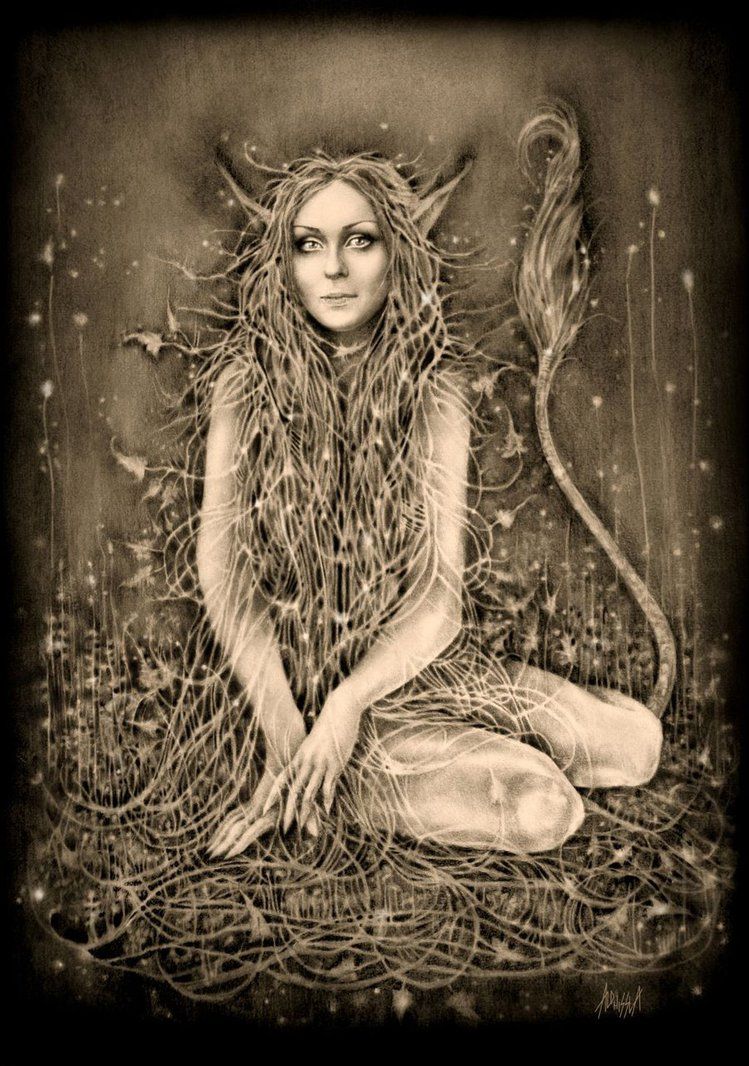
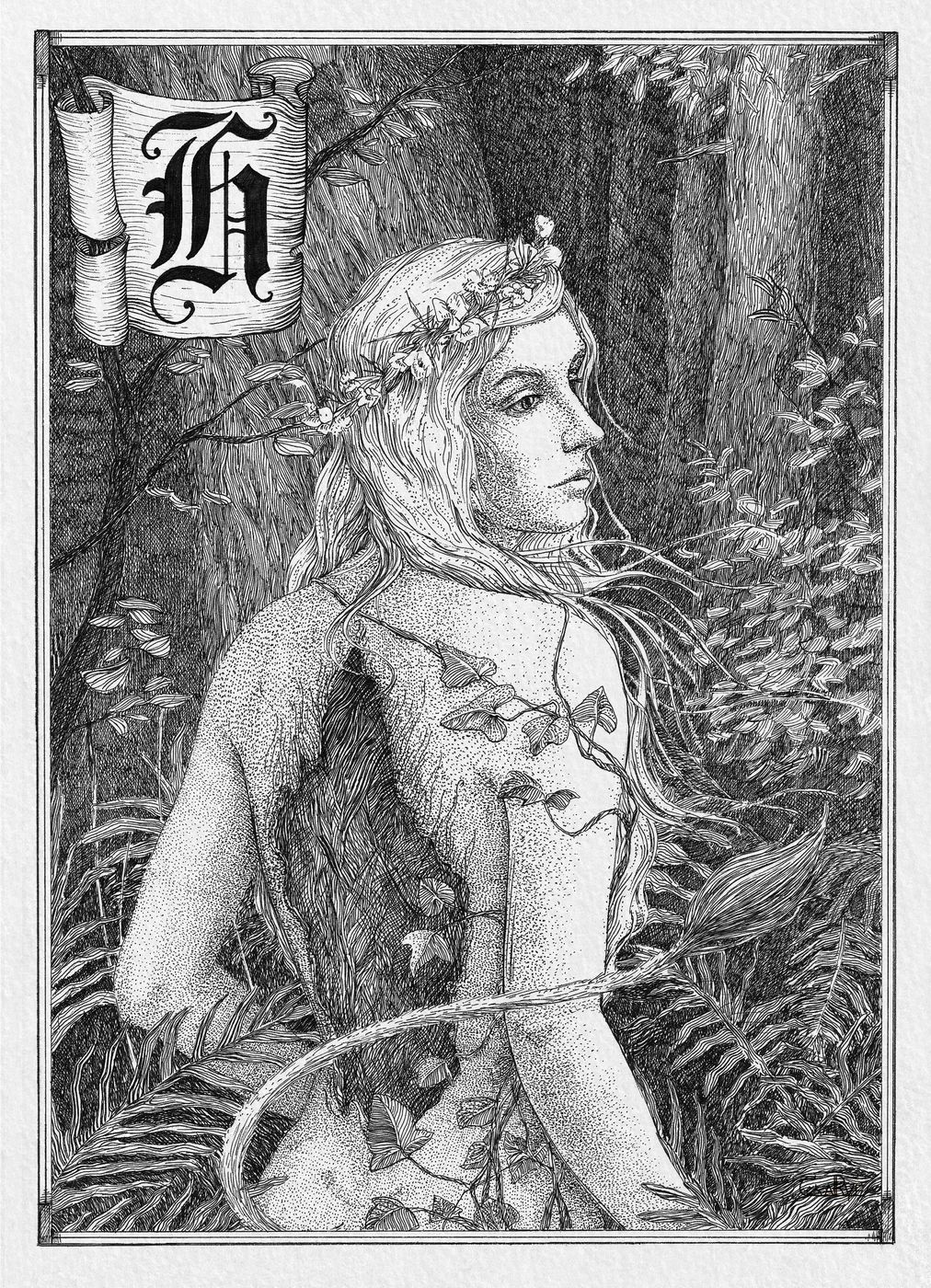
What I’ve always been wishing is to meet a fairy in the woods or forest! At this very moment, I might be excited but never feared. And I have ever had a preference for the Scandinavian countries. Therefore, when I found this fascinating Fairy, Nymph or Goddess from there, I began to dream. 😉
Huldra’s Nymphs (the title given to the work in the list of illustrations on page vii). A black-and-white reproduction of a painting, showing an idyllic scene with two female beings near a small stream. By Bernard Evans Ward – Guerber, H. A. (Hélène Adeline) (1909). Myths of the Norsemen from the Eddas and Sagas. London : Harrap. This illustration facing page 58. Digitized by the Internet Archive and available from https://archive.org/details/mythsofthenorsem00gueruoft Some simple image processing by User:Haukurth, Public Domain, https://commons.wikimedia.org/w/index.php?curid=4754177
Skogsrå, Råndan or Huldran. (lit. ’the Forest Rå‘) is a mythical female creature of the forest in Swedish folklore. It appears in the form of a small, beautiful woman with a seemingly friendly temperament. She appears like a woman from the front but seen from behind she often has a hollow back and a tail.
A hulder (or huldra) is a seductive forest creature found in Scandinavian folklore. Her name derives from a root meaning “covered” or “secret”. … She is known as the skogsrå “forest spirit” or Tallemaja “pine tree Mary” in Swedish folklore, and ulda in Sámi folklore. Her name suggests that she is originally the same being as the völva (Germanic paganism, a seeress) divine figure Huld and the German Holda (Frau Holle by the Brothers Grimm)
Goldmarie aus dem Märchen “Frau Holle” illustration by Hermann Vogel (1854-1921)
The hulders were held to be kind to charcoal burners, watching their charcoal kilns while they rested. Knowing that she would wake them if there were any problems. They were able to sleep, and in exchange, the humans left provisions for them in a special place. A tale from Närke illustrates further how kind a hulder could be, especially if treated with respect. (Hellström 1985:15).
Origin: A tale recounts how a woman had washed only half of her children when God came to her cottage; ashamed of the dirty ones, she hid them. God decreed that those she had hidden from him would be hidden from humanity; they became the hulders. (Isn’t it fascinating? I love Folklore!)
This week had run “again” such as like “Non Idea at all”! Although I have some new subjects to work on, but they are so deep that I need some certain strength to jump into the abyss!
Early today,, I came across one of the older posts about William Blake, and though I knew him back then, his works have caught my eyes totally.
He was, without a doubt, an unconventional man. Maybe therefore I like him!
William Blake was a poet and a painter who was born in Soho in London in 1757. He is an important figure of the Romantic age. … As well as painting Blake also made books of his poems which he illustrated. One of his most famous works is a book called Songs of Innocence and Experience.
Wikipedia Songs of Innocence and of Experience Shewing the Two Contrary States of the Human Soul title page
For Blake, law and love are opposed, and he castigates the “frozen marriage-bed”. In Visions, Blake writes:
Till she who burns with youth, and knows no fixed lot, is bound In spells of law to one she loathes? and must she drag the chain Of life in weary lust? (5.21-3, E49)
In his masterworks, he experimented with relief etching, a method he used to produce most of his books, paintings, pamphlets and poems. Something that wasn’t so easy those days, anyway.
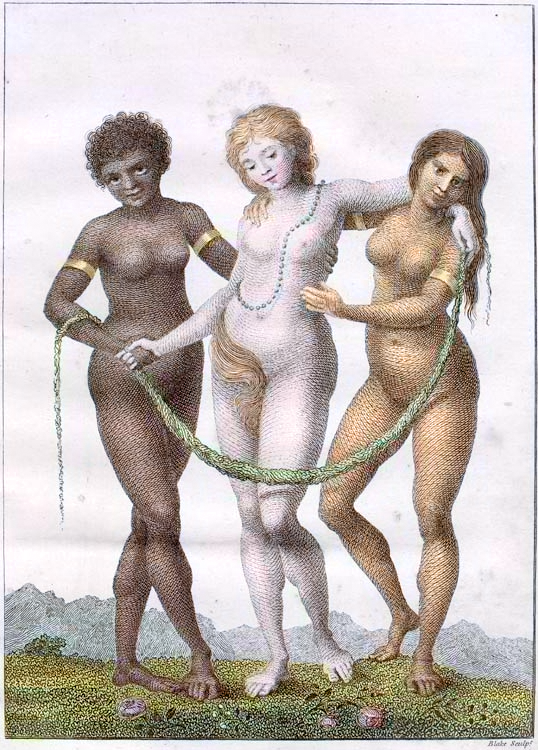
Blake abhorred slavery, and believed in racial and sexual equality. Several of his poems and paintings (I forego the corresponding painting) express a notion of universal humanity: “As all men are alike (tho’ infinitely various)”. In one poem, narrated by a black child, white and black bodies alike are described as shaded groves or clouds, which exist only until one learns “to bear the beams of love”:
When I from black and he from white cloud free, And round the tent of God like lambs we joy: Ill shade him from the heat till he can bear, To lean in joy upon our fathers knee. And then I’ll stand and stroke his silver hair, And be like him and he will then love me. (23-8, E9)
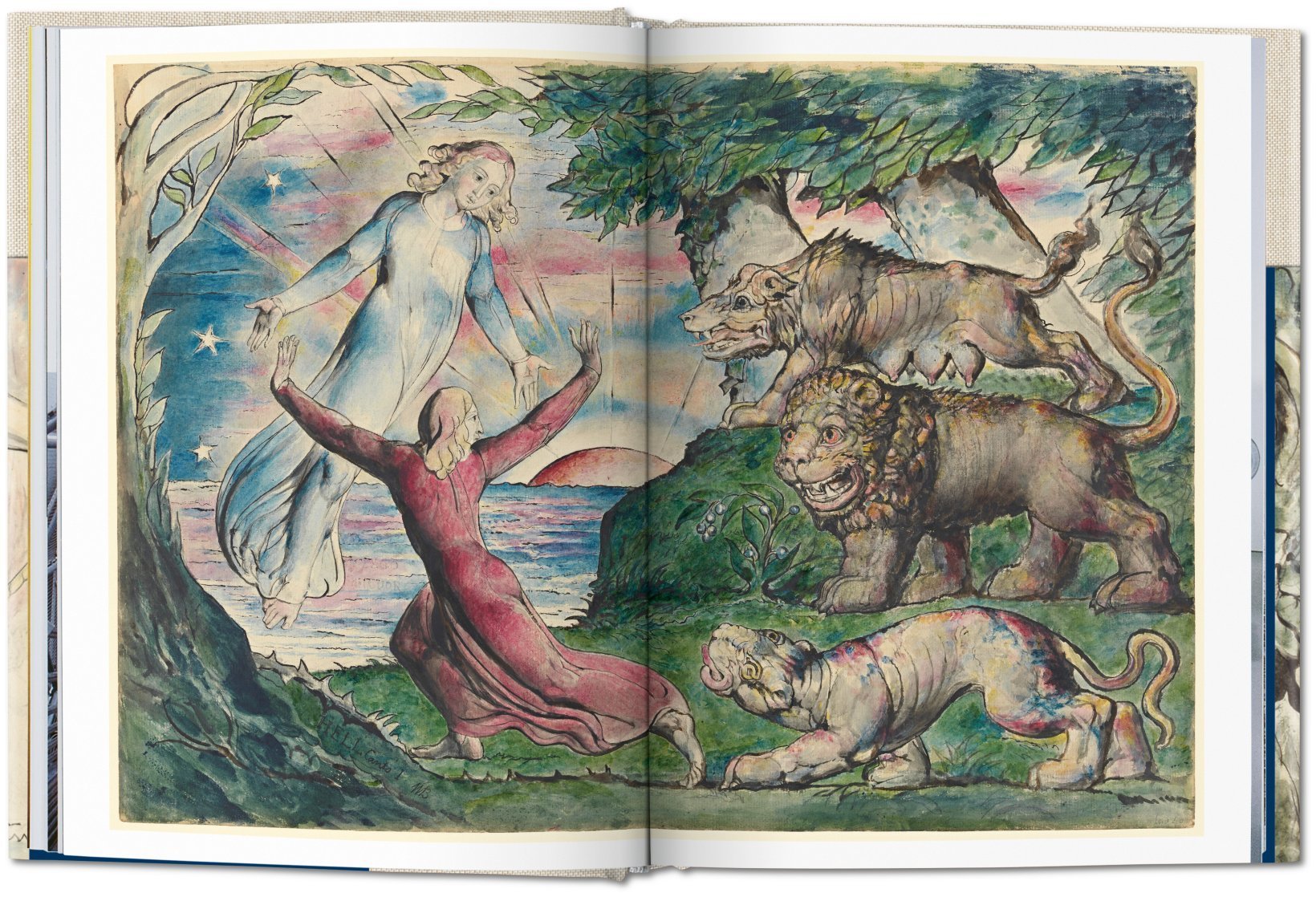
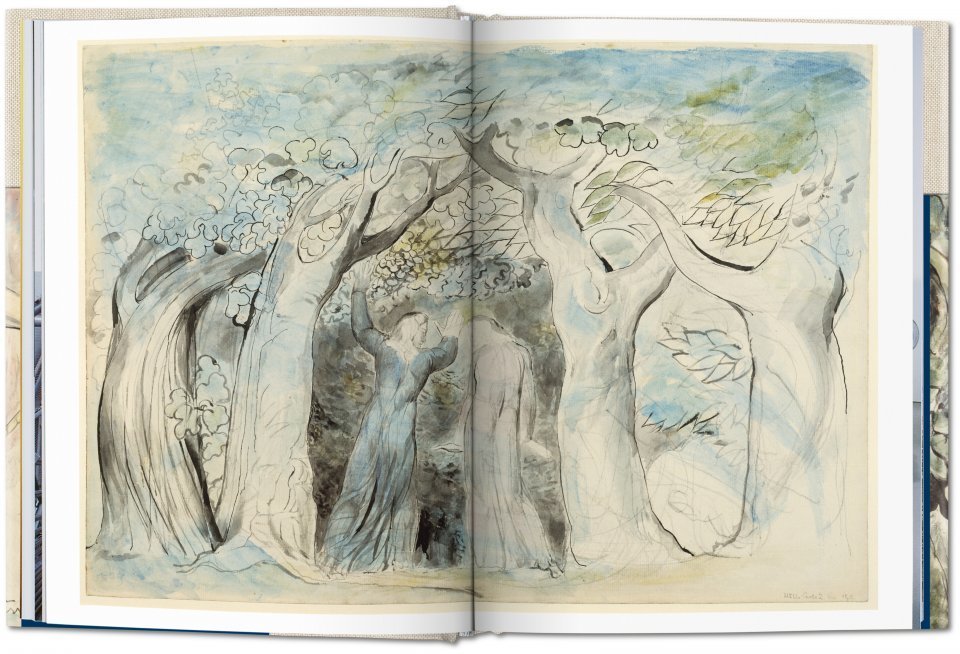
In his book on the Tarot, Alejandro Jodorowsky describes the Hermit card as representing mid-life, a “positive crisis,” a middle point in time; “between life and death, in a continual crisis, I hold up my lit lamp — my consciousness,” says the Hermit, while confronting the unknown. The figure recalls the image of Dante in the opening lines of the Divine Comedy. In Mandelbaum’s translation at Columbia’s Digital Dante, we see evident similarities:
When I had journeyed half of our life’s way, I found myself within a shadowed forest, for I had lost the path that does not stray.
Ah, it is hard to speak of what it was, that savage forest, dense and difficult, which even in recall renews my fear:
so bitter—death is hardly more severe!
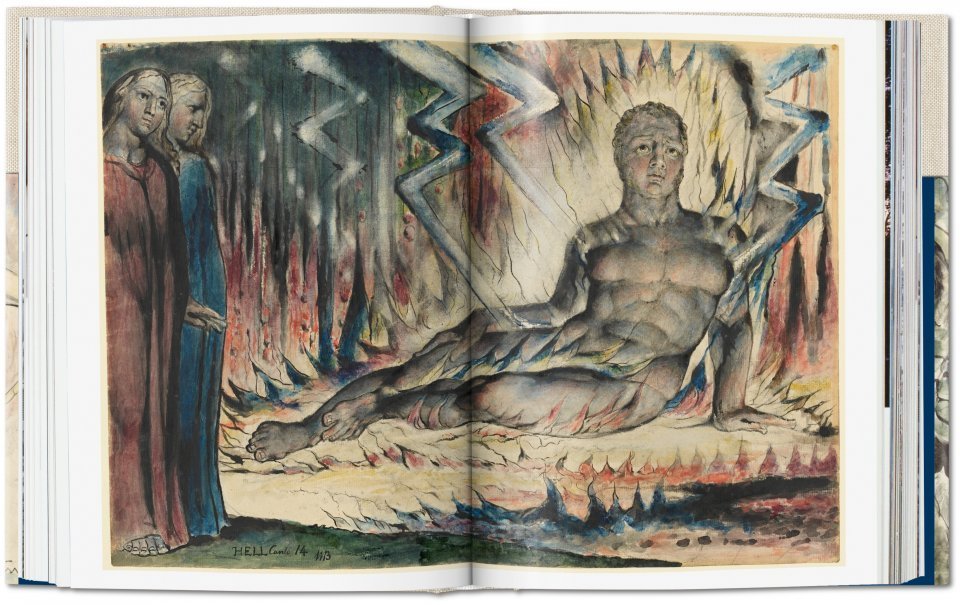
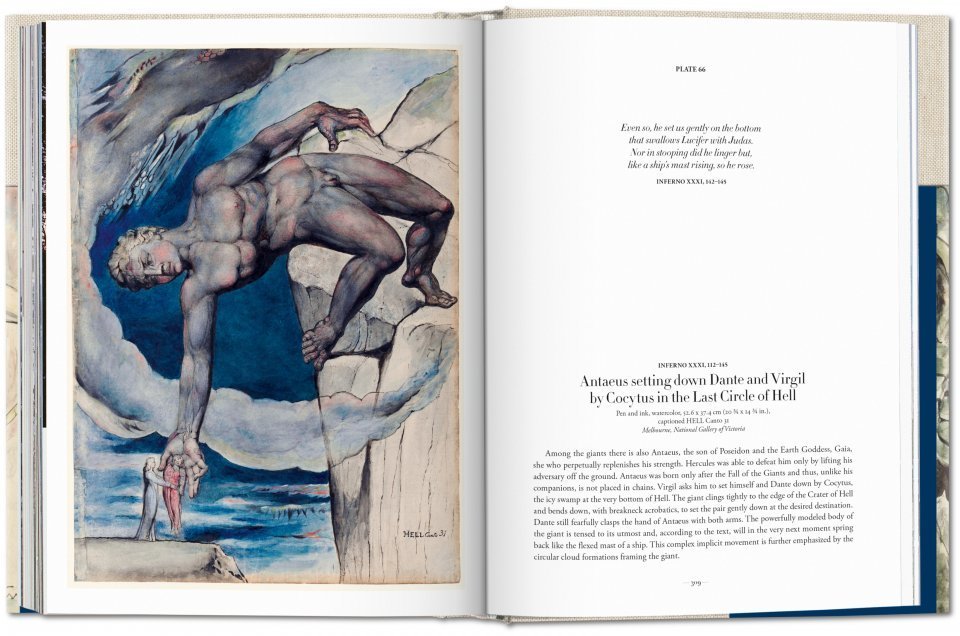
This is not to say the literary Dante and occult Hermeticism are historically related; only they emerged from the same matrix, a medieval Catholic Europe steeped in mysterious symbols. The Hermit is a portent, messenger, and guide, an aspect represented by the poet Virgil, whom William Blake — in 102 watercolor illustrations made between 1824 and 1827 — dressed in blue to represent spirit, while Dante wears his usual red — the color, in Blake’s system, of experience.
Blake did not read the Divine Comedy as a medieval Catholic believer but as a visionary 18th and 19th century English artist and poet who invented his own religion. He “taught himself Italian in order to be able to read the original” and had a “ complex relationship” with the text, writes Dante scholar Silvia De Santis.
His interpretation drew from a “widespread ‘selective use’” of the poet,” dating from 16th century English Protestant readings which saw Dante’s satirical skewering of corrupt individuals as indictments of the institutions they represent — the church and state for which Blake had no love.
Approaching the project at the end of his life, not the middle, Blake drew primarily on themes that Dante scholar Robin Kilpatrick describes as a “searching analysis of all of the political and economic factors that had destroyed Florence …. Hell is a diagnosis of what, in so many ways, can prove to be divisive in human nature. Sin, for Dante, is not transgression of an ordinary kind … against some law… it’s a transgression against love.”
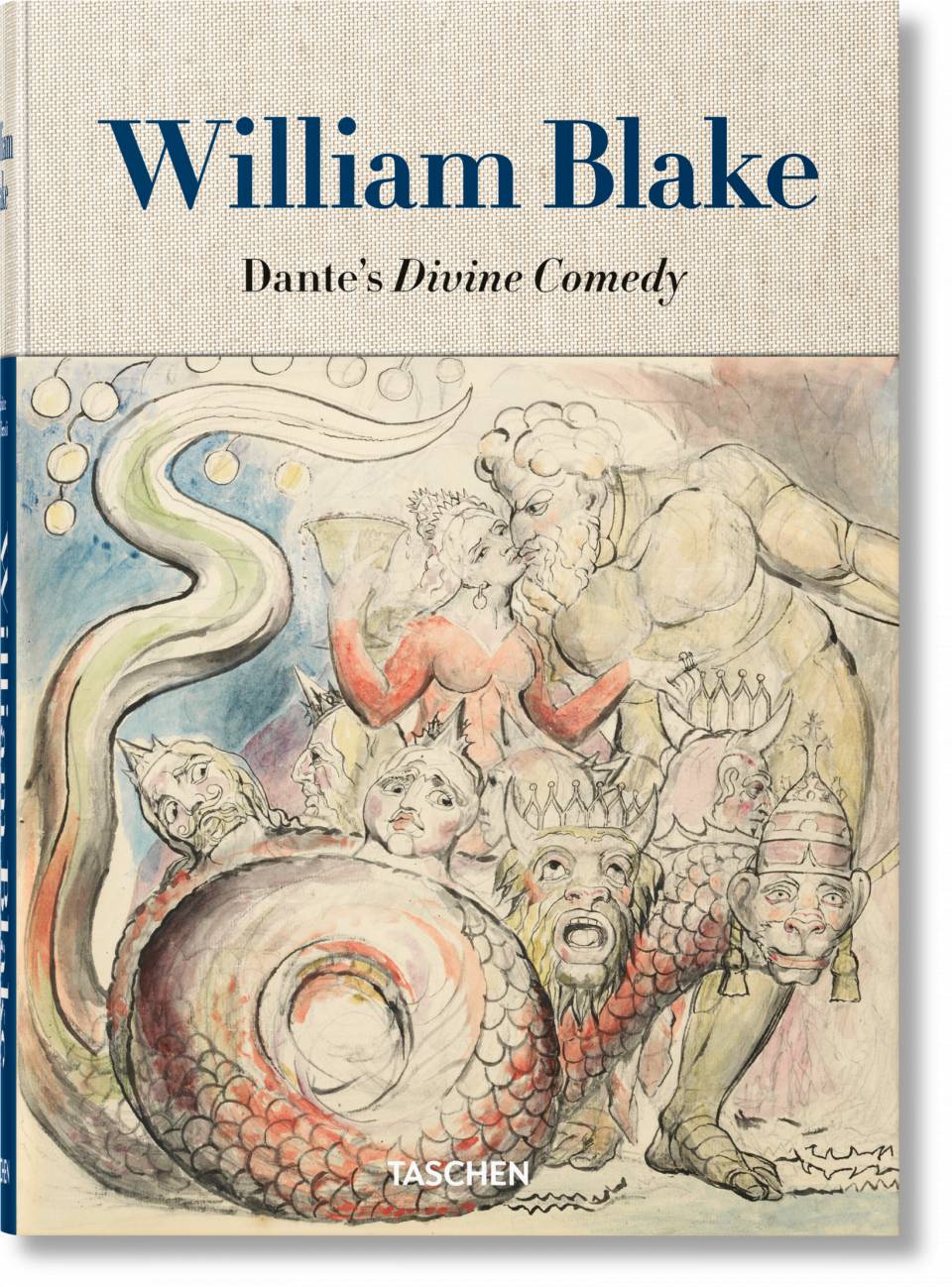
Blake died before he could finish the series, commissioned by his friend John Linnell in 1824. He had intended to engrave all 102 illustrations, conceived, he wrote, “during a fortnight’s illness in bed.” You can see all of his stunning watercolors online here and find them lovingly reproduced in a new book published by Taschen with essays by Blake and Dante experts, helping contextualize two poets who found a common language across a span of 500 years. The book, originally priced at $150, now sells for $40.
Josh Jones is a writer and musician based in Durham, NC. Follow him at @jdmagness.
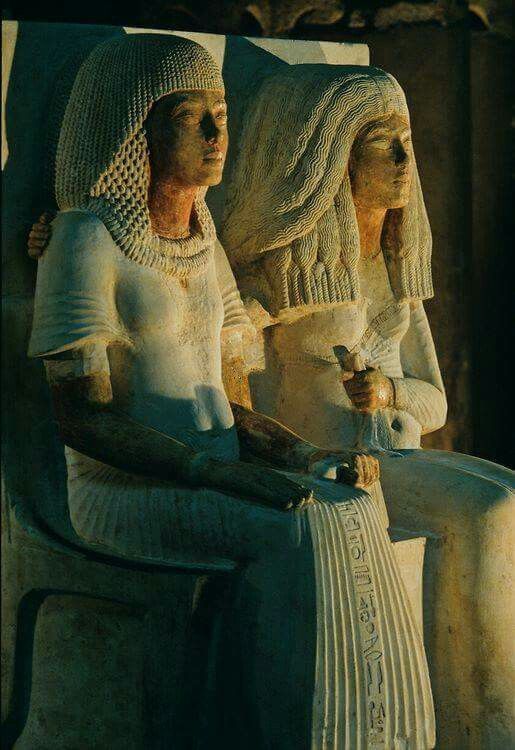
http://egypt-museum Statue of Meryre and his wife Iniuia High Priest of Aten and High Priest of the Temple of Neith. Private statuary in this period was very rare, so this statue is considered especially valuable. Discovered in Saqqara. Amarna Period, New Kingdom, 18th Dynasty, reign of Akhenaten, ca. 1553-1336 BC. Now in the Egyptian Museum, Cairo.
Statue representing Meryre (Meryneith) and his wife Iniuia (Anuy) – painted limestone – 18th dynasty – reign of Akhenaton Discovered in 2001 in their tomb at Saqqara – Recorded at the Egyptian Museum in Cairo – JE 99076 – then transferred to GEM in September 2020
The couple is of refined elegance. And everything in this representation exudes good society, to with that engenders ease and luxury; the noble attitude, the fine clothes, the elaborate hairstyles, and even the seat with lion’s legs on which they take place for eternity …
And this overall harmony is sublimated by the tenderness of a gesture which concretizes the intimacy and the bonds uniting the spouses for life… and also for the beyond.
Meryre (Meryneith) and his wife Iniuia (Anuy) undoubtedly form a very close couple of notables, having a certain rank with their sovereign …
Is it because they are both dressed in white? Their hair is also white. The shade of their complexion varies little so that we might find them a certain mimicry, or even a certain resemblance?
Statue representing Meryre (Meryneith) and his wife Iniuia (Anuy) – painted limestone – 18th dynasty – the reign of Akhenaton Discovered in 2001 in their tomb at Saqqarah – Recorded at the Egyptian Museum in Cairo – JE 99076 – then transferred to GEM in September 2020
Meryre wears an elaborate hairstyle, similar to that of the scribe Meniou (Louvre Museum – E 11519) or those reproduced in the tomb of Ramose (TT55). The wig, entirely curly, covers a good part of the forehead as well as the ears. It is made up of a multitude of finely braided locks that come in a gradient starting from the forehead to the nape of the neck. “In fact, the starting point is a fairly long wig and entirely thrown reject in the back: the locks are divided into two equal parts and brought back to the chest so that the locks, now visible at this place, are those which, in the ideal primitive position, were not “(Jacques Vandier). And, on what the latter and Etienne Drioton call a “reverse wig”, Christophe Barbotin makes this pertinent analysis: “… it is not a transcription of reality, because no hairstyle could preserve an angle of this nature, but from the application to the previous fallout from two different points of view: global view on the head and detail view on the fallout “.
The rather round face, with full cheeks, is perfectly symmetrical and harmonious. The almond-shaped eyes are topped with arched, raised eyebrows. The nose is small, the lips full. The neck is adorned with the “two-tiered Shebiou Necklace, formed of threaded gold disc beads, a special royal gift presented with the armbands he also wears” (Abeer El-Shahawy, “The Egyptian Museum in Cairo”).
Statue representing Meryre (Meryneith) and his wife Iniuia (Anuy) – painted limestone – 18th dynasty – reign of Akhenaton Discovered in 2001 in their tomb at Saqqara – Recorded at the Egyptian Museum in Cairo – JE 99076 – then transferred to GEM in September 2020
He wears a tunic that, we imagine, is made from the purest linen. The sleeves are short, pleated and slightly flared. Its long loincloth is aesthetically tied at the waist and falls in a pleated front. “His names and titles are inscribed on the skirt, giving the names of the two cities where he was stationed: Akhenaton, which is Tell El-Amarna, and Memphis, also attesting to the presence of the cult of Aten in the temple of Memphis “(Abeer El-Shahawy). His hands rest flat on his thighs, and the left firmly holds a piece of cloth: “a sheet folded nobly”. The feet are bare.
His wife is seated to his left and her right arm is placed tenderly, lovingly, on her husband’s shoulder.
Iniuia is as beautiful as her husband, and her face is treated almost the same, although with a smaller mouth but fuller lips. Her wig is very sophisticated. It is wavy and covers her shoulders. It seems that it is separated by a central stripe, covered with a fairly wide band (ribbon?), which surmounts the frontal “brace”. Two imposing masses of wide braids, which end in small thin braids, frame her face. On the right side, a charming movement returns the locks to the back, giving dynamism and originality to the hairstyle.
Her immaculate dress is embellished with charming piping and pleated sleeves. The very fine material, let’s guess: the small breast and the navel, marked in the hollow. The garment is very long and covers up to half of the feet. “Like her husband, she holds a folded tissue in her left hand” specifies Abeer El-Shahawy, who also indicates that how the couple is represented: “seated on a classic chair with animal feet. The back panel bears ten columns of offering formulas, for the benefit of both spouses “.
Statue representing Meryre (Meryneith) and his wife Iniuia (Anuy) – painted limestone – 18th dynasty – reign of Akhenaton Discovered in 2001 in their tomb at Saqqara – Recorded at the Egyptian Museum in Cairo – JE 99076 – then transferred to GEM in September 2020
Meryre is generally presented as “the scribe of the temple of Aten in Akhenaton (Tell el-Amarna), and Memphis”. But, in the tomb (TA4), which he had built himself in the capital, founded by Akhenaton, is adorned with many other titles: “Grand Priest (lit: Great Seers) of the Aten, in the house of Aton in Akhenaton”, ” Flabellifère to the right of the King “(The Flabellifère designates the fan-holder),” Royal Chancellor “, ” Unique friend “, ” Hereditary nobleman and Prince “, ” Close to the King “!(The list taken from the Osirisnet.net site). As for Iniuia, she was the “favourite of the lady of the palace” (the queen).
This statue comes from another tomb, which they had built in Saqqarah (and could be the H9 mastaba described by Auguste Mariette). It was discovered in February 2001 by a joint mission from the National Museum of Antiquities of Leyden, the Faculty of Archeology – Department of Egyptology of the University of Leyden, and the Service of Antiquities of Egypt. In the article entitled “The excavations of Leyden in the tomb of Méryneith at Saqqara, campaigns 2001-2002”, published in the Bulletin of the French Society of Egyptology, 2002, (155), Maarten J. Raven thus relates the update of the dyad: “The southwest chapel contained a beautiful statue of Meryneith and his wife Anuy, which was glued to the ground. No indication was found for a similar type of object in the northwest chapel. One remarkable feature was present in the southwest chapel, although the room had been badly damaged over the centuries, it could still be seen that there was originally a small rectangular opening, very high in the west wall. Presumably, this formed a sort of skylight, from which the statue was lit “.
At the end of the excavation season, the limestone statue, 85 cm high, 60 cm wide, and 50 cm thick, was transported to the Cairo museum, where it was recorded in the Journal des Entrées, under the reference JE 99076.
Statue representing Meryre (Meryneith) and his wife Iniuia (Anuy) – painted limestone – 18th dynasty – reign of Akhenaton Discovered in 2001 in their tomb at Saqqara – Recorded at the Egyptian Museum in Cairo – JE 99076 – then transferred to GEM in September 2020 (photo published on the FB page of the Ministry of Tourism and Antiquities on 20-9-2020)
On September 20, 2020, a statement published on the FB page of the Ministry of Tourism and Antiquities announced that this dyad was among the 2,000 pieces which had just been transferred from Tahrir to the Gem in Giza (Grand Egyptian Museum).
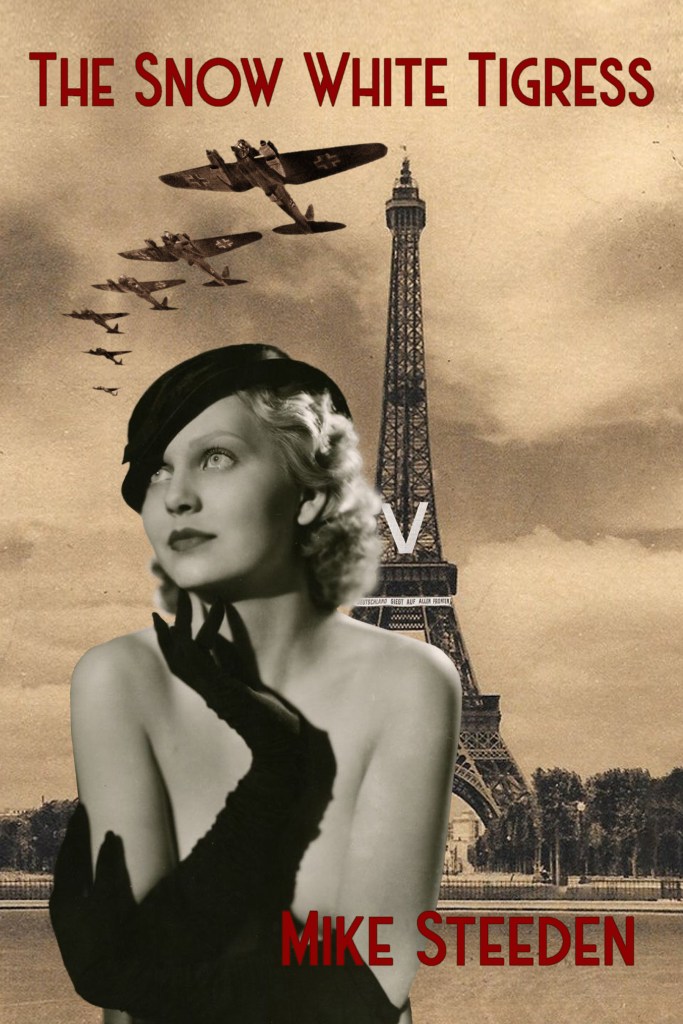
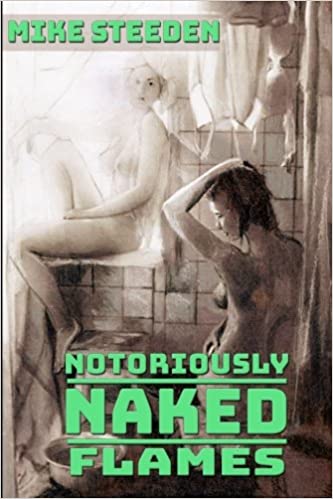
Currently, I’m reading a book: “An ‘Old Child’ & his Mum’s amazing Crem Phobia” by Mike Steeden. A great and highly recommended read. I’m reading it and at the same time learn how to write the story of life memories. Of course, I have begun to write mine a long time ago (as you surely have noticed), and now Mike, in this book, shows how wonderful and elegant it can be written, or shows the writing at all. It is clear why: He is a great writer. This book is the fourth book which I read from him: the first one was “Funny, I Think of You Often…” the second one was “Notoriously Naked Flames” and then “The Snow-White Tigress“, and the fourth one is his memories. (I have still more of him to read, and I’ll do it; slowly but surely). All great reads., and I really wonder, how can I, with my littleness, be a friend of such a brilliant writer. (Of course, I have to mention that fate has been more compatible with me! I have already many such brilliant writers at my side, like Shehanne Moore, Deborah Gregory, Ashen Venema, Elaine Mansfield, Chris Hall, Jean Raffa, Jean Lee, and more and more…) I was lucky for sure. Sometimes luck must be a part of life.
But let stay here with Mike. His memories, as a child, tapped on mine, as I was such a shy boy, almost like him.
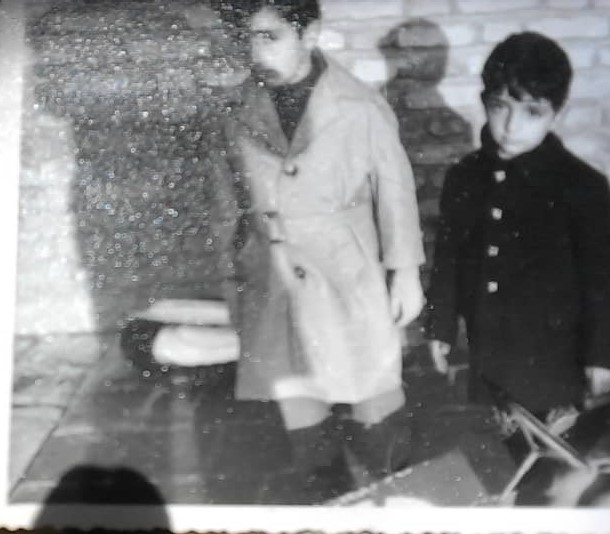
Here, Al and I, an unwilling photograph!
I think my shyness was because of my mother’s lie: She had hidden the father’s death from us and said that he was travelling. It took me about a year to figure it out myself. That lie had left some deep traces on our soul, though on every one of us in a different way: our father died in the middle of the night when we were sleeping, and Al had immediately noticed in the mornings that something was wrong, he told me later.
I remained a happy child and didn’t see my mother’s over crying eyes. And when our mother said we could go out to stay with our uncle for few days, I was happier as more! That’s why Al had to try finding the balance in between, to keep mother’s secret hidden from me, and not to be shared with her in this. Even though, never found it. For me, as I noticed it later, it made me, slowly and more sadly, lonesome. A better word is; I become unsure and uncertain. It is still with me; the first and forever sign is my speaking: I speak, no matter in any language, not clear and precise. I am unsure in a mass, rather running away.
that’s all I can offer
I have some embarrassing memories. At school, for example: I was always the stupid one and got bullied and mobbed! Once, which I can never forget, I urgently needed to go to the toilet, and the toilet was the only one back in the schoolyard, and as I was inside, noticed that it had no lock on it, so I couldn’t lock it from the inside.
(If you are disgusted by some unpleasant things, please do not read any more!) Anyhow, the mobbers, who never wanted to miss any occasion, have run after me and wanted to come in. Here comes the eternal question: what the hell I didn’t cry out, that I had just to shit! You can never imagine, I bet, what could happen next… I’ve kept silent and hold the door, as if it’d been locked. And the boys kept pushing from the other side. I can’t really explain what was going on in that moments: it just seemed that I didn’t want to reveal my sin (to shit!), and the others wanted to prove that I had nothing to do there, only to occupied the public toilet!
Finally, there was the appalling result: I did all in my trousers and gave up my resistance. When I left the door open, nobody had the interest to come in! The schoolmaster called my mother to come and get me home for changing my trousers!!
Therefore, I became such a cool boy!!
I didn’t want to top Mike, though I won, I suppose! Never mind, let’s count it as one more episode. I will read further from the book, and it’d surely come out some more similarities in my mind. Have a wonderful weekend, and thank you all. 🙏💖🤗💖🙏












 BEGINNER’S MIND: There is a beautiful “state” which is aimed for in Zen called “beginner’s mind.” It’s like having the eyes of a child and perceiving fresh and anew – a state of emptiness so one can get renewed and refreshed/ refilled. We place such a value of “knowledge” that we often can’t see beyond our beliefs and conceptions.. Not to degrade knowledge, but there are wonderful moments of intuition where one sees freshly… Looking through another’s eyes… Seeing free of our preconceptions, expectations or “confirmation biases.”












 lampmagician

You must be logged in to post a comment.