I am still involved with these Iranian Space-Seminars on Twitter. Most of them are very interesting, listening to the people trying to form the political future of Iran. There are fascinating discussions by courageous Iranian people these days, and I always try to listen to them, though I must confess that I am not the youngest anymore to preserve to the end! One of them was about religion, women and human rights. Honestly, I was too tired to participate, but it lingered in my head and motivated me to write an article on this topic: religion in general and women in uniqueness. Although, there was more to this, which brought me new ideas:
Some days ago, I watched a documentary about Cat Steven’s changing beliefs; it made me more enthusiastic about writing referring to this phenomenon. Of course, I knew many years ago, since those days, that this genius musician had lost his way and mind to himself and gone crazy! And when I heard it, I was so upset about his decision that I didn’t follow it anymore.
I tried to keep him like I got to know him as Cat Stevens, an excellent songwriter. Although the question is, why does it happen at all? Why a musician like him, who had a good successful life in a free society, suddenly must fall into such an abyss!? Is it the fault of far too many opportunities in a free and prosperous world, or is it his early fame? Is too much freedom dangerous? I can’t say. I also, though rarely, met women who converted their Christian beliefs to Islam. I must say I was shocked whenever I heard it or met one.
You might answer that it is not all good in the west. I agree, though. I was born in a country with many limitations: political and religious narrowness and separations between gender. Therefore, when I came to the west, I thought I would meet more open and free-minded people. Of course, my thoughts were almost correct, but almost! I got to know women who married Muslim men, have been converted to Islam and wear hijab! Even in discos, they come without their husbands to enjoy music, which Islam forbids. And every day, as I see the brave women in Iran freeing their hair from this oppression, the women in a free political environment return to Middle Ages! Isn’t it a paradox?
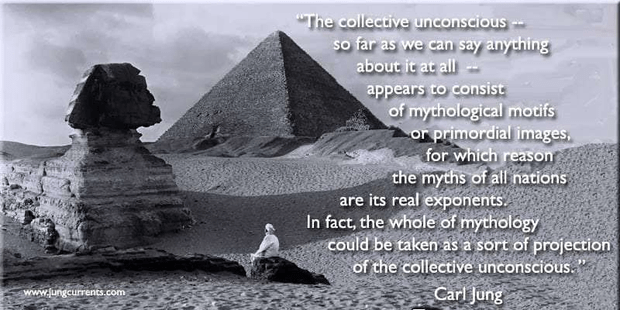
It may make it clear what Dr Jung uttered to explain humans’ way of being:
Yes, I am convinced that it is an utterly wrong way. It is a reactionary decision, as Iranians say, “throw oneself from a hole in a well”! But why must it happen? We may accept that man is in the grip of confusion, whether bound or free. The case of Cat Stevens shows us: he was famous and happy as he sang this song;
He was, without a doubt, looking for himself and the famous happiness! Might his losing path be because he had no chance in love? The song; “Lady D’Arbanville” tolls his pain and frustration with life.
As Stevens was nearing the end of his recovery, he attended a party that boasted a gathering of musicians in London, including Jimmy Page, Steve Winwood, Ginger Baker, Eric Clapton and others. Among the party-goers was Patti D’Arbanville, a US teenager pursuing a modelling career and later gaining prominence as an actress. The two began dating. D’Arbanville stayed with him whenever she was in London but often found her career taking her to Paris and New York City. After over a year together, Stevens was ready to invest in a more serious relationship than was his young, ambitious girlfriend. On a foray to New York, she heard his song about her on the airwaves. Her reaction was one of sadness. She said,
I just have to be by myself for a while to do what I want to do. It’s good to be alone sometimes. Look, Steven [Stevens’ given name] wrote that song when I left for New York. I left for a month; it wasn’t the end of the world, was it? But he wrote this whole song about ‘Lady D’Arbanville, why do you sleep so still.’ It’s about me dead. So while I was in New York, for him, it was like I was lying in a coffin… he wrote that because he missed me because he was down… It’s a sad song.
D’Arbanville continues,
I cried when I heard it because that’s when I knew it was over for good.
My brother Al and I loved and adored him and his songs. He was one of our idols in the music world. Even we were excited when he, on his search, found the way to the Buddha and began to get help in the zen philosophy. Still, his sudden backward turn from progressiveness to primitiveness (I believe that Islam is a primitive religious ideal) not only shocked us, but it was also very disappointing. He left the world of music and art and began to find happiness in the sadness. And it was not enough: in the early 80s, when the book by Salman Rushdie: The Satanic Verses, was published, Khomeini made his “Fatwa” (Islamic rule) to condemn Rushdie to death. The free world was horrified, but what has Stevens, who meanwhile called himself Yusuf Islam, done? In an interview, or better to say in a TV discussion with Salvatore Adamo, he uttered his opinion to Adamo’s question of what he’d think by this “Fatwa” he said it was a correct verdict! How deep could one fall?! Long story short, he is back now in his previous life as if nothing had happened. The difference is only he has a long white bird… Ridiculous!
However, the riddle remains about how strange it is the human to understand this explosive point of the meeting between the soul and the body and endure the pressure to find the balance.
We can now hear one of his latest songs when he was still decent in his head! He confesses that this song is about himself and his way in lost. He was right those days, this sad cat!
The title image: Original Portrait Painting by Cor Lap _ Conceptual Art on Canvas _ Me and my cat
As I believe the one we have been given as a gift from the Soul, the Whole, the Almighty, is a part of her soul: the art, to use it and to take the profits of unlimited imagination.
Here, I share a beautiful explanation by Kahlil Gibran on this divine treasure. From the book; The Wanderer. 🙏💖
Once there came to the court of the Prince of Birkasha, a dancer with her musicians. And she was admitted to the court, and she danced before the prince to the music of the lute and the flute and the zither.
She danced the dance of flames and the dance of swords and spears; she danced the dance of stars and the dance of space. And then she danced the dance of flowers in the wind.
After this, she stood before the throne of the prince and bowed her body before him. And the prince bade her come nearer, and he said unto her, “Beautiful woman, daughter of grace and delight, whence comes your art? And how is it that you command all the elements in your rhythms and your rhymes?”
And the dancer bowed again before the prince, and she answered, “Mighty and gracious Majesty, I know not the answer to your questionings. Only this I know: The philosopher’s soul dwells in his head, the poet’s soul is in the heart; the singer’s soul lingers about his throat, but the soul of the dancer abides in all her body.”
I know I have posted some articles about Sennedjem before (here, here and here), but I believe it is worth returning to this artist of divine Gods and Goddesses again.
One of the most glorious and revealing galleries in Ramses the Great and the Gold of the Pharaohs is the one that holds a single object. It is the outer coffin of the ancient Egyptian artisan Sennedjem, who lived in Deir el-Medina (in Egyptian, Set Maat or “Place of Truth”) during the reigns of Ramses II and his father, Seti I. He was part of an elite group of skilled craftspeople and artists who lived in this walled village on the west bank of the Nile at Thebes and worked primarily in the tombs in the nearby Valley of the Kings. Sennedjem held the title of “servant in place of Truth,” indicating that he was one of the teams responsible for constructing and decorating the royal tombs. Sennedjem’s own tomb was on a hill overlooking the workers’ settlement. A small pyramid sits on top of the entrance to an offering chapel. Below that lies Sennedjem’s decorated burial chamber. The painted reliefs from the walls and ceiling of that chamber are reproduced in the exhibition and surround Sennedjem’s coffin, as they did when the intact tomb was discovered in 1886. These are some of the most famous scenes from Egyptian tombs, showing his progress from death into the afterlife. famsf.org
It is undoubtedly a treasure for us humans that there were such artisans to show and let us know the divine life of Gods and Goddesses and the peoples in those days. And all in all, we could say that this kind of art is inspired by Gods and Goddesses and can be stated as divine work, and here with this gorgeous coffin for him, we recognize the respect given to this artist.
Sennedjem was, under the reigns of Sethi I and Ramses II (XIXth dynasty), one of the “servants” of the “Place of Truth”. Cabinetmaker or more probably mason, he lived, with his family, in one of the stone houses covered with a roof of palm leaves of “Set Maât her imenty Ouaset”. Founded at the beginning of the 18th Dynasty during the reign of Thutmose III, this royal institution was dedicated to the artisans who worked on the excavation and decoration of the eternal abodes of the Valley of the Kings, the Valley of the Queens, and even necropolises more distant. “The fact that we often refer to them as ‘workers’ sometimes tends to substantiate the misconception that the community of the village of Deir el-Medina was at the lowest rung of Egyptian society. In fact, these men were craftsmen, for the most part highly qualified and distinguished for their know-how,” specifies Pierre Grandet in “The artists of Pharaoh, Deir el-Medineh and the Valley of the Kings”). Protected by high walls, the members of the community also had places of worship and, on the slopes of the Theban mountain, a necropolis in which to dig their eternal home. It was there that, at the very beginning of the reign of Ramesses II, Sennedjem was buried, and until the end of the time, ramesside other members of his family…
“Set Maât her imenty Ouaset” – the “Place of Truth west of Thebes” of antiquity is known today as the craftsmen’s village of Deir el-Medina
Their tomb was rediscovered in January 1886 by “gournawis”. In “Hidden Treasures of Egypt”, Zahi Hawass recounts the following circumstances: Only days of excavations, Salam and three of his friends made a spectacular discovery: at the bottom of a still unexplored burial shaft, they found a wooden door whose ancient seals were intact. Salam immediately informed Maspero, who happened to be in Luxor for its annual inspection visit”. In his correspondence to his wife Louise on February 3, the Director of Antiquities told this story: “The vault is approximately 5 m long by three wide. It is vaulted, with a shallow burial and painted with vivid colours; unfortunately, the paintings and texts are only excerpts from the Book of the Dead. It was filled to the top with coffins and objects: eight adult mummies, two child mummies, a family of these priests of the cemetery about whom I spoke to you in the letters I wrote from Turin in 1880 (?) The mummies are superb, of a beautiful red varnish with elegant representations, but they are only the least interesting part of the discovery. You know that the mummies were carried to the tomb on sledges, held by men or drawn by oxen. Our tomb contains two of these complete sledges: first the floor, with the rings intended to pass the sticks, when one wanted to carry, then the movable panels of the catafalque in which one locked the coffin, then the lid in cornice… and c This is how we will exhibit everything at the Boulaq museum. Alongside this, the complete furniture: eight large canopic boxes, around forty small funerary statuette boxes, around a hundred charming limestone figurines, around twenty painted earthenware vases, a new bed different in shape from the first two,… In addition, a beautiful armchair with a canvas bottom imitating the tapestry; two stools with canvas bottoms imitating red leather, a folding chair, bouquets of flowers, a cubit, an ostracon containing a very curious historical novel, although very short”…
Mandated by Gaston Maspero, Eduard Toda “accompanies” the artefacts from the tomb of Sennedjem, on the boat bound for the Boulaq Museum (1886) Toda Fund Library Víctor Balaguer Museum (Vilanova)
Sennedjem’s body lay in a magnificent stuccoed and painted wooden mummified coffin. His mummy “was protected by a wooden board covering his body and his funerary mask and representing him dressed as he was alive” (Hanane Gaber, “At work, we recognize the pharaoh’s craftsman”).
Sennedjem’s body lay in a magnificent stuccoed and painted wooden mummified coffin. His mummy “was protected by a wooden board covering his body and his funerary mask and representing him dressed as he was alive” (Hanane Gaber, “At work, we recognize the pharaoh’s craftsman”). cercueil de sennedjem
The whole was placed in an imposing “sarcophagus” of polychrome and varnished stuccoed wood. 2.60 m long, 0.98 m wide and 1.25 m high, it takes the form of a naos, adorned with a coved cornice, topped with “a domed roof rounded at the ‘front, whose gentle slope joins the cornice at the rear’.
It is entirely covered with hieroglyphic scenes or inscriptions. In “The Tomb of Sennedjem at Deir-El-Medina TT.1”, Martha Sara Saujaume specifies: “Its decoration corresponds to the type of drawings of the 19th Dynasty, in particular for the yellow colour of the background of the vignettes and for the decoration with vignettes corresponding to the Book of the Dead, in very bright colours such as blue and red, as well as texts from the same Book of the Beyond arranged in vertical columns… The decoration on the sides is divided into two registers. Lower comprises columns of text with chapters from the Book of the Dead. In the upper register, we find the Four Sons of Horus and vignettes from the Book of the Dead”…
Top of the lid of the external coffin of Sennedjem Varnished and painted stuccoed wood – 19th Dynasty – the reign of Ramses II from his tomb – TT 1 – at Deir el-Medina discovered by Salam-Abou-Douy de Gournah and by the Service des Antiquités in January-February 1886 registered in the Diary of Entries of the Egyptian Museum in Cairo – JE 27303
Represented standing, two by two and turning their backs, the four protective goddesses watch over Sennedjem: at the head are Selkis and Neith, at the feet Isis and Nephthys, each with one arm along the body, the other slightly spread in protective sign. Moving, charming, they are wearing a three-part black wig with a light headband. The hieroglyphic sign is placed on the top of their skull, which allows their identification. They are dressed in tight dresses held by straps, and their neck is adorned with a lovely necklace with multiple rows…
Martha Sara Saujaume notes the presence of “family” representations, such as: “the deceased and his wife Iineferti seated on chairs. She hugs her husband by the shoulders while they play Senet before a table of offerings. This same scene is found inside the access door to the funeral chamber of the deceased. To the right of this scene, we see the ba of the deceased, Sennedjem and Iineferti, on a white chapel. In front of him, the deceased is kneeling in adoration before the two lions holding the Horizon on their shoulders….”
Detail of the door to the tomb of Sennedjem – stuccoed and painted wood – 19th Dynasty – the reign of Ramses II from his tomb – TT 1 – at Deir el-Medina – discovered by Salam-Abou-Douy de Gournah and by the Antiquities Service in January-February 1886 registered in the Journal of Entries of the Egyptian Museum in Cairo – JE 27303 – on display since April 2021 at the Nmec (National Museum of Egyptian Civilization) in Fustat
At the time of the burial, to facilitate the hauling of it towards the vault, the sarcophagus was deposited on a sledge: “On the skids of the sledge of the funerary tank of Sennedjem, wheels which left their mark there, had been adapted to facilitate the transport of the heavy and cumbersome piece of furniture. This type of funerary tank with a sledge base only seems to appear in the 18th Dynasty and to disappear with the end of the New Kingdom” (Ruth Anthelme, Christian Leblanc, “Ramses the Great”).
Map of Sennedjem’s tomb at Deir el-Medina published in “Tomb No. 1 of SEN-NEDJEM (1959), Bruyère, Bernard (1879-1971), MIFAO 88 from 1959
This external coffin has been registered in the Cairo Museum Entry Journal JE 27301. It will be presented at the “Ramses & the Gold of the Pharaohs” exhibition to be held from April 7 to September 6, 2023, at La Grande Halle de la Villette, in a scenography featuring the most beautiful scenes from the funerary vault… Let us remember that, for Bernard Bruyère, the tomb of Sennedjem (TT 1 – TT = Theban tomb): “is not only one of the most beautiful and best preserved in Thebes; but it is, moreover, a perfect, complete and typical example of a large family tomb comprising the four regular components, the courtyard and the chapels accessible to the living, the well and the vault reserved for the dead”…
Sennedjem and his wife Iyneferti are represented on the walls of their tomb – TT 1 – Deir el-Medineh discovered by Salam-Abou-Douy de Gournah and by the Service des Antiquités in January-February 1886
It is interesting to specify that Khonsou, son of Sennedjem, rested in an almost identical external coffin (JE 27302) which was at the “Ramses the Great” exhibition, organized by Christiane Desroches Noblecourt, from May 15 to October 15, 1976, at Grand Palace in Paris.
Padro Josep, “Bulletin of the French Society of Egyptology” – 1988, n°113, pp. 32-45
Elisabeth David, Gaston Maspero, Letters from Egypt, Correspondence with Louise Maspero, Seuil, 2003
Christiane Desroches Noblecourt, Ramses the Great, National Galleries of the Grand Palais (1976)
Hanane Gaber, Laure Bazin Rizzo, Frédéric Servajean, At work, we know the craftsman… of Pharaoh! – A century of French research in Deir el-Medina (1917-2017), 2018, SilvanaEditorial
Pharaoh’s artists, Deir el Medineh and the Valley of the Kings, Louvre, 2002
Zahi Hawass, Hidden Treasures of Egypt Nicholas Reeves, the great discoveries of ancient Egypt, Éditions du Rocher, 2001
Honestly, it was a great surprise for me to know that Federico Fellini, the great master of surrealism in movies, was interested in connecting to a psychologist and analysing his psyche. And as Dr Freud’s famous dream analysis was considered, he met Jungian psychotherapist Ernst Bernhard to learn more about himself.
At the beginning of the nineties, in contrast with the academic environment that considered Freud’s thought scientific while rejecting that of Jung, I undertook a study on Jungian thought in Italian literature. An essay was dedicated to Andrea Zanzotto‘s “Mother-norm”. I got in touch with the poet, who told me about the psychotherapy he had undergone for years, and when my book came out, he suggested that I send a copy to Federico Fellini, to whom I had dedicated a few pages. Ernst Bernhard
A major discovery for Fellini after his Italian neorealism period (1950–1959) was the work of Carl Jung. After meeting Jungian psychoanalyst Dr Ernst Bernhard in early 1960, he read Jung’s autobiography, Memories, Dreams, Reflections (1963) and experimented with LSD. Bernhard also recommended that Fellini consult the I Ching and keep a record of his dreams. What Fellini formerly accepted as “his extrasensory perceptions” were now interpreted as psychic manifestations of the unconscious. Bernhard’s focus on Jungian depth psychology proved to be the single most significant influence on Fellini’s mature style. It marked the turning point in his work from neorealism to filmmaking that was “primarily oneiric”.
In Making a Film, Fellini said that he had been dazzled by Jung, the Zurich doctor who had made him discover unknown landscapes and new perspectives from which to look at life. It was his analyst, the German Jew Ernst Bernhard, who introduced him to Jung.
Fellini was one of the many Italian authors and writers who frequented his studio in Via Gregoriana, which overlooked Rome and a world many feared. During the therapy, the analyst used the I Ging, the Chinese book of changes, and this created scandal; some strongly advised him not to use it. He had even taken him to confinement in the fascist camp of Ferramonti, from which he would have been deported to a Nazi concentration camp in Germany if, at the last moment, the orientalist Giuseppe Tucci had not managed to make his return to Rome.
He remained hidden for months in a secret room of his study. Dissatisfied with the Italian version of the I Ging based on the German version of Richard Wilhelm, he entrusted a new translation to one of his patients, Bruno Veneziani, Italo Svevo’s brother-in-law.
I have never believed in success in any post to share today (I hope you enjoyed it.); as you know, I repeatedly said many different businesses surrendered me! Even now, there are so-called Spaces on Twitter (online seminars) to which I have (honourably) been invited, and it takes more time. Anyhow, it is life! Next week I will not be able to post anything, because we are travelling to meet friends in northern Germany. Have a wonderful time, everyone, and let’s pray for peace and love. 🙏💖✌🌹💖🙏
I think this issue, Anima, is an essential key to understanding our inner souls. We don’t have to make this mistake that the anima is of female nature, and it’s not to do with males. I think Dr Jung, with his thesis Anima and Animus, wanted to explain the genderless of the soul. I hope I don’t sound so big-mouthed. Still, when I think about our existence on this earth and keep asking the same question: why are we here, and what is the meaning of life, I become more convinced that maybe we did send out of paradise to hell, as it’s written in the holy books, though, not to this beautiful earth as hell! We were sent to our own hell, where we must meet our own evil and learn to know and handle with.
I might go too far (I don’t really know how deep this “far” could be!), but I know for sure, as far as we recognize, the fantasy world is unlimited. That’s why I am trying to discover my still unknown inner to find the answers to many questions…
We believe that what we feel and think inwardly must be compared to others we know. Therefore, we cause misunderstandings in participating in our society: I am talking about excessive expectations!
It is a term of Participation mystique or mystical participation, derived from Lévy-Bruhl, which Jung gladly chopped on:
The further we go back into history, the more we see personality disappearing beneath the wrappings of collectivity. And if we go right back to primitive psychology, we find absolutely no trace of the concept of an individual. Instead of individuality we find only collective relationship or what Lévy-Bruhl calls participation mystique (Jung, [1921] 1971: par. 12).
By Petra Glimmdall
He continues in his “Individuation; Anima and Animus”:
The fact that a man naively attributes his anima reactions to himself, without realizing that he cannot identify with an autonomic complex, recurs in female psychology, but to an unprecedented extent, if possible. The fact of identification with the autonomous complex is the essential reason for the difficulty of understanding and representing, quite apart from the inevitable obscurity and unfamiliarity of the problem. We always naively assume that we are the only masters in our own house. Our understanding must, therefore, first get used to the thought that even in our most intimate soul life, we live in a kind of house that at least has doors and windows onto the world, the objects or contents of which affect us but do not belong to us. This premise is not easy for many to think about, just as it is not easy for them to really see and accept that their fellow human beings do not necessarily have the same psychology as they do. My reader may think that the latter remark is probably an exaggeration since one is generally aware of individual differences.
But one must consider the fact that our individual consciousness psychology emerges from a primordial state of unconsciousness and, therefore, indifference (termed “Participation Mystique” by Lévy-Bruhl).
As a result, awareness of difference is a relatively late acquisition of humanity and probably a relatively small slice of the indeterminately large field of primordial identity. Differentiation is the essence and the “conditio sine qua non” of consciousness. Therefore, everything that is unconscious is undifferentiated, and everything that happens unconsciously proceeds from the basis of indifference, so it is initially completely undecided as to whether it belongs or will belong to the self. It cannot be determined a priori whether it is with the other person, with me, or with both. Feelings also do not provide any reliable clues in this regard.
>Participation mystique, or mystical participation, refers to the instinctive human tie to symbolic fantasy emanations. According to Carl Jung, this symbolic life precedes or accompanies all mental and intellectual differentiation. The concept is closely tied to that of projection because these contents, which are often mythological motifs, project themselves into situations and objects, including other persons.
PARTICIPATION MYSTIQUE is a term derived from Lévy-Bruhl. It denotes a peculiar kind of psychological connection with objects, and consists in the fact that the subject cannot clearly distinguish himself from the object but is bound to it by a direct relationship which amounts to partial identity. (Jung, [1921] 1971: paragraph 781). <
I will write more of this, as it is an important (or might be one of the most) issue in our searching the meaning of life!
The image on top: Eternity of Absurdity – Michael Cheval
Here is a highly recommended old recording of Jung’s life for fans. I have only a wish from my highly accepted Jungian Masters; if you please pronounce the name of Dr Jung in original German: “Yoong” and not Yang or young! Actually, the word Jung means Young, though he’s never been called young; his name is Jung (Yoong) Carl Gustav! Have a lovely weekend. 🤗💖🙏
He was and still is one of my Idols in my progressing music. I want to write a tribute to him, to have a simple bosom thought of him, David Crosby, a great human and musician. We discover him in the early seventies when finally Woodstock, the movie, had got its allowance to shine on the screen in cinemas of Iran. Those days, he and the other three camerades: Graham Nash, Steven Still and Neil Young, were together and represented the soundtrack for this movie.
It is good to be born at the right time in the right place, and he was one of these lucky ones. David (Van Cortlandt) Crosby was a special one for me, not only because of his famous moustache but also because I love his soft and gentle voice. We got to know him among his mates, but I know much more about him now as I live in a (somehow) free part of the world.
Their world was a world for the people who looked after freedom and how it fitted the world of our dreams. Those days, it was just like a dream for us to reach this still fascinating space of freedom: Love and Peace. And he gave us the feeling to make a dream, at least. Thank you, David Crosby, for this present.
And as I was fighting to keep my hair long as possible and tried to convince my mother to accept it (in a discussion, she gave me the right, I was stunned!) I understood that we, in Iran, are not too far away from our mates in the US. The bad luck was that we were too few!!
In any case, it was a good time for us. There was no talk about how and what; it was only about when! We, the youths, wanted to be free to show our feelings, nothing about political change or something similar. We only wanted our right to offer our freedom to have free choice! But we were damn too few! However, I thank him for being there; I have learned much from his openness towards life. And as I keep my music style, I will try to be faithful towards our Deja Vu!
I don’t think of any conflict! The arts, I believe, belong to our abilities to understand the universe. We have something “plus” if we have ever deserved it. We might try, and we might win the point; who knows!
Now let the ghost speaks. The other side is nothing more than to look at what you have done in that before!
“I Won’t Stay For Long”
One, two, three
I’m standing on the porch. Like it’s the edge of a cliff Beyond the grass and gravel lies a certain abyss And I don’t think I will try it today I’m facing a squall line of a thousand-year storm I don’t know if I’m dying or about to be born But I’d like to be with you today Yes, I’d like to be with you today
And I won’t stay for long I’ve got a place of my own A little slice There’s a sliver of air between the water and the ice It’s where I live, where I breathe An abandoned song It echoes through this well I’ve fallen in If I could just remember the smell of your skin Then I could live, I could breathe I could breathe
I’m asking perfect strangers if I look to be alright I feel like I lost an anchor in the ocean of my night And I don’t want you to see me this way I won’t tell a soul I’ll only worship the sun I won’t turn around to find you when the moment is done I just need to be close today I need to be with you today
And I won’t stay for long I’ve got a place of my own A little slice There’s a sliver of air between the water and the ice It’s where I live, where I breathe An abandoned song It echoes through this well I’ve fallen in If I could just hold onto the smell of your skin I could live, I could breathe I could breathe
The artists never die; they did something to stay alive; their creations.
Thank you, my friends. Let’s think higher of this earth a little. I believe we can find much more answers to our questions. I think we deserve it! 😉🤗💖🙏
“Actual happiness always looks pretty squalid compared to the overcompensations for misery. And, of course, stability isn’t nearly so spectacular as instability. And being contented has none of the glamour of a good fight against misfortune, none of the picturesqueness of a struggle with temptation, or a fatal overthrow by passion or doubt. Happiness is never grand.” ― Aldous Huxley, Brave New World
In the first part, I have written about the visions of Orwell and Huxley and their power of imagination of humans’ future. I believe that this god’s (or whatsoever) given power of imagination teaches us how to handle the challenges in our life. This power is in all of us; we only have to overcome our fears and let our imagination free will.
When George Orwell and Aldous Huxley wrote their warning books 1984 and Brave New World, they wanted to share their worries about the future with us.
As Orwell imagines his totalitarian world being in a dark cover and was concerned above all about the particular threat posed by totalitarianism to words and language, Hoxley still had one foot in the nineteenth century: he couldn’t have dreamed his upside-down morality unless he himself also found it threatening. While writing his book, he was still in shock from the US visit, particularly frightened by mass consumerism and its group mentality and vulgarities; there dies the individuum, while Orwell deeply thought about Hitler’s and Stalin’s totalistic reigns.
It’s probably hard to compare these two masterpieces and find one or the other better, as we can take both visions as doctrine and keep our eyes open. But I still believe Huxley’s vision is a much better tricky scam, which could not be exposed. Huxley explained in his letter to Orwell:
Whether, in actual fact, the policy of the boot-on-the-face can go on indefinitely seems doubtful. My own belief is that the ruling oligarchy will find less arduous and wasteful ways of governing and of satisfying its lust for power, and these ways will resemble those which I described in Brave New World. I have had occasion recently to look into the history of animal magnetism and hypnotism and have been greatly struck by how, for a hundred and fifty years, the world has refused to take serious cognizance of the discoveries of Mesmer, Braid, Esdaile, and the rest.
Therefore, Huxley’s vision is more compatible nowadays: in his novel, The Brave New World: everything looks bright and cheerful. Wars, poverty and hunger, are far away. For the elimination of disturbing journalism is already concerned: Truth? You don’t want to ruin your career, do you? Or the danger of artists is gone; they have become sellers of their own arts themselves; business is business! In the earlier time, the artists had nothing to do with the market. They were busy with their creations, and the managers had to discover them and take care of selling their art. Still, now they must earn their money via “do it yourself”, which keeps them busy and in the position of a seller, they never could let their spirits fly over the imaginative world of art.
I don’t know and never learned how to sell!
And the Fear is the Safety!
That is, for sure, worth reading such brilliant visions. They help us to broaden our views. They are not alone; there are more examples: one is Ray Bradbury, who, in his fascinating book Fahrenheit 451, shows us his vision of the future. I wonder if they were not there, we might fall into a terrible trap!
I also have watched movies on this topic, great films like Soylent Green, a 1973 American movie directed by Richard Fleischer, which is about a dark vision happening in the year 2022 (we have passed already and didn’t even notice!!) or Zardoz a 1974 science fantasy film written, produced and directed by John Boorman, which, in the end, gives us hope for a new begin!? (I have once shared a post on this film.)
This image above, which I have gaped from the Net, tells a lot! We really are in the middle of these traps, but we can create our own art and learn from each other.
I will put a part three on this issue and share some more thoughts if it doesn’t bore you. 🤗🙏
The Pics at the top: Trash Riot & Photo by swallace99 on Flickr Collection Folio 177 – George Orwell – 1984
In the first part, I shared Jung’s thoughts on Anima and how it influences our life. Honestly, I have noticed that following and understanding the text might be challenging. I know it is not easy, as I read them to translate. He mainly has long paragraphs and uses the word; Man, everywhere it would need as the third person. It is typical German! I kept trying to use “the one” instead because I find using the word “man” might be misunderstood. After all, we are talking about both sexes!
So let’s continue reading his words:
The tendency of relatively autonomous complexes to personify themselves immediately is also why the persona appears so “personal” that the ego can, without too much difficulty, doubt what its “true” personality is…
As we know, Persona is the soul; it images our protruding like a mask. We might hide it by changing our masks, but the unconscious always projects from behind.He explains this here in this way:
…So now, what is true of a persona, and all autonomous complexes in general, is also the case of the anima – she is also a personality, and that is why she is so easily projected onto a woman; that means she – as long as it is unconscious – always is projected. Because “everything unconscious” is projected. The first bearer of the soul picture is probably always the mother; later, it is the woman who arouses the man’s feelings, regardless of whether in a positive or negative sense. Because the mother is the first bearer of the image of the soul, separation from her is a delicate and important remoteness of the highest educational significance. We find, therefore, even among the primitives, a large number of rites which organise separation. Merely growing up with external separation is not enough; it still requires the particularly drastic male consecration and rebirth ceremonies to effectively complete the separation from the mother (and thus from childhood).
By Petra Glimmdall 💖🙏
Dr Jung’s explanation about men may be too harsh to us men, but he is right! We might consider it honestly. Hecontinues:
Just as the father acts as a protection against the dangers of the outside world and, in this way, becomes a model of the persona for the son, so the mother is a protection against the dangers that threaten his soul from the darkness. In the male initiations, therefore, the initiate receives instruction about things in the beyond, which enables him to renounce the protection of his mother.
Despite all its primitiveness, the modern civilised man has to do without this fundamentally excellent educational measure. The consequence of this is that the Anima is transmitted to the woman in the form of the mother-imago, with the result that the man, as soon as he marries, becomes childish, sentimental, dependent and submissive, or, in the other case, rebellious, tyrannical, and sensitive, always on considering the prestige of his superior manhood. The latter, of course, is merely the inverse of the former. The protection against the unconscious that his mother meant for him has yet to be replaced by the modern one, which is why he unconsciously designed his marriage ideal in such a way that his own might have to take on the magical role of mother. Under the cloak of the ideal, exclusive marriage, he actually seeks protection from his mother and thus seductively accommodates the woman’s possessive instinct. His fear of the dark unpredictability of the unconscious gives the woman illegitimate power and makes the marriage such an “intimate community” that it constantly threatens to burst from inner tension – or he does the opposite in protest with the same success.
I stop it here again for a break till the next post. Thank you all for your interest, and wishing a lovely time. 💖🙏🤗
In one of my posts lately, in which the pharaoh Amenhotep II is standing between Horus and Thoth, purifying by deity water, could be a reference to a baptismal ceremony associated with his accession, is described as ‘the third at his accession. And now we have here another deity act, this time by Horus and Seth, crowning Ramses III. It should show the duality between Upper and Lower Egypt Gods.
Naydler explains: “In a possible reference to a baptismal ceremony associated with his accession, the king is described as ‘the third at his accession.’ As a third, he would be between Horus and Seth (or Horus and Thoth), standing on either side of him and pouring baptismal water over him. The position of the king between the dual gods, receiving blessings from both, symbolizes his union of their opposing natures within himself.”(pages 305-306)
And Wilkinson means: Giving examples of when ‘two’ actually represents ‘four’, “in a classic study of the royal purification ritual, Sir Alan Gardiner showed that the two gods usually depicted performing the act of lustration – Horus and Thoth (ill. 124) – actually represented the four gods of the cardinal points Horus, Seth, Thoth, and Anti who transferred to the king a portion of their power as the divinities of the four quarters of the world. Private representations of funerary purifications (which were symbolically parallel) actually show four priests performing the rite. Still, the royal depictions of this ritual almost always depict only two of the deities, perhaps for purposes of symmetry and representational balance. Whatever the reason, once again, we see two representing four and thereby carrying the connotation of the extended number, though the use of the two deities Horus and Thoth (paralleling the common use of Horus and Seth) may also have connoted the dualism of Upper and Lower Egypt.” (from _Symbol and Magic in Egyptian Art_, by Richard H. Wilkinson, page 139)Joanlansberry.com
Anyway, it remains (as usual) an unsolved riddle from this magic land. Though, we still have our brilliant Marie Grillot to read the description of all these fascinating discoveries.
Statuary group representing Ramses III between Horus and Seth – red granite – 20th Dynasty discovered in the lacunar state by Georges Daressy in 1895-1896 at Medinet Habou Egyptian Museum in Cairo – JE 31628 – CG 629 – museum photo
The founder of the XXth Dynasty, Pharaoh Sethnakht, died in 1184 BC. J.-C. – after a short reign (two to four years, according to the sources)… To succeed him, he designated his son: aged about forty, who will reign under the name of Ramses III. If he is in charge of state affairs upon his father’s death, his actual coronation will not occur until 200 days later…
Indeed, he must first observe the time necessary for the mummification of the deceased king, organize his grandiose funeral in the royal necropolis (KV 14) and finally respect a precise calendar ritual… Thus, it is “the day after the great feast of Sokar which marked, by the death and the symbolic resurrection of the god, the renewal of nature “that the sovereign came” to Karnak, near Amon, to seek this investiture… He was purified in the court which separated the VIIth and the VIIIth pylon: four priests playing the roles of the gods Horus, Thoth, Seth and Dounânouy, wielding ewers of precious metal, came to sprinkle his body with lustral water, pronouncing consecrated formulas” specifies Pierre Grandet in the work he devotes to the monarch.
Statuary group representing Ramses III between Horus and Seth – red granite – 20th Dynasty discovered in the lacunar state by Georges Daressy in 1895-1896 at Medinet Habou Egyptian Museum in Cairo – JE 31628 – CG 629 – museum photo
The long protocol connects a series of rituals, of which the coronation is probably the climax: it is one of the phases of this ceremony that this red granite statuary group reproduces.
1.69 cm high – therefore almost “life-size” – it was discovered by Georges Daressy in 1895-1896 in the magnificent temple of millions of years that the king had built at Medinet Habou on the West Bank of Thebes.
On a rectangular base bearing the pharaoh’s cartouche on the left, the composition reserved for the three standing “characters” displays a perfect balance. Horus on the left and Seth on the right are in profile, while Ramses III, in the centre, is represented from the front. He is in the conventional attitude of walking, left leg forward. His body is that of a mature man. He is dressed in a pleated shendyt loincloth held at the waist by a beautifully crafted hanging belt. His arms are hanging along the body; his right hand squeezes the sign of life-ankh while the left firmly holds the “mekes” scroll (papyrus containing the “testament of the gods” or “testament of Geb”, text confiding Egypt to the king).
Ramses III in the statuary group representing him between Horus and Seth – red granite 20th dynasty – discovered in the lacunary state by Georges Daressy in 1895-1896 at Medinet Habou Egyptian Museum in Cairo – JE 31628 – CG 629
His face, perfectly symmetrical, is imbued with serenity. Finely arched fingertips surmount his almond-shaped eyes, his nose is well-proportioned, and his lips are delicately hemmed. His chin is adorned with a horizontally streaked false beard, and a large pectoral hangs from his neck. He majestically wears the white “hedjet” crown of Upper Egypt with the royal cobra coiled in the middle of the forehead, which has just been affixed to him.
“The statues of the gods, Horus and Seth, are in the same posture with the left leg forward; they each hold the sign of life-ankh and wear the Egyptian pectoral and the loincloth-shendyt. Each god has placed a hand on the crown of the king, performing the coronation of Ramses III,” specifies the Egyptian Museum in Cairo.
Horus in the statuary group representing him with Seth surrounding Ramses III – red granite – 20th dynasty discovered in the lacunar state by Georges Daressy in 1895-1896 at Medinet Habou Egyptian Museum in Cairo – JE 31628 – CG 629
This solemn act was repeated for the various crowns whose wearing had to be legitimized by the gods. Thus, Pierre Grandet specifies: “The king appeared several times at the door of the naos, wearing, in turn, the various crowns that we usually see him wearing on the reliefs of the monuments”.
For Abeer El-Shahawy (The Egyptian Museum in Cairo): “Seth, to the right of the king, and Horus, to the left, were the mythological representations of the two powers of the country who had settled their differences. Now reunited and reconciled, they crown the Seen together; they were believed to unite the two lands of Upper and Lower Egypt, thus enabling the king to rule over an orderly and peaceful land. In crowning the king, they symbolically gave him the two halves of their world”…
It should be noted, however, that when it was discovered, the statuary group was incomplete. Thus, in the catalogue he devotes to “Statuen und Statuetten von Königen und Privatleuten im Museum von Kairo”, Ludwig Borchardt presents it under n° 629 as “Remains of a group standing between two gods who crown it”. It indicates that: “The king stood in the middle on an elongated rectangular platform, on which only a few toes of the right foot remain and the beginning of a narrow dorsal pillar. To his right is Horus, with his head of a falcon, facing the king”… He also adds that “The statue of the king was later found in the store” (the place where the mission stored the discoveries). According to the photo published then, we note that the lower part of his face had suffered a lot (nose, right cheek, mouth, chin and beard)…
Statuary group representing Ramses III between Horus and Seth – red granite – 20th Dynasty discovered in the lacunar state by Georges Daressy in 1895-1896 at Medinet Habou – Egyptian Museum in Cairo – JE 31628 – CG 629 published here in the “General Catalog of Egyptian Antiquities of the Cairo Museum Statuen und Statuetten von Königen und Privatleuten im Museum von Kairo, Nr. 1-1294″ by Ludwig Borchardt
There is no mention of the god Seth… This fact does not fail to challenge Edwin C. Brock (“The Valley of the Kings”, Gründ): “This group from Medinet Habou presents an unusual composition where Horus and Seth crown the pharaoh. Preserved in the Cairo Museum, the statue has been restored. The presence of Seth is unusual, whereas Thoth, present in the coronation scenes, could logically have replaced him”.
Seth in the statuary group representing him with Horus surrounding Ramses III – red granite – 20th Dynasty discovered in the lacunar state by Georges Daressy in 1895-1896 at Medinet Habou Egyptian Museum in Cairo – JE 31628 – CG 629
Unless fragments of fingers have survived on the crown, the position of the hands of the deities (one is missing and the arms of the other are absent), and therefore the gesture they performed, cannot seem perhaps not clearly defined before the restoration… Thus in his “Visitor’s Guide to the Cairo Museum, 1902”, Gaston Maspero rather saw there a scene of purification by water: “King Ramses III standing between Horus and Typhon, received the effusion of life-giving water which they poured on him; Typhon disappeared, but Horus remained almost intact as well as the king”.
This recomposed “triad” is exhibited on the Tahrir Museum’s ground floor, registered in the Entry Journal JE 31628 and the General Catalog CG 629.
Abeer El-Shahawy, The Egyptian Museum in Cairo, Matḥaf al-Miṣrī
Kent Weeks, “The Valley of the Kings”, Gründ, 2001
General Catalog of Egyptian Antiquities in the Cairo Museum – Statuen und Statuetten von Königen und Privatleuten im Museum von Kairo, Nr. 1-1294, Borchardt Ludwig, Berlin Reichsdruckerei, 1925 http://www.gizapyramids.org/pdf_library/borchardt_statuen_2.pdf
As we know, in all religions, there are two ways to the end: one to paradise and the other to hell, and at the gate of heaven, one will be judged which way is its end. Here, the Egyptian saga is much more practical and quick! A fascinating way of determining the human’s fate by a Goddess, devouring ruined hearts!
Ammit is a creature sometimes depicted as attending the Judgment of the Soul [fr] (Judgment of the Dead) before Osiris, Chapter 125 of the Book of the Dead. Osiris presided over the Judgment as the ruler of Duat, the Egyptian underworld, in the depictions during the New Kingdom, and Judgment took place in the Hall of the Two Truths (or Two Ma’ats). Anubis, the Guardian of the Scales, conducted the dead towards the weighing instrument so that the deceased’s heart could be weighed against the feather[d] of Ma’at, the goddess of truth.
Ammit. Papyrus of Ani.A detail from the Papyrus of Ani, an Egyptian Book of the Dead. The godThoth stands at the ready to inscribe the interrogation and judgement of Ani, who whose soul is being judged by the gods. The goddess Ammit stands behind Thoth, ready to consume the heart of Ani if he is judged unworthy. Tomb of Ani, Thebes. c. 1250 BCE. (British Museum)Judgment of the Soul from the Papyrus of Hunefer (ca. 1375 B.C.) shows Hunefer‘s heart being weighed on the scale of Maat against the feather of truth, by the jackal-headed Anubis, and Ammit lying in wait to eat the heart if it fails the test. The ibis-headed Thoth, scribe of the gods, records the result.
If the heart were judged impure, Ammit would devour it, and the person undergoing Judgment was not allowed to continue their voyage towards Osiris and immortality. Once Ammit swallowed the heart, the soul was believed to become restless forever; this was called “to die a second time”. Thus Ammit is often depicted sitting in a crouched posture near the scale, ready to eat the heart. However, the Book of the Dead served as both guide and guarantee so that the buried dead with it always succeeded in the trial, leaving Ammit ever-hungry, and the consecrated dead could then bypass the Lake of Fire (Chapter 126.)
The curious creature depicted on this limestone stele inspires fear, even scaring, and generates many questions in us… How to define it? How to interpret this subtle – or puzzling? – “hybridisation”, which combines borrowings from the morphology of several animals to arrive, finally, at this somewhat off-putting appearance?
The goddess “Ammout” is a “hybrid and formidable animal of the Egyptian mythological bestiary. Indeed, this disturbing beast combines the head and body of a hippopotamus, hindquarters and paws of a lion, and is armed with slender knives, n ‘is other than the Devouring’…
On this stele, she is seated, leaning on her front legs. Slightly offset, they are effectively similar to those of a lion. Its body is fat, and its udders are those heavy and protuberant of the hippopotamus.
Its crocodile head has its mouth open as if ready to bite, to swallow… The eyes are round, and the tripartite wig leaves the ear visible, but perhaps the word “mane” would be better suited….
The latent force, which seems able to awaken to free itself at any moment, is accentuated by the blades visible at its feet: “This aggressiveness ready to be unleashed is reinforced by the presence of sharp knives which emerge from its members. Cutlery genius, she intimidatingly guards the passage, the door sculpted here in limestone” (Nathalie Couton-Perche).
She is, however, protected at the back of her skull by the beneficial presence of “the Horus of Behedet in the form of a winged disc bearing a uraeus”.
The goddess Ammit is present during the scene of the weighing of the heart, psychostasis, which is often illustrated in tombs or on papyri. At the time of judgment before the tribunal of Osiris, the deceased’s heart is placed on one of the scales: it must then be in perfect balance with the feather of Ma’at, placed on the other scale. If for the greatest misfortune of the “postulant for eternity”, this was not the case, Ammit would then swallow his heart, depriving him forever of the afterlife…
Ptolemaic Temple of Hathor and Maat. Gods Thoth, Horus the Younger and Ammit. Deir el-Medina. Egypt
In “Ancient Egypt and its gods”, Jean-Pierre Corteggiani thus presents to us the great devouring [or swallower of the West], sometimes also called “sow”: “In the vignette which is probably the best known of the Book of the Dead, the one that illustrates chapter 125 and shows the weighing of the heart, almost always figures, from the end of the XVIIIth dynasty, a hybrid being who waits, more or less far from the balance, the result of the operation, in other words, the judgment of the court of Osiris… It is there to engulf the heart of the deceased who would not emerge triumphant from his confrontation with the feather of Maât, which represents equity”.
As for Isabelle Franco, in her “Dictionary of Egyptian Mythology”, she gives us an interesting and, it must be admitted, rather “reconciling” analysis: “Her role is to make disappear forever those who have not been justified by the court of Osiris. She should not be considered an evil monster but, on the contrary, a beneficial character whose role – like that of all the guardian entities – is to purify the surroundings of the divine world by suppressing the beings harmful people who would like to access it”.
Fragment of funerary papyrus showing the scene of the judgment of the deceased, before Osiris, in the presence of Ammit Ptolemaic period – Metropolitan Museum of Art in New York – accession number: 66.99.142
This stele, 35.2 cm high, 27.5 cm wide and 10.5 cm thick, is dated to the Ptolemaic period (332-330 BC).
It retains, in its lower parts, some traces of red ochre, which suggest that it was probably painted.
Initially exhibited at the Musée Guimet in Paris, it was transferred to the Louvre in 1948 as part of a vast reorganisation of the national collections and registered under the reference E 21159.
The gates of heaven: visions of the world in ancient Egypt, March 2009, Jocelyne Berlandini-Keller, Annie Gasse, Luc Gabolde Of animals and pharaohs – The animal kingdom in ancient Egypt – exhibition catalogue: Louvre-Lens 5-12-2014 to 9-3-2015, CaixaForum Madrid 31-3-2015 to 23-8-2015, CaixaForum Barcelona 22-9-2015 to 10-1-2016 Dictionary of Egyptian Mythology, Isabelle Franco, 2013 Ancient Egypt and its gods, Jean-Pierre Corteggiani, 2007 Journey Through the Afterlife: Ancient Egyptian Book of the Dead, John H. Taylor =false The Louvre Museum’s collection of late Egyptian stelae, Thomas Lebée https://dumas.ccsd.cnrs.fr/dumas-01545554/documenthttps://francearchives.fr/facomponent/11a909757ab63d833614c6edb37b1dfc3814b3d4
You must be logged in to post a comment.