
Source: Carl Jung: The shadow is the block which separates us most effectively from the divine voice.
Carl Jung: The shadow is the block which separates us most effectively from the divine voice.
Standard

To Father Victor White
My dear Victor, 25 March 1960
Since you are very much in the situation of the suffering Job.
I shall not play the role of his friends, not even that of the wise Elihu.
I humbly submit the suggestion that you might apply your Personalistic point of view to your own person and to your own case instead of to the unknown person of the individual Job.
You can see then what it does to yourself as well as to myself-if I may introduce myself as an individual.
Job is very much the respectable Hebrew of his time.
He observes the law and-by force of the covenant-his God ought to do the same.
Now let us assume that Job is neurotic, as one can easily Make out from the textual allusions: he suffers from a regrettable lack of insight into his own dissociation.
He undergoes an…
View original post 607 more words
Carl Jung: The past decade dealt me heavy blows…
StandardCarl Jung: The past decade dealt me heavy blows…
Standard
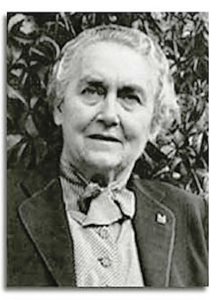
To Eugen Bohler
Dear Dr. Bohler, Bollingen, 1 January 1960
My first letter in this New Year, which opens a new decade, shall be to you, dear friend.
It brings you my very cordial wishes not only for the corning year but also for this dawning decade 1960-70, in whose lap the black and white cards of our uncertain fate await us.
The past decade dealt me heavy blows-the death of dear friends and the even more painful loss of my wife, the end of my scientific activity and the burdens of old age, but also all sorts of honours and above all your friendship, which I value the more highly because it appears that men cannot stand me in the long run.
Since I do not deem myself god-almighty enough to have made them other than they are, I must put it down entirely to my own account and…
View original post 186 more words
Carl Jung: .. creators of modern art are unconscious about the meaning of their creations.
StandardCarl Jung: .. creators of modern art are unconscious about the meaning of their creations.
Standard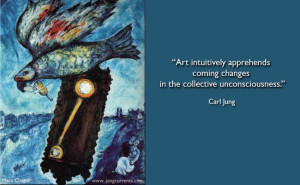
1. So f.i. “God,” then “magic,” “religious,” etc. I would propose the term “numinous” instead of “magic” or “religious,” which are prejudiced in a very definite way.
2. Any convinced Christian of today would contest your assumption that his religion is not dynamic.
Though I think that such a statement, namely the feebleness of our religion, is not unfair.
3. ·It is rather conspicuous that the creators of modern art are unconscious about the meaning of their creations.
4. What modern art-forms represent is questionable.
It is certainly something which transcends any hitherto valid form of understanding.
Your general conclusion that contemporary Western artists unconsciously depict God’s image is questionable, as it is by no means certain that any inconceivability could be called “God,” unless one calls everything “God,” as everything ends in inconceivability.
But wh en one calls everything which is inconceivable “God,” then the term “God” loses all…
View original post 89 more words
Carl Jung: Only numinous experiences retain their original simplicity
StandardGreek Mythology: “Aphrodite, Hephaestus, Ares and her Other Lovers”.-
Gallery
►Greek Mythology: “Aphrodite, Hephaestus, Ares and her Other Lovers”:

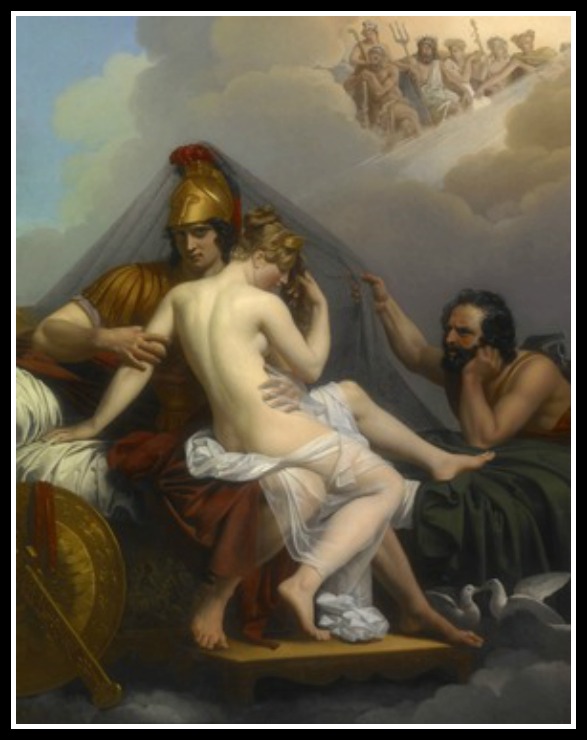 “Mars and Venus Surprised by Vulcan” by Joachim Wtewael. (1601).

_____________________________________________________________________________________________
Hephaestus (Roman equivalent: Vulcan), the smith and craftsman of the gods, was married to Aphrodite (Roman equivalent: Venus), the goddess of love and beauty.
It was not a good marriage because Aphrodite was as an unfaithful wife.
But Hephaestus also cheated her, for example with Athena, the Greek goddess of reason, intelligent activity, arts and literature.
Aphrodite most notable lovers were the gods Ares (God of War. Roman equivalent: Mars),Dionysius, Greek God of Wine and Fertility, Hermes, (Greek God of herds and herald of the gods. Roman equivalent: Mercury), Zeus (King of Gods. Roman equivalent: Jupiter), Nerites (A young Sea-God who was the very first love of Aphrodite). Poseidon (Greek God of the Sea. Roman equivalent: Neptune), and the mortal, Adonis, who was Myhrra’son
View original post 593 more words
►Greek Mythology: “Hephaestus” / “Collaboration with Holly Rene Hunter” 🔥.-
Gallery►Greek Mythology: “Hephaestus” /
“Collaboration with Holly Rene Hunter” 🔥:

 “The Fall Of Hephaestus” by C. Van Poelenburg. 17th century.

_____________________________________________________________________________
Hephaestus(Roman equivalent: Vulcan) was the Greek god of fire, metal work, blacksmiths and craftsmen.
According to Homer’s “Iliad”, Hephaestus was born of the union of Zeusand Hera. In another tradition, attested by Hesiod, Hera bore Hephaestus alone.
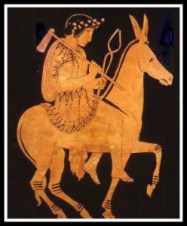 Hephaestus. Attic Red Figure. 430 – 420 BC.
Hesiod tells us in “Theogony”, that in order to get even with Zeus for solely bringing about the birth of Athena, Hera produced the child Hephaestus all on her own.
Though Hesiod’s version seems to be the one that is most commonly accepted among readers, its content greatly alters our understanding of the birth of Athena. The ancient texts unequivocally state that it was Hephaestus who released the goddess from the head of Zeus by cracking the god’s…
View original post 1,352 more words
 lampmagician
You must be logged in to post a comment.