
Source: Carl Jung Letter on the Death of Emma Jung
Carl Jung Letter on the Death of Emma Jung
Standard
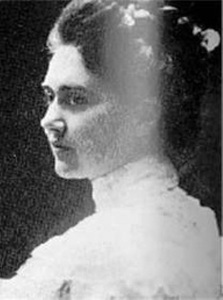
Dear Neumann:
Deepest thanks for you heartfelt letters…I am sorry that I can only set down these dry words, but the shock I have experienced is so great that I can neither concentrate nor recover my power of speech. I would have liked to tell the heart that you have opened to me in friendship that two days before the death of my wife I had what one can only call a great illumination which, like a flash of lightning, lit up a centuries-old secret that was embodied in her and had exerted an unfathomable influence on my life. I can only suppose that the illumination came from my wife, who was then mostly in a coma, and that the tremendous lighting up and release of insight had a retroactive effect upon her and was one reason why she could die such a painless and royal death.
The quick and…
View original post 47 more words
Carl Jung: Why should the psyche be the only living thing that is outside laws of determination?
StandardCarl Jung: Why should the psyche be the only living thing that is outside laws of determination?
Standard
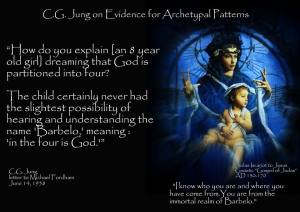
To Michael Fordham
Dear Fordham, 14 June 1958
I don’t flatter myself on having a theory of heredity.
I share the ordinary views about it.
I am convinced that individual acquisitions under experimental conditions are not inherited.
I don’t believe that this statement could be generalized, since changes in individual cases must have been inherited, otherwise no change would have come about in phylogenesis; or we would be forced to assume that a new variety, or a new species, was shaped by the creator on the spot without inheritance.
Concerning archetypes, migration and verbal transmission are self-evident, except in those cases where individuals reproduce archetypal forms outside of all possible external influences (good examples in childhood dreams!).
Since archetypes are instinctual forms, they follow a universal pattern, as do the functions of the body.
It would be highly miraculous if that were not so.
Why should the psyche be the…
View original post 473 more words
Carl Jung: It is my fate however, not my choice, and I had to fulfill this unbecoming role.
StandardCarl Jung: It is my fate however, not my choice, and I had to fulfill this unbecoming role.
Standard
To Father Victor White
My dear Victor, 30 April 1960
I have heard of your illness and I should have liked to come to England to see you, but I have to be careful with my own health and I must avoid all exertions.
As I am completing my 85th year, I am really old and my forces are definitely limited. In February
I had a bit of a heart embolism and my doctor is strict.
I have to thank you for the kind gift of your book Soul and Psyche.
It is certainly a theme worthy of a lengthy discussion in the “Auseinandersetzung” between theology and psychology.
I just began to read it. I had to finish first the book Psychotherapie und Religion by Dr. Josef Rudin, S.J.
The bit I have read in your book is most interesting and promising and I certainly shall go on studying it…
View original post 171 more words
Carl Jung: The Platonic “Idea” is in this case no longer intellectual but a psychic, instinctual pattern.
StandardCarl Jung: The Platonic "Idea" is in this case no longer intellectual but a psychic, instinctual pattern.
Standard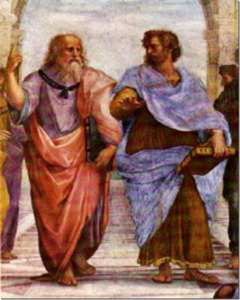
To Elisabeth Herbrich
Dear Dr. Herbrich, 30 May 1960
Your letter brings me the unexpected and painful news of the death of Prof. Betschart to whom I am bound by many fond memories.
I first became acquainted with him at the Paracelsus celebrations in Einsiedeln, and I remember the many talks we had about the philosophy and psychology of the old master.
Later, unfortunately, we did not see each other anymore, after he became a professor in Salzburg.
Only a few letters were exchanged.
So I had heard nothing of his death.
At that time the main subject of discussion was the philosophical views of Paracelsus and his relation to Hermetic philosophy; these emerge with particular clarity in the treatise De Vita Longa of Adam von Bodenstein, to which I have devoted a major study.
In this connection, inevitably, further psychological themes were discussed, especially the archetypes, which are so…
View original post 573 more words
Carl Jung: There is no such thing as an “absolute proof”;
StandardCarl Jung: There is no such thing as an "absolute proof";
Standard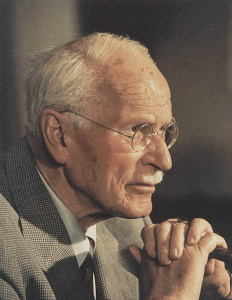
To E. A. Bennet
My dear Bennet, 3 June 1960
Thank you very much for your kind reply and your interesting article about “Individualism in Psychotherapy”-a very useful paper in the actual circumstances.
There seems to be some misunderstanding of terms: by
“applicability of a theory” I don’t mean its practical application in therapy, f.i., but its application as a principle of understanding and heuristic means to an end as a characteristic of every scientific theory.
There is no such thing as an “absolute proof”; not even the Mathematical proof is absolute as it only concerns the quantum and not the quale, which is just as important if not more so.
I wondered therefore about your statement that scientific proof of the conception of the archetypes is lacking, and I thought you had something special up your sleeve when you made it.
As there is no such thing as “absolute…
View original post 272 more words
 lampmagician
You must be logged in to post a comment.