
Source: This is the golden fabric in which the shadow of God lives
This is the golden fabric in which the shadow of God lives
Standard
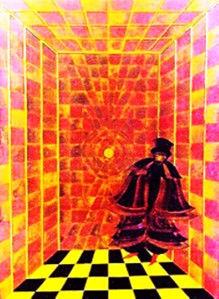
Carl Jung’s Red Book Illustration 115 with a Caption that says: “This is the golden fabric in which the shadow of God lives.”
“One does not become enlightened by imagining figures of light, but by making the darkness conscious.” Here, the encounter with the shadow within psychic processes – a drawing from the “Red Book.” ~Carl Jung; (Wehr, 1989: 55).
I hear the roaring of the morning wind, which comes over the mountains. The night is overcome, when all my life was subject to eternal confusion and stretched out between the poles of fire.
My soul speaks to me in a bright voice: “The door should be lifted off its hinges to provide a free passage between here and there, between yes and no, between above and below, between left and right. Airy passages should be built between all opposed
things, light smooth streets should lead from one pole to…
View original post 422 more words
Some Carl Jung Quotations XLVII [RED BOOK]
StandardSome Carl Jung Quotations XLVII [RED BOOK]
Standard
Man must recognize his complicity in the act of evil. ~Carl Jung, The Red Book, LN 291.
You begin to have a presentiment of the whole when you embrace your opposite principle, since the whole belongs to both principles, which grow from one root. ~Carl Jung, The Red Book, LN 248

No one has my God, but my God has everyone. ~Carl Jung, The Red Book, Page 245.
If no outer adventure happens to you, then no inner in adventure happens to you either. ~Carl Jung, The Red Book, Page 263.
Your voice is too weak for those raging to be able to hear. Thus do not speak and do not show the God, but sit in a solitary place and sing incantations in the ancient manner. ~Carl Jung, The Red Book, Page 284.
The soul demands your folly; not your wisdom. ~Carl Jung, The Red Book, Page 264.
Thus…
View original post 752 more words
The Hero must fall for the sake of our Redemption
StandardThe Hero must fall for the sake of our Redemption
Standard
We think that there is singleness within us, and communality outside us. Outside of us is the communal in relation to the external, while singleness refers to us. We are single if we are in ourselves, but communal in relation to what is outside us. But if we are outside of ourselves, then we are single and selfish in the communal. Our self suffers privation if we are outside ourselves, and thus it satisfies its needs with communality Consequently; communality is distorted into singleness.
If we are in ourselves, we fulfill the need of the self we prosper, and through this we become aware of the needs of the communal and can fulfill them. If we set a God outside of ourselves, he tears us loose from the self since the God is more powerful than we are. Our self falls into privation. But if the God moves into the…
View original post 497 more words
Carl Jung on the need the Dead Souls have for the Living.
StandardCarl Jung on the need the Dead Souls have for the Living.
Standard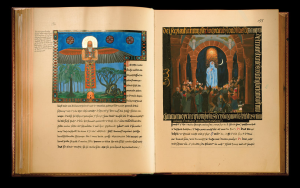
[Carl Jung on the need the Dead Souls have for the Living.]
Later, when I wrote the Septem Sermones ad Mortuos, once again it was the dead who addressed crucial questions to me.
They came so they said “back from Jerusalem, where they found not what they sought.”
This had surprised me greatly at the time, for according to the traditional views the dead are the possessors of great knowledge.
People have the idea that the dead know far more than we, for Christian doctrine teaches that in the hereafter we shall “see face to face.”
Apparently, however, the souls of the dead “know” only what they knew at the moment of death, and nothing beyond that.
Hence their endeavor to penetrate into life in order to share in the knowledge of men.
I frequently have a feeling that they are standing directly behind us, waiting to hear what answer…
View original post 345 more words
The Return of the Dead
StandardSource: The Return of the Dead
The Return of the Dead
Standard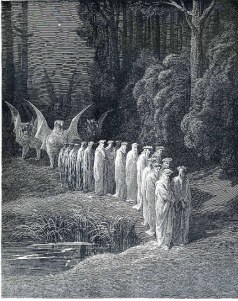
The Return of the Dead:
Amid the unprecedented carnage of the war, the theme of the return of the dead was widespread, such as in Abel Gance’s film Jaccuse. The death toll also led to a revival of interest in spiritualism. Mter nearly a year, Jung began to write again in the Black Books in I9I5, with a further series of fantasies. He had already completed the handwritten draft of Liber Primus and Liber Secundus.124 At the beginning of I9I6, Jung experienced a striking series of parapsychological events in his house. In I923, he narrated this event to Cary de Angulo (later Baynes). She recorded it as follows:
One night your boy began to rave in his sleep and throw himself about saying he couldn’t wake up. Finally your wife had to call you to get him quiet & this you could only do by cold cloths on him-finally he…
View original post 2,178 more words
 lampmagician
You must be logged in to post a comment.