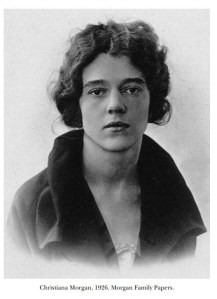
Christiana Morgan and Carl Jung

Standard

lewislafontaine's avatarCarl Jung Depth Psychology

Christiana Drummond Morgan (born Christiana Drummond Councilman) (1897–1967) was a lay psychoanalyst at Harvard University best known for her work co-authoring the Thematic Apperception Test, one of the most widely used projective psychological test.

She administered one of the earliest versions of the test to one of the first diagnosed anorexic patients in Boston. She is mostly remembered as the lover of American psychologist Henry Murray.

The nude portrait statue of Christiana commissioned by Murray from Gaston Lachaise is now owned by the Governor’s Academy, Byfield, Massachusetts. Christiana committed suicide at 69 years of age. There is some controversy over her death related to Henry Murray’s conflicting accounts, but it is mostly considered a suicide.

Christiana was born in Boston, Massachusetts on October 6, 1897. She attended Miss Winsor’s school for girls in Boston from 1908 to 1914 and later a boarding school in Farmington, Massachusetts. She came of age…

View original post 343 more words

The Sympathetic Nervous System [Anima Mundi] Mother of the Brain

Standard

Source: The Sympathetic Nervous System [Anima Mundi] Mother of the Brain

The Sympathetic Nervous System [Anima Mundi] Mother of the Brain

Standard

lewislafontaine's avatarCarl Jung Depth Psychology

‎[The Sympathetic Nervous System [Anima Mundi] is the Mother of the Cerebrospinal System [Brain.]

The “vestigial” sympathetic nervous system, an apparently fortuitous tangle of ganglionic nodes that regulate the vegetative functions of the body in an astoundingly purposive way, becomes the matrix of the cerebrospinal system, whose crowning miracle, the brain, seems to our fascinated gaze the controller of all bodily processes.

Nay more: the sympathetic system is, for Schleich, the mysterious “cosmic nerve,” the true “ideoplast,” the original and most immediate realization of-giving World Soul, and, ultimately, the architect of the brain, this newest achievement of the pre-existent a body-building and body-sustaining World Soul, which was there before mind and body came into existence.

The Hyliaster of Paracelsus is thus stripped of its unfathomable creative secret. Once again the solidity and tangibility of matter, so fervently believed in and so convincing to the senses, dissolve into Maya, into a…

View original post 169 more words

To many death seems to be a brutal and meaningless

Standard

Source: To many death seems to be a brutal and meaningless

To many death seems to be a brutal and meaningless

Standard

lewislafontaine's avatarCarl Jung Depth Psychology

To many death seems to be a brutal and meaningless end to a short and meaningless existence. So it looks, if seen from the surface and from the darkness. But when we penetrate the depths of the soul and when we try to understand its mysterious life, we shall discern that death is not a meaningless end, the mere vanishing into nothingless–it is an accomplishment, a ripe fruit on the tree of life. Nor is death an abrupt extinction, but a goal that has been unconsciously lived and worked for during half a lifetime.

In the youthful expansion of our life we think of it as an ever-increasing river, and this conviction accompanies us often far beyond the noonday of our existence. But if we listen to the quieter voices of our deeper nature we become aware of the fact that soon after the middle of our life the soul…

View original post 65 more words

Carl Jung on The Tibetan Book of the Dead

Standard

Source: Carl Jung on The Tibetan Book of the Dead

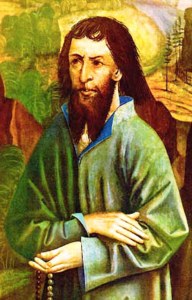
The Miraculous Fast of Brother Klaus

Standard

lewislafontaine's avatarCarl Jung Depth Psychology

The fact that Brother Klaus, on his own admission and according to the reports of reliable witnesses, lived without material sustenance for twenty years is something that cannot be brushed aside however uncomfortable it may be.

In the case of Therese of Konnersreuth there are also reports whose reliability of course I can neither confirm nor contest, that for a long period of time she lived simply and solely on holy wafers. Such things naturally cannot be understood with our present knowledge of physiology. One would be well advised, however, not to dismiss them as utterly impossible on that account. There are very many things that earlier were held to be impossible which nevertheless we know and can prove to be possible today.

Naturally I have no explanation to offer concerning such phenomena as the fast of Brother Klaus, but I am inclined to think it should be sought in…

View original post 214 more words

The Celtic Yin and Yang Symbol

Standard

lewislafontaine's avatarCarl Jung Depth Psychology

n Celtic art, the motif of two interlocking commas that appear to swirl is a recurrent one which can be traced back to the late 5th century BC. With a view to the much later Chinese symbol, art historians of the La Tène culture refer anachronistically to these clinging pairs as “yin yang”.
Early Celtic yin yangs are typically not treated for themselves alone, but appear as part of larger floral or animal ornament, such as revolving leaves at the bottom of a palmette or stylized tails of seahorses. In the 3rd century BC, a more geometrical style develops in which the yin yang now figures as a principal ornamental motif. It is not clear whether the Celts attributed any symbolic value to the emblem, but in those cases where it is placed prominently, such as on the upper end of a scabbard, its use seems to have been apotropaic.

View original post 166 more words