

It’s been a long time, but the kitchen is clean and dim. Beyond the screen, a chorus of tree frogs begins uncertainly in the late May humidity, and here we are. Tonight, I made Tot Surprise, which is my humorous moniker for what is apparently far more common a dish than I knew–tater tots, peppers, onions, and smoked sausage in a casserole dish covered with cheese and baked. 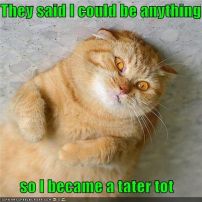 It’s not nutritious; I get around that by steaming a bunch of broccoli to eat with it. However, it is satisfying. And now–as I stand in front of the open fridge door, looking at what remains of my casserole, and needing to feed complex emotions–I find that I am still full. I cannot bury my awkward realizations in a tidal wave of dopamine.
Self Avoidance Is An Art
I haven’t written consistently in my journal for years. However, recently, I took to…
View original post 980 more words

![Reddragon[1]](https://lampmagician.com/wp-content/uploads/2017/05/reddragon1.jpg?w=687) William Blake-The Great Red Dragon and the Woman Clothed in Sun 1805-1810 William Blake was possessed by a strange genius. A combination of painter, poet and prophet, no other artist manages to convey such visionary intensity as Blake. All his life Blake experienced visions of angels and apparitions, one of which, The Ghost of a Flea (see below), he was persuaded to paint by his friend the painter-astrologer John Hayley. He also claimed that his writing was directly inspired by outside agencies as the following quote illustrates, Thirteen years ago I lost a brother, and with his spirit I converse daily and hourly in the spirit, and see him in my remembrance, in the region of my imagination. I hear his advice, and even now write from his dictate.
William Blake-The Great Red Dragon and the Woman Clothed in Sun 1805-1810 William Blake was possessed by a strange genius. A combination of painter, poet and prophet, no other artist manages to convey such visionary intensity as Blake. All his life Blake experienced visions of angels and apparitions, one of which, The Ghost of a Flea (see below), he was persuaded to paint by his friend the painter-astrologer John Hayley. He also claimed that his writing was directly inspired by outside agencies as the following quote illustrates, Thirteen years ago I lost a brother, and with his spirit I converse daily and hourly in the spirit, and see him in my remembrance, in the region of my imagination. I hear his advice, and even now write from his dictate.![89[1]](https://lampmagician.com/wp-content/uploads/2017/05/891.jpg?w=687) Bob Carlos Clarke-Vanessa and Vicky Kissing 2002 Born into a fading aristocratic dynasty in Cork, Ireland, Bob Carlos Clarke was frequently referred to as ‘Britain’s answer to Helmut Newton’ (see
Bob Carlos Clarke-Vanessa and Vicky Kissing 2002 Born into a fading aristocratic dynasty in Cork, Ireland, Bob Carlos Clarke was frequently referred to as ‘Britain’s answer to Helmut Newton’ (see ![6151356029_6c17fa6574_b[1]](https://lampmagician.com/wp-content/uploads/2017/05/6151356029_6c17fa6574_b1.jpg?w=687) Etant Donnes: 1 La Chute D’Eau 2 Le Gaz D’Eclairage-Marcel Duchamp (1946-1966) After WWII the enigmatic Marcel Duchamp, arch avant-gardist and art world provocateur was widely have believed to have turned his back on art to dedicate himself to competitive chess. However for the next twenty years Duchamp would work in secret on his tableauEtant Donnes: 1 La Chute D’Eau 2 Le Gaz D’Eclairage (Given: 1 The Waterfall 2 The Illuminating Gas), it was to be his finalwork. The tableau was only installed after Duchamp’s death in 1968 in the Philadelphia Museum of Art.
Etant Donnes: 1 La Chute D’Eau 2 Le Gaz D’Eclairage-Marcel Duchamp (1946-1966) After WWII the enigmatic Marcel Duchamp, arch avant-gardist and art world provocateur was widely have believed to have turned his back on art to dedicate himself to competitive chess. However for the next twenty years Duchamp would work in secret on his tableauEtant Donnes: 1 La Chute D’Eau 2 Le Gaz D’Eclairage (Given: 1 The Waterfall 2 The Illuminating Gas), it was to be his finalwork. The tableau was only installed after Duchamp’s death in 1968 in the Philadelphia Museum of Art.






 lampmagician
You must be logged in to post a comment.