A Chat with Ancient Greece Writer, Luciana Cavallaro

Standard

A wonderful Chat 😊🙏❤❤👍

Jacqui Murray's avatar

I met Luciana Cavallaro at a writer’s conference in San Diego. We sat across from each other at a huge round table during lunch, crowded with ten historical fiction writers, but managed to have a wonderful conversation that ultimately inspired the entire group and became the foundation for a lasting friendship. I found our interest in history, our focus on ancient times, and the way we wrote so alike, you wouldn’t know we lived half a world away from each other (she’s in Australia; I’m in the US). And, we are both teachers! Since then, I’ve followed her blog, Eternal Atlantis, emailed back and forth, and hope to see her in person again at some future writing conference.

Luciana has a wonderful trilogy set in ancient Greece called Servant of the Gods. I’ve read the first two (Search for the Golden Serpent and the Labyrinthine Journey

View original post 1,244 more words

Carl Jung excerpts from Nietzsche’s Zarathustra

Standard

That is like the Gnostic myth of the soul, the soul being the spinther (the Greek word for spark) which falls from the pleroma or the empyrean into matter; that spark is the soul
of man and if it is touched, there will be a fire.

That’s really fascinating how Nietzsche was so interested in Zarathustra. I, myself, as a Persian, have been very interested in my ancient history and have had a good look of the ancient persian’s Gods though, in this case; I was much more interested in Mani or the painter, who came in the time of powerful Zarathustra, to continue his religion more in the spiritual form. Anyway, I think that Nietzsche was fascinated in Zarathustra because of the duality which the last showed in all his acting;  the unit of Animus and the Anima;

((Now, this rencontre contains a secret. That the meeting with that old woman meant to him something like a little child is a speech metaphor naturally, but it contains more
than a mere metaphor; it points to a secret connected with his meeting the anima. It continues; ,,,,.. As Nietzsche himself is nearly always pregnant with thoughts, his anima is with child.

Prof Jung:

Exactly. But why does Zarathustra behave as if he had a child under his mantle? He is not a woman.

Dr. Whitney: He is identical there with the anima.

Prof Jung: Yes, that is the point. Nietzsche is identified with Zarathustra and naturally also with his anima, because he can only reach Zarathustra through the medium of his anima, that being by definition of the function which connects the conscious with the unconscious.

Anyhow, It’s always interesting to know Nietzsche and read about him by Dr Jung.

NIETSCHEZARATHUSTRA SEMINAR

via https://carljungdepthpsychologysite.blog/

A heretic wilt thou be to thyself, and a wizard and a sooth-sayer,
and a fool, and a doubter, and a reprobate, and a villain.
Ready must thou be to burn thyself in thine own flame; how
Couldst thou become new if thou have not first become ashes! [Nietzsche in Zarathustra]

Here he describes what naturally will happen when you really meet your own devil, your own opposite; it will be a fight to death, a conflagration in which nothing remains but a heap of ashes.

Of course this statement is a bit too strong, too mythological.

It is like the Phoenix that burns itself, together with its nest, the soul and the body, and arises from the ashes anew. Such a total transformation is hardly possible.

That is not the myth of the ordinary man, but of the god in man, the primordial man, who was called the Anthropos ( Anthropos is Greek for human. It is part of an expression that is translated as Son of man in the New Testament.) in Neo-Platonist philosophy and in those syncretistic religions at the time of Christ.

It was on account of that idea of the Anthropos that Christ called himself the Monogenes, meaning the son of man-that primordial man, not of God.

(The Monogenes means “the only begotten,” and the autogenous means “the self-begotten.”)

This is the Anthropos in man, or you can call it the self, and the story of the self is like the Phoenix myth and like this passage here.

When man is on the way to himself, he will see his other side, and there will be a tremendous conflict; it will be a conflagration, a flame in which he is burned up.

Nietzsche always foresaw something of that; even in one of his first works the Unzeitgemassige Betrachtungen (Out of time considerations) , there is a peculiar passage: “A spark from the fire of justice fallen into the soul of a seeker will be sufficient to devour his whole life.”

That is like the Gnostic myth of the soul, the soul being the spinther (the Greek word for spark) which falls from the pleroma or the empyrean into matter; that spark is the soul
of man and if it is touched, there will be a fire.

This idea was in the grain of man, and in the philosophy of the time of Christ.

There is an apocryphal word of Christ, a “logion”, which says. “Whoever is near to me is near to the fire and whoever is far away from me is far from the kingdom.”

So the kingdom is the kingdom of fire. Christ himself is the flame.

That is also expressed in the Pentecostal miracle where the Holy Ghost descends in tongues of fire.”

And there is an authentic “logion” of Heraclitus which says: A dry glowing best and wisest soul.

You see, it is inevitable that anybody who seeks the self is forced into that fight with the shadow, with the other side of himself, his own negation; and that will be a catastrophe in which the ordinary man is as if destroyed: he becomes ashes.

There is again the connection with alchemy here, of course.

This conflagration is necessary; otherwise the self as the living unit cannot appear, otherwise it would be obliterated by the continuous fight of the Yea and the Nay.

They must exhaust each other in order that we may be still enough to hear the voice of the self and follow the intimation.

This is the ordinary way of the religious experience.

First it is a Yea and then it is a violent Nay, and then there is a catastrophe and man ceases to exist; then he becomes willing and submits to God.

Then it is the will of God that will decide for him.

Without that terrible conflict, there is no reality in such in such an existence.

To go into a revival meeting and get caught is no merit. ~Carl Jung, Zarathustra Seminar, Pages 721-723.

Prof Jung:

Exactly. The rule is that a man dreams of an old anima when he is too young in his own consciousness.

That may be for the time being or it may be generally so; certain men are too young for their age by lack of experience, or they are just childish, and then the anima is apt to be very old in order to compensate for the conscious individual.

As a woman’s animus may be just a very childish boy, full of naughty ideas, because the conscious is too old and wise.

Of course that is not always true-there are certain exceptions, the obvious one being the figure of the Puer Aetemus. (The bad side of Eros is the puer aetemus, the eternal boy, and Lucius Apuleius resembles this archetype: a bit of a homosexual, a bit of a Don Juan,…)

Now, this rencontre contains a secret. That the meeting with that old woman meant to him something like a little child is a speech metaphor naturally, but it contains more
than a mere metaphor; it points to a secret connected with his meeting the anima.

What could that child be? It is as if he were a mother himself carrying a child.

This is very interesting.

Mrs. Sigg:

As Nietzsche himself is nearly always pregnant with thoughts, his anima is with child.

Prof Jung:

Exactly. But why does Zarathustra behave as if he had a child under his mantle? He is not a woman.

Dr. Whitney: He is identical there with the anima.

Prof Jung: Yes, that is the point. Nietzsche is identified with Zarathustra and naturally also with his anima, because he can only reach Zarathustra through the medium of his anima, that being by definition of the function which connects the conscious with the unconscious.

So he is identical with his anima and with the old man and with every other archetype in sight. And since Zarathustra is hiding that child he carries, what kind of child would it be? ~Carl Jung, Zarathustra Seminar, Page 730.

Prof Jung:

Exactly. The rule is that a man dreams of an old anima when he is too young in his own consciousness.

That may be for the time being or it may be generally so; certain men are too young for their age by lack of experience, or they are just childish, and then the anima is apt to be very old in order to compensate for the conscious individual.

As a woman’s animus may be just a very childish boy, full of naughty ideas, because the conscious is too old and wise.

Of course that is not always true-there are certain exceptions, the obvious one being the figure of the Puer Aetemus.

Now, this rencontre contains a secret. That the meeting with that old woman meant to him something like a little child is a speech metaphor naturally, but it contains more
than a mere metaphor; it points to a secret connected with his meeting the anima.

What could that child be? It is as if he were a mother himself carrying a child.

This is very interesting.

Mrs. Sigg:

As Nietzsche himself is nearly always pregnant with thoughts, his anima is with child.

Prof Jung:

Exactly. But why does Zarathustra behave as if he had a child under his mantle? He is not a woman.

Dr. Whitney: He is identical there with the anima.

Prof Jung: Yes, that is the point. Nietzsche is identified with Zarathustra and naturally also with his anima, because he can only reach Zarathustra through the medium of his anima, that being by definition of the function which connects the conscious with the unconscious.

So he is identical with his anima and with the old man and with every other archetype in sight. And since Zarathustra is hiding that child he carries, what kind of child would it be? ~Carl Jung, Zarathustra Seminar, Page 730.


Three Herstorical Divas to Die For by Mary Sharratt

Standard

Mary Sharratt's avatarFeminism and Religion

The Urban Dictionary defines a diva as a woman who exudes great style and confidence and expresses her unique personality without letting others define who she should be. In my mind, a diva is a woman who stands in her sovereignty and blazes a trail for other women. We all need to claim our inner diva to truly dance in our power. And if you’re looking for inspiration, I present three herstorical divas to die for.

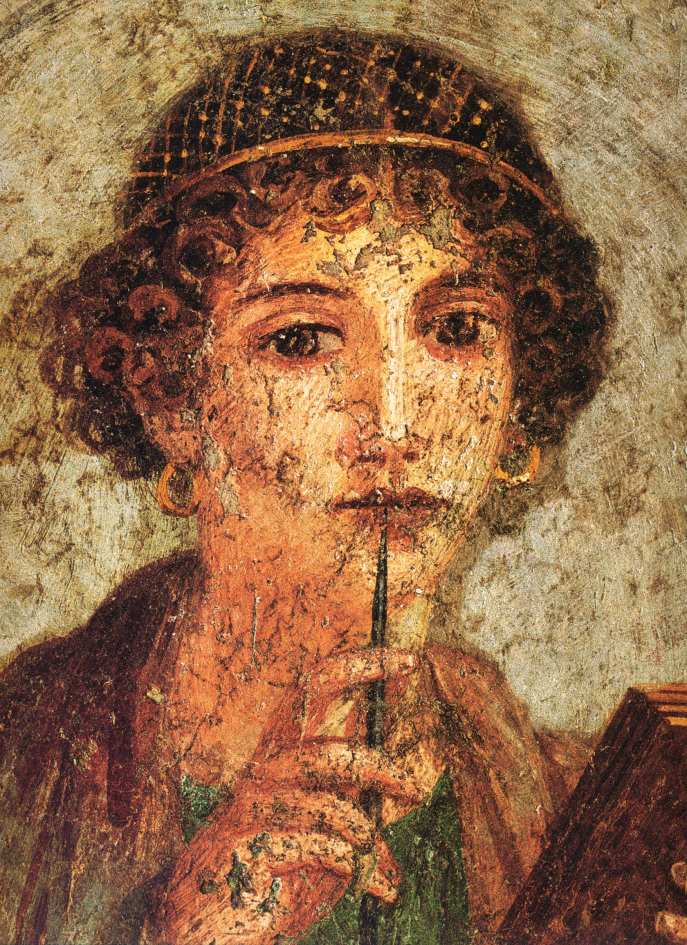
Pompei-Sappho.nocrop.w840.h1330.2x

  1. Sappho ca. 630 – 580 BCE

Sappho of Lesbos wrote the book on love. Literally. Her searing love poetry addressed to other women gave us the word lesbian. She was the first—and the best!—to describe passion as a visceral experience, in which we are seized and transfixed by Aphrodite, Goddess of love. Though much of her work was destroyed by the patriarchal fun police, the fragments of her poetry that survive are timeless, haunting…

View original post 393 more words

Sleep Spaces

Standard

Cakeordeath's avatarcakeordeathsite

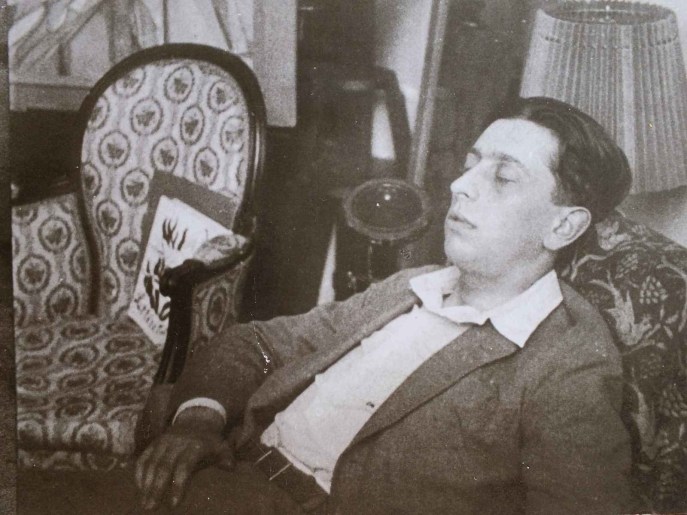
ob_6f6aac_desnos-photo-par-man-ray1 Robert Desnos-Man Ray

In 1922 Rene Crevel told his friend and mentor Andre Breton about a visit he had made to a Spiritualist seance. It was the time of  the mouvement flou, the increasingly nihilistic Dada had negated itself out of existence and Surrealism was yet to come into being. Breton was intrigued and arranged an event with his friends. The results were startling; and this was the beginning of the Period of the Sleeping Fits. Crevel and Robert Desnos were particularly  susceptible to  falling into the trance state and answering questions that was put to them by the group, sometimes with unnerving effect. Each day they would spend longer in a trance, Desnos even had the ability to write while asleep. Both Crevel and Desnos began to rapidly lose weight and Desnos became convinced that he was possessed by Rrose Selavy, Marcel Duchamp’s female alter ego, even though…

View original post 461 more words

The Story of Lewis (TV series), Oxford, My Wife and Me!

Standard

Unfortunately, I have not much time to write my thoughts, as I must work almost 50 hours a week (yes, the life is not always fair!) but now in these days as I have a few holidays I take this opportunity to share with you; friends about this beautiful city: Oxford. 🙂

p429181_b_v8_ao

I don’t know if anybody has seen or watched this dramatic Police serial on the TV, I myself spotted this about last year on one the “not so popular” channel in the German TV and I was immediately in love with that as my wife joined me later in the same way. It is really a very sensible TV loop and in the opposite of many others, it’s very intellectual. created and written by Colin Dexter.

Anyway, It was a very strong reason to plan a trip to Oxford to see this wonderful city with so many fascinating old buildings and universities as we’re following the stories which were interesting enough, to watch the structures and the houses here and there in the streets.

Although, not being untold that I’ve found later that this serial began primarily under the name; Inspector Morse “had been played by John Thaw” who died of cancer in 2001 and thereafter it follows under the name Inspector Lewis with Kevin Whately who had played as Surgent Lews by Morse, here in the new episode took the post of inspector with Laurence Fox as DS James Hathaway.

In any case, long speech and short sense as one may say, we have decided to take a short trip to Oxford in May and were lucky because of the weather, as it was wonderfully sunny and warm 🙂 and as we walk through the streets between these giant walls, it seems we’re learning with every breath we took, something new 😉 and I can just recommend undertaking the trip to everyone in to this amazing city.

https://en.wikipedia.org/wiki/Inspector_Morse_(TV_series)

https://en.wikipedia.org/wiki/Lewis_(TV_series)

How Oscar Wilde got his big break

Standard

via https://blog.oup.com/

DdKxEB7JEUc

It’s a great advantage to have done nothing at all, but it’s best not to overdo it,”

“His character has been always fascinating to me, now much more interesting is how he’d found the decency to the society those days.”

 In the late 1870s, when he was still a student, Oscar Wilde gathered his college friends for a late night chat in his Oxford room. The conversation was drifting to serious topics.

“You talk a lot about yourself, Oscar,” one of them said, “and all the things you’d like to achieve. But you never say what you’re going to do with your life.”

The punch bowl was empty, the tobacco had been smoked, and the lights were turned down low.

“What are you going to do?” the friend asked.

Wilde turned solemn. There was a long pause.

“God knows,” Wilde finally replied. Then, turning serious, he offered, “I’ll be a poet, a writer, a dramatist. Somehow or other I’ll be famous, and if not famous, I’ll be notorious.”

Between the ages of 24 and 28, Wilde set about trying all these careers in turn.

After leaving Oxford in early 1879, he moved to London. He was not going back to Ireland but was staying on in England “probably for good,” he said. What would he do there? His prospects for employment were thin.

It’s a great advantage to have done nothing at all, but it’s best not to overdo it,” became one of his favourite expressions. The romance of doing nothing would soon be dispelled by the reality of not having an income commensurate to his tastes.

On the death of his father, in 1876, his mother discovered that the family’s properties were not owned outright by the Wilde estate and that the income on their fishing lodge at Connemara and their house at Bray would need to be shared. Inured to extravagance as Oscar was, money was to prove a lifelong concern.

“We have genius. That is something,” his mother declared, praising what would remain in the family, regardless of their dwindling bank balances. How to make genius pay, however, was a matter Wilde was attempting to figure out. A year after graduation, he had grown impatient and bored. “Not having set the world quite on fire as yet” was so annoying, he thought.

Oscar’s mother suggested that he count his blessings that he didn’t have to work in a shop or beg for food.

“We have genius. That is something,” his mother declared, praising what would remain in the family, regardless of their dwindling bank balances. How to make genius pay, however, was a matter Wilde was attempting to figure out.

Between 1878 and 1880, Wilde curried favour among those who might be able to help him, dividing his attention between prominent figures in education and art. At the request of the wicked Cambridge don Oscar Browning, Wilde stalked Paternoster Row behind St. Paul’s Cathedral, in search of a suitable Bible. He also offered his services as a personal shopper with excellent taste in neckties. When institutional “education work” proved impossible to get, Wilde volunteered his erudition to the painter, Lawrence Alma-Tadema, and offered his skills as a Greek translator and an editor of classical plays. He published a poem on England and reviewed – once for the Irish Daily News and twice for the Athenaeum.

For all his hustling, he was hardly making a living, let alone making his name.

By the late nineteenth century, Aestheticism had been in the air for several decades in Britain. Its prime movers had reached middle age and had recently been satirized as a hoary gang that still thought of themselves as “the aesthetic young geniuses.” William Holman Hunt, Michael, and Dante Gabriel Rossetti were in their fifties. So was Matthew Arnold, the stylish promoter of “Sweetness and Light”, as a shield against Philistinism. John Ruskin had done much to enthuse and direct art criticism, but he was a decade older and now mentally unstable.

These circumstances created a vacuum.

While Aestheticism waited for a saviour to step into the breach, a London cartoonist named George Du Maurier seized the opportunity to satirize the movement’s idiosyncrasies.

Du Maurier’s pen more or less single-handedly created the general interest in Aestheticism that prevailed in the late 1870s and early 1880s. Thanks to his lively sketches, the movement’s artists became celebrities.

Wilde came to Du Maurier’s attention because he was a hanger-on of the celebrated painter, Whistler. “Maudle” and “Postlethwaite” disembarked in the pages of Punch in 1880. Disguised only by these gag pseudonyms, Du Maurier made the pair a feature.

They boosted Aestheticism. They talked like arty folk. They were pretentious and silly. Sure, Maudle and Postlethwaite personified foppery, but along the way, they also became beloved of British and Americans alike.

In the twinkling of an eye, Maudle and Postlethwaite became a sensation. “These remarkable people have had a great success in America,” Henry James observed, adding that the duo contributed “to the curiosity felt in that country on the subject of the English Renascence,” another of the names for Aestheticism.

The Punch effect was profound.

 Punch had such cultural clout that it sprung the door open for Wilde, allowing him to walk straight onto the aesthetic scene. In doing so Du Maurier not only gave Wilde prominence he didn’t have before, but he invented Wilde’s public persona. Like today’s semi-famous hangers-on or B-list celebrities, Wilde was until then merely human wallpaper against which other stars shone more brightly.

By 1881, Wilde still hadn’t found a profession, a fact Du Maurier satirized by picturing Maudle as a guidance counsellor advises that “to exist beautifully” was a career in itself.

It is hard to underestimate the force of the aesthetic craze that seized Victorians. What began simply as the product of a single caricaturist’s pen had, by spring 1881, became an unstoppable cultural phenomenon. Its next beneficiaries were two of the biggest names in English theatre, Gilbert and Sullivan, who brought out Patience, or Bunthorne’s Bride in spring 1881.

This timing was extremely fortuitous for Wilde.

Soon after, he was offered an American lecture tour from theatre impresario Richard D’Oyly Carte whose Gilbert and Sullivan satire of Aestheticism was touring the US. Who better to promote the satire than a man who was so very laughable for his beliefs about poetry and beauty?

Wilde’s motives for accepting Carte’s offer were equally mercenary. His first play, Vera, had failed and his finances were stretched. The invitation could not have come at a better time. And so, on Christmas Eve 1881, a 27-year-old Oscar Wilde wrapped himself in a fur cloak, boarded the SS Arizona at Liverpool, and sailed towards the adventure of a lifetime. It was in the United States, during a gruelling year-long lecture tour, that Wilde would really begin to make his name.

 Featured image credit:  Oscar Wilde, photographic print on card mount, circa 1882, by Napoleon Sarony. Public domain via Wikimedia Commons

Showtime

Standard

Cakeordeath's avatarcakeordeathsite

Sammy Slabbinck Sammy Slabbinck

Al the Angle, poised, (as always, naturellement), high stylin’ but low ballin’, to strike, spiels his riff,
“Up, down, turn-around, edgeways or sidelined; every fucker has an angle to get the juices flowing until they flood. Do you feel me…?
“Yes? … I thought so. Very, very” (very is slowed to a hypnotic dragged down drawl, then a lull, an insinuating pause… …), “very good baby.
‘You know if you handle the cards that I deal right I might just let you, only might, mind you, I haven’t quite yet decided, come for me. Soooooo tell me my love, is it now time for that cunt to get eaten? I want to watch in the mirror every motion, absolution and devotion.”
SHOWTIME…the ever eager, devouring mouths merge momentarily before separating again, revolving and hovering in the absolute stillness until the lips shape the same word…SHOWTIME.
The Ingenue…

View original post 121 more words

Tennessee Williams on Love and How the Very Thing Worth Saving Is the Thing That Will Save Us

Standard

https://www.brainpickings.org/2018/07/30/tennessee-williams-love/

via https://www.brainpickings.org/

A quarter-century after Martin Luther King, Jr. made his impassioned case for reviving the ancient Greek concept of agape, Williams reflects:

The world is violent and mercurial — it will have its way with you. We are saved only by love — love for each other and the love that we pour into the art we feel compelled to share: being a parent; being a writer; being a painter; being a friend. We live in a perpetually burning building, and what we must save from it, all the time is love.

“Love is the only way to rescue humanity from all ills,”Tolstoy wrote at the end of his life in his forgotten correspondence with Gandhi about human nature and why we hurt each other, as the global tensions that would soon erupt into World War I was building. How love can save us and what exactly it saves us from — each other, ourselves, the maelstrom of our intersubjective suffering — are questions each person and each generation must answer for themselves.

Tennessee Williams (March 26, 1911–February 25, 1983), born several months after Tolstoy’s death, addressed this abiding question with uncommonly poetic precision several months before his own death in a 1982 conversation with James Grissom, who would spend three decades synthesizing his interviews with, research on, and insight into the beloved playwright in Follies of God: Tennessee Williams and the Women of the Fog (public library).

Tennessee Williams (Photograph: John Springer)

A quarter-century after Martin Luther King, Jr. made his impassioned case for reviving the ancient Greek concept of agape, Williams reflects:

The world is violent and mercurial — it will have its way with you. We are saved only by love — love for each other and the love that we pour into the art we feel compelled to share: being a parent; being a writer; being a painter; being a friend. We live in a perpetually burning building, and what we must save from it, all the time, is love.

Complement with Jeanette Winterson on how art saves us and Elizabeth Alexander on the ethics of love, then revisit Williams’s conversation with William S. Burroughs about writing and death and his stirring reading of two poems by Hart Crane.