Van Gogh on the Beauty of Sorrow and the Enchantment of Storms, in Nature and in Life

Standard

via https://www.brainpickings.org/

Of course this genius is known for everyone (mostly!) and I’d gather some money to get this book 😉

Chance doesn’t deal happiness with an even hand — some lives are more weighed down by sorrow than others. It can be easy, and misguided, to romanticize suffering — despite Elizabeth Barrett Browning’s superb admonition against it, we have a long cultural history of perpetuating the “tortured genius” myth, the reality behind which is far more complex. What would it mean, instead, to orient ourselves toward sorrow neither with indulgence nor with self-pity, to regard it not as a malignancy of life but as part of its elemental richness?  everyours_vangoghletters


That is what Vincent van Gogh (March 30, 1853–July 29, 1890) addressed in a remarkable letter to his brother Theo, found in Ever Yours: The Essential Letters (public library) — the treasure trove that gave us Van Gogh on talking vs. doing and how inspired mistakes move us forward.


vangogh.jpg?w=600

‘Self-Portrait with Straw Hat’ by Vincent van Gogh

Despite his lifelong poverty, despite his debilitating mental illness, Van Gogh managed to transmute his various hardships into some of the most visionary art humanity has produced. During one particularly harrowing period of struggle, he writes to his brother in a letter from the Hague penned in mid-September 1883:

2e292385-dc1c-4cfe-b95e-845f6f98c2ec.pngYou write about your walk to Ville-d’Avray that Sunday, at the same time on that same day I was also walking alone, and I want to tell you something about that walk, since then our thoughts probably crossed again in some degree.

Van Gogh had set out on this particular walk in order to clear his head and his heart after finally splitting up with Sien — the alcoholic prostitute with whom he had fallen in love a year and a half earlier, just after recovering from the heartbreak that taught him how to turn unrequited love into fuel for art. It was a deeply ambivalent breakup — Van Gogh recognized that they couldn’t make each other happy in the long run, but he was deeply attached to Sien and her children, as was she to him.

Seeking to quiet his mind, Van Gogh headed out “to talk to nature for a while.” From this turbulent inner state, he witnessed a violent storm which, paradoxically, reconciled him to his sorrow and helped him rediscover in it the elemental beauty of life.

vangogh_pinetree.jpg?resize=600%2C763

Vincent van Gogh: Pine Trees against an Evening Sky, 1889. (Van Gogh Museum)

He recounts this transcendent encounter with nature to his brother:

2e292385-dc1c-4cfe-b95e-845f6f98c2ec.pngYou know the landscape there, superb trees full of majesty and serenity beside green, dreadful, toy-box summer-houses, and every absurdity the lumbering imagination of Hollanders with private incomes can come up with in the way of flower-beds, arbours, verandas. Most of the houses very ugly, but some old and elegant. Well, at that moment, high above the meadows as endless as the desert, came one driven mass of cloud after the other, and the wind first struck the row of country houses with their trees on the opposite side of the waterway, where the black cinder road runs. Those trees, they were superb, there was a drama in each figure I’m tempted to say, but I mean in each tree.

Then, the whole was almost finer than those windblown trees seen on their own, because the moment was such that even those absurd summer houses took on a singular character, rain-soaked and dishevelled. In it I saw an image of how even a person of absurd forms and conventions, or another full of eccentricity and caprice, can become a dramatic figure of special character if he’s gripped by true sorrow, moved by a calamity. It made me think for a moment of society today, how as it founders it now often appears like a large, sombre silhouette viewed against the light of reform.

Writing half a century before before Rilke contemplated how great sadnesses bring us closer to ourselves, Van Gogh adds:

2e292385-dc1c-4cfe-b95e-845f6f98c2ec.pngYes, for me the drama of a storm in nature, the drama of sorrow in life, is the best… Oh, there must be a little bit of air, a little bit of happiness, but chiefly to let the form be felt, to make the lines of the silhouette speak. But let the whole be sombre.

vangogh_stormyweather1.jpg?resize=680%2C886

Vincent Van Gogh: Landscape in Stormy Weather, 1885. (Van Gogh Museum)

 Seven years later, the drama of sorrow disfigured the silhouette of Van Gogh’s life.

Complement this fragment of Van Gogh’s deeply alive Essential Letters with French philosopher Simone Weil — one of the most luminous and underappreciated minds of the twentieth century — on how to make use of our suffering and Tchaikovsky on depression and finding beauty amid the wreckage of the soul, then revisit Nicole Krauss’s beautiful letter to Van Gogh across space and time about fear, courage, and how to break our destructive patterns.

Carl Jung on Sleep and Dream

Standard

Things belonging to the past of mankind and presumably to its future also.

The fascinating world of dreams and also fascinating how Dr Carl Gustav Jung kept searching in this unknown.

here is one of his letter in answering one of his friends and colleague Dr Barrett with a few words but a lot meaning. 🙂 ❤

via https://carljungdepthpsychologysite.blog/

To H. J. Barrett

Dear Mr. Barrett, 27 December 1956

Thank you for your interesting letter. It is indeed an important question, the question of sleep and dream.

As far as my knowledge goes we are aware in dreams of our other life that consists in the first place of all the things we have not yet lived or experienced in the flesh.

Beyond that material we are also aware of things we never can realize in the flesh and not in this life.

Things belonging to the past of mankind and presumably to its future also.

The latter can be realized only very rarely as future events, because we have no means, or very few, to recognize and identify future events before they have happened, as we also cannot understand thoughts we never had before.

All the things which are not yet realized in our daylight experience are in a peculiar state, namely in the condition of living and autonomous figures, sometimes as if spirits of the dead, sometimes as if former incarnations.

These formulations are probably auxiliary means supplied by our unconscious mind to express forms of psychic existence we do not really understand.

I am sorry my time does not allow me to comment in detail about your experiences.

I hope my general observations will help you to a certain extent.

Sincerely yours,

C.G. Jung ~Carl Jung, Letters Vol. II, Page 341

The hidden world of underground psychedelic psychotherapy in Australia

Standard

As I got the experiences about LSD in the early 70th,  being convinced that this could be a very helpful therapy for the psycho. Here is an interesting article there about. hope you enjoy. 🙂


http://www.abc.net.au/news/2018-08-30/underground-psychedelic-psychotherapy-mdma-lsd/10134044

The Infernal Vision of Sibylle Ruppert

Standard

Cakeordeath's avatarcakeordeathsite

Sibylle-Ruppert_Decadence 1976 Sibylle-Ruppert-Decadence 1976
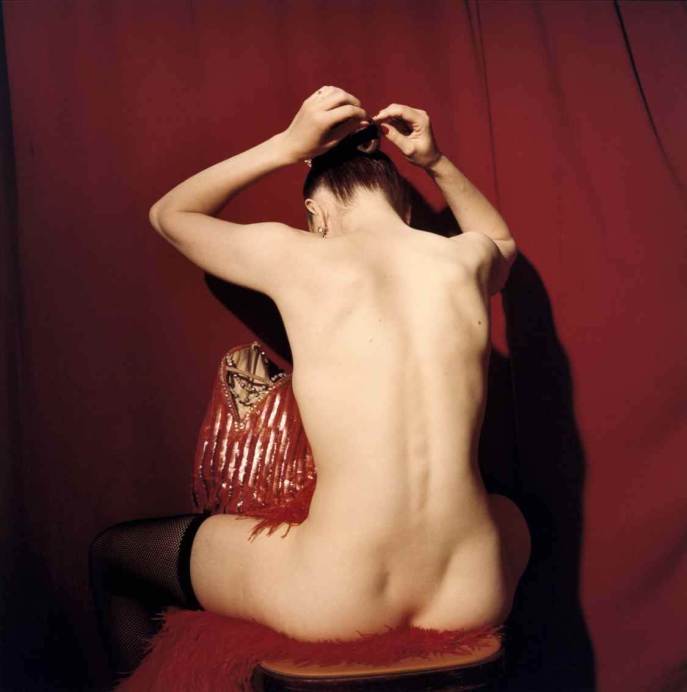
Quite recently I was researching H.R Giger’s illustrations for De Sade’s Justine when I stumbled across the work of the German artist Sibylle Ruppert. I immediately wondered how I had never heard of her before as I take some pride in being well versed in Surrealistic/Fantastic/Dark Art and here was an exceptional example of the genre, that furthermore took its cues from the masters of transgressive literature: De Sade (of course), Lautreamont and Bataille, all of whom I have written about.

One can only wonder at the vagaries of recognition. Although she did have some influential admirers, namely Alain Robbe-Grillet, Henri Michaux and especially Giger, who owned a large collection of her work (the only major retrospective to date was at the H.R Giger Musuem), the critical and commercial success that other Fantastic artists of the period enjoyed eluded her. Instead she worked quietly away at producing…

View original post 256 more words

Chambre Close

Gallery

Cakeordeath's avatarcakeordeathsite

Bettina-Rheims-Chambre-Close-4th July 1991 Paris Bettina-Rheims-Chambre-Close-4th July 1991 Paris

Chambre Close is the collaboration between the writer Serge Bramly and the photographer Bettina Rheims. The elegant and cultured tone of the confessions of Mister X, an amateur photographer and voyeur who lures models back to shabby hotel rooms to engage in acts of ‘visual adultery’ is contrasted against the clinical detachment and raw intimacy of Rheims colour images.

Rheims is justly renowned for her studies of female nudes. As she herself notes, “I love flesh. I am a photographer of the skin.”

View original post

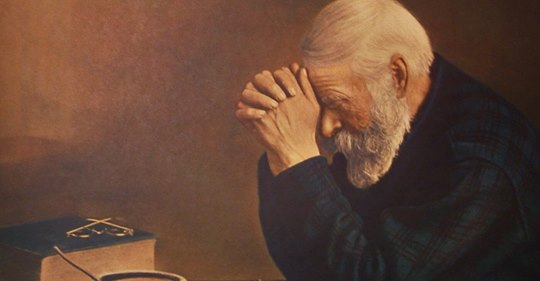
CARL JUNG ABOUT WHY TO PRAY WORKS

Standard

I might repeat myself but as I know not be so famous enough,  mention it again: I am not religious, but I pray when I get in an unwilling or feeling some uneasy situation. But pray to what? a good question; I just pray to a great ghost, the whole, sometimes call my brother, who was all in my life with me…anyway, it seems that Dr, Jung was also in this meaning. an interesting issue  

via http://esotericnow.com/

safe_image

http://esotericnow.com/carl-jung-about-why-to-pray-works/

As if nothing, in his most controversial book-at least of those published in life-C. G. Jung leaves a footnote:

Prayer, for example, reinforces the potential of the unconscious, thus explaining the sometimes unexpected power of prayer.

The prayer -or prayer or prayer-, Jung tells us, makes us enter into a relationship and dynamic tension with the unconscious. This is very important, but it is necessary to explain it. Jung considers that the unconscious is the source of instincts, images and even not only individual but also collective purposes, it is “the spiritual treasure of humanity”, a great ocean in which the whole history of humanity and possibly the cosmos is recorded. A fund that also seems to have an intention or purpose, which is to unify the psyche, integrate the opposites, make the human being complete, something that is equivalent to what in the Christian tradition is called theosis – the divinization of man – and in the Hinduism is the realization of the Atman. Jung, however, does not affirm that man becomes a god through the manifestation of his unconscious, but that the unconscious in his becoming conscious produces images similar to those that have been generated in the great religions and that this process is accompanied by a numinous effect, or of a sensation of finding meaning in life.

Carl Jung

Throughout his, work Jung argues that the unconscious is something like a divine monster, wonderful and terrible that responds to our attention and interest. Praying is a way of paying attention to this fund of mysterious energy and intelligence that is part of us – the biggest part of who we are, “the majority partner” -. The same can happen, for example, when we really make an effort to remember our dreams: something is shaken in the deep and begins to symbolize (the unconscious communicates through symbols or images that communicate something ineffable and transcendent). To pray is in a certain way to pray to ourselves, but in ourselves, there is an unknown and autonomous force, which can impose itself on our will and give meaning to our life. A force at once chthonic, celestial, titanic and demonic. The human being only finds true meaning when he feels part of something bigger than his ego.

In a letter to a patient, Jung wrote: “I have thought a lot about the prayer, it – the prayer – is very necessary, since it makes the transcendent in what we think and conjecture become an immediate reality and places us in the duality of the ego and the dark Other “. The unconscious is, at least while it has not become conscious, the transcendent, a transcendent aspect of existence, at once intimate and elusive. This dialogue opens us to the possibility of experiencing that we are not merely an ego; There is something else, an Other. In the dialogue with the unconscious, which is the dialogue with the transcendent, says Jung, the door is opened to “a whole sphere of knowledge and experience through which all the functions, all the ideas, manage to enter to the side of our ordinary conscience. ” How to open the vault of the treasures of the world of archetypes. Thus, praying can be a way of practising what Jung called the active imagination or the transcendent function, which is a way to open the way to the content that springs from the unconscious and its deep source of archetypes. In a certain way, prayer is to the religious awakening life what dreams are to the psychic life, a space in which the inner life can be revealed, what lies hidden in our psyche and that can produce a numinous experience, a meeting with the radical otherness that Rudolf Otto talks about.

“The unconscious wants to flow towards the consciousness to reach the light,” says Jung in Response to Job; “God wants to become a man, but not at all.” There is a strong tension here, something that hinders the repetition of the eternal myth that, in some way, is always occurring in the background: the incarnation of the Logos, the light that illuminates the darkness, which must finally be understood.

How the Heart Works As A Second Brain!

Standard

By SearchingTheMeaningOfLife With thanks

8e55a-stars_kindergarten_by_eresaw-d67n6fl


The word ” heart ” in English is an anagram of the word “earth”. So it came up with the phrase ” your home is where your heart is. “

Jacqueline & Pao Chang

The human heart is the organ that produces the strongest electromagnetic field than any other organ in the human body. The electromagnetic field of your heart has a radius that extends several meters away from the body. In addition, the energy field changes according to your feelings. Something you also need to know is that every organ and cell in your body can create an energy field around it.

Because the heart produces the strongest electromagnetic field, the information stored in it affects every organ and cell in your body. This may be because the heart is the first organ that begins to work on an embryo. In addition to creating the strongest electromagnetic field in the body, the heart has its own intelligence, for which some neurocardiologists refer to it as a cardiovascular or as the Fifth Brain.

According to neurocardiologists, the heart does not consist only of muscle cells, but also of neurons. Researchers from the HeartMath Institute have conducted experiments to prove that the role of the heart is not limited to pumping blood. There is a belief that it also has intelligence, which seems to play an important role in the way we perceive reality.

Here is an excerpt from the Staradigm book that talks about the deepest functions of the heart:

“The heart is one of the most important organs of the human body because it is one of the main intermediaries connecting us and the universe. Conventional science has taught us that the main role of the heart is to pump the blood and promote it to all body tissues. This definition of the heart is not very accurate. In addition to pumping blood, the heart has its own intelligence.

According to neurocardiologists, 60 to 65% of cardiac cells are neuronal cells, not muscle cells. This discovery has prompted them to conduct experiments that have shown that the heart works similar to the brain and in some areas is superior to it. This may be the reason why the heart is the first organ that starts working after capture. Approximately 20 days after conception, the heart begins to function, but the brain only works after about 90 days. This information tells us that the brain is of secondary importance to the heart. “

The Heart, the Brain, and the Emotions

The brain and the heart sometimes work against each other. We are constantly trying to determine whether we will put more emphasis on our thoughts or feelings. People of logic would say that mind is the key to avoiding all our problems since the mind thinks with interest and calculates the chances that will keep us safe or have less risk.

The heart, on the other hand, pushes us to choose according to what we feel is best for our inner level associated with our intuition. Working with just one of these two, just the mind or just the heart, can sometimes lead you to trouble. The mind may be afraid to seek happiness outside its comfort zone, and the heart sometimes urges decisions that are unknown and dangerous. By using both in balance you can clarify many things.

” Follow Your Heart ” is a common phrase that is constantly being heard, but it is not easy to apply. Following your heart means letting your deep feelings lead you, without there being any reasonable or obvious reasoning in the decisions you make. Our heart guides us with a sense of intuition, but we must be able, receptive, and trustworthy in it to realize its will and then act accordingly with full faith in the result. Our feelings are what help us to understand the world beyond reason and as such are the keys to understanding the spiritual aspects of ourselves.

The Intelligence of the Heart

Some researchers and neurocardiologists support the theory that the heart may function as a second brain, revealing that there may be a different form of intelligence. There are many physiology studies in progress that examine the interface of the heart and brain, and the sensations and feelings we attribute to the heart. Love and certain emotional states felt at the heart level, produce different physiological responses.

Heartbeats have been found to be affected by inner condition and emotions, as with heart rhythm disorder when experiencing anxiety or negative emotions. On the contrary, when we feel positive, the heart rhythms are more stable.

The nervous system of the heart contains about 40,000 neurons or sensory neurites. One of their roles is to monitor the heart’s hormones, neurochemicals, heart rate, and pressure information. Information on the behaviour of these chemicals is sent to the brain. The heart and the brain constantly communicate through the gastrointestinal nervous system and the body’s electromagnetic field. Through this dynamic communication process, it is that the consciousness of the heart can change the way the brain processes the information. This process can also affect how energy flows into the body.

These findings show that the heart works with the brain and the body, including the tonsil, to process emotions and incorporate emotional memories. Amygdala is the part of the brain that helps us make decisions about the information we receive and processes them based on our past experiences. This shows a connection between emotions and the physiology of the brain and body.

Other mental moods and anxiety also affect our body and our general health. Recent scientific research has found that anger, anxiety and other negative feelings can significantly increase the risk of heart disease. Therefore, stressful situations and high levels of anxiety adversely affect the heart as an organ.

The connection of the brain and the heart, as a self-contained emotional centre, is an issue that many researchers have paid attention to. It has been shown that the emotions we experience mentally, are also manifested in the body and can affect the heart rate and pulses. The best way to maintain a healthy heart is not only to make a healthy diet, but also to incorporate into our program meditation techniques for balancing the energy of the heart and the brain.

Why Does the Heart Hold Keys to World Peace?

Our heart helps us to understand our world through emotions. This allows us to understand reality as a totality of the universe, giving it universal features. The heart as a biological electromagnetic field generator allows us to understand one another at an emotional level but also beyond that, giving us a sense of connection with all the things that surround us. This emotional connection is what brings each of us together.

When we learn to think with the heart, it will be easier for us to understand others and live in harmony with them. For these reasons, the heart holds the key that unites mankind to achieve world peace.

Source: Text translation and editing: share24.gr via wakingtimes.com

Matchmaking Pigs in Atonement, Tennessee

Standard

Matchmaker matchmaker make me a match, find me a fine, catch me a catch…

Teagan Riordain Geneviene's avatarTeagan's Books

Saturday, August 25, 2018

Pigs Road Moon unsplash compositeDeme & Honeybell, looking for adventure again

Deme and Honeybell, the otherworldly glowing pigs of Atonement, Tennessee had so much fun visiting with you recently that they talked me into letting them have the spotlight again today.  Yes, it’s another snort story.

If you’ve been following me for awhile, please forgive me for another rerun.  The past couple of work-months have been so “over the top” that I’m surprised I’ve managed to post at all.  I ran this as a Valentines story last year, but it doesn’t have to be about that.

Last week you met a much younger Marge Tipton.  She is a minor character in the “Atonement” books.  I enjoyed giving her extra life here on the blog.  She owns the local diner and she’s suitably quirky for the town.

It’s fewer than 2,500 words.  I hope this snort story leaves you with a…

View original post 2,705 more words

The Ridere of Riddles

Standard

Nifty Buckles Folklore's avatarVal is a writer of enchanted tales, folklore and magic. Once chased by Vampire Pumpkins!

The Ridere of Riddles is a Scottish Saga collected by John Francis Campbell in Popular Tales of West Highlands. His fisherman/informant was named John MacKenzie who lived by Inverary.

375px-Scottish_Highlands_and_Lowlands

The Ridere of Riddles

Once upon a time there lived a king who married a great lady who sadly departed during childbirth of her first son. Later the king wed another woman and she birthed a son. Both sons lads grew up strong and tall. One day the new queen had an epiphany, that her son who was the second son of the king would not inherit the king’s kingdom when he passed on. Right then she schemed a plan to poison the king’s first son.

The queen ordered the royal cooks to poison the eldest son by mixing a lethal herb into the first son’s drink. The second son overheard the queen’s conversation about poisoning the first son so…

View original post 1,551 more words