Superstitions You Might Find in Atonement TN

Standard

really amazing 🙂

Teagan Riordain Geneviene's avatarTeagan's Books

Saturday, November 10, 2018

The amazing Sue Vincent recently hosted me at her Daily Echo blog.  We were talking about superstitions and I shared some from my youth.  I had a great time at Sue’s and I hope you’ll click over to visit her.

I expect the townsfolk in fictional Atonement, TN would tend to be superstitious.  How could they be otherwise with all the strange goings on and supernatural beings?

The first writing advice I heard was something I took to heart ― Write what you know.  When I wrote Atonement, Tennessee I followed that guidance and created a fictional southern town where the urban fantasy takes place.  Of course, the second novel, Atonement in Bloom, is also set there.

I made it a very small, rural town so some of the manners and personalities I grew up with would not seem out of place.  The townsfolk…

View original post 1,000 more words

#writing #music: #TheWho

Standard

jeanleesworld's avatarJean Lee's World

A rare gift comes to the writer when the story and its mixed tape of music ka-chunk and transform. No longer is the music merely the writer’s atmosphere, her source of ambience while storytelling. Oh no. The music is the heroine. The music is the villain. The music is the tension. The music is the scene.

Quadrophenia_(album)This happened to me during 2010’s National Novel Writing Month when I first began drafting Fallen Princeborn: Stolen. At the time I was only using instrumental music for storytelling, while  music like The Who’s Quadropheniahelped me survive the piles of grading in my dropbox. The month had barely started, so I was early in the story of Charlotte and her sister leaving their abusive family in the Dakotas for Wisconsin. Their coach bus breaks down in the middle of nowhere. Another peculiar bus appears with far-too-friendly good Samaritans, and despite Charlotte’s suspicions…

View original post 1,044 more words

An #Author #Interview with @Celine_Kiernan, Part 1: #writing & #worldbuilding in #fantasy #fiction with a little help from #history

Standard

jeanleesworld's avatarJean Lee's World

199_Celine_webBorn in Dublin, Ireland, 1967, Celine has spent the majority of her working life in the film business, and her career as a classical feature character animator spanned over seventeen years, before she became a full-time writer. I am honored to spend this week and next sharing her thoughts on world-building, research, character, audience, and hooks.

First, let’s talk about the imagination behind the worlds. I see on your biography you spent years in film and animation. What drew you to visual storytelling as a profession before written storytelling? How does your work as an animator influence the way you write today?

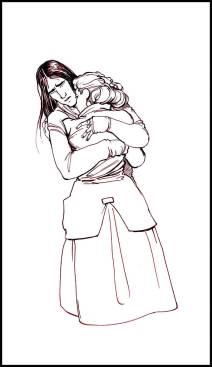
farewell__inksketch_by_tinycoward_d1xwof1-pre Illustration of Chris and Wynter from Poison Throne

From the moment I could hold a pencil I was always either drawing or writing. In terms of satisfaction, I don’t think there’s a dividing line between the two disciplines for me. But at different stages in my life…

View original post 1,682 more words

Inanna at the Ground of Being

Quote

via Inanna at the Ground of Being

“The destroying of the huluppu tree meant that human beings could no longer count on Inanna and the World Tree to maintain the cycle of life and death. Instead, they were now facing a terrifying, linear world.”

❤🙏❤

Do ya have a furnace that needs fanning?

Standard

Dr Glen Hepker's avatarA Glimpse of Heaven: The Philosophy of True Health

‘Fanning the Furnace’ Guided Imagery Meditation Chi Kung

Tan Tien Breathing is also known as Fanning the Furnace Breathing, Lower Heaven Breathing, or Field of Elixir Breathing. These names refer to a type of ages-old guided imagery chi kung (chi kung/qigong means breathing in congruence with effort or in time with movement). The most common title that I’ve come to utilize is Fanning the (sparkling) Furnace.

In this tradition (Tao Chan/Ming Chia), it is said that there are two tan tien points/portals. With regard to the ‘real’ tan tien, it is located just behind the navel/CV-8 acupoint (also known as the sea of chi). This point is approximately two and one-half inches (two and one-half cun – e.g., personal thumb-widths – per one’s own body mapping) above the ‘curculatory’ tan tien/CV-5 acupoint (CV is the common abbreviation for the central vessel in acupressure/TCM/traditional Chinese medicine theory).

The real tan…

View original post 1,973 more words

Carl Jung on Aion, the Serpent, Mercurius

Standard
I’ve been always fascinated by the Serpent in the old testament; as a messenger or signpost for getting knowledge., opening the secret doors. here Dr Jung explains it in a wonderful way.
via https://carljungdepthpsychologysite.blog/

Life, Work and Legacy of #Carl Jung

For the Naassenes Paradise was a quaternity parallel with the Moses quaternio and of similar meaning.

Its fourfold nature consisted of the four rivers, Pison, Gihon, Hiddekel, and Phrat.

The serpent in Genesis is an illustration of the personified tree numen; hence it is traditionally represented in or coiled around the tree.

It is the tree’s voice, which persuades Eve—in Luther’s version—that “it would be good to eat of the tree, and pleasant to behold that it is a lusty tree.”

In the fairytale of “The Spirit in the Bottle,” Mercurius can likewise be interpreted as a tree numen.

In the Ripley “Scrowle” Mercurius appears as a snake in the shape of a Melusina descending from the top of the Philosophical Tree (“tree of knowledge”).

The tree stands for the development and phases of the transformation process, and its fruits or flowers signify the consummation of the work.

In the fairytale, Mercurius is hidden in the roots of a great oak-tree, i.e., in the earth.

For it is in the interior of the earth that the Mercurial serpent dwells. ~Carl Jung, CW 9, Aion, Page 235, Para 372.

Carl Jung across the web:

Blog: http://www.blogger.com/home

Google+: https://plus.google.com/102529939687199578205/posts

Group: https://www.facebook.com/groups/56536297291/

LinkedIn: https://www.linkedin.com/grp/home?gid=4861719&sort=recent&trk=my_groups-tile-flipgrp

Page: https://www.facebook.com/Carl-Jung-326016020781946/

Pinterest: https://www.pinterest.com/purrington104/

Red Book: https://www.facebook.com/groups/792124710867966/

Scoop.It: http://www.scoop.it/u/maxwell-purrington

Twitter: https://twitter.com/MaxwellPurringt

WordPress: https://carljungdepthpsychology.wordpress.com/

The Valkyries: Norse Mythology

Standard

Nifty Buckles Folklore's avatarNifty Buckles

This month of November one of my focus will be on Folklore Heroines.

What better way to start off this month with these feisty warrior spirits?

The Valkyries in Norse mythology are female divine shield-maidens. The name means choosers of the slain. They transport the dead warriors to Valhalla Odin’s hall and the other half are transported to Freyja’s hall Fólkvangr.

440px-Freya_by_C._E._Doepler

Source & Reference:

The Poetic Edda. American-Scandinavian Foundation. Bellows, Henry Adams (1923)

“Freya” (1882) by Carl Emil Doepler in Public Domain

View original post

Why Myth? IV… Stuart France

Standard

Sue Vincent's avatarSue Vincent's Daily Echo

*

‘Gilgamesh is among the greatest things that can ever happen to a person.’
– Rainer Maria Rilke.

Those of you with an eagle eye will have realised that next year’s Silent Eye, Spring Workshop has a mythological theme.

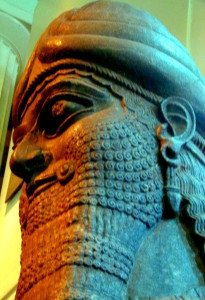
It is based upon The Epic of Gilgamesh which is a story worked up into its present form over four thousand years ago.

Prior to its re-incarnation as an epic poem it existed as five independant mythological episodes, which, as we traditionally split our April Workshops into five ritual dramas tends to suit our purposes rather well.

But why do we insist on revisiting the past in this way?

It is our contention that drama as we now have it derives from sacred drama as practised in the mystery temples of old where it was used to develop the psyche of the neophyte and initiate them into the sacred and secret…

View original post 12 more words

►Greek Mythology: “The Harpies, Winged Bird Monsters”.-

Gallery

Aquileana's avatar⚡️La Audacia de Aquiles⚡️

►Greek Mythology: “The Harpies, Winged Bird Monsters”:

guarda_griega1_3-1

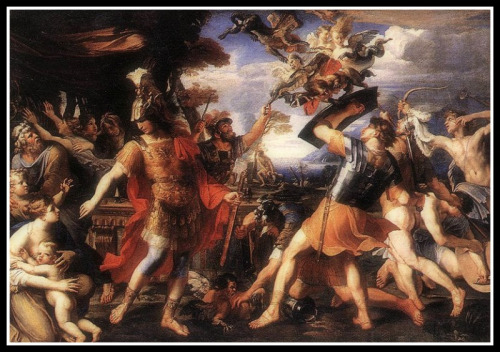
"Aeneas and his Companions Fighting the Harpies" by François Perrier (17th century). “Aeneas and his Companions Fighting the Harpies” by François Perrier (17th century).

guarda_griega1_3-1

_____________________________________________________________________

In Greek Mythology, a harpy was a female monster in the form of a bird with a human face.

They were  the spirits of sudden, sharp gusts of wind.

They were known as the hounds of Zeus and were sent by him to snatch away people and things from the earth.

The harpies were also they were agents of punishment who abducted people and tortured them on their way toHades’ domains. Like the Erinyes, the harpies were employed by the gods as instruments for the punishment of the guilty.

They seem originally to have been wind spirits. Their name means “snatchers”.

Aeschylus in The “Eumenides” (Third part of “The Oresteia”) referred to them as ugly winged bird-women. 

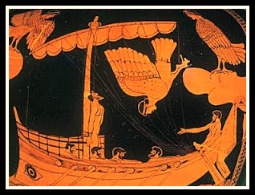
Odysseus-SirensLater Greeks transformed Harpies into Sirens, which can be seen in depictions of Odysseus on his…

View original post 633 more words

The collapse of universal human values

Standard

https://searchingthemeaningoflife.wordpress.com/

Today we find that the universal values ​​that so much effort and blood have conquered by the peoples of the earth through the ages have been weakened by the emergence of money as the first value. We have reached the point of the deification of money and material goods. The need to restart and strengthen the role of universal values ​​in our lives on the planet as a whole is imperative. Without these values, ​​only the downhill and destruction remain.

navagio-cosmos


The great embankment that holds, holds and holds humanity in a path of spiritual values, with the ideals and cultures, is our love and our attachment to universal human values: Peace, democracy, freedom, equality, justice, meritocracy, honesty, virtue. This embankment has been weakened and continues to weaken. We are living under the collapse of universal values.

The few (and there are everywhere and always a few) try to contain the torrent of the dropping of moral values. Almost always anonymous and unprotected from the moon of the nasty, when they reveal their dirt. Dedicated to their duty, with passion and love, and with unparalleled patience and will, they give it all for an idea, a dream: to make a better humanity.

brecht Trying to make this dream come true, it’d be quickly finding that the path of success is up and down. These are some of the   difficulties that Brecht ‘s view of how to fight falsehood and   ignorance:

“Whoever today wants to fight the falsehood and ignorance and write the truth has to overcome the least five difficulties:

  · They must have the courage to write the truth, although they who whimper everywhere, they are eliminated.

  · The cleverness of recognizing it, even if it is hidden in a     thousand ways.

· The art makes it, It’s a handy and effective weapon.

· The judgment to choose, those in their hands the truth will gain tremendous strength.

· It is wise to spread it among them.

 Universal human values ​​are the thread that knits human tissue. It is the fertilizer that helps in its development. And it is this human tissue that brings people together, joining them to a body, a mind, a soul, in order to overcome the obstacles, to make the necessary excess, for mankind to live a better life. Without the fabric of universal values, we can not overcome the great and devastating threats of our planet, nor lift humanity up and make it more human. Without the fabric of universal human values, ​​it is like building on the sand. Only with this web can mankind prevent all evil and make real the dreams and aspirations of all peoples of all time for a fairer and more human life.

Nothing of despondency, 
joint marriage, and the future invisible.

Isokratis

of Paraskevas N. Paraskevopoulos Professor of the NTUA

source:  http://anthologion.gr/