The Moon Eye!

Standard

There is once again another nerve-wracking experience (at least for me), hoping that the evil disappears from Iran and that the spring of freedom blooms for its people.

I have never supported wars, but this destructive machine must be stopped now, and the time has come!

Let’s read a lecture by my favourite teacher, Dr Jung.

I will read you some quotations from the book “The Secret of the Golden Flower”:
“The Golden Flower is the Light. What colour has the light?
One uses the Golden Flower as an image.
It is the true power of the transcendent Great ‘One’.
The phrase, ‘The lead of the water-region has but one taste’, refers to it.”
Here, the writer speaks of the substance of which the Golden Flower is made, which is found in the water region, the bladder, in Svadhisthana.
This is the localisation in the psyche which is made entirely of animal substance, the spirit of weight which imprisons us and is described as the most inferior thing.
This is the heaviness which Nietzsche tried to dance away.
He says in “Zarathustra” that the stone is thrown high indeed, but it must fall, and on the thrower.
This is the lead of the water region; it has one meaning: that the Golden Flower grows out of it.
This is the primordial substance out of which the Lapis, the Golden Flower, or the philosophers’ gold is made.
These come from the very commonest things.
The old alchemist said, “If the huckster in the market knew that the things which he sells so cheaply are the materials from which the
philosopher’s gold is made, he would raise their price”, but he does not go on to tell us how to extract the gold.
We are told that it is to be found in old privies and manure heaps, but that “Many have worked on manure heaps and have found – nothing”.
“In the Book of Changes, it is said: Heaven created water through the One. That is the true power of the Great One. If a man attains this One, he becomes alive; if he misses it, he dies. But even if a man lives in the power [air, prana) He does not see the power [air], just as Fishes live in water but do not see the water.”

Image by Craig Nelson

This is the Tao in Chinese philosophy; it is always timeless and is the beginning and the end. Out of Tao comes water – that is the water region.
“A man dies when he has no life-air, just as the fishes are destroyed when deprived of water.
Therefore, the adepts have taught the people to hold fast to the primal and to guard the One; it is the circular course of the Light and the protection of the centre.”
Light is symbolic for consciousness; in doing the “circumambulatio”, you must follow the direction of light, if you go the other way, it is black magic.
” If one guards this true power, one can prolong the span of life, and can then apply the methods of creating an immortal body by ‘melting and mixing’.”
If you are attentive, the diamond or immortal body is formed.
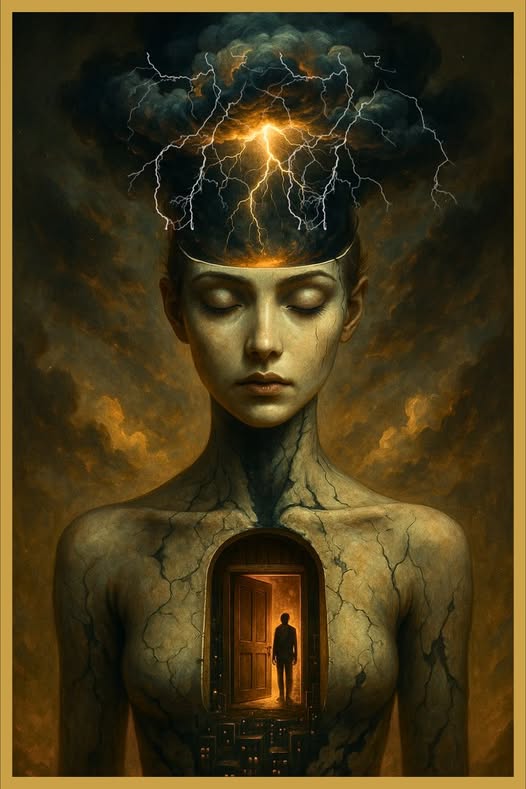
“The work on the circulation of the light depends entirely on the backwards flowing movement, so that the thoughts are gathered together [the place of Heavenly Consciousness, the Heavenly Heart]. The heavenly heart lies between Sun and Moon (i.e. the two eyes),”
The right eye is the sun eye, and the left the moon eye. This heavenly heart, this centre, lies between the two eyes. “The Book of the Yellow Castle says: In the field of the square inch, of the house of the square foot, life can be regulated. The house of the square foot is the face. The field of the square inch is the face: what could that be other than the Heavenly He art? In the middle of the square inch dwells the splendour.”
The Heavenly Heart is placed on the forehead…

~Carl Jung, ETH Lecture 12July1935, Pages 238-241.
Via Carl Jung Depth Psychology 🙏

Just Taking a Breath!

Standard

Since I will be away from tomorrow until Saturday, visiting a friend and attending a concert together, I’ll just say hello and goodbye with my best wishes.

It will be a welcome change of pace in these turbulent times, though my friend is also Iranian, so there will definitely be some deep discussions.

Dr Jung’s philosophy (thoughts) suggests that a “break” often serves as an invitation to explore the unconscious, encouraging a shift from merely doing to a state of being.

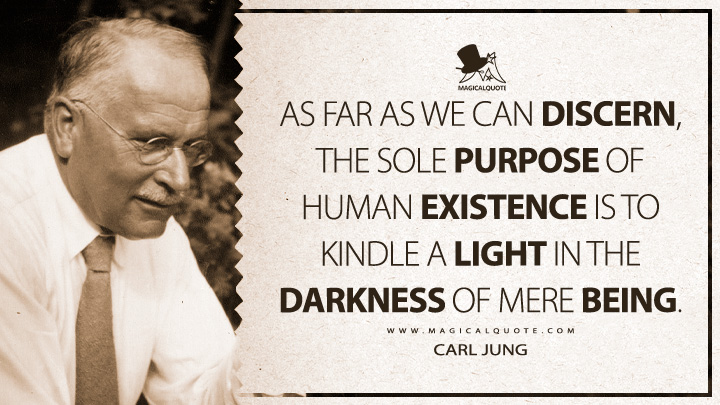
“As far as we can discern, the sole purpose of human existence is to kindle a light in the darkness of mere being”.

Dr Jung’s insight about the nature of existence is thoughtfully highlighted at the conclusion of his Life and Death chapter in Memories, Dreams, and Reflections:

Our age has shifted all emphasis to the here and now, and thus brought about a daemonization of man and his world.
The phenomenon of dictators and all the misery they have wrought springs from the fact that man has been robbed of transcendence by the shortsightedness of the super-intellectuals.
Like them, he has fallen victim to unconsciousness.
But man’s task is the exact opposite: to become conscious of the contents that press upward from the unconscious.
Neither should he persist in his unconsciousness, nor remain identical with the unconscious elements of his being, thus evading his destiny, which is to create more and more consciousness.
As far as we can discern, the sole purpose of human existence is to kindle a light in the darkness of mere being.
It may even be assumed that just as the unconscious affects us, so the increase in our consciousness affects the unconscious.
~Carl Jung, MDR, Page 326.(Via carljungdepthpsychologysite.blog, with thanks)


The band we’re meeting is called UFO, and they’re roughly my age, although the videos below are from their earlier years.

Do it well, do it better. 🤗💖🙏

Jiddu Krishnamurti: The Philosopher Who Rejected Authority

Standard

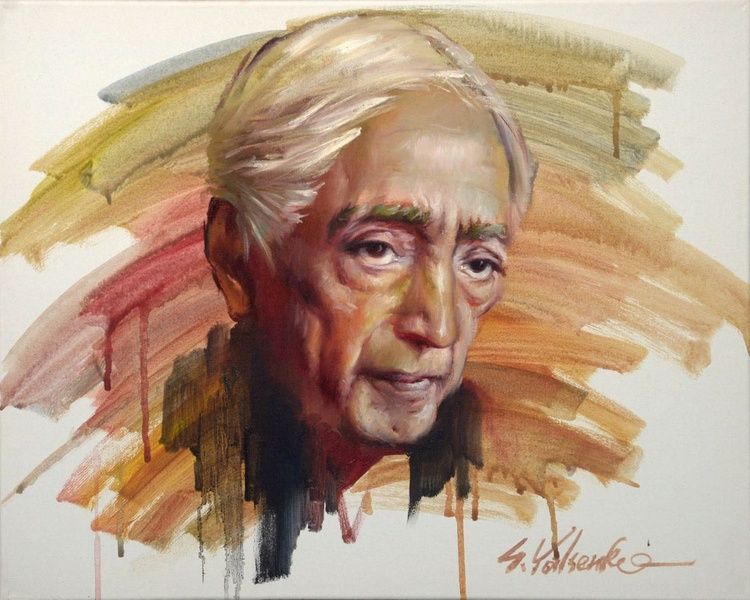
I think it’s time to set aside our current critical perspective on life for a moment and take a deeper look. Jiddu Krishnamurti can gently guide us and help us see things anew.

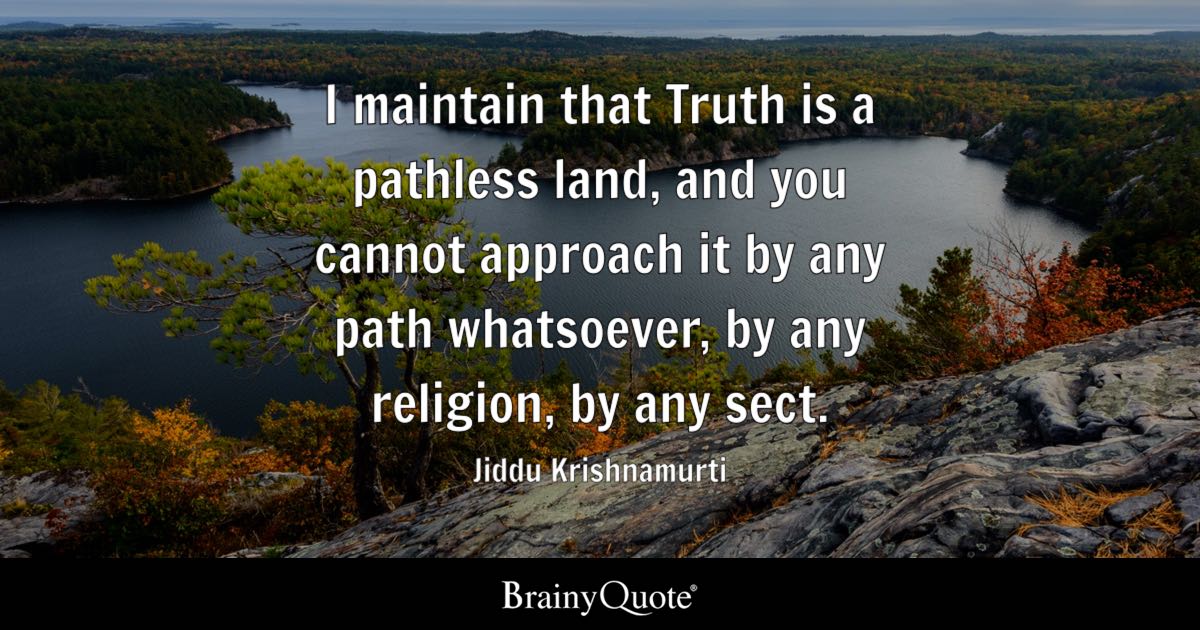
Jiddu Krishnamurti (1895-1986) was a prominent spiritual teacher and philosopher, famous for his rejection of organised religion, gurus, and spiritual authorities, including his own. Born in colonial India, his life changed when members of the Theosophical Society recognised him as the expected “World Teacher.” In 1929, at age 34, he disbanded his organisation, stating that “truth is a pathless land” and no belief system ensures understanding. Over more than sixty years, Krishnamurti travelled globally, giving talks on the mind, consciousness, and suffering. His teachings emphasised direct observation and awareness, urging questioning of authority to achieve psychological freedom. He believed that the separation between the observer and the observed causes conflict. He encouraged living without fear, exploring love and relationships, and transforming consciousness. His legacy includes books, talks, and schools, inspiring individuals to seek truth from within rather than externally.

Jiddu Krishnamurti’s Parables and Poems

Jiddu Krishnamurti’s parables and poems are central to his teachings, offering glimpses of truth through imagery and metaphor rather than through direct argument. These works appeal to intuition and feeling, promoting immediate perception, often inspired by nature—such as a flower blooming or a bird flying—while highlighting his core idea that truth is perceived directly rather than through thought or belief. They do not explain but point, creating space for sudden insights beyond words. His poems share this sense of immediacy; they are simple, unembellished, emerging from attentive presence—watching, listening, and being aware. Their language is calm, observing without a separate observer, often dissolving the boundary between seer and seen, reflecting his teaching that authentic perception occurs only when the self is absent. These works are essential because they echo his main message: transformation arises through direct insight, not through knowledge. Instead of enriching conceptual understanding, they invite us to set aside concepts, to observe, listen, and remain present without interpretation. His literary works might be his most genuine expression—offering not solutions but gateways to experience.

Once upon a time, when there was great understanding and in a world full of rejoicing, there lived a gentlewoman full of years. One day, she found herself in a temple before an altar made by human hands. She was crying bitterly to heaven, and none was there to comfort her, till in the long last, a friend of God took notice of her and asked the reason for her tears. “God must have forgotten me. My husband is gracious and well. My children are full and strong. Many servants are there to care for us. All things are well with me, and mine own. God has forgotten us.” The friend of God replied, “God never forgets His children.” When she came home, she found her son dead. She
never cried. “God remembers me and mine own.”

Every step we take in life lays the foundation for the experiences we gather. Krishnamurti soon recognised these and attempted to share his experience with us.

A HYMN

I have stood in Thy holy presence. I have seen the splendour of Thy face. I prostrate at Thy sacred feet. I kiss the hem of Thy garment, I have felt the glory of Thy beauty. I have seen Thy serene look.
Thy wisdom has opened my closed eyes. Thine eternal peace has transfigured me.
Thy tenderness, the tenderness of a mother to her child,
The teacher to his pupil, I have felt.
Thy compassion for all things, living and non-living, the animate and inanimate, I have felt.
Thy joy, indescribable, has thrilled me.
Thy voice has opened in me many voices.
Thy touch has awakened my heart. Thine eyes have opened mine eyes.
Thy glory has kindled the glory in me.
Master of Masters, I have longed, yea, yearned for this happy hour, when I should stand in Thy holy presence.
At last, it has been granted unto me.

I am happy. I am peaceful, peaceful as the bottom of a deep, blue lake. I am calm, calm as the snow-clad mountain-top above the storm clouds.
I have longed for this hour; it has come.
I shall follow humbly in Thy footsteps along that path
which Thy holy feet have trodden. I shall humbly serve the world, the world for which
Thou hast suffered, sacrificed and toiled. I shall bring that peace into the world. I have longed for this happy hour; it has come.

Thine image is in mine heart.
Thy compassion is burning in me.
Thy wisdom guides me.
Thy peace enlightens me.
Thy tenderness has given me the power to sacrifice.
Thy love has given me energy.
Thy glory pervades my entire being.

I have yearned for this hour; it has come, in all the
splendour of a glorious spring. I am as young as the youngest. I am as old as the oldest.
I am happy as a blind lover, for I have found my love. I have seen.
I can never be blind, though a thousand years pass. I have seen Thy divine face everywhere, in the stone, in the blade of grass, in the giant pines of the forest,
in the reptile, in the Hon, in the criminal, in the saint. I have longed for this magnificent moment; it came and

I have grasped it.
I have stood in Thy presence.
I have seen the splendour of Thy face.
I prostrate at Thy sacred feet.
I kiss the hem of Thy garment.


Thanks a lot for visiting and for your time in reading! 🙏💖🙏

Stupidity: Humanity in Reverse Function!

Standard
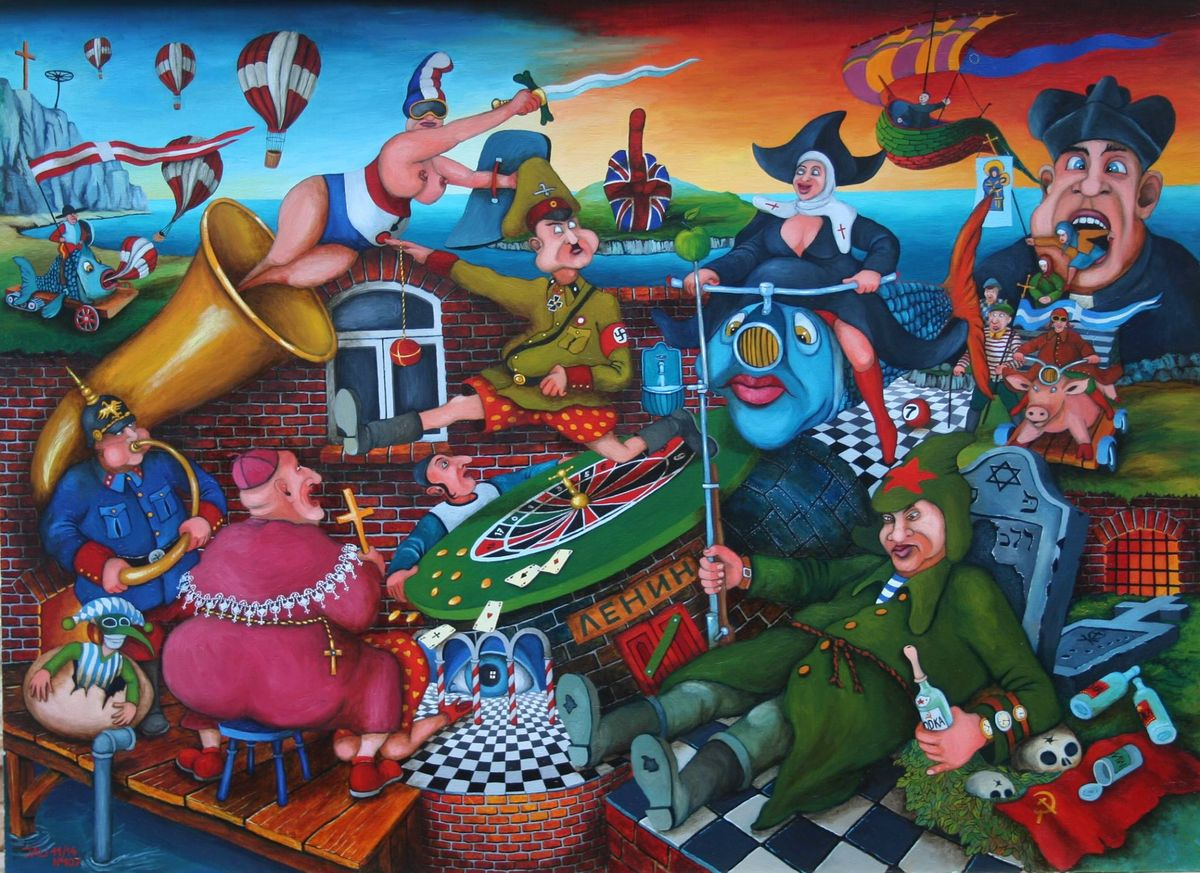
Jacek Lipowczan – “Crazy World”

With a warm greeting to all my friends, I didn’t want to keep writing critical articles repeatedly, although I see no way to look away from all these terrible happenings around me, and around you all, for sure.

Although this topic is quite old—one that Al and I came across in our youth as we distanced ourselves from the masses—we initially believed it was a characteristic of the Third World due to inadequate education systems. However, later observing in the West, we realised it is very common there as well. Therefore, I decided to analyse it, at least for my own understanding, to explore how it might be possible:

As I observe the world and its phenomena, I repeatedly notice the absence of consideration, recklessness, and ignorance shown by many people, and above all, the lack of individuality.

It is not a matter of living in the third world, which we might argue is due to poor education or oppressive rulers! That already happens in the free world!

I think people are getting lazier, aiming for a more comfortable life without the stress of thinking, decision-making, or solitude, which leads to a loss of their individuality. As AI advances, the significance of the self-mind diminishes; the artificial mind assumes creative functions, rendering learning unnecessary.

They often prefer to be part of a crowd that takes them somewhere, no matter the outcome. This reduces the need to use the mind, enabling everyone to enjoy life effortlessly and without deep understanding; making judgments becomes simpler.

I’ve often met people with such judgments; they use these to solve problems that require thought or research to discover the truth, and then they feel proud of their ingenuity.

In this chaos, a deep examination of issues quickly leads to dismissal, labelling as an outsider and a foreigner, and, subsequently, isolation.

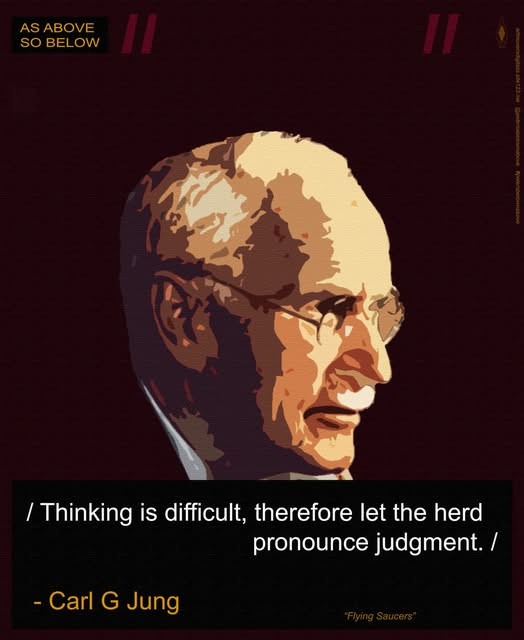
Benjamin Franklin’s expression is quite adept: “We are all born ignorant, but one must work hard to remain stupid.”!

The main profit, naturally, goes to the politician. Populism comes to the fore; the bigger the mouth and the louder the voice, the more it draws the crowds, because there is a greater resemblance among them; the stupid always gravitate towards the same type!

I am witnessing the severe turmoil in Iran. The son of Iran’s late Shah, echoing President Trump, urged people to protest against the Mullahs’ regime. “We are coming!” they both declared. Many took to the streets, risking their lives, and thousands have lost their lives. Yet, no one has offered them support. Now, helping the Iranian people is forgotten, as President Trump proudly discusses a deal with the murderous regime!!

One no longer faces the agony of decision – no more being spoiled for choice! They lose their individuality and dreams. Imagination wanes, and visions grow shallow. And those who manage to protect their minds from such propaganda and attempt to stay aware of their own thoughts will be marginalised and become outsiders.

The loneliness began with the experiences of my early dreams, and reached its climax at the time I was working on the unconscious.
If a man knows more than others, he becomes lonely.
But loneliness is not necessarily inimical to companionship, for no one is more sensitive to companionship than the lonely man, and companionship thrives only when each individual remembers his individuality and does not identify himself with others.
~Carl Jung, MDR, Pages 355-356

In this video, the narrator references Carlo M. Cipolla‘s ideas on stupidity and on people deemed stupid. This seems to serve as an overall summary.

“Stupidity is an indiscriminate privilege of all human groups and is uniformly distributed according to a constant proportion.” And, “non-stupid individuals underestimate the potential for damage by stupid people and fail to recognise the cost of dealing with them.”
~Carlo M. Cipolla

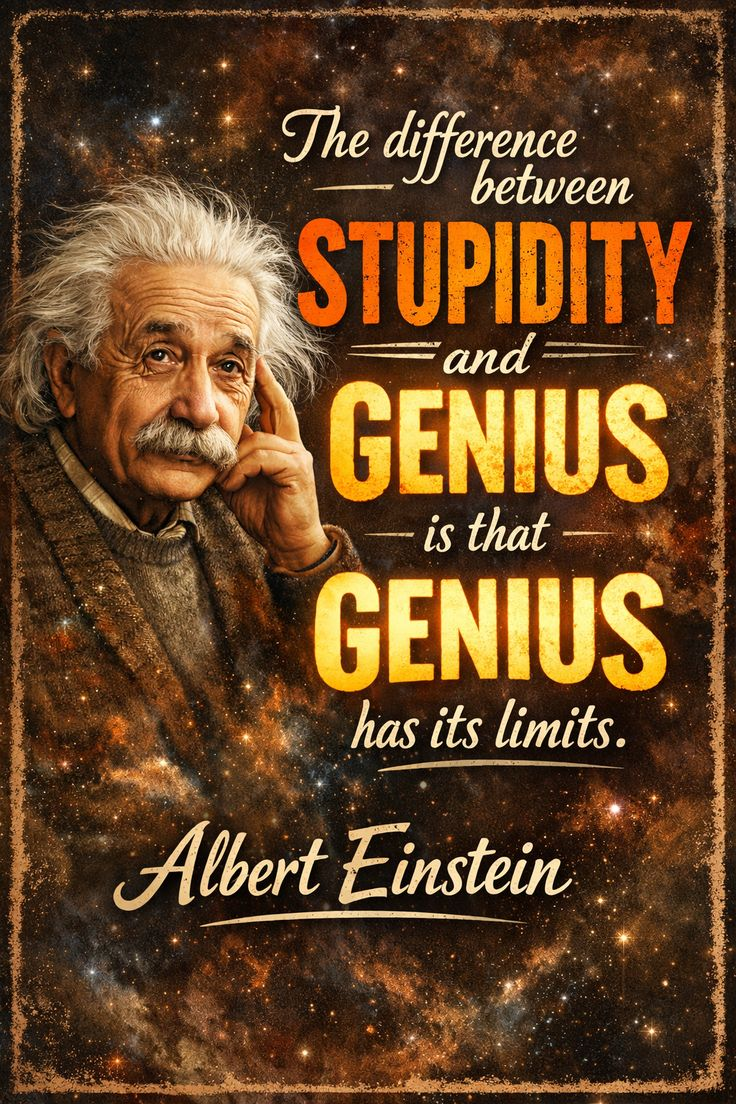
“The difference between stupidity and genius is that genius has its limits”!! ~Albert Einstein

I must admit that I am at least pleased to be here, among such wonderful friends, who give me hope for a better future for humanity! Take care and stay vigilant.🙏✌️