
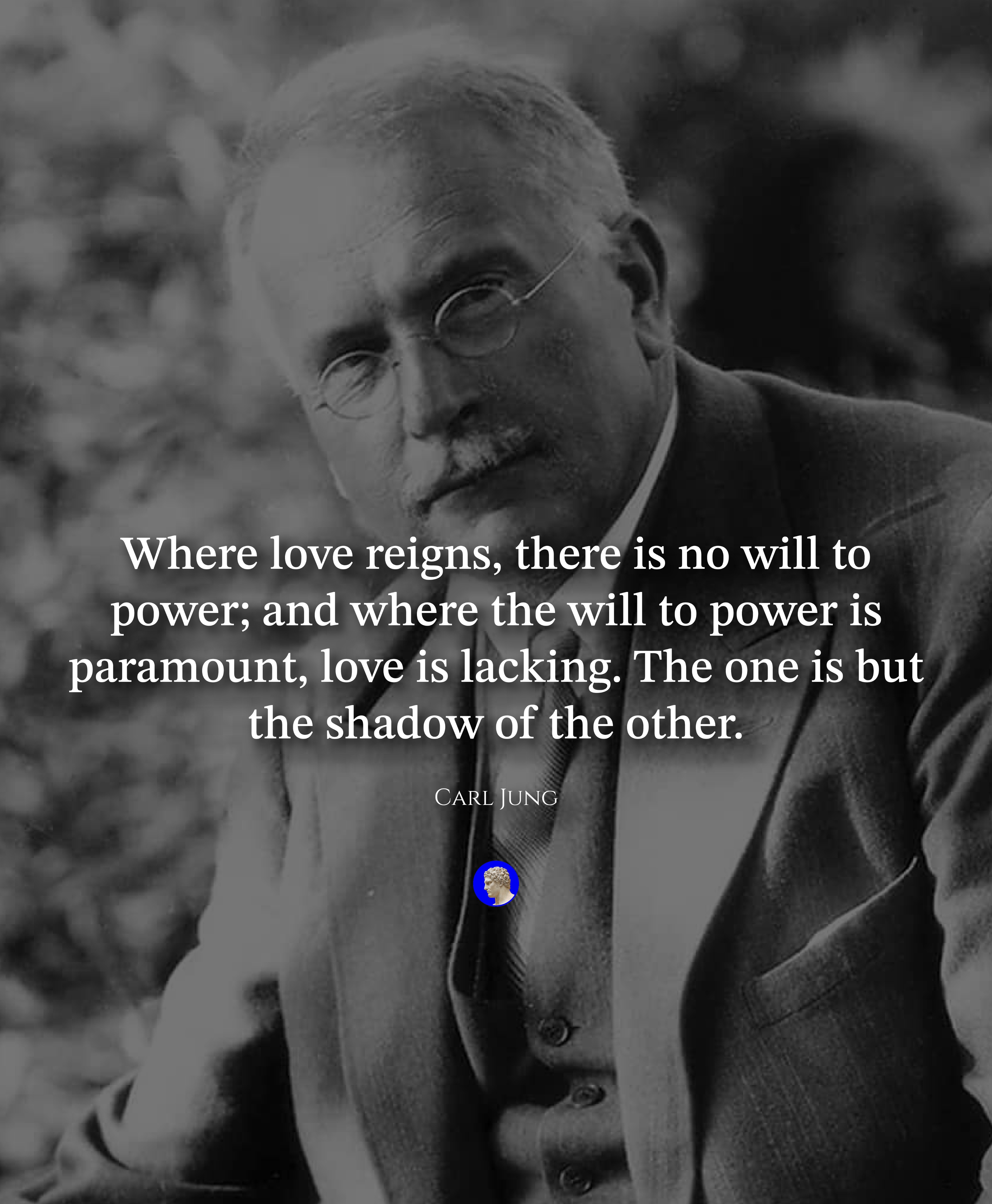
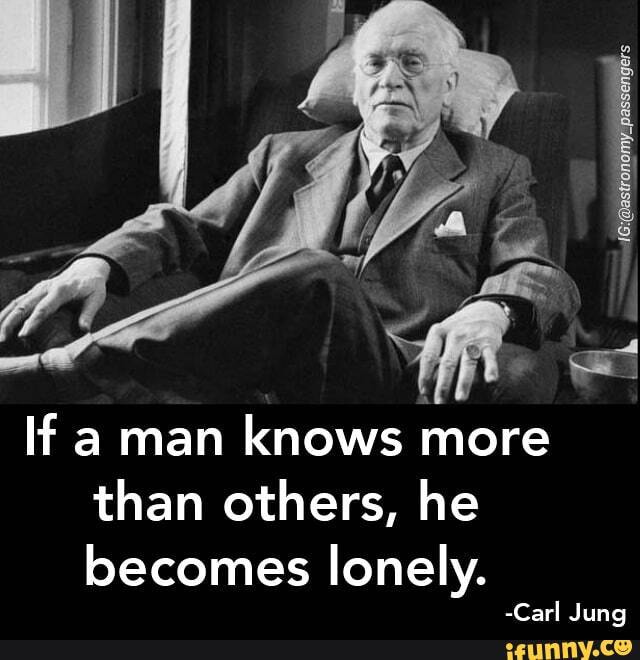
Dr. Jung once expressed his sadness because he wasn’t sure if his message reached people and if they comprehended it. He was an extraordinary man with incredible imagination and insight into the world, people, and their inner unknown. However, his genius mind was too vast for many to understand, and he often felt alone. He also said that if a man knows more than others, he becomes lonely!
While translating and publishing the series about Mana-Personality, I often encountered Jung’s humble, honest, and profoundly wise words. I thought it would be great to share some of his explanations about his intentions and efforts to help us better understand his message.
via Lewis Lafontaine
His works, as we know, have become very popular now. I noticed it when I kept trying to buy more of his books (complete works 1, 2, 3, etc.). They are (for me!) quite expensive. Of course, I may have downloaded some of them from the internet, but as I prefer to hold the book in my hand, I reached for the collections he published in such small but fine pieces. One of them is this book, “The Relation Between “I” and the Unconscious”, which I have shared some translations. This time, I want to share with you the preface of this book to get to know him better. I found his explanation with such honest words fascinating and touching, and I hope you will feel the same way I did.
Preface to the Second Edition
This little book originally arose from a lecture that I published under the title ‘La Structure de l’Inconscient’ (cf. The Structure of the Unconscious, CW 7.) in the Archives de Psychology in December 1916 (vol. 16, p. 152). It was also published under the title ‘The Conception of the Unconscious’ in my ‘Collected Papers on Analytical Psychology’ (2nd ed., 1917). I mention this fact because I want to show that the present work is not a one-off phenomenon but the expression of an effort that has extended over decades to understand the peculiar character and course of the > drame intérieur <, the process of transformation of the unconscious soul, and to present it – at least in its main features. This idea of the independence of the unconscious, which distinguishes my view so fundamentally from that of Freud, dawned on me as early as 1902 when I was studying the psychological development of a young somnambulist (cf. On the Psychology and Pathology of So-called Occult Phenomena, GW 1.).
In a lecture at the Zurich town hall, >The Content of Psychosis< (CW3), I approached this idea from a different angle. In 1912, I presented some of the main parts of the process using an individual example, and at the same time, I showed the historical and ethical parallels of this apparently universal psychic process (cf. Transformations and Symbols of the Libido, 1912. See also the 1952 version, which was extensively revised and expanded by Jung: Symbols of Transformation, GW 5.). In the essay mentioned above, La Structure de l’Inconscient, I attempted for the first time to give a summary of the whole process. It was a mere attempt of whose inadequacy I was only too convinced. The difficulties of the material were so great, however, that I could not imagine that I could do them any justice by the explanations in a single essay. I, therefore, left it at the ‘preliminary report’, with the firm intention of taking up this subject again at a later opportunity. Twelve years of further experience enabled me then in 1928 to thoroughly revise my formulations of 1916, and the result of these efforts was this present little book. This time, I tried mainly to describe the relationship of ego consciousness to the unconscious process. Following this intention, I have been particularly concerned with those phenomena which can be described as reactions of the conscious personality to the influences of the unconscious. In this way, I have attempted to approach the unconscious process indirectly. However, these investigations have not yet reached a satisfactory conclusion, as the answer to the main question of the nature and essence of the unconscious process has not yet been found. I did not dare tackle this difficult task without the greatest possible experience. Its solution is reserved for the future.
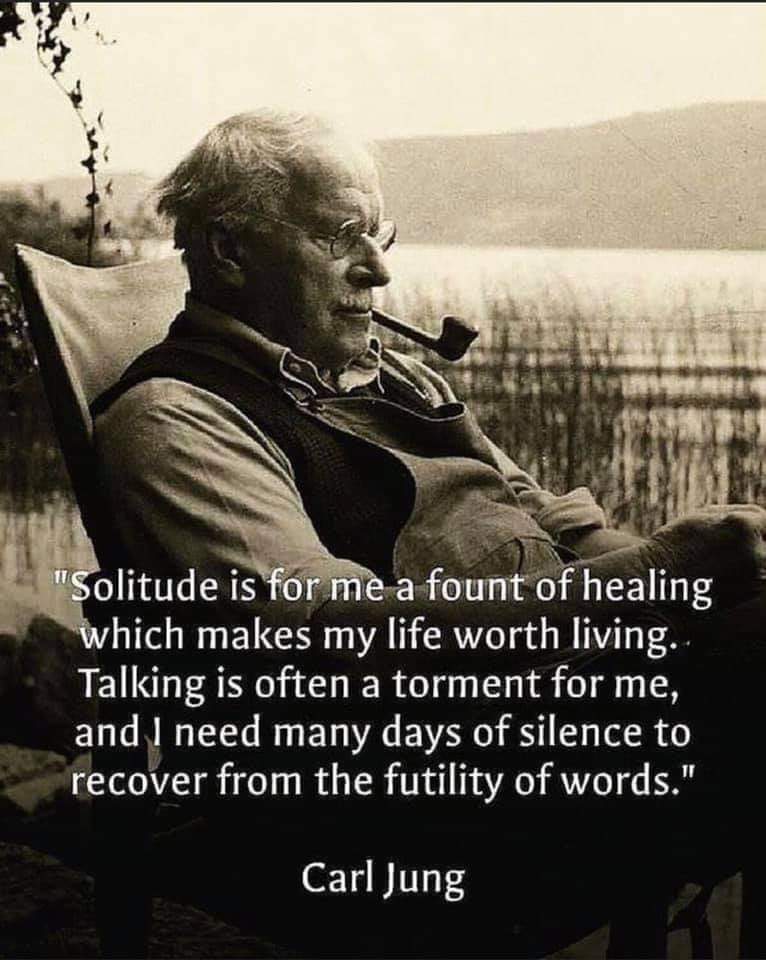
The reader of this booklet will forgive me if I ask him to regard it – when he reads it – as a serious attempt on my part to intellectually grasp a new and as yet unexplored area of experience. It is not a matter of a sophisticated system of thought but of formulating psychic experience complexes, which have never before been the subject of scientific consideration. Since the soul is an irrational given and cannot be equated with a more or less divine reason according to the old model, it is not surprising that in psychological experience, we very often come across processes and experiences that do not correspond to our reasonable expectations and are consequently rejected by our rationalistic consciousness. Such an attitude is, of course, unsuitable for psychological observation because it is highly unscientific. One must not try to dictate to nature if one wants to observe its undisturbed workings.
I am trying to summarize 28 years of psychological and psychiatric experience, which is why my little book can make a specific claim to being taken seriously. Of course, I could not say everything in this one presentation. The reader will find a continuation of the last chapter in the book >The Secret of the Golden Blossom< (see the commentary on The Secret of the Golden Blossom, GW 13.), which I published together with my late friend Richard Wilhelm. I did not want to omit to refer to this publication because Eastern philosophy has been concerned with inner psychological processes for many centuries and is, therefore, of inestimable value for our psychological research precisely because of the much-needed comparative material.
In October 1934 Carl Gustav Jung
In the end, here is a short description of uttering one’s acknowledgement based on knowing and believing. Socrates said, “I know that I don’t know!” Let’s hear Dr. Jung’s words about this!
Thank you all for being there.🤗🙏💖
 lampmagician
You have described my feelings already, my lovely Jeane. Thank you!🤗🙏💖
LikeLike
I got it! It seems I am confused like you are, my adorable teacher!😅🥰🖖
LikeLike
Today we went for a long walk (hours!) and on the way I was discussing Carl Jung and how meeting him (for the 2nd time in my life) the month before my 45th birthday, changed my life completely. I’ve been a student of his now for the past 16 years and there’s so much, still, for me to learn.
I only have a few of his books, including The Red Book (a 50th birthday present, lucky me!), but we’re so fortunate that there are so many Jungian writers, podcasters, bloggers (including yourself!) filmmakers and artists who share their work and soul. Thanks for sharing this rich post with us Aladin. Love and light, Deborah.
LikeLiked by 3 people
Ah, talking of Jung! It is wonderful! I must thank Al, who brought me teaching his name and thoughts those days in the dark corner of our exciting life in Iran. I can be with you in this very moment, my lovely Deborah. Thank you.🙏💖🦋🙏💖
LikeLiked by 2 people
Wonderful to listen to that little snippet from the great man!
LikeLiked by 1 person
That’s it! A wise answer to a tricky question!😉🤗💖
LikeLiked by 1 person
In 1967, I met my teacher Anthony Damiani with his other students who were interested in meditation and occultism. He offered classes in a bookstore in Ithaca, NY before we built our meditation and study center. The students were mostly college students and we fell in love with Anthony but he soon realized we didn’t have a psychological language. That’s where Jung came in.
Anthony would sometimes spend a two hour class on one paragraph or even one sentence. Did I get it? I thought I did, but now I don’t know. Vic was a better student and thinker, but I was dedicated to meditation. Jung was hard going and dense, but lso illuminating and life changing for the students. Anthony also taught astrology which was a practical application of the archetypal realms. I could never had learned much Jungian Psychology on my own without being held by the hand by Anthony and guided through ideas slowly and with patience. He was never in a hurry. How long did we spend on ‘The Secret of the Golden Flower.’ It may have been years.
I never rose to the level of being a “good” or learned student with deep understanding. Still, I stayed and absorbed my world view and so much wisdom being handed to me. I was dedicated to meditation and the passages we studied in classes. Thank you for bringing me to those days. Behind me, Jung’s volumes line the shelves of my bookcase (they weren’t so ridiculously expensive then). Inside are penned notes, mostly in Vic’s handwriting and sometimes in mine. I found my teacher when I found Marion Woodman who was more experiential with Jung’s philosophy. My life has been blessed with incredible teachers. Blessings all around.
LikeLiked by 1 person
Wow, my lovely friend, I am speechless! Thank you so much for sharing your worthy memories with me. I appreciate it very much. You have had such precious teachers and, with Vic, such lovely, wise company. Your kind words mean a lot to me. Thanks and blessings.🙏🙏💖🦋
LikeLike
“One must not try to dictate to nature if one wants to observe its undisturbed workings.“
Man has dictated much to nature, for his needs, pleasures and money.
Now, nature’s workings are disturbed, and it is called climate change. I wish Jung was here to see this disturbance. He’d have something to say.
Interesting that he studied Eastern philosophy for comparison value. In my way (and you in yours) have done that, too.
Unconscious, reserved for the future would be a future ever unfolding, even for Jung. However, he would have continued, if not for man’s ephemerality.
I know most of what I know of Jung because of you, Aladin.
So, some of my comments might be off the mark, but I try.
Thank you!
💓🫶🪶🪷💙
LikeLiked by 1 person
Honestly, when I came to that sentence you mentioned, I thought of you! If you might remember, we have often talked about that issue. However, I believe Jung recognized the human way of living in those days and suffered enough.
By the way, you have never been off the mark, my dearest friend. In truth, we all have a “Jung” inside ourselves; we only must find him out and wake him up! I always appreciate your valuable words and comments. 🤗🙏💖🌷
LikeLike
What a beautiful post for this great name, Thank you, Love, nia
LikeLiked by 1 person
Oh, thank you, lovely Nia. I highly appreciate your dropping by. Love back to you, and thank you!🙏💖🌹
LikeLiked by 1 person
This is great! His words really got me thinking.
LikeLiked by 1 person
I achieved my aim, then!😉😅 Thank you so much, dear friend.🙏👍
LikeLiked by 1 person
You’re very welcome!
LikeLiked by 1 person
Great post and really interesting comments
I found the video you shared just fabulous
LikeLiked by 1 person
Heartfelt thanks, Luisa, dear friend, for looking through it. It means a lot to me.🥰🙏🌹
LikeLiked by 1 person
As always, you’re more than welcome, my dearest friend 🙏❣️🙏
LikeLiked by 1 person
🤗😘🙏🌹
LikeLiked by 1 person
It’s hard to choose a favorite from among these great quotes! I relate so much. Can’t get enough Carl Jung, ever. I love psychology.
LikeLiked by 1 person
There is no choice! His words are gold. Thank you, EF, my friend.🖖
LikeLike
⚱️💛🧘♂️🖖
LikeLiked by 1 person