
Translated from volumes published by Lorenz Jung based on the edition “Gesammelte Werke” dtv.de The Symbols of Transformation (1952) and Aion (1950)

With warm regards, I would like to share another section of Jung’s concept of the Mana-Personality (The past sections: here, here, here and here). In this part, he discusses a sequence of dreams and, in the case of neurotics, a series of fantasies and how these are concealed in our subconscious and brought to light through dreams. Another topic is the complex, which also was a crucial subject for Sigmund Freud. The complex is a natural component of everyone’s inner self that accumulates from childhood to adulthood, which nobody can avoid. We should strive to explore our inner selves to untangle their knots- this contributes to the effort of comprehending the unconscious and bringing it into consciousness.
I firmly believe Dr. Jung holds the key to the recovery and healing process for every individual and, consequently, our entire society. His effort to identify and explain the main problems, which are timeless and universal, is truly commendable and offers valuable lessons for us all.
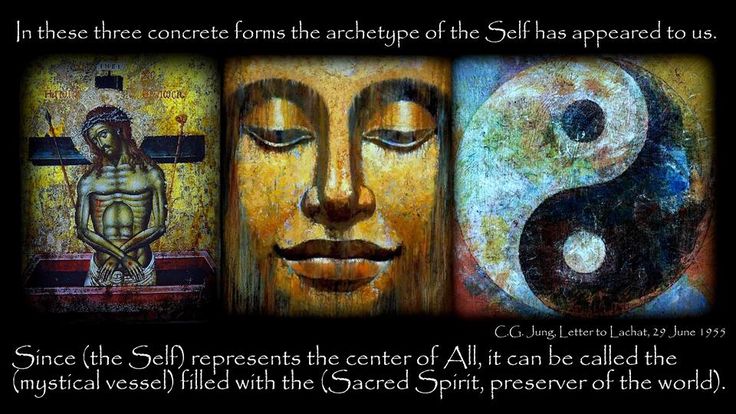
That is why I stop after establishing the fact that in the Occident, this archetype, or this “God-image,” is seen in Christ, in the Orient, in the Buddha, or in the form of Tao (which is not a personification but a metaphysical hypostasis).
In these three concrete forms, the archetype of the self appears to us.
Since it represents the centre of All, it can be called the vas mysticum, filled with the Spiritus Sancta servitor mundi.
Carl Jung Depth Psychology
Letters of C. G. Jung: Volume 2, 1951-1961
The title image: Gianluca “Tenia” Gambino: The Voice of Redemption
Individuation
The Mana Personality (P5)
Since it is impossible for me to present the reader with such a series of images, some of which are very long, in detail, I would ask them to be content with the few examples and otherwise to trust my assertion that these are logically constructed, goal-oriented connections. I use the word “goal-oriented” with a certain hesitation, however. This word should be used with caution and with restrictions. In the case of mentally ill people, one can observe a series of dreams and, in the case of neurotics, a series of fantasies that run almost aimlessly within themselves. The young patient whose suicidal fantasy I mentioned above (The mentioned dream about his bride from the last post) is well on the way to producing a series of aimless fantasies if he does not learn to take an active part and consciously intervene. Only in this way can a direction be achieved towards a goal. The unconscious is a purely natural process, on the one hand, without intention but on the other hand, with every potential direction characteristic of every energetic process. But if the conscious mind actively experiences each stage of the process and at least understands it vaguely, the following image begins at the higher level achieved as a result, and this is how direction is created.
The next goal of dealing with the unconscious is to reach a state in which the unconscious contents no longer remain unconscious and no longer express themselves indirectly as anima and animus phenomena, i.e. a state in which the anima (and the animus) become a function of the relationship to the unconscious. As long as they are not this, they are autonomous complexes, that is, disruptive factors that break through the control of consciousness and thus behave like real troublemakers. Because this is such a well-known fact, my term ‘complex’ has also become common in everyday language. The more ‘complex’ someone has, the more obsessed he is, and if one tries to create a picture of the personality that expresses itself through his ‘complexes’, you may come to the conclusion that it must be a hysterical femininity – hence anima! But if he now becomes conscious of his unconscious contents, not as factual contents of his personal unconscious, but as fantasies of the collective unconscious, he gets to the roots of his complexes and thereby triggers his obsession. The anima phenomenon then ceases.

But that certain overpowering force that caused the obsession – what I cannot shake off must be superior to me in some way – should logically disappear with the anima; one should become >complex-free<, psychologically house-trained, so to speak. Nothing should happen that the “I” does not allow, and if the “I” wants something, nothing should be able to interfere. This would secure the “I”, an unassailable position, the steadfastness of a superman or the superiority of a perfect sage. Both figures are ideal images, Napoleon on the one hand and Lao Tzu on the other. Both figures correspond to the ‘extraordinarily effective’ concept, which is the term Lehmann uses in his well-known monograph to explain Mana (Lehmann: Mana, 1922). Therefore, I simply call such a personality a Mana Personality. It corresponds to a dominant of the collective unconscious, an archetype that has developed in the human psyche since time immemorial through appropriate experience. The primitive man does not analyse or explain why another is superior to him. If he is smarter and stronger than him, he has Mana; that is, he has greater power; he can also lose this power, perhaps because someone has stepped over him in his sleep or someone has stepped on his shadow.
To be continued! 🙏💖
 lampmagician
Making the unconscious, Conscious!.. Even “Mana” is but another archetype of the unconscious. Mana is, however, a sign of progress/growth within the individual. But it is not the end! It is not the ideal form of a person. Correct?
Upon reading this, Part 5 – I propose a comparison / analogy… This Mana stage of the individuation process, is like a meditation, but for training / taming the UNCONSCIOUS. Whereas “Mindfulness” meditation is for training / taming the CONSCIOUS. Does that make sense?
One classical form of Buddhist meditation is known as “Vipassana” or gradualism. The person focuses on the breath and over time improves attention, leading to deeper insights about the nature of consciousness itself.
In the advanced stages of vipassana meditation, the person is described as a ‘master who chases away incoming thoughts and feeling, or other distractions with Lightning quickness!’👋🧘…
…Similarly, the advanced Jungian (who also likely meditates!) ‘manages his/her unconscious archetypes – The shadow, The anima. He/she controls them! Uses them consciously. Does not suffer them as he did before. Is not controlled by them as he was before. He takes control.
LikeLiked by 1 person
Correct, my friend! It is not the end and not the ideal, but it is mighty and must be handled carefully. Meditation always makes sense to explore our inner selves and investigate every aspect of the unknown.
Vipassana, or “seeing things as they truly are,” can be a helpful method for gaining inner knowledge (command)—i.e., controlling all the happenings! Jung had said, “The philosophy of the East, although so vastly different from ours, could be an inestimable treasure for us, too, but in order to possess it, we must first earn it.”
Thank you, my wise friend, for your insightful comment.🙏🤙
I remember when I was an actor, performing on stage. I had to learn yoga to be conscious of my body while acting, and I learned how to control my breathing. Mindful breathing is an important matter that many people do not know about!😉🖖
LikeLiked by 2 people
Mindfulness is one of those inestimable treasures of the East. Your experience with stage-acting is fascinating. I took a beginner acting class in film school and gained appreciation for both the Mentality and Physicality of acting. Mindfulness is surely good for both, isn’t it!
LikeLiked by 1 person
You hit the point, mate! 😉🤙🌟
LikeLike
Thank you so much for sharing this section, which as always I found interesting and fascinating. 🙏
Wishing you a beautiful weekend 🌹🌹🌹
LikeLiked by 1 person
Thank you, as always, for your kind support, my lovely Luisa. My weekend is always dedicated to my family, so it can never be bad!!😉😅 I wish you a successful week ahead.🤗💖🙏
LikeLiked by 1 person
I thank you a lot for your kind reply and wish you a lovely new week!
LikeLiked by 1 person
Thank you so much Aladin for continuing your Jungian themed series on the Mana personality. Even though I’m still struggling to make sense of this complex topic, I learn something new every time you post. For example today I learnt that by finding more balance with this archetypal aspect, it plays an important part on our individuation journeys. In other words, our paths to wholeness, where each time we take one straight step forward, we seem to be taking another ten spiralling steps backwards. Oh, what magick and mystery life truly is! Love and light, Deborah.
LikeLiked by 2 people
You are too humble, my lovely angel! Your analysis on this topic has taught me a lot, and you always take the best goal out of this magical journey. I appreciate it.🙏💖🌹
LikeLiked by 1 person
Thank you for sharing this, Aladin. It’s an excellent description of the Mana personality and has helped me understand it better. I have Jung’s complete works but haven’t read most of them. It really helps to have you post them here!! With gratitude, Jeanie
LikeLiked by 2 people
Your encouraging words always push me forward to do more, Jeane, my dear teacher. This book I took in hand to translate is a treasure for me because it doesn’t (still) belong to his collective works but is his self-production, like a private letter, and I am so happy to read and translate it. He wrote a preface at the beginning that I would lovingly translate to share. It is so heart-touching.🙏💖💕
LikeLike
Fantastic post! Thank you for sharing!
LikeLiked by 1 person
You made my day, my friend. Thank you!🙏
LikeLiked by 1 person
You’re very welcome! You deserve it!
LikeLiked by 1 person
My goodness – so much information and mostly lost in my little brain, but thinking about dreaming is very useful, or at least it seems to be for me.
Enjoy the weekend, Aladin!😊💛😄
LikeLiked by 1 person
Dreams and their symbols are one of Jung’s topics, my dear Chis. You are on the top!👍🤗🖖💖
LikeLiked by 1 person
A fascinating topic Aladin and whilst a great description, one I have to admit I struggle to understand fully, other than to simplify it in that balance is the key. It strikes me that this is the answer to so much in life – but then that’s my non-Jungian view on things! As an aside, I have to say I love the imagery you’re using – particularly the one by Guillermo del Toro. He is so talented and the director and writer of one of my favourite films Pan’s Labyrinth. Enjoy the remainder of your weekend!
LikeLiked by 2 people
I believe you understand the concepts well, my dear Lin. You don’t have to be a Jungian to understand Jung. His main points revolve around our inner soul, which most people tend to ignore, making it seem strange and challenging. But you have an excellent eye for the images, especially your knowledge of this artist, Guillermo del Toro, whom I didn’t know before. I must look for that movie you have mentioned. Heartfelt thanks for your endearing comment.🥰🙏💖🌟🌺
LikeLiked by 1 person
Interesting, Aladin.
What you call the “complex” in my pedestrian way, I call my scrapbook.
Everything from my life is saved in that scrapbook.
Sometimes I delve into it to use something saved, for a specific purpose (the anima). Sometimes something slips out of the scrapbook. It can be pleasant or haunting. (the animus)Often this slipping out manifests in dreams, but not always.
It’s crazy that my scrapbook’s pages can turn into ghosts in broad daylight.
Hopefully I’m making sense, and have the anima/animus attributions correct.
Guillermo del Toro’s dawin is fabulous.
Thank you!
🫶🌹🌟❦xx
LikeLiked by 1 person
It is an excellent idea to have a scrapbook. So you can confront every time you want with your complexes. If everyone does that, the world would be a better one! Furthermore, you know now the power of anima and animus in you, and you might try to find the balance between them. 😉😅Thank You so much for this marvellous comment.🥰🙏💖🌹
LikeLiked by 1 person
Oh, well, thank you for the wonderful article!
🫶 🌟️🌹❦💓
LikeLiked by 1 person