With the eighteen gazillion snow days my kids have had this winter, reading’s been all but impossible. Cabin fever sets in sure and fast, nerves fray–you know the drill. It’s like the fall after our basement flooded,only now we can’t even utilize the outdoors much due to the extreme cold that sweeps in, sweeps out.
Yet here I am, determined to write a “lessons learned” post SOMEhow. Look to something I read a while ago? Well I could, but that would take some research time that I don’t have because my job interview for teaching full-time’s in…90 minutes.
AAAAAAAAAAAAAAAAAAAAH!
Don’t worry, this is NOT like the panic of yesterday. It’s just that I haven’t worked full-time since Blondie was born, making even the potential for this culture shift intimidating. As Bo says, though, it is NOT worth worrying about unless I actually get the job.
Walls. We’ve been hearing a lot about them lately. Concrete walls and steel walls and bollard fences. But walls are not just physical barriers that stand between people or communities or nation-states. There are other kinds, as well.
Some walls are not built with metal or wood or whatever else technology or ingenuity can manufacture. They are, rather, erected within our minds and our hearts, born from blind prejudices and long-festering hatreds that too often span centuries and generations. These walls, these soul-killing monuments harbored by far too many for far too long, aren’t visible to the eye. But they are experienced every day, in all corners of the world.
Rod Serling knew this well, and some of the more memorable episodes of The Twilight Zone dealt with such issues. One in particular, which sometimes flies under the proverbial radar, was a third-season tour de force called “The Shelter.” (Airdate…
With Dali, Rene Magritte is the most popular and well known Surrealist. Known for his cool, philosophical detachment in his paintings of everyday objects undergoing startling transformations and his ironic juxtaposition of image and text, Pleasure is one of Magritte’s more macabre and visceral paintings.
A young woman is devouring a bird beneath a tree where several other birds are perching. The white collar and ruff of her dress are stained with blood. Her eyes have the rapt, vacant expression of those in a ecstatic trance. Is this a despoiled Eden with Eve celebrating her loss of innocence by satisfying her deepest and darkest carnal desires?
Magritte’s The Eye from 1936presents the image ofan eye and the surrounding areas of the face, painted in Magritte’s usual dry, meticulous and unsettlingbland style. The painting is contained within a Victorian shadow-box that gives the illusion that the unblinking eye is staring through a peep-hole. The effect is profoundly unnerving; the object weare looking atreturns our gaze and exposesus for the voyeurs that we are.Everything we see we objectify, with the exception of ourselves, of course.
“Taken aback by the exclusive wilderness that eclipsed my ‘Paradise Wasted’ I footslogged best I could, ever onward knowing this neck of the woods was not for me, not one little bit. For here I found myself upon a foundation of outcast fragments, sun-bleached dog’s mess, unstable drabbest grey paving, occasionally a hint of aesthetically tolerable cobble stones, all within a sturdy barricade of mind-numbingly conventional real estate, a place where hosts of small children toted sharp blades, plucked the wings off butterflies and chewed tobacco. All I possessed was what I left fool’s paradise with at the time of my prescribed banishment, namely nothing at all.
Almost crazed, still marvelling at the ungraciousness of Earth’s mortal souls, finally I reached…
I think I am! Therefore I am!! though, it wasn’t so easy for me; I have a hard struggling life behind, of course, everything is relative but as I can remember, I had or still can have, a lot of complexes, though, I’m lucky that I got knowing it! it might depend on my bringing up by my mam or the gene of my dad’s, I don’t know. anyway, I could work on it and recognize my dark side. Yes! I think unknown complexes strengthen the dark side of humanity. To tell about it clearly; it is the Unconsciousness.
I did fight a much with my inner devil as I really kept in my mind to recall it when I got angry about my destiny, (although, I had to do it often!) because of my hard time of growing up. There were many reasons to force me into my unknown but thanks goodness that I could rescue myself and found love instead of hate. ( As I can also say; Thanks to Fyodor Dostoevsky who learned me a lot about my inner unknown, especially in the novel: Demons in which, we can see ourselves and our soul absolutely naked!
Anyway, here again, I’ve found a great read by http://jungcurrents.com/ the words of C. G. Jung as a wonderful teacher, with a help of my dear friend and sister Elaine Mansfield to share with you because; We hu-wo-man, are a complex of two sides of the existence, nature, life, being! And therefore, we must find out the balance in between. there, we can survive and find the inner freedom and that’s the point.
From The Symbolic Life, Vol. 18 of the Collected Works, (Princeton, 1976 ), Paragraphs 1374-1378
For about half a century now science has been examining under the microscope something that is more invisible than the atom—the human psyche—and what it discovered at first was very far from enjoyable. If one had the necessary imagination one would actually be shattered by these discoveries. But the psychologist today is in the same position as the physicist, who has discovered the elements of a future atomic bomb capable of turning the earth into a nova. He sees it merely as an interesting scientific problem, without realizing that the end of the world has come tangibly closer. In the case of psychology things are not quite as bad as that, but all the same it has discovered where those demons, which in earlier ages dominated nature and man’s destiny, are actually domiciled, and, what is more, that they are none the worse for enlightenment. On the contrary, they are as sprightly as ever, and their activity has even extended its scope so much that they can now get their own back on all the achievements of the human mind. We know today that in the unconscious of every individual there are instinctive propensities or psychic systems charged with considerable tension. When they are helped in one way or another to break through into consciousness, and the latter has no opportunity to intercept them in higher forms, they sweep everything before them like a torrent and turn men into creatures for whom the word “beast” is still too good a name. They can then only be called “devils.” To evoke such phenomena in the masses all that is needed is a few possessed persons, or only one. Possession, though old-fashioned, has by no means become obsolete; only the name has changed. Formerly they spoke of “evil spirits,” now we call them “neuroses” or “unconscious complexes.” Here as everywhere, the name makes no difference. The fact remains that a small unconscious cause is enough to wreck a man’s fate, to shatter a family, and to continue working down the generations like the curse of the Atrides.
If this unconscious disposition should happen to be one which is common to the great majority of the nation, then a single one of these complex-ridden individuals, who at the same time setting himself up as a megaphone, is enough to precipitate a catastrophe. The good people, in their innocence and unconsciousness, do not know what is happening to them when they are changed overnight into a “master race” (a work of the devil, who has so often changed horse-apples into gold), and an amazed Europe is hard to put to accommodate itself to the “new order” where anything so monstrous (one thinks of Maidenek in relation to Eckhart, Luther, Goethe, and Kant!) is not merely a possibility but a fait accompli.
Countless people have asked themselves how it was possible for a civilized nation like Germany to fall into this hellish morass. I once wrote that Germany is the land of spiritual catastrophes.6 If the neo-German madness proclaims that the Germans are the chosen people, and if they then, out of envious rivalry, persecute the Jews with whom they have certain psychological peculiarities in common (behind every persecution there lurks a secret love, as doubt behind every fanaticism), we are indeed confronted with something quite apart, a state of being “elect.” For nobody can fall so low unless he has a great depth. If such a thing can happen to a man, it challenges his best and highest on the other side; that is to say, this depth corresponds to a potential height and the blackest darkness to a hidden light. This light is certainly invisible today because it is blocked up in the depths of the psyche. Indeed everything has gone so desperately awry in Germany, and what has happened is an infernal caricature of the answer the German spirit should have given to the question put to Europe by a new age. Instead of reflecting on this question, it was taken in by that fake figure of the Superman, which the neurotically degenerate mind of Nietzsche invented as a compensation for his own weakness. (Not without some excuse, however, since the Faust that made the pact with the devil was his godfather.) Germany has soiled her name and her honour with the blood of the innocent and brought upon her own head the curse of the election. She has aroused such hatred in the world that it is difficult to make the scales of justice balance. And yet the first to enter with the Saviour into paradise was the thief. And what does Meister Eckhart say? “For this reason God is willing to bear the brunt of sins and often winks at them, mostly sending them to people for whom he has prepared some high destiny. See! Who was dearer to our Lord or more intimate with him than his apostles? Not one of them but fell into mortal sin, and all were mortal sinners.” The psychiatrist knows that certain dangerous unconscious forces can be rendered harmless, or at least held in check if they are made conscious, that is. if the patient can assimilate them and integrate them with his personality. In so far as psychiatrists are concerned with the psychic treatment of such complexes, they have to do every day with “demons,” i.e., with psychic factors that display demonic features when they appear as a mass phenomenon. To be sure, a bloodless operation of this kind is successful only when a single individual is involved. If it is a whole family, the chances are ten to one against, and only a miracle can provide the remedy. But when it is a whole nation the artillery speaks the final word. If this is to be avoided one must begin with the individual—and lamentably long-drawn-out and hopeless labour of Sisyphus this may seem. At any rate, people are so impressed by the suggestive power of megaphone oratory that they are inclined to believe that this bad means—mass hypnotism—could be put to a good purpose by “inflammatory” speeches.
as in my experience, they’re among the best time in my life 😉 I can only remember of one of my friends, an excellent musician gave up smoking cigarets, he’d just smoked cannabis. In any case, exaggeration in any matter and in any direction is a wrong way! 😀
“If you use a lot of cannabis, it generally makes their mood or anxiety worse,” says Tishler, bluntly. “But on the other hand, if people use very small amounts of cannabis, we find it can actually benefit their mood and anxiety. So, my approach with patients is very low dose in the evening, which effectively creates a period of intoxication that dissipates over the course of the night, but the benefits to mood persist throughout the next day.”
Even the world’s most seasoned tokers have experienced the overwhelming and frightening feeling of THC-induced anxiety. We’ve all taken a hit (or consumed an edible) too many, inadvertently thrusting our stoned minds into a vortex of bleak thoughts, or even raising unsubstantiated questions like why is everyone looking at me right now?
Thus, while cannabis has been proven to be beneficial for a wide range of medical conditions, one might assume that it doesn’t offer much relief for mood-related disorders like depression and anxiety.
In fact, most past research suggests that ganja has an adverse effect on these conditions. And, besides the veteran-backed emergence of treatment for PTSD, most states don’t allow physicians to recommend cannabis for these other types of mood disorders.
Regardless of those anecdotal inklings some cannabis users have about the terrifying effect pot can have on anxiety and depression, new research suggests that more patients may be seeking treatment for mood-related disorders than any other medical classification, including pain-related conditions.
In a recent study conducted by CB2 Insights, researchers found that over 34 per cent of patients seeking medical cannabis were aiming to alleviate mood-related disorders like anxiety, depression, PTSD, and others. Pain-related conditions were a close second, encompassing 33 per cent of the patients that took part in the evaluation.
“We went into this study with a clear mind, and we actually believed that pain would be at the top,” says Dan Thompson, the chief marketing officer of CB2 Insights. “We wanted to look at what the second, third, and fourth most prominent primary conditions were, and how big of a discrepancy there was between them. The fact that mood-related disorders bubbled to the top was a surprise to us, so the report kind of came just from that.”
In the report, CB2 Insights assessed nearly 500 patients across multiple states over a four-week period. The findings were essentially published to highlight the fact that, outside of PTSD, most states with medical legalization don’t list mood-related disorders as a qualifying condition.
Currently, only seven states and Washington DC allow certified healthcare practitioners to provide a medical recommendation for patients to treat any condition with cannabis, so long as the doc deems it an appropriate remedy.
In Massachusetts, one of the few states that actually allow physicians to endorse Mary Jane-use at their own discretion, Dr Jordan Tishler believes he’s had substantial success in treating depression and anxiety with small doses of medical-grade greens.
A Doctor Who Knows How to Get Patients in the Right Mood
Dr Tishler runs the New England-based medical cannabis clinic InhaleMD, and also founded the Association of Cannabis Specialists, an organization that promotes education and advocacy in regard to medical cannabis care. He’s also a firm believer that, in a small and controlled dose, THC-heavy flower can be extremely beneficial for patients suffering from depression and anxiety.
“If you use a lot of cannabis, it generally makes their mood or anxiety worse,” says Tishler, bluntly. “But on the other hand, if people use very small amounts of cannabis, we find it can actually benefit their mood and anxiety. So, my approach with patients is very low dose in the evening, which effectively creates a period of intoxication that dissipates over the course of the night, but the benefits to mood persist throughout the next day.”
To ensure that those suffering from anxiety and depression obtain proper treatment, Tishler gets extraordinarily specific with each patient. Although dispensaries are technically not obliged to follow a doctor’s orders when it comes to dosages, the Massachusetts-based cannabis specialist tells each patient exactly what to get, when to use it, and how to use it.
Courtesy of Dr.Tishler
For mood-related disorders like anxiety and depression, he’ll often recommend a small dose of THC-laden bud right before bedtime.
“There are Benzos, which we try not give people too often because they can be highly dangerous,” Tishler told us. In that case, generally speaking, the low dose of cannabis in the evening is enough to replace the Benzos. And I’ve seen this. I’ve also seen people come in on Klonopin, and over time, we’re able to win them right off of that.”
While he doesn’t necessarily subscribe to the idea that cannabis can fully replace antidepressant medication in every case, Tishler sees remarkable benefits to using medical-grade ganja as a supplement to reduce opioid dependencies and help deal with the negative side effects of SSRIs.
“The side effects to SSRIs include weight gain, the feeling of not having any joy, and there’s also a whole bunch of sexual side effects for both men and women. Interestingly, cannabis can help offset those side effects so that if you need to be on an SSRI… using cannabis as a supplement can make the whole thing work better,” he explains.
The Future of Research on Mood-Related Disorders and Medical Cannabis
One of the main issues with past studies on how cannabis impacts these two particular mood-related conditions is that doses were not typically controlled or administered properly. In turn, this created a stigma that cannabis has an adverse effect on anxiety and depression.
But to Tishler, all this means is that we need to conduct better research, and that starts with implementing more controlled dosing regimens.
“Particularly with regard to the mood disorders, the amount of cannabis is so critical,” he says. “I think that when we look at this older literature and see that the results are totally mixed, if we could go back and actually control what people are getting, then we would really be able to demonstrate that low doses are beneficial and higher doses are nonbeneficial. We’d be able to find that breakpoint.”
Unfortunately, as long as cannabis remains illegal on the federal level, it will be difficult to conduct this research in a proper manner. But according to Thompson of CB2 Insights, he believes that will likely change once Big Pharma – for better or for worse – finally situates itself in the budding cannabis space.
“They’ll either do so to protect themselves or as an understanding that it’s time to collaborate with it,” says Thompson. “Whatever the motivation, Big Pharma will absolutely enter the cannabis space.”
Although Thompson doesn’t necessarily believe cannabis will be a replacement for opioids, he does believe it can be used in tandem to reduce opioid usage. And the same goes for with antidepressants. “Trying to find that balance of how traditional Pharma can work with cannabis in an integrated treatment plan,” he says, “is certainly the future.”
Magnificent time these years; The Sixties! And also I might add the beginning of the Seventies as I lived in Iran, an almost political controlled country and in spite of the observation by the Shah’s regime, we’d get always the current information from the west, especially from Germany in which the public was very much more active as nowadays, what a pity!
Here is a great article about that time, the time of the conjunction of Uranus and Pluto. Is it our destiny written in the sky? who knows.
“His disciples said to him, ‘When will the kingdom come?’
‘It will not come by watching for it. It will not be said, ‘Look, here!’ or ‘Look, there!’ Rather, the Father’s kingdom is spread out upon the earth, and people don’t see it.’”
From The Gospel of Thomas
Women’s Strike for Peace and Equality, New York City, 1970
While visiting a Swiss exhibition dedicated to women’s right to vote, which here in Switzerland was granted to women on the federal level in 1971, I was fascinated to have a closer look at the tumultuous Swiss Sixties, which had paved the way to such a historic change. Without the eruption of the unconscious material, without all the chaos, madness and destruction of the 60s, we would be in a very different place now – with less personal freedom and much lower level of collective and individual awareness. In his book The Spiritual Meaning of the Sixties, Tobias Churton compares the decade to the magnificent magic show that Prospero conjures up at the end of Shakespeare’s The Tempest. It is perhaps easy to dismiss the collective longing for freedom from social constraints and suffocating social roles, which characterized the 60s, as “such stuff as dreams are made on” but it is also important to note that all seismic changes start as dreams and ideas germinating in the unconscious and slowly pushing up to the light of day. The more inevitable the change is, the stronger opposition and reaction it encounters, but in the final outcome, the force of human evolution is unstoppable.
Perhaps the real magic of the 60s consisted of the mythical dimension that was sparked into existence in that decade. Though I believe the mythical dimension is “spread upon the earth” for all to see, there are unique moments in time when the fabric of the universe is torn, a sort of spiritual quickening takes place and our lives become saturated with myth. This is why we tend to glamorize that decade, which is clearly visible in shows makes for some wonderful television such as the inimitable Mad Men.
In a scholarly study of the show (see Sources), a critic writes this about the main character:
“Don’s brilliance as an ad man and his interest as a character lie in his ability to turn matter into metaphor, objects of consumption into dreams (or here, memories), the vulgar exteriority of the commodity world into the interior realm of the psyche. Don, in short, turns surface into depth, and this alchemical quality recurs as both visual cue and narrative trope for his character throughout the show.”
There was the depth of the psyche we collectively encountered in the Sixties. What exactly was the archetypal substratum of the decade? According to Richard Tarnas, the most important astrological alignment of the time was the conjunction of Uranus and Pluto. Oppositions and conjunctions of these planets happen only once per century. Tarnas summarizes the archetypal meaning behind these two planetary bodies in the following way:
“The planet Uranus appears to be correlated with events and biographical phenomena suggestive of an archetypal principle whose essential character is Promethean: emancipatory, rebellious, progressive and innovative, awakening, disruptive and destabilizing, unpredictable, serving to catalyze new beginnings and sudden unexpected change. The planet Pluto, by contrast, is associated with an archetypal principle whose character is Dionysian: elemental, instinctual, powerfully compelling, extreme in its intensity, arising from the depths, both libidinal and destructive, overwhelming and transformative, ever-evolving.”
Chariot of Dionysus, Greco-Roman mosaic from Sousse
When Uranus and Pluto are in axial alignment we witness “massive empowerment of revolutionary and rebellious impulses, and intensified artistic and intellectual creativity.” The two planets were in opposition in the decade of the French revolution, which shared with the sixties the strong anti-Establishment sentiments. The first Uranus Pluto conjunction of the modern era occurred between 1450-61 when Gutenberg’s printing press made history.
Throughout history, mass emotion was at its peak each time the two planets aligned. Tarnas thus summarizes the meaning of the decade while simultaneously explaining the backlash against it:
“The unmistakable cultural ambiance which pervaded the decade of the Sixties, a zeitgeist whose prevailing quality combined a mass awakening of emancipatory and creative impulses with a titanic eruption of elemental and libidinal forces, was talked about, celebrated, criticized, feared. Attempts were made to suppress it, attempts were made to sustain it indefinitely. It dominated people’s experience at the time, just as it now dominates retrospective views of that era. In a sense, the 1960s seemed to unleash the force of a great collective Oedipal impulse, catalyzing a vast wave of erotically motivated rebellion against the repressive structures of established authority.”
In September 2018 The New York Review of Books published a marvellous article related to the numinous qualities of the 1960s and the relevance of the decade to the present. Its author Jackson Lears claims that the 60s were about the “longing for a more direct, authentic experience of the world” rather than being confined to “a hamster cage of earning and spending” on both individual and collective level with wars understood as “a product of the same corporate technostructure.” He also suggests that the members of the 60s counterculture were ridiculed and demonized by the establishment with the active participation of FBI and CIA agents and the mainstream media. Trapped in the rational scientific paradigm of the era, more and more people felt starved for spiritual meaning. Richard Alpert, better known as Ram Dass, left his Harvard professorship to look for deeper meaning in the East. And so did thousands more. Ram Dass’s message of the necessity of introspection and being here now is now more relevant than ever.
Ram Dass, Be Here Now
It was Theodore Roszak who in the 1960s coined the term “counterculture.” Lears summarizes his message in the following way:
“At its most profound, Roszak argued, the counterculture arose from a Romantic and existentialist tradition preoccupied with sustaining authentic existence in an inauthentic society—a tradition stretching from Blake and Wordsworth to Martin Buber and Paul Goodman.”
The 60s brought about undeniable changes related to ecology, sexuality, race, feminism and personal freedom. However, it seems that the Evolution promised by the magical decade has been stunted in many areas. Lears finishes in a lamenting tone:
“But the core of resistance never disappeared entirely, and the countercultural search for alternatives to technocratic rationality remains more necessary than ever. The corporate technostructure survives, increasingly deregulated, no longer even pretending to provide the job security that was available to more fortunate workers at mid-century. Police brutality toward black people has been militarized, facilitated by the use of sophisticated weapons and riot gear, while the legal rights of defendants have receded with the rise of mass incarceration. Serious debate on foreign and military policy has largely retreated to the margins of public life, experts continue to justify endless wars abroad, and our nuclear arsenal awaits a trillion-dollar modernization. Revisiting the Sixties leads to a sobering conclusion: everything has changed, and nothing has changed.”
Tobias Churton is more hopeful for the eventual dawning of the age of Aquarius:
“The Sixties was the Herald, the kerux, the main show has not yet begun but book me a seat when it does! I’m in for the ride, how about you?”
Sources:
Mad Men, Mad World: Sex, Politics, Style, and the 1960s (e-Duke books scholarly collection.), Lauren M. E. Goodlad, Lilya Kaganovsky, and Robert A. Rushing, Kindle edition
Tobias Churton, The Spiritual Meaning of the Sixties: The Magic, Myth and Music of the Decade that Changed the World, Inner Traditions: Rochester, Vermont 2018
Jackson Lears, “Aquarius Rising,” The New York Review of Books, September 27, 2018, issue
Richard Tarnas, Cosmos and Psyche: Intimations of a New World View, Kindle edition






![Magritte%20-%20Pleasure[1]](https://lampmagician.com/wp-content/uploads/2019/02/magritte20-20pleasure1.jpg?w=687) Pleasure-Rene Magritte 1926
Pleasure-Rene Magritte 1926 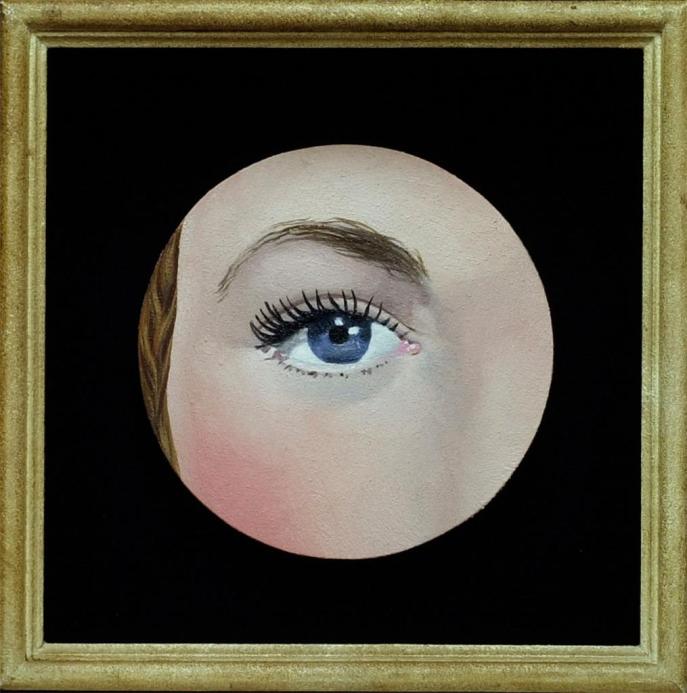 René Magritte, TheEye1936


 lampmagician
You must be logged in to post a comment.