
Said to have ‘the face that launched a thousand ships’, Helen of Troy has been remembered, judged – and hated – by every age since she entered the written record 2,700 years ago. With great beauty comes great resentment.
It’s always fascinating me talking about Gods or Goddesses, in my opinion, it looks more logical that we’ve been created by a Goddess, because, the women are much more beautiful and desirable than the men!!
via https://www.historytoday.com/
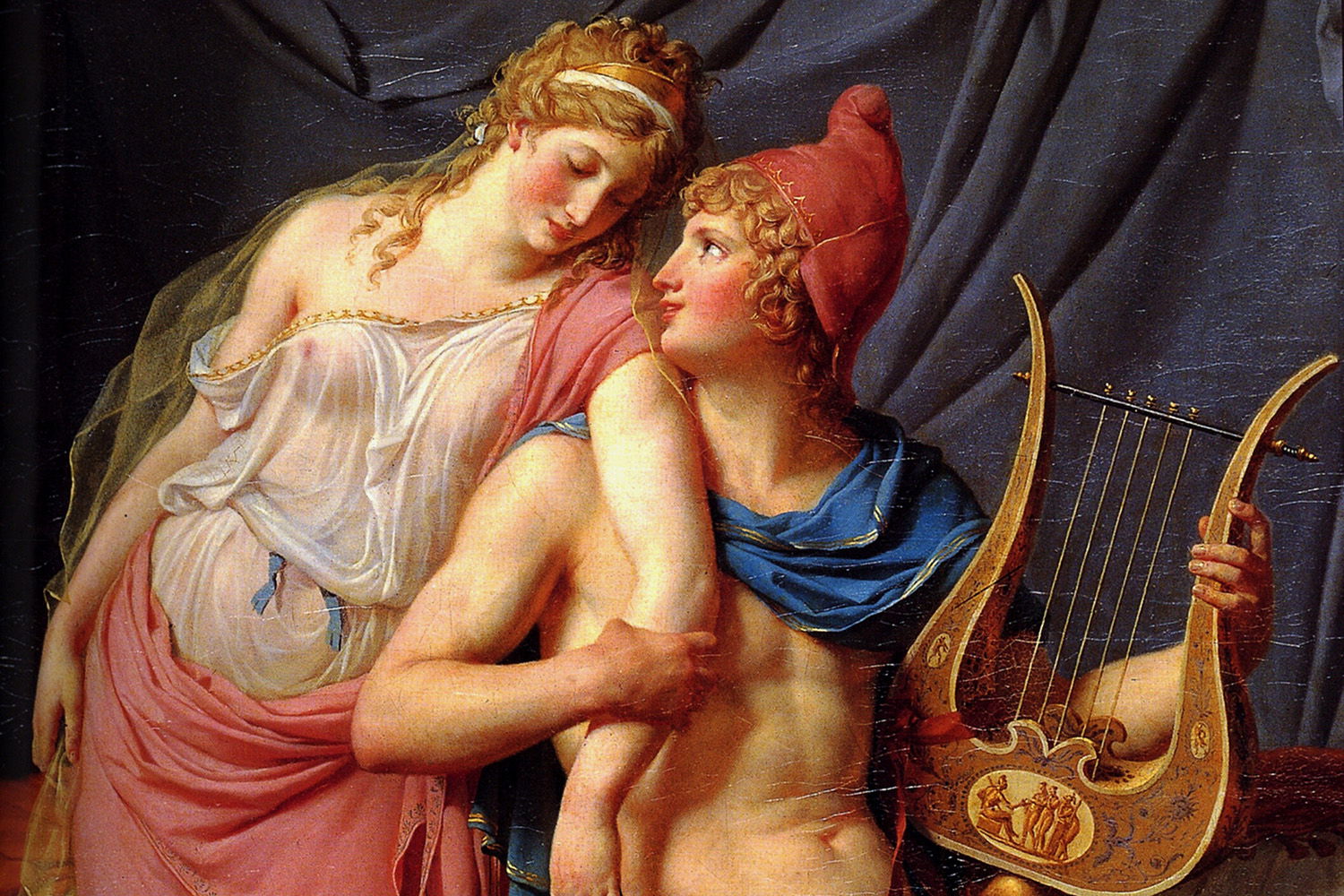 Detail from The Love of Helen and Paris, Jacques-Louis David, 1788.
Although we now tend to think of Helen as a passive figure, a feeble thing swept along to Troy on the tide of Paris’ libido, the simpering shell immortalized in Wolfgang Peterson’s movie Troy (2004), a close study of representations of Helen through the centuries yields a feistier figure. She is a woman who is at times applauded, but more often damned, for being sexually active – and is, furthermore, branded a whore. Helen of Troy is a telling icon: a woman who impacted on the world around her – as one of the earliest named authors of the West, Hesiod declared in his Works and Days: ‘[there was] a god-like race of hero-men … grim war and dread battle destroyed a part of them … [war] brought them in ships over the great sea gulf to Troy for rich-haired Helen’s sake’ – but whose impact has to be explained away in terms of a shabby sale of sex.
Of all Helen’s roles in the literary and artistic corpus (and it is a long career – she has been forgotten by not a single generation since she entered the written record 2,700 years ago), it is her part as fantasy whore that has been most tenacious. Her many sexual partners – the hero Theseus, her husband Menelaus, her lover Paris, her second Trojan husband Deiphobus, and (some whispered) Achilles after both he and Helen were dead – are trotted out by ancient and modern authors alike as the gossip columns would the client-list of a high-class prostitute. And so Euripides calls her a ‘bitch-whore’; she is Shakespeare’s ‘strumpet’; in Thomas Proctor’s The Reward of Whoredom by the Fall of Helen (1578) she is a ‘trull’ and a ‘flurt’, an embodiment of prostitution’s ‘vilde filthy fact’; Chaucer may well have been playing on words when he called her a ‘queene’ – a homophone for a ‘quene’ or harlot, and for Schiller a ‘Helen’ simply meant a prick-tease, a tart, a slut.
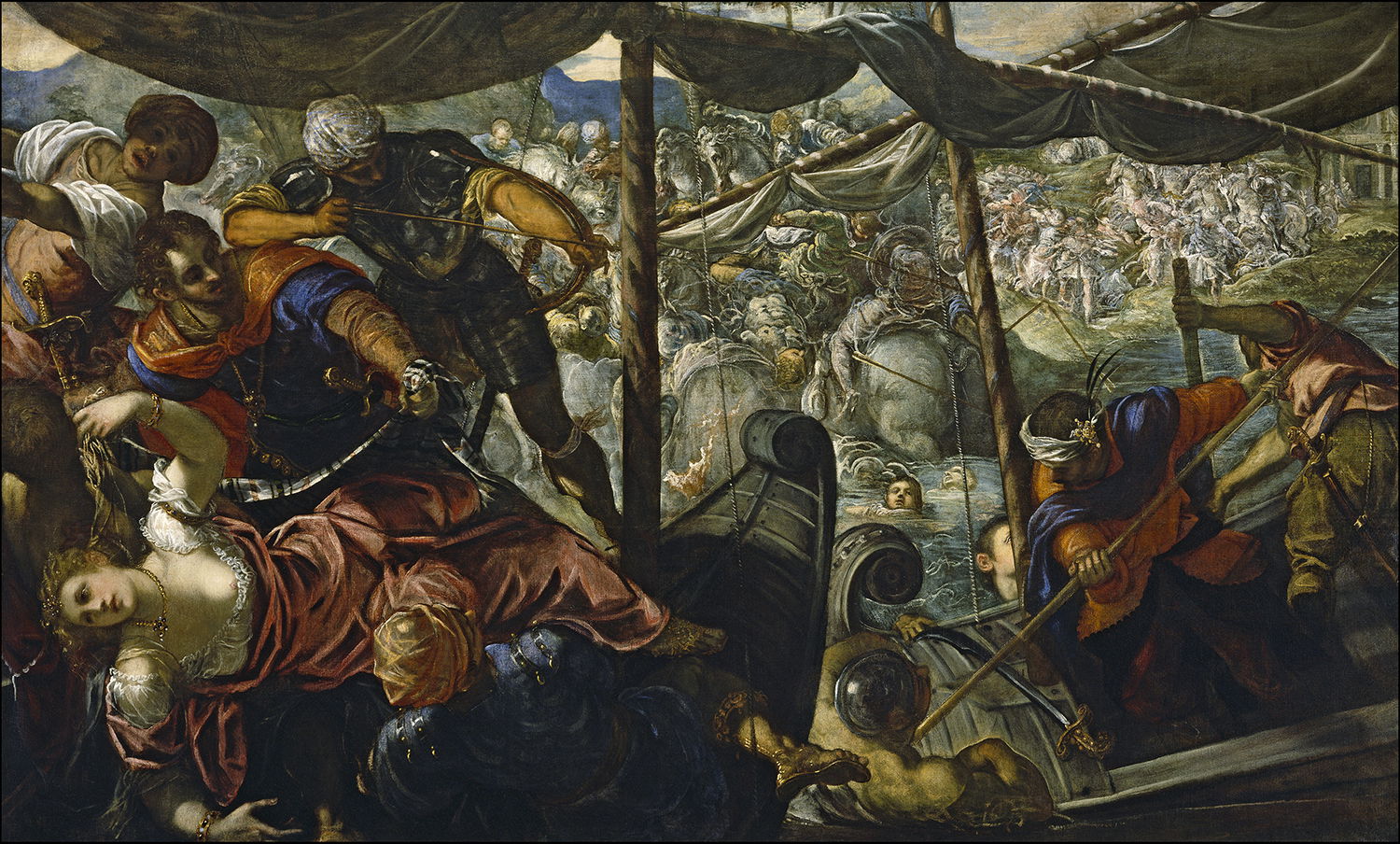 The Rape of Helen, Tintoretto, 1578–1579.
The rationale (if the thought process involved can be distinguished with such a name) from the fifth century BC onwards was that Helen’s crime was not simply sleeping with another man, Paris, the prince of Troy, but being encouraged into his bed by rich treasures from the East, brought as gifts for Menelaus and the Spartan court. Euripides’ queen Hecuba interrogates Helen: ‘were the halls of Menelaus not large enough for your luxury to wanton in?’. ‘O adulterous beauty!’ bemoans a Clement of Alexandria in the second century AD. ‘Barbarian finery and effeminate luxury overthrew Greece; Lacedaemonian chastity was corrupted by clothes, and luxury, and graceful beauty; barbaric display proved Zeus’ daughter a whore.’ And in his loose adaptation of Euripides, the late modernist Israeli playwright Hanoch Levin has Hecuba (Paris’ mother and Priam’s widow) spit out at Helen:
My son Paris was a heart-stopping boy,
And you, adulterous witch, wanted him.
And he was rich. Your heart flew at that.
Your husband here, King Menelaus, had a nice, modest castle;
You’d heard about our palaces – luxurious,
lofty –
So-long Menelaus, Paris – come on in!
(The Lost Women of Troy by Hanoch Levin, working adaptation by Tanya Ronder)
Oddly – in an accrued narrative that is nine-tenths fiction and one-tenth fact – the notion that a visiting Trojan prince would have brought untold treasures to the Spartan court in the Late Bronze Age (the most likely period for a conflict we call the Trojan War) does have real historical weight. Both Troy and Sparta were important and strategic settlements between 1300–1100 BC – the kinds of places that would have sent envoys across the Aegean to negotiate with one another, to debate rights over trade routes, to promote marriage alliances. Detailed written evidence in the form of inscribed hieroglyphics and cuneiform tablets produced by the bureaucrats of the Egyptian and Hittite courts make it clear that the rulers of the day showered one another with gifts.
Extravagant gift-giving allowed aristocrats to trade without seeming to stoop to the ranks of merchantmen. Gift-exchange also bound states together in an abstract convention known as Xenia – or xenwia, as it appears in the Greek Late Bronze Age script, now called Linear B. Xenia roughly, translates as ‘guest-friendship’ (literally ‘for guest-gift’) and was a means by which the traveller could be safely entertained in a stranger’s halls, an exchange of gifts demonstrating the goodwill between the two parties.
The formal transfer of the richest of material goods, Xenia in action, gave the Eastern Mediterranean some cohesion in the Late Bronze Age. There is not a shred of evidence that a Bronze Age Helen bestowed sexual favours in return for booty – but equally, there is no question that a Mycenaean aristocrat such as Helen would have received rich gifts from visiting foreign dignitaries – particularly from a city as wealthy as Troy.
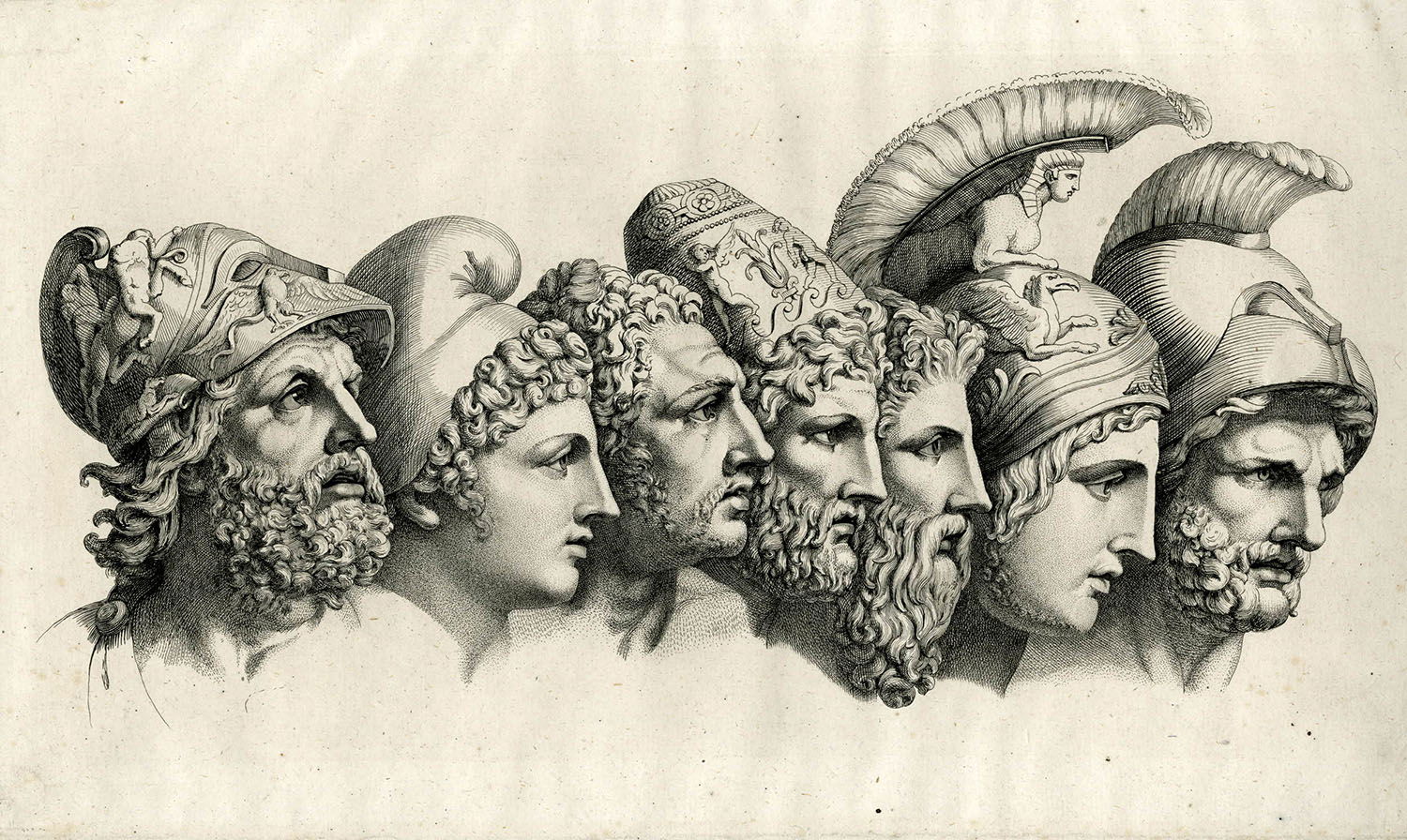 Seven heads of heroes from Homer’s Iliad, Heinrich Dieterich, c.1796.
Yet a diplomatic explanation for Paris’ delivery of Anatolian exotica is far from the minds of Helen’s biographers. Instead, her dealings with the Trojan prince position her as the archetypal broad. Following Helen’s progression as a whore, and glancing sideways at other key female characters as one travels through time, a pattern emerges. Think of powerful women from history – women such as Cleopatra, Eleanor of Aquitaine, Anne Boleyn: the memory of each is coloured by sexual scandal. Cleopatra, like Helen, was described as a Fury by Virgil and in Lucan’s first-century Civil War we read: ‘Cleopatra, the shame of Egypt, the fatal Fury of Latium, whose unchastity cost Rome, dear. As the dangerous beauty of the Spartan queen overthrew Argos and Troy town, in like measure Cleopatra fanned the frenzy of Italy’.
Eleanor was the 12th-century heir to the duchy of Aquitaine, and ‘by the wrath of God Queen of England’ she chose to dress in red (we still have in the National Archives the pipe-rolls that detail the lengths of scarlet cloth ordered for her out of state funds) and chroniclers were quick to judge her a scarlet woman. Matthew Paris declared that ‘by reason of her excessive beauty, she destroyed or injured nations’. Henry VIII’s second wife Anne, ‘the Great Whore’, was lambasted by the Abbot of Whitby in the following terms: ‘the King’s Grace is ruled by one common, stewed whore, Anne Boleyn, who makes all the spirituality to be beggared, and the temporality also.’
And like Anne, Eleanor and Cleopatra, Helen’s sexual peccadilloes were doubly dreadful because they were perceived as hastening men not just to a woman’s bed but to their deaths.
Show me the strumpet that began this stir,
That with my nails her beauty I may tear!
Thy heat of lust, fond Paris, did incur
This load of wrath that burning Troy did bear;
Thy eye kindled the fire that burneth here,
And here in Troy, for trespass of thine eye,
The sire, the son, the dame and daughter die.
(Shakespeare, Lucrece 1, 471 – 7)
Helen’s misfortune was that her crime against humanity was equally heinous in a pagan and a Christian climate. The ancients thought Helen’s crime was the crime of a god, or rather a goddess, Aphrodite (in that Helen’s excessive sexual charisma was a gift of Aphrodite) – but through the medieval and Early Modern periods – in fact up until the 21st century, her affair was judged a sin against God himself. And so we find medieval theologians such as Joseph of Exeter, detailing her misdemeanours with overweening enthusiasm. Note here that Joseph of Exeter, writing in around 1184, describes her favoured sexual position with Paris as being on top – an attitude detailed in the penitential lists of the day as the mark of a whore.
Lying on him [Paris] with her whole body, she [Helen] opens her legs, presses him with her mouth and robs him of his semen. And as his ardour abates the purple bedlinen that was privy to their sins bears witness to his unseen dew. What evil! O wicked woman, were you able to put a check on such passionate desire? Was lust waiting for a purchaser? What marvellous power in the gentle sex! Woman holds back her precipitate lust to obtain wealth and does not deign to give joy unless her smile has been paid for!
Where ancient, medieval and modern worlds also concurred was not just on the guilt of Helen and women like her, but in the assertion that it was female allure (not you note Paris’, Mark Anthony’s, Henry II’s or Henry VIII’s hubris or lust) that brought exceptional suffering to the world. And in Helen’s case, the specific cause – the Spartan girl’s unparalleled, dreadful beauty.
RELATED ARTICLES
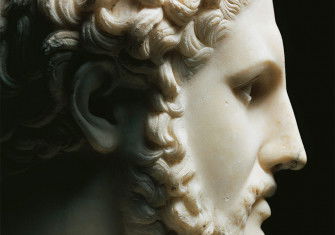
Rather than positioning Helen’s beauty as a worthy gift of the gods – ancient authors (with the interesting exception of Sappho who seems to suggest in Fragment 16 that Helen’s beauty endows her with initiative) predominantly saw her ‘peerless face and form’ as a curse. Beauty in Greek men was thought to be a sign of inner goodness (the Greeks had a word for it, kalokagathia, meaning joint nobility in appearance and mind or conduct.) Whereas for the male of the species a perfect face was the patina for a perfect character, a woman’s beauty was thought to conceal a dark heart.
Helen’s beauty was believed pernicious. She was imagined to be a direct avatar of the kalon kakon – the beautiful evil – the first ever woman according to Hesiod’s revisionist theogony composed in the seventh century BC. Helen was a thing essentially bad, cloaked in beauty. Given that beauty was thought in the ancient world to be an active attribute with its own cogent power, the most beautiful woman in the world had, by definition, to be it’s most dangerous. As she walks along the walls of Troy, the old men of the benighted city start to chatter, muttering that now they understand why these two great peoples, the Trojans and the Greeks, have to fight. What beauty Helen has, they say, a terrible beauty like that of the goddess.
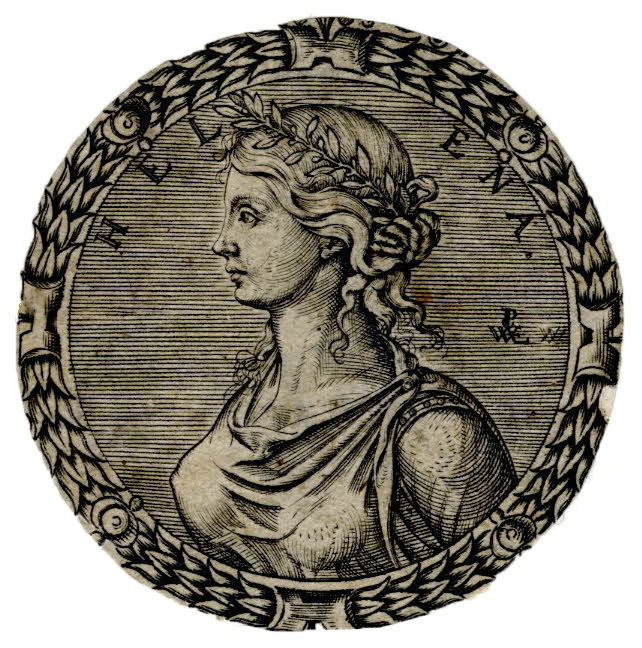 Bust portrait of Helen of Troy, Pierre Woeiriot, 1555-1562.
‘Terrible’ because the Greeks believed that when you looked at the face of a goddess or one who, like Helen was quasi-divine, dreadful things happened. When Actaeon saw Diana bathing she turned the peeping Tom into a stag – a stag who was then harried by his own hounds. Those who stared at the Gorgon were petrified – turned to stone. It is for this reason that Helen despises her own beauty – and bemoans in Euripides’ eponymous drama Helen: ‘My life and fortunes are a monstrosity… partly because of my beauty. I wish I had been wiped clean like a painting and made plain instead of beautiful’.
Helen knows she cannot escape her own beauty, she cannot clamber out of her skin. On the vases of the fifth and fourth centuries BC, she is often depicted staring intently at herself in a mirror. Artists of the 19th and 20th centuries – painting their own versions of the Spartan Queen – interpreted this self-absorption as a sign of vanity – but for the ancients, it was a signal that by studying her reflection Helen was bringing her horrors home to roost.
The fancy that Helen’s beauty was a lint covering a festering wound proved perennially popular. A woman’s beauty was thought, in the Western tradition, to ‘trick’ men into a sexual relationship. The more beautiful a woman, the more likely her exterior attributes displayed a duplicitous nature. Simonides, composing in the seventh century BC, ranted:
Yes, women are the greatest evil Zeus has made,
And men are bound to them, hand and foot,
With impossible knots tied by god.
It is no wonder that Hades waits at the door
For men at each other’s throats
Over women.
On the Greek stage, much play was made of the notion that the handsome female was created to beguile and inveigle the male population. In Attic Comedy, fine women with their contrived beauty, and prostitutes are frequent characters whose job it is to ensnare men. Travelling forward 2,000 years in time, Alexander Ross, Anglican minister and author of the highly popular and widely read Mystagogus Poeticus (a myth dictionary listed in alphabetical order and published in 1647) opines:
… for she [Helen] had a deform’d soul, playing the strumpet, not only in her younger years with Theseus … but also being married to Menelaus, forsook him, and became a whore to Paris; and not content with him, committed incest with Gorythus, the son of Paris and Oenone; afterward betrayed the city of Troy to the Grecians, and treacherously caused her husband Deiphobus to be murdered in his bed by Menlaus … thus we see, that outward beauty of the body, without the inward graces of the mind, is but a gold ring in a swine’s snout.
In the Iliad, Helen wails: ‘On us is sent an evil destiny,/ That we should be a singer’s theme/ For generations to come’. Her prophecy holds. There has not been an age that has not hated her for her beauty and has not chosen to transmit her sexual adventure as an educative example of voracious whoring. In Terence la Nove’s series of artworks ‘Maelstrom’ created between 1999–2003, Helen is portrayed as a catalyst of disarray and in the site-specific installations of the American artist Joan Jonas ‘Lines in the Sand 2002’ – a mixed-media series which subtly and brilliantly aims to liberate Helen from her stereotype – Helen still appears reincarnated as a showgirl in Las Vegas.
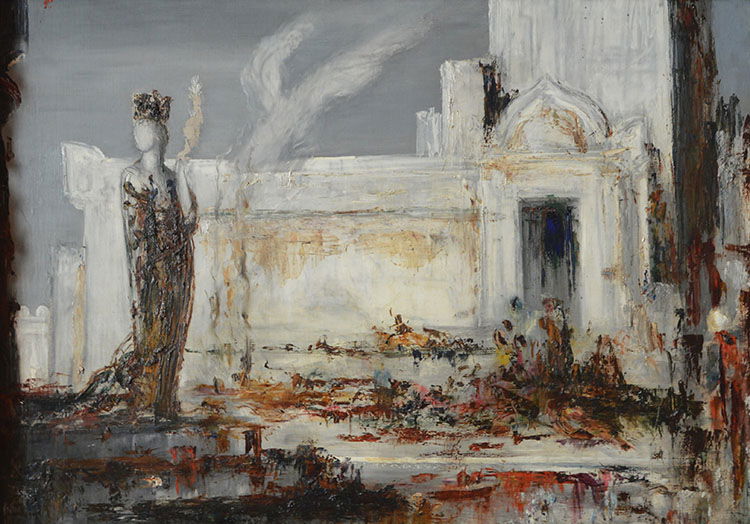 Helen at the Scaean Gate, Gustave Moreau, 1880s.
The ancient authors were right to think of Helen’s beauty as a curse. She has been remembered – not as one of the Mycenaean potentates on whom her story was based, nor as sexually active player in Late Bronze Age international politics, nor even as Homer’s complex, tortured and resourceful Queen, but as ‘the face that launched a thousand ships’, ‘the most Beautiful Woman in the World’, ‘the Harlot of Greece’.
Helen of Troy has been established as a primal whore, a deceiver – in a long line of sexually powerful women whose purpose is credited as being to bring down men, whose sex life is viewed as a betrayal in pursuit of furtherment, perpetuating the ancient notion that female lust pollutes male intellect. To use the words of Jeffrey Toobin: ‘As is demonstrated by the history of scandal from Helen of Troy to Monica of Beverly Hills, sex has a way of befogging the higher intellectual faculties.’



 “There is no reason to regret that I cannot finish the church,” Gaudi wrote. “I will grow old but others will come after me. What must always be conserved is the spirit of the work, but its life has to depend on the generations it is handed down to and with whom it lives and is incarnated.”

![63c857e6900b3b333eff1c390ee73e4d[1]](https://lampmagician.com/wp-content/uploads/2018/10/63c857e6900b3b333eff1c390ee73e4d1.jpg?w=687) Valentine Hugo-L’heure exacte 1926
Valentine Hugo-L’heure exacte 1926 


 Configuration-Max Ernst 1974

 lampmagician